F Is for Flowers

garden-green-ice-lettuce-flowers-and-bee-1

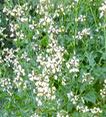
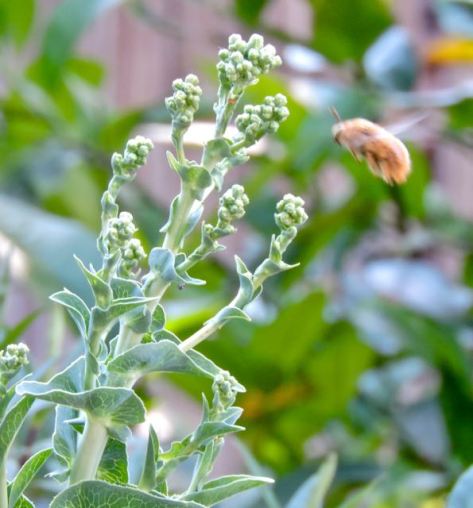
Green ice lettuce flower and visitor

The Edible Garden–Expanding the Idea:

I’ve become fascinated by the idea of the “edible garden.” The name implies that a garden is not normally edible. So that must mean that the normal garden is for looking only–or maybe for looking and smelling–but can’t usually be eaten. The name also implies that the kinds of gardens that people plant for food are not also good for looking or smelling. So the “edible garden,” then, must be a garden that looks and maybe smells really nice, AND, wow, you can eat the plants, too!

Hmm. Can you see why I might disagree with the notion that only some gardens are good for looking and smelling, and that only some are good for eating? Everything I’ve written about so far–even dirt–I regard as both beautiful and delicious. Sound crazy? Well, it all depends on your perspective and on how adventurous you are.

If you have come to enjoy gardening, chances are that you have developed a broader sense of what is beautiful in plants. To a vegetable and fruit gardener, for example, what can be more beautiful than a lush ripening crop, with deep green leaves, bright profuse buds in spring, and supple, deeply-hued fruit? After harvest, what can be more visually pleasing than the mounds of glowing, just-picked produce in a farmer’s market?

Moreover, if you have an open mind about plants that can be tasty and nutritious, and have tried a wide variety of dishes, then you’ve expanded your idea of the “edible.” In either case, you have come to appreciate a greater variety of plants and admire the diversity of ways that plants have adapted to their environments. If you once thought that only a rose or a carnation was a beautiful flower, you have come to be enchanted by the tiny yellow blooms on your tomatoes or by the thousands of tiny pastel blue-purple flowers on a lilac, which attract bees in profusion in the spring, or the tiny, tiny white flowers on the end of an oregano shoot. Not to mention the intoxicating fragrance of orange blossoms or the surprising yellow burst on the buds that come forth in September on a prickly pear.
garden-new-orange-blossoms-with-current-crop-1

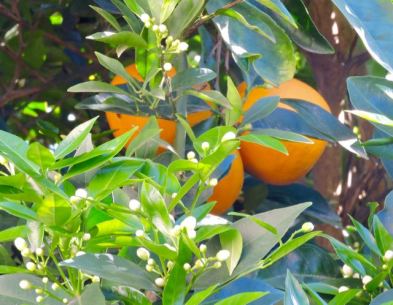
Orange blossoms in March amid the current crop of oranges that were ripe in December
garden-yellow-bloom-on-prickly-pear-tuna-1

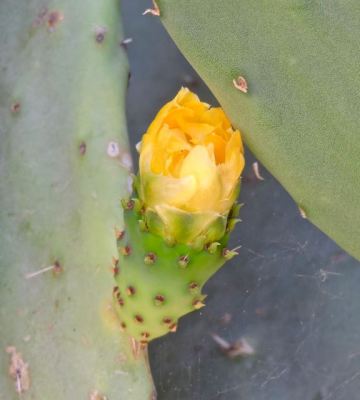
Yellow bloom in September on a prickly pear (nopales) fruit.

The idea of an “edible garden,” then, can mean not a special type of garden, but an attitude toward all gardens that appreciates their visual beauties AND how they can be used as food, not only by humans but by other creatures.

The Many Flowers I’ve Ignored in Our Garden 

One way I’m expanding my idea of the beautiful in plants has been to notice all their flowers. I’m still a child at this, but at least I’ve moved past the notion that only some plants in the garden are there for their visual beauty, while others are there only for their edible fruits, seeds, or leaves.  Gardening has helped me learn that edible-leaf plants like basil and arugula reach flowering stages that are themselves attractive and even edible. The zucchini that produces such prodigious green fruit first generates large, trumpet-like yellow flowers that both dazzle the eye and are well-known for their tastiness.

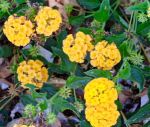
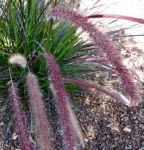
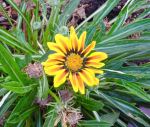
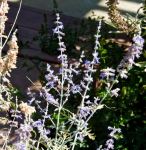
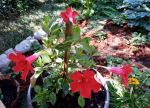
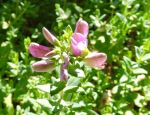
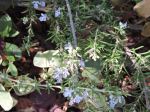
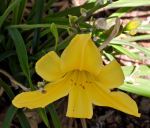
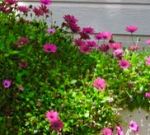
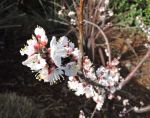
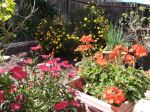
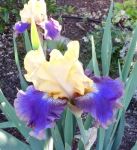
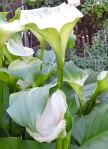
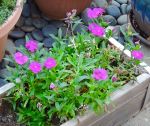
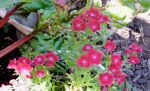
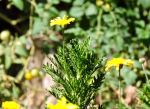
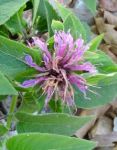
The photos you’ll see throughout this entry capture some of the many types of plants in our garden, all of which flower in their own way at various times of the year. Most of the pics come from plants raised by us for their food value, not for their visual appeal. But all of them add to the color of the garden, color that is pleasing to us humans and vital to the plants’ attraction of pollinators. Indeed, these are  citizens of an edible, beautiful garden.

Just click on the thumbnail photos below to see more of the flowers that beautify our (mostly) edible garden.
E Is for Eggplant

Chris:

I was never partial to eating eggplant until Jean began cooking it. It wasn’t part of my family’s German-American menu in my childhood, and I basically knew it somewhat later as part of eggplant parmesan, a dish I came to like at Italian restaurants when the eggplant was mild, but which all too often was bitter, even biting. So when I started our garden, eggplant was not on my must-grow list.

But Jean has  brought her versatility to eggplant (see below), which can grow prolifically. Moreover, the Japanese variant I planted this year looks gorgeous in its shiny lavender-to-magenta-to deep-purple coat as it hangs slenderly amid the muted green leaves.

garden-japanese-eggplant-1-1

I planted the one plant in mid April, along with the tomatoes, herbs, peppers, strawberries, and zucchini. But of all these the eggplant came along latest. The plant didn’t leaf out significantly until the end of May, and lavender buds appeared in late June. The first fruits began appearing in late July, and I didn’t harvest until early August. In the last month, however, it’s been a steady producer, until now in mid September, when some of the leaves are starting to brown out. Overall, fruiting happened a good six weeks after the tomatoes  and zucchini, but while almost all of the tomato plants are now exhausted, the eggplant is still producing. (The zook still goes on relentlessly; that’s chronicled in “Z Is for Zucchini.”)

So, if your garden is like mine, just be patient with the eggplant, and you will be rewarded.

Now to the good part, the cuisine.

garden-eggplant-color-array-on-table-1

EGGPLANT RECIPES

Jean:

Italian/French–

First let me say I love eggplant parmigiana, but have also had some bitter ones at restaurants, even ones that boasted about this dish and charged a good deal for it.  I made it once for a Valentine’s Day dinner, and the eggplant turned out so buttery soft and sweet in its light breading with a fresh marinara sauce and cheese topping, we both thought it was perhaps the most delicious and romantic Valentine’s Day dinner we had ever had. I had sworn I would make Chris learn to enjoy eggplant, and I accomplished it that day!

(By the way, since his major objection was to its bitterness, I’m not sure I believe in the methods I’ve seen and tried for trying to draw the bitterness out of eggplant before cooking it.  I think you need to find fresh young ones that do not have many seeds, which is where most of the bitterness comes from.)

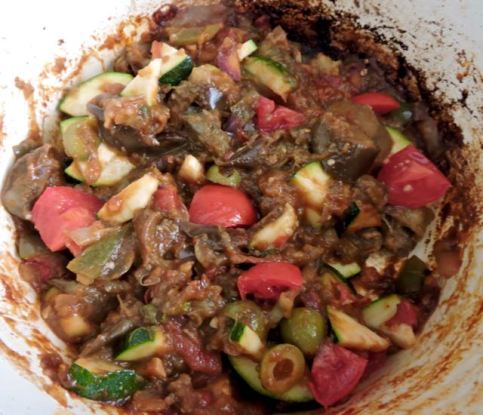
Another good way to use eggplant is in caponata.  Like the French ratatouille, it is a great way to use summer vegetables and herbs you may have in excess–tomatoes, bell peppers, squash, fresh herbs, and zucchini, in addition to the eggplant.  The picture below shows my dish–sort of a mash-up of caponata (which generally does not include squash and has more sour elements) and ratatouille (which doesn’t include olives).

kitchen-eggplant-caponata-cooking-tomatoes-olives-zocchini-1

kitchen-eggplant-caponata-cab-franc-1

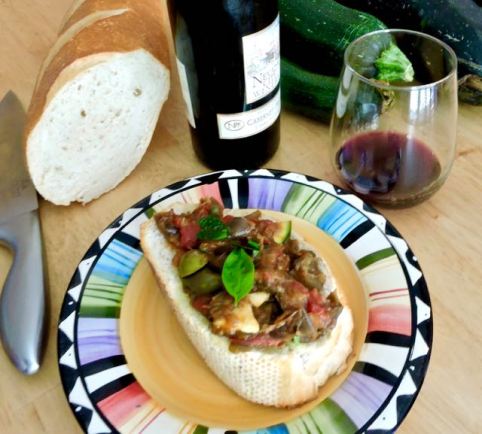
The finished vegetable mixture may yummily be served on some toasted French or Italian bread, or on polenta.  Below are a couple of links to recipes, but of course you can play with these a little, including what garden produce you have the most of.  The procedures are simple–cooking the veggies, chopping and dressing them.  (I prefer roasting or pan-frying eggplant in a moderate amount of oil, rather than throwing them directly into any kind of sauce, soup. or stew, which I don’t find develops the flavor or texture of the eggplant as successfully.)

http://www.foodnetwork.com/recipes/bobby-flay/grilled-caponata-recipe.html

http://www.foodnetwork.com/recipes/emeril-lagasse/ratatouille-recipe0.html

Japanese

But I’m not finished.  My favorite way to eat eggplant is with Asian flavors, Japanese specifically.  (The word for eggplant in Japanese is “nasu,” much easier to say than the Italian “melanzana,” the Spanish “berenjana,” or the French “aubergine.”  (Apparently German doesn’t have its own word for it.)

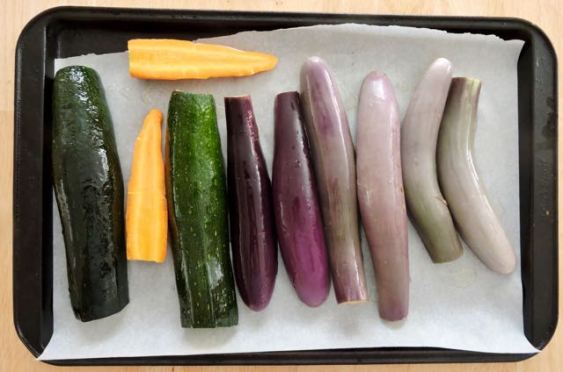
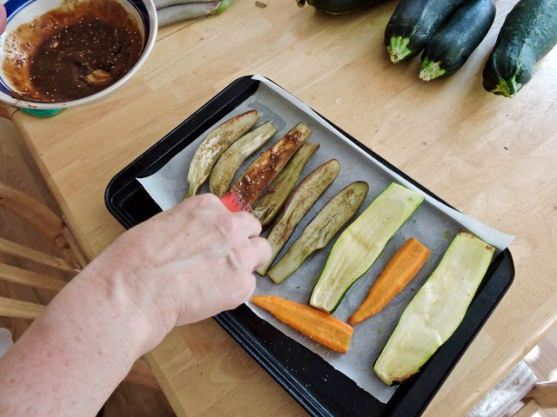
Our eggplant was actually a long, narrow Japanese variety, so this turned out to be the most successful recipe of all.  First, slice four to six eggplants lengthwise or else in about 1 inch slices on the diagonal.  Turn them over to coat in oil on some parchment paper or aluminum foil spread on a baking sheet. Dust lightly with garlic salt.  Bake at 400-425 degrees for 15-20 minutes.  I’m being vague about the temperature and times because you want to keep an eye on these.  Make sure the oil doesn’t start to smoke, and don’t let the eggplant get completely mushy.  If you want to roast other vegetables like zucchini and carrots alongside, as I did, they will require more time.  Use a long-handled fork to poke them until you feel the degree of doneness but firmness you like. You’ll be cooking them a little more, so don’t let them go too far at this stage.

kitchen-whole-veggies-for-miso-glaze-1

Take them out of the oven and brush them with the glaze you have prepared while the veggies were roasting.  It’s very simple to make:

1/4 c. miso paste, red or white (fermented soybean paste–this stuff is good for you and totally worth looking for; you can make  Asian soups and salad dressings from it as well)

2 T. grated fresh ginger (you can also use a paste sold in a squeeze tube alongside the similarly prepared herbs in the produce section of your supermarket)

2 tsp. toasted sesame oil

1 T. reduced-sodium soy sauce

1 T. rice wine vinegar or distilled white vinegar

1/4 tsp. black or white pepper

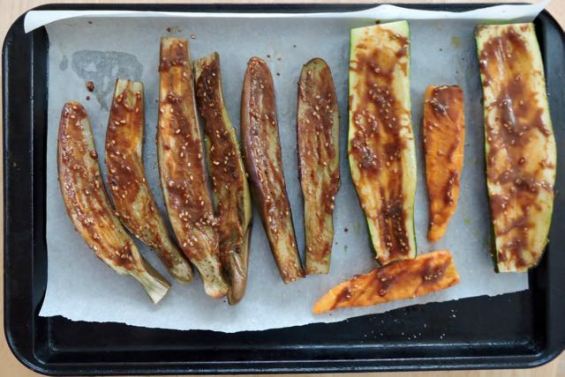
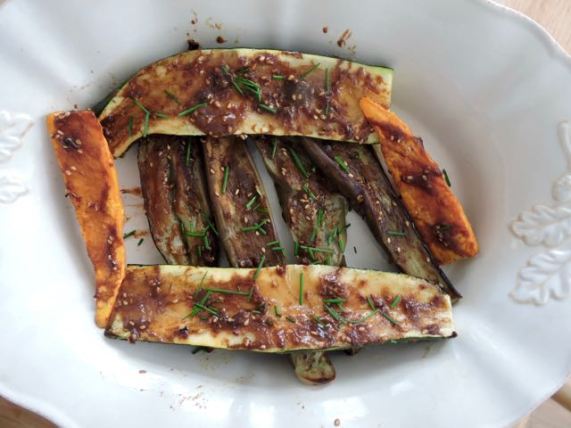
Stir these together with a tablespoon or so of water if you need to loosen it up enough to brush over the top side of the vegetables.  Put them back in the oven to bake for another ten minutes.  When you pull them out, sprinkle with the following:

2 T. sesame seeds

2 T. chopped scallions or chives

kitchen-jean-glazes-veggies-w-miso-mixture-1kitchen-veggies-for-miso-dish-glazed-1kitchen-baked-veggies-w-miso-glaze-on-platter-1kitchen-baked-veggies-w-miso-glaze-and-rice-1

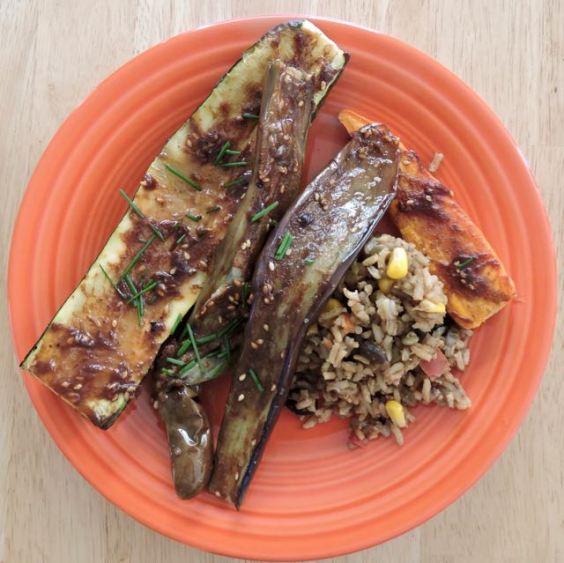
If the eggplant skins are too tough, don’t worry about it.  Just scrape out the lovely soft insides and enjoy alongside some rice perhaps. This picture shows a Mexican rice mixture as a side.

I also plan to roast the rest of our eggplant with my easy Mexican mole sauce, but that’s another story.

D Is for Dirt

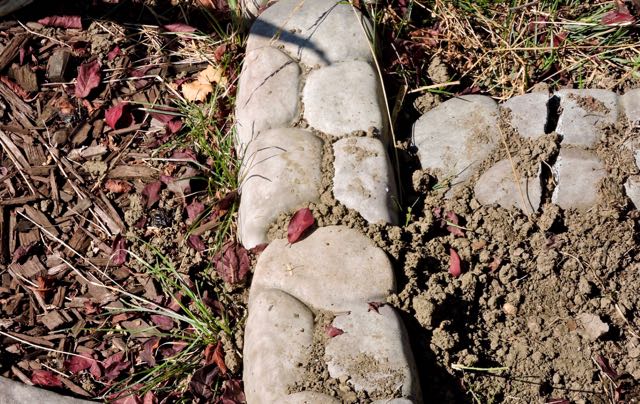
garden-three-soils-1“Dead and buried” goes the phrase.

But any gardener knows that buried does not mean dead. What goes on underground we usually don’t see and is easy to forget, but is surely as lively, interesting, and complex as what goes on up top in the sunlight. From the plant’s point of view, both parts of its life–in the air and in the ground–are equally important and each contributes with the other toward the whole plant’s survival and prolonging its species. Since we’re usually more interested in what’s going on above ground–except in the case of root plants like beets, onions, carrots, and potatoes–we tend to think of the roots as supporting the stem, leaves, flowers, and fruits, and not the other way around.  But roots can’t survive without the breathing of the leaves, just as the leaves can’t survive without the minerals taken up through the roots. Just as the land itself can’t survive as a home for plants without the roots holding the earth together amid drought, winds, and floods.

Our preoccupation with certain plants’ prettiness and tastiness makes us disregard the basic life-giving role of the plant parts we want to make prettier or more tasty for us. That thinking also lets us ignore the value of plants that aren’t obviously pretty or tasty according to our narrow standards. And no living thing  is less obviously pretty or tasty to most of us than dirt

Not until I got serious about planting did I begin to appreciate dirt as the living, breathing, incredibly varied thing it is. I’m still far from understanding even the basics of the mixtures of elements, compounds, textures, and moistures needed to make different plants thrive in different temperatures and times of the year. That’s a big reason why I rely so much on the plants themselves to tell me day by day how they are doing.

A Lesson: Poke a Finger in the Dirt 

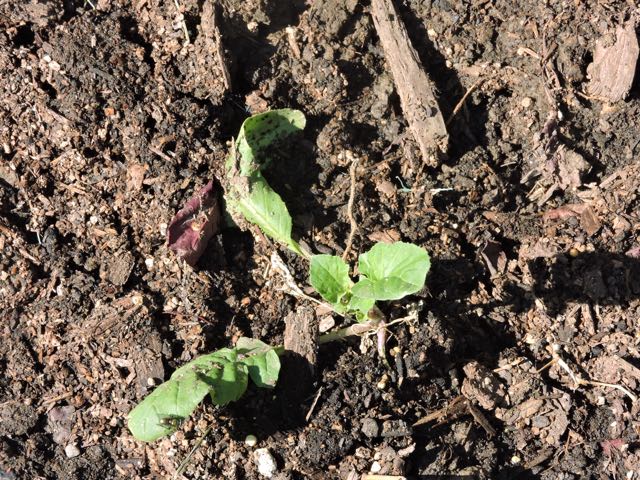
garden-arugula-seedling-1

If, for example, I plant a tiny seedling of arugula in September in the same spot where I grew a tomato plant in the spring and summer, I’ll usually fill the new hole with a mix of compost and the existing soil, plus water, to give the seedling a boost to get started. Then I’ll keep an eye on the seedling and the ground around it each day–maybe more than once a day–to see if the plant is taking up the mineral-rich water and growing firm. If, in the September heat in the high 80s, the ground seems to dry out quickly and the seedling wilts, I’ll poke a finger in the nearby ground to see if the dirt just below the surface is still moist. One thing I’ve learned is that the dirt in the sunlight may not be a good indicator of the moistness of the dirt just beneath, which is markedly cooler.

Just last week I discovered that a mild yellow pepper plant that I’d been watering in its pot every other day June through August, and whose soil seemed dried out on the surface before each watering, was actually floating in thoroughly soaked soil a few inches down because the drainage holes in the pot had become clogged. I’d ignored my own rule of testing the soil below the surface, and it was a wonder that the plant had stayed green and productive of fruit despite the swamp that was growing underneath.

Knowing that the soil beneath the surface may be significantly wetter than the soil in the sunlight can keep us from our tendency to overwater. Just as in human nutrition, more food often does not mean better health. I’ve learned this lesson better and better as the years have gone by, with the result that I’ve used less and less water during the summers with each passing year, even as our garden has grown in variety of plants. And saving more water year to year is a smart thing in our drought-ravaged climate.

Eating Dirt: Love That Umami

Gardening means messing around in dirt. Poking my index finger in the dirt to check for moisture beneath the surface is the dainty act that follows from the much more intimate acts of digging holes, pulling out rocks and roots, hand-mixing residual soil, compost, and fertilizers, and mucking about in the mud. Mud-caked shoes, grit-embedded knees, dirt-smeared clothes, black fingernails, and the lovely mixture of sweat and dust all over the body and hair are consequences of this intimacy between humans and the dirt to which we shall all return. Indeed, if we are what we eat, and if what we eat derives its own nutrients from the dirt, then not only are we in a sense eating dirt, but we are even now made up of dirt.

Am I exaggerating? Well, sure. I mean most of us are not the folks who actually eat kaolin clay in the southeast US and other parts of the world. But keep in mind that one of the five main flavors of our favorite foods is the mysterious umami. Not sweet, sour, bitter, or salty, umami is that, yes, earthy flavor that we crave in meats, mushrooms, chocolate, coffee, and fermented foods from breads to cheeses to beer, red wines, and countless other foods. So while we may not think of ourselves as digging our mouths into a heaping bowl of peat, clay, sand, leaf mulch, or humus, we are drawn to the smells, textures, and flavors of the earth in less obvious forms. (See our post “C Is Also for Coffee” for another take on umami.)

And if you do garden, you must admit that you just love mucking about in the many types of dirt that you will encounter, and that nothing smells better to you than dirt. And the more you love the smell of dirt, the more different aromas of the various dirts you’ll come to recognize, and there will be no end to the joy you derive from getting down and dirty.

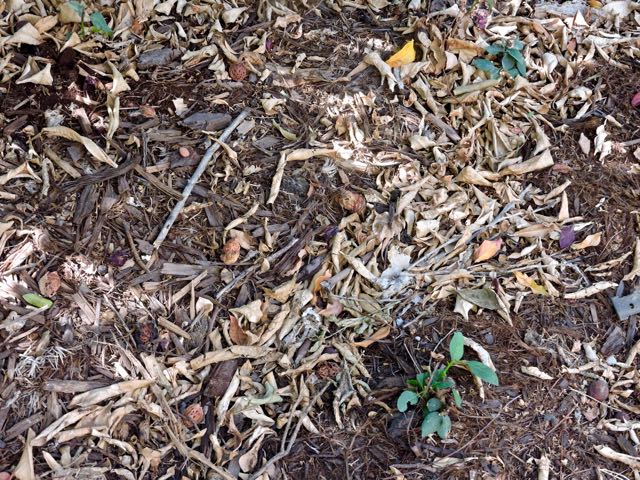
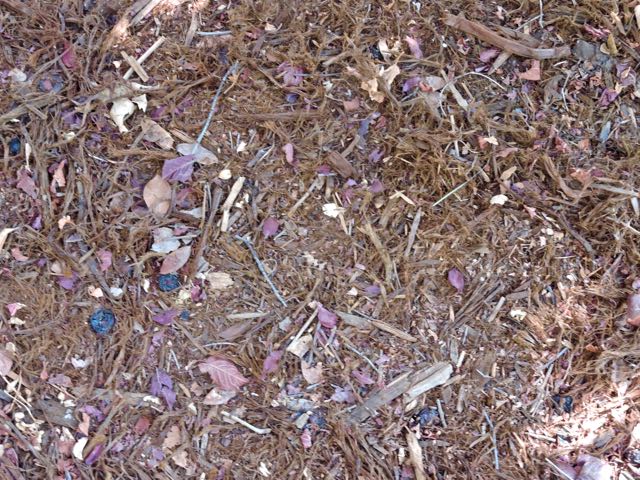
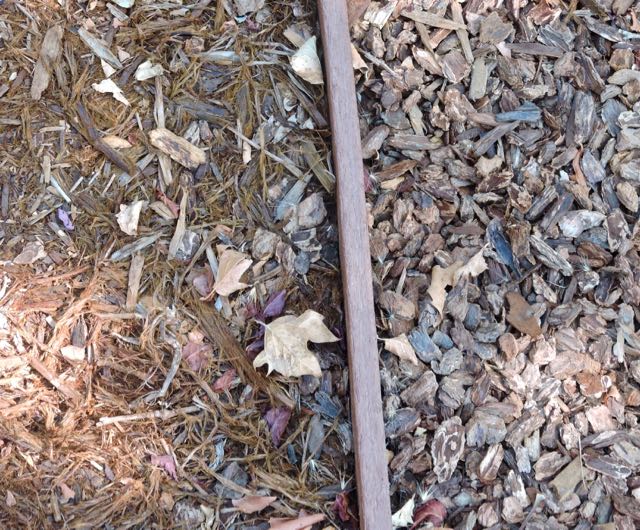
garden-soil-and-leaf-mulch-under-orange-1garden-redwood-mulch-and-plum-leaf-mulch-1garden-border-between-redwood-mulch-and-brown-bark-1