
We had a small rain the first week in April and nothing since. Everyone figured that the rain year was over. Fine. We’d had a good rainy season, over 24 inches, 8 more than 2017-18 and about 6 above average. April was a booming, blooming month (see last month’s post, April 2019) and we were all set for a sunny May with temps in the 80s. Perfect for the April-planted veggies and the baby fruit. I’d brought out the cushions for the outdoor furniture and turned on the automatic twice-a-week drip irrigation.
Then came the middle of the month. Over four days, 2 inches of rain. In the past week, another 1 inch plus: overall, a record in the Sacramento region for May. Plus temps struggling to reach 70. While in the Sierra, new snow fell, up to twenty more inches in the highest passes. Predictions were made of the ski season lasting into July!
In our little garden, the drip system was again shut off, and the cushions went back into the garage. Meanwhile, in the San Joaquin Valley to the south, the cherry farmers, who’d been getting set for a mammoth harvest of rich red bings, saw tons of fruit fall to the ground and more rot on the trees.
In California, all weather news is a mixed message: rain in May means that perhaps the fire season will be delayed; but it also means that crops about to be harvested may fail and new crops won’t grow as they would in the hot sun. The ski operators love it; the reservoir operators fear over-capacity and downstream flooding as all that Sierra snow melts.
Conversely, below normal rain threatens the water supply for everyone and everything, but it reduces the fuel supply in fire-prone forests. Californians, as I’ve learned, can adapt, if they are willing, to almost any extreme of the weather, but pretty much they (we) would prefer that things stay about average–with all the threats and joys that average entails. We’ve built up stout defenses for the threats, so we can keep our brightest expectations.
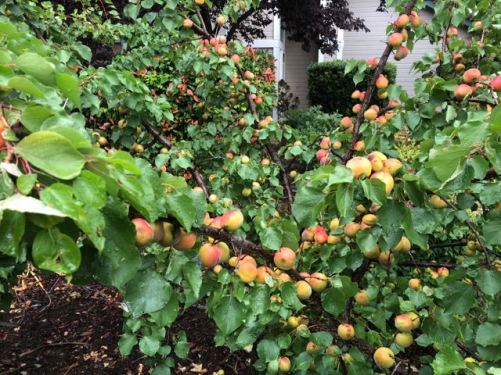
In our little garden, the May surprise means that the forecast I made in April was wrong. “The apricots,” I announced, “will harvest in May.” Well, here are the apricots now:
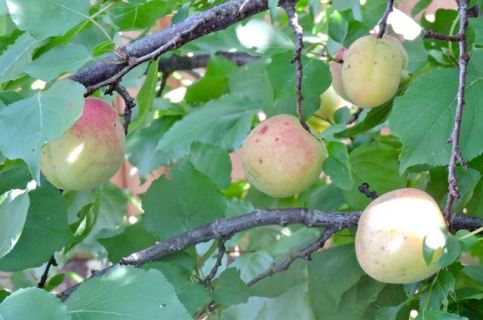
versus where 2018’s were exactly a year ago:
In contrast, last year’s cherry plum harvest was about average in volume and timing (mid-June). This year, the volume of fruit far exceeds anything we’ve seen in the thirteen years we’ve been in California, with clusters weighing down the branches all over the tree:
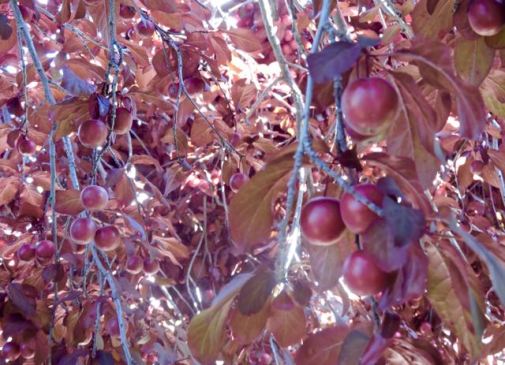
Look closely to see how many plums are hidden among the leaves.
…but it remains to be seen if the hard little spheres will soften in time for the annual mid-June gathering we make for our cherry plum jam.
Also responding to this year’s copious rains are the peaches, which developed from the tiny green babies I photographed in late April to the plentiful fuzzy green golfballs on their way to harvest in early July:
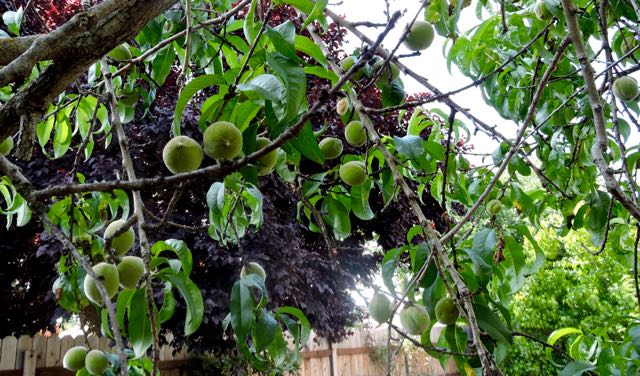
Last year’s harvest of 60 will be dwarfed by this year’s–unless extreme weather intervenes! The number of growing fruit this year is greater than in any of the most recent three seasons. Branches broke under the weight of more than 200 peaches in 2016, but the record rains of spring 2017 destroyed the buds and the tree produced no fruit. (See “A Month in the Life” for July 2018.)
Oranges and Meyer Lemons. Unlike 2017, when the record rains caused the orange tree to lose most of its infant fruit in April, this year’s May rain caused fewer than a hundred of the babies to fall, leaving what appear to be hundreds more on the tree and growing to grape size at present:

The meyer lemons, about a week behind the oranges, also came through the surprise rains of May mostly unscathed and are growing abundantly.
The New Veggies and Fruit (all planted early April)
Tomatoes. Four varieties this year (7 plants): Husky cherry red, Sun Gold (grape), Ace, T-67. Five of the seven have tiny green tomatoes growing amid the yellow flowers, with the Husky Cherry Red leading the way:
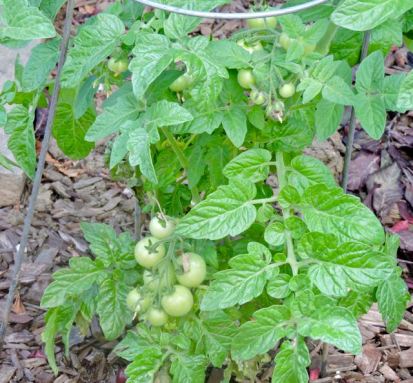
Peppers. Three varieties, three plants: Cajun red (mild spice), red mild, green mild. All have white flowers, but only the mild green (in a pot) has small growing fruit. The low temps have kept it from growing more quickly.
Eggplant. Three plants of the Black Beauty variety. Each has grown steadily, about 2-3 time the size of the seedlings, but, again, the lack of higher temps has kept growth slower than usual. Eggplant are usually slow in producing ripe fruit, with later July the usual time in this garden.
Cucumbers. As in 2018, we have two plants of the Burpless variety planted 4 feet apart for cross-pollination. Some slower growth due to lower temps, but each has numerous yellow flowers and tiny starter cukes, but only one plant has a larger cuke growing (about five inches).
Blueberries. As with the cucumbers, we have two plants about 3-4 feet apart for cross-pollination. Both are healthy, but growth above ground has been minimal so far. Fed weekly with Miracid.
The photo below shows the array of peppers, cukes, and tomato plants in late May:
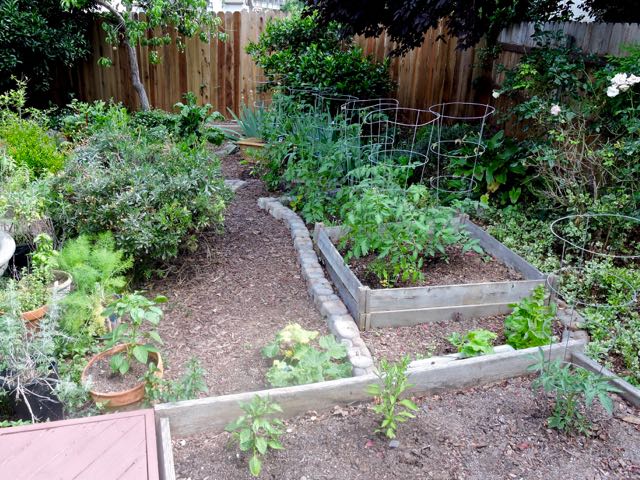
Foreground, from left: red pepper, Cajun red, T-67 tomato; row 2, from left: mild green pepper (in pot), cucumber, cucumber, leaf lettuce; in cages in background: Ace, T-67, Sun Gold, and Husky cherry red tomatoes.
Herbs in May
Of those shown below, fennel is a first-timer in our garden.

From left: Russian sage, mint, lupine, fennel, Greek oregano, sweet basil
Of those shown below, watercress is a first-timer in our garden.
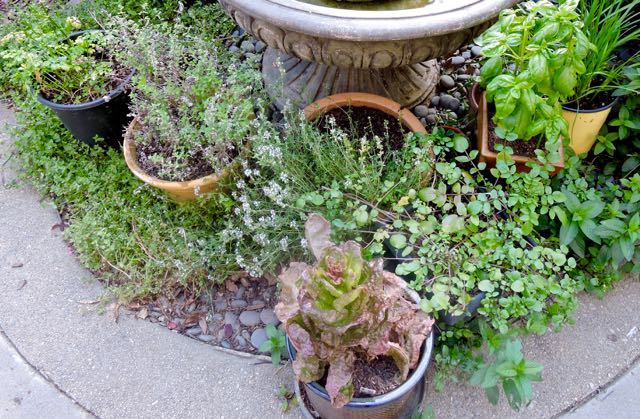
From left, in pots: parsley, marjoram, English thyme, leaf lettuce (front), watercress, Italian basil, chives
Flowers and Flowering Bushes
The most dramatic May event has been the swarming of Painted Lady butterflies on the Escallonia fradesii (Pink Princess) bush in our front garden. Enjoy the video!
The painted ladies are especially plentiful this spring, for the first time since we’ve been here. Too bad that no other butterflies, except the occasional yellow swallowtail, have visited the garden so far this season. It’s been several years since we’ve seen a monarch, which are now nearing extinction on the Pacific coast–thanks to neonicotinoid pesticides and habitat destruction. Gone are the days when the monarchs in migration literally covered the eucalyptus trees in Pacific Grove in February. We got to see that one time after we moved West, and it’s a treasured memory.
While this rainy, cool May has not provided the same display of colors that April did, our garden never fails to show off in some spots:
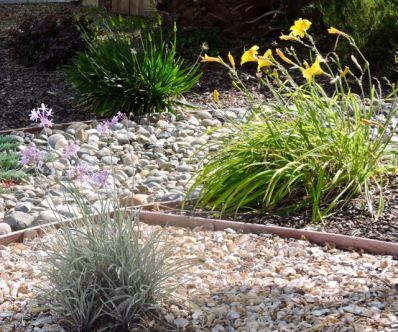
Garlic, Daylilies, and Blue Nile lilies in the side garden
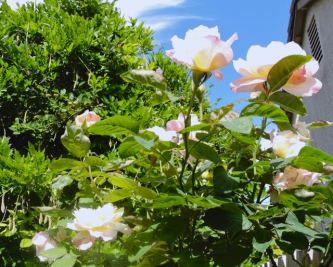
Peace roses in the back garden
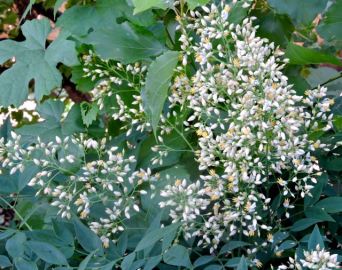
Heavenly bamboo in the side garden

White thornless roses in the side garden
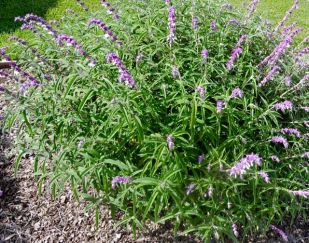
Mexican bush sage in the front garden
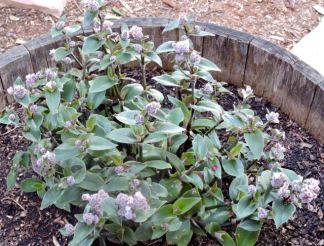
Wandering jew (Tradescantia pallid) in a wine barrel
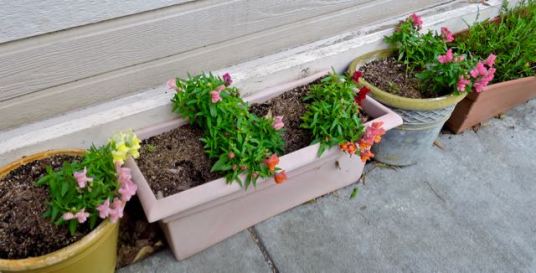
Snapdragons in the front garden
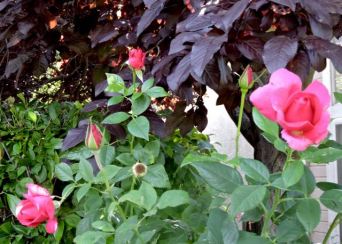
All My Loving roses against the cherry plums in the side garden
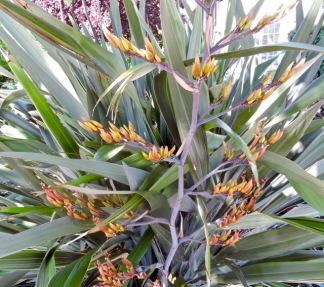
New Zealand flax blooms in the front garden
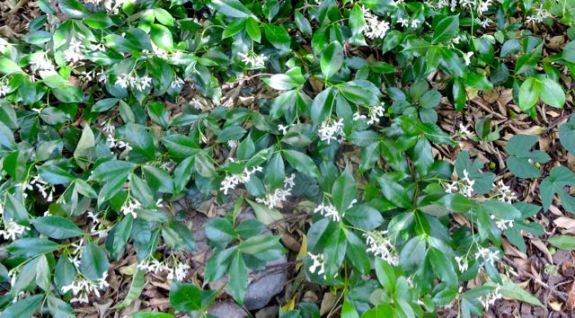
Jasmine in the back garden
Now, on to June!
 From Sacramento to Potomac: Tales of Two Valleys