
Chris:
One early June morning, I was studying the tomato plants for new fruit and the health of the leaves, when I was suddenly surrounded by a chattering flock of tiny blue gray gnatcatchers. They flew-hopped from plant to plant, especially on the red and white rosebushes, looking for food. I barely had more than thirty seconds to converse with them in my poor imitation of their call before they told me that I didn’t have what they were looking for, and whoosh! they were gone again, taking their chatter elsewhere in the neighborhood and then, presumably, far away, to their preferred summer climate in the mountains (according to National Geographic’s Birds of North America).
Jean and I had seen them the day before from our vantage point in the kitchen, and they had stayed long enough for me to get a few snaps through the sliding glass doors. Ah, serendipity! They have not returned and I don’t know when they will, since they don’t stay long in our hot Valley climate.
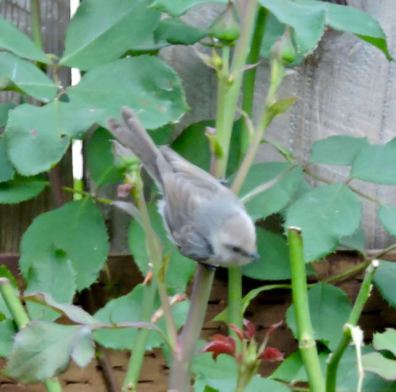
The gnatcatchers’ quick visit has been just one of several unexpected events this June, which followed on the very unexpected cool raininess of May (see the May 2019 post). Yes, finally summer appeared in the form of several 100+ days this month, and a solid two weeks above 90, but the growth delay in May has kept some of the plants still well behind schedule.
Some of the most notable laggards are the apricots, the cherry plums, and the peaches.
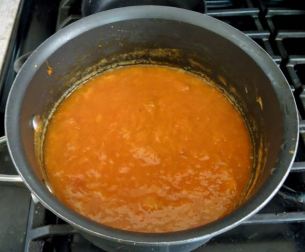
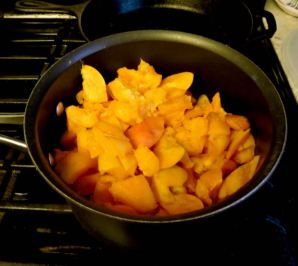
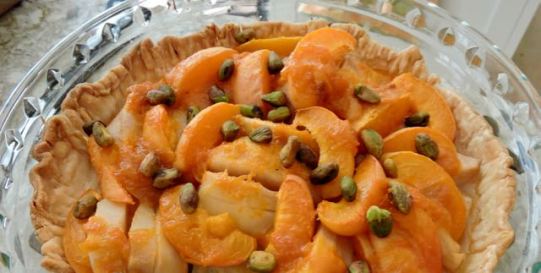
The apricots finally came in during the first week in June–2-3 weeks behind schedule. As noted in last month’s blog, there were many fewer than in 2018, about fifty in total. But they were no less sweet and firm when harvested, and made five 10-ounce jars of our jam (see photos of the cooking above), plus more than enough for apricot muffins and Jean’s apricot-pistachio tart (below):
The cherry plums in the most recent five years have been ripe and ready for picking by early June. But this year the abundant fruit finally was ripe in the final week of June and I picked them on the 26th–with some of those harvested just barely soft enough to pluck off the two trees, the one in our side garden and the other leaning well over our back fence from the neighbors’ yard.
In stark contrast with the low apricot volume, this year’s abundance of cherry plums was overwhelmingly greater–in the thousands–than in any year since we’ve been here. For the first time in our dozen years, I was able to harvest all the fruit we would need for our annual jam making–about 400–by just standing on the ground and plucking the literally low-hanging fruit. No step ladder needed.
As in all previous years, pitting and then cooking down the plums is a several-hours job. Here is my setup for that operation:
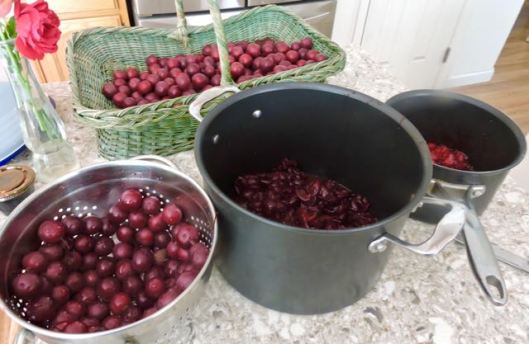
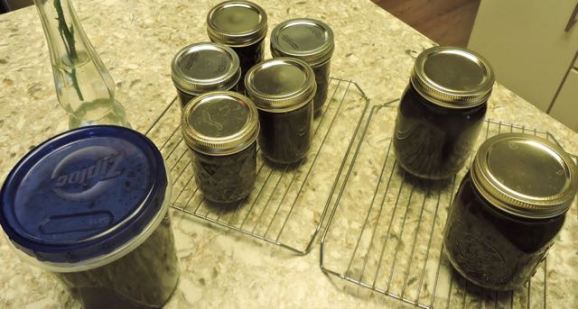
As I write this post in the middle evening, the cherry plums–with sugar, water, some apple juice, and fruit pectin all added to desired taste and texture–is still simmering away on the stove. The fruity fragrance fills the house…
…Now, here’s the finished product the next morning, after we’ve sterilized the jars and lids:
Peaches: Slow Growing and Being Cooked
The peaches are nowhere near ready for harvest, and were the most delayed by the cool May. Last month’s golfball-size fruit are now closer to tennis balls, but they are also still tennis-ball green and as hard as baseballs. At this rate, I’d give a ballpark estimate of the end of July for harvest–a good month later than the 2018 crop.
But speaking of peaches, Jean dug out our frozen peaches from last summer’s bounty and just made her delectable peach “dump” cake–as well as other goodies she describes below…
Jean:
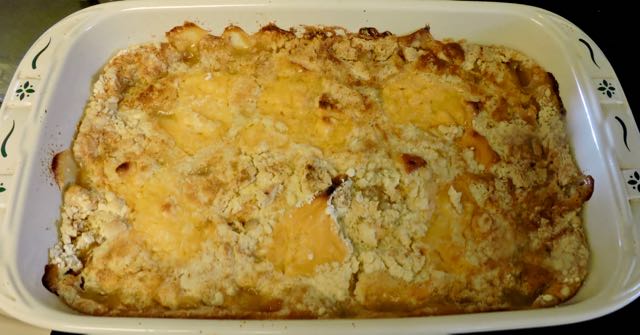
Peach “Dump” Cake: Don’t be fooled by the name!
Knowing that our peaches were still far from ripe, but wanting to make some summer peachy dishes, I found a large container of last year’s peaches that were still in the freezer. I used them to make peach smoothies and peach yogurt muffins for breakfast, throwing a few blueberries into each of those.
I found this lovely peach yogurt recipe:
http://www.maysquared.com/blog/peach-and-blueberry-greek-yogurt-muffins/
As the author allows, and as I often recommend in this blog, I swapped some things out. I used whole wheat flour, almond flour, and oat bran in place of some of the white flour. I had peach yogurt and used some of that in place of some of the Greek yogurt, and I used apple juice in place of orange because that’s what I had.
I found these substitutions didn’t make much difference in the texture, but maybe that was because I had both more moisture from the regular yogurt and more binding from the heartier dry ingredients. Anyway, we got both a moist crumb and a slightly crunchy top—perfect!
Peach Dump Cake (Hate the name, love the cake)
After the muffins and smoothies, I still had left over from the frozen peaches the equivalent of a large can of peaches in syrup, so I made my own version of Ree Drummond’s “dump cake”: https://www.foodnetwork.com/recipes/ree-drummond/dump-cakes-2576003
I wonder why it has such an unattractive name, but I figure it is because you simply dump all the elements into the baking dish and you’re good to go. None of the usual mess of baking a cake, leaving sticky measuring cups, spoons, beaters, and bowls around the kitchen (to Chris’s chagrin).
So after retrieving my favorite 13×9 inch dish, preheating the oven to 350 (using the convection option), and dumping in the remaining sliced defrosted peaches, I sprinkled the contents of a pineapple-flavored cake mix I happened to have (plain yellow cake is also very good), and then put bits of butter everywhere, as the recipe calls for. I baked it for about an hour.
Here’s the thing. The dry cake mix may not all be absorbed in the liquid; you may have some dry bits, which would horrify me if it were just flour, but have you tasted dry cake mix? It’s delicious. I also worried about so much butter, so I used mostly unsalted butter (the one stick, with a half stick salted) for fear of salty cake, but somehow all the butter and the bits of dry cake mix leave the impression of streusel, so the overall effect is more like a crumble than a cake. Very peach-forward. Yum.
Chris:
Tomatoes, Peppers, and Cukes
All three of these annual stalwarts have been in-ground since April 10 or so. They were delayed somewhat by the cool May, but not like the stone fruit. Indeed, once we hit the mid to high 90s this month, they took off and have been steadily producing.

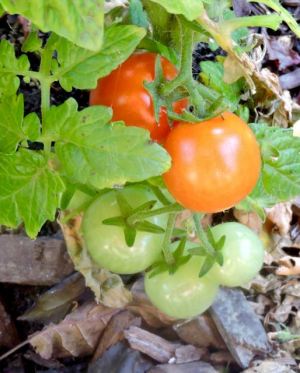
The tomato stars, as usual, have been the cherry tomato varieties, the one husky cherry red (above right) and the two sun gold (above left). Of the several hundred fruit growing at any one time, I can count on a dozen to be ripe each day for snacking, sandwiches, or stews and chilis. As the heat intensifies, so does each day’s production. Though each plant is caged, the shoots go up and out and everywhere (below).
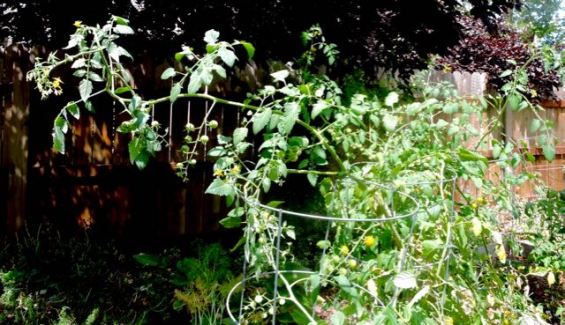
The great success of the cherry tomatoes has created a dilemma for me. Much less early and prolific in our garden are the mid- and large-size tomatoes, with this year’s candidates being Ace and T-67. This comparative lack of performance has been an every-year pattern, and so I’m thinking of sticking only with–and expanding the number of–the cherry varieties next year. (Stay tuned.)
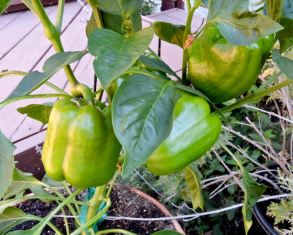
Peppers. This year’s three plants–a mild green, a mild red, and a Cajun red–also sprang to life when the heat hit, and all three have made up for lost time in May. The potted mild green has been especially sprightly (below left)…
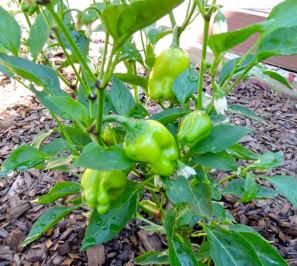
but the Cajun red (right), which of course begins as green, may soon surpass its neighbor in putting out new fruit.
Cucumbers. Last season’s Burpless cukes were so successful and tasty that they’ve now become a staple. (I might go back to zucchini next year, too–see “Z Is for Zucchini”–if I want to engage with that adventure in mass productivity again, but for now the cukes are plenty prolific for us.) I love how the cukes grow quickly and steadily, and how I need to peek under the canopy of leaves to see the dark green fruit in the shade. Both of the two plants have been productive.
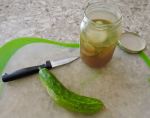
Pickling. As last year, we pickle most of the cukes, and they disappear during the ensuing months. I never realized how easy pickling is, and this year both of us have been varying the pickling mixtures. Jean has used a Japanese-inspired light covering of white vinegar and salt, while I’ve experimented with a spicy blend of oil, vinegar, salt, Thai chili pepper, and a touch of sugar.
The photo series below shows the simple stages of the prep for the latest cuke, from the garden to the pickle jar.

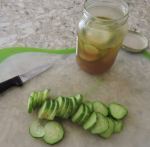
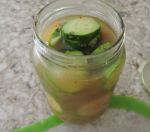
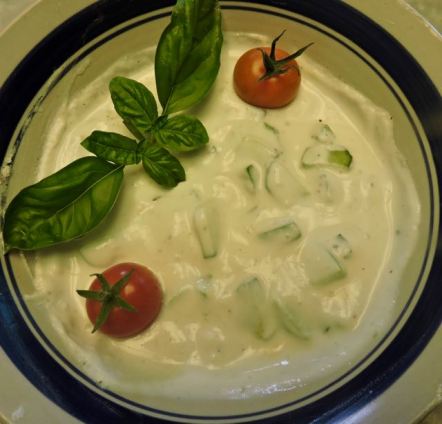
Another cucumber delight. Slightly more ambitious for the cukes is homemade tzatziki sauce, a staple of Greek cuisine and one of my favorites. There are many slight variations online, but they share many of the same ingredients. For mine, I used chopped up cukes from the garden, folded into Greek yogurt, thinned with a bit of milk, and into which I squeezed lemon juice. Then I sprinkled in salt, black pepper, and garlic powder.
Play with the ingredients until you get the taste you like. If you want to blend in some herbs, like basil, oregano, thyme, etc., go right ahead. It’s all about desired taste and whatever you have on hand or just outside in the garden:
Use it as a salad dressing or as a topping for meats or cooked veggies.
Eggplant. Always the latest fruiting of the summer veggies in our garden, the Black Beauty eggplants (3 of them) have spent June leafing out splendidly and producing lavender flowers in the past two weeks. None of these flowers has as yet become a dark purple fruit, but that’s typical. It’s usually late July before we get our first Black Beauty (or one of the other varieties I often plant). The fruit like to hide beneath the broad leaves that give cool shade to the fruit, so leafing is the job of the plant in June (below).


A Few Other June Treats
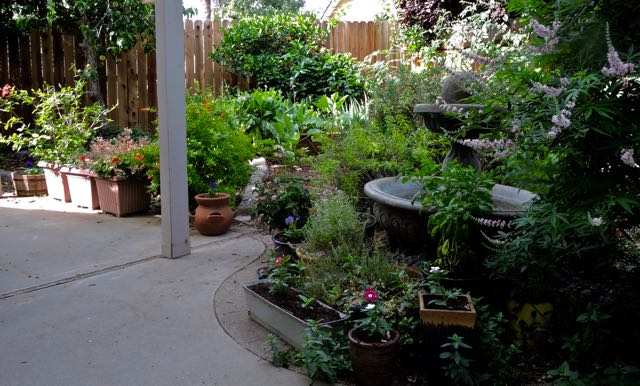
As the old song says, “June is bustin’ out all over,” and it’s not just veggies that take off in the heat. Here are a few of the other garden highlights that shine beginning in June:
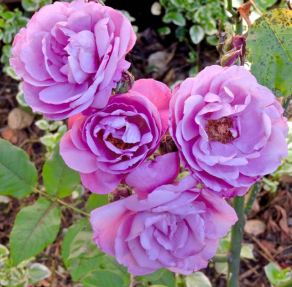
Lavender roses, back garden
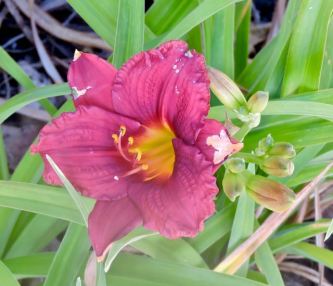
Magenta day lily, front garden

Blue Nile lily, side garden
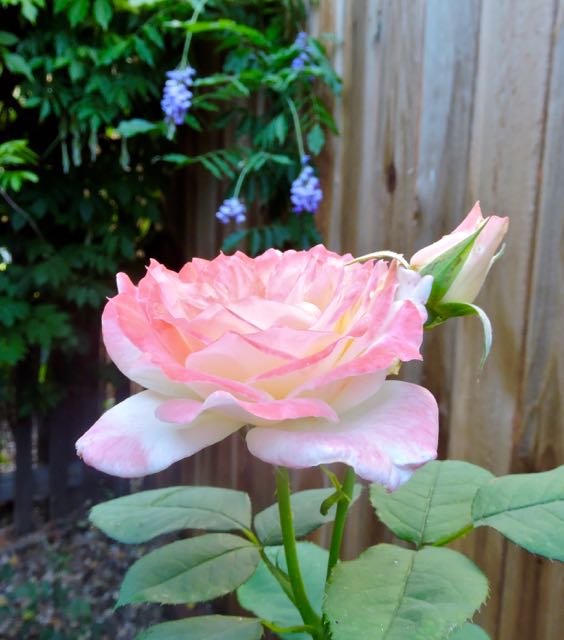
Peace rose and very late blooming wisteria in background, back garden
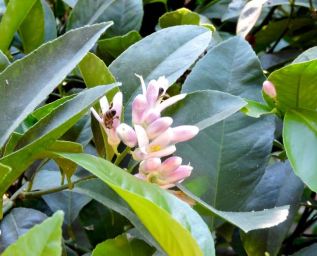
Very late blooming meyer lemon and grateful visitor, back garden

Crape myrtle and Provence lavender, side garden
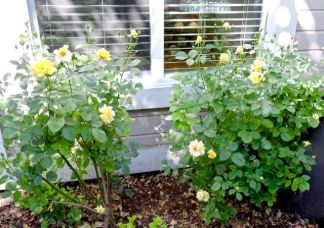
Season’s second explosion of blooms on yellow roses, front garden
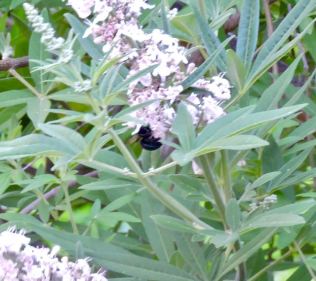
June-blooming lupine bush and carpenter bee, back garden
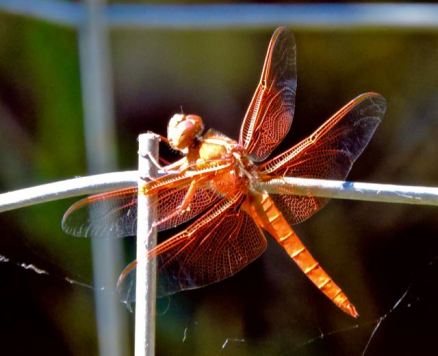
Dragonfly on tomato cage, a favorite perch in the hot June sun, back garden
And on to July…
 From Sacramento to Potomac: Tales of Two Valleys