Chris:
August used to be the summer month when people who couldn’t go on vacation in July went on vacation. But now it’s what September used to be when our children were children: the month when the kids go back to school. We still find our semi-retired selves cheerily asking how the grandkids are enjoying their summer vacation, only to be told by whichever one we are talking with that “we are back in school,” said with a resigned tone that conveys their sense of the unfairness of it all.
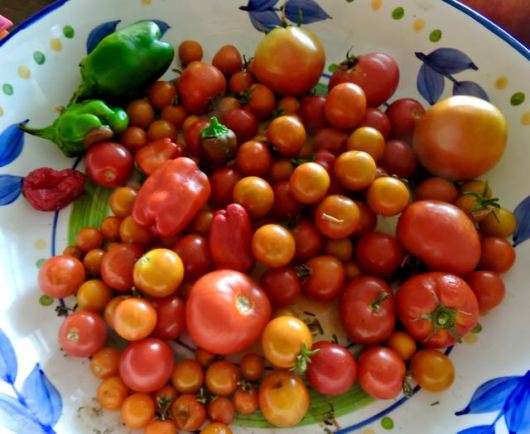
I get the same resigned, nostalgic attitude from the citizens of the garden–at least some of them. They are not happy about August. It’s like an even hotter July, and really dull. At best, their growth keeps going at a good pace–such as the tomatoes and the cucumbers and the peppers, which fill our fruit and veggie bowl each week pretty much as they did in July:
But even these hearty souls are getting weary. The number of dried out, exhausted shoots and leaves is building, and when I look at the plants it’s as if I’m looking in the mirror: “Come on, old fella,” I think, “I know you’ve got some life left in ya, but not a whole lot.”
It doesn’t help that the heat is just as relentless as ever. The temps have been routinely in the 90s to just over 100, pretty typical for August, but creeping slowly higher with each passing year. In our blissful little patch, it didn’t help that our neighbor decided in July to have his cherry-plum tree, which always gave some shade to our back garden, drastically cut back so that the hours of blistering sun increased by 50%. Believe me, it is no fun to stroll through the back garden on August afternoons this year. And I can go back inside. The plants in the ground can’t.
This old fella (yours truly) is stubbornly resisting watering more frequently or longer, despite the increase in heat. I’m willing, curmudgeon that I am, to see how the garden reacts. On the one hand, I must say that the tomatoes have handled the greater sun like troopers. But on the other, I won’t be having any of my tomatoes thriving greenly into mid September like my champion red grape tomato of 2018, which got plenty of shade on those blistering August afternoons. (See “Between the Seasons, Sept. 20, 2018”).
Of the 2019 group, the husky cherry red has held out longest:
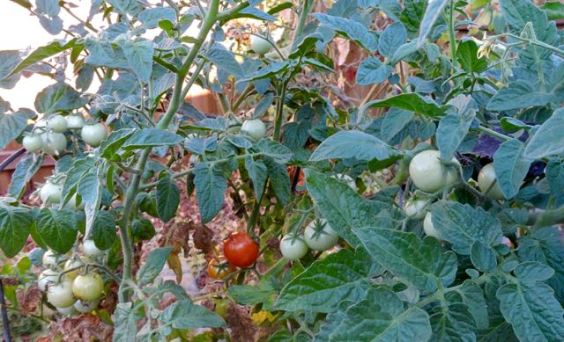
…and will probably be fruitful for about another week, to month’s end. But then, bye-bye.
The two Ace tomato plants (mid-size fruit) are still chugging along, too, with about ten more small green fruit having appeared in the past two weeks. But at this point, it’s a race between the plant’s urge to propagate and the strength it still has to take the fruit to full term. I’m thinking there’ll be some green fruit still on the withered vines when I pull them out.
Tomato Pests/Guests
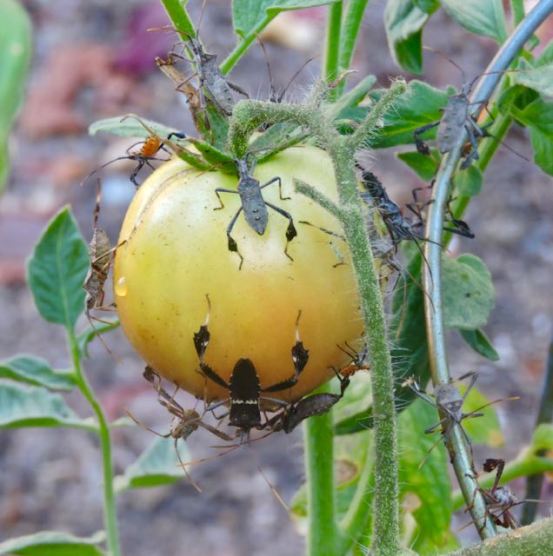
Another problem for the tomatoes is one that I’ve not seen before this August: an assortment of oddly-shaped and multicolored munchy bugs that just love the ripening tomatoes as much as we do. Study the photo below, if you have the nerve:
See http://ipm.ucanr.edu/PMG/GARDEN/VEGES/tomato.html for descriptions and pictures of some of these and similar visitors.
Besides the groups already on the mid-size tomato, notice the lines approaching the buffet. Everybody gets a turn. Too bad for them, though, the buffet closes as soon as I flick the tomato a few times or throw an ounce or two of water on the fruit to wash the visitors off. Then I pluck the tomato for the fruit bowl, where it will ripen just fine, with little or no damage to the tomato–if I catch the bugs within a day of their attacking the fruit.
As I said, the problem never appeared before this year: that’s ten years of tomatoes with no pests. I will still not spray them with chemicals, as I never have. Besides, because my garden is small enough and the pace of tomato production slow enough, I can keep track tomato by tomato. But I’ll be on the lookout next spring and summer, so I can balance what we eat against what we leave for our “guests.”
What Loves August
Plenty of the plants in our garden love August, despite what I said earlier. As long as they receive regular water, they can thrive in the heat. Here are a few, some in full sun, some in part shade:
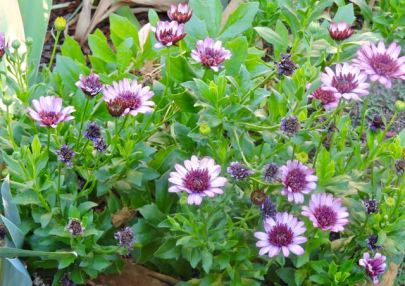
African daisies, back garden, full sun

Baseball-size oranges, growing toward December, full sun
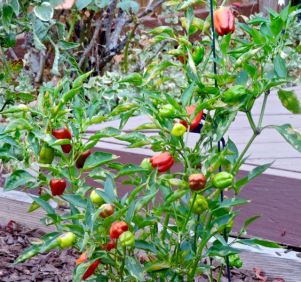
Cajun red peppers, full sun
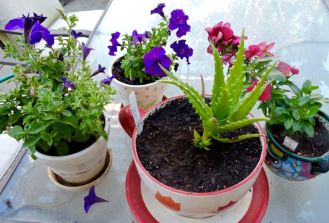
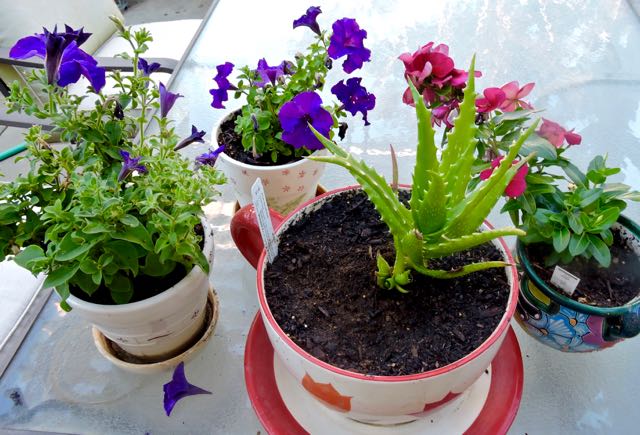
Petunias, aloe, vinca in pots in shade, back garden
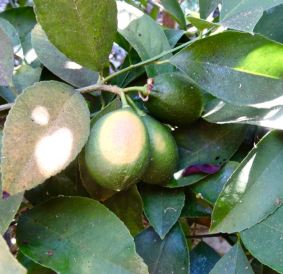
Egg-size meyer lemons, growing toward December, full sun
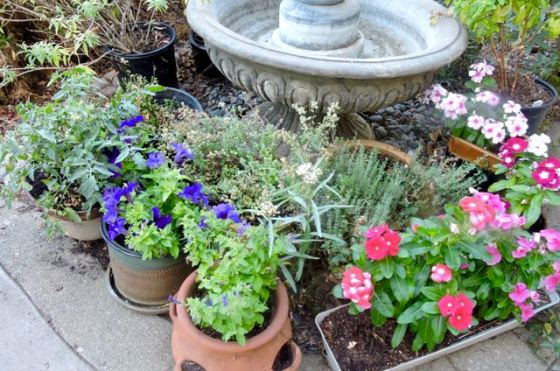
Pots in part shade (L-R): cherry tomato, petunias (2), marjoram, thyme. vinca, back garden
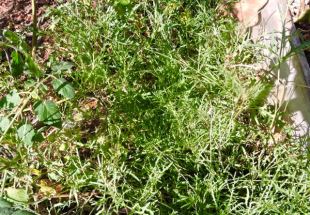
Arugula, back garden, full sun
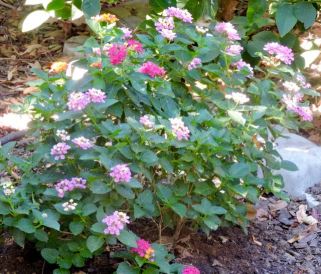
Lantana, back garden, part shade
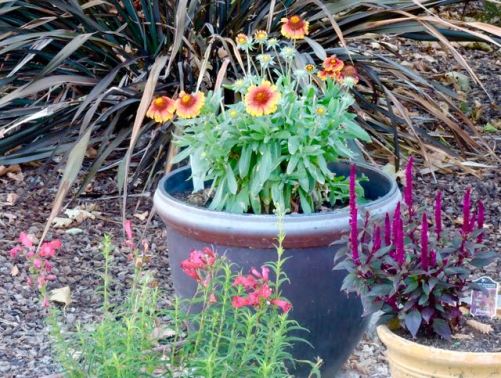
L-R: Penstemon, Mesa Gold Gaillardia, Purple Cockscomb, front garden, part shade
What Did I Say about Eggplant in July?
Last month, I was bemoaning the slow development of our three eggplants, which usually provide a few fruit in late July and more into August and early September. This year’s rains in May slowed the growth even more, and by the end of July, only one eggplant fruit had grown to harvest on the three bushes. I predicted (hoped?) then that we might have a “bumper crop” in August.
Well, that did not happen. Lavender flowers kept appearing and maturing, but none turned into nascent fruit. Until, that is, the final week of the month. I’m happy to report that now we have several tiny, tiny fruit beginning to take shape across the three plants. Here is the largest of these–about 1.5 inches in diameter at this point. I’ll be monitoring them in September, and I hope will have good things to report in the next blog entry.
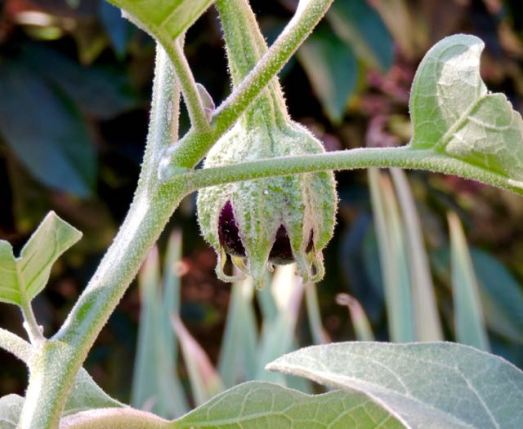
Black Beauty eggplant beginning to grow, last week in August
Kitchen Treats
The steady stream of tomatoes, peppers, and cucumbers in August meant a bit more experimentation in our “test kitchen.” The July peaches had been pretty much all used up (see the July blog entry) or the cooked peaches frozen for later, so the August creations were variations on the veggies-plus-herbs theme. The two we describe here–
- hot summer veggie hash, and
- grape tomato salsa
use pretty much the same ingredients, but differ in cooking, texture, and uses.
Hot Summer Veggie Hash
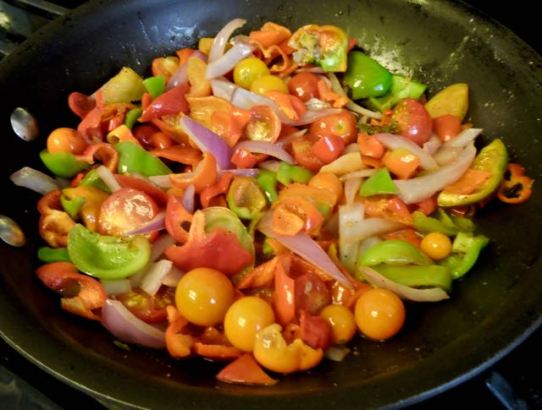
Really a stir fry, this colorful “hash” features chopped-up red and green mild peppers, red onion, chopped cucumbers, and whole (not sliced!) cherry and grape tomatoes. Keeping the tiny tomatoes whole in the sizzling oil-prepped skillet or wok means the little fruits are ready to burst when you pop them in your mouth, and that hot burst of flavor makes the dish special.
The spicy “hot” in this summer veggie hash comes mainly from the red cajun peppers chopped into the mix. If you want it mild-to-medium spicy, be sure to cut away the seeds in the chopping process. As with all hot peppers, leaving in the seeds ramps the Scovil score way up, and you may not want that. But live dangerously, if that’s what you want.
What we recommend: when chopping the hot peppers, taste the flesh without the seeds to see how much of a burn you get. Then pop into your mouth a seed or two or three and see what happens. Consider how much heat you and your guests can stand and enjoy. Just be sure not to touch your eyes with any fingers that were involved with manipulating those peppers. The burn can be transferred even hours later.
Serving suggestions: Serve as either a side dish with meat and starches, or merely as a colorful, spicy garnish. It also goes well blended with roasted or hash brown potatoes.
Grape Tomato Salsa
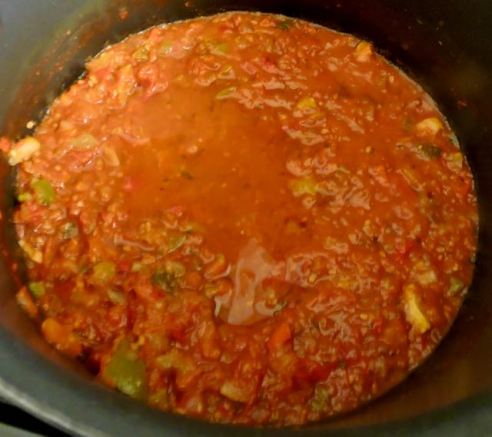
As noted last month, if you make sauce from grape or cherry tomatoes, you have to contend with the hundred or more skins that peel off into the mixture as it cooks. If you don’t like the texture of the skins, you have to find a way–always tedious–to remove them during or after cooking.
Well, our salsa avoids that problem. After you’ve chopped up your tomatoes, mild and hot peppers, cucumbers, eggplant, onion, herbs, garlic, etc.–everything you want to throw in to make your special flavors–gradually spoon your mix of ingredients from your bowl into your blender. Don’t try to blend all of it at once. Experiment with small batches until, batch by batch, you get it all finely chopped. How much blending you do depends on how chunky or smooth you want the salsa.
Once it’s all blended, you’ll have a beautifully wet, chunky, colorful, oh-so-fragrant mess that you can’t wait to pour into your saucepan and cook down.
The great thing about the chunky mess is that the skins of the tiny tomatoes will be tiny-tiny fragments that are just part of the blend.
(By the way, if you don’t want to cook it down, you’ll have a beautiful blend for a summer gazpacho! See “T Is for Tomatoes” and “S Is for Soups and Stews.”)
Your cooked salsa (ours cooked down on simmer in less than an hour) will be perfect for
- chip dipping
- pouring over meatballs
- pouring over pasta
- mixing into a chunky Bloody Mary
or any dish that can be enhanced with rich tomato, herb, and garden veggie flavors.
The Last Word?
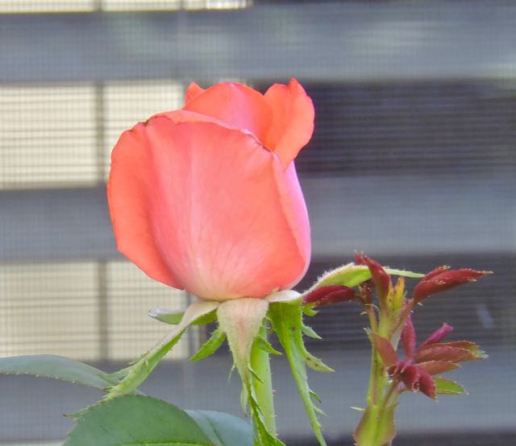
Yes, August does have its roses, too. See you in September!
 From Sacramento to Potomac: Tales of Two Valleys