Chris:
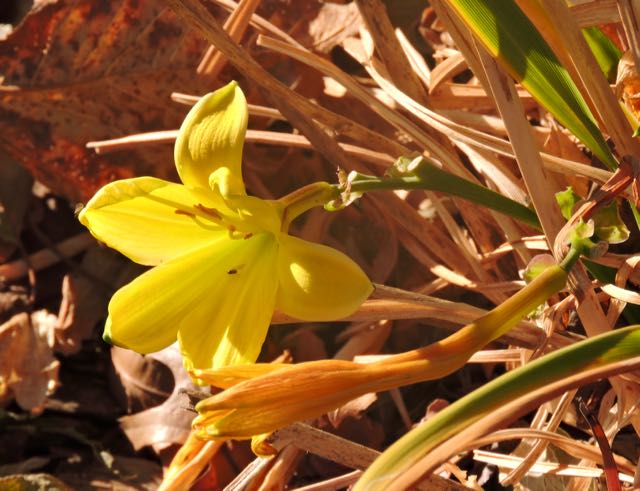
At last, the first raindrops of the season are falling. Just yesterday, the day lily above posed for my camera in the bright morning sunshine. This afternoon, we have the steady patter of drops on the dusty deck in the back garden (below).
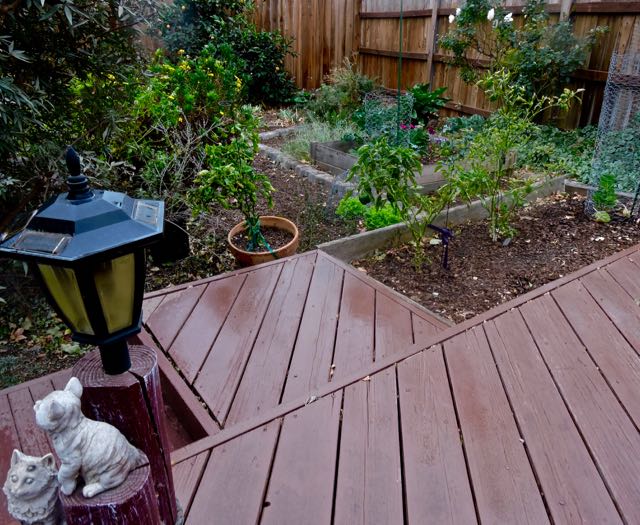
The forecast is for a good soaking here in the Valley, which means maybe an inch. Hey, that would be a great start. Meanwhile, the Sierra foothills might get a foot or more of snow over the next two days, and–if the weather service is right–as much as five feet in the highest passes above 7000′. Thanksgiving is just ahead, and mountain travelers, among whom we were supposed to be, are scrambling to make alternative plans–or at least get an earlier driving start.
Here in the garden, this November has been pretty much like last year’s. Which means that we’re waiting for the rainy season to begin, so that…
- then I can stop the irrigation system, and, more important,
- then all of us in the region can stop worrying when the next big wildfire will explode upon us. As I’ve explored in this blog, October ’17 and November ’18 were horrible fire months, with record death tolls, number of structures destroyed, and burned square miles. In ’17, the fires ravaged Sonoma and Ventura counties; in ’18, the Carr Fire did the same to the area near Redding, then the Camp Fire truly devastated Butte County. (See “December 2018: Rains Come, After the Fires,” and “W Is for Water.”)
This late October and early November, the Kincade Fire swept through northern Sonoma, while three much smaller fires fueled by the annual Santa Ana winds threatened Southern California. But the overall devastation was incredibly less than in the previous two years–about 85% less–in part because the beleaguered Pacific Gas & Electric corporation took the extraordinary preemptive step of shutting off power to a million or more households across the state in the most fire-prone areas. This step reduced the chances of sparks from power lines igniting dry brush, which had been the immediate cause of the Camp Fire, the Sonoma fires of ’17, and other recent blazes.
The effectiveness and justification for the PG&E decisions remain controversial. But at least the PG&E action was one sign of the overall desire of Californians to be proactive in reducing the threat of such devastation as occurred in ’17 and ’18. It is the rare Californian who fails to recognize the fact of gradually rising yearly temperatures and an extended fire season–and therefore the need for collaborative planning toward identifying the most threatened areas and establishing the most effective laws and procedures.
It would be great if the current federal administration were interested in cooperating with the state toward real solutions. But since the 2016 elections the feds won’t even take the first baby step of acknowledging the environmental warming trend, not to mention acknowledging the human and corporate causes of climate change so that real progress might be made toward reducing those causes. Note that 57% of the forested land in California is federal, so the inaction at the federal level truly harms Californians. The Camp Fire and the Carr Fire were among recent catastrophes that began on federal lands.
The Plants of This November
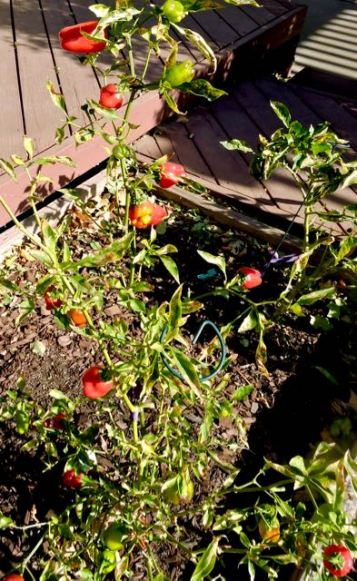
I must begin with the amazing Cajun red pepper (at right), which even now is still putting out new fruit, and whose spicy brilliants keep making our soups and chilis burst with flavor. Last month’s blog was already marveling at the longevity of this plant. Now that it’s threatening to last into December, I’m beginning to wonder if it might become a two-year wonder. Well, time will tell. Let’s see if it can withstand the freezing temps of winter. Through most of November, the daily highs have been from the low 70s into the 60s, but now the beginning of the rainy season will bring the daily range down to the 30s to the high 50s. How much longer can this hearty specimen survive?
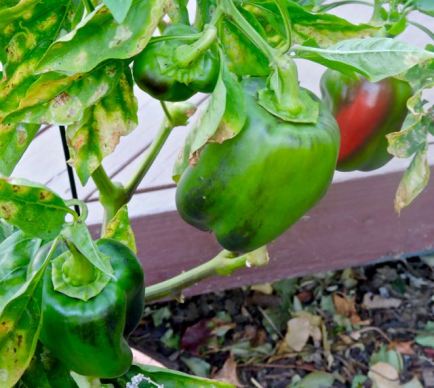
Meanwhile, the Cajun red’s two pepper buddies, both mild, keep going, too, but less spectacularly (see one of them, below). I’d like to replace all three in the raised bed with something exotic, like the French radishes I grew last winter, but right now I’m so intrigued by the pepper oldsters that I’m willing to keep honoring their seniority. I guess that we old folks need to stick together.
Lettuce, Chard, Arugula
Our three very different salad greens have different stories. The arugula this year was a spring planting. In fact, it began with seeds that I planted in a pot in the shady front garden, and which I transplanted to the much sunnier back in July when it didn’t thrive in the front. In the ground in back, it flourished with moderate watering and no fertilizer into the early fall. Now it is heartier than ever and will keep going into next spring, as arugula does. Arugula has always been a strong performer in this garden, and the tiny yellow flowers of this variety are a bee magnet (October video, below).
The leaf lettuce and the Swiss chard this fall are October plantings, and both of these plant groupings had a rough start. The October temps stayed above normal, so the summer insects attacked the new plants, and, believe it or not, a free-range cat who loved our garden also liked to snack on the new veggies. Two chard plants and two lettuces, all of which I’d planted in the ground, pretty quickly disappeared.
However, the four chards and four lettuces that I’d had the good luck to plant in pots survived–especially when I moved them close to the house. Once they were better established, I transplanted one of the chards and two of the lettuces into the ground–but covered them with chicken wire. All of these plants are now doing well, and should thrive in the cooler temps and in the rainy season.
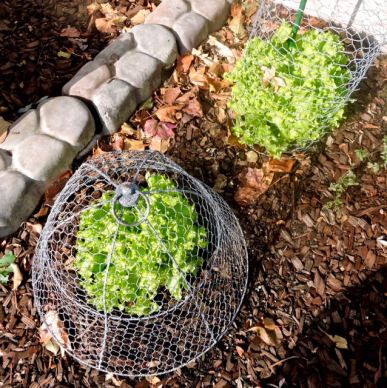
Two leaf lettuce plants, late November
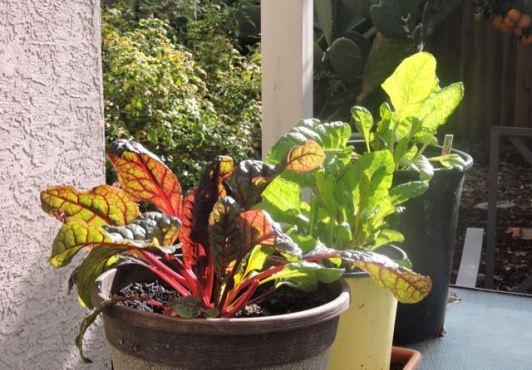
Three Swiss chard plants in pots near the house
Broccoli
Once again, broccoli grows in the winter garden (see below), and in November these October plantings really took off–especially once the weather began to cool off in the past two weeks. In October, one of the plants was devoured by the cabbage leaf butterflies and the remaining five suffered partial damage. But now in the cooler temps, these plants are thriving. The center heads are beginning to appear, and I’ll need to decide if I want to let the center heads grow to their full (and delicious) size (as I did in 2017), or if I want to cut off the center heads so that the small broccolini heads will proliferate around the centers (as I did last year). I may choose to do some in each style.
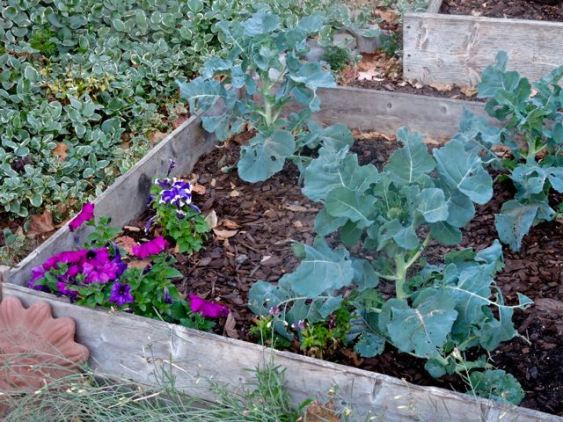
Three broccoli plants, plus petunias, in late November
Petunias
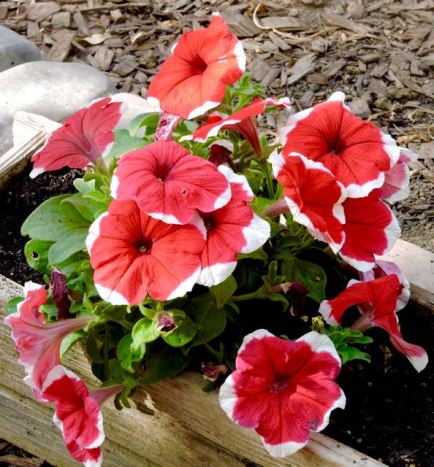
Petunias in wooden planter in back garden, late November
Last year’s petunias lasted from Spring through December and into 2019. This spring’s have now lasted almost as long, and are as beautiful as ever. Indeed, this year, I transplanted several of the plants from the front garden, when the sidewalk pots had been overtaken by the prolific vincas. The transplanted petunias have thrived now in the raised bed with the broccoli and in another planter in the back garden (see above).
In fact, a few of the plants have been transplanted more than once, moving from small pots and into the ground, or from small pots into larger ones. As always with pots, I can move them depending on shade and sun, and most of the moved plants do just fine. And as with our other annual plants, the long growing season means that some annuals can last into the next year with no problem.
Oranges and Lemons
When I have written that our navel oranges and our meyer lemons are ready for harvest in December, I don’t mean that that’s when they look ready. If we went by looks alone, then harvest should be in November (see below).
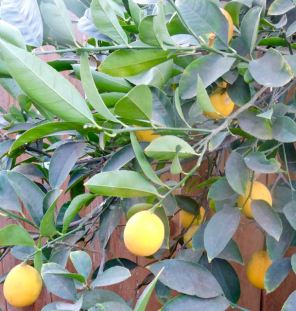
These meyer lemons at right look ripe, a nice deep yellow. And some might be ready for picking. But too often when I pick these November beauties, they are green on the side facing away from the sun, and they are not yet at their peak of juiciness. Just give them a few weeks more, and they’ll have that tiny bit of sweetness they need to keep the sour from overwhelming our taste buds.
Pretty much the same goes with the oranges.
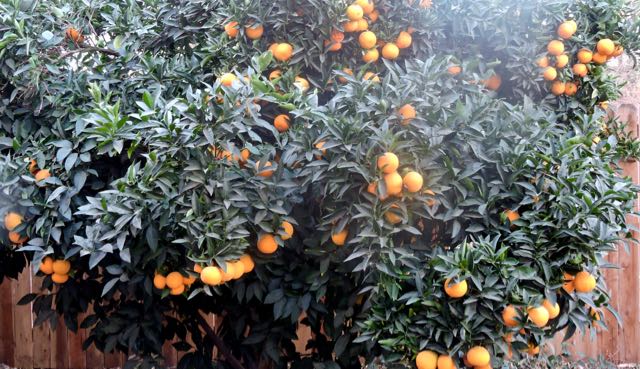
The late November tree (above) looks laden with ripe sweetness. And if you pick one orange ball and cut into it, you’ll get plenty of juice–but your mouth will pucker from the sour bite and you’ll even shiver. Not yet ready!
Try them again later in December and the sweetness will have improved a lot. Try them again in January, then February, then March–and each month the sweetness grows greater until the March guys are memorably sweet, but still with enough tang to be oranges.
I’ve written so much about the orange tree in this blog over the years, but I never get tired of the sweet, juicy, fragrant, huge miracle that it is. Every new season dazzles me still. May we never, ever, take this miracle for granted.
A Late November Gallery
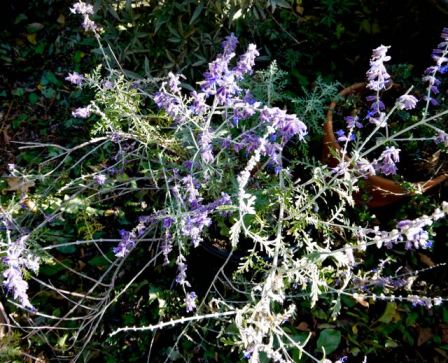
Culinary Russian Sage, back garden

Lantana, back garden
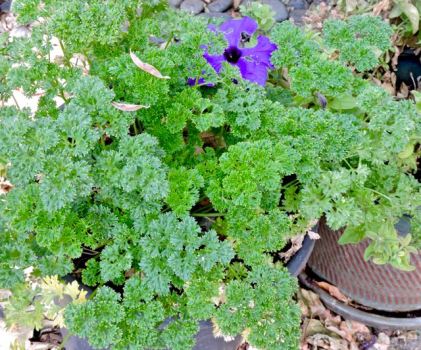
Curly Parsley
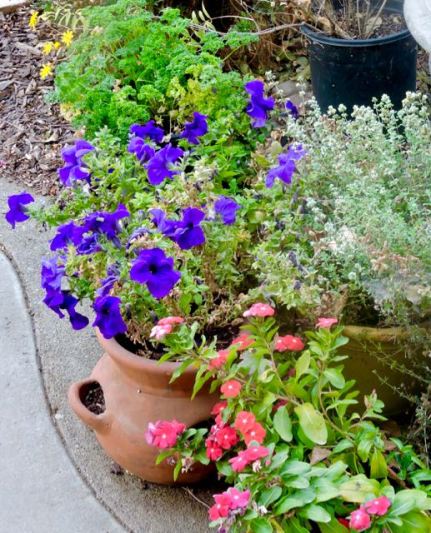
From top: Euryops, parsley, petunias, marjoram, vinca, back garden
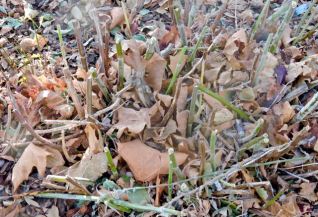
Mexican bush sage, cut back for winter
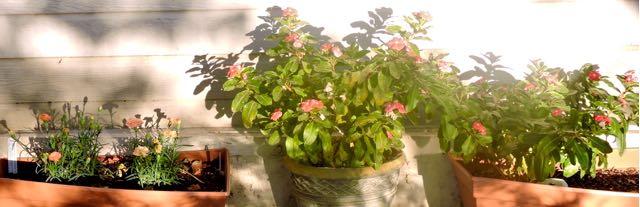
Dianthus and vinca, front garden
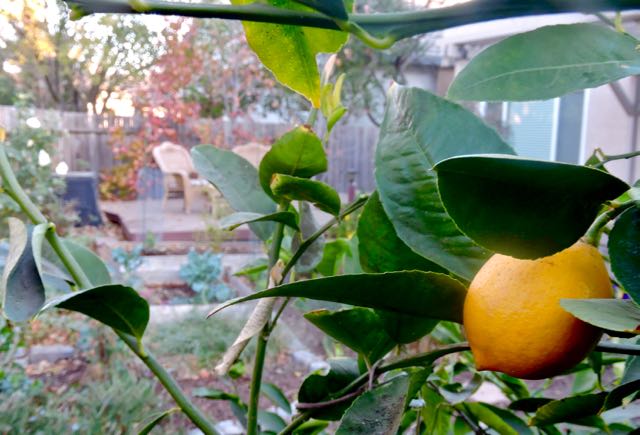
Through the meyer lemon bush toward the back garden
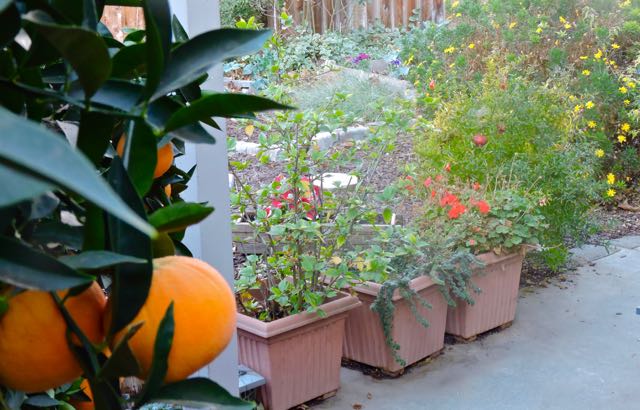
Through the orange tree toward the hibiscus, spicy oregano, geranium, dwarf pomegranate, Euryops, back garden
Late November coda, just before the rains…bees in the Mexican sage…
..and on to December…with hopes for more rain to forestall more fires this season.
 From Sacramento to Potomac: Tales of Two Valleys
Pingback: August 2020: Heat, Lightning, Fire, and the Garden Goes On | A Sacramento Valley Kitchen Garden