
In this month’s blog:
1. Heading for the Driest on Record
2. The First Month of Spring
3. More February Bloomers
4. February in the Kitchen
Chris:
1. Heading for the Driest on Record
Don’t be alarmed. This isn’t a photo (above) of an approaching wildfire. It’s just a beautiful February sunset seen from our back garden. But you’ll have to excuse me for thinking of fires when, yet again, in what is usually one of our wettest months, the weather news is depressingly the same from day to day: sunny and dry, with temps from the 40s to the 60s, and even into the 70s, warmer than average. (Today’s predicted high of 77 by the National Weather Service would be a record for this date.)
Please understand: I’m trying not to take for granted the magnificent weather in California, but the gardener in me always wants there to be that magnificent natural balance between sun and rain. Between late October and mid May, the climate usually blesses us with enough rain (and mountain snow) to tide us over during the intensely blue skies and high temps of June through mid-October. See, balance.
So you’ll forgive me if I share the alarm of many fellow Golden Staters when it looks as if Northern CA will have for the first time in recorded history no rain in February–not even a trace or a smidgen or a drop.
Meteorologists blame the infamous “high pressure ridge” over the Pacific, the same condition that gave us the 5-year drought that ended in 2016, before the way-above-average rain seasons of 2016-17 and 2018-19. So Californians are used to these climatic waves, and as I wrote in “W Is for Water,” we have done many things to prepare for them and to see them through.
So I’m not horribly anxious about this go-round. Yet it does come as a bit of a shock to my sense of well-being when I must reactivate the irrigation system and unwind the hose three months early. Not to mention a shock to our finances because of the rising cost of water.
Oh well, the snowpack in the Sierra still has 50% of normal, and the reservoirs around the region are still mighty deep, so we’ll forge ahead.
2. The First Month of Spring
Meanwhile, it’s February! Which means in our part of the world the first month of spring, the time of first blooms and return of the warm weather birds.
And so…

Panorama of the SW corner of the late February back garden, with a warbler on the fence
There are new blooms all across the garden, and rarely does a day go by in late February when one or more of our plants isn’t beginning to flower–or even bursting into full bloom. Here is this month’s gallery, with a few comments:
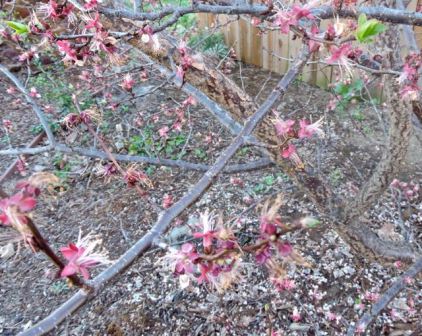
Apricots
Ten days ago, I took the video (above) of the bees hard at work in the just opened blooms of this harbinger of our fruit trees. Now, most of the blooms have fallen to carpet the ground and the tree is beginning to bud it first leaves:
Arugula
With last year’s stems dried out early this month, here come this year’s peppery new stems and leaves from the ground:

Broccoli
This season’s amazing crop just keeps proliferating (see below). The five plants have moved headlong into the blooming phase, and the bees couldn’t be happier. Every time I clip off a bunch for either cooking or decoration (imagine–broccoli as decorative flower!) another green shoot emerges. For cooking, the flowery shoots remain tasty, even with the yellow blooms, because the stems within each floret are thin and tender.
See the following site for more on the joys of cooking and eating broccoli flowers:
https://www.gardenguides.com/90097-flowers-broccoli-sprouts.html

Bees on largest blooming broccoli head
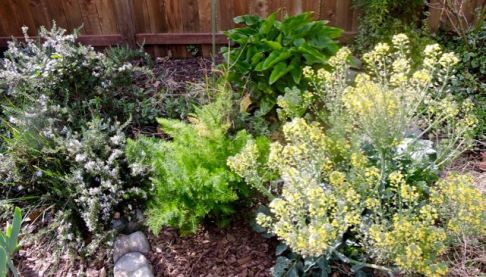
Broccoli plants with fennel, rosemary, and calla lily
Cajun Red Pepper
Now in its 11th month, this wonder just keeps producing ripe, spicy fruit. I’ll grab its space for new plants in April (or will I?)
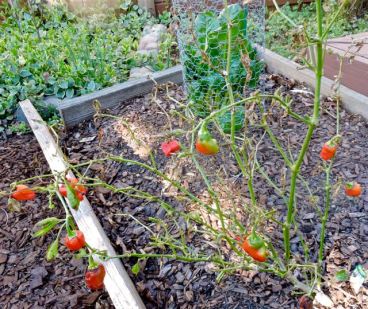
Cajun red pepper, still thriving, with Swiss chard and periwinkle in background
Cherry Plum
The white and deep burgundy blossoms of the cherry plum (below) come just after those of the apricot. Last year’s tiny plums were the most prolific ever, over a thousand; what will happen this year?


Lemons and Oranges
While ripe fruit still awaits us on the orange tree and the meyer lemon bush, new shoots and even a few buds proclaim that the next crop is coming…
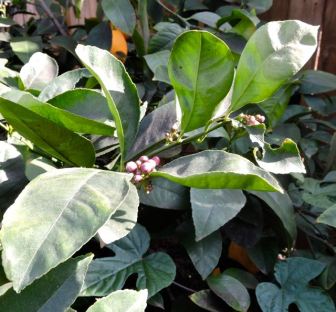
New buds on the lemon, while ripe fruit hide.
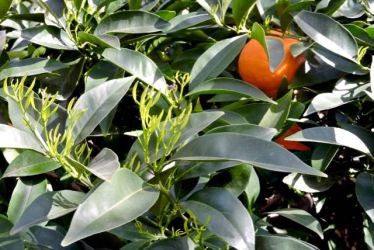
New shoots share space with the ripe oranges.
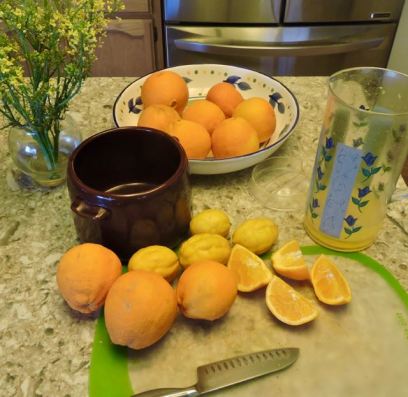
…and I just keep making juice:
3. More February Bloomers
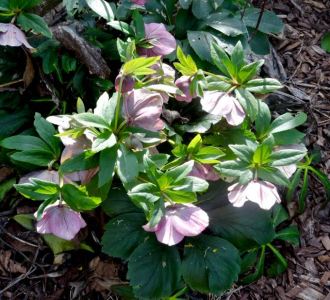
Lenten Rose
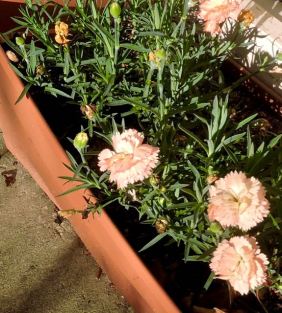
Dianthus
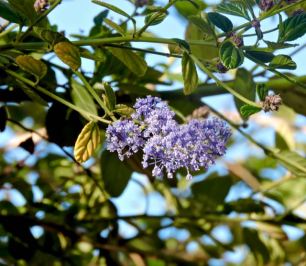
First blooms on the Ceanothus (Western Lilac)
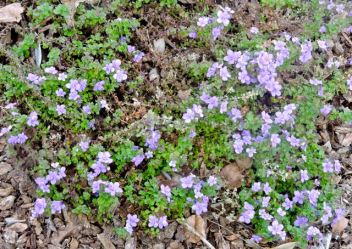
Bacopa
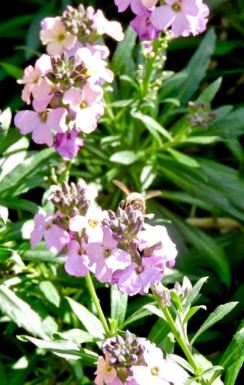
Erysimum
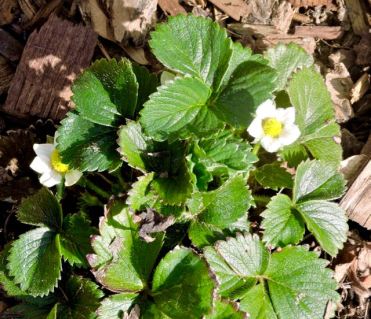
Strawberries
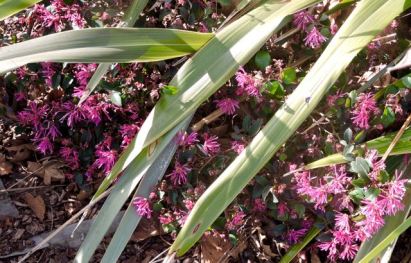
Loro Petulam beneath New Zealand flax fronds

Periwinkle (Vinca)
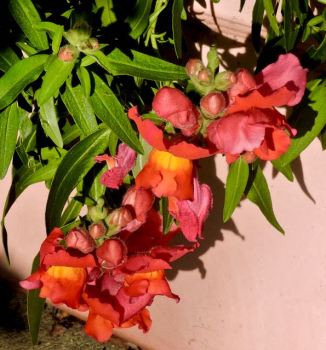
Snapdragon
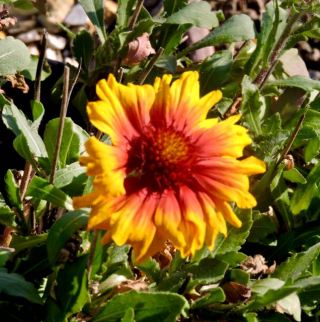
Gaillardia
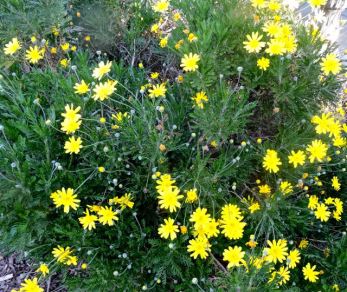
Coreopsis (Euryops)
And getting ready to bloom in March…
…are the roses, all trimmed back in January and now rich in new shoots and leaves:


While all this goes on outside, inside it’s also cookin’…
4. February in the Kitchen
Jean:
Ginger Pear Apricot Upside Down Cake
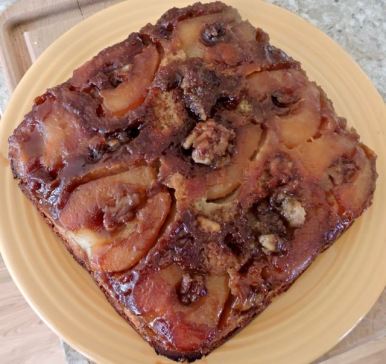
Jean’s ginger pear apricot upside down cake
This is an upside down fruit cake, which is always popular. To make the cake itself, you can use your favorite gingerbread recipe or cake mix. I used a simple homemade spice cake recipe, below.
1. First, prepare the topping in the bottom of your cake pan. Using a 9-inch square pan, combine 2 tablespoons hot melted butter with 1/4 c. brown sugar and 1/4 c. dark corn syrup or molasses. Make sure those are well blended and spread over the bottom of the pan.
I also put down a layer of our homemade apricot jam (from last year’s crop), for an additional layer of flavor.
2. Then arrange 9 showy half-nuts like walnuts or pecans equidistant apart and place 9 canned pear halves, cavities down, on top of the nuts. You can add more nuts, maybe broken ones, and/or candied ginger, in between the pears. Set aside while you prepare the cake and preheat the oven to 350 degrees.
3. For the cake itself, sift together 2 cups flour, 3-1/2 tsp. baking powder, 1-1/4 c. sugar, 1 teaspoon salt, and 2 tsp. spices. You can either use a gingerbread spice mix, or 1 tsp. cinnamon, 1/2 tsp. nutmeg, and 1/2 tsp. ginger. Throw in a little allspice and cloves if you have them. It’s all good.
4. Next, beat in 1 cup milk, 1/2 cup shortening, and 1 tsp. vanilla. (I used coconut milk for half of the milk and shortening because I had some left over, but that’s up to you.)
5. Beat for a couple of minutes, then add 2 large eggs and beat another couple of minutes. Pour into the prepared cake pan until 3/4 full. If you have too much batter, as you probably will, bake the rest as cupcakes. (I tried using half a recipe of the cake batter, but it didn’t sufficiently fill the pan.)
6. Bake the cake for 40 minutes and cupcakes for 20 minutes. Let the cake stand just a minute before inverting onto a cake plate. You don’t want the sugary topping to seize up before you try to release it from the pan, but try not to break the cake. You might need to go around the edges with a knife first, to make sure the cake can come free in one piece.
7. We served this upside down cake to guests, and they loved it!
Lemon Almond Tart
Our meyer lemons are so abundant and so juicy that I wanted to use them in a special way. We also had on hand a lot of delicious sliced almonds, another Sacramento Valley staple, so this is what I came up with to use them together.
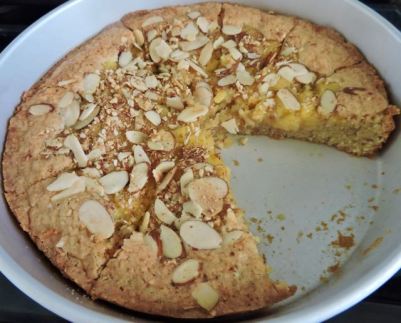
Jean’s Lemon Almond Tart (A quarter already disappeared before Chris could even get the photo!)
FOR THE CRUST:
- 1 ½ cups/192 grams all-purpose flour OR substitute some of the flour with almond meal
- ⅔ cup/82 grams confectioners’ sugar
- 1 ½ teaspoons kosher salt
- ¾ cup/170 grams (1 ½ sticks) unsalted butter, melted
FOR THE FILLING:
- 1 cup/240 milliliters fresh lemon juice
- 1 ¼ cup/250 grams granulated sugar
- 3 large eggs
- ¼ cup/32 grams all-purpose flour
- 1 tablespoon freshly grated ginger
- ½ teaspoon ground turmeric
- ¼ teaspoon kosher salt
- ½ lemon, thinly sliced, seeds removed (optional)
- sliced almonds
- Make the crust: Heat the oven to 350 degrees.
- Whisk together flour, sugar, and salt in a medium bowl. Drizzle in melted butter and, using a spatula, mix until well combined. Press this into the bottom and up the sides of a 9-inch tart pan or square pan, using the flat bottom of a glass or cup to even it.
- Bake the tart shell until it’s a pale golden brown on the edges and baked through on the bottom, 15 to 20 minutes.
- In a medium bowl, whisk together lemon juice, sugar, eggs, flour, ginger, turmeric and salt. Make sure no lumps remain, but don’t overmix. Pass the mixture through a fine mesh strainer to make sure no bits of flour or egg are left behind. (I actually cooked this on a double boiler and then strained it, to get out lumps of white.)
- Transfer filling to the crust (depending on the depth of your pan, you may have a little yummy lemon curd left over). Lay reserved lemon slices and/or sliced almonds across the top. Bake until the edges are set, 15 minutes. Let cool completely before slicing.
And on to March!


 From Sacramento to Potomac: Tales of Two Valleys
Pingback: August 2020: Heat, Lightning, Fire, and the Garden Goes On | A Sacramento Valley Kitchen Garden