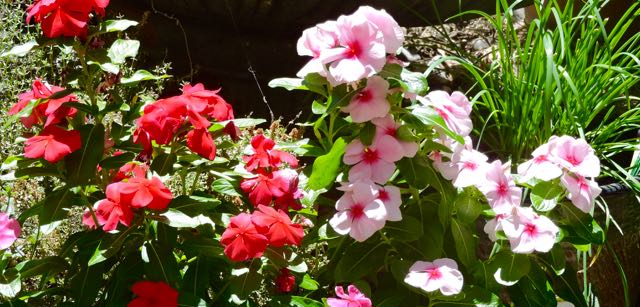
Our vinca and chives thrive even amid the nearby wildfires and the scorching heat wave.
Chris:
February’s record low rainfall–0.0″–should have prepared us for what has happened this August. With no appreciable rain since December’s excellent 8-12 inches, we were all set up for an early, violent fire season. For Northern California, it’s never if, only when. And with the world’s climate getting slowly and steadily warmer, it’s easy to predict that the fire season will start earlier in this region of long, hot, dry summers.
Thunderstorms and High Heat. It was less easy to predict how our current fires would suddenly ignite. For the past three years, our publicly-traded power corporation, PG&E, has been largely to blame, and we have all paid dearly for their systemic lapses in oversight. (See December 2018 and November 2019.) This month, however, a record heat wave sent temps soaring to 105 or greater for a week in the middle of August. At the same time, hurricane Fausto off the coast of Mexico sent–incredibly–thunderstorms into California. Now, we never have rain in August. But this year, in addition to a smidgen of rain, we got lightning strikes, lots of them, all across the state. The result was more than 600 brush fires in a little over 3 days all up and down the state. More than 20 of these grew large and hard to contain.
The worst have been in Northern California. As I write, a cluster of such fires has more or less merged into a massive conflagration (called the LNU Lightning Complex) that in a week has swallowed up more than 350,000 acres across Sonoma, Napa, Solano, and Lake Counties–California’s fabled wine country. Thinly-spread fire corps, their numbers already depleted by various effects of COVID-19 (see May, June, and July 2020), are battling to save people, structures, and livestock across the rugged mountains, hills, and canyons. The cities of Fairfield and Vacaville have been threatened, as well as iconic towns, vineyards, and ranches of the region. Many thousands of people have been temporarily evacuated. A blanket of acrid smoke and ash dims the skies for fifty miles in all directions.

Credit: Sacramento Bee, August 21, 2020
Trying Not to Overdramatize. Still, for folks outside California who only get the lurid headlines and the even more lurid photos, it’s too easy for writers to ignore the steady, effective work of the many thousands of firefighters–including those from other states and even other countries–and all their thousands of supporting workers in keeping the damage and danger to a minimum. Yes, the current fires across the state have burned 1.3 million acres so far–or 2031 square miles (twice the size of the little state of Rhode Island). But those 2,031 square miles are only a tiny fraction (1.2%) of the 164,000 square miles of California. (That’s 104,000,000 acres.) As horrible as the fire damage is to the people and wildlife in the areas burned, we shouldn’t ignore how much doesn’t burn, and how much is saved by the collective work and courage of so many.
If you want to get some sense of the challenges facing the state and local agencies working so hard to minimize fire danger in California, see this current article in the Sacramento Bee.
Nor should we overlook the collective resilience of the 40 million Californians who carry on their work and reinventively adapt amid the danger posed by the fires, just as they have done their best to survive, reinvent, and assist throughout the now six months of the pandemic. Work of infinite kinds goes on, and most Californians every day protect and serve their fellow Californians by following state and local safety guidelines.
Staying in Place, for Yet Another Reason. Those of us who have grown accustomed to staying indoors for most of every day and for most days of the week because of the virus just shrug our shoulders when the weather folks tell us to stay indoors out of the smoke. “So what else is new?” we ask.
But when we do go out for a walk, or drive to a store, and when I go out to work in the garden, we just don our comfortable masks and go about our business, at least for a short while. I won’t undertake any strenuous garden projects while the air alert persists, but I can water my pots and can pick ripe tomatoes, zucchini, peppers, cucumbers, and herbs, all for less than an hour a day. Any time-intensive trimming has to wait, as well as any new planting or transplanting jobs that I am itching to get into. I realize that I need to restrain my old man’s pride in my (limited) physical capabilities, lest I injure myself and limit my ability to be of service to others.

Our cucumber leaves covered in ash from the LNU wildfires
The Garden Goes On, in Typical August Fashion
The robust harvest of July is past, but the tomatoes, peppers, cukes, and zooks have kept producing in the high heat, and the herbs are as healthy as ever. The rosa bianca eggplants are just about to come into their own, with promise for September. Meanwhile, the green oranges and the green meyer lemons get bigger. It’s August.
A few highlights:
Tomatoes: The 2 Carmello mid-size plants gave up their last ripe gems last week, after having been marvelously productive until then. Definitely on the menu for planting next spring.
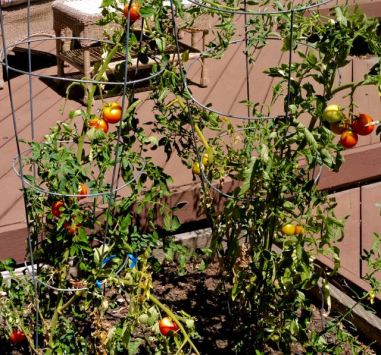
Carmello plants still producing in mid August
Meanwhile, the blueberry mini tomato plant is still lush in its fourth month, with a dozen or more ripe jewels harvested most days and lots of yellow blossoms all over the plant. How long will it keep going?


Peppers: The 1 ancho chili plant and the 3 mild peppers (green, yellow, and red) have been steady producers since June, and are still fruitful.
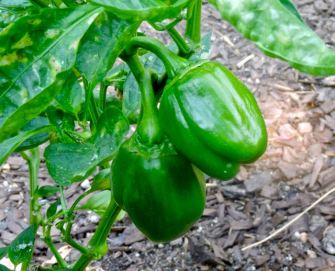
Mild yellow pepper plant in raised bed
Zucchini: Our one magnificent plant has been producing mammoth fruit for more than 3 months and is still going strong. It’s amazing how the fruit keeps fresh in the fruit bowl for weeks, even as we chop it bit by bit for stir-frying, omelets, soups, etc. When there’s too much for us to use or give away now, the rest can be chopped up into bags for freezing and use after the summer.
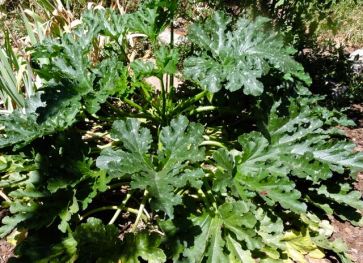
The mammoth zucchini plant, six feet across

Still fruiting and blooming in late August
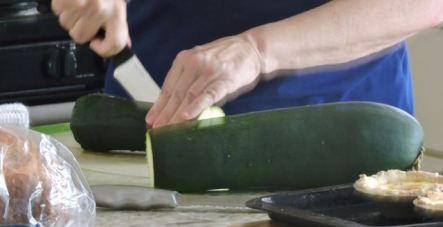
Prepping huge zucchini for roasted veggie mix (see below)
Lemon Cucumbers

Lemon cucumber still blooming in August and new fruit hiding beneath the leaves
Rosa Bianca Eggplants
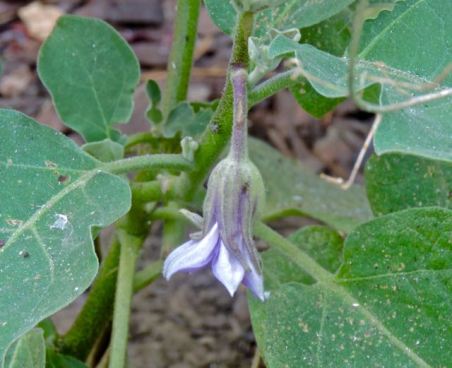
New blooms in late August on both plants signal that September will be their major month.
The Kitchen Goes on, Too
Jean:
Despite fires, smoke, extreme temps, and even more reason to stay inside, the kitchen always gives us a comfortable climate. There’s always something good to make, like…
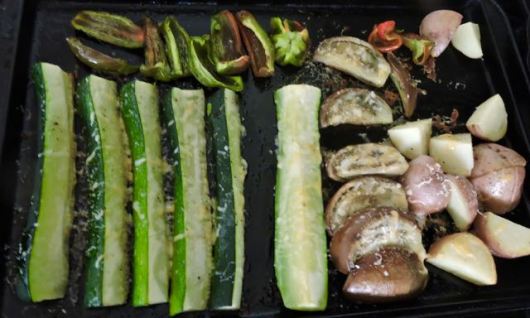
Roasted Zucchini, Peppers, Ancho Chilis, Eggplant, and Potatoes, Topped with Parmesan
or something sweet that reminds me of cooking with my mother…
Blueberry Lemon Chiffon Cake
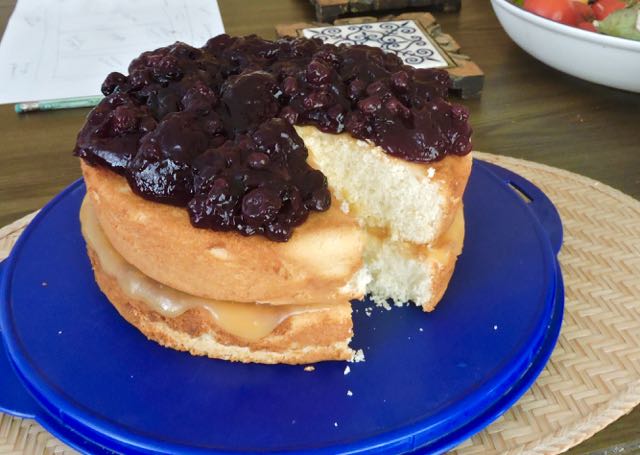
Watching reruns of the Great British Baking Show finales, I was inspired to make a chiffon cake (which was contestant John’s winning finale showstopper in Series 3). I haven’t made one of these for years, but it reminded me of baking as a kid with my mother. I could not find a recipe for this cake on the BBC website, but I found a classic chiffon cake recipe on the Great Canadian Show website.
2 eggs, separated
1-1/2 cups sugar (I used a cup of sugar and half a cup of sugar substitute)
2-1/4 cups cake flour
1 T. baking powder
1 tsp. salt
1/3 cup salad oil
1 cup water, milk, or juice (I used a frozen container of our own Meyer lemon juice with some water to complete the measure)
1 tsp. vanilla or other flavoring
Preheat your oven to 325 or 350 degrees. Grease and flour two round cake pans (I found this easier than using an angel-food type pan).
For the meringue: In a small bowl, beat the egg whites until foamy; then add 1/2 cup of the sugar one tablespoon at a time, beating until the meringue is very stiff and glossy.
For the cake batter: Measure and sift or combine the remaining sugar, flour, baking powder, and salt in a large mixer bowl. Add the oil, half the liquid, plus the vanilla or other flavoring. Beat one minute on high, scraping the bowl constantly. Add the remaining liquid and egg yolks; beat one minute, scraping occasionally.
Fold the meringue into the batter; then pour the mixture delicately into pans. Bake 30-35 minutes until a toothpick comes out clean.
My own wrinkle: I put some lemon curd in between the layers. A good choice! I also debated making a lemon glaze for the top. I should have done that.
Instead, I decided to top it with a blueberry mixture that was too heavy for this delicate cake–the cake fell over a few minutes after the photo above was taken!
However, as I know about most cakes, it tasted good no matter what it looked like. Chris agrees. He loved the contrast between the blueberry and the Meyer lemon.
Besides, the crumb on this chiffon cake was so delicate–I certainly didn’t need those five more eggs that other recipes call for.
Late August Gallery
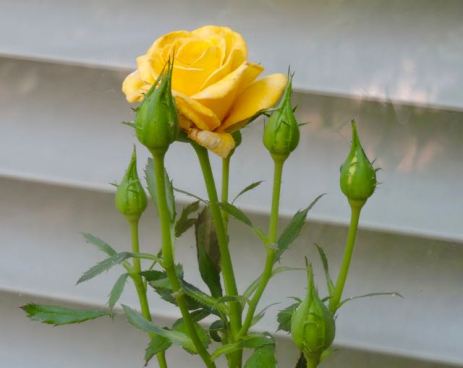
Yellow rose and always more buds, front garden
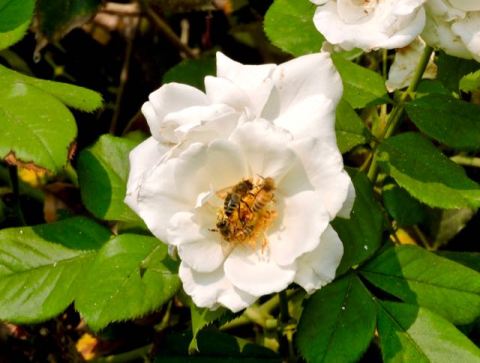
Three honeybees clamor in a white rose, back garden
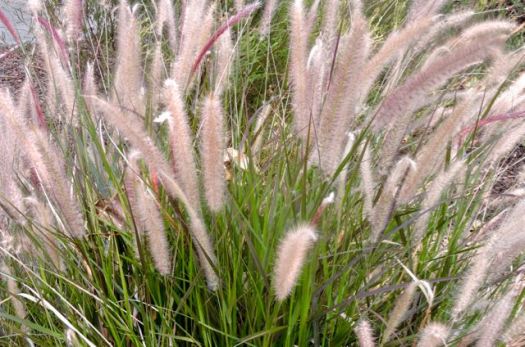
Fountain grass, front garden
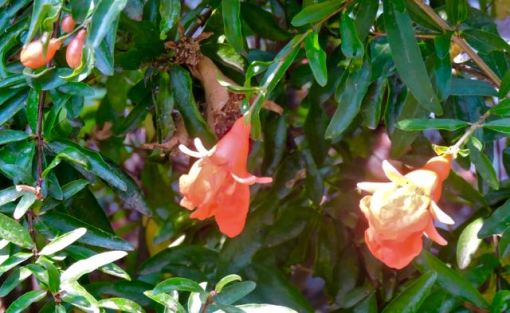
Latesummer pomegranate blooms, back garden
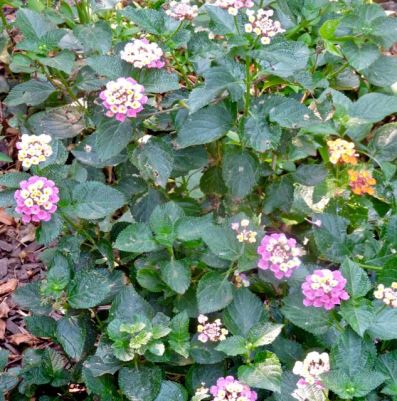
Multicolor lantana, back garden
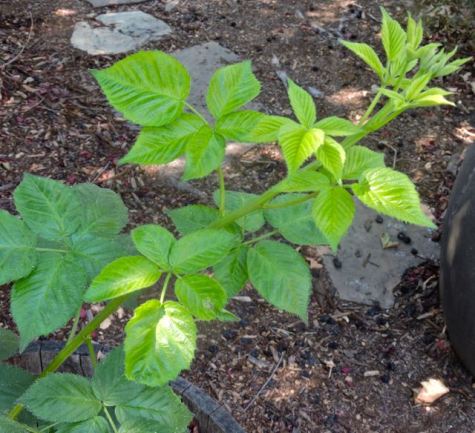
New blackberry vine, side garden
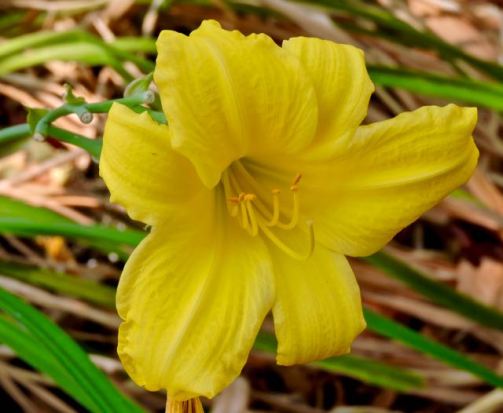
Latesummer day lily, front garden
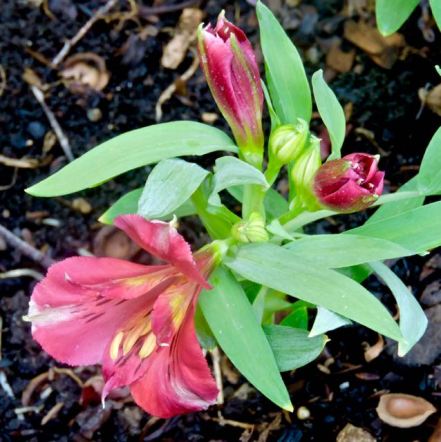
Latesummer alstroemeria, side garden
September awaits…
 From Sacramento to Potomac: Tales of Two Valleys
Pingback: September 2020: Summer Lingers, Fires Live On | A Sacramento Valley Kitchen Garden
Pingback: October 2020: Prepping for Winter, Waiting for Rain | A Sacramento Valley Kitchen Garden
Pingback: If Life Gives You Lemons… | A Sacramento Valley Kitchen Garden