Chris:
Fires Live On
Since I last wrote, Oregon has seen unprecedented wildfires and mass evacuations, a situation resolved until next year by mid-September rains. But the record-breaking fire season in California marches on, with no rain expected until late October, at the earliest. As of today, 20 named fires, in various states of containment, burn, and 3.7 million acres (about 3% of the state) have been damaged. As reported in last month’s blog, very rare lightning strikes in mid-August caused many of these fires, 60% of them in national forests under the jurisdiction of the U.S. Forest Service. Most of the rest are on private land, with the state of California providing the resources to fight the blazes. Personnel from several states, plus Canada and Mexico, have been working with the more than 10,000 California fire first responders to try week upon week to quell the outbreaks and build earthen walls to contain the spread.
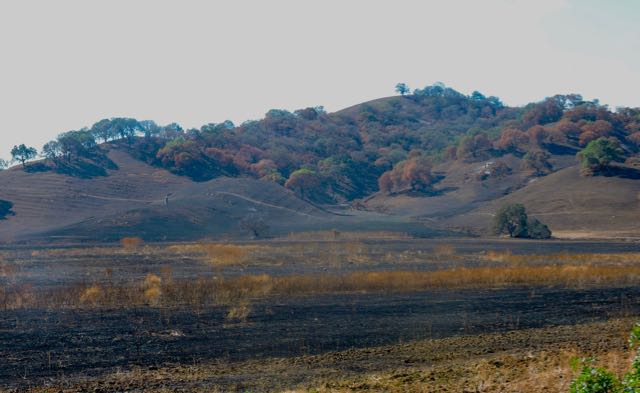
The tireless work of these firefighters, aided in the past two weeks by somewhat cooler and less windy weather, has halted the spread in many parts of the state. But the terrain where most of the fires live–wooded mountains, steep hills, and deep canyons–makes it unlikely, even impossible, to fully put the fires out.
So a sudden shift in the winds and windy bursts of greater intensity can cause a “contained” fire to become once again an inferno, as happened three weeks ago in Plumas National Forest in the northeast part of the state, near where the deadly Camp Fire of 2018 took the lives of 85 in Butte County. The Plumas Fire itself, now renamed the North Complex, took 15 lives of its own as it roared through the tiny town of Berry.
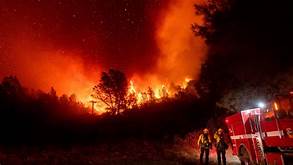
Meanwhile, in Southern California, the Bobcat Fire, in the rugged Angeles National Forest not far from Los Angeles, has been stubbornly resisting containment. It has brought dangerously smoky air to the population center of the state.
As long as the ground stays dry and daytime temperatures stay in the 80s or above, the threat remains. The lightning strikes in August coincided with a record heat wave–105 to 114 some days–to set the stage for the record-breaking fire season. But rather than these conditions being a freak event, experts agree that climate change is making them more frequent, creating what most here are calling a “new normal.” Indeed, the great majority of Californians find it incomprehensible that anyone (like the current President of the U.S.) could deny the steady change that we live through year by year. We can’t understand why some so-called national leaders not only ignore, but actively work against, the need to reduce carbon emissions in order to avoid this global catastrophe in the making.
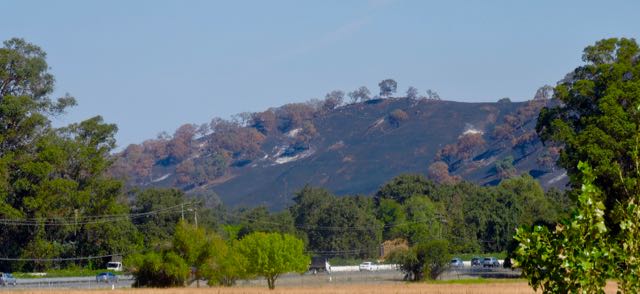
As Always, Water Makes a Difference
While the areas that burn must depend completely on the hoped-for rain to douse the fires until next season, Jean and I are among the fortunate millions in California who have plentiful water to keep our plants drip-irrigated or conservatively hand-watered. Across the world, having or not having water is always a matter of political and economic choice by the powerful. So is whether or not the lucky will choose to conserve some of the water they can access. When we take our daily early-morning walks through our neighborhood, we pass house after house where the irrigation of choice is lawn sprinklers. Gallons of the precious nourishment just run off the sidewalks and driveways to disappear into the concrete storm sewers.
In the September Garden: Fall on Hold
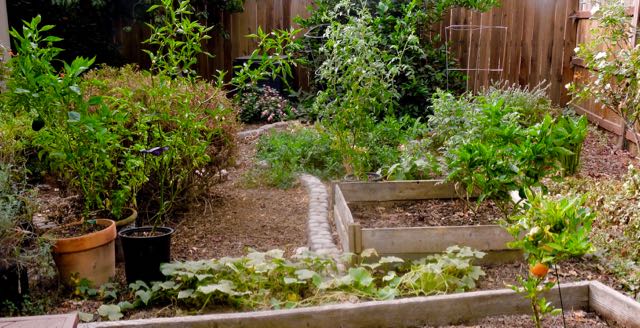
For us, who were close to the mid-August blazes, but who now just worry about the next outbreaks before we get rain, the smoke- and ash-filled air of a month ago has been replaced by the blue skies and bright sunlight we expect this time of summer-into-fall. The days begin to shorten and the plants of summer struggle against the lessened sunlight to produce the last few among the fruits that so abounded from June through August.
September is that month which marks the transition from exhausted spring/summer veggies to the winter crops I’ll plant in October. Or at least it’s supposed to be that way. I was planning to pull out the four remaining tomato plants, the four pepper plants, and the two cucumbers–all of which have done great work from April through August. I was actually looking forward to some bare soil in the back garden and to emptying temporarily a few of the pots.
But the summer heat has persisted, with temps into the 90s and even over 100 (predicted for this weekend). So, shortened days or not, a few of the plants have refused to stop producing. And, as you know if you read this blog, I resist pulling out plants that keep thriving, even if I’m itching to move on to the next season.
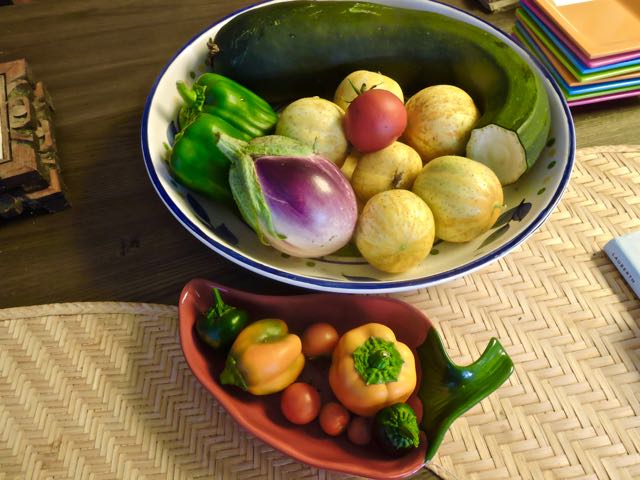
September Gallery
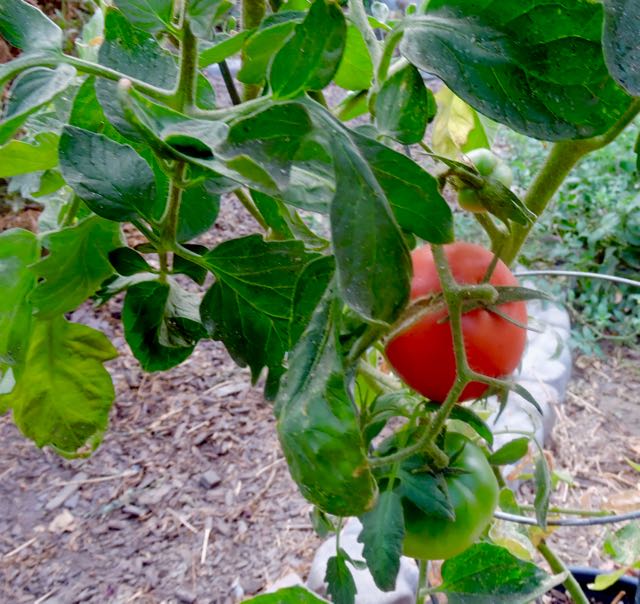
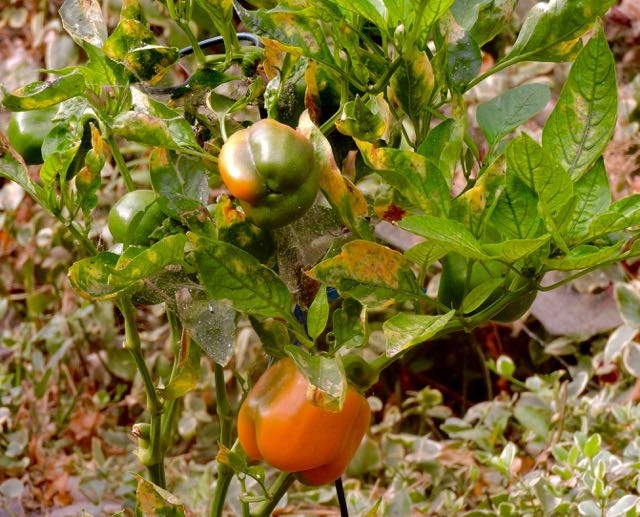
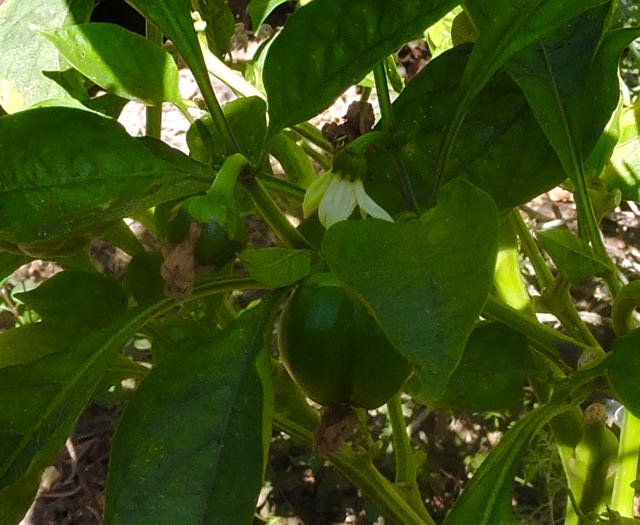
The Carmello tomato I transplanted in June (left) has now in September produced multiple small fruit. Same with the yellow pepper (below) that I transplanted in July from one raised bed, where it got less sun, to the larger bed where it gets full sun.
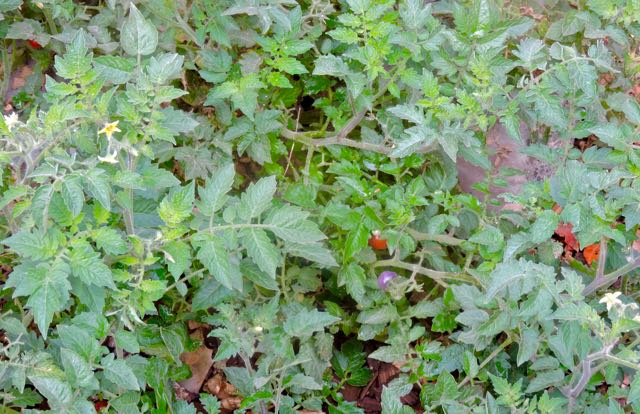
The blueberry mini tomato (below) that I planted in April grew to almost six feet tall and sent shoots out well beyond the cage. This month, I chose to cut down the main stem and just leave the extensive ground cover, which continues to produce fruit and new blooms even as the days shorten.
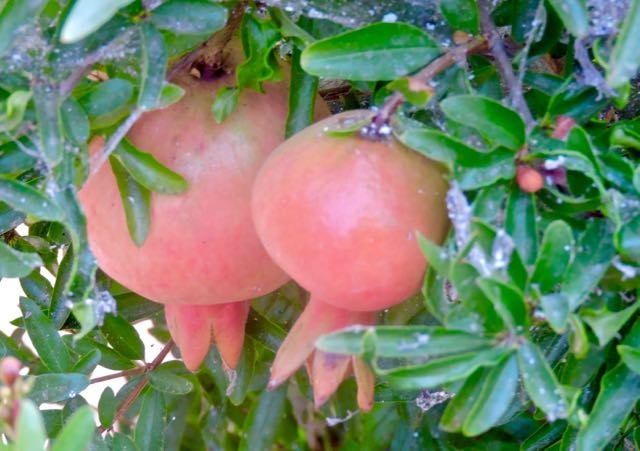
The dwarf pomegranate (below) was self-seeded from one that I was growing in a pot on the verandah. That plant is long gone, but the current one has been growing for four years and is now four feet tall. Its fruit grow larger each year. And even as the fruit ripen in the fall, new blooms keep coming.
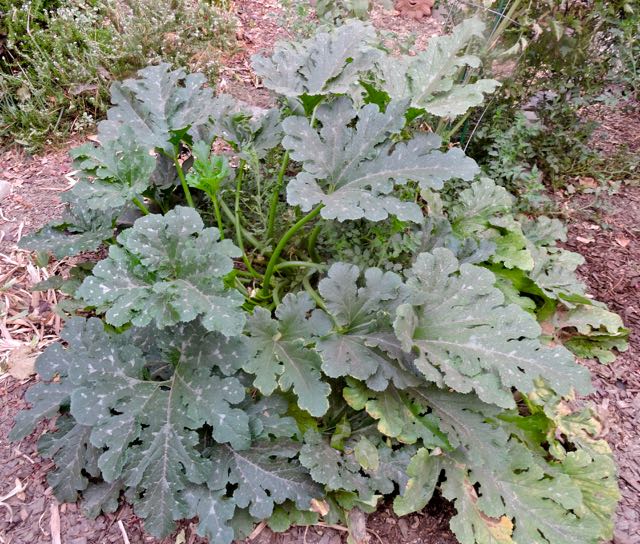
The champion zucchini (below) might still be fruiting if we hadn’t had our fill of mammoth zucchinis this summer. These plants are magnificent, gorgeous and hearty, and they don’t hog water. And I can’t say enough about the versatility, taste, and resilience of the fruit.
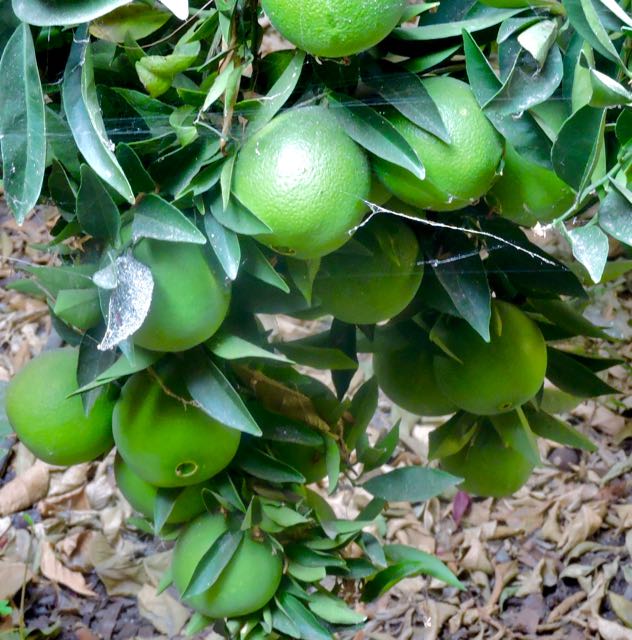
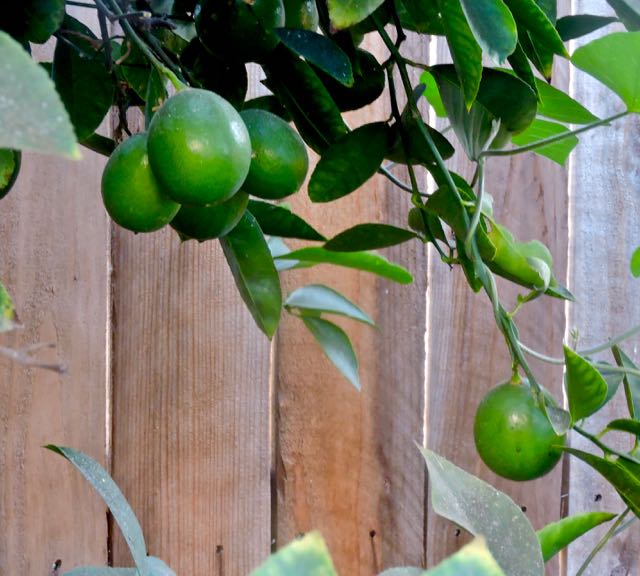
Heading to winter, the navel oranges this year are large, even if they will not be as plentiful as this past season. Size and number usually coincide: the fewer the larger and so on.
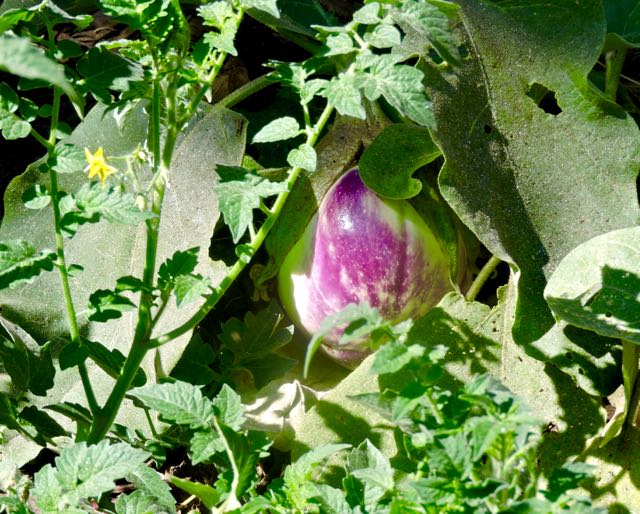
September has become the month for eggplants in our garden. Ours don’t fruit before the end of July or early August, and the most come in September.


On to October, with hopes for good news about fires, and stories about cooking and baking!
 From Sacramento to Potomac: Tales of Two Valleys
Pingback: December 2020: Coda to a Year of Reinvention | A Sacramento Valley Kitchen Garden
Pingback: If Life Gives You Lemons… | A Sacramento Valley Kitchen Garden