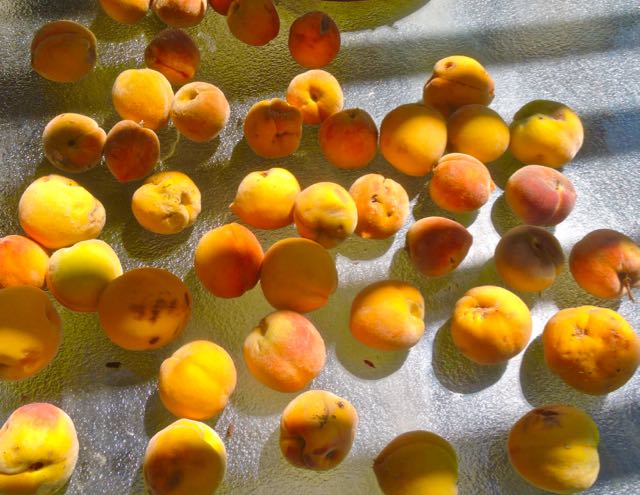
Peaches sun-ripening on our glass table, veranda, mid July
In this month’s blog:
-
Adapting a Mini Garden to a Changed Climate
-
Peaches and Other Highlights
-
The July Kitchen: Compotes, PieCakens, and Jam
-
The July 2021 Gallery
Chris:
As farmers throughout the West are fallowing thousands of acres that they don’t have the water to feed, how do micro-gardeners like me respond? When I decided to cut my water usage by more than 50% in the last drought (2011-16) by taking out our lawn and the wasteful sprinklers, I replaced them with mulch, stones, drought-tolerant plants, and reduced-water drip irrigation (see W Is for Water). But I didn’t shrink the fruit-tree and seasonal-veggie garden, which has increased slightly in number of plants since 2015, and which is now our household’s prime water user in the increasing number of dry months each year.
 Photo above from LA Times article, “Klamath farmers grow fish to quell a water war,” July 23, 2021.
I guess I could claim that I’m still contributing to saving water by virtue of what I did way back in 2015, but that feels false. This current California drought, which began in 2020, is already more intense because
- the population of the state has increased, meaning more water users,
- the number of acres planted in the state grew by hundreds of thousands during the three rainy years (2016-19), so the water is used up faster, and
- climate change has raised the annual temperature, thus intensifying water usage and evaporation, and reducing the amount of snow in the Sierra to feed rivers, reservoirs, and the underground aquifer.

Intensely depleted Folsom Lake Reservoir of the American River, July 24
So we’re in a new normal, meaning we can’t regard what we did in the past as giving us a good guide for the present and future.
One way I can reduce water usage from our already reduced level, while still maintaining a productive garden, is to pull out plants that appear to be struggling and maintain those that are clearly productive. This reduction tactic seems like a no-brainer, but I’ve always wanted to keep plants going as long as they seem somewhat productive, and I’ve always experimentally wanted to give newer plants a chance, even when they seem to have little punch. But this year I’m not so forgiving, because every unproductive food plant I keep watering is a wasteful indulgence, I feel.
So my veggies are now down over 25% after a productive May through July, including culling 2 of my 6 pepper plants, 2 of 7 tomato plants, 1 of 2 remaining chards, and 2 of 5 strawberries. Meanwhile, my 3 Burpless cucumbers are living on borrowed time, because the excessive heat and lack of humidity have taken a toll on their health. Also, I may decide that the always prolific zucchini has done enough for the season and pull it out earlier than usual.
All in all, it’s been a good summer garden-wise, despite the heat and water woes, but I may decide that the season will end earlier this year, at least for the plants that I can’t justify continuing to water.
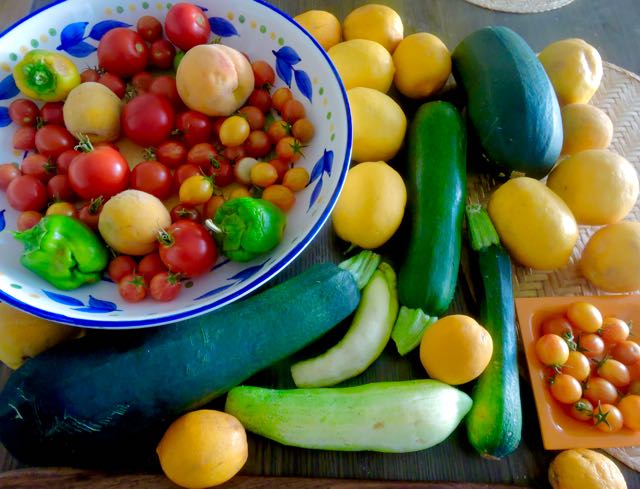
Some of our early summer bounty, shown on July 15.
The larger issue, though, is weighing the value of even having a small garden like mine versus the value of saving water. From the perspective of dollars and cents, what I spend on watering the garden per month is much less than what I save at the grocery store by not buying fruits and veggies such as those in the photo above. But another perspective–among many–would say that my having easy access to produce stores and money to spend there means that I don’t need to have a fruit and veggie garden, so I don’t need to use that water.
In contrast, in many U.S. cities, especially in lower-income neighborhoods, access to plentiful produce at a reasonable price is limited. In these “food deserts,” a home gardener can be not only a powerful good to a family, but a model and incentive for a community, especially if media publicize these resources. See, for example, the photo and caption below from the Sacramento Bee this week.
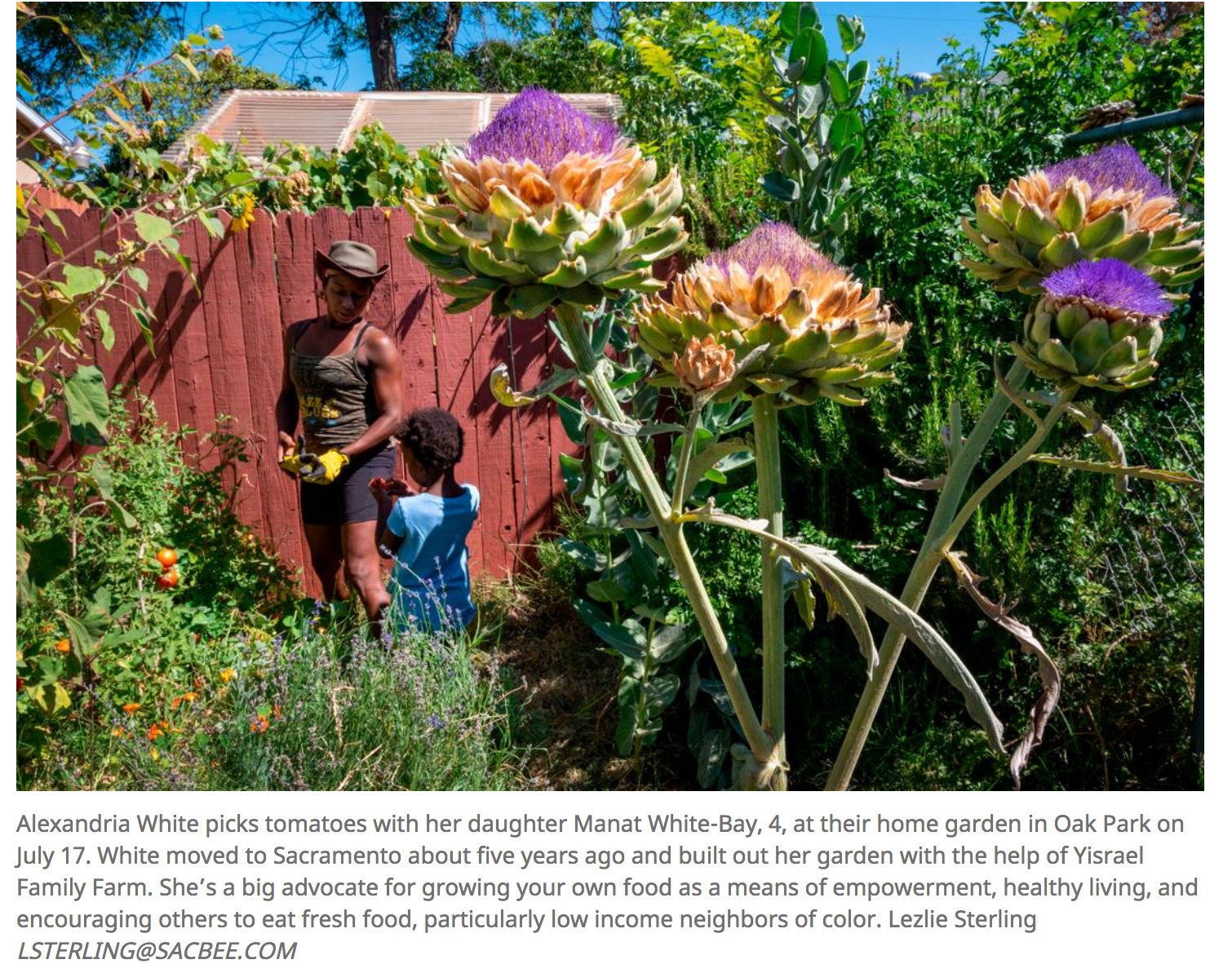
from Sacramento Bee article, “‘It’s our heritage’: How Sacramento residents fight food insecurity through urban farming,” July 22, 2021 https://www.sacbee.com/news/equity-lab/article252822003.html
Peaches and Other Highlights

July is typically peach month in our region. As I’ve noted before, 2020 gave us a grand total of one peach, as a result of strong March winds that knocked off the buds. But 2021 more than made up for that lean season. Green fruit covered the tree in late spring, and we have been handling the avalanche of several hundred ripe, sweet, and juicy peaches this month.
Unlike oranges and lemons, all the peaches ripen and need to be picked over a two-week period or they’ll just fall from the tree and rot; so it’s a challenge to use the abundance right off the tree or save it through preserving it in the form of jams or baked goods that can be refrigerated or even frozen (see the Kitchen section, below, for ideas).
But, as I’ve written elsewhere in this blog, every fruit that falls is food for the birds, other small critters, and the plants that they nourish. So nothing is lost. Indeed, since many of the peaches that fall may wind up in our compost bin, those fruit will go on to nourish the soil for coming years.
Lemons: I just have to marvel once again at the persistence of our meyer lemon crop this season. It’s almost the end of July and I’m still making lemonade! That’s a good three months beyond what we’ve ever had. Meanwhile, the small green orbs for next season are getting bigger by the week. This is one plant that absolutely is thriving in our hotter, drier climate! 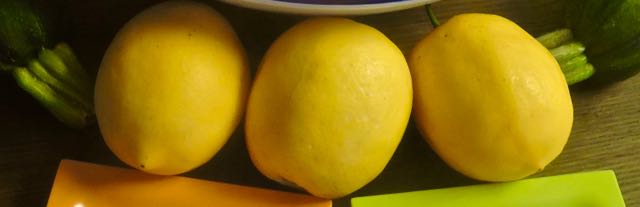 Eggplant: The two Black Beauty eggplants are a dilemma for me in this garden. As always, they are late fruiters, usually not forming fruit until July and sometimes not being fully grown until late August or September, even though the seedlings went into the ground in April. If it weren’t for the fact that these two keep showing gorgeous lavender and yellow flowers and broad light green leaves, I’d consider pulling them out in this season of scarce water. But I have hope for these beauties.
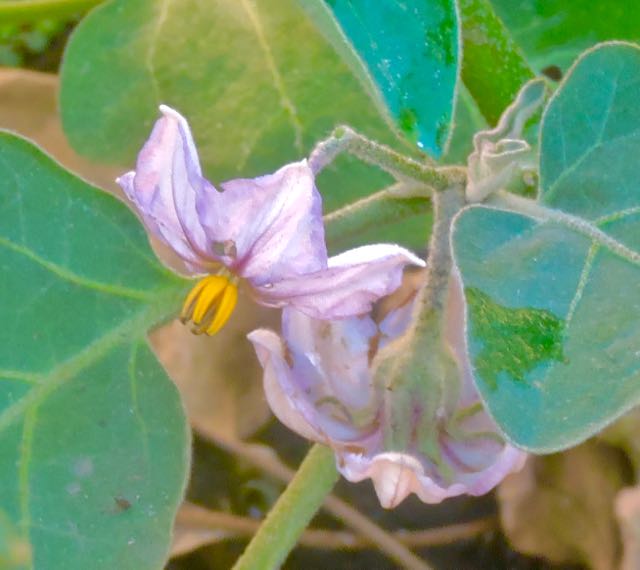
Flowers on the Black beauty eggplant. Will they form fruit?
Peppers: While 2 of the mild green and yellow peppers keep putting out small but perfect fruit in the full sun blast 13 hours a day, a third plant wore out early and another, in more shade, has failed to grow as large as its cousins. But the most pleasant surprise among the peppers has been the Fresno chili plant that I put in a large pot in full sun in early June after the pot’s former tenant, an Anaheim, shriveled in late May. Despite its late start, the Fresno in the past two weeks is swarming with white buds and in the past week has thrust forth at least 10 small peppers. I last grew Fresnos about 8 years ago, and I’m happy to rediscover this so-far prolific variety.


The July Kitchen: Compotes, PieCakens, and Jam
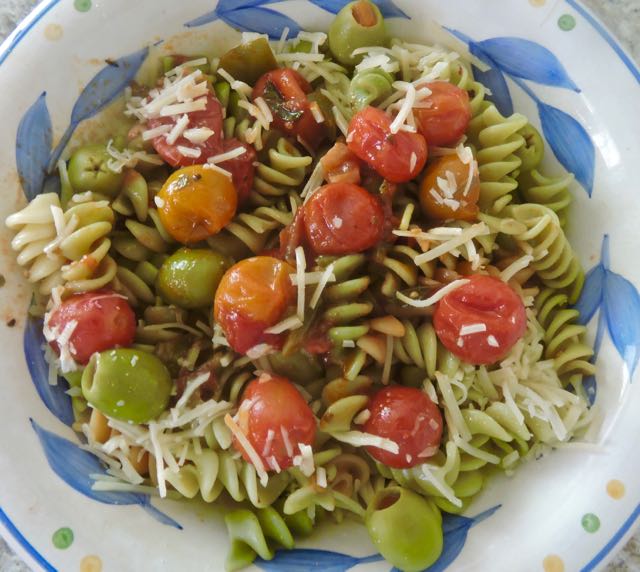
Cherry Tomato Compote on pasta with olives and parmesan
Tomato sauces and compotes
Using our abundant July produce is always a pleasant, fragrant challenge. Around 200 of the grape and cherry tomatoes annually become sauces for topping pastas or veggies such as sliced, baked zucchini. These sauces have traditional bases that include the tomatoes plus maybe a cup of water, as well as sauteed onion, garlic, and perhaps mild peppers, enhanced with 1/4 cup red wine, olive oil, one or two hot chilis, herbs from the garden (such as basil and oregano), and salt and ground pepper to taste. Upping the spiciness makes it an arrabiata sauce; with green olives tossed into the mix, it becomes puttanesca.
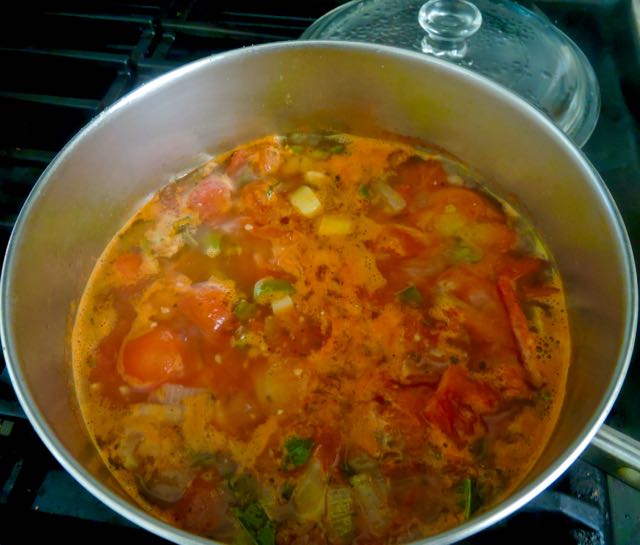
Tomato sauce cooking down in stainless steel saucepan. What an aroma!
A large saucepan is home to the mixture, which cooks on low for an hour or two until all the tomatoes have been broken down into a chunky puree. Usually the most tedious part of the process is separating the tough skins from the “meat” of the tomatoes. From the bubbly mass, each skin is pulled out with tongs and then the pile of skins is discarded.
However, this month we tried a different, more simple process. We made a cherry tomato compote–pictured above. So easy! It’s all done in the slow cooker:
First, for an hour let the garlic, chopped onions, and chopped green pepper sautee in olive oil in the slow cooker.
Second, dump in all the other ingredients and let the cooker work. The process is so easy because the tomato skins stay on and the goal is for the small tomatoes to get soft and the skins wrinkly. Think of it as a kind of tomato stew, with the spirit of an Italian sauce. The slow cooking–we took about four hours–lets the ingredients meld and the flavors of the spices, herbs, and veggies become infused.


Fourth of July PieCaken
Jean:
I saw a link online for a “Fourth of July piecaken” (invention of the chef Zac Young) that consisted of Wild Maine Blueberry Pie, New York Cheesecake, and a Southern Red Velvet Cake layered together with a light lemon frosting. I thought it was brilliant not only because of the colors but also the flavors from different parts of the country.

Top Layer: red. white, and blue “fireworks” cheesecake

PieCaken inside: white cheesecake, blueberry pie, red velvet cheesecake, with a Rice Krispies treat as a garnish!
Spiced Wine Peach Jam
Along with peach cobblers and lots of fresh sliced peaches in syrup over ice cream, I decided to make my version of a spiced wine peach jam, to preserve some of our many peaches over the coming months. Based on a recipe in Topp and Howard’s Small-Batch Preserving (2007), my version uses golden raisins, red wine, sugar, lemon juice, and spices such as cinnamon and allspice, to go along with as many finely-chopped peaches as I might want to use. The texture of your jam will be determined by the amount of fruit pectin you use for thickening. Feel free to experiment with spices, too. They’ll make a definite difference in the flavor and level of spiciness you achieve.
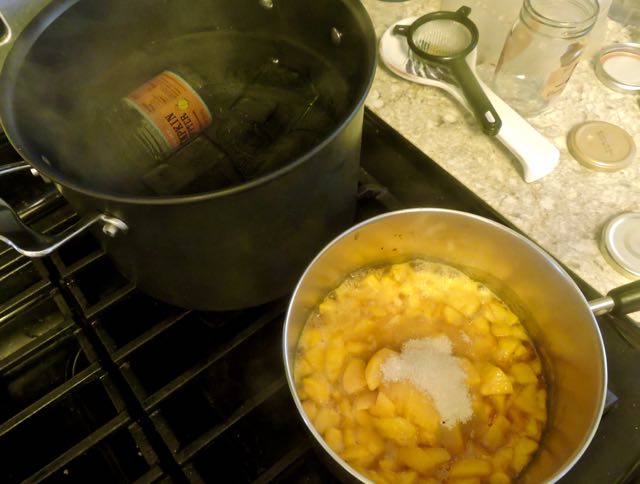
Peaches, sugar, and spices cooking for jam, while jars for jarring boil.
I made enough for 7 8-10 ounce jars. Mine turned out maybe a bit less firm than some would like, because of the level of pectin I used. So rather than a thick jam for spreading on toast, mine has been great as a syrupy topping for ice cream and peach cobbler, while also good for spooning on to muffins or buttered breads.
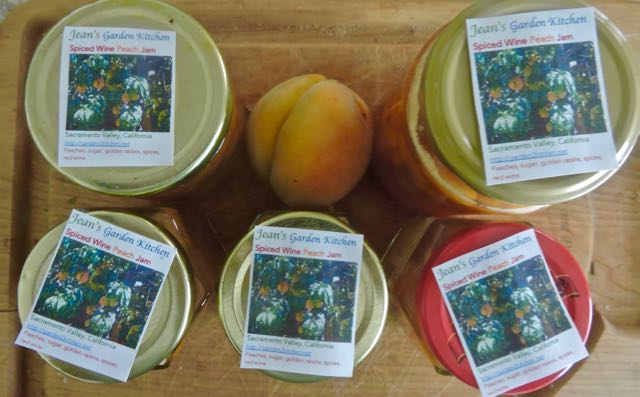
Labeled jars of still warm spiced red wine peach jam!
The July 2021 Gallery



Turkey family crossing our street–can you count them?
The neighborhood turkey family strolls through our front garden, while the Monday morning refuse truck stops and drives on. Watch the video: https://youtu.be/oR8pj3rxbY4
And so must we all adapt. On to August!
 From Sacramento to Potomac: Tales of Two Valleys
Pingback: August 2021: Parallel Worlds Changing with the Wind | A Sacramento Valley Kitchen Garden
Pingback: December 2021: The Holiday Gift of Fallen Leaves | A Sacramento Valley Kitchen Garden