
Bee nestles in a poppy flower, front garden
In this month’s blog:
Garden Update: Growth and Beauty Amid Drought
May Kitchen: Wine Country Potpourri and Italian Arrabbiata
The May 2022 Gallery
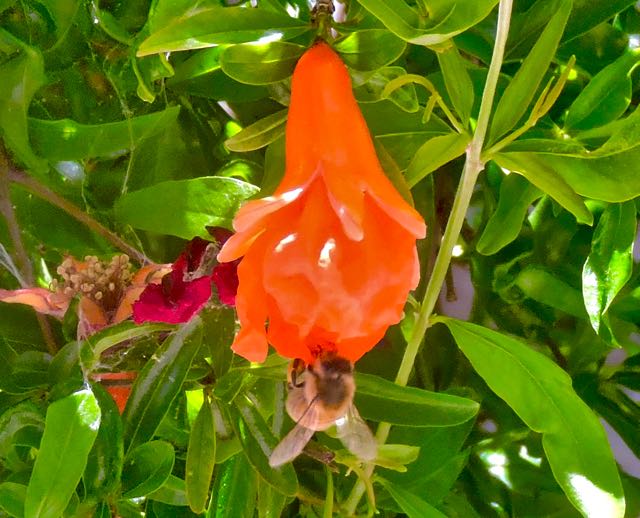
Bee on pomegranate flower, back garden, early May
Boom and Bust as the Drought Goes On
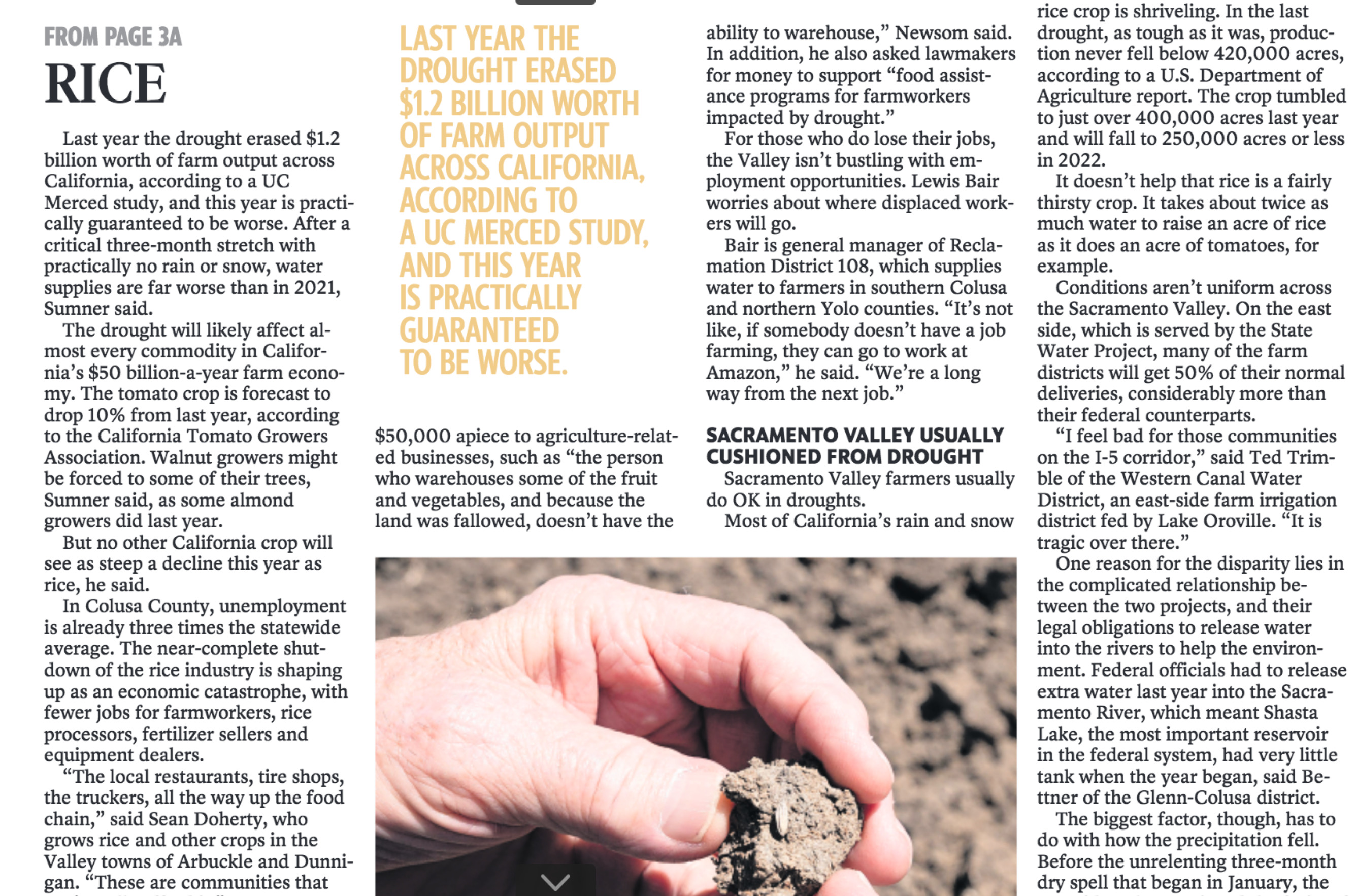
Screenshot from the Sacramento Bee, May 15: Dale Kasler, “Ground to a Halt: Drought Forces Rice Farmers to Cut Crop and Let Fields Lie Fallow”
Why boom and bust? Well, the “bust” part of drought is obvious: less planting by farmers means less income for farms, unemployment of farm workers, and potential shortages of food that affect everyone. This is already occurring in many countries.

Screenshot, Sacramento Bee, May 17
Add in higher risk of wildfires, more contamination of the air, higher costs of available water, and on and on. As climate change continues to reshape our world, droughts across the continents continue to increase the number of climate refugees seeking a watered place to live. Meanwhile, the death toll on all species–all of whom need water to survive–gets worse and worse.
So what might possibly be the “boom” inspired by drought?
I’m talking about the “boom” in creativity and learning by all of us when we try to adapt productively to the drought. For those in neighborhoods like mine, this can mean, for example:
- Homeowners and landlords giving up their water-wasteful lawns in favor of colorful, drought-tolerant plants native to their regions–these also attract and sustain pollinators
- Getting exercise with a broom, instead of wasting precious water from high-pressure hoses to “clean” walks and driveways
- All citizens adhering to water-use restrictions in their localities–and encouraging family members to work together to think of water-saving ideas (like short showers; using the stopper in bathroom and kitchen drains instead of just letting the water run; visiting commercial car washes that use recycled water, and other good ideas you can think of)
- Actually reading our water/sewer bills so we can set targets and monitor results
Garden Update: Growth and Beauty Amid the Drought
This 1-minute video showcases the sounds and sights of the garden on an early mid-May morning. My thanks go to a scene-stealing bee, our hearty arugula, and one of our really egocentric Western scrub jays, plus our next-door neighbor’s border collie, and, of course, our daily choir of mockingbirds and warblers, for making this neighborhood an exciting, musical, but still pretty peaceful, home.
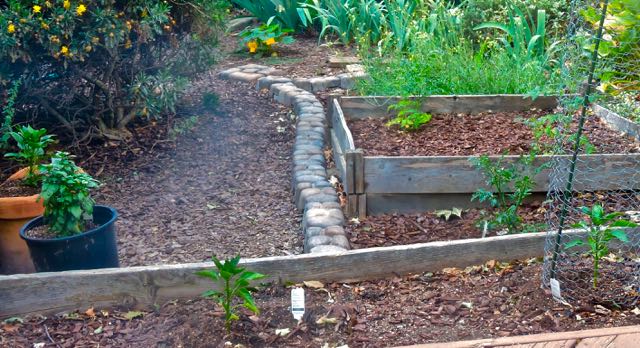
Four weeks after planting in late April, the 10 tomatoes, peppers, zucchini, and basil are thriving in reduced water.
Saving Water? So far, so good. Our April water usage was 33% lower than in April 2021. Cutting back on new veggy plantings (from 22 to 10) seems to be working.
Apricots. I’m thankful for their return this year! This is their month, with the ten-year-old tree teeming with hundreds of rapidly ripening fruit. I’m going to try an apricot pie (wish me luck!) or maybe two! There’ll also be dried apricots for the freezer, freshly-picked ones with ice cream, and snack fruit gobbled right from the tree. There’ll be plenty to give away, of course, but there’ll also be more for the birds, as well as plenty of the fallen ones to nourish the ground for next year’s crop.
Last year we had almost no apricots, because of high winds and a rainless January-February2021 that stunted the early growing season. So this year’s bumper crop is a true gift.


Oranges and Lemons
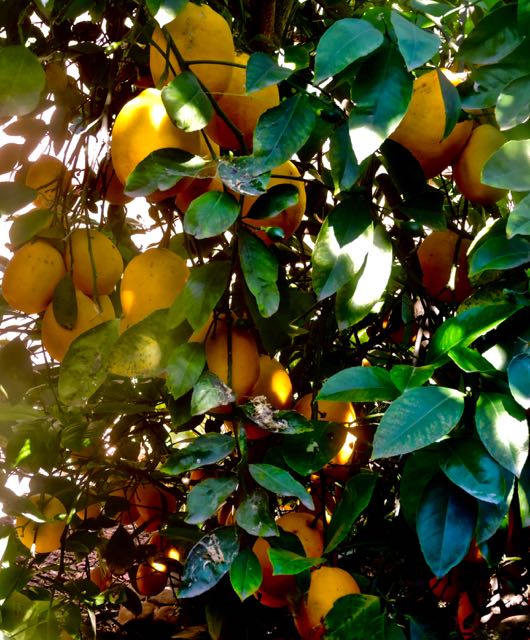
Meyer lemons in the back garden
- At end of March, I refrigerated the final 50 oranges from this year’s crop, to use for juice in April and May. They stayed fresh and delicious.
- From now through June and July, I’ll be juicing for lemonade the many ripe meyer lemons still on the bush, even as the tiny lemons for next year’s crop begin to mature.
Peaches, Cherry Plums, and Blackberries
All three of these are ripening and will be ready for harvest soon: the blackberries in late May and early June, the cherry plums in June, and the peaches in July. The tangy cherry plums will be jarred for jam, while the small crops of blackberries and peaches will go into desserts.


Tomatoes, Peppers, and Zucchini
The ten plants have now been in the ground for almost a month. They are growing on schedule: tiny yellow flowers have appeared on the 5 tomato plants; the 3 mild peppers are getting taller and are just beginning to show small buds; the 1 zucchini has tripled in size and has already shown 3 large yellow flowers! The one herb I planted–sweet basil–has quadrupled in size and has already provided aromatic leaves for the dishes described in the kitchen section below.


May Kitchen: Wine Country Potpourri and Italian Arrabbiata
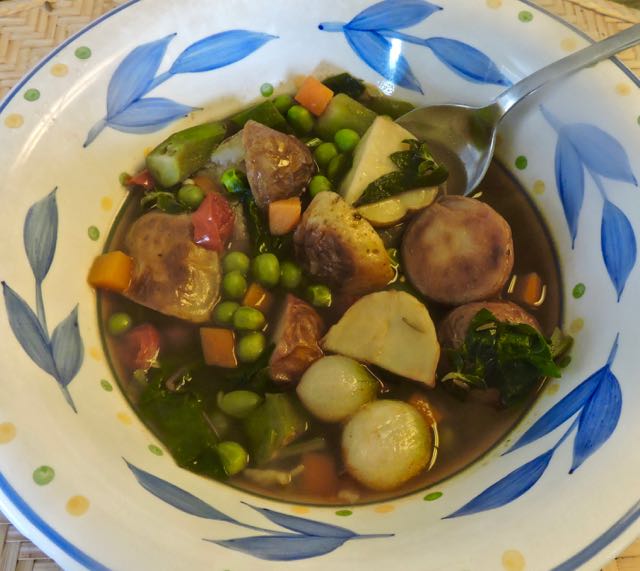
Wine Country Potato Vegetable Soup
It’s too early for tomatoes, peppers, and zucchini from the garden–we just put them in the last week in April. But there’s chard and arugula still growing in the garden from last year, plus perennial herbs like Greek oregano, lavender, rosemary, and sage, as well as last year’s hot peppers from the freezer. So there’s a start for two dishes, both hearty soups.
The first I called a wine country potato vegetable soup–a true potpourri for a coolish afternoon in early May.
The second I called Italian Arrabbiata, made in the middle of the month with more leftovers and a few different garden herbs.
Everything else is leftovers from the fridge, like the tiny baked potatoes from a baked salmon dish earlier in the week and cherry tomatoes from the store. There are also freezer finds like half bags of pearl onions, peas and chopped carrots, sliced peppers and onions, and even okra. As always in our kitchen, we use what we have and make it work. Nothing goes to waste.
Here’s my process for the wine country potpourri:
- In enough water to make a veggy broth, bring the frozen ingredients to a slow boil until tender.
- Add in the leftover potatoes, cherry tomatoes, and chard/arugula to heat through on simmer.
- If you wish, add in enough chicken broth to boost the flavor.
- Season to taste with herbs on hand (I used just the oregano in this dish).
- For a classy touch of flavor and color, add 1/4 cup (or so) of red wine (I used an open bottle of a Sonoma Bordeaux blend).
- Season to taste with salt, black pepper, garlic salt, and hot pepper sauce (I used a bit of sriracha on hand).
- Keep tasting and adjusting seasonings until you get the flavor how you like it.
Total prep and cooking time was about 30 minutes. In the small saucepan I used, all of these ingredients made 4 healthy servings.
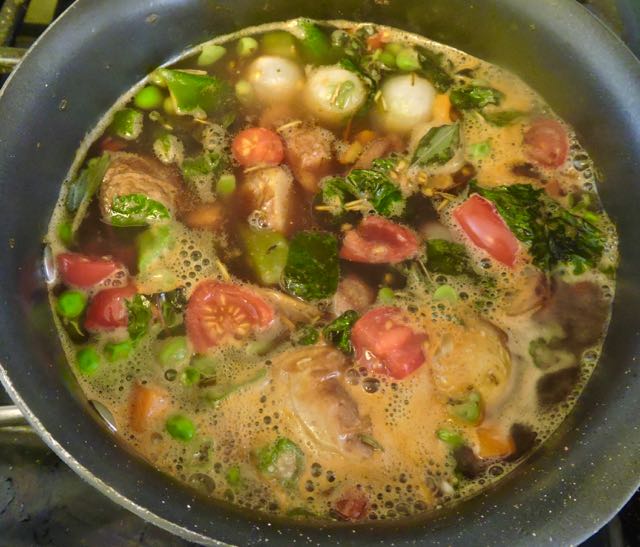
Wine country potato and veggy soup on the stove
Italian Arrabbiata Soup
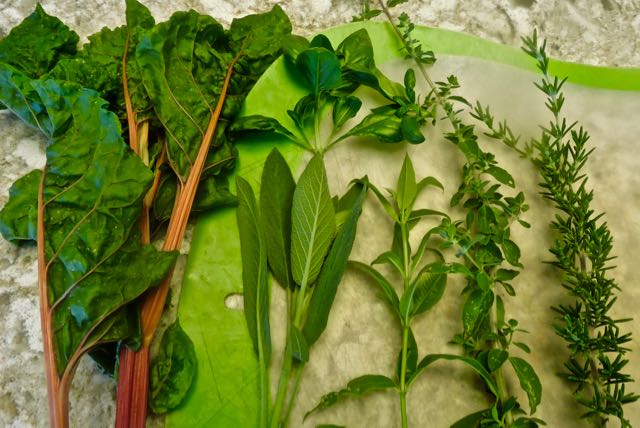
Garden goodies for Italian Arrabbiata Soup: chard, basil, culinary sage, lemon verbena, spicy oregano, rosemary
- In a small skillet, sautee frozen mild peppers, onions, and sliced small potatoes with garlic in EV olive oil until onions are translucent and potatoes slightly softened.
- Fill a large saucepan half full with water, add in rotini or penne pasta (about half of a 12-ounce box), and bring to boil. Then cook on low heat until pasta is slightly soft.
- Add in the peppers, onions, and potatoes and keep cooking on low.
- Add other ingredients as desired into the cooking mixture. I used leftover cherry tomatoes (chopped in half), chopped chard from the garden, green olives (chopped in half), and the range of garden herbs (chopped) shown in the photo above. I also added some marinated mushrooms that I had on hand.
- Add chicken or veggy broth for flavor, as well as 1/4 cup (or more) of red wine. I also added in the brine (about 1/4 cup) from a jar of green olives–one of my favorite flavors.
- Season to desired taste with salt and black pepper.
- For the arrabbiata spice, use your favorite hot pepper, either chopped or in pepper sauce. For this dish, I used 2 finely chopped serrano peppers, including seeds, that I had in a bag in the freezer from my 2019 crop. Arrabbiata is Italian for “angry,” or in this case “spicy hot.”
- Keep cooking on low until the potatoes are soft and the pasta has reached desired softness.
My total prep and cooking time was about an hour. The result: six or so hearty servings.
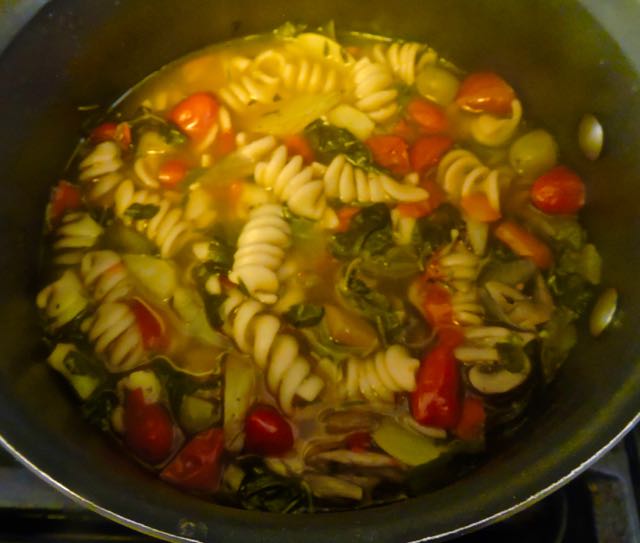
Italian arrabbiata soup on the stove. What an aroma!
The May 2022 Gallery


The garden creates–June awaits.
 From Sacramento to Potomac: Tales of Two Valleys
Pingback: August 2022: Being New in an Old Place | From Sacramento to Potomac: Tales of Two Valleys
Pingback: January 2023:Watching the CaliFloods from 2500 Miles | From Sacramento to Potomac: Tales of Two Valleys