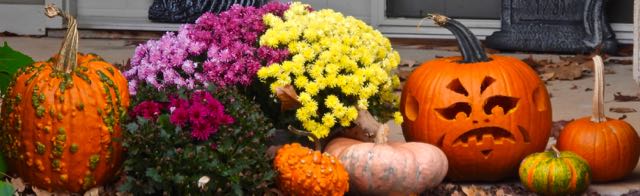
A Halloween display on our porch
In this month’s blog:
The First Thanksgiving vs. Our First
The Day After Thanksgiving? Making It Better Than “Black Friday”
November Gallery: Hearty Birds, Naked Trees, and a Pumpkin Moon
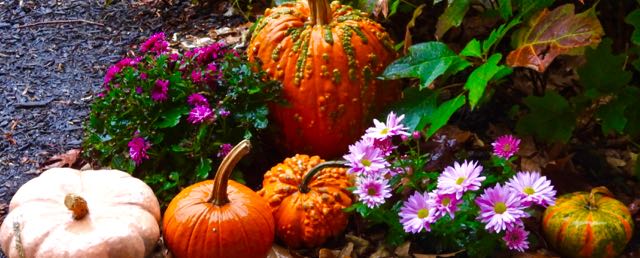
Mid-November still life in the rain: pumpkins keeping their beauty and sharing it
Our “First” Thanksgiving
November is a month of giving thanks. The month begins with All Hallows (the day after Halloween) and Dia de Los Muertos, when people celebrate the lives of their loved ones who have gone before. Thanksgiving caps the month, as friends and family members gather to celebrate all that we do for one another, and to express our happiness in being with one another. Thankfulness is at the heart of these celebrations.
This Thursday, November 24, was our first Thanksgiving since moving back to Virginia. We have spent this week doing what we came back here to do: getting together with family members whom we have not shared meals and hugs with in several years, and, in the case of new family members, getting to know them for the first time in person. We got to know our youngest granddaughter, just turned 2, who came with her family from New York, and her brother, now 4, whom we’d not seen since he’d just begun toddling in 2019. We enjoyed parts of 3 days with 3 of our grandkids from Georgia, who are growing up so fast that the oldest is already a high school senior. All told, over Thanksgiving week, we’ve enjoyed meals and games and seeing local sights with 18 family members from three generations and up and down the Atlantic coast.


The First Thanksgiving
“First Thanksgiving” also puts me in mind of the mythic day 400 years ago, in 1621, when, as the story goes, the English pilgrims, who had come to find religious freedom on the cold, rocky shores of North America the year before, enjoyed the bounty of their first harvest in their new home by sharing with new friends, members of the nearby Wampanoag people, who had helped them survive that bitter first year. A very happy vision of hope. Picture Squanto and Massosoit breaking bread and savoring roast turkey with John Alden, Priscilla Mullins, and the whole legendary crew. Or so the story goes, as prettied up from the 19th into the 20th centuries.
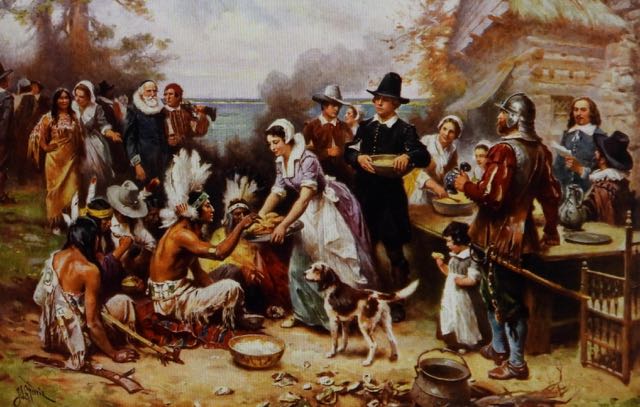
19th century fantasy illustration via Photo 12/Universal Images Group, Getty Images
Certainly, Native Americans and 21st century historians don’t see the vision that way, as Emily Martin recounts in National Geographic and Claire Bugos writes in The Smithsonian Magazine. A feast of some kind did occur that fall, but it was at best a mere moment of awkward peace in a long and always tragic relationship, which culminated 56 years later with the virtual annihilation of all the Indian peoples in New England and total loss of native land. See David Silverman’s essay in National Geographic for more on the gradual process in the 1600s of English settlers’ enslavemant of native peoples, false alliances, and warfare to bring this destruction about.
So I’d hope that families this week can just enjoy the beautiful opportunity to get together in their own thankfulness, friendship, and sharing, in the knowledge that many millions of others are also celebrating one another. We have no need to imagine that any of us are carrying on a “tradition” that began in colonial days, because we have built our own tradition based on true friendship. That colonial horror is certainly not worth holding on to, but remains a tragic truth that we must acknowledge–not hide by pretending–and that we must and can move beyond.
The Day After Thanksgiving? It Can Be A Lot Better Than “Black Friday”
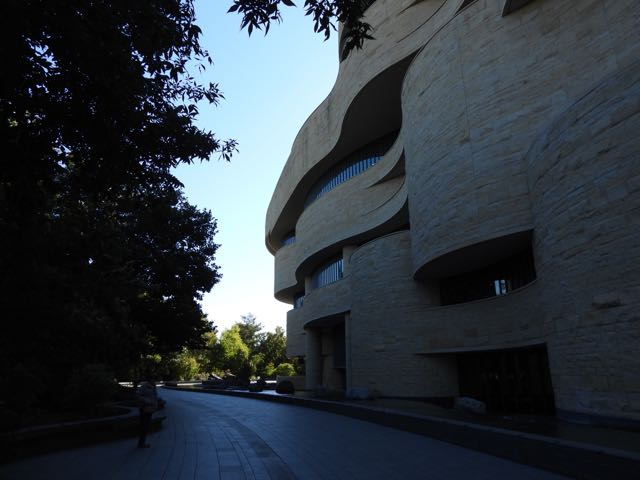
Architecture and landscape of the National Museum of the American Indian
Do you know that since 2008, by act of Congress, the day after Thanksgiving is named Native American Heritage Day? Not to be confused with National Indigenous People’s Day on the second Monday in October (celebrated in 2022 on October 10, when we visited the National Museum of the American Indian in DC.)
In many parts of the U.S., National Indigenous People’s Day has replaced Columbus Day on the holiday calendar. Columbus Day deserves to be erased as a holiday because of the explorer’s decimation of the native Taino people in the Caribbean.
In stark contrast, Indigenous People’s Day, founded in 1992, deserves our attention as an international day of mourning for the millions of indigenous people around the world robbed of their ancestral lands and massacred by European and American colonizers over hundreds of years.
But Indigenous People’s Day is also a celebration of the indomitable spirit of the survivors of those devastations and the will of their descendants and their allies to keep traditional cultures alive. The Day also is meant to build public support for these descendants to receive suitable reparations for the centuries of theft, murder, and abuse. Native American Heritage Day, the focal day within Native American Heritage Month (as proclaimed by President George W. Bush in 1990), celebrates the profound achievements of native cultures not only in past centuries but also today and in our building a better, more responsible future for humans and for the Earth.
So, amid the incessant clamor of Black Friday promoters to get out there and shop till we drop, maybe we can spare a bit of time to enter into Native American Heritage Day and find the real gifts. For me, the greatest gift of native traditions is the profound belief in humanity’s reciprocal relationship with the Earth, as expressed in the words of Robin Wall Kimmerer, below.
Native American Gift: Stewardship vs. Exploitation of the Earth
“We all need to ask ourselves not what we can take from Mother Earth, but what we can give back. The Earth is not a commodity for taking, but rather our Mother and our sustainer.”
—Robin Wall Kimmerer, Braiding Sweetgrass: Indigenous Wisdom, Scientific Knowledge and the Teaching of Plants
Of particular importance to me, as a gardener and as student of the Earth and its creatures, is the stewardship of Earth by native civilizations over at least 13 millennia. Note, if you will, the state of nature in this hemisphere over the 13,000 years or more during which native peoples gently humanized the land, air, and water through sustainable farming practices and fruitful coexistence with natural forces and our fellow creatures. Then compare that record with what has occurred in the mere four hundred years through which we of European origin have acted as the tyrants of the Western Hemisphere, with unlimited ambition to possess and exploit–as well as to dispossess and attempt to annihilate those humans (and other species) who had flourished here before.
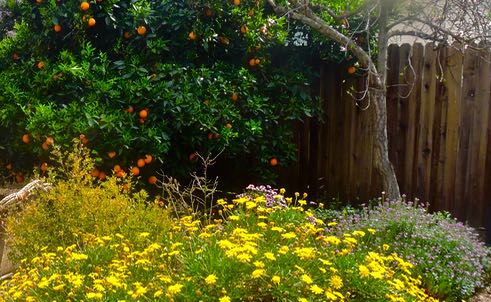
An example of polyculture, planting of diverse plants together, a sustainable farming practice of Native Americans, from our California garden, March 2022
In all those 130 centuries of native stewardship, the Earth thrived in this hemisphere, so that when Europeans came, they mistakenly saw nature as “pristine and unspoiled,” because what they encountered possessed beauty, lushness, and fertility beyond anything in their experience in Europe. It’s too bad for all humans and for the Earth that these invaders could not, would not, credit native peoples for the natural riches they encountered, nor would they learn from the natives how to honor their Mother and keep her and all of us, her children, strong. But, like thieves before an unimaginable treasure, they began steady rape and pillage that have led to where we are now. Even though we in the United States know that the time left for Earth is dwindling because of our incessant pollution of the air and water, most of us remain too sunk in our accustomed ways to do anything but continue on our deadly path. The U.S. remains by far the greatest per capita contributor to pollution and global warming, and powerful corporate forces in the country want to keep it that way.
As long as the thing that most bothers us is the price of gasoline, the Earth will have no chance of survival, nor shall we. We know what needs to be done to counteract the planet’s destruction–primarily moving away from fossil fuels–but will we and our governments have the courage to do more than make vague promises?
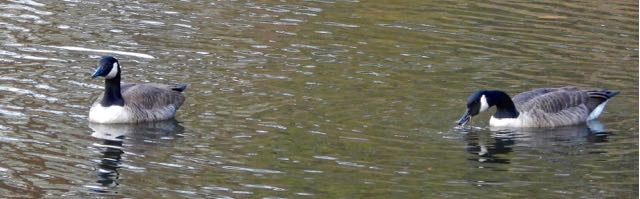
Canada geese, Lake Cameron, November 18
November Gallery: Hearty Birds, Naked Trees, and a Pumpkin Moon
This November we are happy in our new Virginia home, though missing the California we had grown to love. We are thankful to live beside the small lake, surrounded by wildflowers and woods, which provides a small sanctuary for wildlife who have been enabled to thrive here. As I watched the leaves fall from the multicolored trees of October, I thought about the poem by the late John Updike (below), which celebrates this month of austere beauty. Here, even as winter approaches, the birds still come.
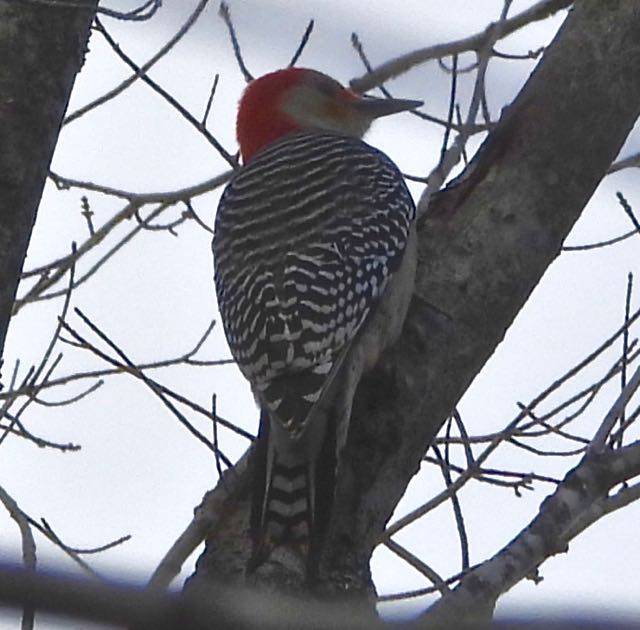
A red-bellied woodpecker searches for food in a tree by the lake.
November
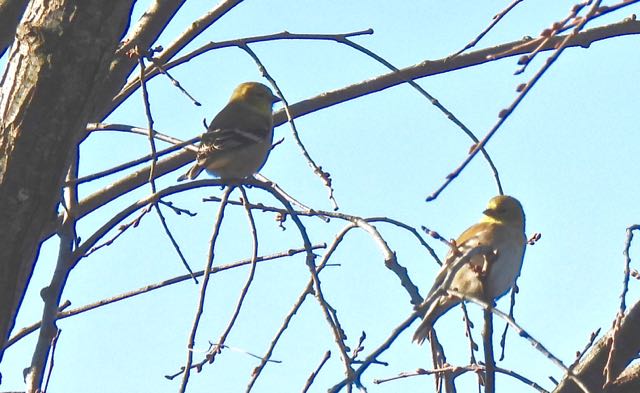
A pair of goldfinches stay warm along the Lake Cameron path.
The striped and shapely
Maple grieves
The loss of her
Departed leaves
The ground is hard
As hard as stone.
The year is old.
The birds are flown.
And yet the world,
Nevertheless,
Displays a certain loveliness–


A cooper’s hawk’s lonely vigil above the lake
The beauty of
The bone. Tall God
Must see our souls
This way, and nod.
Give thanks: we do,
Each in his place
Around the table
During grace.
–John Updike, from A Child’s Calendar, 1965
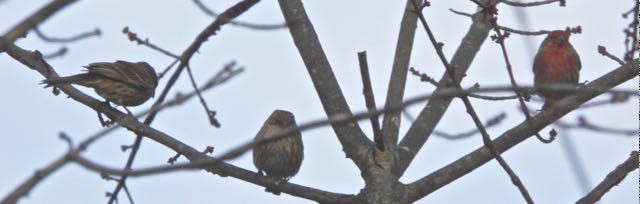
A choir of house finches in the lake woods

A Northern mockingbird scouts by the lake, November 22.
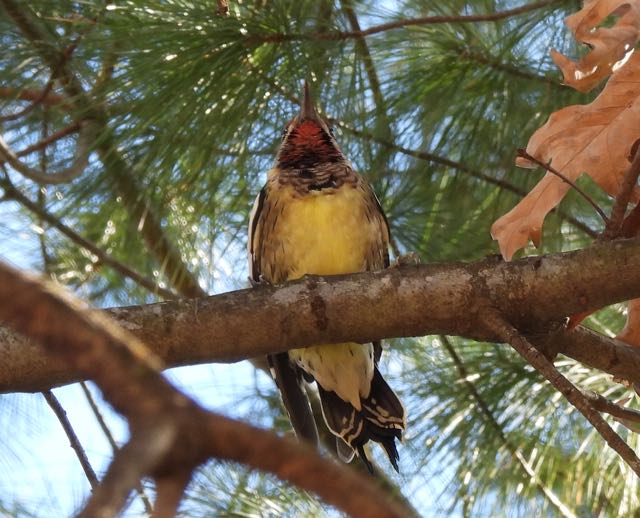
A Yellow-bellied sapsucker peers higher into the tree.
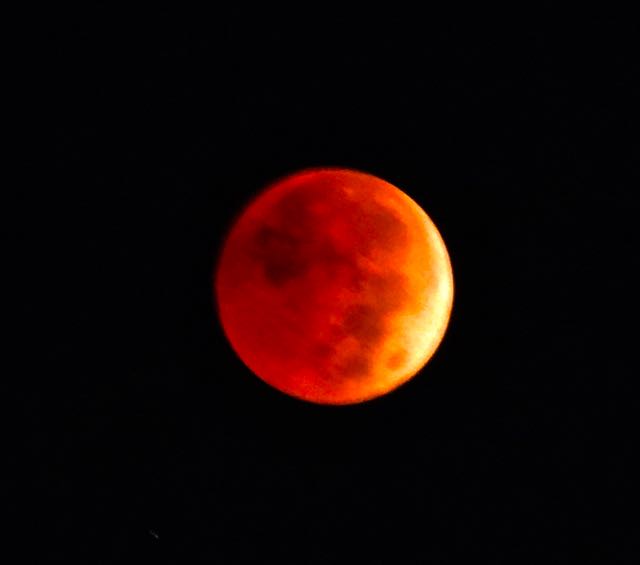
Verses about an early morning miracle on November 8:
Beside the tiny lake, we snap the changing moon:
Baby Luna safe in Mama Terra’s arms.
She glows–a happy pumpkin!–
in smiles from Papa Sol.
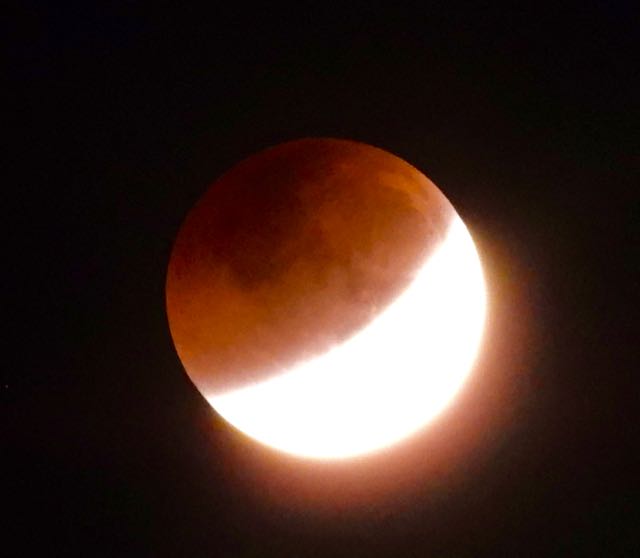
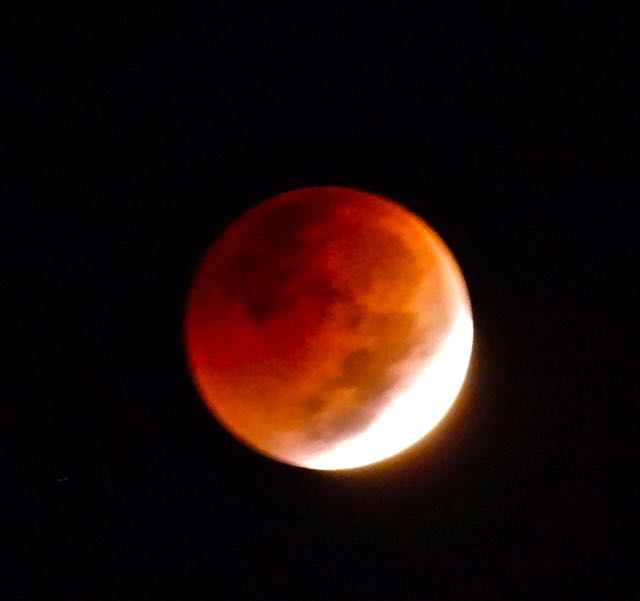
So much for which to give thanks! On to December in hope and joy.
 From Sacramento to Potomac: Tales of Two Valleys