I bundled up in my old blue Gortex parka to film the sudden snow squall on Dec. 22, which you witness above. That parka had just hung unused in our closet the past 16 years we spent in California. December in our Sacramento Valley meant that the oranges and lemons in our garden were ripe, ready for picking. Here in our tiny bit of the Potomac Valley, December means that real winter takes hold, and I’m glad to have that parka when I go out along our lake, and then hustle back into the warmth inside. Our oranges now are from the store, and we’re lucky to have them.
In This Month’s Blog:
Celebrating Our Anniversary
Amid the Freeze, the Birds Along the Lake
A Bit of “Blue Zone” Cookery


Our Anniversary
December for Jean and me means not only the Christmas season but also our wedding anniversary (Dec. 15th), for which we always take an overnight trip. This December, our trip meant another chance to rediscover favorite places from our years ago in this region. We chose one of our favorite anniversary hideaways, the Bavarian Inn in nearby Shepherdstown, West Virginia, which just happens to overlook the forest-bordered Potomac River, about sixty miles-and maybe three centuries–from where we live.
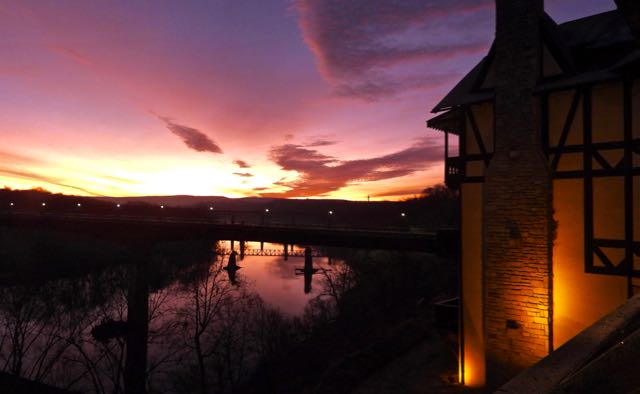
Sunrise on the Potomac, from the Bavarian Inn, December 14
Shepherdstown sits atop a bluff above an easy ford of the Potomac, which Native peoples such as the Mingo, Shawnee, and Tuscarora used for thousands of years as they farmed, hunted, and traveled through the area. The town was chartered by English settlers in 1762 and took its name from Thomas Shepherd, the principal landowner. The name replaced Mecklenburg, the name given the settlement by German settlers who came from Pennsylvania and crossed the ford in the early 18th century.

Shepherdstown in holiday season lights
Shepherdstown lies just 20 miles upriver from Harper’s Ferry, where two of the great rivers of Eastern North America, the Potomac and the Shenandoah, meet. We have visited Harper’s Ferry many times over the years, largely because of its importance in the American Civil War, but this time was the first since I’ve begun focusing on the river valleys themselves. I walked across the Potomac on the old railroad bridge, which is now part of the Appalachian Trail, and snapped several pictures at parts of the crossing. As one of the pictures shows, the rivers have been bridged several times over the past two centuries, later than when Robert Harper built the ferry that gave the town its name. But the town became strategically important in the 19th century because of the Potomac and Shenandoah rivers themselves, and because of the valleys they carved out between the mountain ranges over millions of years.
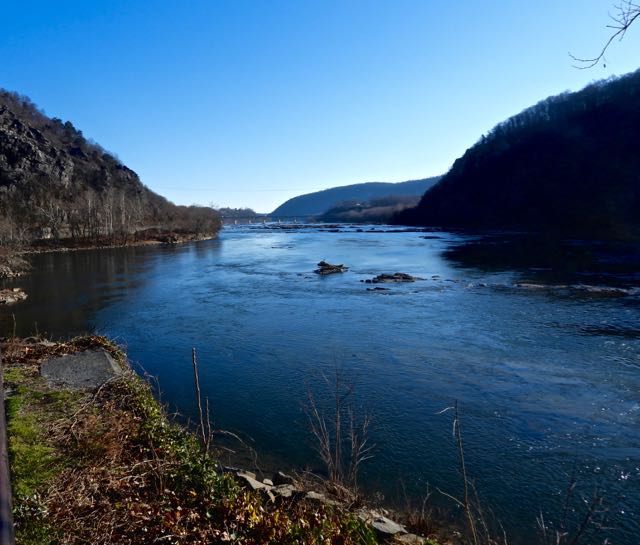
Looking from the Shenandoah to where it enters the Potomac: three states, West Virginia, Maryland, and Virginia, meet.
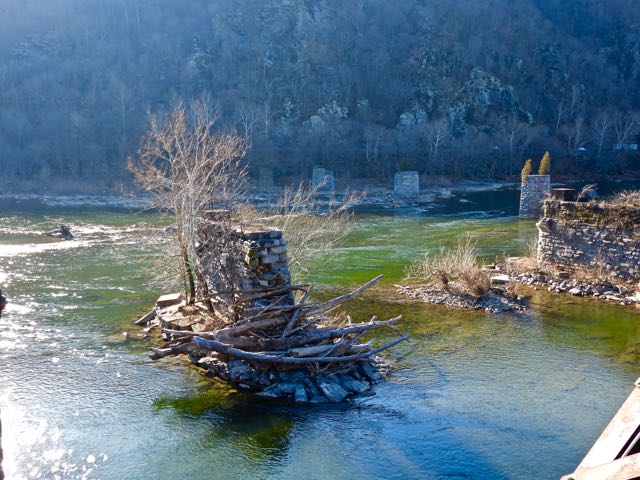
Standing above the Potomac, I look toward the Shenandoah (r) and the old bridge pilings, with the Virginia shore in the distance.
The Potomac (originally the Algonkian Patawomeck) penetrates through ridges of the Alleghenies, and so formed a natural highway from 400 miles deep in the continent to the Chesapeake Bay and into the Atlantic Ocean. It was a Native trade route before it became a trade route for European settlers in the 17th century. Its valley then became the setting for the Chesapeake & Ohio Canal in the 1830s, and for the Baltimore & Ohio Railroad in the same decade.


The Potomac also provided the reason why Harper’s Ferry became a strategic military site in the new United States: water power. The land on which those geese peacefully forage today in the photo above was the site for a huge iron forge, armory, and arsenal for the U.S. Army in the early to mid-1800s. Part of the river was diverted into a canal, whose rushing water provided all the power for the forge and the munitions-making factories.

By 1860, little Harper’s Ferry and its military-industrial might became a prime target for the nascent Confederacy, and when war broke out in 1861, Southern troops immediately rushed to the town to try to take over the forge and armory. The Union defenders tried to thwart the plan by setting fire to the facility. The Confederates saved much of the arsenal stock and the industrial machinery, which they shipped south into Virginia to a more secure location.
Still, Harper’s Ferry remained a coveted prize for both sides throughout the war because of its pivotal location at the confluence of river valleys on the border between North and South. It changed hands 11 times as the winds of war shifted.
Antietam: Today’s Serene Beauty Hides a Horrific Past
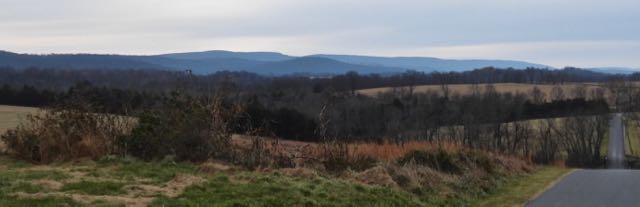
Maryland countryside toward Antietam Creek
Whenever we visit Shepherdstown, we always drive across the bridge into Maryland to visit the quiet little town of Sharpsburg, just two miles from the Potomac. Then we continue just beyond the village to the National Battlefield Park at Antietam. We do this because the setting is so peaceful, so rich in wildlife, and so well cared for. But we also do it to keep fresh in our minds the unspeakable horror of the war that came to this quiet place on September 17, 1862: the day on which more Americans died in battle than in any other day in U. S. history. Twenty-three thousand perished in that single day, and well more than that were wounded.
Visiting Antietam always makes us confront the awful contradiction at the heart of American history: the love of magnificent beauty and peace vs. generation upon generation of violence and cruelty toward our fellow humans. As we walked between the split rail fences that mark the most ghastly scene of the battle–the Sunken Road now better known as Bloody Lane–we struggle to keep simultaneously in mind the birdsong and brisk breezes of today versus the ear-splitting din of battle and the hopeless cries of the stricken. Both seem oddly present as we walk and watch.
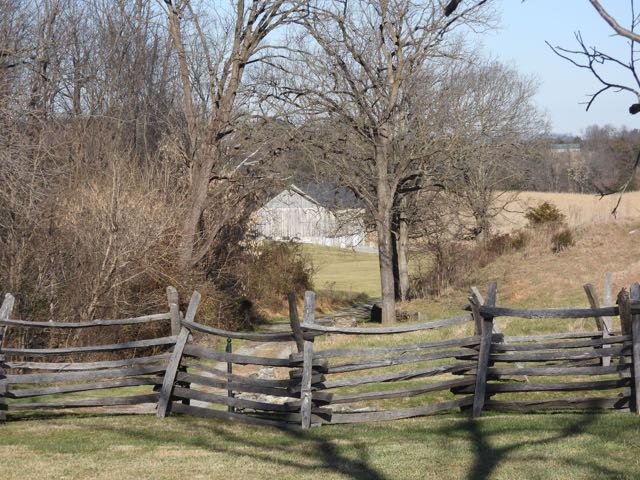
In the middle of Bloody Lane, we look toward the Roulette farm that was so peaceful just the day before the battle.

The Burnside Bridge across Antietam Creek. Thousands died here on September 17, 1862, as they tried to cross amid waves of gunfire from the hill upon which we watch.
Amid the Freeze, the Birds Along the Lake

Frozen east edge of Lake Cameron, Christmas Eve
On Dec. 19, and then again on Christmas Eve morning, as the 7 degree temp challenged my face and fingers, I went out to see how the birds were faring around the partly-frozen lake. Here is the best of what I was able to capture of these elusive critters in about an hour each of those days. Also here are a few shots taken on Dec. 1 at the nearby Riverbend Park on the Potomac.

Male and female bufflehead ducks in the Potomac at Riverbend Park
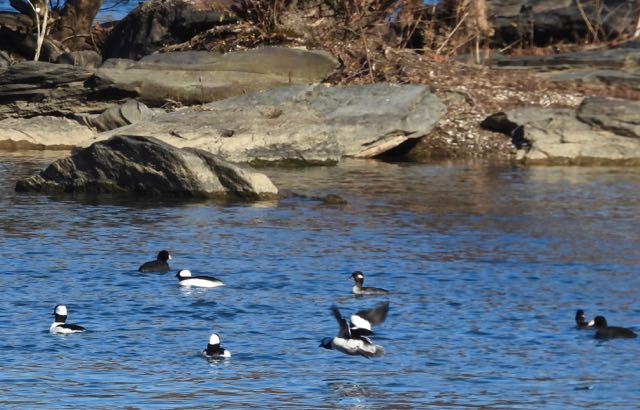
Buffleheads and coots in and above the Potomac at Riverbend, Dec. 1

Seen from Riverbend, Canada geese rise in flight near the Maryland shore
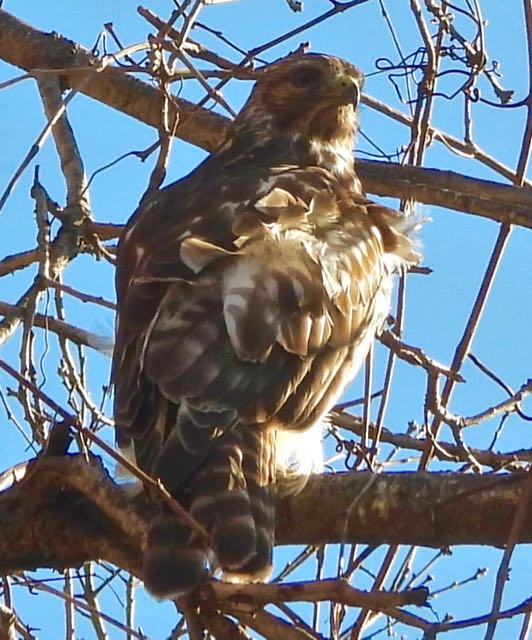
American kestrel at south end of lake puts all small birds on alert, Dec. 19

Bluejay spying from tree near Lake Cameron, Christmas Eve

Female cardinal by frozen Lake Cameron, Christmas Eve

Carolina wren beside the lake, Dec. 19

A Savannah sparrow nestles in winter stalks by lake, Dec. 19

Four mallards at the north end of the lake, Dec. 19

Canada goose in icy pool at 7 degrees, Christmas Eve

Song sparrow on west side of lake, Dec. 19

Blue heron on the west lake shore, Dec. 19
A Bit of “Blue Zone” Cookery

Dan Buettner and Luisa Rivera, National Geographic, Dec. 6, 2022
The winter holiday season may not be the most typical time to experiment with moving away from the meat-and-sweets-heavy diet that tempts most of us. And no doubt we’ll be falling prey this Christmas to lots of the oh-so-tasty bad stuff. Then again, there’s probably no better time than now to vary our diets with dishes as colorful, delicious, and healthful as those inspired by Dan Buettner’s book The Blue Zones Kitchen: 100 Recipes to Live to 100, which he summarizes in a National Geographic article this month.
For this holiday season, one “blue zones” inspired dish we make is our version of “three sisters stew,” named for the corn (maise), squash, and beans mixtures of native American cultures, such as the Wampanoag of New England, whom Buettner celebrates. These three foods create complete protein, and you can combine them with other ingredients to suit your preferred flavor and color palettes.
In our version of the “three sisters stew,” I sauteed in vegetable oil in a large skillet half a large onion and some fresh garlic, then used canned golden corn, one chopped whole zucchini, one can of black beans, and one can of pintos as the base mixture. To this I mixed in a can of diced tomatoes, some chopped cherry tomatoes, a half cup of medium tomato salsa, a dozen chopped medium green olives, and a quarter cup of red wine. For spice, I added a dollop of sriracha and a shake or two of red pepper flakes. I salted to taste as the heady mixture cooked on low heat, and also threw in some chopped basil and ground thyme. The great thing about a slow-cooking concoction like this is that you can adjust the level of spice and herbs as the beat goes on for an hour or more. I made enough for a dozen hearty servings that lasted us for half a week.

“Three Sisters” Stew, a festive, alternative holiday dish based on beans, squash, and corn
“Three Sisters” Chili
If you want to add meat and some slightly different flavors to the “Three Sisters” stew idea, you might try a version of the “Three Sisters” Chili that we enjoy. Most of the ingredients are the same, but we cook in for five minutes a pound of ground turkey after the onion and garlic have sauteed and before we add in the “three sisters” and the rest of the ingredients. For our latest rendition, we left out the green olives (we might also substitute chopped black olives), we used red kidney beans instead of black beans, and we added a few hearty shakes of chili powder. We also amped up a bit the sriracha, the tomato salsa, and the red chili flakes, but how much you add depends on who’s eating. Remember, what really counts is your tasting as you go, and not being afraid to add in what you think might work.

“Three sisters” turkey chili
Here’s to a Happy, Loving Holiday Season! On to January 2023!
 From Sacramento to Potomac: Tales of Two Valleys
Pingback: January 2023:Watching the CaliFloods from 2500 Miles | From Sacramento to Potomac: Tales of Two Valleys
Pingback: December 2024: Closing the Year in Celebration and Hope | From Sacramento to Potomac: Tales of Two Valleys