Our first and only snowfall thus far, a brief one inch on Dec. 11
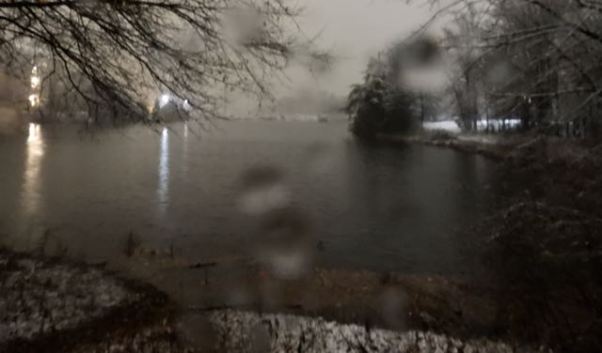
Looking north in first snowfall, Dec. 11, 3:30 AM
In this month’s blog:
Bluebirds, Loving Mallards, and a New Kind of Christmas
A Joyous Christmas Week With Family
The December 2023 Photo/Video Gallery
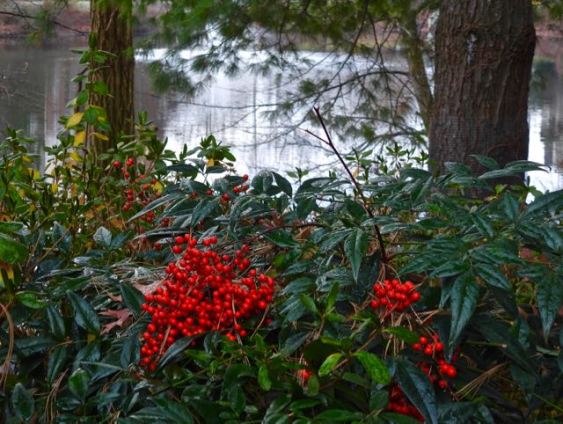
Heavenly bamboo on the west bank of the lake, Christmas Eve. In California, these resilient, colorful plants serve as symbols of Christmas.
Bluebirds, a Closed Bethlehem, and Other Signs of a New Kind of Christmas
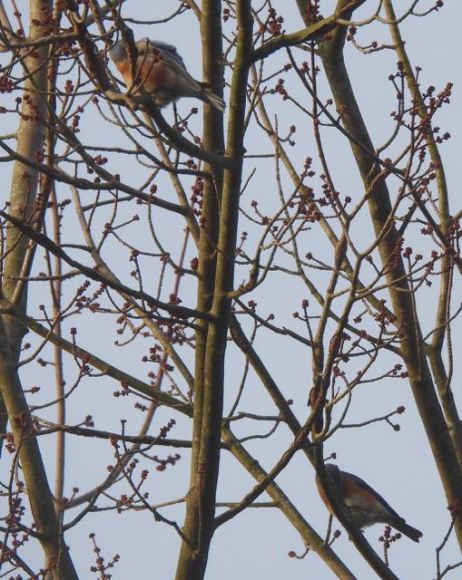
Two bluebirds in a budding red maple, southeast side of the lake, Dec. 23
Oh little town of Bethlehem / How still we see thee lie…
And so the beloved Christian hymn begins. It imagines a peaceful small town in the Palestine of 2000 years ago, a town as yet unaware that the birth of Jesus is about to take place in the humble stable where the poor pilgrims Mary and Joseph have stopped for the night. As the tune of the song, which I’ve sung many times, plays in my mind, I find it hard to comprehend that the Bethlehem of 2023 is also still this year, many places shuttered because of the killing and devastation a mere 50 miles away that have torn apart this Holy Land sacred to three great world religions.
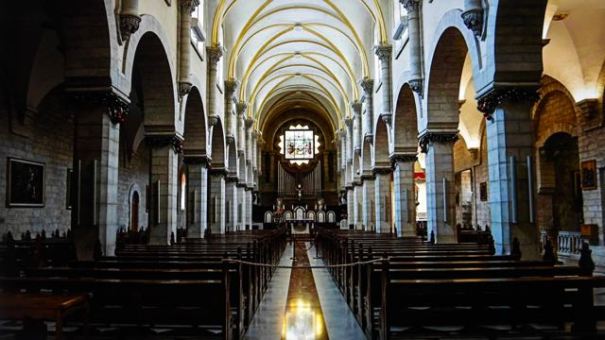
The Church of the Nativity in Bethlehem, silent because of the war in Gaza (photo from “God Is Under the Rubble of Gaza,” the New York Times, Dec. 24)
Usually on Christmas, many thousands flock to a joyous, music-filled, brightly lit Bethlehem to celebrate Jesus’ birth. But this year the tone is mournful, many streets quiet. The few who have still come to honor the Birth will do so in silent reverence. Said New York Times journalists Yara Bayoumy and Samar Hasboun:
“A Lutheran church put up its crèche, but with a sad and symbolic twist. The baby Jesus — wrapped in a keffiyeh, the black-and-white checkered scarf that has become a badge of Palestinian identity — is lying not in a makeshift cradle of hay and wood. Instead, he lies among the rubble of broken bricks, stones and tiles that represent so much of Gaza’s destruction.”
The church’s pastor, Rev. Munther Isaac, who created the crèche, said, “The horror of war cannot be allowed to bury the spirit of Jesus… Despite the circumstances, we must still show that Jesus is the source of happiness and peace in the church. God is under the rubble in Gaza, this is where we find God right now.” (See also the article in the Washington Post, Dec. 26.)
The Signs of a New Christmas in Northern Virginia
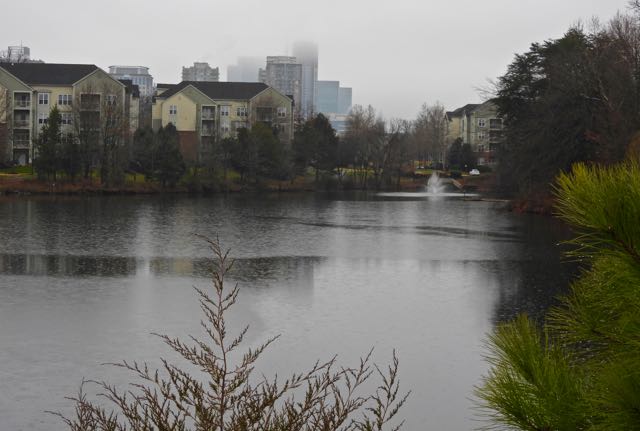
Looking toward downtown across the lake on a cool, rainy day after Christmas
Perhaps paling in significance compared to the Israel-Gaza War are the quiet signs of a psychological change in how we define Christmas here in this little corner of Virginia, USA. Of course, some things are the same: the calendar still says it’s late December, and so people have been flocking to stores since November and shopping online for the dazzling array of goods that we will give as colorfully-wrapped presents to family members.
But we in the U.S. (even those of us on California and Florida beaches) used to define Christmas as occurring within a deep winter setting of chill winds and blizzardy falls of white snow. Santa Claus, the primary spirit that kept us warm and happy in forbidding weather, we pictured flying from home to home on the magical sleigh led by reindeer from the bitterly cold far north. That picture still made a kind of sense when most parts of the US still had snow cover in December. But now, when even the polar ice caps are melting, it’s just nostalgia–and maybe fear of the future–that keeps us clinging to the White Christmas fantasy.
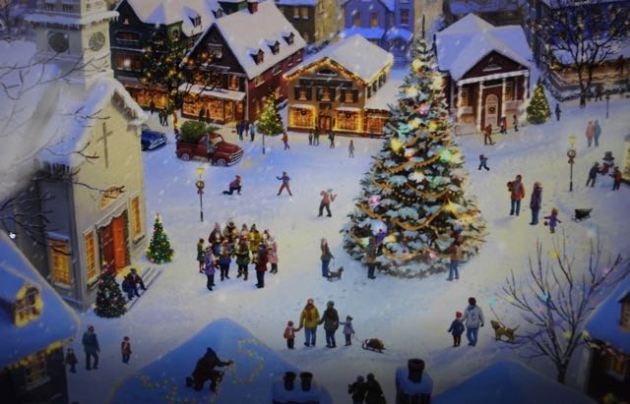
A typical Christmas scene as imagined by Blue Mountain e-cards, Dec. 20
On Christmas this year, the high temperature here was a calm 58. What would Santa in his fur coat do in a climate like ours? Of what use is a sleigh without snow? And the poor reindeer, what of their chances in our warmth? The fleeting inch of snow we had on Dec. 11 is a gone memory, and it’s been many years since there was snow here on Christmas. Oh, you might point out that last Christmas Eve, 2022, the low temp was a biting 7 degrees F., but that was an anomaly, as was the dusting of snow we had on Jan. 31 last winter, the only snow of the season.
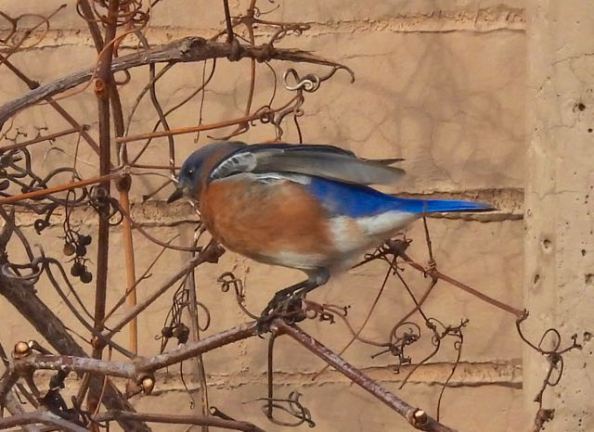
A rare December bluebird along the highway sound barrier west of the lake, Dec. 23.
A Bluebird Surprise
There is no shock to the mind from a mild day in December; indeed, the change from the possible bite of a freezing wind is soothingly pleasant. As I walked around the lake on Dec. 23, I delighted in the warmth, and then in the brilliant orange and blue of a small flock of bluebirds, who I was surprised to see and I luckily photographed. But part of me registered a disturbing discord, like a slight seismic tremor. “I’m happy to see you, friend bluebird, but why are you here so early?” Then the disquieting thought: “Were things not so nice where you’d usually be this time of year? Too warm perhaps? Is this just a temporary visit, or will you try to make a home in our community long term? Have you discussed this with the house sparrows?”
Eastern bluebirds are known as “partial migrants.” A particular flock may go as far north as Canada in summer and as far south as Florida in winter–but that flock might also stay year-round wherever they find the right conditions. Maybe in New England, maybe in Georgia, maybe right here. Some flocks might stay year-round where it’s cooler; others where it’s warmer. Another group might switch locations during the year. Like humans, bluebirds aren’t all alike in their preferences. Maybe these bluebirds I conversed with were gonna stay a while because of the warmth, or the relative coolness; maybe they’d move on. Still, I’d never seen bluebirds here this early.
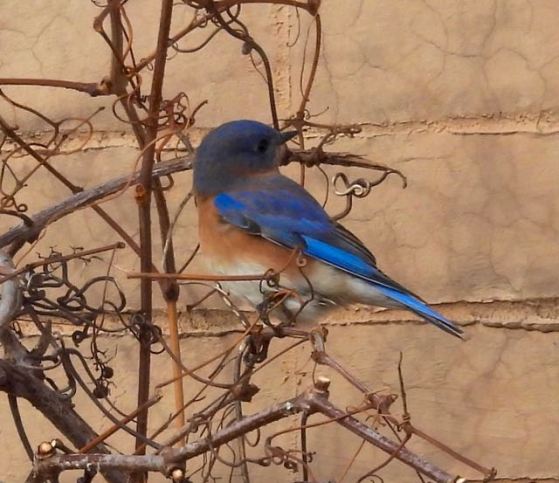
Another bluebird by the sound barrier west of the lake, Dec. 23, morning
What we know for sure is that the changing climate is gradually warming, with 2023 the hottest year on record around the world. Winters have been getting shorter most places, and aren’t as cold. In our region, the fall leaves stay on the trees longer; the buds appear earlier. Was that red maple in the photograph above really budding already, when just last month it still had bright red leaves on its branches? How long can it still exist here with no real winter?
These bluebirds wouldn’t be here if it were actually an icy white Christmas. They can’t be fooled by nostalgia. Unlike us, but very much like the human climate refugees increasing everywhere, bluebirds have to live 24/7 in the real world. We who are not yet climate refugees are lucky that our imaginations can still enable us to live in a fantasy world, at least for a while yet. We can still sing “let it snow, let it snow, let it snow, ” when it’s 58 outside. But sooner or later, we’ll have to live in the real world, too.
The Romantic Mallards: Definitely Early Birds

Mallard pair communicate on the log in the southeast cove, Christmas Eve
Last month’s blog entry ends with a 2-minute video of a pair of mallards clearly engaged in mating, or at least pre-mating, behavior. Take a look. It’s amazing how they communicate and how one bird observes and imitates the other. This month, the mallards, particularly one pair, are the stars of the lake, sometimes even being the lone waterfowl on a rainy morning. I find them on the lake almost every day, often in shore places where I’ve not seen them before. Just the day after Christmas, Dec. 26, I spotted them in the inlet stream beneath the bridge over the southeast portion of the lakeside path. It’s gotten so that I’m not surprised when they show up anywhere along the lakeshore. Here’s that video:
The mallard pair makes their relationship pretty obvious in the inlet stream on the southeast portion of the lake, Dec. 26
Mating season for mallards is the spring, not fall or winter. But this pair began mating behavior in November and it’s only intensified this month. If the warm weather and the birds’ activities keep up as they have, we’ll be seeing ducklings in February, well before the official start of spring. Just more evidence of the new kind of Christmas we’ll have to get used to.
Here are a few more mallard photos from December:
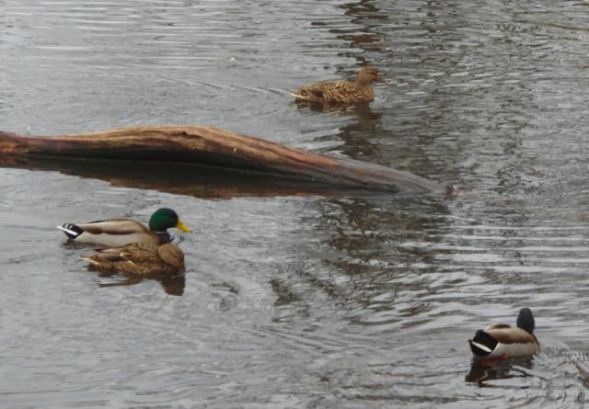
Two mallard pairs after sunset in the southeast cove, Dec. 23
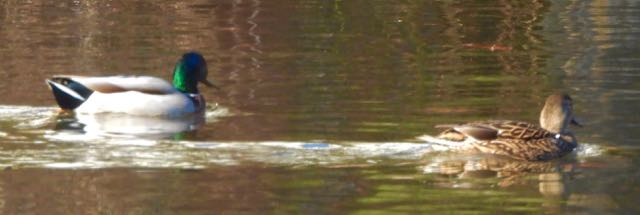
I love to see their synchronized trails in the water, Dec. 20
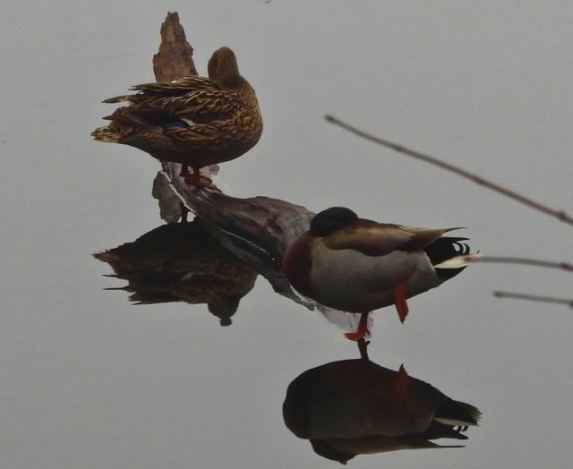
Mallard pair and their reflections on a misty day, Dec. 17
*******************************************************
Celebrating Christmas Week with Family from Far and Near
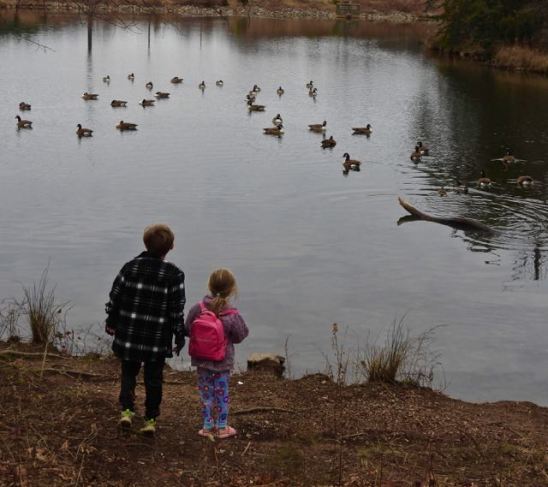
Two of our grandchildren have become regular observers of the wildlife at the lake (Dec. 21).
How fortunate we are this year to live very close to some members of our extended family, and to have been able to visit and be visited by more family who live farther away, even across the country in California. I recall fondly the weekly hour-long Zoom visits we maintained during the pandemic in 2020 and 2021. These were actually a cherished substitute for in-person relationships, but not the same as what we have now since we moved back to Virginia.
Not only do we live very near three families, but we’ve had in-person get-togethers at least twice this year with all our families from Virginia, New York, Georgia, and even California, most recently with some of them just last month.

Christmas Day with two of our local families
And now this Christmas week. We spent Christmas Day with two of our nearby families, and later this week with some of our children and grandchildren from Georgia and California.
One precious aspect of these visits, which the pandemic precluded, has been sharing meals. There is no substitute for cooking for those dear to you or being hosted by them for meals and conversation.
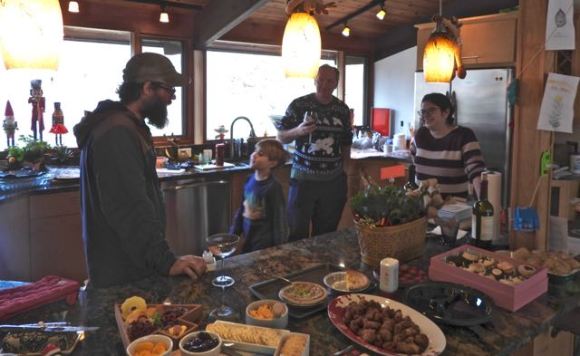
Sharing food and conversation at the Christmas Day party
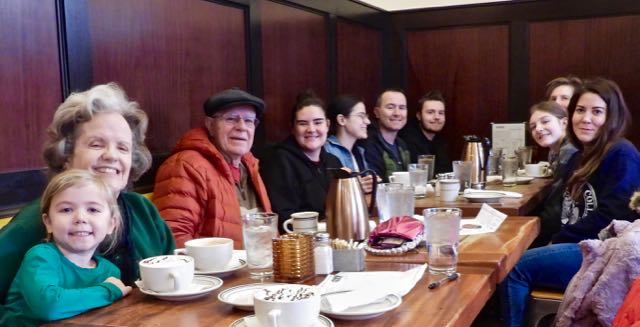
Sharing breakfast with families from three states at a local restaurant, Dec. 29
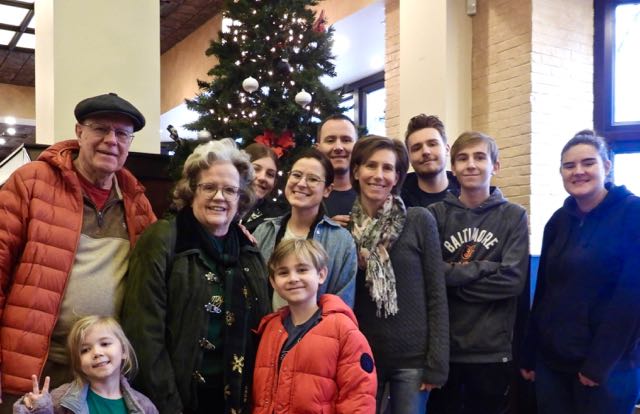
Another scene from breakfast, with the Christmas tree, Dec. 29
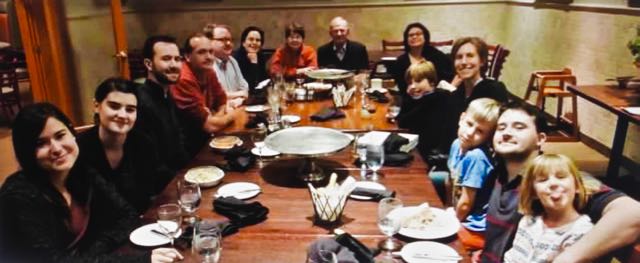
Flashback! Many of the same folks at a holiday meal, but in 2014. Isn’t it great how we’ve grown up since then!
***********************************************
The December 2023 Photo/Video Gallery: Citizens and Visitors in a Cool, Rainy Month
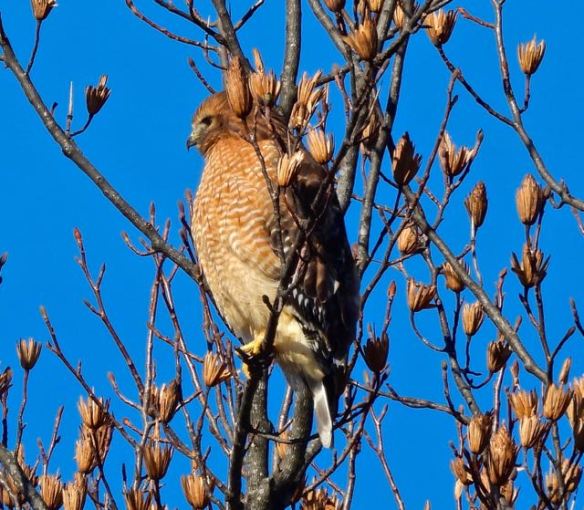
A Red-Shouldered Hawk scans the lake from atop a budding tulip tree in the north end woods, Dec. 15
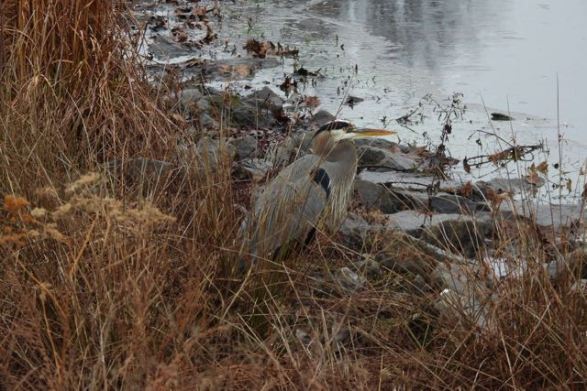
One of our loyal Great Blue Herons searching for a meal on a rainy day, north end of lake, Dec. 26
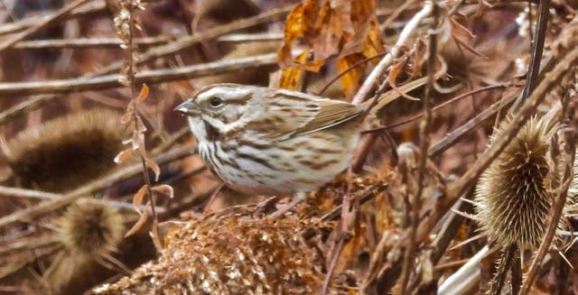
A Song Sparrow amid dry teazle northwest of the lake, Dec. 26
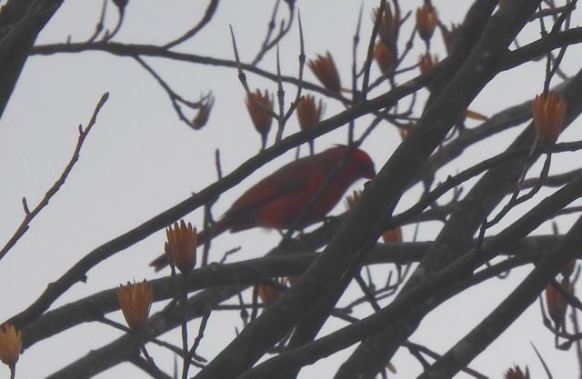
A male Cardinal in a budding tulip tree in the mist below the north end dam, Dec. 24
A Carolina Wren singing and listening in a tree of heaven on the east bank, early morning, Dec. 24
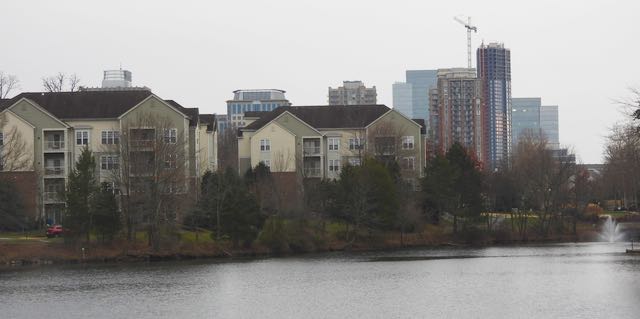
Across the lake, our community and some downtown buildings at sunset, Dec. 23
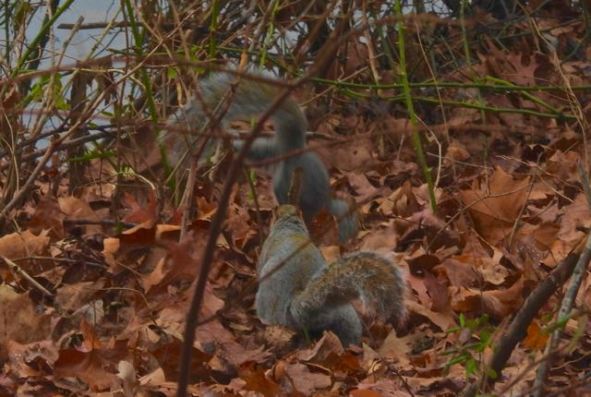
On the west bank, a pair of grey Squirrels romp in maple leaves on a rainy afternoon, Dec. 26
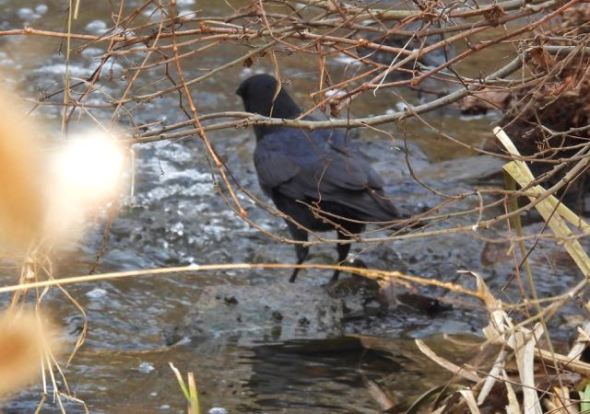
Below the north end dam, a Crow wades through an icy patch in the Sugarland Run Branch outlet stream, Dec. 23
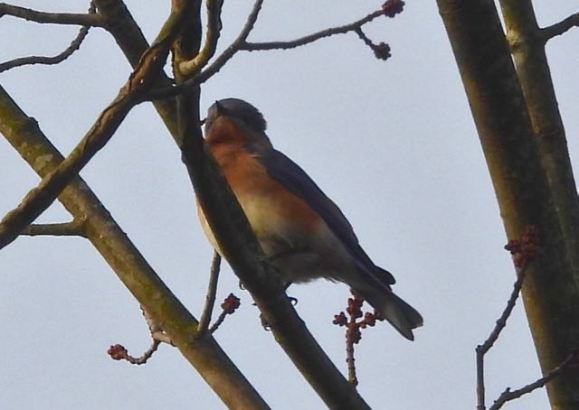
One of our visiting Bluebirds is lit by the early morning sun in a red maple, Dec. 23
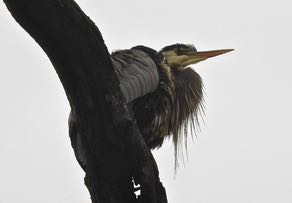
A Great Blue Heron watches from atop a dead tree on the east bank, grey morning, Dec. 24
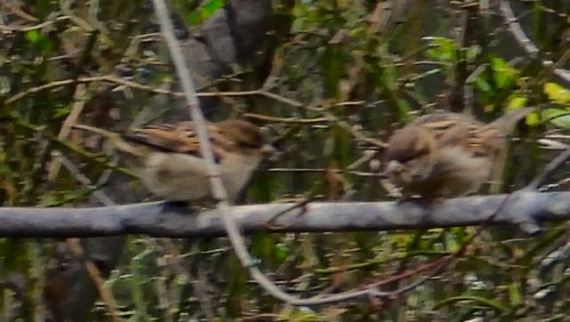
An impressionist rendering of a pair of House Sparrows on a branch along the southeast bank, Dec. 21
A mallard pair swims from mid lake to below the west bank, early morning, Dec. 23
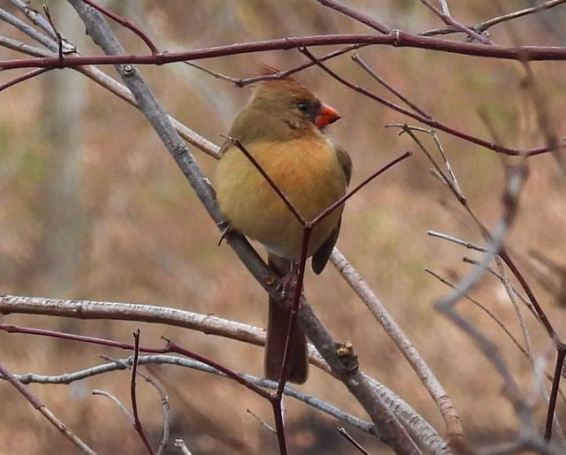
A female Cardinal rests on a branch above the east bank, Dec. 23
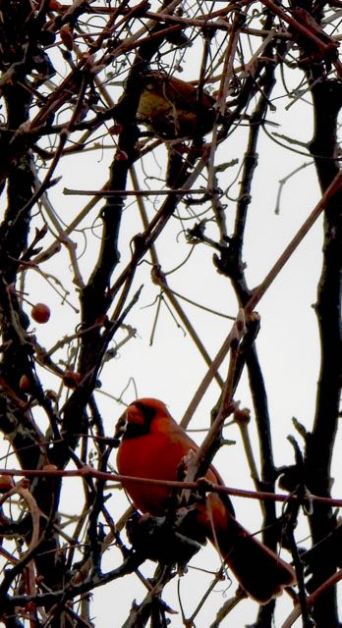
A male Cardinal and a Carolina Wren in a bradford pear below the north end dam, Dec. 24
The Sugarland Run outlet branch burbles below the north end dam, Dec. 24
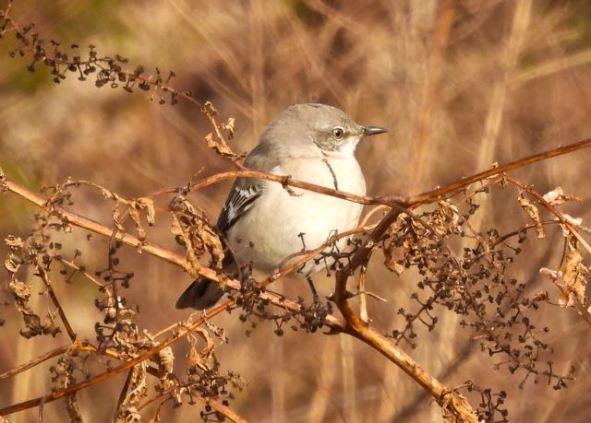
A Northern Mockingbird in dry pokeberry, north end, morning, Dec. 23
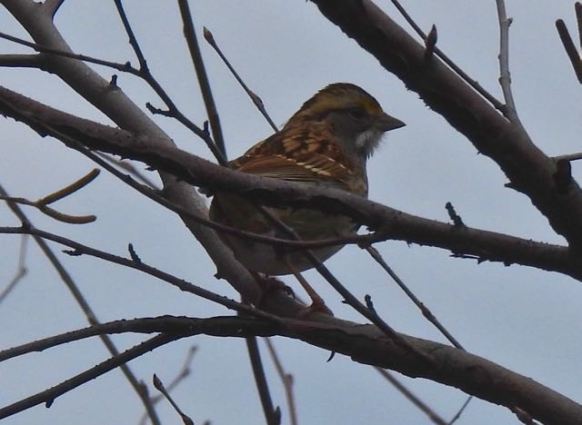
Another visitor: a Savannah Sparrow rests on a branch on the west bank, grey morning, Dec. 30
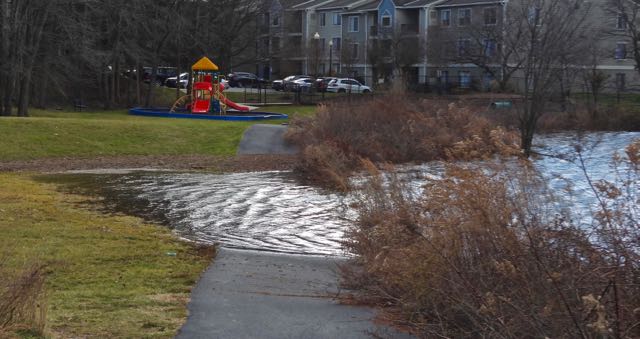
The flooded path on the east bank after an overnight storm inundates the lake, Dec. 18
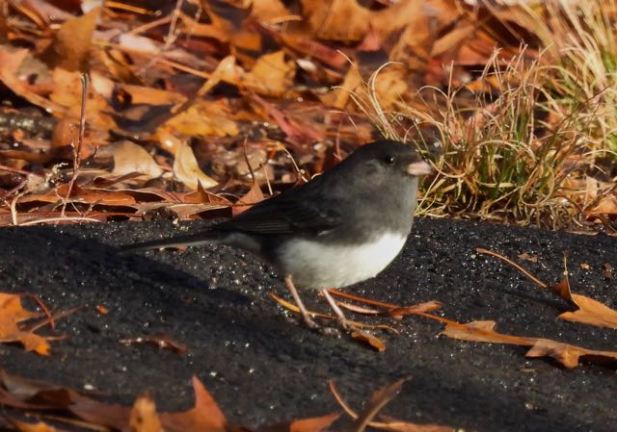
A Dark-eyed Junco on the southwest path amid fallen leaves, Dec. 11, after morning snow has melted
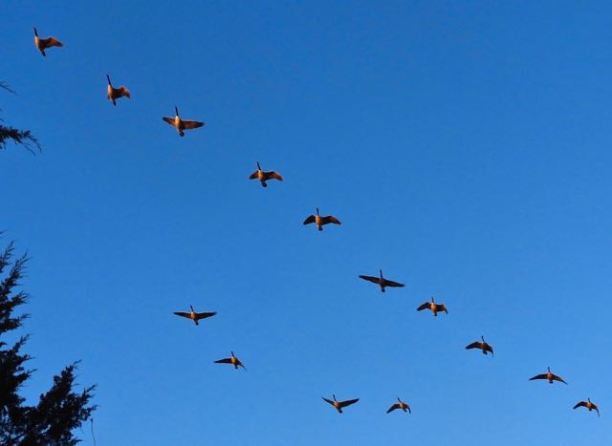
Canada Geese, lit by the setting sun, take their daily sunset flight from our small lake, Dec. 18
Finally, wherever your travels might take you, here’s to a joyful, adventurous New Year!
 From Sacramento to Potomac: Tales of Two Valleys