Grey Squirrel munches on an acorn while relaxing on an Oak branch on the southwest bank, then sees me with my nosy camera, during March 12’s gorgeous, fleeting snowfall
In this month’s blog:
Neighboring: Making “E Pluribus Unum” Matter
Garden Update: After “Snowcrete,” Marching toward Spring
Climate Log: Scorching the Earth and Robbing US Citizens
The March 2026 Photo/Video Gallery
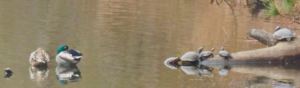
Neighbors: Mallard Mating Pair and 5 Red-Bellied Cooters share the same log, southeast shore, balmy March 10
Neighboring: Making “E Pluribus Unum” Matter
Minnesota native and famed journalist Thomas Friedman explores in this essay how Minnesotans fought back against violent ICE incursions by helping their multi-ethnic neighbors carry our their lives and keep their shared economic community strong during the depths of January winter. The article is well worth reading for how it demonstrates Americans giving meaning to the US motto “e pluribus unum” (“out of many one”) that adorns the Great Seal of the United States. The peaceful, valiant stand by Minnesotans against the Trump regime’s efforts to divide Americans against one another shows what the motto really means: treating all members of our highly diverse country as our “neighbors,” all together in building this great nation despite incessant efforts by some powerful people to divide us through manufactured fear and lies.
All Creatures Our Neighbors
The spirit of this blog, month to month, extends the idea of “neighboring” to include not only the diverse multi-ethnic, multi-lingual human community in which we live here in Northern Virginia, but also the countless other creatures–plants and animals of all sizes and skill sets–who inhabit with us. Writer Robin Wall Kimmerer indeed uses the term “more than human” to describe the lives of these our fellow creatures, to do justice to all the talents and strengths that they possess–that far surpass what we humans, in our prideful ignorance, can do, though we consider our human selves to be superior to our fellow creatures.
A third House Sparrow lands beside two others on Greenbrier vines along the southeast shore of the lake, cold morning, March 17
When I watch a House Sparrow fly forty miles an hour into a dense cloud of leaves, then stop fully in a silent instant, then speak in a range of pitches to its neighbors, then take off again as part of a perfectly coordinated group, all I can do is marvel in respect. In comparison, it’s all I can do to stay balanced on my painfully slow two legs and maybe, if I’m lucky, snap a photo of one of these birds before they zoom away.
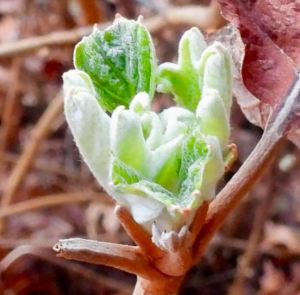
One of the many first blooms of the year on Oakleaf Hydrangea, east of the lake, cold morning, March 17
When I hunker indoors when it’s cold outside, but then spy the first new blossoms of the year on the Oakleaf Hydrangea outside in the wind, I marvel at how this plant–and all plants–can thrive in harsh conditions that make us humans hide. This little, quiet, infinitely complex flower demonstrates what no human has ever managed to achieve–the miracle of turning sunlight into totally efficient energy (AKA photosynthesis). Such delicacy, beauty, and strength that I should never take for granted, but almost always do.
****************************************************************************************
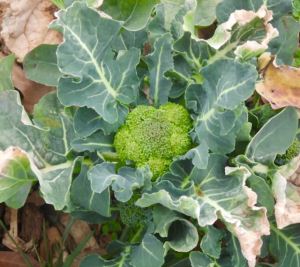
5 of our 6 Broccoli plants, in ground since October, present flowering heads despite a tough winter, March 11
Garden Update: After “Snowcrete,” Marching toward Spring
On a balmy March 20, Song Sparrow calls and preens on the high fence surrounding our garden community. Such exaltation from a creature so small!
When to plant? Last year at this time, as you might recall, I complained in the blog about the sudden cold snap on March 9 that killed off our Tomato and Peppers seedlings. A warm early March had fooled me into hoping that real spring had arrived. But that mistake convinced me that the balmy Marches I’d loved in California would not be repeated here in Virginia. Instead, when we community gardeners gathered for our annual planning meeting on February 21, the staff cautioned us to wait until May 1 to put our veggies and flower seeds in the ground! Up until that point, the ground is still too cold to sustain the little annuals who’ll love the summer sun. It’ll be all I can do to wait until May 1.
But Fall veggies are an exception. For those of us who can’t keep our hands out of the soil, there are some veggies that do thrive in Fall and Winter in this climate, and many more plants that comfortably lie dormant underground and sprout again when it warms up. Beets, Radishes, Onions, Kale, and Garlic are among those that can be safely planted late in the year. One of my neighbor gardeners has a full bed of Kale now green and dense after the awful “snowcrete” February. (See last month’s blog for the grim details.)
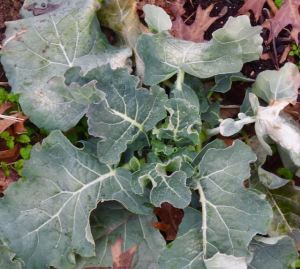
Just after the “snowcrete” has melted, this sturdy Broccoli plant has survived, but no head yet appearing, February 19. See the next photo for an update!
My Fall favorites for this garden plot are Broccoli and Cauliflower. We planted both in Fall 2024, and the mild winter helped both produce edible fruit, so we tried again in Fall 2025. The 12 plants (6 of each) were coming along fine through December and into January, expanding their green leaves. But when the 7 inches of snow hit on January 25 and turned solid for the next 3 weeks of below freezing temps, we thought that the plants would not survive.
Well, the Caulifower didn’t. But 5 of the 6 Broccoli did pull through, with some damage, and now in late March there are multiple flowering heads slowly expanding.
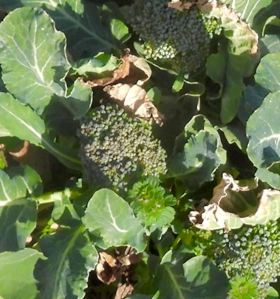
Broccoli plant survives February “snowcrete” and is now producing multiple heads, March 24
*************************************************************
Climate Log: Scorching the Earth and Robbing US Citizens
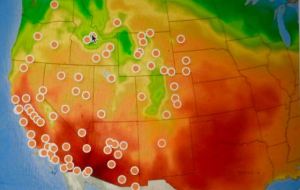
The orange dots represent locales in the US West that have set high temp records for March (CNN Weather, March 24)
While the greatly unpopular US President cheers the thousands of his bombs that have destroyed large portions of drought-ravaged Iran, and while the US media cover every one of the President’s incessant words, he never spends even one of those words on the high temperature records that are being set here in the US (see photo above).
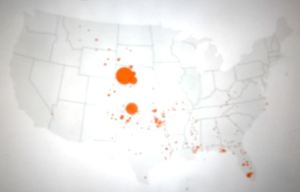
The band of wildfires, some having consumed more than a million acres, stretching from Montana three thousand miles across to Florida, March 24, with more in the forecast (Washington Post )
Nor do the massive wildfires that are scorching a huge band of this country from Montana across the Plains and all the way to the President’s beloved Florida merit even one smidge of his attention. Of course, he’d never acknowledge these disasters because he denies that they exist and denies that they will proliferate because of the fossil-fuel-caused climate change that he also claims does not exist.
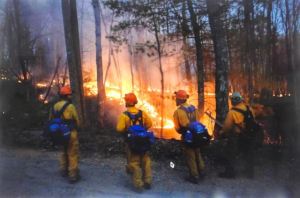
Firefighters try to stem this wildfire in Flat Rock, North Carolina, one of hundreds of fires now burning across the US, March 24 (Washibgton Post photo)
Is anyone helping the people of those drought-stricken and fire-plagued states? While the President goes to Congress to ask for another 200 billion dollars to finance even more attacks on that scorched, drought-ravaged nation halfway around the world, not one dollar is being asked for re-funding the Federal Emergency Management Agency (FEMA) or the federal Forest Service, who used to help the beleaguered states in times of disaster when Joe Biden, both Bushes, Obama, Clinton, Reagan, and all the other Presidents actually cared about the people of the US.

LA (shown above) is one of many places in the West and Plains states with record-setting March temps. The international science collaborative World Weather Attribution explains, March 25
Prices and Profits. And because the President’s adventure in Iran has closed off much of the world’s access to his favorite “drink,” oil, prices of oil and gas around the world–including the US–have gone up like one of his rockets. So everyone in the US who still drives those millions of cars that are stuck using gasoline is paying higher prices than they’ve seen in years, with no cap in sight.
Who profits? Though he claims that he feels bad for US drivers, the President likes the price-spikes just fine, because the higher the price of gas, the more profit he and his billionaire friends who run the big oil companies just rake into their pockets. So does his good friend Vladimir Putin, who, thanks to the President’s lifting of sanctions, no longer has any limits placed on how much Russian oil he can sell. Ka-ching, ka-ching, ka-ching.
Which Drivers Don’t Feel the Price Shocks? EV drivers and, to a lesser extent, Hybrid drivers don’t feel the price spikes like the gas-only drivers do, but note how clever the President is: he’s made sure that the US is the only Western country that doesn’t help the clean EV market grow, so too few Americans can even buy EVs. As a result, the gas price spikes hit way more people in the US than they do in Europe, where clean EVs are the most popular new cars bought. Not only is Europe (and increasingly South America) buying EVs in record numbers, but China’s company BYD, who makes the cheapest EVs, has now surpassed Tesla as the most successful EV company.

The Han model from Chinese automaker BYD, designed for the potential US market, March 2026. BYD’s motto is “Cools the Earth 1 degree C,” its business mission
Don’t forget the cost of tariffs. Too bad for us that the Trump tariffs on clean Chinese vehicles are so high (100%) that they can’t be sold in the US (Canada, with much lower tariffs–just 6.1%– has contracted with China to import BYD autos). So the Trump tariffs are just another way that the President stiffs US drivers of gas cars, isolates the US in an expanding EV world, and insures the revenue flow to himself and his buddies from the ballooning prices of his favorite fuel.
How Trump counts on ignorance. And as long as Trump keeps silent on the heat records and wildfires in his own nation, he’s counting on most people to not make the connection between gas emissions and the rapidly deteriorating environment. So the people, the land, and all creatures just suffer more.
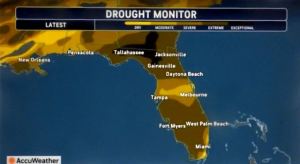
Extreme drought over 3/4 of the President’s adopted state, March 24–but mum’s the word
**********************************************************************************
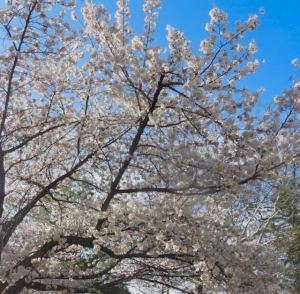
Our Cherry trees in the community sprang into bloom from a few warm days this week, March 24

View toward north with Cherry Laurel in snowfall, March 12
The March 2026 Photo/Video Gallery: From Snow Beauty to Denuded Hills to Spring Blooms
This month saw both a brief, gorgeous snow shower and enough balmy days to bring out the blossoms on all our flowering trees. It also brought a shocking denuding of some of our precious hills by the power companies (oil and gas) with whose pipelines our plants and animals share our space around the lake. We hope the grasses and wildflowers will grow back soon. We’ll be watching.
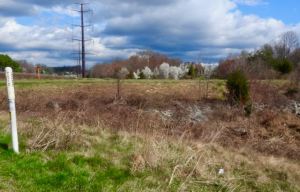
Lest we forget, our community shares space with electric towers and gas and oil pipelines. On March 23, crews denuded hills west and north of the lake. In 2025, no mowing occurred and the growth of grasses and wildflowers brought in more pollinators than we’d seen before.
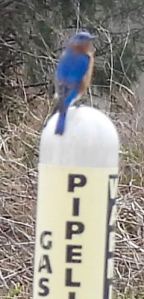
Eastern Bluebird crowns the Columbia Gas pipeline marker northwest of the lake, March 19
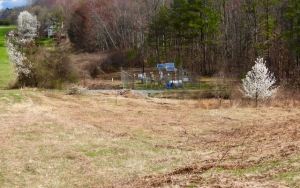
Newly denuded hillside above the Columbia Gas substation north of the dam, March 23
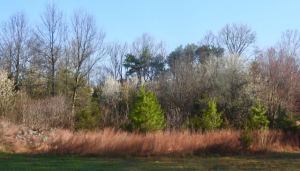
Northeast woods coming into bloom on a warm March 21
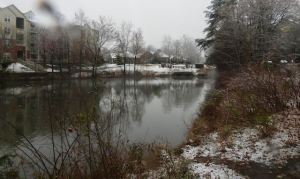
View to south end park in snowfall, March 12
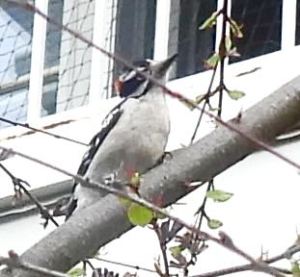
Downy Woodpecker climbs Katsura tree east of the lake, warm March 23
Downy Woodpecker stabs for seeds from a feeder on the southeast side of the community, warm March 21
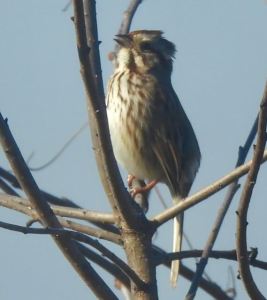
Chipping Sparrow in sapling on the north shore of the lake, March 21
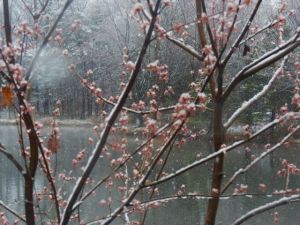
Blooming Red Maple on west shore covered with snow, March 12
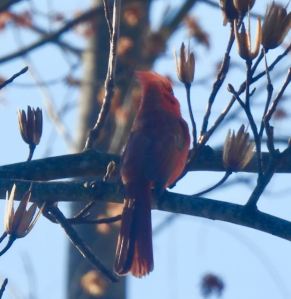
Cardinal male perches in Tulip tree in shadows along the west bank, March 21
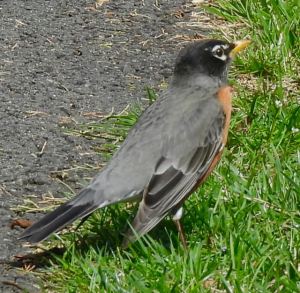
American Robin alert on the east path on a warm March 19
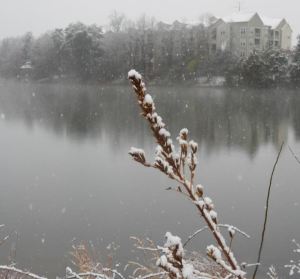
Snow-covered Evening Primrose, northeast shore, March 12
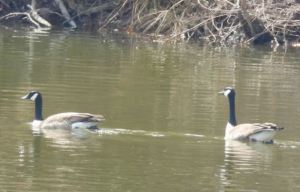
Canada Goose mating pair swim along the northeast shore on a warm March 19
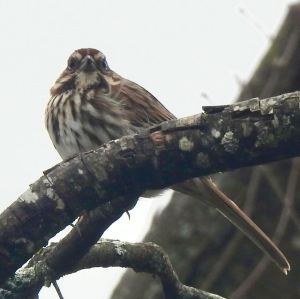
White-throated Sparrow juvenile high in Sycamore south end of lake, warm March 7
Cardinal male calls from the Tulip tree on the west bank, on a breezy March 21
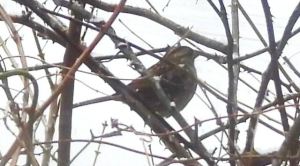
White-crowned Sparrow, uncommon here, calls amid Greenbrier along the southeast shore during brief snow squall, March 2
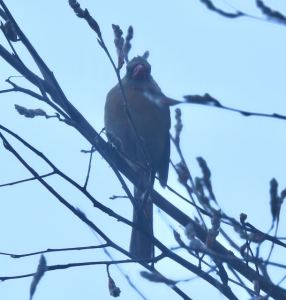
Cardinal female high in Serviceberry southeast side of lake, March 21
Song Sparrow calls from Grapevines along the northwest shore on a cold, windy March 1
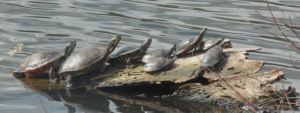
Eight Red-bellied Cooters crowd on to the log on the north shore of the lake, March 23
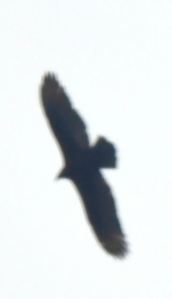
Turkey Vulture in silhouette high over lake, warm March 7
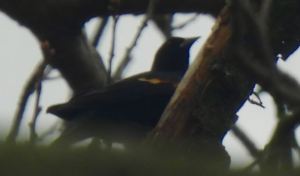
Red-winged Blackbird high in Oak, south end of lake, warm March 7
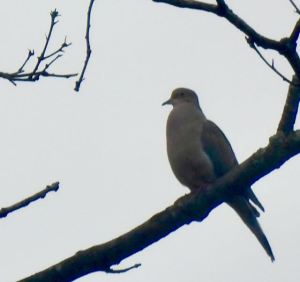
Mourning Dove atop Chestnut Oak south of lake, misty, warm March 6
Mallard mating pair feeds near nest as Red-winged Blackbird calls, southeast cove, March 7
And on to April, with hopes for better news for all of us neighbors in the nation and the world…
 From Sacramento to Potomac: Tales of Two Valleys