December 2020: Coda to a Year of Reinvention

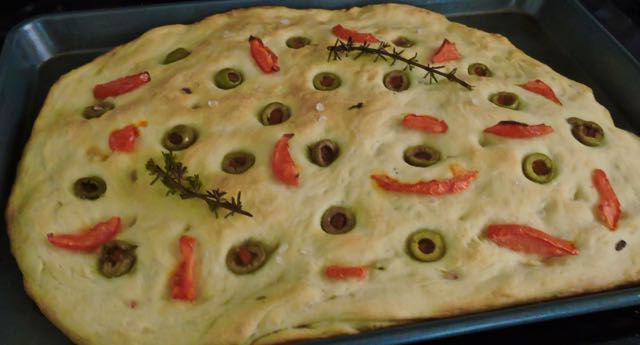
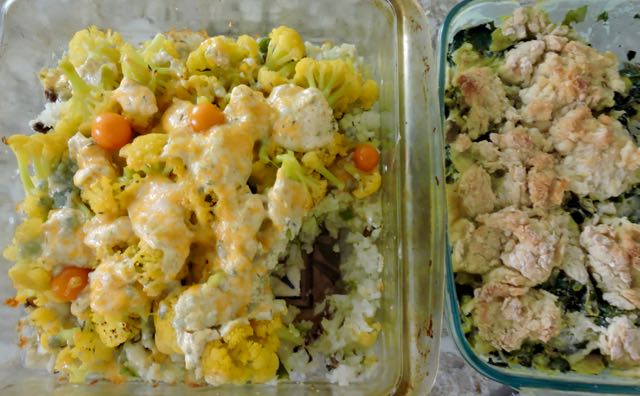
Jean’s Christmas focaccia right from the oven (see Treats from the December Kitchen, below).

In this month’s blog:

Coda to a Year of Reinvention

The Garden: Growing in the Foggy Chill

Treats from the December Kitchen

December Gallery: Foggy Photos

Chris:

Dec. 24–And the Reinvention Continues. Even as the outgoing occupant of the White House keeps fantasizing that the voters didn’t oust him from the Presidency in November, most of the rest of us keep moving on in reality, reinventing helpful responses to the continuing–even increasing–strength of COVID-19. Mask wearing, social distancing, the new vaccines, and digital everything–meetings, schooling, parties, family gatherings, performances, and business–are just a few of the many reinventions that people around the world have shown the courage to make.

As I write, America is hoping that the outgoing President will stop doing his cruel imitation of Ebenezer Scrooge (except Scrooge wasn’t so bad that he spent his precious time playing golf and pardoning his convicted cronies).  Let’s hope that the outgoing President can still see straight enough to sign the latest COVID-19 relief bill, to help the Americans hardest hit by the pandemic begin to get back on their feet.  Come January 20, the new Administration–which a record number of Americans voted for–will really tackle the crisis, which the new elected leaders seem fully ready to do.

My most immediate wish this holiday season is that the bill is signed and relief can start to flow. 

Dec. 27, 6 PM–guess what? My wish was granted. He signed the relief bill. Do you think that the outgoing Prez was visited by the 3 spirits of Christmas? We’ll wait and see what he does next.

                                                                              *************

I’ve been repeating the theme of Reinvention every month in this blog since May. Some folks still cling to the notion of “getting back to normal”–a vision of a past in which many were comfortable but more were not, and which was steadily destroying our planet. Lucky for all of us, most Americans are putting their minds, hearts, and hard work into “moving forward to better”–building a stronger economy that cares about health, and into achieving more inclusive societal and environmental goals that will make the U.S. a better place to live for everyone.

We can do lots better than “normal.” But it will take

*imagination

*patience

*dedication

*cooperation*

*and the willingness to adapt.

The Garden: Growing in the Foggy Chill

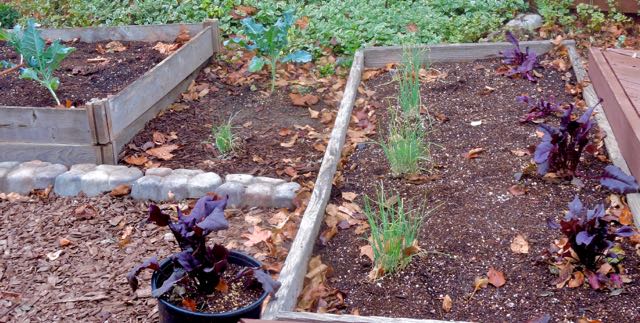
garden winter veggies back pano to south dec 21 2020 - 1

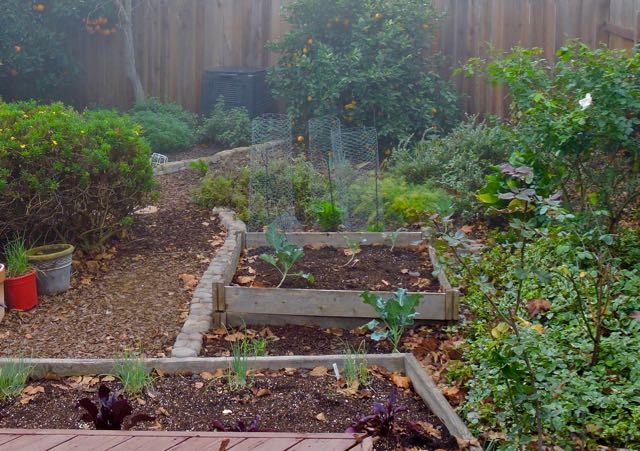
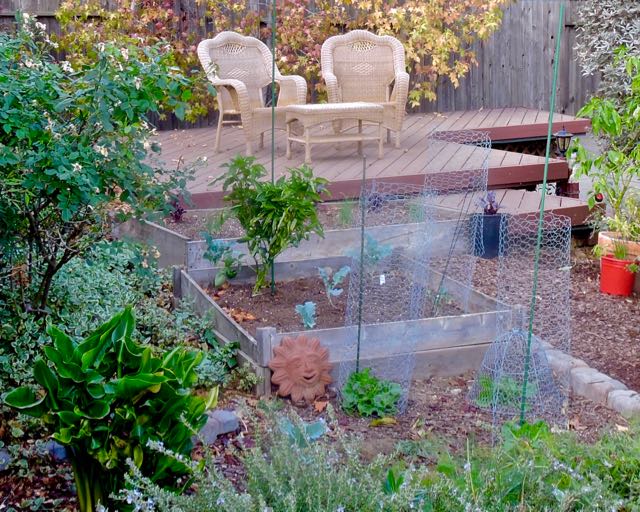
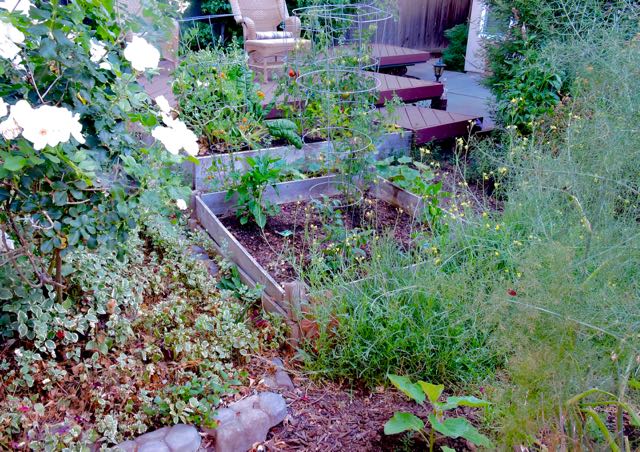
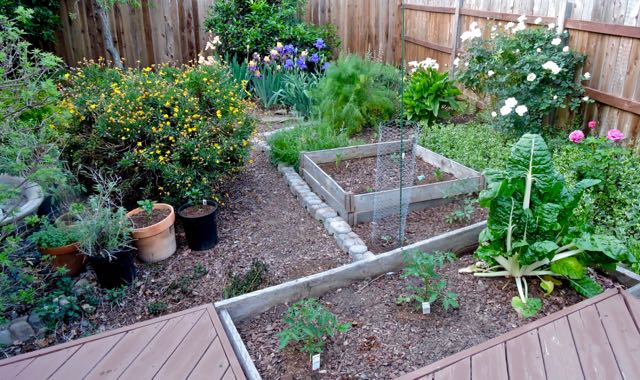
On a foggy late December morning: red beets and green onions in the large raised bed, broccoli in the small raised bed, and lettuce in cages beyond, with oranges (top left corner) and meyer lemons in the background

If anyone knows the need to be patient and willing to adapt, the gardener knows. For a warm, rainless first half of November we were still in fear of new fires in Northern California, and so had to keep the irrigation systems flowing. Since November 17, the inch and a half of rain so far has made a big difference in growing conditions. With temps between 35 and 58, I was able to turn off the irrigation system, because the ground stays moist enough for the winter veggies to grow.

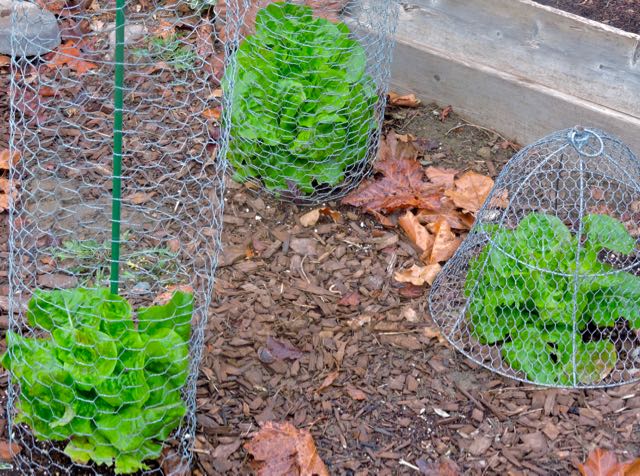
garden leaf lettuce in cages dec 21 2020 - 1

How are our new veggies doing? They are growing apace in the cool, damp weather. The lettuces (left) are thriving in their chicken wire cages, and we are regularly plucking the large leaves for our salads and sandwiches.

The green onions and Bulls Blood beets are also maturing in the large raised bed, for harvest in January we hope (see below). Meanwhile, the broccoli plants (also below, left) get gradually larger, though it’s still too early for the heads to begin to form.

garden broccoli onions beets dec 21 2020 - 1

Green onions and Bulls Blood beets in the large raised bed, with Green Magic broccoli to their left in the small raised bed and between the beds.

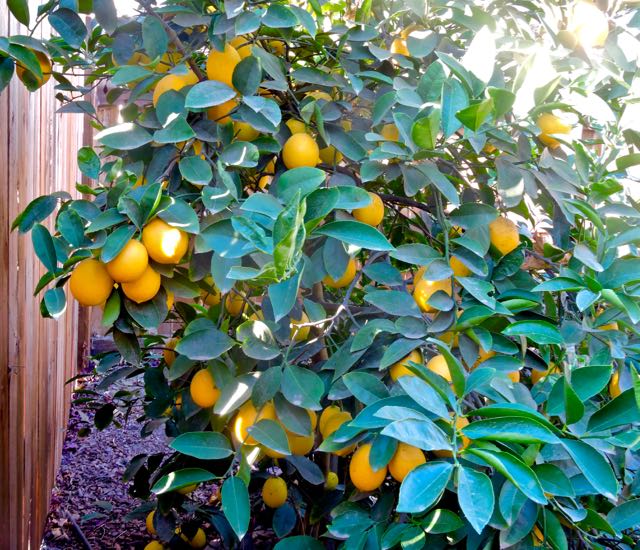
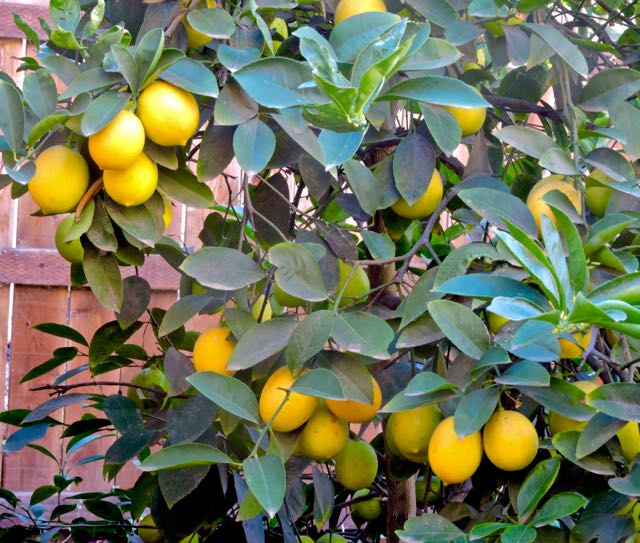
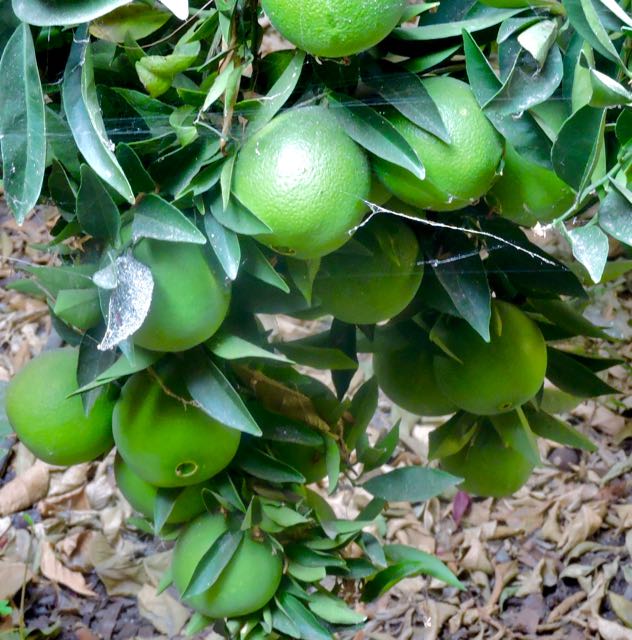
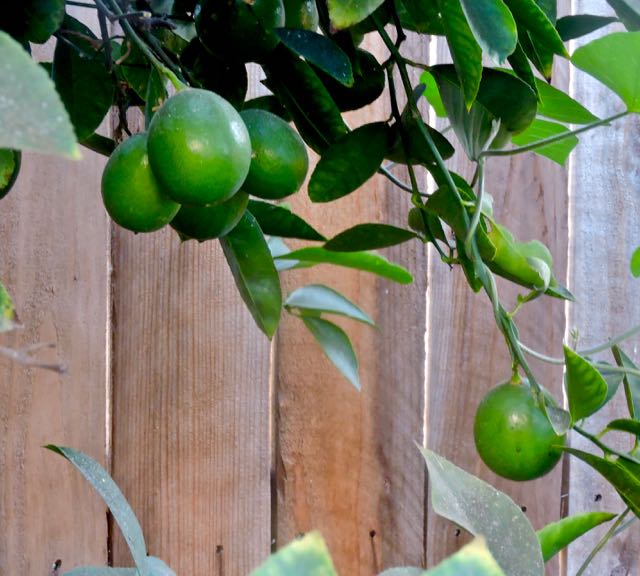
Oranges and Meyer Lemons. These perennial champions thrived in the hot months with twice-weekly watering, as they turned from buds to tiny green fruit and are now close to full size and ripeness. The meyer lemon bush (below) grows larger every year (it’s now eleven years old), and it is more full of lemons than ever (we had 150 last season).

garden meyer lemon bounty back dec 10 2020 - 1

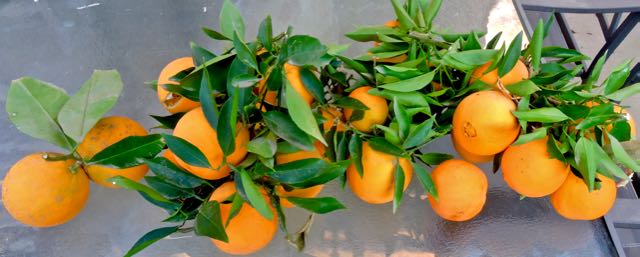
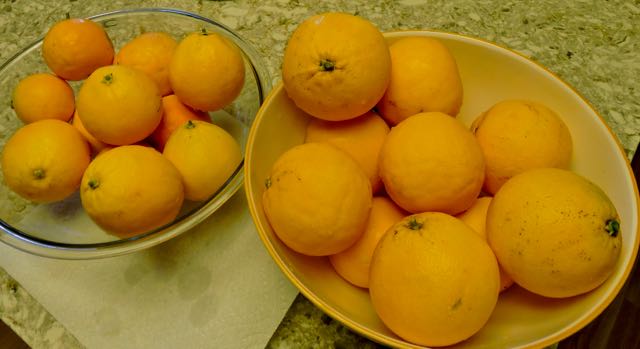
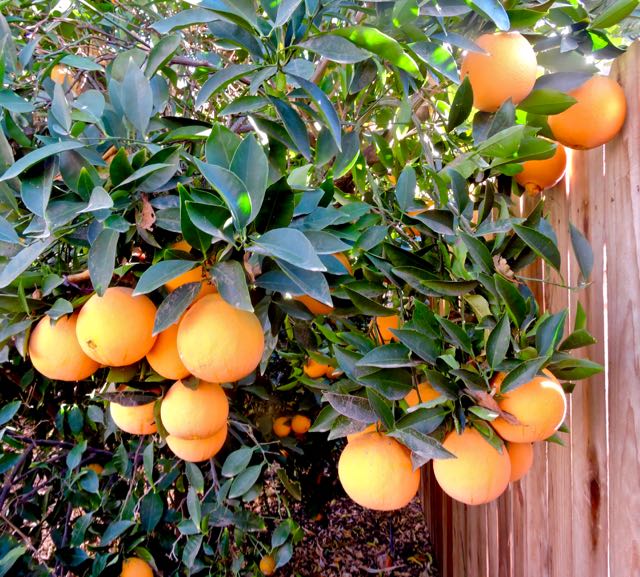
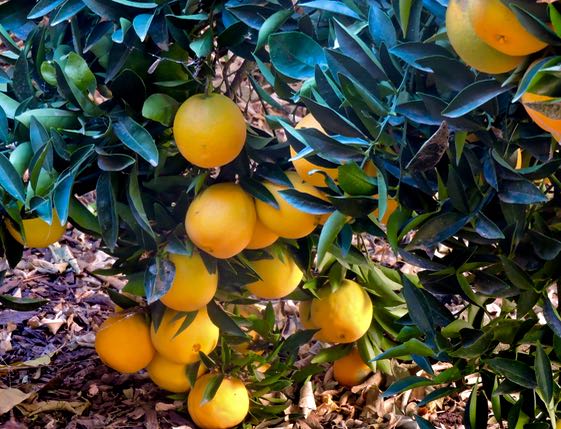
The navel oranges are fewer in number than last season (about 150 vs. 250), but larger in size. Unexpectedly, a few clusters grew so heavy that we had to clip them off the tree this month so that the branches wouldn’t break, even though we knew that they’d not yet be sweet (full sweetness happens in February). See below.

garden first oranges of season dec 19 2020 - 1 

But the early harvest just meant that we’d be making our orange-and-lemonade earlier–with more sugar and stevia!–as both fruits were already plenty juicy, flavorful, and piquant.

garden oranges 1st harvest of season dec 19 2020 - 1

What to do with oranges having to be harvested while still more sour than sweet? Harvest some lemons, too, add sugar and water to the whole batch, and have December orange-and-lemonade!

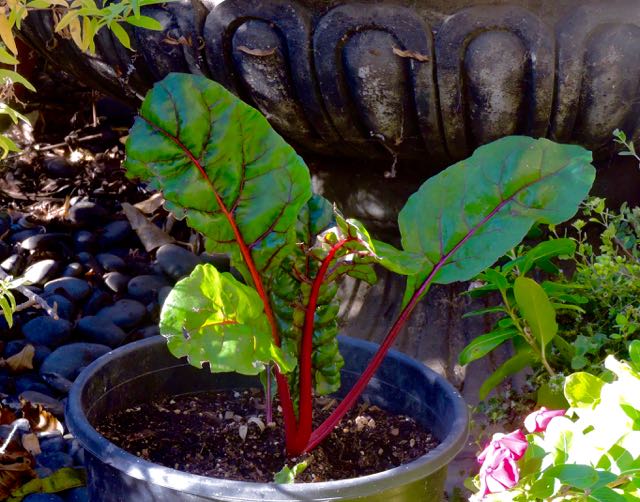
Swiss Chard: These attractive plants are tasty to the birds (as are all the leafy veggies), so I tend to start them in pots closer to the house, and then plant in ground after they’ve grown larger. Right now, four are in pots and two in the ground, with those in the pots doing better.

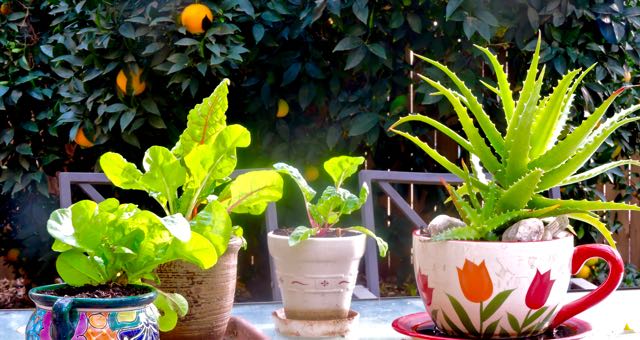
garden leaf lettuce chard aloe before orange tree dec 28 2020 - 1

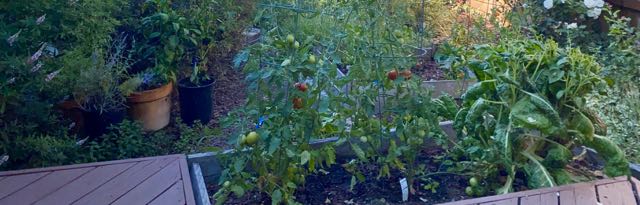
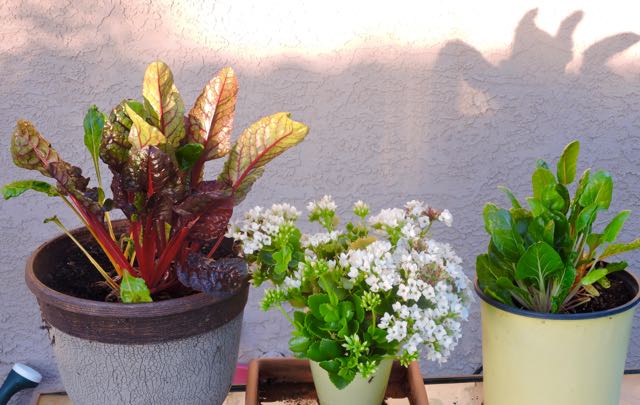
After an early morning shower, the sun shines on lettuce, Swiss chard, and aloe in pots on the back veranda, with the orange tree in the background.

Treats from the December Kitchen

kitchen christmas focaccia ready for the oven dec 21 2020 - 1

Jean: 

The picture immediately above is my version of focaccia just before it went into the oven.  I had recently seen Ree Drummond make a focaccia on the Food Network that I thought looked Christmasy, because she put halved pimento olives and cherry tomatoes into the divots you make in the dough. 

 I read a lot of recipes for this classic Italian bread, and I particularly enjoyed Anne Burrell’s explanation of why she uses a lot of olive oil to bake the dough in. 

Following that advice and using rosemary from our garden (doesn’t it look like Christmas tree sprigs?), Spanish olives, and sliced tomatoes on top, I came up with a festive looking bread.  I was sorry I didn’t have cherry or grape tomatoes. (We’ll have more from our garden next summer!)  I only had a vine-ripe tomato, and I saw that Jeff Mauro makes focaccia with very thin round slices of tomato on top.

So that was my “Christmas tree” version, which you’ll see fresh from the oven in the photo that heads this blog post. It was fun to make–and turned out yummy and fun to look at as well. Not only did it have a crunchy crust, but it was soft inside and had a hint of rosemary in the aroma. It toasted beautifully the next morning, too.

kitchen omelet w tomatoes and last garden peppers dec 19 2020 - 1

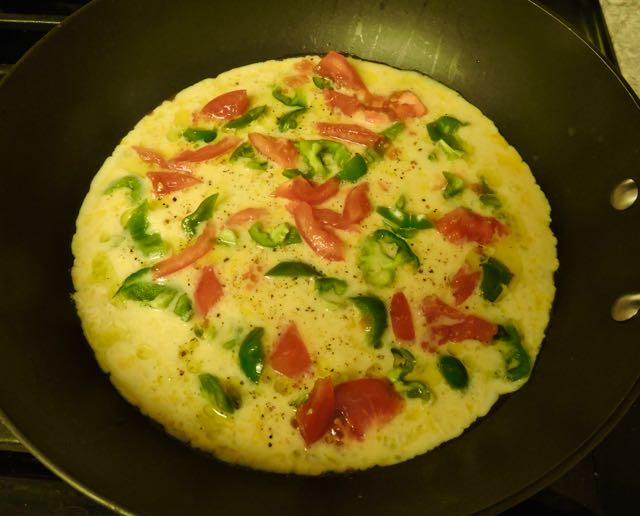
Talk about a Christmasy look: to the left is Chris’s tomato and green pepper omelet (made for one of our holiday breakfasts with the very last peppers from the garden this season). His omelets always turn out super fluffy–he says because of the extra portion of milk he adds to the beaten eggs and grated cheese mixture.

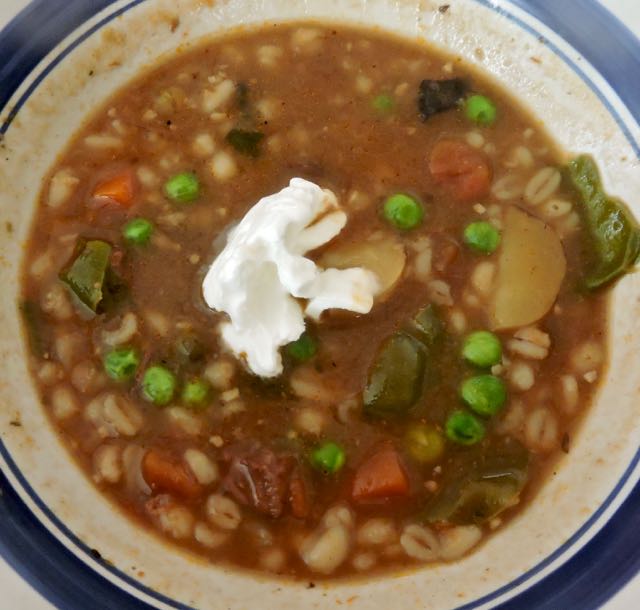
Just below is a bowl of a beef stew I made in the middle of the month. The return of fog, drizzle, and cold always puts me in mind of stews and soups.

kitchen classic beef stew w homemade rolls dec 15 2020 - 1

Made in the slow cooker to soften the stew beef and the veggies, this aromatic and richly tasty stew included yellow gold potatoes, sweet potatoes, carrots, mushrooms, apple chunks, garlic cloves (2), red wine, vegetable broth, and herbs from the garden: thyme, marjoram, savory, sage, and rosemary; with the entire mixture salted and peppered to taste as the stew slowly cooked throughout the day.

Along with the stew, I made some of Kelsey Nixon’s quick rolls, pictured with the stew above, to which I added some whole wheat flour. 

Christmas Dinner: For Christmas, I decided on a classic steakhouse menu–really different from our usual simple fare! It included homemade cream of mushroom soup, green salad with blue cheese and balsamic dressing, grilled Kansas City strip steak (the original New York strip), Yorkshire pudding, twice-baked potatoes, creamed spinach, and fresh green beans, along with red wine from Sonoma

For Christmas dessert, we had a sort of potpourri trifle made with ginger cookies, pear butter, pear chunks, and blended mascarpone and sweetened condensed milk,  accompanied by lemon-ginger tea. It didn’t look great (no photos, sorry), but the fresh, fruity, crunchy, creamy, and gingery flavors made up for that.

The Yorkshire pudding was almost by accident.  My daughter mentioned that she was making it with a prime rib.  I went looking for a recipe, since I had been thinking of doing a spoon bread.  I learned that the recipes and methods were almost the same, and both batters had similar proportions of eggs, flour, and liquid as those in the crepe batter we had made for breakfast.  I decided to give it a try and baked the rest of the crepe batter in deep muffin tins with oil and drippings from the steak.  Voila! (or whatever else the Brits say).  The “puddings” (that’s definitely what these savory treats are called in Great Britain) puffed properly and were devilishly tasty!

kitchen steak salad beans yorkshire puddings dec 26 2020 - 1

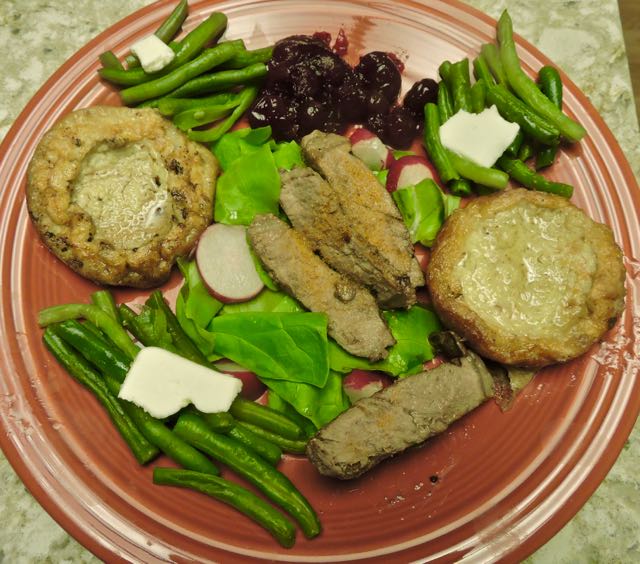
Could we eat on Christmas all we had prepared? No way. The next day, the leftovers made a savory plate, with the steak and Yorkshire puddings warmed in a buttery skillet and green beans still crispy from the microwave. We even added cranberry sauce and leftover butter lettuce salad with radishes for an extra kick.


December Gallery: Foggy Photos

garden navel orange bounty back dec 10 2020 - 1

Clustered oranges

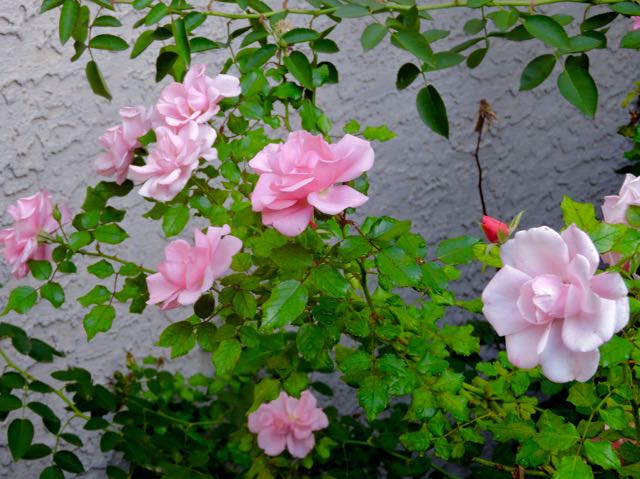
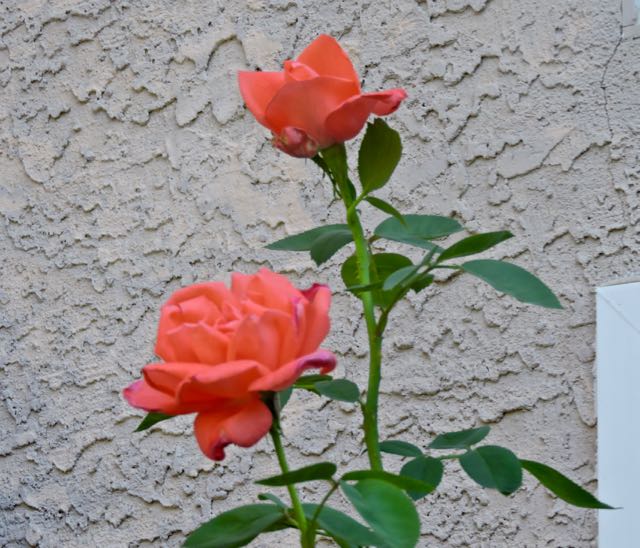
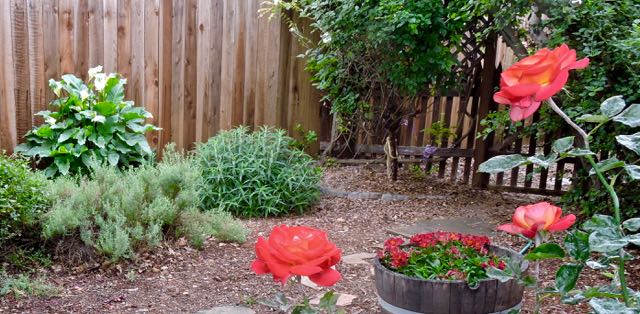
Tea roses, back garden
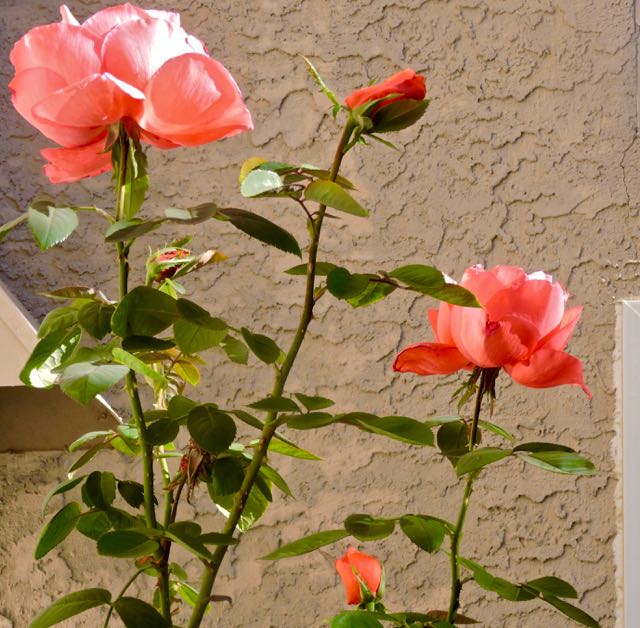
As every month of the year, Salmon roses, back garden
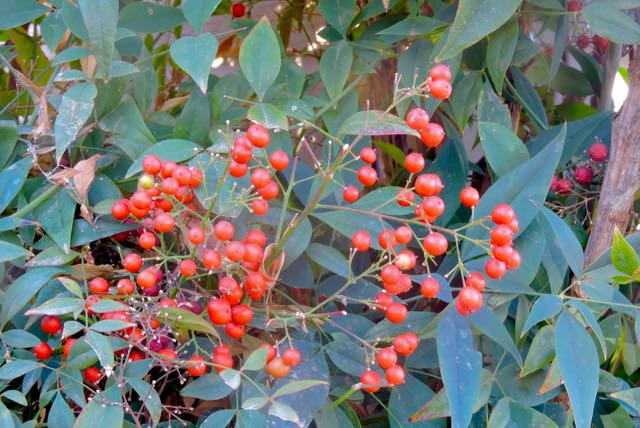
Heavenly bamboo, our Christmas berries!
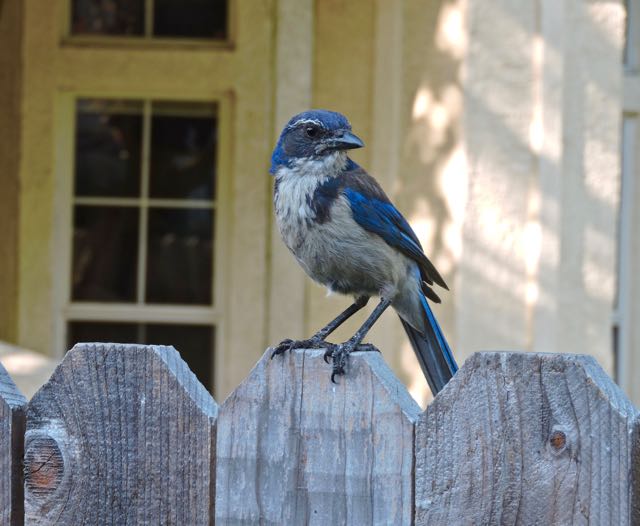
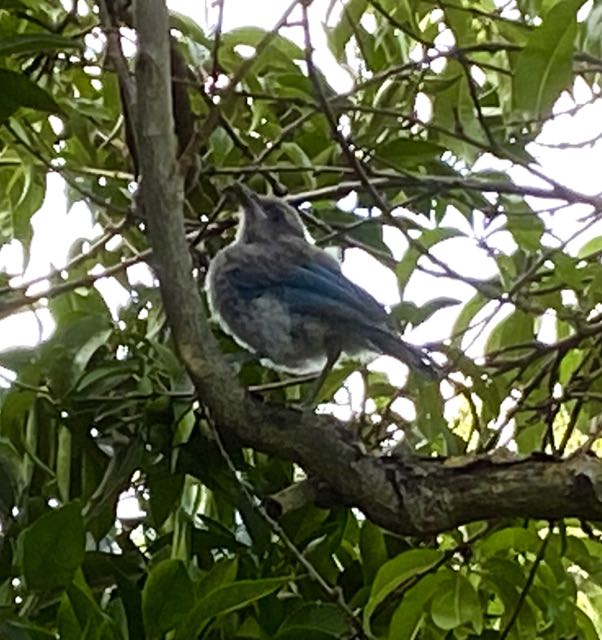
One of our Scrub Jays, in early morning fog

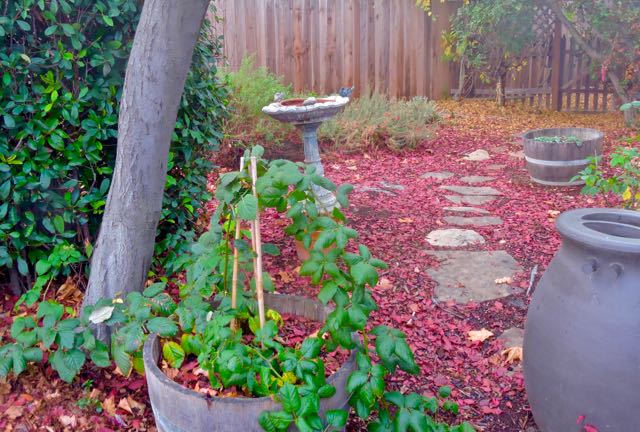
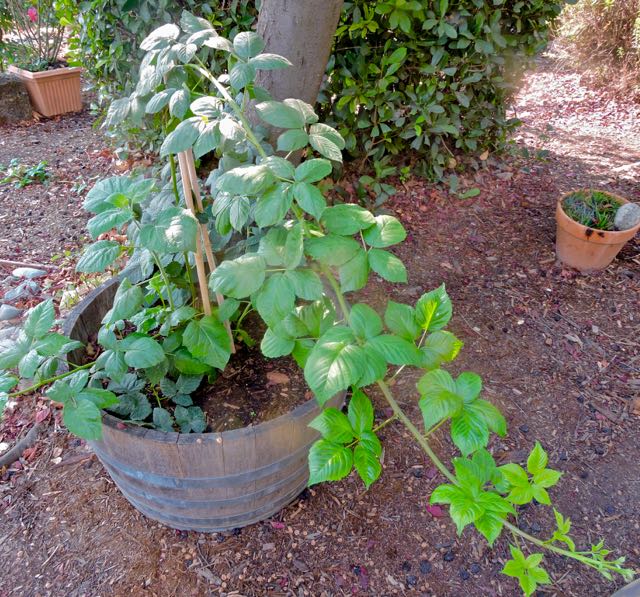
Side garden on a foggy morning: blackberry vines, birdbath, rain barrel, on carpet of cherry plum leaves
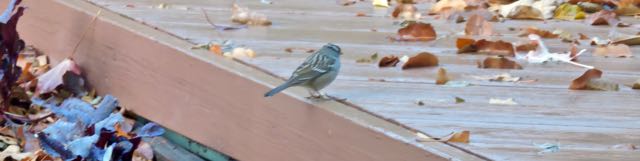
White-crowned sparrow, rainy afternoon, back deck
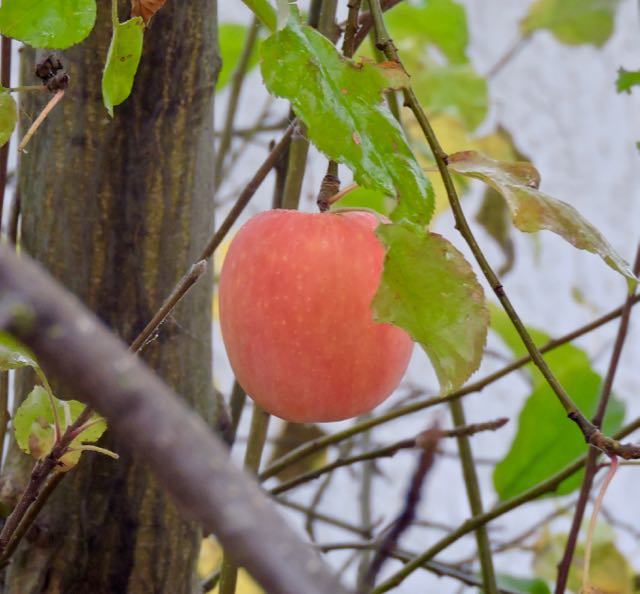
Late season apple, neighbor’s tree
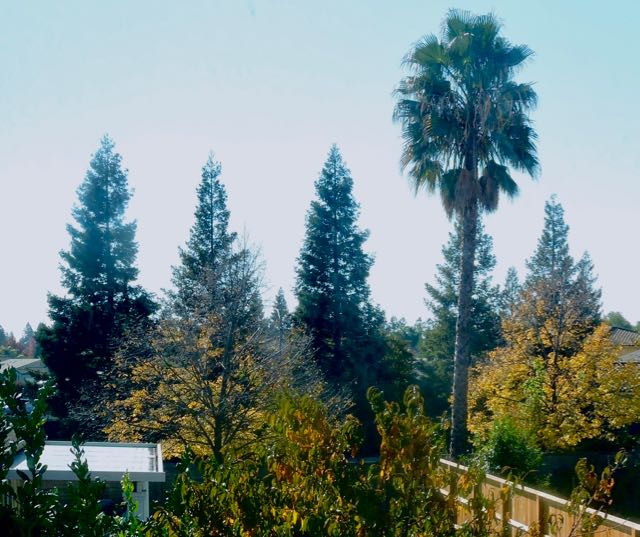
Top floor view–neighborhood trees in December fog
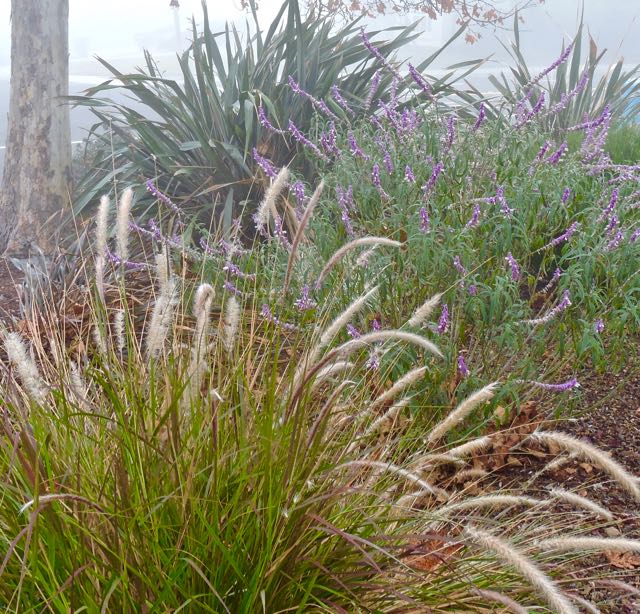
Fountain grass, Mexican sage, New Zealand flax, front garden

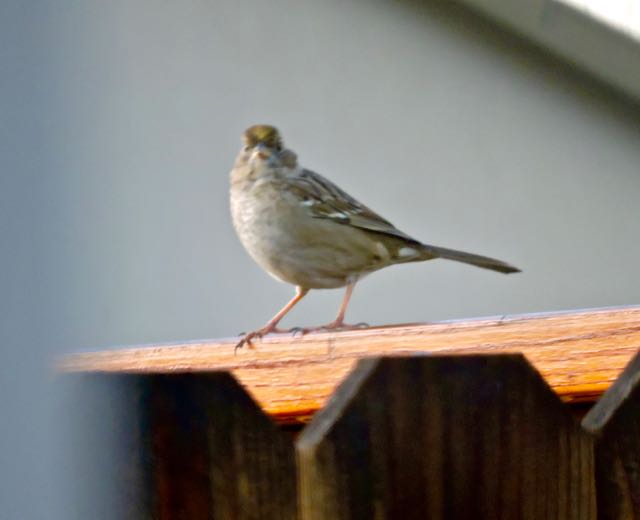
Golden-crowned sparrow, back fence
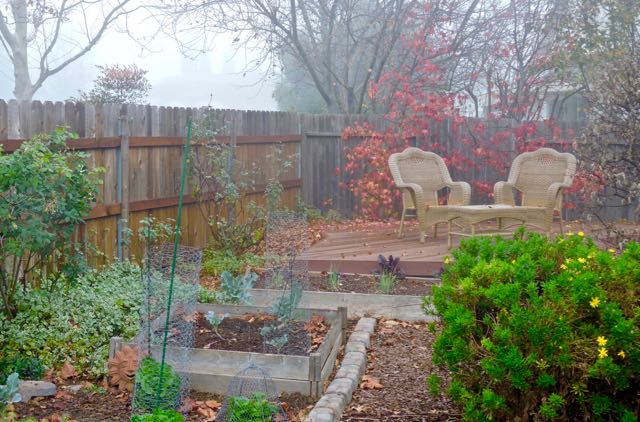
Panorama to northwest, back garden, foggy December, bright yellow coreopsis to red-orange liquidamber
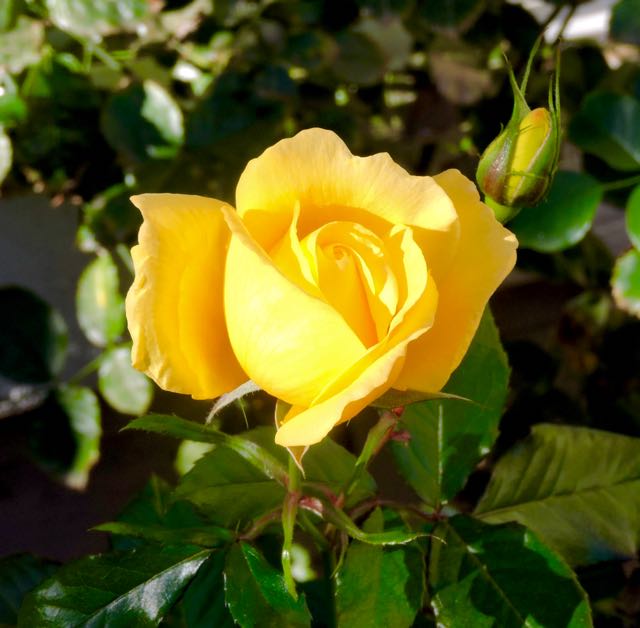
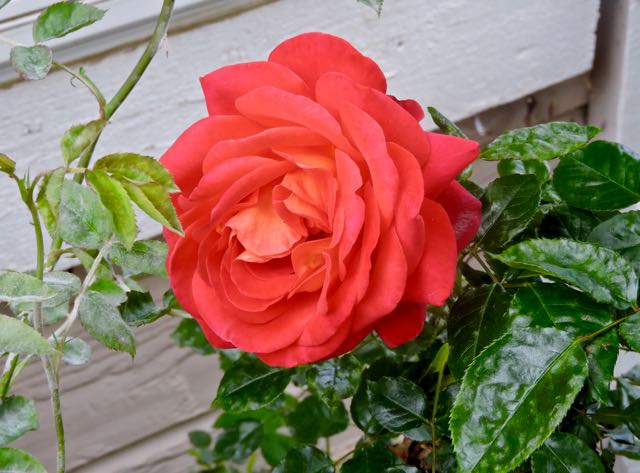
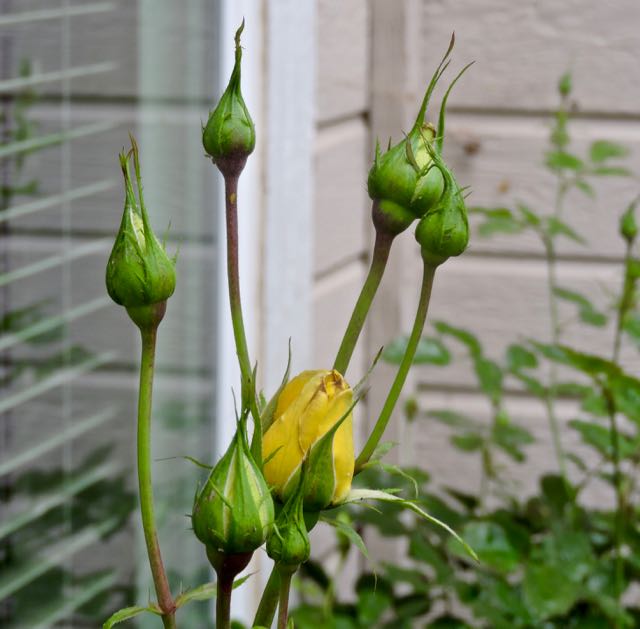
Yellow rose and bud, front garden; these bloom year round.

As this rose shouts, “Happy New Year!”, let’s keep our new year’s resolutions–or at least try to…
November 2020: Thanksgiving, Reinvented

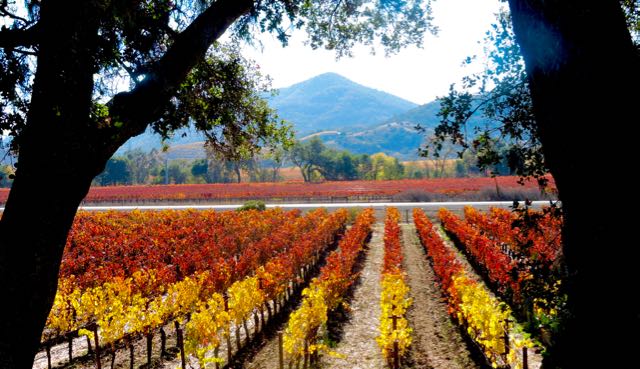
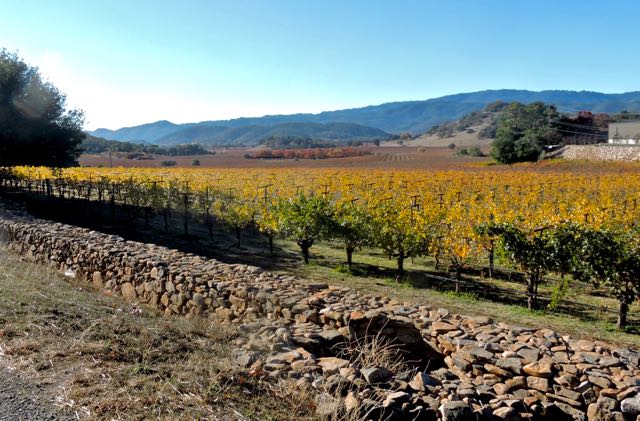
Vineyards in Yountville, south of the fires, with Mayacamas Mountains in the distance

In this month’s post–

Thanksgiving, Reinvented

Thanksgiving Kitchen

A Bit of Rain for the Garden

November Gallery

Chris:

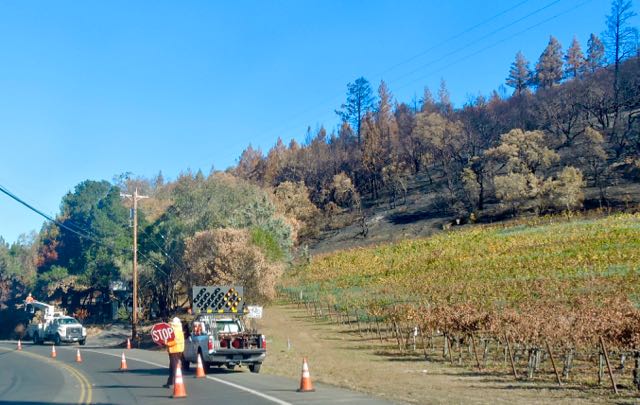
Thanksgiving Reinvented: On Tuesday before Thanksgiving, we drove to nearby Napa County to see how people and nature were coping in the aftermath of the Glass Fire, which began on Glass Mountain in east Napa in late September and swept west through parts of Napa wine country and over the Mayacamas Mountains into Sonoma. As I wrote in October’s blog, the Glass Fire was the final blaze in this year’s historically damaging fire season. Far from being the largest or most destructive of this year’s wildfires, it nevertheless drew nationwide attention because of its iconic location.

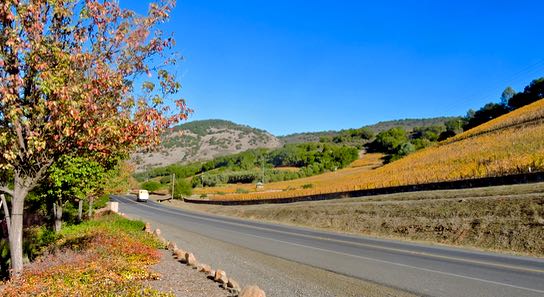
Autumn along the Silverado Trail, looking toward burn-ravaged Glass Mountain

What we found was nature hard at work coming back from the devastation, while human workers were repairing some of the damage.

Workers repair power lines on Silverado Trail at the base of Glass Mountain.

The steadfast, tireless efforts of firefighting first responders had kept flames at bay from crossing Silverado Trail. For two solid weeks, they worked to contain the fires. The result? the vineyards just west of the Trail were largely untouched by the flames, as were the Valley towns of Calistoga and St. Helena. A separate fire, north of St.Helena, devastated vineyards and several wineries, but, again, firefighters saved many acres and the towns. Throughout the valley, we saw signs, many handmade, proclaiming with heartfelt joy and relief “Thank You, First Responders!”

Vineyards west of the Trail show their colors.

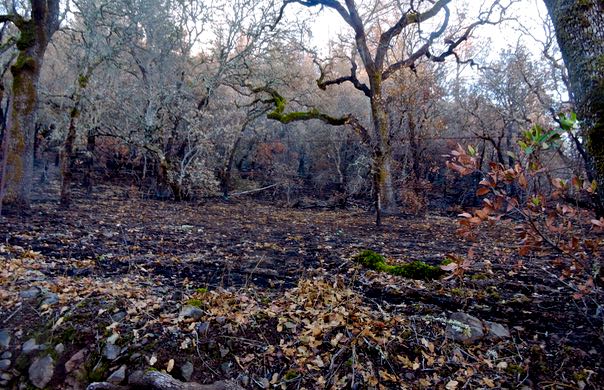
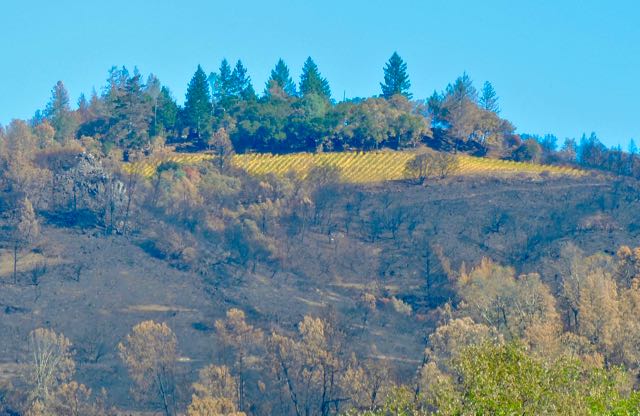
On Glass Mountain itself, we could see something of what their work had prevented in most of the Valley:

Burned hillside, Glass Mountain, with some greenery just starting to return
On Glass Mountain, the sharp border between the damaged and the spared

The damage we can less easily see, a month beyond the flames, is the effect of the smoke that spread everywhere. This smoke damage threatens the quality of this year’s harvest up and down the Valley. The air may have cleared, and the fall chardonnay golds and burgundy reds may make the Valley vivid, but the effects of the fires remain in the fruit and the vines.

Dense smoke and flames, St. Helena’s Boswell Winery, Sept. 28, 2020 (Justin Sullivan, Getty Images)
Glass Mountain Inn, Sept. 28, 2020 (Justin Sullivan, Getty Images)

But just imagine how much worse it might have been. “Thank you, first responders,” indeed.

In 2020, we have so many first responders to thank. We now consider as “first responders” so many people in so many roles that the term will never have the same meaning. This year has brought into sharp focus for all of us the vital, dangerous service of millions on the front lines whose day-to-day essential work we have all too often taken for granted–and who have often been paid inequitably:

–store employees in all types of jobs

–restaurant workers

–transit workers

–sanitation workers

–nurses and health technicians

–farm workers

–food processors

–delivery personnel

–home health aides

–teachers and school staff

–cleaners of all types

–hospital and clinic staff

–emergency and ICU staff

–food distribution volunteers and professionals

–construction and renovation workers

–home infrastructure workers of all kinds

–and the list goes on and on. (Think who else belongs on this list.)

Add to this list people whose professions have become so vital in this reinvented pandemic environment that we can’t imagine survival of our society without them:

–physicians

–epidemiologists and researchers

–communication designers and engineers

–web security personnel

–elections personnel in all roles

–mental health workers

–and the list goes on.

When we think of individuals whom we should thank this Thanksgiving, we could literally spend all day just naming them.

The bottom line: Thanksgiving has been reinvented before our eyes and with every breath we are able to take.

Thanksgiving Kitchen

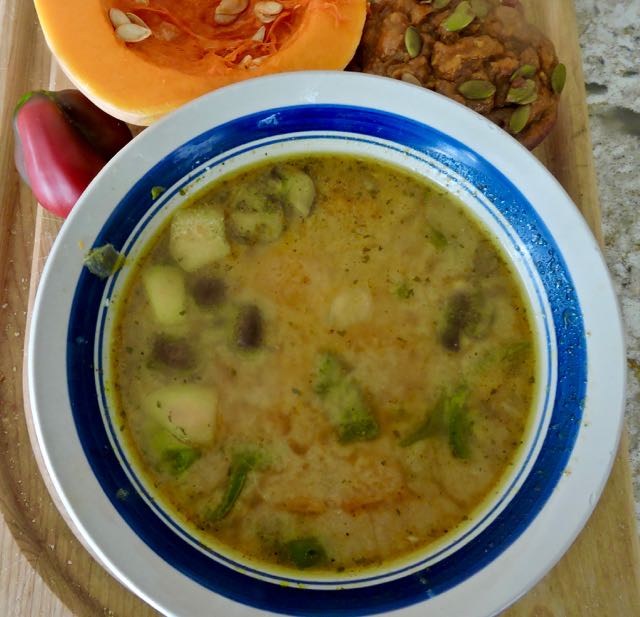
Butternut squash, potato, and peppers soup, with garden herbs and pumpkin seed muffins

Jean:

On Thanksgiving, we hosted a culinary celebration with our children, children–in-law, and grandchildren from across the country: California, Georgia, New York, and Virginia. Seven families, 22 people in all. We shared a range of Thanksgiving foods, including six pumpkin pies, lots of cranberry sauces, different potato and veggie recipes, and a few different turkey cooking ideas–the most exotic of which was “garbage can” turkey, where one of the families put a skewered turkey under a small metal garbage can outside, then covered and surrounded the can with hot coals from the grill.

How did we have this huge gathering of families in the midst of COVID? In the true spirit of Reinvented Thanksgiving, we did it all via Zoom. We all showed off our different cuisines and asked questions of each other about our ingredients, recipes, and plans for the rest of the day. There was no huge stack of dishes and pots to be washed, no spats among kids (or adults) at a communal table, no fighting over who could watch what on TV, and no having to travel after dinner with too-full stomachs (or tipsy brains).

Best of all, because we’ve gotten used to weekly Family Zooms, this wasn’t a hyper-expensive, full of drama, once-a-year gathering of the clans, but a normal family get-together, picking up on conversations already started, and catching up on the doings of the week.

Will we return to our infrequent long-distance drives and airplane flights to visit our relatives, once COVID has been contained by vaccines? Definitely! But we’ll keep Zooming to be with our family and friends much more regularly in this reinvented world.

Thanksgiving Treats: For the two of us, the Zoom let us show our pastries:

My Linzer torte cookies stuffed with Chris’s homemade apricot and cherry plum jams
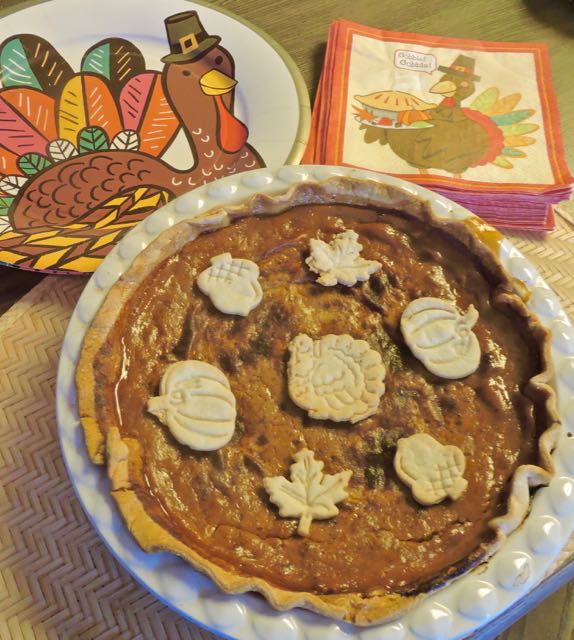
Pumpkin pie with pie crust decorations
Cranberry nut bread

Thanksgiving leftovers, of course!

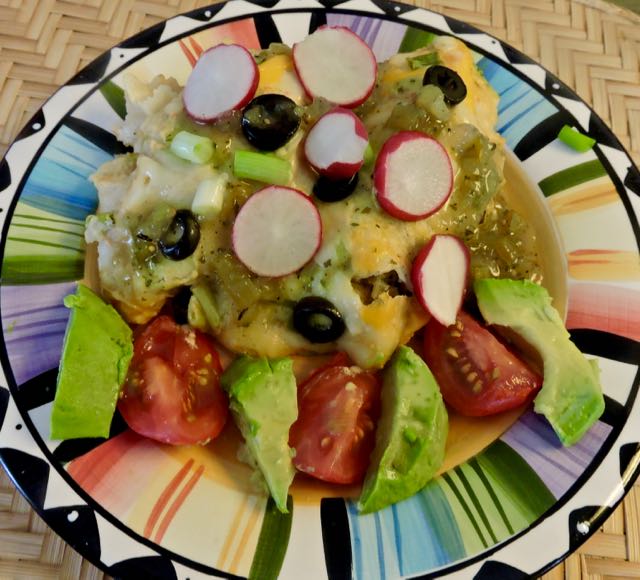
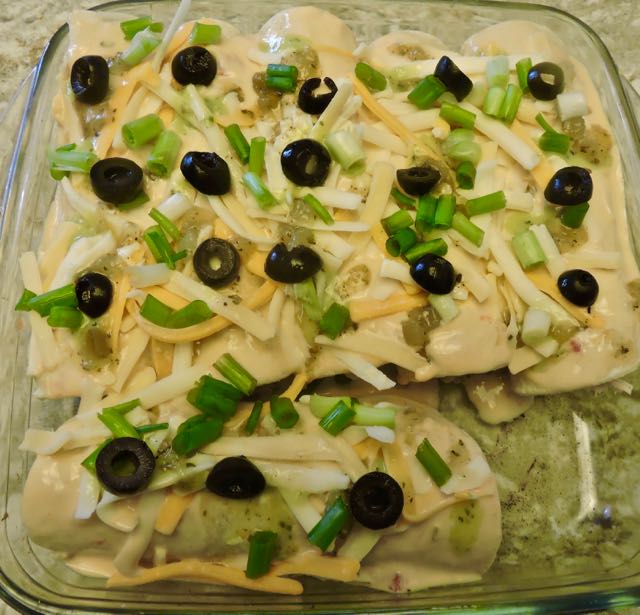
Here’s how I made Turkey green chili enchiladas:

As always, I use what I have on hand (that’s the beauty of leftovers), maybe supplemented by a few things from the garden or the store, and then put them together in a way that I hope turns out tasty. For this dish, I included the following:

corn tortillas, herb and bread stuffing, chili beans, chunks of turkey, green chili salsa, guacamole salsa, a can of green chili enchilada sauce, black olives, green onions, and grated four-cheese blend…
Turkey enchiladas ready for the oven

I baked the enchiladas at 350 degrees F. for 45 minutes, until they were golden brown on top, but you can set time and temp to whatever you think will bring you the best results.

Enchiladas right from the oven

I added green onions, red radishes, and more green chili salsa on top, and added sliced avocado and sliced tomato as a side.

We have plenty for two meals for each of us–more delicious leftovers!

And leftover pumpkin pie for dessert, of course…

A Bit of Rain for the Garden

Chris:

So we finally got a soaking inch or so of rain on November 17, helping to make the threat of more fires less likely in our region and letting gardeners cut way back on irrigation. Then this week the temps started falling into the 30s overnight (low 60s for highs), further decreasing water use.

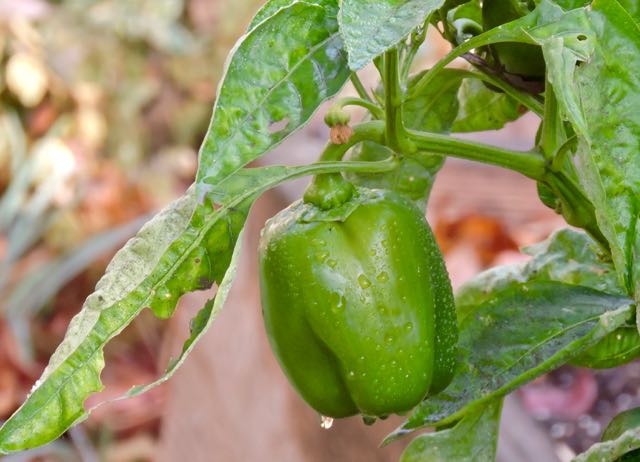
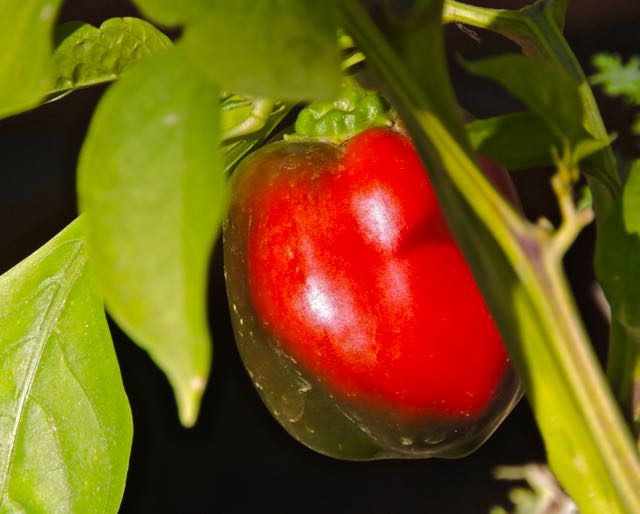
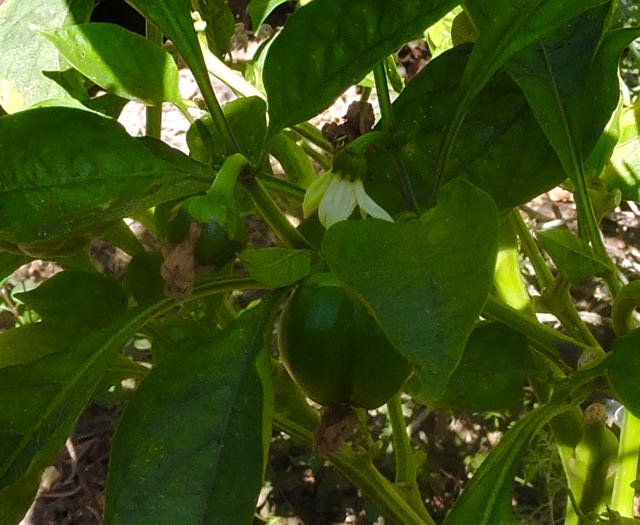
Late November red pepper after the gentle rain

But with no more rain in the forecast for at least the next week, we’re far from where we need to be this time of year. Still, the new fall veggies are doing nicely, with only minimal damage from the hungry birds so far.

Green onions and bulls blood beets in the near raised bed and broccoli in the square bed, with leaf lettuce in cages beyond.

The birds love the leaf lettuce and the Swiss chard, so I’ve used chicken wire cages to protect some of them…

Succulent leaf lettuce protected from the birds, who have other plants to munch on.

Other lettuce and chard plants are in pots near the house. Once they get too big for the pots, into the ground they’ll go.

Leaf lettuce, chard, and aloe on table, with oranges in background.
Swiss chard in pot on back veranda

Meanwhile, the six new broccoli plants grow in the ground, without cage protection…

Green magic broccoli

Oh yes, and of course the softball-size navel oranges are heading for sweet ripeness in later December. Don’t be fooled–they are still very sour in late November!

A low-hanging maxi cluster of navel oranges

And their fellow citrus, the meyer lemons, will also be ripe–and decisively sour!–in December…

On the way to a bumper crop of meyer lemons in our ever-larger bush in the back garden

Overall, the veggie and fruit garden is progressing steadily, but we could sure use more rain!

Lettuce, broccoli, onions, beets, and arugula grow apace. Rosemary, fennel, calla lilies, roses, and even a super late tomato plant (foreground) and two red pepper plants still grace greenly in the back garden!

November Gallery

The same red pepper as shown above, just ten days later
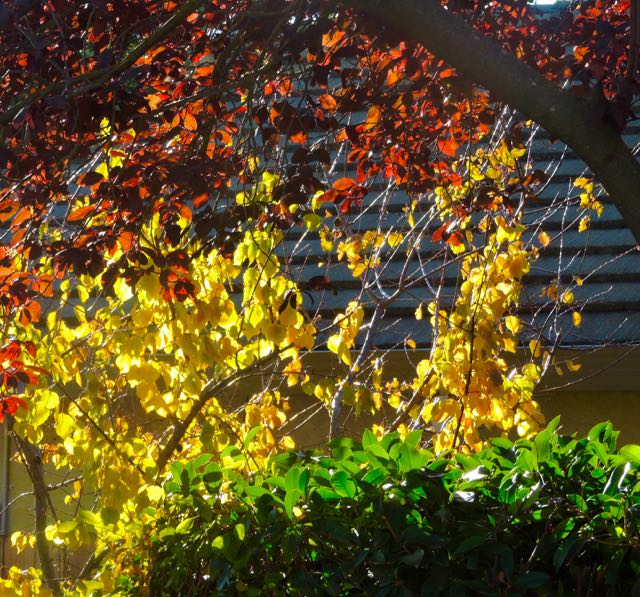
Our version of fall colors: apricot tree, cherry plum tree, and photinia bush in side garden
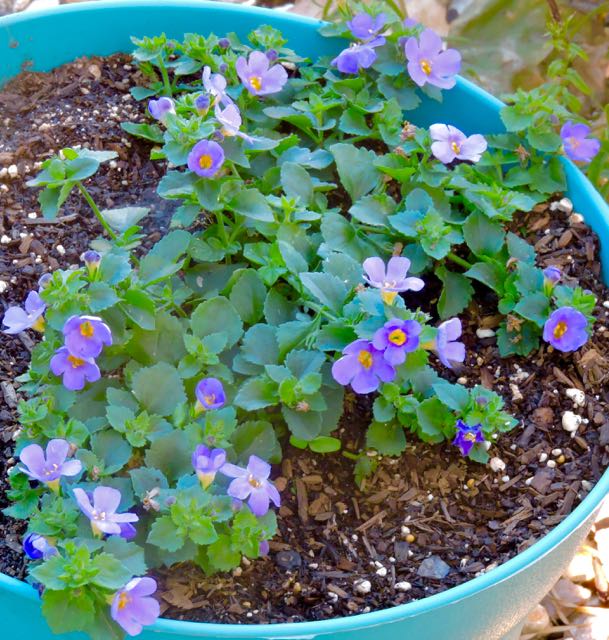
One month old bacopa, front garden
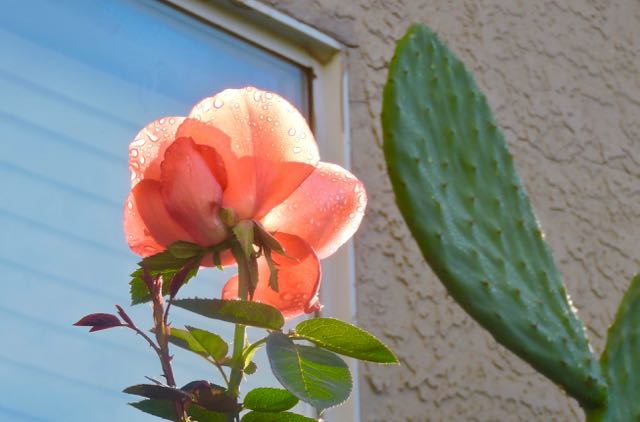
Salmon rose and nopales paddle, back garden

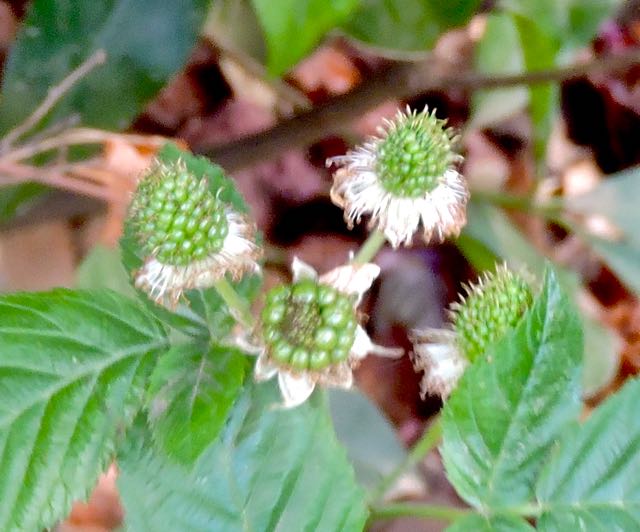
Now why would we have green fruit in November on our young blackberry vines, side garden?
This curious white-crowned sparrow on the back fence may be pondering the same question, or perhaps just wants me to stop taking pictures!
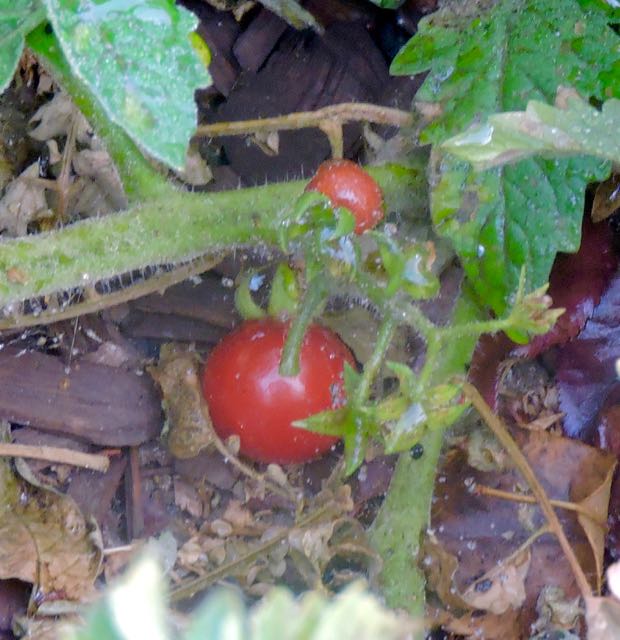
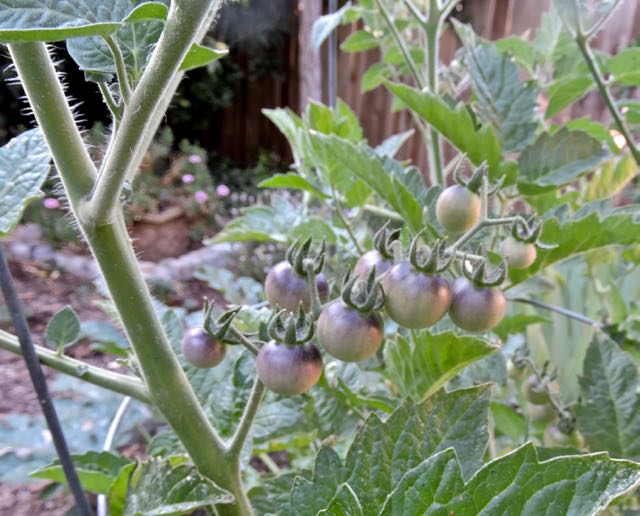
Or maybe the sparrow has been eyeing these very late and unexpected blueberry mini tomatoes in the back garden.
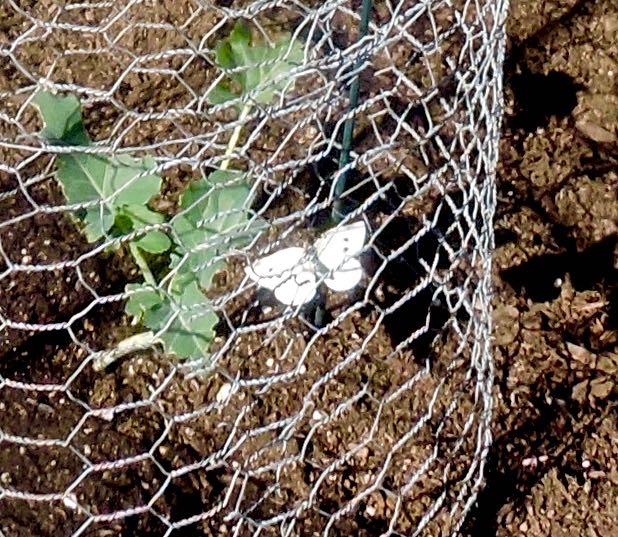
A chicken wire cage cannot keep out this cabbage leaf butterfly in mid November from this young broccoli plant.
We close this month’s blog post with this upper-story view of our neighborhood trees in their November glory.

On to December in this year of Reinvention…

October 2020: Prepping for Winter, Waiting for Rain

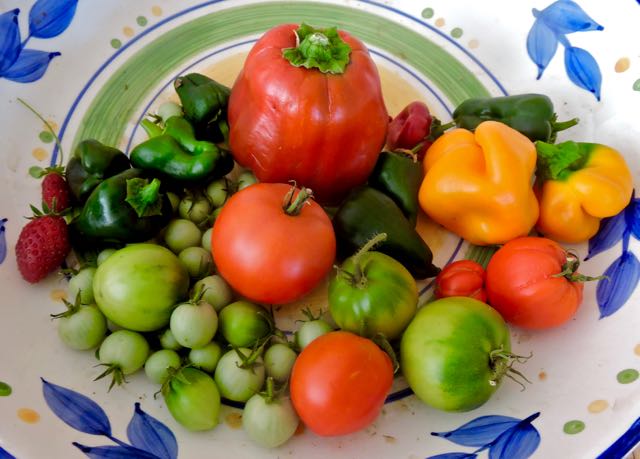
Last strawberries and last tomatoes of the season, but peppers and anchos just kept coming in October.

In this month’s blog:

  • Waiting for Rain
  • Prepping for Winter
  • The October Kitchen
  • October Gallery
garden back yellow rumped warbler back oct 10 2020 - 1

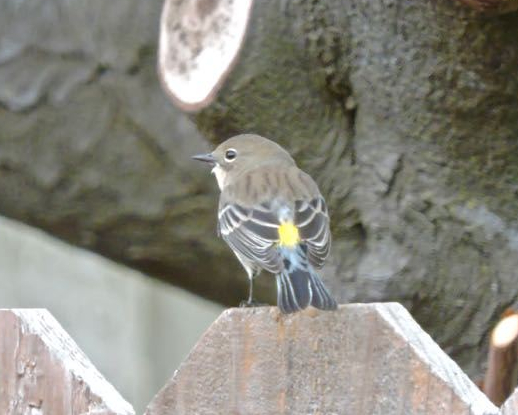
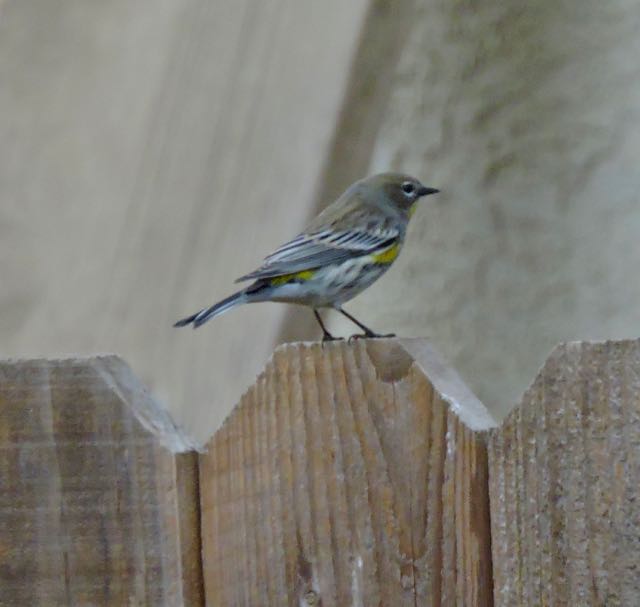
The yellow-rumped warblers make their annual autumn visit to our garden, including stops on our back fence.

Waiting for Rain

Chris:

This month the fires that have ravaged about 3%–an unprecedented amount–of California began to be contained. Late in September, the Glass Fire, one of the most virulent in our region of the state, began in high winds in the mountains east of Napa Valley and tore quickly into the Valley. A second branch of this fire began near the iconic town of St. Helena in the heart of Napa. It ripped up into the Mayacamas Mountains west of St. Helena, not far south from where the devastating Tubbs Fire moved in 2017. Like the Tubbs Fire, this branch of the Glass Fire spread over the bone dry ridges and into neighboring Sonoma County, threatening the famous wine country vineyards in Kenwood and along Route 12, the Sonoma Wine Country Highway.

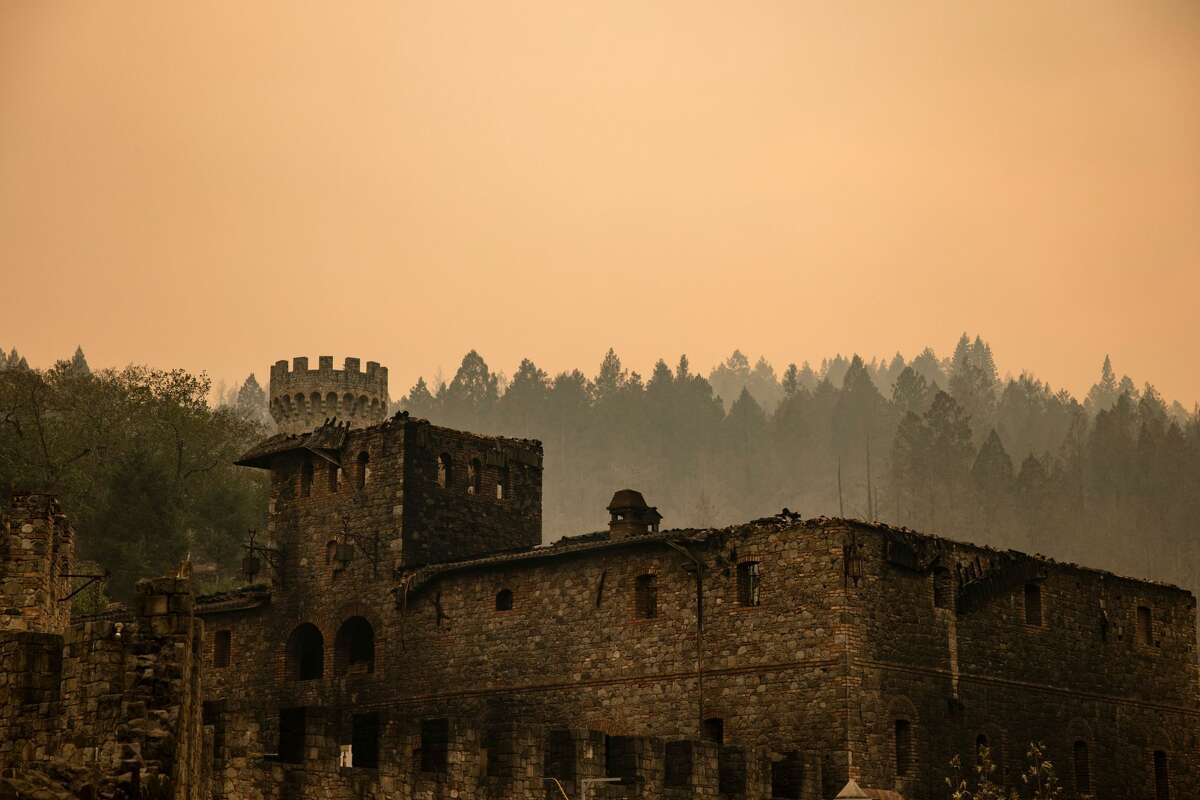
For two weeks, fire crews worked 24/7 to limit the blazes, while thousands were evacuated and dense smoke and ash obliterated the usually bright blue skies and harvest-time vine rows. Several wineries were destroyed and others, such as the famous Castello di Amorosa in Napa, sustained major damage, as shown below.

The Farm House at the Castello di Amorosa winery is seen gutted by the Glass Fire in Napa Valley, California on September 29, 2020.

But, thanks to the unflagging efforts of the crews, the fire area didn’t keep spreading and now, in late October, the clear skies have largely returned. Overall in California, the record fire season is now calmer than it has been anytime since the infamous lightning storms of August, as reported in that month’s blog.

Still, as long as no rain has as yet come to the state, each week brings with it new Red Flag Warnings, whenever the winds kick up. The beleaguered state power corporation, Pacific Gas & Electric, every few days announces new preventive blackouts for thousands of customers in targeted communities where new fire activity is likely to happen. So far no new conflagrations have arisen. 

But only sustained precip can really ease anyone’s mind in this unprecedented fire year, and when that rain might come is still guesswork. 

PG&E’s Scott Strenfel, head of meteorology and fire science, described the danger well (Sacramento Bee, 10/23) in explaining the latest upcoming blackout: “We’re seeing four extremes in the weather…: extremely high winds, extremely low humidity, extreme dry fuels due to the hottest average temperatures over the last six months according to records that go back 126 years, and extreme drought across the territory given lack of rainfall.”

So we all wait for the rain and prepare as best we can.

Prepping for Winter 

garden back morning glory w hovering bee oct 18 2020 - 1

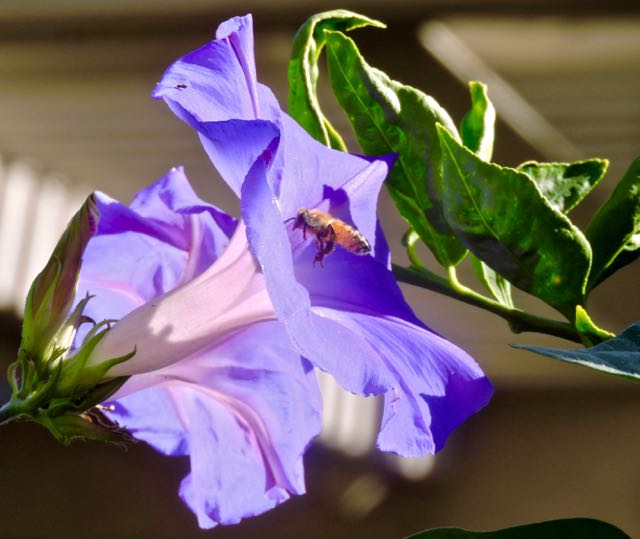
Honeybee dives into a morning glory that perches atop our meyer lemon bush.

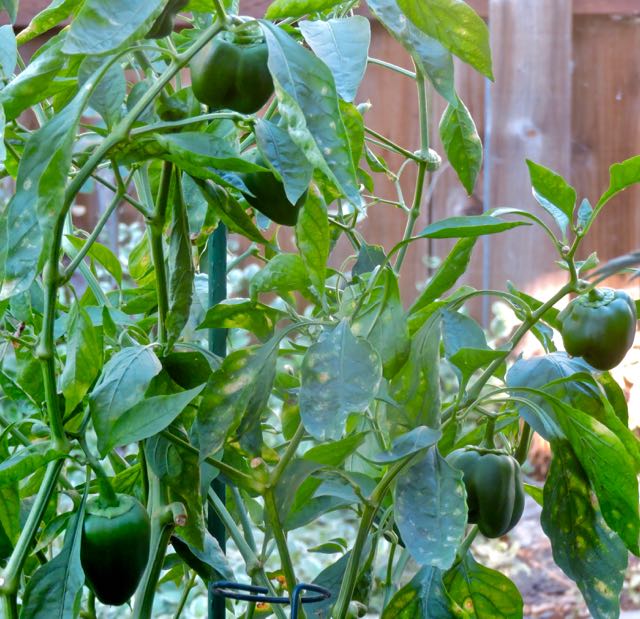
Because, uncharacteristically, temps had remained in the 90s through September and most of October this year, summer veggies that were usually exhausted in September kept producing. Indeed, here in the last week of October, the mild red peppers are still coming (below).

garden back red pepper plant and new peppers oct 21 2020 - 1

And, as the banner photo at the top of this article shows, I could even harvest other summer produce, like mini tomatoes, Carmello tomatoes, ancho chilis, and even strawberries, up to the middle of this month.

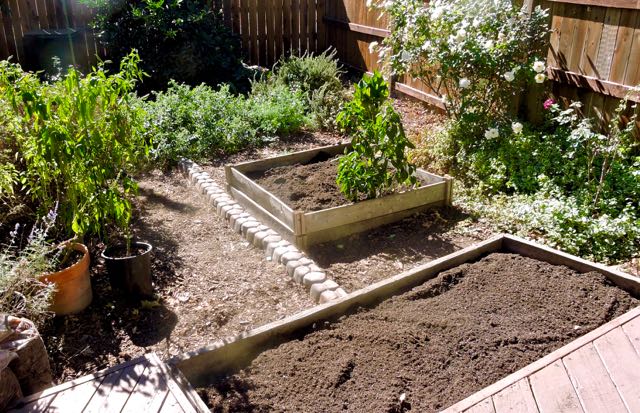
But the daily high temps are finally beginning to come down this week–from the high 80s down to the low 70s–so I’ve made the move to pull out all but those peppers.  And I’ve prepped the raised beds with potting mix and topsoil for the winter veggies I have ready to go in:

garden back ground readied for fall-winter planting oct 17 2020 - 1

The four varieties of tomatoes, plus the cucumbers, ancho chilis, yellow peppers, and arugula are gone, after having done great service. Only two red pepper plants, one in the square raised bed, remain.

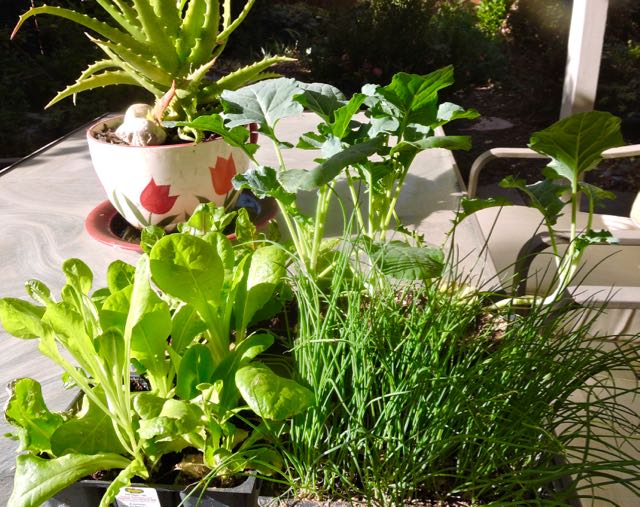
I hope this coming week to have the beets, onions, broccoli, leaf lettuce, parsley, and chard put in:

.garden winter veg ready to go in oct 22 2020 - 1

…and the perennial arugula has begun popping up once again, too (below).

garden back perennial arugula springing up oct 22 2020 - 1

Meanwhile, the oranges and meyer lemons get bigger, as they slowly head toward ripeness in December:


The October Kitchen

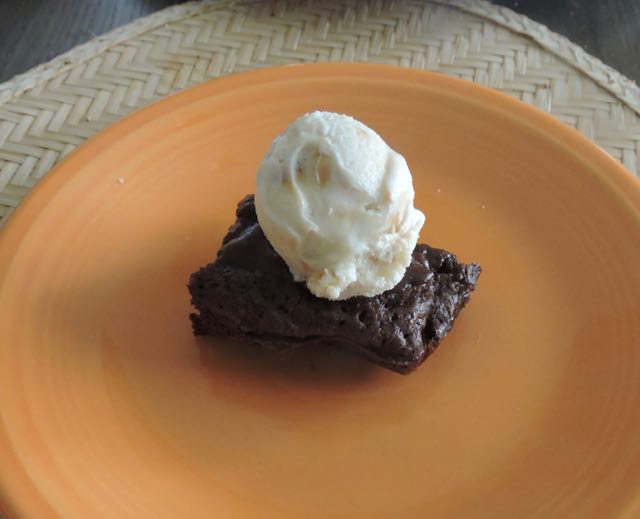
kitchen mexican chocolate brownie w dulce de leche ice cream oct 1 2020 - 1

Jean:

Who doesn’t love brownies?  Well, Chris often says he can’t take too much chocolate, but when I add a little spice, he’s all in.  Here is the recipe I used for a fudgy brownie with Mexican spices.  However, like some of the reviewers, I increased the cinnamon by 50% and doubled the cayenne.  (I’m not giving exact amounts because I halved the whole recipe for us, and it still made plenty.)

Even fudgier, I think, are my vegan brownies.  Chocolate is such a wonderful ingredient that you can go vegan or gluten-free, and the chocolate just steps up and takes center stage.  Try these, and maybe put a kahlua frosting on top:

For the frosting:

4 oz. 71% or 50% semi-sweet or unsweetened baking chocolate, coarsely chopped *

5 1/2 tablespoons unsalted butter, cut into small pieces

1 cup heavy cream

3/4 cup sugar (* if using unsweetened baking chocolate, increase the sugar to 1 cup)

1/4 teaspoon salt

1/4 teaspoon Kahlua

For a cakier brownie, I don’t think you can do much better than your favorite purchased brownie mix or recipe, with just some add-ins.  I served them as shown above, with dulce de leche ice cream (to cut the sweetness, of course)!

https://www.foodnetwork.com/recipes/food-network-kitchen/mexican-brownies-recipe-2103541

More October kitchen goodies!

October Gallery

Check out this hummingbird pair that I was lucky enough to capture with my phone camera in the side garden. The orange fuchsia is their nectar target. It’s rare that I see this pair interact so long and so loudly!

https://www.youtube.com/watch?v=TvphLuqnI9Q&feature=youtu.be

Then check out this Northern Mockingbird that I was lucky enough to zoom in and video singing in our neighborhood almost 300 feet away. So much perfect sound coming from so far away and from such a small body!

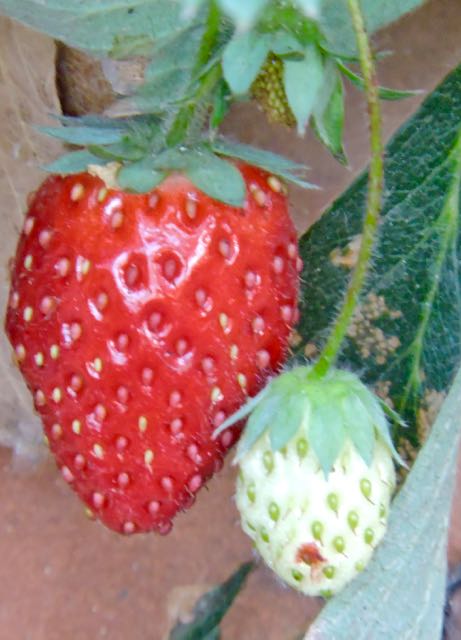
garden last strawberries in october oct 10 2020 - 1

Strawberries still ripen in the ceramic pot on the back veranda.


garden front mexican sage 3 bee magnetoct 21 2020 - 1

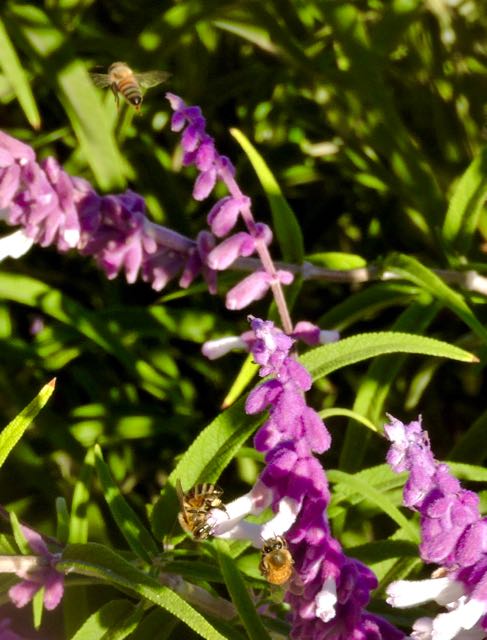
Honeybees swarm to the Mexican sage in the front garden in October.

garden front day lily and buds oct 5 2020 - 1

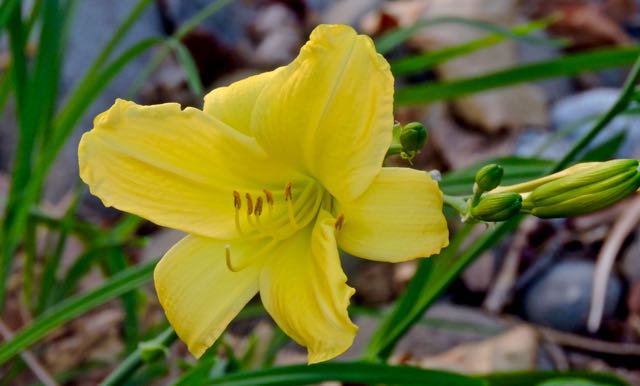
Day lilies keep budding and blooming in the front garden in the unseasonably warm October.

Cabbage leaf butterfly in rosemary, back garden

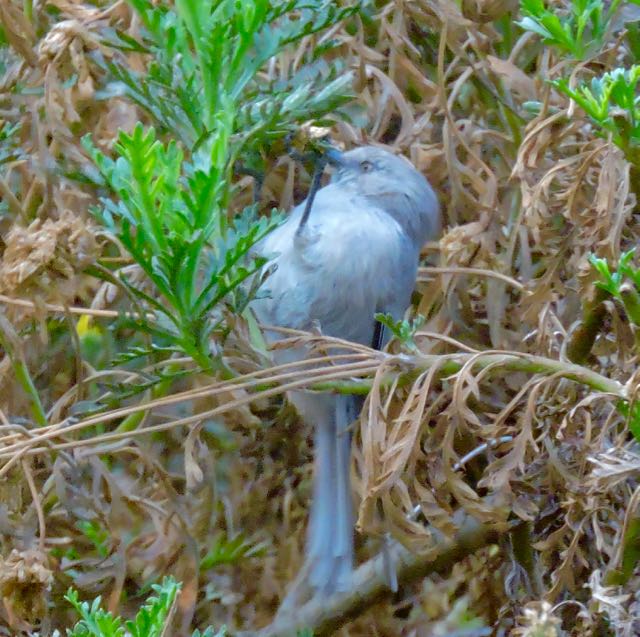
This blue grey gnatcatcher (below) probing in the coreopsis in the back garden is one of a flock that visits the garden for a day on its twice-yearly migrations to the Sierras in spring and back south in October.

garden visiting gnatcatcher in coreopsis oct 6 2020 - 1

And this yellow-rumped warbler sends us all cheery best wishes for a cool and rainy November.

September 2020: Summer Lingers, Fires Live On

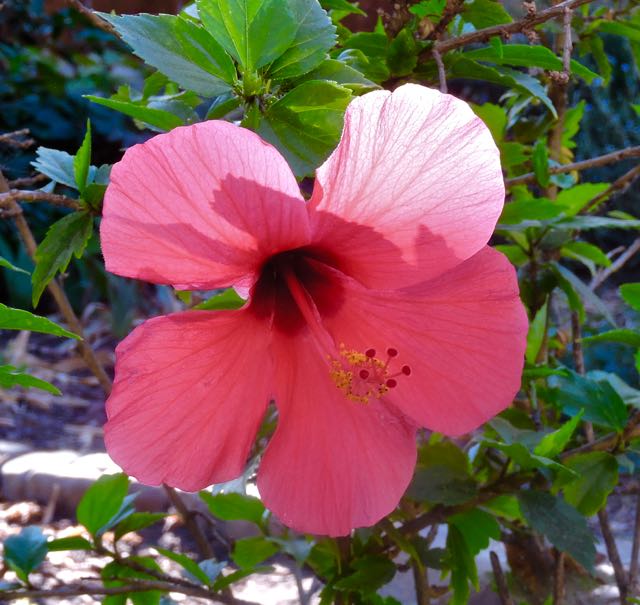
Late September Hibiscus bloom

Chris:

Fires Live On

Since I last wrote, Oregon has seen unprecedented wildfires and mass evacuations, a situation resolved until next year by mid-September rains. But the record-breaking fire season in California marches on, with no rain expected until late October, at the earliest. As of today, 20 named fires, in various states of containment, burn, and 3.7 million acres (about 3% of the state) have been damaged. As reported in last month’s blog, very rare lightning strikes in mid-August caused many of these fires, 60% of them in national forests under the jurisdiction of the U.S. Forest Service. Most of the rest are on private land, with the state of California providing the resources to fight the blazes. Personnel from several states, plus Canada and Mexico, have been working with the more than 10,000 California fire first responders to try week upon week to quell the outbreaks and build earthen walls to contain the spread.

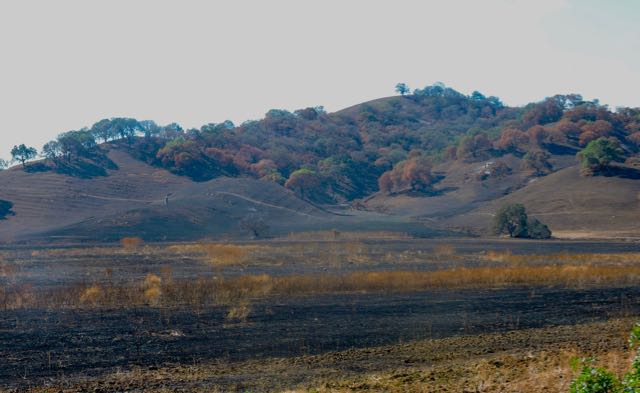
Scorched hillside, Lagoon Valley, Solano County, CA

The tireless work of these firefighters, aided in the past two weeks by somewhat cooler and less windy weather, has halted the spread in many parts of the state. But the terrain where most of the fires live–wooded mountains, steep hills, and deep canyons–makes it unlikely, even impossible, to fully put the fires out.

So a sudden shift in the winds and windy bursts of greater intensity can cause a “contained” fire to become once again an inferno, as happened three weeks ago in Plumas National Forest in the northeast part of the state, near where the deadly Camp Fire of 2018 took the lives of 85 in Butte County. The Plumas Fire itself, now renamed the North Complex, took 15 lives of its own as it roared through the tiny town of Berry.

North Complex Fire, Butte County, CA

Meanwhile, in Southern California, the Bobcat Fire, in the rugged Angeles National Forest not far from Los Angeles, has been stubbornly resisting containment. It has brought dangerously smoky air to the population center of the state.

As long as the ground stays dry and daytime temperatures stay in the 80s or above, the threat remains. The lightning strikes in August coincided with a record heat wave–105 to 114 some days–to set the stage for the record-breaking fire season. But rather than these conditions being a freak event, experts agree that climate change is making them more frequent, creating what most here are calling a “new normal.” Indeed, the great majority of Californians find it incomprehensible that anyone (like the current President of the U.S.) could deny the steady change that we live through year by year. We can’t understand why some so-called national leaders not only ignore, but actively work against, the need to reduce carbon emissions in order to avoid this global catastrophe in the making.

Burned hillside near Vacaville, CA

As Always, Water Makes a Difference

While the areas that burn must depend completely on the hoped-for rain to douse the fires until next season, Jean and I are among the fortunate millions in California who have plentiful water to keep our plants drip-irrigated or conservatively hand-watered. Across the world, having or not having water is always a matter of political and economic choice by the powerful. So is whether or not the lucky will choose to conserve some of the water they can access. When we take our daily early-morning walks through our neighborhood, we pass house after house where the irrigation of choice is lawn sprinklers. Gallons of the precious nourishment just run off the sidewalks and driveways to disappear into the concrete storm sewers.

In the September Garden: Fall on Hold

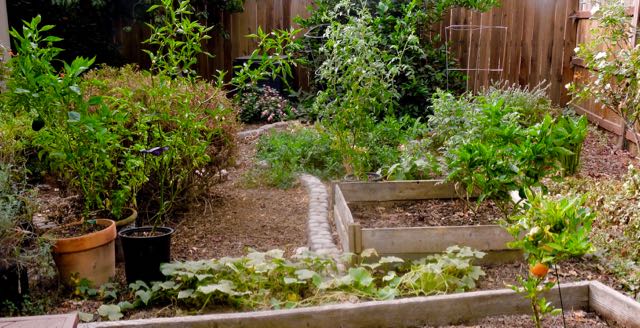
Back garden panorama to South, late September. Some summer veggies gone, others persevere.

For us, who were close to the mid-August blazes, but who now just worry about the next outbreaks before we get rain, the smoke- and ash-filled air of a month ago has been replaced by the blue skies and bright sunlight we expect this time of summer-into-fall. The days begin to shorten and the plants of summer struggle against the lessened sunlight to produce the last few among the fruits that so abounded from June through August.

September is that month which marks the transition from exhausted spring/summer veggies to the winter crops I’ll plant in October. Or at least it’s supposed to be that way. I was planning to pull out the four remaining tomato plants, the four pepper plants, and the two cucumbers–all of which have done great work from April through August. I was actually looking forward to some bare soil in the back garden and to emptying temporarily a few of the pots.

But the summer heat has persisted, with temps into the 90s and even over 100 (predicted for this weekend). So, shortened days or not, a few of the plants have refused to stop producing. And, as you know if you read this blog, I resist pulling out plants that keep thriving, even if I’m itching to move on to the next season.

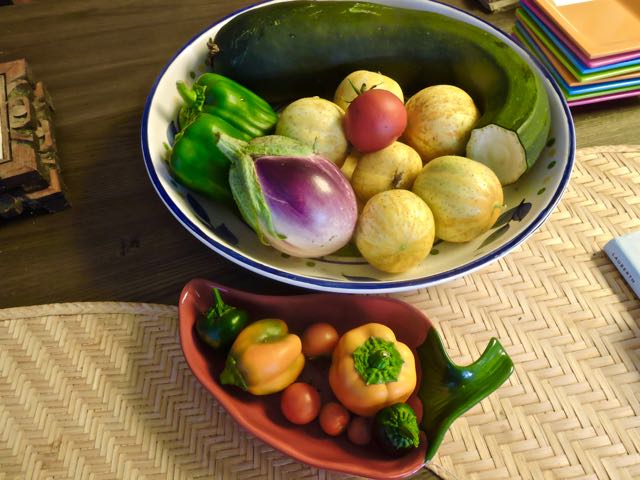
Some late September bounty: eggplant, zucchini, lemon cucumbers, ancho chilis, yellow and green mild peppers, cherry tomatoes

September Gallery

Carmello tomatoes on transplanted sucker

The Carmello tomato I transplanted in June (left) has now in September produced multiple small fruit. Same with the yellow pepper (below) that I transplanted in July from one raised bed, where it got less sun, to the larger bed where it gets full sun.

The blueberry mini tomato (below) that I planted in April grew to almost six feet tall and sent shoots out well beyond the cage. This month, I chose to cut down the main stem and just leave the extensive ground cover, which continues to produce fruit and new blooms even as the days shorten.

Blueberry mini tomato plant still spreading out and fruiting in late September after the main stem has been cut away.

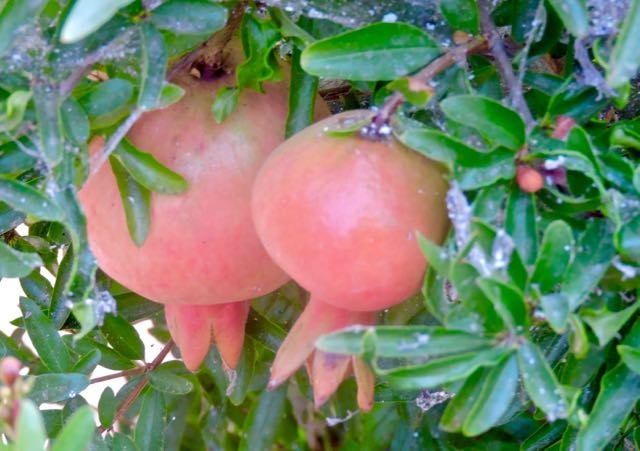
The dwarf pomegranate (below) was self-seeded from one that I was growing in a pot on the verandah. That plant is long gone, but the current one has been growing for four years and is now four feet tall. Its fruit grow larger each year.  And even as the fruit ripen in the fall, new blooms keep coming.

Fruit ripening on dwarf pomegranate, back garden

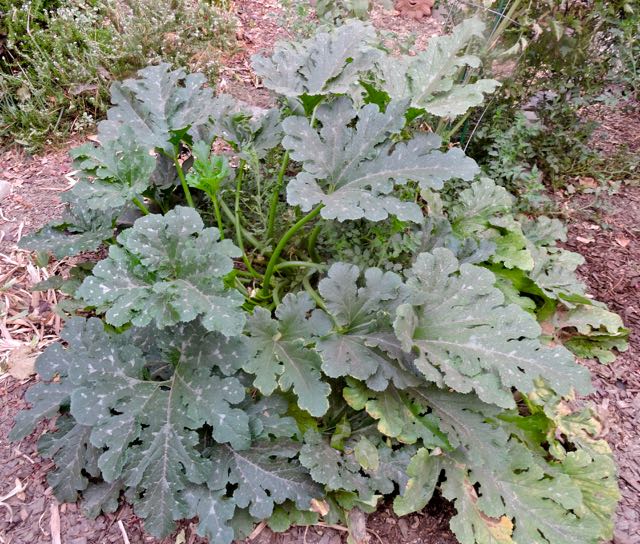
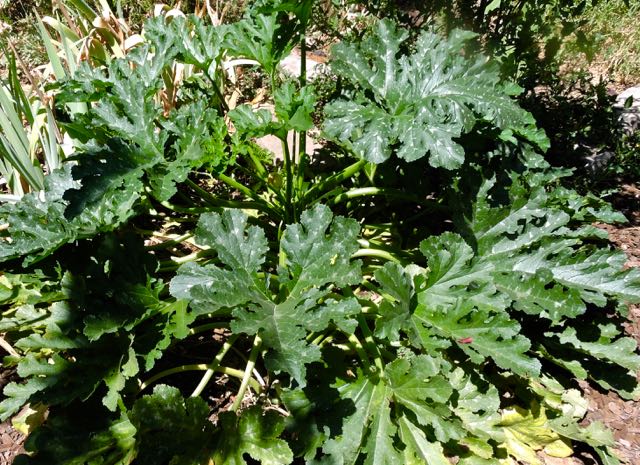
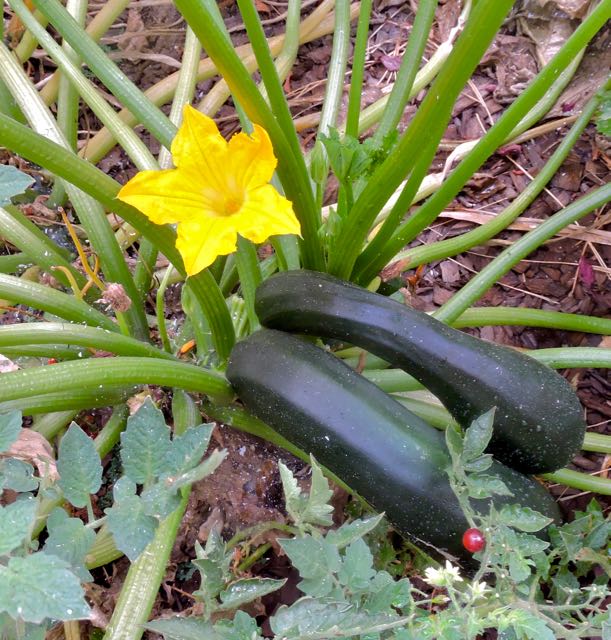
Zucchini plant, 6 feet across, just before I pulled it out in September

The champion zucchini (below) might still be fruiting if we hadn’t had our fill of mammoth zucchinis this summer. These plants are magnificent, gorgeous and hearty, and they don’t hog water. And I can’t say enough about the versatility, taste, and resilience of the fruit.

Navel orange cluster ripening toward December

Heading to winter, the navel oranges this year are large, even if they will not be as plentiful as this past season. Size and number usually coincide: the fewer the larger and so on.

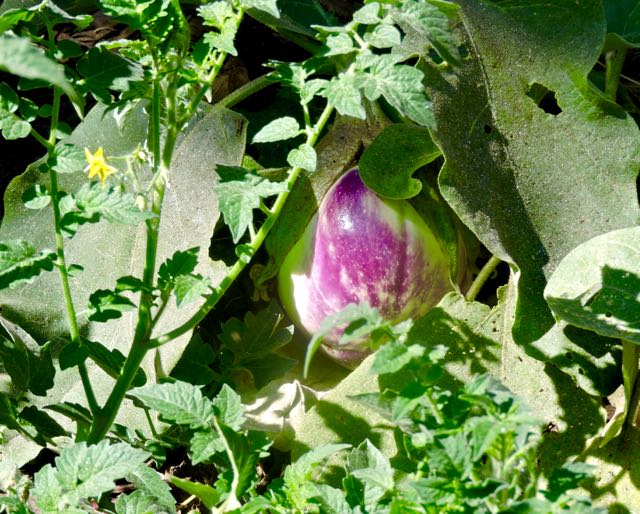
Rosa Bianca eggplant hiding below leaves and behind the spreading blueberry mini tomato shoots

September has become the month for eggplants in our garden. Ours don’t fruit before the end of July or early August, and the most come in September.

These green peppers just keep coming as September closes. They turn red after we pick them and keep them in the kitchen.
The meyer lemon bush had another growth spurt this summer after last season’s bumper crop. The crop this year looks just as good, as the fruit ripen toward December.
I planted this thornless blackberry in the front garden three months ago, and it has taken off. Can’t wait for the fruit next summer!
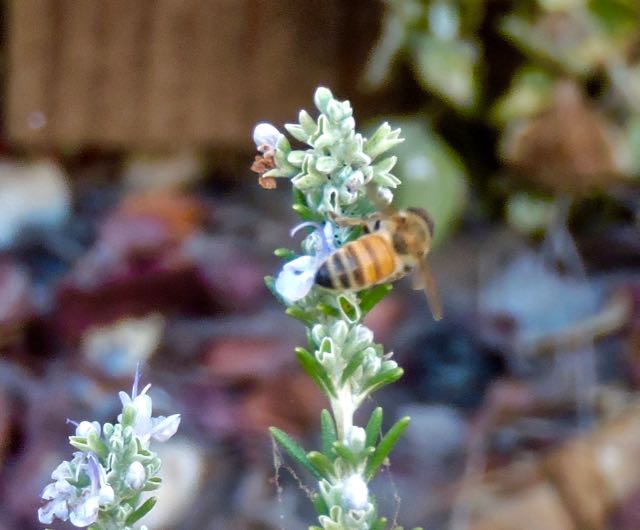
The rosemary is a bee magnet in late September.
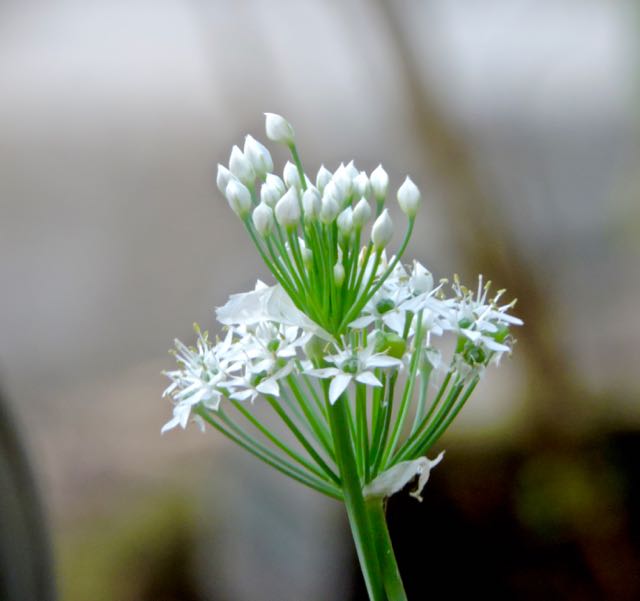
Giving the herbs some photographic love–these are chives in late September bloom.
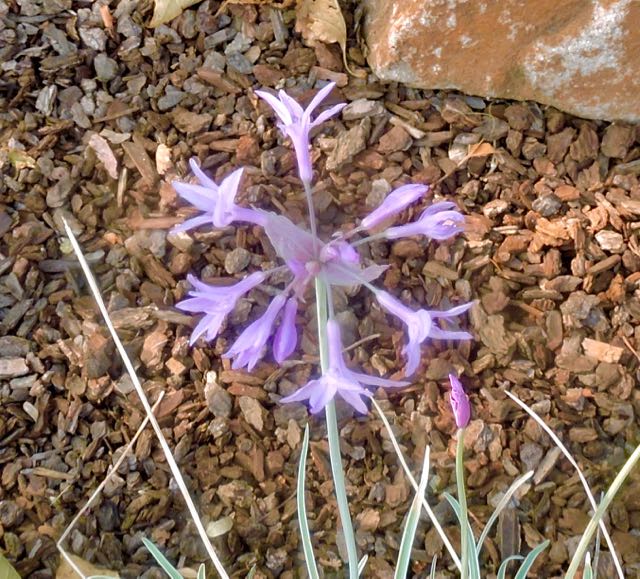
…and this is a bloom from our floral garlic–pungent and tasty, too–in the front garden
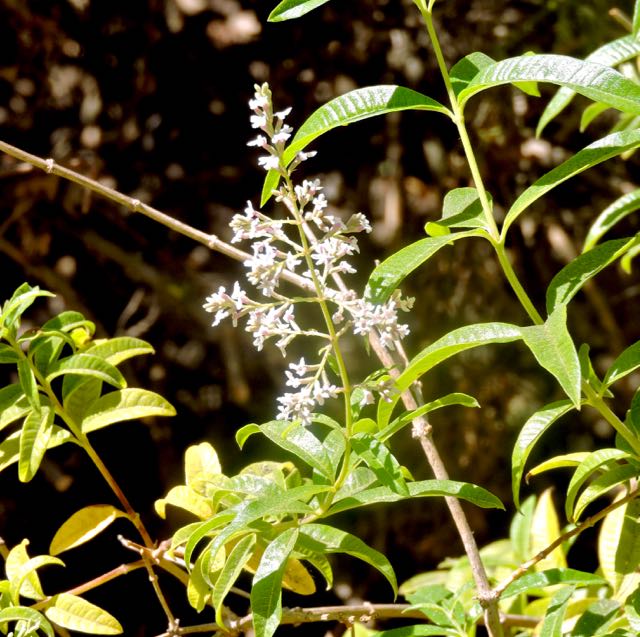
…and the hearty lemon verbena, now in its tenth year in the same pot
This mother aloe gave birth to four pups that are now transplanted all over the garden. She just goes on being gorgeous, especially with the outrageous red vinca as a backdrop.
The fuchsia in the side garden, a favorite of the hummingbirds this time of year
More late September color: lantana, back garden
…Gaillardia, front garden
…and as every month of the year, the salmon and tea rose display, back garden
Finally, a different panorama: from the front garden, highlighting the purple fountain grass, into the “secret” side garden.

On to October, with hopes for good news about fires, and stories about cooking and baking!

August 2020: Heat, Lightning, Fire, and the Garden Goes On

garden vinca marjoram chives in bright sun 8 1 20 - 1

Our vinca and chives thrive even amid the nearby wildfires and the scorching heat wave.

Chris:

February’s record low rainfall–0.0″–should have prepared us for what has happened this August. With no appreciable rain since December’s excellent 8-12 inches, we were all set up for an early, violent fire season. For Northern California, it’s never if, only when. And with the world’s climate getting slowly and steadily warmer, it’s easy to predict that the fire season will start earlier in this region of long, hot, dry summers.

Thunderstorms and High Heat. It was less easy to predict how our current fires would suddenly ignite. For the past three years, our publicly-traded power corporation, PG&E, has been largely to blame, and we have all paid dearly for their systemic lapses in oversight. (See December 2018 and November 2019.) This month, however, a record heat wave sent temps soaring to 105 or greater for a week in the middle of August. At the same time, hurricane Fausto off the coast of Mexico sent–incredibly–thunderstorms into California. Now, we never have rain in August. But this year, in addition to a smidgen of rain, we got lightning strikes, lots of them, all across the state. The result was more than 600 brush fires in a little over 3 days all up and down the state. More than 20 of these grew large and hard to contain.

The worst have been in Northern California. As I write, a cluster of such fires has more or less merged into a massive conflagration (called the LNU Lightning Complex) that in a week has swallowed up more than 350,000 acres across Sonoma, Napa, Solano, and Lake Counties–California’s fabled wine country. Thinly-spread fire corps, their numbers already depleted by various effects of COVID-19 (see May, June, and July 2020), are battling to save people, structures, and livestock across the rugged mountains, hills, and canyons. The cities of Fairfield and Vacaville have been threatened, as well as iconic towns, vineyards, and ranches of the region. Many thousands of people have been temporarily evacuated. A blanket of acrid smoke and ash dims the skies for fifty miles in all directions.

true

Credit: Sacramento Bee, August 21, 2020

Trying Not to Overdramatize. Still, for folks outside California who only get the lurid headlines and the even more lurid photos, it’s too easy for writers to ignore the steady, effective work of the many thousands of firefighters–including those from other states and even other countries–and all their thousands of supporting workers in keeping the damage and danger to a minimum. Yes, the current fires across the state have burned 1.3 million acres so far–or 2031 square miles (twice the size of the little state of Rhode Island). But those 2,031 square miles are only a tiny fraction (1.2%) of the 164,000 square miles of California. (That’s 104,000,000 acres.) As horrible as the fire damage is to the people and wildlife in the areas burned, we shouldn’t ignore how much doesn’t burn, and how much is saved by the collective work and courage of so many.

If you want to get some sense of the challenges facing the state and local agencies working so hard to minimize fire danger in California, see this current article in the Sacramento Bee.

Nor should we overlook the collective resilience of the 40 million Californians who carry on their work and reinventively adapt amid the danger posed by the fires, just as they have done their best to survive, reinvent, and assist throughout the now six months of the pandemic. Work of infinite kinds goes on, and most Californians every day protect and serve their fellow Californians by following state and local safety guidelines.

Staying in Place, for Yet Another Reason. Those of us who have grown accustomed to staying indoors for most of every day and for most days of the week because of the virus just shrug our shoulders when the weather folks tell us to stay indoors out of the smoke. “So what else is new?” we ask.

But when we do go out for a walk, or drive to a store, and when I go out to work in the garden, we just don our comfortable masks and go about our business, at least for a short while. I won’t undertake any strenuous garden projects while the air alert persists, but I can water my pots and can pick ripe tomatoes, zucchini, peppers, cucumbers, and herbs, all for less than an hour a day.  Any time-intensive trimming has to wait, as well as any new planting or transplanting jobs that I am itching to get into. I realize that I need to restrain my old man’s pride in my (limited) physical capabilities, lest I injure myself and limit my ability to be of service to others.

garden cucumber leaves covered in ash 8 21 20 - 1

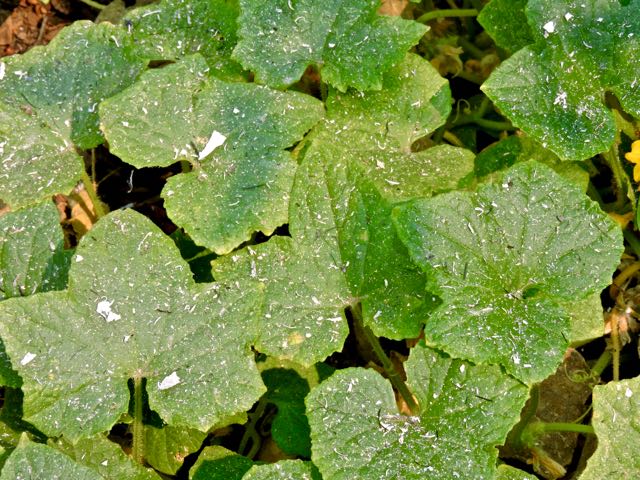
Our cucumber leaves covered in ash from the LNU wildfires

The Garden Goes On, in Typical August Fashion

The robust harvest of July is past, but the tomatoes, peppers, cukes, and zooks have kept producing in the high heat, and the herbs are as healthy as ever. The rosa bianca eggplants are just about to come into their own, with promise for September. Meanwhile, the green oranges and the green meyer lemons get bigger.  It’s August.

A few highlights:

Tomatoes: The 2 Carmello mid-size plants gave up their last ripe gems last week, after having been marvelously productive until then. Definitely on the menu for planting next spring.

garden carmello tomatoes still producing 8 4 20 - 1

Carmello plants still producing in mid August

Meanwhile, the blueberry mini tomato plant is still lush in its fourth month, with a dozen or more ripe jewels harvested most days and lots of yellow blossoms all over the plant. How long will it keep going?

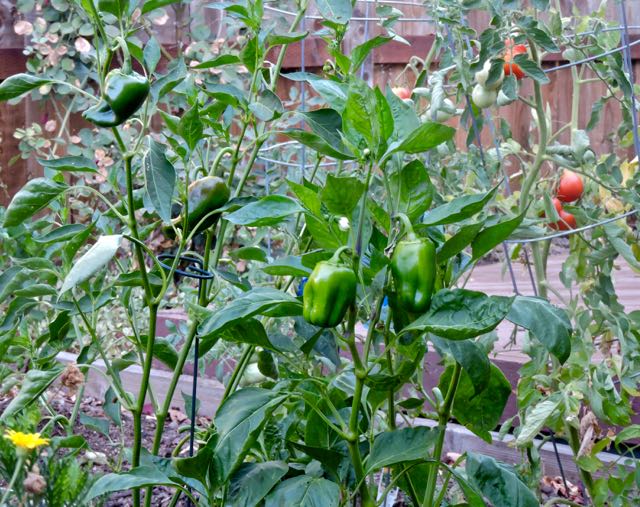
Peppers: The 1 ancho chili plant and the 3 mild peppers (green, yellow, and red) have been steady producers since June, and are still fruitful.

garden august mild peppers 8 25 20 - 1

Mild yellow pepper plant in raised bed

Zucchini: Our one magnificent plant has been producing mammoth fruit for more than 3 months and is still going strong. It’s amazing how the fruit keeps fresh in the fruit bowl for weeks, even as we chop it bit by bit for stir-frying, omelets, soups, etc.  When there’s too much for us to use or give away now, the rest can be chopped up into bags for freezing and use after the summer.

garden mammoth zucchini plant 8 4 20 - 1

The mammoth zucchini plant, six feet across

garden latest large zooks and bloom 8 22 20 - 1

Still fruiting and blooming in late August

kitchen prepping of zucchini for cooking 8 12 20 - 1

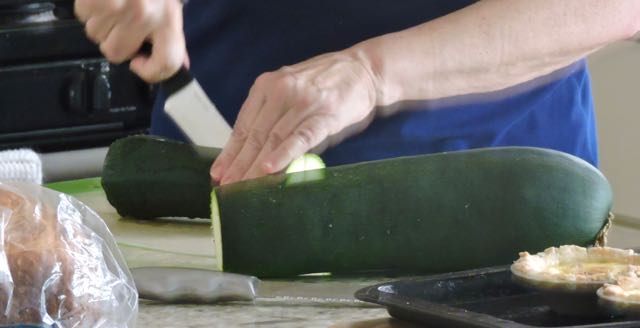
Prepping huge zucchini for roasted veggie mix (see below)

Lemon Cucumbers

garden lemon cucumber plant blooming and fruiting 8 4 20 - 1

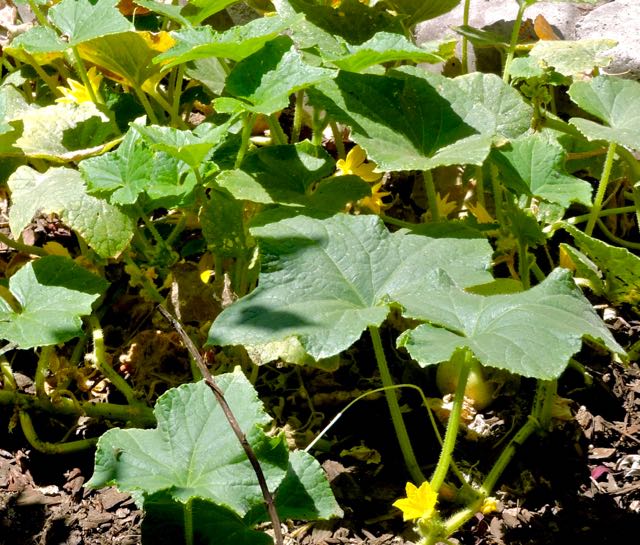
Lemon cucumber still blooming in August and new fruit hiding beneath the leaves

Rosa Bianca Eggplants

garden rosa bianca bloom 8 25 20 - 1

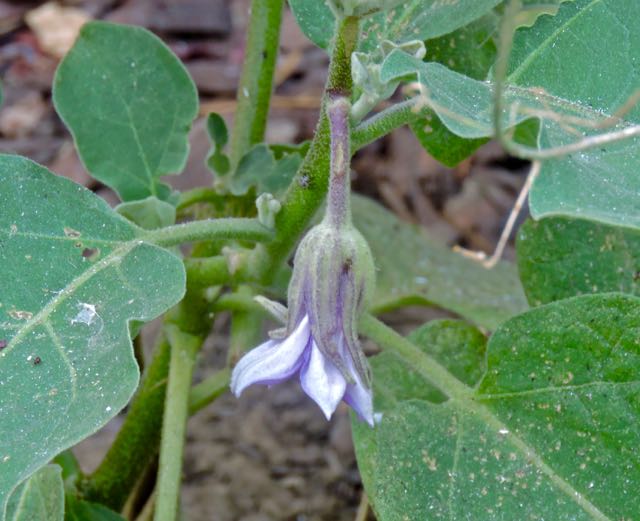
New blooms in late August on both plants signal that September will be their major month.

The Kitchen Goes on, Too

Jean:

Despite fires, smoke, extreme temps, and even more reason to stay inside, the kitchen always gives us a comfortable climate. There’s always something good to make, like…

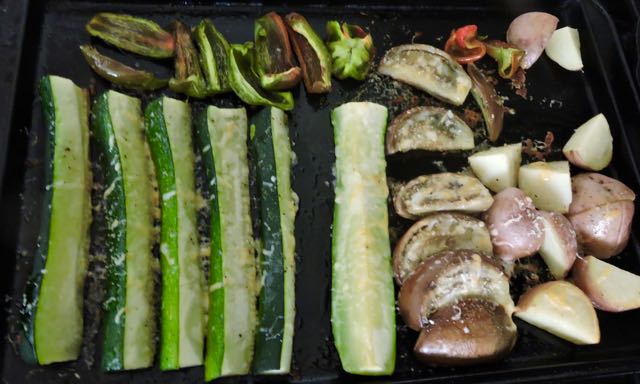
Roasted Zucchini, Peppers, Ancho Chilis, Eggplant, and Potatoes, Topped with Parmesan

kitchen zucchini peppers anchos eggplant potatoes roasted 8 12 20 - 1

or something sweet that reminds me of cooking with my mother…

Blueberry Lemon Chiffon Cake

kitchen jean's blueberry topped chiffon cake 8 15 20 - 1

Watching reruns of the Great British Baking Show finales, I was inspired to make a chiffon cake (which was contestant John’s winning finale showstopper in Series 3).  I haven’t made one of these for years, but it reminded me of baking as a kid with my mother.  I could not find a recipe for this cake on the BBC website, but I found a classic chiffon cake recipe on the Great Canadian Show website.

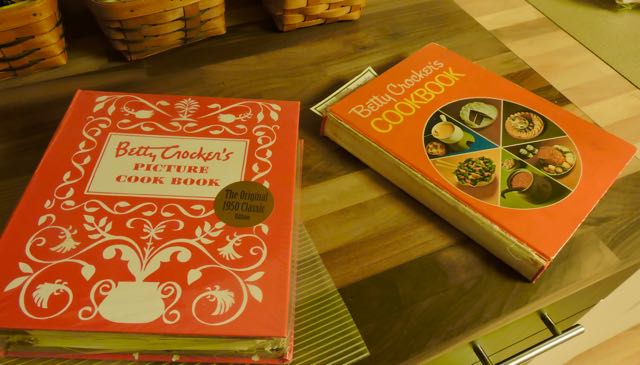
My trusty old Betty Crocker cookbook, similar to what I might have used with my mother years ago, has a recipe for orange chiffon cake that is much the same as what Mom and I would have followed, although I doubt we used cake flour back then.  In reviewing my cookbook, however, I noticed a recipe for a “two-egg chiffon cake.”  I was intrigued by that because I don’t enjoy using, separating, and beating half a dozen eggs or more.  So I gave this one a shot.
With a few of my own wrinkles, here’s what I came up with:

2 eggs, separated

1-1/2 cups sugar (I used a cup of sugar and half a cup of sugar substitute)

2-1/4 cups cake flour

1 T. baking powder

1 tsp. salt

1/3 cup salad oil

1 cup water, milk, or juice (I used a frozen container of our own Meyer lemon juice with some water to complete the measure)

1 tsp. vanilla or other flavoring

Preheat your oven to 325 or 350 degrees.  Grease and flour two round cake pans (I found this easier than using an angel-food type pan).

For the meringue: In a small bowl, beat the egg whites until foamy; then add 1/2 cup of the sugar one tablespoon at a time, beating until the meringue is very stiff and glossy.

For the cake batter: Measure and sift or combine the remaining sugar, flour, baking powder, and salt in a large mixer bowl.  Add the oil, half the liquid, plus the vanilla or other flavoring.  Beat one minute on high, scraping the bowl constantly. Add the remaining liquid and egg yolks; beat one minute, scraping occasionally.

Fold the meringue into the batter; then pour the mixture delicately into pans.  Bake 30-35 minutes until a toothpick comes out clean.

My own wrinkle: I put some lemon curd in between the layers. A good choice! I also debated making a lemon glaze for the top.  I should have done that.

Instead, I decided to top it with a blueberry mixture that was too heavy for this delicate cake–the cake fell over a few minutes after the photo above was taken!

However, as I know about most cakes, it tasted good no matter what it looked like. Chris agrees. He loved the contrast between the blueberry and the Meyer lemon.

Besides, the crumb on this chiffon cake was so delicate–I certainly didn’t need those five more eggs that other recipes call for.

Late August Gallery

garden the next yellow rose cluster 8 22 20 - 1

Yellow rose and always more buds, front garden

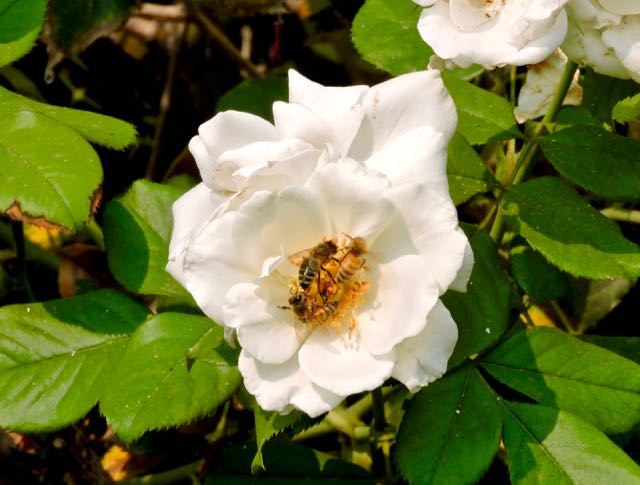
garden honeybees cluster in ash-sprinkled white rose 8 21 20 - 1

Three honeybees clamor in a white rose, back garden

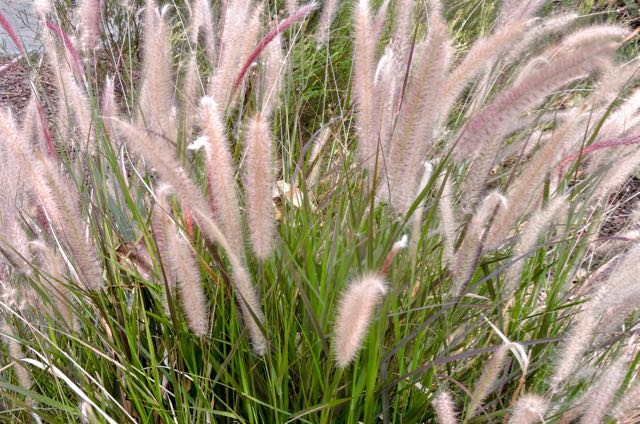
garden fountain grass 8 26 20 - 1

Fountain grass, front garden

garden latesummer pomegranate blooms 8 26 20 - 1

Latesummer pomegranate blooms, back garden

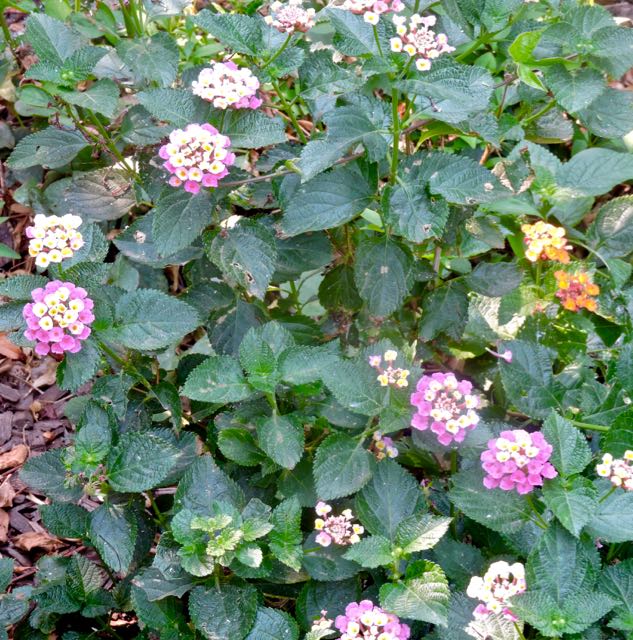
garden multicolor lantana 8 26 20 - 1

Multicolor lantana, back garden

garden new blackberry vine 8 26 20 - 1

New blackberry vine, side garden

garden latesummer day lily 8 26 20 - 1

Latesummer day lily, front garden

garden latesummer alstroemeria 8 26 20 - 1

Latesummer alstroemeria, side garden

September awaits…

July 2020: Keep the Reinvention Going

kitchen still life veggies herbs flowers 7 7 20 - 1

A July week’s harvest from some of our plants

In This Month’s Blog:

1. More Reinvention amid COVID-19

2. Transplanting: Reinvention on a Tiny Scale

3. July in the Kitchen: Garden Stir-fry, Sauces, Pickles

4. The Gallery: MidSummer Sampler

Chris:

1. More Reinvention amid COVID-19

While most other industrialized nations around the world have succeeded in controlling COVID-19 by maintaining effective, coordinated vigilance, the U.S. continues to struggle mightily. But there are examples of strong and effective leadership, even at the federal level.

Check out the video interview that Alice Park of Time conducted last week with Dr. Francis Collins, the director of the U.S. National Institutes of Health. If you don’t know him, Collins, an Obama appointee, is, among many other things, Anthony Fauci’s very admiring boss. (He called Fauci “a national treasure” in another interview last week.)

If you want to be inspired and heartened in this difficult time, watch how Collins describes the international coalition of scientists, including members of the World Health Organization, who are working efficiently to develop viable vaccines for COVID-19 in record time.

Collins exemplifies what’s possible when your method is to submerge your own ego and bring experts together online from around the world to meet essential goals that all nations share. That’s reinvention.

2. Transplanting: Reinvention on a Tiny Scale

In May , I wrote about a number of new plants in the reinvented garden. This month I feature transplanting, a different kind of reinvention I enjoy. In a small, diverse garden like ours, with variations in sunshine, shade, and soil environment, transplanting means taking plants that have been growing in one environment and shifting them to another–in hopes that their new homes will help the plants survive and thrive. For a necessarily frugal gardener like me, I hate to think of any plant as expendable.

Why transplant? Three Reasons

Reason 1: When I transplant, it’s mostly because a plant has not done well in one place and I want to save it. The strawberry plant (above, top left) is one of these. Actually, this plant had struggled in two prior places: (1) in ground, where our alkaline soil and full sun had kept it and its fellow strawberry plants from growing as large and as fruitful as they could be, and (2) in a wide and shaded, but shallow, pot that had not given the rhizome room to spread out. A deep ceramic pot in partial shade has now been home to this formerly struggling plant for most of a year. The new environment has allowed me to build an acid-rich soil that has let it flourish.

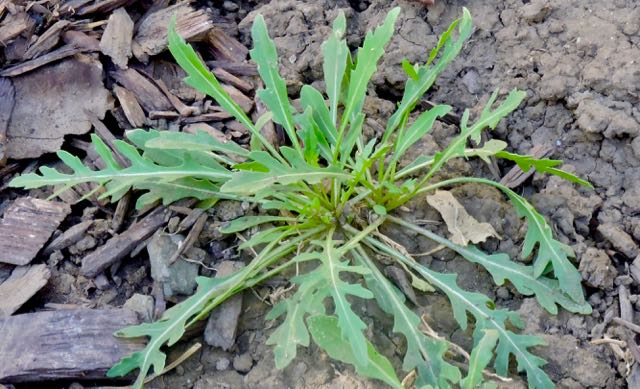
Another transplant to save the plant was that of the delicious arugula (below), which now tries to dominate a section of our back garden, so that I continually must cut it back. (This is a good problem!) This arugula had grown from seed in a pot in the shady part of our front garden, but it was dying because it needed more sun and room to spread out. Since transplanting more than a year ago, it not only thrives with only a little water, but its constant bloom of tiny yellow flowers makes it the most consistent bee magnet in the garden.

Reason 2: I also transplant when a plant does well, but where it is growing keeps it from coming into its own. As I wrote last October, our California Fan Palm (two pics above, bottom) was flourishing at 2 feet tall in its large pot on our veranda for three years, but I wanted to see what it could do in ground in full sun in the front. That was eight years ago, and wow! 25 feet tall.

Reason 3: Sometimes I transplant just to spread the lively beauty around. Because cacti and other succulents can be grown from cuttings and need little water, why not plant small bits of these attractive plants around the garden and see how they do? For example: the pale green succulents I recently transplanted into the ornamental pot on our veranda (two pics above, top right) had sprung up in another part of the garden where they couldn’t be seen. Now they bring joy to our eyes each day.

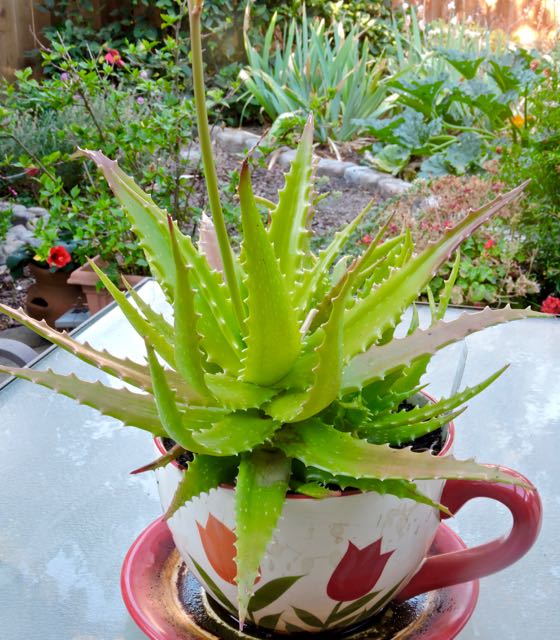
An even better example is this strikingly gorgeous aloe plant:

garden back potted aloe 7 18 20 - 1

…which has flourished for three years in our tea-cup planter on the veranda–and which has now produced four additional plants, all squeezed into the cup’s small circle. These four cute “pups,” as the growers call them, need their own space. So I carefully separated them from their mother…

…and the four pups now luxuriate (above) in their own comfy homes around the garden; while Mom…

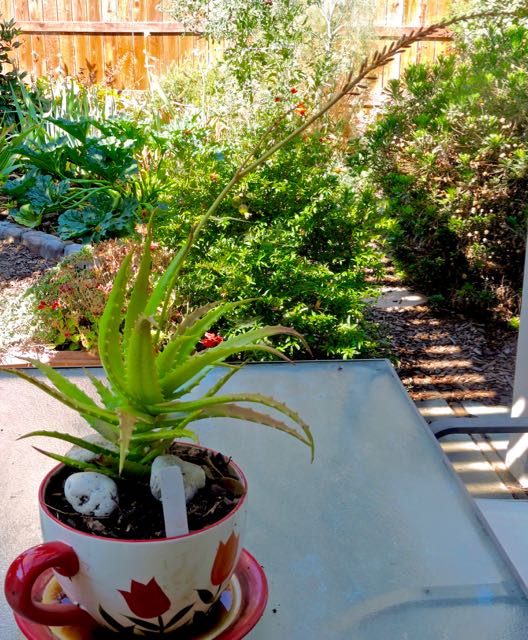
garden back original aloe with bloom stalk 7 20 20 - 1

…has the tea cup all to herself.

Transplanting doesn’t always work, of course. Sometimes plants are too far gone to be revived, or the new home proves just as inhospitable as the former one.  But give your transplants a chance (and regular water). Exercise patience, and you may be rewarded. Example: I thought a scrawny sucker from a Carmello tomato had only a small chance to succeed, and when I snipped it off and transplanted it into its own large pot in mid-June, it suffered in the 95-plus degree heat for two weeks with no improvement.  But the new roots were building and eventually took hold, so that by week 3 the sucker turned deep green and was growing. Here it is on July 16, three times as tall and about to produce its first yellow flowers:

garden transplanted carmello sucker 7 20 20 - 1

3. July in the Kitchen: Garden Stir-fry, Sauces, Pickles

Jean:

What a great month for turning garden produce into easy, light, tasty, healthful dishes! Here are three recipes that employ that bountiful produce in versatile ways.

kitchen sizzling garden stir fry 7 17 20 - 1

1. Veggie-Herb Stir-Fry

This colorful skillet stir-fry (above) features the garden veggies (below) that Chris brings in from the garden…

kitchen chopped veggies for stir fry 7 16 20 - 1

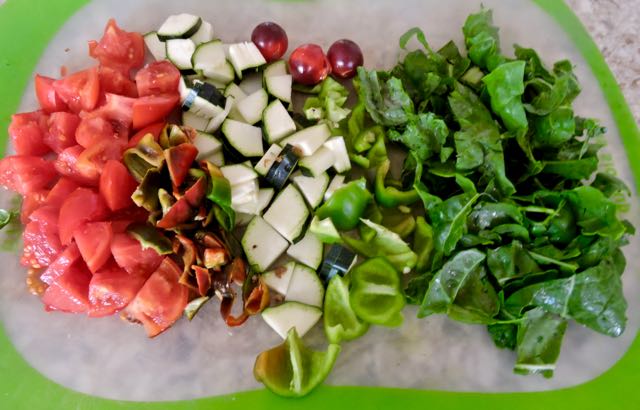
Stir-fry ingredients, L-R: tomatoes, ancho chilis, zucchini, grape tomatoes (top), green peppers, Swiss chard

…and combines with the herbs he also picks:

kitchen garden herbs display 7 19 20 - 1

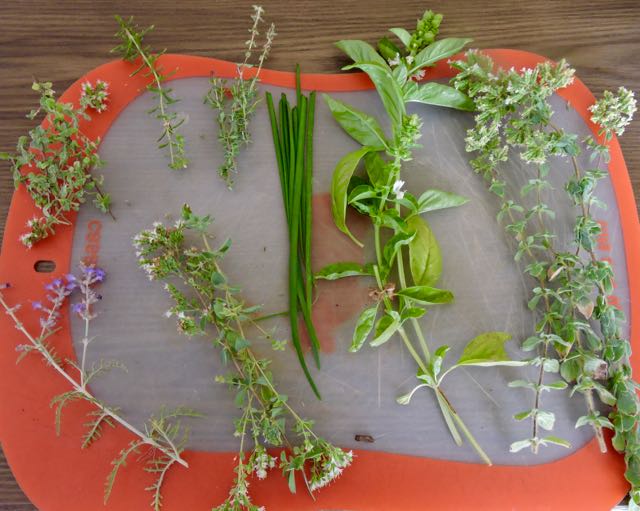
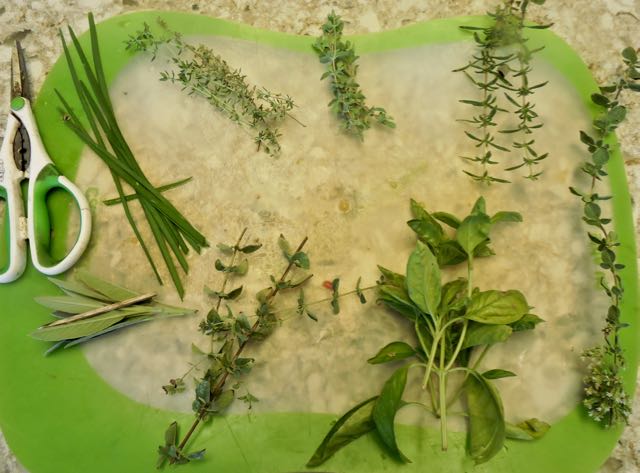
Herbs, L-R: purple Russian sage, marjoram, thyme (top), Greek oregano, chives, Italian basil, spicy oregano

Here’s the tedious part: If you use fresh herbs like these (you don’t have to, if you have the dried versions handy), you have to separate the tiny leaves from the woody stems. But once you get the hang of it (as Chris has), it’s actually quite easy.

Cooking: In no more than a tablespoon of your oil of choice (I use olive oil), fry the mixture of veggies and herbs on low to medium heat until the ingredients reach the softness you prefer.

As for spiciness, if you use spicy herbs or a spicy oil, the mix may be spicy enough, but if you like it more picante, sprinkle in hot pepper, hot sauce, or whatever else you like. Salt to taste.

The key to this dish is to stir it often enough so that the spices and herbs get mixed in, the whole melange swaps around, and the veggies soften without sticking. Paying attention to the cooking is fun, because the aromas of the veggies and the herbs just go to your head.

Use the stir fry as a side or as a meatless main dish–your choice. We’ve also used it as a pizza topping.

2. Tomato Sauces

kitchen tomatoes for sauce 7 24 20 - 1

kitchen herbs for sauce 7 24 20 - 1

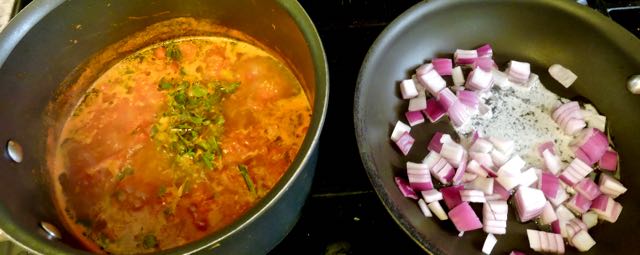
Garden herbs for tomato sauce

kitchen cooking tomato sauce and sauteeing onions 7 24 20 - 1

Sauce cooking and onions sauteeing

Our good crops of Carmello and “blueberry mini” grape tomatoes have produced several jars of tomato-herb sauces already this summer. The sauces take more cooking time than a stir-fry does, but the prep time is about the same. All together, we spend about 2 hours prepping and cooking the tomato sauces: about 35 minutes in prep and an hour to 90 minutes in cooking.

Prep:  Wash the tomatoes. Chop off the stems. Strip the tiny leaves from the woody stems of the herbs. Chop larger-leaved herbs like basil and culinary sage into small pieces. Chop half a medium-size onion into half-inch pieces.

Cook:

  • Place 12 medium-sized tomatoes into 3 cups of water in a large saucepan and bring to a boil. Boil until the skins begin to detach from the tomatoes. Use tongs to remove the skins.
  • Saute chopped onions in a skillet at low heat in an oil of choice (I like to use butter or olive oil). Saute until onions are translucent.
  • Continue to cook skinned tomatoes on low heat.
  • Add in cooked onions and the chopped herbs.
  • Add other ingredients to taste: we used red wine, green olives, spices, salt, and pepper in recent sauces, but feel free to use other ingredients you prefer.
  • Tasting often, continue cooking sauce mixture on low heat for a half hour or more, or until all the tomatoes have cooked down into a sauce.  If you need to add more water before the tomatoes have completely cooked down, do so. Don’t rush this process. Take your time and enjoy the aroma.
  • When the cooking is done, turn off the heat. The sauce is now ready to serve as a topping for pastas, meats, or veggies.  Let the sauce cool before saving it into jars for future use.

So far this season, we’ve made three different styles of tomato-herb-based sauces: mild, spicy (arrabiata-style), and spicy-green olive (arrabiata-putanesca style). Be inventive with your ingredients!

The great thing about both stir-fry and the sauces is that they keep well in the refrigerator and can be used in a wide variety of dishes. Enjoy!

3. Cucumber Pickles

kitchen chopped lemon cukes 7 25 20 - 1

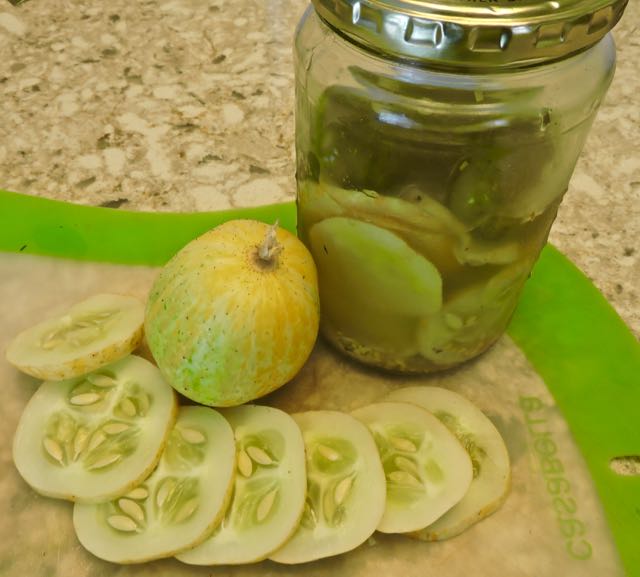
This one is really easy. Just slice the cukes (we’re growing lemon cukes this season, as shown above, but any type will do). Then make your pickling mixture with vinegar (we’re using white vinegar this year), water, and whatever spices and herbs you prefer. This summer’s mix is really simple: salt and black pepper!

As you use up the pickles, just add more slices to the mixture in the jar. Shake up the closed jar to coat the new slices, and then just let them marinate in the refrigerator. Perfect!

4. The Gallery: MidSummer Sampler

irene portrait mockingbird sings to me 7 7 20 - 1

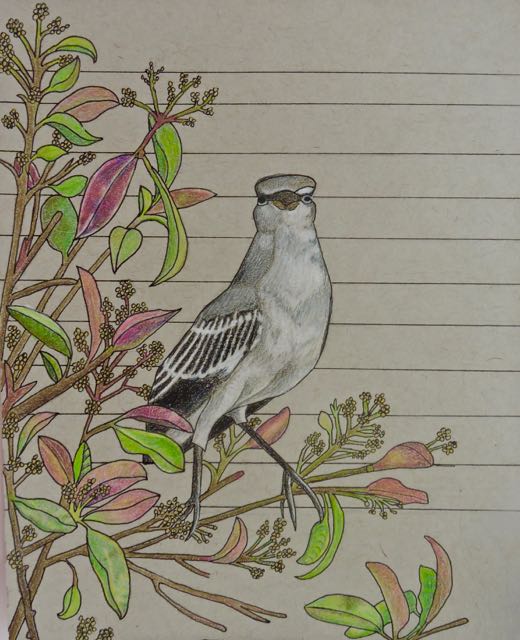
One of our daughters created this pastel rendering of a photo from the February blog. A beautiful gift to us.

garden hibiscus bloom closeup 7 17 20 - 1

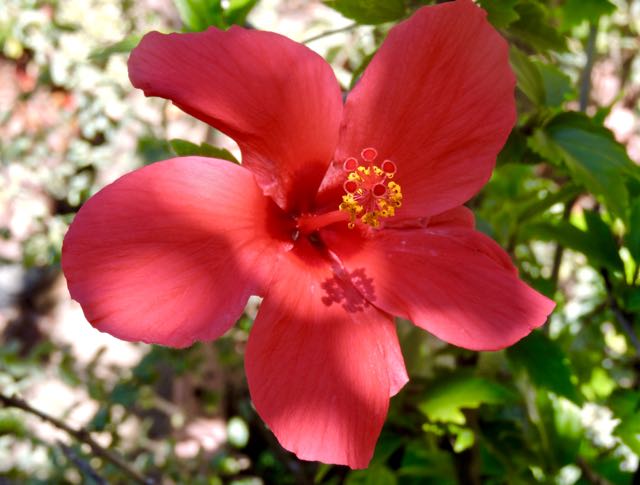
Hibiscus bloom in the early morning sun

garden back growing pomegranate fruit 7 18 20 - 1

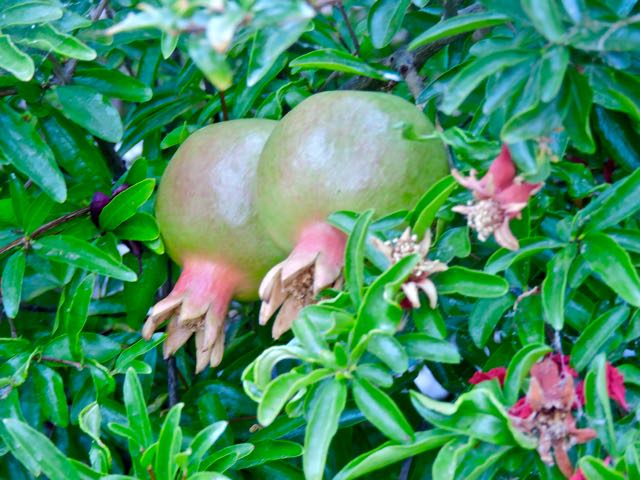
Two new pomegranate fruit amid the blooms

garden ripe blueberry mini tomato cluster 7 18 20 - 1

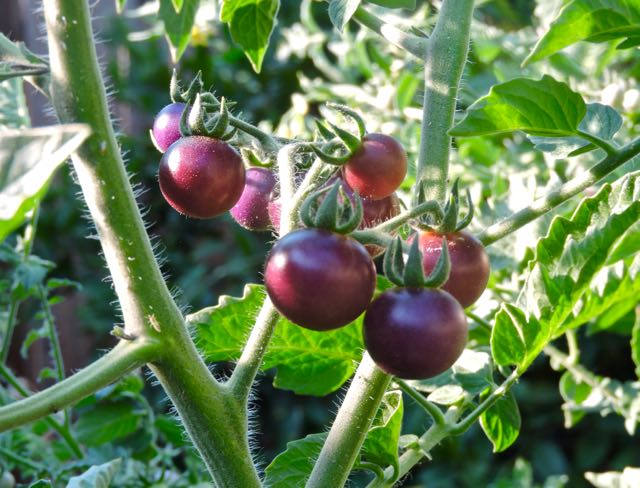
Cluster of ripe “blueberry mini” tomatoes

garden back lemon cucumbers almost ripe 7 18 20 - 1

Lemon cucumbers proliferate on the vine.

garden flower stalk on the aloe 7 25 20 - 1

Aloe flower stalk

garden first eggplant of season 7 24 20 - 1

Our first eggplant fruit of the season, still growing.

garden back jay perched next to me 7 18 20 - 1

Our scrub jays just won’t stay out of the picture. This one landed next to me, when I had the camera handy.

garden 2 huge zucchini growing 7 15 20 - 1

Two of our mighty zucchini: I picked them the same day.

garden back single pink lantana flower 7 20 20 - 1

One tiny lantana cluster

garden back salmon rose pair 7 20 20 - 1

I can never resist snapping the salmon roses.

garden back nopales and green orange cluster 7 20 20 - 1

The green oranges and the nopales just love to confront each other.

garden still life days harvest 7 7 20 - 1

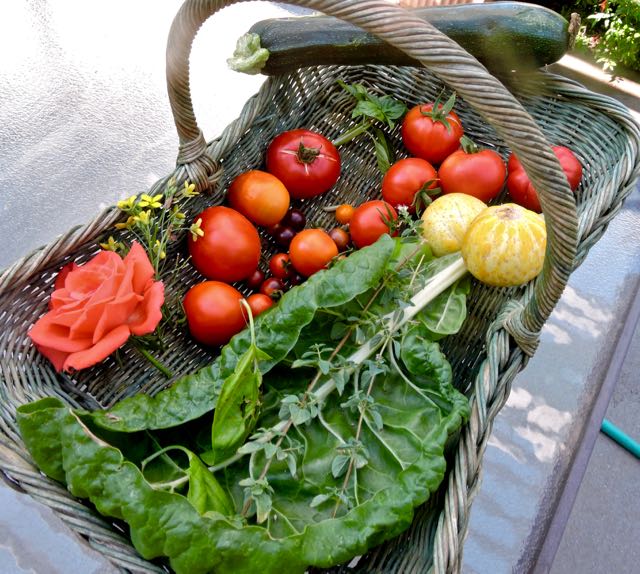
A tisket, a tasket, a garden in a basket

garden back almost ripe peach 7 20 20 - 1

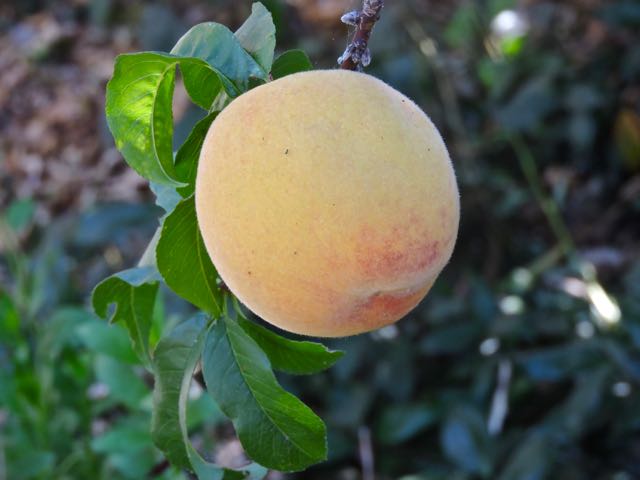
In 2017, our peach tree produced one peach. This year, too. We picked it the next day, and it tasted as perfect as it looked.

garden yellow swallowtail visitor 7 21 20 - 1

This yellow swallowtail visits our garden for a few seconds every day as it tours the neighborhood. I was so lucky to get this photo.

garden carmello tomato plant 7 4 20 - 1

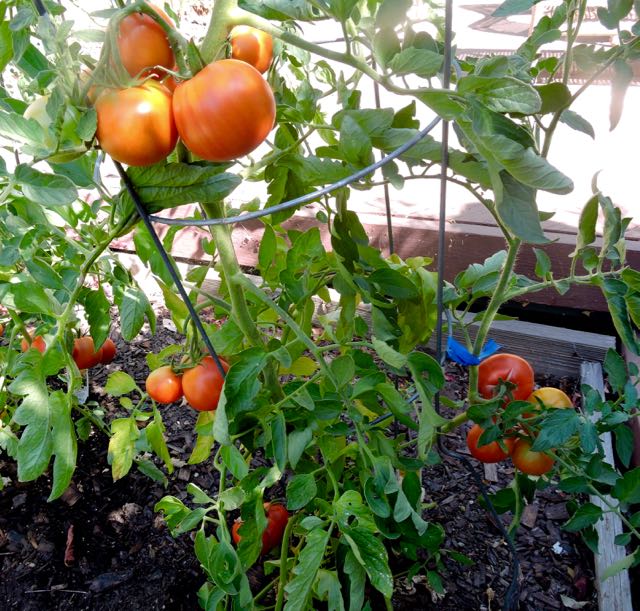
Our two Carmello plants this season have been glorious producers. They love the full sun.

garden anchos peppers carmellos 7 22 20 - 1

Stir-fry in the making: ancho chilis, mild peppers, tomatoes

garden pergola shadows and SW corner pano 7 22 20 - 1

High noon under the pergola, late July

And on to August!


June 2020: Gardening While Black, and Other Endangered Stories

garden dragonfly from behind closeup 6 7 20 - 1

In this month’s blog:

1. Gardening While Black, and Other Endangered Stories

2. The Versatile Apricot and Other June Kitchen Inventions

3. Fruit and Veggie Garden Update

4. This Month’s Gallery: Endangered Friends

Chris:

In this June of reinvention, as nations struggle with the twin pandemics of COVID-19 and racial injustice, an article from the LA Times  about Jimmy and Logan Williams really hit home to me as a gardener.  My whiteness lets me assume a level of safety that many American plant-nurturers have not been allowed to feel–even those who are among the most brilliant and successful in their calling. I hope you’ll read the article.

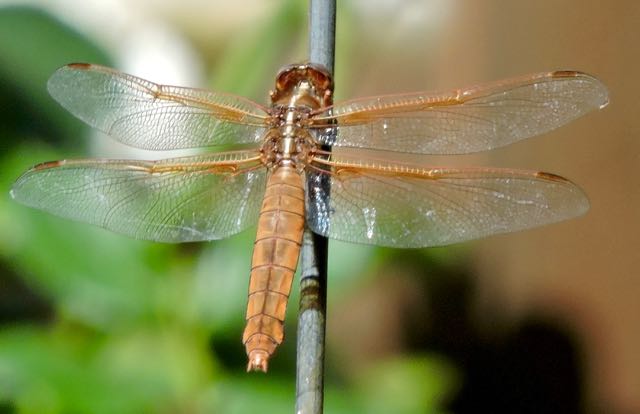
I wrote in April about the garden as a place of solace in troubling times. Gardening keeps me busy and focused on other creatures besides myself.  Studying life as intricate and exquisitely beautiful as this dragonfly (above) who likes to perch on a tomato cage in our garden helps me appreciate the creativity of nature, the ability of life to adapt and surprise, yet also to persevere through one change after another in the course of generations.

But if the garden teaches me about perseverance and strength, it also teaches me about fragility. This dragonfly on one of our iris stalks (below) is endangered, not only because the adult dragonfly lives only a few weeks, but because dragonfly species around the earth are declining through such human actions as pesticides and habitat destruction. All these two adults want is to find a mate and pass on their genes. But that seems less and less a possibility.

garden dragonfly on iris stalk 6 13 20 - 1

Still, despite the fragility of life, including my own as an old man in this COVID-19 world, I find so much hope in the intense lives of dragonflies, and so much hope in the tender art of fellow gardeners like the Williams family. I’ll try to use that hope for action that can nurture the hope of my fellow humans and increase the success of the creatures with whom we share this earth.

garden side all my loving rose 6 16 20 - 1

All My Loving rose, side garden

2. The Versatile Apricot and Other June Kitchen Inventions

kitchen apricot ginger graham cracker tart 6 10 20 - 1

Jean:

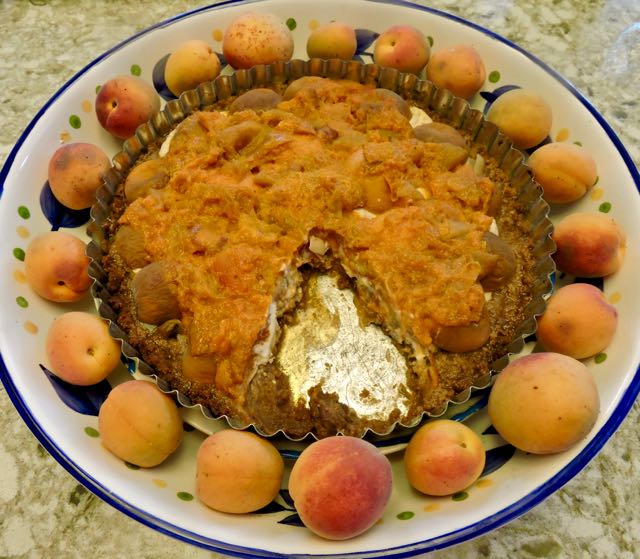
The picture above shows apricots three ways.  I wanted to make a simple apricot tart using some of our avalanche of apricots this year.  Instead of using my scarce flour to make a pie crust, I took out a box of ginger snaps I had bought when having a cookie craving a few weeks ago.  I figured the spicy ginger snaps would complement and stand up well to the full-flavored fruit.

Well, the ginger snaps broke down easily in the food processor, allowing me to add just a few tablespoons of melted butter and brown sugar to make a crust that could be pressed into the bottom of my tart pan.  I baked that for about ten minutes to try to reduce sogginess.

I also spread some white chocolate chips over it to allow them to melt and create a barrier.    I threw together part of a package of cream cheese and some yogurt that I had, to make a little creamy layer, and then lay halved apricots on top.

I wanted a glaze on top, but the apricot jam Chris had made was a little thick and partially obscured the pattern of the fresh apricots.

Nevertheless, the tangy fruit paired well with the sweet creamy cheese and the crispy crust –and the tart disappeared quickly!

Lemon Blackberry Cake

kitchen lemon blackberry cake 6 7 20 - 1

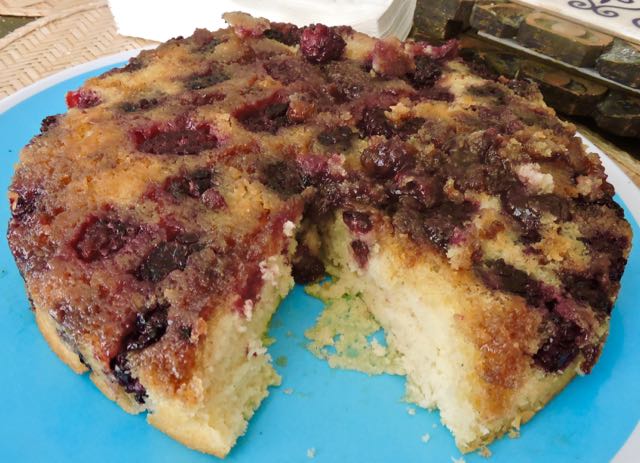
Lemon blackberry upside down cake

This recipe is from Karen MacNeil’s book Wine, Food & Friends.  I love upside down cakes because they are so easy — no worrying about frosting.  Just some whipped cream or ice cream on top or alongside is perfection.  Here’s all you do:

Preheat the oven to 350 degrees.  While it’s heating up, melt 2 Tbsp. butter in a 9-inch cake pan.  Sprinkle 1/3 cup packed brown sugar over the butter, return it to the oven and let it heat 1 or 2 minutes until the sugar melts.  Pull it out, top with 1 cup blackberries and a teaspoon or two of grated lemon rind; set aside.

Now for the dry ingredients.  Combine 1-1/4 c all-purpose flour, 1-1/2 tsp. baking powder and 1/4 tsp. salt in a small bowl.

Then the wet ingredients.  Beat 2 Tbsp. softened butter with 2/3 c. granulated sugar in a large bowl until well blended and fluffy.  Add one large egg and 1 tsp. fresh lemon juice (or 1 tsp. vanilla, or both, what the heck).  Beat well.

Add the flour mixture to the egg mixture, alternating with 1/2 cup milk.  MacNeil says “fat-free,” but I don’t think so.  (Again, what the heck.)  The mixing is easiest if you begin and end with the flour mixture.

Bake at 350 degrees for 35-40 minutesCool in the pan on a wire rack for 5 minutes, then invert onto a cake plate.  (Put the cake plate upside down over the hot pan first, make sure you get a good grip with trusted hot pads, and flip it fast, then ease the cake pan straight off.)  With any luck, the cake comes out easily,  and you’ll have a beautiful cake.  And you didn’t have to struggle to prepare the pan with lining and all that!

West African Stew

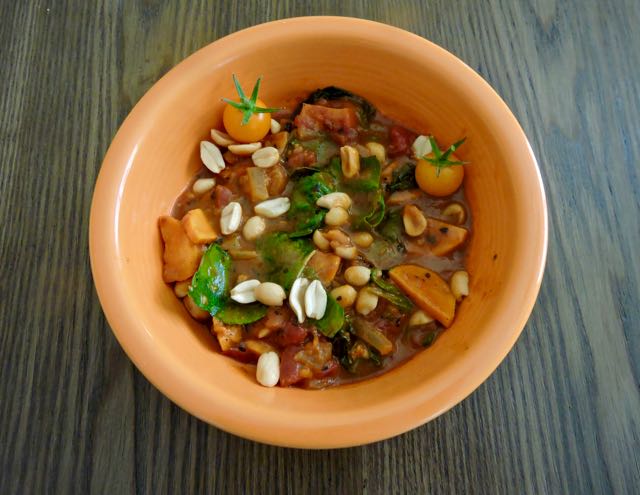
kitchen African sweet potato peanut stew 6 25 20 - 1

This meatless stew is fun to make–very hearty and nutritious. I’m going to give you the quick, non-recipe version.

Put a couple of tablespoons of oil in a pan and start to soften a handful of finely chopped onions or shallotsSalt them, add a couple of tablespoons of tomato paste (or catsup), and let that cook down a few minutes.

Add spices:  These can include ginger (powdered or fresh), turmeric or curry powder, cayenne pepper, black pepper, garlic (fresh or other forms) — whatever you like.  The stew should be a little spicy, to your taste.

Sorry if I’m not being precise or particularly authentic in my ingredients and timing, but stay-at-home cooking during the pandemic gives you permission to be spontaneous and creative–and to use what you have on hand or can fetch from your garden.

The point is just to cook a little of the rawness out of these ingredients. The mixture is pretty thick at this point and you don’t want it to burn, so next you have to get the liquid in.  Throw in a can of tomatoes in any form you have and some water or vegetable broth, enough to cook the chopped yams or sweet potatoes you will add in next.

Let all that simmer until the potatoes are substantially softened.  Then add a can of coconut milk and some greens, like chard or kale, plus some fresh basil. Simmer the stew another ten minutes or so.

The final ingredient is peanuts.  I don’t care for cooked peanuts, so I throw roasted peanuts on top for some crunch rather than mixing them into the stew.  You can do without the peanuts, and the dish will still be tasty and healthful, but the peanuts will enhance the overall texture and flavor. You might also garnish with a few grape tomatoes, as shown in the photo above.

Sally Lunn Bread

kitchen sally lunn bread 6 2 20 - 1

This bread is fun and easy to bake.  (Do I sound repetitious?)  It has rich flavor and texture, with a crunchy crust.  My mother liked to make it when I was a kid, so I was excited to find recipes for it in both my Bobby Flay cookbook and my bread machine cookbook.  I had made it once in the bread machine, and it turned out well, so I decided to use Bobby Flay’s recipe to make this one.

Sally Lunn is actually a type of brioche bread.  Instead of the austere flour, salt, and water of a basic yeast bread recipe, Sally Lunn is a rich dough made with milk, egg, sugar, and butter.  You can see and taste the difference.  Sally Lunn, like brioche, makes great French bread, which is the direction Bobby takes it.

Just as great as the taste is how easy it is to make.  Bobby’s recipe has you mix the dough in the KitchenAid with a bread hook.  Then you pour it into the tube pan without kneading and let it rise in there.  I realized why this is a great idea.  The dough is so sticky that transferring it or handling it more would be difficult, but once it is in the tube pan, you’re almost home.  Just let it rise, bake it, and dig into that lovely crust after cooling and popping it out of the pan.  Make French toast with the last few pieces.  Yum.

Three Other June Treats:

kitchen grilled chicken breasts w apricots zucchini 6 21 20 - 1

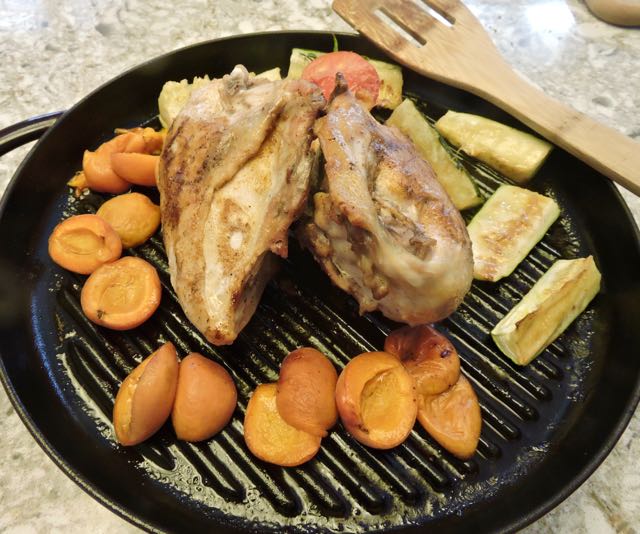
Chicken breasts grilled with Apricot halves and Zucchini wedges

kitchen zucchini bread 6 19 20 - 1

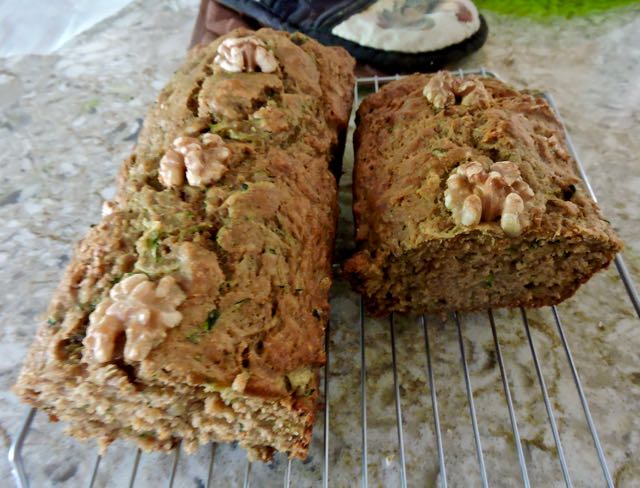
Zucchini bread topped with walnuts

kitchen 2 casseroles cauliflower and chicken biscuit 6 10 20 - 1

Twin casseroles: Cauliflower Cheddar and Chicken Biscuits

3. Fruit and Veggie Garden Update

garden back panorama toward northeast 6 23 20 - 1

Back garden toward northeast: eggplant, arugula, fennel (foreground); 2 pepper plants and 2 tomato plants in square raised bed; chard and 2 Carmello tomatoes in farther raised bed; ancho chilis and mild yellow pepper in right background; lemon cucumbers between the raised beds.

Chris:

Apricots

Read Jean’s cooking section above. This is the month of the apricot–more than 1000, our record for a year!

garden ripe apricots on tree and on ground 6 7 20 - 1

Ripe apricots still cover the tree mid June, even as many have already fallen to the ground. We’ve used hundreds for drying, jam, baking, freezing, and just plain snacking.

Chard

The massive Swiss chard plant in the raised bed (see the early morning panorama photo, just below) has now been in the ground going on 7 months, all through winter and spring and now into summer. I keep trimming back the flower stalks at the top of the plant, and so this winner keeps churning out huge green and tasty leaves for soups, stews, and side dishes. How long will this marvel keep going?

Version 2

L-R: lupine with white blooms ; mild pepper and ancho chili (in pots); 2 Carmello tomato plants; massive Swiss chard

Cherry Plums

Now, in late June, the cherry plums are at their peak of juicy, tangy ripeness. Normally, I’d be pitting and cooking hundreds for our Plumderful jam. But we still have several large jars remaining from last year’s bountiful harvest, plus new jars of apricot jam, so this year maybe I’ll take a break from making more of that deep burgundy delight.

garden cherry plum sampler in bowl 6 22 20 - 1

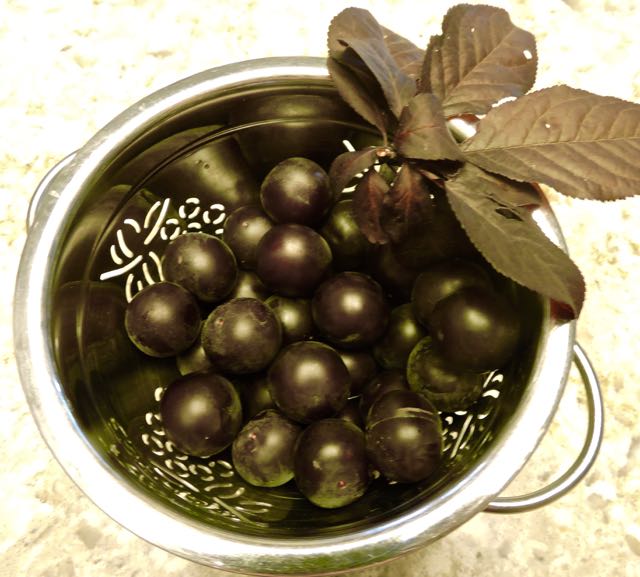
Cherry plums on display, 2020

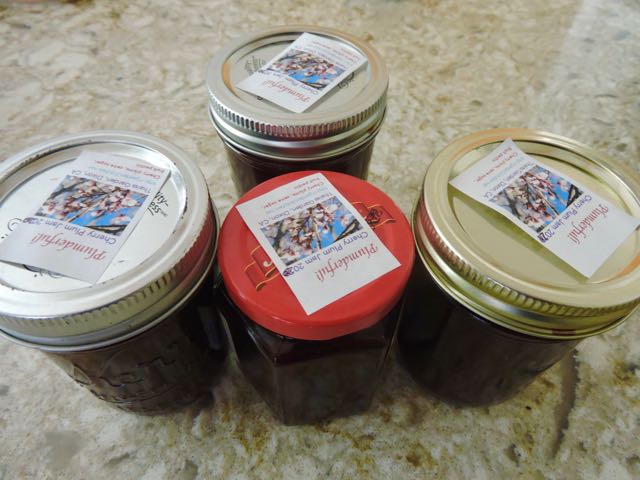
Then again, Jean said this morning that she didn’t want us to run out, which was music to my ears! So here’s (below) the small batch I made with 160 of the little beauties.

kitchen new cherry plum jam 6 27 20 - 1

Eggplant

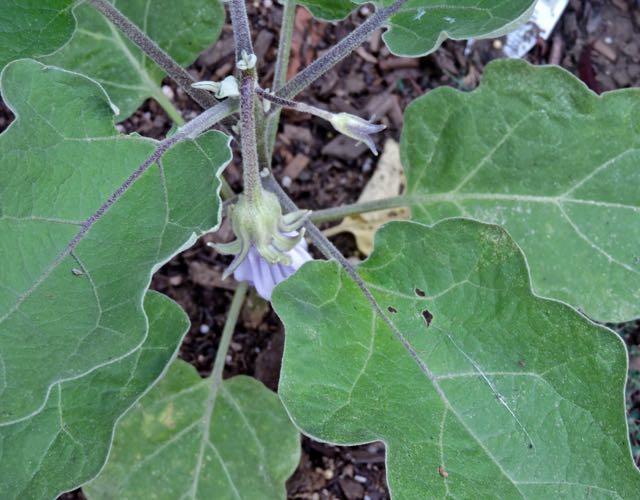
These 2 late bloomers have been in ground 8 weeks, and are growing steadily toward late July-early August harvest. Both Rosa Bianca varietals, they have just begun putting out lavender flowers.

garden black beauty eggplant first flower 6 22 20 - 1

One of our 2 Rosa Bianca eggplants

Lemon Cucumbers

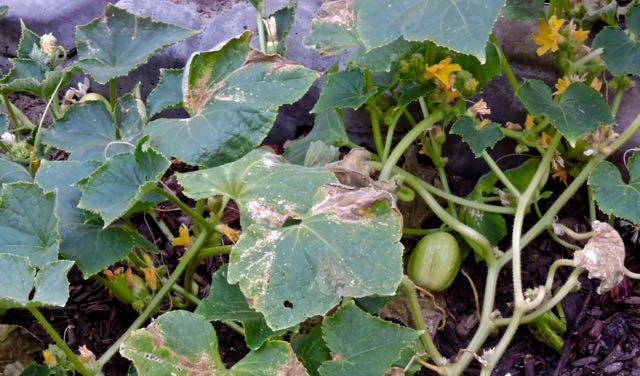
The two plants have been in the ground 9 weeks, began flowering in week 6, and have a bunch of lemon-shaped fruit growing. This is our first year of this variety, and we have high hopes.

garden lemon cucumber plant 6 22 20 - 1

One of our 2 lemon cucumber plants, with several fruit just starting and many yellow blossoms

Peppers and Chilis

3 mild varieties (green, yellow, and red) have been in ground 10 weeks, and all are fruiting, but not yet ready for harvest. The pepper in a large pot (see below) is doing particularly well.  The potted ancho chili (below, right), a first-timer in our garden, is very precocious, with a bunch of full-sized fruit. Two harvested so far.

Tomatoes

4 of our 6 tomato plants this season are new to the garden. The 2 repeats, both of whom were outstanding producers in 2019, are a husky cherry red and a SunGold grape tomato. The SunGold is our champ so far, with well over 100 fruit, and already about a half dozen new ripe ones per day. The husky cherry red got a late start, but is catching up.

The 4 newbies have been excellent surprises so far. 2 of them are Carmello mid-size tomatoes, and both are lush and sturdy producers, with our having harvested 4 of more than 50 (!) growing and ripening on the 2 plants.

The final 2 newby tomatoes are blueberry minis, which have been in ground for 9 weeks and are fruiting in profusion. So far only a few fruit have fully ripened, but these stand out for their dark blue to black coloring. We should have a bunch of ripe ones to show in the blog in July.

garden blueberry mini tomato cluster 2 6 22 20 - 1

Not yet ripe Blueberry mini tomato cluster

Zucchini

We’ve picked 3 foot-long+ zooks so far from our one luxurious plant, with more on the way. Delicious eating in sauces, in casseroles, grilled with chicken, and in Jean’s zucchini bread (see cooking section above).

garden zucchini flower and new fruit 6 24 20 - 1

Zucchini blossom and new fruit (center left)

4. This Month’s Gallery: Endangered Friends

garden 2 white cabbage leaf butterflies 6 16 20 - 1

Pair of cabbage leaf butterflies in periwinkle, back garden

garden scrub jay fledgling 6 7 20 - 1

Scrub jay fledgling in peach tree

garden bumble bee on lupine flowers 6 13 20 - 1

Bumble bee in lupine, back garden

garden hummingbird whirs in pomegranate 6 2 20 - 1

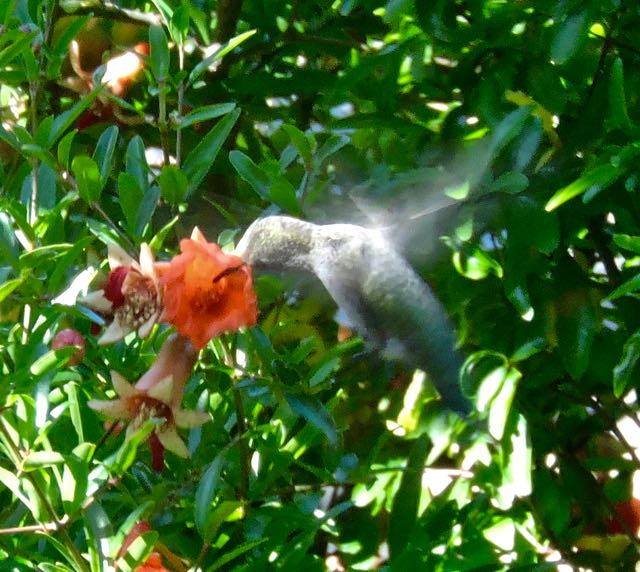
Anna’s hummingbird on pomegranate blossom, back garden

garden find the bee on the bee balm 6 14 20 - 1

Find the bee on one of these bee balm flowers, front garden.

garden cabbage leaf butterfly on wallflower 6 21 20 - 1

Cabbage leaf butterfly on wallflower (erisymum)

garden bumble bee on late-blooming wisteria 6 20 20 - 1

Bumble bee on late-blooming wisteria

garden red rose cluster bees 6 1 20 - 1

Bee on red rose cluster

Version 2

Cabbage leaf butterfly on eggplant beside arugula flowers

On to July in hope!


May 2020: Reopening? Or Reinvention?

garden gaillardia red penstemon allysum kalanchoe 5 13 20 - 1

Reinventing the front garden: Red Penstemon in foreground, with Gaillardia, Alyssum Royal Carpet, and Orange Kalanchoe behind. Heavenly Bamboo rises above the Alyssum. The Penstemon, Gaillardia, and Kalanchoe are new since last year.

In this month’s blog:

Reopening? Or Reinvention?

Reinventing the Garden: New Plants and Reasons Why

May 2020 Fruit and Veggie Update

Reinventing in the Kitchen: Bread, Mother’s Day, and Beyond

May 2020 Gallery

Chris:

As of today, the cases of COVID-19 keep rising in the US by 15,000 or more per day–over 1.7 million in total–and the deaths have skyrocketed to more than 100,000–300% worse than in any other country. Nevertheless, every state is being pushed by the White House to “reopen,” almost as if the pandemic didn’t exist, and all states are relaxing restrictions. However, these relaxations include safety recommendations that vary with state and local governments.

Meanwhile, Jean and I have been working within the partial restrictions recommended by national health experts and still recommended here in California for seniors. (All but a few California counties have now been allowed to reopen most types of businesses, including retail, restaurants for sit-down dining, hair salons, etc., as part of Phases II and III of the reopening, but partial restrictions remain in all those counties.)

“Reinvention,” Not “Reopening”

I’d like to propose a different term than “reopening” for what will happen as the restrictions are lifted.

I propose “reinvention.” “Reopening” implies trying to go back to the way things were. “Reinvention” implies learning from the pandemic and making needed changes. Here are just four examples:

(1) The pandemic has alerted people to facts of health and well-being that won’t just disappear.  Because so many COVID-19 hospitalizations and deaths have been hastened by such pre-existing conditions as high blood pressure, diabetes II, and compromised breathing, all of us should have even greater incentive to adopt

  • better eating habits (and access to more healthful food options for low-income communities)
  • regular exercise, and
  • reduced carbon emissions.

Moreover, we must push politicians to create affordable health insurance for all Americans, since so many of us have suffered the double whammy of reduced income and endangered health.

(2) The pandemic has disproportionately impacted the poor, immigrants, persons of color, and elderly persons in nursing homes. In other words, this virus brings needed attention to the least powerful and most voiceless in our country: people whom it has been all too easy for the privileged to ignore and keep powerless. BUT, ironically, those who have been labeled during this crisis as “essential” workers are also disproportionately poor and of color: home health aides, hospital personnel, transit and sanitation workers, grocery workers, farmworkers, meat packers, etc.  We must address this awful inequality, which undermines our entire nation. We must invest in these essential movers of our economy.

(3) Beyond personal health and financial inequality, the huge move to

  • online work
  • online schooling
  • online socializing with family and friends
  • online shopping and
  • online travel

will have a massive effect on reinventing the national and world economy.  Of course, this shift was already happening well before the coronavirus came along; but now billions of people are realizing multiple benefits of the technologies; more important, we are seeing how humans can adapt to new ways of doing things. Sure, there have been lots of glitches in the transition, and many millions still need much better access to the tools, but, hey, even old people like us are now Zooming and FaceTiming all over the place! As a result, we’re actually having more contact with our family and friends around the country than we ever did.

(4) The focus of countries around the world on trying to stop the spread of the virus, coupled with greater and greater respect for the work of scientists and health care professionals, should signal a huge infusion of public and private investment into epidemiological research and governmental preparedness (horribly lacking at the federal level in this crisis). We can only hope!

Reinventing the Garden: New Plants and Reasons Why

The restrictions have helped me focus on ways that the garden helps us make it through this crisis. See our posts for March and April. The restrictions also have given us time to think of ways to “reinvent” the garden through improvements.

So far in the past two months, I’ve added 14 plants new to the garden, with both of us providing the ideas:

Delphinium                                                             Blackberry

garden front delphinium amid stones 5 18 20 - 1

garden front blackberry in wine barrel 5 21 20 - 1

Cambridge Geranium                                        Campanulagarden front campanulla 5 21 20 - 1

garden front cambridge geranium 5 18 20 - 1

Two forms of Lavender

Milkweed                                                       Lemon Cucumbers

garden back milkweeds in bloom 5 10 20 - 1garden back lemon cucumber plnt w mint 5 21 20 - 1

Bottle Brush                                                   Columbine

garden side bottle brush seedling 5 21 20 - 1garden front columbine 5 21 20 - 1

Ancho Chilis                                                      Diascia

garden back ancho chili pepper plant 5 21 20 - 1garden front diascia 2 5 21 20 - 1

Carmello Tomatoes                                                     “Blueberry” Mini Tomatoes

garden back blueberry mini tomato plant 5 21 20 - 1

garden back carmello tomatoes 5 21 20 - 1

In some cases, the new plants replace other varieties. For example, the Carmello tomatoes replace the T-67 and Ace varieties that had not done as well as I’d hoped the previous two years. So far, there are 50 fruit growing on the 2 plants after 7 weeks in the ground.

Others, like the bottle brush seedling, the delphinium, the campanula, the diascia, and the Cambridge geranium, are meant to add color, variety, and bee friendliness in empty spots of the garden.

Still others, like the blackberry and the lavenders, add edible, pollinator-friendly varieties where purely decorative plants had been.

The milkweed, known for attracting butterflies, particularly monarchs, is a risky addition, because it is also known for taking over gardens, through its puffy, wind-blown seed balls. Jean and I routinely uproot the shoots of milkweed throughout the garden, the seeds having come from a three-block planting of milkweed along a nearby road. But I decided that one small display this season (study the Milkweed photo above) in our garden might attract a few butterflies, add a dash of purple, and be easily controlled. I’m hoping for the butterflies as the summer goes on.

All in all, we have at least 20 new plants in the garden over the past 7 months. Note the photo (top) that leads off this month’s post to see a few more of those new plants.

May 2020 Fruit and Veggie Update

garden back panorama 5 20 20 - 1

Back panorama: Carmello tomatoes, huge chard, milkweeds, red roses in foreground

Tomatoes

Besides the two new Carmellos described earlier, we have another SunGold grape variety (already 90 green fruit on 1 plant), 2 first time “Blueberry” mini tomato plants (18 green fruit total after 5 weeks), and one Husky Cherry Red (10 fruit after 5 weeks). All are looking good so far, especially the 2 Carmellos and the 1 SunGold.

Peppers

2 mild green peppers, 1 mild yellow, and 1 Ancho Chili (shown earlier). White flowers on all 4, but only 2 growing fruit as yet. 5 weeks in the ground.

Lemon Cucumbers

2 plants. Growing well, 5 weeks in the ground. Flowers. No fruit as yet.

garden first lemon cuke flowers 5 29 20 - 1

Rosa Bianca Eggplants

2 plants in the ground, 5 weeks, 10 inches high. No fruit expected for 2 more months.

Zucchini

1 thriving plant (below), multiple flowers, 2 fruit growing. In ground 5 weeks.

garden zucchini blossom and first baby zucchini5 20 20 - 1

Apricots and Cherry Plums

Both trees are heavily laden with fruit (see below), but the cool weather has pushed harvest until June, which is usual for the cherry plums, but not usual for the apricots, who usually harvest in late May. But temps over 100 this week are speeding up the apricots!

garden side cherry plums early AM w apricots 5 18 20 - 1

Early AM: laden cherry plum branches, with fruit-heavy apricot branches in background

Peaches

Unlike last year, when we had a bumper crop, this year there are no more than a few tiny fruit growing. Very similar to 2017, when we had a total of one peach for the summer. See July 2019: Hot, Dry–So What’s New? for a comparison to 2019.

Oranges and Lemons

This winter-spring citrus season was excellent, including our best year yet for meyer lemons (over 150). So far, the orange tree is on track for a moderate year in 2020-21, with small green fruit over 100 total. The meyer lemon looks ready for another banner year. But we’re so early in the process.

garden back peppers tomatoes raised bed 5 27 20 - 1

Mild yellow pepper and Ancho chili in pots, left; two peppers and two cherry tomatoes in square raised bed; Arugula thicket beyond raised bed

Reinventing in the Kitchen: Bread, Mother’s Day, and Beyond

Jean: 

Baking Breads: The Joy of Flours

kitchen oatmeal bread 5 22 20 - 1

Oatmeal bread, with some whole wheat and semolina flours, plus some golden raisins chopped in

When the stay-at-home began, I had about a bag and a half of all-purpose flour, a half bag of bread flour, and some rye flour, whole wheat flour, and semolina flour.  (I don’t think I bought the semolina; our daughters bought it and used it when they were in a pasta-making phase.)  I wasn’t worried yet about my flour supplies; I assumed most people did not know how to make homemade bread any more, or didn’t care to do it.  Not long after I learned that toilet paper was disappearing from the stores, however, I realized the flours of nearly all types were also gone!  That led me to research how to use whatever I had on hand, including the semolina as a bread flour.

I didn’t adequately take into account that I, like so many other people, would find that baking bread was a comforting way to get through the boredom and discomfort of being stuck at home.   It’s not like there weren’t any ready-made loaves of bread to be found in the store; I’ve had no trouble finding those.  But at least for me, there were a lot of childhood memories around homemade bread.  Bread was literally my mother’s favorite food, and she baked it sublimely.  For holidays, she made fancy or sweet breads like Swedish tea rings and Sally Lunn.  She taught me and my siblings, but I was perhaps her most apt pupil.  We worked particularly hard on perfect loaves of white bread to enter in the county or state fairs.  I remember my brother winning one time.  He could really knead!

(As an aside, my older sister, who doesn’t really like to cook but is always asking for other people’s recipes, some years ago started requesting a recipe for a bread I had made once.  I thought she would like that recipe because it did not require kneading, but when I kept trying to tell her “you don’t knead it,” she kept replying, “yes, I do; I really need it.”  We finally sorted out our communication problem.)

By the way, one of the most delightful bread preparation methods I have played with during this stay-at-home has been a slow-rising no-knead bread baked in a Dutch oven.  I have also resurrected my electric bread machine, essentially for the same reason.  I don’t really have to do much, and it confines any mess to one pan.

It is also satisfying and fun, however, to make a hand-shaped loaf or batard, like the one in the photo below with Chris’s pasta sauce.  That loaf was an experiment with using the semolina flour in place of bread flour, once I learned that semolina is similarly high in protein and gluten.  We have also particularly enjoyed my rye breads, and the oatmeal bread I made (see photo above; it tasted better than it looks, having collapsed a little during baking) after my thoughtful daughter found some bread flour somewhere on the Internet and replenished my supply for Mother’s Day.  My mother would have been proud of both of us.

Chris:

 For Mother’s Day: Halibut in Creamy Lemon, Garlic, White Wine Sauce

Really going out on a limb this month, I cooked for Mother’s Day Weekend. Jean always assures me that I’m a good cook, but I don’t trust her faith in me. But nothing ventured, nothing gained, so I ruled the stove Friday through Sunday.  My largest ambitions were for dinner on Friday, for which I made poached halibut in a creamy lemon, butter, garlic, white wine sauce. For color and veggie flavors, I added onion, roasted red peppers, and garden chard to the sauce, with salt and pepper to taste. I then added a tablespoon of  flour for thickening and 1/2 cup of veggie broth.

The trick for this dish was cooking the sauce in a large skillet until the ingredients were cooked down to pleasing flavor and texture, and then adding in the halibut steaks, which cooked quickly in the sauce on low heat (about 9 minutes). If I’d put the fish in earlier and cooked it longer, I’d have had a mushy mess.

I accompanied the fish dish with easy baked potatoes covered with cottage cheese and frozen mixed veggies cooked al dente. All in all, the meal was a lot easier to make than I’d expected. And Jean said she loved it.

kitchen halibut w chard peppers lemon sauce 5 9 20 - 1

Pasta with Arrabbiata Sauce and Sausage

For Sunday dinner on Mother’s Day Weekend, I made a dish I was more comfortable with, since I’m so used to tomato sauces after all these years of tomato growing and jarring. Since I love all spicy tomato-based sauces, I looked forward to making this arrabbiata version.

It actually was an arrabbiata-puttanesca sauce, because my other favorite pasta sauce features green and/or kalamata olives. So what could be better (to me) than a spicy puttanesca?  And I knew Jean would be game for whatever I came up with.

Since we had no fresh tomatoes yet, I used one large jar of marinara from the pantry, plus a can of diced tomatoes with basil. The spice came from some spicy lean Italian sausage that I browned in the skillet beforehand, with a chopped quarter of a large onion and two minced garlic cloves, all cooked in a tablespoon of olive oil and the sausage drippings.

Then came the fun, adding in the tomatoes and tomato sauce, about a dozen chopped green olives, 1/4 cup of kalamata olive juice, 1/4 cup of red wine, and a bunch of chopped herbs from the garden:  thyme, marjoram, culinary sage, Greek oregano (spicy), and savory (also spicy).

Since I still thought the mix wasn’t spicy enough, I chopped into the sauce a super hot tiny Thai pepper from last year (in the freezer) and sprinkled in some super hot Asian chili powder.  I cooked all of this down for about an hour on low heat, and it was ready.

Because I was tinkering with the sauce the entire hour, I knew it would be exactly to my taste: a bit more of this, a bit more of that, etc. I don’t think I could cook any other way. Bottom line–Jean liked this dish, too, and we each had two (small?) helpings.

kitchen pasta arabiatta sauce semolina bread 5 17 20 - 1

Pasta with arrabbiata sauce and Jean’s fresh-baked semolina bread

Jean:

Beyond the Usual: Lemon “Ricotta” Pancakes

In the imaginative spirit of isolation cooking, I found two interesting uses for some cream that had started to curdle.  I often use sour milk for buttermilk, but this time I actually had some fresh buttermilk, and the cream was getting too thick to be used as a liquid.  An easy switch was to use the curdled cream in place of ricotta in a lemon ricotta pancake recipe that also called for buttermilk.  Now, I have never understood the big deal about lemon ricotta pancakes because I can’t really taste the lemon or the ricotta, but this combination did make for rich and creamy pancakes. And how about those tangy blueberries?

kitchen blackberry pancakes 5 15 20 - 1

Lemon “Ricotta” Pancakes, with Blueberries

Punjabi-Style Red Beans with Paneer

The second use was more unusual.  I was making Tejal Rao’s Punjabi-style red beans (rajma). https://www.nytimes.com/2020/04/28/magazine/punjabi-red-beans-recipe.html

The recipe calls for cream to be poured over the top, which sounded strange.  In reading the comments, though, I learned that this dish is often made with paneer.  A little more research revealed that paneer is a fresh homemade cheese, actually little more than clotted cream.  Although paneer is usually cut in cubes like tofu, I simply poured my curdled cream on the top of the spicy tomato sauce in blobs like drop biscuits.  It cooked in the sauce, and we liked the texture.  Voila!  Cream problem solved.

kitchen rajma red beans and paneer 5 5 20 - 1

Punjabi-style red beans with paneer (Rajma)

Now to Spain: Patatas Bravas

A frequent item on a tapas menu, patatas bravas are easy to make.  I cut baby yellow gold potatoes in quarters and baked them at high heat in olive oil.  They need to go past the stage where they are just sufficiently cooked through.  You need them to start to harden and crisp up, creating a lovely brown crust on the skin and cut edges.  A simple garlic aioli and/or a spicy pimenton sauce are great for dipping.  This sauce was merely garlic and pimento (both sweet and smoky) softened in olive oil and thickened with a little flour, then expanded with some broth.

kitchen papas bravas 5 17 20 - 1

Patatas bravas and pimenton sauce

May 2020 Gallery

Chris:

This month’s gallery continues the theme of reinvention. Whereas my photos usually strive for technical accuracy and clarity of presentation, I’m including here a few that try for something a little less representational, something that plays with light, color, focus. Maybe something a bit more painterly, a bit impressionistic. I’ve always been intrigued by the STEAM movement, that fruitful blending of the scientific and the artistic, the technical and the more imaginative. Anyway, I hope you enjoy these.

garden back peace rose and many buds 5 21 20 - 1

Peace buds

garden back nopales tina and flower w red roses 5 21 20 - 1

Nopales blossom


garden back baby nopales leaves and tuna 5 21 20 - 1

Baby nopales

garden back ladybeetle on zucchimi plant 5 20 20 - 1

Ladybeetle on blooming zucchini


garden back bee on pomegranate plant 5 20 20 - 1

Pomegranate honeybee


garden fennel mosaic 5 17 20 - 1

Fennel tapestry


garden dragonfly on garden stake3 5 6 20 - 1

Dragonfly sculpts

Version 2

New Zealand flax flowers


garden back garden through window in cloudburst 5 18 20 - 1

Rainstorm, 5/19, after Giverny

And on to June, with hope for the bees and bumble bees, who always must reinvent in a changing world.


April 2020: Social Distance, Yes; Plant Distance, No

garden southwest corner panorama 4 13 20 - 1

In this month’s blog:

  • Social Distance, Yes; Plant Distance, No
  • Sheltered in the Kitchen! A Great Place to Be
  • Some Garden Gifts of April 2020
  • Friends in the Garden
  • A Note on Composting

Chris:

Read last year’s April entry, for contrast.

We are now in the fourth month of the COVID-19 pandemic, but only just beginning the second month of the statewide “shutdown” safety measures our governor put in place March 19–the first state to do so. These measures have had great success in limiting the number of cases and deaths in this most-populous of all the states. If every state had the same rate of infection and deaths as California, the US would have in total only 1/3 of the current number of cases and only 1/4 of the current number of deaths.

Meanwhile, Jean and I follow the safety measures, and try to stay creative and hopeful in our home and garden. Our children and grandchildren around the US struggle with this new reality in various ways. Each of them and their families are suffering the pain of narrowed or lost incomes and fear of what the future may hold. But when we speak with them and often see them via digital miracles, we also feel their hope and admire their strength and creativity, just as we admire how they, too, are honoring the safety measures to keep themselves and their fellow citizens disease-free.

Get Your Hands Dirty, Then Wash Them Well

I wrote last month about how our garden provides solace, hope, food, and the opportunity for creativity in a deeply troubled time. It seems that many Americans over this past century have felt as I do, because people have turned to gardening in times of national crisis, such as World Wars I and II, when millions grew “victory gardens.”

garden side redyellow roses calllilies alstroemeria fuschia mexican sage 4 20 20 - 1

Side garden, with sages, lavender, callalilies, fuchsia, roses, and alstroemeria

While a small garden like ours can only partially make up for food shortages brought about by such crises, the apricots, peaches, oranges, lemons, strawberries, cherry plums, tomatoes, chard, lettuce, arugula, peppers, cucumbers, zucchini, eggplants, and many kinds of herbs do make a small contribution.  Maybe more important, the gardener comes to realize that personal, patient effort–when carried out in collaboration with nature–can produce something living, healthful, and almost unbearably beautiful.

Even the smallest garden–say in a few pots on a ledge outside an apartment window–can have these same benefits.

garden back purple chard white kalanchoe chard 4 13 20 - 1

Purple chard, white kalanchoe, and green chard outside our kitchen window

Just from the standpoint of how a person can spend the hours at home, the work of a garden can make that time pass fruitfully and with fun. You basically just have to be willing to get your hands dirty–or wear gardening gloves!

Also, read!

You also need to read. But this is also easy, because if you have internet access, you have an open avenue to 1000s of sites (like this one, for example) that give clear advice on do’s and don’ts.  I guarantee it: you can Google or Yahoo any plant you want to grow, and you’ll find good sites for it.

Be patient and have fun!

Remember, planting a seed or a seedling (tiny plant) isn’t like buying food at the grocery. You need to wait for the plant to grow. Follow the instructions on your favorite site, study your plant every day, and be fascinated as it slowly appears and changes.

garden panorama to south w new tomatoes cucumber peppers irises 4 17 20 - 1

Some April plantings: two Carmello tomatoes in front, a lemon cucumber in the cage, and a SunGold tomato to its right; two mild peppers and two cherry tomatoes in the square raised bed; two pepper plants, one mild and one Ancho spicy, in the two pots to the left in the picture.

Sheltered in the Kitchen! A Great Place to Be

Jean:

Carrot Cake

kitchen jeans carrot cake w frosting 4 18 20 - 1

This recipe makes 3 9-inch or 4 8-inch layers, but I cut the recipe in half for the two of us, and it made two nice 8-inch layers.

Here is the full version of the recipe, but I think it is pretty simple and standard:

Butter and flour your pans, or line them.

Sift or whisk the following dry ingredients together in a small bowl and set aside:

  • 2 c. flour (you can use some portion of gluten-free flour if you like)
  • 2 tsp. baking powder
  • 2 tsp. baking soda
  • 2 tsp. ground cinnamon
  • 1 tsp. ginger or 1 T. chopped candied ginger
  • 3/4 tsp. salt

Next, grate, chop, and/or grind the following chunky ingredients in the food processor until desired consistencies and set the combined ingredients aside for the final stage:

  • 2 1/2 to 3 c. grated carrots
  • 1 c. shredded coconut
  • 1 c. chopped walnuts or pecans
  • 1/2 c. moist dried raisins (plump them in rum or whiskey for a while if too dry)
  • 1/2 c. canned pineapple tidbits

Beat the following ingredients in a large bowl until very smooth:

  • 1 1/2 c. sugar (can be part brown sugar)
  • 1 c. oil (I used a mixture of vegetable oil, very light olive oil, melted coconut oil for half, and then the other half was cinnamon applesauce)
  • 4 large eggs, added one at a time, beating after each addition.  (I’ve also used a recipe that required beating the egg whites separately for a fluffier cake, but I don’t think that’s necessary.)

When all three sets of components are ready, gently stir the dry ingredients into the wet ones with a rubber spatula.  When the flour is no longer visible, add the chunky ingredients.

Bake at 325 degrees for 30-40 minutes, depending on how many and what size pans you use.  They are done when they smell great, look slightly brown at edges and on top, and are not gooey in the middle.

kitchen jeans carrot cake from oven 4 18 20 - 1

Where I really had fun was with the frosting.

The caveats were that I didn’t have a block of cream cheese, and I didn’t want the frosting too sweet.  So I had to cobble the frosting together with what I had, which happened to include some sour cream, white chocolate chips, and some leftover canned cream cheese frosting (which is both too sweet and not all that creamy to use by itself).

First I melted about 1/2 cup white chocolate chips with about 2 T. coconut oil.  You could add some vanilla or coconut extract to the warm mixture to help keep it from seizing up.

Meanwhile, beat a stick of unsalted butter (1/2 c.) until creamy.  Then you can throw in about a cup of powdered sugar, but keep stirring until you get the right consistency.  A little lemon juice can balance out the sweetness if needed.

At this stage I also added about 1/4 c. sour cream and 1/4 c. leftover canned cream cheese frosting (obviously not required).  The point is that I kept beating and tasting it at each stage, and it somehow came out just right.  I can’t even recreate this myself, but the point is to have fun and be creative.  It just might work!

After removing the cakes from the oven, I threw a little pan of coconut and pecans into the oven to toast for a few minutes.  (They’ll toast well enough and have less chance of burning if you put them in just after you turn the oven off.  Stir them around after a few minutes to make sure they toast evenly.)  These look beautiful on top of the frosted cake and add even more crunch.

I love the texture of a carrot cake with all these add-ins. And we’re loving the taste of this one.

Stay-at-Home Spicy Beef Veggie Soup

kitchen beef potato veggie chard soup w sour cream 4 20 20 - 1

This soup was an amalgam of sources perfect for sheltering in our comfy home.

The inspiration was a couple of cans of Progresso beef and barley soup I had in the pantry. Then I started adding other ingredients to “beef” it up….

  • I had some quick-cooking barley, some beef broth, and some yellow potatoes, peas, and carrots.
  • I also found in the freezer a couple of servings of beef stew I had made a couple of months ago.
  • Chris contributed some herbs from the garden, plus several large leaves of chard.
  • The spice came from a gift sent by one of our kids who is a master griller: homemade hot sauce.

We kept tinkering with the soup until we both agreed it was highly agreeable! After all the additions, we had enough for several days.

Some Garden Gifts of April 2020

Chris:

Irises

This is their month. Enjoy them while they last! They’ll then be back in bloom next spring. We’ve had them five years, and each display has been larger than the previous one. We always look forward to them.

Roses

They all started budding in our unseasonably warm February. But March was cool, and so has been April. They are now busting out all over, and will keep on keeping on as the temps warm.

garden side orange yellow rose bloom 4 12 20 - 1

Red-yellow rose, side garden

garden back 4 white roses 4 18 20 - 1

Four white roses, back garden


garden back 3 lavender roses 4 18 20 - 1

Lavender roses, back garden

garden back red roses amid nopales 4 20 20 - 1

Pink-red roses amid the nopales, back garden

garden front yellow rose buds 4 12 20 - 1

Buds, yellow roses, front garden

garden front rock rose blooms 4 12 20 - 1

Rock roses, front garden

garden red roses in profusion 4 12 20 - 1

Red roses, back fence

Lemons and Oranges

Our meyer lemons persisted through five months, from December through April, giving us delicious lemonade and lemon juice for baking and sauces. This was our best crop ever (in nine years), both in volume and quality. And as the last 30 lemons hung on the tree this month, the new buds and flowers, magnificently profuse, were a bee magnet.

garden lemon blossoms lemons bee 4 9 20 - 1

Bees come to the lemon blossoms as ripe lemons still wait for picking.

The last oranges were harvested in March. The new buds bloomed in mid April, drew the bees and butterflies, and quickly became tiny, tiny fruit. The new crop will be distinctly smaller than this season’s, as indicated by the relatively few buds and blooms. But see the visitors below…

garden back painted lady butterfly and bee in orange blossoms 4 13 20 - 1

Painted lady butterfly and honeybee on orange blossoms, back garden

Apricots

Whereas the 2019 crop was one of our smallest in several years, the new crop appears to be by far our largest in the 8 years of the tree. We’re on track for a May harvest, but the cool March and April may push it back to June. We still have a few jars of the jam we’ve made from the previous four years!

garden red green apricot clusters before cherry plum tree 4 20 20 - 1

Baby apricots ripening toward May-June harvest

Cherry Plums

Last year’s astounding crop will maybe not be matched this year, but already the tree is laden with tiny, hard plums that promise an abundant June harvest.

garden side cherry plums growing 4 21 20 - 1

Find the many small cherry plums ripening toward June in the side garden.

Strawberries

We’ve had 6-10 plants in a small patch in the back garden for a good five years. The crop–and the plants–have never been large in our alkaline soil, but augmenting with acid in the watering helps. Spring is our best time for producing fruit.

Herbs

Most of our herbs are perennials, so we can use them year-round. Some are in pots, so I can move them to keep them out of the hottest summer sun (see below). Others are in ground, like the rosemary, fennel, lavender, and the floral garlic with its surprisingly pungent and useful leaves. A few are annuals, such as the basil. All make the air fragrant and brighten Jean’s soups, stews, and sauces.

garden chives strawberry marjoram thyme savory mint 4 17 20 - 1

A few of our herbs, mostly potted: L-R, chives, marjoram, thyme, savory, mint

garden oregano basil russian sage culinary sage peppers 4 17 20 - 1

More herbs: on left, from top to bottom, culinary sage, Italian basil, Greek oregano, Russian sage

Friends in the Garden

No, not human friends, though we do invite fellow humans into the garden these days via this blog and FaceTime. These are other welcome friends:

garden back green lacewing on iris 4 21 20 - 1

Green lacewing on purple iris, back garden

garden annas hummingbird in mexican sage 4 22 20 - 1

Anna’s hummingbird on Mexican sage, front garden


garden white crowned sparrow on back fence 4 3 20 - 1

White-crowned sparrow on back fence

garden scrub jay pair on side fence 4 3 20 - 1

Our very territorial pair of scrub jays on our side fence

garden back painted lady butterfly and bee in orange blossoms 3 4 13 20 - 1 (1)

Another view of the painted lady butterfly and honeybee in the orange blossoms

A Note on Composting

Recently, a follower of this blog, having noticed our compost bin in a few of the photos, asked me to describe how I compost. Here’s my response:

I don’t have an entry specifically about composting, and I’m no expert. (There are lots of good sites online.) But I’ve had the bin (the one you saw) about 10 years, and we put plant trimmings, exhausted plants, dead leaves, rotted oranges, lemons, and peaches from our trees, veggie and fruit waste from the kitchen (but not cooked), and coffee grounds in it. I add in some of the extra soil left after I plant new plants. So it’s an organic plants catch-all.

But I don’t put in stuff like tree branches that will take a really long time to degrade. Those go into the garden/yard waste toter that the town picks up.

The bin stays covered most of the time to build up humidity and encourage the fruit flies. Whenever it rains, I leave the bin uncovered so the water can get in to soak the contents. In the hot, dry months, I water the contents about once a week for a minute to keep the biodegrading going. The water is important to the process.

I know the bin is working whenever I take off the lid, because the cloud of fruit flies hits me in the face!

Don’t expect quick biodegrading into soil. That takes months, especially because we have such a long dry season. As biodegrading occurs, the pile of debris sinks down. Eventually the stuff stops looking like plants and looks more like wet dirt. At this point, you can pull away the bin and start turning over the mushy contents so the most degraded, now actual dirt, appears. Now you can use it to nourish new plants.

garden compost after bin removed 4 9 20 - 1

Bin contents after bin is pulled away

garden compost turned over 4 9 20 - 1

Bin contents after being turned over so most degraded are on top

Every other year, I shift the bin to another corner of the garden and begin the process again.

garden compost bin under orange tree 4 9 20 - 1

The bin in its new location to start the process anew

When I lived in the East, where it rained a lot, was more humid, and I had lots and lots of fallen leaves from our oaks and maples pile up in the yard, I just raked the leaves into corners of the property and let them sit–no bin. In a year or less, I could push away the top layer of leaves and there was rich humus to use for new plantings.

It’s more work here because of the dryness, but it’s still satisfying, because I know the debris is going to be used to nourish new plants. Nothing is lost.

garden west panorama roses 4 18 20 - 1

And on to May!


March 2020: Love in the Time of Coronavirus

garden side birdbath ceonothus wisteria nopales 3 20 - 1

In this entry:

I. Creativity in the Kitchen

II. Garden Love

III.  This Month’s Gallery

Chris:

Jean and I are sheltering-in-place: trying to stay well and stay creative as we respond to the March 19 order by the governor of California for all 40 million in the state. We are staying in touch with our children and grandchildren around California and the U.S. through our smart phones and our computers–using the various amazing technologies that we have at our hands to erase the miles and bring joy to our hearts.

We also stay in touch with our friends and our colleagues, and they stay in touch with us. We say “in touch,” even though a handshake or hug is what we dare not do in this climate of extreme caution. But by talk and writing and staying attentive to messages, we perhaps are more “in touch” than mere touch implies.

How fortunate we are!

We do not think for a moment that we are alone, and we hope that all our loved ones and friends know that we are thinking of them throughout this health crisis, unprecedented in our lifetimes.

I. Creativity in the Kitchen

kitchen ramen w veggies fish 3 20 - 1

Ramen noodles with fish and chili sauce, pees, spinach, fennel garnish

Jean:

These circumstances are challenging my creativity.  We actually had a fair amount of pantry supplies because we always keep some things on hand for emergencies like fire, flood, or earthquake, when we might have to hang out in a damaged home for a period of time, so I figure this is as good a time as any to dig up and use all those things.

I also had bought extra food for a surprise birthday party for Chris early in the month (well before the sheltering-in-place directive), and fewer than half the guests showed up, probably due to coronavirus worries.  I don’t blame them.  I worried about it as well, but then put the extra food in the freezer.  Some of it, including the birthday cupcakes, we have been munching on for two weeks.  I actually can’t wait for these to be gone so I can make a fresh batch of chocolate chip cookies.  Thank goodness I have plenty of butter, chocolate chips and nuts.

kitchen birthday chocolate cupcake 3 20 - 1

Birthday Chocolate Cupcake with mint “candle” and mint cookie on top–last of the batch!

Part of the trick to getting through this, I think, is allowing yourself to anticipate a dish you want to make next, but only after you finish something you have started.  Zero waste allowed.

Canned fish:

One of the food types I have mentioned in earlier posts is canned fish.  Sardines, anchovies, tuna, kippers, whatever.  These are good for you.  They pack a punch (too much for some people).  However, there are several different ways you can go with them, and a little can goes a long way to making several different dishes.  They can go into

  • a tomato-based seafood soup like San Francisco cioppino
  • a pasta dish with lemon, capers, bread crumbs and parsley
  • a ramen dish with Asian–flavored broth.

For example, as you see in the photo above, I built a ramen dish using a ramen packet that I had on hand with a very strong flavored chili sauce, so I saved some of the sauce to flavor other sauces after using a little of it in this dish, tempered with fish sauce, soy sauce and packaged miso soup.

Using the Fruits and Veggies You Have in the Fridge and the Garden:

This ramen dish doesn’t come from a recipe; it’s just about pulling out what you have and thinking about it a little bit.  This is a great time to dig out those spice packets and things you’ve thrown into the pantry or bottom of the drawers in your refrigerator.  I also used the last wilted and some frozen vegetables I found while digging around in there, and I thought about what dishes I could use my old spices in.  I know, spices supposedly don’t hold their potency forever, but a little flavor is better than none.

Of course, this is also a great time to use whatever vegetables may be growing in the garden in this transitional period between winter and the spring planting. See the garnish of fennel in the ramen dish?

Here’s another dish–with South Asian flair–that I made using chard from our winter garden, plus spices and veggies on hand:

Aloo Palak

kitchen Indian spices chard potatoes tomatoes greens 3 20 - 1

1. I sauteed in coconut oil (you could also use clarified butter) some chopped onions and garlic, plus South Asian spices including cumin, garam masala, and ginger.

2. When the onions were softened, I added diced potatoes and veggie broth and cooked the potatoes down for about ten minutes.

3. Then I added chopped greens–including kale, spinach (both of which I had on hand), and the star of this dish, our beautiful chard from the garden, and cooked those down for another ten minutes.

4.  Next I threw in a small can of chick peas (AKA garbanzo beans), some jarred chopped jalapenos (for extra punch) and a small can of diced tomatoes (fresh tomatoes in season are equally great).  I let all that simmer another 5-10 minutes.

5.  Finally, I served up and topped the colorful mixture with plain yogurt and a garnish of sliced radishes.

6. This dish was perfect over white rice.

Here’s another example: my own version of Waldorf Salad

Yesterday I grabbed some lettuce, arugula, baby chard and parsley from the garden to make a little salad of greens.  Then I topped it off with a Waldorf salad made from one Granny Smith apple I had, plus some raisins and walnuts, dressed with plain yogurt and mayonnaise.  As a side dish to balance the sweet of the Waldorf ingredients, I found some of last season’s vinegar and salt pickles, still crunchy. Oh, yes, and I garnished the salad with garden fennel and some kiwi fruit from the fridge. The lunch was yummy, fresh tasting, and packed with complementary flavors:

kitchen apple pecan green salad and pickles 3 20 - 1

Jean’s Waldorf and mixed greens salad, with vinegar and salt pickles

What about Eggs When There Are Shortages?

Speaking of fresh ingredients, we were running low on eggs and couldn’t find any on the one trip we made to the store so far since starting to “shelter in place.”  I did manage to grab a container of egg whites that day, however, so I decided to make an egg white frittata, using mostly egg whites plus a couple of precious whole eggs.  I added frozen peppers, canned chopped jalapenos, and plenty of cheese, so I threw together something that cooked up quickly, looked pretty and tasted delicious.  It made enough for more than one breakfast for both of us.  Remember, eating some of your best leftovers is also a treat to look forward to!

kitchen frittata w cheeses and veg 3 20 - 1

Frittata with whole eggs and eggwhites, plus frozen peppers, canned chopped jalapenos, and cheeses

The bottom line:

  • Be inventive
  • Use what you can find
  • Appreciate what you have, including your health, and
  • Stay positive!

II. Garden Love

Part of our good fortune dwells in our garden, where love abounds.

garden back panorama toward north 3 20 - 1

Back garden panorama looking toward north, with yellow broccoli flowers and coreopsis across center

Chris:

It seems reasonable to claim that a gardener loves the garden, when we think of the daily work, even when minimal, that goes into gardening. But not only work, which can sound like drudgery. Care is a better word, the tenderness of which embodies that time each day when the gardener studies each plant, tends here and there–or just looks at and admires the garden, every plant in it, every one.

And not only the plants, but the animals that live within it or visit from time to time, and who gloriously use what the plants provide, and in turn pollinate other plants. Right now, in March, bees glory in the flowers of so many plants, and hum their music;

garden wisteria and western licac with carpenteer bee and honeybee 3 20 - 1

Carpenter bee in the wisteria, side garden

garden side bumblebee on ceonothus march 3 20 - 1

Bumble bee in the Western lilac (ceanothus)


while the birds, some of them our year-round citizens and some returning from migration, sing more beautifully than the best orchestra, play in the birdbath, or at least talk articulately among themselves in many languages. Listen for the bees humming and birds chirping in this video of one of our visiting sparrows:

But can we say that the garden also loves the gardener? What I know for sure is that as I garden I am feeling wonderfully “in touch” with the plants, and have a kind of regular conversation with the birds and bees and fruit flies and worms: a conversation that hovers between peaceful coexistence (with the bees and worms), banter (with the jays and hummingbirds), mutual but affectionate annoyance (with the fruit flies), or my being just an appreciative audience (for the mockingbirds, warblers, and doves).

garden white-crowned sparrow in the blooming broccoli 4 3 20 - 1

White-crowned sparrow in the broccoli blooms

garden northern mockingbird in sycamore new leaves 3 20 - 1

Northern Mockingbird in the new-leaved sycamore

I don’t know if this is love, but what would you call it? Last summer I transplanted a fennel that was growing tired in its pot, and now it rewards me with a magnificent deep green, feathery fragrance that goes to my head. Last summer I also transplanted arugula that was weary of its pot along the front walk, then flourished through the fall, turned dry and brown in winter, and now is sending up from the ground thousands of new green shoots that are just as peppery and aromatic as ever.

garden fennel 3 20 - 1

Spring fennel in the back garden

garden arugula new shoots 3 20 - 1

New arugula in its second year

What is this if not love?  And what about the apricot tree, who is bursting with tiny green fruit just now beginning to turn toward red and orange?

garden front young apricots w cherry plum behind 3 20 - 1

Tiny fruit cover the apricot tree with the cherry plum tree in background

Will you let me call it love, if that is what this gardener feels?

The garden surrounds our home like a sanctuary. It makes sheltering-in-place anything but isolation.

III. This Month’s Gallery

garden tiny hard cherry plums on new leaves 3 20 - 1

Tiny, hard cherry plums, little bigger than peppercorns, growing toward June

garden new buds flowers fruit on strawberry 3 20 - 1

Strawberry with blooms and green fruit

garden side buds on alstromeria 3 20 - 1

Alstroemeria buds about to bloom, side garden

garden front yellow rose in march 3 20 - 1

Yellow rose amid dark green foliage, front garden

garden front spring agapanthus leaves 3 20 - 1

Agapanthus, new leaves, front garden

garden first blooms on mexican sage 3 20 - 1

Mexican sage, front garden, first blooms of season

garden african daisies erysimum strawberries march 3 20 - 1

African daisies and Erysimum, back garden

garden orange buds march 3 20 - 1

Buds on orange tree

garden front breath of heaven in march 3 20 - 1

Breath of heaven, front garden

garden back calla lily 3 20 - 1

Calla lily, 6 years old, back garden

garden new leaves and buds on the dwarf pomegranate 3 20 - 1

New leaves and first buds, Dwarf pomegranate, back garden

garden peach blossoms and new leaves 3 20 - 1

Peach blossoms and new leaves, back garden


garden side spring leaves and buds crape myrtle 3 20 - 1

Crape myrtle, first new leaves, side garden

garden roses amid nopales with wisteria and ceonothus in rain 3 20 - 1

Roses amid nopales, wisteria, Western lilac


garden meyer lemons and pink new buds in rain 3 20 - 1

Ripe meyer lemons, last of this year’s crop, with buds ready for next season

garden back panorama w chard in front 3 20 - 1

In foreground, L-R, in back garden: oregano, Russian sage, leaf lettuce, new cucumber plant, and Swiss chard on a rainy March 24

garden northern mockingbird on back fence 3 20 - 1

Northern Mockingbird on back fence, ready to sing

And on to April, in hope….