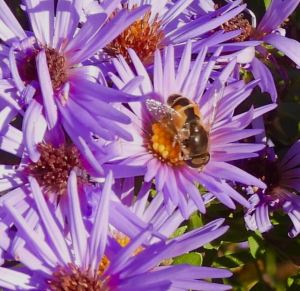
Bee takes center stage in our garden’s Wild Blue Asters, cold morning, November 8
In this month’s blog:
Thanksgiving for a Garden Full of Surprise Victories!
Who Still Blooms in our November Garden?
Climate Log Taking Care of Our Friends: Exploring The Owl Moon Raptor Festival
Climate Log 2 Data Center Emissions: Greater than Emissions of Many Countries
The November 2026 Photo/Video Gallery
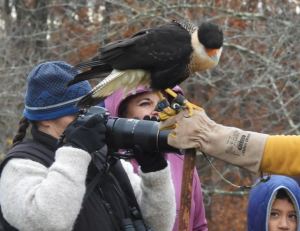
At the Owl Moon Raptor Festival, Crested Caracara and 4 Humans, November 14
Thanksgiving for a Garden Full of Surprise Victories!

Texas Governor-elect Gina Hinojosa (photo: Sandra Dahdah/ZOOMPress/Newscom)
If you followed the political polls in advance of the 2026 Midterm Elections, you’d have seen that Democrats were given a good chance of turning some governorships and Senate seats from red to blue, and were reasonably certain to win enough seats in the House of Representatives to overcome the current razor-thin Republican majority. But polls can never be certain about the number of people who will actually cast ballots–which is usually lower in midterm elections than in Presidential elections.
Now, because of President Donald Trump’s historically low approval ratings on most issues about which polling has been done, polling experts were more confidently predicting that this Midterm voting would be higher than usual for Democrats, the party out of power. But few were predicting the avalanche of votes that were actually cast across the country and how vast was the backlash against the Republican Party and its standard bearer.
Flipping 55 Seats from Red to Blue
With a few races still to be decided because of the closeness of the votes in those races, the Democrats flipped so many House seats from red to blue (46) that now the Democrats hold a 257 -169 majority in the House and a 56-44 majority in the Senate–after Democrats flipped 9 Senate seats to blue. In the final uncalled Senate race, in Alaska, Democrat Mary Peltola defeated incumbent Republican Dan Sullivan by more than 12,000 votes (as of Nov. 18).
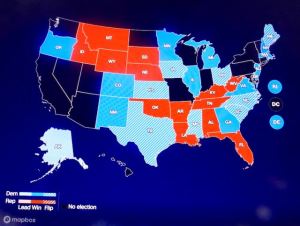
US Senate Election Results, CNN, November 16
In state races for Governor, the Democrats have flipped six governorships from red to blue and are projected to hold a 30-20 lead in governors after all votes are tallied. One of those new governors-elect is Gina Hinojosa (pictured above), the first person of Hispanic descent to become governor of Texas. While all the new electees, regardless of office, have promised to address the number one issue on voters’ minds in this election cycle–affordability of the cost of living–Hinojosa went out on a limb by saying she will sign an executive order to freeze the rising cost of electricity for the ratepayers of the state.
More Power from Renewables
Though many experts say that the governor does not have the power to freeze rates (Houston Chronicle, Nov. 16, Nathaniel Rosenberg), as prices are set by individual companies and by the Texas Public Utilities Commission (PUC), there are things the governor can do. One action she has recommended during her campaign–and of particular interest to this blog–is to greatly increase the use of renewable energy sources.
“Building more renewables could help bring down wholesale costs in the long term, several experts said, though that doesn’t always translate to lower prices for consumers. Texas is already a national leader in solar, wind and battery usage, all of which are typically cheaper than the natural gas plants used to sell power to retail providers.”
“(Energy attorney Michael) Jewell, a member of the pro-renewable Conservative Energy Network, said Hinojosa would not have to do much to support renewables. Not putting her thumb on the scale against them, he argued, would be enough.”
How Will the Democratic Majorities Promote Climate Action?
Because Donald Trump, the great enemy of environmental protection, still sits in the White House and is still arm in arm with the FossilFuelCartel, how much the new Congress can do to blunt the effects of the climate collapse is the big question. What might be done?
- Because the number one issue for voters this year is affordability, and since utility and fuel prices have been a significant contributor to the inflation that keeps rising under Trump’s watch, the new Congress can push the lame-duck President to green light the cheaper solar, wind, and battery storage projects that he has actively opposed in the past. Unlike the do-nothing Congress of the past two years, this newly energized (pun intended) body will not hesitate to pass bills that directly attempt to curb high prices–and will dare the President to veto them. If he does, as he has threatened to do, he will face a Democratic Congress that only will need a few Republicans to override those vetoes. Half of the Senate Republicans who were not up for election this cycle will be up in 2028, as will all the Republican House members, and all these folks will likely not want to have happen to them the disaster that happened to Republicans this time.
- Likewise, this Congress will probably want to eliminate Trump’s bans on tax credits for buyers of electric vehicles (EVs), a popular program that US automakers supported and who were hamstrung when the credits were removed. As last month’s blog in its “Climate Log 2” reports, US automakers have envied how sales of EVs have skyrocketed around the world in the past year and a half. US automakers would love to be part of the action again. Why, they say, should the Chinese automakers like BYD and Geely have the virtual monopoly on low-cost clean vehicles?
- In the same vein, US drivers like the fuel efficiency standards that vehicles must meet elsewhere. Trump banned those, too, just so gas prices would go even higher and put more bucks in the pockets of the FF Cartel! Fuel efficiency means fewer emissions and lower prices, so a win-win for drivers and our environment.
- Trump and his minions have claimed that corporations want the rollbacks of environmental protections that have swarmed since Trump has been in office. But so much of the Democratic sweep in these midterms has been a rejection of the corporate greed that these rollbacks represent: it’s that greed and Republicans’serving it that have put the American Dream so out of reach for most people. Part of that Dream is to rely on clean water and air, and another part of that Dream is our love of our beautiful National Parks, our mature forests, and the National Wildlife Refuges that protect air and water, as well as the glorious species of animals who deserve to be protected and to thrive.
- Part of the virulent rejection of AI data centers by people from state to state is hatred and fear of the noise, the waste of water, the stench, the poisoned air, the higher cost of electricity, and the loss of neighborhoods that AI corporations have intensified. Congress will be daring Trump to veto bills that call a halt to the rampant spread of data centers and the dirty power plants that feed most of them.
******************************************************************************************

Newly-planted in October, mini orange Dahlias brighten our community garden, November 15
Who Still Blooms in Our November Garden?
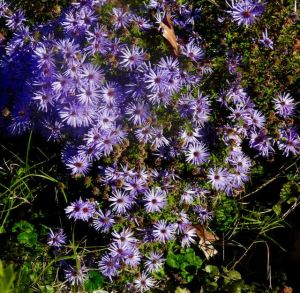
A remaining bunch of our spectacular Wild Blue Asters, cold morning, November 15
With temps dropping into the low 30 s this week, and cold winds picking up, we are feeling the tread of winter approaching. The town-supplied water will be cut off this week, though we’ve enough moist soil to keep our plants going. There’s no rain in the forecast, but we expect (hope for) some soon.
The October colors, which were so glorious early in the month, have muted as the leaves from the Oaks, Maples, Katsuras, and Sumacs slowly carpet the cooling grasses.
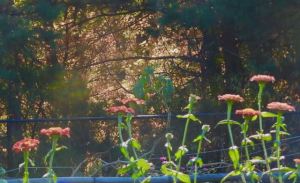
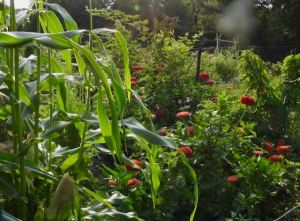
The late, late Zinnias with the fall trees in the background, November 8
Our garden in the community plots is a strange environment, a hybrid of nature and human intervention. Now in November, we no longer can watch the Butterflies dance and dodge and settle on the flowers that still glow, as they did in early October. But a few bees and Bumblers have still landed this month.
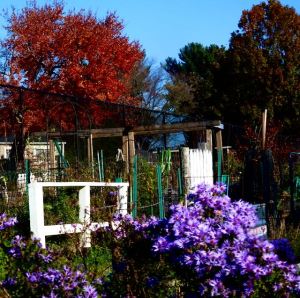
Wild Blue Asters before the Red Maple beyond the garden, November 8
And we keep planting: Broccoli and Cauliflower and Romaine, which we hope will be fruitful as winter turns to early spring.
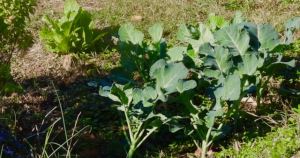
In now for 8 weeks, the 4 Broccoli, 2 Cauliflower, and 1 Romaine are growing and growing, November 15
Our Blueberry bushes keep their red and purple leaves. Our Rosemary looks and aromas better than ever.
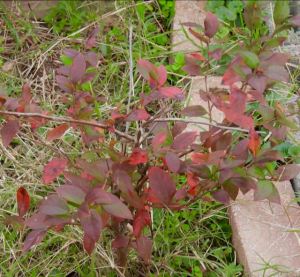
Blueberry bush, fall colors–maybe we’ll have berries next year!
Nov. 1
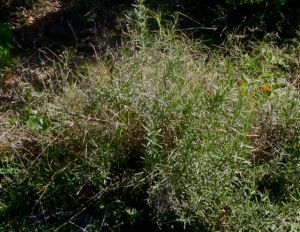
Rosemary as lush and fragrant as ever, November 15
And the Dahlias, oh my–and even the Hibiscus!
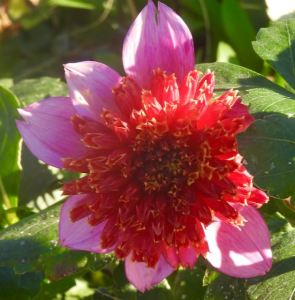
Our best, last pink-red Dahlia of the season, cold, windy November 15
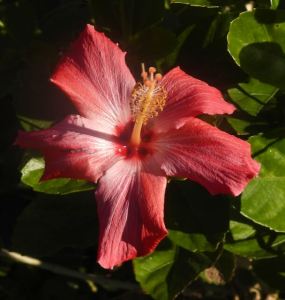
From May to November these Hibiscus have kept coming, even now in the cold of November 15
Sorry that the Mums have past their October brilliance–but can you believe the Pansies and the Pink Asters and the full on symphony of the Wild Blues?

Sangria Pansies,planted late October, November 1

Pink Asters still blooming from summer, cold November 15
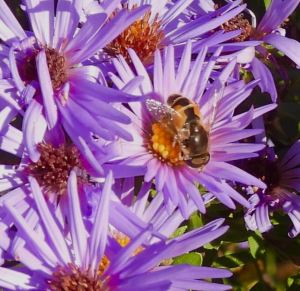
Bee closeup in the Wild Blue, November 8
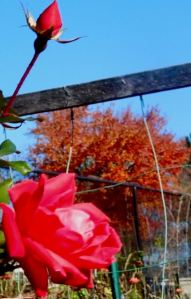
Red Rose tree in our community garden with Red Maple in distance, November 8
And the red Rose tree in full bloom in a neighbor’s garden. I can’t believe my eyes.
I even saw some new Dianthus blooms yesterday–in chilly November!
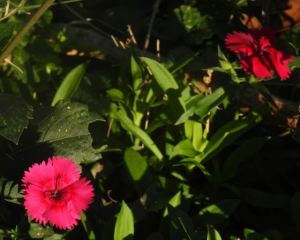
Summery Dianthus in November, cold November 15
The temps from here on into December will determine what still blooms and which plants thrive. We’ll report the next discoveries. Always an adventure…
Oh, a Dark-eyed Junco hides in the yellowed Asparagus bush beside our garden, November 15
***********************************************************************************
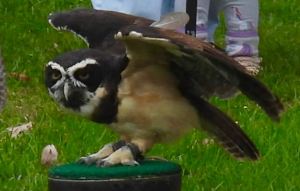
A Spectacled Owl, one of the raptors saved by the Owl Moon Project, makes eye contact at the Raptor Festival at Black Hill State Park in Maryland, November 14
Climate Log Taking Care of Our Friends: Exploring The Owl Moon Raptor Festival
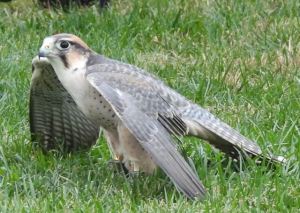
A Lanner Falcon, one of the raptors being saved by the volunteers of Owl Moon, November 14
Jean and I drove through always lovely rural Maryland to the Owl Moon Raptor Center’s annual Raptor Festival on Saturday, November 14, at the Black Hills State Park near Germantown. What a revelation! We were able to see closeup a plethora of species we’d never gotten close to before, but whom we’d admired for years through photos and videos.
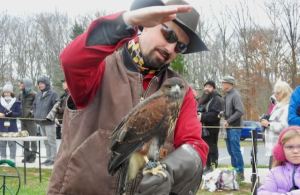
Harris Hawk sees us, as handler cares for the bird and informs the onlookers, on a cold, windy November 14
We also had the great pleasure of meeting the dedicated bird lovers who handled the birds with care and love, and who treated all of us curious onlookers with patience, sharing their dedication to the health of these magnificent creatures and wondering if we might join them in rescuing and rehabilitating these animals who had been injured or ill. It was wonderful to see visitors of all ages packing the festival site and buying the books and clothing to help to sustain the mission of the Center.
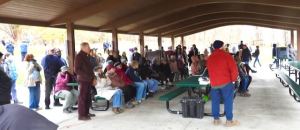
Crowd of all ages listens to a presentation on rescue efforts in Maryland, November 14
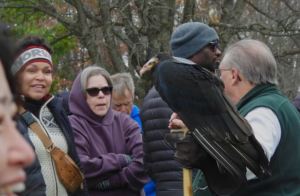
Turkey Vulture ,handler, and onlookers at Raptor Festival, November 14
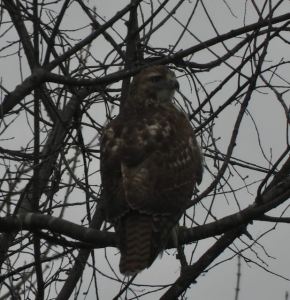
The presence of so many birds draws curious other raptors to the site. See this Red-Shouldered Hawk high up in this Northern Red Oak on the festival grounds.
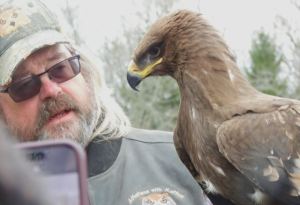
The care by the handlers is wonderful to behold. See this handler with his spectacular Golden Eagle.
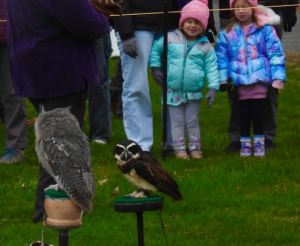
Two young visitors are captivated by the SpectacledOwl and a Barred Owl.
Panorama of the Raptor Festival and happy visitors, November 14
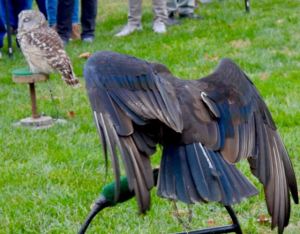
Barred Owl and Turkey Vulture side by side on perches at the Raptor Festival
Climate Log 2 Data Center Emissions?– Northern Virginia Is the
Worst Offender
Click the link to the eye-opening article by Harry Stevens of the New York Times (Nov. 16). The 115 data centers that have been built in our home region of the state in the past few years are the highest concentration of these behemoths in the world. Most were built during the governorship of Republican Glenn Youngkin, the staunch follower of Trump who was replaced by Democrat Abigail Spanberger in January of this year.
Stevens’ essay reports on a Harvard study of emissions from data centers across the world, which shows convincing evidence that data center emissions are greater than those of many whole countries–mainly because almost 60% of the power plants that fuel the centers burn fossil fuels. In comparison, data centers in a state such as Oregon put forth 60% less in emissions because the great majority of those centers run on renewable energy. Solar-powered plants are also cheaper than gas-powered plants.
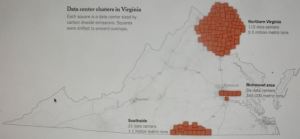
Data Centers in Virginia (New York Times, Nov. 16)
***********************************************************************
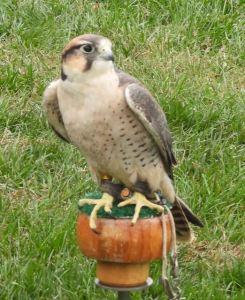
Lanner Falcon on perch: one of the rescued birds at the Owl Moon Raptor Festival, November 14
The November 2026 Photo/Video Gallery
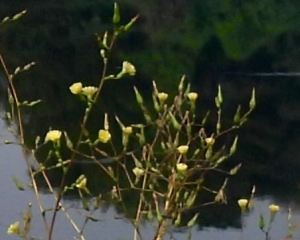
All around the little lake near our home, our wildflowers, so spectacular in October, gray and grow brittle. November, indeed.
The House Sparrows still throng the branches beside our home. They are with us all year, their chatter our most common music. The Crows still complain and announce themselves, while the Jays argue their same disagreements. The occasional Bluebird still lights the afternoon, while a Goldfinch flits through our naked Serviceberry tree.
Will we have Cedar Waxwings this year? When will our Blue Heron stand silently again at the shore? Will our transient Red Shoulders keep their vigil in the Tulip Trees that will start to bud in winter?
Ah, here is the Blue Heron, the silent, dependable sentinel. And, yes, here come the trumpets of our Geese, their smooth landings in the water. But the Mallards? When will they return? And why does Cardinal hide in the Red Cedar?

Jean’s spicy bean, chicken, sausage, tomato, onion soup cassoulet just out of the oven, November 17
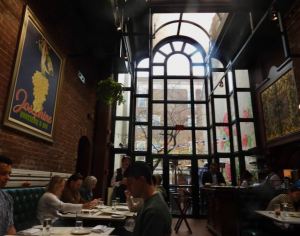
On a visit to Old Town Alexandria, November 1, we enjoy the grand view from the dining room at French restaurant Josephine

Jean’s Chocolate and White Chocolate, Hazelnut, and Coconut cookies, November 18
Red-shouldered Hawk and handler at the Raptor Festival, November 14
Bluejay in colorful Southern Red Oak south of our lake, cool morning, November 5
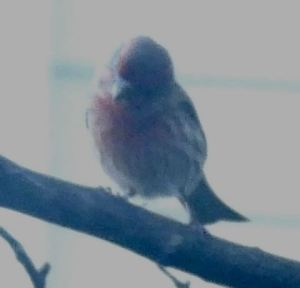
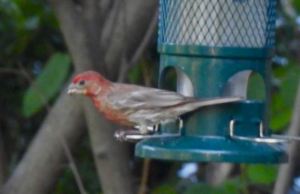
House Finch in Serviceberry tree, southeast side, sun-drenched AM, November 19
Goldfinch in Serviceberry tree,southeast side of lake, sunny November 19
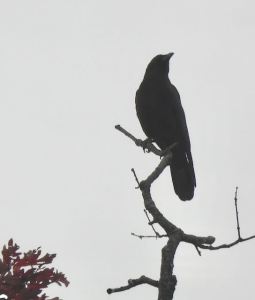
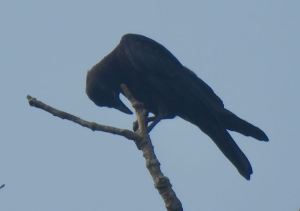
American Crow atop the Southern Red Oak south of the lake, November 5
Two Bluejays and House Sparrows swoop to and from neighbor’s feeder, November 7
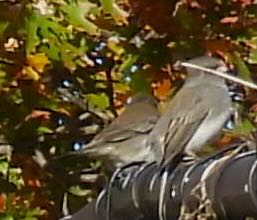
Pair of Dark-eyed Juncos on fence by our garden amid fall colors, November 8
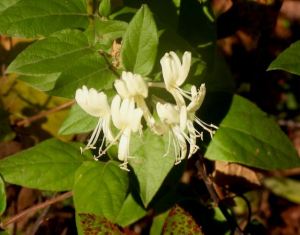
White Japanese Honeysuckle, east bank of our lake, warm November 18
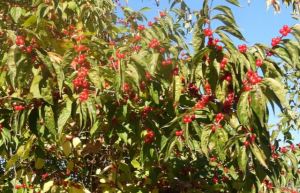
Brilliant red Amur Honeysuckle, east bank of the lake, November 18; birds love the berries
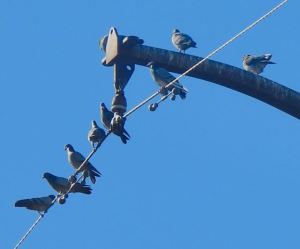
9 Rock Doves atop the power tower, west of the lake, November 18
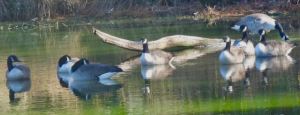
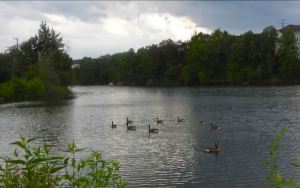
8 Canada Geese cavort in the southeast cove across the lake, November 18
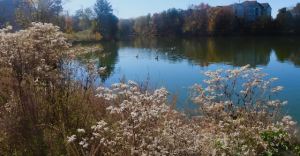
The Geese advance up the lake, with Late Boneset in the foreground and still some fall colors, November 18
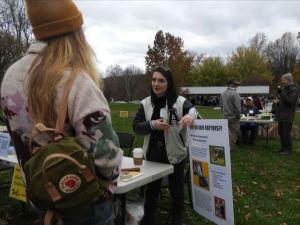
At Owl Moon Raptor Festival, staff member recruits volunteers, Black Hill State Park, Maryland, November 14
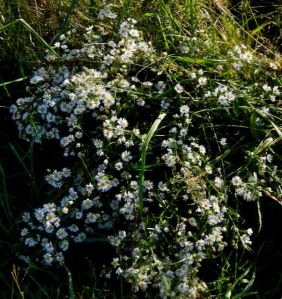
Hairy Asters, west of our lake, bright morning, November 1
Mockingbird scans from atop lantern post, south end of lake, sunny AM, November 19
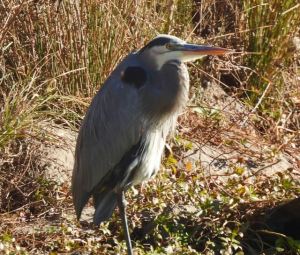
Blue Heron scans from north shore, sunny AM, November 19
We’ve already had so much to be thankful for…and Thanksgiving visitors are still to come in this remarkable month…