April 2025: To Save All Life, Don’t “Drain the Swamp”

Osprey, an iconic Chesapeake wetlands shorebird, makes a rare appearance atop the dead oak on the east bank of our little inland lake, April 20. The visiting, fish-eating raptor stays for a while, then swoops over the lake…

…scans our lake at Easter sunrise, then flies off to find other wetlands

In this month’s entry:

Draining the Swamp: Recipe for Annihilation
Garden Update: Frost Is Past, Plants Take Hold
Cherry Blossoms and Honoring Real Heroes
The April 2025 Gallery: Remember Earth Day? Nature Keeps Fighting

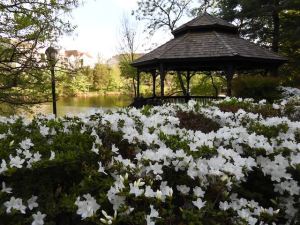
White Azaleas in bloom by the gazebo, west bank of lake, warm twilight, April 24

******************************************

Draining the Swamp: Recipe for Annihilation

12,000 acres burned in Ocean County, New Jersey, as wildfires increase across the country, April 23 (CNN photo)

Whenever I hear the President’s rallying cry of “Drain the swamp!”–by which he refers to the ongoing mass firings in federal agencies since he took office on January 20–I wonder if he at all appreciates what “Drain the swamp” really means. Failing to value what swamps are and what they accomplish can doom all life.

Given his long history as a speculative builder of hotels and other urban properties, he perhaps thinks of swamps as messy, smelly, icky, treacherous places that get in the way of steel and concrete foundations, can thwart builders’ dreams, and often contain creatures like snakes, alligators, and disease-bearing mosquitoes. His hatred of swamps is part of his incessant campaign to destroy the environmental protections (see Newsweek, March 13, “What Comes Next?”) enacted since 1970 by a succession of Presidents, starting with Republican Richard Nixon, who founded the Environmental Protection Agency (EPA).  It’s likely that the current President resents the term “wetlands,” and especially the phrase “protect wetlands,” applied to those swampy places that impede two of his favorite ventures: turning public lands over to fossil fuel drillers and enabling so-called “developers” to turn natural environments into more and more commercial districts of concrete and steel.

The Cradle of Life

What he certainly does not sufficiently value when he thinks of swamps (like Virginia’s Great Dismal Swamp pictured above) is that they have been and continue to be the cradle of life on this planet, the purifier of all fresh water, and the essential meeting and mixing place between land and sea. Without swamps, bogs, mires, fens, marshlands, lakeshores, wetlands, coral reefs, vernal pools, or whatever you want to call them, all life will die out. https://en.wikipedia.org/wiki/Wetland

Planting Easter eggs: Mallard pair builds their nest along the north shore of our little lake at Easter sunrise. The drastic, ongoing decline (30% lost) of birds since 1970 has been caused in part by the erasure of these precious water/land interfaces across the globe.

Drought, Wildfires, and the Loss of “Swamps”

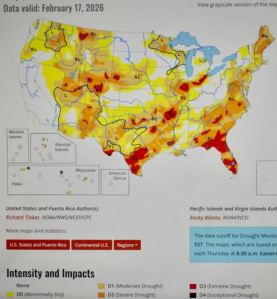
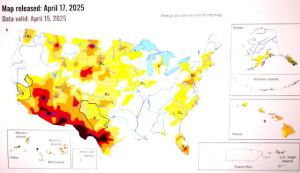
The photo of the New Jersey wildfire at the top of this section seems a strange juxtaposition with the pleasant video of the Mallard nesting pair, but they are closely related. Global warming (another term our President despises and refuses to acknowledge) is making the Earth steadily drier, including the U.S., as the regularly-updated U.S. Drought Monitor https://droughtmonitor.unl.edu shows:

You’ll note that the Mid-Atlantic and Northeast states–including both New Jersey and Northern Virginia–have been in a long-term (SL on the map) period of what the map labels severe drought, though local officials (at least in our region) rarely mention that there might be a problem, because we are not yet at a stage of having to restrict water usage. But those of us who garden (see the “garden update” section, below) are already very aware of the shortage of rain.

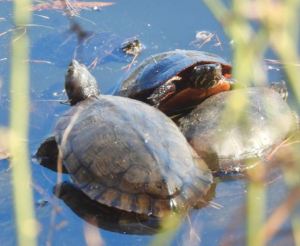
Not only does drought intensify the chances for wildfires, but lack of rain steadily erodes wetlands, as I see each day when I walk around the lake and notice the slow exposure of more dry shoreline. More dry shoreline means fewer nesting spots for Mallards and other waterfowl, as well as turtles, such as the Northern Red-bellied Cooters that adorn this blog most months of the year.

17! Red-bellied Cooters, babies and adults, throng this log near the south shore of the lake, April 17. Turtle eggs nest in the mud near the shore, emerge underwater in the fall, and winter in a dormant state underwater in winter. They come above the surface once the temp gets to 60, for at least part of the day.

Flood control. And just as wetlands reduce wildfire risk, so they also help control floods, by capturing excessive rain that would otherwise flow unimpeded through streets, over rock-hard drought lands, and into rapidly swelling streams during flash floods events. Soft wetlands allow excess floodwater to percolate into the aquifer underground, where it is saved for future use, rather than be propelled down rushing streams destroying anyone and anything in its path.

Kentucky River floods Frankfort, the Kentucky capital city, amid record rains in the Mississippi and Ohio River valleys, April 7 (Photo: Jon Cherry/AP)

******************************************************************

Garden Update: Frost is Past, Sun Abounds, Plants Take Hold

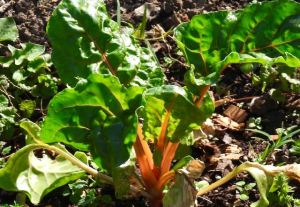
Swiss Chard plant takes hold, three weeks in ground, our community garden plot, April 22, Earth Day

We’re slowly learning the lessons of the Northern Virginia climate as we nurture our small plot in the community garden in our town. Twice in the past month we learned the hard way about planting too early here. Even though the average low temps from late March to mid April were in the 40s, all it took were two nights when the temp dipped to 32 or below (27!) for us to lose tomato, squash, and pepper seedlings. Note to self: Northern Virginia is definitely not Northern California, where we could safely grow year round.

Still, those two setbacks aside, we’ve now had two solid weeks of steadily warming temps for our assemblage of veggies, fruits, herbs, and flowers to thrive in our little patch (225 sq. feet) in the community collection of small gardens.

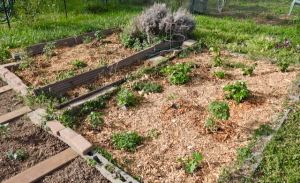
Our full garden plot, newly mulched, and with veggies and flowers thriving in the steadily warming temps, April 25

Some of our plants are varieties we had success with in California: cherry and grape tomatoes, hot and mild peppers, strawberries, zucchini, eggplant, Swiss chard, basil, mint, thyme, sage, lavender, and oregano.  One species, Blueberries (two bushes, in ground a month now), are thriving here in this cooler climate, and had no trouble with those 2 nights below freezing. They like the cold, as do the strawberries, but we’ll see how the blueberries hold up when it gets into the 90s in July.

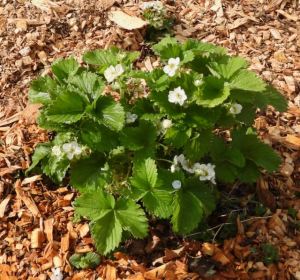
Our two Strawberry plants, perennials, we inherited in this plot, and they are blooming prolifically.

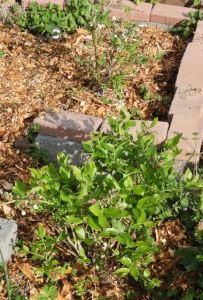
Our two Blueberry bushes , which cross pollinate, loved the March cold and are blooming nicely, April 25

One third of the plot we devote to flowers. The hearty Pansies, purple and yellow, have been thriving since March planting as have the pink Dianthus (one of our California favorites), and just this week we’ve added purple Petunias. One discovery here is the plethora of fast-spreading ground cover such as bright Blue Speedwell and pink Henbit, which will take over everything if we let it.

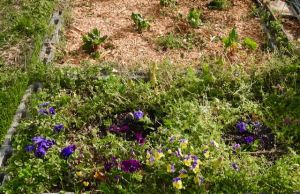
Purple and Yellow Pansies and Purple Petunias vie with Blue Speedwell and Pink Henbit in the flowery third of our plot, April 25

In drier, hotter California, the challenge was to provide enough water to grow what we’d planted. We rarely had to pull so-called “weeds”: by which people mean any plant that you don’t want to grow in a space where you want to grow something else. Here, the relatively wetter climate encourages less-wanted plants to thrive, so “weeding” of plants like Dandelions and “Creeping Charlie” are daily chores. So the task for us is to  judge the balance between what we’ve planted and the volunteers that already love our ground.

Stay watching for updates. One challenge will be providing enough watering to keep the plants thriving in our severely drought-affected new normal. As a neighbor gardener put it this week, “We’re not used to worrying about rain.”

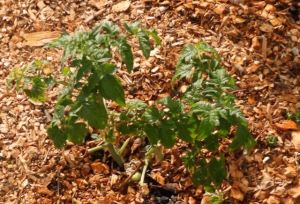
Also taking hold is this Husky Cherry Red Tomato, April 25. We loved these in California and hope they do as well here.

*************************************************************
Cherry Blossom Tradition and Honoring Real U.S. Heroes

Cherry Blossoms in full bloom, and the city of Rosslyn across the Tidal Basin and the Potomac, March 27

We made our annual visit to the D.C. Tidal Basin in late March, with the Yoshino Cherry Trees and Magnolias in full bloom and the entire Basin area teeming with students and adults visiting from many places. Not only were the trees magnificent, but we reveled in the joy of the crowds, particularly in the patriotic spirit of the thousands from diverse origins and backgrounds who took the opportunity to visit the three memorials that surround the Basin: the Jefferson Memorial, the Franklin Delano Roosevelt and Eleanor Roosevelt Memorial, and the Martin Luther King, Jr., Memorial. At each huge installation, the inspiring words of these authentic heroes of democracy and courage are emblazoned on the walls, and offer us who stand before them messages of hope and encouragement to persevere in our endeavors to respect one another, seek fellowship with the peoples of the world, and keep alive the idea of the U.S. as a friend in times of mutual need.

Pair of Grackles call out from brilliant Magnolia, Tidal Basin, March 27

Crowds throng the Martin Luther King, Jr., Memorial, March 27

Words of hope among many sayings of Franklin and Eleanor Roosevelt carved into the walls at the FDR Memorial, March 27

Jefferson Memorial across the Tidal Basin through the trees, March 27

Words of Martin Luther King, Jr., on wall of the memorial, March 27

Rebuilding the Basin. We also wanted to see how work had progressed over the year since we had last visited the Tidal Basin. Since 2023, the Basin has been undergoing a massive reconstruction, because sea level rise in Chesapeake Bay, caused by global warming, was every day forcing the waters of the tidal Potomac to overflow the Basin’s walls. More than 150 of the precious cherry trees have been removed because of the worsening flooding.

Not a true wetland, the Basin had been built in the 19th century as part of the massive draining of swampland in the nation’s Capital to enable construction of many of the now iconic buildings of the federal city. Lacking a wetland’s actual resilience in changing conditions, it was inevitable that a massive reconstruction of the Basin’s stone walls and dredging of the bottom like that going on now would be eventually needed.  Fossil-fuel-caused climate change accelerated the need. See the March 2024 blog for a history of the 19th century “draining of the swamp” and its ongoing repercussions.

The project is expected to be completed next year, in time for the 250th anniversary of the founding of the U.S.

The 3-year reconstruction of the Tidal Basin is moving the walls a hundred yards back from the originally-constructed shoreline near the Jefferson Memorial, with the loss of a few hundred trees.

****************************************************************

A Cottontail “Easter Bunny” hides in the northwest corner of the shoreline, April 20

The April 2025 Photo/Video Gallery: Nature Keeps On Keepin’ On

Welcome to the Babies! And to more wetland rites of spring here and elsewhere in our region. (Oh, plus three kitchen treats. Would not forget those!)

Surprise, surprise! Despite this winter’s cold, the Canada Goose babies are here by our lake at the same time as in last year’s earlier spring. Congrats to the parents!

Very rarely do Mallard females fly into trees and look to build nests above shoregrounds. This one on the west side of our lake was a real surprise, April 19

This Cardinal male in mid call atop a roof south of the lake, April 19

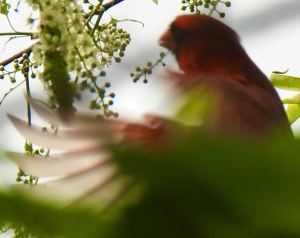
And here’s a very different view of a Cardinal male in closeup shadow in a Black Cherry tree, west bank, April 26

Watch this same Mallard female fly up to the broken branch in the Walnut tree while a Downy Woodpecker comments, April 19

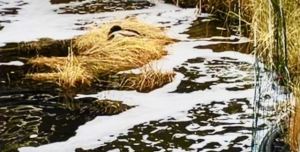
At the National Aquarium in Baltimore, which we visited on April 10, an attempt is being made to re-create a marsh in the water outside. Here, a Mallard male rests on a bed of reeds. For almost 150 years, this harbor water had been a dump for industrial waste. With federal aid, the clean-up has been ongoing for 50 years, but will it continue?

This Mourning Dove shares the same roof with the Cardinal pictured above, April 19

On Easter Sunday, we visited relatives at their rural home. Here a beautiful tiny lizard enjoys the sun by their pond.

3-foot-long Yellow Largemouth Bass, the dominant fish in our little lake, swims near the north shore on a warm April 25

The annual magnificent woodland display of Bluebells covers acres at nearby Riverbend Park on the Potomac. We visited on April 6.

Grey Catbird perches in a Red Cedar along the west bank of our lake, April 26

Cardinal female and Yellow-rumped Warbler call from the Willow Oak beside the southeast cove, April 19

My first sighting this year of a Bumblebee, in the gazebo by the lake, April 19. These pollinators are essential to life here.

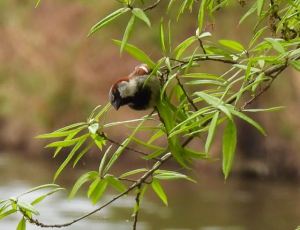
The Willow Oak by the cove also gave a perch to this acrobatic House Sparrow on April 19.

Carolina Wren makes music most days, but I don’t see them nearly enough. This one perched beside me in this Weeping Willow on the west bank on April 26.

Song Sparrow calls from the leafing Persimmon on the east bank of the lakeshore, April 26. I’d never want to imagine a month without a Sparrow song.

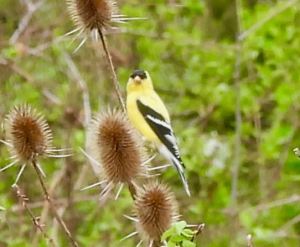
American Goldfinch in dry Cutleaf Teazel, north of dam, April 4

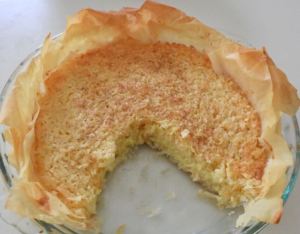
Jean’s one-of-a kind Coconut Custard Pie, with Filo Dough crust, April 26

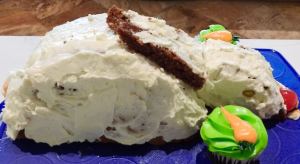
Jean’s Easter Bunny Carrot Cake with cupcakes, April 20

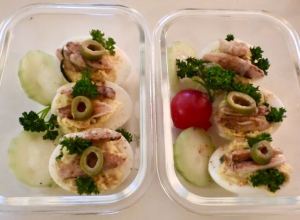
Jean’s Easter Deviled Eggs with Crab, Olives, and Cucumber Pickles, April 20

First sighting of the year: Green Heron, usually a late summer bird, here now as another April surprise, in the Willow Oak on the east bank, rainy morning, April 26

The birds always seem their most ebullient on these warm, drizzly mornings after an overnight rain. The lakeshore, our local wetland, rejoices. And so we venture on to the marvelous month of May.

Late October 2018: A Bee-utiful Fall, as We Wait for Rain (and Halloween)

((Dear Reader,

This is a garden and kitchen entry. Scroll down for Jean’s “non-recipe” for her “chicken two-potato hash”–perfect for Halloween!))

Chris:

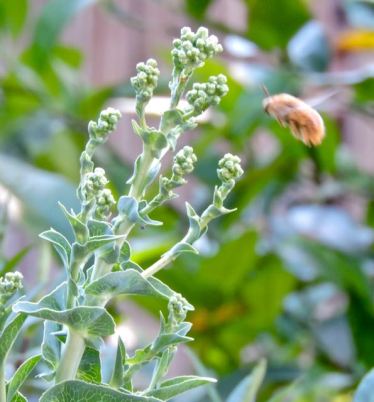
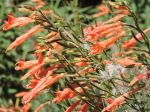
The Mexican bush sage grows to its fullest and most exquisite this time of year. The deep pinky-purple flower clusters draw honeybees and the mammoth black carpenter bees as if it were spring. And this year, as the rainy season has yet to appear and as the daily temps move delightfully from the high 40s before dawn to 80 in mid afternoon, it’s as if we are living in a comfortable, blue-sky, perfect spring.  Enjoy the video above and the one below.

A rain-lover like me tends to see oncoming drought where others will just revel in the sunny, cool comfort. So the day after day of bees happy in the soft, fragrant petals reminds me to count my blessings. Last year at this time, I was writing about the Napa-Sonoma wildfires devastating Santa Rosa. I was reassuring our friends from across the country that the fires would not reach us, even while I smelled the sour smoke borne on the tricky winds and peered through the hazy air.

I count my blessings especially this fall, when I’m writing back to our friends and relatives in the Southeast to wish them deliverance from the hurricanes destroying coastal towns and flooding once again lands still recovering from the storms that have come with increasing power and frequency the past few years.

Along with the bees are the birds in our bit of paradise. Once in a while, I will spot a trifecta in a bit of bush sage, when the honeybees, a carpenter bee, and one of our Anna’s hummingbirds will share the flowers. So far, I’ve been camera-less at these rare moments. Not so rare is how our several pairs of Eurasian collared doves, an annual presence in our neighborhood, have come to be more and more at home in our garden. Earlier this week, I snapped one pecking on the veranda, then spotted one drinking from the birdbath. Then today, Jean whispered that one was looking toward her from the peach tree. Our friend kindly waited while I retrieved the camera–and then posed  while I gathered a closeup.

garden collared dove on peach branch oct 18 - 1

But what about new planting in an as-yet rainless fall? In my previous entry, “Between the Seasons,” I speculated about what I would be putting into the ground this fall:

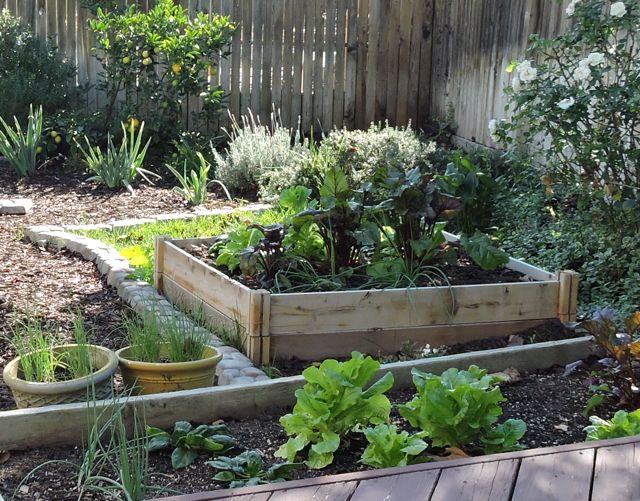
“What will it be this year? Definitely the hearty, spicy arugula and the sweet, buttery bibb lettuce. Jean wants the bold, richly-colored chard again, and she’ll have it. Onions? Of course. Beets? I love the colors of the leaves and the mystery of what lurks beneath the soil. Ah, yes: broccoli–the promise of those plump, delicious heads and crunchy stems.”

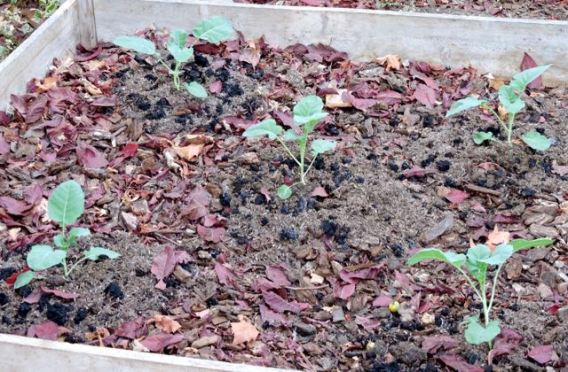
So far, only two of these have gone in: the six chard plants (two weeks ago) and five stir-fry variety broccoli plants (one week). Only half of the chard plants are in the ground–the other half are in pots, experimentally. So far, they are doing great. I’ll transplant them into the soil once we’ve had some moisture from the sky.  Meanwhile, the broccolis are in one of the raised beds and doing nicely.

As long as the weather stays warm and we have no rain, I’ll resist planting more of the winter crops. Most do better here when the weather cools.

garden new broccoli plants in raised bed oct 18 - 1

New Stir-Fry Broccoli in Raised Bed

garden new chard in pots oct 18 - 1

New Chard in Pots

Oranges, Lemons, and…Peppers!

As every year, the navel orange tree (below, left) and the meyer lemon are wealthy in fruit, which is ripening for the harvest that will begin in December. In fact, the persistent warm daytime temps have moved them along faster than usual, and some of the lemons are ready to pick (we’ve actually tried one already–sour and juicy!).

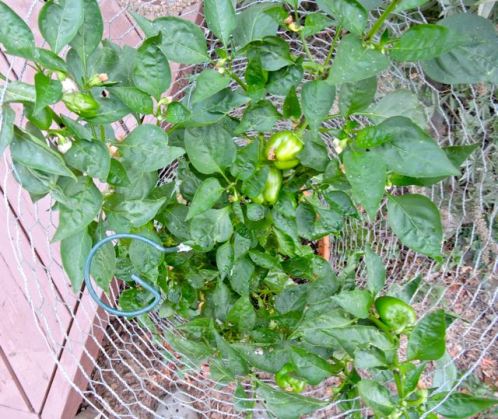
Our one veggie from the summer that is still in the ground is this year’s longevity champ producer, the mild green pepper, which in its big pot keeps putting out white flowers that turn into fruit. As I write, there are six peppers at various stages of growth–with several more tiny green marbles emerging from beneath the white flowers. Attribute this ongoing production to the daytime temps that keep our fall more like spring.

garden red peppers in july 18 - 1

Peppers in the Kitchen (AKA Making Halloween Hash)

Jean:

This is really about green peppers and potatoes in the kitchen.   As a half-Irish girl, I’m likely to put potatoes somewhere in the meal.  My all-Irish mother ate potatoes in some form nearly every day of her life, and she taught me to cook them in many different forms.  Nothing I make tastes like hers, including her mashed potatoes and potato salads, and that’s okay.  I love them in almost any form, and so does Chris, even though he doesn’t grow them in the garden.

My mother’s grandfather did, though.  He fled Ireland when he was about age 18, reportedly after participating in a small rebellion against British rule around 1848.  All the details of his life are somewhat foggy because he died when my grandfather was just a child, but I do know he eventually settled in Kansas after the Civil War and grew potatoes on a small patch of land.  He married an Irish woman who had barely escaped the potato famine of the 1840s.   Somehow their six sons did fine, however, with my grandfather attending Georgetown Law School at the beginning of the 20th century.  Potatoes were only for eating at a nice dining table after that.

Anyway, when I see potatoes and peppers, like we had in the kitchen this week, I think hash.  I love the freshness, crunch, and color that peppers add to a hash.  Besides our peppers from the garden, we also had some young Idaho potatoes with thin skins and very creamy flesh.  I had seen a recipe for sweet potato hash that used a lot of smoked paprika and cayenne pepper, which I already had in my pantry. So I texted Chris, who was out at the market, to buy a large sweet potato. I started cubing the two kinds of potatoes and also chopped onions and green peppers for the hash I was now imagining.  I threw them all carelessly into a large skillet with a small amount of  water and some salt and pepper, and started frying them.

Meanwhile, I remembered another recipe I had seen recently that involved carmelizing ketchup.  I’m sorry, but I love ketchup.  I may have said previously that my daughter and I “argue” about this because she puts it down, but I maintain it has a complex and interesting flavor or combination thereof.  The recipe I wanted to try (seen in my New York Times recipe feed, which includes a lot of “non-recipe” recipes that can be thrown together with a minimum of fuss) involved cutting small chunks of chicken and cooking them in a cup or two of ketchup until the ketchup thickened and browned and the chicken pieces were cooked through.   I worked on this in a separate small skillet while turning the hash, and finally threw the ketchup chicken (I love the sound of that, the two ch- sounds) into the hash when the vegetables were sufficiently soft.

kitchen jeans chicken two-potato hash oct 18 - 1

Jean’s Chicken Two-Potato Hash

Chris threw some fresh grape tomatoes and pepper chunks on top for color when I was finished, and we dug in.  It was surprisingly yummy.  He claimed the predominant taste was ketchup, but when I claimed it was the smoked paprika, he admitted he could taste the smoke.  He had thought perhaps it was chipotle, which you could totally add to this because chipotle tastes great with sweet potatoes.  I think there was enough spice with the ones I used, but if you like more heat, you could add any type of hot red sauce you prefer. By the way, seasoned chefs insist that paprika goes stale quickly and you should buy more practically every time you use it.  I don’t subscribe to that theory, but if you do, this “recipe” (or “non-“) is a good way to use a lot of it quickly.

We warmed up some of the leftovers a day or two later, and they still warmed our mouths, stomachs, and hearts. In fact, we have a bit left for Halloween, which is now upon us! The orange color and spicy tang are perfect for the celebration.

garden knucklehead pumpkin face 2 oct 18 - 1

Hi! Welcome to our Halloween Garden.


G Is for Greens

DSCN2015

Chris:

I’m not an enthusiastic green salad eater, but growing them has become a passion.

I don’t shun a plate of raw veggies the way that some guys do, but I’ll almost never order a salad as a main meal in a restaurant, and when I get a side salad, I usually, mea culpa, cover it with blue cheese dressing. At home, when Jean serves up a heaping bowl of lettuces, spinach, arugula, etc., she’s gotten used to my complaints about volume, and she accommodates my phobia by including the cherry tomatoes, olives, raisins, nuts, or grated cheese, etc., that I love. Since she knows me so well, she’s also gotten used to my steadily devouring the bowl, despite my earlier whining.

Given my semi-aversion to eating large helpings of greens, it might seem ironic that I like growing them. But especially in the fall, once the tomatoes, squashes, and peppers are exhausted from their summer marathon, in go the leafy greens, along with the onions, beets, and (this year) broccoli, so the greenness dominates the raised beds and some of the pots. Though, when I started this garden several years ago, fall veggies were not at all on my mind, they’ve become almost as dear to me as their more colorful, fruit-heavy summer counterparts.

Growing Greens: An Acquired (Visual) Taste?

The problem for us humans with growing greens is that we tend to be attracted to the flashy colors and flavors of flowery and fruity plants, while ignoring the greenery (and the dirt) as just background. But while we are entranced by the flowers that contribute petals of pink, red, orange, yellow, white, blue, lavender, and purple to the garden landscape (see F Is for Flowers), the dominant browns and greens are doing the most basic and continuous of the plant’s important work.

Even in a small garden, the array of greenery is astounding. If you give it water, the greenery will come.

If you just count the plants the gardener puts in “on purpose,” the species variety is impressive enough. (You can get a partial sense of the variety in our garden by reading “F Is for Flowers.”) Just imagine all the green that is a part of each of those plants. But if you add in the many plants that grow up in an organic garden without the gardener’s intent—including the so-called “weeds”—you can begin to appreciate the true abundance of species that spring up green above the soil. For example, see the variety of ground cover plants in the photos below.

Seeing Beyond the Mass of Green

Where the visitor may just see a mass of green, the gardener focuses on—and revels in—the personality and quirks of every plant, and can tell you little histories about each one, unfathomably boring to the guest. But the gardener is off into a reverie, and doesn’t see the guest’s ennui.

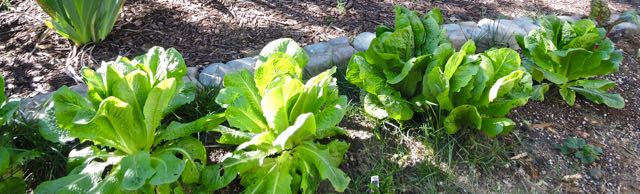
Given my lack of enthusiasm for salads, my growing different greens has been a lesson for me. I’m still not a connoisseur among lettuces, for example, but I’ve learned to distinguish among the shapes, colors, textures, and flavors of several varieties and to have fallen in love with green ice lettuce, as well as with the luxuriant greens chard and arugula.

Arugula, Green Ice, and Chard: To Grow Is to Love

arugula-patch-october-1

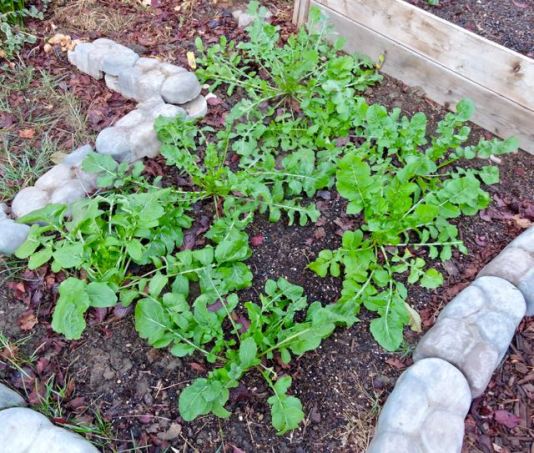
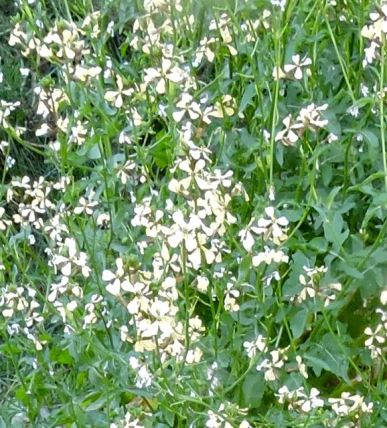
I first grew arugula in fall 2015, and it will be a mainstay in our garden. I knew arugula as the black-peppery ingredient in fresh green salads, but until I grew it myself, I didn’t know how intense and fresh the flavor could be, nor how prolific and hearty the plants would become. (See Jean’s section below on using this versatile green in soups, salads, sandwiches, and pizza.) The photo above shows the 2016 crop after a month in the ground–each started from a two-inch sprout. The photo  below is the 2015 crop in bloom still in May 2016.

garden-arugula-flowers-1-1

After I pulled out the arugula plants that month, I transplanted into the same space two cherry tomato plants that I’d started in pots, and both of them just took off and produced multiple ripe tomatoes daily until late August. So not only is the arugula hearty and flavorful, but it has a great effect on the soil. Oh yes, the arugula in bloom is also a butterfly and bee magnet, while not being a waterhog.

Green Ice Lettuce

garden-gree-ice-may-1

Green ice lettuce plants in late January

I’ve grown different varieties of red and green leaf lettuces the last few years in the fall, and they’ve all done well, often putting out tasty leaves through the Northern California winter, when it gets down to the low thirties or occasionally the high 20s at night. A great thing about leaf lettuces is that in our climate they are usually putting out edible leaves for small salads after a month or month and a half after I’ve planted the seedlings, and they keep producing. Indeed, they have sometimes put out many more leaves than we can use, but even if we can’t use all they produce, the plants look pretty in the garden and help replenish nutrients in the soil for spring planting of tomatoes.

Green ice (shown above and just below) is a variety I was offered by a fellow gardener across town last fall, and the six seedlings I planted proved especially hearty, prolific, and flavorful. Again, until I planted my own greens, i didn’t know just how fresh and tasty greens could be.  That was certainly true of green ice. I actually didn’t plant it until the winter, and what surprised me the most was that it kept growing larger through early spring, and stayed tasty–fresh and not bitter–until it began flowering in April. Indeed, by that time, the stalks were almost six feet tall and were still covered from top to bottom with bright green leaves. If I hadn’t pulled up the stalks in early May for spring planting of chard and strawberries, they might have lasted into the heat of June.

garden-green-ice-lettuce-flowers-and-bee-1

Green ice in bloom in early May

Chard, Beautiful Queen of the Edible Garden

chard-in-october-1

Chard plants in late October

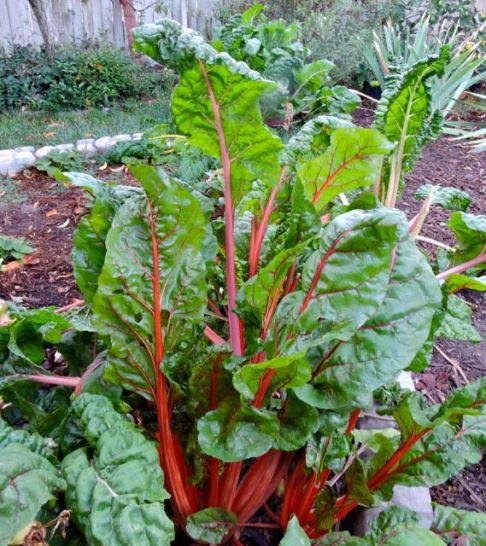
Where the green ice lettuce had grown in our garden from December 2015 to May 2016, six chard plants have burgeoned since May in the same space that had held the green ice, and the chard is still going strong now in late October. They show no signs of slowing down. Indeed, as the Sacramento Valley weather has cooled to the 70s from the 90s and 100s of August into September, the chard leaves are more beautiful and supple than ever, with the orange to bright red stalks and the network of red veins in the deep green leaves pleasing the eye as much as the most exquisite flowers in the garden. We’ll probably still have them at holiday time as the edible garden versions of Christmas foliage.

And the flavor is still as deep in umami as it was in summer, with the firm texture and slight bitterness that makes chard great in salads and equally great in soups, when the leaves cook down. During summer, don’t hesitate to pluck off from the plant the unused leaves and stems that dry out in the heat. The plant will keep producing strong, bright, healthy stems and leaves, and it will remain exquisite to behold.

garden-chard-in-full-color-closeup-1

Cooking with Greens

Jean:

I can’t say that greens are my favorite foods, either, whether cooked or fresh, but knowing their nutritional value, I’ve accepted the challenge of trying to work more of them into our diets.  We frequently receive greens in our monthly box of farm-fresh organic produce, and that, plus Chris’s expanding garden, has provided an opportunity to try some greens I would otherwise not necessarily have purchased for ourselves.  I’m going to focus here on ideas for eating more greens, rather than offering specific recipes.  If you like following recipes, you can easily find them.

Knowing Your Ingredients

My approach to using any unfamiliar ingredient is to search online for recipes and make a choice based on a number of factors.  I’m not necessarily looking for the easiest recipe, but I will exclude any that appear unnecessarily complicated.  I compare recipes to see what ingredients are most common, and which seem optional but may make the dish more interesting.  I have to confess that I also look for recipes containing ingredients I already have, especially if I need to use them up.  I am proud to be accused of constantly trying to “clean out” the refrigerator and pantry.  I often end up making something that is not exactly like any of the recipes I viewed, and often when I am begged to “make that again” I actually can’t.  I know this may not be helpful to the novice cook, but it’s an encouragement to be creative, especially with your fresh ingredients, which will probably taste great whatever you do with them.

As a result of my experimentation, I have found that traditional cooked greens recipes have a number of ingredients in common:  lots of sauteed garlic or garlic powder and red pepper flakes or hot sauce, bacon or ham for a rich salty flavor, chicken broth (of course a vegetarian version can be made without the meat and with a vegetable broth), and usually some sort of acid, such as apple cider vinegar or balsamic vinegar.  Here is Paula Deen’s simple recipe, which I would probably use for my favorite green–green beans.  Note that Paula cooks her collards for nearly an hour, which I would do for most green beans as well.  (I am nostalgic for my mother’s old-style overcooked green beans; I confess I am not partial to “crisp” ones, no matter how much better they may be for you.  Unfortunately, the fat needed for a silky mouth-feel also gives these preparations a bad name.)

http://www.foodnetwork.com/recipes/paula-deen/collard-greens-recipe.html

Chris will eat greens prepared this traditional “southern” way, and apparently enjoy them, but they are so strong-flavored (and textured, even after substantial cooking) that he’s reluctant to eat them too frequently.  If we have leftovers, and we usually do, it can be a struggle to finish them.  It’s easier if I use the chard from our garden because the texture and flavor are lighter and the color brighter than collards, but the same problem of overload may still apply sometimes.  I have thus begun looking for a variety of ways to chop up and sneak these greens into various dishes.

Greens from the Garden Every Day: Soups and Sandwiches

Soups are an obvious choice (I love using pureed greens in my borscht, where the color and flavor of the beets camouflage the greens), but depending on how finely you chop or grind them, greens can be incorporated into lots of dishes, including spaghetti sauce, to get them into kids and those who eat like kids.  If you can’t sell your family on the flavors of greens, camouflage them and sneak them into unexpected dishes Trojan-horse style, I say.

Especially when you are lucky enough to have fresh greens in the garden, try some new ways to use them, a few leaves at a time.  Here are just a few ideas to show the range of greens:

http://www.saveur.com/gallery/Collard-Greens?image=0

The most effective way to use your greens is just to remember you have them and look for ways to invite them to the party on your table every day.  I find most sandwiches taste better with fresh greens.  The after-Thanksgiving turkey sandwich, for example, needs fresh lettuce and mayo, unless you go the stuffing and cranberry sauce route for filling out that sandwich, and maybe even then.

Greens in Salads: Upping the Interest

garden-arugula-and-chard-salad-1

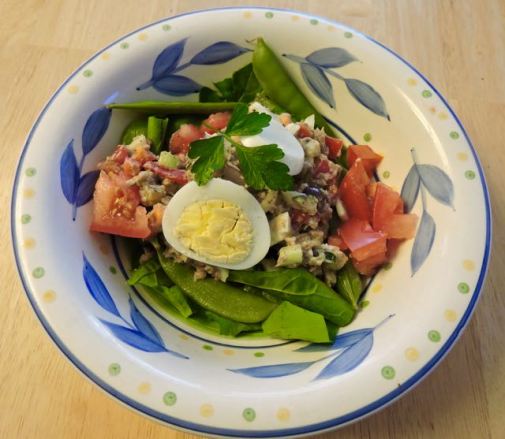
Salads, of course, use more greens than most other dishes, but can get monotonous.  I am not one who can pick up the same salad every day from the deli case, or order the basic “house salad” at a restaurant.  I’d rather use my chewing efforts on something more interesting.  When we find salads completely slipping off our menu, however, I think about what makes salads interesting.  I am delighted to say yes when someone else offers to bring the salad to a dinner because I think an interesting salad contains a lot of ingredients and can take some time to prepare.  An easy way to increase our weekday consumption of salads  is to keep around a few of our favorite ingredients, ready to toss on top of a handful of greens.  It might be cherry tomatoes that I don’t have to chop, grated cheese, or hard-boiled eggs.  It might be berries and nuts with a little goat cheese.  I change it up, and find I am also more successful at getting salads down Chris (and myself) if I prepare individual-sized portions rather than filling a large imposing salad bowl.

And on Pizza?

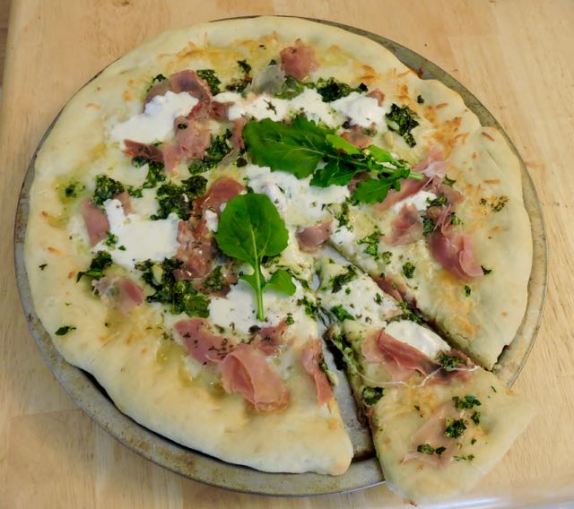
Finally, greens can be treated like herbs, or combined with herbs, to make pesto.  An arugula pesto, for example, makes a great pizza topping, or you can use whole baby arugula leaves on the pizza without pureeing them.  We’ll be talking more about herbs soon, but here is an example of the kind of pizza topping I am talking about (and made for lunch today):

http://www.foodnetwork.com/recipes/ree-drummond/fresh-herb-pizza-recipe.html

pizza-with-arugula-pesto-1

F Is for Flowers

garden-green-ice-lettuce-flowers-and-bee-1

Green ice lettuce flower and visitor

The Edible Garden–Expanding the Idea:

I’ve become fascinated by the idea of the “edible garden.” The name implies that a garden is not normally edible. So that must mean that the normal garden is for looking only–or maybe for looking and smelling–but can’t usually be eaten. The name also implies that the kinds of gardens that people plant for food are not also good for looking or smelling. So the “edible garden,” then, must be a garden that looks and maybe smells really nice, AND, wow, you can eat the plants, too!

Hmm. Can you see why I might disagree with the notion that only some gardens are good for looking and smelling, and that only some are good for eating? Everything I’ve written about so far–even dirt–I regard as both beautiful and delicious. Sound crazy? Well, it all depends on your perspective and on how adventurous you are.

If you have come to enjoy gardening, chances are that you have developed a broader sense of what is beautiful in plants. To a vegetable and fruit gardener, for example, what can be more beautiful than a lush ripening crop, with deep green leaves, bright profuse buds in spring, and supple, deeply-hued fruit? After harvest, what can be more visually pleasing than the mounds of glowing, just-picked produce in a farmer’s market?

Moreover, if you have an open mind about plants that can be tasty and nutritious, and have tried a wide variety of dishes, then you’ve expanded your idea of the “edible.” In either case, you have come to appreciate a greater variety of plants and admire the diversity of ways that plants have adapted to their environments. If you once thought that only a rose or a carnation was a beautiful flower, you have come to be enchanted by the tiny yellow blooms on your tomatoes or by the thousands of tiny pastel blue-purple flowers on a lilac, which attract bees in profusion in the spring, or the tiny, tiny white flowers on the end of an oregano shoot. Not to mention the intoxicating fragrance of orange blossoms or the surprising yellow burst on the buds that come forth in September on a prickly pear.

garden-new-orange-blossoms-with-current-crop-1

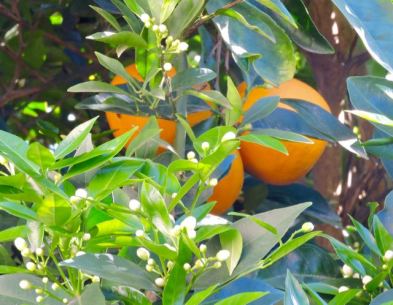
Orange blossoms in March amid the current crop of oranges that were ripe in December

garden-yellow-bloom-on-prickly-pear-tuna-1

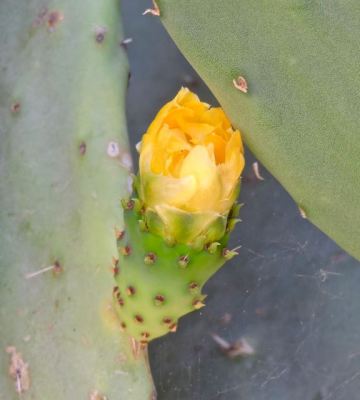
Yellow bloom in September on a prickly pear (nopales) fruit.

The idea of an “edible garden,” then, can mean not a special type of garden, but an attitude toward all gardens that appreciates their visual beauties AND how they can be used as food, not only by humans but by other creatures.

The Many Flowers I’ve Ignored in Our Garden 

One way I’m expanding my idea of the beautiful in plants has been to notice all their flowers. I’m still a child at this, but at least I’ve moved past the notion that only some plants in the garden are there for their visual beauty, while others are there only for their edible fruits, seeds, or leaves.  Gardening has helped me learn that edible-leaf plants like basil and arugula reach flowering stages that are themselves attractive and even edible. The zucchini that produces such prodigious green fruit first generates large, trumpet-like yellow flowers that both dazzle the eye and are well-known for their tastiness.

The photos you’ll see throughout this entry capture some of the many types of plants in our garden, all of which flower in their own way at various times of the year. Most of the pics come from plants raised by us for their food value, not for their visual appeal. But all of them add to the color of the garden, color that is pleasing to us humans and vital to the plants’ attraction of pollinators. Indeed, these are  citizens of an edible, beautiful garden.

Just click on the thumbnail photos below to see more of the flowers that beautify our (mostly) edible garden.

E Is for Eggplant

Chris:

I was never partial to eating eggplant until Jean began cooking it. It wasn’t part of my family’s German-American menu in my childhood, and I basically knew it somewhat later as part of eggplant parmesan, a dish I came to like at Italian restaurants when the eggplant was mild, but which all too often was bitter, even biting. So when I started our garden, eggplant was not on my must-grow list.

But Jean has  brought her versatility to eggplant (see below), which can grow prolifically. Moreover, the Japanese variant I planted this year looks gorgeous in its shiny lavender-to-magenta-to deep-purple coat as it hangs slenderly amid the muted green leaves.

garden-japanese-eggplant-1-1

I planted the one plant in mid April, along with the tomatoes, herbs, peppers, strawberries, and zucchini. But of all these the eggplant came along latest. The plant didn’t leaf out significantly until the end of May, and lavender buds appeared in late June. The first fruits began appearing in late July, and I didn’t harvest until early August. In the last month, however, it’s been a steady producer, until now in mid September, when some of the leaves are starting to brown out. Overall, fruiting happened a good six weeks after the tomatoes  and zucchini, but while almost all of the tomato plants are now exhausted, the eggplant is still producing. (The zook still goes on relentlessly; that’s chronicled in “Z Is for Zucchini.”)

So, if your garden is like mine, just be patient with the eggplant, and you will be rewarded.

Now to the good part, the cuisine.

garden-eggplant-color-array-on-table-1

EGGPLANT RECIPES

Jean:

Italian/French–

First let me say I love eggplant parmigiana, but have also had some bitter ones at restaurants, even ones that boasted about this dish and charged a good deal for it.  I made it once for a Valentine’s Day dinner, and the eggplant turned out so buttery soft and sweet in its light breading with a fresh marinara sauce and cheese topping, we both thought it was perhaps the most delicious and romantic Valentine’s Day dinner we had ever had. I had sworn I would make Chris learn to enjoy eggplant, and I accomplished it that day!

(By the way, since his major objection was to its bitterness, I’m not sure I believe in the methods I’ve seen and tried for trying to draw the bitterness out of eggplant before cooking it.  I think you need to find fresh young ones that do not have many seeds, which is where most of the bitterness comes from.)

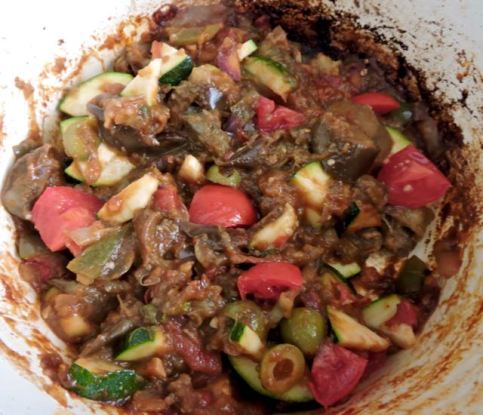
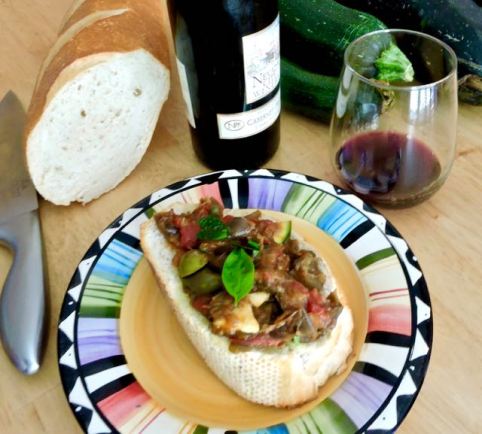
Another good way to use eggplant is in caponata.  Like the French ratatouille, it is a great way to use summer vegetables and herbs you may have in excess–tomatoes, bell peppers, squash, fresh herbs, and zucchini, in addition to the eggplant.  The picture below shows my dish–sort of a mash-up of caponata (which generally does not include squash and has more sour elements) and ratatouille (which doesn’t include olives).

kitchen-eggplant-caponata-cooking-tomatoes-olives-zocchini-1

kitchen-eggplant-caponata-cab-franc-1

The finished vegetable mixture may yummily be served on some toasted French or Italian bread, or on polenta.  Below are a couple of links to recipes, but of course you can play with these a little, including what garden produce you have the most of.  The procedures are simple–cooking the veggies, chopping and dressing them.  (I prefer roasting or pan-frying eggplant in a moderate amount of oil, rather than throwing them directly into any kind of sauce, soup. or stew, which I don’t find develops the flavor or texture of the eggplant as successfully.)

http://www.foodnetwork.com/recipes/bobby-flay/grilled-caponata-recipe.html

http://www.foodnetwork.com/recipes/emeril-lagasse/ratatouille-recipe0.html

Japanese

But I’m not finished.  My favorite way to eat eggplant is with Asian flavors, Japanese specifically.  (The word for eggplant in Japanese is “nasu,” much easier to say than the Italian “melanzana,” the Spanish “berenjana,” or the French “aubergine.”  (Apparently German doesn’t have its own word for it.)

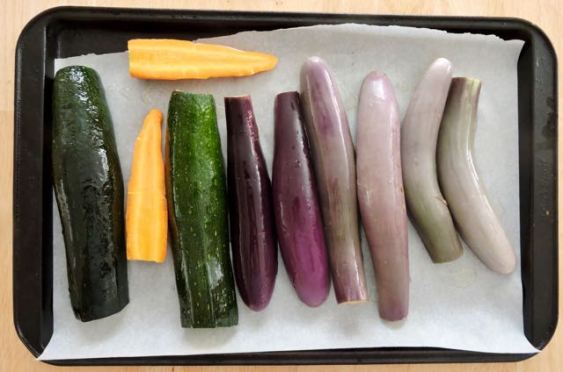
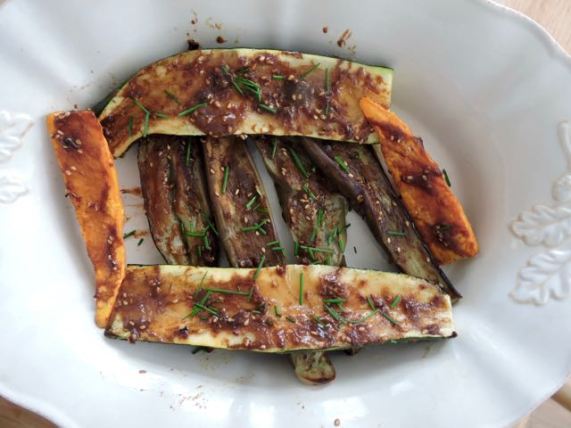
Our eggplant was actually a long, narrow Japanese variety, so this turned out to be the most successful recipe of all.  First, slice four to six eggplants lengthwise or else in about 1 inch slices on the diagonal.  Turn them over to coat in oil on some parchment paper or aluminum foil spread on a baking sheet. Dust lightly with garlic salt.  Bake at 400-425 degrees for 15-20 minutes.  I’m being vague about the temperature and times because you want to keep an eye on these.  Make sure the oil doesn’t start to smoke, and don’t let the eggplant get completely mushy.  If you want to roast other vegetables like zucchini and carrots alongside, as I did, they will require more time.  Use a long-handled fork to poke them until you feel the degree of doneness but firmness you like. You’ll be cooking them a little more, so don’t let them go too far at this stage.

kitchen-whole-veggies-for-miso-glaze-1

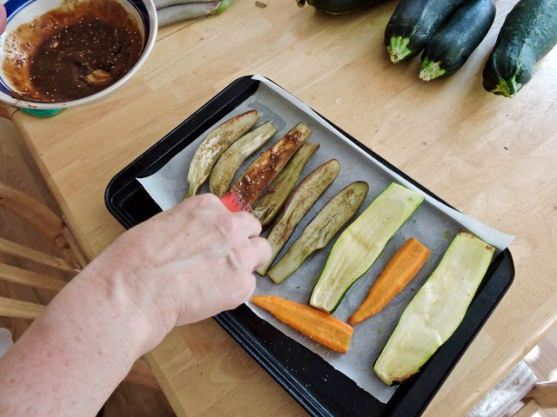
Take them out of the oven and brush them with the glaze you have prepared while the veggies were roasting.  It’s very simple to make:

1/4 c. miso paste, red or white (fermented soybean paste–this stuff is good for you and totally worth looking for; you can make  Asian soups and salad dressings from it as well)

2 T. grated fresh ginger (you can also use a paste sold in a squeeze tube alongside the similarly prepared herbs in the produce section of your supermarket)

2 tsp. toasted sesame oil

1 T. reduced-sodium soy sauce

1 T. rice wine vinegar or distilled white vinegar

1/4 tsp. black or white pepper

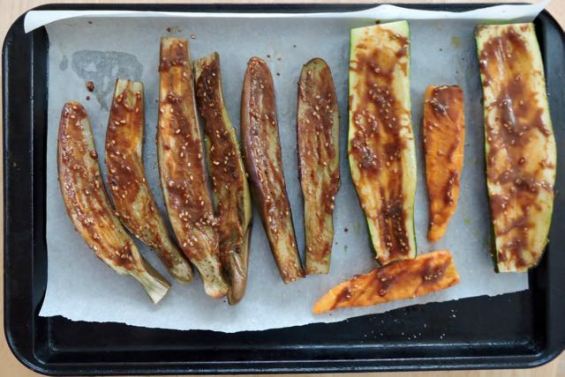
Stir these together with a tablespoon or so of water if you need to loosen it up enough to brush over the top side of the vegetables.  Put them back in the oven to bake for another ten minutes.  When you pull them out, sprinkle with the following:

2 T. sesame seeds

2 T. chopped scallions or chives

kitchen-jean-glazes-veggies-w-miso-mixture-1kitchen-veggies-for-miso-dish-glazed-1kitchen-baked-veggies-w-miso-glaze-on-platter-1kitchen-baked-veggies-w-miso-glaze-and-rice-1

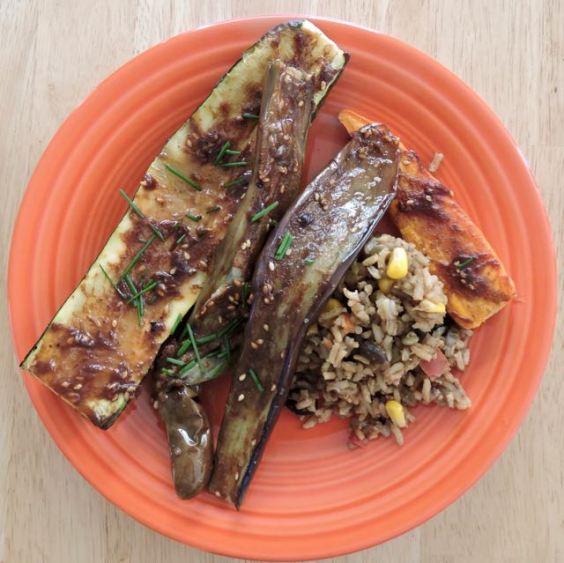
If the eggplant skins are too tough, don’t worry about it.  Just scrape out the lovely soft insides and enjoy alongside some rice perhaps. This picture shows a Mexican rice mixture as a side.

I also plan to roast the rest of our eggplant with my easy Mexican mole sauce, but that’s another story.

C Is for Cherry Plums

garden cherry plum plucking - 1Written June 24, 2011 (addition August 2016 below)
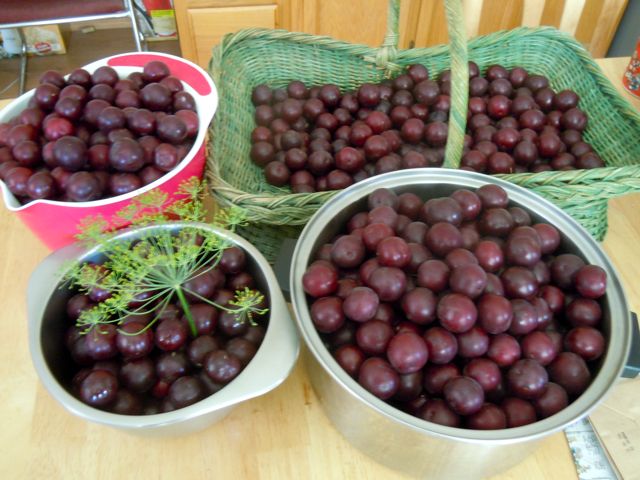
Chris:

Even slower than last year, it took April, May, and half of June before the Valley heated up the way it should. So I’m not surprised that the purple jewels are behind, even more behind than last year. By June 22 in 2010, I had harvested a few hundred ripe ones from the tree in our yard and from the third of the neighbor’s tree that hangs over our back fence. I had help–my daughter Ann Louise, who was visiting, then young co-worker Elliott and his wife Elise. A big bucket two-thirds full of little round fruit just bursting with tart-sweet flavor. Not super sweet like bing or rainier cherries, but tarter, like baking cherries. Elliott, a gardener and cook, to whom I gave half the pickings, kept asking, “Are you sure they’re cherries?”

I, too, had doubts from the very start. They were the size of cherries, and the pits were like cherry pits, but they were not as solidly meaty as cherries and they were juicier. And the juice was sweet and sour, and when you bit into the fruit, the skin seemed like…and the juice squirted like…a little plum. You know, sort of like the round, red kind about the size of a tennis ball—but these were lots smaller and darker—but not at all like the little Italian purple plums that turn into prunes.

Now, if you had a cherry that acted like a plum, or vice versa, what would you call it? That’s right. So I googled “cherry plum,” and knew what I had.

Now cherry plums won’t lose their sourness as they ripen. That’s who they are: citrusy sour with a nice sugary promise. You can eat them off the tree or from a bowl if you like, but expect to pucker, a lot. I guarantee that your dinner guests won’t like them, unless they’re adventurous eaters.

So why pick them at all—other than perhaps to keep your garden floor from getting covered in splatted little plums in July and August, when they fall, overripe? Pick them because they make an absolutely stupendous cherry plum jam. More on that later.

Right now I want to rhapsodize on the picking itself. What’s so much fun is how the little buggers hide. Well, they don’t hide exactly, but the tree does nothing to make them stand out. Imagine this: a purple tree, well sort of maroonish purple, like a Japanese maple, but with little leaves that curl, so the curled leaf looks like the little plum and the little plum looks like the leaf. The first, or even the second, or even the third time you look at a branch, trying to find the plums, you won’t see them. Or you’ll grab at a leaf because you think you see a plum. Finally you’ll see them—aha!—and you’ll grab its smooth, plump surface and pull it easily, with a snap, from the twig. Then gradually you’ll see another and a few more and suddenly you’ll see clusters where you thought there were only leaves. And you’ll pick them steadily, still being fooled sometimes by leaves, until you’re sure that no more plums could possibly be found in that part of the tree. But tomorrow, or the next day, as you pass under a branch on your way to pull a creeping vine from your fuchsia, you’ll look up to see more plums. Not new ones, you know, but ones you missed.

Adding to the fun, of course, is being old and not really enjoying anymore climbing ladders into fruit trees. Oh, who am I kidding? I feel like the boy in Frost’s poem swinging birches or like my own self as a kid hoisting myself limb by stout limb into Mark Diamond’s willow tree and looking down with a bird’s eye view. Nowadays, that bird’s eye view is from four rungs up, not high enough to even hoist myself onto the lowest branch, but it feels high to me at 63, and what I like best is to be surrounded by plum branches, cooled on a hot June day, and peer at the light filtered through a bright screen of purple leaves, shadows and beams flickering in the breeze, and—aha!—another cluster of purple pearls magically appearing where none had been the moment before.

DSCN7177

Now, about that jam:

Step 1: Since the cherry plums are bing size or a bit larger, you can use a cherry pitter on most of them to pluck out the pits. Beware of spurting juice—wear an apron or old clothes and rinse your hands frequently. Any plums too big for the pitter will need to be sliced and de-pitted by hand. It’s not a quick process, but you’ll get into a rhythm.

Indeed, if you don’t have a pitter, no problem. This year, my pitter broke early in the process. So I just dug into each plum with thumb and fingers and squeezed the pit out, taking care to keep the plum over the bowl and guard against squirts of juice by cupping each plum in my left palm as my right hand dug in.

Step 2: Let the de-pitted plums fall into a nice big bowl, so the juice won’t get lost. You’ll gradually accumulate a big pile of skins, meat, and juice. Note: The pits you place in another saucepan and set aside–you’ll come back to them.

Step 3: Now place your saucepan with the plum mixture (I had so many I used a large souppot) on low heat and watch the plum mixture as it cooks down, stirring as much as you need to to keep the mix from sticking to the sides as the mixture thickens.

Step 4: Remember, these little guys are more sour than sweet, so you’ll need to add sugar or other sweetener to taste. (I like to add other fruit juices, like apple or grape, along with about a cup of sugar, to my largest pot, which holds at least 400 little plums.) As the mixture cooks down, taste the syrup and see if you need more sweetener. I don’t like mine too sweet; I’d much rather have the fruit flavors dominate.

It’s also your choice if you want to add pectin for thickening. Again, how much you add depends on how thick you want your jam. I put a small package in a mix of 200-300 plums last year, and the jam was more syrupy than your usual store-bought version, but not runny, especially because you keep the jam refrigerated after cooking.

This year I didn’t use pectin and kept all the skins in the mixture. I cooked the mixture for about 90 minutes and the result was excellent in texture, the skins soft, the juice syrupy when cooled.

DSCN7178

Step 5: As the mixture cooks down (it’ll take at least an hour on low heat), the skins will come away from the plums. Old-time preservers often kept the skins in the mix, as I did this year; your choice. Last year, I plucked them all out with tongs, and the results were great. But the skins-in version this year may be even better.

Step 6: Remember those pits? You can’t get all the meat and juice off in the pitting process, so you’ll want to add a couple cups of water to the saucepan in which you saved them, bring the mix to a boil, and let it boil for about 15 minutes, enough time for the pits to blanch and the meat and juice to separate off into the water. Then scoop out the pits with a slotted spoon and discard them. Pour the meat and juice mix into the rest of the plums and keep cooking on low heat.

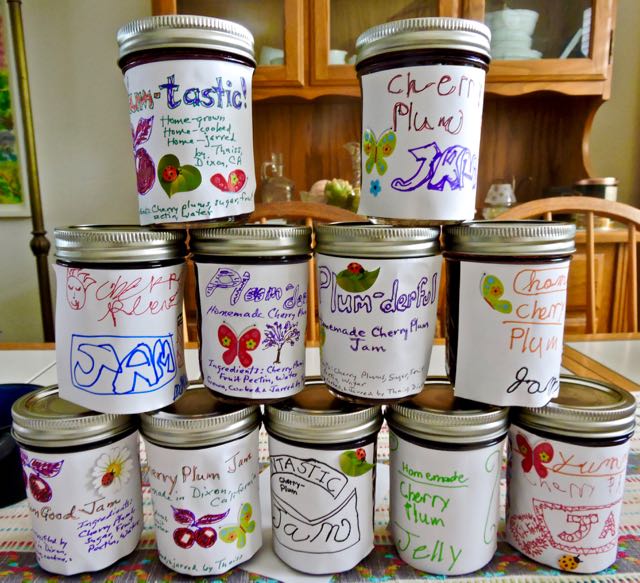
Step 7: Last year’s product filled two 10-ounce jars and one 30-ounce jar, 50 ounces in all, and with regular refrigeration, we had plum jam for ten months—or until the new plums were on the tree and almost ready for harvesting! Some we gave away in small jars and the folks we treated loved the product. My daughter Irene made original labels for the 10-ounce jars. She called one “Plumderful” and the other “It’s a Plum!” I don’t know what the names will be this year, but the jam will again be an inspiration.

This year’s skins-in version made lots more: about 160 ounces divided among jars of different sizes, some for eating and gifting, a few for freezing. For me, the great fun of this adventure is feeling all year long, as I spoon the purple delight onto my toast, the memories of the good times that went into the making. What a miracle that all this bounty comes from these silent gems that do their best to hide in the garden just above your head.

Addition, August 2016

kitchen canning cherry plums - 1

Six years into the jamming and still going strong. After our more abundant rains in the 2015-16 season, this year’s crop of cherry plums was our best yet. I plucked more than 600 from our side-yard tree, and didn’t have to get above rung three on the step ladder. (Last year, with meager rain, we had our worst crop–only 200 from the entire tree up to rung four!)

I’m happy to say that the cooking method described above is still producing delicious jam. I gave up trying to use the cherry pitter two years ago–just a bit too narrow for these little plump plums. But finger and thumb plucking the pits works just fine, and practice improves efficiency. Just be sure to take a short break in mid-pitting if your back starts to ache. This isn’t an endurance test or a race. Give yourself a half a day at least for the whole process, from pitting to cooking to canning.

About canning (or, more accurately, jarring): Jean uses 8-ounce Ball jars with their tight-seal lids and follows the instructions for boiling and sealing. This process ensures that the “Plumderful” can be kept in the pantry indefinitely until the seal is broken. Once the jar is opened, keep refrigerated. We’ve found it’s best to use up the jam in an opened jar in no more than a couple of months, as the contents will eventually get moldy. That’s why it’s a good idea to use small jars rather than jars more appropriate for pasta sauce.

We’ve also had good luck freezing jam jars that are not vacuum sealed. We’ve kept jars for a couple of years this way. Once thawed, the jam keeps its texture and is still full of flavor.

kitchen labeled cherry plum jars in stack - 1

And, oh yes, there’s nothing more fun than labelling the jars, especially if you have a grandchild to help you, as I did this year, with grandson Adrian.

kitchen grandson adrian labels cherry plum jars - 1

__________________________________________

C Is Also for Coffee

September 10, 2016

Jean

Coffee interests me in several ways besides being a bracing hot drink that pairs with my favorite breakfast pastries.  (I’m trying not to get distracted thinking about those, despite having just watched an episode on the Cooking Channel dealing with Parisian pastry shops.)

Chris is making a fresh pot of coffee right now.  Decaf actually, since neither of us needs the electrical jolt of caffeine, even first thing in the morning.  I can’t wait to smell the aroma wafting through the house.  First, though, I cleaned out the grounds from our last pot by taking them to the garden.  The first way in which I am interested in coffee other than as a drink is as a soil enhancer.  Coffee is expensive; I figure we might as well get all the benefits we can from it, and Starbucks has long pushed the benefits of its grounds in the garden.  In fact, I like to pick up large bags of used grounds at our local Starbucks to spread not only under the trees and around the flowers but also around the foundation of the house.  The last time I was at our Starbucks, however, they had rearranged things a bit and done away with the basket in the corner that held the bags of grounds.  I’ll have to ask them about that.  Maybe I can get some under the counter.

I was somewhat skeptical about the value of coffee grounds at first, so I’ve done a little investigation.  Overall, the reviews are quite positive.  You can read some of the facts and opinions at sites like these:

The part I like best, however, is the second benefit of coffee grounds in the yard, and that is as a natural pest deterrent.  It seems that snails and slugs don’t like the grounds, nor do ants and roaches.  (We have roaches in the soil in northern California.)  Since our beautiful Norwegian forest cat died after we had some spraying done for a massive ant invasion a couple of years ago, I have vowed to invite no more commercial sprayers to the house.  Instead I put coffee grounds all around the edges of the house where the ants liked to enter and I have seen almost none of the little pests.  Chris is also exclaiming that he has seen far fewer snails.  He may not realize why.
In addition to these benefits of coffee, of course, I love to bake with it.  My favorite coffee drink is mocha and my favorite pastries have a little espresso or mocha flavor as well.  Leaving aside for the moment the wonders of coffee with chocolate, I need to comment on its use in barbecue sauce.

Let me first say that I love barbecue sauces of almost all kinds.  Coming from Kansas City, my favorite has long been that dark, spicy, sweet and sour K.C. sauce.  Chris, however, has always complained about “sweet” barbecue sauces, even when the balance of sweet with sour is quite complex.  He claimed to like only the vinegar and mustard based sauces but those can be a bit too puckery for my taste.  Actually, he can do without the sauce entirely, preferring dry rubs most of all.  I get his point, but I do regret giving up that gooey sauce that gets all over your fingers (and chin, in my case) and mixes so well with the beans on the side.

I have finally realized that the answer to this dilemma is a coffee based barbecue sauce.  I’ve tried a couple of different recipes, and they are just delicious.  You can get that unctuous, sticky, carmelized coating on the ribs or whatever meat you are using without it tasting either sweet or sour.  It’s just simply full-flavored and seriously delicious–umami, if you will. (See our post, “D Is for Dirt,” for another take on umami.)

Here are a few of my favorite recipes, although of course, I take liberties with the recipes when I feel like it.  (I might feel like adding a little chocolate to take it in that mocha direction!  You can make it spicy like mole as well.)  These recipes are basically simple, no long list of spices and ingredients like some barbecue sauces.  So long as that coffee flavor comes through, you’re gold.   Have fun with it.

One final touch that really sent my coffee ribs over the top for Chris was a sprinkle of finishing salt–specifically, a dark, smoked salt I got in some packet of specialty salts, but you could use a different chunky salt.

http://abc.go.com/shows/the-chew/recipes/Coffee-Barbecue-Chicken-The-Chew

http://www.foodnetwork.com/recipes/paula-deen/michaels-coffee-braised-short-ribs-recipe.html

http://www.foodnetwork.com/recipes/food-network-kitchens/chile-coffee-bbq-sauce-recipe.html

http://www.foodnetwork.com/recipes/michael-chiarello/michael-chiarellos-babyback-ribs-with-espresso-barbecue-sauce-recipe2.html#!

Speaking of Zucchini

Jean:

Anybody else inundated with the stuff?  Don’t get to hating it quite yet.  You might want to try this recipe for zucchini bread.   I took some to our neighborhood Fourth of July picnic, and people said they hadn’t had any in a long time but this was better than any they remembered.  (I am the Mrs., by the way, to our Garden Guru who showed you a picture of our naughty zucchini plant in “Z Is for Zucchini.”  We also took some of its missiles to the neighborhood July 4th party last month and I made a little joke about comparing sizes that got a few chuckles even from the guys.)

Now about the recipe.  I originally got it from my sister-in-law (more about her later), who typed it up for me on a pretty recipe card the way people used to do.  I have few of these kinds of recipe cards left.  Some of my better ones have gotten lost over the years.  My sister who can’t cook is always rooting through my recipe box and may have made off with them; I don’t know.  She thinks the secret is in my recipes but that’s yes and no.  I make changes to every recipe I collect.

This recipe says it makes two 5×9 loaves.  I have had so many problems over the years getting fruit and nut breads to bake in the center in those loaf pans that I got one of the new types of bread pans that are much longer and thinner.  I halved the recipe but then it made a very short loaf.  I think probably I could put the whole recipe in that long pan and it would cook well, or you could try a tube or bundt pan, but with loaf breads, you have to play it by ear and test the center no matter what.  Particularly with zucchini, a very wet ingredient, you just can’t be sure how much moisture it’s packing.  Anyway, I’m just going to give you the recipe and let you bake it your favorite way.

2 cups packed, grated, unpeeled raw zucchini (I love making the Man grate it.  Put a little salt on it and set it aside to drain for at least 15 minutes while you beat the eggs and oil together as follows:)

3 eggs, beaten

1 cup oil (originally intended to be vegetable oil, but here is where I play a little.  I use half olive oil (green, right? and Italians use it in baking with great success) and half applesauce to save the calories and add a little more sweetness.  I actually found a pear applesauce that is green, too.)

2 cups sugar, added to the eggs and oil until you get kind of a thick paste.  If you like alternative sugars like unrefined sugar or Stevia products, I have tried several of these with success, although I generally keep it to no more than half the total sugar.  (If you have the applesauce, you can also cut down a little on the sugar here, even if you used no-sugar-added applesauce, if you are being careful with your diet.)  Meanwhile, mix the following dry ingredients together with the fruit and nuts:

2 cups flour (here, again, I try to make it a little healthier by using part whole wheat flour, part soy flour, maybe a tablespoon of ground flaxseeds.  You don’t want to go overboard on these things because they change the taste and texture of the bread, but not much; if you like to add extra fiber, protein and other nutrients to your recipes, try this sparingly.)

1/2 tsp. baking powder

1 tsp. salt (or less if you used a lot on the zucchini)

1 T. vanilla (yep, that’s a tablespoon; don’t leave this out–it adds nice flavor.  Some recipes for zucchini bread also use a tablespoon of cinnamon; I love that as well.)

1 c. walnuts (again, I make a change here and use pistachios (green!) when I can get them

1 c. raisins (I always use golden raisins in baking because I think they are prettier, and they kind of sneak up on people who might otherwise be trying to dig the dark raisins out.  If I have a Granny Smith apple (you know what color those are), I chop that into little chunks to use instead of or along with the raisins.

Add the dry ingredients, after giving them a whisk, to the wet mixture.  Don’t forget to add in the zucchini, after giving it a squeeze to get out the extra water and salt.  And don’t forget to prepare your pan with some cooking spray or whatever you like to use.

Bake at 350 degrees for about an hour, but it might take 15 minutes more depending on your oven and pan.  Smell is an important indicator that the bread is getting ready, and you don’t want the edges to get too dry and tough, but you must take the measure of that center because it will fall as it cools if not thoroughly cooked.

If this sounds time-consuming, think of my sister-in-law while you work on this.  I think she gave me this recipe when she was young and very healthy looking.  She and my brother had a nice baby boy who was great friends with my daughter, born a couple of years later.  A few years after that, however, they found a spot on her lung.  It was cancer, although I don’t think she ever smoked.  Boy, did she fight it, trying to live long enough to see her son grow up.  She had immunotherapy that was experimental at the time, blew up on steroids, and had several operations, including on her brain, after it spread there.  A couple of months after my nephew’s graduation from high school, she mercifully died.  So if this recipe card is all I have left of her strength and determination, I’m going to make it over and over again in her memory.  Thanks, Joy.