June 2025: ICE, No Ice, and Bounty in the Garden

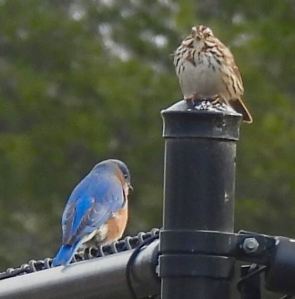
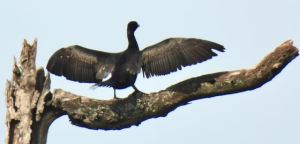
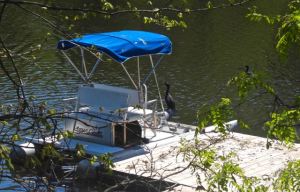
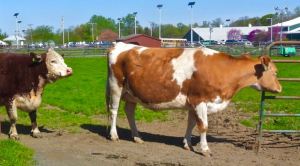
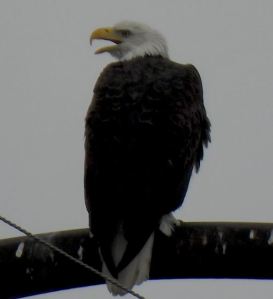
Double-crested Cormorant preens and scans atop dead Oak, east bank of our lake, at sunset, June 8, while visiting Osprey looks on doubtfully

In this month’s blog:

ICE vs. Worker Shortages: More News from a Bizarro 2025
Climate Log: “No Ice” in Alaska; Here Comes the “Heat Dome”
Our Garden: Produce Galore in a Rainy Month
The June 2025 Photo/Video Gallery: Virginia Travel and Local Color

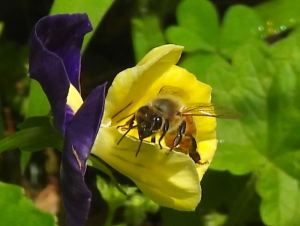
Honeybee sips from a yellow-purple Pansy in our garden plot, warm morning, June 18

*********************************************
ICE vs. Worker Shortages: More News from Bizarro 2025

ICE agents warn onlookers as agents handcuff one protester in Los Angeles (LA Times photo). From Jenny Jarvie and Grace Toohey, “Raids by ICE are stunning, but no surprise,” June 16

As I look at photos of Donald Trump’s Immigration and Customs Enforcement (ICE) agents surging unannounced into workplaces (Home Depot, clothing factories, etc.) then handcuffing people in Los Angeles last week and this, I have to remind myself that this is the strange, new US in 2025, not scenes of Darth Vader stormtroopers from Star Wars (see below). The likeness is uncanny, though: the masks, the armor, the heavy weapons, the lack of identification of any kind, the immediate violence. I’ve certainly not in my lifetime seen so-called “US law enforcement” acting as a federal government secret police force. Russian KGB and East German Stasi during the Cold War, yes, but not US law enforcement, which over recent years (and especially since 2021) has been trying to become more people-friendly and transparent in their tactics.

The five-month-old federal administration keeps trying to convince us that undocumented immigrants are an ongoing threat to US citizens and to our economy. But where’s the evidence? The claim is that these brown-skinned, admirably bi-lingual (English/Spanish) families are “taking our jobs,” as if there were a glut of workers in the US, and as if US citizens cannot find open jobs.

At last look, however (June 3), the US Bureau of Labor Statistics reported that there were “7.4 million job openings” in the US. That’s 7.4 million. Shortages of workers–not a glut–continue to be reported in many fields, including manufacturing positions, first responders, air traffic controllers, teachers, nurses, child-and-elder-care workers, hotel and restaurant staff, retail sales, construction workers, agriculture workers, etc., etc., as well as in the agencies that Elon Musk’s DOGE (Dept. of Government Efficiency) rampage of firings left understaffed.

To take just the first of those many categories, the New York Times (June24) analyzed data from the Business Roundtable (“Why Factories Are Having Trouble Filling Nearly 400,000 Open Jobs”) that pointed to severe lack of qualified applicants and the falling rate of community college enrollment.

Meanwhile, the workforce gets steadily older, as the percentage of over 65s keeps increasing and the US birthrate keeps declining.

Bottom line: this country needs more workers, not fewer.

So it’s extremely puzzling why the administration wants to deport all these workers–and why the President’s advisors want to terrify US communities into shunning places of business where ICE might attack next. What does this administration have against the people of the US and the businesses that fuel the economy? The ICE assaults in LA, for example, have left many prosperous economic hubs deserted (“LA Neighborhoods Clear Out, As Immigration Raids Send People Underground,” LA Times, June 21). Onlookers have seen adults and children grabbed off the street, no questions asked, and pulled into vans. People across these neighborhoods don’t want it happening to them or their loved ones. Would you?

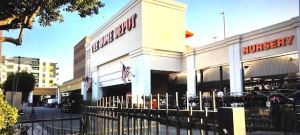
Home Depot on Sunset Blvd. in Hollywood, where ICE arrested dozens on June 19 (LA Times photo)

To make matters worse, Trump chief advisor Steven Miller earlier this month ordered the Dept. of Homeland Security (which controls ICE) to increase the daily toll of captures and detainments to 3000 per day! What can possibly be the goal of this frenzy? Why would Trump and Miller want to weaken the US economy and hamstring businesses by creating much greater worker shortages than those that already exist? What do they have against small and large businesses, who need more workers, and against us consumers–who will have to pay even higher prices as supplies dwindle because of a shrinking workforce?

According to the Business Roundtable (New York Times, June 24), a path to citizenship and aid to education for the undocumented could help ease the shortages of qualified workers (NYT photo)

******************************************************************
Climate Log: No Ice in Alaska–Here Comes the “Heat Dome”

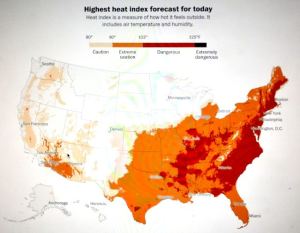
Heat Index in US, June 24 (Washington Post ) as the “heat dome” has arrived

As described in last month’s blog, Americans keep dying and being made homeless through record flooding in the US heartland, but with never a word of sympathy or even awareness from the current President. To add insult to injury, he’s gutted the Federal Emergency Management Agency (FEMA), which we had always depended on to offer emergency supplies and funds for rebuilding after such disasters. Instead, he wants the states (most often red states who voted for him in the 2024 election!) to foot their own bills for their stricken citizens. Because he and his appointees claim that climate change doesn’t exist–and all facts to the contrary don’t matter–obviously those record floods didn’t happen (or so their actions and inactions claim) and those stricken people and communities are on their own.

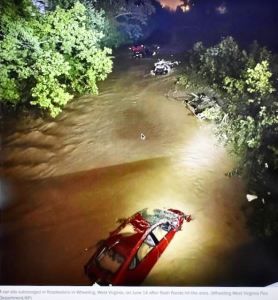
This month, the floods continued, and the administration again took no notice. The story (by Dana Hedgepeth, Washington Post, June 16) reported that 4 people died in flash floods in West Virginia on June 15. One state official said, “I’ve never seen anything like it,” but cries for attention like that fell on the deaf ears less than 200 miles east in DC.  Moreover, as one of the nation’s poorest states, West Virginia is in no position to deal with the destruction without federal help.

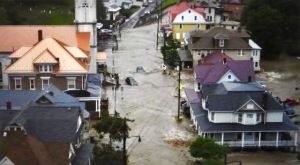
West Virginia flash flood damage, June 15 (photo by Wheeling, WVA, Fire Department/AP)

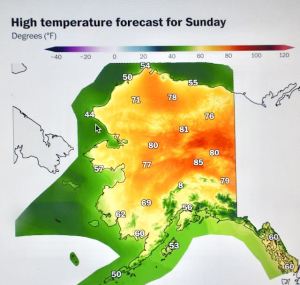
At the same time that the heartland floods were still occurring, the Post was also reporting (Ian Livingston, June 16) that “Part of Alaska is Under a Heat Advisory: That’s a First.” https://www.washingtonpost.com/weather/2025/06/13/alaska-first-heat-advisory/

Temps across Alaska for Sunday, June 22 (National Digital Forecast Database and Washington Post)

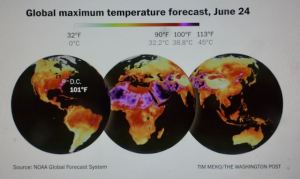
If you are among the great majority of US residents who acknowledge the climate change that our President says doesn’t exist, you will take note that these unprecedented June forecasts are part of the “heat dome” pattern that is becoming more frequent worldwide (“June is the New July: Why Intense Summer Heat Is Arriving Earlier,” Washington Post, June 25) https://www.washingtonpost.com/climate-environment/2025/06/25/global-heatwave-climate-change/

Worldwide heat map from NOAA, June 24, in Washington Post, “June Is the New July”

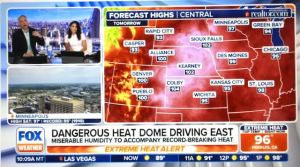
According to even Fox Weather (almost always a mouthpiece for the President), “heat domes” are especially powerful high-pressure systems that can be 1000 or more miles wide and long. The domes can

  • move steadily eastward in the US,
  • last for days until a stronger system erodes the dome, and
  • produce record-setting temps and humidity.

Now, this week,the “dome”–with temps close to and perhaps over 100 in the Northeast US–will have affected during its run three quarters of the US population.

And it’s only June. But please, if you accept the President’s Bizarro version of things, don’t believe what the weather people–who know what they’re talking about–are telling us. If you want to stay completely Bizarro, just nod your head at whatever the administration tells us.

Fox Weather infographic on the current “heat dome,” June 20

**************************************************************

Our Garden: Produce Galore in a Rainy Month

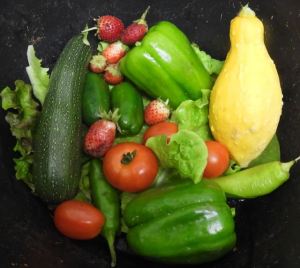
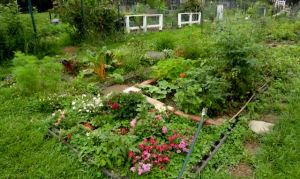
On a rainy morning, June 16, we collected this produce from our small patch in the community garden

The “heat dome” described above has just reached us in Virginia, but until this point in June we’ve had substantial rain (3-4 inches!) and moderate temps–so our 225-squ.-ft.garden has been producing magnificently.

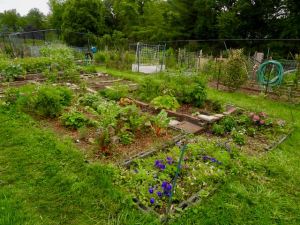
Our 15′ by 15′ garden of diverse flowers and veggies has filled fruitfully over 2.5 months, as have the gardens of our hard-working neighbors (June 16)

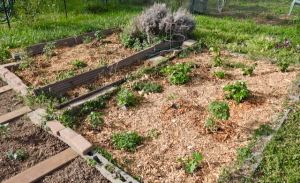
Here, by contrast, was our garden just two months ago:

On April 25, here was our garden, with all plants in ground, newly mulched, and with veggies and flowers beginning to thrive in the steadily warming temps.

Three types of tomatoes, four types of peppers, two blueberry bushes, zucchini, crookneck squash, strawberries, Swiss chard, thyme, oregano, mint, rosemary, and sage have grown steadily since late April–and now daily produce delicious edibles. Meanwhile, ebullient flowers–dahlias, dianthus, coneflowers, buttercups, vinca, snapdragons, cosmos, pansies, petunias, zinnias, salvia, the flowering herbs, and three types of marigolds bring pollinators to the garden and a rainbow of colors.

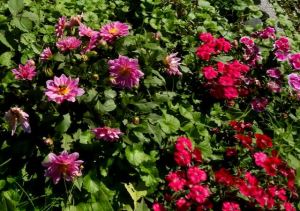
Magenta Dahlias and red and white Snapdragons, morning, June 20

We have gradually been getting to know our neighbor gardeners, most of whom have been growing in Virginia much longer than we have, and not only do they answer our questions readily, but they offer us some of their produce, as we offer ours.

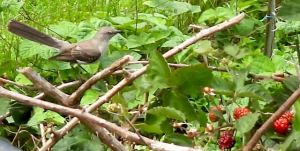
Mockingbird in a neighbor’s Berry patch, morning, June 18

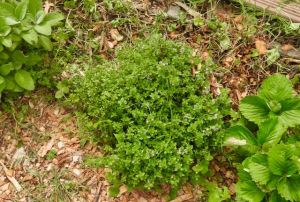
Weeding, of course, is an ever-present chore in this humid climate–the productivity of our garden includes lots of productive weeds! Because we are all organic gardeners, we’d rather weed than subject our plants, the pollinators, and our bodies to herbicides. Crab grass is torturous, but blue speedwell (AKA “creeping charley”), while prolific, comes up easily–and then comes back for more fun!

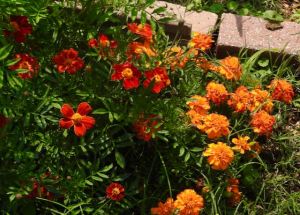
Multi-color Marigold display, all grown from seed, brings pollinators and dominates the crab grass that we pull from the garden, June 11

Conversely, we’ve always looked upon “volunteers”–plants that just show up uninvited–as opportunities to learn about new species. In our garden, for example, one volunteer was the Buttercups that have brought pops of yellow that complement the reds, pinks, purples, whites, oranges, and blues of our plantings.

Our “volunteer” Coneflower plant, in full bloom and with more buds coming, morning, July 23

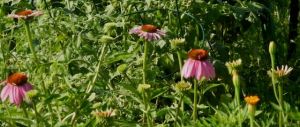
The majestic pink coneflower that emerged in late March as a “weed” is now a tall, multi-stemmed beauty that stands next to our “sweet millions” tomatoes. So what if it competes with two of our pepper plants? They all have enough room, even if crowded. And our two perennial strawberry plants? They also emerged in March to surprise us, and they produce better than any strawberries we ever planted in California.

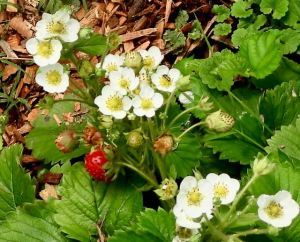
Tiny Bee in one of our two Strawberry plants, with many blossoms, morning, June 18

But here comes the heat dome. Now we get to see how our plants do in the hottest heat of summer. Bring on the “heat dome”! We’ll meet the challenge as best we can. We have experienced neighbors to help advise us.

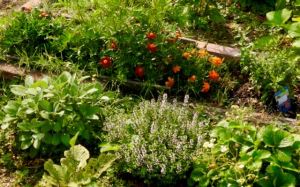
Sage, Thyme, Strawberries, Marigolds, Blue Aster in bloom, June 6

*******************************************************************

The June 2025 Photo/Video Gallery: Virginia Travel and Local Color

This month’s gallery includes, among a range of artifacts from our lake community and garden, photos from our trip early in the month to Tidewater Virginia and the historic towns of Williamsburg, Yorktown, Jamestown, and Gloucester along the York and James Rivers, where refugees from England encountered the indigenous Powhatan people for the first time in 1607, and where the English built their first settlements in North America. Professional historians, including four of our Virginia relatives, whom we visited on the trip, have done an amazing job of keeping alive this tumultuous 425-year history of immigration, conflict, rebellion, slavery, and warfare–but also the steady, progressive development of the democratic principles that have made the US great and that still, we hope, will continue to guide the future of the nation.

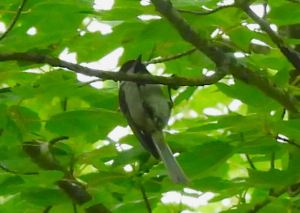
As we walk around our lake, Green Heron flies into the dead Willow Oak on the east bank of our lake, then preens and scans. Such serendipity!

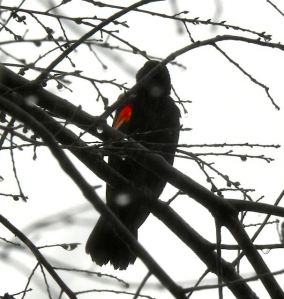
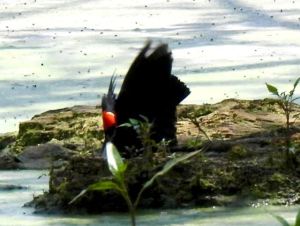
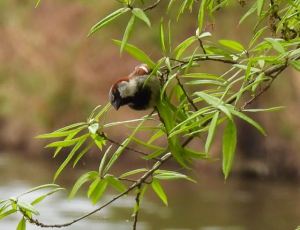
Red-winged Blackbird in the same Willow Oak, but on a rainy morning, June 16

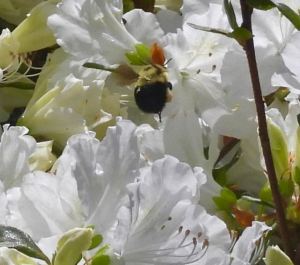
Bumblebee in Juliet Tomato flower in our garden, morning, June 18

On our Tidewater travels, we toured Jamestown Island, where the first English settlement was built. Here I snap a Red-bellied Cooter in the marsh at the island’s edge, June 1

This simple cross commemorates at Yorktown the French soldiers and sailors who died in this final battle, 1781, of the American Revolution. Without the French aid and sacrifice, the Revolution would not have succeeded.

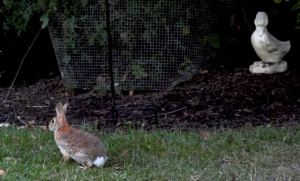
Cottontail beside duck statue, east side of our community, morning, June 20

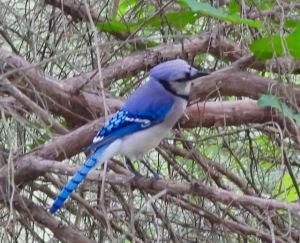
Bluejay in morning shadows along the southside path in our community, June 20

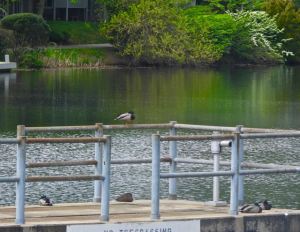
A pair of Cormorants scan along the lake from the west shore dock, rainy morning, June 16

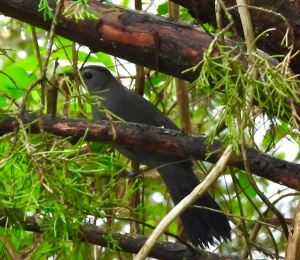
Grey Catbird pair sips from puddles on north end path, rainy June 16

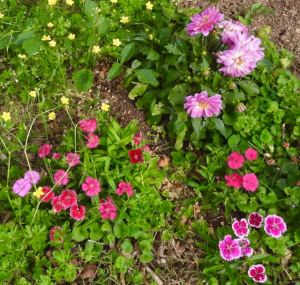
In our garden, Pink Dahlias with Honeybee and Red Dianthus, June 20

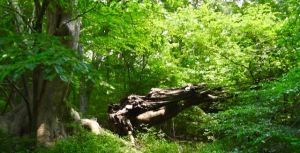
The majestic fallen trunk of one of 4 Yellow Poplar trees that still grow at historic Zion Poplars Baptist Church in Gloucester, VA, May 31. These poplars are honored as a Remarkable Tree of Virginia for their historical significance.

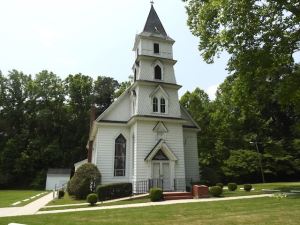
Zion Poplars Baptist Church, Gloucester, VA, May 31. This church was the first Black Church in Virginia established (1866) after the end of the Civil War. Early services at the church were held under the seven Poplars, of which four remain and which are pictured above.

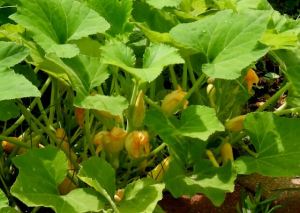
Crookneck Squash blooming and fruiting in our garden, June 18

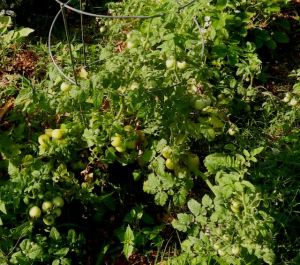
Husky Cherry Red Tomato plant in our garden, loaded down with fruit, early morning, June 23

Snapping Turtle, first sighting of the year in our lake, pokes head above water, lurks, then dives, June 20

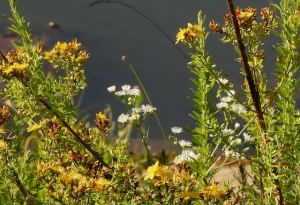
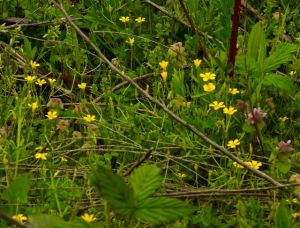
Oxeye Daisies, St. John’s Wort, and Daisy Fleabane among June wildflowers beside the north shore of our lake, June 20

Common Moorhen male, my first sighting, in marshland at the Yorktown battle site, May 31

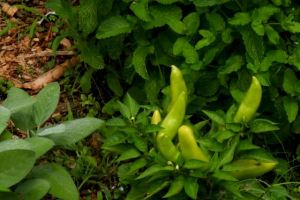
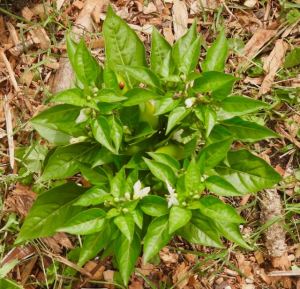
In our garden, Hot Burrito Peppers, Sage, and Mint plants, morning, June 18

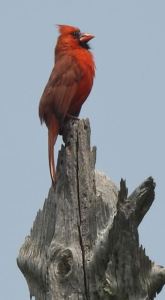
Cardinal male atop dead tree in the Jamestown Island marsh, June 1

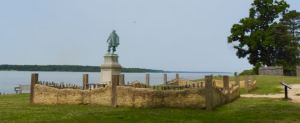
Foundation of the original meeting house of the Jamestown settlement, 1607, and statue of explorer, writer, and founder John Smith, by the James River, June 1

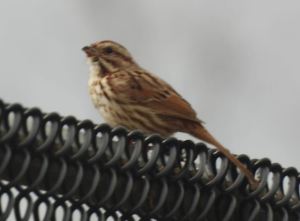
Song Sparrow calls singingly from atop a young Willow Oak on the north shore of the lake, June 12

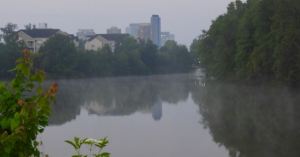
Before sunrise, June 11, mist rises from the lake, with Red Maple and Elderberry in foreground and downtown buildings in the distance

Mourning Dove on wire west of the lake, morning, June 12

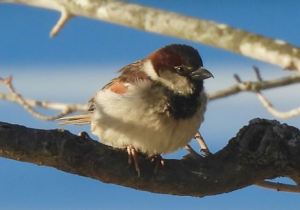
Five House Sparrows try out the new yellow feeder on our porch, morning, June 17

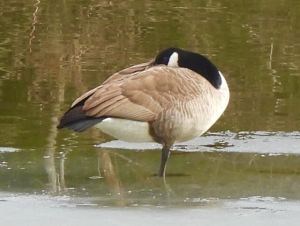
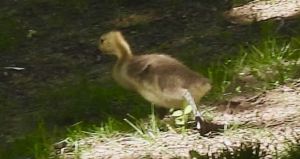
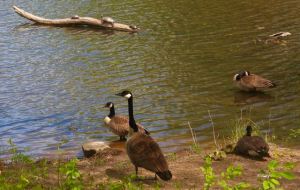
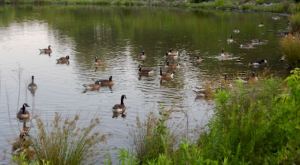
In two months, like our garden plants, the young ones of our Canada Geese families have matured from two throngs of fuzzy goslings to almost fully-grown adults. See the flotilla of 30 here in the Northeast corner of the lake, early morning, June 23

What adventures await us in the last week of June and into July?

May 2025: Tiny Refuges in a Could-Be-Great Nation

Double-crested Cormorant with spread wings scans atop the dead oak on the east bank of our lake, late afternoon, May 29. Usually regular visitors, this is only the third Cormorant we’ve seen this year

In this month’s blog:

Tiny Refuges in a Could-Be-Great Nation
Garden Update: Buds Appear, Flowers Thrive, the First Fruits
The May 2025 Photo/Video Gallery

Our two families of Canada Geese enjoy the late afternoon of May 19 along the Southeast side path

Tiny Refuges in a Could-Be-Great Nation

A truly bizarre scenario: the President of the United States was in the Middle East (May 17-18) meeting with the ruler of Qatar about the possible gift (or maybe sale?) of an unused “luxury Boeing 747” to the President, so that this jet might be retrofitted to become the next Air Force One. The US journalism elite (CNN, Fox News, New York Times, etc.) were giving this “breaking news” their undivided attention.

Meanwhile, back home in the USA, a wave of tornadoes and furious storms left at least 28 people dead, dozens more injured, and many homeless as they passed through multiple states in the Midwest over the weekend. More than 80 tornadoes had been confirmed as of Monday morning, according to USA Today (May 19):

This disaster was big news only on the Weather Channel; a minor story at best on major news sources. And more such storms were forecast for the coming week across the South, Midwest, and into the mid-Atlantic.

I realized that before this President, who took office just four months ago, the disaster at home would have been top news (think of Hurricanes Helene and Milton just last fall), and the nation would be watching to see how the President and the Federal Emergency Management Agency (FEMA) responded with compassion, necessary funding, and emergency expertise. But this President unilaterally gutted FEMA last month and, with nary a thought or prayer, said victimized states would have to fend for themselves now and into the future. So much for compassionate leadership.

Since that weekend, he made no mention of the deadly storms, so focused was he on the possibility of his getting the luxury superjet.

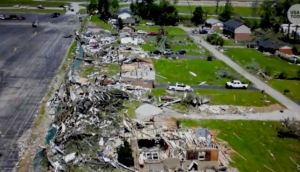
Westernport, Maryland, just one state away, May 14 (Wash Post photo)

It’s easy to understand why he wouldn’t want anyone to care about disasters at home. They just remind people of the fossil-fuel-caused climate change that he says doesn’t exist. So what if people suffer? So what if farms and businesses and schools and hospitals are ruined, and habitats for other creatures are destroyed? For him and for the fossil fuel cartel to which he is beholden, the only thing that matters is business as usual–the domination of US culture by gas, oil, and coal.

What’s particularly sad and strange, as David Gelles writes in the New York Times (“Under Trump, the US Is Alone in its Climate Denial,” May 19), the US is the only rich nation in the world that has allowed the cartel to have such power. In contrast, China, other Asian nations, and Europe keep moving forward with renewable energy. China is only too happy to exploit our nation’s deplorable weakness in renewable energy and so become the dominant energy power in the world.

For the first time in two months, Blue Heron, usually a frequent resident, honors us with a visit on the afternoon of May 29, stalks the north shore, then takes off…
The Escalating Price Paid by US People–and by Our Fellow Creatures

Besides increasing drought (which this blog reports regularly) and the intensifying of

one more result of fossil-fuel poison is the drastic decline of North America’s bird species. The Washington Post’s Dino Grandoni summarized on May 2 the results of a 3-year study reported in the May 2 issue of Science that showed significant decline in 75% of 495 species. “Birds are rapidly vanishing from North America, with dramatic population losses in places that were once thought safe.”

With Allegheny Blackberry blooms in the foreground, I look across the lake at sunset toward the high rise buildings downtown, May 15

I try to think of our little lake community as a tiny refuge for the wildflowers, birds, fish, turtles, bees, butterflies, squirrels, rabbits, and other wild creatures I’m fortunate to take pictures and video recordings of as I circle the lake path most days of the week. And yes, this little lake is still a sparkling gem of a home or nurturing spot for these creatures. But in its fragility–tightly surrounded as it is by suburban sprawl and the incessant emissions of vehicles and buildings–it also mirrors the larger US culture. If we allow that larger culture to continue to be dominated by forces that put glitzy baubles like “luxury superjets” ahead of we the people and the survival of plants, animals, land, water, and air, this refuge, too, will disappear.

It’s just a question of priorities. Will the US achieve the greatness of which it would be capable if we had a sensible, life-generating energy policy? Or will it stay hostage to the cruel forces that are steadily destroying us?

*********************************************

Zucchini flowers and a growing fruit, our garden patch, May 20

Garden Update: Another Tiny Refuge?

Sage, Thyme, and Strawberries are among the plants thriving in our tiny garden, May 18

In the month since our last update, our tiny plot in the community garden has flourished: warm temps and frequent rain spells have combined with the healthy, well-mulched soil to bring about steady growth that is now producing the first fruits and a rainbow of blooms. As we walk through the coded gates into this multi-acre community of individual plots, each one devoted to the vision of each gardener, I think of it, just as I think of the community lake beside where we live, as a cared-for refuge from the thick network of roads and speeding vehicles no more than a hundred steps away.

Dianthus, Dahlias, and volunteer Buttercups are featured stars in our English-country-style flower display, May 18

The community works because of the dedicated work of each gardener, and our agreeing to abide by rules determined by the community. Unlike some homeowners associations (HOAs) that dictate strictly a single style for any display, this very diverse, multi-national community of we who pay rent for our spaces each year encourages unique visions of what we plant and how we arrange the plantings. Still, (1) we must  be organic gardeners, (2) we can’t grow tall trees, and (3) we must not intrude on others’ gardens or (4) take produce from other folks’ plots without permission. (5) We must prepare our gardens for spring plantings and (6) we must remove exhausted summer plants as winter arrives. (Perennials, of course, stay in and survive underground.)

Our garden plot, viewed toward northeast, on a cool, cloudy May 29

This simple rule structure encourages a multitude of visions. One nearby gardener has labelled her plot a “monarch haven,” with lots of milkweed, for example. Another grows lots of potatoes, another an array of bean trellises, another an explosion of peonies, and on and on. Some have neatly rectangular raised beds, others interspersed veggies and flowers. Some, like us, are almost daily tinkerers. Others show up weekly. Still others plant and then seemingly disappear for a month or more.

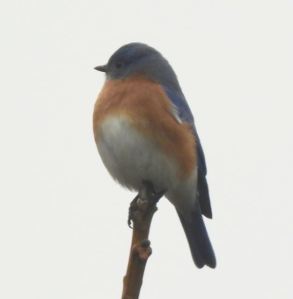
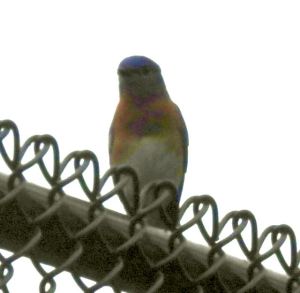
Eastern Bluebird perches atop the high fence surrounding our community garden, cool, misty May 29

The structure of simple rules coupled with the spirit of experimentation provides a nice, friendly balance for gardeners. So far we’ve not gone far out on any experimental limb: yes, our first planting was of two blueberry bushes, which were not suited to Northern California’s dry heat; they have done really well so far here.

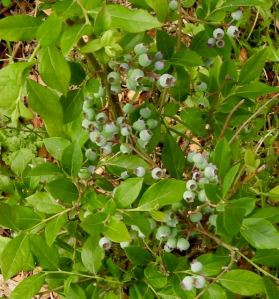
Blueberry bush bursting with forming berries that we are learning from as they mature, May 18

But most of our plants were ones we had success with in the Sacramento Valley: of flowers, we have thriving stands of dianthus, dahlia, vinca, and pansies. We also benefited from a native surprise: buttercups that emerged in April and quickly spread.

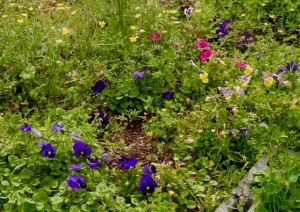
Yellow and Purple Pansies, Magenta Petunias, Yellow Buttercups on the Southwest end of our flower display, May 18

Of veggies and herbs, 3 kinds of cherry or grape tomatoes (juliet, husky cherry red, sweet millions); bell peppers (green, yellow, orange, and red; herbs (mint, English thyme, oregano, rosemary); Swiss chard; chilis (ancho); squash (zucchini, cucumber, crookneck; eggplant.

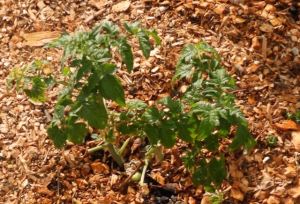
Our Husky Cherry Red Tomato, late April; now it’s 3 times as big, in a tall cage, and with 30 growing fruit, May 27

We would have planted strawberries–but we saw on our first exploration of our new space in February that we had two perennial strawberries already in ground–these beauties have come back stronger than any we ever planted in California.

Our latest Strawberry harvest from our two perennial plants, May 21 (we and our grandkids have already eaten some!)

Ancho Chili plant, with a tiny visiting ladybeetle (can you see?), May 18

*********************************************************

The May 2025 Photo/Video Gallery: Some Regular Citizens and Guests, and a Few Newcomers to the Refuge

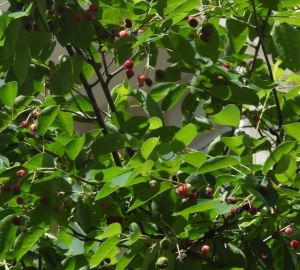
The Serviceberry trees in our community are a haven for birds, especially now that the berries are ripe. I hear so many more birds than we can see, but their calls let everyone know they are here, May 19

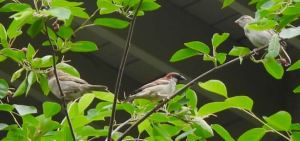
Three House Sparrows in the Serviceberry tree, May 27

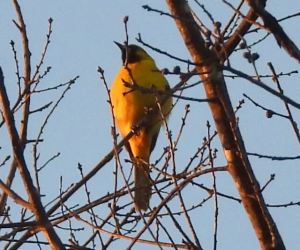
This Mourning Warbler is a newcomer to our refuge, its bright yellow feather tinged orange at sunset in the dead Willow Oak on the east bank, May 15

I asked this Red-winged Blackbird male to face me as he perched in the Willow Oak on the 15th, but no cooperation. Still, this preening dance at sunset is a classic of surprise.

In the evening shadows near the Southeast path, this fuzzy yellow Canada Goose chick walks to catch up with the family, May 19

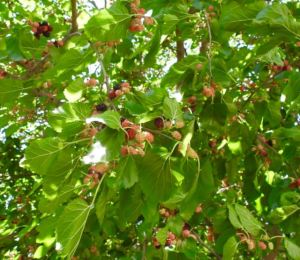
Like the Serviceberry trees near it, this Mulberry’s ripe, sweet berries are a lure for many birds, May 17

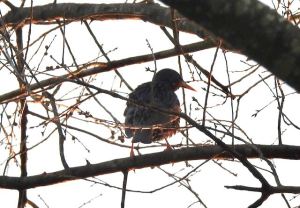
Our year-round Citizens, the European Starlings love the east bank of the lake, including the dead willow Oak. Another sunset shot, May 15

The Gray Catbirds are all around with their distinctive calls and conversations this month. This one was particularly acrobatic in the birdbath on the east side of the lake, on a very warm May 19

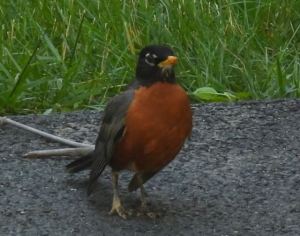
This American Robin on the Southeast side path was deciding whether to mix it up with the Catbirds in the Mulberry Tree on May 19

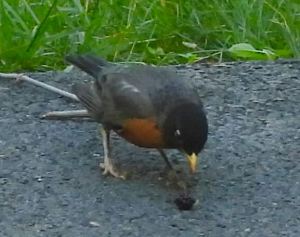
Whadya know–Robin got one of those Mulberries!

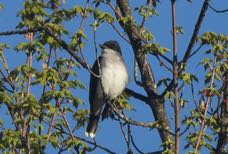
Back to sunset in the Willow Oak on May 15, Eastern Kingbird, a sometime visitor, calls

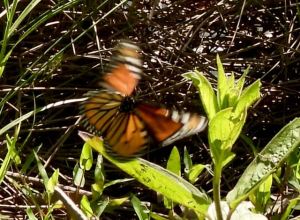
Our first magical Monarch of the year, in mid-flutter in the Swamp Milkweed by the Southeast cove, May 19

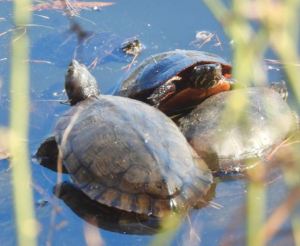
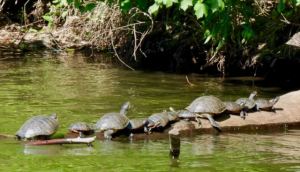
On a warm afternoon, 12 Red-bellied Cooters take the sun on a log along the Southeast shore, May 19

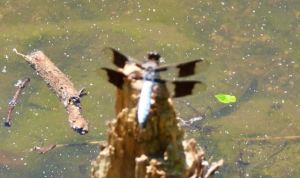
A Whitetail Skimmer, our first dragonfly of the year, enjoys the Northeast shore on a warm May 18

Black-capped Chickadee in Red Maple, southwest bank, on cool, cloudy May 27

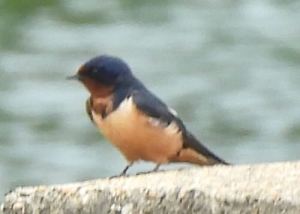
Barn Swallow perches on the dam structure in the lake, on a cool, cloudy May 27

Also on Mother’s Day, May 11, Red-winged Blackbird atop the dead oak on the east bank, calls to his mate

Our Mother’s Day bouquet, indoors, May 11. Humans celebrate the day, too

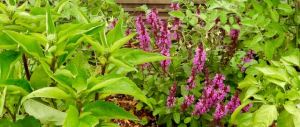
In our garden, Budding Coneflower, Purple Salvia, Juliet Tomato, on that cool, cloudy May 29

Bluejay in vines, west side, cool, cloudy May 27

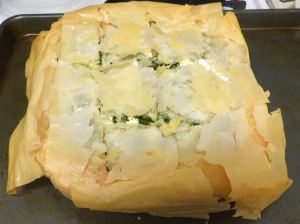
Our one kitchen contribution this month, Jean’s spanakopita, with spinach and filo dough, just from the oven, May 14. Jean says the hardest part of the recipe is the chopped spinach, which clings everywhere.

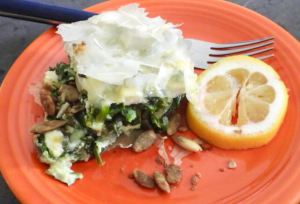
A serving of spanakopita with a slice of lemon and candied pistachios.

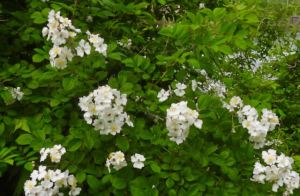
Oh so fragrant Multiflora Rose, along the east side path on a warm May 6

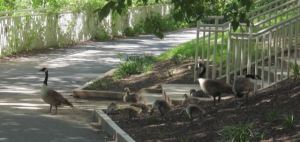
The two Canada Goose families gather together on the steps along the Southeast path, May 19

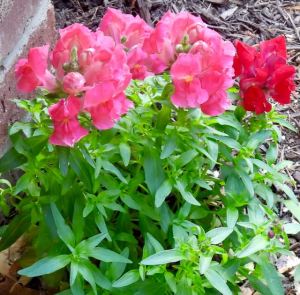
Snapdragons on our porch on Mother’s Day, May 11

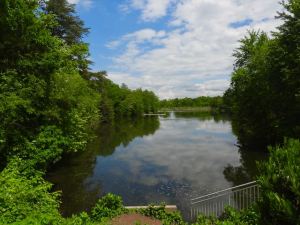
Lake panorama toward the North end on a sunny, warm May 6

Song Sparrow calls and listens in the Willow Oak, east side, on the gorgeously warm May 6

Growing up fast, Canada Goose chicks begin to grow black feathers as they walk on the south end path, May 27

With still four days to go in May, here’s hoping for a greatness where all the Earth is a refuge.

April 2025: To Save All Life, Don’t “Drain the Swamp”

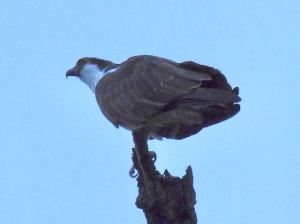
Osprey, an iconic Chesapeake wetlands shorebird, makes a rare appearance atop the dead oak on the east bank of our little inland lake, April 20. The visiting, fish-eating raptor stays for a while, then swoops over the lake…
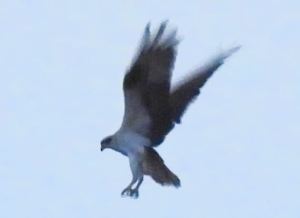
…scans our lake at Easter sunrise, then flies off to find other wetlands

In this month’s entry:

Draining the Swamp: Recipe for Annihilation
Garden Update: Frost Is Past, Plants Take Hold
Cherry Blossoms and Honoring Real Heroes
The April 2025 Gallery: Remember Earth Day? Nature Keeps Fighting

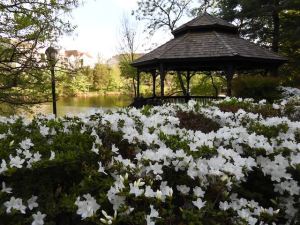
White Azaleas in bloom by the gazebo, west bank of lake, warm twilight, April 24

******************************************

Draining the Swamp: Recipe for Annihilation

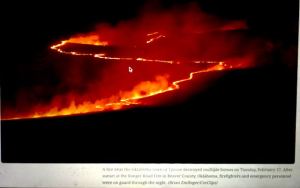
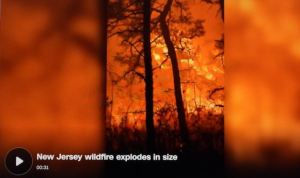
12,000 acres burned in Ocean County, New Jersey, as wildfires increase across the country, April 23 (CNN photo)

Whenever I hear the President’s rallying cry of “Drain the swamp!”–by which he refers to the ongoing mass firings in federal agencies since he took office on January 20–I wonder if he at all appreciates what “Drain the swamp” really means. Failing to value what swamps are and what they accomplish can doom all life.

Given his long history as a speculative builder of hotels and other urban properties, he perhaps thinks of swamps as messy, smelly, icky, treacherous places that get in the way of steel and concrete foundations, can thwart builders’ dreams, and often contain creatures like snakes, alligators, and disease-bearing mosquitoes. His hatred of swamps is part of his incessant campaign to destroy the environmental protections (see Newsweek, March 13, “What Comes Next?”) enacted since 1970 by a succession of Presidents, starting with Republican Richard Nixon, who founded the Environmental Protection Agency (EPA).  It’s likely that the current President resents the term “wetlands,” and especially the phrase “protect wetlands,” applied to those swampy places that impede two of his favorite ventures: turning public lands over to fossil fuel drillers and enabling so-called “developers” to turn natural environments into more and more commercial districts of concrete and steel.

The Cradle of Life

What he certainly does not sufficiently value when he thinks of swamps (like Virginia’s Great Dismal Swamp pictured above) is that they have been and continue to be the cradle of life on this planet, the purifier of all fresh water, and the essential meeting and mixing place between land and sea. Without swamps, bogs, mires, fens, marshlands, lakeshores, wetlands, coral reefs, vernal pools, or whatever you want to call them, all life will die out. https://en.wikipedia.org/wiki/Wetland

Planting Easter eggs: Mallard pair builds their nest along the north shore of our little lake at Easter sunrise. The drastic, ongoing decline (30% lost) of birds since 1970 has been caused in part by the erasure of these precious water/land interfaces across the globe.

Drought, Wildfires, and the Loss of “Swamps”

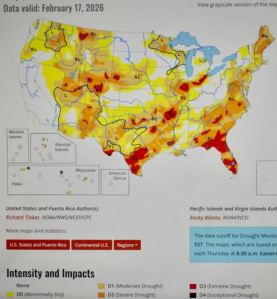
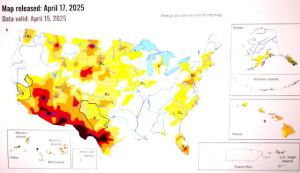
The photo of the New Jersey wildfire at the top of this section seems a strange juxtaposition with the pleasant video of the Mallard nesting pair, but they are closely related. Global warming (another term our President despises and refuses to acknowledge) is making the Earth steadily drier, including the U.S., as the regularly-updated U.S. Drought Monitor https://droughtmonitor.unl.edu shows:

You’ll note that the Mid-Atlantic and Northeast states–including both New Jersey and Northern Virginia–have been in a long-term (SL on the map) period of what the map labels severe drought, though local officials (at least in our region) rarely mention that there might be a problem, because we are not yet at a stage of having to restrict water usage. But those of us who garden (see the “garden update” section, below) are already very aware of the shortage of rain.

Not only does drought intensify the chances for wildfires, but lack of rain steadily erodes wetlands, as I see each day when I walk around the lake and notice the slow exposure of more dry shoreline. More dry shoreline means fewer nesting spots for Mallards and other waterfowl, as well as turtles, such as the Northern Red-bellied Cooters that adorn this blog most months of the year.

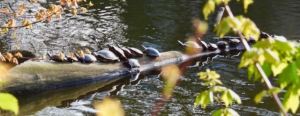
17! Red-bellied Cooters, babies and adults, throng this log near the south shore of the lake, April 17. Turtle eggs nest in the mud near the shore, emerge underwater in the fall, and winter in a dormant state underwater in winter. They come above the surface once the temp gets to 60, for at least part of the day.

Flood control. And just as wetlands reduce wildfire risk, so they also help control floods, by capturing excessive rain that would otherwise flow unimpeded through streets, over rock-hard drought lands, and into rapidly swelling streams during flash floods events. Soft wetlands allow excess floodwater to percolate into the aquifer underground, where it is saved for future use, rather than be propelled down rushing streams destroying anyone and anything in its path.

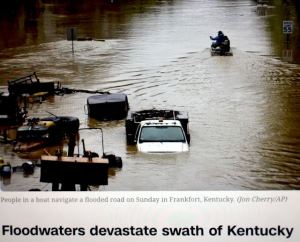
Kentucky River floods Frankfort, the Kentucky capital city, amid record rains in the Mississippi and Ohio River valleys, April 7 (Photo: Jon Cherry/AP)

******************************************************************

Garden Update: Frost is Past, Sun Abounds, Plants Take Hold

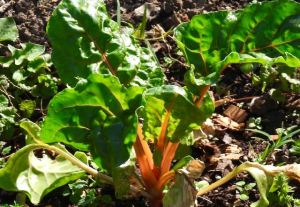
Swiss Chard plant takes hold, three weeks in ground, our community garden plot, April 22, Earth Day

We’re slowly learning the lessons of the Northern Virginia climate as we nurture our small plot in the community garden in our town. Twice in the past month we learned the hard way about planting too early here. Even though the average low temps from late March to mid April were in the 40s, all it took were two nights when the temp dipped to 32 or below (27!) for us to lose tomato, squash, and pepper seedlings. Note to self: Northern Virginia is definitely not Northern California, where we could safely grow year round.

Still, those two setbacks aside, we’ve now had two solid weeks of steadily warming temps for our assemblage of veggies, fruits, herbs, and flowers to thrive in our little patch (225 sq. feet) in the community collection of small gardens.

Our full garden plot, newly mulched, and with veggies and flowers thriving in the steadily warming temps, April 25

Some of our plants are varieties we had success with in California: cherry and grape tomatoes, hot and mild peppers, strawberries, zucchini, eggplant, Swiss chard, basil, mint, thyme, sage, lavender, and oregano.  One species, Blueberries (two bushes, in ground a month now), are thriving here in this cooler climate, and had no trouble with those 2 nights below freezing. They like the cold, as do the strawberries, but we’ll see how the blueberries hold up when it gets into the 90s in July.

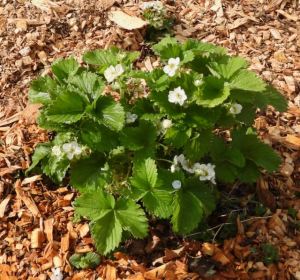
Our two Strawberry plants, perennials, we inherited in this plot, and they are blooming prolifically.

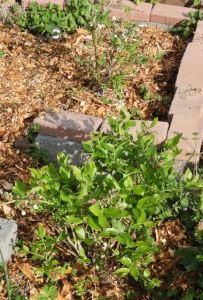
Our two Blueberry bushes , which cross pollinate, loved the March cold and are blooming nicely, April 25

One third of the plot we devote to flowers. The hearty Pansies, purple and yellow, have been thriving since March planting as have the pink Dianthus (one of our California favorites), and just this week we’ve added purple Petunias. One discovery here is the plethora of fast-spreading ground cover such as bright Blue Speedwell and pink Henbit, which will take over everything if we let it.

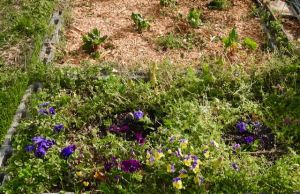
Purple and Yellow Pansies and Purple Petunias vie with Blue Speedwell and Pink Henbit in the flowery third of our plot, April 25

In drier, hotter California, the challenge was to provide enough water to grow what we’d planted. We rarely had to pull so-called “weeds”: by which people mean any plant that you don’t want to grow in a space where you want to grow something else. Here, the relatively wetter climate encourages less-wanted plants to thrive, so “weeding” of plants like Dandelions and “Creeping Charlie” are daily chores. So the task for us is to  judge the balance between what we’ve planted and the volunteers that already love our ground.

Stay watching for updates. One challenge will be providing enough watering to keep the plants thriving in our severely drought-affected new normal. As a neighbor gardener put it this week, “We’re not used to worrying about rain.”

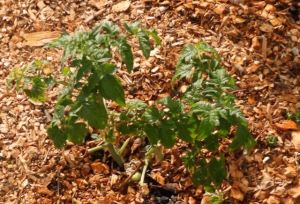
Also taking hold is this Husky Cherry Red Tomato, April 25. We loved these in California and hope they do as well here.

*************************************************************

Cherry Blossom Tradition and Honoring Real U.S. Heroes

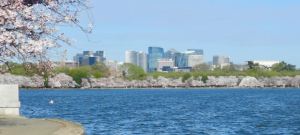
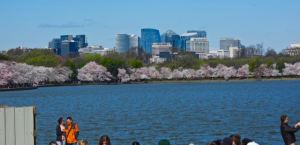
Cherry Blossoms in full bloom, and the city of Rosslyn across the Tidal Basin and the Potomac, March 27

We made our annual visit to the D.C. Tidal Basin in late March, with the Yoshino Cherry Trees and Magnolias in full bloom and the entire Basin area teeming with students and adults visiting from many places. Not only were the trees magnificent, but we reveled in the joy of the crowds, particularly in the patriotic spirit of the thousands from diverse origins and backgrounds who took the opportunity to visit the three memorials that surround the Basin: the Jefferson Memorial, the Franklin Delano Roosevelt and Eleanor Roosevelt Memorial, and the Martin Luther King, Jr., Memorial. At each huge installation, the inspiring words of these authentic heroes of democracy and courage are emblazoned on the walls, and offer us who stand before them messages of hope and encouragement to persevere in our endeavors to respect one another, seek fellowship with the peoples of the world, and keep alive the idea of the U.S. as a friend in times of mutual need.

Pair of Grackles call out from brilliant Magnolia, Tidal Basin, March 27

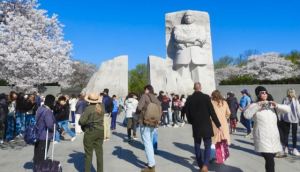
Crowds throng the Martin Luther King, Jr., Memorial, March 27

Words of hope among many sayings of Franklin and Eleanor Roosevelt carved into the walls at the FDR Memorial, March 27

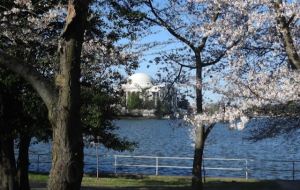
Jefferson Memorial across the Tidal Basin through the trees, March 27

Words of Martin Luther King, Jr., on wall of the memorial, March 27

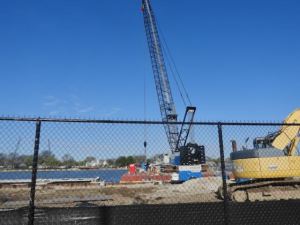
Rebuilding the Basin. We also wanted to see how work had progressed over the year since we had last visited the Tidal Basin. Since 2023, the Basin has been undergoing a massive reconstruction, because sea level rise in Chesapeake Bay, caused by global warming, was every day forcing the waters of the tidal Potomac to overflow the Basin’s walls. More than 150 of the precious cherry trees have been removed because of the worsening flooding.

Not a true wetland, the Basin had been built in the 19th century as part of the massive draining of swampland in the nation’s Capital to enable construction of many of the now iconic buildings of the federal city. Lacking a wetland’s actual resilience in changing conditions, it was inevitable that a massive reconstruction of the Basin’s stone walls and dredging of the bottom like that going on now would be eventually needed.  Fossil-fuel-caused climate change accelerated the need. See the March 2024 blog for a history of the 19th century “draining of the swamp” and its ongoing repercussions.

The project is expected to be completed next year, in time for the 250th anniversary of the founding of the U.S.

The 3-year reconstruction of the Tidal Basin is moving the walls a hundred yards back from the originally-constructed shoreline near the Jefferson Memorial, with the loss of a few hundred trees.

****************************************************************

A Cottontail “Easter Bunny” hides in the northwest corner of the shoreline, April 20

The April 2025 Photo/Video Gallery: Nature Keeps On Keepin’ On

Welcome to the Babies! And to more wetland rites of spring here and elsewhere in our region. (Oh, plus three kitchen treats. Would not forget those!)

Surprise, surprise! Despite this winter’s cold, the Canada Goose babies are here by our lake at the same time as in last year’s earlier spring. Congrats to the parents!

Very rarely do Mallard females fly into trees and look to build nests above shoregrounds. This one on the west side of our lake was a real surprise, April 19

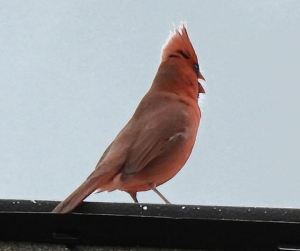
This Cardinal male in mid call atop a roof south of the lake, April 19

And here’s a very different view of a Cardinal male in closeup shadow in a Black Cherry tree, west bank, April 26

Watch this same Mallard female fly up to the broken branch in the Walnut tree while a Downy Woodpecker comments, April 19

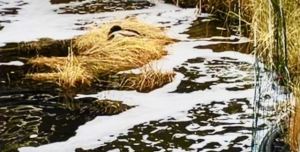
At the National Aquarium in Baltimore, which we visited on April 10, an attempt is being made to re-create a marsh in the water outside. Here, a Mallard male rests on a bed of reeds. For almost 150 years, this harbor water had been a dump for industrial waste. With federal aid, the clean-up has been ongoing for 50 years, but will it continue?

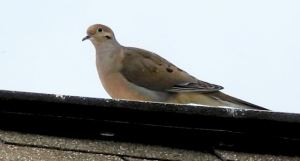
This Mourning Dove shares the same roof with the Cardinal pictured above, April 19

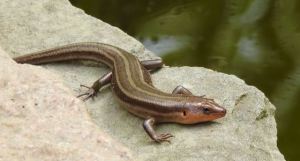
On Easter Sunday, we visited relatives at their rural home. Here a beautiful tiny lizard enjoys the sun by their pond.

3-foot-long Yellow Largemouth Bass, the dominant fish in our little lake, swims near the north shore on a warm April 25

The annual magnificent woodland display of Bluebells covers acres at nearby Riverbend Park on the Potomac. We visited on April 6.

Grey Catbird perches in a Red Cedar along the west bank of our lake, April 26

Cardinal female and Yellow-rumped Warbler call from the Willow Oak beside the southeast cove, April 19

My first sighting this year of a Bumblebee, in the gazebo by the lake, April 19. These pollinators are essential to life here.

The Willow Oak by the cove also gave a perch to this acrobatic House Sparrow on April 19.

Carolina Wren makes music most days, but I don’t see them nearly enough. This one perched beside me in this Weeping Willow on the west bank on April 26.

Song Sparrow calls from the leafing Persimmon on the east bank of the lakeshore, April 26. I’d never want to imagine a month without a Sparrow song.

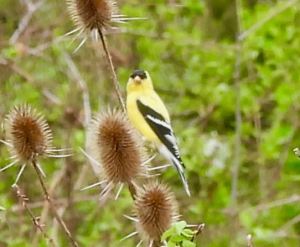
American Goldfinch in dry Cutleaf Teazel, north of dam, April 4

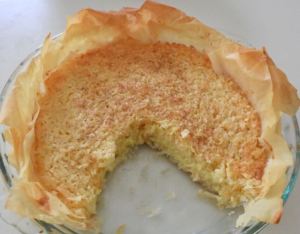
Jean’s one-of-a kind Coconut Custard Pie, with Filo Dough crust, April 26

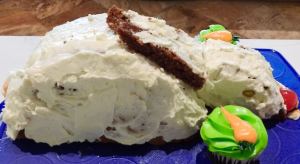
Jean’s Easter Bunny Carrot Cake with cupcakes, April 20

Jean’s Easter Deviled Eggs with Crab, Olives, and Cucumber Pickles, April 20

First sighting of the year: Green Heron, usually a late summer bird, here now as another April surprise, in the Willow Oak on the east bank, rainy morning, April 26

The birds always seem their most ebullient on these warm, drizzly mornings after an overnight rain. The lakeshore, our local wetland, rejoices. And so we venture on to the marvelous month of May.

April 2024: Early Spring in Full Bloom–Catch It While It Lasts

Canada geese sing duet: an invitation that leads to acceptance, then courting in the rain, April 1

On Earth Day! First sighting of new Canada Goose chicks on the northeast side path! Congratulations! (April 22, 2024)

Day 3 sighting: Two Geese families and friends on the southwest side of the lake, 10 chicks in all! April 24

In this month’s blog:

Early Spring in Full Bloom in the Potomac Valley 
Climate Log: Serving Our Addiction vs. Saving Our Future
Climate Log 2: Floods in Dubai? What’s Next in Extreme Weather?
More Remarkable Virginia Trees: Survivors of Bondage and War
April 2024 Photo/Video Gallery: Birds, Bees, Blooms–and Even Cows?

White Azalea in full bloom with Heavenly Bamboo berries beside the west side gazebo, April 16

Early Spring in Full Bloom in our Potomac Valley Town

You know the old saying, “April showers bring May flowers.” Here’s the updated version: “Winter showers bring April flowers.” Or March flowers, as this blog showed last month after our visit to the Tidal Basin in Washington.

Potomac Tidal Basin, March 17: Japanese Cherry trees in bloom, Virginia skyline, and visitors to the Jefferson Memorial

This month’s Gallery will show lots of colorful views along the small lakes that provide suitable habitat in our otherwise mechanized suburban town. We are thankful for those lakes, the flowering trees, and the animals, plants, and people that care for the environment. April has become the month of fullest new blooms. Catch the blooms now before summer arrives in May, which will have its own verdant discoveries.

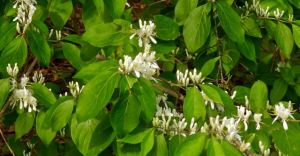
Amur Honeysuckle, new blooming, along the east side bank of Lake Cameron, April 20

Don’t delay: the Cherry blossoms came in March and have now given way to the leaves, as have the blooms from the Bradford Pears and the Red Maples. Even the Redbuds, who bloomed out early this month, have turned to leaf making. Now it’s Dogwood time–Virginia’s state flower!–and Azalea time in an array of colors!  Look also closer to the ground for wildflowers and flowering bushes that manage to show their colors where the ground isn’t mowed.

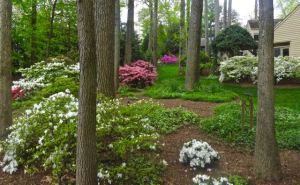
Multi-color Azaleas in Lake Newport garden, April 18

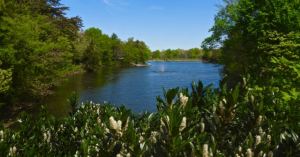
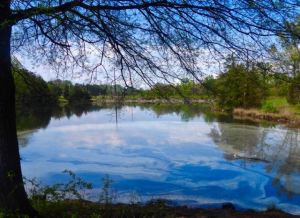
Panorama of Lake Cameron toward north, with Cherry Laurel in foreground, April 20

Dogwood in bloom in our community, south end, April 21

The last of the redbuds still blooming, southeast side of the lake, April 21


Yellow Woodsorrel and Purple Deadnettles in bloom at the north end, April 18

****************************************************

Climate Log: Serving Our Addiction vs. Doing the Hard Work of Saving the Future

While fully enjoying all the beauty and genius of the plants and animals (including humans) who make Earth so wonderful a place to live, I’m saddened by the slowness of U.S. governments, corporations, and individuals to give up our addiction to fossil fuels–even as each month sets a new record for high temperatures, and as extreme weather events occur more rapidly. (See the section below on the floods in Dubai).  We seem to be more willing to pay the ever-increasing billions upon billions for flood-and-fire damage repairs than to address the actual problem.

Politicians also deliberately ignore, to satisfy the fossil fuel cartel, the causal link between worldwide spreading drought and the alarming increase of human migrations, which are stressing national borders here and in other countries. These politicians would rather blame other governments and even the victims themselves, rather than placing the blame on the fossil fuel cartels.

But addictions, including ours to fossil fuels, are really hard to break, sometimes almost impossible, especially when they give us familiar pleasures, and especially when very powerful and relentless forces (such as oil companies, plastics industries, automakers, public utilities, and a whole political party) convince us that we have to build our entire lives around that addiction. In our community, the association directors frequently remind us that ours is a “smoke-free community,” which means that tobacco (or marijuana) smoking is not allowed either inside buildings or on the grounds, including the lake and its surrounding woods. Still, we frequently find cigarette butts on the paths and in the greenery, though most residents happily adhere to the policy and love the freedom from second-hand smoke. 

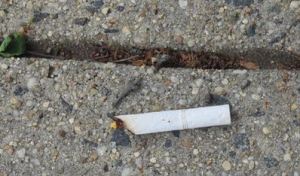
Song Sparrow near a cigarette butt on the north end path, Earth Day, April 22

But the “smoke-free community” idea, as laudable as it is, does not include the smoke that invisibly and relatively odorlessly pours from the exhaust pipes of most of the cars in the parking lots and from the exhaust chimneys on top of the buildings, all of which are gas heated and all of which feature gas stovetops and ovens. So acculturated are most of us to gas-fueled lives that we never think of emissions as smoke.  Yet, the latest annual research by the American Lung Association shows that 40% of Americans, the highest rate since the 70s, when the Clean Air Act was passed,  live in dangerously bad air, contaminated by gas-generated particulate matter, wildfire smoke, and vehicle emissions.

Despite these dangers, we really can’t imagine living differently. That’s especially true here in Virginia, where almost no houses have solar panels and renewable energy is rarely mentioned.

Oh sure, some of us, when we have money enough, peck at the edges of our addiction, like maybe buying a hybrid or even an EV, perhaps installing a heat pump and electric stove, or cutting back on plastics use and methane-belching beef. But with most elected officials dead set against incentivizing these pro-climate actions, the great majority of folks are caught in the web of the oil-gas cartels and are addicted even if they wish they weren’t.   

Chimneys on every building of our community emitting exhaust from gas appliances, Earth Day, April 22

We’re also completely acculturated to the noise of internal combustion engines, which you will hear on many of the videos of birds and scenery in this blog, as cars and trucks pass by on the surrounding highways, and as jets fly to and from Dulles Airport. As pretty as the lake looks, the birds, squirrels, and turtles have to adjust to the noise of all the surrounding engines, if they can.  The birds often have to work hard for their calls to reach above the steady din; if they can’t, they die trying.

And for the many species that hunt for their food by sound, the “white noise” of constant vehicle traffic makes their hunting harder, if not impossible. The habitat destruction that has caused the 30% decline of bird populations in North America since 1970 includes destruction by noise, not just the incessant killing of wilderness and wetlands being turned into farms, housing tracts, mines, and commerce.

Will we ever be willing to change our ways, or will our addiction win out? When will the costs of climate catastrophes grow so great that we will say “Enough!”? 

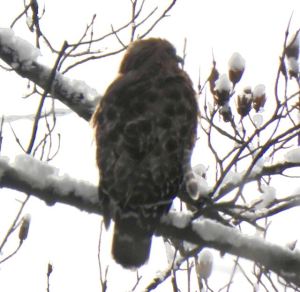
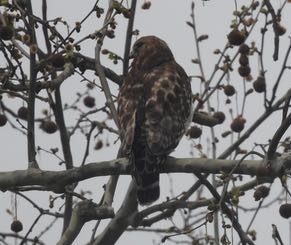
Red-shouldered Hawk atop Tulip Tree north of the dam hears and watches the traffic roar past on the neighboring highway, Feb. 1

Mallard pair swims toward south on snowy day as a jet roars overhead, Feb. 16

********************************************

Climate Log 2: Floods in the Dubai Desert? What’s Next in Extreme Weather? 

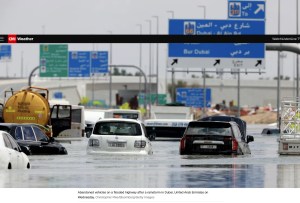
Abandoned cars in deep water on Dubai freeway after unprecedented storm, April 17 (Photo: Christopher Pike, Bloomberg, Getty Images)

Can you imagine the tallest building in the world, the Burj Khalifa (3000 feet high), being without power to run the elevators and cooling system? Can you imagine a home food supply system based mainly on app-ordered deliveries totally shut down? Can you imagine some of the most traffic-clogged highways in the world suddenly inundated with water rising waist high, and cars just abandoned for days?  Can you imagine all of this happening in a desert country that has no infrastructure to deal with rain? A country where there has not been a storm like this on record? 

Well, no need to have to just imagine such a place any more. It’s real in Dubai, in the United Arab Emirates (UAE), right now, because of a rainstorm of from 4 to 12 inches in 12-24 hours on April 16-17.

A year or 2 years of rain there is about 4 inches. Dubai’s infrastructure has been all about how to deal with relentless heat, drought, and the need to manufacture water via desalinization in order to support a robustly technological culture with U.S.-like skyscrapers, shopping malls more upscale than in almost any other place in the world, and an international workforce of low-wage immigrants, who perform the endless construction these ambitions demand. 

During the storm, those shopping malls became waist-deep in water, with rain pouring through roofs onto the high-end merch. These roofs were never meant for anything but sun screening and keeping the cool inside. Damage estimates are in the billions throughout the small emirate.

Dubai residents move from inundated dwellings after the storm, April 18 (Photo: Amr Alfiky, Reuters)

Will events like this happen again? Probably. But how soon? Who knows? Now we live in the chemical-emissions-caused world of very erratic, often extreme weather, where communities have to be prepared for drastic variations in temperature and precipitation. In this blog in February, I reported on ways that California is preparing for erratic variations in precipitation that that state had not seen before 2022, even though there had always been much slower variations from wet to very dry over longer periods of time. California is used to having to build infrastructure to handle different extremes, and Californians know that the costs are often prohibitive, causing ongoing conflicts between competing interest groups.

But how should a nation like the UAE proceed, when an event like this storm had not happened in memory? Given Dubai’s highly sophisticated, world-class economic goals, what would appropriate preparation look like? Intractable questions like these will become much more common everywhere as climate change intensifies.

********************************************

More of Virginia’s Remarkable Trees: Living through War

Ancient Catalpa lives on at Chatham Plantation, Falmouth, Virginia, April 9

Remarkable trees are not only those that are huge, stately, and symmetrically spreading. Some remarkable trees have just lived for many years, suffered damage, and yet survived through times of great disruption and tragedy. Often they have survived only with the concerned care of generous people.

One such tree is the Catalpa that grows just beside the historic main house of Chatham Plantation, across the Rappahannock River from the town of Fredericksburg, Virginia. Now maintained by the National Park Service, Chatham was built in 1771 as a multi-crop plantation by the Fitzhugh family, whose success came through the forced labor and dedicated industry of at least a hundred enslaved people.

By the time that the Civil War to free the slaves in the Southern states began in 1861, the then owners of Chatham abandoned the property, which was soon taken over by the Union Army of the Potomac. The Army turned it into a headquarters in late 1862 as they prepared for an attack against the Confederate Army, whose divisions were arrayed in the hills above Fredericksburg across the Rappahannock. This attack was one of the great tragic blunders of the war, as the Union troops were decimated. Chatham’s role changed once again, becoming an emergency hospital for thousands of the dying and wounded, whose cries still seem to echo there. 

Today, the gnarled and shriveled Catalpa seems a still living symbol of the horrors that occurred at Chatham, which has been restored by the Park Service as a museum of the events of over two and a half centuries. Besides the Catalpa, the Chatham grounds nurture a splendid array of magnificent old trees that honor the memory of those who were in bondage there or who gave their lives in war. 

For an excellent summary history of Chatham, I recommend this article and video from the National Park Service.

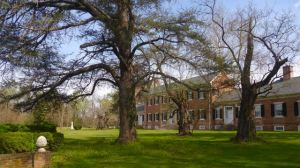
Chatham Manor and the venerable Deodar Cedar, Black Locust, and Catalpa trees. We visited there on April 9, the 159th anniversary of the surrender of the Confederate Army at Appomattox, Virginia, two years beyond the tragic events in Fredericksburg.

The Brompton Oak across the River in the Heights above the Town

Hundreds of years old, the Brompton Oak stands beside the manor of the same name, which witnessed the horrific fighting in 1862 in the Civil War.

Across the Rappahannock and far up the heights above the town of Fredericksburg lies Brompton Manor, built in 1838. When the Union troops tried their ill-fated, catastrophic attack up those heights in December 1862 against the firmly entrenched Confederate Army, Brompton Manor stood about 200 yards above the smoke and cries of battle. The headquarters of Confederate general James Longstreet during the battle, the manor house–and the massive, long-lived oak beside it, now known as the Brompton oak–were unscathed by the fighting.

But Brompton, too, became a hospital during this battle, and indeed through battles over the next two years of the War. So many of the battles from 1862 to 1865 occurred here in Northern and Central Virginia, the fighting and disease taking the lives of hundreds of thousands and disabling many thousands more. The manor house and the oak today, majestic and peaceful, with bright tulips and flowering trees all around in the April breezes, obscure the horrors of the conflict, as they do the bondage of the enslaved people who labored here.

Brompton oak and manor house, as seen from the Sunken Road, from which the entrenched Southern army mowed down the Northern troops advancing in December 1862 from the river far below.

As at Chatham Manor, perhaps only a mile from Brompton but playing a similar role during the battle, many long-lived trees have survived and still grace the grounds. Besides the historic Brompton Oak, another majestic tree that captured our attention was a 100-foot tall sycamore down the steep hill from the manor grounds and beside the Sunken Road, where some of the bitterest fighting took place. High up in the sycamore perched another combatant always ready for battle, a Red-shouldered Hawk, calmly waiting for the next action. 

Red-shouldered Hawk observes the one-time battlefield from the top of a huge sycamore beside the Sunken Road in front of Brompton Manor, April 9.

***************************************

The April 2024 Photo/Video Gallery: Birds, Bees, Blooms, and Even a Cow or Two (and a Snake!)

Cormorant pair on and beside the foot-powered boats that take residents silently over the waters, Earth Day, April 22

Huge old Red-bellied Cooter and baby, on log along the southeast shore, Lake Cameron, April 24

Four Canada geese and three Red-bellied Cooters enjoy the southeast cove on a cool afternoon, April 20

One of our first bumblebees feeds on the nectar of the newly-blooming White Azaleas beside the gazebo on the west shore, April 20

American Robin calls from atop a Walnut tree in the east woods, April 15

Japanese Pieris in bloom on east side of the community, April 14

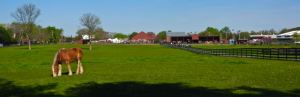
This Clydesdale welcomes us to a visit to nearby Frying Pan Farm Park, one of the few farms still left in our suburban county, April 16

American Goldfinch in morning sun calls from atop a Willow Oak on the east bank of the lake, April 16, while Blue Jay also calls and walkers comment

Our first sighting of an Eastern Kingbird, in Red Maple in the north end woods, April 16


Another view from Frying Pan Farm Park: Rhode Island Red cock and colorfully varied hens, April 16

Under water and just after sunrise: 2 large Red-bellied Cooters swim to the northwest shore, April 16

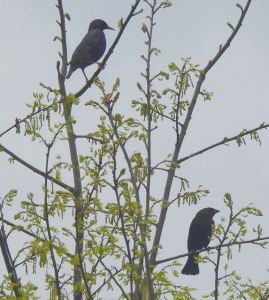
European Starling and Brown-headed Cowbird in Pin Oak on the east side, April 17


At nearby Lake Newport, five Mallards, four of them males, on the dam outlet structure, April 18

At Lake Newport, Blue Heron and Canada Goose by the dock. Heron takes off and House Sparrows chatter in a nearby nest, April 18

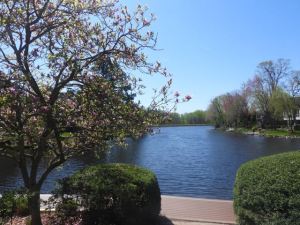
Lake Newport: Magnolias in bloom and panoramic view across the lake toward east, April 14


Lake Cameron: Male Mallard guards the nest on the east shore after a storm, April 15

Lake Newport: as seen from lakeside path, Red-shouldered Hawk moves up and down chimney after having captured 6-foot snake, apr. 18

Lake Newport: fellow walker had alerted us to the hawk having captured the snake. This blurry photo is from her smartphone. Amazing. April 18


The pollen-filled Lake Cameron after the storm on April 15, southeast cove

Lake Newport: Red-winged Blackbird calls in Willow tree on sunny morning, April 14

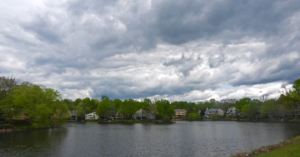
Lake Newport panorama toward north, with angry clouds, April 18

Lake Cameron: Bumblebee flies and feeds among the pillowy White Azaleas, west side, April 20

Oh, yes, the Cows: a Hereford and a Guernsey at Frying Pan Farm Park, April 16

And on to May, with more adventures in store…