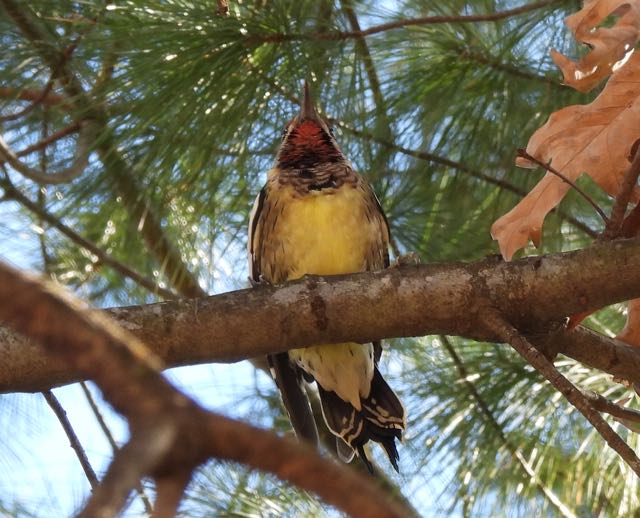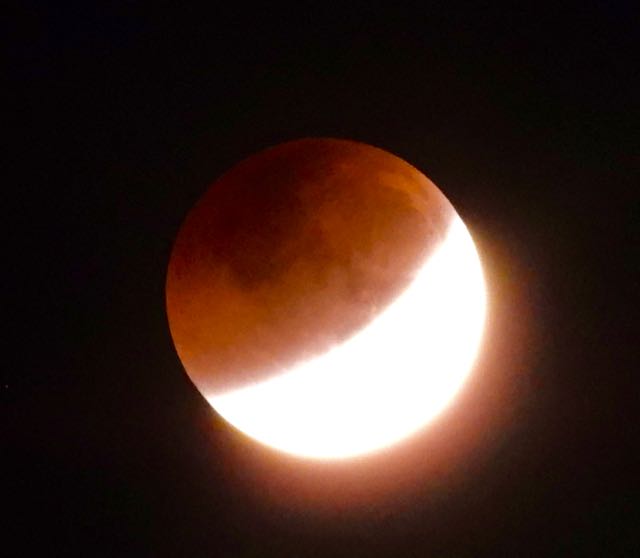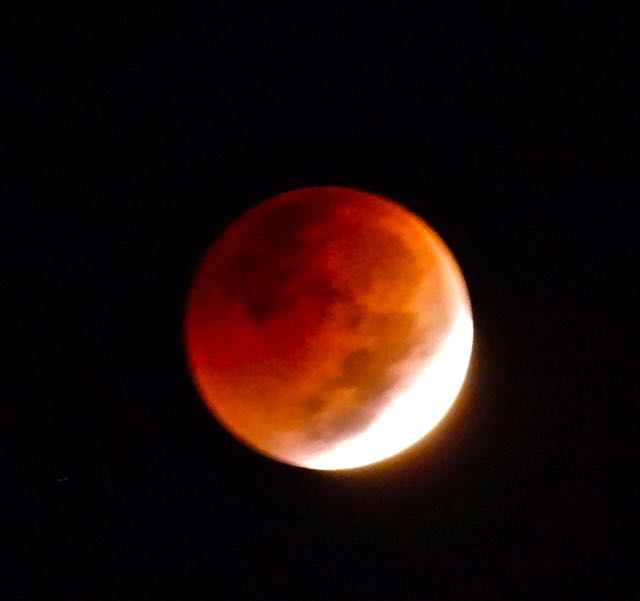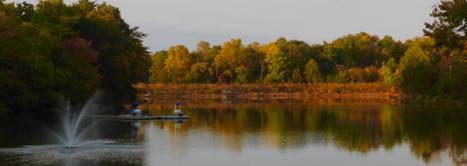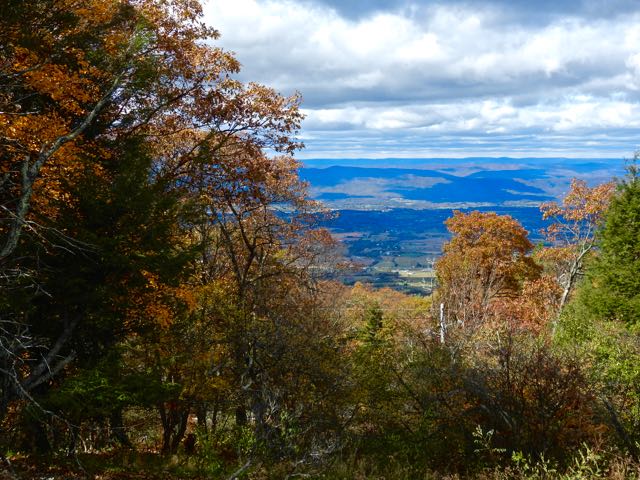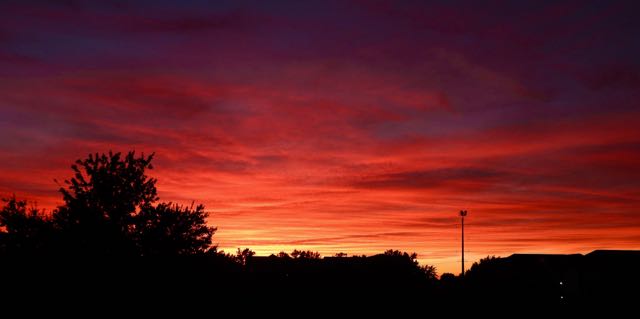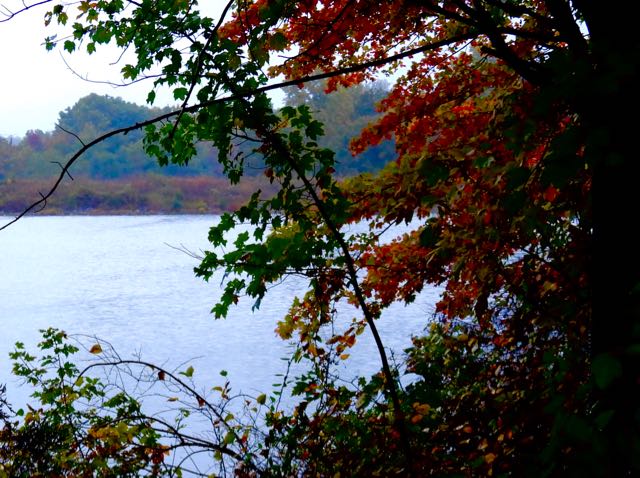
February 2023: Life Ends, Life Begins, Life Swims on in Our Little Lake

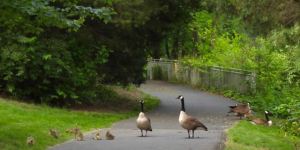
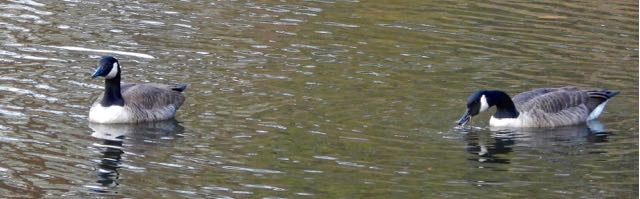
lake cameron canada goose pair eyes meet feb 23 2023 - 1

Canada goose pair exchange private messages on Lake Cameron

In the blog this month:

Videos: Life Ends, Life Begins, Life Swims on in Our Little Lake

No Snow. Early Spring? On the Lookout

Meanwhile in California…

Going Back in Time in the Potomac Valley

February 2023 Gallery: The Great Backyard Bird Count

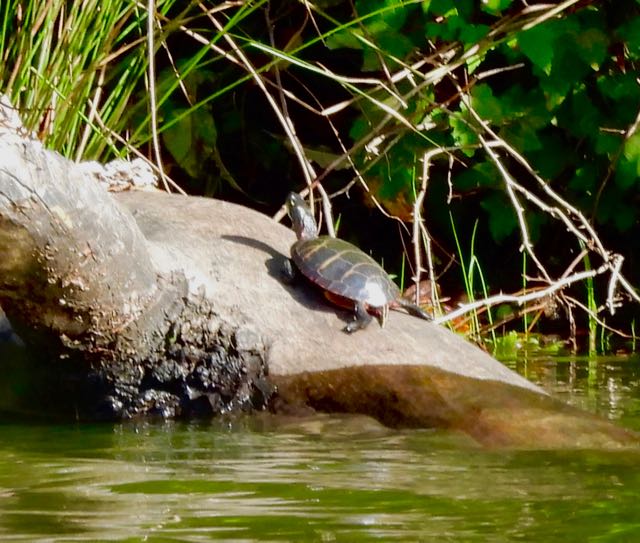
lake cameron turtle extends neck west side closeup feb 23 2023 - 1

One of our Lake Cameron turtles exults in a high of 79 on Feb. 23

Videos: Life Ends, Life Begins, Life Swims on in Our Little Lake

This month was a bonanza for dramatic videos of life in our little Lake Cameron. Then again, every time we walk around the lake with camera in hand, something vividly audio/visual happens, and sometimes I’m fortunate enough to capture it. The first video shows a few moments in the life of two of our community members, one of our great blue herons and one of our small fish who populate the lake. Be patient as you watch this 3:23 movie:

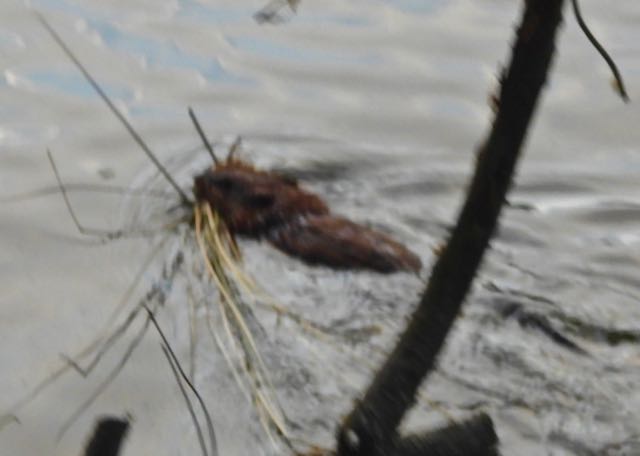
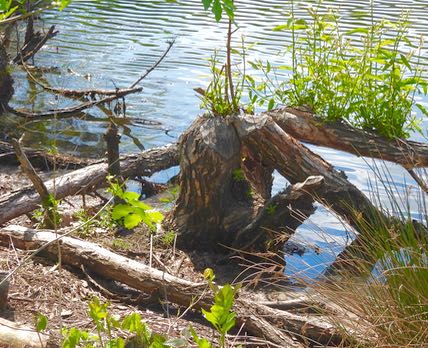
Video 2 shows a rare sighting of one of our members who lives amphibiously on the west side of the lake. We know that these neighbors are present and working because of their effects on some of the lakeside trees, but we rarely see them. I just happened to be there for a sighting last week.

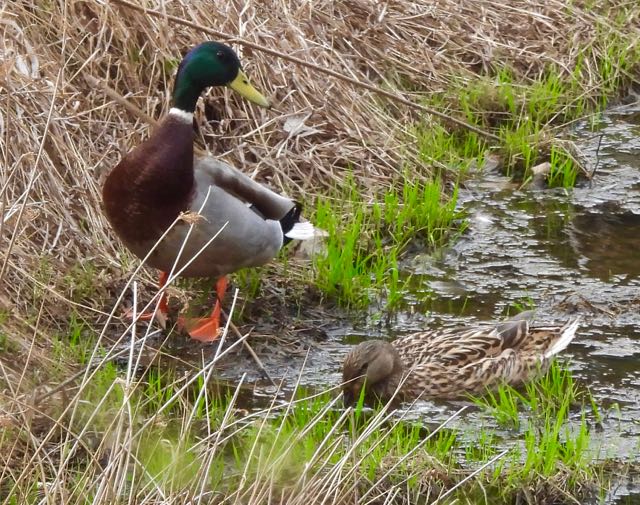
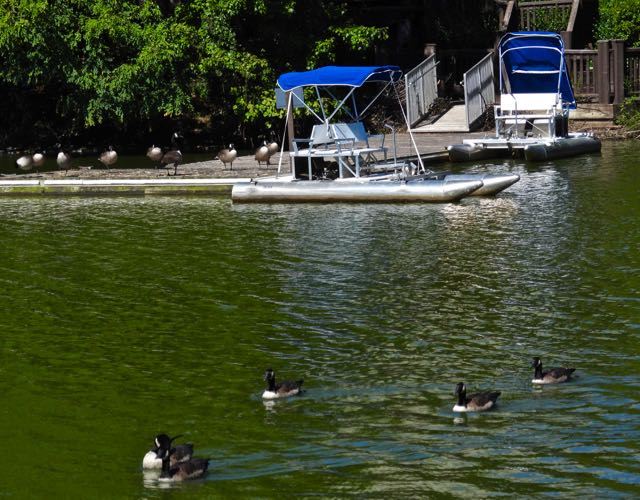
Video 3 shows a different stage of the life cycle of the lake, performed by community members who, unlike the beaver, are very public and love to make their presence known through their voices, their loud arrivals and departing flights, their strutting through the community, and their sheer numbers, often more than 30. They even put on a show of events that some of us might consider TMI. But, hey, life goes on and theirs is a celebration of life.

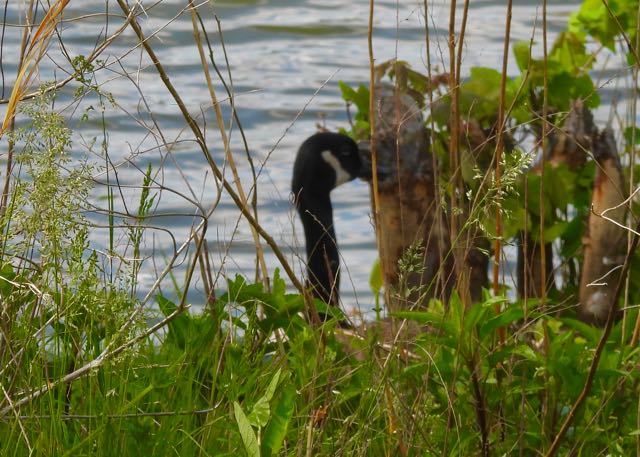
And here are two more brief snippets of Canada geese exuberance:

Life on Lake Cameron is never boring. The bird choir is always in tune, and there’s lots to see when you walk and watch.

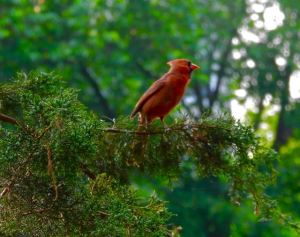
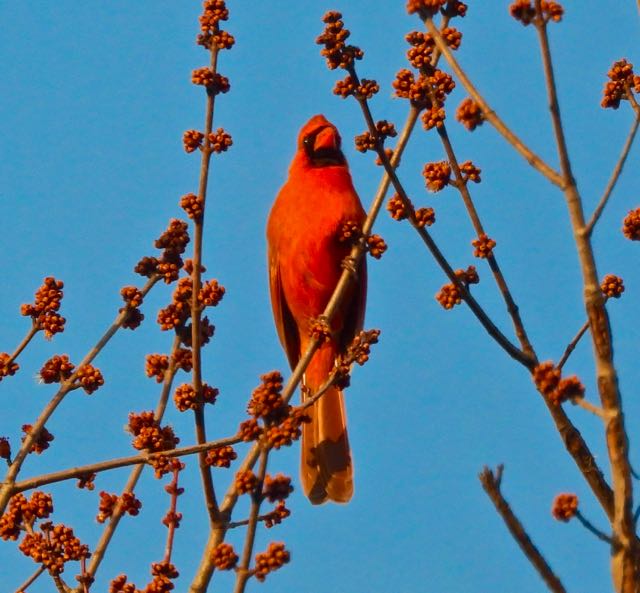
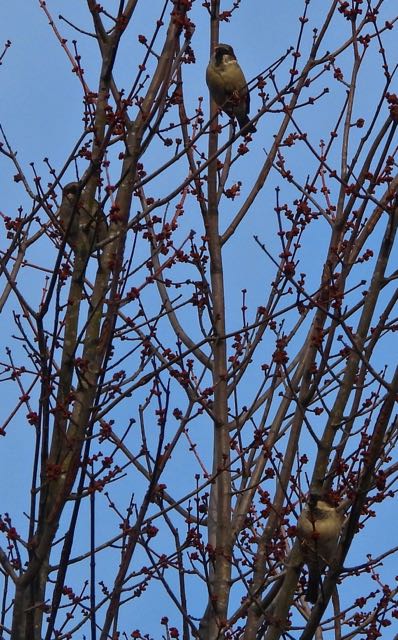
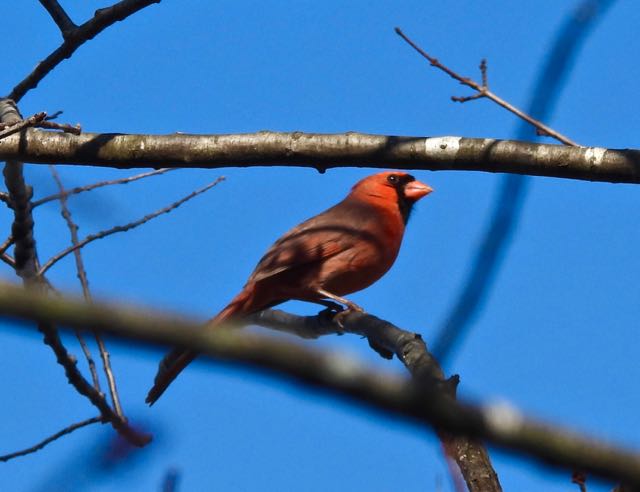
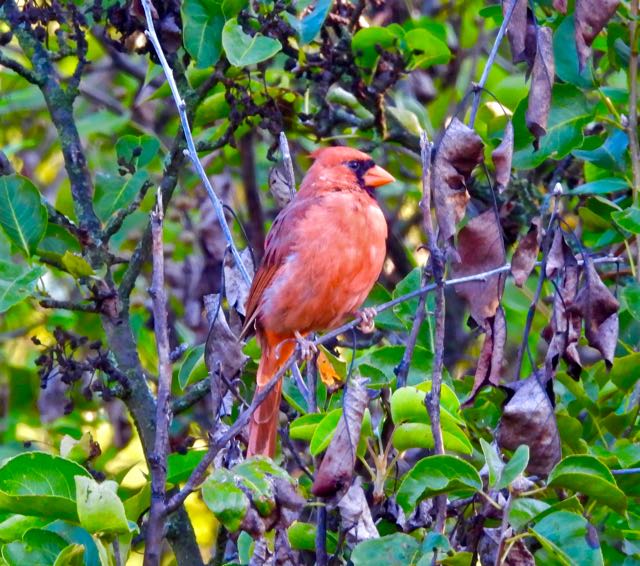
lake cameron male cardinal amid buds in early morning sun feb 25 2023 - 1

Male cardinal amid the red buds in early morning sun, Feb. 25

No Snow. Early Spring? It’s Coming

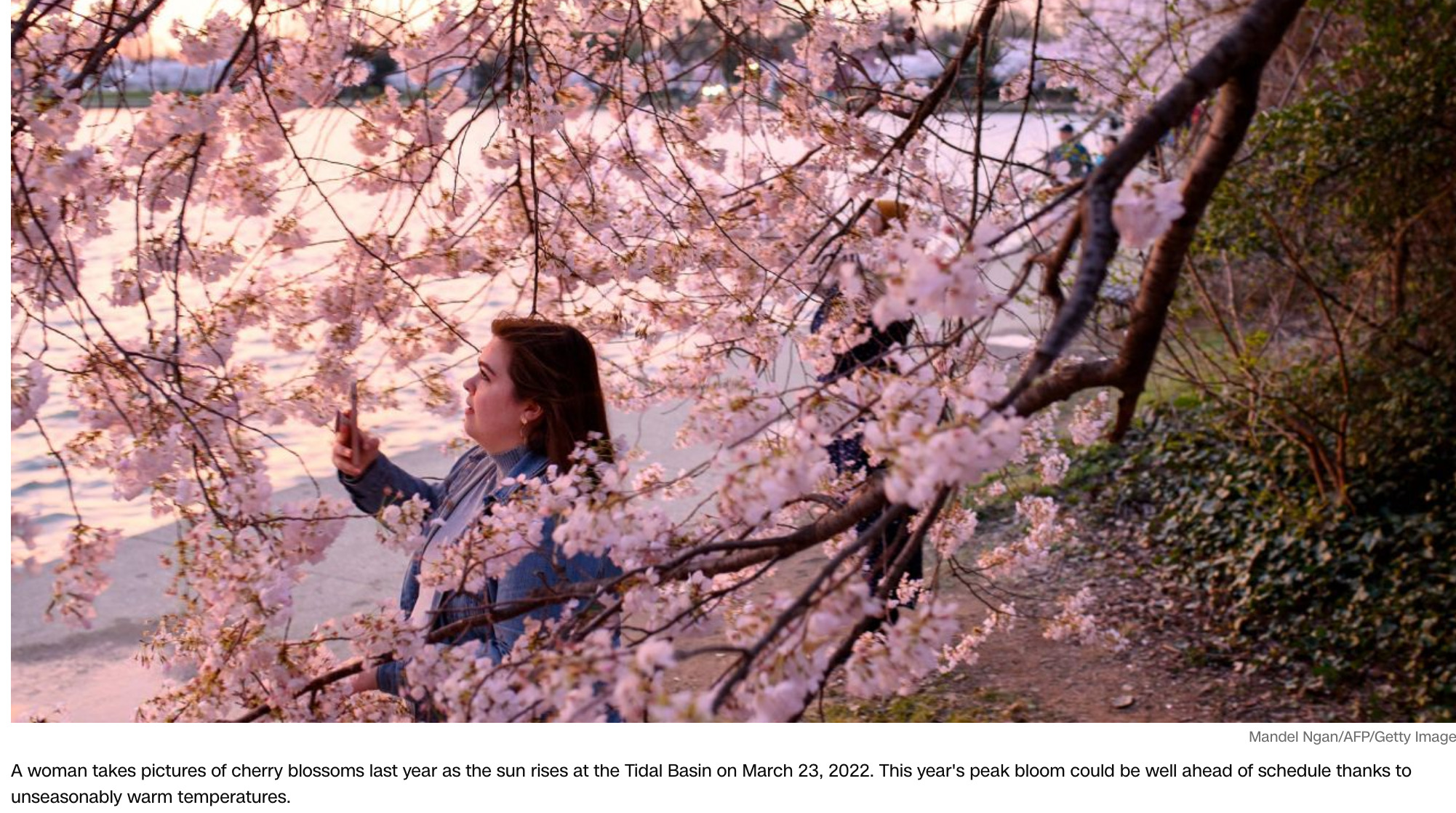
The signs of an early spring here by Lake Cameron are clear enough. CNN reported today (Feb. 25) that according to the National Weather Service this year’s spring blooms may be the earliest on record in the Eastern US–part of a warming (warning?) trend that has been slowly happening for decades. In the era of human-induced climate change, this should not be news, but to this returnee to Virginia it is sort of a shock. After all, we were hoping for at least some snow, but the most we got in January was a nice little coverlet on our trees and cars on the 31st, just enough for a few homey pics before it disappeared in the warm afternoon sun.

I had been remembering the snows of yesteryear in my young Virginia adulthood, when I had to trudge through 4-foot snowdrifts to get to a store for milk for a toddler because the roads were closed, and when, as the kids grew, we built igloos into the 7-foot piles of fresh snow that we shoveled from the driveways and sidewalks. Oh, and the sledding on the neighborhood hills and the snowball fights and…oh well. At least we have those memories. 

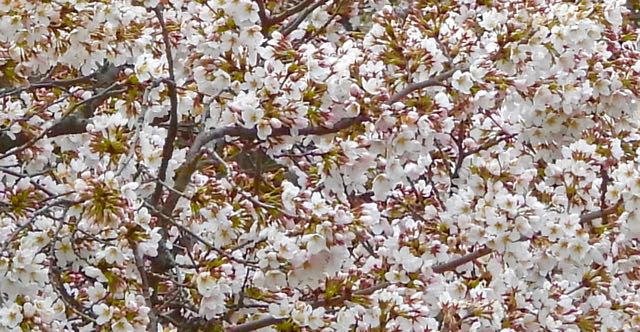
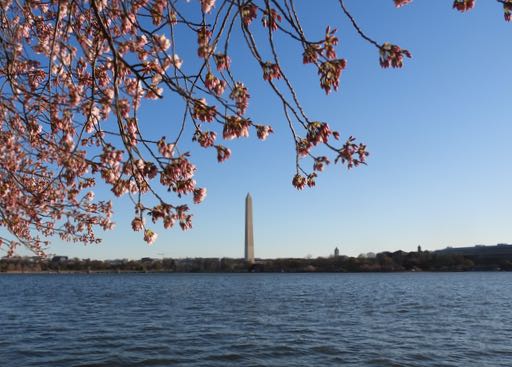
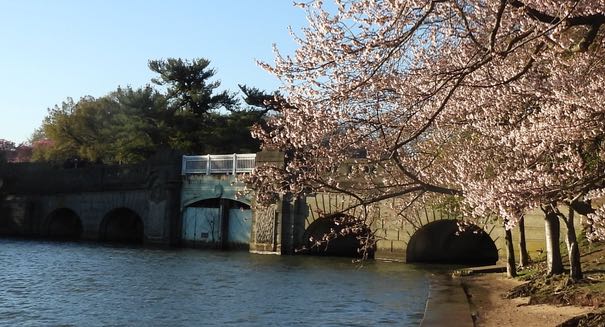
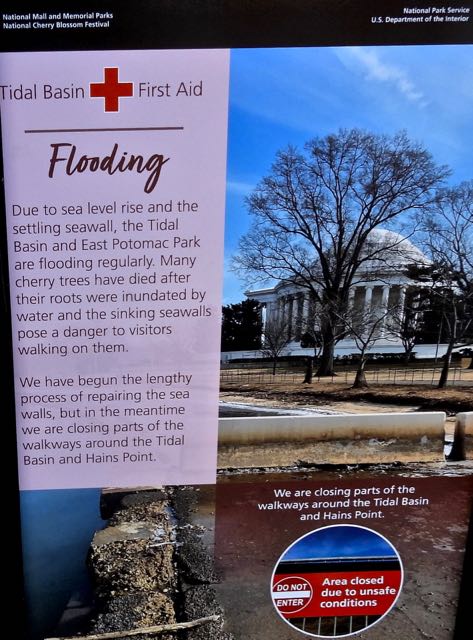
Meanwhile, if I can set aside my worries about droughts, floods, sea-level rise, and the melting polar icecaps, I can look forward to the pastel color burst and intoxicating fragrances of our first spring here by Lake Cameron. Then we can drive into DC to revel in the cherry blossoms by the Tidal Basin that we always looked forward to when we lived here before our move to California. The blossoms should be appearing here earlier than ever this year.

Screenshot_2023-02-25 DC's iconic cherry trees could hit a record-early peak bloom as temperatures soar CNN

Archive photo, CNN/Getty Images

Meanwhile in California…

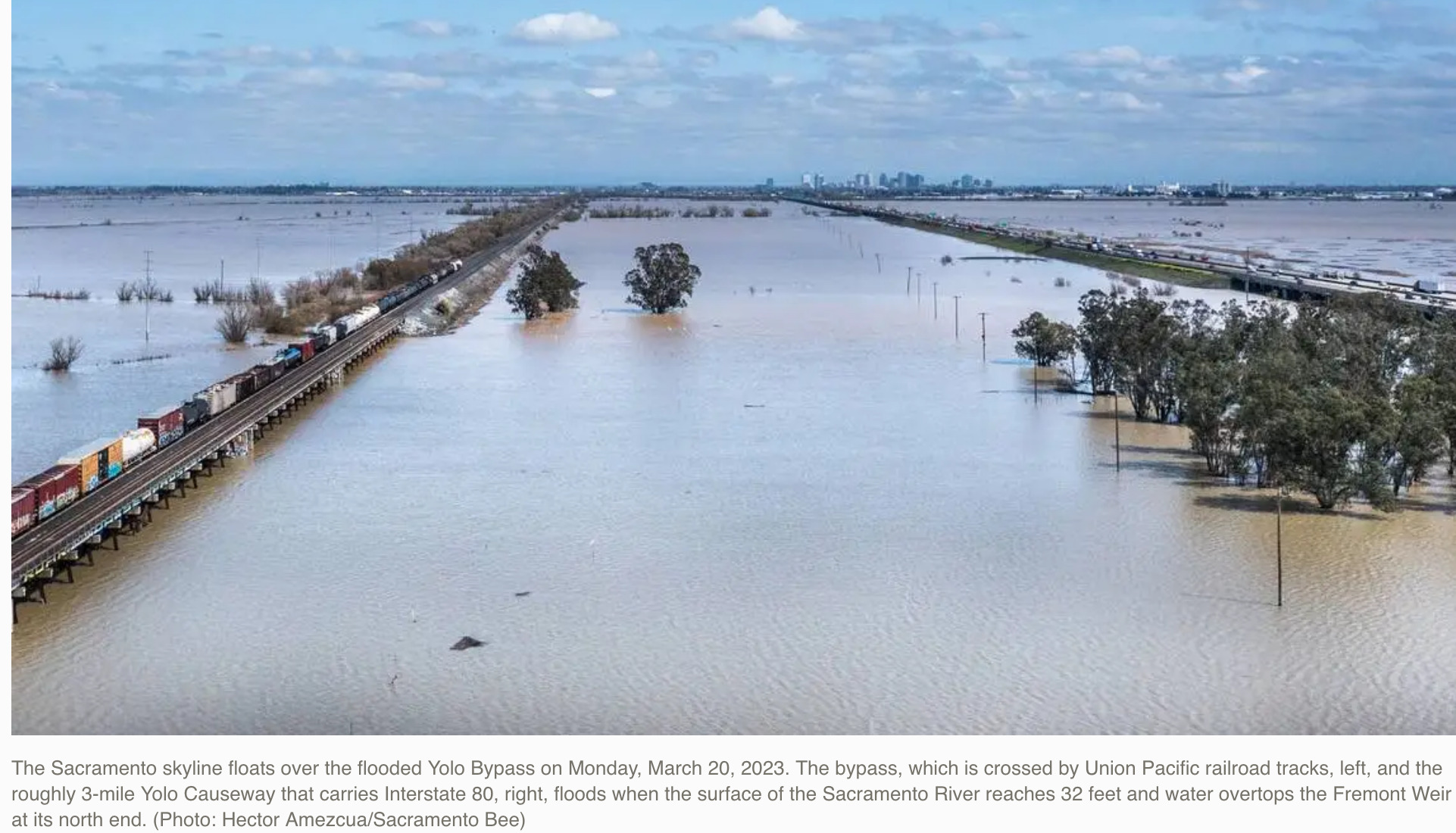
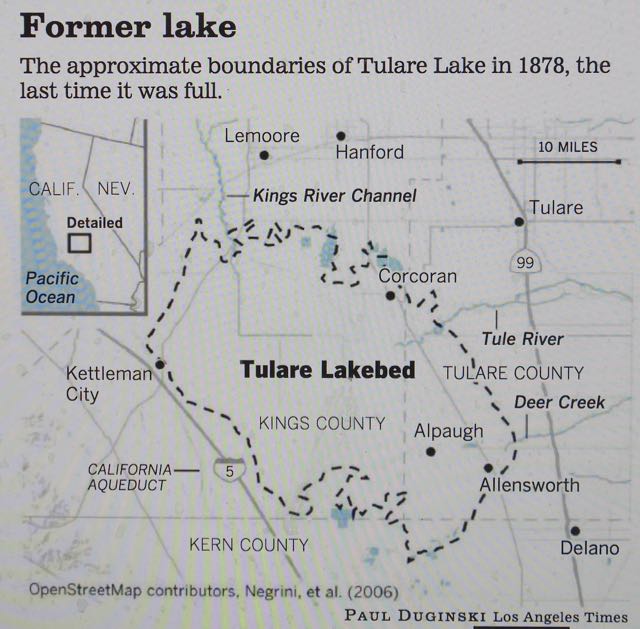
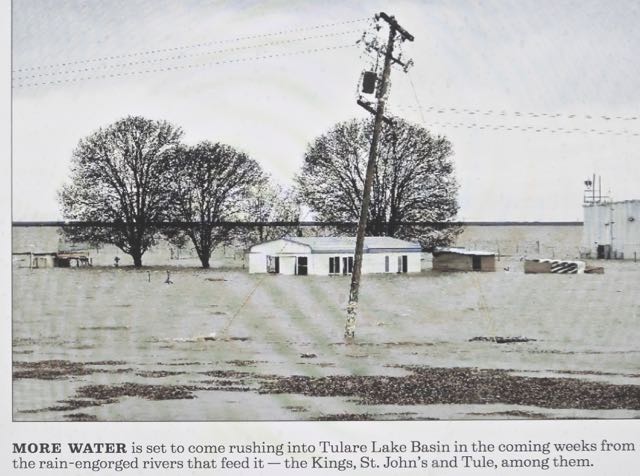
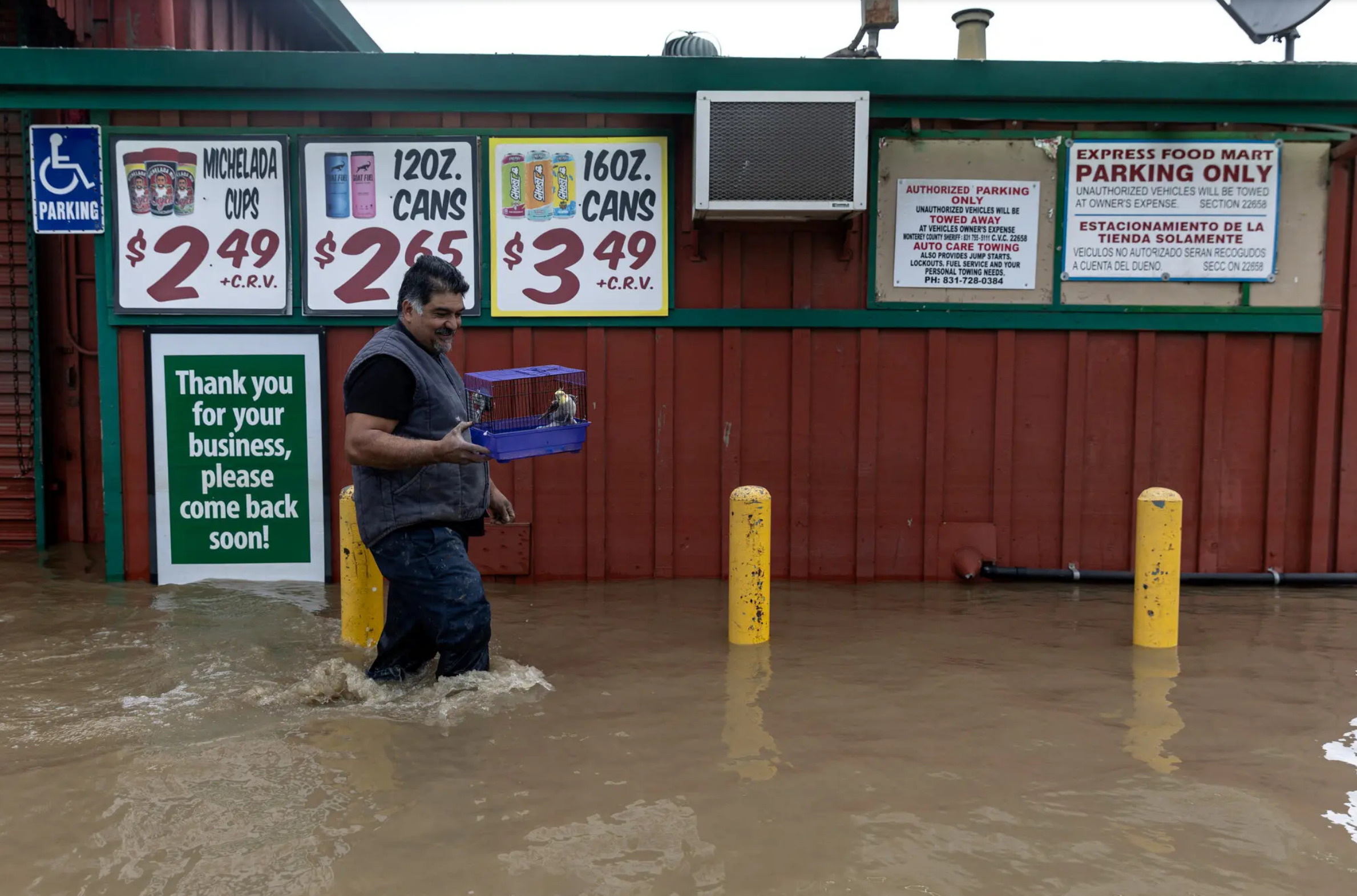
After a mostly rainless February, the winter storms returned with a vengeance this week, shocking most Californians. As I write this on Feb. 26, the Golden State is experiencing record rains and snowfalls, including in places that almost never have seen snow, not to mention “graupel,” which meteorologists describe as snowflakes coated in slushy ice. Communities in the Sacramento and San Joaquin valleys, already reeling from floods in December and January, are now dealing with new threats.  And the forecast for new snow in the already snow-heavy Sierra predicts as much as 1-3 more feet. Our daughters who live in coastal Long Beach, in Los Angeles County, will be keeping us informed about the effects there as the strange weather continues to pound the state.

Going Back in Time in the Potomac Valley

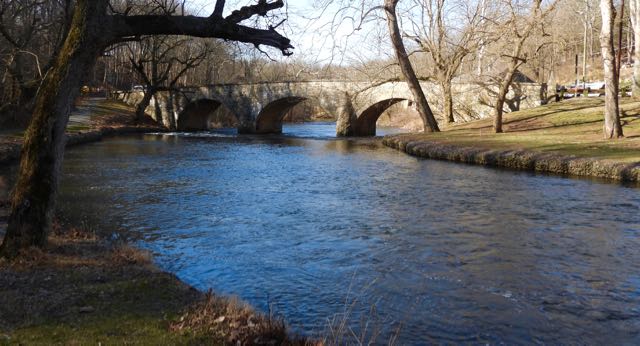
potomac valley antietam creek at boonsboro bridge feb 18 2023 - 1

Antietam Creek at the Boonsboro, MD, bridge

Last Saturday, we continued our exploration of the Potomac Valley in Western Maryland–and then across the border into Pennsylvania.  This is territory where Jean’s 18th century ancestors settled and some of her distant cousins, who are dairy farmers, still call home. The peaceful scene shown above obscures the horrific events of September 1862 that occurred some 8 miles southwest of here near the village of Sharpsburg–the Civil War battle of Antietam. Moreover, in the aftermath of the battle of Gettysburg the following July, this very site could have been the scene of another battle between North and South, had the Union generals chosen to attack the retreating Confederate forces, who crossed the creek here on their way back to relative safety in Virginia. 

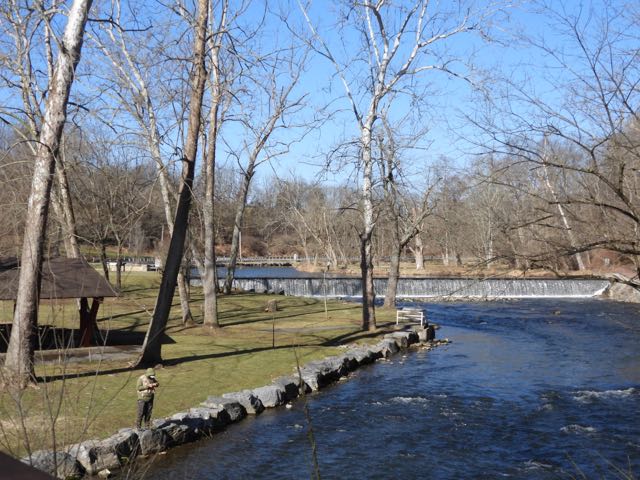
potomac valley antietam creek at devil's backbone dam feb 18 2023 - 1

Solitary fisherman on Antietam Creek, at the Devil’s Backbone Dam, site of an 18th century mill.

Our main destination last weekend was farther up the Potomac Valley, to the towns of Williamsport, MD, and Welsh Run, PA, both of which grew up along another Potomac tributary, Conococheague Creek, named by the Lenape people, who lived in this region for thousands of years before being decimated and eventually driven out by the settlers from Germany and Great Britain.

potomac valley conococheague creek enters potomac at Williamsport feb 18 2023 - 1

Conococheague Creek enters the Potomac at Williamsport, MD

Eighty years later, and fifty years beyond the settlers’ war of independence from Great Britain, Williamsport became another stop along the Chesapeake&Ohio Canal, which was built along the often treacherous Potomac River as a placid shipping artery into the continent from Washington, DC. At Williamsport, the canal crosses the Conococheague via a novel aqueduct over the creek. So a 19th-century waterway crosses above the ancient waterway used by the Lenape and other native peoples.

potomac valley C&O aqueduct crosses conococheague creek at Williamsport feb 18 2023 - 1

The Chesapeake&Ohio Canal aqueduct crosses above the Conococheague

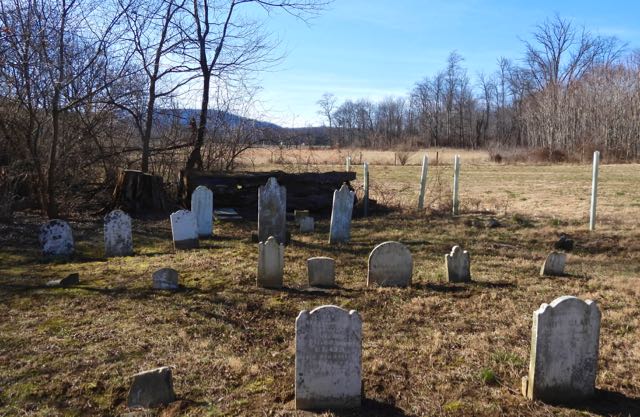
In Welsh Run, PA, some 20 miles north of Williamsport along the Conococheague, refugees from Wales established a tiny community in the mid 18th century. Remaining from that time is a cemetery, which has been restored.

potomac valley old welsh cemetery at conococheague institute feb 18 2023 - 1

The old Welsh cemetery at the Conococheague Institute

In the midst of the current-day rural farming culture in this region along the Maryland-Pennsylvania border, the Conococheague Institute, a foundation dedicated to preserving the memory of those turbulent times in US history, is restoring some 18th-century structures in Welsh Run and holds weekly events involving artifacts and records from the 1700s. We visited the Institute last weekend and spoke with members of the volunteer and professional staff.

  February 2023 Gallery: The Great Backyard Bird Count

Last weekend the annual Great Backyard Bird Count also took place. This year’s event saw a half million birders from 200 countries sending in their lists of the birds they observed during at least 15 minutes between Feb. 17 and 20. Sponsored by the Cornell Lab of Ornithology, the Audubon Society, and Birds Canada/Oiseaux Canada, the GBBC is the largest citizen science event each year. This was my fifth year participating, and the first since moving back to Virginia. This month’s gallery includes photos of birds I observed on Sunday and Monday, the 19th and 20th.

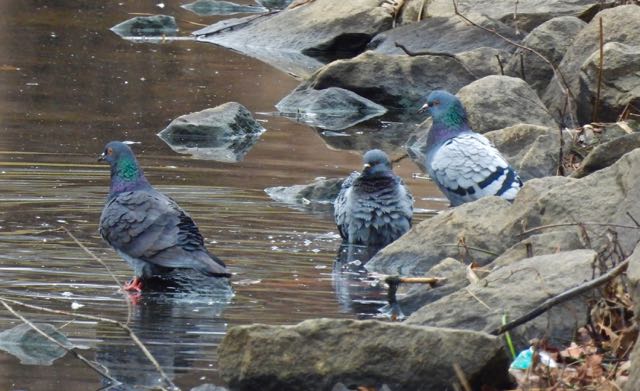
lake cameron 3 pigeons bathe at north end of lake feb 17 2023 - 1

3 rock doves at the north end of the lake

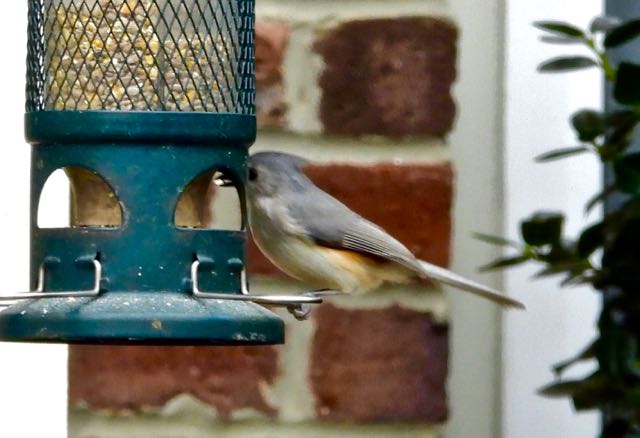
lake cameron tufted titmouse at feeder by lake feb 17 2023 - 1

A tufted titmouse at a feeder in our community

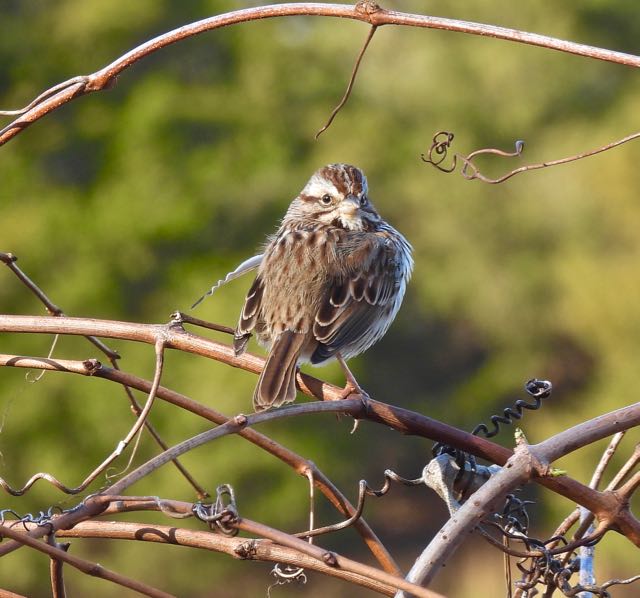
lake cameron song sparrow sideview in tree by lake feb 17 2023 - 1

A song sparrow in a tree by the lake


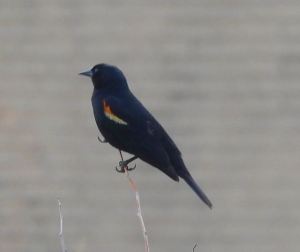
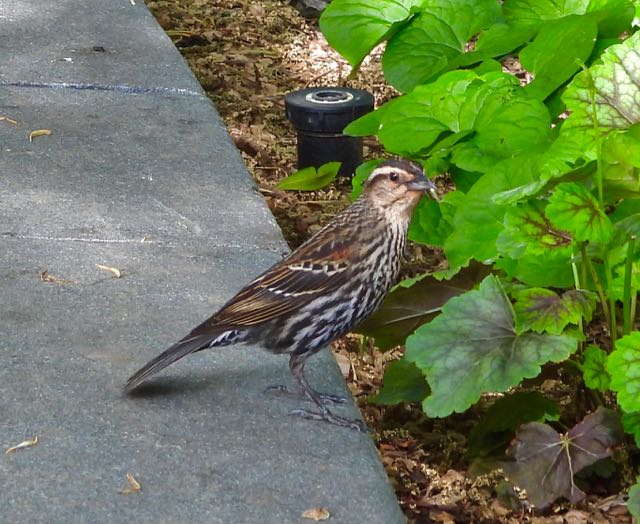
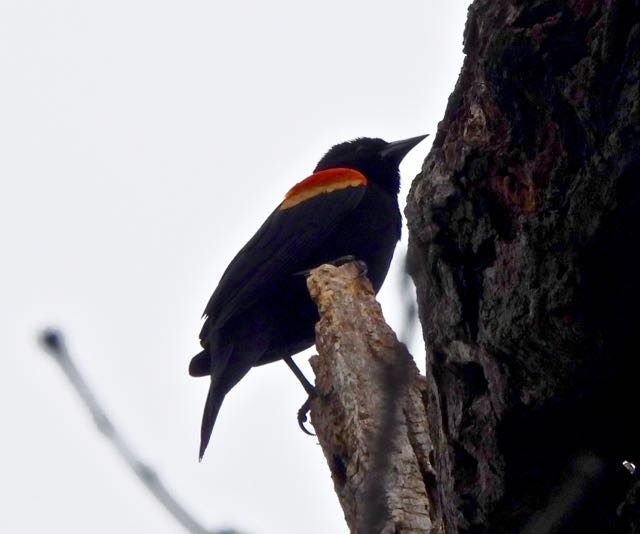
lake cameron red-winged blackbird sideview feb 17 2023 - 1

Red-winged blackbird

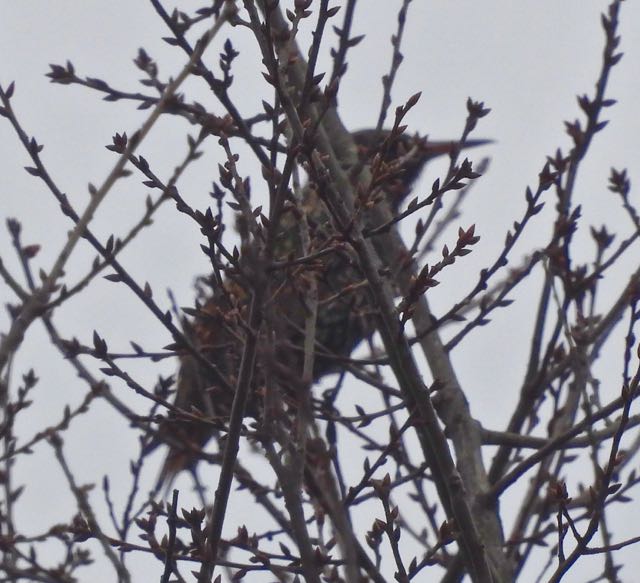
lake cameron european starling sideview in tree buds by lake feb 17 2023 - 1

A European starling hiding in new buds

lake cameron savannah sparrow in tree by lake feb 17 2023 - 1

Savannah sparrow

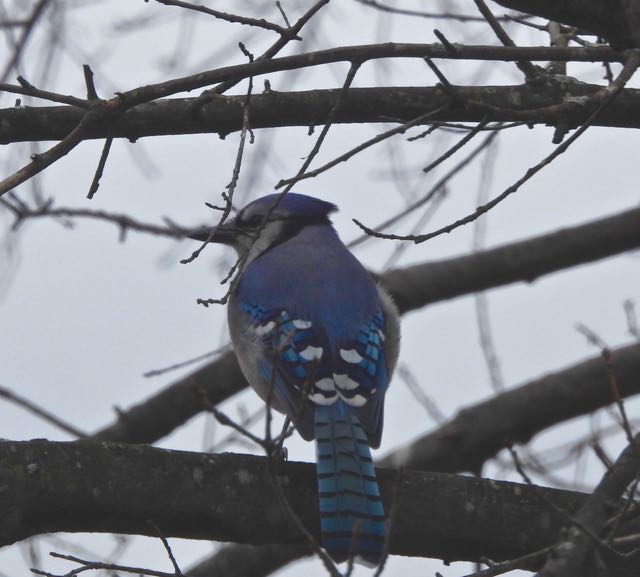
lake cameron bluejay in tree by lake feb 17 2023 - 1

Blue jay

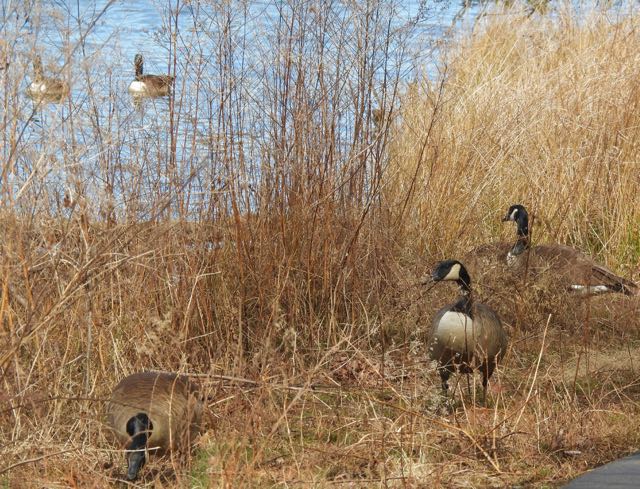
lake cameron 5 canada geese in brush and in lake feb 17 2023 - 1

5 Canada geese in brush and lake

lake cameron chipping sparrow water edge east side feb 11 2023 - 1

Chipping sparrow in the lake woods

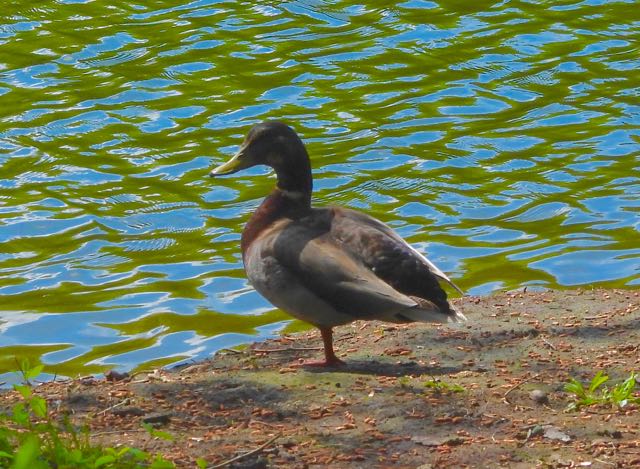
lake cameron mallard pair early morning feb 12 2023 - 1

Mallard pair

Version 2

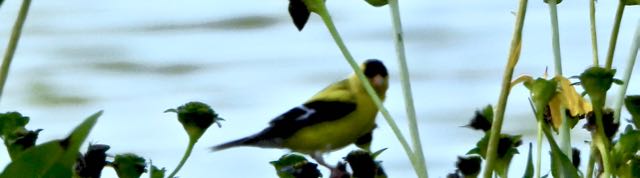
3 American goldfinches

lake cameron male northern cardinal SE side feb 21 2023 - 1

Male Northern cardinal

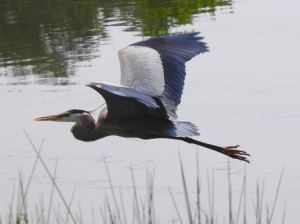
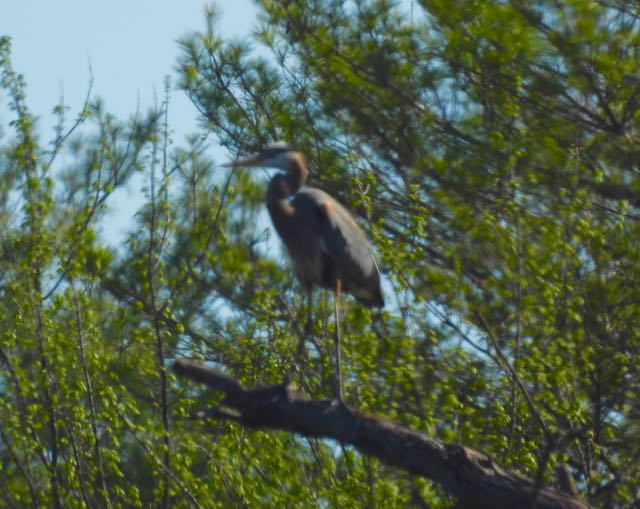
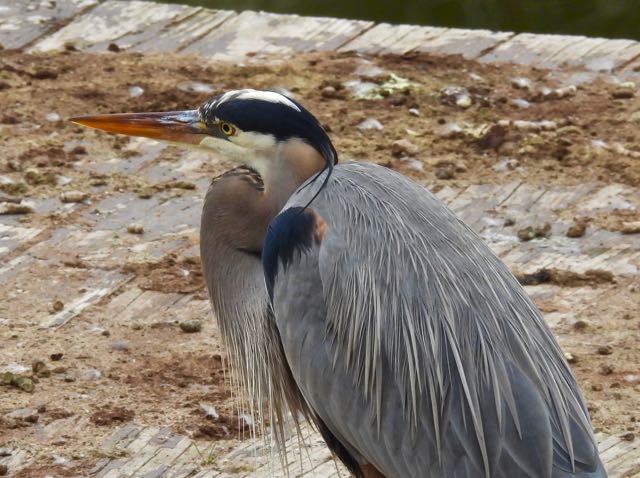
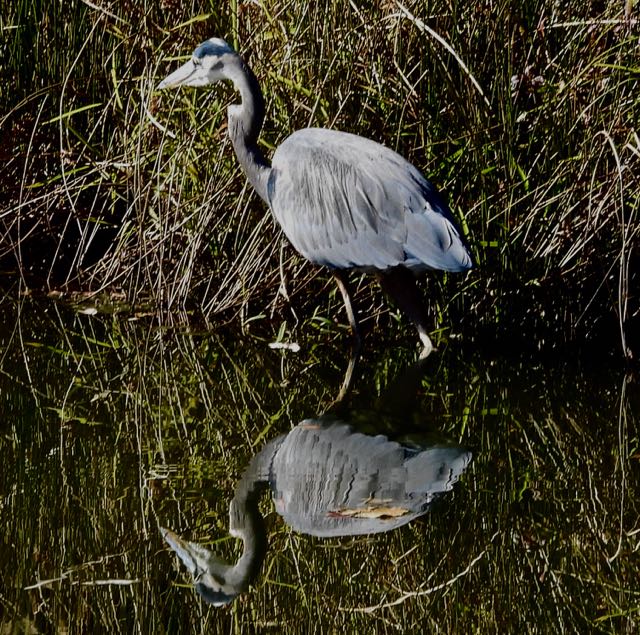
lake cameron blue heron focused on dock feb 17 2023 - 1

Great blue heron on the dock in the lake


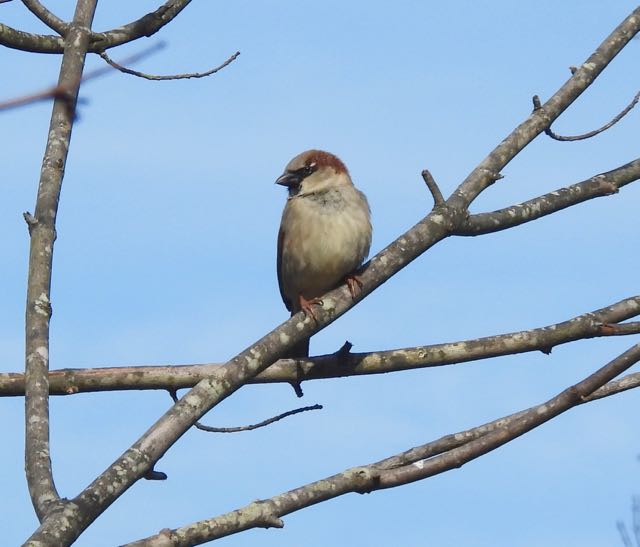
lake cameron house sparrow in tree above lake feb 17 2023 - 1

House sparrow

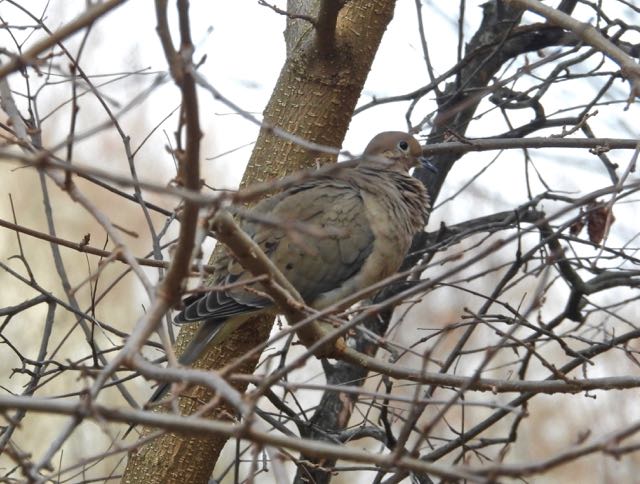
lake cameron mourning dove east side of lake feb 19 2023 - 1

Mourning dove


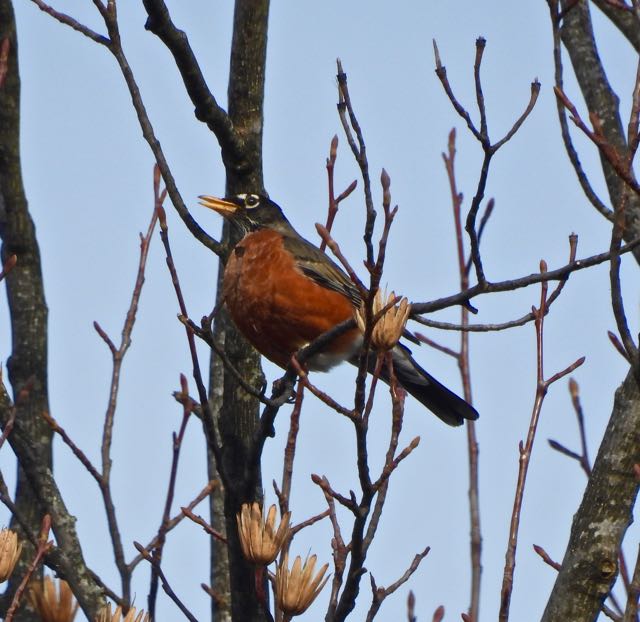
lake cameron red robin (one of flock) in tree north end of lake woods feb 19 2023 - 1

First red robin of the year


And on we spring to March!

January 2023:Watching the CaliFloods from 2500 Miles

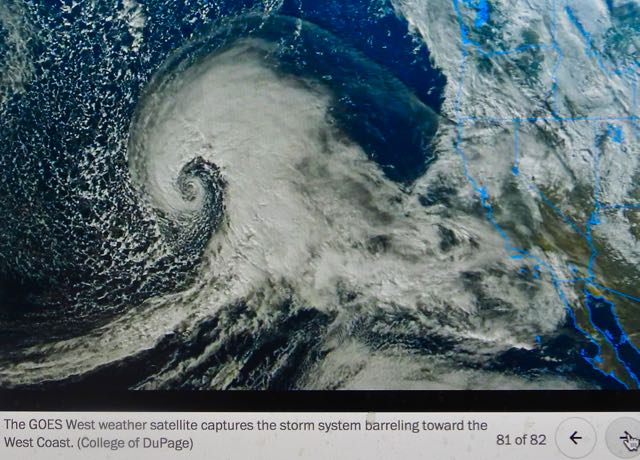
california storms satellite image wash post jan 11 2023 - 1

In the blog this month:

Do the California Floods Mean Anything for the Drought?

Exploring More of the Potomac Valley

January 2023 Gallery: Old Friends, New Visitors

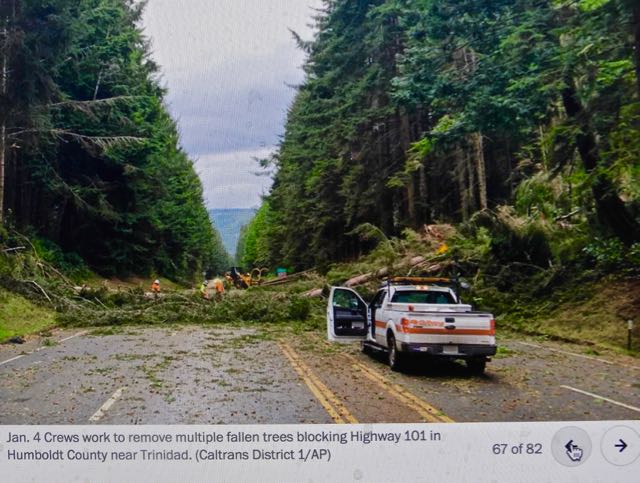
california storms tree falls humboldt wash post jan 11 2023 - 1

Wind and rain uproot trees to block Highway 101 in far northern California (Washington Post)

What do the six atmospheric rivers mean for the California drought?

Maybe nothing. Maybe something. Too early to tell.

It was weird for me to try to follow from 2500 miles away the weather reports from the National Weather Service as the six “atmospheric rivers” blasted across California from late December to mid January. Before we moved back to Virginia last spring and summer, we were always in the middle of the weather tumult that is California. I was always fretting about the state of the plants in the garden, and bemoaning the increasingly obvious impacts of climate change, namely the record drought and the steadily rising average temperature. But now my garden is a fond memory, and all I can do is watch from afar, and wonder if the screaming headlines about floods and devastation match what is true on the ground in the very different parts of the state.

As a Californian, I never assumed that the weather in one place in the state would be the same as in others. California is a huge state; it spans 800 miles of the Pacific Coast and almost 300 miles from ocean to mountain peaks. It has as many or more micro-climates as counties (58). On the same summer day, the high temp in Davis could be a sun-baked105 and the high temp in Oakland, 70 miles away, could be 51, blustery, and cloud-covered.

So it was disorienting to read national headlines day after day proclaiming the devastating floods “across California,” as if the effects were the same everywhere.  So I did what I would have done had I still been there: I checked the National Weather Service for the rain totals for different parts of the state, and, sure enough, found big differences. Yes, the coast in the far north, Humboldt County, received close to 50 inches of rain, truly alarming. Coastal sites farther south, including Santa Cruz and Santa Barbara, received a way-above-average 25 inches since the start of the “water season,” which is measured beginning October 1.

In contrast, my region, around Sacramento, and the LA/LongBeach region, where our daughters live, had almost 14 inches, more than average by January, but not remarkable–except that the previous three water seasons produced less than half of average! Even more sobering is that Fresno, in the heart of the agriculture-intensive Central Valley, has received only 9.3 inches this water season, about average.

So what will the rain totals mean for beating the drought? Well, the state water authority has already gone out on a limb by allocating to agricultural producers 30% of all the water it projects will be in the state’s reservoirs this year. That’s a huge increase over the 0-5% it has allocated the past two years as reservoir stocks have steadily fallen.

This year’s rosy projection is based on hope that the snowpack in the Sierra Nevada–which is now more than 200% of average in January–will not disappear by late spring, which it did last year, when a rainy October and December 2021 were followed by 9 straight months of no rain. Of course, the water authority always hedges its bets by saying that this year’s allocation could change, if no more substantial rainstorms arrive.

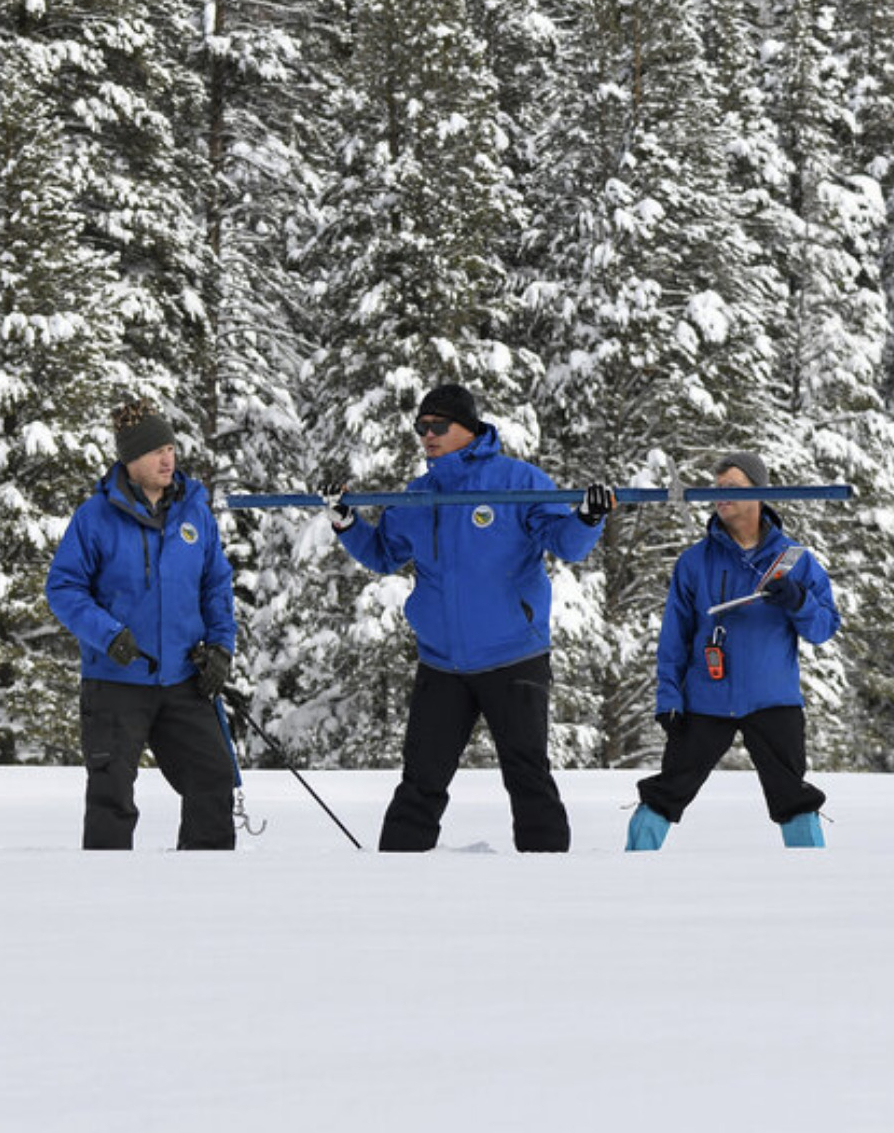
Screenshot_2023-01-30 Water from ‘terrific snowpack’ sparks tentative hope in California

Engineers measure Sierra snowpack, Jan. 5 (Photo: Kenneth James, AP)

So, the bottom line? Despite the screaming headlines and dramatic photos, most of the state is and will still be in a drought, unless more atmospheric rivers come out of the Pacific from February to April.

Meanwhile, we sit comfy and cozy in our Northern Virginia winter, where it rains moderately once or twice a week, and hasn’t yet snowed at all. But that’s another climate change story for another time.

Exploring More of the Potomac Valley

After last month’s anniversary visit to the Potomac River towns of Harper’s Ferry and Shepherdstown, West Virginia, and to the Antietam National Battlefield on the Maryland side of the Potomac, we ventured early this month to a few other towns in the Maryland part of the Potomac Valley. Once you get beyond the sprawling, highly-developed suburbs west of Washington, DC, such as the town in which we now live, and whose fast-paced lifestyle I described in September’s entry, you will find life in that part of the Potomac Valley that is thoroughly rural.

Well, maybe not that rural.  If you drive the two-lane highway between tiny Point of Rocks, Maryland, and completely suburbanized Leesburg, Virginia, the traffic jams don’t say country, nor does winding Highway 9 west of Leesburg to tiny Hillsboro during commuting hours. Nor does Interstate 70 in Maryland, which for 60+ years now has been steadily transforming the widening swath of its route through the western part of the state into a loud, fuming, fast-fed creature that will run over anything in its path. (Well, maybe I’m being too dramatic, but I doubt it.)

But if you slowly explore the tranquil, curvy oblong of country between Poolesville, Maryland, on the southeast; Williamsport, Maryland, on the northwest; the Potomac River on the southwest, and Interstates 70 and 270 on the northeast, you’ll be treated to some of the most beautiful country you can imagine. That’s because you’ll have to slow down on old roads that conform to the shapes of the hills and water-carved valleys, and because there is lots more open or forested land than there are buildings or people.

potomac valley burkittsville md jan 7 2023 - 1

Burkittsville, Maryland

On the most recent day we visited, we followed the Potomac to Lovettsville, Virginia, where we crossed the river to Brunswick, Maryland, then eased up the narrow highway to little Burkittsville, where we stopped for the photo, above, across the harvested cornfield to the 18th century crossroads.

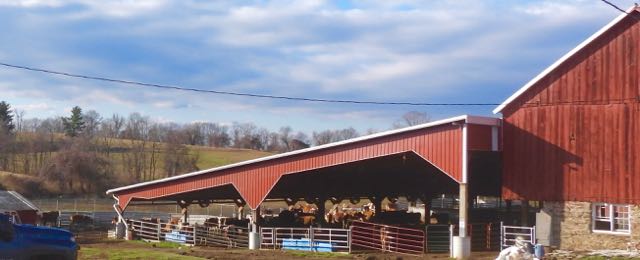
Our destination was farther up the road toward Middletown, where we took twisty sideroads to the Hawker dairy farm and its Moo Cow Creamery, where we conversed with the co-owner and purchased some of their home-crafted cheeses.

potomac valley moo cow creamery middletown md jan 7 2023 - 1

Hawker Farm and Moo Cow Creamery, Middletown, Maryland

From Middletown, we proceeded along old U.S. Route 40, on the roadbed of the first National Road, which had been authorized by Congress in 1802 and completed from Baltimore to Wheeling, Virginia, in 1818. We passed through Boonsboro, then on to Funkstown, and finally into the 18th century town, now city, of Hagerstown, which celebrates its historic downtown, though Hagerstown’s being on the Interstate 70 path means that its character has changed dramatically in the past century. Part of the attraction of this region for us is that Jean has traced some of her ancestors back to the 18th century in the Hagerstown area and nearby Pennsylvania, so we especially appreciate how this land has retained so much of its character from that time.

January 2023 Gallery: Old Friends, New Visitors

Run the cursor over the photos to see the description.

This month’s gallery features a few experiments with color and light, as well as typical attempts at realism. Kudos to the subjects for their cooperation, but I also appreciate their making me struggle. Kudos also to my Nikon P950 with the 83X Optical Zoom.

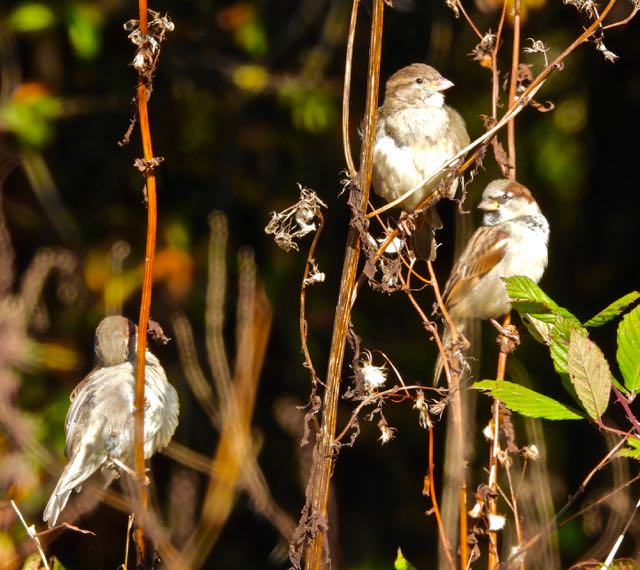
lake cameron 4 house sparrows in row on sidewalk jan 28 2023 - 1

Four house sparrows on the sidewalk by lake

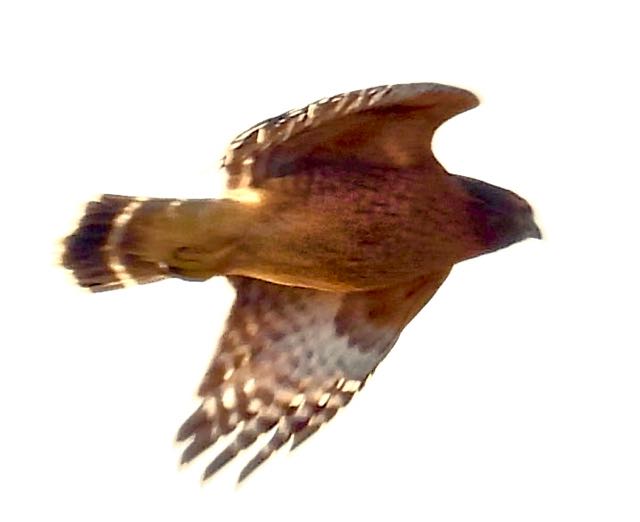
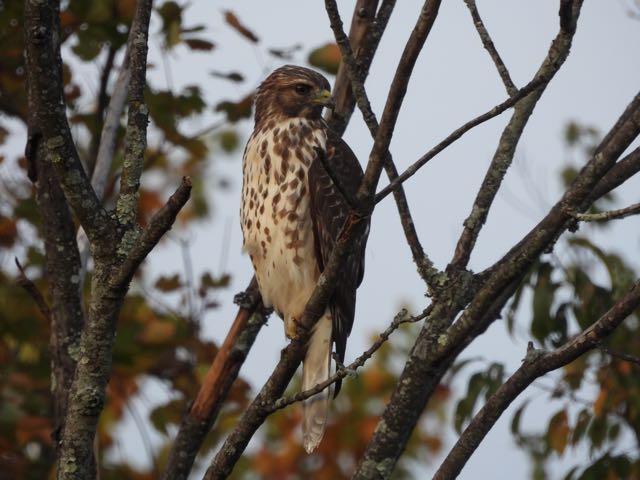
lake cameron red shouldered hawk launches jan 16 2023 - 1

Red-shouldered hawk launches above Lake Cameron, Jan. 16

Launching into February and new adventures…

December 2022: Winter Comes to the Potomac Valley

I bundled up in my old blue Gortex parka to film the sudden snow squall on Dec. 22, which you witness above. That parka had just hung unused in our closet the past 16 years we spent in California. December in our Sacramento Valley meant that the oranges and lemons in our garden were ripe, ready for picking. Here in our tiny bit of the Potomac Valley, December means that real winter takes hold, and I’m glad to have that parka when I go out along our lake, and then hustle back into the warmth inside. Our oranges now are from the store, and we’re lucky to have them.kitchen fruit bowl dec 27 2022 - 1

In This Month’s Blog:

Celebrating Our Anniversary

Amid the Freeze, the Birds Along the Lake

A Bit of “Blue Zone” Cookery


Our Anniversary

December for Jean and me means not only the Christmas season but also our wedding anniversary (Dec. 15th), for which we always take an overnight trip. This December, our trip meant another chance to rediscover favorite places from our years ago in this region. We chose one of our favorite anniversary hideaways, the Bavarian Inn in nearby Shepherdstown, West Virginia, which just happens to overlook the forest-bordered Potomac River, about sixty miles-and maybe three centuries–from where we live. 


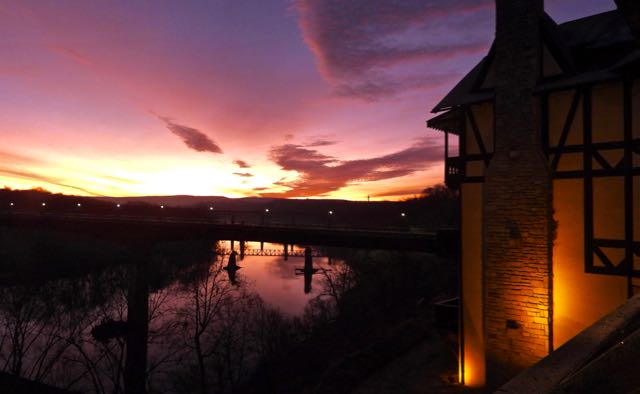
potomac valley potomac and bavarian inn at shepherdstown toward downstream sunrise dec 14 2022 - 1

Sunrise on the Potomac, from the Bavarian Inn, December 14

Shepherdstown sits atop a bluff above an easy ford of the Potomac, which Native peoples such as the Mingo, Shawnee, and Tuscarora used for thousands of years as they farmed, hunted, and traveled through the area.  The town was chartered by English settlers in 1762 and took its name from Thomas Shepherd, the principal landowner. The name replaced Mecklenburg, the name given the settlement by German settlers who came from Pennsylvania and crossed the ford in the early 18th century.


potomac valley shepherdstown in lights feb 4 2023 - 1

Shepherdstown in holiday season lights

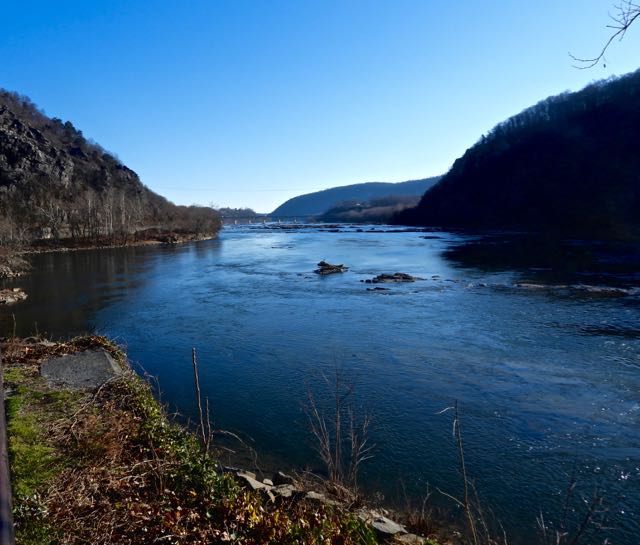
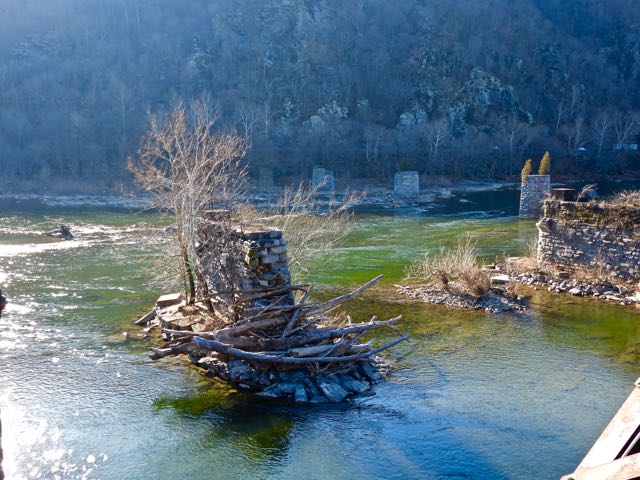
Shepherdstown lies just 20 miles upriver from Harper’s Ferry, where two of the great rivers of Eastern North America, the Potomac and the Shenandoah, meet. We have visited Harper’s Ferry many times over the years, largely because of its importance in the American Civil War, but this time was the first since I’ve begun focusing on the river valleys themselves. I walked across the Potomac on the old railroad bridge, which is now part of the Appalachian Trail, and snapped several pictures at parts of the crossing. As one of the pictures shows, the rivers have been bridged several times over the past two centuries, later than when Robert Harper built the ferry that gave the town its name. But the town became strategically important in the 19th century because of the Potomac and Shenandoah rivers themselves, and because of the valleys they carved out between the mountain ranges over millions of years.

potomac valley shenandoah enters the potomac at harpers ferry 1 dec 13 2022 - 1

Looking from the Shenandoah to where it enters the Potomac: three states, West Virginia, Maryland, and Virginia, meet.

potomac valley where the shenandoah (r) and potomac meet at harpers ferry dec 13 2022 - 1

Standing above the Potomac, I look toward the Shenandoah (r) and the old bridge pilings, with the Virginia shore in the distance.

The Potomac (originally the Algonkian Patawomeck) penetrates through ridges of the Alleghenies, and so formed a natural highway from 400 miles deep in the continent to the Chesapeake Bay and into the Atlantic Ocean. It was a Native trade route before it became a trade route for European settlers in the 17th century.  Its valley then became the setting for the Chesapeake & Ohio Canal in the 1830s, and for the Baltimore & Ohio Railroad in the same decade. 

The Potomac also provided the reason why Harper’s Ferry became a strategic military site in the new United States: water power. The land on which those geese peacefully forage today in the photo above was the site for a huge iron forge, armory, and arsenal for the U.S. Army in the early to mid-1800s. Part of the river was diverted into a canal, whose rushing water provided all the power for the forge and the munitions-making factories.

By 1860, little Harper’s Ferry and its military-industrial might became a prime target for the nascent Confederacy, and when war broke out in 1861, Southern troops immediately rushed to the town to try to take over the forge and armory. The Union defenders tried to thwart the plan by setting fire to the facility. The Confederates saved much of the arsenal stock and the industrial machinery, which they shipped south into Virginia to a more secure location.

Still, Harper’s Ferry remained a coveted prize for both sides throughout the war because of its pivotal location at the confluence of river valleys on the border between North and South. It changed hands 11 times as the winds of war shifted.

Antietam: Today’s Serene Beauty Hides a Horrific Past

potomac valley countryside antietam near bloody lane dec 14 2022 - 1

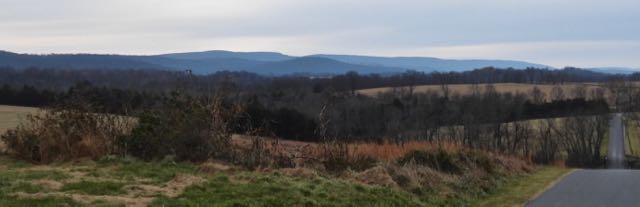
Maryland countryside toward Antietam Creek

Whenever we visit Shepherdstown, we always drive across the bridge into Maryland to visit the quiet little town of Sharpsburg, just two miles from the Potomac. Then we continue just beyond the village to the National Battlefield Park at Antietam. We do this because the setting is so peaceful, so rich in wildlife, and so well cared for. But we also do it to keep fresh in our minds the unspeakable horror of the war that came to this quiet place on September 17, 1862: the day on which more Americans died in battle than in any other day in U. S. history. Twenty-three thousand perished in that single day, and well more than that were wounded.

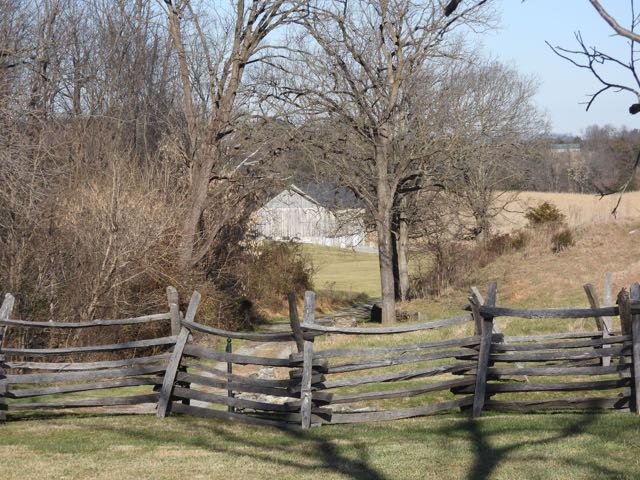
Visiting Antietam always makes us confront the awful contradiction at the heart of American history: the love of magnificent beauty and peace vs. generation upon generation of violence and cruelty toward our fellow humans. As we walked between the split rail fences that mark the most ghastly scene of the battle–the Sunken Road now better known as Bloody Lane–we struggle to keep simultaneously in mind the birdsong and brisk breezes of today versus the ear-splitting din of battle and the hopeless cries of the stricken. Both seem oddly present as we walk and watch.

potomac valley from bloody lane toward roulette farm antietam dec 14 2022 - 1

In the middle of Bloody Lane, we look toward the Roulette farm that was so peaceful just the day before the battle.


potomac valley from the bluff above antietam creek burnside bridge dec 14 2022 - 1

The Burnside Bridge across Antietam Creek. Thousands died here on September 17, 1862, as they tried to cross amid waves of gunfire from the hill upon which we watch.

Amid the Freeze, the Birds Along the Lake

lake cameron frozen lake edge 7 degrees F dec 24 2022 - 1

Frozen east edge of Lake Cameron, Christmas Eve

On Dec. 19, and then again on Christmas Eve morning, as the 7 degree temp challenged my face and fingers, I went out to see how the birds were faring around the partly-frozen lake.  Here is the best of what I was able to capture of these elusive critters in about an hour each of those days.  Also here are a few shots taken on Dec. 1 at the nearby Riverbend Park on the Potomac.

potomac riverbend park 6 male and female buffleheads dec 1 2022 - 1

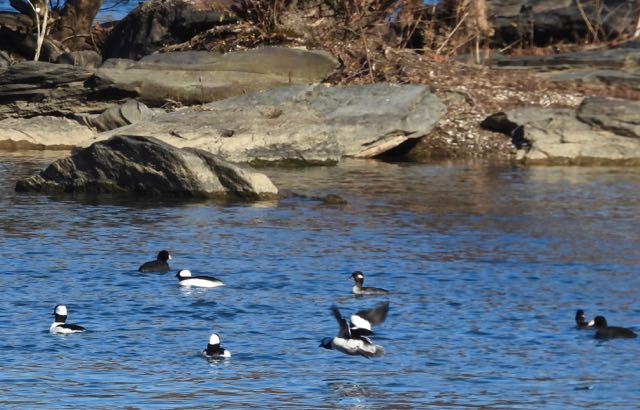
Male and female bufflehead ducks in the Potomac at Riverbend Park

potomac riverbend park buffleheads coots by island 1 in flight dec 1 2022 - 1

Buffleheads and coots in and above the Potomac at Riverbend, Dec. 1

potomac riverbend park canada geese flock in flight against trees dec 1 2022 - 1

Seen from Riverbend, Canada geese rise in flight near the Maryland shore

lake cameron american kestrel south end of lake closeup dec 19 2022 - 1

American kestrel at south end of lake puts all small birds on alert, Dec. 19

lake cameron blue jay spying from tree dec 24 2022 - 1

Bluejay spying from tree near Lake Cameron, Christmas Eve

lake cameron female cardinal by lake dec 24 2022 - 1

Female cardinal by frozen Lake Cameron, Christmas Eve

lake cameron carolina wren dec 21 2022 - 1

Carolina wren beside the lake, Dec. 19


lake cameron savannah sparrow in brambles dec 5 2022 - 1

A Savannah sparrow nestles in winter stalks by lake, Dec. 19

lake cameron mallards at north end dam closeup dec 21 2022 - 1

Four mallards at the north end of the lake, Dec. 19


lake cameron canada goose in icy pool at 7 degrees F dec 24 2022 - 1

Canada goose in icy pool at 7 degrees, Christmas Eve

lake cameron song sparrow closeup dec 21 2022 - 1

Song sparrow on west side of lake, Dec. 19

lake cameron blue heron on west lakeshore 2 dec 19 2022 - 1

Blue heron on the west lake shore, Dec. 19

A Bit of “Blue Zone” Cookery

kitchen luisa rivera photo blue zones dec 28 2022 - 1

Dan Buettner and Luisa Rivera, National Geographic, Dec. 6, 2022

The winter holiday season may not be the most typical time to experiment with moving away from the meat-and-sweets-heavy diet that tempts most of us. And no doubt we’ll be falling prey this Christmas to lots of the oh-so-tasty bad stuff. Then again, there’s probably no better time than now to vary our diets with dishes as colorful, delicious, and healthful as those inspired by Dan Buettner’s book The Blue Zones Kitchen: 100 Recipes to Live to 100, which he summarizes in a National Geographic article this month.

For this holiday season, one “blue zones” inspired dish we make is our version of “three sisters stew,” named for the corn (maise), squash, and beans mixtures of native American cultures, such as the Wampanoag of New England, whom Buettner celebrates. These three foods create complete protein, and you can combine them with other ingredients to suit your preferred flavor and color palettes.

In our version of the “three sisters stew,” I sauteed in vegetable oil in a large skillet half a large onion and some fresh garlic, then used canned golden corn, one chopped whole zucchini, one can of black beans, and one can of pintos as the base mixture. To this I mixed in a can of diced tomatoes, some chopped cherry tomatoes, a half cup of medium tomato salsa, a dozen chopped medium green olives,  and a quarter cup of red wine. For spice, I added a dollop of sriracha  and a shake or two of red pepper flakes. I salted to taste as the heady mixture cooked on low heat, and also threw in some chopped basil and ground thyme. The great thing about a slow-cooking concoction like this is that you can adjust the level of spice and herbs as the beat goes on for an hour or more. I made enough for a dozen hearty servings that lasted us for half a week.

kitchen three sisters stew nov 23 2022 - 1

“Three Sisters” Stew, a festive, alternative holiday dish based on beans, squash, and corn

“Three Sisters” Chili

If you want to add meat and some slightly different flavors to the “Three Sisters” stew idea, you might try a version of the “Three Sisters” Chili that we enjoy. Most of the ingredients are the same, but we cook in for five minutes a pound of ground turkey after the onion and garlic have sauteed and before we add in the “three sisters” and the rest of the ingredients. For our latest rendition, we left out the green olives (we might also substitute chopped black olives), we used red kidney beans instead of black beans, and we added a few hearty shakes of chili powder.  We also amped up a bit the sriracha, the tomato salsa, and the red chili flakes, but how much you add depends on who’s eating. Remember, what really counts is your tasting as you go, and not being afraid to add in what you think might work.

kitchen three sisters chili with turkey and salsa dec 21 2022 - 1

“Three sisters” turkey chili

Here’s to a Happy, Loving Holiday Season! On to January 2023!

November 2022: From All Hallows to Our First Thanksgiving

lake cameron halloween display in community oct 30 2022 - 1

A Halloween display on our porch

In this month’s blog:

The First Thanksgiving vs. Our First

The Day After Thanksgiving? Making It Better Than “Black Friday”

November Gallery: Hearty Birds, Naked Trees, and a Pumpkin Moon

lake cameron community early nov still life in rain nov 10 2022 - 1

Mid-November still life in the rain: pumpkins keeping their beauty and sharing it

Our “First” Thanksgiving

November is a month of giving thanks. The month begins with All Hallows (the day after Halloween) and Dia de Los Muertos, when people celebrate the lives of their loved ones who have gone before. Thanksgiving caps the month, as friends and family members gather to celebrate all that we do for one another, and to express our happiness in being with one another. Thankfulness is at the heart of these celebrations.

This Thursday, November 24, was our first Thanksgiving since moving back to Virginia. We have spent this week doing what we came back here to do: getting together with family members whom we have not shared meals and hugs with in several years, and, in the case of new family members, getting to know them for the first time in person. We got to know our youngest granddaughter, just turned 2, who came with her family from New York, and her brother, now 4, whom we’d not seen since he’d just begun toddling in 2019. We enjoyed parts of 3 days with 3 of our grandkids from Georgia, who are growing up so fast that the oldest is already a high school senior. All told, over Thanksgiving week, we’ve enjoyed meals and games and seeing local sights with 18 family members from three generations and up and down the Atlantic coast.

The First Thanksgiving

“First Thanksgiving” also puts me in mind of the mythic day 400 years ago, in 1621, when, as the story goes, the English pilgrims, who had come to find religious freedom on the cold, rocky shores of North America the year before, enjoyed the bounty of their first harvest in their new home by sharing with new friends, members of the nearby Wampanoag people, who had helped them survive that bitter first year. A very happy vision of hope. Picture Squanto and Massosoit breaking bread and savoring roast turkey with John Alden, Priscilla Mullins, and the whole legendary crew. Or so the story goes, as prettied up from the 19th into the 20th centuries.

thanksgiving 19th c imagining of the 1st feast nov 18 2022 - 1

19th century fantasy illustration via Photo 12/Universal Images Group, Getty Images

Certainly, Native Americans and 21st century historians don’t see the vision that way, as Emily Martin recounts in National Geographic and Claire Bugos writes in The Smithsonian Magazine. A feast of some kind did occur that fall, but it was at best a mere moment of awkward peace in a long and always tragic relationship, which culminated 56 years later with the virtual annihilation of all the Indian peoples in New England and total loss of native land. See David Silverman’s essay in National Geographic for more on the gradual process in the 1600s of English settlers’ enslavemant of native peoples, false alliances, and warfare to bring this destruction about.

So I’d hope that families this week can just enjoy the beautiful opportunity to get together in their own thankfulness, friendship, and sharing, in the knowledge that many millions of others are also celebrating one another. We have no need to imagine that any of us are carrying on a “tradition” that began in colonial days, because we have built our own tradition based on true friendship. That colonial horror is certainly not worth holding on to, but remains a tragic truth that we must acknowledge–not hide by pretending–and that we must and can move beyond.

The Day After Thanksgiving? It Can Be A Lot Better Than “Black Friday”

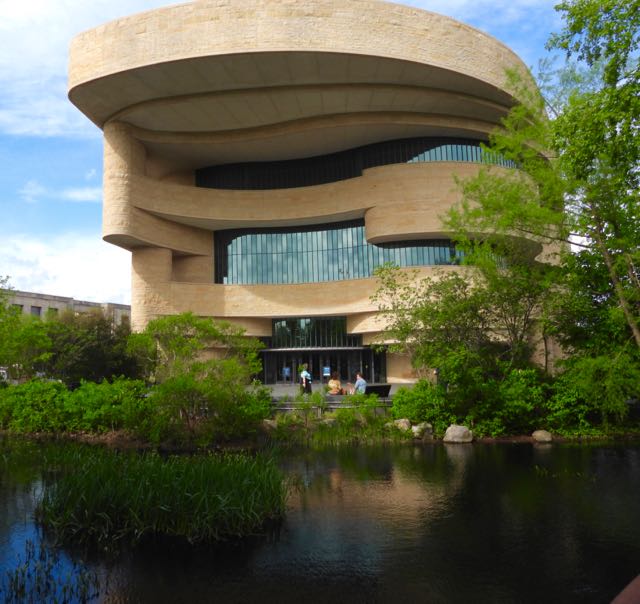
dc visit indian museum architecture and landscape oct 10 2022 - 1

Architecture and landscape of the National Museum of the American Indian

Do you know that since 2008, by act of Congress, the day after Thanksgiving is named Native American Heritage Day? Not to be confused with National Indigenous People’s Day on the second Monday in October (celebrated in 2022 on October 10, when we visited the National Museum of the American Indian in DC.)

In many parts of the U.S., National Indigenous People’s Day has replaced Columbus Day on the holiday calendar. Columbus Day deserves to be erased as a holiday because of the explorer’s decimation of the native Taino people in the Caribbean.

In stark contrast, Indigenous People’s Day, founded in 1992, deserves our attention as an international day of mourning for the millions of indigenous people around the world robbed of their ancestral lands and massacred by European and American colonizers over hundreds of years.

But Indigenous People’s Day is also a celebration of the indomitable spirit of the survivors of those devastations and the will  of their descendants and their allies to keep traditional cultures alive. The Day also is meant to build public support for these descendants to receive suitable reparations for the centuries of theft, murder, and abuse.  Native American Heritage Day, the focal day within Native American Heritage Month (as proclaimed by President George W. Bush in 1990), celebrates the profound achievements of native cultures not only in past centuries but also today and in our building a better, more responsible future for humans and for the Earth.

So, amid the incessant clamor of Black Friday promoters to get out there and shop till we drop, maybe we can spare a bit of time to enter into Native American Heritage Day and find the real gifts. For me, the greatest gift of native traditions is the profound belief in humanity’s reciprocal relationship with the Earth, as expressed in the words of Robin Wall Kimmerer, below.

Native American Gift: Stewardship vs. Exploitation of the Earth

“We all need to ask ourselves not what we can take from Mother Earth, but what we can give back. The Earth is not a commodity for taking, but rather our Mother and our sustainer.”

Robin Wall Kimmerer, Braiding Sweetgrass: Indigenous Wisdom, Scientific Knowledge and the Teaching of Plants

Of particular importance to me, as a gardener and as student of the Earth and its creatures, is the stewardship of Earth by native civilizations over at least 13 millennia. Note, if you will, the state of nature in this hemisphere over the 13,000 years or more during which native peoples gently humanized the land, air, and water through sustainable farming practices and fruitful coexistence with natural forces and our fellow creatures. Then compare that record with what has occurred in the mere four hundred years through which we of European origin have acted as the tyrants of the Western Hemisphere, with unlimited ambition to possess and exploit–as well as to dispossess and attempt to annihilate those humans (and other species) who had flourished here before.

garden polyculture example from our california garden spring 2022 - 1

An example of polyculture, planting of diverse plants together, a sustainable farming practice of Native Americans, from our California garden, March 2022

In all those 130 centuries of native stewardship, the Earth thrived in this hemisphere, so that when Europeans came, they mistakenly saw nature as “pristine and unspoiled,” because what they encountered possessed beauty, lushness, and fertility beyond anything in their experience in Europe. It’s too bad for all humans and for the Earth that these invaders could not, would not, credit native peoples for the natural riches they encountered, nor would they learn from the natives how to honor their Mother and keep her and all of us, her children, strong. But, like thieves before an unimaginable treasure, they began steady rape and pillage that have led to where we are now.  Even though we in the United States know that the time left for Earth is dwindling because of our incessant pollution of the air and water, most of us remain too sunk in our accustomed ways to do anything but continue on our deadly path. The U.S. remains by far the greatest per capita contributor to pollution and global warming, and powerful corporate forces in the country want to keep it that way.

As long as the thing that most bothers us is the price of gasoline, the Earth will have no chance of survival, nor shall we. We know what needs to be done to counteract the planet’s destruction–primarily moving away from fossil fuels–but will we and our governments have the courage to do more than make vague promises?

lake cameron canada goose pair nov 18 2022 - 1

Canada geese, Lake Cameron, November 18

November Gallery: Hearty Birds, Naked Trees, and a Pumpkin Moon

This November we are happy in our new Virginia home, though missing the California we had grown to love. We are thankful to live beside the small lake, surrounded by wildflowers and woods, which provides a small sanctuary for wildlife who have been enabled to thrive here. As I watched the leaves fall from the multicolored trees of October, I thought about the poem by the late John Updike (below), which celebrates this month of austere beauty. Here, even as winter approaches, the birds still come.   

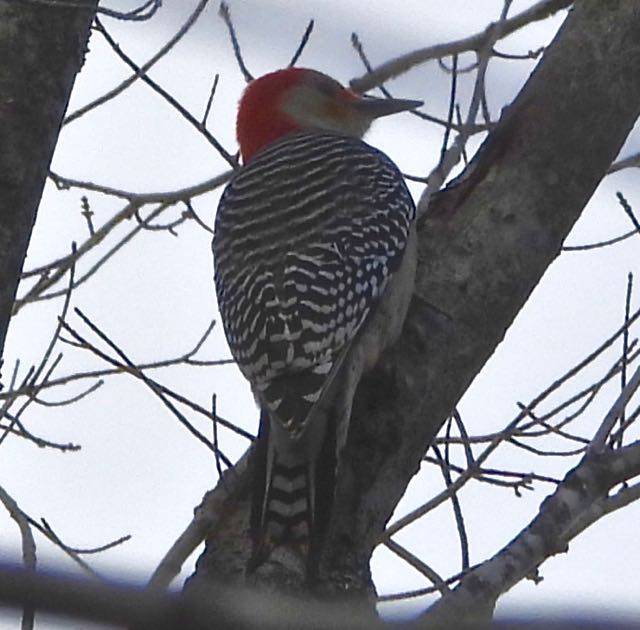
lake cameron red bellied woodpecker nov 18 2022 - 1

A red-bellied woodpecker searches for food in a tree by the lake.

November

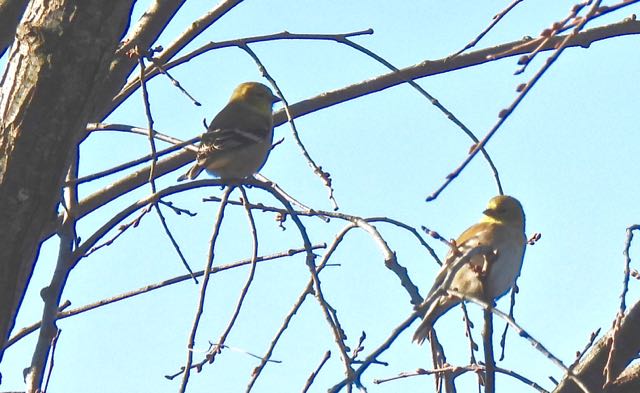
lake cameron 2 goldfinches after leaf fall nov 14 2022 - 1

A pair of goldfinches stay warm along the Lake Cameron path.

The striped and shapely
Maple grieves
The loss of her
Departed leaves

The ground is hard
As hard as stone.
The year is old.
The birds are flown.

And yet the world,
Nevertheless,
Displays a certain loveliness–

lake cameron west side cooper's hawk closeup nov 17 2022 - 1

A cooper’s hawk’s lonely vigil above the lake

The beauty of
The bone. Tall God
Must see our souls
This way, and nod.

Give thanks: we do,
Each in his place
Around the table
During grace.

–John Updike, from A Child’s Calendar, 1965

lake cameron house finch trio females male nov 18 2022 - 1

A choir of house finches in the lake woods


lake cameron northern mockingbird on bare branch west side multicolor leaves nov 22 2022 - 1

A Northern mockingbird scouts by the lake, November 22.


lake cameron yellow bellied sapsucker from below west side nov 22 2022 - 1

A Yellow-bellied sapsucker peers higher into the tree.

Verses about an early morning miracle on November 8:

Beside the tiny lake, we snap the changing moon:

Baby Luna safe in Mama Terra’s arms.

She glows–a happy pumpkin!–

in smiles from Papa Sol.

So much for which to give thanks! On to December in hope and joy.


October 2022: Learning the New Autumn, and Enjoying It While We Still Can

lake cameron north end fall colors fountain oct 17 22 - 1

Looking toward north: Lake Cameron fall colors

In returning to Virginia’s Potomac Valley, we were looking forward to a return to four distinct seasons–including a clearly observable autumn–with the turning of green leaves to brilliant reds, purples, oranges, and yellows as temps plummeted toward freezing with an icy winter ahead.  That’s why I’m glorying in views like the ones (above and below) just beyond our door along Lake Cameron. This blog entry may bore you with lots of such views. But I can’t help snapping them!

Effects of Climate Change: “Let’s enjoy the beauty while we still can.”

I first called this entry “Relearning Autumn,” since we were returning to the colder, rainier East with its exquisitely colorful fall. However, according to many studies summarized in National Geographic this month, the gradual, steady warming of the planet is delaying the turning of colors of foliage, and even more alarming, disrupting the natural cycle of trees’ changing of chemical production that brings about the changes we glory in with our eyes every fall. Warming means that fall happens later and spring happens sooner, so the growth and rejuvenation cycle that trees depend on over the winter just grows shorter. So “Learning the New Autumn” seems a better title. I guess our mantra should be, “Let’s enjoy it while we still can.” 

lake cameron west side fall color palette oct 17 22 - 1

Lake Cameron color palette, mid October

Is there autumn in the Sacramento Valley?

The very different Sacramento Valley’s virtually year-round warmth, with perhaps a few January days just below 32 F, means a preponderance of trees whose leaves never fall. And, oh yes, full on spring comes in February, which always fully delighted this camera-happy gardener.

garden narrow front pano to S Feb 13 2022 - 1

Our California February front garden with apricot and cherry plum in bloom

Now that’s not to say that Californians don’t enjoy a sort of fall in the Sac Valley.  Just last December, 2021, this blog catalogued the annual schedule of leaf falls among our fruit and flowering trees in an entry titled The Holiday Gift of Fallen Leaves.  The entry describes the ongoing power of fallen leaves in the garden’s nutrition and growth. Two of the trees noted in the entry were the wisteria and the cherry plum, whose leaves painted the ground in December:

“Up the Hill” from the Sacramento Valley

For more of a traditional October autumn familiar to Easterners, you need to go “up the hill” from the Sac Valley toward the Sierra Nevada and into El Dorado County. Just north of the town of Placerville lie the orchards, farms, and vineyards of Apple Hill, named for the annual apple harvest festival in September and October. In our California years, we made many visits to Apple Hill and its many close-together and beautifully-organized farms. 

DSCN1449

A particularly memorable trip was in late September 2019, when three of our grandkids, their parents, and one of our daughters and her husband joined us there.

“Up the hill” in Virginia: Skyline Drive

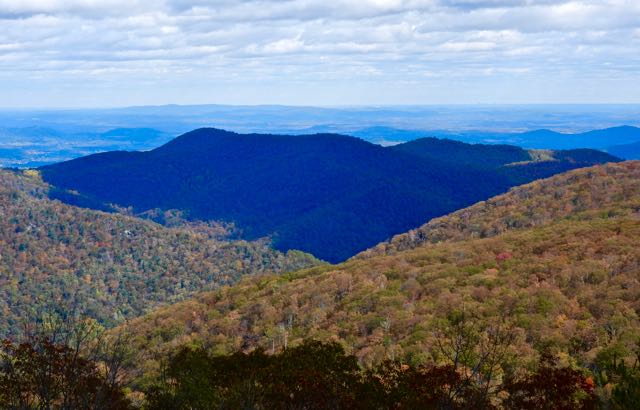
skyline drive trip colors shadows on blue ridge oct 19 22 - 1

From Skyline Drive, we look east across the Blue Ridge Mountains toward Washington, DC.

Here in Northern Virginia, the most iconic destination for those wanting to bask in autumn colors is Shenandoah National Park, where the Skyline Drive, built in the 1930s, winds its way through the Blue Ridge Mountains.  As we strive to rediscover the region, we drove the 70 miles to the park this week and spent the day in near-freezing temps to marvel at the views, do a bit of hiking, and enjoy a good meal at the Skyland Lodge, which has been serving travelers since the 1890s. Skyline Drive provides numerous “overlooks”  (California calls its highway viewing spots “vista points”), at which drivers stop to be dazzled by the autumn scenery.

Seeing the Shenandoah Valley

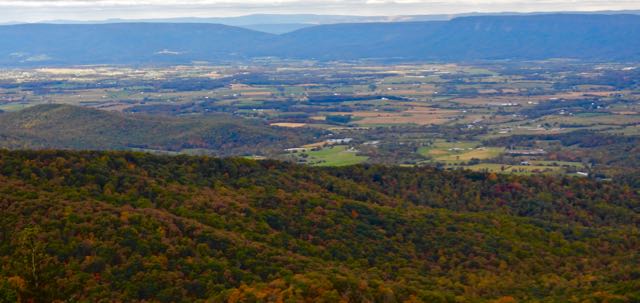
skyline drive trip colors from mountainside colors to massanutten gap oct 19 22 - 1

The Shenandaoh Valley from the Stony Man Overlook on Skyline Drive

Westward from Skyline Drive is the famous Shenandoah Valley, which spreads 35 miles wide from the Blue Ridge Mountains to the Allegheny Mountains. In the photo above, the Alleghenies are the two most distant light blue ridges. The closest blue ridge is Massanutten Mountain, which separates the two branches (or “forks”) of the Shenandoah River. For this blog, the Shenandoah River is significant because it is the largest tributary of the Potomac River. So everything that you see in the photo, including the mountain ranges, is part of the Potomac Valley watershed.

skyline drive trip colors from woods to valley skyland mountain oct 19 22 - 1

From the Skyland Trail, seeing the Shenandoah Valley and the Alleghenies beyond

Geologists estimate that these mountains formed between 1.1 billion and 250 million years ago, making them far older than the much taller Rocky and Sierra chains in the West. The Shenandoah River has been working for hundreds of millions of years to form the broad valley of low hills and flatland that its two forks flow through, while wind and water over those same eons have leveled the mountains down to the 2000-3500 feet typical in Virginia’s Blue Ridge. Even the tops of these mountains are covered in the deciduous trees that give us the colors that proclaim autumn in Virginia each October. 

The October 2022 Gallery

Most of these photos come from our tours around the small lake next to which we now live. Every time we walk the path that surrounds the lake, we make fresh encounters with plants and animals. Earlier this month, we experienced three days of rain that came from Hurricane Ian, which devastated much of Florida, then moved up the Atlantic coast and also affected areas inland. Though most of what you’ll see in these photos is typical of this time of year in Virginia, Ian not only raised our lake’s level several inches, but on two days dramatically influenced the flow of water into the lake, as you’ll see in the video that concludes the gallery.

lake cameron pano sunset over community sep 29 2022 - 1

Sunset over our lake community, early October

lake cameron across the rainly lake multicolored leaves leaves oct 13 2022 - 1

Rainy October afternoon

lake cameron eastern blue jay by lake in rain oct 13 2022 - 1

Eastern blue jay by the lake

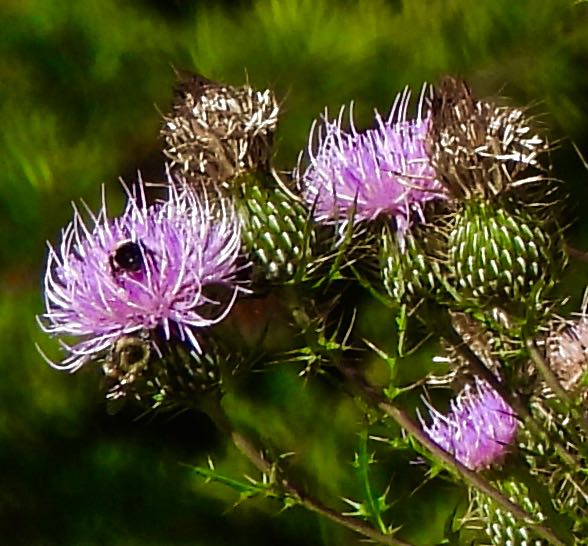
lake cameron bumblebee in pink thistle by path oct 5 2022 - 1

Bumblebee in pink thistle by the path


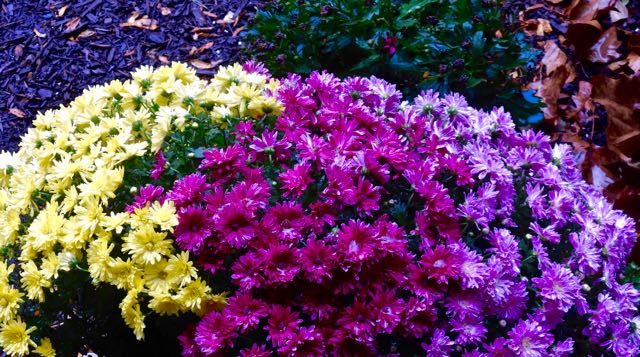
lake cameron community crysanthemums in rain oct 13 2022 - 1

Chrysanthemum display in community

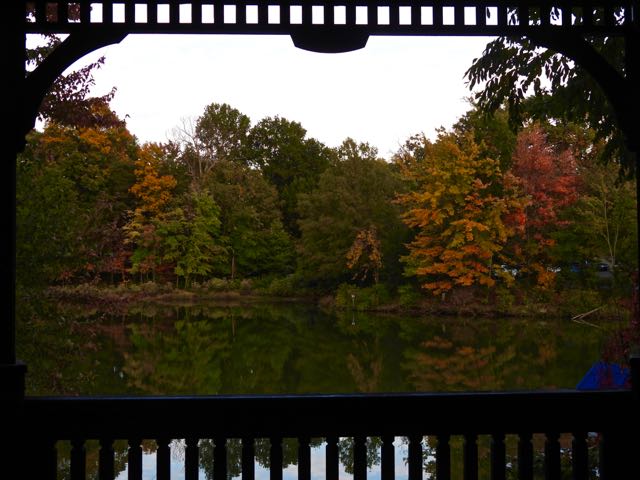
lake cameron east side fall color palette from gazebo oct 17 22 - 1

East side fall color palette from lakeside gazebo

lake cameron yellowthroat by path oct 5 2022 - 1

Yellowthroat by path

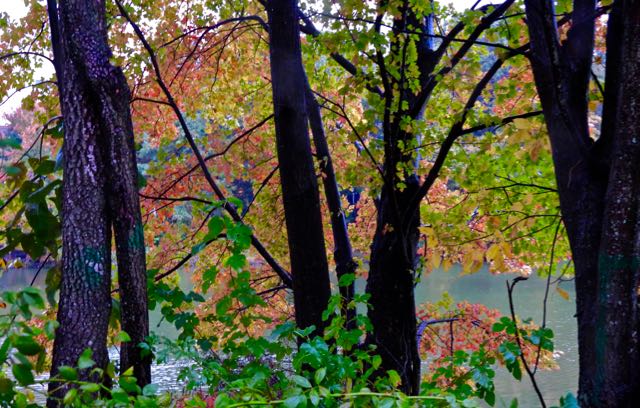
lake cameron fall pastels by rainy lake oct 13 2022 - 1

Pastels by rainy lake

lake cameron turtle on rock from across lake oct 5 2022 - 1

Turtle on rock from across the lake

lake cameron northern goshawk in woods near lake oct 17 22 - 1

Northern goshawk in woods beside lake

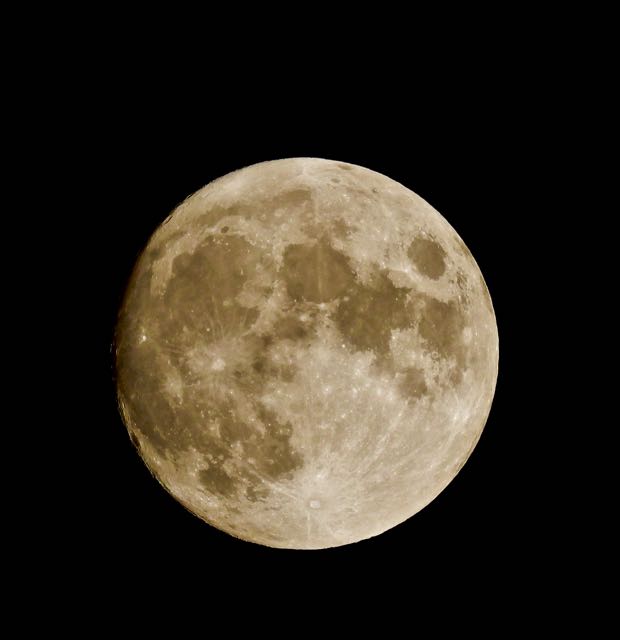
lake cameron full moon oct 8 2022 - 1

Full moon over us, October 9


lake cameron three song sparrows oct 21 2022 - 1

Three song sparrows along the path, today

lake cameron blue heron and reflection oct 21 2022 - 1

Two blue herons, one a reflection, in lake

Storm waters from Ian rush into our little lake.

Happy Halloween and all good wishes for November adventures!

September 2022: Living in a River Valley, but Not Knowing It

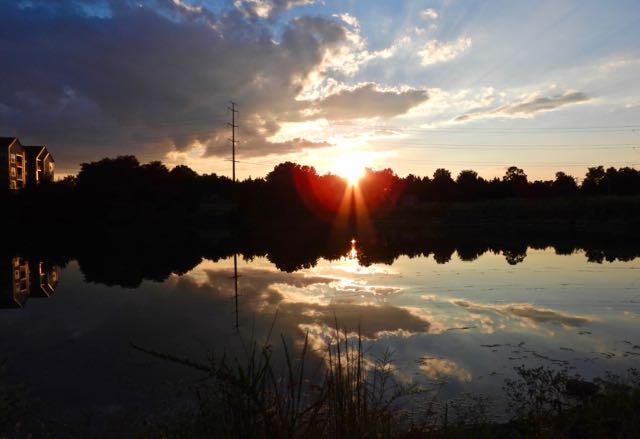
lake cameron sunset penumbra and reflections nature walk aug 27 2022 - 1

Sunset over Lake Cameron

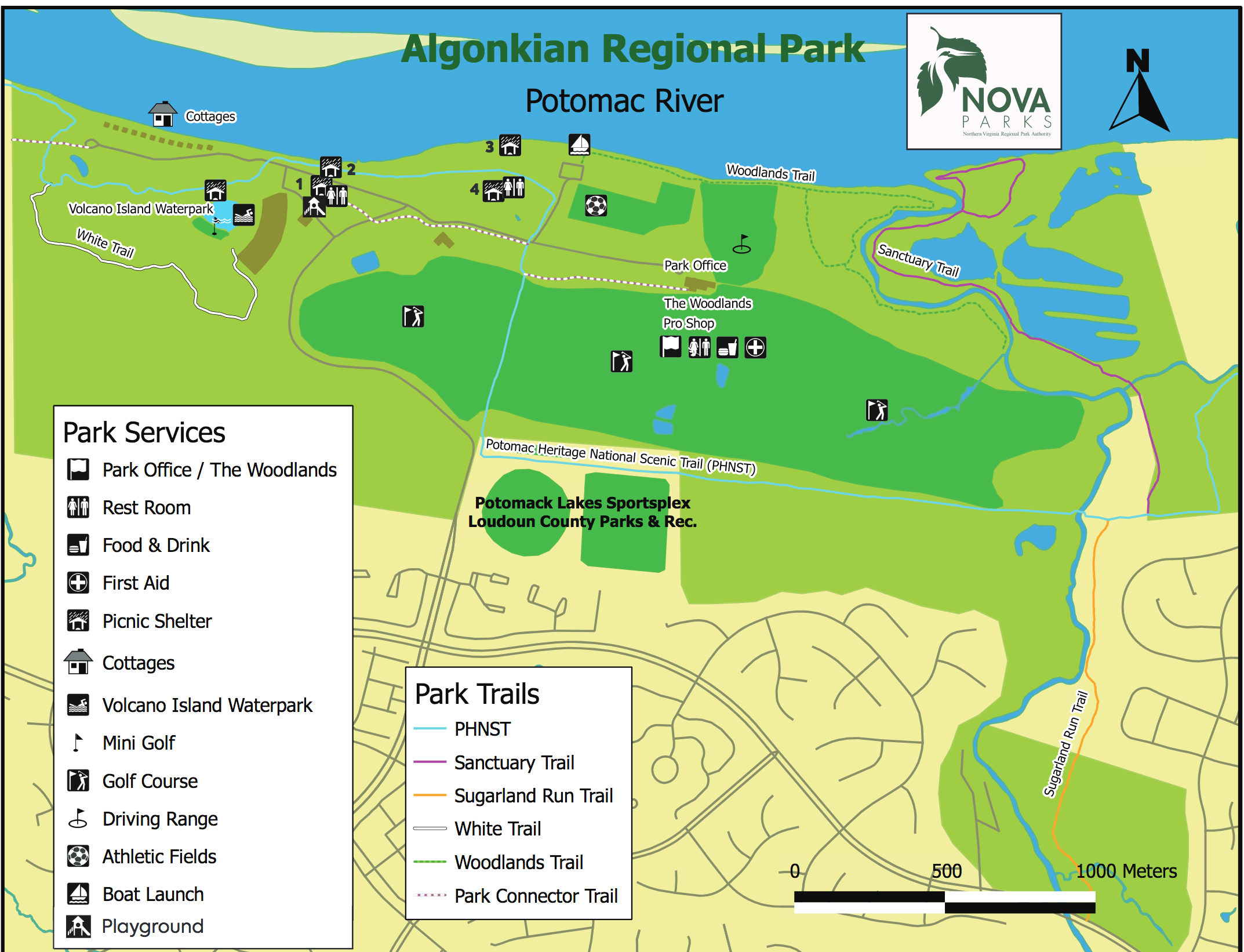
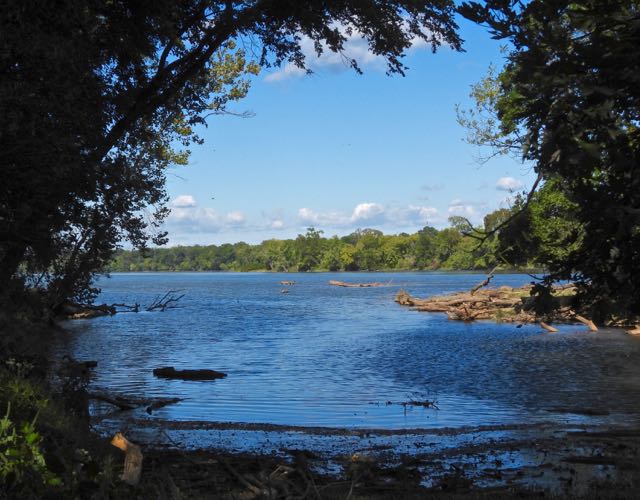
Where we live now is, geographically, a river valley. The Potomac River is only about 8 miles from here, and the little lake just beyond our windows is part of a creek system, Sugarland Run, that winds its way into the Potomac; so, yes, we live in the Potomac Valley. But ask people who live around here if they live in a river valley, and most will look at you as if you just asked them if they live on the moon.  

Screenshot_2022-09-23 Algonkian Map 2022 pdf

Algonkian Regional Park, where Sugarland Run enters the Potomac

Why? Because Northern Virginia is a dizzying maze of roadways, housing developments, office parks, schools, hospitals, and shopping hubs, all reached by the speeding (or crawling) cars that careen among them. The drivers are focused–and must be–on their destinations of the moment, or they risk losing precious minutes out of their finely calibrated schedules. All of this hyper busyness takes place–an apt metaphor–amid a green landscape of watered hills that would be covered everywhere with trees if we would only let it be. But that’s beside the point. After all, wherever there are cities, you’ll find the same exquisitely-tuned frenzy that happens regardless of the geography. It’s no wonder that most people here don’t think of themselves as living in a river valley, because their minute-to-minute priorities don’t allow them to see the connection between the Potomac, the streams that flow into it, and themselves.

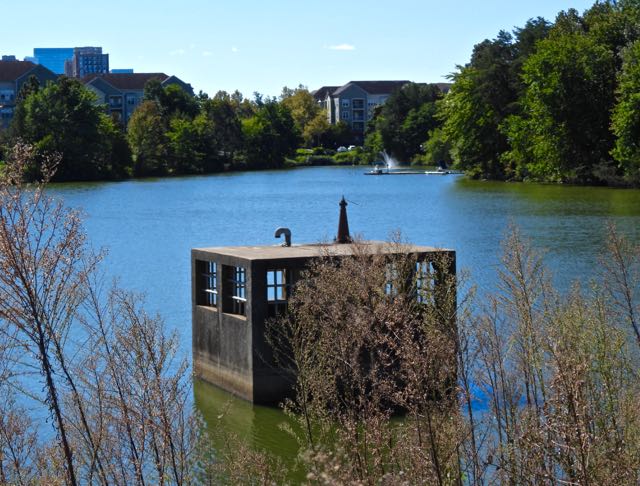
Why should they see it? How could they? When I look out my window at the shimmering small lake, I luxuriate in its mirrorglass finish, the birdsong, the trees, and the wildflowers it provides, but it’s easy for me to miss that it’s really a reservoir created by a branch of Sugarland Run, which many years ago was dammed at its north end about 100 feet above the stream bed: a stream which a person cannot see from the lake path, so cannot know that it exists. The branch itself was diverted 2 decades ago to build the local segment of the 6-lane Fairfax County Parkway, on which thousands of cars per day zip by on their necessary errands behind high walls that spare surrounding communities from the roar of passing vehicles.

lake cameron outflow above dam for sugarland run sep 23 2022 - 1

Lake Cameron: outflow structure beside the hidden north end dam

Meanwhile, at the south end of our little lake/reservoir stands a cute, vine-covered bridge, which itself covers four broad pipes that carry the silent waters of Sugarland Run into the lake.  The invisible pipes lie deep under a small community park and, beyond that, under a six-lane boulevard whose thousands of zipping drivers per day would never be aware that a vital stream flows beneath them.

lake cameron pipes for sugarland run sep 23 2022 - 1

Lake Cameron: entry from underground stream beneath this bridge

In contrast, everyone in the Sacramento Valley knows that they live in a river valley.

Not only is the Sacramento River and its miles-broad floodplain the most dominant feature of the landscape, but much of what people see as they drive the highways are the treeless fields planted in the crops that the river makes possible.  Most obvious, the lack of water is the no. 1 obsession for most Northern Californians, so the Valley and the Sacramento and American rivers that have carved it are pretty much always on people’s minds. 

Screenshot_2022-09-24 California Drought What will it take to escape drought

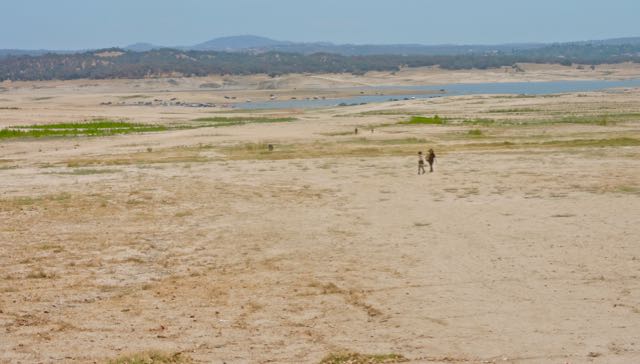
I suspect that if drought were to strike the verdant Northern Virginia in which we now live, and if water needed to be rationed here as it is in California, then there would be here a much sharper valley consciousness in this land of the Potomac. If the waters no longer came from pipes like those under that cute little bridge, and if lake levels fell so that the waters looked like Northern California’s Folsom Lake (below) did last year, certainly Northern Virginians would become not only more aware of how the river shapes their lives, but they would also begin to focus their imaginations on solving the crisis, as Californians do.

folsom lake reservoir jul 24 2021 - 1

Intensely depleted Folsom Lake Reservoir of the American River, July 24, 2021

Similarly, if the rains were to come in astounding profusion, as they have been coming–via climate change–to the Indus valleys in Pakistan and to the river valleys in nearby states like Kentucky (below), then valley consciousness would bloom here, too. If the Fairfax County Parkway were to be suddenly blocked by a flood of Sugarland Run, so that the cars could not move, then we’d all see a connection between the Potomac, the streams that flow into it, and ourselves.

Kentucky flood: Vaccines needed to be rescued by boat amid flooding - CNN

But since we don’t yet have these shocks to give us a valley consciousness, we tend not to see that the bountiful water we have for all our needs, as well as for our lush green landscape, comes fully from our living in the valley of the Potomac and its tributary streams.

algonkian park sugarland run enters the potomac sep 27 2022 - 1

Sugarland Run enters the Potomac River, Algonkian Regional Park

A September Lakeside and Riverside Gallery

lake cameron pano w playground aug 27 2022 - 1

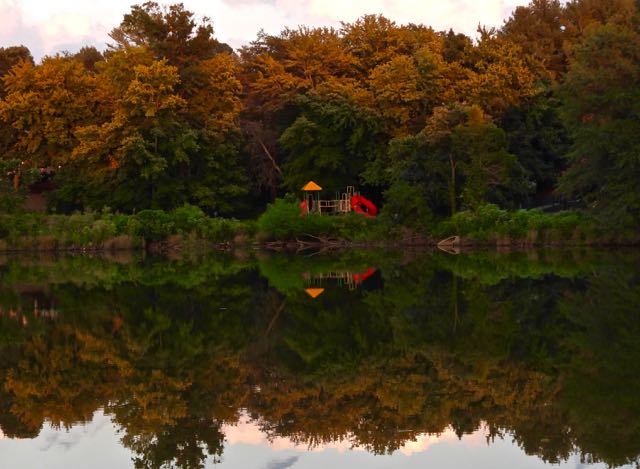
Playground along Lake Cameron


lake cameron horse nettle aka devil's tomato aug 27 2022 - 1

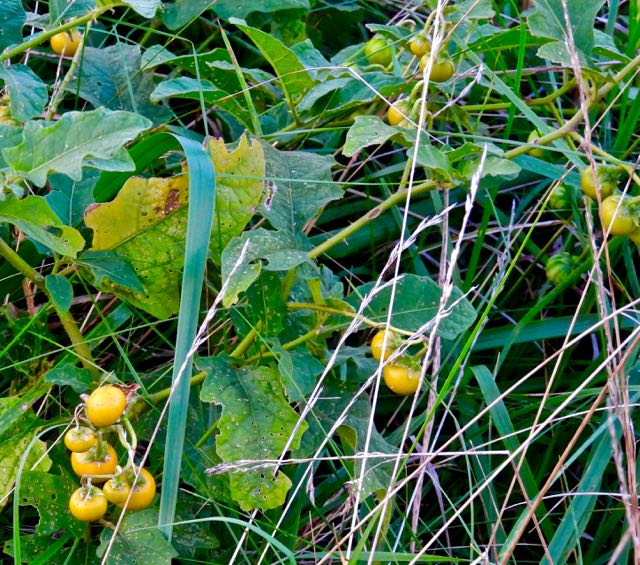
Horse nettle, AKA Devil’s tomato, along Lake Cameron


lake audubon male goldfinch aug 23 2022 - 1

Goldfinch by Lake Audubon


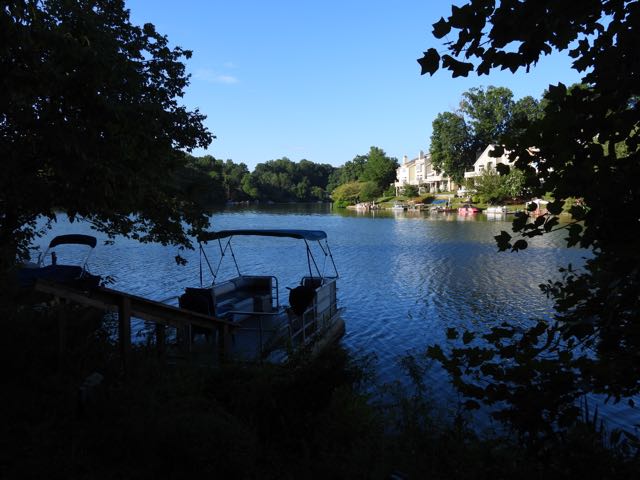
lake audubon pano boats houses aug 23 2022 - 1

Boats and warves along Lake Audubon

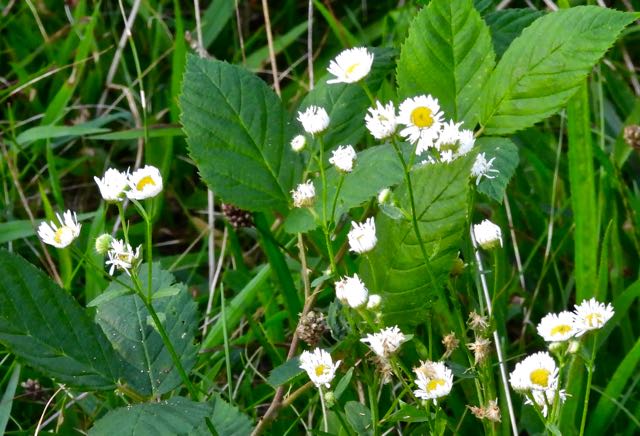
lake cameron daisy fleabane aug 27 2022 - 1

Daisy fleabane by Lake Cameron


lake audubon yellow swallowtail on path aug 23 2022 - 1

Yellow swallowtail on Lake Audubon path


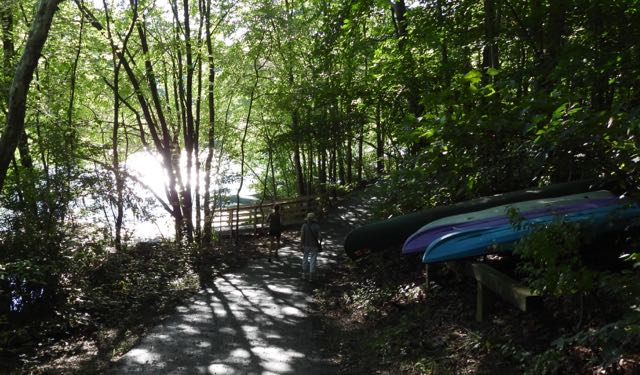
lake audubon jogger hiker boats aug 23 2022 - 1

Lake Audubon woods with jogger and hiker


lake cameron canada geese on and by boat launch sep 23 2022 - 1

Canada geese on Lake Cameron boat launch

lake cameron purple heather goldenrod display sep 20 2022 - 1

Purple heather and Goldenrod display, Lake Cameron


lake cameron male cardinal 2 sep 20 2022 - 1

Male cardinal, woods beyond Lake Cameron


lake cameron horizontal nodding bur marigold large display sep 20 2022 - 1

Nodding bur marigold display, Lake Cameron


lake cameron gray catbird sep 20 2022 - 1

Gray catbird by Lake Cameron

algonkian park potomac river looking upstream sep 27 2022 - 1

Potomac River, looking upstream, Algonkian Regional Park

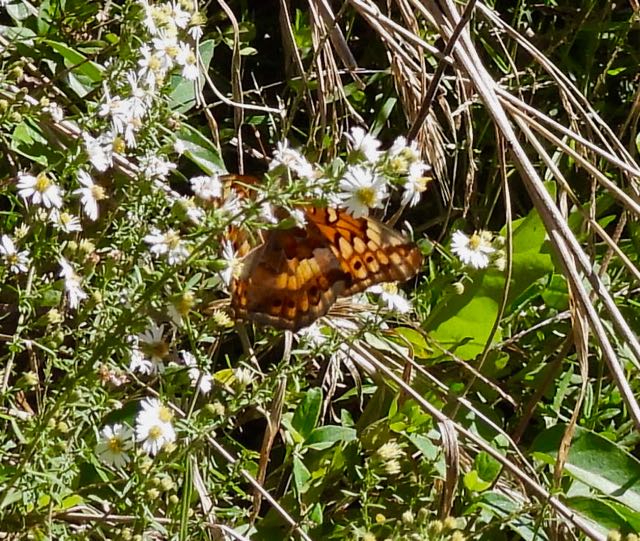
algonkian park fritillary amid daisy fleabane sep 27 2022 - 1

Fritillary butterfly in Daisy fleabane, by Potomac River, Algonkian Regional Park


So much beauty in the Valley of the Potomac, and October is on the way. We can’t wait!

August 2022: Being New in an Old Place

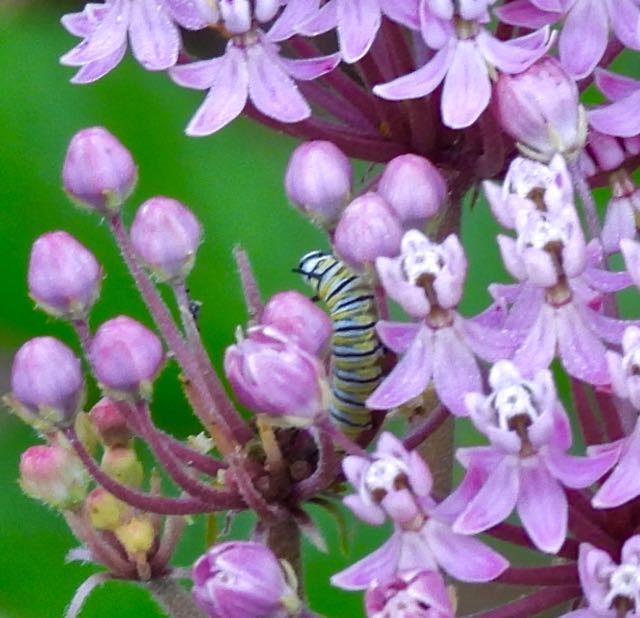
lake cameron edge monarch caterpillar on swamp milkweed aug 19 2022 - 1

Monarch caterpillar in swamp milkweed, beside Cameron Pond

Chris:

Or is it old in a new place? It’s been 16 years since we moved from Virginia to California, and now we’re back. Sure, we’re older, 70s versus 50s, and sure, we’re living in a different city than we were in 2006, so yes, we’re old in a new place, discovering the many experiences this town has to offer.  Our wonderfully full, energetic years in Northern California have sparked our imaginations and sense of adventure, so now that we’ve come back to Virginia, we’re new and ready to immerse ourselves in a region where we already feel comfortable.

It feels good to be new and old at the same time.

Jean and I have this great double consciousness of life in Northern Virginia. We keep recalling roads we traveled; stores, schools, parks, and restaurants we frequented; big and small events in our former lives and in our children’s lives. The feelings come back, and we are momentarily living in the past. But almost in the same moment we wonder what that place is like now–how has it changed? does it still exist? what has replaced it?–and we get the desire to revisit and see for ourselves. 

In a few months we’ve barely scratched the surface, but already we have discovered some new destinations–the welcoming local public library, two thriving farmers markets, walking paths around small lakes, several nearby restaurants–Greek, Vietnamese/French, Southern BBQ, Peruvian–that promise to become go-to spots. Some of these are places brand new to us; others, like Lake Anne’s Washington Plaza (below) are places that we knew of in the past but are only now getting to know.

lake anne washington plaza aug 19 2022 - 1

Restaurants at Washington Plaza, Lake Anne

Meanwhile, places that we knew well in our former lives vary between the gone forever, the barely recognizable, and the pretty much the same. The restaurant where Jean and I had our first date? Swept away in the past couple of years by multi-story construction that still goes on. My old high school? Part of the shell remains, but it and the athletic fields around it are becoming the “Boulevard VI Mixed Use Community,” wherein the old school building (1935) shall be reconceived as–get this–“retail space.” The Little League fields where our children, now with children of their own, played exciting games and I coached? Still there and still thriving, I’m told, though when we recently tried to drive there, I realized that I’d forgotten the way.

The California Effect

Adding to the newness is the impact that our years in the West have made on how we see ourselves and this Virginia to which we have returned.  

Having lived and gardened in the dry and drier Sacramento Valley, I know that California’s famed agricultural abundance comes only through ingenious and constant planning to make miracles happen with limited water. Every day, the weather shouts at NorCal residents to pay attention to nature and humans’ role in shaping–and saving–it. So as I look back on who I was as I grew up and built a family and a career in Virginia,  I’m struck by how little attention I gave to the fragility of nature. I, and everyone I knew, just took lush greenness for granted.

Why? Because Northern Virginia is blessed with an abundance of fresh water, which pours down from the skies several times per week. Our city, Reston, features gorgeous lakes (actually reservoirs) fed by streams that meander into the Potomac River about 8 miles away. I can’t imagine anyone in the Potomac Valley taking this bounty for granted, though I blissfully did so for many years.

Now I, with my California eyes, am totally in love with this liquid largesse. I can’t take enough pictures of the small lake next to which we live. The burgeoning array of wildflowers, grasses, and trees that line the lake bank mesmerize me, as do the turtles, fish, and small mammals that thrive on, in, and beside the water. I revel in the miraculous choirs of birds, insects, and frogs that sing ’round the clock.

lake cameron gentle rain aug 21 2022 - 1

Gentle rain on Cameron Pond


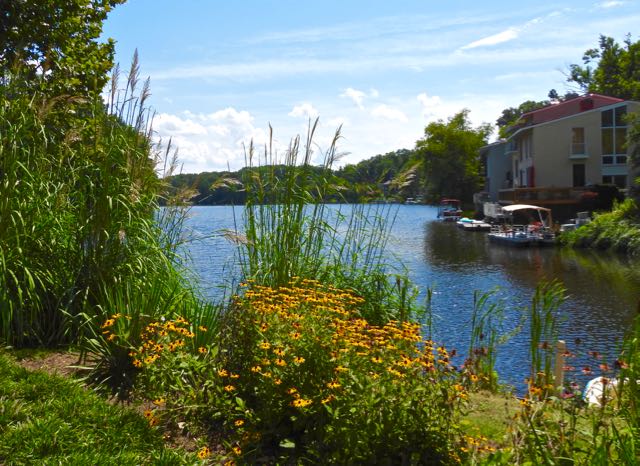
lake anne inlet black eyed susans aug 19 2022 - 1

Black-eyed susans by Lake Anne


lake cameron edge bumblebee on downy yellow false foxglove aug 19 2022 - 1

Bumble bee on Downy Yellow False Foxglove


lake cameron edge bumblebee monarch caterpillar on swamp milkweed aug 19 2022 - 1

Bumble bee and monarch caterpillar on swamp milkweed


lake 3 geese young heron near lake's edge aug 17 2022 - 1

Canada geese and young blue heron


lake cameron edge goldenrod ladybeetle horizontal aug 17 2022 - 1

Goldenrod and ladybeetle


Two turtles scout along Cameron Pond aug 19 2022 - 1

Two turtles scout along Cameron Pond

A happy and generous rest of August to you. See you with more stories and pics in September.

June 2022: Leaving the Garden

garden dragonfly closeup on tomato cage may 27 2022 - 1

Flame Skimmer Dragonflies love to perch on the tomato cages. Note the pollen clinging to the dragonfly’s legs.

That was the beauty of nature–always a step ahead, privy to a joke he did not know, a riddle with no answer.
                                                            (Nathan Harris, The Sweetness of Water, 2021)

This is a month of change for us. After 16 years in California, 15 of them in this home and garden, we are bound for a return to the East Coast in July. The grandchildren, of whom we so lovingly speak in this blog, are growing up, just as well-cared-for plants do, and we want to be closer to them and their parents as they grow in their own gardens.

Over the past two months, we’ve spent time in the East, and have established a modest residence there in Virginia, where we lived for many years before our westward move. Jean is already there making our new home. We’ve begun to say goodbyes to the people and places we’ve grown attached to here. Of course, it’s not really goodbye. In our electronically interconnected world, we are almost constantly in touch–what a beautiful phrase!–through our FaceTimes, Facebooks, emails, texts, and phone chats. So we will always be living in many places at once, as long as we have the will and interest to do so. If we want to stay in touch, we can. And I hope we will.

But what will happen to this home we’ve known? Especially to this 2000-or-so square feet of ground that I have dwelt in daily for 15 years, tending–digging, planting, feeding, weeding, trimming, and harvesting? I’ve grown to love just wandering purposefully through the garden: watching, listening, breathing in the fragrances, marveling at the garden’s surprises and resiliences from day to day.  Communicating, or trying to, with its many citizens who fly in, who stay, who sit upon leaves, who make invisible webs, who clamber underleaves or underground.

This property will pass to other humans, who will have their own visions for it, and what it will become is anyone’s guess.

I think the people who lived here just before us would be happy with how we’ve stewarded the garden. The family from whom we bought the house planted rose bushes that still bloom. They planted the orange tree, the cherry plum tree, the peach tree, the sycamore, and the sweet gum trees, all flourishing.

Of the people who lived on this land before them we know little. This house and those around it were built just before 2000, part of the housing boom that continues today on rural lands that have been aggressively farmed and orcharded since the late 19th century. But before that, it was part ranchland in the short three decades when Mexico held California. Before that, while the Spanish controlled the coast and built their missions in the 18th century, this interior land of snow-fed rivers, floodplain, marsh, and semi-desert was home to the native Patwin, who had been here for thousands of years, co-existing with the thousands of species who also dwelt here and who for eons preceded any humans. Humanless eons way beyond our imagining now.

It’s not easy to think of this garden as a place unto itself, perfectly able to survive and thrive without humans. But I try to remember and to honor those who have come before, and I hope that I haven’t screwed it up too much.

Where We’re Moving

avalon pond canada goose small family and fountain jun 1 2022 - 1

A new old place for us

I’ve referred sometimes in this blog to my difficulty in our early California years of trying to cope with the differences of this Western place from where we used to live. In climate and in what and how to grow things, Northern Virginia is really different from the Sacramento Valley. Rainfall is much more plentiful and is spread out over the year. (In summer, thunderstorms are almost a daily threat, and they can be loud!)

One consequence is that the Virginia air is more humid: so the insects in the air are plentiful in summer, and the temperature range during the day is much less. Where the sunrise temp in the Valley may be 30-40 degrees cooler than the summer daytime high, the sunrise/afternoon range in Virginia may be only 10-15 degrees.  Moreover, winter is a real thing in Virginia. Though climate change has lessened snow fall and the chance of 10 degree days in January, freezing temps and treacherous ice mean winter there.

As a gardener, I’ve become used to year-round growing in the Valley. Full-on spring happens in February. The oranges and lemons are ready to pick in December and just get juicier from January through April. In Virginia? Well, it’s hard for me to remember, because I wasn’t a veggy-fruit gardener there.  But the growing season is short, maybe planting in May to harvest in September. A new adventure for me!

One phenomenon I do know: I learned when I came to NorCal that the hillsides are brown in summer (so dry) and green in winter (during what passes for a rainy season); in Virginia, the hillsides are bright green in summer and amazingly lush (from all the rain), but brown in winter (too cold). I’ll have to relearn those opposites.

Will I Garden There?

That remains to be seen. As a downsizing couple in a thoroughly suburban environment, we won’t have the land there that we’ve enjoyed here, but we’re already accumulating pots. And I’ll be looking for opportunities for more digging, planting, and nurturing. Stay tuned. Meanwhile, we’ll happily take daily walks in the lush greenness surrounding a nearby lake and getting to know the rich variety of birds and other critters who thrive there.

June Garden Update

garden side late blooming alstroemeria jun 17 2022 - 1

Late blooming alstroemeria, June 17

It’s a strange feeling to be about to leave this garden.

The summer veggies (only ten plants this year because of the drought) are growing apace, and the perennials (like the alstroemeria, above) and trees go along on their twice-a week watering from the drip irrigation. But when I leave in July their care will be in the hands of others, so I won’t be looking ahead any longer to the changes in their growth, sometimes predictable, sometimes surprising, that have marked my years with them. I won’t be here to photograph their progress, their aging, and to figure out how to deal with the vagaries of a slowly hotter and increasingly drier climate.

Two weeks ago, I made the final batch of my cherry plum jam, an annual June ritual for more than the past decade. I’ve given jars of this last batch to friends, and I’ll be shipping a few to Virginia as a memory of what I did here and of this marvelous tree.

Tomatoes, Peppers, and Zucchini. This final small crop of my tenure here as gardener has been in the ground for just over 2 months, and all are growing as expected, though with reduced water.

garden back panoto S jun 22 2022 - 1

Peppers in near raised bed and orange pot, 5 tomato plants in mid distance; arugula and zucchini farther away

I’ve taken photos of this panoramic view of the back garden every month since the blog began. Always the same and always different.

The tomatoes and zucchini have already produced enough ripe gems for me to use in stir fries, omelets, and sandwiches.

A June 2022 Gallery (for More Memories)

And so on to July, with who knows what surprises, including for this blog…

May 2022: Creating Beauty, Saving Water

garden bee nestled in poppy flower may 13 2022 - 1

Bee nestles in a poppy flower, front garden

In this month’s blog:

Garden Update: Growth and Beauty Amid Drought

May Kitchen: Wine Country Potpourri and Italian Arrabbiata

The May 2022 Gallery

garden back bee on pomegranate flower may 2 2022 - 1

Bee on pomegranate flower, back garden, early May

Boom and Bust as the Drought Goes On

Screenshot_2022-05-15 The Sacramento Bee

Screenshot from the Sacramento Bee, May 15: Dale Kasler, “Ground to a Halt: Drought Forces Rice Farmers to Cut Crop and Let Fields Lie Fallow”

Why boom and bust?  Well, the “bust” part of  drought is obvious: less planting by farmers means less income for farms, unemployment of farm workers, and potential shortages of food that affect everyone. This is already occurring in many countries.

Screenshot_2022-05-17 Today's edition of The Sacramento Bee is online now - cjthaiss ucdavis edu - UC Davis Mail

Screenshot, Sacramento Bee, May 17

Add in higher risk of wildfires, more contamination of the air, higher costs of available water, and on and on. As climate change continues to reshape our world, droughts across the continents continue to increase the number of climate refugees seeking a watered place to live. Meanwhile, the death toll on all species–all of whom need water to survive–gets worse and worse.

So what might possibly be the “boom” inspired by drought?

I’m talking about the “boom” in creativity and learning by all of us when we try to adapt productively to the drought. For those in neighborhoods like mine, this can mean, for example:

  • Homeowners and landlords giving up their water-wasteful lawns in favor of colorful, drought-tolerant plants native to their regions–these also attract and sustain pollinators
  • Getting exercise with a broom, instead of wasting precious water from high-pressure hoses to “clean” walks and driveways
  • All citizens adhering to water-use restrictions in their localities–and encouraging family members to work together to think of water-saving ideas (like short showers; using the stopper in bathroom and kitchen drains instead of just letting the water run; visiting commercial car washes that use recycled water, and other good ideas you can think of)
  • Actually reading our water/sewer bills so we can set targets and monitor results

Garden Update: Growth and Beauty Amid the Drought

This 1-minute video showcases the sounds and sights of the garden on an early mid-May morning. My thanks go to a scene-stealing bee, our hearty arugula, and one of our really egocentric Western scrub jays, plus our next-door neighbor’s border collie, and, of course, our daily choir of mockingbirds and warblers, for making this neighborhood an exciting, musical, but still pretty peaceful, home.

garden back peppers basil tomatoes zucchini at four weeks may 23 2022 - 1

Four weeks after planting in late April, the 10 tomatoes, peppers, zucchini, and basil are thriving in reduced water.

Saving Water? So far, so good. Our April water usage was 33% lower than in April 2021. Cutting back on new veggy plantings (from 22 to 10) seems to be working.


Apricots. I’m thankful for their return this year! This is their month, with the ten-year-old tree teeming with hundreds of rapidly ripening fruit. I’m going to try an apricot pie (wish me luck!) or maybe two! There’ll also be dried apricots for the freezer, freshly-picked ones with ice cream, and snack fruit gobbled right from the tree. There’ll be plenty to give away, of course, but there’ll also be more for the birds, as well as plenty of the fallen ones to nourish the ground for next year’s crop.

Last year we had almost no apricots, because of high winds and a rainless January-February2021 that stunted the early growing season. So this year’s bumper crop is a true gift.

Oranges and Lemons

garden back meyer lemons teem on bush may 21 2022 - 1

Meyer lemons in the back garden

  • At end of March, I refrigerated  the final 50 oranges from this year’s crop, to use for juice in April and May. They stayed fresh and delicious.
  • From now through June and July, I’ll be juicing for lemonade the many ripe meyer lemons still on the bush, even as the tiny lemons for next year’s crop begin to mature.


Peaches, Cherry Plums, and Blackberries

All three of these are ripening and will be ready for harvest soon: the blackberries in late May and early June, the cherry plums in June, and the peaches in July. The tangy cherry plums will be jarred for jam, while the small crops of blackberries and peaches will go into desserts.

Tomatoes, Peppers, and Zucchini

The ten plants have now been in the ground for almost a month. They are growing on schedule: tiny yellow flowers have appeared on the 5 tomato plants; the 3 mild peppers are getting taller and are just beginning to show small buds; the 1 zucchini has tripled in size and has already shown 3 large yellow flowers! The one herb I planted–sweet basil–has quadrupled in size and has already provided aromatic leaves for the dishes described in the kitchen section below.

May Kitchen: Wine Country Potpourri and Italian Arrabbiata

kitchen wine country potato vegetable soup in bowl may 6 2022 - 1

Wine Country Potato Vegetable Soup

It’s too early for tomatoes, peppers, and zucchini from the garden–we just put them in the last week in April. But there’s chard and arugula still growing in the garden from last year, plus perennial herbs like Greek oregano, lavender, rosemary, and sage, as well as last year’s hot peppers from the freezer. So there’s a start for two dishes, both hearty soups.

The first I called a wine country potato vegetable soup–a true potpourri for a coolish afternoon in early May.

The second I called Italian Arrabbiata, made in the middle of the month with more leftovers and a few different garden herbs.

Everything else is leftovers from the fridge, like the tiny baked potatoes from a baked salmon dish earlier in the week and cherry tomatoes from the store. There are also freezer finds like half bags of pearl onions, peas and chopped carrots, sliced peppers and onions, and even okra. As always in our kitchen, we use what we have and make it work. Nothing goes to waste.

Here’s my process for the wine country potpourri:

  • In enough water to make a veggy broth, bring the frozen ingredients to a slow boil until tender.
  • Add in the leftover potatoes, cherry tomatoes, and chard/arugula to heat through on simmer.
  • If you wish, add in enough chicken broth to boost the flavor.
  • Season to taste with herbs on hand (I used just the oregano in this dish).
  • For a classy touch of flavor and color, add 1/4 cup (or so) of red wine (I used an open bottle of a Sonoma Bordeaux blend).
  • Season to taste with salt, black pepper, garlic salt, and hot pepper sauce (I used a bit of sriracha on hand).
  • Keep tasting and adjusting seasonings until you get the flavor how you like it.

Total prep and cooking time was about 30 minutes. In the small saucepan I used, all of these ingredients made 4 healthy servings.

kitchen wine country potato vegetable soup cooking may 6 2022 - 1

Wine country potato and veggy soup on the stove

Italian Arrabbiata Soup

kitchen chard culinary sage basil lemon verbena oregano rosemary may 17 2022 - 1

Garden goodies for Italian Arrabbiata Soup: chard, basil, culinary sage, lemon verbena, spicy oregano, rosemary

  • In a small skillet, sautee frozen mild peppers, onions, and sliced small potatoes with garlic in EV olive oil until onions are translucent and potatoes slightly softened.
  • Fill a large saucepan half full with water, add in rotini or penne pasta (about half of a 12-ounce box), and bring to boil. Then cook on low heat until pasta is slightly soft.
  • Add in the peppers, onions, and potatoes and keep cooking on low.
  • Add other ingredients as desired into the cooking mixture. I used leftover cherry tomatoes (chopped in half), chopped chard from the garden, green olives (chopped in half), and the range of garden herbs (chopped) shown in the photo above. I also added some marinated mushrooms that I had on hand.
  • Add chicken or veggy broth for flavor, as well as 1/4 cup (or more) of red wine. I also added in the brine (about 1/4 cup) from a jar of green olives–one of my favorite flavors.
  • Season to desired taste with salt and black pepper.
  • For the arrabbiata spice, use your favorite hot pepper, either chopped or in pepper sauce. For this dish, I used 2 finely chopped serrano peppers, including seeds, that I had in a bag in the freezer from my 2019 crop. Arrabbiata is Italian for “angry,” or in this case “spicy hot.”
  • Keep cooking on low until the potatoes are soft and the pasta has reached desired softness.

My total prep and cooking time was about an hour. The result: six or so hearty servings.

kitchen italian arabiatta soup may 17 2022 - 1

Italian arrabbiata soup on the stove. What an aroma!

The May 2022 Gallery

The garden creates–June awaits.

April 2022: Spring Planting as the Drought Goes On

garden side red yellow rose closeup apr 3 2022 - 1

red yellow rose, side garden

In this month’s blog:

The Drought: What Are You Thinking?

Spring Planting? A Partial Yes

April 2022 Gallery

garden empty pots grouped apr 26 2022 - 1

No plantings in these pots this year

About the Drought–A Few Views

One: The Metropolitan Water District in Southern California took the unprecedented step this week of requiring 6 million residents in Los Angeles, Ventura, and San Bernardino counties to reduce outdoor watering to one day a week in response to the ongoing drought, now in its third year (LA Times, April 27).

Two: I drove to the LA area on April 22 to visit our two children (and their significant others) who live there. As I drove on Interstate 5, I was assaulted as always by the many signs and billboards that line the highway proclaiming the supposedly unfair treatment by state government toward the large farmers and ranchers whose properties dominate the Central Valley. Year in and year out, regardless of the plentiful or meager rainfall across the state, the demand on these billboards is always the same: give us more water–more, more, more. “Build more dams.” “Don’t let so much water reach the ocean.” “We grow food! We need more water!”

There’s never any recognition by these growers that anyone else needs water. Never any recognition that there is a drought, and that everyone has to get by with less. That agriculture uses roughly 80% of all the water in the state (CA Dept. of Water Resources) is taken for granted by those who plant the signs. The chant is always the same. No one else matters.

Three: I asked one of the folks I visited in SoCal if they ever thought about the drought. The person answered, “Not for one second.”  This was said apologetically, as if they knew they should be more concerned, or maybe just that they knew my point of view. I appreciate the honesty. I also appreciate that if I spent, as they do, 2-3 hours per day dancing in the bumper-to-bumper ballet of traffic on “the 405,” I might not be thinking about drought either.
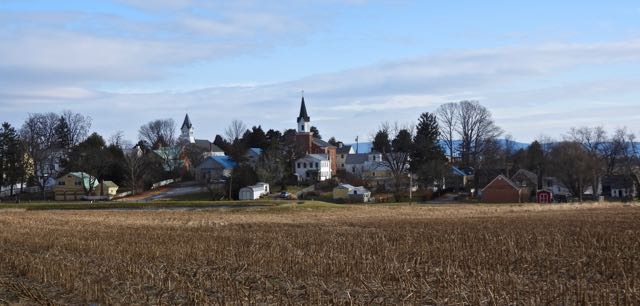
Four: Instead, I live in the middle of a garden that I take care of. How can I not think about drought?

garden side rain barrel and flowers blackberries apr 27 2022 - 1

Panorama from front to side garden, with one of three rain barrels at the center

Spring Planting? A Partial Yes

By not planting fall-winter veggies in 2021-22, I cut my household water use by almost 40% compared to 2020-21, roughly 700 gallons per month between October and March. This decline also included reduced watering (drip irrigation) of the rest of the plants in the garden.

I speculated last month that I might forego veggie planting in spring-summer 2022 as well, if I didn’t see the reduction in water that I’d hoped for in fall-winter. But since the figures give me hope, I’ve decided to cut back significantly, but not eliminate veggie planting altogether.  So here’s the compromise:

2021 (22 pl) 2022 (10 pl)
Tomatoes 7 plants 5 plants
Mild peppers 4 3
Hot peppers 1 0
Zucchini 1 1
Cucumbers 3 0
Eggplant 2 0
Herbs 4 1

I’ll grow slightly fewer than half of what I grew in 2021, and those I’m keeping are my best and most versatile producers.  The one herb I’m planting is sweet basil, which is always prolific and goes so well in dishes with tomatoes and peppers.  Last summer I found that zucchini makes excellent pickles, so I could afford to eliminate the cukes this summer. What about hot peppers? While they are always so colorful and photogenic, I have so many in the freezer that growing more makes no sense.

So we’ll see what difference 12 fewer veggy plants make in water use.

garden back few new veggy plants apr 28 2022 - 1

Fewer than half new veggy plantings in beds this year

Annual flowers. Oh, I didn’t mention my cutback in annual flowers. Last spring-summer I planted 6 petunias, 6 pansies, and 12 vinca. This week I planted only 6 petunias. Last year’s were hearty, so I have high hopes for this year’s. The pansies are short-timers in this climate, so they were easy to eliminate. But the vinca? Planted in May, they spread fast, last long, and are so colorful that I hate to lose them. But they use a lot of water, so I’ll see if I can stand the sacrifice and all those empty pots.

garden empty pots 2 apr 28 2022 - 1

A Few Other April Updates

Oranges and Lemons. By early April, all but a few oranges (of almost 800 total) were off the tree, and by saving 50 or so in the refrigerator, they continue to provide juice. Meanwhile, new green ones are growing, though next season’s crop looks as if it will be far smaller than this year’s record.

There are still many meyer lemons on the bush, so they will continue to be fuel for lemonade into the summer. The great number of buds last month promises an abundant crop in 2022-23.

Irises. Maybe the strangest development this month is that the three iris varieties in back did not bloom, except for two orange shoots in mid month. This is our first lack of an April iris extravaganza in 6 years.

California Poppies. In contrast to the irises, the six poppy plants I put in last summer have been an explosive success, especially the four I planted in the front garden. These native water savers spread throughout the front quadrant of the garden and have made a colorful show to the neighborhood for two months now. How I will deal with this success will be a task for the next few months. Meanwhile, I’m just enjoying it, as are the bees, for whom the poppies are a magnet.

garden front poppy field rock roses mar 28 2022 - 1

California poppies dominating the front garden, with rock roses adding to the colorful show.

Roses galore. This April has been their month, after a cool March delayed their blooming. The most pleasant surprise has been the mixed thicket in the back garden, with more roses than ever before-including a red flower burst on the almost-dead plant I nurtured back in spring 2021, but which produced no blooms last year. (See the Gallery for more rose photos.)

garden back rose bush by gate apr 21 2022 - 1

Rose burst on bush that I brought back in 2021

Apricots and Cherry Plums. Both of these fruit trees are on track for big harvests in 2022–the apricot next month and the cherry plum in June. In 2021, the dry, windy weather early in the year almost eliminated any harvest of apricots–we had only about 20 fruit, super-low for that tree after several years of 100-300 per season. For 2022, the substantial rain we had in December 2021 gave the tree a great boost early on, so little apricots are all over the tree. Apricot jam and dried apricots are on the horizon for May!

April 2022 Gallery

(Move the cursor over each photo for a description)

And on to May!