March 2025: New Spring, New Climate, New Garden

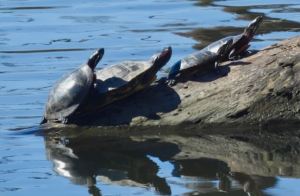
With warmer temps come the Turtles, who emerge above the surface once the temp reaches 60: four Red-Bellied Cooters on a log along the north shore of the lake, on a warm and windy March 18

In this month’s blog:

Wildfire USA: The New Normal
We Start a New Garden in a New Climate
Always Time for St. Paddy’s Day and Cherry Blossoms
The March 2025 Photo/Video Gallery: New Sightings in Nearby Places

A Tree Swallow–first sighting!–and a male Red-Winged Blackbird share the rail of the dam structure at nearby Lake Newport, on a cool, cloudy March 16

***************************************************

Climate Log: Wildfire USA: The New Normal?
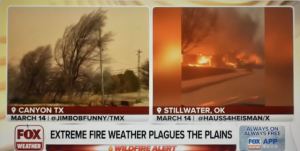
Exceptional drought in Plains states leads to wildfires from Texas and Oklahoma north through Kansas and Missouri (USA Today and Fox Weather, March 14)

Though you’ll never hear a word about this from the new federal administration, for whom climate change, they say, “does not exist,” even the Fox Network can’t ignore the extreme drought conditions that have been ongoing for at least two years now in the Plains states–and the frequent wildfires that are now defining late winter in the middle of the country.
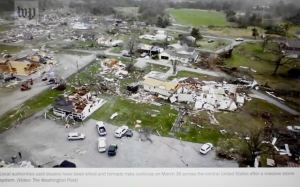
High winds and storms in the Plains states were accompanied by tornadoes, like this one that touched down in Missouri, March 14

Wildfires in the drought-plagued Plains states are dreadful enough, but now Florida joins the parade of drought-ridden states with fires up and down the peninsula.
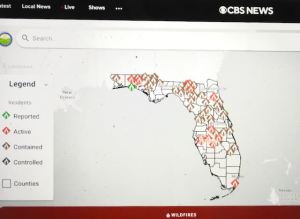
This map from CBS News on March 20 shows “active fires” in most regions of the state, even toward the Keys and across the Panhandle.

While we’re used to hearing about hurricanes there in summer and now fall, plus high ocean temps and sea level rise along its coasts year-round, drought has become yet another climate concern in the Sunshine State.
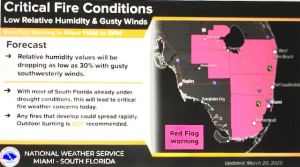
National Weather Service warning for Miami and South Florida, March 20

Much farther north, the climate news this month (and this is no surprise at all) is that yet another record was set for the earliest melting of the Arctic Ocean ice cover, as reported in the Washington Post by Brady Dennis, March 6.
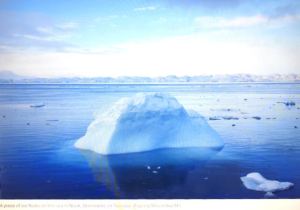
Greenland ice chunk in melting Arctic Ocean (Evgeniy Maloletka, AP photo , March 5)

It’s particularly noteworthy that the Trump/Musk administration is very interested in the U.S. acquiring Greenland as a territory. If they truly believed that there was no climate change, they’d assume that this melting was a temporary weather event. But their claim that climate change doesn’t exist is really just pretense, used by the fossil fuels cartel to justify the administration’s rollbacks of environmental protections and their attacks against renewable energy. The cartel and their political enablers know that the melting is part of the worldwide warming trend, and so the administration wants Greenland–just as they want to acquire Canada–as a military and trading launch pad for shipping across the now watery Arctic, as Forbes’ Garth Friesen, among others, reported in January 2025 in “Why Trump Wants Greenland.”

In this new normal of drought and higher temps, and while environmental rollbacks continue, we can look forward to more wildfires in more places. Indeed, just today (March 26) there are National Weather Service “red flag warnings” in the western edges of Northern Virginia.
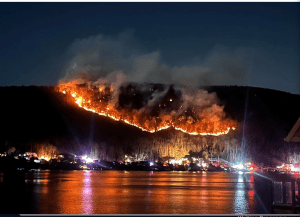
Wildfire on New York/New Jersey border, as this blog reported in November 2024

***************************************************************************

We Start a New Garden in a New Climate
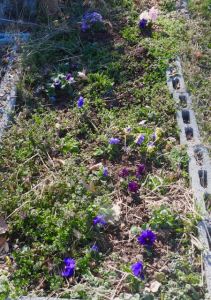
In our new garden plot, our first flower seedlings, March 22

For the first two years since our move from California in 2022, we had been on a waiting list for one of the highly-coveted garden plots in the four large clusters of plots maintained for residents by our urban/suburban town association. Finally in late August 2024, a 190-square-foot plot 2 miles from our home lakeside community came open and we leaped on the opportunity. Although this plot would be a far cry from the almost 2000 square feet of garden we had gloried in for 17 years around our home in the Sacramento Valley, and which had been the basis for this blog from 2015 to 2022, we promised to make the most of this new setting.
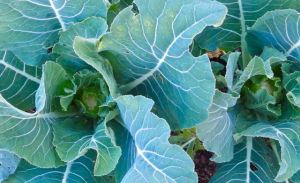
Cauliflower growing in our first small fall/winter garden plot in our town, November 24, 2024

On this small new plot, we planted three veggies suited to fall growth: broccoli, cauliflower, and red cabbage. In hopes that they would also thrive, we experimented with flowers, too: the perennial chrysanthemums we knew would be happy in October and November, celosia, and gerbera daisies–plus bright yellow and purple pansies, who, as we knew from prior experience in this climate, could go dormant over the winter, then come back in spring.
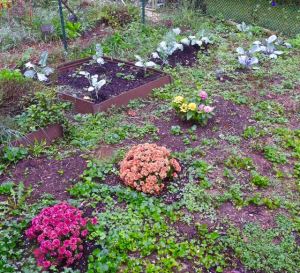
Our first plantings in our first small Virginia garden: broccoli, cauliflower, red cabbage, mums, daisies, 3 weeks old, in the rain, September 24

The broccoli and cauliflower plants did well enough before winter to give us some tasty heads, and the cabbage produced colorful purple leaves. The mums (as expected) were champs for a couple months before the current flowers wilted, as were the pansies. But the other flowers died with the first freeze, along with our wishful thinking (!) that Northern Virginia in winter would prove as hospitable as California.  Because this winter, as we reported in our January and February entries, proved far colder and snowier than our first two winters here, we got what we should have expected.

A New Garden Plot!

In early February, current plot holders were informed that there were several slightly larger plots that had become available, and we were invited to apply for those. One such plot, 225 square feet, seemed particularly attractive, as it was both closer to the road (for unloading purposes) and more sunny than our first spot, which was beside the woods of tall trees. So we applied and got lucky. We have now for the past month been clearing the new plot of plants that had taken over (mainly tough little blue speedwell and purple-flowering henbit), getting the soil ready, and stocking up on flowers and veggies, so that we could begin planting as soon as the weather warmed up enough to avoid any more freezing nights.

We have also met other nearby gardeners, who cheerfully answer our questions about their experiences in this climate and in these spaces. Routinely, gardeners also share equipment, such as buckets, wheelbarrows, and used wood for raised beds. Moreover, we’re assured, among the rules of use is the promise by each plot holder not to steal or damage others’ plants or produce. The better we get to know each other, the more we look out for each other.
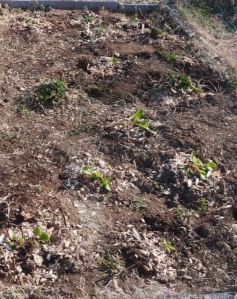
Cleared third of our new garden plot with seedlings of chard, mint, basil, thyme, tomatoes, peppers, zucchini, and strawberry plants, March 22

Besides the veggy plants listed in the caption above, we’ve also planted two blueberry bushes–a plant unsuited to the hotter California climate–with more plant varieties being planned. The blueberries are already budding, just one week in. A third of the plot will be for flowers, with three “Ps”: pansies, petunias, and peonies already in ground, plus dianthus (see photo at the top of this section.)

Another advantage of these well-used garden plots, which have been cared for by a range of gardeners over the years, is that the soil is free of rocks (!) and is easily diggable as far down as needed.  Another great feature of these garden clusters is that, for the reasonable yearly fee we pay, the town association provides mulch, compost, and manure, as well as convenient faucets around the cluster for watering.
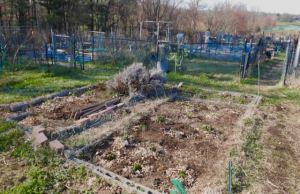
Our plot, early in our design process, with part of the rest of the plots cluster in the background, March 22. More photos to come, as the garden grows!

*******************************************************

In March, Always Time for St. Paddy’s Day and Cherry Blossoms
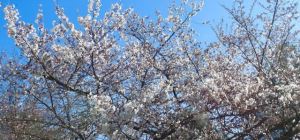
East of our lake, Cherry tree in full bloom, warm, sunny March 25

Last year at this time (see the March 2024 entry), we had a lovely, but also sobering, visit to the Tidal Basin in nearby Washington to see the Yoshino cherry blossoms in full bloom and visit the Jefferson Memorial, an annual pilgrimage for us in all our years here before 2006 and our move to California. This year again we are making this trek–and will describe it in detail in next month’s blog.

Two hints: we’ll be updating readers on the huge renovation project in the Tidal Basin in response to climate change and sea level rise, and we’ll be profiling three real American heroes who are honored amid the blossoms. (No, not Thomas Jefferson.)

Two St. Paddy’s Day Treats

Jean’s homemade Irish soda bread, March 17

Jean:

I’ve been streaming a lot of old British Baking Shows recently, and I especially enjoy Paul Hollywood’s master classes on bread. His strong arms and hands are made for the magic of kneading bread. But St. Patrick’s Day includes a bread that doesn’t get kneaded–Irish soda bread, of course. It’s rather an acquired taste, not the most exciting in its basic form, so in addition to studying Paul’s simple, classic technique, I checked out some recipes that called for a more enriched dough.

Hollywood makes soda bread either with all white flour or half white and half whole wheat, which I prefer, as a way to increase the fiber and protein. The most important ingredients are baking soda and buttermilk. I used a mix of flours (including one cup of oat flour and and one of white whole wheat out of the total four cups of flour), plus some sugar, butter, and egg, as recommended in this recipe.

The added sweetness is up to you; you could try a couple of tablespoons of sugar instead of 1/4 cup, if you want it less sweet. The egg also is optional, as it is in scones, but it does make the dough richer. https://natashaskitchen.com/irish-soda-bread/

In addition to golden raisins, I added caraway seeds because I like that flavor and a bit of crunch as well. As always, make this to your taste and have fun with it.

Here’s one more of my treats in honor of St. Patrick’s Day: making these a sandwich cookie was a spur of the moment inspiration!
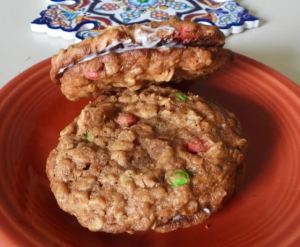
Jean’s oatmeal sandwich cookies with cream cheese frosting inside and mini-M&Ms for an added pop of color and flavor, March 19

************************************************

Venus, high above the lake, and beneath the moon, 7 PM, a clear, calm March 3 (yes, that orb is 25 million miles away)

The March 2025 Photo/Video Gallery: New Sightings in Nearby Places

In last month’s entry, I gave the impressive statistics from the worldwide Great Backyard Bird Count. Check it out. So many species in so many countries, recorded by so many devoted birders. As impressive and heart-warming as those numbers are, this month’s news from Audubon and the Cornell Lab of Ornithology sobers us to the fact of the continuing sharp decline in the U.S. numbers of birds. https://www.audubon.org/press-room/us-bird-populations-continue-alarming-decline-new-report-finds

Habitat loss to development, air and water pollution, global warming, use of pesticides and herbicides, and other factors have not only killed birds, but have killed off the insects and plants needed by bird populations to thrive. And the same factors that are killing birds are making our own human hold on life more tenuous for billions around the world.
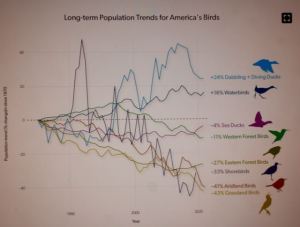
Decline year by year of many classes of birds in the US since 1970 (Cornell Lab of Ornithology), March 2025

 The Good News

 But still, day by day, our local and migrating birds call all around us, and their songs thrill us, and when we spot them and take pictures of their beautiful evanescence we feel the same joy that we always have in the presence of birds. Indeed, their fragility makes us appreciate them even more and perhaps even pushes us to try harder to help the rest of the human world pay attention.

And sometimes, as you’ll see below in a video and two related snaps, the unexpected and truly serendipitous happens on a bird walk.

So here are a selection of this month’s photos, taken not only along our local small lake, but also at another nearby lake and at a local woodland park.
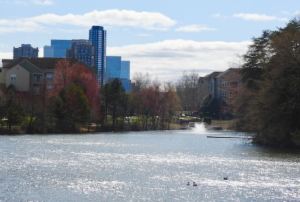
Three Canada Geese in a panorama toward downtown buildings on a sunny, sparkly, windy March 17
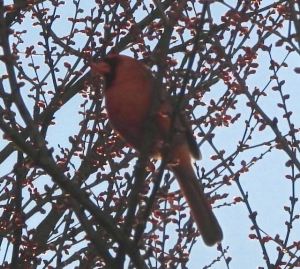
 

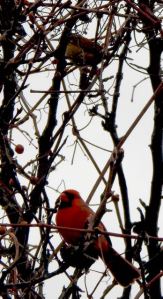
Male Cardinal in a budding Cherry tree east of our lake, at sunrise, March 19
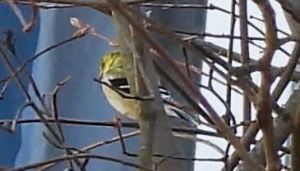

American Goldfinch in Serviceberry tree, southeast side of our lake, on a warm, windy noon, March 18
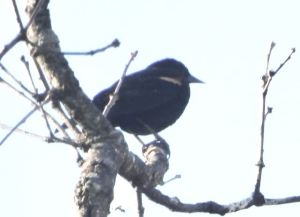

Young male Red-winged Blackbird atop an Oak east of the lake, warm morning, March 20

On a chilly afternoon, March 13, I pan the treetops southeast of the lake, and hear the calls of a Cardinal, a Tufted Titmouse, a House Sparrow, a White-Throated Sparrow, and a Carolina Wren–and, as always, local traffic
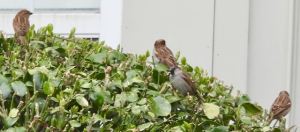
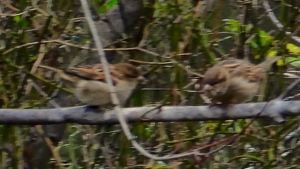
Song Sparrow and House Sparrows on Japanese Spindle Bush, southeast side of the lake, damp, chilly March 15

Song Sparrow sings in Red Cedar along the north shore, warm March 11
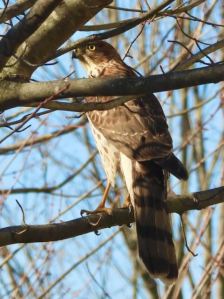
Sharp-Shinned Hawk perches in Red Maple very near our home, just after chasing, but losing, a Sparrow out of a nearby bush, February 28. See next video.

This Sharp-Shinned Hawk flew just past me after chasing a Sparrow through a Spindle Bush, and then perched in this Red Maple along our path, February 28. A totally unexpected and serendipitous shot!
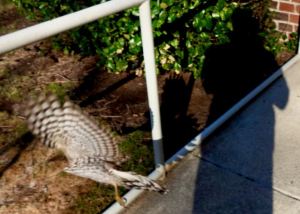
My photo of the Sharp-Shinned Hawk flying past me in pursuit of the Sparrow, who got away, February 28
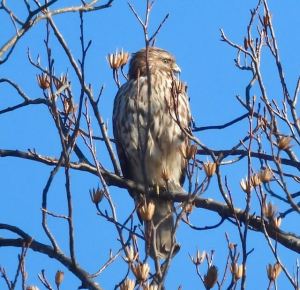
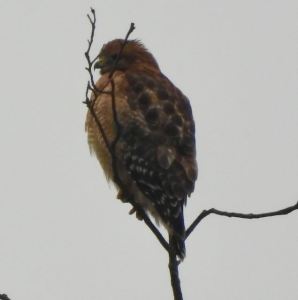
Red-Shouldered Hawk in Tulip Tree, southeast woods, March 10
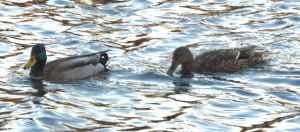
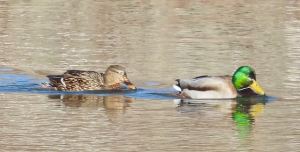
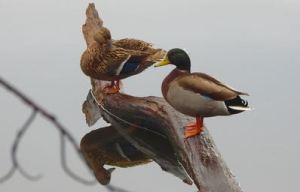
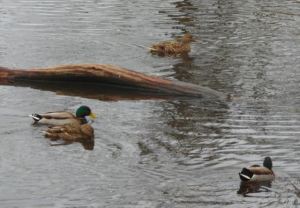
Mallard pair along west shore of our lake, in twilight, March 4
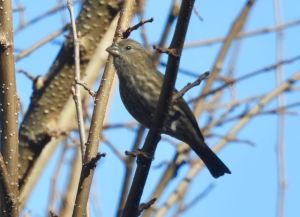
House Finch female in Mulberry tree along the southeast shore, warm March 11
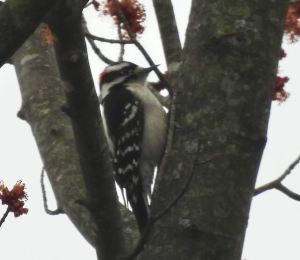
Downy Woodpecker scans on Red Maple, southeast bank, damp, cold March 15

I’m part of a town association birding party at a nearby park and lake, cool, cloudy March 16
Double-Crested Cormorant–first sighting of the year–at nearby Lake Newport, March 16
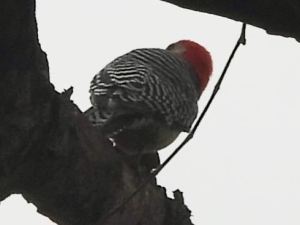
Red-Bellied Woodpecker high up in Oak, nearby park, March 16
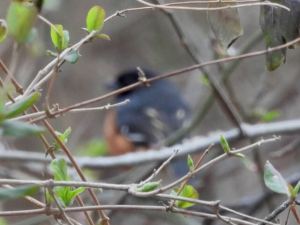
Rarely seen Eastern Towhee behind Honeysuckle, in woods of nearby park, March 16

At nearby Lake Newport, as part of the birding party, I see these 2 Ring-Neck Ducks, a first sighting for me, dive into the water, but then more of the ducks break the surface! March 16

Two pairs of the Ring-Neck Ducks in Lake Newport, March 16
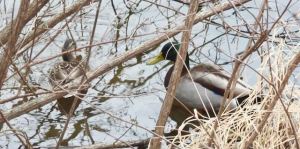

Mallard pair in lakeside rushes, beside me, Lake Newport, March 16
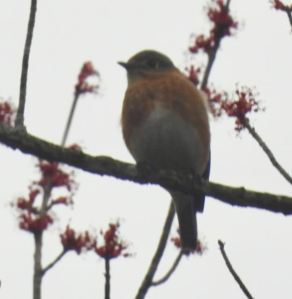

Eastern Bluebird in Red Maple at local park, March 16
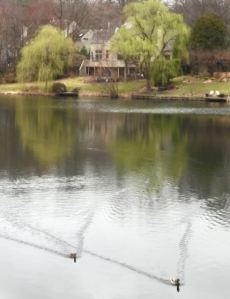

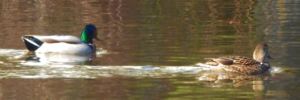
Wakes of Mallard Pair in Lake Newport, March 16

Female Cardinal calls as Red-Winged Blackbird calls, in Red Maple, southeast woods by our lake, cold, windy, March 7

And on we go in the last week of March, toward April, and hopes for Spring…

February 2025: Simple Acts of Love

In this month’s entry:

Celebrating Love in the Midst of Fear

Finding Birdsong: the Great Backyard Bird Count

Dishes to Warm the Heart

The February 2025 Photo/Video Gallery: Abundant Life in the Cold

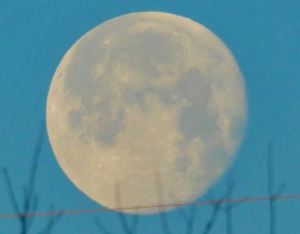
The February “Snow Moon” setting west of the lake, Valentine’s Day

Celebrating Love in the Midst of Fear

I always end each month’s entry with a “bon voyage” message for the next month. January’s message was “And on to the month of Valentines in hopes for our own resilience among challenges.” Well, there certainly have been challenges, as the new regime in the White House has torn through agency after agency with mass firings, and has left all three hundred million US citizens wondering what’s next:

  • Will any of our personal data be left un-pillaged for illegal use by Elon Musk and his uncontrolled band of data miners riffling through all Americans’ tax files, internet messages, and Social Security records?
  • Can we count on any payments and services from this new federal ruling class, which day after day punishes people if they have the courage to speak up?
  • Will US farmers survive the triple-whammy of extreme drought/floods, loss of foreign markets, and the bird flu epidemic that so far the administration ignores? https://www.youtube.com/watch?v=_3oXl_-viAg
  • Will the changed climate ever be addressed, as heat rises, storms become more deadly, and fires proliferate around the country and the world?

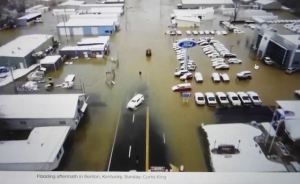
Flooding and loss of lives in Kentucky, February 16 and onward (Curtis King photo, CNN)

  • Finally, will the US keep any trust among the nations of the world, as the President cozies up to the Russian tyrant and threatens sovereign nations with land grabs and budget-busting tariffs? Will the US be left with any friends around the world in our own time of need?

Yes, the time for resilience is truly upon us.

But still we have so much to take joy in and celebrate–it’s Valentines Month! Let’s celebrate the love and care of those we are close to, and of the friends we’ve made through the years. Let’s comfort those in need and bring joy to as many others as we can.

One place to start is in our own back yard…

One of our Community’s resident Cardinals listens and calls to friends in a Red Maple along the east shore of the lake

*************************************************

Finding Birdsong: the Great Backyard Bird Count

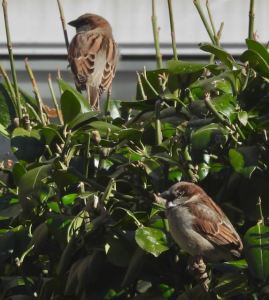
Pair of our abundant House Sparrows in a Japanese Spindle bush by a window in our community, on a cold, windy February 17

Yes, it’s that wonderful time of year again, when over 800,000 birders from around the world head out to their favorite places to record in picture and sound the inspiring lives of all the species they can discover. Just in the U.S., the Great Backyard Bird Count (GBBC), February 14 to 17, so far this year has found 655 species from almost 150,000 participants. Worldwide, so far almost 300,000 searchers have discovered almost 8000 species. Just in touring each day around the lake over the 4 days, I’ve found 25 species.

****************************

Update (March 14): Final Stats from Cornell Lab of Ornithology:

  • 8,078 species of birds identified
  • 217 countries or eBird subregions
  • 387,652 eBird checklists
  • 611,066 Merlin Bird IDs (step-by-step, sound, or photo)
  • 189,741 photos, videos, and sounds added to Macaulay Library
  • 838,113 estimated global participants
  • 409 reported community events

****************************************

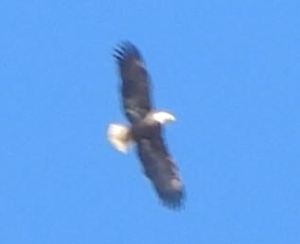
In part because this winter has been distinctly colder and snowier than last year’s (as this blog explored last month), the roster of local birds in this year’s GBBC is somewhat different from last year’s. For example, this month I’ve heard a Carolina Wren and a Yellow-rumped Warbler, but not seen one. Last year, they were on my photo roster. Nor have I seen any Double-crested Cormorants for three months–a regular winter presence when the lake is not frozen–nor a White-Crowned Sparrow, also more used to warmer temps. In contrast, American Robins have been here in profusion since this December; Dark-eyed Juncos have been here continuously since the Fall; and–lo and behold–for the first time since we moved here in 2022, Bald Eagles–at least 3–have been soaring 500 feet or more above the lake, close enough for me to get a couple of blurry, but definite, pictures.

Bald Eagle soars about 500 feet above the north shore of the lake, close enough for me to get a hazy zoom shot, on a windy, cold February 17

Here are a few more from this year’s visible species list:

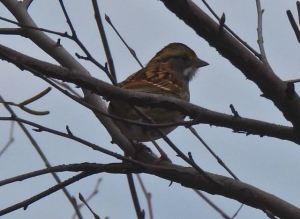
Not seen in the last GBBC, nor the year before, White-Throated Sparrow hunts seeds near a feeder on the Southeast side of the lake, February 15

New on this year’s GBBC roster, Savannah Sparrow feeds in the marshy waters in the Northwest corner of the lake, February 15

As last year, a few Eastern Bluebirds brighten the winter with their presence, like this one perched at a feeder on the Southeast side, February 15

As these 2 House Sparrows enjoy the blue feeder, listen for 3 other species: White-Throated Sparrow, Song Sparrow, and–surprise!–a male Red-Winged Blackbird, who is a warm-weather bird who doesn’t show up in these parts until June. Why he’s here now is just one of those birding surprises. February 19

The forecast for the coming week indicates more cold weather and perhaps snow coming our way, so we’ll see how the roster of birds in our community adapts. Every day offers surprises to birders. But as long as we have the lake, the woods, the diverse plants, animals, and insects along the lakeside–and the humans who care about their surviving and thriving–we’ll be fine.

A Red-Tailed Hawk’s vigil atop a Tulip Tree across the lake on the west shore, February 15.


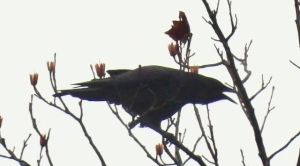
From across the lake I hear this Common Raven calling, atop a Tulip Tree in the East side woods, February 16

Of course, now that the Trump/Musk administration has suddenly fired 3000 local workers at National Parks and Forests (New York Times, February 18), including many trained to prevent or fight fires, the chances that birds and all other animals and plants can survive in an ever-more-extreme climate have become that much more fragile. Not to mention the weakening chances of employment of these former workers, all of them small-town residents across our country, and not to mention the even smaller chances that the now-unguarded towns near these forests will themselves survive the fires and other disasters sure to challenge their and our resilience. SEE Update, below, February 25.

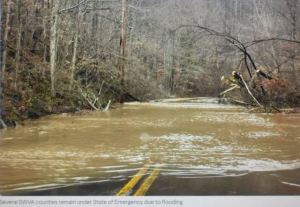
Flooding brings state of emergency to counties in Southwest Virginia, February 17. (Kenzie Hagood photo, WJHL, TriCities)

UPDATE, February 25: “Plan to Cut Park Workers Reversed: After Public Outcry, Administration Gives OK for Hiring of Seasonal Employees” (LA Times, Jack Dolan)

According to the Times article, the sudden rescinding of the order might bring as many as 7000 seasonal workers to the National Parks and Forests this summer, though the firing of 1000 probationary and permanent workers still stands, as of this moment. The pushback on social media and in messages to Congressional offices to the Trump/Musk firing assault seems to be having an effect. Let’s see how this all plays out as we move into March.

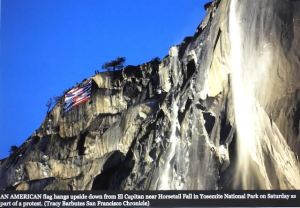
Sign of protest: US flag upside down on the face of El Capitan in Yosemite Park (Tracy Barbutes, SF Chronicle, Feb. 25)

****************************************************

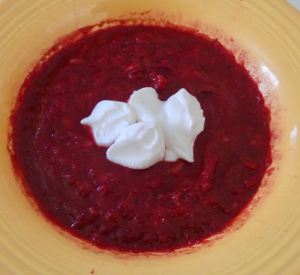
Jean’s Borscht with Sour Cream “Butterfly,” February 14

Dishes to Warm the Heart: The Valentines Month Kitchen

Jean:

I decided to make borscht for Valentine’s Day because it’s very red, first of all, and I know Chris likes it.  (I also wanted a tribute to poor, long-suffering Ukraine.)  I love a beet salad, too, so I bought enough fresh beets, plus a can of sliced beets, to allow me to make plenty of either or both.  Frankly, I did not enjoy trying to roast the fresh beets; they seemed to stay tough in the oven for a long time and then they suddenly went dry and a different kind of tough.  But combining my questionable roast beets with some canned beets and pureeing them in the blender or food processor worked for this.

 
I checked recipes online for borscht and came up with so many possibilities.  Some include potatoes, some have cabbage; there are some with meat, some vegetarian, different levels of tomato inclusion or not.  I love that because it means I can do what I want and use what I have.  But having a special place in my heart for monochromatic dishes and meals, I made a point of using chopped red onion, quite a bit of red cabbage, small red potatoes, and the reddest carrots I could find, as well as a roasted red pepper and tomato sauce.  I couldn’t tell you what the proportions were.  I can’t reproduce it, and it doesn’t matter.  Even after blending, there’s a hearty texture to the soup from all the vegetables, whether or not you add some ground meat.  It was delicious and good for us, too.  Be sure to top it with some sour cream and dill fronds.
 
Here are some ideas to get you started.  Take a look and take your pick.  We probably have some more winter nights coming, even with Valentine’s Day behind us, so enjoy some nice hot soup.


Chris’s Chayote, Green Pepper, Tomato, Garlic Stir Fry

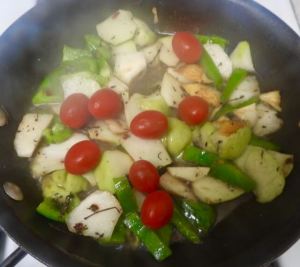
Chris’s chayote stir fry sizzles on the stove, February 10

Chris:

Chayote, a Mexican squash, gets little publicity, but it’s inexpensive, tasty, colorful, crunchy, keeps well in the fridge, and is full of nutrition and easy to cook. Just chop it up, add any other veggies you like, season to your taste, and fry on medium heat in a tablespoon of oil until you like the texture. I sauteed chopped onions in the oil to begin, then added the chayote, mild green pepper, and grape tomatoes, plus a splash of green olive juice. I then added minced garlic, salt, black pepper, red pepper flakes, all to my taste.  I frequently flipped the mixture with the spatula, so it would cook evenly. That was it–done in twenty minutes. Perfect tummy warmer on a cold day!

Two More of Jean’s Cold Weather Hot Dishes this Valentine’s Month:
 
Jean’s Shrimp and Veggie Gumbo
 

Jean’s Shrimp and Veggie Gumbo, Rice, and Andouille Sausage, February 14

Jean’s Baked Potatoes Smothered in Chili and Cottage Cheese

Jean’s baked potatoes smothered in chili and cottage cheese, with broccoli and homemade corn muffins, February 12

*************************************************

The February 2025 Photo/Video Gallery: Abundant Life in the Cold

Along with more of the champions from our local Great Backyard Bird Count, this month’s gallery includes some provocative scenes from our deep winter of 2025. And the stars of course are the residents and the visitors.

Black-capped Chickadee calls and flits in Serviceberry tree, early AM, Valentine’s Day

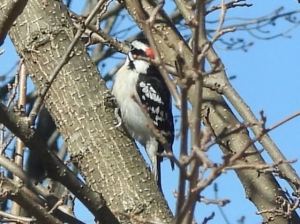
Downy Woodpecker in a Sweetgum tree, Southeast side of the lake, frigid February 17

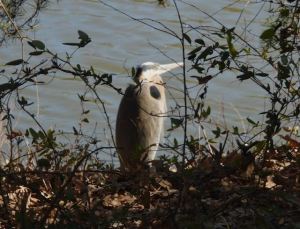
Great Blue Heron, in west bank shadows, braves the cold on February 17. No herons came while the lake was frozen in January.

On February 4, at noon, I capture a Canada goose skating (!) on the frozen lake near the fountain

Turkey Vulture soars over the lake on a sunny, but very cold Valentine’s Day


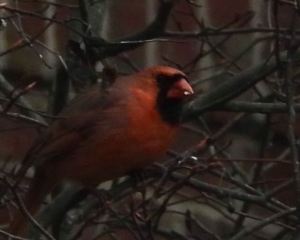
Male Cardinal holding seed in shadow in red maple on the Southeast side, February 15

Song Sparrow forages, as the House Sparrow chorus practices, Southeast side, during afternoon snowfall, February 11

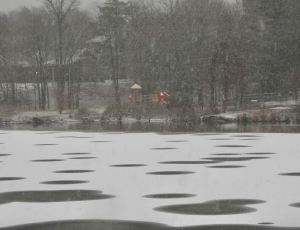
The community playground in mist across the snow dappled lake, as new snow falls, February 11


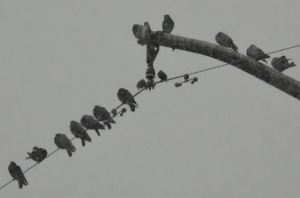
Our resident flock of Rock Doves stays warm amid company on the west side stanchion in thick afternoon snowfall, February 11


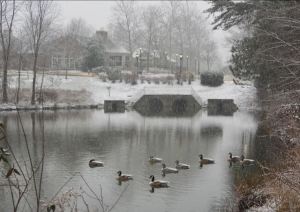
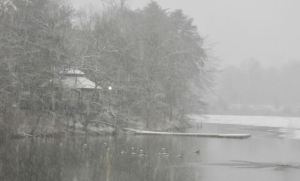
Your classic wintry scene (as if from Currier & Ives): Canada Geese pose in the calm lake before the community park, as the snow gently falls, February 11

Change of pace: Panorama toward downtown buildings as the lake sparkles in the bright sun of a windy, cold afternoon, February 17

Another change: Panorama toward the north end, with the Geese, the dock, and the gazebo, in the thick snowfall, February 11


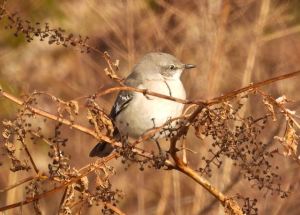
Mockingbird walks beside me and searches for seeds on the path by the Southeast cove, February 16


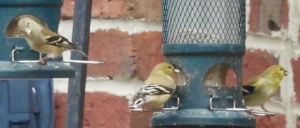
Three American Goldfinches at feeders, Southeast side, February 15

Mallard pair, having returned once the lake unfroze, swims along the north shore on a very cold morning, February 16

Back to the falling snow on February 11: I follow the burbling outlet stream below the north end dam. Calm and cold.

Just as cold, but less calm, is this mingling of Canada Geese, a Mallard pair, and 2 American Crows in the Northwest corner of the lake, February 15

House Sparrow pair won’t sit still in the Serviceberry tree in that February 11 snowfall


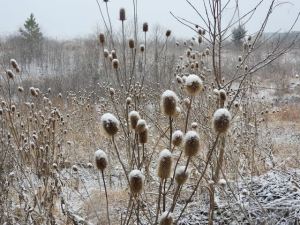
Dry Cutleaf Teazel like ice cream pops by the outlet pond below the north end dam in the snow, February 11


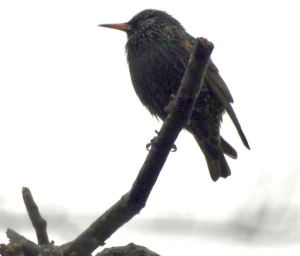
European Starling atop the dead White Oak on the east bank, February 16

Strolling with their Valentines: Mallard pairs swim 2 by 2 along the north shore, very cold morning, February 14

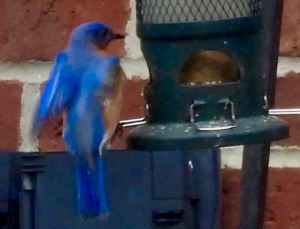
Brilliant Eastern Bluebird lands at a feeder, Southeast side, February 15


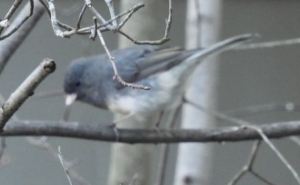
Dark-eyed Junco in Downy Serviceberry on the Southeast side, Valentine’s Day

Downy Woodpecker in Serviceberry tree scans the area as the Sparrow chorus sings and a jet roars overhead, and there’s snow, too! February 11, of course.

And the stolid Great Blue Heron scans the shore in the bitter wind of February 17 and thinks: “It’s all about resilience.”

And on we March to March: Let us hope that the loving spirit of Valentine’s can stay alive in all our hearts and be shared with all creatures.

December 2023: Bluebirds, Loving Ducks, and a New Kind of Christmas

Our first and only snowfall thus far, a brief one inch on Dec. 11

Looking north in first snowfall, Dec. 11, 3:30 AM

In this month’s blog:

Bluebirds, Loving Mallards, and a New Kind of Christmas
 A Joyous Christmas Week With Family
The December 2023 Photo/Video Gallery

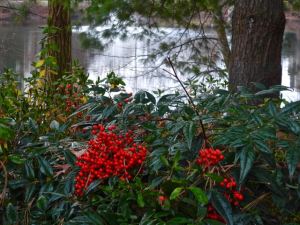
Heavenly bamboo on the west bank of the lake, Christmas Eve. In California, these resilient, colorful plants serve as symbols of Christmas.

Bluebirds, a Closed Bethlehem, and Other Signs of a New Kind of Christmas

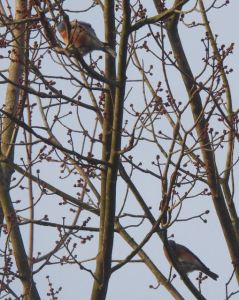
Two bluebirds in a budding red maple, southeast side of the lake, Dec. 23

Oh little town of Bethlehem / How still we see thee lie…

And so the beloved Christian hymn begins. It imagines a peaceful small town in the Palestine of 2000 years ago, a town as yet unaware that the birth of Jesus is about to take place in the humble stable where the poor pilgrims Mary and Joseph have stopped for the night. As the tune of the song, which I’ve sung many times, plays in my mind, I find it hard to comprehend that the Bethlehem of 2023 is also still this year, many places shuttered because of the killing and devastation a mere 50 miles away that have torn apart this Holy Land sacred to three great world religions.

The Church of the Nativity in Bethlehem, silent because of the war in Gaza (photo from “God Is Under the Rubble of Gaza,” the New York Times, Dec. 24)

Usually on Christmas, many thousands flock to a joyous, music-filled, brightly lit Bethlehem to celebrate Jesus’ birth. But this year the tone is mournful, many streets quiet. The few who have still come to honor the Birth will do so in silent reverence. Said New York Times journalists Yara Bayoumy and Samar Hasboun:

“A Lutheran church put up its crèche, but with a sad and symbolic twist. The baby Jesus — wrapped in a keffiyeh, the black-and-white checkered scarf that has become a badge of Palestinian identity — is lying not in a makeshift cradle of hay and wood. Instead, he lies among the rubble of broken bricks, stones and tiles that represent so much of Gaza’s destruction.”

The church’s pastor, Rev. Munther Isaac, who created the crèche, said, “The horror of war cannot be allowed to bury the spirit of Jesus… Despite the circumstances, we must still show that Jesus is the source of happiness and peace in the church. God is under the rubble in Gaza, this is where we find God right now.” (See also the article in the Washington Post, Dec. 26.)

The Signs of a New Christmas in Northern Virginia

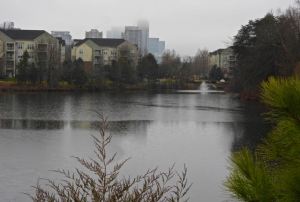
Looking toward downtown across the lake on a cool, rainy day after Christmas

Perhaps paling in significance compared to the Israel-Gaza War are the quiet signs of a psychological change in how we define Christmas here in this little corner of Virginia, USA. Of course, some things are the same: the calendar still says it’s late December, and so people have been flocking to stores since November and shopping online for the dazzling array of goods that we will give as colorfully-wrapped presents to family members.

But we in the U.S. (even those of us on California and Florida beaches) used to define Christmas as occurring within a deep winter setting of chill winds and blizzardy falls of white snow. Santa Claus, the primary spirit that kept us warm and happy in forbidding weather, we pictured flying from home to home on the magical sleigh led by reindeer from the bitterly cold far north. That picture still made a kind of sense when most parts of the US still had snow cover in December. But now, when even the polar ice caps are melting, it’s just nostalgia–and maybe fear of the future–that keeps us clinging to the White Christmas fantasy.

A typical Christmas scene as imagined by Blue Mountain e-cards, Dec. 20

On Christmas this year, the high temperature here was a calm 58. What would Santa in his fur coat do in a climate like ours? Of what use is a sleigh without snow? And the poor reindeer, what of their chances in our warmth? The fleeting inch of snow we had on Dec. 11 is a gone memory, and it’s been many years since there was snow here on Christmas.  Oh, you might point out that last Christmas Eve, 2022, the low temp was a biting 7 degrees F., but that was an anomaly, as was the dusting of snow we had on Jan. 31 last winter, the only snow of the season.

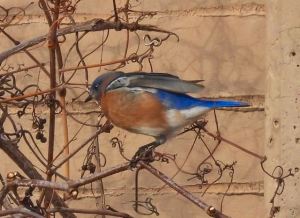
A rare December bluebird along the highway sound barrier west of the lake, Dec. 23.

A Bluebird Surprise

There is no shock to the mind from a mild day in December; indeed, the change from the possible bite of a freezing wind is soothingly pleasant. As I walked around the lake on Dec. 23, I delighted in the warmth, and then in the brilliant orange and blue of a small flock of bluebirds, who I was surprised to see and I luckily photographed. But part of me registered a disturbing discord, like a slight seismic tremor. “I’m happy to see you, friend bluebird, but why are you here so early?” Then the disquieting thought: “Were things not so nice where you’d usually be this time of year? Too warm perhaps? Is this just a temporary visit, or will you try to make a home in our community long term? Have you discussed this with the house sparrows?”

Eastern bluebirds are known as “partial migrants.” A particular flock may go as far north as Canada in summer and as far south as Florida in winter–but that flock might also stay year-round wherever they find the right conditions. Maybe in New England, maybe in Georgia, maybe right here. Some flocks might stay year-round where it’s cooler; others where it’s warmer. Another group might switch locations during the year. Like humans, bluebirds aren’t all alike in their preferences. Maybe these bluebirds I conversed with were gonna stay a while because of the warmth, or the relative coolness; maybe they’d move on. Still, I’d never seen bluebirds here this early.

Another bluebird by the sound barrier west of the lake, Dec. 23, morning

What we know for sure is that the changing climate is gradually warming, with 2023 the hottest year on record around the world. Winters have been getting shorter most places, and aren’t as cold. In our region, the fall leaves stay on the trees longer; the buds appear earlier. Was that red maple in the photograph above really budding already, when just last month it still had bright red leaves on its branches? How long can it still exist here with no real winter?

These bluebirds wouldn’t be here if it were actually an icy white Christmas. They can’t be fooled by nostalgia. Unlike us, but very much like the human climate refugees increasing everywhere, bluebirds have to live 24/7 in the real world. We who are not yet climate refugees are lucky that our imaginations can still enable us to live in a fantasy world, at least for a while yet. We can still sing “let it snow, let it snow, let it snow, ” when it’s 58 outside. But sooner or later, we’ll have to live in the real world, too.

The Romantic Mallards: Definitely Early Birds

Mallard pair communicate on the log in the southeast cove, Christmas Eve

Last month’s blog entry ends with a 2-minute video of a pair of mallards clearly engaged in mating, or at least pre-mating, behavior. Take a look.  It’s amazing how they communicate and how one bird observes and imitates the other. This month, the mallards, particularly one pair, are the stars of the lake, sometimes even being the lone waterfowl on a rainy morning. I find them on the lake almost every day, often in shore places where I’ve not seen them before. Just the day after Christmas, Dec. 26, I spotted them in the inlet stream beneath the bridge over the southeast portion of the lakeside path. It’s gotten so that I’m not surprised when they show up anywhere along the lakeshore. Here’s that video:

The mallard pair makes their relationship pretty obvious in the inlet stream on the southeast portion of the lake, Dec. 26

Mating season for mallards is the spring, not fall or winter. But this pair began mating behavior in November and it’s only intensified this month. If the warm weather and the birds’ activities keep up as they have, we’ll be seeing ducklings in February, well before the official start of spring. Just more evidence of the new kind of Christmas we’ll have to get used to.

Here are a few more mallard photos from December:

Two mallard pairs after sunset in the southeast cove, Dec. 23

I love to see their synchronized trails in the water, Dec. 20

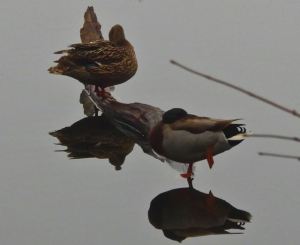
Mallard pair and their reflections on a misty day, Dec. 17

*******************************************************

Celebrating Christmas Week with Family from Far and Near

Two of our grandchildren have become regular observers of the wildlife at the lake (Dec. 21).

How fortunate we are this year to live very close to some members of our extended family, and to have been able to visit and be visited by more family who live farther away, even across the country in California. I recall fondly the weekly hour-long Zoom visits we maintained during the pandemic in 2020 and 2021. These were actually a cherished substitute for in-person relationships, but not the same as what we have now since we moved back to Virginia.

Not only do we live very near three families, but we’ve had in-person get-togethers at least twice this year with all our families from Virginia, New York, Georgia, and even California, most recently with some of them just last month.

Christmas Day with two of our local families

And now this Christmas week. We spent Christmas Day with two of our nearby families, and later this week with some of our children and grandchildren from Georgia and California.

One precious aspect of these visits, which the pandemic precluded, has been sharing meals. There is no substitute for cooking for those dear to you or being hosted by them for meals and conversation.

Sharing food and conversation at the Christmas Day party

Sharing breakfast with families from three states at a local restaurant, Dec. 29

Another scene from breakfast, with the Christmas tree, Dec. 29

Flashback! Many of the same folks at a holiday meal, but in 2014. Isn’t it great how we’ve grown up since then!

***********************************************

The December 2023 Photo/Video Gallery: Citizens and Visitors in a Cool, Rainy Month

A Red-Shouldered Hawk scans the lake from atop a budding tulip tree in the north end woods, Dec. 15

One of our loyal Great Blue Herons searching for a meal on a rainy day, north end of lake, Dec. 26

A Song Sparrow amid dry teazle northwest of the lake, Dec. 26

A male Cardinal in a budding tulip tree in the mist below the north end dam, Dec. 24

A Carolina Wren singing and listening in a tree of heaven on the east bank, early morning, Dec. 24

Across the lake, our community and some downtown buildings at sunset, Dec. 23

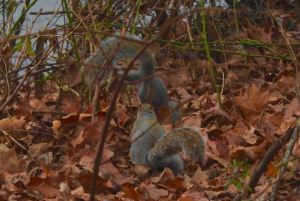
On the west bank, a pair of grey Squirrels romp in maple leaves on a rainy afternoon, Dec. 26

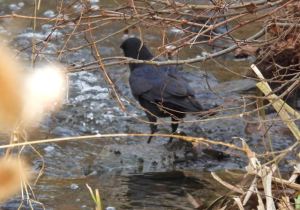
Below the north end dam, a Crow wades through an icy patch in the Sugarland Run Branch outlet stream, Dec. 23

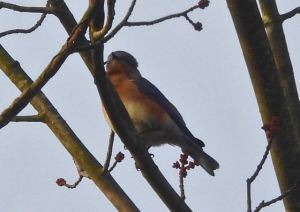
One of our visiting Bluebirds is lit by the early morning sun in a red maple, Dec. 23

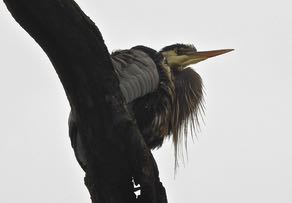
A Great Blue Heron watches from atop a dead tree on the east bank, grey morning, Dec. 24

An impressionist rendering of a pair of House Sparrows on a branch along the southeast bank, Dec. 21

A mallard pair swims from mid lake to below the west bank, early morning, Dec. 23

A female Cardinal rests on a branch above the east bank, Dec. 23

A male Cardinal and a Carolina Wren in a bradford pear below the north end dam, Dec. 24

The Sugarland Run outlet branch burbles below the north end dam, Dec. 24

A Northern Mockingbird in dry pokeberry, north end, morning, Dec. 23

Another visitor: a Savannah Sparrow rests on a branch on the west bank, grey morning, Dec. 30

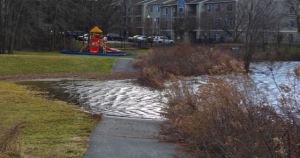
The flooded path on the east bank after an overnight storm inundates the lake, Dec. 18

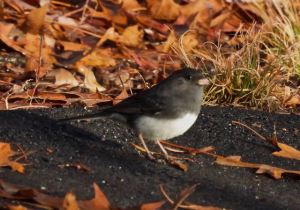
A Dark-eyed Junco on the southwest path amid fallen leaves, Dec. 11, after morning snow has melted

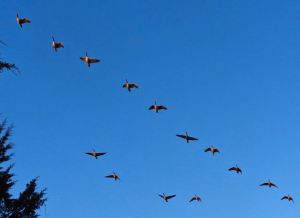
Canada Geese, lit by the setting sun, take their daily sunset flight from our small lake, Dec. 18

Finally, wherever your travels might take you, here’s to a joyful, adventurous New Year!