September 2025: The Rewards of Paying Attention

Late-season Monarch feeds amid Bearded Beggarticks west of our lake and near the highway, breezy morning, September 20. One of the great joys of walking around our lake are the surprises that I’m privileged to encounter, like this Monarch, the hidden Asters in the next photo, and the gorgeous new wildflowers that keep popping out month to month.

In this month’s blog:

Surprises of Paying Attention, Camera in Hand
Treasures of the Late-Season Garden
Climate Log: A Slow and Steady Worldwide Drying
The September 2025 Gallery: Wildflowers and Persistent Pollinators

**************************************************************
I spied these New England Asters deep within the field of wildflowers north of the dam, September 20

Surprises of Paying Attention, Camera in Hand

In “How to Count Butterflies” (New York Times, Sept. 15), the eloquent gardener Margaret Renkl writes:

God knows, our government doesn’t care about the health and safety of butterflies or any other species, including our own. For now, at least, it’s up to us to care. And the first step toward caring, as is so often the case in conservation, is getting to know our wild neighbors.

Paying attention is the first step in caring. Renkl observes closely the butterflies in her Tennessee garden, and her watching leads her to learn how to take the next step in caring: putting into her garden the plants that each species needs to feed its larvae–like the milkweeds the monarchs need:

Swamp Milkweed with Bumblebee, east bank of our lake, noon, July 4. Milkweeds are prominent on our lakeside

…or the showy, perfumy Japanese Honeysuckle that I’ve learned is a favorite food of the Zabulon Skippers, one of the tiny butterflies that grace our lakeside and our garden plot.
Late-season Japanese Honeysuckle entwining on the east bank of our lake, September 20
Mating pair of gold-brown Zabulon Skippers flutter on a fading Zinnia in our garden plot, September 19

Fortunately for me, so many of the resilient plants that populate our lakeside or that grow wild in our garden plot provide homes and food for the butterflies, birds, and bees. Even wild plants such as the tough, prolific Crabgrass that we pull as weeds, do necessary work for the pollinators, as I learn from the online sources curated by professional entomologists and citizen scientists. For example:

48 Common Brown Butterflies in The U.S. (with Pictures)

It takes a hard-working community of observers and professionals to help any of us really pay attention. I need to take the time to read as well as watch closely and often. Otherwise,  I’d persist in my ignorant destruction of essential plants. Fortunately, that persistent crabgrass finds plenty of room to grow among the colorful plants we cherish, like the marigolds and coneflowers.
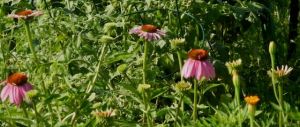
Our “volunteer” Coneflower plant, in full bloom and with more buds coming, morning, July 23. “Weeds,” such as Crabgrass, grow amid flowers, and there’s plenty of room for all.

My trusted assistant–my camera.

If we don’t pay attention–the first step toward caring–it’s not likely that we’ll go on to the next steps. To help me pay attention, I take along my trusty camera, who allows me–actually forces me–to slow down my walk and try to do the careful work of

  • finding,
  • focusing, and
  • staying steady

My camera is an astounding tool, with its zoom lens, its automatic adjustments for light and color, and its versatility for still shots and videos. But it won’t choose its own shots–that’s my job, because I can’t grow and really pay attention if my mind is not intimately engaged in watching and choosing. Likewise, after my walks and picture-taking, I use the Apple editing tools to look even more closely at what my camera has captured, and to try to clarify even further what I’ve observed and to highlight details–particularly aspects I’d missed–to make my paying attention deeper. Even a single shot can offer ongoing opportunities to see more and more in a single scene, often well after the photo was taken. So paying attention is not a single act, but an ongoing adventure.

One of our Great Blue Herons, preening atop the dam structure at the north end of our lake, on a warm September 14. Their movements–and their stillness–are always fascinating to me, and the videos help me keep learning about them..

This photog among the other walkers.

The other walkers who go around the lake pay attention to different things which are important to them, which may not be the flora and fauna they pass. I’d say all our community humans use the path to exercise in the open air, but what we do on our walks varies greatly. Many use the path to walk their dogs, and so I meet many canine species that way. The dogs always pay attention to what they see, hear, and smell. Another group of walkers are exercising their babies, toddlers, or older young children.  I like to observe the interactions between the kids and their adults, and I’m happy to see how often the kids look around and even point at what they are passing.

Beggarticks, our most brilliant September flowers, and a Bumblebee wave in the breeze in the southeast cove, as a Fish Crow, Wren, and Crickets call, morning, September 13

Less satisfying for me are the 50% of strollers who are carrying on phone conversations, either with business colleagues, potential clients, or family and friends. Many of these folks look at the ground and often have pained expressions. Some of these conversations are sufficiently loud to scare away birds, and I must admit that these talker/walkers annoy me.

I almost never see another walker with a camera, nor a person who has actually stopped to look closely at a plant. This I can’t understand, because the lakeside is so fascinating, at least to me. But to each their own.

I’ll even get the occasional question about my picture taking, the most common question being “Taken any interesting pictures today?”  l always say yes, but if I say what I’ve seen, and if it’s not a big raptor or an exotic species, most  just frown and walk on. But every once in a while, someone wants to talk about the birds and the other animals we see. and that’s always a joy.
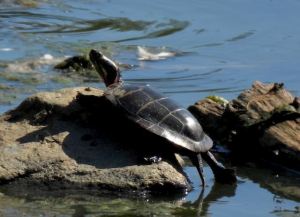
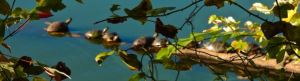
I’d love to talk about the Red-Bellied Cooters, who, like this one on September 13, take the sun on the rocks and logs in the lake whenever the temps get to 60 or so.

******************************************************************

Treasures of the Late-Season Garden
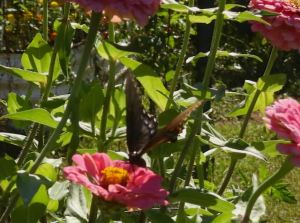
Pipevine Swallowtail Butterfly feeds on a Pink Zinnia in our garden, September 19

So September is moving inexorably into Autumn, and our garden plot moves into its next stage of fascinating life. We’ve had only one day of soaking rain in the past two months, but the frequent rains we had this summer set up the plot of veggies, herbs, and flowers for rich success. Our 4 tomato plants miraculously still keep producing, one pepper plant is still putting out new green beauties, and some of the flowers–like the vinca, marigolds, dahlias, and zinnias–either flourish or have kept some of their blooms.

Best of all, the steady warmth this month (highs into the 80s some days) has kept the Bumblebees and Butterflies still visiting, hovering, fluttering, and feeding.
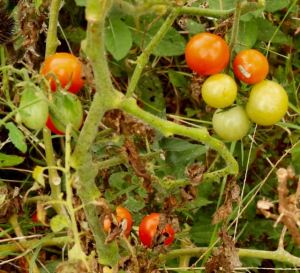
Sweet Millions tomatoes, 2 plants, just keep on giving us ripe gems, September 16
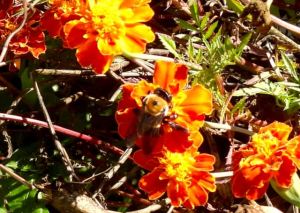
Bumblebee on Marigold cluster, morning, September 19

Cluster of Red and Pink Zinnias, with a tiny visiting Crossline Skipper, September 19
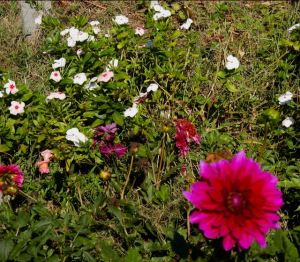
Magenta Dahlia with display of White Vinca, September 19

Aphrodite Fritillary Butterfly feeds on Yellow Orange Marigolds, September 19
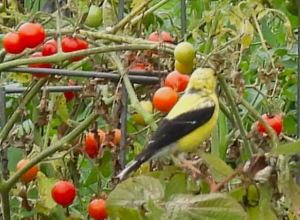
American Goldfinch perches among the Tomatoes in our community garden, September 16

Look for more photos/videos of our September garden in the Gallery (below). When all our plants will fade, and the pollinators move on into their next stages, is still in the future. Meanwhile, we enjoy.

********************************************************
Climate Log: A Slow and Steady Worldwide Drying

  • “Areas experiencing drying increased by twice the size of California annually, creating ‘mega-drying’ regions across the Northern Hemisphere.” Science Advances, September 2025

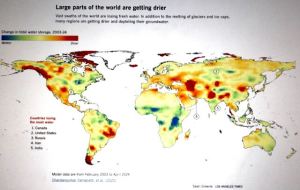
The title: “Humanity Is Rapidly Depleting Water, and Much of the World is Getting Drier,” almost says it all. The article in this month’s Los Angeles Times (September 3) by Ian James and Sean Greene summarizes a new study in Sciences Advances based on 22 years of satellite data.

https://www.latimes.com/environment/story/2025-09-03/global-drying-groundwater-depletion

The US and Canada are among the five countries (including Russia, Iran, and India) across the world losing fresh water fastest, as well as becoming rapidly drier. This is not news for this blog, which regularly shows data on the intensifying US drought from the US Drought Monitor (https://droughtmonitor.unl.edu ), but the data from 22 years shows the worldwide phenomenon.

The principal cause of the loss of fresh water is the over-pumping of groundwater (68% of the loss) from the world’s diminishing aquifers, mostly for agriculture, to make up for the overall loss of rainfall on the land.  As the world steadily warms through the burning of fossil fuels, the melting of the world’s glaciers and of the polar ice sheets sends water into the atmosphere and therefore increases rainfall over the oceans, which both decreases the amount of usable fresh water and contributes to the sea level rise that is endangering coasts and islands around the world. The world’s aquifers, which took millions of years to grow underground, have been depleted at an astonishing rate over the past few decades–as anyone who lives in farming areas around the US knows.

A second recent article, from the New York Times (Sept. 18), targets another devastating effect of global warming and intensifying drought: the great increase in wildfires and their intensity in the US. In our years in Northern California, we followed–and were affected by–the annual wildfires in the state. The closest we came to the fires themselves was in 2020, when the Lightning Complex fires came within eight miles of our home, the sky was orange, and ash from the smoke covered our plants (see the August 2020 blog entry). But even more distant blazes sent smoke our way, sometimes for days, and we had friends and relatives whose closeness to other fires affected us as well.

But while California always gets the lion’s share of attention about US fires, the map above shows that more than half of the continental US now suffers from wildfires and damage from their smoke. In the past year, states as far east as New York and Florida have seen wildfires–a trend that will no doubt continue. Just 2 years ago, the wildfires in the northern territories of Canada sent smoke into our area, and the Great Lakes states see and breathe smoke from the Canadian fires every year now.
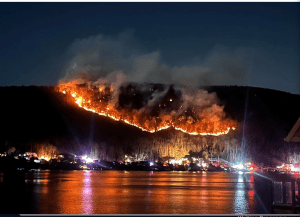
Wildfire on New York/New Jersey border, as this blog reported in November 2024

The article specifically concerns the increasing health affects, including increases in lung diseases and cancer, of these burgeoning fires. Unfortunately for all of us, the current federal Administration not only ignores but has steadily cut funding to help treat these worsening effects. The rollbacks

  • to environmental protections,
  • to emergency disaster funding,
  • to forest protection, and
  • to covered health care

will make the effects of this spreading menace more and more deadly–unless and until these damaging policies are turned around.

***************************************************************

The September 2025 Photo/Video Gallery: Wildflowers and Persistent Pollinators

More samples of the gifts we receive each day from the citizens of our local environment. We just have to pay a bit of attention, be thankful, and do what we can to help repair our endangered world.
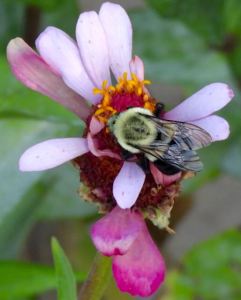
Large Bumblebee on tiny Zinnia, lake community, September 14

Mockingbird moves in Red Cedar in breeze, north end path beside our lake, morning, September 20
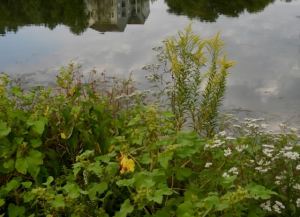
Common Cocklebur, Porcelainberry, Late Boneset, and Goldenrod along the northeast shore, morning, September 20
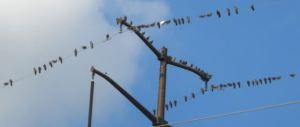
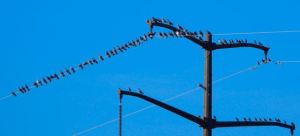
70 Rock Doves on the stanchion west of the lake, morning, September 20
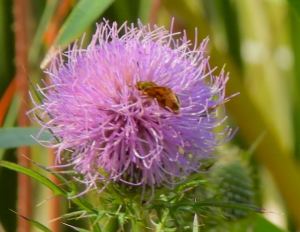
Tiny Sachem Butterfly in Purple Teazel below the lake, September 13

The outlet stream below the dam burbles through Goldenrod and Arrowvine, September 20
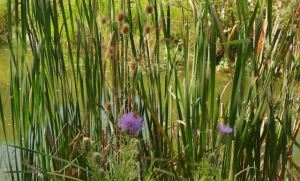
Cattails, Purple Teazel, and Cutleaf Teazel by the outlet pond below the dam, September 13

Double-crested Cormorant in mid lake near the west shore, morning, September 13
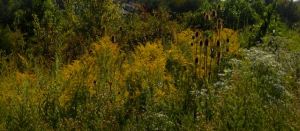
Since we moved back to Virginia in 2022, this is the first time that the field below the dam has been left unmowed all spring and summer, leaving it to the pollinators to thrive. Here, Goldenrod, Cutleaf Teazel, Silver Maple, and Late Boneset provide food and homes, evening, September 13

European Starling calls from atop a Red Cedar on the east shore of our lake, on a breezy morning, September 20
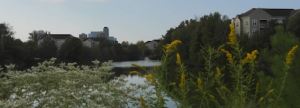
View down the lake toward downtown, with Goldenrod and Late Boneset in the foreground, September 20

Pipevine Swallowtail Butterfly dances on a Pink Zinnia, warm morning, September 19
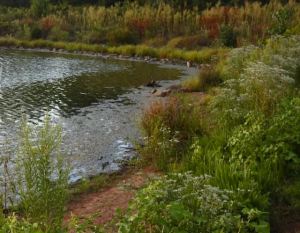
Northeast corner of our lake, with Late Boneset, Horseweed, and Porcelainberry, Cocklebur, evening, September 8
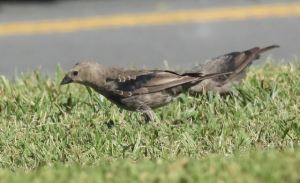
A flock of Brown-headed Cowbirds stopped by the community garden in mid migration, and I happily took this picture of a pair, September 3
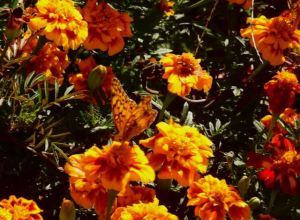
Aphrodite Fritillary Butterfly amid Marigold display, morning, September 19
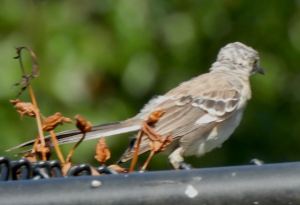
Mockingbird moulting on community garden fence, warm morning, September 3
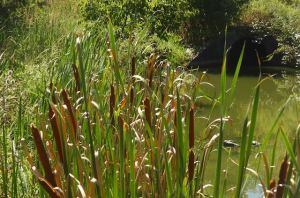
Outlet pool of our lake, with a Cattail festival, August 27
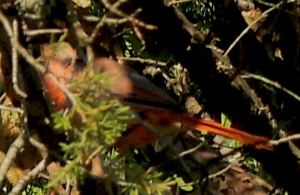
 

Male Cardinal hides in shadows in Bradford Pear, beside the outlet pool of our lake, September 13

Two Zabulon Skippers dance on a faded Zinnia in our garden, September 19
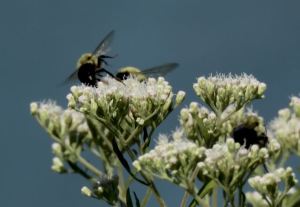
Three Bumblebees on Boneset blooms along the northeast shore of the lake, September 13

Two Bumblebees feed on Orange Marigolds, sunny morning, September 19
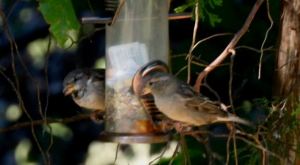
Two House Sparrows in shadows at bird feeder, east side of lake, September 13

Panorama of tiny Skipper Butterflies and Black Swallowtail feeding on Zinnias as a Bluejay calls, September 19

With a week of September still left, welcome to Fall, with hopes for an October of good surprises…

October 2024: Way More Than Our Senses Can Handle

A feast of fall colors: from Oakleaf Hydrangea to the trees surrounding our lake, October 28

In this month’s blog:

Way More Than Our Senses Can Handle: So Much Beauty, So Many Extremes
Bounty from Our October Kitchen
More Exploration in Amish Country
Celebration of Dia de Los Muertos
The October 2024 Photo/Video Gallery: Fall Beauty Amid Deepening Drought

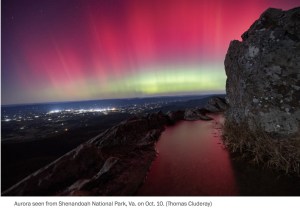
The Northern Lights, as seen from Shenandoah National Park, Virginia, Oct. 10 (Washington Post photo)

*******************************

Photo of Bat Cave, North Carolina, after Helene, from USA Today, October 10

A Month of Extremes: So Much Beauty, So Much Suffering

Chris:

I struggled to find a theme for this month’s blog entry, because so many conflicting emotions have been inspired this October. On the one hand, there is the astounding visual beauty of the fall colors–more intense than we’ve seen in years–and the astonishing surprise of seeing the Aurora borealis this far south; on the other, there is the utter devastation resulting from the unprecedented back-to-back hurricanes Helene and Milton, as well as the ongoing destruction taking place daily in Gaza, Lebanon, and Ukraine.

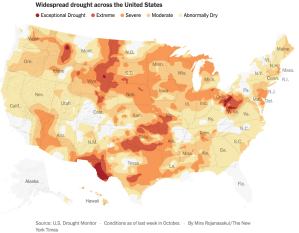
Bringing us daily joy is the love of our family members, our pride in their achievements, and our opportunities to make and enjoy good food and to make visits to new and familiar places. But tempering our joy is our anxiety over the upcoming elections, with so much at stake for our democracy. And even our pleasure in the fall colors is muted by seeing from day to day how intensifying drought across almost the entire U.S.  has hastened the loss of greenness, the stunting of crops, the dropping of the colorful leaves, and the early migration of local bird species. (Here in Northern Virginia it has not rained for more than month, a new record.)

Intensity of drought across the U.S., end of October. Source: U.S. Drought Monitor

So, as this entry proclaims in its photography and stories, we take immense pleasure in all the beauty we are so blessed to see, hear, taste, feel, and imagine. We want our entries to share some of that joy. But our joy is not unreflective. It is not a joy that ignores the suffering that goes on in the world, or that fails to ask how life can be made better for other humans and for all the species that are harmed by human actions. When we show photos and videos of the animals and plants where we live, that is  pure and beautiful joy, but it is beauty that we know is fragile, under threat, and so needing our attention and respect in order to keep it beautiful.

In particular, readers of this blog know that we call out the day-by-day degradation of our environment, as Mother Earth steadily heats up through the carbon pollution produced by the selfish greed of the fossil fuel cartels and of the politicians who promote them through their lies, crude insults, disinformation, and fear mongering. 

But we do not call out these harmful actions in order to rob people of joy. Indeed, one of the joys we try to express in these entries is that the fate of the Earth is not hopeless, but hopeful. Indeed, any person is capable of doing small things, day by day, to heal their own tiny bit of the environment. It is joyful to say that the degradation of the Earth is reversible, and so we celebrate acts and arts, large and small, through which people try to lead more nurturing lives and build a healthier future for our children and our fellow creatures. These small actions are beauty in themselves.

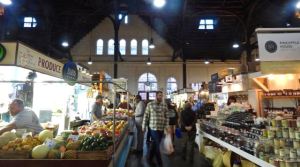
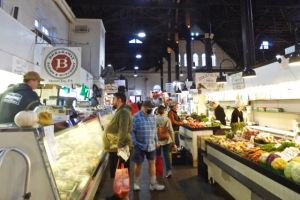
Produce stalls in the Central Market, Lancaster, PA, October 25

So this month’s entry relates three stories that show people trying to make life better in environmentally responsible ways: Jean’s description of her delicious pumpkin dessert, farmers in Pennsylvania living simply and producing nutritious foods of many kinds, and indigenous performers in Mexico creating art that honors the lives of their forebears who struggled against oppression.

*********************************

A Pumpkin Treat from Our October Kitchen

Jean’s Crustless Pumpkin Streusel Pie, just from the oven, October 15

Jean:

It’s pumpkin time of year.  Time to get a big pumpkin for your porch and maybe carve it for Halloween.  Time for a pumpkin drink from your favorite coffee shop.  And time for pumpkin pie–my favorite dessert other than tiramisu.  I need to work on a way to combine those, but I can’t figure out what the mashup name for the dish should be.

Meanwhile, because I was not yet seeing pumpkin pie in my favorite grocery store(s), but I really wanted to eat one, I thought it would be a good time to try out some other variations on the traditional recipe.  For years I have made it from the recipe on the Libby’s pumpkin puree can, with a can of sweetened condensed milk and a homemade pie crust from a simple Crisco recipe.  I thought all that was perfect.

But this week I didn’t feel like making pie crust.  I have always disliked rolling it out.  I’m not strong enough, I guess.  It just wants to sit there in a cold clump, resisting my efforts to move it far enough in any direction to get it rolled out as thin as it should be.  The most successful technique I have come up with is to put the right amount of dough for one crust on a 10-inch plate and press down on it with a similar plate.  When the dough is room temperature, this works to give me a round of the right size, which I can then cover and chill until ready to invert it onto the pie pan, fill, and bake. But sometimes I don’t even feel like struggling with that.  Of course I could have bought a frozen, pre-shaped crust, but I find those break very easily while I am trying to get them into the pan.

So I looked for crustless pumpkin pie recipes, and sure enough, they exist.  You’re essentially making a pumpkin custard or mousse.  Easy enough.  Who needs pie crust unless you really want to be able to cut out picture perfect pieces that stand up properly?  I just want to scoop the filling into my mouth, with loads of whipped cream.

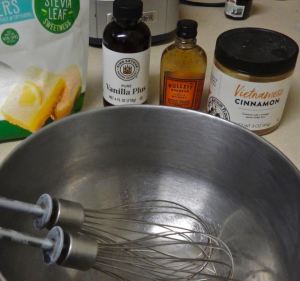
Bowl, beaters, and some of the ingredients for whipped cream on Jean’s Crustless Pumpkin Pie, October 15

One other wrinkle.  I didn’t have a can of condensed milk and just wanted to get started on my pie in the morning because the baking, cooling, and chilling all take hours.  I didn’t want to go to the store for canned milk any more than for a frozen pie crust.  I wondered if I could make a pumpkin pie with either buttermilk or coconut milk, both of which I happened to have.  Take a look at these great examples I found:

https://www.southernliving.com/recipes/easy-pumpkin-pie

https://www.foodnetwork.com/recipes/food-network-kitchen/buttermilk-pumpkin-pie-3363760

https://www.dishbydish.net/crustless-pumpkin-pie-gluten-free-dairy-free/

The last recipe above touts the benefit of a dairy-free, gluten-free pumpkin pie!

I’m not going to tell you what to do.  This is the sort of thing I love; look over the recipes and decide on the combination you want to try.  You probably can’t go wrong.

One other point, though. In place of the contrasting texture provided by a pie crust, I decided to try this streusel topping from ZoeBakes, since I also happened to have pepitas and a little buckwheat flour:

https://zoebakes.com/2018/10/21/buttermilk-pumpkin-streusel-pie/

I like a more pronounced ginger flavor, so I also crumbled some Trader Joes’ Triple Ginger Cookie Thins on top.  I belatedly realized I could also have used these to make a cookie crumb crust underneath, easier than dealing with pie dough.  Maybe next time.

You could also make this taste something like a pecan pie by using chopped pecans instead of pumpkin seeds in the streusel.

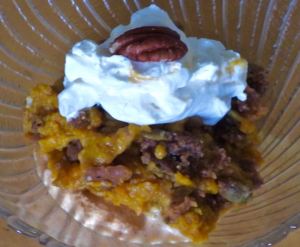
I’m not into making caramel sauce as Zoe does here, but I’m sure it would be great, especially if you want more of the pecan pie taste.  All I needed to do after cooling the pie was whip up some heavy cream with sugar (or sugar substitute), a little bourbon and vanilla and then garnish with a nice pecan half.  Enjoy!  We certainly are.

Serving of the crustless pie with whipped cream and pecan garnish

********************************

Our Latest Exploration in Amish Country

Horses and buggies at AAA Buggy Rides in Ronks, PA, October 23

Chris:

Following our June visit to rural New York and Pennsylvania, as recorded in our June entry, we wanted to go back to Amish country in southeast Pennsylvania, because we enjoyed our two days there so much.  This time we visited the towns of Ronks, Lititz, and Ephrata and the city of Lancaster. Our 3 days total left us wanting still more.

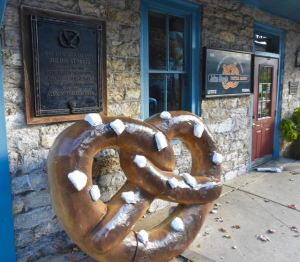
Lititz, PA: the Sturgis Pretzel Bakery, oldest in the Americas, begun 1861 (photo October 24)

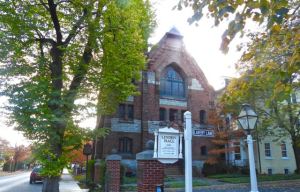
Lititz, PA: Chapel of the Linden Hall School, the oldest college prep school for women in the U.S., founded in 1746 (photo, October 24)

One of our objectives was to actually ride in one of the horse-drawn buggies that move at leisurely pace along the highways and byways through Amish country; buggies and teams that brave the roar and fumes of the cars and monstrous trucks that sweep by just a few feet away.  This we did on our first afternoon, in Ronks, on a two-horse buggy driven by our patient guide, Henry, and accompanied by a young couple visiting the U.S. from Holland. We’d actually been hoping that our trip would only be on the quiet back-country roads, far from the traffic, but both getting to farm country and then getting back required us to be buffeted and shaken by the speeding vehicles.

It was as if we were in two worlds at once: Henry, our horses, and we visitors were clopping slowly in the 18th century, while the traffic just an arms-length to our left had their own 21st century gas-powered agendas. Clearly, Henry and the team were calmly at home in their world and we picked up their vibe.

Short video of the start of our horses-and-buggy ride on Rt. 340 in Ronks, PA, October 23 

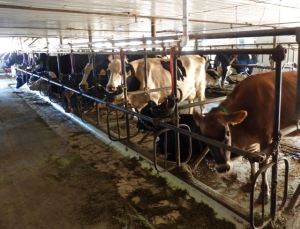
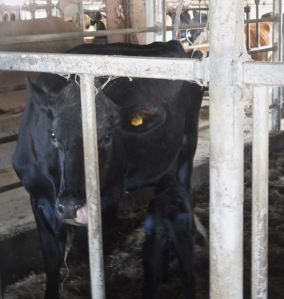
Our destination on the buggy tour was the Organic Valley Dairy Farm owned by the Esh family. Here are a few pics and videos of our hour-long visit with the residents.

One of two rows of cattle in the barn for feeding after being all day in the fields

A day-old calf feeds on Mom in the barn

The huge Belgian horses who work on the farm eat their afternoon meal in the barn

Equipment and baled hay at the Esh farm

Bald Eagle soars above the Organic Valley Farm

On our trip back, we pass a multi-generational home community not far from the Esh farm

The 7 of us clop down the road with the traffic back to our starting point in Ronks.

The Ephrata Cloister. A spur-of-the-moment destination for us was the historic Ephrata Cloister, founded in 1732 by Conrad Beissel, one of many religious fugitives from Europe who came, like the Amish, to the Pennsylvania colony because of its toleration of many religions. Very different from the Amish religion, Ephrata was a monastic community of men and women who practiced a celibate lifestyle, and who eagerly anticipated the second coming of Christ predicted in the Christian Bible. Though the last monastic resident died in 1813, the impressive and unique buildings remained and were restored beginning in the 1940s–a project that continues today.

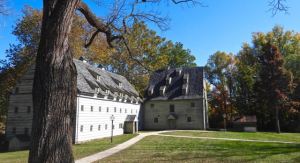
Restored buildings of the Cloister, as designed by Beissel

Known for both the composition and performing of religious music, with over 1000 hymns, the Cloister men and women also became famous for their calligraphy and printing.

The restored room where hymns were written down for printing in the Cloister’s renowned German script

The well-maintained graveyard at the Ephrata Cloister, including the 1768 grave of founder Conrad Beissel

Lancaster’s Central Market, thriving today. Our final destination of the three days was the Central Market in Downtown Lancaster. Founded in 1730, the Market is the longest-running truly public market–not privately owned–in the U.S.  It’s 64 standholders come from throughout Lancaster County, and offer a wide variety of produce, dairy, meats and fish, ready-to-eat foods, baked goods, specialty food items, health and wellness products, and flowers.

Begun as just an open piece of ground in colonial Lancaster, the market’s growing number of vendors took more and more space on local streets as the Market’s fame spread. To house them, the beautiful building it now occupies was built in 1889. Open 3 days each week, it is truly a mecca for the region, and we gathered fresh produce and breads to carry home with us to Virginia, as well as the intention to visit again.

Front of the Lancaster Central Market, built 1889 (photo, October 25)

********************************

Dia de Los Muertos at the NMAI, Washington, DC

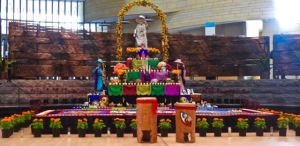
Main altar for the Dia de Los Muertos celebration at the National Museum of the American indian, October 26

We traveled to nearby Washington for the first of two days of celebration of the Dia de Los Muertos (Day of the Dead) at the Smithsonian Institution’s NMAI on Saturday, October 26, just after our return from Pennsylvania. The National Museum, both here in DC and in its branch in New York City, honors the indigenous cultures of the Americas with exhibits and performances throughout the year. The annual Dia exhibition is one of its largest.

Through dance, music, and visual arts, the performances show how, unlike our Halloween’s fixation on scaring people, particularly children, through terrifying costumes and stories, the Day of the Dead celebrates those who have gone before us and the community’s mutual bravery in facing mortality and the ongoing threats to the community’s existence.

The following video excerpts record the first performances of the day, as described on the program’s website:

“Dance Performances by Grupo los Tecuanes: The name of the Danza de los Tecuanes (Dance of the Jaguar) is rooted in the Mixtec understanding of the duality of life and death and the fight of good against evil. The Danza de los Viejitos (Dance of the Old Men) is a humorous dance featuring dancers colorfully dressed as old men.”

Part of the Dance of the Old Men (Danza de los Viejitos) performed by Grupo los Tecuanes at the NMAI Washington, October 26

Part of the Dance of the Jaguar (Tecuanes) at the NMAI, October 26

*************************************************************

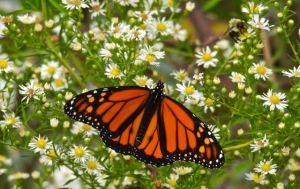
The last Monarch Butterfly of the year, with Bumblebee, relish the Asters on the south shore of our lake, October 4

The October Photo/Video Gallery: Missing the Music

As every month, the gallery features the residents and visitors to our small lake community in Northern Virginia, with perhaps a few pics and videos from other places. Overall, we are aware that the number of birds in the community this month is down significantly from one year ago, because of the drought. We miss the variety of waterfowl we had last year, and the sheer numbers of birds, who create a tuneful, harmonic chorus each day. We miss the music, and we hope the drought does not linger and that our residents return soon.

But still we have an amazing, colorful, creative, varied, enterprising community, well represented here in these photos and videos.

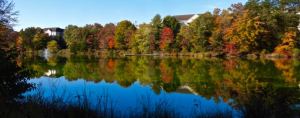
Fall colors show off the west bank of our mirror lake on the morning of October 28

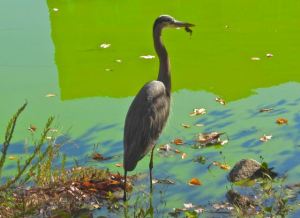
Blue Heron on the west shore of the green lake, warm morning, October 28

Eight Red-bellied Cooters enjoy the sun on a log amid Greenbriar on the south shore of the lake, October 22

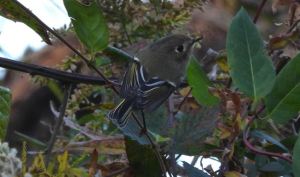
Ruby-crowned Kinglet–our first sighting here!–on the east bank of the lake, on a warm morning, Oct. 28

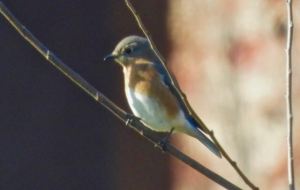
A new fall visitor, Eastern Bluebird, on a branch west of the lake, October 28; they came in profusion last year


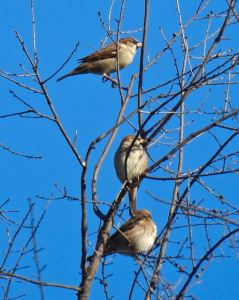
Three House Sparrows in Willow Oak on the east bank of the lake, October 28

Six dozen Rock Doves and European Starlings on the stanchion to the west of the lake, warm morning, October 28

I stalk the Blue Heron, who is stalking along the west shore of the lake, October 28. Watch patiently

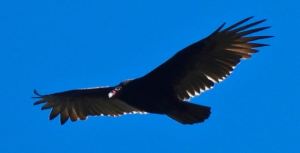
Turkey Vulture soars over the north shore of our lake on a sunny noon, October 20

On a visit to nearby Lake Newport, we listen to Carolina Wren calling, October 19

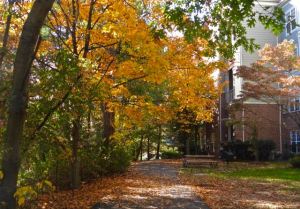
West side path, colors, shadows, fallen leaves, morning, October 28

Tufted Titmouse, always good at hiding, in Pokeberry bush, northeast corner of the lake, windy October 16

Winged Sumac, splendid in red, gold, and green, by the southeast cove, October 13

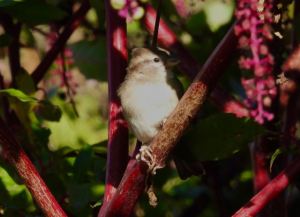
Immature Swamp Sparrow (rare sighting) on the porch by our feeder, east side, October 29

A newly arrived Dark Eyed Junco (welcome!) in Chinese Holly, east side, October 29

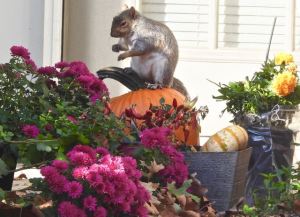
One of our Grey Squirrels enjoys munching our pumpkin on our east side Halloween display, October 26

Our last Orange Sulphur Butterfly of the year feeds on Carolina Horsenettle along the north end path on the morning of October 6

Our last Monarch of the year feeds on Asters, accompanied by Bees, as a jet flies overhead, south shore, afternoon, October 4

On to November in joy and hope! Happy Halloween, Happy Dia de Los Muertos, and Happy Diwali!

B is for…
 B that rhymes with P–that stands for pollinator.

This entry is about the three pollinator B’s that visit our garden and who can never outstay their welcome. Bees, butterflies, and birds. People get annoyed with visitors who just seem to take over the house and just go about their business as if the hosts didn’t live there, too. Sort of like the hummingbirds who occasionally whir up into my face and stare at me as if I’m in the way. And the bumble bees who’ve taken over the lupine next to the pergola and always buzz me to let me know who’s in charge. And certainly the rock jays who set up a racket at dawn in their incessant fights with the mockingbirds, warblers, and cooing doves–oh those sweet doves–over who has rights to the cherry plum trees.

But, like I say, I can’t get annoyed with any of them. Without them, there wouldn’t be much purpose for our garden, it wouldn’t be as productive, and it wouldn’t come close to being as beautiful and fun. Besides, if they weren’t there, I’d just worry about why they weren’t.

Bees

DSCN1935When I was much younger, I thought of bees as a nuisance in my urban, suburban life. They’d always show up to land on my sticky sno-cone at the ball park or fly up around me when I was mowing the grass at my childhood home. Sure, I liked the honey that I knew they were responsible for, but of course I never thought about why they made the honey (wasn’t it for me?). When I became a Dad, my annoyance with bees became fear of their stinging my children, which happened rarely over the years, but just enough to reconfirm the fear.
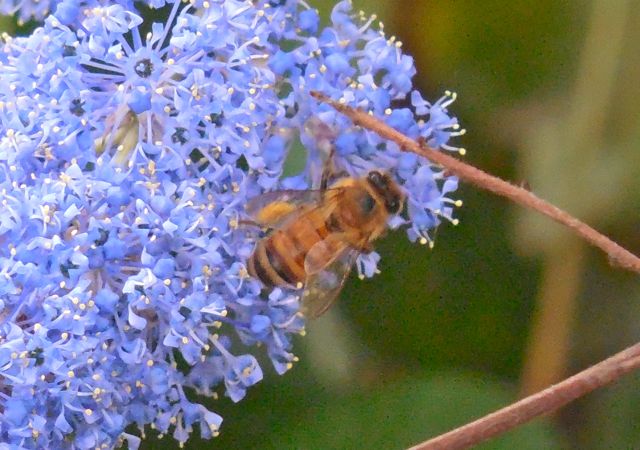
It wasn’t until my love of plants became deep enough that my fear of bees turned gradually into appreciation, then reverence, and finally deep concern. With scientists’ and farmers’ realization of the stark decline in honeybee populations, and their naming of the phenomenon Colony Collapse Disorder (CCD), my own emergent devotion to plants became joined with a commitment to gardening as a way to stave off that collapse at least a bit in my own environment. With our move to California and our becoming Friends of the UC Davis Arboretum I gained practical ways to put that desire into action, specifically with planting of native varieties and other bee-attractive plants, as well as avoidance of  insecticides. More great ideas came from periodic visits to UC Davis’s Haagen-Dazs Bee Haven  , where hundreds of bee-attractive plants grow across all the seasons.

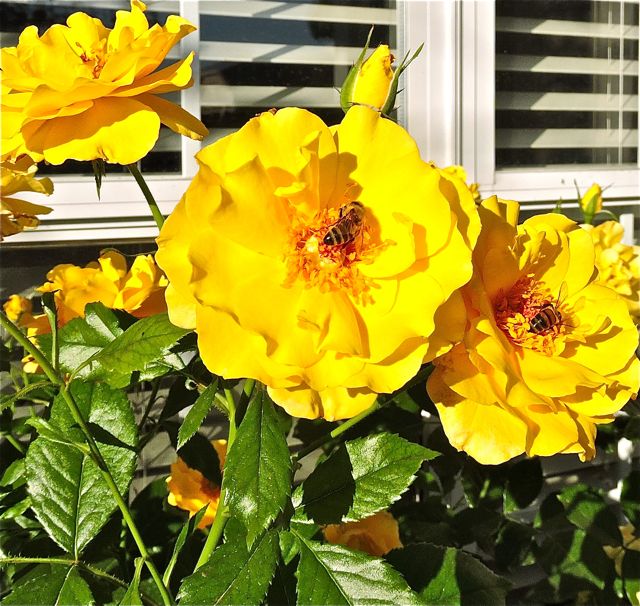
Gradually, I’ve added plants from these collections, nurtured some–like the lupine–that just spring up by themselves, and just generally become more attentive to the bees of all shapes and sizes that make our garden home at some time during the year. Because our growing season is year-round, there is always something growing that attracts bees. Since all plants flower, the plants I deliberately grow for their edible fruits are just as likely to attract bees as those that are advertised primarily for their flowering. The tiny yellow flowers that sparkle all over the tomatoes through the spring and summer may not be as large or vari-colored as the roses, but they have their own apis devotees.DSCN5784

At this stage in my education, there is nothing to match the springtime bee celebrations when the ceanothus and the wisteria are in bloom, closely followed by the orange blossoms, the cherry plums, and the meyer lemon. On some days the hum of the bees as they festoon the lavender, pink, and white blooms is almost a roar, and I’m drawn to stand amid the busy swarm as they go about their vital work. At these times, I am truly the visitor to what is most assuredly their home, and I try as much as I can to be a grateful guest.DSCN0270

Butterflies

My favorite butterfly visitors are a pair of white cabbage leafs that flit about the garden from spring through summer, occasionally landing on leaves and flowers of different plants, where their whiteness in some lights takes on the color of the leaf where they sit. But often they just appear from over the grey fence, then  dart and flutter across the garden before zipping back over the fence on the other side. Then there are the occasional what-look-like yellow monarchs that come into the garden and poke around before going on their way. One afternoon, I was returning from our mailbox down the street when one of them passed me like a yellow blur, turned 90 degrees into my front yard, and flew into the garden. I didn’t know from how far away he or she was coming nor how far he or she was heading, but the turn into our garden seemed purposeful, and I felt good that our garden may be a sort of destination, a regular stop along a route perhaps.garden cabbage leaf butterfly on zucchini leaf - 1

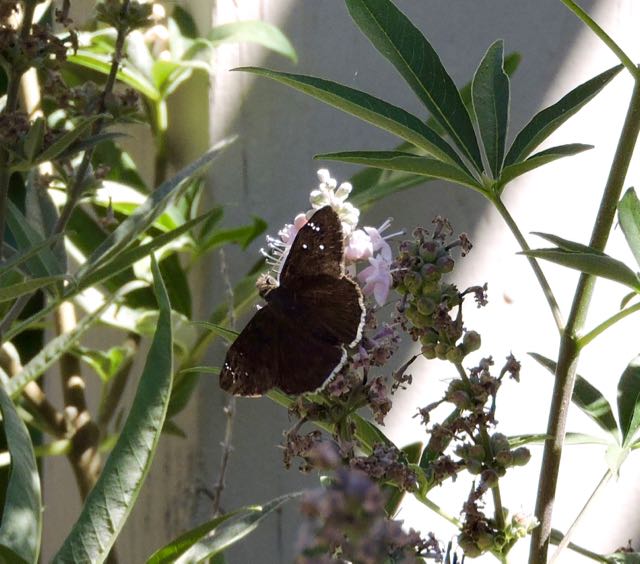
Then there are the little orange guys that stop by from time to time, as they did this August morning–oh yes, and the funeral duskywing (what a name!) that occasionally appears and that, just by chance, I was able two weeks ago to get a picture of on the ever-popular lupine.garden funeral duskywing on lupine - 1

A few butterflies come and go every day, but they never come in the numbers and with the humming show that the bees do at some times of the year. I can’t help feeling that one of these years they will stop coming altogether, because there will be no more of them, and these silent, flitting, flashing beauties will have gone the way of all those thousands of species that we humans will have systematically, even if sometimes stupidly unwittingly, destroyed. The numbers are startling. Numerous sources agree that monarchs, the showiest and most-storied of North American species, have declined by 90 percent, as habitats have been lost and necessary foods, such as the milkweed, have been lost with the habitats and through herbicides.

Birds

garden male house finch in peach tree - 1

While the peaches were in profusion in July, our heartiest competitors for the fruit on the tree were the house finches (see one above). They’d pick apart some of the best ones, and sometimes we’d be left with part of a peach. Other times we’d beat them to the peach. Overall, there were plenty for us all. When just one peach remained on the tree, we figured it belonged to the finches. Beauty before age, I guess.

If I could come back after my human death as another creature, I would want to be a bird. Granted, it’s no doubt a pretty fearful and hectic existence–the birds who visit our garden move fast, hide in the foliage, and rarely go out on a limb for more than a few seconds. As soon as they become aware of my presence as an observer, they scoot away, or at least find an interior spot among the leaves to spy back at me. But, wow, they get to do it from way above me, and they can almost in an eye blink swoop to another perch from which to scan the world around them. Meanwhile, I just plod along on the ground and hope to keep from tripping over a tomato vine, a jasmine root, or the shovel I left upturned this morning by the Japanese eggplant.DSCN1334

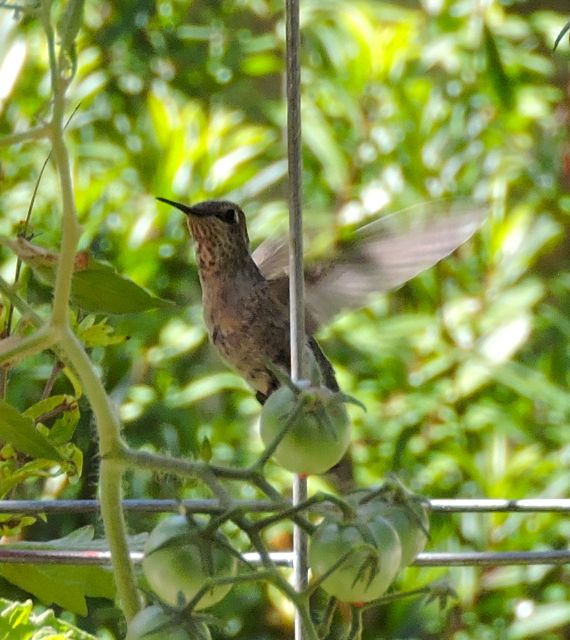
Chief among the swooping scooters are the hummingbirds, who helicopter around the garden and zip (and sip) from plant to plant during most of the year. I’ll be watering or pruning or weeding, with my eyes toward the ground, when all of a sudden I’ll hear a whir near my ear. The little bird is either just zipping past or sometimes hovering near me, sometimes waiting to look me right in the eye. I always blink first. A few times I’ve been lucky enough (as above) to catch one still enough for a photo. Other times I’ll hear their classic “tick tick” and get my camera ready, only to have my friend tantalize me by stopping for a second, then flitting to another short stop, then another and another, but never long enough for me to get off a good snap. Many’s the time I’ll look at a series of hummer pics I’ve taken, but I’ll have beautiful leaves in nice sharp focus and a ghostly blur where the bird has been.

Last week, I saw one through a side window sipping from an orange fuchsia bloom, but by the time I got my camera, my friend was gone to another place in the garden. I went outside and heard the tick tick, and I caught a glimpse in the wisteria, and then gone. Imagine the hummingbird in the fuchsia, below.

garden fuschia in bloom - 1

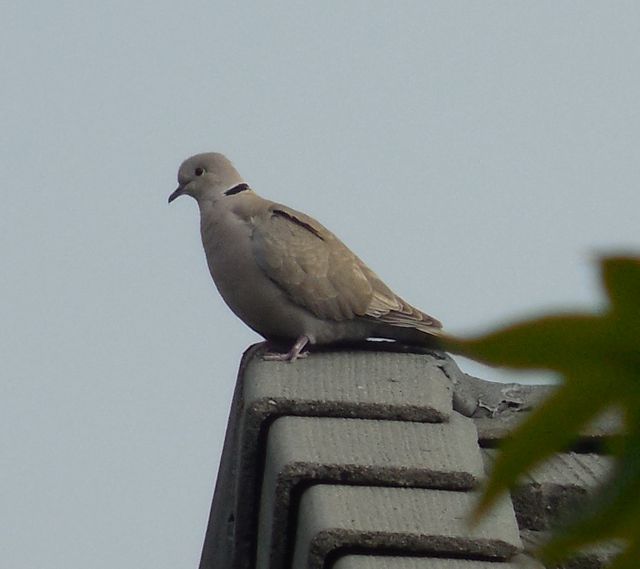
Of all the glorious songs of the birds who live in or near our garden, the one that most moves me is the plaintive “woo woo hoo” of the Eurasian collared doves. Our local pair calls all day long and spends part of the time in the cherry plum tree that overhangs our garden from our neighbor’s yard. Many years ago, a pair of doves lived in my neighborhood in Virginia, which bordered a small park. Often I’d be up early to walk in the park, full of tall old oaks and maples, and I’d stop to listen to the calling birds and try out my own plaintive dove call. I got pretty good at it, good enough that I imagined we were calling back and forth. Here’s a photo of one of our local residents, perched on the corner of our neighbor’s roof, a favorite spot for different species of our neighborhood avians to scan the territory and await the answering call.

DSCN0467