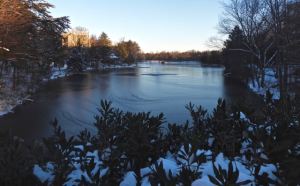
December 2025: Holiday Gifts for the Environment

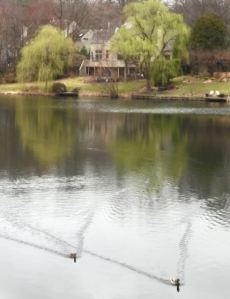
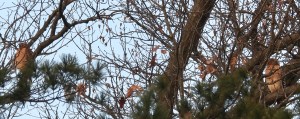
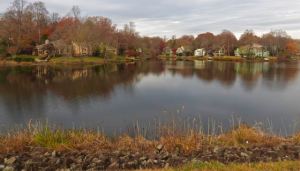
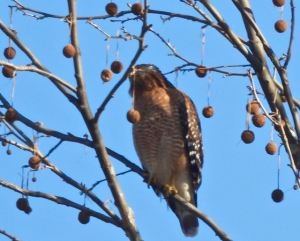
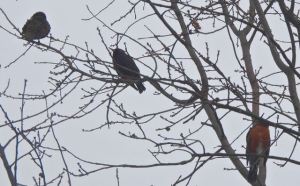
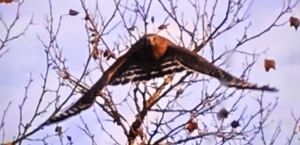
Jean’s amazing photo of a Red-Shouldered Hawk flying toward her from a Maple southeast of the lake, on a very cold morning, December 7. This visitor, who had been pestered by a few of our enraged resident crows, flew past her and landed in a nearby tree.

In this month’s blog:

Climate Log: Holiday Gifts to the Environment–and to Us Humans!
Climate Log 2: The “Unstoppable Worldwide Rise of Renewables”
Garden Update: Fresh in the Freezer
Presents through Presence: Visiting with Family
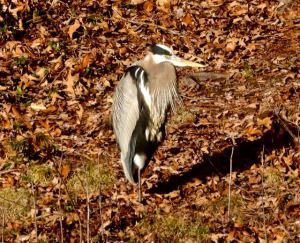
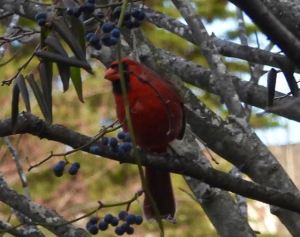
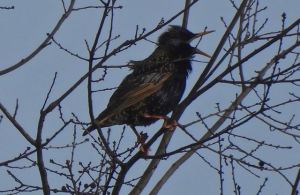
The December 2025 Photo/Video Gallery: Gifts from our Lakeside Community
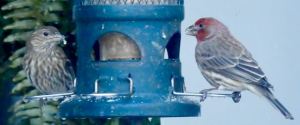
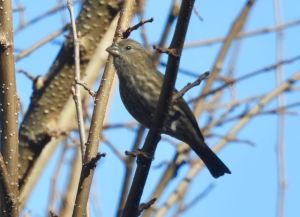
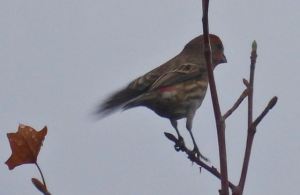
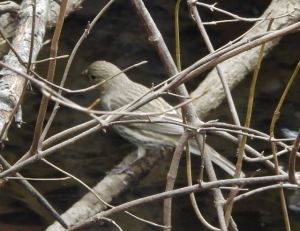
Pair of House Finches, Female and Male, at Southeast side feeder, December 14

***********************************************************************************
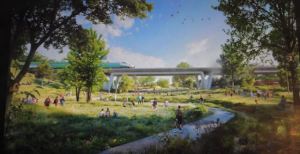
Parks, wetlands, and light rail: three features of the plans in Toronto for redevelopment of an outdated airport (see below)

Climate Log: Holiday Gifts to the Environment–and to Us Humans!

The current U.S. federal administration (now a year old) keeps doubling down on the fossil fuels that are steadily killing us. But Americans across the country are inventing ways to make or remake our fragile environment to be more resilient. Below, we link to 3 of these many gifts to us. We also note a 4th gift, from our friends in Canada, who have large plans to repurpose developed land to achieve life-friendly goals of health, beauty, and love for all creatures.

Gifts One and Two: “Fifty States, Fifty Fixes”–We’ve cited in past entries a few of the many climate-friendly projects from this ongoing NY Times series, and here are two more, both from so-called “red states” (which, as polls keep showing, are picking up more tints of blue).
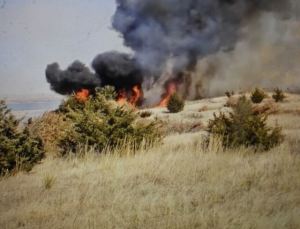
“South Dakota Ranchers Burning the Prairie to Save It” (New York Times photo) December 11 https://www.nytimes.com/2025/12/09/climate/prescribed-burns-wildfire-south-dakota.html

In South Dakota, an organization of cattle ranchers is teaching others how to use Native American methods of “controlled burns” to remove invasive species, such as the Eastern Red Cedar, so that native grasses and their pollinators can return.
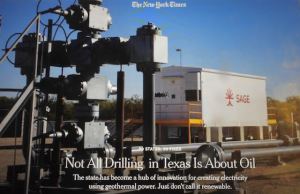
“Not All Drilling in Texas Is About Oil” (New York Times photo, December 11  http://www.nytimes.com/2025/12/09/climate/not-all-drilling-in-texas-is-about-oil.html

As new companies in Texas are demonstrating, the many skills needed to dig for oil and gas are being adapted to make the state a hub of innovation in the production of clean geothermal power.

Gift Three: Big Plans in Toronto to Make an Outdated Airport an Environmental Miracle
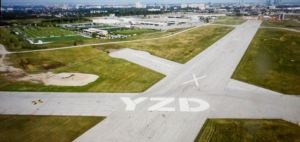
Toronto Downsville airport to be redeveloped as housing and parks, current view (CNN photo), Dec. 11  https://edition.cnn.com/travel/toronto-downsview-airport-yzd-c2e-spc

CNN’s “Inside the Abandoned Airport Being Transformed into a $30 Billion Sustainable City” (by Nell Lewis, December 11) describes in glowing detail the history of this early airport and Toronto’s ambitious plans to redevelop the land over 30 years into one of the largest and most innovative sustainable sites in North America.  
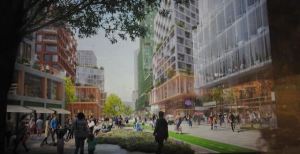
Toronto plan for former airport: sustainably-designed high rises and pedestrian mall as two of its features (CNN photo), added Dec. 11 

 Gift Four: The Data Rescue Project  https://www.datarescueproject.org/
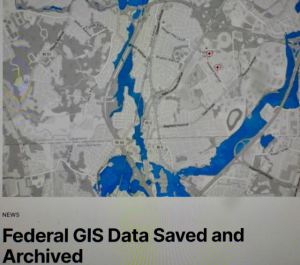
One recent successful data rescue project, Dec. 16

Even as the EPA and other branches of the current administration race to hide vital information from scientists, from the economic and financial communities, and from the entire voting population, the Data Rescue Project (among other similar organizations) is working tirelessly to save information and make it available to us. While this rescue effort began during the first Trump administration, when scientific research data, especially about climate change, began disappearing, the erasure has ramped up exponentially this year across all government departments. So the Data Rescue Project has also intensified.

The specific data saving initiative pictured above, regarding erasure of the GIS (Geographic Information System) in September and October, is reported on by Frank Donnelly, Head of the GIS and Data Services of the Brown University Library. The saved data are available at https://www.datalumos.org. Of course, even more rescuers are needed by the Data Rescue Project.

******************************************************************************
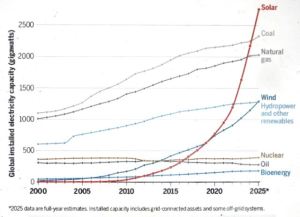
Comparative growth of solar and wind vs. other forms of energy worldwide since 2000 (Science, 12/19/25)

Climate Log 2: The Best Gift to Us and the Environment?  The “Unstoppable Rise of Renewables” Worldwide

Solar Farm in Wisconsin (Getty Images)

Once we in the U.S. look beyond the choking fog of fossil-fuel hype in the current administration, we can see that the best gift to the worldwide environment is the phenomenal growth of solar (and wind) power since 2000. In its lead article this week, “Good Morning, Sunshine,” the journal Science announced its “Breakthrough of the Year”: the “seemingly unstoppable growth of renewable energy.”

Led by China’s truly astonishing build-out, an example being steadily adopted by nations around the world, solar and wind energy are far out-stripping fossil fuels in installation since 2000. Why? Because of solar and wind’s cost effectiveness and clean simplicity. Indeed, says Science, “Wind and solar have become the cheapest energy in much of the world.”

Of China’s dominance in these new technologies, Science writes:

“China’s solar power generation grew more than 20-fold over the past decade, and its solar and wind farms now have enough capacity to power the entire United States.”

Perhaps it’s no wonder, then, that the current U.S. administration–given its marriage to 19th century forms of enegy–has done its utmost to prohibit new solar and wind projects in this nation. Just this week (Dec. 22) the President “paused” 5 wind projects off the East Coast, 3 of these already under construction. The five would have reduced power costs for millions of people, provided clean energy, and created 10,000 jobs:

“Trump Halts Five Wind Farms Off the East Coast”
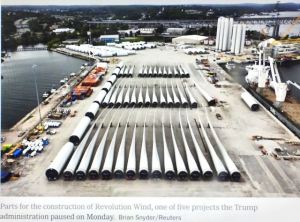
“The decision imperils billions of dollars of investments,” as Maxine Joselow and Lisa Friedman reported in the New York Times.

Too bad that we the people don’t have a say about such capricious, harmful decisions. Nevertheless, Americans will keep on trying to make the environment cleaner, greener, and more healthy in ways that this blog and the free press will celebrate.

******************************************************************************

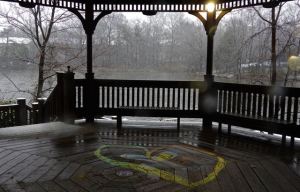
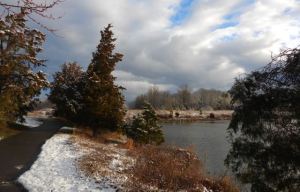
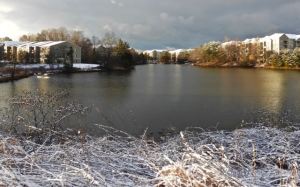
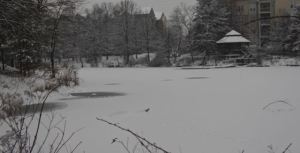
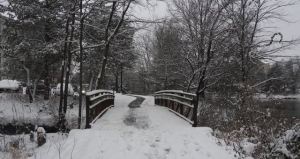
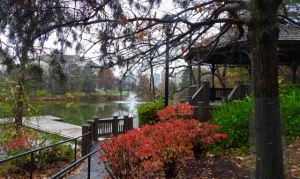
First snowfall of the new winter: looking across the lake to the west side gazebo, December 5

Garden Update: Fresh in the Freezer
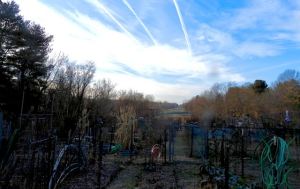
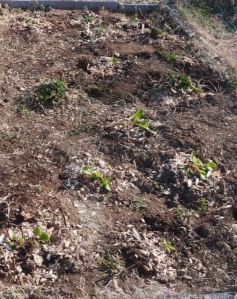
In the midst of many days of freezing temps, our garden community, except for some hearty plants, has quieted, too. Some birdsong persists, but even that is muted on a cold, cold morning, December 13 

Our November garden update gloried in the rapid growth of the six broccoli and six cauliflower we’d planted in October. Since the calendar turned to December, however, we’ve experienced an inch of snow on the 5th and almost two weeks of freezing temps, getting as low as 16 on a couple days.  Fed by a polar vortex which has kept much of North America in the deep freeze since late November, our weather is much colder now than at any time over the 3.5 years since we’ve been back from California. 
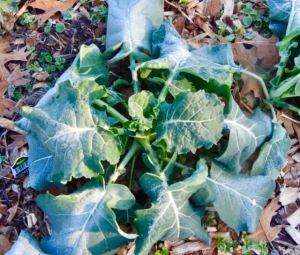
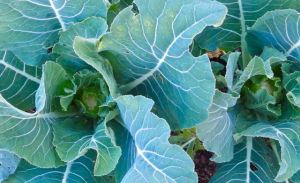
Broccoli plant still holding on to its green suppleness despite the cold, December 18

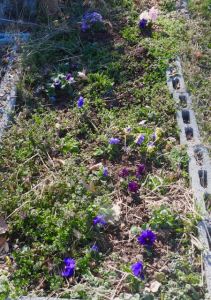
So it’s fun to visit the frosty garden every few days to see how the plants above ground are doing. We know, of course, that underground nature is taking its course, and, almost before we know it, it’ll be driving toward spring and shoots will poke through the soil: species that we will take joy in identifying, some of which people may call weeds, but which we will enjoy watching grow into their curious individuality.
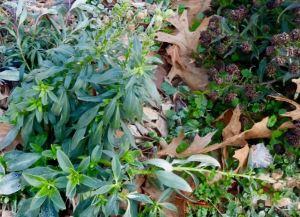
Snapdragons, planted in October, acting all green and sprightly, as if it weren’t winter around them, December 18.
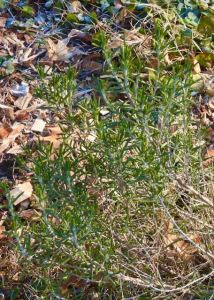
Rosemary, a perennial, green as ever, and just as pungently fragrant as in August, December 18
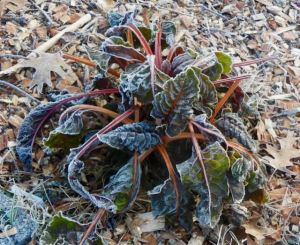
Swiss Chard, wilting in the frost but still with some of its orange vigor, December 7
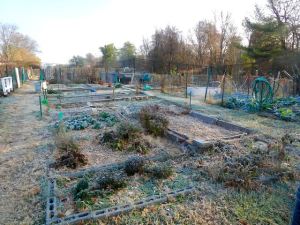
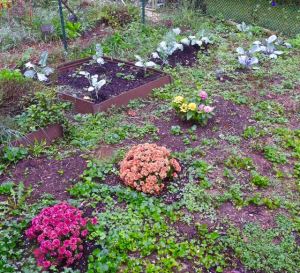
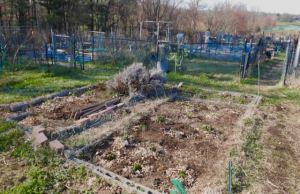
Garden panorama toward Northeast, with our plot in foreground, cold morning, December 7

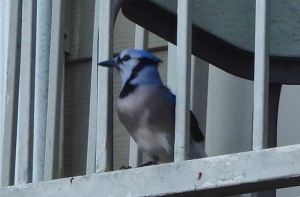
Blue Jay in Green Ash in the woods beside our community garden, cold morning, December 7

************************************************************
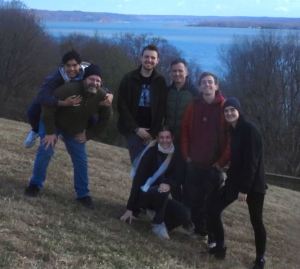
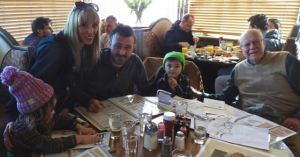
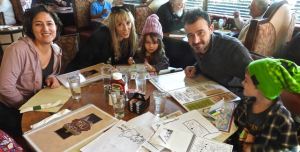
Visiting family members before Potomac River vista at Mt. Vernon, sunny, windy December 29

Presents Through Presence: The Gift of Family

In the season of giving, there is no greater gift for us than the opportunity to be with members of our far-flung family, who have traveled to Northern Virginia from Georgia and California to share meals, conversation, ideas, and lots of laughter. We are joyful, of course, to revel anew in how the younger ones have grown in learning and wisdom, and how their parents’ strengths have surpassed ours when we were their age.

And what is true of our visiting family is equally true of the family who live near us, and who welcome us into their homes. And it is also true of those family who live far away and whom we visit this holiday season via phone, text, email, or video. Is it not amazing how their wisdom, care, humor, and love come through to us regardless of the media? Truly blessed and fortunate are we.

Family welcome us into their home on Christmas Day for food, games, and conversation.
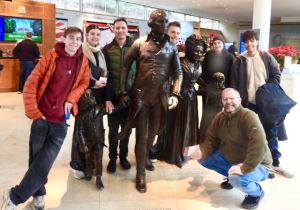
Our visiting family share the holiday spirit at Mt. Vernon with George, Martha, and their kids, December 29

Even Lulu, the family Yorkie, shares in the festivities on Christmas Day

************************************************************
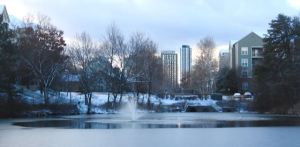
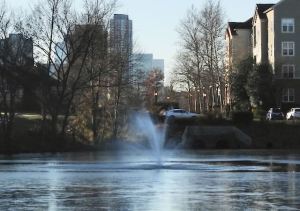
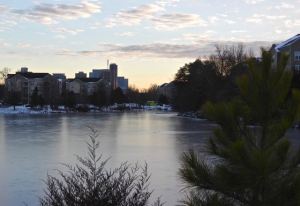
Across the ice-covered lake to the fountain, our community, and on to downtown, December 14

The December 2025 Photo/Video Gallery: Snow, Ice, and the Serendipity of Wild Life

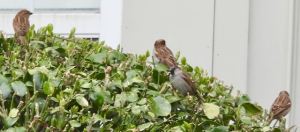
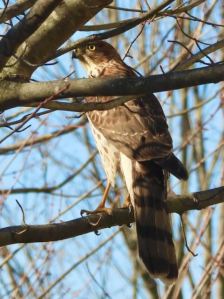
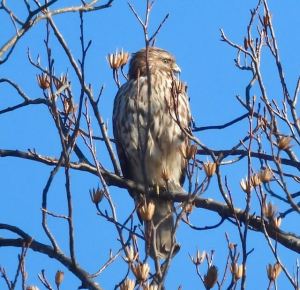
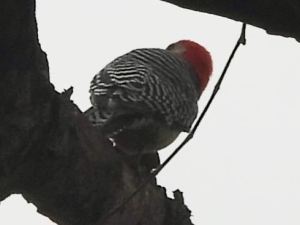
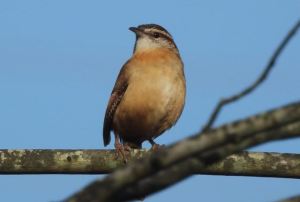
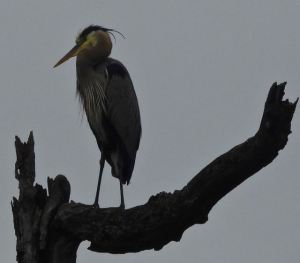
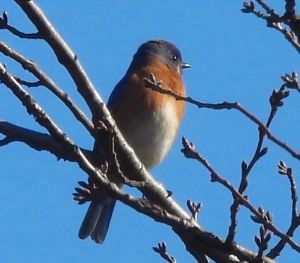
Almost every trip around our lake presents surprises, like the Hawks, the Bluebird, the White-Throated Sparrow, and the Northern Flicker pictured this month, or the Bald Eagle and the friendly White-Tailed Deer I wrote about last month. Their allowing us to see them–they are so good at hiding!–is a real gift. I like to think that they feel somewhat safe in our presence, despite the risks they run by being visible. I hope that safety is not just our illusion.
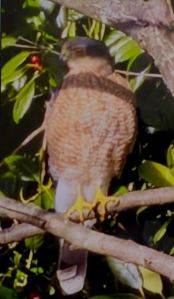
Cooper’s Hawk alights in Laurel, southeast side, sunny afternoon, December 20 (photo by Pat Welch)
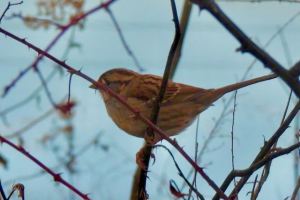
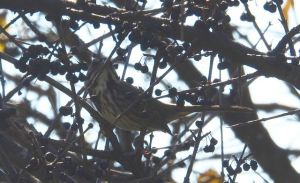
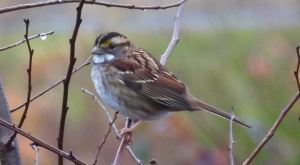
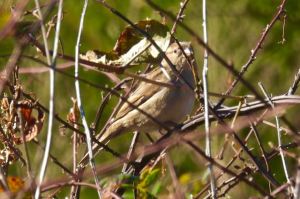
White-throated Sparrow among Blackberry canes, northeast corner of lake, at sunrise, December 21
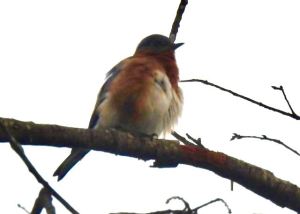
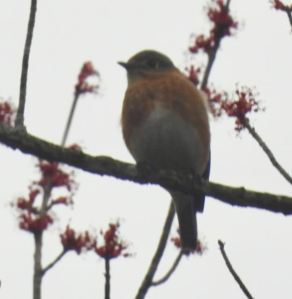
Eastern Bluebird on dead Willow Oak, east bank, at sunrise, December 21
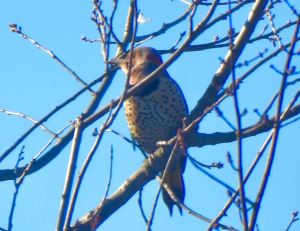
 

Northern Flicker–a rarely visiting type of woodpecker–perches in a Red Maple in the north end woods on a crisp morning, December 22

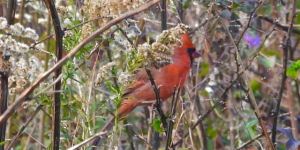
Male Cardinal perches, chirps, and munches in Sweet Cherry tree, southeast bank, crisp 

December 22
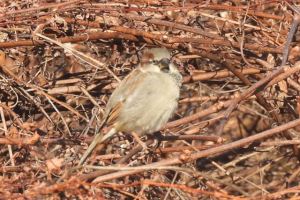
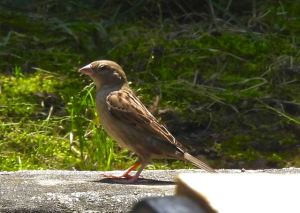
House Sparrow rests in Oriental Bittersweet vines along the north shore of the lake, December 22
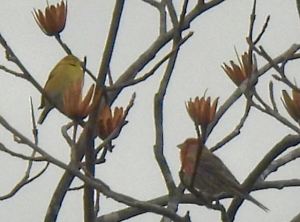
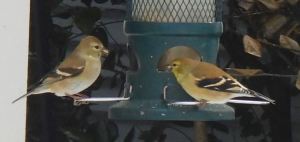
American Goldfinch and House Finch perch in a budding Tulip Tree, north of dam, cloudy December 23
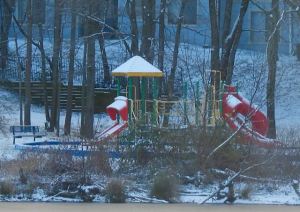
Playground on the Northeast bank, snowy December 14
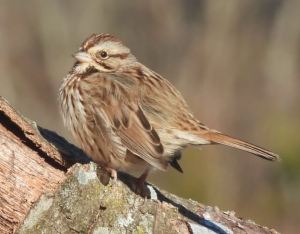
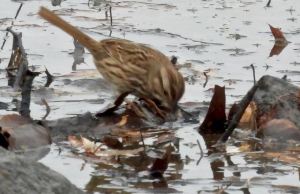
Song Sparrow on dead Willow Oak, east shore of lake, December 16
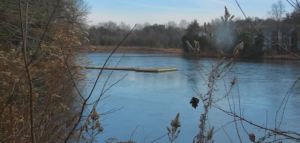
Panorama of the frozen lake toward the dock and the northeast corner, December 13
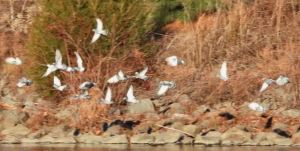
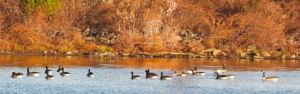
Large flock of Canada Geese in a corner of the east shore, looking to north, Dec. 14
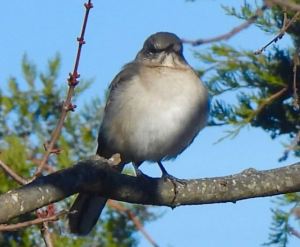
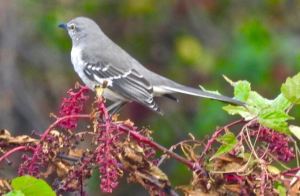
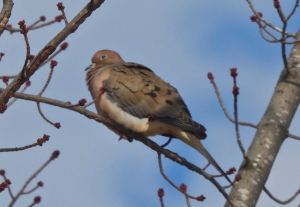
Mockingbird perches in Red Maple along the southeast path, sunny, cold December 16
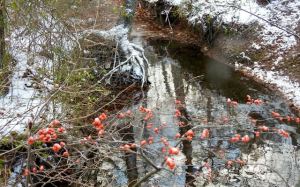
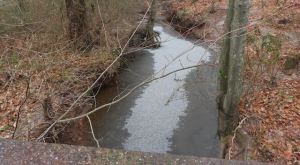
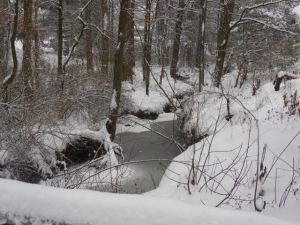
Winterberry bush glows above the inlet stream by the bridge, southeast corner, snowy December 14

Song Sparrow in Japanese Honeysuckle, southwest shore, calls to fellow across the lake on a sunny December 16
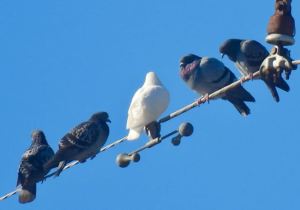
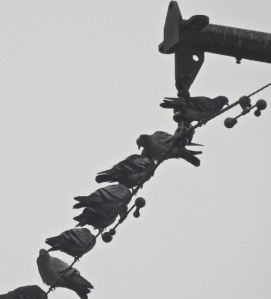
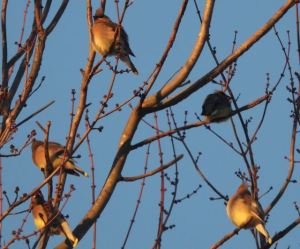
Five Rock Doves bask in the morning sun atop the power tower west of the lake, December 16
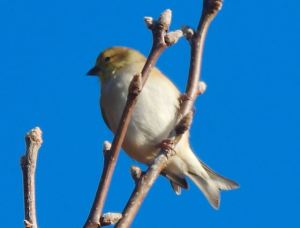
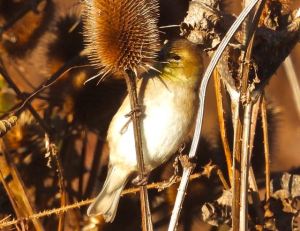
American Goldfinch in winter feathers perches in Bradford Pear along the northeast path, December 16

From the gazebo across the lake, I scan goose by goose the line spread out along the southeast cove, December 14
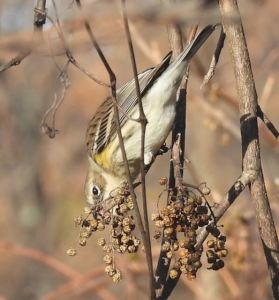
Acrobatic Yellow-Rumped Warbler feeds on Poison Ivy berries in the southeast cove, December 1
Turkey Vulture scans from high above the lake on a misty December 9
Tufted Titmouse hides in Maple on the west side just after sunrise, December 7
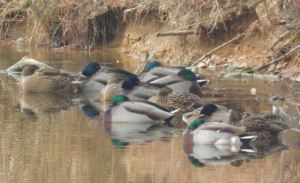
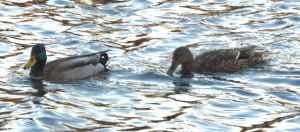
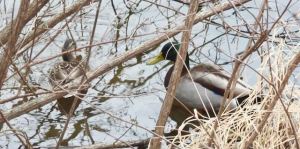
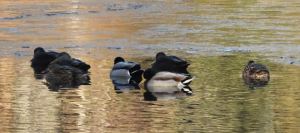
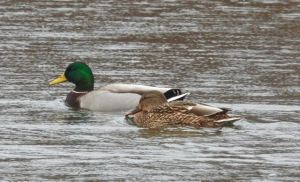
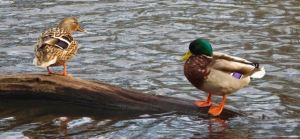
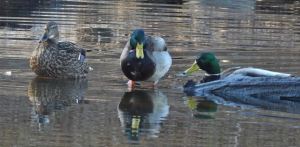
Mallard pairs stay warm along the southeast shore on a very cold morning, December 9

Mallard pair flies north toward woods from southeast cove, then west into trees, cold morning, December 9
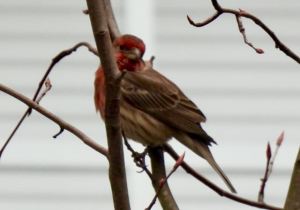
House Finch male in Downy Serviceberry, southeast side, December 9
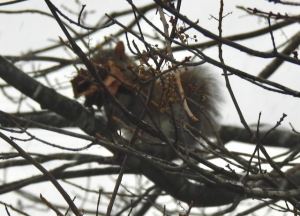
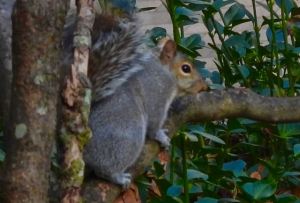
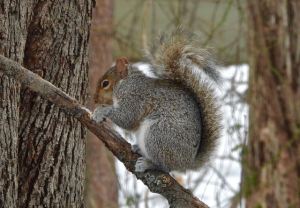
Grey Squirrel with mouthful of leaves walks along branch of Red Maple, southeast path, snowy December 5

First snowfall of the winter: five Mallards swim along the east shore as flakes fall, December 5

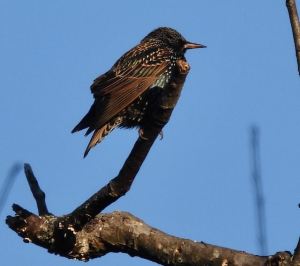
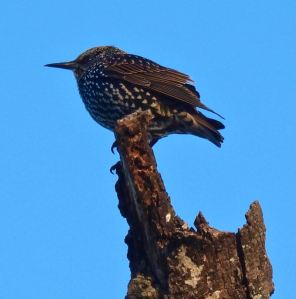
European Starling lit by sunrise along the southeast shore, December 7
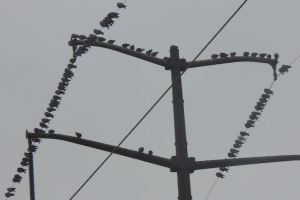
80 Rock Doves–a record?–atop the power tower west of the lake on the very cold December 9

And so we move into the last week of this challenging 2025, as always with hope for a Happy New Year…
March 2025: New Spring, New Climate, New Garden

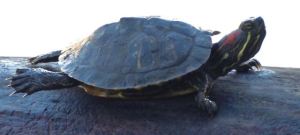
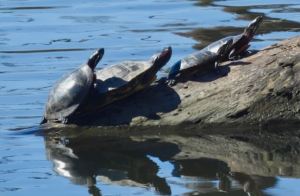
With warmer temps come the Turtles, who emerge above the surface once the temp reaches 60: four Red-Bellied Cooters on a log along the north shore of the lake, on a warm and windy March 18

In this month’s blog:

Wildfire USA: The New Normal
We Start a New Garden in a New Climate
Always Time for St. Paddy’s Day and Cherry Blossoms
The March 2025 Photo/Video Gallery: New Sightings in Nearby Places

A Tree Swallow–first sighting!–and a male Red-Winged Blackbird share the rail of the dam structure at nearby Lake Newport, on a cool, cloudy March 16

***************************************************

Climate Log: Wildfire USA: The New Normal?

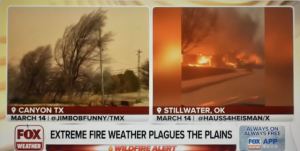
Exceptional drought in Plains states leads to wildfires from Texas and Oklahoma north through Kansas and Missouri (USA Today and Fox Weather, March 14)

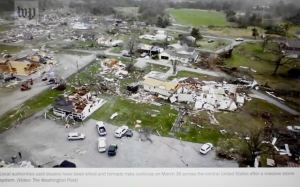
Though you’ll never hear a word about this from the new federal administration, for whom climate change, they say, “does not exist,” even the Fox Network can’t ignore the extreme drought conditions that have been ongoing for at least two years now in the Plains states–and the frequent wildfires that are now defining late winter in the middle of the country.

High winds and storms in the Plains states were accompanied by tornadoes, like this one that touched down in Missouri, March 14

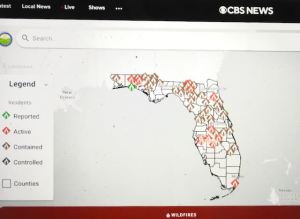
Wildfires in the drought-plagued Plains states are dreadful enough, but now Florida joins the parade of drought-ridden states with fires up and down the peninsula.

This map from CBS News on March 20 shows “active fires” in most regions of the state, even toward the Keys and across the Panhandle.

While we’re used to hearing about hurricanes there in summer and now fall, plus high ocean temps and sea level rise along its coasts year-round, drought has become yet another climate concern in the Sunshine State.

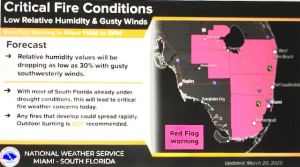
National Weather Service warning for Miami and South Florida, March 20

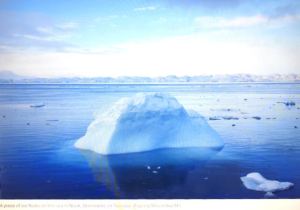
Much farther north, the climate news this month (and this is no surprise at all) is that yet another record was set for the earliest melting of the Arctic Ocean ice cover, as reported in the Washington Post by Brady Dennis, March 6.

Greenland ice chunk in melting Arctic Ocean (Evgeniy Maloletka, AP photo , March 5)

It’s particularly noteworthy that the Trump/Musk administration is very interested in the U.S. acquiring Greenland as a territory. If they truly believed that there was no climate change, they’d assume that this melting was a temporary weather event. But their claim that climate change doesn’t exist is really just pretense, used by the fossil fuels cartel to justify the administration’s rollbacks of environmental protections and their attacks against renewable energy. The cartel and their political enablers know that the melting is part of the worldwide warming trend, and so the administration wants Greenland–just as they want to acquire Canada–as a military and trading launch pad for shipping across the now watery Arctic, as Forbes’ Garth Friesen, among others, reported in January 2025 in “Why Trump Wants Greenland.”

In this new normal of drought and higher temps, and while environmental rollbacks continue, we can look forward to more wildfires in more places. Indeed, just today (March 26) there are National Weather Service “red flag warnings” in the western edges of Northern Virginia.

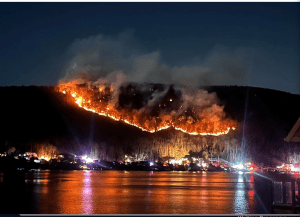
Wildfire on New York/New Jersey border, as this blog reported in November 2024

***************************************************************************

We Start a New Garden in a New Climate

In our new garden plot, our first flower seedlings, March 22

For the first two years since our move from California in 2022, we had been on a waiting list for one of the highly-coveted garden plots in the four large clusters of plots maintained for residents by our urban/suburban town association. Finally in late August 2024, a 190-square-foot plot 2 miles from our home lakeside community came open and we leaped on the opportunity. Although this plot would be a far cry from the almost 2000 square feet of garden we had gloried in for 17 years around our home in the Sacramento Valley, and which had been the basis for this blog from 2015 to 2022, we promised to make the most of this new setting.

Cauliflower growing in our first small fall/winter garden plot in our town, November 24, 2024

On this small new plot, we planted three veggies suited to fall growth: broccoli, cauliflower, and red cabbage. In hopes that they would also thrive, we experimented with flowers, too: the perennial chrysanthemums we knew would be happy in October and November, celosia, and gerbera daisies–plus bright yellow and purple pansies, who, as we knew from prior experience in this climate, could go dormant over the winter, then come back in spring.

Our first plantings in our first small Virginia garden: broccoli, cauliflower, red cabbage, mums, daisies, 3 weeks old, in the rain, September 24

The broccoli and cauliflower plants did well enough before winter to give us some tasty heads, and the cabbage produced colorful purple leaves. The mums (as expected) were champs for a couple months before the current flowers wilted, as were the pansies. But the other flowers died with the first freeze, along with our wishful thinking (!) that Northern Virginia in winter would prove as hospitable as California.  Because this winter, as we reported in our January and February entries, proved far colder and snowier than our first two winters here, we got what we should have expected.

A New Garden Plot!

In early February, current plot holders were informed that there were several slightly larger plots that had become available, and we were invited to apply for those. One such plot, 225 square feet, seemed particularly attractive, as it was both closer to the road (for unloading purposes) and more sunny than our first spot, which was beside the woods of tall trees. So we applied and got lucky. We have now for the past month been clearing the new plot of plants that had taken over (mainly tough little blue speedwell and purple-flowering henbit), getting the soil ready, and stocking up on flowers and veggies, so that we could begin planting as soon as the weather warmed up enough to avoid any more freezing nights.

We have also met other nearby gardeners, who cheerfully answer our questions about their experiences in this climate and in these spaces. Routinely, gardeners also share equipment, such as buckets, wheelbarrows, and used wood for raised beds. Moreover, we’re assured, among the rules of use is the promise by each plot holder not to steal or damage others’ plants or produce. The better we get to know each other, the more we look out for each other.

Cleared third of our new garden plot with seedlings of chard, mint, basil, thyme, tomatoes, peppers, zucchini, and strawberry plants, March 22

Besides the veggy plants listed in the caption above, we’ve also planted two blueberry bushes–a plant unsuited to the hotter California climate–with more plant varieties being planned. The blueberries are already budding, just one week in. A third of the plot will be for flowers, with three “Ps”: pansies, petunias, and peonies already in ground, plus dianthus (see photo at the top of this section.)

Another advantage of these well-used garden plots, which have been cared for by a range of gardeners over the years, is that the soil is free of rocks (!) and is easily diggable as far down as needed.  Another great feature of these garden clusters is that, for the reasonable yearly fee we pay, the town association provides mulch, compost, and manure, as well as convenient faucets around the cluster for watering.

Our plot, early in our design process, with part of the rest of the plots cluster in the background, March 22. More photos to come, as the garden grows!

*******************************************************

In March, Always Time for St. Paddy’s Day and Cherry Blossoms

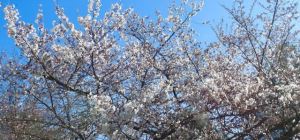
East of our lake, Cherry tree in full bloom, warm, sunny March 25

Last year at this time (see the March 2024 entry), we had a lovely, but also sobering, visit to the Tidal Basin in nearby Washington to see the Yoshino cherry blossoms in full bloom and visit the Jefferson Memorial, an annual pilgrimage for us in all our years here before 2006 and our move to California. This year again we are making this trek–and will describe it in detail in next month’s blog.

Two hints: we’ll be updating readers on the huge renovation project in the Tidal Basin in response to climate change and sea level rise, and we’ll be profiling three real American heroes who are honored amid the blossoms. (No, not Thomas Jefferson.)

Two St. Paddy’s Day Treats

Jean’s homemade Irish soda bread, March 17

Jean:

I’ve been streaming a lot of old British Baking Shows recently, and I especially enjoy Paul Hollywood’s master classes on bread. His strong arms and hands are made for the magic of kneading bread. But St. Patrick’s Day includes a bread that doesn’t get kneaded–Irish soda bread, of course. It’s rather an acquired taste, not the most exciting in its basic form, so in addition to studying Paul’s simple, classic technique, I checked out some recipes that called for a more enriched dough.

Hollywood makes soda bread either with all white flour or half white and half whole wheat, which I prefer, as a way to increase the fiber and protein. The most important ingredients are baking soda and buttermilk. I used a mix of flours (including one cup of oat flour and and one of white whole wheat out of the total four cups of flour), plus some sugar, butter, and egg, as recommended in this recipe.

The added sweetness is up to you; you could try a couple of tablespoons of sugar instead of 1/4 cup, if you want it less sweet. The egg also is optional, as it is in scones, but it does make the dough richer. https://natashaskitchen.com/irish-soda-bread/

In addition to golden raisins, I added caraway seeds because I like that flavor and a bit of crunch as well. As always, make this to your taste and have fun with it.

Here’s one more of my treats in honor of St. Patrick’s Day: making these a sandwich cookie was a spur of the moment inspiration!

Jean’s oatmeal sandwich cookies with cream cheese frosting inside and mini-M&Ms for an added pop of color and flavor, March 19

************************************************

Venus, high above the lake, and beneath the moon, 7 PM, a clear, calm March 3 (yes, that orb is 25 million miles away)

The March 2025 Photo/Video Gallery: New Sightings in Nearby Places

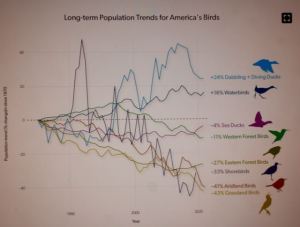
In last month’s entry, I gave the impressive statistics from the worldwide Great Backyard Bird Count. Check it out. So many species in so many countries, recorded by so many devoted birders. As impressive and heart-warming as those numbers are, this month’s news from Audubon and the Cornell Lab of Ornithology sobers us to the fact of the continuing sharp decline in the U.S. numbers of birds. https://www.audubon.org/press-room/us-bird-populations-continue-alarming-decline-new-report-finds

Habitat loss to development, air and water pollution, global warming, use of pesticides and herbicides, and other factors have not only killed birds, but have killed off the insects and plants needed by bird populations to thrive. And the same factors that are killing birds are making our own human hold on life more tenuous for billions around the world.

Decline year by year of many classes of birds in the US since 1970 (Cornell Lab of Ornithology), March 2025

 The Good News

 But still, day by day, our local and migrating birds call all around us, and their songs thrill us, and when we spot them and take pictures of their beautiful evanescence we feel the same joy that we always have in the presence of birds. Indeed, their fragility makes us appreciate them even more and perhaps even pushes us to try harder to help the rest of the human world pay attention.

And sometimes, as you’ll see below in a video and two related snaps, the unexpected and truly serendipitous happens on a bird walk.

So here are a selection of this month’s photos, taken not only along our local small lake, but also at another nearby lake and at a local woodland park.

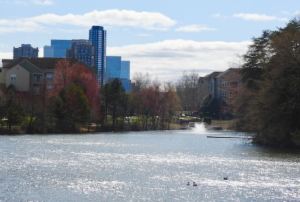
Three Canada Geese in a panorama toward downtown buildings on a sunny, sparkly, windy March 17


Male Cardinal in a budding Cherry tree east of our lake, at sunrise, March 19


American Goldfinch in Serviceberry tree, southeast side of our lake, on a warm, windy noon, March 18


Young male Red-winged Blackbird atop an Oak east of the lake, warm morning, March 20

On a chilly afternoon, March 13, I pan the treetops southeast of the lake, and hear the calls of a Cardinal, a Tufted Titmouse, a House Sparrow, a White-Throated Sparrow, and a Carolina Wren–and, as always, local traffic

Song Sparrow and House Sparrows on Japanese Spindle Bush, southeast side of the lake, damp, chilly March 15

Song Sparrow sings in Red Cedar along the north shore, warm March 11

Sharp-Shinned Hawk perches in Red Maple very near our home, just after chasing, but losing, a Sparrow out of a nearby bush, February 28. See next video.

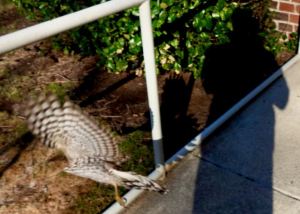
This Sharp-Shinned Hawk flew just past me after chasing a Sparrow through a Spindle Bush, and then perched in this Red Maple along our path, February 28. A totally unexpected and serendipitous shot!

My photo of the Sharp-Shinned Hawk flying past me in pursuit of the Sparrow, who got away, February 28

Red-Shouldered Hawk in Tulip Tree, southeast woods, March 10

Mallard pair along west shore of our lake, in twilight, March 4

House Finch female in Mulberry tree along the southeast shore, warm March 11

Downy Woodpecker scans on Red Maple, southeast bank, damp, cold March 15

I’m part of a town association birding party at a nearby park and lake, cool, cloudy March 16

Double-Crested Cormorant–first sighting of the year–at nearby Lake Newport, March 16

Red-Bellied Woodpecker high up in Oak, nearby park, March 16

Rarely seen Eastern Towhee behind Honeysuckle, in woods of nearby park, March 16

At nearby Lake Newport, as part of the birding party, I see these 2 Ring-Neck Ducks, a first sighting for me, dive into the water, but then more of the ducks break the surface! March 16

Two pairs of the Ring-Neck Ducks in Lake Newport, March 16


Mallard pair in lakeside rushes, beside me, Lake Newport, March 16


Eastern Bluebird in Red Maple at local park, March 16


Wakes of Mallard Pair in Lake Newport, March 16

Female Cardinal calls as Red-Winged Blackbird calls, in Red Maple, southeast woods by our lake, cold, windy, March 7

And on we go in the last week of March, toward April, and hopes for Spring…

December 2024: Closing the Year in Celebration and Hope

A small flock of Canada Geese swim past the west bank gazebo on our lake in a gentle snowfall, December 20

In this month’s entry:

Rains Return and So Do the Birds
Our Holiday Season Kitchen
More Holiday Celebrating with Family
Climate Log: Good News and a Dilemma
The December 2024 Photo/Video Gallery

A driving rain begins to attack the drought: looking north across our lake, December 11

A “Sort of” Winter: Rain, Cold, Ice, Warm Temps, and Yes, More Birds!

In last month’s entry, we lamented the ongoing drought and the disappearance of most of our late autumn  birds. Just at the end of November, we began to get some rain, and we’ve now had about two inches this month–a hopeful start to impacting the drought. It’s even been cold enough in the past two weeks–high teens to low 30s–to bring us a bit of snow and ice, though nothing sticks for more than a few hours, and warming is in the forecasts.

Panorama of the fountain and the sleet-covered lake from the southeast bank, Christmas Eve, morning

The even better news is that our mallards have returned, along with some songbirds we’d not seen for a while. Here’s hoping that the moisture keeps coming and, with it, even more birds. A warming trend is predicted by the end of the month, plus more rain, so we’ll see how much winter is still in store. Fingers crossed.

Seven Mallards on the frozen lake in the early morning cold, December 23

Our first sighting here of a Golden-crowned Kinglet, in the Willow Oak on the southeast bank, December 12

Look for more of our December birds in this month’s Photo/Video Gallery, later in this entry.

Our faithful flock of Rock Doves stop at the north end shore in the early morning cold, December 23

**********************************************************************

More to Celebrate: Our Holiday Season Kitchen

Jean’s Pulled Pork Chili, with tomato, cheese, romaine salad garnish, December 9

Jean: Like many others, we have had patches of cold, rainy, snowy and icy weather already this winter, and more is probably yet to come. During these times, I like to make big pots of hot, hearty food that can be enjoyed for days without going out shopping or seeking food elsewhere from day to day. It also needs to be something we can change up to prevent monotony. To these ends, I got a 6-pound pork butt/shoulder to put in the Crockpot with broth, onions and garlic. I simmered it for most of a day to get it tender enough to cut down after it cooled. I didn’t weigh the big bone that I cut out, but I probably ended up with three pounds of meat.

Once I had the bone out and chunks cut, I made four dishes with the meat. Each required some more cooking with the vegetables and other additions appropriate for that dish.

  • First was a simple stew, softening the meat some further with potatoes and carrots.
  • Then my favorite, a Mexican posole, made by adding green peppers, jalapeños, green salsa, and hominy.
  • The next was a chili, simply adding chipotle and other spices, some different kinds of beans, canned tomatoes, and corn.
  • Fourth was barbecue, cooking sweet potatoes with the meat and topping with our favorite BBQ sauces: Kansas City BBQ for me (go Chiefs!) and a mustard-vinegar (Carolina) sauce for Chris. All yummy, stick-to-the-ribs food. I think I may go out and get another pork butt.

Chris’s Three Sisters Stew bubbles, as Christmas jazz plays, Dec. 21

Chris: For an alternative pre-Christmas celebration, we chose my vegan “Three Sisters Stew” (pictured above), based on the  traditional, Indigenous-named “three sisters”: beans, corn, and squash. These make complete protein, which I first wrote about in this blog in December 2022 in describing examples of “Blue Zones” cookery. Each time I make this hearty dish I vary somewhat the other ingredients I add, so I get new flavors, level of spice, color, etc. For example, this time I used 12 ounces of Beyond Meat (with avocado oil), which I sauteed with yellow onion, then added in cannellini and black beans (instead of kidney and pinto), then sliced fresh zucchini, canned sweet corn, and two cans of diced tomatoes with oregano and basil. A quarter cup of red wine and a dash of red pepper flakes completed the mixture. Once again, the dish was plentiful (enough for several days) and full of flavors.

In addition, Jean made a casserole of wild rice, mushrooms, celery, and white onions, to accompany the stew. The flavors of the two dishes were very different, but totally compatible, demonstrating once again the vitality and beautifully-varied characters of vegan recipes.

Split bowl of 3 Sisters Stew (L) and Mushroom/Wild Rice Casserole (R), with grape tomato and green olive garnish, December 23

And For Dessert…
Jean’s Tiramisu with Milano Cookies on top, Dec. 26

Jean: I love tiramisu.  We’ve seen it prepared in many ways, and I’ve tried different ways to prepare it myself, with varying degrees of success.  It should be pretty easy, right, layering cookies and cream?  What could go wrong?  See https://whatsgabycooking.com/classic-italian-tiramisu/.  The trick is to get the right amount of flavor and liquid from the coffee and any liqueur you want to use.  It’s easy to overdo it and get a soggy mess, or maybe taste nothing but whipped cream, although that’s not the worst that can happen, from my point of view!

This time, for our pre-New Year’s Eve party on the 28th, I was inspired by Chobani’s coffee flavored yogurt, and they even have a tiramisu flavor in their “Chobani Creations” line.  Not only do I love these, but I found a recipe for tiramisu that says you can substitute Greek yogurt for mascarpone (expensive!) and egg yolk in the traditional recipes.  https://pyskitchen.com/pyskitchen-recipe/tiramisu-without-mascarpone

I was having a little trouble getting my whipping cream to whip, so I did not whip or fold the whipped cream and yogurt (both flavors) together, but merely layered them over the lady fingers.  (Those were hard to find, but I finally scored some real Italian ones at Wegman’s.)   The result?  A soggy mess, and a little too sour for my taste with all the yogurt speaking louder than the whipped cream.  But Chris loves the “notes of sourness” (as he says) and so did our guests! You try it out, and adjust the recipe as you like. 

***************************************************************

Christmas: More Celebrating with Family

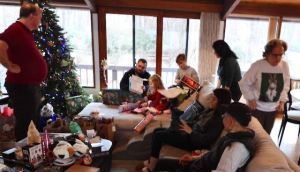
As described in last month’s entry, we had family from Georgia, from New York, and from across Virginia visiting for Thanksgiving. For Christmas, our get-togethers were of the local family members, but were no less festive, focusing on outstanding food (including the dishes described in the Holiday Kitchen section above), catching up on what everyone has been doing, and the exchange of presents.

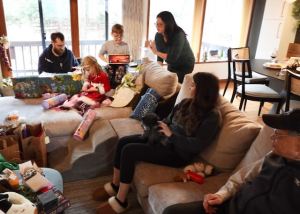
Needless to say, many of the gifts were for the youngest members of the crew, who made the most of the occasion by spreading wrapping paper through the house and starting to get into the toys, books, and games. Again, three generations of revelers took part, including one precocious pup, who popped up in surprising places! For those who couldn’t be there in person, they were still with us through their cards, calls, and FaceTime.

********************************************************************************

Climate Log: Good News for FEMA, but a Dilemma for the Incoming Regime

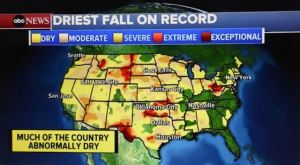
ABC News : “Driest Fall on Record,” Oct. 24, 2024

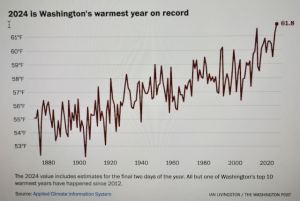
Warmest Year on Record in the DC region (National Weather Service) (Washington Post, Dec. 30): but Republicans still won’t acknowledge climate change or global warming, though they will appropriate hundred of billions for disasters

Just before Christmas, the Republican-controlled House of Representatives passed a bill that I never thought we’d see: $110 billion (yes, billion) that “Provides much-needed relief to Americans struggling to recover from natural disasters” (https://appropriations.house.gov/news/press-releases/house-passes-critical-disaster-relief-americans). The terms “climate change” and “global warming” are never used in this massive relief bill, because Republicans are way too intimidated by their leaders and by the fossil-fuel cartel to admit these obvious truths. Nevertheless, the bill is the first of more and more that will be needed to address the effects (not the real causes, of course) of what the bill erroneously calls “natural disasters.”

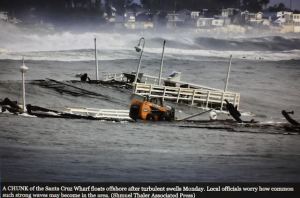
Warming oceans, more intense storms, and coastal sea level rise combine to make unprecedented coastal damage more frequent, as this week in Santa Cruz, CA, as reported by Grace Toohey in the LA Times, December 28

Particularly noteworthy is that the two largest items in the bill are

  • $31 billion for “disaster and economic assistance to agriculture producers” and
  • $29 billion for “FEMA’s response, recovery, and mitigation activities related to Presidentially declared major disasters, including Hurricanes Milton and Helene.”

These open-ended statements leave ample room for further appropriations to address future disasters caused by extreme heat, drought, extreme storms, wildfires, sea level rise, etc. That the two main emphases here are “agricultural producers” and “major disasters” reveals Congress’s tacit, but unspoken, understanding that climate change will continue to devastate farmland, and will continue to produce hurricanes of unprecedented size, spread, and sudden emergence, like October’s Helene and Milton, which suddenly developed in the Gulf of Mexico very late in the hurricane season.

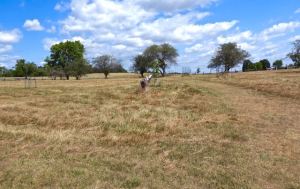
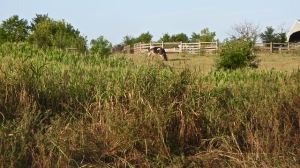
Burned out farm field we visited, New Market, VA, Aug. 2, in the midst of the 2-year drought in the Shenandoah Valley

Trump’s Response?

It is further noteworthy that the once-and-about-to-be President, Donald Trump, tried to force Congress to scuttle this bill, even at the cost of shutting down the government. Why would he do such a thing? Does he want to be known as a President who won’t provide disaster relief (as he failed to do in his first term in his callous lack of response in 2017 to Hurricane Maria in Puerto Rico)? Does he not want to meet the needs of the farmers in states like Texas, Oklahoma, and West Virginia, who are suffering massive crop losses because of extreme heat and drought? Farmers in these states and others overwhelmingly supported him in his run to the Presidency, because he promised to help long-suffering rural America, and they believed him. But, his promises aside, he might be more concerned that passing such a bill will draw attention to the vast scope of a problem that he’s always claiming doesn’t exist, but which will continue to dog him throughout his final term and just get more painful, tragic, and costly to Americans.

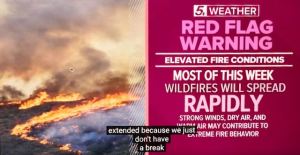
Close-captioned TV weather forecast from CBS-affiliate in Central Texas, summer 2023 (clip from YouTube video)

Fortunately, enough of the Republican House members, aided by the votes of almost all Democrats, defied Trump’s effort to kill the aid, and so the money will flow, because the Senate and still-president Biden moved it forward immediately.  As the majority of the House realized, something bold had to be done, and even the President-to-be, despite his fearful wishes, had to give in. Remember, House members will be up for re-election in just 2 years, so they know, unlike their leader, that they can’t afford to ignore the needs of their constituents now.

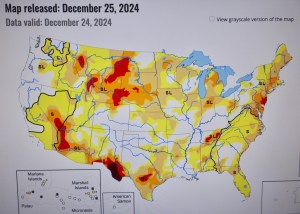
But passing such an open-ended bill leaves President-elect Trump and all his fellow climate-change deniers in a dangerous spot.  Hundreds of billions in relief can pretty quickly turn into trillions, as the climate sins of the fossil-fuelers exact more and more sacrifices and pain. As lack of farm production destroys farms and ranches, and causes prices to rise for all of us, and as more and more of the country becomes harder to live in, people will blame the party in power, as they always do. At some point the people will demand answers as to why those leaders failed to admit that the hurricanes, warming oceans, wildfires, and burned-out fields could have been–and future ones still could be–avoided.

US Drought Monitor, Christmas Day 2024 (https://droughtmonitor.unl.edu/CurrentMap.aspx)

***********************************************************************

The December 2024 Photo/Video Gallery

All photos and videos this month come from in and around our lake, all celebrating the increased precipitation and the return of some of our citizens, plus visits by a few welcome guests.

Our year-round residents: Song Sparrow munches grass in the field west of our lake, cold morning, December 23

Savannah Sparrow sips from the rainy north shore of our lake in the rain, Dec. 9

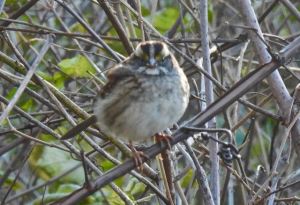
White-throated Sparrow poses for the camera, southeast cove, December 6

Male Cardinal munches seeds in an east bank tree, amid flurries, morning, December 20

Panorama toward downtown, partly frozen lake, early morning, December 23

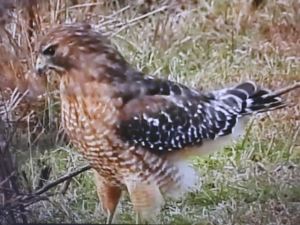
Rare sighting of Red-shouldered Hawk not in a tree, but on the ground, eyeing bird in the brush, north end path, cold morning, December 19

Pair of Red-shouldered Hawks in Tulip Tree and Virginia Pine, southeast side woods, December 19

Sleet-covered inlet stream under bridge, early morning, Christmas Eve

Our fountain in the frozen lake, view toward downtown, December 23

Our resident flock of Rock Doves takes off from north shore, December 23

European Starling, brightly lit by the sunrise, scans from the dead Oak, east bank, December 23

Carolina Wren alights on a branch above me, calls friends, and feels the flurries on a snowy morning, December 20

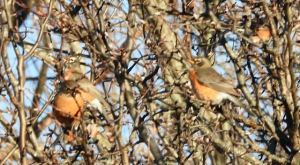
Robins in late December! Wow! These cavort in a sugarberry tree in the north end woods, December 23

This Robin calls in the Sugarberry that same cold morning, December 23

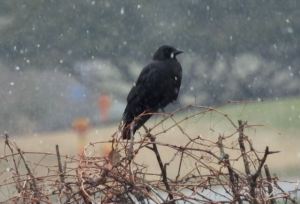
American Crow, amid flurries, perches atop a Bradford Pear and Blackberry canes below the north end dam, December 20

Four Canada Geese swim mid-lake in the December 20 morning snowshower

Tufted Titmouse perches along the southeast path on a cloudy December 1

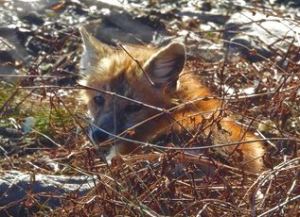
Red Fox, not often seen, watches me from the brush beside the north shore rocks, December 8

Mallard pair along the northeast shore in the rain, December 9

Rare visitor, male Hooded Merganser, swims in mid-lake, cold, windy December 6

Three Hooded Mergansers, 2 female and young male, along the east lake bank late afternoon, December 6

The Red Fox, ill with mange, explores the north shore rocks, then drinks from the lake, December 8

Blue Heron flies from north shore to west bank and through community, December 17

And so, weakened as we are, may we take wing and fly into 2025 in hope of a more just and thoughtful world.

November 2024: In a Sad Month, So Much To Be Thankful For

Mockingbird on dry Pokeberry bush, north shore of lake, Nov. 17

In this month’s entry:

Thanksgiving Gifts from Our Family
Wildlife Around Our Lake Disappear in the Ongoing Drought
Election Gives Narrow, But Still Decisive Win to Climate Change Deniers
Keeping Up the Good Fight: Visiting the Virginia State Arboretum
The November 2024 Photo Gallery: Pretty Landscapes, Growing Silence

At nearby Lake Newport, we walk on crispy, fallen leaves amid skyscraping trees and brilliant autumn colors.

Thanksgiving Gifts from Our Family

How fortunate and thankful we are to be able to share our joys with family who have come to join us from New York, Virginia, and Georgia. Our Thanksgiving embraces a week of holiday outings, imaginative meals, and raucous, witty (of course!) conversations among three generations from age 4 to 80. Even those family members we can’t be with in person, we will be with via phone, text, and FaceTime.

What did we do to be so blessed? And, wouldn’t you know it, we’ve even gotten an inch of rain this week to begin, we hope, to make a dent in the drought.

************************************************************************

Green algae thick in the inlet stream into our lake, Nov. 18, as significant rain has not fallen since September

Ongoing Drought and the Fast Spread of Bird Flu: Birds Disappear Here, While Wildfires Plague the Northeast

Exactly one year ago (see November 2023 entry), this blog celebrated in story, video, and photos a profusion of wildlife around our small lake. The stars of the entry were several pairs of amorous mallards happily building their relationships, while the videos featured a varied soundtrack of the many songbirds and waterfowl calling to their fellows in an often rainy setting.

The only ducks we’ve seen in our lake since the spring are these four Buffleheads, who visited last week for one day, and then flew off. Even our frequent cormorants have not visited. Only our resident flock of Canada geese visit this water, and even their visits have declined.

Oh, what a difference a year makes! The drought brought on by record high average temperatures across the country (and much of the entire world) this year has been intensifying in our multi-state region since early in 2024. The drought has continued through this November (October was completely rainless), and this November is the hottest on record in our area (as reported in the Washington Post, Dec. 3). Last month’s entry focused on how quickly the lakeshore’s plants were drying out and leaves were beginning to fall. The music of the birds had almost ceased as birds migrated toward wherever they might find fresh water.

The Next Pandemic? Perhaps Bird Flu.  A secondary cause of the bird decline is the H5N1 bird flu, which has spread rapidly across the country, causing the decimation of many millions of chickens in commercial flocks, and now also infecting some 685 cattle herds in 15 states, as reported in the Los Angeles Times (“Business as Usual Despite H5N1,” Nov. 30) and in National Geographic (Fred Guteri, Dec. 18). Unfortunately, like the widespread drought, scant attention is being paid to the spread of this disease in our environmentally-oblivious U.S. of 2024.

Photo: NatGeo/Reuters

No one wants to hear this, because there is clearly no appetite in this country for even thinking about  precautions for a new health crisis. But, as Zeynep Tufekci writes in the Dec. 9 New York Times, more and more human cases of H5N1 are arising, and the time is now to take the threat seriously (“A Bird Flu Pandemic Would Be One of the Most Foreseeable Catastrophes in History”). In 2019, there were health experts in the first Trump administration who could push back strongly on the President’s fantasies about COVID-19 (remember the bleach cure and hydroxychloroquine?). But now he has surrounded himself with vaccine deniers like Robert F.Kennedy, Jr., and there will be no medical leaders like Anthony Fauci, Deborah Birx, and Francis Collins to mobilize an effective national/international response, so wishful thinking, studied ignorance, and quack remedies will abound, more like the Middle Ages than the 21st century.

At nearby Lake Newport, the bone-dry inlet stream from surrounding hills and neighborhoods, as the drought goes on, Nov. 20

Wildfires in New York, New Jersey, and Massachusetts

5000-acre Jennings Creek Fire on New York-New Jersey border (USA Today photo, Nov. 18)

Last month’s blog also displayed the map of the U.S. (created by Drought Monitor), which showed almost the entire nation (except for hurricane-pounded Florida and western North Carolina) in a moderate to severe drought. Wildfires were in lethal bloom in many Western states. Weather Service maps showed “red flag warnings” across much of the central and eastern states, including New York State and even New England.

Well, sure enough, in November as many as 500 fires of various sizes have transformed the usually wet and cooling Northeast states into a California-like wildfire season–experiencing such change for the first time in memory. The largest of these blazes so far has been the Jennings Creek fire (shown above): 5000 acres and growing along the New York-New Jersey border, with smoke from all these fires fouling the air in East Coast cities. Meanwhile, in many other states, such as Oklahoma and Texas, drought has caused the massive loss of crops, which this blog catalogued in August as having occurred here in Virginia’s usually lush Shenandoah Valley. Neighboring West Virginia’s governor–a staunch climate-change denier–declared a statewide drought emergency across its 55 counties:

***************************************************************************

Election Gives Narrow, But Still Decisive Win to Climate Change Deniers

To make matters even worse, this November’s closely-contested elections gave a thin, but nevertheless sufficient victory to former President Donald Trump and to just enough climate-change denying Republican candidates to give that party razor-thin majority control in the Senate and the House of Representatives. Trump, who is a strident spokesperson for the fossil-fuel cartel, made “Drill, baby drill!” for gas and oil one of the emphatic slogans of his campaign.

As if that weren’t destructive enough, the rival candidate, Democrat Kamala Harris, never during the campaign spoke out in favor of renewable energy sources, and indeed promised voters in the closely-contested state of Pennsylvania that she supported the destructive, water-wasting practice of hydraulic fracturing (“fracking”) for natural gas, which has become in recent years a favored process of gas extraction in that state and many others. Why she and her party turned their backs on climate is not clear, but surely indicates that they did not trust voters to understand the dangers and their importance. This is puzzling, because, as this blog detailed in July, polls show that a healthy majority of Americans see climate change as a solvable major problem. But at this point, possible solutions don’t even get on the ballot.

So, with no candidates in either party having the courage to speak the truth about climate destruction, the results were inevitable. As the world and our nation become steadily hotter, more polluted, drier, less fertile, and with more extreme storms, we humans are getting what none of us want, but what too many of us prefer to ignore, or deny, or feel powerless to prevent.  Too bad that our fellow creatures don’t have a say about our actions, but just suffer–and disappear–through our cowardice.

***********************************************************

Panorama of the Virginia State Arboretum: Cedar of Lebanon foreground, and Bald Cypress grove and famous yellow Ginkgo grove in distance, Nov. 8

Fighting the Good Fight: Visiting the Virginia State Arboretum

The magnificent Dawn Redwood, native to China, 80 feet tall, part of the international display at the Arboretum, Nov. 8

We had read about the Virginia State Arboretum, part of the Blandy Experimental Farm operated by the University of Virginia. We finally visited on November 8, a warm, sunny day just perfect for walking and viewing. Located 80 miles west of us, north of Shenandoah National Park, and just beyond the Shenandoah River near the village of Boyce, the Arboretum is an out-of-the-way miracle that is one of Virginia’s best kept secrets. With trees from around the world and across the U.S., as well as representative trees from throughout the state, the Arboretum’s several miles of trails offer stunning sights, good exercise, and a pleasant education in arboreal beauty.

Visitors to the Arboretum walk the Alley of Cedars of Lebanon toward the Ginkgo Grove, Nov. 8

Our visit came during the Arboretum’s Ginkgo Festival, so about a hundred visitors of all ages had come especially to see the famous grove of Asian Ginkgos (pictured above). Our leisurely two-hour visit also included a walk along the Cedars of Lebanon Alley,  a stroll among the many labelled and fragrant plants in the garden of herbs from around the world, and a talk with one of the helpful members of the staff–who answered our questions about the effects of the drought on the trees. She told us that often drought effects on trees are not seen until two years or so into the event, because of the trees’ resilience and stores of nutrients. However, she said, one evident effect already had been the drying up of the ponds and lakes on the property, as well as the decline in the bird population. Nevertheless, the broad lawns were still remarkably green and the trees glowed with fall colors, so the sights were lush and I even was able to get one bird photo, of the Brown Thrasher (below).

Brown Thrasher silhouetted in a berry-covered Buckthorn tree between the Cedars of Lebanon Alley and the Ginkgo Grove, Nov. 8

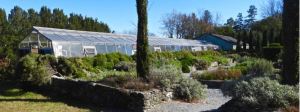
Greenhouse and outdoor international herb garden, State Arboretum of Virginia, Nov. 8. Ah, the fragrances!

 *************************************************************************

Sunrise panorama toward colorful north end woods, with west side dock in middle distance, Nov. 15

November 2024 Photo Gallery: Finding Beauty in the Drought

This month’s Gallery features scenic photos from around our little Lake Cameron, from nearby Lake Newport, and from other local sites. The birds are much fewer in number, so the music of their calls has all but disappeared, though the number of species is still considerable, as the photos here demonstrate.  Happily, some still make their presence known visually, and we highlight them here. We give them thanks for sharing their delicate beauty.

Eighteen Canada Geese adorn our lake before the north end, Nov, 23. They’re visiting frequently now, but no longer daily.


White-throated Sparrow, first sighting here of this species after two years of listening to the call, north end path, morning after rain, Nov. 28


Inlet stream to our lake, water clear after night of rain and colder temps, Nov. 28


Flock of Rock Doves on stanchion west of lake, morning after rain, Nov. 28


Burning Bush and gazebo, west shore of our lake, with view toward downtown, morning after rain, Nov. 28


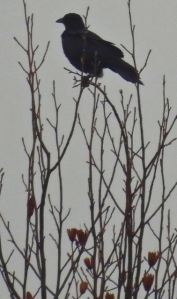
American Crow atop Tulip Tree, north end woods, Nov. 28


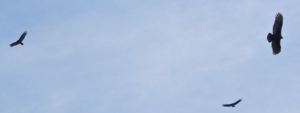
Three Turkey Vultures glide above the east bank of our lake, the most we’ve seen here at one time, Nov. 18


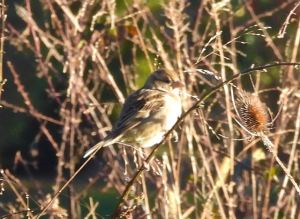
Chipping Sparrow in dried Cutleaf Teazel, at the northeast corner of our lake, on a warm, dry morning, Nov. 8


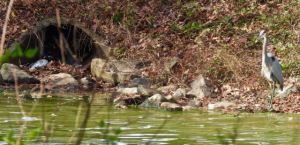
Great Blue Heron, our regular visitor, beside the inlet culvert on the southwest shore, warm Nov. 18


At nearby Lake Newport, homes and fall colors are reflected as we look from the dam on a cold morning, Nov. 20


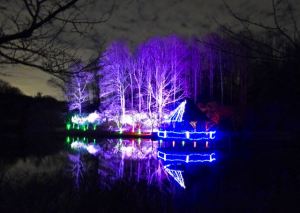
Meadowlark Botanical Gardens, holiday light show, trees and gazebo illuminated across lake, Nov. 25


Male Cardinal, amid Asters, Boneset, and Blackberry Canes, northeast corner of our lake, Nov. 7

This male House Finch lands atop a Tulip Tree in the north end woods by our lake, on a cool morning, Nov. 18


Bluejay near feeder, east side, Nov. 8


A newly arrived Yellow Warbler perches in the Willow Oak on the east bank of our lake, Nov. 8


Carolina Wren on branch, southeast shore of our lake, windy morning, Nov. 11


Just after sunrise on a cold Nov. 24, Cherry Laurel, red Oakleaf Hydrangea, and the northern panorama of our lake


Panorama toward the south end of our lake and downtown, with contrails, early morning,Nov. 17


One of our Red-bellied Cooter Turtles, on log at the southeast shore, warm morning, Nov. 15

European Starling scans from atop the dead Oak on the east bank of our lake, on a cold dry morning, Nov. 23


Yellow Warbler feeds on dry Cutleaf Teazel in field west of our lake, Nov. 23


Song Sparrow, amid dry blackberry canes, northeast shore of our lake; warm, windy morning, Nov. 17


In our new garden plot in the public gardens in our town, tiny heads emerge in two of our cauliflower plants, warm morning, Nov. 24

A Grey Squirrel pauses on a branch near the west side path along our lake, on a cold morning, Nov. 24

 Mist rising at sunrise, beside the north end outlet stream below dam, Nov. 17


Fall colors, including Scarlet Oak along the west side path, warm morning, Nov. 18

Here’s to a happy, fruitful December, which is bound to be interesting!

July 2024: Feeling the Heat

If you’re new to this blog, start with the About page, then come to Home. Otherwise, you may feel a bit lost.

Great Blue Heron soars over the lake toward the south end just after sunrise, July 15

In the blog this month:

Feeling and Dealing with the Heat
Someone Loves It: Pollinators Galore in the Humid Heat
Did Someone Say “Drought”? In Virginia?
Climate Log: The Truth That Dares Not Speak Its Name
July 2024 Photo/Video Gallery

Yellow Tiger Swallowtail, Bumblebees, and Honeybees Swarm in Cutleaf Teazel and Porcelain Berry in the north end below the dam on a hot afternoon, July 23

Feeling and Dealing with the Heat

“The less you use it, the easier it is to live without it.” (Stan Cox, author of Losing Our Cool: Uncomfortable Truths about Our Air-Conditioned World)

In early July, the extreme heat that has smothered the U.S. hit Northern Virginia with a vengeance, as air temps for most of a week exceeded 100–and the heat index (the combo of heat and humidity) reached 110–before the air temp simmered back to the high 80s/low 90s. From mid-month on, clouds, bits of rain, and the forecast of more rain have tantalized us with a promise of normal summer weather in this part of the country.

Still, what separates this summer from 2022 and 2023 so far has been the humidity, the overall heaviness of the water-vapor-loaded air, which makes breathing slightly more difficult and sweating more intense. Fatigue hits us more quickly.

Those of us who can luckily spend most of our time indoors in chemically-cooled air can combat these effects. But most people in the world, including millions in this country, are not so fortunate. And even those of us with the luxury of cooled air pay the environmental price of further pollution of the air by the very machines we use to cool the air. In addition, all that hot air spewed outside by the air con just makes the outside hotter! So there’s really no escaping the costs of extreme heat brought on by our fossil-fuel addiction. Not to mention the big hit our utility bills take by all that air con!

With all that negativity in mind, even the fortunate can take a few simple steps to minimize their reliance on chemical/mechanical cooling; and you’ll save $$$, too!

  • Learn to live with higher temps than you’d prefer: when it’s 100 outside, set your air conditioner at 80 or higher (I set mine at 78, but by following the suggestions below, the aircon rarely comes on)
  • Keep shades or blinds closed to keep out sunlight–live with a little bit of darkness
  • Strip down to your preferred level of modesty
  • When coming in out of the muggy heat, wipe face and neck (and any other area you feel needs it) with a wet washcloth
  • Stay hydrated–keep drinking water handy
  • Avoid using heat-producing machinery to the extent possible in the kitchen or workroom

Anything you can do to stay cooler without the air-conditioning running is a plus for everyone.

**********************************************

Butterflies, Moths, Bees, and Dragonflies–Pollinators Galore in the Humid Heat

Silver-Spotted Skipper Butterfly feeds on the ubiquitous Cutleaf Teazel by the outlet stream below the dam, hot afternoon, July 23

Taking a daily stroll around the lake this month in the humid air may not be the most pleasant experience, especially from 11 AM on, when the air is at its hottest. But if you do, you’ll be treated to a festival of pollinators gorging on the lush July wildflowers, from Queen Anne’s Lace and Swamp Milkweed to Cutleaf Teazel, Porcelain Berry, and Purple Thistle–and even the last remaining Allegheny Blackberries. In my two summers here so far, I’ve not seen such profusion of Butterfly, Moth, and Dragonfly species, as well as the numbers of Bumblebees, Honeybees, and smaller bees flitting from flower to flower.

The difference is the level of heat and humidity. What makes life uncomfortable for us fragile humans seems to bring out the best in the small pollinators, at least to this point in the month. So I’ll enjoy the photographic cornucopia while I can, and keep track over the coming weeks. Here are some of the results, with more in this month’s Photo/Video Gallery later in the entry.

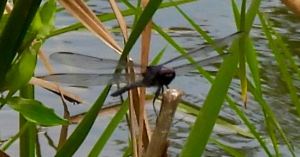
Black Dragonfly amid Cattails and Reeds by the outlet stream below the dam, July 23

Orange Sulphur Butterfly, with Bees, and Beetles, on Cutleaf Teazel on a breezy July 13

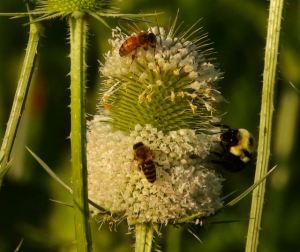
Bumblebee and two Honeybees feed on Cutleaf Teazel at the northwest corner of the lake, at sunrise, July 15

Closeup of a Common Buckeye Moth on the path below the north end dam, July 23

Pipevine Swallowtail–first sighting–feeding on Cutleaf Teazel on the northwest corner of the lake, on a hot afternoon, July 23

Three Bumblebees feast on Swamp Milkweed, east bank of the lake, July 23

If you are interested in identifying Butterfly and Moth species, may I suggest the website Butterflies and Moths of North America.

If you are interested in identification of insects of all kinds, go to insectidentification. org.

If you want to get kids involved in the looking and enjoying, try the Children’s Butterfly Site, with quizzes and games to add to the fun.

***********************************************

“Drought,” Did Someone Say? In Northern Virginia?

Severe (orange) and extreme (red) drought conditions in Virginia, July 23 (source: Fairfax County Government)

Update, July 31: According to the Washington Post  (July 30), the Washington-area Council of Governments has issued a “drought watch” to the region, and has urged residents to “voluntarily” conserve water by such actions as taking 5-minute showers, turning off water while brushing teeth, and only using dishwashers for full loads. At the same time, they are assuring residents that the area reservoirs are full and the region is well-prepared for drought. Commenters to the article disagree with this rosy assessment.

July 28: Since moving here from California two years ago, I’ve occasionally written in this blog about how shocked, but not surprised, I’ve been by how ignorant and complacent this region is about water or the lack of it. Whereas Californians obsess about water, because they have always been forced by drought to be aware of every drop, what happens to it, and how to conserve, Northern Virginians take water for granted. In California, most people know whether local water comes from the aquifer, from a far-away reservoir, or from annual river runoff from the Sierra snowpack. Here, it’s just assumed that rain will provide–and in the past it did. But no longer.

Water-hungry toilets, multi-acre-sized carpets of pollinator-empty grass, and thirsty beds of annual flowers are everywhere in the DC suburbs and exurbs. Mowers are out weekly to make sure that lawns look like artificial turf–rather than like actual plantings, which if allowed to grow would have roots that can reach the water table. Local governments never ask residents to conserve water. (Note: See the July 31 update, above.)

Last year’s drought conditions in Central Virginia (see the map above) and even a few brief wildfires near us in August drew hardly a mention here. Equally critical, the lack of snowfall in the disappearing winter (see my January 2024 entry) is only considered significant because of lack of a nostalgic White Christmas, not because it portends trouble to come. Indeed, most Northern Virginians are happy not to have the snow, because it just clogs traffic–everyone’s number one preoccupation. (I’m trying not to be too cynical!)

A rare rain shower wets the burned-out blackberry canes along the north end of the lake, July 11

Finally, the Washington Post published an article by Ian Livingston on July 11 that proclaimed the “severe drought” plaguing the DC region. It noted the 4.5 inch deficit in average rainfall, and showed a picture of browned-out grass in one neighborhood. But the overall message was that a few nice rainstorms and maybe even a helpful hurricane would come by to bring us all back to our usual contentment.

Typical rain-dependent, regularly mowed “lawn” space in suburban Northern Virginia, not hospitable to pollinators, July 26

However, one of the many commenters to the bland article emotionally described an actual consequence of what the “severe drought” is doing to the region:

I live in the Valley and let me tell you it is really bad. I realize that many sit inside in A/C and never even think about what is happening. The farmers are selling their cows because they cannot feed them. Normally the fields are lush and green now with plenty of grass. There is no hay. We normally get three crops of hay. There was one very small crop this year. So there is no hay to feed animals this winter. Even if we got a lot of rain now, there will be no more hay. I don’t know what the farmers will do. The trees are dying. Wells are running dry.

We had a similar scenario last year but the drought started last year in late August so at least there was a decent hay crop.

If this is the new normal and I am starting to think that it is, then it will be impossible to raise cows for beef and for milk at least here in VA. Prices are going to go way up in any event (please don’t blame this on Biden, he cannot control the weather).

And I have never seen it so hot for so long. Weeks on end of mid 80’s to upper 90’s temperatures. And I fear now for forest fires. One lightning strike is all it will take.

Note, however, that this impassioned commenter “lives in the Valley” (presumably the Shenandoah Valley 90 miles west of here), so it’s unlikely that the average DC area urbanite/suburbanite will pay any attention to “hay” and “cows,” when they have much more pressing concerns–like this morning’s (or any days’) traffic on the beltway (“I know! Isn’t it a nightmare?!”)

Update, August 3: Photos from the Drought-Stricken Shenandoah Valley

To see for ourselves what commentators to the Post articles were writing about the extreme drought conditions in Western Central Virginia, we spent August 2 and 3 in the Shenandoah Valley. Once we crossed the Blue Ridge Mountains and drove down into the Valley in the high 90s heat, the fields were much browner than east of the mountains, and corn fields were stunted and sometimes bare. The South Fork of the Shenandoah River was very low, though the river still flowed. The forecast on the 2nd was for thunderstorms, but, as usual, storm clouds did appear, but no more than a few drops fell.

Dried out field, stunted corn crop, at farm in Shenandoah, VA, August 3

Burned out farm field, New Market, VA, Aug. 2

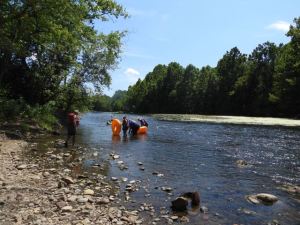
Families are still out tubing on the shallow, much-narrowed South Fork of the Shenandoah River, Elkton, VA, August 2

*************************************************

Climate Log: The Truth That Dares Not Speak Its Name

What now looks like desert was not long ago a thriving pasture in Leonforte, Sicily (photo by Gianni Cipriano, June 24). See Postcards from “A World on Fire” for more such examples of drought around the world.

In the intense political atmosphere of this critical election year, I am again dismayed, but not surprised, by the lack of any mention of climate change by U.S. candidates, particularly in relation to the daily, dramatic heat extremes of this most unique of summers. This last week of July is feeling Earth’s hottest day on record in 88 years of recording–or really a succession of hottest days ever–not to mention report after report of heat-related deaths, crop burnout, and devastating effects of drought. The Washington Post article by Sarah Kaplan, July 23, reviews the research and statistics from the European Union’s Copernicus Project. The  shocking photo from Sicily (above) is just one of many examples of climate degradation around the world in just the most recent year, and far from the most terrible in terms of human cost in lives and livelihoods.

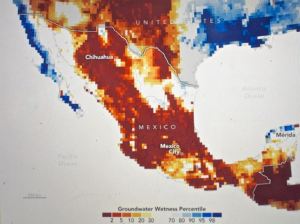
Here in the U.S., research by the National Oceanographic and Atmospheric Administration (NOAA) reveals the intensity and spread of one climate change consequence–extreme drought–as illustrated by this map of Texas south through Mexico to Guatemala (June 2024), as part of its Global Drought Narrative for the current year:

But for one of our two U.S. political parties, climate-change denial is perhaps its most important commandment. Why? Because the Party is deeply committed to the fossil-fuel cartel. The Party’s Presidential nominee openly promised the cartel special favors in exchange for a one-billion dollar donation to his campaign.

Even though a solid majority of Americans continue to say to pollsters that climate change is an important issue that needs to be addressed (78%), the cartel and its supporting politicians have so far managed to convince many Americans that climate change may not be primarily human-caused (46% of respondents to the polls sponsored by the EPIC project at the University of Chicago). This viewpoint translates into a clear majority of respondents to the same polls who would not be willing to pay even 1 dollar more in taxes to reduce fossil fuel emissions! However, if, as the pollsters asked, corporations could be induced to pay for the transformation of the energy system to renewable energy, the popular opinion becomes strongly positive (65%). 

So most Americans do think that something needs to be done to combat climate change–as long as someone else pays for it.

As might be expected, people who align themselves Republican (the party of denial) are way more skeptical of the need to address climate change. But even many of them (42%) would support regulations to limit emissions from power plants and vehicles. Support by Democrats (the party for positive action on climate change) is, understandably, higher, with 78% favoring regulation of emissions.

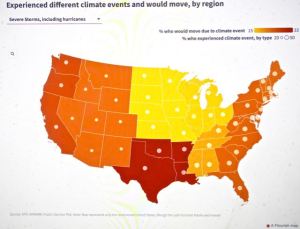
What about people who have suffered first-hand from extreme effects? The brightest number in the EPIC stats for those favoring action comes from respondents–across party lines–who say that they had suffered the extreme effects of climate change in their own lives. 68% of these sufferers consider it an important issue in this election year, and 53% want the newly-elected President to take action. Even more telling is that up to 22% of sufferers in four states who are among the most affected (Texas, Louisiana, Oklahoma, and Arkansas) would consider moving out of those states–becoming migrants themselves–if conditions don’t improve (see map below).

Percentages of those already affected by extreme heat and storms willing to move (EPIC Project, U. of Chicago, 2024)

Since the extreme effects of heat, drought, floods, sea level rise, etc., will only intensify, the deteriorating climate itself promises to keep moving the public-opinion dial toward government action and corporate change. But how many more tragedies must occur in the meantime?

For the present, even the Democrats, nervously looking at the ambiguous numbers, are afraid to come out too strongly for positive action on climate change. Listen to and read their speeches, their policy statements, their incessant funding pleas. Do they even mention how people and places are suffering from a changing climate? Or will the extreme effects of heat, drought, floods, wildfires, and eroding shorelines remain a terrible truth that dares not speak its name? How many more places across the world, including the U.S., must become virtually unlivable before politicians have the courage to speak out with bold plans to save lives, livelihoods, and our fellow creatures?

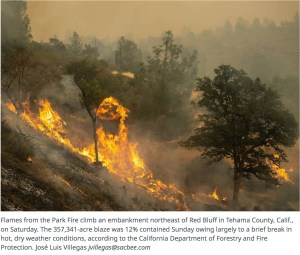
Park Fire, now the 6th largest in California history. Sacramento Bee article by Rosalio Ahumada, July 29

***********************************

The July 2024 Photo/Video Gallery

This month’s gallery features more scenes of the variety of pollinators (birds, butterflies, bees, dragonflies) around the lake, including species not seen here before, as well as the flowering plants with which they collaborate. That our fragile little ecosystem remains so wildlife friendly is a tribute to all, including humans, who care for it by not polluting, by letting plants grow, and by not scaring the wildlife away.

Red-winged Blackbird male perches on a Persimmon Tree at the northwest corner on a hot afternoon, July 21

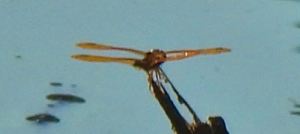
Orange Skimmer dragonfly rests on a branch on the southwest shore, July 31

Green Heron listens to Cicadas on a branch under the bridge on the southeast cove on a humid afternoon, July 23

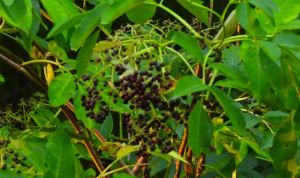
Ripe Elderberries along the path by the southeast bridge, July 15

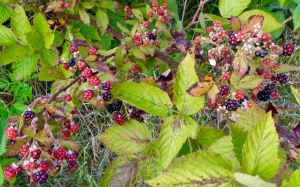
Some of the last Allegheny Blackberries at the north end, before the canes burned out in the heat, July 5. We harvested some for snacks and baking, but left almost all for the birds!

Silver Spotted Skipper Butterfly–a first sighting here–amid Cutleaf Teazel below the dam, hot July 23

Red-winged Blackbird female in Porcelain Berry at the north end below the dam on July 23

Chipmunk eyes me from the grass beside the southeast cove bridge on the hot, humid July 23

Our ubiquitous Red-bellied Cooters don’t like coming above water on really hot days, but this one showed up on the log in the southeast cove in the heat of the afternoon, July 23

Another July regular, Pokeberry, appears in graceful glory on the north end shore, July 4

I surprise an unfazed Mockingbird on the north end path, on a drizzly morning, July 22

Cottontails are plentiful this July, like this one, munching calmly on the grass beside the northwest path on a hot afternoon, July 23

Tiny Summer Azure Butterfly on Porcelain Berry leaf below the north end dam in heavy rain, July 11

Two Goldfinches amid Purple Thistle on a drizzly morning in the northwest corner, July 22

Blue Widow Skimmer Dragonfly on Porcelain Berry below the north end just after sunrise, July 7

Brown Thrasher, first sighting here, in Bradford Pear by the northeast corner path, July 23

Sachem and Fritillary Butterflies feed on a Cutleaf Teazel bloom in the northwest corner, July 13

As the abnormally high heat and humidity continue, we hope the resilience of our pollinators and of our human Virginia neighbors continue to set an example for all of us. On to August!

May 2024: The Bird We Heard, the Tree We See

Calls of Tufted Titmouse, Downy Woodpecker, American Robin, and Great Crested Flycatcher in panorama along the leafy greens of the west lakeshore in steady rain, May 18

Calls of Song and House Sparrows, European Starlings, Cardinals, and Fish Crows as we walk along the westside shore on a foggy morning, May 20

In this month’s entry:

Birdsongs in Deep Greens: Our Cool Early Summer
Chapter III: Glorious Central Virginia Trees
Climate Log: The Texas Storm-Bourne Plague, and Florida Bans “Climate Change” as Insurers Flee
The May 2024 Photo/Video Gallery: Cool Cookin’ This Month, in So Many Ways

A pair of Bumblebees feed in Blackberry Blossoms, southeast shore, on a sunny May 13

**********************************************

Birdsongs in Deep Greens: Our Cool Early Summer

Elderberry in full bloom along the southeast shore, foggy morning, May 20

May has become the first month of summer in our warmer Northern Virginia, with the springy blossoms of March and April having fallen and the marvelous leafy varieties of green now dominating the glorious landscape of our fragile, yet robust, lake community.  To be sure, new blooms keep appearing, as they will through summer, like the creamy elderberry (above) and the Arrowwood Viburnum near it on the southeast shoreline (below). But for those of us always on the look-out for birds, the luxurious green canopy means lots of hiding spots for the clever avians, whose melodious calls announce the sunrise each morning and tempt us to keep looking all day until the night.

Arrowwood Viburnum along the shore, May 9

Better off are we to immerse ourselves in the concert, and just be happy when a bird or two or three show themselves on a tree top or nearby branch, or swoop across the lake (below) so that we can try to grab a snap or video clip. The more I come to recognize their calls, the more I can visualize the birds in my imagination, without needing always to scrutinize the greenness for an actual sighting, not to mention suffering the exquisite torture of setting up a clear shot! I receive plenty of visual gifts as it is.

A favorite friend, Blue Heron, glides above the lake in the heavy rain of May 18.

We have yet to have a 90-degree day in this early summer, and most days have given us more clouds than sun. Rains, mostly gentle, have fed the trees, the wildflowers, and the animals. So much green energy, so many sparkling drops on the leaves, so much freshness in the cool air.

If you read the Climate Log below, you’ll understand why I feel that a month like our May here in Northern Virginia in 2024 is a moment to be celebrated, recorded, and cherished. We are very, very fortunate.

Three goldfinches flit within a young persimmon tree on a foggy May 6 at the north end of the lake

**********************************************

Chapter III: Remarkable Trees of Central Virginia

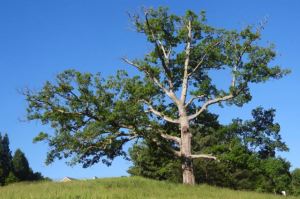
A majestic Willow Oak atop a hillside at the Boar’s Head Resort in Charlottesville, May 15

Chapter III of our tree-hunting adventure took us a hundred miles southwest to Charlottesville and environs, famous for Thomas Jefferson’s Monticello, the University of Virginia (which Jefferson designed in the 18-teens), excellent wineries, and breathtaking scenery in the foothills of the Blue Ridge Mountains. Three of the majestic trees from Remarkable Trees of Virginia were among our goals for the two-day trip. Not only did we find these long-lived, well-cared-for beauties, but we found once again that when we begin looking closely at tall, spreading trees, we stop taking their grandeur for granted, and really begin appreciating. In short, we found many more remarkable trees than we intended to.

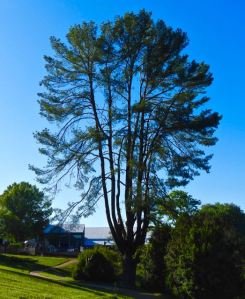
Graceful Eastern White Pine dances beside the lake at the Boar’s Head Resort, May 15.

The Grounds of the University of Virginia are home to many imposing trees, perhaps none moreso than one of the trees on our list: the largest Ginkgo we have ever seen, which stands beside the iconic, domed Rotunda that epitomizes Jefferson’s architecture.

Over a hundred feet tall and spreading 120 feet, the remarkable Ginkgo, resplendent in May greens, stands beside Jefferson’s Rotunda on the UVA Grounds, May 15


Perhaps most unique about the Ginkgo is its many-columned trunk, 12 feet in diameter, a stunning natural model for the Parthenon-like columns for which the Grounds are famous.

Fifteen miles west of the University and approaching the Blue Ridge resides an amazing collection of 30 carefully-tended Oaks at the Emmanuel Episcopal Churchyard near the town of Crozet. These trees are so remarkable for their height and health that we could not pick out the one that had been chosen for the book–which actually grows down the hill from the church parsonage and near the highway. All the more impressive for the setting is that the gravestones of the old and well-cared for cemetery are among most of the trees themselves.

The White Oak honored by the book, on the grounds of Emmanuel Episcopal Church, near Crozet, May 16


Magnificent White Oaks among the old, well-tended gravestones at Emmanuel Episcopal Church, near Crozet, May 16

The final of our three destination trees on this trip to Central Virginia has perhaps the most unique setting of all. While the other trees we sought are within groves of other majestic colleagues, this White Oak stands alone and so dominates the vista. That this tree has survived and thrives is testament to the extraordinary efforts of workers who made sure to preserve it in the midst of a construction site at the Charlottesville Municipal Airport in Earlysville, a site where many other trees had been taken down, and where this tree would have been a casualty also, save for the perseverance of those who appreciated its value and fought for it. Today it stands alone in a broad green field and draws the eyes of all who pass by.

Consider for a moment, if you will, all the broad lawns, fields, so called “developments,” and wastelands we pass by that used to be stands of equally magnificent trees, but which were all clear cut, with no monuments left.

We viewed this remarkable White Oak through a high chain-link fence that surrounds it from along a 200- hundred-yard perimeter just outside the Charlottesville Municipal Airport in Earlysville, May 16.

*********************************************************

The Climate Log for May:

The Texas Storm-Bourne Plague, and Insurance Rates in Florida Through the Roof

Across Houston, high rise windows were blown out by 120 MPH winds, May 16

The Texas Gulf Coast seems now to be suffering storm upon storm, the latest coming just last week, as hurricane-like winds of up to 125 MPH rocked skyscrapers and neighborhoods, while torrential rain caused even more flooding in this flood-prone region. As Gulf temps are setting heat records, the air above the Gulf becomes what meteorologists call “heat domes,” which in turn create conditions for the massive storms.

The north edge of a heat dome (in orange), along the Gulf Coast, produced the intensely violent storms that rocked the Houston region, May 16-17 (as reported in the Washington Post)

These heat domes are becoming more common as the Earth warms through fossil-fuel pollution, so storms of this magnitude are likely to increase, as high temps in the dome collide with cooler air from the north. Meanwhile, the same heat dome, as the map shows, has caused record high temps across Florida. More violent weather to come? The 2024 hurricane season has not yet even begun.

Temp chart for South Florida, May 19 (Miami Herald, weather.gov)

Mosquito Plague in the Wake of Record Texas Gulf Coast Storms

Another gift of the violent, soaking weather has been a plague of Mosquitoes, who thrive in the warming climate and germinate in the hundreds of pools of standing water throughout the area. Residents are saying that they’ve never seen anything like it:

“Before Linda Adams begins her morning walk with her dog, Tater Tot, she makes sure to douse herself in bug spray. ‘It has to be at least 40 percent DEET,’ Adams said. ‘It’s the only way I can get through the day.’” (Matt Keyser and Dino Grandoni, Washington Post, May 18)

Home Insurance in Florida? Good Luck with That!

President Biden visiting a Florida town, Live Oak, devastated by Hurricane Idalia in September 2023.

The Florida legislature last week passed a bill, signed by Governor Ron DeSantis, to ban the term “climate change”  from official documents. But banning two words does not make the reality disappear. Some 30 home insurance companies have already fled the state. Those companies that remain charge Floridians rates that are by far the highest in the country. The average rate by state is less than $2400 per year. Florida’s is almost $12,000. (Louisiana’s, also on the Gulf Coast, is over $6000.)

Pretending that climate change does not exist just makes everyone more vulnerable to its effects–and to its costs.

Oh, and by the way, here’s the latest from the Washington Post about another term, sea level rise, that DeSantis and friends don’t want to hear in connection to threats to Floridians from (shh!) climate change (there, I said it). This time the article concerns contamination of water by overflows from flooded septic tanks, not only in Florida, but also in other Gulf Coast and Atlantic Coast states, as far north as Maryland.

Miami neighborhood flooding during high tide (Washington Post, May 22, 2024)

**********************************************************

The May 2024 Photo/Video Gallery: Cool Cookin’ This Month, in So Many Ways

Two families of Canada Geese, including eight month-old goslings, enjoy feeding and resting in the southeast side picnic area, May 23

Two yellow swallowtails fly along northeast shore as jet roars overhead, hot muggy morning, May 8

Blue Heron flies toward camera from east bank to north end, foggy May 6

Colorful tulip on tree waves in breeze on the west bank, May 11

Baltimore Oriole, first sighting, calls in willow oak, east bank, foggy morning, May 6

Blue Jay in Oak at Emmanual Episcopal Church, near Crozet, VA, May 16


Chipmunk near 18th century Michie Tavern, Charlottesville, May 16


View from Michie Tavern toward Charlottesville and Blue Ridge, May 16


Sweet William Dianthus at Michie Tavern, Charlottesville, May 16


Jean’s Huevos rancheros divorciados (both red and green chilis on separate eggs), May 9


Jean’s Greek lamb potpourri, May 8


Family brunch celebration: Mother’s Day pistachio cake, May 12


Carolina Wren in dense fog, northeast shore of Lake Cameron, May 20

Room for another? Sixteen red-bellied cooters share log at the southeast shore, sunny PM, May 11

Chinese privet on the east bank, sunny May 21


Blue Heron looks down from atop dead oak on the east bank, foggy May 19

Female Cardinal in pine tree shakes off rain in the southeast cove, May 18

In the field below the north end dam, Eastern Kingbird carries nest material, sunny May 21

Female Purple Finch lights on the picnic area east of the lake, May 21


Newly blooming Northern Catalpa tree in the north end woods, May 21


Grey Squirrel scampers near watchful Goose chick on the southeast path, May 20

Mulberry and birdsong in rain along the southeast shore, May 18

Red-winged Blackbird parks beside me on No Parking sign at the south end, May 20

Red-winged Blackbird, on dead willow oak 200 yards away, calls, foggy May 20

On to June…but watch for updates with a week left in this aMayzing month!

February 2024: A Month of Valentines, and Hopes for More

A chalk Valentine adorns the gazebo on the west bank during a brief morning snowshower, Feb. 13

First sighting since August: Beaver swims from cove toward west bank and dives, Jan. 27. Watch videos by researcher Emily Fairfax about ways that beavers, whose populations are steadily declining because of human intervention, create wetlands that restrict wildfires and increase water supply.

In this month’s blog:

Valentine’s Weekend for Birders: The Great Backyard Bird Count
Climate Log: Saving the Rain Forest by Saving Stingless Bees
Climate Log 2: Oh Those California Rivers in the Sky
February 2024 Photo/Video Gallery: One More Beautiful Snow Day (and More Avian Moments)

Two Crows bathe in the northeast corner of the lake on the final day of the Great Backyard Bird Count, Feb. 19

Two snow-covered Geese and teazle plants in the northwest corner during a brief morning snowfall, Feb. 13

Happy Valentine’s Weekend! The Great Backyard Bird Count

The video of the beaver we sighted on Jan. 27 was a Valentine to us before February even began, because beaver sightings are so rare in our lake. But an equally beautiful gift for Valentine’s Day is the annual four-day weekend of birding searches known as the Great Backyard Bird Count. Each February, the National Audubon Society, the Cornell Lab of Ornithology, and Birds Canada/Oiseaux Canada sponsor this multinational birding extravaganza, when enthusiasts from more than 200 countries post their pics and sound files to the site of their choice. This year, more than 600,000 of us feathery fanatics (AKA citizen scientists) from 209 countries posted sightings of over 7800 species. I was out there each of the four days, February 16-19, contributing my pics. Here are a few:

Two Canada Geese exclaim, then preen along the southeast shore, Feb. 19

American Goldfinch on the southeast bank, Feb. 16

Great Blue Heron watches from the west bank on a sunny Feb. 18

Chipping Sparrow in blackberry canes at the northeast corner, Feb. 16

Male Cardinal in greenbrier berries, southeast bank, Feb. 16

European Starling in mid call from the east bank, Feb. 16

Pair of Red-shouldered Hawks in separate trees north of the dam. Feb. 19

Of course, I get gifts like these from my feathery friends every time I walk around the lake.  So February for me is a month of Valentines.

**************************************

Climate Log: Saving the Rain Forest by Saving Stingless Bees

Finding a hive of stingless bees in Peru’s Amazon rain forest (NY Times, Jan. 30; photo by Brenda Rivas Tacury)

The Amazon rainforest in Peru is home to many species of stingless bees, who produce a honey that has been used for generations by Indigenous peoples of the region, such as the Asháninka, as a natural medicine. These stingless species have thrived as pollinators of native plants, who have in turn thrived because of these plants.  But as deforestation and mass agriculture have overtaken more and more of the rainforest, and as pesticides used by farmers have threatened species including the stingless bees, both the native plants and the bees are in danger of disappearing.

An article in the New York Times by Katrina Miller and Rosa Chávez Yacila (Jan. 30) describes how Indigenous beekeepers are attempting to keep the species thriving by creating artificial hives out of range of the pesticides, and then by creating a commercial market for the distinctive beneficial honey. Their hope is that the success of the honey sales will incentivize more Indigenous beekeepers and spur more efforts to maintain large areas of undisturbed forest, so that both the bees and the forests in which they mutually thrive can continue their vital work.

Asháninka community members and Peruvian scientists examine stingless-bee honey in traditional container (New York Times, 1/30/24; Brenda Rivas Tacury photo)

Help for these efforts has come from word of mouth during the pandemic of the medicinal value of the honey, as well as from scientists such as Drs. César Delgado and Rosa Vásquez Espinoza, whose study in the journal Food and Humanity reported this honey’s  “anti-inflammatory, antimicrobial, and other health-promoting properties.” The popularity of the product is slowly growing, with half-liters now selling for upwards of $20.

Key to the success of the venture is the expertise of the beekeepers, whose knowledge and skill have come from generations of practice. So, if the economic endeavor succeeds, not only will the bees and the forest be saved, but so will a vital part of the culture of the people for whom the practice is central to their lives.

Melipona Eburnea soldier bee at the door of the hive (Photo by Luis Garcia Solsoi)

**************************************

Climate Log 2: Oh Those California Rivers in the Sky!

California’s second “water year” in a row of way above average precipitation has again filled the state’s reservoirs, brought deep snows into the Sierra–and this year caused massive flooding and landslides in the LA region as rain poured down on soil still soaked in many places from last year’s “atmospheric rivers” (or, as I like to call them, “rivers in the sky”).

Studio City street swarmed with landslide debris (LA Times photo by Carlin Stiehl, Feb. 6)

Last year at this time, one of the big stories was the re-emergence of historic Lake Tulare, which had covered for centuries parts of several counties in the Central Valley before farmers and ranchers in the late 1800s had made the lake disappear (as well as Indigenous communities reliant on the lake) by diverting its inflows for their own purposes. Last year’s rains were so intense that the lake had come back, but now was contaminated by farm and ranch runoff. The reborn lake now also endangered farm communities that had grown up in the intervening century.

One of the big stories from this season’s storms, besides the floods and landslides in LA County, has been their impact all the way across the Sierra in another historic California locale. As Louis Sahagún reported in the LA Times on Feb. 19, the rains have “been good for LA’s water supply, but have caused costly damage to the aqueduct and dust control systems in the Owens Valley.” These recent storms have just intensified damage that began last year. If you don’t know the Owens Valley, then you don’t know the iconic California story (as loosely depicted in the great movie Chinatown in 1974) of how the city of Los Angeles in 1913 secretly bought up land in the quiet farming valley east of the Sierra so it could divert by aqueduct the region’s water 230 miles south to the burgeoning metropolis.

The Owens Lake brinepool and runoff from the 2024 storms (LA Times photo by Brian van der Brug)

After the city had to pay compensation to Owens Valley residents decades after the city’s duplicity was discovered, it also had to create complex systems to monitor and control every year the toxic dust that resulted from the dry lakebed. Sahagún’s article states a cost of $2.5 billion so far (and counting) for this year-by-year environmental disaster mitigation. Now, the deluge of returning water has damaged both the aqueduct and the state-of-the art dust control systems, at a repair cost estimated to be $100 million, which will no doubt be passed on to LA’s 4 million water system ratepayers.

So, climate change is the gift that just keeps on giving. Scientists are predicting that these new cycles of more intense rainfall will alternate with years of ever-warmer drought, creating the need for drastically different, perhaps conflicting, types of infrastructure. (Think systems to capture precious water into deep-below-ground aquifers in the rainy years to prepare for droughts, but also systems to divert excess water away from already soaked land.) California is working on it, as always. And, as always, the rest of the nation will keep looking toward California, as more and more states, like my own Virginia, must adapt to the new normal.

Unless political will actually strengthens around the world to really confront and eliminate the causes of climate change, we Earth humans will have no choice but to pay the ever larger costs, in money, famine, and millions more refugees, that a more extremely erratic climate will bring to all creatures, including the human kind. Sorry, no Valentines.

Flood surge in Atwater Village, Los Angeles, Feb. 5 (photo by Dania Maxwell, LA Times)

*************************************

The February 2024 Photo/Video Gallery: One More Beautiful Snowy Morning (and More Avian Moments)

Meanwhile, we enjoy heartily the gifts we receive each day from the birds and other folks who make our fragile lake sanctuary one of their homes. Enjoy these Valentines with us.

Mallard pair in glorious full color on the log in the southeast cove, Feb. 16

Snowy morning, Feb. 17: Northwest corner path and trees of the north end woods

Male Cardinal on the snowy morning, southeast bank, Feb. 17

Snowy morning, Feb. 17: From the southeast cove along the west bank

Golden Female Cardinal in a red maple, east bank, Feb. 21

Carolina Wren in slippery elm along the east bank, Feb. 1

Mourning Dove in red maple, southeast bank, Feb. 17

American Goldfinch feeds and sings at feeder on the east side, Feb. 12

Red-shouldered Hawk in budding sycamore below the north end dam, Feb. 21

Double-crested Cormorant in mid lake, Feb. 16

On the snowy morning of Feb. 17, winds growl along the northwest path as storm clouds gather

Rare White Female Cardinal perches in the northeast corner, Feb. 21

Two Male and one Female Mallard in the southeast cove, Feb. 21

Goose flock ambles toward southeast lake shore, and one flies toward front, Feb. 16

Watch camera move to reveal a pair of Red-shouldered Hawks on the fence along the highway west of the lake, Feb. 16

Mating pair of House Sparrows in sumac branches, northeast woods, Feb. 19

Uncommon White Rock Dove on stanchion high above the lake, Feb. 18

Panorama toward south end from snowy reeds, on the morning of Feb. 17

Yellow-rumped Warbler sings a short song on the snowy morning on the southeast bank, Feb. 17

Female House Finch studies the inlet stream by the bridge, Feb. 27

Eastern Bluebird in aspen on the east side, Feb. 25

A rare White-crowned Sparrow on the southeast path by the inlet bridge, Feb. 15

Dramatic scene of Great Blue Heron confronting a Cormorant in mid lake, then flying to west shore, Feb. 6. We were amazed.

So many Valentines this February! On to March!

January 2024: Winter Actually Arrived! And Stayed for Ten Days

Our second snowfall of the week, a total of about 7 inches, Jan. 19. Our first real snow since our move from California in 2022.

Five Cedar Waxwings lit by sunrise in a red maple along the east side path, Jan. 17

In this month’s blog:

Beautiful Surprise: Snow to Start the New Year
Climate Log: As Bird Populations Plummet, How Can we Change Minds?
Potomac Valley Exploring: Great Falls Adventure
The January 2024 Photo/Video Gallery

Across the lake from the southeast cove to the dock and gazebo, during the latest snowfall, Jan. 19

“It’s so beautiful”–Snow comes to us in mid January

I didn’t realize how much I had missed snow until it arrived last week. In the almost 2 years since we returned from our 17-year sojourn in California, I thought I’d come to terms with the year-on-year lack of snow in Northern Virginia, a far cry from the sometimes deep snows of my youth and middle age in this Potomac region. But when the first wave of tiny crystals began sticking to the grass and pavement here on the 14th, I realized the old exhilaration of the icy wind and the soft prickle of ice on my face and hands. It was with glee that I donned my snug coat and hood, pulled the wooly hat over my ears and the gloves over my hands. I couldn’t wait to walk around the lake and witness the changes in light and color, the crackle of branches, the loud languages of intensity–“it has come!”–in the songbirds and waterfowl.

A male Cardinal amid greenbriar on the southeast bank of the lake confronts the blowing snow, Jan. 14

There of course had been the many years of my life when a forecast of snowfall had brought the fear of pipes bursting, power outages, traffic snarls during my incessant commutes to work, careening on black ice, hours of digging out from snowdrifts, my old car battery dying in the cold, and all the other hazards of carrying on what most Americans thought of as “normal” existence while Mother Nature was just being her cantankerous, always creative self.

But now, in my semi-retired old age, when driving is not a daily demand, I can glory in sharing a child’s joy in the white blanketing of gossamer fluff that makes the whole outside world different and new. Many of our neighbors shared this joy with me. When I met them this week on their own lake walks, most of these folks being walked by their dogs (!), they greeted me with “It’s so beautiful!” or at least with smiling eyes as they scanned the scenery.

First snowfall: bridge over the inlet stream, Jan. 16, 7 AM

I was even looking forward to the remembered exertion of cleaning the snow off my car, digging the stubborn ice-crust off the windshield, and taking tiny steps to avoid falling on the ice. The task was now a welcome challenge and a tasty bite of nostalgia, no longer a resented imposition on the carefully-timed daily work schedule that had governed most of my life.

Waterfowl Retreat and Songbird “Mega-Bird” Day. But most of all, as I looked out on how the white blanket changed the world of every day, I wondered how the snow and intense cold would change life for the animals I had come to know as my friends along the lake. Who and what would I see? Would what I was used to seeing now be hidden from me?

In new snow, a single waterfowl, a Cormorant, negotiates the lonely lake, Jan. 16

The Cormorant I videoed (above) on Jan. 16, after the first snowfall, was the last waterfowl I saw on the lake before it froze on the 17th, when temps fell to 11 degrees. The water was frozen solid in many places, but elsewhere it became a kind of hard slush that makes swimming impossible, while still allowing some animals, like squirrels, to walk or leap in the shallowest areas. The Mallards, who I saw most recently on the 15th, after the first snowfall, and who starred in this blog in December, are now off somewhere else. I await their return.

My favorite Mallard pair swim in a strong wind in the southeast cove on Jan. 13, just before the first snowfall.

Other waterfowl citizens, such as the usually exhibitionist Canada Geese and the usually steadfast Great Blue Herons, lasted until the hard freeze and second snowfall occurred, but they have now left (though I hear the Geese flock overhead most days late in the afternoon, and I spotted a Heron swooping overhead just at sunset on the 22nd).

The Blue Heron withstands the sharp wind of Jan. 13, the day before the first snowfall, but has not landed here since, as the lake has frozen.

In contrast, an array of songbirds–including an amazing flock of Cedar Waxwings and some very early American Robins–arrived here just before the first snowfall, and some have stayed around. In fact, Jan. 18, the day before the second snowfall, saw so many songbirds out flying, eating seeds, and singing that I called it in my notes “mega-bird day.” More sightings from that day are part of this month’s Photo/Video Gallery.

On a bitterly cold day, 2 European Starlings and an early visitor, an American Robin, atop a tree on the east bank, Jan. 18–“mega-bird day”

***********************************************************

Climate Log: As Birds Decline, How Can Changing Climate Change Minds?

Of course, not everyone enjoyed the snowfalls last week. Another neighbor cheerfully told me on the morning of the 22nd, “I’m glad the snow will be gone soon. Time for a change of scene.” For some outside our area, the cold snap and heavy snow were tragic. The blizzards across much of the country and temps as low as -40F, were a shocking surprise that became terrible because of the dozens of deaths across the continental U.S. caused by the sudden, extreme shift in the weather from an almost snowless December and early January. The sudden cold anomaly is also tragic because it reinforces the delusion of people who still remain unconvinced that the climate is dangerously warming through human causes. 

Yes, as the science predicts, our snow holiday was fleeting. For the 25th, the temperature forecast is 60F and we’ll have rain, not snow, from the 24th onward for 5 days–both signs of the “new normal” that is way warmer than the normal that used to be January. A dangerous “new normal” that is much more typical now for the entire world, including the U.S.  

Italy’s River Po is at a historic low amid drought (Photo by Flavio Lo)

Dramatic worldwide depletion of groundwater since 2000 (LA Times, Jan. 26)

Indeed, it would surprise no one if 2024 were at least as warm month-to-month as the record-setting 2023. But it remains difficult for many folks who live in the remaining parts of the U.S. still relatively unaffected by drought, groundwater depletion, chronic flooding, sea level rise, extreme heat and humidity, sudden extreme cold snaps, etc., to credit the overwhelming amount of scientific data that sounds the alarm for the need to move away from the fossil fuels that have steadily, even if gradually, endangered many forms of life on Earth, including humans. Climate change skepticism, and even outright denial, continue to plague the effort to save species, this denial fueled relentlessly by the fossil fuel industry’s evermore frantic efforts to maintain its obscenely vast revenues by deluding the public into believing that all is right with the status quo. That this industry bankrolls politicians and media outlets to keep spreading the soothing lie that everything is OK just makes the tragedy worse.

“New normal” quickly asserts itself. Steam rises from the thawing lake on Jan. 25, as all snow has already vanished

Bird Populations in Alarming Decline. Since most U.S. people are not enthusiasts, close observers, or feeders of birds, and so don’t pay close attention to our feathered friends except when they see bird poop on their cars, they don’t know that most bird species are in serious decline, and, like the proverbial “canary in the coal mine,” this is bad news for humans’ own survival. The Washington Post published last week a beautifully graphic map of how this decline is affecting all parts of the U.S.

3-bird drawings from the Washington Post infographic/video on bird decline, January 17; text by Harry Stevens

Will colorful graphics such as the birds map have any positive effect on the skeptics? Will the heart-rending stories from “Postcards from a World on Fire” ever reach viewers who have been so indoctrinated to hate/fear refugees from other countries that it is impossible for them to empathize with their suffering fellow humans?  No doubt some positive effect can occur, if people actually see these sites.  But it’s so easy nowadays to stay within your own partisan media bubble, so that crossover among viewpoints is minimal.

Sadly, the best chance to sway opinions may come from climate-caused damage itself.  The many U.S. communities and states now experiencing chronic flooding or the effects from drought and wildfires are realizing that the trend must be stopped. The Republican-voting fisherman who has seen his catch get smaller every year in a warming ocean may have a better chance to sway other Republicans than any graphic from the Washington Post. The same goes for residents of flood-prone and now wildfire-prone states like Louisiana (below). But will any climate-denying outlet like Fox News ever allow such a person to have a voice? Maybe yes, but only if enough people want their voices heard.

Wildfires covered much of usually flood-prone Louisiana this summer and fall, Sept. 2023. (AP photo by Gerald Herbert)

Fortunately, there are more and more politicians, local leaders, journalists, bloggers, and creative, determined companies that are fighting the good fight and showing people how we can still save a future for all creatures, including us humans. 

Logo from the New York Times infographic/video Postcards from a World on Fire, December 2023

***********************************

Potomac Valley Exploring: A Great Falls Park Adventure

On January 3, we visited Great Falls National Park, just 10 miles from our community, and on our list for visiting since we moved here. We were with one of our visiting daughters from California, and it was a beautiful afternoon, crisp and sunny. The park features stunning views of the roaring, tumbling rapids over a series of drops and between massive boulders through a narrow gorge. It also features the ruins of an early attempt, begun in 1784 by a consortium headed by George Washington, to build a canal around the falls on the Virginia side of the Potomac.

The Great Falls of the Potomac, as seen from the Virginia side of the river, Jan. 3

This bypass of the river was successful in transporting agricultural goods until 1802, when plans for a new canal on the Maryland side of the Potomac were created. A second part of the Park is on the Maryland side, where the much more successful canal was built early in the 1800s and flourished until the early 20th century.  Earlier blog entries have captured our visits to more upstream parts of the Chesapeake and Ohio Canal, in Williamsport, Maryland; Shepherdstown, West Virginia; and beside Fort Frederick near Clear Spring, Maryland. 

Great Falls provides thrilling views for visitors of all ages. A brisk, sunny day for our visit, Jan. 3

The Sheer Drama of Great Falls. No place on the Potomac provides more excitement for visitors. The overlooks high above the gorge give viewers a panoramic vantage point on the many torturous, dangerous passes amid the rocks, while the constant roar of the rushing waters warns onlookers of the danger threatening anyone who might want to attempt the passage. Nevertheless, on the day we visited, two intrepid kayakers took the plunge, and we had clifftop viewing, along with the many people of all ages also watching and cheering them on:

A pair of kayakers attempt the Falls, Jan. 3 

As the kayakers bravely made their way down the drops, we enjoyed the added thrill of seeing Park Rangers monitor the adventurers’ progress. 

Needless to say, Great Falls will stay on our list of Potomac sites to visit. Maybe next time, we’ll add the Visitors Center. We’ll probably not be planning our own plunge over the Falls.

*******************************************

The January 2024 Photo/Video Gallery

This month’s Gallery highlights snow, hawks, mega-bird day, and more.

A Mourning Dove rests high in a red maple above the south end of the lake, Jan. 22

A Blue Jay struggles in a windy, sunny, snowy day, Jan. 21

Mega-bird Day! 27 Rock Doves crowd their favorite perch, the power stanchion high above the west side of the lake, Jan. 18


After the second snowfall, the inlet stream by the bridge, southeast cove, Jan. 19


On Mega-Bird Day, grey squirrels like this one in a pignut hickory, southeast side, join the party on this very cold afternoon, Jan. 18

This young Cooper’s Hawk flew past me as I began my lake walk in the deep snow of Jan. 20 and landed in a tree outside our building. This young friend was remarkably patient as I took this video.

These brilliant American Goldfinches safely shared this feeder not long after the Cooper’s Hawk had flown off from this spot into the woods, Jan. 20.


This early arriving American Robin chose this very cold Mega-Bird Day for a first appearance, east bank dead tree, Jan. 18


Change of pace: This Mediterranean super-veggy omelet (with a bit of prosciutto) warmed us at breakfast on a very cold and snowy Jan. 19.


This wonderfully-colored Cedar Waxwing shone brightly in the greenbrier thicket at the northwest corner of the lake, Jan. 23


A Dark-Eyed Junco looks for seeds beneath the feeder on the east side, Mega-Bird Day, Jan. 18


A Downy Woodpecker at an east side feeder, 7 AM, Jan. 16. A hungry time.


Looking north across the lake at sunrise, 7 AM, 11 degrees F, Jan. 17


View across the frozen lake toward downtown at sunset, Jan. 22

In mid-walk, we spied this Red-Shouldered Hawk watching us from a small elm on the north end path, no more than twenty feet from us. This friend was patient for 10 seconds of my video before hopping down…

…stood magnificently in profile on the ground by the path, then launched past us and gone, Jan. 23. What an unforgettable gift to us!

Such a remarkable first month of 2024. On to Valentine’s Month!