A small flock of Canada Geese swim past the west bank gazebo on our lake in a gentle snowfall, December 20
In this month’s entry:
Rains Return and So Do the Birds
Our Holiday Season Kitchen
More Holiday Celebrating with Family
Climate Log: Good News and a Dilemma
The December 2024 Photo/Video Gallery
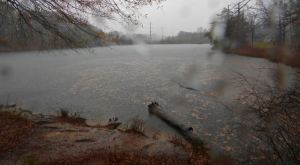
A driving rain begins to attack the drought: looking north across our lake, December 11
A “Sort of” Winter: Rain, Cold, Ice, Warm Temps, and Yes, More Birds!
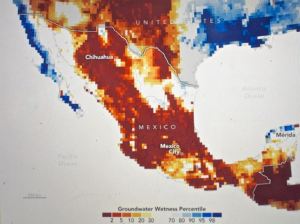
In last month’s entry, we lamented the ongoing drought and the disappearance of most of our late autumn birds. Just at the end of November, we began to get some rain, and we’ve now had about two inches this month–a hopeful start to impacting the drought. It’s even been cold enough in the past two weeks–high teens to low 30s–to bring us a bit of snow and ice, though nothing sticks for more than a few hours, and warming is in the forecasts.
Panorama of the fountain and the sleet-covered lake from the southeast bank, Christmas Eve, morning
The even better news is that our mallards have returned, along with some songbirds we’d not seen for a while. Here’s hoping that the moisture keeps coming and, with it, even more birds. A warming trend is predicted by the end of the month, plus more rain, so we’ll see how much winter is still in store. Fingers crossed.

Seven Mallards on the frozen lake in the early morning cold, December 23

Our first sighting here of a Golden-crowned Kinglet, in the Willow Oak on the southeast bank, December 12
Look for more of our December birds in this month’s Photo/Video Gallery, later in this entry.

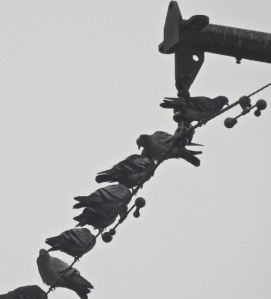
Our faithful flock of Rock Doves stop at the north end shore in the early morning cold, December 23
**********************************************************************
More to Celebrate: Our Holiday Season Kitchen
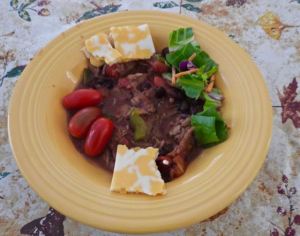
Jean’s Pulled Pork Chili, with tomato, cheese, romaine salad garnish, December 9
Jean: Like many others, we have had patches of cold, rainy, snowy and icy weather already this winter, and more is probably yet to come. During these times, I like to make big pots of hot, hearty food that can be enjoyed for days without going out shopping or seeking food elsewhere from day to day. It also needs to be something we can change up to prevent monotony. To these ends, I got a 6-pound pork butt/shoulder to put in the Crockpot with broth, onions and garlic. I simmered it for most of a day to get it tender enough to cut down after it cooled. I didn’t weigh the big bone that I cut out, but I probably ended up with three pounds of meat.
Once I had the bone out and chunks cut, I made four dishes with the meat. Each required some more cooking with the vegetables and other additions appropriate for that dish.
- First was a simple stew, softening the meat some further with potatoes and carrots.
- Then my favorite, a Mexican posole, made by adding green peppers, jalapeños, green salsa, and hominy.
- The next was a chili, simply adding chipotle and other spices, some different kinds of beans, canned tomatoes, and corn.
- Fourth was barbecue, cooking sweet potatoes with the meat and topping with our favorite BBQ sauces: Kansas City BBQ for me (go Chiefs!) and a mustard-vinegar (Carolina) sauce for Chris. All yummy, stick-to-the-ribs food. I think I may go out and get another pork butt.
Chris’s Three Sisters Stew bubbles, as Christmas jazz plays, Dec. 21
Chris: For an alternative pre-Christmas celebration, we chose my vegan “Three Sisters Stew” (pictured above), based on the traditional, Indigenous-named “three sisters”: beans, corn, and squash. These make complete protein, which I first wrote about in this blog in December 2022 in describing examples of “Blue Zones” cookery. Each time I make this hearty dish I vary somewhat the other ingredients I add, so I get new flavors, level of spice, color, etc. For example, this time I used 12 ounces of Beyond Meat (with avocado oil), which I sauteed with yellow onion, then added in cannellini and black beans (instead of kidney and pinto), then sliced fresh zucchini, canned sweet corn, and two cans of diced tomatoes with oregano and basil. A quarter cup of red wine and a dash of red pepper flakes completed the mixture. Once again, the dish was plentiful (enough for several days) and full of flavors.
In addition, Jean made a casserole of wild rice, mushrooms, celery, and white onions, to accompany the stew. The flavors of the two dishes were very different, but totally compatible, demonstrating once again the vitality and beautifully-varied characters of vegan recipes.
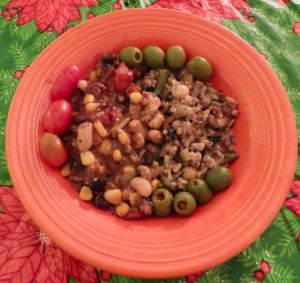
Split bowl of 3 Sisters Stew (L) and Mushroom/Wild Rice Casserole (R), with grape tomato and green olive garnish, December 23
And For Dessert…

Jean’s Tiramisu with Milano Cookies on top, Dec. 26
Jean: I love tiramisu. We’ve seen it prepared in many ways, and I’ve tried different ways to prepare it myself, with varying degrees of success. It should be pretty easy, right, layering cookies and cream? What could go wrong? See https://whatsgabycooking.com/classic-italian-tiramisu/. The trick is to get the right amount of flavor and liquid from the coffee and any liqueur you want to use. It’s easy to overdo it and get a soggy mess, or maybe taste nothing but whipped cream, although that’s not the worst that can happen, from my point of view!
This time, for our pre-New Year’s Eve party on the 28th, I was inspired by Chobani’s coffee flavored yogurt, and they even have a tiramisu flavor in their “Chobani Creations” line. Not only do I love these, but I found a recipe for tiramisu that says you can substitute Greek yogurt for mascarpone (expensive!) and egg yolk in the traditional recipes. https://pyskitchen.com/pyskitchen-recipe/tiramisu-without-mascarpone
I was having a little trouble getting my whipping cream to whip, so I did not whip or fold the whipped cream and yogurt (both flavors) together, but merely layered them over the lady fingers. (Those were hard to find, but I finally scored some real Italian ones at Wegman’s.) The result? A soggy mess, and a little too sour for my taste with all the yogurt speaking louder than the whipped cream. But Chris loves the “notes of sourness” (as he says) and so did our guests! You try it out, and adjust the recipe as you like.
***************************************************************
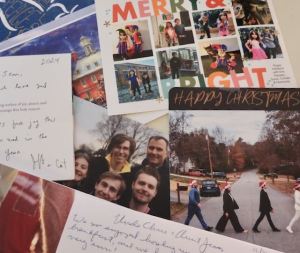
Christmas: More Celebrating with Family
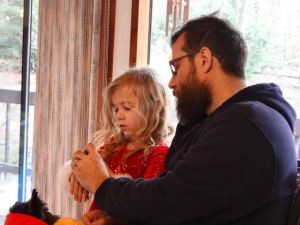
As described in last month’s entry, we had family from Georgia, from New York, and from across Virginia visiting for Thanksgiving. For Christmas, our get-togethers were of the local family members, but were no less festive, focusing on outstanding food (including the dishes described in the Holiday Kitchen section above), catching up on what everyone has been doing, and the exchange of presents.
Needless to say, many of the gifts were for the youngest members of the crew, who made the most of the occasion by spreading wrapping paper through the house and starting to get into the toys, books, and games. Again, three generations of revelers took part, including one precocious pup, who popped up in surprising places! For those who couldn’t be there in person, they were still with us through their cards, calls, and FaceTime.







********************************************************************************
Climate Log: Good News for FEMA, but a Dilemma for the Incoming Regime
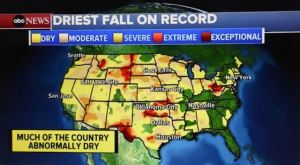
ABC News : “Driest Fall on Record,” Oct. 24, 2024
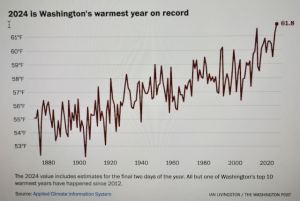
Warmest Year on Record in the DC region (National Weather Service) (Washington Post, Dec. 30): but Republicans still won’t acknowledge climate change or global warming, though they will appropriate hundred of billions for disasters
Just before Christmas, the Republican-controlled House of Representatives passed a bill that I never thought we’d see: $110 billion (yes, billion) that “Provides much-needed relief to Americans struggling to recover from natural disasters” (https://appropriations.house.gov/news/press-releases/house-passes-critical-disaster-relief-americans). The terms “climate change” and “global warming” are never used in this massive relief bill, because Republicans are way too intimidated by their leaders and by the fossil-fuel cartel to admit these obvious truths. Nevertheless, the bill is the first of more and more that will be needed to address the effects (not the real causes, of course) of what the bill erroneously calls “natural disasters.”
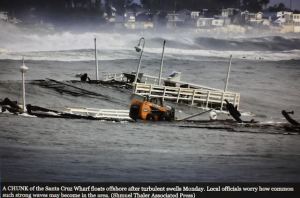
Warming oceans, more intense storms, and coastal sea level rise combine to make unprecedented coastal damage more frequent, as this week in Santa Cruz, CA, as reported by Grace Toohey in the LA Times, December 28
Particularly noteworthy is that the two largest items in the bill are
- $31 billion for “disaster and economic assistance to agriculture producers” and
- $29 billion for “FEMA’s response, recovery, and mitigation activities related to Presidentially declared major disasters, including Hurricanes Milton and Helene.”
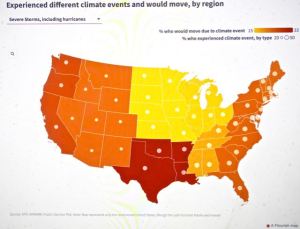
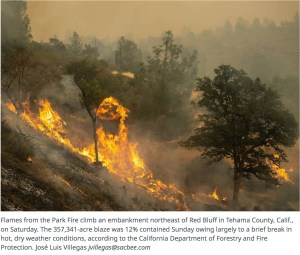
These open-ended statements leave ample room for further appropriations to address future disasters caused by extreme heat, drought, extreme storms, wildfires, sea level rise, etc. That the two main emphases here are “agricultural producers” and “major disasters” reveals Congress’s tacit, but unspoken, understanding that climate change will continue to devastate farmland, and will continue to produce hurricanes of unprecedented size, spread, and sudden emergence, like October’s Helene and Milton, which suddenly developed in the Gulf of Mexico very late in the hurricane season.
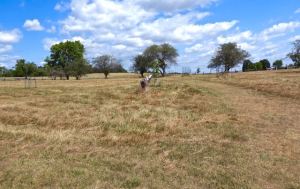
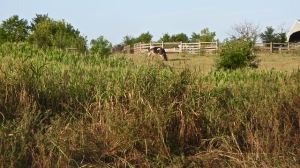
Burned out farm field we visited, New Market, VA, Aug. 2, in the midst of the 2-year drought in the Shenandoah Valley
Trump’s Response?
It is further noteworthy that the once-and-about-to-be President, Donald Trump, tried to force Congress to scuttle this bill, even at the cost of shutting down the government. Why would he do such a thing? Does he want to be known as a President who won’t provide disaster relief (as he failed to do in his first term in his callous lack of response in 2017 to Hurricane Maria in Puerto Rico)? Does he not want to meet the needs of the farmers in states like Texas, Oklahoma, and West Virginia, who are suffering massive crop losses because of extreme heat and drought? Farmers in these states and others overwhelmingly supported him in his run to the Presidency, because he promised to help long-suffering rural America, and they believed him. But, his promises aside, he might be more concerned that passing such a bill will draw attention to the vast scope of a problem that he’s always claiming doesn’t exist, but which will continue to dog him throughout his final term and just get more painful, tragic, and costly to Americans.
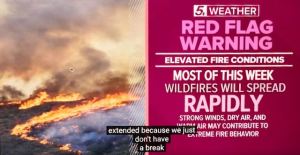
Close-captioned TV weather forecast from CBS-affiliate in Central Texas, summer 2023 (clip from YouTube video)
Fortunately, enough of the Republican House members, aided by the votes of almost all Democrats, defied Trump’s effort to kill the aid, and so the money will flow, because the Senate and still-president Biden moved it forward immediately. As the majority of the House realized, something bold had to be done, and even the President-to-be, despite his fearful wishes, had to give in. Remember, House members will be up for re-election in just 2 years, so they know, unlike their leader, that they can’t afford to ignore the needs of their constituents now.
But passing such an open-ended bill leaves President-elect Trump and all his fellow climate-change deniers in a dangerous spot. Hundreds of billions in relief can pretty quickly turn into trillions, as the climate sins of the fossil-fuelers exact more and more sacrifices and pain. As lack of farm production destroys farms and ranches, and causes prices to rise for all of us, and as more and more of the country becomes harder to live in, people will blame the party in power, as they always do. At some point the people will demand answers as to why those leaders failed to admit that the hurricanes, warming oceans, wildfires, and burned-out fields could have been–and future ones still could be–avoided.
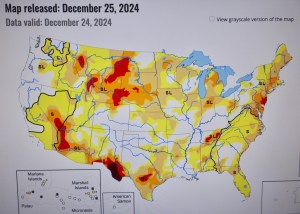
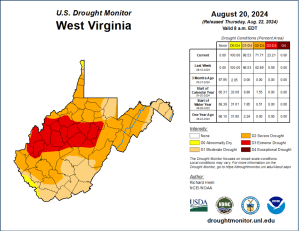
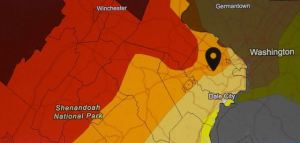
US Drought Monitor, Christmas Day 2024 (https://droughtmonitor.unl.edu/CurrentMap.aspx)
***********************************************************************
The December 2024 Photo/Video Gallery
All photos and videos this month come from in and around our lake, all celebrating the increased precipitation and the return of some of our citizens, plus visits by a few welcome guests.
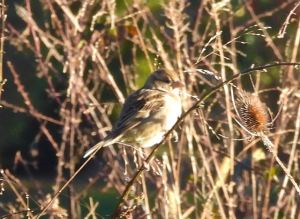
Our year-round residents: Song Sparrow munches grass in the field west of our lake, cold morning, December 23
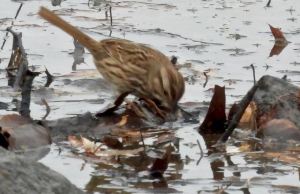
Savannah Sparrow sips from the rainy north shore of our lake in the rain, Dec. 9
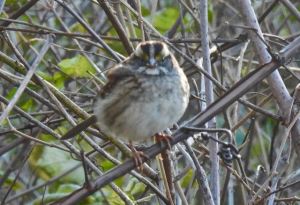
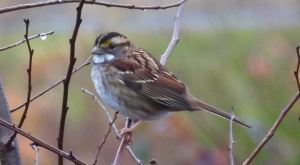
White-throated Sparrow poses for the camera, southeast cove, December 6
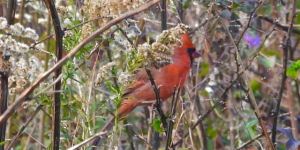
Male Cardinal munches seeds in an east bank tree, amid flurries, morning, December 20

Panorama toward downtown, partly frozen lake, early morning, December 23

Rare sighting of Red-shouldered Hawk not in a tree, but on the ground, eyeing bird in the brush, north end path, cold morning, December 19

Pair of Red-shouldered Hawks in Tulip Tree and Virginia Pine, southeast side woods, December 19
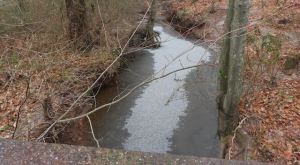
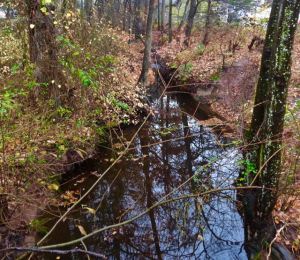
Sleet-covered inlet stream under bridge, early morning, Christmas Eve

Our fountain in the frozen lake, view toward downtown, December 23

Our resident flock of Rock Doves takes off from north shore, December 23
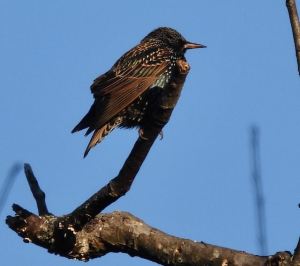
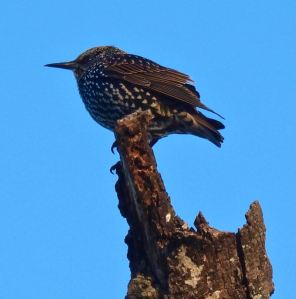
European Starling, brightly lit by the sunrise, scans from the dead Oak, east bank, December 23
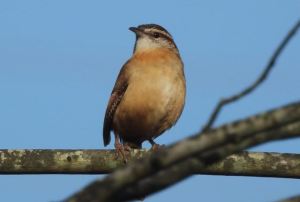
Carolina Wren alights on a branch above me, calls friends, and feels the flurries on a snowy morning, December 20
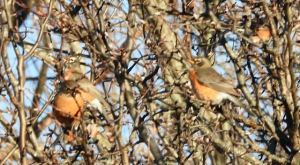
Robins in late December! Wow! These cavort in a sugarberry tree in the north end woods, December 23
This Robin calls in the Sugarberry that same cold morning, December 23
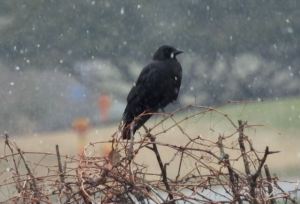
American Crow, amid flurries, perches atop a Bradford Pear and Blackberry canes below the north end dam, December 20

Four Canada Geese swim mid-lake in the December 20 morning snowshower

Tufted Titmouse perches along the southeast path on a cloudy December 1
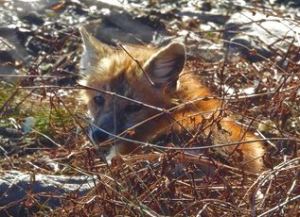
Red Fox, not often seen, watches me from the brush beside the north shore rocks, December 8
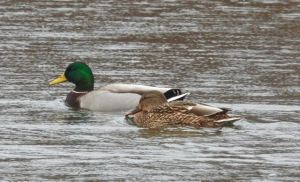
Mallard pair along the northeast shore in the rain, December 9
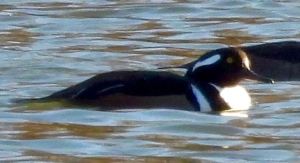
Rare visitor, male Hooded Merganser, swims in mid-lake, cold, windy December 6

Three Hooded Mergansers, 2 female and young male, along the east lake bank late afternoon, December 6
The Red Fox, ill with mange, explores the north shore rocks, then drinks from the lake, December 8
Blue Heron flies from north shore to west bank and through community, December 17
And so, weakened as we are, may we take wing and fly into 2025 in hope of a more just and thoughtful world.





































 From Sacramento to Potomac: Tales of Two Valleys