July 2025: Being One with the Land

Mexican Migrant Workers

Farm workers who create and nurture this beautiful, productive California field (Getty images)
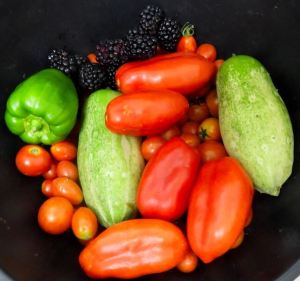
One day’s harvest from our garden plot, July 19

In this month’s blog:

Being One with the Land: At Least Trying to Be
Climate Log: Flash Flood Horror in Texas and Iceland’s Dilemma
July Kitchen: Homemade Pies and Garden Produce Dishes
The July 2025 Photo/Video Gallery
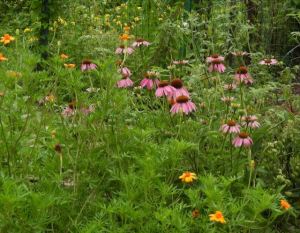
Marigolds and Coneflowers, our garden plot, July 2

Being One with the Land: At Least Trying to Be

Farmworkers plant jalapeño pepper seedlings in Camarillo, CA (LA Times photo)

“A fresh peach still requires a pair of hands to pick that off a tree. Table grapes still require the sensitive hands of an employee to remove them from the vine.” Ryan Jacobsen, director, Fresno County Farm Bureau (From LA Times: “For State’s Farmers, Migrant Workers Are ‘Irreplaceable,'” July 10, Andrea Castillo, Sulauna Hussain, Jessica Garrison)

Chris:

It may be ridiculous to think that amateur gardeners like us have anything in common with the skilled farmworkers, like those pictured in two photos above, who spend their lives in the fruit and vegetable fields of California and other states. After all, they have the experience, perseverance, knowledge, patience, and toughness to grow the crops that feed the United States and much of the world, while we just experiment semi-blindly on our little plot with tiny seeds and cute seedlings we’ve picked up from Home Depot, and then marvel at how the sun, soil, and water turn those infants into delicious (we hope) tomatoes, cucumbers, squash, berries, herbs and gloriously beautiful flowers–with precious little work on our part. While those farmworkers bear the heavy responsibility to keep all of us alive through their skilled, talented work in the harshest of conditions.
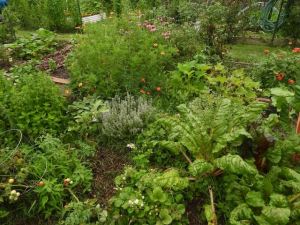
Swiss Chard, Tomatoes, Strawberries, Thyme, Oregano, Squash in our garden plot, July 2

If we fail in our little garden playpen, so what? We can just go to the store and stock up on the fruits of the farmworkers’ incessant, highly skilled labor.

The Price of Being One with the Land. Now one would think that people who bear all that responsibility and who display every day all that skill and perseverance, would be honored by the rest of us and treated like the heroes they are. But, instead, their work and knowledge are, at best, taken for granted by us. And, even worse, the people who we voters have elected most recently to lead us treat those indispensable workers with fear and contempt. These leaders just take and enjoy the fruits of these essential workers’ labors–and then, if you can believe it–do nothing to grant these workers citizenship in our nation. In fact, by not granting them citizenship, these leaders pretend that the workers are criminals because we have not granted them citizenship!

And even worse, these leaders send in masked marauders to capture them, often in workplaces like the Home Depots we visit, and send them out of the country. Can anyone make sense of this? Where, pray tell, will our food come from if these workers are deported? Does anybody gain by this senseless cruelty?

****************
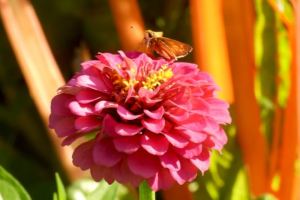
Sachem Butterfly on Zinnia bloom, our garden, July 11

Trying To Be One with the Land. Now, I may not be a skilled digger of holes, planter of seeds, plucker of weeds, spreader of mulch, waterer, watcher, and harvester, but I’ve become a pretty skilled admirer of the plants themselves and of the busy creatures who pollinate them. But getting to know our tiny, living plot of soil does help me respect the farmworkers who really know what they are doing, so that I never  take any of what they do for granted.

Yes, Jean and I know what it feels like to be soaked with sweat, bitten by ants and mosquitos, and wilt after just one hour in the garden in the July sun. But can we imagine doing this work hour upon hour, day in and day out? We try, but know we really can’t.

It’s easier every day for us to marvel at the miracles that are plants and the miracles that are these real gardeners. And everyone who gardens knows that those people and those seeds and the soil, the rain, and the sun, are miraculous. And I can each and every day give thanks for these miracles.

And I can call out the injustice and cruelty of those–really all of us–who take the real gardeners for granted and even seek to punish them, banish them, and deny them citizenship.
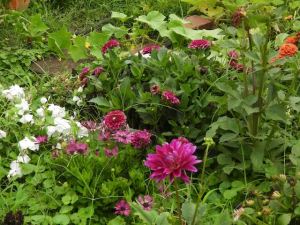
Dahlias, Vinca, Zinnias, and Cucumber vine, our garden, hot muggy July 2

******************************************************************************

Climate Log: Flash Flood Horror in Texas and “What Do You Call Iceland When All the Ice Is Gone?”
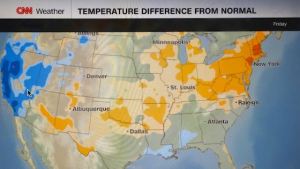
The next “heat dome” crossing the US and set to arrive in our region by July 25 (CNN Weather, July 22)

“Nature is changing faster than the language we use to describe it.” Andri Snaer Magnason, in the New York Times, July 19, 2025

Bed of the flood-ravaged Guadalupe River, Kerr County, Texas, July 6 (CNN video)

More and more continues to be written about the horrendous flash flooding in Texas Hill Country on July 4 that took 135 lives, with more persons still missing. Blame for the disaster has been spread among

  • local officials for tardy responses to warnings,
  • the gutted National Weather Service for staffing cuts,
  • localities for feeble, under-funded warning systems,
  • dangerous building locations by property owners and children’s summer camp owners (these camps were particularly hard hit), and of course,
  • just plain old complacency by people who’d rather ignore warnings than do anything different.

In the last few days, another target has been named by a few conspiracy theorists: a chemical cloud-seeding operation in the bone-dry West to try to encourage more rainfall (LA Times, “How Cloud Seeding Sparked Texas Flood Theory,” Hayley Smith, June 21). If there is anything like positive news in this flooding horror, it might be that at long last at least a few climate-change deniers are willing to admit that these so-called “natural disasters” are anything but natural–even if their cloud-seeding notion is easily-debunked nonsense. That said, it’s highly unlikely in Texas–ground zero for climate-change denial–that the true human culprits, the fossil-fuel cartel, will receive any blame. So the flooding horrors will just continue and get worse.

“What Do We Call Iceland When All the Ice is Gone?” (New York Times, July 19).
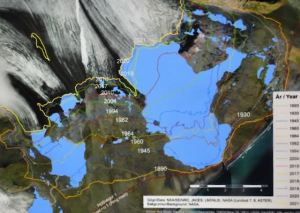
Some Icelandic glaciers have lost as much as 80% of their mass in the past century because of climate change, with projections that most of the country’s glaciers may be gone in the next 100 years (Horfandi Joklar photo, 2021)

I mention this article by Andri Snaer Magnason because it highlights how our language about climate change just can’t keep pace with the reality of what is happening. Iceland is a good case in point. There, so many place names feature glaciers–however, climate warming since 1900 has so depleted glaciers that the names no longer fit–yet people keep the names out of veneration for a happier past–and because the glaciers were for centuries so much of their national identify. Our continuing to use in the US the term “natural disasters” is another such example of how our use of language shows our failure to accept reality–and perhaps our longing for a past before Mother Nature was assaulted and violated day upon day by human forces.

***************************************************************
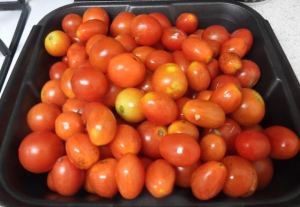
What to do with all these tomatoes? Four days of tomato harvest from our 4 Husky Cherry Red, Juliet, and Sweet Millions tomato plants, July 18

July Kitchen:  Homemade Pies and Garden Produce Dishes

Jean’s Black and White Chocolate Cream Pie, July 19

Jean:

During my days of cooking for our graduate student friends as a young wife in the 1970s, I took pride in “sophisticated” desserts containing liquor or liqueur like black-bottom rum pie and grasshopper pie.  This month, those cool, creamy tastes sounded enticing in the heat, so I went looking for recipes, old or new.  Of course I found some online, but I also decided to alter them somewhat.

My black-bottom rum pie became a black and white chocolate cream pie, decorated with dark chocolate and white chocolate chips.  Okay, it’s summer and I was hot and busy, so I used instant chocolate and white chocolate puddings rather than separating and cooking egg yolks in milk and all that, like I once did.  But you do you.  I did put rum into the puddings, but we couldn’t really taste it.  The cream and chocolate overpowered the alcohol taste.  Somebody in my house really enjoyed it despite all the disappointments!
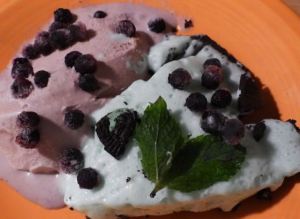
Slice of Jean’s Mint Oreo Pie with Black Raspberry ice cream and Wild Blueberries, July 25

Next I tackled grasshopper pie but did not want to buy an entire bottle of creme de cacao.  (I already had a bottle of creme de menthe I had purchased for something I no longer remember, but this helped inspire the pie.) You could also use a Torani mint syrup, if you have or find that.  See https://www.thepioneerwoman.com/food-cooking/recipes/a12009/grasshopper-pie/   You can change it up slightly to a mint chocolate chip pie, sprinkling mini chocolate chips on top in place of more Oreos. We added broken mint Oreos in the version you see here.

I must confess that the presence of these types of alcohol in my kitchen also inspired another treat for hot days–the boozy milkshake, like some of the upscale burger places serve.  Just take your favorite flavors of ice cream and blend them with milk and a bit of complementary liquor.  Everyone has mint chocolate chip ice cream on hand, right?  Throw in some of that excess, nearly unusable creme de menthe if you bought it.  The “grasshopper” actually used to be a drink, as shown here:  https://food52.com/recipes/creme-de-cacao.  And of course, another use for creme de cacao is a Brandy Alexander, which could be approximated as a milkshake using Irish creme ice cream and chocolate Irish creme liqueur, if you can find them. Just use your imagination to come up with combinations, and stay cool with a luscious cold liquid dessert.  Have the drink with your slice of pie if you can afford the calories.
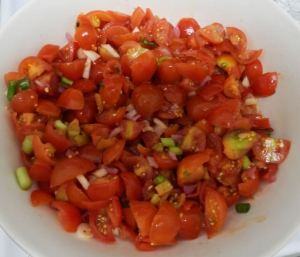
Chris’s Tomato, Onion, Hot Pepper Salsa

Chris:

What to do with all these tomatoes? We can use a lot, and friends will take some, too, but our local food banks are already resplendent in fresh donations from local supermarkets, so freezing for the fall and winter months is our best bet, as we used to do with our extra produce in California.

The fresh salsa shown above is super easy to make, as no cooking is required. And it disappears quickly, either as a dip/snack with chips, a side dish, or a topping for the veggie stir fry shown below.

Once you’ve done the tedious part–chopping all those little gems into 3-4 pieces each (I used 40 for my most recent batch), just sprinkle in salt and black pepper to your taste, plus some garlic powder, onion powder, and dried thyme or other herbs of your choice. The spice comes from the onion and from any hot pepper flakes or sauce you want to use (I used Cholula red, but I’ve also used sriracha). Fold it all up and taste. Stick it in the fridge until you want to use it. It keeps well for up to ten days.
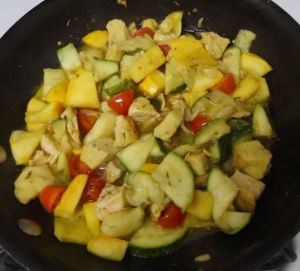
Chris’s spicy chicken, zucchini, yellow squash, tomato stir fry, July 19

For elementary cooks like me, the stir fry is perfect. With a light coating of oil in the skillet, and at medium temp and with a decent spatula, you can throw in any (well, almost any) chopped leftovers you have, add in salt, pepper, and spices of your choice, and just keep flipping and stirring until the mix softens to your desired firmness. (Just don’t leave it alone in the heat, because it will stick.) Except for the cooked chicken, which Jean provided, all the ingredients came from our garden patch. There are more of these veggies waiting in the fridge, so more stir frying will be coming up.
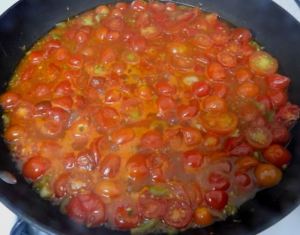
Chris’s Tomato Arrabbiata Sauce, cooking down, July 14

With as many Cherry and Grape Tomatoes as our patch has been producing since early July (50 or so ripe ones every two days), cooking sauce has been a great way to preserve those we can’t give away or eat as snacks or salsa. The large skillet of sauce just above has over 100 chopped in thirds or quarters.

Since there are a million tomato sauce recipes just a Google away, you can use the one you like. Just keep in mind that I’m using little tomatoes, so I can’t get the skins off. So as I cook the mixture of tomatoes, spices, red wine, olives, and herbs down on low heat, I’ll need extra time–say 90 minutes in all–to get the skins as soft as possible. I like to set up my laptop in the kitchen, so I can work and keep an eye on the stove during that slow cooking time. And the kitchen just smells so good!

The best part is that I can keep the finished sauce in jars in the fridge, where they’ll keep for a week or two, or I can freeze them. Right now, I have 2 jars in the fridge and just one in the freezer. We’ve already used 2 jars with pasta and stir fries! A load Like the one you see cooking will fill two 18 ounce jars.

*********************************************************
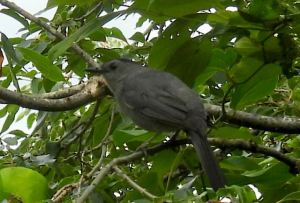
Grey Catbird in Persimmon tree right beside me on the west bank path, July 12

The July 2025 Photo/Video Gallery: Lake and Garden Highlights and One Local Outing

July’s gallery features shots of four gardens, the most intriguing of which may be the one that largely takes care of itself in the several acres within our semi-urban community. Or should I say that we humans care for this “garden” refuge by mostly leaving it and its citizens and visitors alone? Whatever hand we may or may not have in its care, it sure presents a marvelous array of species, shapes, and colors. And so do the other gardens pictured here! Enjoy.

Washington National Cathedral–a favorite spot from our earlier lives in this region, but our first visit in 25 years, July 1. Here is a view of this magnificent Gothic style cathedral from the 7th floor observation deck. Notice the “flying buttresses” that support the windowed walls, a classic feature of the Gothic style

The West Side of the Cathedral and the Rose Garden, July 1

In our garden patch, Monarch feeds on a Garden Cosmos flower, hot morning, July 21
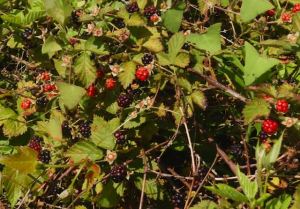
Ripe and ripening Allegheny Blackberries along the north end path of our lake, July 4. These berries grow wild in profusion around the lake. Plenty for us and for the birds
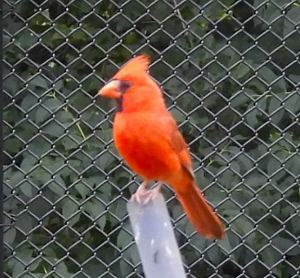
Beside our garden patch, this Male Cardinal calls from atop a neighbor’s stakes, July 21
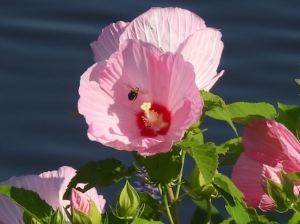
At nearby Lake Newport, Bumblebee feeds in Swamp Rose Mallow along southeast lake shore, July 11

This rarely seen Trumpet Vine flower adorns the southeast cove of our lake, July 12

Red-winged Blackbird chirps atop Red Cedar at the northwest corner of our lake, very hot noon, July 4
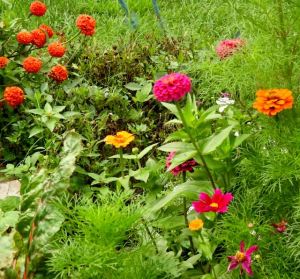
In our garden patch, Zinnias and Cosmos blooms and feathery stems, grown from seed, July 21

At Lake Newport, Cattails, Pickerel Weed, and Swamp Rose Mallow hug the shoreline, July 11
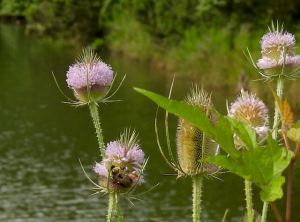
Bumblebee hugs blooming Purple Teazel on northwest shore of our lake, hot July 12

Snapping Turtle lurks at the surface, mid-lake, hot noon, July 4

Panorama of our lake toward downtown, with yellow Prickly Lettuce flowers in bloom foreground, cloudy morning, July 12

Panorama of Lake Newport with Lilypads and Swamp Rose Mallow, early morning, July 11

Swamp Milkweed with Bumblebee, east bank of our lake, noon, July 4

Mockingbird in Red Cedar, northwest corner by the path, with Porcelainberry, July 4

Two Red-bellied Cooters on log, west shore of our lake, hot noon, July 4

In our garden patch, Bumblebee feeds on pink Coneflower. So many pollinators! Hot morning, July 21
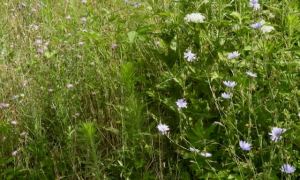
More lake summer wildflowers: Pink Spotted Knapweed and Blue Chicory, north end path by our lake, morning, July 12

Lake Newport: Red-winged Blackbird in flight, July 11
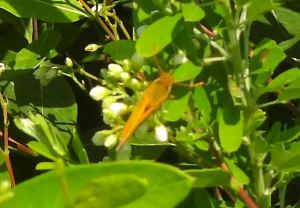
Orange Sulphur butterfly on Indian Hemp, north end path by our lake, noon, July 4
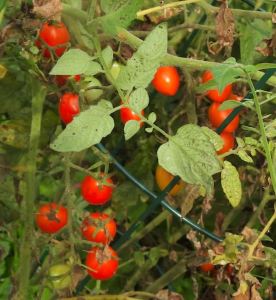
In our garden patch, Juliet and Sweet Millions ripe clusters, morning, July 21

Short clip: Mockingbird scans, then flies atop Red Cedar beside our lake, July 4
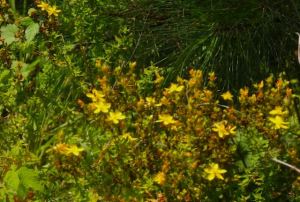
Another lake wildflower: St. John’s Wort along the north shore, July 4

Yet one more lake wildflower–such bounty: Pennsylvania Smartweed along the north shore, hot July 12

And on to August! What do all our gardens have in store for us?
January 2025: Fire and Ice

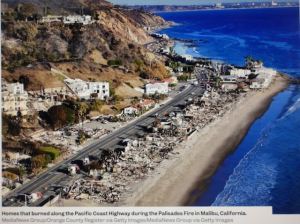
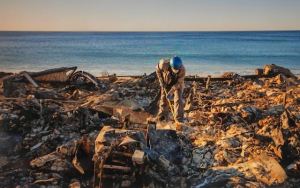
Fire to the Ocean: Homeowner sifts through wreckage after the Palisades Fire, Jan. 13 (Brandon Bell/Getty Images). The Palisades Fire is still not fully contained two weeks after the blaze began, and more high winds occurred this week, but with some rain expected for the weekend.

In this month’s entry:

Apocalyptic Fires, Surprising Ice
Staying Warm with International Dishes
The January 2025 Photo/Video Gallery: Bird and Deer Resilience

Palisades Fire and Los Angeles city lights, from airplane (Reuters photo, January 8)

Our frozen lake, view toward downtown, windy morning, January 9

Apocalyptic Fires, Surprising Ice: Two Sides of the Same Oily Coin

Robert Frost, “Fire and Ice,” first published 1920

Chris:

It’s certainly common in this blog to talk about very different places and experiences, but this January seems to offer–I say “seems”–a brutally stark divide between the fires in Los Angeles and the snow and ice here in Northern Virginia and now through the Deep South. Sure, there’s a difference between the heat and sudden destructiveness of a fire and the combination of sudden danger and long-term deadening action of ice. But, as Frost’s poem makes clear, the contrasting forces both have the power to destroy the world–when weaponized by human desire and hate. So fire and ice, in their destructive power, have a lot in common.

Altadena, CA “neighborhood” after the Eaton Fire, Jan. 16 (Orange County Register); Almost 40,000 acres burned in the two fires; 12,000 homes, schools, libraries, and other structures were lost, and 60,000 or more people were left homeless–one of the worst disasters in California history

Indeed, the LA fires and the extreme “cold snap” now surprising the US South–snow fell in Tallahassee, FL, on Jan. 20, for example–both demonstrate the climate change that the unrestrained greed of the oil and gas cartel continues to bring to the planet and its inhabitants. The unprecedented fires in LA are the result of the rare–but increasing–confluence of a record drought afflicting Southern California and unusually strong Santa Ana winds producing gusts as high as 100 miles an hour. Together, the drought and the winds make wildfires in the parched chaparral landscape much more likely. Climate change science predicts that such a confluence of forces will become more common.

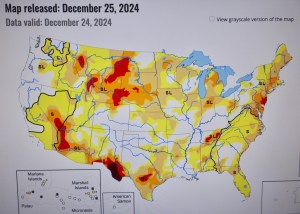
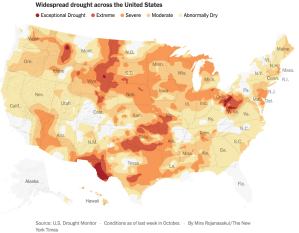
And not only in Southern California. The drought that stoked the fires there is stoking them across many states. According to the US Drought Monitor, as this blog reported in October, as much as 80% of the US is rated as from abnormally dry to being in moderate to severe to extreme to exceptional drought, as this December 2024 map shows:

US Drought Monitor, Christmas Day 2024 (https://droughtmonitor.unl.edu/CurrentMap.aspx)

The Onslaught of Ice in the Deep South

Ice, snow, and states of emergency from Texas to Florida to the Carolinas, Winter Storm Enzo (Weather Channel, Jan. 21). David Goodman of the NY Times reports (Jan. 21): “For many Texans, the arrival of snow brought back memories of the devastating winter storm of 2021, which crippled the state’s independent power grid and killed more than 200 people. So far, the state’s electricity market operator has said it has plenty of power.”

Some are calling it a “once-in-a generation” winter storm along the Gulf Coast (CNN, January 22: https://www.cnn.com/2025/01/22/weather/winter-storm-south-wednesday-hnk/ ). So how is this icy, snowy Southern “Surprise” an effect of climate change? The steadily diminishing polar ice cap, perhaps the most dramatic effect of human-caused climate change over recent decades, is producing fluctuations in the “polar vortex” jet stream that are making seasonal weather forecasting more unpredictable across North America. So we shouldn’t be surprised that a sudden surge of very cold air is hitting the Deep South this January.  Again, what has been entirely predictable over the past 100 years or more is that the Earth is slowly heating. 

And so, the gradual heating produces

the polar ice cap melt that spawns

the fluctuations in the upper atmosphere that cause

the unexpected deep freeze and snows in the South.

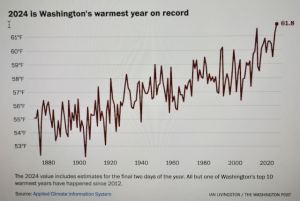
In other words, it’s all part of a pattern brought about by our addiction to fossil fuels. That Northern Virginia is experiencing temps this week in the single digits (4 degrees Fahrenheit on the morning of 23rd) would not be surprising if Januaries in the past 20 years had been the typically cold winter months of years long past. But in January 2023 and January 2024, this blog described what amounted to early springs of budding trees–not a surprise, because gradual warming has been the trend, as the world and local temperature records demonstrate:

Hottest Year on Record in the DC region (National Weather Service) (Washington Post, Dec. 30): this map records “only” the last 145 years, but the trend is obvious

Heavy snowfall on our lake, view from south end park toward downtown buildings in distance, January 19, afternoon

Aftermath of one section of Palisades Fire in Malibu (photo Jan. 16, Orange County Register)

Is there anything we can do about this trend toward ever worsening destruction? Sure, but will U.S. society have the courage and even the awareness to really move steadily with determination away from oil and gas and toward clean energy? We have the technologies and the infrastructure–and the skilled workforce–to do so. But strong-arm politics is the stumbling block.

Just this Monday, January 20, the loudest mouthpiece for the oil and gas cartel was re-inaugurated as the President, and he has already nominated for his Cabinet men who are wedded to the cartel and dedicated to eliminating clean energy alternatives: solar power, wind power, and electric-powered vehicles. These people glory in the fact that the U.S. is already the world’s largest producer of fossil fuels, and they want that destructive leadership to intensify–to their benefit, but not to meet the needs of the people for a safe, productive environment.

According to the Energy Institute (Nov. 2024), the U.S. has been the world’s leading producer of oil and liquid gas since 2017, and further increased this lead under the Biden administration. Even oil companies see no need for this continued mining, as leases already approved go unpurchased. So why is further mining being pursued by the new President?

The result will be that in the next few years more and more events like the wildfires in California, the worsening hurricanes in Florida and the Gulf Coast, the extinction of fish species in the oceans, extreme drought in Texas, water shortages in more and more states, and many more climate-related disasters will occur. Costs already in the trillions have been racked up to repair and prepare for these events, with Americans paying for them in ever higher prices, in lost insurance, and in fear for their lives and homes. Politicians who don’t want to call these catastrophes what they are–“human caused”–will keep calling them “natural disasters,”  while nature and her creatures will suffer through our abuse.

A beautiful pair of Mallards push their way through the frozen lake, as snow falls, January 6

***************************************************************************

Jean’s green pepper enchiladas, January 18

Staying Warm with International Dishes

Jean:

As the temperatures have dipped down and stayed down over the past couple of weeks, I have been inspired to serve comfort foods, hot in both temperature and taste.  Furthermore, we’ve been staying inside more than any time since Covid, as ice has built up outside, so reusing and repurposing leftovers and pantry items has been a priority.

I started with chili, of course—a staple of cold weather comfort food.  I never make chili the same way twice, but this time I was inspired by a recipe by Molly Yeh on the Food Network, except I left out the cinnamon because Chris doesn’t like the taste of Cincinnati chili (but I do).  That chili had no beans, so on another day I added chunky tomatoes and pinto beans for a different look and taste.

Green Pepper Enchiladas

My next inspiration came from watching “Moira Rose” make enchiladas on Schitt’s Creek.  (Yes, there’s a lot of TV watching involved when holed up inside by the weather.)  I don’t know her recipe, so I just pulled something together with leftover bean and corn chili as the filling, spinach tortillas for color, sliced green peppers for crunch, and a canned cheese sauce. They turned out perfectly and were photogenic, too!

West African Peanut Stew

Because Black History month is upcoming in February and Martin Luther King, Jr.’s birthday is this week, I also made a West African peanut stew, which combined chard, tomatoes, sweet potatoes, and chicken with the peanuts in a savory sauce with peanut butter, cumin, garlic, ginger, and onion. The plentiful, colorful stew was good for several days of leftovers. Chris particularly liked the chopped chard and tomato flavors, and peanuts are favorites of ours in any form. (The peanut stew was also a tribute to my late older sister, whose birthday was the same as MLK’s.  She worked in Africa with the Peace Corps in her youth.)

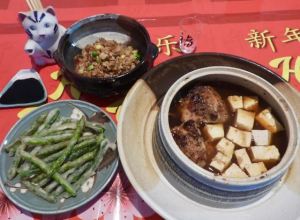
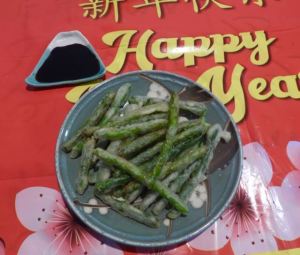
Orange Chicken and Tempura Green Beans for Lunar New Year

For Lunar New Year, I also checked out Molly Yeh and came up with her orange chicken recipe.  I decided to opt for our favorite cut, whole chicken thighs, rather than go to the expense and trouble of using chunks of chicken breast.  The point of this recipe for me is the delicious orange sauce, although you can buy a similar preparation in the Asian food aisles at many grocery stores.  Here is her recipe:  https://www.foodnetwork.com/recipes/orange-chicken-12245113.  I substituted whole seared chicken thighs that I then baked for 45 minutes in the sauce.

The coating on her chicken nuggets, although I didn’t use it, inspired me to try tempura green beans as a side dish. I checked around on the Internet and looked at various recipes for the tempura batter and ended up using something that was half rice flour, half all-purpose flour, a little baking powder and salt, plus enough sparkling water to make a batter that was neither runny nor too thick but just the right consistency to adhere to green beans dipped in it.  Then about 4 minutes in piping hot oil and a sprinkle of salt when they come out to drain on paper towels.  Great when hot, but a fine snack when cooled or rewarmed briefly as well.

The key to tempura really is the batter, and there are lots of ways to make a good one. You just have to experiment. I remember eating tempura shrimp one time in the kitchen of a Japanese neighbor who said she used some pancake batter mix for a coating that was a little thicker, puffier and browner than the typical tempura batter.  That was so delicious I think we ate the family’s entire week’s supply of shrimp; I just kept asking for more.

And for dessert: Japanese Mochi Bars

I decided to turn part of the rice flour mixture into mochi bars for dessert as well, since this mixture is the starch that is used to create the dense texture of mochi. I chose bar form because it’s easier than making the batter into balls: https://cooking.nytimes.com/recipes/1022347-butter-mochi

I made these the afternoon after I made the tempura green beans, and they emerged from the oven just in time for an impromptu afternoon tea. Chris joined me after editing his new batch of bird photos. On a fifteen-degree January day, inside or outside activities can both be good choices. But tea and mochi bars back inside always work.

What can I say? If cold weather keeps me indoors, I turn to cooking. Let Chris go outside to commune with the birds. We both think I made the right choice.

**************************************************************************

The January 2025 Photo/Video Gallery: The Resilience of Birds and Our Other Citizens

Male Cardinal calls and listens in a Cherry tree in the Southeast cove, as a Tufted Titmouse and a Downy Woodpecker also call from the nearby woods, on a cold, windy morning, January 7

Chris: They are hanging in there, marvelous creatures that they are. This blog continues to celebrate avian courage, as we note that H5N1 “bird flu” is now making its presence felt in Virginia, at poultry farms (so far 7 of them) in the Delmarva (Delaware, Maryland, Virginia) region. And cranes have now died of the disease at the Richmond (VA) Zoo (Dana Hedgepeth, Washington Post, January 22). We are constantly inspired by these small bundles of energy as we hear them calling and watch them surviving and building lives amid the snow and ice this month.

150 yards away, a beautifully-antlered White-tailed Buck stares at me from the snowy field north of the Lake Cameron dam, January 17

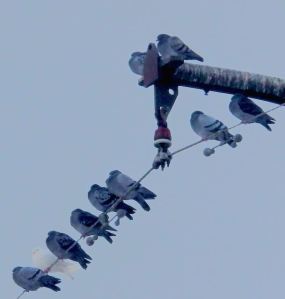
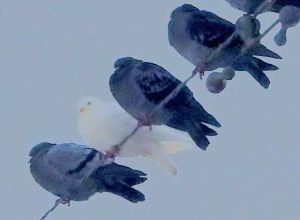
Faithful flock of Rock Doves huddle in the cold of the power stanchion west of the frozen lake, January 16

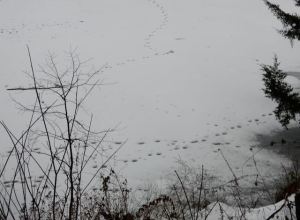
Citizens leave distinctive tracks across the frozen lake from the west bank, January 16

The White-tailed Buck ambles toward the woods west of the field, eyes me, then moves on, January 17

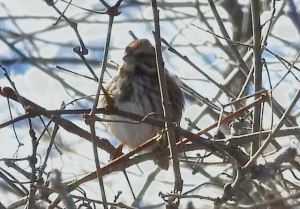
Song Sparrow perches in Persimmon against a snow bank above the north shore, January 17

Panorama toward the west bank of the lake from the southeast side in snow and ice fall, January 19, afternoon

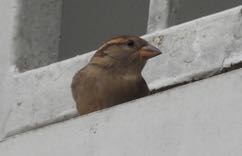
House Sparrow in winter plumage scans from Mulberry tree on the Northeast corner of the lake, January 17

Amid a chorus of other birds, House Sparrow flits in dry Blackberry canes by the frozen lake, along north shore, January 19

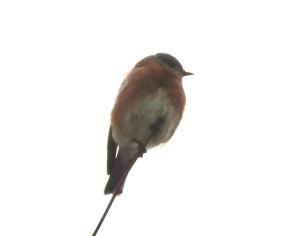
Eastern Bluebird atop Katsura tree, Southeast side of the lake, January 19

Mockingbird dances in the Greenbriar on the Southeast bank of the frozen lake, January 16

Dark-eyed Junco camouflaged in Serviceberry tree, East side, late PM, January 16

Male Cardinal hides in Japanese Honeysuckle along the Southeast cove by frozen lake, January 16

Female Cardinal calls, listens, flits in Cherry tree, Southeast side, January 19

American Robin in Serviceberry tree, East side, late afternoon, January 16

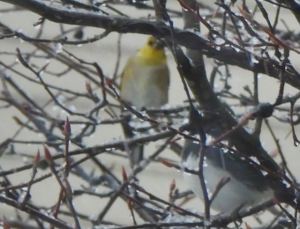
American Goldfinch in snowfall in Katsura tree, afternoon, January 19

Four Rock Doves on a wire watch the frozen lake from the West side, January 17

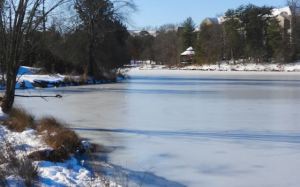
View of frozen lake to gazebo from the Northeast corner, January 9

Pair of Mourning Doves in a Tulip Tree, North end woods as snow falls, January 6

Our large flock of Canada Geese all along the North shore of the lake, January 7

Seven Mallards in our lake amid ice as snow falls, January 6

American Robin pair on roof, Southeast side of the lake, on a very cold and icy January 22

And on to the month of Valentines with hopes for our own resilience among challenges!

December 2024: Closing the Year in Celebration and Hope

A small flock of Canada Geese swim past the west bank gazebo on our lake in a gentle snowfall, December 20

In this month’s entry:

Rains Return and So Do the Birds
Our Holiday Season Kitchen
More Holiday Celebrating with Family
Climate Log: Good News and a Dilemma
The December 2024 Photo/Video Gallery

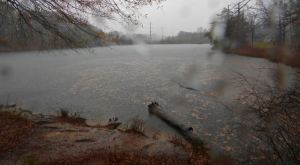
A driving rain begins to attack the drought: looking north across our lake, December 11

A “Sort of” Winter: Rain, Cold, Ice, Warm Temps, and Yes, More Birds!

In last month’s entry, we lamented the ongoing drought and the disappearance of most of our late autumn  birds. Just at the end of November, we began to get some rain, and we’ve now had about two inches this month–a hopeful start to impacting the drought. It’s even been cold enough in the past two weeks–high teens to low 30s–to bring us a bit of snow and ice, though nothing sticks for more than a few hours, and warming is in the forecasts.

Panorama of the fountain and the sleet-covered lake from the southeast bank, Christmas Eve, morning

The even better news is that our mallards have returned, along with some songbirds we’d not seen for a while. Here’s hoping that the moisture keeps coming and, with it, even more birds. A warming trend is predicted by the end of the month, plus more rain, so we’ll see how much winter is still in store. Fingers crossed.

Seven Mallards on the frozen lake in the early morning cold, December 23

Our first sighting here of a Golden-crowned Kinglet, in the Willow Oak on the southeast bank, December 12

Look for more of our December birds in this month’s Photo/Video Gallery, later in this entry.

Our faithful flock of Rock Doves stop at the north end shore in the early morning cold, December 23

**********************************************************************

More to Celebrate: Our Holiday Season Kitchen

Jean’s Pulled Pork Chili, with tomato, cheese, romaine salad garnish, December 9

Jean: Like many others, we have had patches of cold, rainy, snowy and icy weather already this winter, and more is probably yet to come. During these times, I like to make big pots of hot, hearty food that can be enjoyed for days without going out shopping or seeking food elsewhere from day to day. It also needs to be something we can change up to prevent monotony. To these ends, I got a 6-pound pork butt/shoulder to put in the Crockpot with broth, onions and garlic. I simmered it for most of a day to get it tender enough to cut down after it cooled. I didn’t weigh the big bone that I cut out, but I probably ended up with three pounds of meat.

Once I had the bone out and chunks cut, I made four dishes with the meat. Each required some more cooking with the vegetables and other additions appropriate for that dish.

  • First was a simple stew, softening the meat some further with potatoes and carrots.
  • Then my favorite, a Mexican posole, made by adding green peppers, jalapeños, green salsa, and hominy.
  • The next was a chili, simply adding chipotle and other spices, some different kinds of beans, canned tomatoes, and corn.
  • Fourth was barbecue, cooking sweet potatoes with the meat and topping with our favorite BBQ sauces: Kansas City BBQ for me (go Chiefs!) and a mustard-vinegar (Carolina) sauce for Chris. All yummy, stick-to-the-ribs food. I think I may go out and get another pork butt.

Chris’s Three Sisters Stew bubbles, as Christmas jazz plays, Dec. 21

Chris: For an alternative pre-Christmas celebration, we chose my vegan “Three Sisters Stew” (pictured above), based on the  traditional, Indigenous-named “three sisters”: beans, corn, and squash. These make complete protein, which I first wrote about in this blog in December 2022 in describing examples of “Blue Zones” cookery. Each time I make this hearty dish I vary somewhat the other ingredients I add, so I get new flavors, level of spice, color, etc. For example, this time I used 12 ounces of Beyond Meat (with avocado oil), which I sauteed with yellow onion, then added in cannellini and black beans (instead of kidney and pinto), then sliced fresh zucchini, canned sweet corn, and two cans of diced tomatoes with oregano and basil. A quarter cup of red wine and a dash of red pepper flakes completed the mixture. Once again, the dish was plentiful (enough for several days) and full of flavors.

In addition, Jean made a casserole of wild rice, mushrooms, celery, and white onions, to accompany the stew. The flavors of the two dishes were very different, but totally compatible, demonstrating once again the vitality and beautifully-varied characters of vegan recipes.

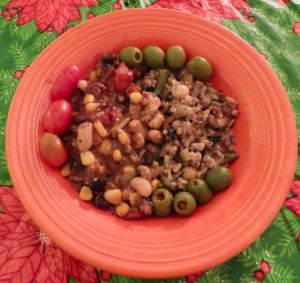
Split bowl of 3 Sisters Stew (L) and Mushroom/Wild Rice Casserole (R), with grape tomato and green olive garnish, December 23

And For Dessert…

Jean’s Tiramisu with Milano Cookies on top, Dec. 26

Jean: I love tiramisu.  We’ve seen it prepared in many ways, and I’ve tried different ways to prepare it myself, with varying degrees of success.  It should be pretty easy, right, layering cookies and cream?  What could go wrong?  See https://whatsgabycooking.com/classic-italian-tiramisu/.  The trick is to get the right amount of flavor and liquid from the coffee and any liqueur you want to use.  It’s easy to overdo it and get a soggy mess, or maybe taste nothing but whipped cream, although that’s not the worst that can happen, from my point of view!

This time, for our pre-New Year’s Eve party on the 28th, I was inspired by Chobani’s coffee flavored yogurt, and they even have a tiramisu flavor in their “Chobani Creations” line.  Not only do I love these, but I found a recipe for tiramisu that says you can substitute Greek yogurt for mascarpone (expensive!) and egg yolk in the traditional recipes.  https://pyskitchen.com/pyskitchen-recipe/tiramisu-without-mascarpone

I was having a little trouble getting my whipping cream to whip, so I did not whip or fold the whipped cream and yogurt (both flavors) together, but merely layered them over the lady fingers.  (Those were hard to find, but I finally scored some real Italian ones at Wegman’s.)   The result?  A soggy mess, and a little too sour for my taste with all the yogurt speaking louder than the whipped cream.  But Chris loves the “notes of sourness” (as he says) and so did our guests! You try it out, and adjust the recipe as you like. 

***************************************************************

Christmas: More Celebrating with Family

As described in last month’s entry, we had family from Georgia, from New York, and from across Virginia visiting for Thanksgiving. For Christmas, our get-togethers were of the local family members, but were no less festive, focusing on outstanding food (including the dishes described in the Holiday Kitchen section above), catching up on what everyone has been doing, and the exchange of presents.

Needless to say, many of the gifts were for the youngest members of the crew, who made the most of the occasion by spreading wrapping paper through the house and starting to get into the toys, books, and games. Again, three generations of revelers took part, including one precocious pup, who popped up in surprising places! For those who couldn’t be there in person, they were still with us through their cards, calls, and FaceTime.

********************************************************************************

Climate Log: Good News for FEMA, but a Dilemma for the Incoming Regime

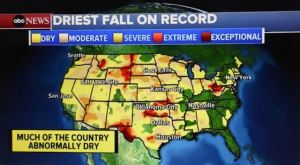
ABC News : “Driest Fall on Record,” Oct. 24, 2024

Warmest Year on Record in the DC region (National Weather Service) (Washington Post, Dec. 30): but Republicans still won’t acknowledge climate change or global warming, though they will appropriate hundred of billions for disasters

Just before Christmas, the Republican-controlled House of Representatives passed a bill that I never thought we’d see: $110 billion (yes, billion) that “Provides much-needed relief to Americans struggling to recover from natural disasters” (https://appropriations.house.gov/news/press-releases/house-passes-critical-disaster-relief-americans). The terms “climate change” and “global warming” are never used in this massive relief bill, because Republicans are way too intimidated by their leaders and by the fossil-fuel cartel to admit these obvious truths. Nevertheless, the bill is the first of more and more that will be needed to address the effects (not the real causes, of course) of what the bill erroneously calls “natural disasters.”

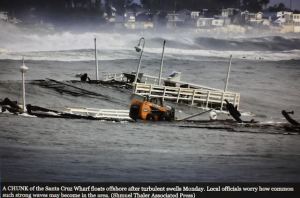
Warming oceans, more intense storms, and coastal sea level rise combine to make unprecedented coastal damage more frequent, as this week in Santa Cruz, CA, as reported by Grace Toohey in the LA Times, December 28

Particularly noteworthy is that the two largest items in the bill are

  • $31 billion for “disaster and economic assistance to agriculture producers” and
  • $29 billion for “FEMA’s response, recovery, and mitigation activities related to Presidentially declared major disasters, including Hurricanes Milton and Helene.”

These open-ended statements leave ample room for further appropriations to address future disasters caused by extreme heat, drought, extreme storms, wildfires, sea level rise, etc. That the two main emphases here are “agricultural producers” and “major disasters” reveals Congress’s tacit, but unspoken, understanding that climate change will continue to devastate farmland, and will continue to produce hurricanes of unprecedented size, spread, and sudden emergence, like October’s Helene and Milton, which suddenly developed in the Gulf of Mexico very late in the hurricane season.

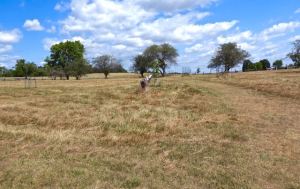
Burned out farm field we visited, New Market, VA, Aug. 2, in the midst of the 2-year drought in the Shenandoah Valley

Trump’s Response?

It is further noteworthy that the once-and-about-to-be President, Donald Trump, tried to force Congress to scuttle this bill, even at the cost of shutting down the government. Why would he do such a thing? Does he want to be known as a President who won’t provide disaster relief (as he failed to do in his first term in his callous lack of response in 2017 to Hurricane Maria in Puerto Rico)? Does he not want to meet the needs of the farmers in states like Texas, Oklahoma, and West Virginia, who are suffering massive crop losses because of extreme heat and drought? Farmers in these states and others overwhelmingly supported him in his run to the Presidency, because he promised to help long-suffering rural America, and they believed him. But, his promises aside, he might be more concerned that passing such a bill will draw attention to the vast scope of a problem that he’s always claiming doesn’t exist, but which will continue to dog him throughout his final term and just get more painful, tragic, and costly to Americans.

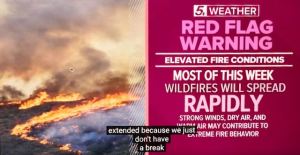
Close-captioned TV weather forecast from CBS-affiliate in Central Texas, summer 2023 (clip from YouTube video)

Fortunately, enough of the Republican House members, aided by the votes of almost all Democrats, defied Trump’s effort to kill the aid, and so the money will flow, because the Senate and still-president Biden moved it forward immediately.  As the majority of the House realized, something bold had to be done, and even the President-to-be, despite his fearful wishes, had to give in. Remember, House members will be up for re-election in just 2 years, so they know, unlike their leader, that they can’t afford to ignore the needs of their constituents now.

But passing such an open-ended bill leaves President-elect Trump and all his fellow climate-change deniers in a dangerous spot.  Hundreds of billions in relief can pretty quickly turn into trillions, as the climate sins of the fossil-fuelers exact more and more sacrifices and pain. As lack of farm production destroys farms and ranches, and causes prices to rise for all of us, and as more and more of the country becomes harder to live in, people will blame the party in power, as they always do. At some point the people will demand answers as to why those leaders failed to admit that the hurricanes, warming oceans, wildfires, and burned-out fields could have been–and future ones still could be–avoided.

US Drought Monitor, Christmas Day 2024 (https://droughtmonitor.unl.edu/CurrentMap.aspx)

***********************************************************************

The December 2024 Photo/Video Gallery

All photos and videos this month come from in and around our lake, all celebrating the increased precipitation and the return of some of our citizens, plus visits by a few welcome guests.

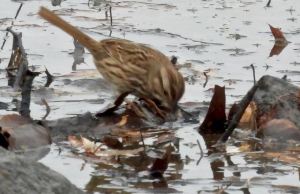
Our year-round residents: Song Sparrow munches grass in the field west of our lake, cold morning, December 23

Savannah Sparrow sips from the rainy north shore of our lake in the rain, Dec. 9

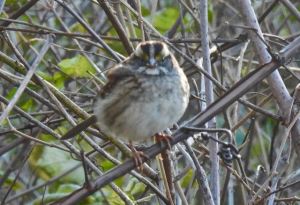
White-throated Sparrow poses for the camera, southeast cove, December 6

Male Cardinal munches seeds in an east bank tree, amid flurries, morning, December 20

Panorama toward downtown, partly frozen lake, early morning, December 23

Rare sighting of Red-shouldered Hawk not in a tree, but on the ground, eyeing bird in the brush, north end path, cold morning, December 19

Pair of Red-shouldered Hawks in Tulip Tree and Virginia Pine, southeast side woods, December 19

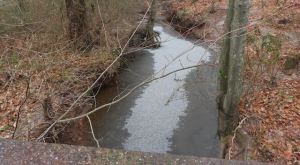
Sleet-covered inlet stream under bridge, early morning, Christmas Eve

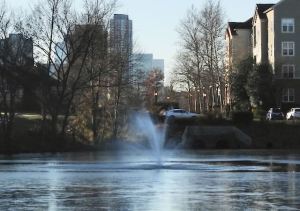
Our fountain in the frozen lake, view toward downtown, December 23

Our resident flock of Rock Doves takes off from north shore, December 23

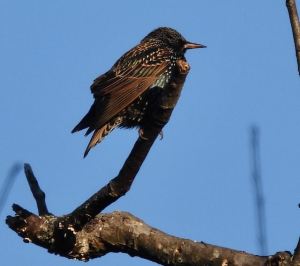
European Starling, brightly lit by the sunrise, scans from the dead Oak, east bank, December 23

Carolina Wren alights on a branch above me, calls friends, and feels the flurries on a snowy morning, December 20

Robins in late December! Wow! These cavort in a sugarberry tree in the north end woods, December 23

This Robin calls in the Sugarberry that same cold morning, December 23

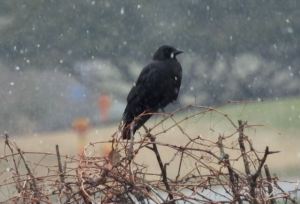
American Crow, amid flurries, perches atop a Bradford Pear and Blackberry canes below the north end dam, December 20

Four Canada Geese swim mid-lake in the December 20 morning snowshower

Tufted Titmouse perches along the southeast path on a cloudy December 1

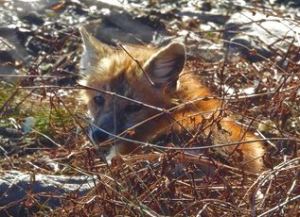
Red Fox, not often seen, watches me from the brush beside the north shore rocks, December 8

Mallard pair along the northeast shore in the rain, December 9

Rare visitor, male Hooded Merganser, swims in mid-lake, cold, windy December 6

Three Hooded Mergansers, 2 female and young male, along the east lake bank late afternoon, December 6

The Red Fox, ill with mange, explores the north shore rocks, then drinks from the lake, December 8

Blue Heron flies from north shore to west bank and through community, December 17

And so, weakened as we are, may we take wing and fly into 2025 in hope of a more just and thoughtful world.

October 2024: Way More Than Our Senses Can Handle

A feast of fall colors: from Oakleaf Hydrangea to the trees surrounding our lake, October 28

In this month’s blog:

Way More Than Our Senses Can Handle: So Much Beauty, So Many Extremes
Bounty from Our October Kitchen
More Exploration in Amish Country
Celebration of Dia de Los Muertos
The October 2024 Photo/Video Gallery: Fall Beauty Amid Deepening Drought

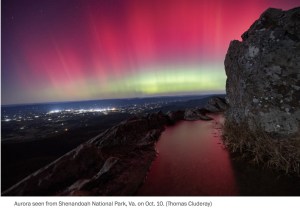
The Northern Lights, as seen from Shenandoah National Park, Virginia, Oct. 10 (Washington Post photo)

*******************************

Photo of Bat Cave, North Carolina, after Helene, from USA Today, October 10

A Month of Extremes: So Much Beauty, So Much Suffering

Chris:

I struggled to find a theme for this month’s blog entry, because so many conflicting emotions have been inspired this October. On the one hand, there is the astounding visual beauty of the fall colors–more intense than we’ve seen in years–and the astonishing surprise of seeing the Aurora borealis this far south; on the other, there is the utter devastation resulting from the unprecedented back-to-back hurricanes Helene and Milton, as well as the ongoing destruction taking place daily in Gaza, Lebanon, and Ukraine.

Bringing us daily joy is the love of our family members, our pride in their achievements, and our opportunities to make and enjoy good food and to make visits to new and familiar places. But tempering our joy is our anxiety over the upcoming elections, with so much at stake for our democracy. And even our pleasure in the fall colors is muted by seeing from day to day how intensifying drought across almost the entire U.S.  has hastened the loss of greenness, the stunting of crops, the dropping of the colorful leaves, and the early migration of local bird species. (Here in Northern Virginia it has not rained for more than month, a new record.)

Intensity of drought across the U.S., end of October. Source: U.S. Drought Monitor

So, as this entry proclaims in its photography and stories, we take immense pleasure in all the beauty we are so blessed to see, hear, taste, feel, and imagine. We want our entries to share some of that joy. But our joy is not unreflective. It is not a joy that ignores the suffering that goes on in the world, or that fails to ask how life can be made better for other humans and for all the species that are harmed by human actions. When we show photos and videos of the animals and plants where we live, that is  pure and beautiful joy, but it is beauty that we know is fragile, under threat, and so needing our attention and respect in order to keep it beautiful.

In particular, readers of this blog know that we call out the day-by-day degradation of our environment, as Mother Earth steadily heats up through the carbon pollution produced by the selfish greed of the fossil fuel cartels and of the politicians who promote them through their lies, crude insults, disinformation, and fear mongering. 

But we do not call out these harmful actions in order to rob people of joy. Indeed, one of the joys we try to express in these entries is that the fate of the Earth is not hopeless, but hopeful. Indeed, any person is capable of doing small things, day by day, to heal their own tiny bit of the environment. It is joyful to say that the degradation of the Earth is reversible, and so we celebrate acts and arts, large and small, through which people try to lead more nurturing lives and build a healthier future for our children and our fellow creatures. These small actions are beauty in themselves.

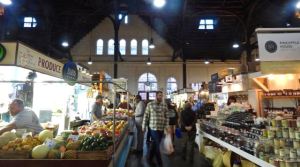
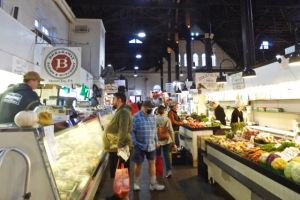
Produce stalls in the Central Market, Lancaster, PA, October 25

So this month’s entry relates three stories that show people trying to make life better in environmentally responsible ways: Jean’s description of her delicious pumpkin dessert, farmers in Pennsylvania living simply and producing nutritious foods of many kinds, and indigenous performers in Mexico creating art that honors the lives of their forebears who struggled against oppression.

*********************************

A Pumpkin Treat from Our October Kitchen

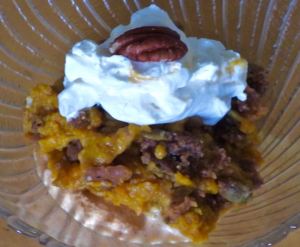
Jean’s Crustless Pumpkin Streusel Pie, just from the oven, October 15

Jean:

It’s pumpkin time of year.  Time to get a big pumpkin for your porch and maybe carve it for Halloween.  Time for a pumpkin drink from your favorite coffee shop.  And time for pumpkin pie–my favorite dessert other than tiramisu.  I need to work on a way to combine those, but I can’t figure out what the mashup name for the dish should be.

Meanwhile, because I was not yet seeing pumpkin pie in my favorite grocery store(s), but I really wanted to eat one, I thought it would be a good time to try out some other variations on the traditional recipe.  For years I have made it from the recipe on the Libby’s pumpkin puree can, with a can of sweetened condensed milk and a homemade pie crust from a simple Crisco recipe.  I thought all that was perfect.

But this week I didn’t feel like making pie crust.  I have always disliked rolling it out.  I’m not strong enough, I guess.  It just wants to sit there in a cold clump, resisting my efforts to move it far enough in any direction to get it rolled out as thin as it should be.  The most successful technique I have come up with is to put the right amount of dough for one crust on a 10-inch plate and press down on it with a similar plate.  When the dough is room temperature, this works to give me a round of the right size, which I can then cover and chill until ready to invert it onto the pie pan, fill, and bake. But sometimes I don’t even feel like struggling with that.  Of course I could have bought a frozen, pre-shaped crust, but I find those break very easily while I am trying to get them into the pan.

So I looked for crustless pumpkin pie recipes, and sure enough, they exist.  You’re essentially making a pumpkin custard or mousse.  Easy enough.  Who needs pie crust unless you really want to be able to cut out picture perfect pieces that stand up properly?  I just want to scoop the filling into my mouth, with loads of whipped cream.

Bowl, beaters, and some of the ingredients for whipped cream on Jean’s Crustless Pumpkin Pie, October 15

One other wrinkle.  I didn’t have a can of condensed milk and just wanted to get started on my pie in the morning because the baking, cooling, and chilling all take hours.  I didn’t want to go to the store for canned milk any more than for a frozen pie crust.  I wondered if I could make a pumpkin pie with either buttermilk or coconut milk, both of which I happened to have.  Take a look at these great examples I found:

https://www.southernliving.com/recipes/easy-pumpkin-pie

https://www.foodnetwork.com/recipes/food-network-kitchen/buttermilk-pumpkin-pie-3363760

https://www.dishbydish.net/crustless-pumpkin-pie-gluten-free-dairy-free/

The last recipe above touts the benefit of a dairy-free, gluten-free pumpkin pie!

I’m not going to tell you what to do.  This is the sort of thing I love; look over the recipes and decide on the combination you want to try.  You probably can’t go wrong.

One other point, though. In place of the contrasting texture provided by a pie crust, I decided to try this streusel topping from ZoeBakes, since I also happened to have pepitas and a little buckwheat flour:

https://zoebakes.com/2018/10/21/buttermilk-pumpkin-streusel-pie/

I like a more pronounced ginger flavor, so I also crumbled some Trader Joes’ Triple Ginger Cookie Thins on top.  I belatedly realized I could also have used these to make a cookie crumb crust underneath, easier than dealing with pie dough.  Maybe next time.

You could also make this taste something like a pecan pie by using chopped pecans instead of pumpkin seeds in the streusel.

I’m not into making caramel sauce as Zoe does here, but I’m sure it would be great, especially if you want more of the pecan pie taste.  All I needed to do after cooling the pie was whip up some heavy cream with sugar (or sugar substitute), a little bourbon and vanilla and then garnish with a nice pecan half.  Enjoy!  We certainly are.

Serving of the crustless pie with whipped cream and pecan garnish

********************************

Our Latest Exploration in Amish Country

Horses and buggies at AAA Buggy Rides in Ronks, PA, October 23

Chris:

Following our June visit to rural New York and Pennsylvania, as recorded in our June entry, we wanted to go back to Amish country in southeast Pennsylvania, because we enjoyed our two days there so much.  This time we visited the towns of Ronks, Lititz, and Ephrata and the city of Lancaster. Our 3 days total left us wanting still more.

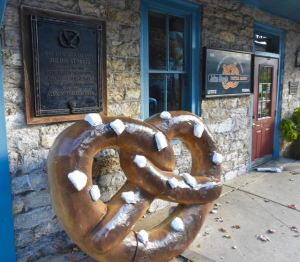
Lititz, PA: the Sturgis Pretzel Bakery, oldest in the Americas, begun 1861 (photo October 24)

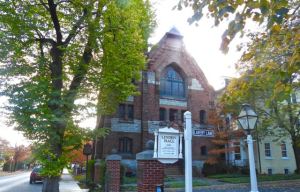
Lititz, PA: Chapel of the Linden Hall School, the oldest college prep school for women in the U.S., founded in 1746 (photo, October 24)

One of our objectives was to actually ride in one of the horse-drawn buggies that move at leisurely pace along the highways and byways through Amish country; buggies and teams that brave the roar and fumes of the cars and monstrous trucks that sweep by just a few feet away.  This we did on our first afternoon, in Ronks, on a two-horse buggy driven by our patient guide, Henry, and accompanied by a young couple visiting the U.S. from Holland. We’d actually been hoping that our trip would only be on the quiet back-country roads, far from the traffic, but both getting to farm country and then getting back required us to be buffeted and shaken by the speeding vehicles.

It was as if we were in two worlds at once: Henry, our horses, and we visitors were clopping slowly in the 18th century, while the traffic just an arms-length to our left had their own 21st century gas-powered agendas. Clearly, Henry and the team were calmly at home in their world and we picked up their vibe.

Short video of the start of our horses-and-buggy ride on Rt. 340 in Ronks, PA, October 23 

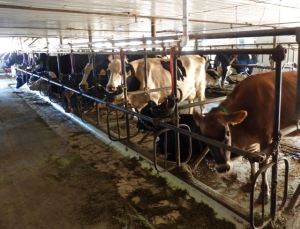
Our destination on the buggy tour was the Organic Valley Dairy Farm owned by the Esh family. Here are a few pics and videos of our hour-long visit with the residents.

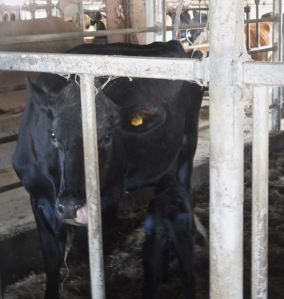
One of two rows of cattle in the barn for feeding after being all day in the fields

A day-old calf feeds on Mom in the barn

The huge Belgian horses who work on the farm eat their afternoon meal in the barn

Equipment and baled hay at the Esh farm

Bald Eagle soars above the Organic Valley Farm

On our trip back, we pass a multi-generational home community not far from the Esh farm

The 7 of us clop down the road with the traffic back to our starting point in Ronks.

The Ephrata Cloister. A spur-of-the-moment destination for us was the historic Ephrata Cloister, founded in 1732 by Conrad Beissel, one of many religious fugitives from Europe who came, like the Amish, to the Pennsylvania colony because of its toleration of many religions. Very different from the Amish religion, Ephrata was a monastic community of men and women who practiced a celibate lifestyle, and who eagerly anticipated the second coming of Christ predicted in the Christian Bible. Though the last monastic resident died in 1813, the impressive and unique buildings remained and were restored beginning in the 1940s–a project that continues today.

Restored buildings of the Cloister, as designed by Beissel

Known for both the composition and performing of religious music, with over 1000 hymns, the Cloister men and women also became famous for their calligraphy and printing.

The restored room where hymns were written down for printing in the Cloister’s renowned German script

The well-maintained graveyard at the Ephrata Cloister, including the 1768 grave of founder Conrad Beissel

Lancaster’s Central Market, thriving today. Our final destination of the three days was the Central Market in Downtown Lancaster. Founded in 1730, the Market is the longest-running truly public market–not privately owned–in the U.S.  It’s 64 standholders come from throughout Lancaster County, and offer a wide variety of produce, dairy, meats and fish, ready-to-eat foods, baked goods, specialty food items, health and wellness products, and flowers.

Begun as just an open piece of ground in colonial Lancaster, the market’s growing number of vendors took more and more space on local streets as the Market’s fame spread. To house them, the beautiful building it now occupies was built in 1889. Open 3 days each week, it is truly a mecca for the region, and we gathered fresh produce and breads to carry home with us to Virginia, as well as the intention to visit again.

Front of the Lancaster Central Market, built 1889 (photo, October 25)

********************************

Dia de Los Muertos at the NMAI, Washington, DC

Main altar for the Dia de Los Muertos celebration at the National Museum of the American indian, October 26

We traveled to nearby Washington for the first of two days of celebration of the Dia de Los Muertos (Day of the Dead) at the Smithsonian Institution’s NMAI on Saturday, October 26, just after our return from Pennsylvania. The National Museum, both here in DC and in its branch in New York City, honors the indigenous cultures of the Americas with exhibits and performances throughout the year. The annual Dia exhibition is one of its largest.

Through dance, music, and visual arts, the performances show how, unlike our Halloween’s fixation on scaring people, particularly children, through terrifying costumes and stories, the Day of the Dead celebrates those who have gone before us and the community’s mutual bravery in facing mortality and the ongoing threats to the community’s existence.

The following video excerpts record the first performances of the day, as described on the program’s website:

“Dance Performances by Grupo los Tecuanes: The name of the Danza de los Tecuanes (Dance of the Jaguar) is rooted in the Mixtec understanding of the duality of life and death and the fight of good against evil. The Danza de los Viejitos (Dance of the Old Men) is a humorous dance featuring dancers colorfully dressed as old men.”

Part of the Dance of the Old Men (Danza de los Viejitos) performed by Grupo los Tecuanes at the NMAI Washington, October 26

Part of the Dance of the Jaguar (Tecuanes) at the NMAI, October 26

*************************************************************

The last Monarch Butterfly of the year, with Bumblebee, relish the Asters on the south shore of our lake, October 4

The October Photo/Video Gallery: Missing the Music

As every month, the gallery features the residents and visitors to our small lake community in Northern Virginia, with perhaps a few pics and videos from other places. Overall, we are aware that the number of birds in the community this month is down significantly from one year ago, because of the drought. We miss the variety of waterfowl we had last year, and the sheer numbers of birds, who create a tuneful, harmonic chorus each day. We miss the music, and we hope the drought does not linger and that our residents return soon.

But still we have an amazing, colorful, creative, varied, enterprising community, well represented here in these photos and videos.

Fall colors show off the west bank of our mirror lake on the morning of October 28

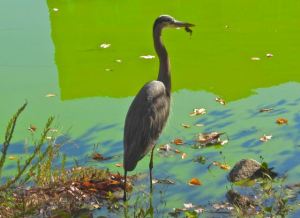
Blue Heron on the west shore of the green lake, warm morning, October 28

Eight Red-bellied Cooters enjoy the sun on a log amid Greenbriar on the south shore of the lake, October 22

Ruby-crowned Kinglet–our first sighting here!–on the east bank of the lake, on a warm morning, Oct. 28

A new fall visitor, Eastern Bluebird, on a branch west of the lake, October 28; they came in profusion last year


Three House Sparrows in Willow Oak on the east bank of the lake, October 28

Six dozen Rock Doves and European Starlings on the stanchion to the west of the lake, warm morning, October 28

I stalk the Blue Heron, who is stalking along the west shore of the lake, October 28. Watch patiently

Turkey Vulture soars over the north shore of our lake on a sunny noon, October 20

On a visit to nearby Lake Newport, we listen to Carolina Wren calling, October 19

West side path, colors, shadows, fallen leaves, morning, October 28

Tufted Titmouse, always good at hiding, in Pokeberry bush, northeast corner of the lake, windy October 16

Winged Sumac, splendid in red, gold, and green, by the southeast cove, October 13

Immature Swamp Sparrow (rare sighting) on the porch by our feeder, east side, October 29

A newly arrived Dark Eyed Junco (welcome!) in Chinese Holly, east side, October 29

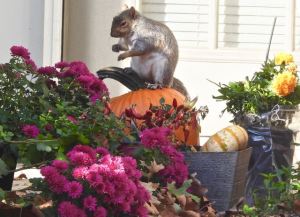
One of our Grey Squirrels enjoys munching our pumpkin on our east side Halloween display, October 26

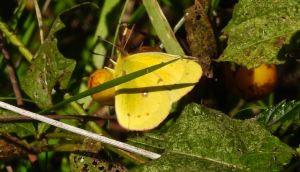
Our last Orange Sulphur Butterfly of the year feeds on Carolina Horsenettle along the north end path on the morning of October 6

Our last Monarch of the year feeds on Asters, accompanied by Bees, as a jet flies overhead, south shore, afternoon, October 4

On to November in joy and hope! Happy Halloween, Happy Dia de Los Muertos, and Happy Diwali!