September 2025: The Rewards of Paying Attention

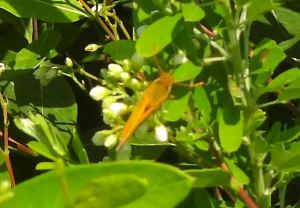
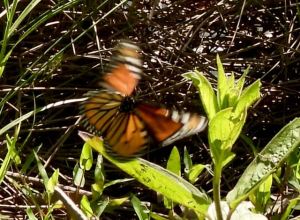
Late-season Monarch feeds amid Bearded Beggarticks west of our lake and near the highway, breezy morning, September 20. One of the great joys of walking around our lake are the surprises that I’m privileged to encounter, like this Monarch, the hidden Asters in the next photo, and the gorgeous new wildflowers that keep popping out month to month.

In this month’s blog:

Surprises of Paying Attention, Camera in Hand
Treasures of the Late-Season Garden
Climate Log: A Slow and Steady Worldwide Drying
The September 2025 Gallery: Wildflowers and Persistent Pollinators

**************************************************************
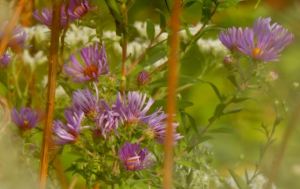
I spied these New England Asters deep within the field of wildflowers north of the dam, September 20

Surprises of Paying Attention, Camera in Hand

In “How to Count Butterflies” (New York Times, Sept. 15), the eloquent gardener Margaret Renkl writes:

God knows, our government doesn’t care about the health and safety of butterflies or any other species, including our own. For now, at least, it’s up to us to care. And the first step toward caring, as is so often the case in conservation, is getting to know our wild neighbors.

Paying attention is the first step in caring. Renkl observes closely the butterflies in her Tennessee garden, and her watching leads her to learn how to take the next step in caring: putting into her garden the plants that each species needs to feed its larvae–like the milkweeds the monarchs need:

Swamp Milkweed with Bumblebee, east bank of our lake, noon, July 4. Milkweeds are prominent on our lakeside

…or the showy, perfumy Japanese Honeysuckle that I’ve learned is a favorite food of the Zabulon Skippers, one of the tiny butterflies that grace our lakeside and our garden plot.
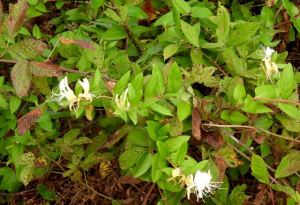
Late-season Japanese Honeysuckle entwining on the east bank of our lake, September 20
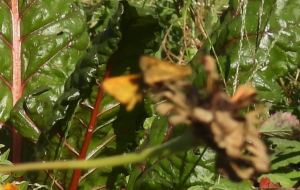
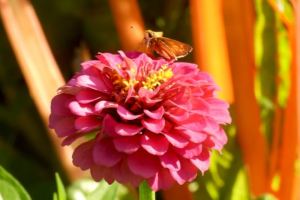
Mating pair of gold-brown Zabulon Skippers flutter on a fading Zinnia in our garden plot, September 19

Fortunately for me, so many of the resilient plants that populate our lakeside or that grow wild in our garden plot provide homes and food for the butterflies, birds, and bees. Even wild plants such as the tough, prolific Crabgrass that we pull as weeds, do necessary work for the pollinators, as I learn from the online sources curated by professional entomologists and citizen scientists. For example:

48 Common Brown Butterflies in The U.S. (with Pictures)

It takes a hard-working community of observers and professionals to help any of us really pay attention. I need to take the time to read as well as watch closely and often. Otherwise,  I’d persist in my ignorant destruction of essential plants. Fortunately, that persistent crabgrass finds plenty of room to grow among the colorful plants we cherish, like the marigolds and coneflowers.
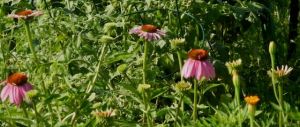
Our “volunteer” Coneflower plant, in full bloom and with more buds coming, morning, July 23. “Weeds,” such as Crabgrass, grow amid flowers, and there’s plenty of room for all.

My trusted assistant–my camera.

If we don’t pay attention–the first step toward caring–it’s not likely that we’ll go on to the next steps. To help me pay attention, I take along my trusty camera, who allows me–actually forces me–to slow down my walk and try to do the careful work of

  • finding,
  • focusing, and
  • staying steady

My camera is an astounding tool, with its zoom lens, its automatic adjustments for light and color, and its versatility for still shots and videos. But it won’t choose its own shots–that’s my job, because I can’t grow and really pay attention if my mind is not intimately engaged in watching and choosing. Likewise, after my walks and picture-taking, I use the Apple editing tools to look even more closely at what my camera has captured, and to try to clarify even further what I’ve observed and to highlight details–particularly aspects I’d missed–to make my paying attention deeper. Even a single shot can offer ongoing opportunities to see more and more in a single scene, often well after the photo was taken. So paying attention is not a single act, but an ongoing adventure.

One of our Great Blue Herons, preening atop the dam structure at the north end of our lake, on a warm September 14. Their movements–and their stillness–are always fascinating to me, and the videos help me keep learning about them..

This photog among the other walkers.

The other walkers who go around the lake pay attention to different things which are important to them, which may not be the flora and fauna they pass. I’d say all our community humans use the path to exercise in the open air, but what we do on our walks varies greatly. Many use the path to walk their dogs, and so I meet many canine species that way. The dogs always pay attention to what they see, hear, and smell. Another group of walkers are exercising their babies, toddlers, or older young children.  I like to observe the interactions between the kids and their adults, and I’m happy to see how often the kids look around and even point at what they are passing.

Beggarticks, our most brilliant September flowers, and a Bumblebee wave in the breeze in the southeast cove, as a Fish Crow, Wren, and Crickets call, morning, September 13

Less satisfying for me are the 50% of strollers who are carrying on phone conversations, either with business colleagues, potential clients, or family and friends. Many of these folks look at the ground and often have pained expressions. Some of these conversations are sufficiently loud to scare away birds, and I must admit that these talker/walkers annoy me.

I almost never see another walker with a camera, nor a person who has actually stopped to look closely at a plant. This I can’t understand, because the lakeside is so fascinating, at least to me. But to each their own.

I’ll even get the occasional question about my picture taking, the most common question being “Taken any interesting pictures today?”  l always say yes, but if I say what I’ve seen, and if it’s not a big raptor or an exotic species, most  just frown and walk on. But every once in a while, someone wants to talk about the birds and the other animals we see. and that’s always a joy.
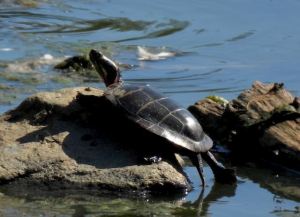
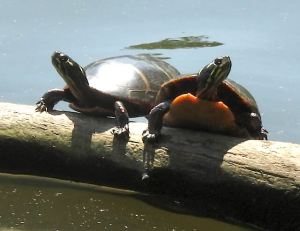
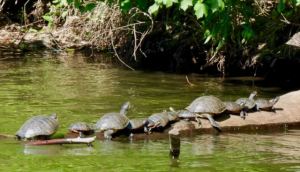
I’d love to talk about the Red-Bellied Cooters, who, like this one on September 13, take the sun on the rocks and logs in the lake whenever the temps get to 60 or so.

******************************************************************

Treasures of the Late-Season Garden
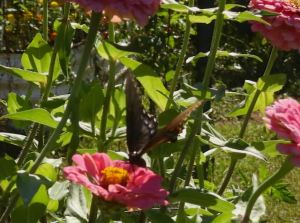
Pipevine Swallowtail Butterfly feeds on a Pink Zinnia in our garden, September 19

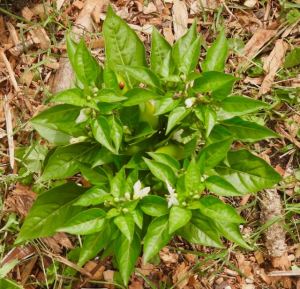
So September is moving inexorably into Autumn, and our garden plot moves into its next stage of fascinating life. We’ve had only one day of soaking rain in the past two months, but the frequent rains we had this summer set up the plot of veggies, herbs, and flowers for rich success. Our 4 tomato plants miraculously still keep producing, one pepper plant is still putting out new green beauties, and some of the flowers–like the vinca, marigolds, dahlias, and zinnias–either flourish or have kept some of their blooms.

Best of all, the steady warmth this month (highs into the 80s some days) has kept the Bumblebees and Butterflies still visiting, hovering, fluttering, and feeding.
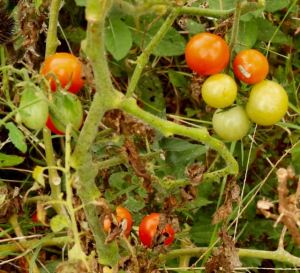
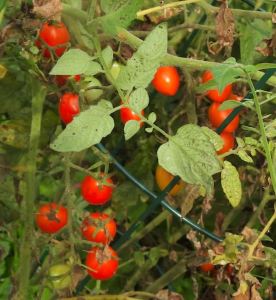
Sweet Millions tomatoes, 2 plants, just keep on giving us ripe gems, September 16
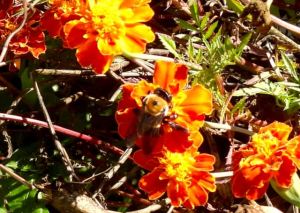
Bumblebee on Marigold cluster, morning, September 19

Cluster of Red and Pink Zinnias, with a tiny visiting Crossline Skipper, September 19
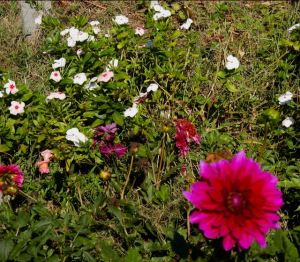
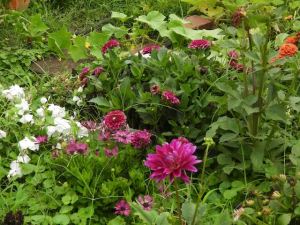
Magenta Dahlia with display of White Vinca, September 19

Aphrodite Fritillary Butterfly feeds on Yellow Orange Marigolds, September 19
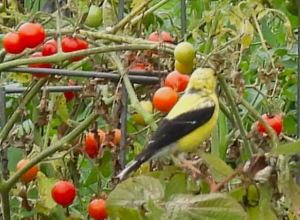
American Goldfinch perches among the Tomatoes in our community garden, September 16

Look for more photos/videos of our September garden in the Gallery (below). When all our plants will fade, and the pollinators move on into their next stages, is still in the future. Meanwhile, we enjoy.

********************************************************
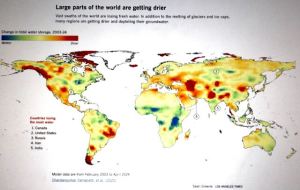
Climate Log: A Slow and Steady Worldwide Drying

  • “Areas experiencing drying increased by twice the size of California annually, creating ‘mega-drying’ regions across the Northern Hemisphere.” Science Advances, September 2025

The title: “Humanity Is Rapidly Depleting Water, and Much of the World is Getting Drier,” almost says it all. The article in this month’s Los Angeles Times (September 3) by Ian James and Sean Greene summarizes a new study in Sciences Advances based on 22 years of satellite data.

https://www.latimes.com/environment/story/2025-09-03/global-drying-groundwater-depletion

The US and Canada are among the five countries (including Russia, Iran, and India) across the world losing fresh water fastest, as well as becoming rapidly drier. This is not news for this blog, which regularly shows data on the intensifying US drought from the US Drought Monitor (https://droughtmonitor.unl.edu ), but the data from 22 years shows the worldwide phenomenon.

The principal cause of the loss of fresh water is the over-pumping of groundwater (68% of the loss) from the world’s diminishing aquifers, mostly for agriculture, to make up for the overall loss of rainfall on the land.  As the world steadily warms through the burning of fossil fuels, the melting of the world’s glaciers and of the polar ice sheets sends water into the atmosphere and therefore increases rainfall over the oceans, which both decreases the amount of usable fresh water and contributes to the sea level rise that is endangering coasts and islands around the world. The world’s aquifers, which took millions of years to grow underground, have been depleted at an astonishing rate over the past few decades–as anyone who lives in farming areas around the US knows.

A second recent article, from the New York Times (Sept. 18), targets another devastating effect of global warming and intensifying drought: the great increase in wildfires and their intensity in the US. In our years in Northern California, we followed–and were affected by–the annual wildfires in the state. The closest we came to the fires themselves was in 2020, when the Lightning Complex fires came within eight miles of our home, the sky was orange, and ash from the smoke covered our plants (see the August 2020 blog entry). But even more distant blazes sent smoke our way, sometimes for days, and we had friends and relatives whose closeness to other fires affected us as well.

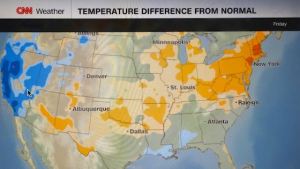
But while California always gets the lion’s share of attention about US fires, the map above shows that more than half of the continental US now suffers from wildfires and damage from their smoke. In the past year, states as far east as New York and Florida have seen wildfires–a trend that will no doubt continue. Just 2 years ago, the wildfires in the northern territories of Canada sent smoke into our area, and the Great Lakes states see and breathe smoke from the Canadian fires every year now.
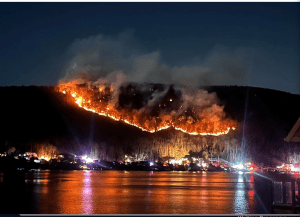
Wildfire on New York/New Jersey border, as this blog reported in November 2024

The article specifically concerns the increasing health affects, including increases in lung diseases and cancer, of these burgeoning fires. Unfortunately for all of us, the current federal Administration not only ignores but has steadily cut funding to help treat these worsening effects. The rollbacks

  • to environmental protections,
  • to emergency disaster funding,
  • to forest protection, and
  • to covered health care

will make the effects of this spreading menace more and more deadly–unless and until these damaging policies are turned around.

***************************************************************

The September 2025 Photo/Video Gallery: Wildflowers and Persistent Pollinators

More samples of the gifts we receive each day from the citizens of our local environment. We just have to pay a bit of attention, be thankful, and do what we can to help repair our endangered world.
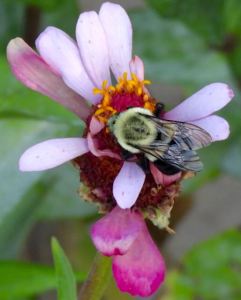
Large Bumblebee on tiny Zinnia, lake community, September 14

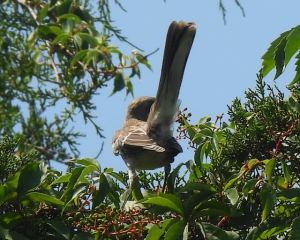
Mockingbird moves in Red Cedar in breeze, north end path beside our lake, morning, September 20
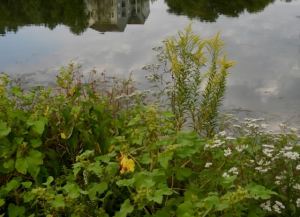
Common Cocklebur, Porcelainberry, Late Boneset, and Goldenrod along the northeast shore, morning, September 20
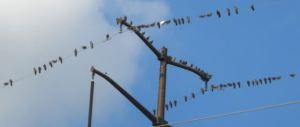
70 Rock Doves on the stanchion west of the lake, morning, September 20
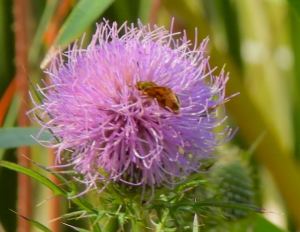
Tiny Sachem Butterfly in Purple Teazel below the lake, September 13

The outlet stream below the dam burbles through Goldenrod and Arrowvine, September 20
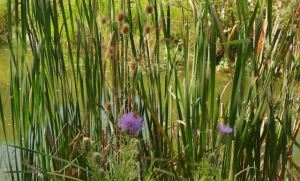
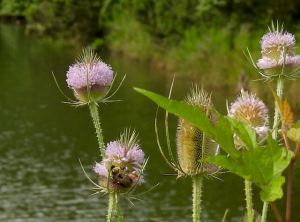
Cattails, Purple Teazel, and Cutleaf Teazel by the outlet pond below the dam, September 13

Double-crested Cormorant in mid lake near the west shore, morning, September 13
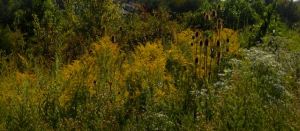
Since we moved back to Virginia in 2022, this is the first time that the field below the dam has been left unmowed all spring and summer, leaving it to the pollinators to thrive. Here, Goldenrod, Cutleaf Teazel, Silver Maple, and Late Boneset provide food and homes, evening, September 13

European Starling calls from atop a Red Cedar on the east shore of our lake, on a breezy morning, September 20
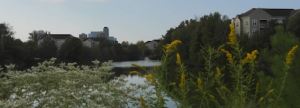
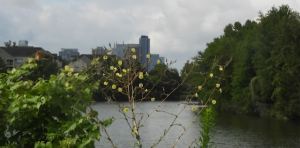
View down the lake toward downtown, with Goldenrod and Late Boneset in the foreground, September 20

Pipevine Swallowtail Butterfly dances on a Pink Zinnia, warm morning, September 19
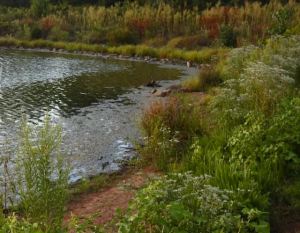
Northeast corner of our lake, with Late Boneset, Horseweed, and Porcelainberry, Cocklebur, evening, September 8
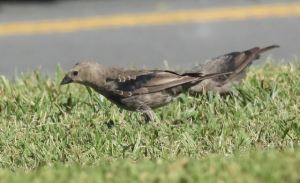
A flock of Brown-headed Cowbirds stopped by the community garden in mid migration, and I happily took this picture of a pair, September 3
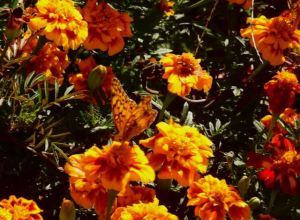
Aphrodite Fritillary Butterfly amid Marigold display, morning, September 19
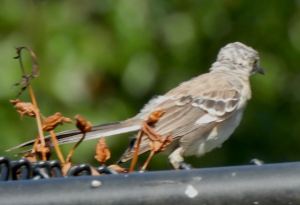
Mockingbird moulting on community garden fence, warm morning, September 3
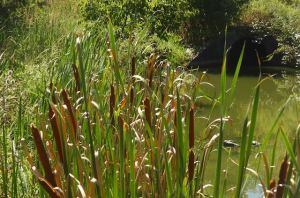
Outlet pool of our lake, with a Cattail festival, August 27
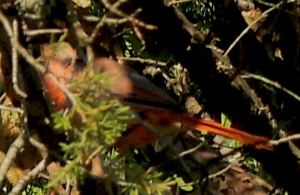
 

Male Cardinal hides in shadows in Bradford Pear, beside the outlet pool of our lake, September 13

Two Zabulon Skippers dance on a faded Zinnia in our garden, September 19
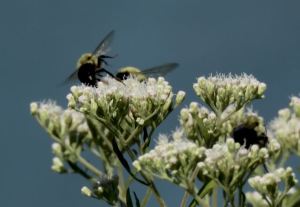
Three Bumblebees on Boneset blooms along the northeast shore of the lake, September 13

Two Bumblebees feed on Orange Marigolds, sunny morning, September 19
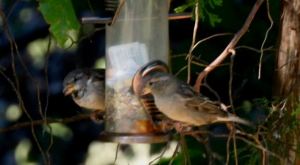
Two House Sparrows in shadows at bird feeder, east side of lake, September 13

Panorama of tiny Skipper Butterflies and Black Swallowtail feeding on Zinnias as a Bluejay calls, September 19

With a week of September still left, welcome to Fall, with hopes for an October of good surprises…
July 2025: Being One with the Land

Mexican Migrant Workers

Farm workers who create and nurture this beautiful, productive California field (Getty images)

One day’s harvest from our garden plot, July 19

In this month’s blog:

Being One with the Land: At Least Trying to Be
Climate Log: Flash Flood Horror in Texas and Iceland’s Dilemma
July Kitchen: Homemade Pies and Garden Produce Dishes
The July 2025 Photo/Video Gallery

Marigolds and Coneflowers, our garden plot, July 2

Being One with the Land: At Least Trying to Be

Farmworkers plant jalapeño pepper seedlings in Camarillo, CA (LA Times photo)

“A fresh peach still requires a pair of hands to pick that off a tree. Table grapes still require the sensitive hands of an employee to remove them from the vine.” Ryan Jacobsen, director, Fresno County Farm Bureau (From LA Times: “For State’s Farmers, Migrant Workers Are ‘Irreplaceable,'” July 10, Andrea Castillo, Sulauna Hussain, Jessica Garrison)

Chris:

It may be ridiculous to think that amateur gardeners like us have anything in common with the skilled farmworkers, like those pictured in two photos above, who spend their lives in the fruit and vegetable fields of California and other states. After all, they have the experience, perseverance, knowledge, patience, and toughness to grow the crops that feed the United States and much of the world, while we just experiment semi-blindly on our little plot with tiny seeds and cute seedlings we’ve picked up from Home Depot, and then marvel at how the sun, soil, and water turn those infants into delicious (we hope) tomatoes, cucumbers, squash, berries, herbs and gloriously beautiful flowers–with precious little work on our part. While those farmworkers bear the heavy responsibility to keep all of us alive through their skilled, talented work in the harshest of conditions.

Swiss Chard, Tomatoes, Strawberries, Thyme, Oregano, Squash in our garden plot, July 2

If we fail in our little garden playpen, so what? We can just go to the store and stock up on the fruits of the farmworkers’ incessant, highly skilled labor.

The Price of Being One with the Land. Now one would think that people who bear all that responsibility and who display every day all that skill and perseverance, would be honored by the rest of us and treated like the heroes they are. But, instead, their work and knowledge are, at best, taken for granted by us. And, even worse, the people who we voters have elected most recently to lead us treat those indispensable workers with fear and contempt. These leaders just take and enjoy the fruits of these essential workers’ labors–and then, if you can believe it–do nothing to grant these workers citizenship in our nation. In fact, by not granting them citizenship, these leaders pretend that the workers are criminals because we have not granted them citizenship!

And even worse, these leaders send in masked marauders to capture them, often in workplaces like the Home Depots we visit, and send them out of the country. Can anyone make sense of this? Where, pray tell, will our food come from if these workers are deported? Does anybody gain by this senseless cruelty?

****************

Sachem Butterfly on Zinnia bloom, our garden, July 11

Trying To Be One with the Land. Now, I may not be a skilled digger of holes, planter of seeds, plucker of weeds, spreader of mulch, waterer, watcher, and harvester, but I’ve become a pretty skilled admirer of the plants themselves and of the busy creatures who pollinate them. But getting to know our tiny, living plot of soil does help me respect the farmworkers who really know what they are doing, so that I never  take any of what they do for granted.

Yes, Jean and I know what it feels like to be soaked with sweat, bitten by ants and mosquitos, and wilt after just one hour in the garden in the July sun. But can we imagine doing this work hour upon hour, day in and day out? We try, but know we really can’t.

It’s easier every day for us to marvel at the miracles that are plants and the miracles that are these real gardeners. And everyone who gardens knows that those people and those seeds and the soil, the rain, and the sun, are miraculous. And I can each and every day give thanks for these miracles.

And I can call out the injustice and cruelty of those–really all of us–who take the real gardeners for granted and even seek to punish them, banish them, and deny them citizenship.

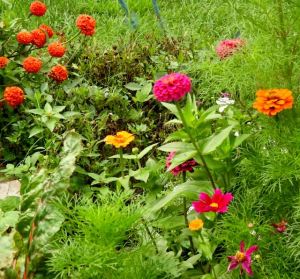
Dahlias, Vinca, Zinnias, and Cucumber vine, our garden, hot muggy July 2

******************************************************************************

Climate Log: Flash Flood Horror in Texas and “What Do You Call Iceland When All the Ice Is Gone?”

The next “heat dome” crossing the US and set to arrive in our region by July 25 (CNN Weather, July 22)

“Nature is changing faster than the language we use to describe it.” Andri Snaer Magnason, in the New York Times, July 19, 2025

Bed of the flood-ravaged Guadalupe River, Kerr County, Texas, July 6 (CNN video)

More and more continues to be written about the horrendous flash flooding in Texas Hill Country on July 4 that took 135 lives, with more persons still missing. Blame for the disaster has been spread among

  • local officials for tardy responses to warnings,
  • the gutted National Weather Service for staffing cuts,
  • localities for feeble, under-funded warning systems,
  • dangerous building locations by property owners and children’s summer camp owners (these camps were particularly hard hit), and of course,
  • just plain old complacency by people who’d rather ignore warnings than do anything different.

In the last few days, another target has been named by a few conspiracy theorists: a chemical cloud-seeding operation in the bone-dry West to try to encourage more rainfall (LA Times, “How Cloud Seeding Sparked Texas Flood Theory,” Hayley Smith, June 21). If there is anything like positive news in this flooding horror, it might be that at long last at least a few climate-change deniers are willing to admit that these so-called “natural disasters” are anything but natural–even if their cloud-seeding notion is easily-debunked nonsense. That said, it’s highly unlikely in Texas–ground zero for climate-change denial–that the true human culprits, the fossil-fuel cartel, will receive any blame. So the flooding horrors will just continue and get worse.

“What Do We Call Iceland When All the Ice is Gone?” (New York Times, July 19).

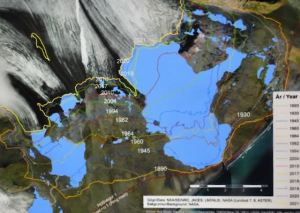
Some Icelandic glaciers have lost as much as 80% of their mass in the past century because of climate change, with projections that most of the country’s glaciers may be gone in the next 100 years (Horfandi Joklar photo, 2021)

I mention this article by Andri Snaer Magnason because it highlights how our language about climate change just can’t keep pace with the reality of what is happening. Iceland is a good case in point. There, so many place names feature glaciers–however, climate warming since 1900 has so depleted glaciers that the names no longer fit–yet people keep the names out of veneration for a happier past–and because the glaciers were for centuries so much of their national identify. Our continuing to use in the US the term “natural disasters” is another such example of how our use of language shows our failure to accept reality–and perhaps our longing for a past before Mother Nature was assaulted and violated day upon day by human forces.

***************************************************************

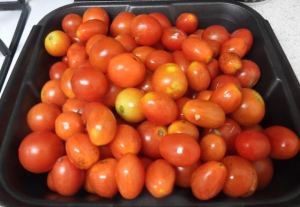
What to do with all these tomatoes? Four days of tomato harvest from our 4 Husky Cherry Red, Juliet, and Sweet Millions tomato plants, July 18

July Kitchen:  Homemade Pies and Garden Produce Dishes

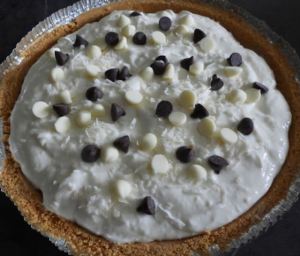
Jean’s Black and White Chocolate Cream Pie, July 19

Jean:

During my days of cooking for our graduate student friends as a young wife in the 1970s, I took pride in “sophisticated” desserts containing liquor or liqueur like black-bottom rum pie and grasshopper pie.  This month, those cool, creamy tastes sounded enticing in the heat, so I went looking for recipes, old or new.  Of course I found some online, but I also decided to alter them somewhat.

My black-bottom rum pie became a black and white chocolate cream pie, decorated with dark chocolate and white chocolate chips.  Okay, it’s summer and I was hot and busy, so I used instant chocolate and white chocolate puddings rather than separating and cooking egg yolks in milk and all that, like I once did.  But you do you.  I did put rum into the puddings, but we couldn’t really taste it.  The cream and chocolate overpowered the alcohol taste.  Somebody in my house really enjoyed it despite all the disappointments!

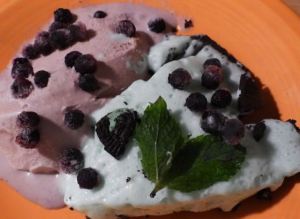
Slice of Jean’s Mint Oreo Pie with Black Raspberry ice cream and Wild Blueberries, July 25

Next I tackled grasshopper pie but did not want to buy an entire bottle of creme de cacao.  (I already had a bottle of creme de menthe I had purchased for something I no longer remember, but this helped inspire the pie.) You could also use a Torani mint syrup, if you have or find that.  See https://www.thepioneerwoman.com/food-cooking/recipes/a12009/grasshopper-pie/   You can change it up slightly to a mint chocolate chip pie, sprinkling mini chocolate chips on top in place of more Oreos. We added broken mint Oreos in the version you see here.

I must confess that the presence of these types of alcohol in my kitchen also inspired another treat for hot days–the boozy milkshake, like some of the upscale burger places serve.  Just take your favorite flavors of ice cream and blend them with milk and a bit of complementary liquor.  Everyone has mint chocolate chip ice cream on hand, right?  Throw in some of that excess, nearly unusable creme de menthe if you bought it.  The “grasshopper” actually used to be a drink, as shown here:  https://food52.com/recipes/creme-de-cacao.  And of course, another use for creme de cacao is a Brandy Alexander, which could be approximated as a milkshake using Irish creme ice cream and chocolate Irish creme liqueur, if you can find them. Just use your imagination to come up with combinations, and stay cool with a luscious cold liquid dessert.  Have the drink with your slice of pie if you can afford the calories.

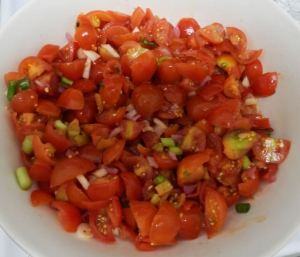
Chris’s Tomato, Onion, Hot Pepper Salsa

Chris:

What to do with all these tomatoes? We can use a lot, and friends will take some, too, but our local food banks are already resplendent in fresh donations from local supermarkets, so freezing for the fall and winter months is our best bet, as we used to do with our extra produce in California.

The fresh salsa shown above is super easy to make, as no cooking is required. And it disappears quickly, either as a dip/snack with chips, a side dish, or a topping for the veggie stir fry shown below.

Once you’ve done the tedious part–chopping all those little gems into 3-4 pieces each (I used 40 for my most recent batch), just sprinkle in salt and black pepper to your taste, plus some garlic powder, onion powder, and dried thyme or other herbs of your choice. The spice comes from the onion and from any hot pepper flakes or sauce you want to use (I used Cholula red, but I’ve also used sriracha). Fold it all up and taste. Stick it in the fridge until you want to use it. It keeps well for up to ten days.

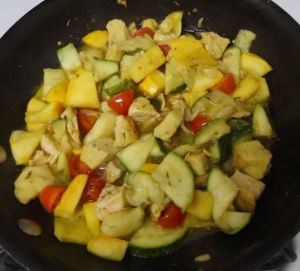
Chris’s spicy chicken, zucchini, yellow squash, tomato stir fry, July 19

For elementary cooks like me, the stir fry is perfect. With a light coating of oil in the skillet, and at medium temp and with a decent spatula, you can throw in any (well, almost any) chopped leftovers you have, add in salt, pepper, and spices of your choice, and just keep flipping and stirring until the mix softens to your desired firmness. (Just don’t leave it alone in the heat, because it will stick.) Except for the cooked chicken, which Jean provided, all the ingredients came from our garden patch. There are more of these veggies waiting in the fridge, so more stir frying will be coming up.

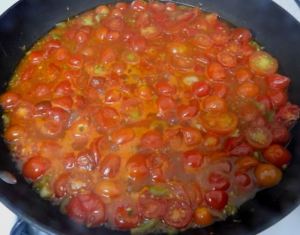
Chris’s Tomato Arrabbiata Sauce, cooking down, July 14

With as many Cherry and Grape Tomatoes as our patch has been producing since early July (50 or so ripe ones every two days), cooking sauce has been a great way to preserve those we can’t give away or eat as snacks or salsa. The large skillet of sauce just above has over 100 chopped in thirds or quarters.

Since there are a million tomato sauce recipes just a Google away, you can use the one you like. Just keep in mind that I’m using little tomatoes, so I can’t get the skins off. So as I cook the mixture of tomatoes, spices, red wine, olives, and herbs down on low heat, I’ll need extra time–say 90 minutes in all–to get the skins as soft as possible. I like to set up my laptop in the kitchen, so I can work and keep an eye on the stove during that slow cooking time. And the kitchen just smells so good!

The best part is that I can keep the finished sauce in jars in the fridge, where they’ll keep for a week or two, or I can freeze them. Right now, I have 2 jars in the fridge and just one in the freezer. We’ve already used 2 jars with pasta and stir fries! A load Like the one you see cooking will fill two 18 ounce jars.

*********************************************************

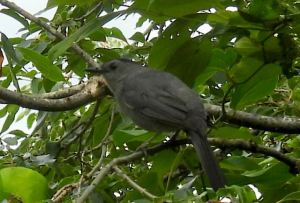
Grey Catbird in Persimmon tree right beside me on the west bank path, July 12

The July 2025 Photo/Video Gallery: Lake and Garden Highlights and One Local Outing

July’s gallery features shots of four gardens, the most intriguing of which may be the one that largely takes care of itself in the several acres within our semi-urban community. Or should I say that we humans care for this “garden” refuge by mostly leaving it and its citizens and visitors alone? Whatever hand we may or may not have in its care, it sure presents a marvelous array of species, shapes, and colors. And so do the other gardens pictured here! Enjoy.

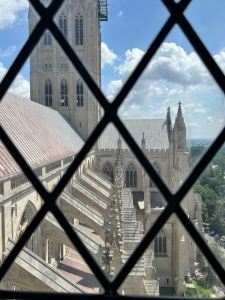
Washington National Cathedral–a favorite spot from our earlier lives in this region, but our first visit in 25 years, July 1. Here is a view of this magnificent Gothic style cathedral from the 7th floor observation deck. Notice the “flying buttresses” that support the windowed walls, a classic feature of the Gothic style

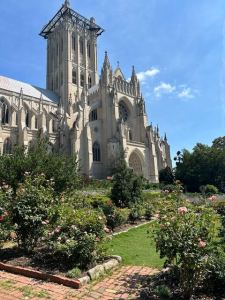
The West Side of the Cathedral and the Rose Garden, July 1

In our garden patch, Monarch feeds on a Garden Cosmos flower, hot morning, July 21

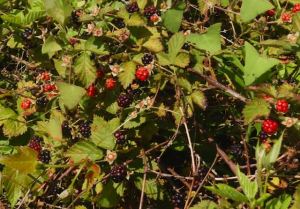
Ripe and ripening Allegheny Blackberries along the north end path of our lake, July 4. These berries grow wild in profusion around the lake. Plenty for us and for the birds

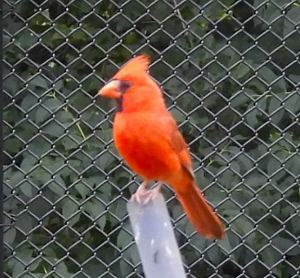
Beside our garden patch, this Male Cardinal calls from atop a neighbor’s stakes, July 21

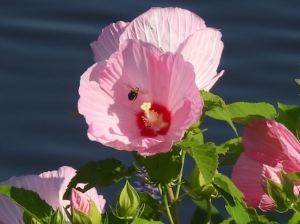
At nearby Lake Newport, Bumblebee feeds in Swamp Rose Mallow along southeast lake shore, July 11

This rarely seen Trumpet Vine flower adorns the southeast cove of our lake, July 12

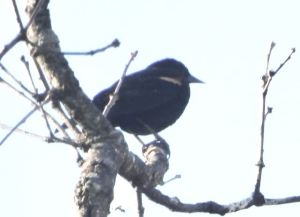
Red-winged Blackbird chirps atop Red Cedar at the northwest corner of our lake, very hot noon, July 4

In our garden patch, Zinnias and Cosmos blooms and feathery stems, grown from seed, July 21

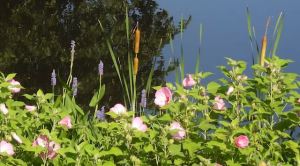
At Lake Newport, Cattails, Pickerel Weed, and Swamp Rose Mallow hug the shoreline, July 11

Bumblebee hugs blooming Purple Teazel on northwest shore of our lake, hot July 12

Snapping Turtle lurks at the surface, mid-lake, hot noon, July 4

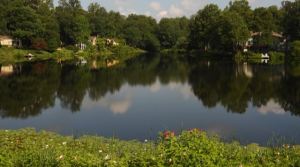
Panorama of our lake toward downtown, with yellow Prickly Lettuce flowers in bloom foreground, cloudy morning, July 12

Panorama of Lake Newport with Lilypads and Swamp Rose Mallow, early morning, July 11

Swamp Milkweed with Bumblebee, east bank of our lake, noon, July 4

Mockingbird in Red Cedar, northwest corner by the path, with Porcelainberry, July 4

Two Red-bellied Cooters on log, west shore of our lake, hot noon, July 4

In our garden patch, Bumblebee feeds on pink Coneflower. So many pollinators! Hot morning, July 21

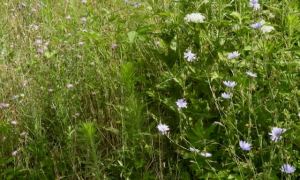
More lake summer wildflowers: Pink Spotted Knapweed and Blue Chicory, north end path by our lake, morning, July 12

Lake Newport: Red-winged Blackbird in flight, July 11

Orange Sulphur butterfly on Indian Hemp, north end path by our lake, noon, July 4

In our garden patch, Juliet and Sweet Millions ripe clusters, morning, July 21

Short clip: Mockingbird scans, then flies atop Red Cedar beside our lake, July 4

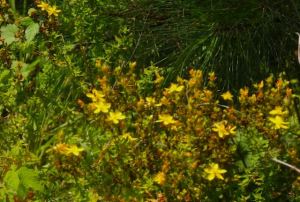
Another lake wildflower: St. John’s Wort along the north shore, July 4

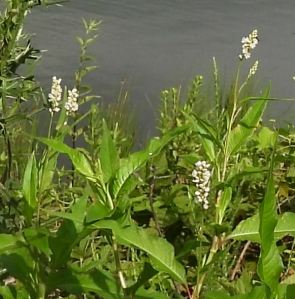
Yet one more lake wildflower–such bounty: Pennsylvania Smartweed along the north shore, hot July 12

And on to August! What do all our gardens have in store for us?

May 2025: Tiny Refuges in a Could-Be-Great Nation

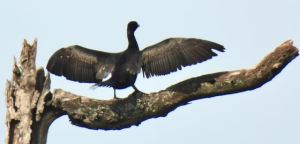
Double-crested Cormorant with spread wings scans atop the dead oak on the east bank of our lake, late afternoon, May 29. Usually regular visitors, this is only the third Cormorant we’ve seen this year

In this month’s blog:

Tiny Refuges in a Could-Be-Great Nation
Garden Update: Buds Appear, Flowers Thrive, the First Fruits
The May 2025 Photo/Video Gallery

Our two families of Canada Geese enjoy the late afternoon of May 19 along the Southeast side path

Tiny Refuges in a Could-Be-Great Nation

A truly bizarre scenario: the President of the United States was in the Middle East (May 17-18) meeting with the ruler of Qatar about the possible gift (or maybe sale?) of an unused “luxury Boeing 747” to the President, so that this jet might be retrofitted to become the next Air Force One. The US journalism elite (CNN, Fox News, New York Times, etc.) were giving this “breaking news” their undivided attention.

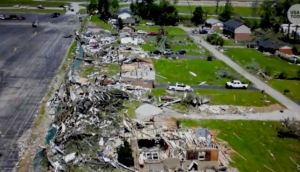
Meanwhile, back home in the USA, a wave of tornadoes and furious storms left at least 28 people dead, dozens more injured, and many homeless as they passed through multiple states in the Midwest over the weekend. More than 80 tornadoes had been confirmed as of Monday morning, according to USA Today (May 19):

This disaster was big news only on the Weather Channel; a minor story at best on major news sources. And more such storms were forecast for the coming week across the South, Midwest, and into the mid-Atlantic.

I realized that before this President, who took office just four months ago, the disaster at home would have been top news (think of Hurricanes Helene and Milton just last fall), and the nation would be watching to see how the President and the Federal Emergency Management Agency (FEMA) responded with compassion, necessary funding, and emergency expertise. But this President unilaterally gutted FEMA last month and, with nary a thought or prayer, said victimized states would have to fend for themselves now and into the future. So much for compassionate leadership.

Since that weekend, he made no mention of the deadly storms, so focused was he on the possibility of his getting the luxury superjet.

Westernport, Maryland, just one state away, May 14 (Wash Post photo)

It’s easy to understand why he wouldn’t want anyone to care about disasters at home. They just remind people of the fossil-fuel-caused climate change that he says doesn’t exist. So what if people suffer? So what if farms and businesses and schools and hospitals are ruined, and habitats for other creatures are destroyed? For him and for the fossil fuel cartel to which he is beholden, the only thing that matters is business as usual–the domination of US culture by gas, oil, and coal.

What’s particularly sad and strange, as David Gelles writes in the New York Times (“Under Trump, the US Is Alone in its Climate Denial,” May 19), the US is the only rich nation in the world that has allowed the cartel to have such power. In contrast, China, other Asian nations, and Europe keep moving forward with renewable energy. China is only too happy to exploit our nation’s deplorable weakness in renewable energy and so become the dominant energy power in the world.

For the first time in two months, Blue Heron, usually a frequent resident, honors us with a visit on the afternoon of May 29, stalks the north shore, then takes off…

The Escalating Price Paid by US People–and by Our Fellow Creatures

Besides increasing drought (which this blog reports regularly) and the intensifying of

one more result of fossil-fuel poison is the drastic decline of North America’s bird species. The Washington Post’s Dino Grandoni summarized on May 2 the results of a 3-year study reported in the May 2 issue of Science that showed significant decline in 75% of 495 species. “Birds are rapidly vanishing from North America, with dramatic population losses in places that were once thought safe.”

With Allegheny Blackberry blooms in the foreground, I look across the lake at sunset toward the high rise buildings downtown, May 15

I try to think of our little lake community as a tiny refuge for the wildflowers, birds, fish, turtles, bees, butterflies, squirrels, rabbits, and other wild creatures I’m fortunate to take pictures and video recordings of as I circle the lake path most days of the week. And yes, this little lake is still a sparkling gem of a home or nurturing spot for these creatures. But in its fragility–tightly surrounded as it is by suburban sprawl and the incessant emissions of vehicles and buildings–it also mirrors the larger US culture. If we allow that larger culture to continue to be dominated by forces that put glitzy baubles like “luxury superjets” ahead of we the people and the survival of plants, animals, land, water, and air, this refuge, too, will disappear.

It’s just a question of priorities. Will the US achieve the greatness of which it would be capable if we had a sensible, life-generating energy policy? Or will it stay hostage to the cruel forces that are steadily destroying us?

*********************************************

Zucchini flowers and a growing fruit, our garden patch, May 20

Garden Update: Another Tiny Refuge?

Sage, Thyme, and Strawberries are among the plants thriving in our tiny garden, May 18

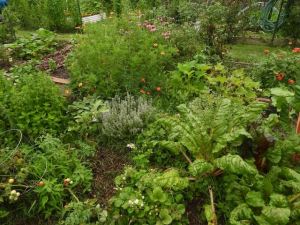
In the month since our last update, our tiny plot in the community garden has flourished: warm temps and frequent rain spells have combined with the healthy, well-mulched soil to bring about steady growth that is now producing the first fruits and a rainbow of blooms. As we walk through the coded gates into this multi-acre community of individual plots, each one devoted to the vision of each gardener, I think of it, just as I think of the community lake beside where we live, as a cared-for refuge from the thick network of roads and speeding vehicles no more than a hundred steps away.

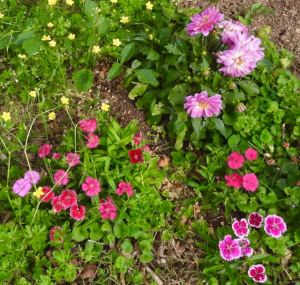
Dianthus, Dahlias, and volunteer Buttercups are featured stars in our English-country-style flower display, May 18

The community works because of the dedicated work of each gardener, and our agreeing to abide by rules determined by the community. Unlike some homeowners associations (HOAs) that dictate strictly a single style for any display, this very diverse, multi-national community of we who pay rent for our spaces each year encourages unique visions of what we plant and how we arrange the plantings. Still, (1) we must  be organic gardeners, (2) we can’t grow tall trees, and (3) we must not intrude on others’ gardens or (4) take produce from other folks’ plots without permission. (5) We must prepare our gardens for spring plantings and (6) we must remove exhausted summer plants as winter arrives. (Perennials, of course, stay in and survive underground.)

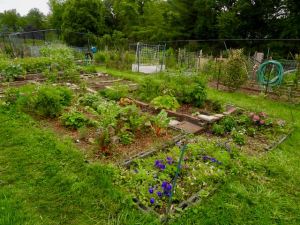
Our garden plot, viewed toward northeast, on a cool, cloudy May 29

This simple rule structure encourages a multitude of visions. One nearby gardener has labelled her plot a “monarch haven,” with lots of milkweed, for example. Another grows lots of potatoes, another an array of bean trellises, another an explosion of peonies, and on and on. Some have neatly rectangular raised beds, others interspersed veggies and flowers. Some, like us, are almost daily tinkerers. Others show up weekly. Still others plant and then seemingly disappear for a month or more.

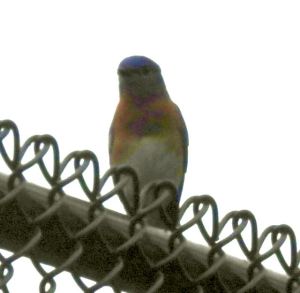
Eastern Bluebird perches atop the high fence surrounding our community garden, cool, misty May 29

The structure of simple rules coupled with the spirit of experimentation provides a nice, friendly balance for gardeners. So far we’ve not gone far out on any experimental limb: yes, our first planting was of two blueberry bushes, which were not suited to Northern California’s dry heat; they have done really well so far here.

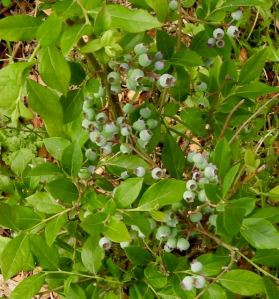
Blueberry bush bursting with forming berries that we are learning from as they mature, May 18

But most of our plants were ones we had success with in the Sacramento Valley: of flowers, we have thriving stands of dianthus, dahlia, vinca, and pansies. We also benefited from a native surprise: buttercups that emerged in April and quickly spread.

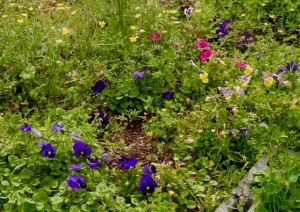
Yellow and Purple Pansies, Magenta Petunias, Yellow Buttercups on the Southwest end of our flower display, May 18

Of veggies and herbs, 3 kinds of cherry or grape tomatoes (juliet, husky cherry red, sweet millions); bell peppers (green, yellow, orange, and red; herbs (mint, English thyme, oregano, rosemary); Swiss chard; chilis (ancho); squash (zucchini, cucumber, crookneck; eggplant.

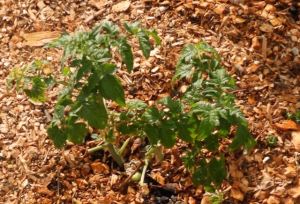
Our Husky Cherry Red Tomato, late April; now it’s 3 times as big, in a tall cage, and with 30 growing fruit, May 27

We would have planted strawberries–but we saw on our first exploration of our new space in February that we had two perennial strawberries already in ground–these beauties have come back stronger than any we ever planted in California.

Our latest Strawberry harvest from our two perennial plants, May 21 (we and our grandkids have already eaten some!)

Ancho Chili plant, with a tiny visiting ladybeetle (can you see?), May 18

*********************************************************

The May 2025 Photo/Video Gallery: Some Regular Citizens and Guests, and a Few Newcomers to the Refuge

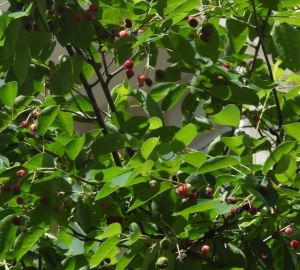
The Serviceberry trees in our community are a haven for birds, especially now that the berries are ripe. I hear so many more birds than we can see, but their calls let everyone know they are here, May 19

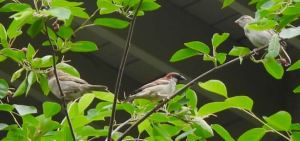
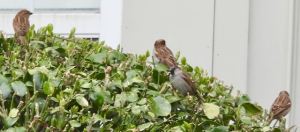
Three House Sparrows in the Serviceberry tree, May 27

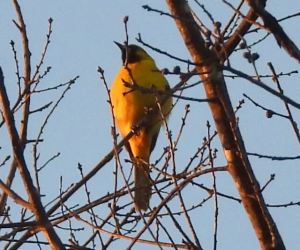
This Mourning Warbler is a newcomer to our refuge, its bright yellow feather tinged orange at sunset in the dead Willow Oak on the east bank, May 15

I asked this Red-winged Blackbird male to face me as he perched in the Willow Oak on the 15th, but no cooperation. Still, this preening dance at sunset is a classic of surprise.

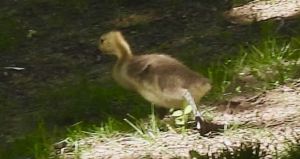
In the evening shadows near the Southeast path, this fuzzy yellow Canada Goose chick walks to catch up with the family, May 19

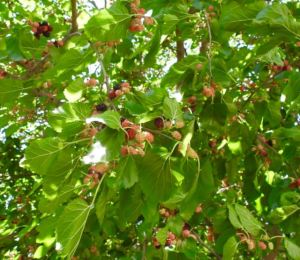
Like the Serviceberry trees near it, this Mulberry’s ripe, sweet berries are a lure for many birds, May 17

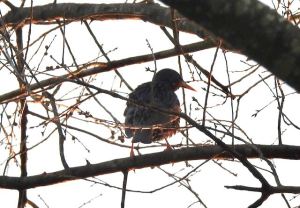
Our year-round Citizens, the European Starlings love the east bank of the lake, including the dead willow Oak. Another sunset shot, May 15

The Gray Catbirds are all around with their distinctive calls and conversations this month. This one was particularly acrobatic in the birdbath on the east side of the lake, on a very warm May 19

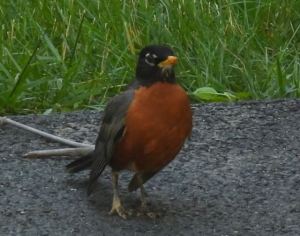
This American Robin on the Southeast side path was deciding whether to mix it up with the Catbirds in the Mulberry Tree on May 19

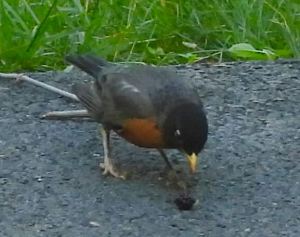
Whadya know–Robin got one of those Mulberries!

Back to sunset in the Willow Oak on May 15, Eastern Kingbird, a sometime visitor, calls

Our first magical Monarch of the year, in mid-flutter in the Swamp Milkweed by the Southeast cove, May 19

On a warm afternoon, 12 Red-bellied Cooters take the sun on a log along the Southeast shore, May 19

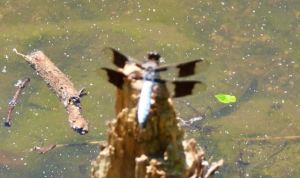
A Whitetail Skimmer, our first dragonfly of the year, enjoys the Northeast shore on a warm May 18

Black-capped Chickadee in Red Maple, southwest bank, on cool, cloudy May 27

Barn Swallow perches on the dam structure in the lake, on a cool, cloudy May 27

Also on Mother’s Day, May 11, Red-winged Blackbird atop the dead oak on the east bank, calls to his mate

Our Mother’s Day bouquet, indoors, May 11. Humans celebrate the day, too

In our garden, Budding Coneflower, Purple Salvia, Juliet Tomato, on that cool, cloudy May 29

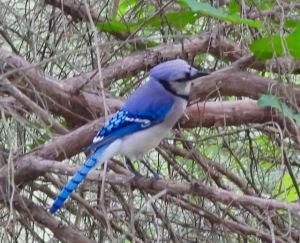
Bluejay in vines, west side, cool, cloudy May 27

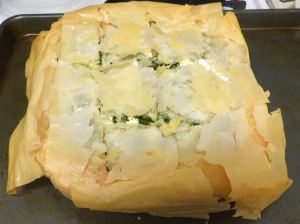
Our one kitchen contribution this month, Jean’s spanakopita, with spinach and filo dough, just from the oven, May 14. Jean says the hardest part of the recipe is the chopped spinach, which clings everywhere.

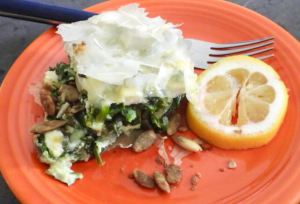
A serving of spanakopita with a slice of lemon and candied pistachios.

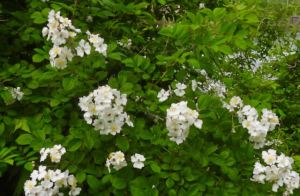
Oh so fragrant Multiflora Rose, along the east side path on a warm May 6

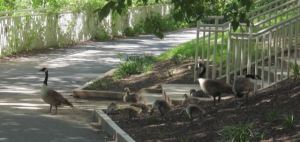
The two Canada Goose families gather together on the steps along the Southeast path, May 19

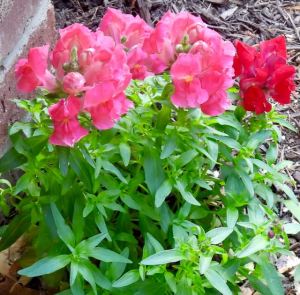
Snapdragons on our porch on Mother’s Day, May 11

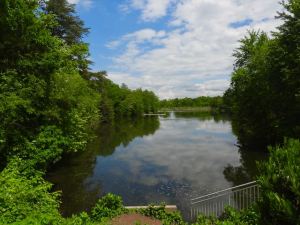
Lake panorama toward the North end on a sunny, warm May 6

Song Sparrow calls and listens in the Willow Oak, east side, on the gorgeously warm May 6

Growing up fast, Canada Goose chicks begin to grow black feathers as they walk on the south end path, May 27

With still four days to go in May, here’s hoping for a greatness where all the Earth is a refuge.

March 2025: New Spring, New Climate, New Garden

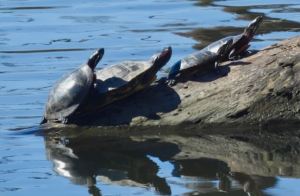
With warmer temps come the Turtles, who emerge above the surface once the temp reaches 60: four Red-Bellied Cooters on a log along the north shore of the lake, on a warm and windy March 18

In this month’s blog:

Wildfire USA: The New Normal
We Start a New Garden in a New Climate
Always Time for St. Paddy’s Day and Cherry Blossoms
The March 2025 Photo/Video Gallery: New Sightings in Nearby Places

A Tree Swallow–first sighting!–and a male Red-Winged Blackbird share the rail of the dam structure at nearby Lake Newport, on a cool, cloudy March 16

***************************************************

Climate Log: Wildfire USA: The New Normal?

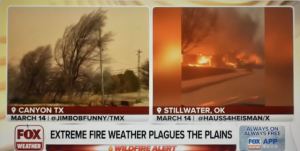
Exceptional drought in Plains states leads to wildfires from Texas and Oklahoma north through Kansas and Missouri (USA Today and Fox Weather, March 14)

Though you’ll never hear a word about this from the new federal administration, for whom climate change, they say, “does not exist,” even the Fox Network can’t ignore the extreme drought conditions that have been ongoing for at least two years now in the Plains states–and the frequent wildfires that are now defining late winter in the middle of the country.

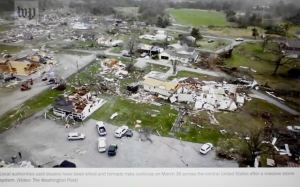
High winds and storms in the Plains states were accompanied by tornadoes, like this one that touched down in Missouri, March 14

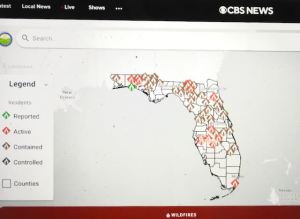
Wildfires in the drought-plagued Plains states are dreadful enough, but now Florida joins the parade of drought-ridden states with fires up and down the peninsula.

This map from CBS News on March 20 shows “active fires” in most regions of the state, even toward the Keys and across the Panhandle.

While we’re used to hearing about hurricanes there in summer and now fall, plus high ocean temps and sea level rise along its coasts year-round, drought has become yet another climate concern in the Sunshine State.

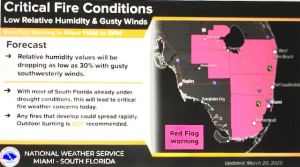
National Weather Service warning for Miami and South Florida, March 20

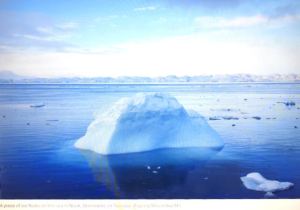
Much farther north, the climate news this month (and this is no surprise at all) is that yet another record was set for the earliest melting of the Arctic Ocean ice cover, as reported in the Washington Post by Brady Dennis, March 6.

Greenland ice chunk in melting Arctic Ocean (Evgeniy Maloletka, AP photo , March 5)

It’s particularly noteworthy that the Trump/Musk administration is very interested in the U.S. acquiring Greenland as a territory. If they truly believed that there was no climate change, they’d assume that this melting was a temporary weather event. But their claim that climate change doesn’t exist is really just pretense, used by the fossil fuels cartel to justify the administration’s rollbacks of environmental protections and their attacks against renewable energy. The cartel and their political enablers know that the melting is part of the worldwide warming trend, and so the administration wants Greenland–just as they want to acquire Canada–as a military and trading launch pad for shipping across the now watery Arctic, as Forbes’ Garth Friesen, among others, reported in January 2025 in “Why Trump Wants Greenland.”

In this new normal of drought and higher temps, and while environmental rollbacks continue, we can look forward to more wildfires in more places. Indeed, just today (March 26) there are National Weather Service “red flag warnings” in the western edges of Northern Virginia.

Wildfire on New York/New Jersey border, as this blog reported in November 2024

***************************************************************************

We Start a New Garden in a New Climate

In our new garden plot, our first flower seedlings, March 22

For the first two years since our move from California in 2022, we had been on a waiting list for one of the highly-coveted garden plots in the four large clusters of plots maintained for residents by our urban/suburban town association. Finally in late August 2024, a 190-square-foot plot 2 miles from our home lakeside community came open and we leaped on the opportunity. Although this plot would be a far cry from the almost 2000 square feet of garden we had gloried in for 17 years around our home in the Sacramento Valley, and which had been the basis for this blog from 2015 to 2022, we promised to make the most of this new setting.

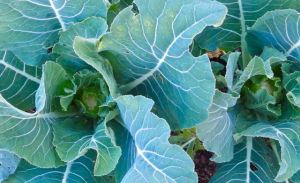
Cauliflower growing in our first small fall/winter garden plot in our town, November 24, 2024

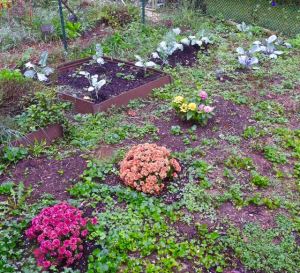
On this small new plot, we planted three veggies suited to fall growth: broccoli, cauliflower, and red cabbage. In hopes that they would also thrive, we experimented with flowers, too: the perennial chrysanthemums we knew would be happy in October and November, celosia, and gerbera daisies–plus bright yellow and purple pansies, who, as we knew from prior experience in this climate, could go dormant over the winter, then come back in spring.

Our first plantings in our first small Virginia garden: broccoli, cauliflower, red cabbage, mums, daisies, 3 weeks old, in the rain, September 24

The broccoli and cauliflower plants did well enough before winter to give us some tasty heads, and the cabbage produced colorful purple leaves. The mums (as expected) were champs for a couple months before the current flowers wilted, as were the pansies. But the other flowers died with the first freeze, along with our wishful thinking (!) that Northern Virginia in winter would prove as hospitable as California.  Because this winter, as we reported in our January and February entries, proved far colder and snowier than our first two winters here, we got what we should have expected.

A New Garden Plot!

In early February, current plot holders were informed that there were several slightly larger plots that had become available, and we were invited to apply for those. One such plot, 225 square feet, seemed particularly attractive, as it was both closer to the road (for unloading purposes) and more sunny than our first spot, which was beside the woods of tall trees. So we applied and got lucky. We have now for the past month been clearing the new plot of plants that had taken over (mainly tough little blue speedwell and purple-flowering henbit), getting the soil ready, and stocking up on flowers and veggies, so that we could begin planting as soon as the weather warmed up enough to avoid any more freezing nights.

We have also met other nearby gardeners, who cheerfully answer our questions about their experiences in this climate and in these spaces. Routinely, gardeners also share equipment, such as buckets, wheelbarrows, and used wood for raised beds. Moreover, we’re assured, among the rules of use is the promise by each plot holder not to steal or damage others’ plants or produce. The better we get to know each other, the more we look out for each other.

Cleared third of our new garden plot with seedlings of chard, mint, basil, thyme, tomatoes, peppers, zucchini, and strawberry plants, March 22

Besides the veggy plants listed in the caption above, we’ve also planted two blueberry bushes–a plant unsuited to the hotter California climate–with more plant varieties being planned. The blueberries are already budding, just one week in. A third of the plot will be for flowers, with three “Ps”: pansies, petunias, and peonies already in ground, plus dianthus (see photo at the top of this section.)

Another advantage of these well-used garden plots, which have been cared for by a range of gardeners over the years, is that the soil is free of rocks (!) and is easily diggable as far down as needed.  Another great feature of these garden clusters is that, for the reasonable yearly fee we pay, the town association provides mulch, compost, and manure, as well as convenient faucets around the cluster for watering.

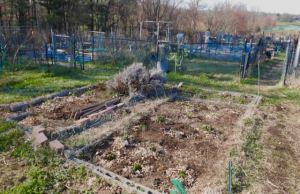
Our plot, early in our design process, with part of the rest of the plots cluster in the background, March 22. More photos to come, as the garden grows!

*******************************************************

In March, Always Time for St. Paddy’s Day and Cherry Blossoms

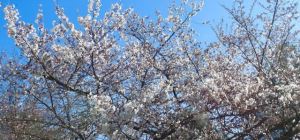
East of our lake, Cherry tree in full bloom, warm, sunny March 25

Last year at this time (see the March 2024 entry), we had a lovely, but also sobering, visit to the Tidal Basin in nearby Washington to see the Yoshino cherry blossoms in full bloom and visit the Jefferson Memorial, an annual pilgrimage for us in all our years here before 2006 and our move to California. This year again we are making this trek–and will describe it in detail in next month’s blog.

Two hints: we’ll be updating readers on the huge renovation project in the Tidal Basin in response to climate change and sea level rise, and we’ll be profiling three real American heroes who are honored amid the blossoms. (No, not Thomas Jefferson.)

Two St. Paddy’s Day Treats

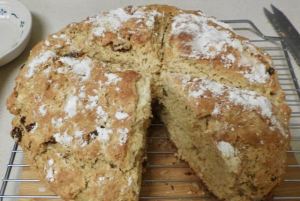
Jean’s homemade Irish soda bread, March 17

Jean:

I’ve been streaming a lot of old British Baking Shows recently, and I especially enjoy Paul Hollywood’s master classes on bread. His strong arms and hands are made for the magic of kneading bread. But St. Patrick’s Day includes a bread that doesn’t get kneaded–Irish soda bread, of course. It’s rather an acquired taste, not the most exciting in its basic form, so in addition to studying Paul’s simple, classic technique, I checked out some recipes that called for a more enriched dough.

Hollywood makes soda bread either with all white flour or half white and half whole wheat, which I prefer, as a way to increase the fiber and protein. The most important ingredients are baking soda and buttermilk. I used a mix of flours (including one cup of oat flour and and one of white whole wheat out of the total four cups of flour), plus some sugar, butter, and egg, as recommended in this recipe.

The added sweetness is up to you; you could try a couple of tablespoons of sugar instead of 1/4 cup, if you want it less sweet. The egg also is optional, as it is in scones, but it does make the dough richer. https://natashaskitchen.com/irish-soda-bread/

In addition to golden raisins, I added caraway seeds because I like that flavor and a bit of crunch as well. As always, make this to your taste and have fun with it.

Here’s one more of my treats in honor of St. Patrick’s Day: making these a sandwich cookie was a spur of the moment inspiration!

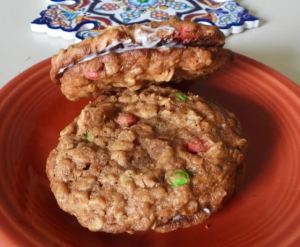
Jean’s oatmeal sandwich cookies with cream cheese frosting inside and mini-M&Ms for an added pop of color and flavor, March 19

************************************************

Venus, high above the lake, and beneath the moon, 7 PM, a clear, calm March 3 (yes, that orb is 25 million miles away)

The March 2025 Photo/Video Gallery: New Sightings in Nearby Places

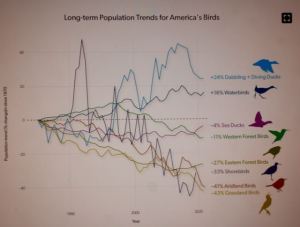
In last month’s entry, I gave the impressive statistics from the worldwide Great Backyard Bird Count. Check it out. So many species in so many countries, recorded by so many devoted birders. As impressive and heart-warming as those numbers are, this month’s news from Audubon and the Cornell Lab of Ornithology sobers us to the fact of the continuing sharp decline in the U.S. numbers of birds. https://www.audubon.org/press-room/us-bird-populations-continue-alarming-decline-new-report-finds

Habitat loss to development, air and water pollution, global warming, use of pesticides and herbicides, and other factors have not only killed birds, but have killed off the insects and plants needed by bird populations to thrive. And the same factors that are killing birds are making our own human hold on life more tenuous for billions around the world.

Decline year by year of many classes of birds in the US since 1970 (Cornell Lab of Ornithology), March 2025

 The Good News

 But still, day by day, our local and migrating birds call all around us, and their songs thrill us, and when we spot them and take pictures of their beautiful evanescence we feel the same joy that we always have in the presence of birds. Indeed, their fragility makes us appreciate them even more and perhaps even pushes us to try harder to help the rest of the human world pay attention.

And sometimes, as you’ll see below in a video and two related snaps, the unexpected and truly serendipitous happens on a bird walk.

So here are a selection of this month’s photos, taken not only along our local small lake, but also at another nearby lake and at a local woodland park.

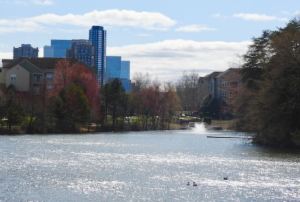
Three Canada Geese in a panorama toward downtown buildings on a sunny, sparkly, windy March 17


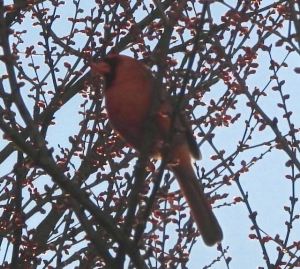
Male Cardinal in a budding Cherry tree east of our lake, at sunrise, March 19


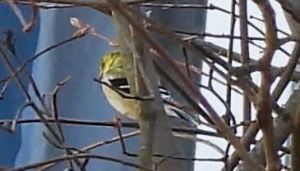
American Goldfinch in Serviceberry tree, southeast side of our lake, on a warm, windy noon, March 18


Young male Red-winged Blackbird atop an Oak east of the lake, warm morning, March 20

On a chilly afternoon, March 13, I pan the treetops southeast of the lake, and hear the calls of a Cardinal, a Tufted Titmouse, a House Sparrow, a White-Throated Sparrow, and a Carolina Wren–and, as always, local traffic

Song Sparrow and House Sparrows on Japanese Spindle Bush, southeast side of the lake, damp, chilly March 15

Song Sparrow sings in Red Cedar along the north shore, warm March 11

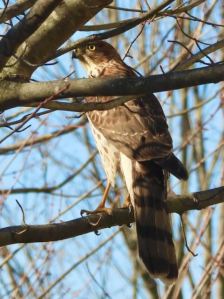
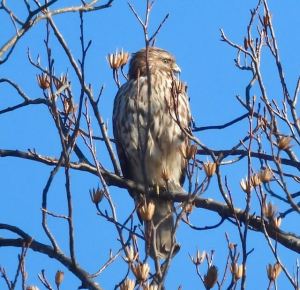
Sharp-Shinned Hawk perches in Red Maple very near our home, just after chasing, but losing, a Sparrow out of a nearby bush, February 28. See next video.

This Sharp-Shinned Hawk flew just past me after chasing a Sparrow through a Spindle Bush, and then perched in this Red Maple along our path, February 28. A totally unexpected and serendipitous shot!

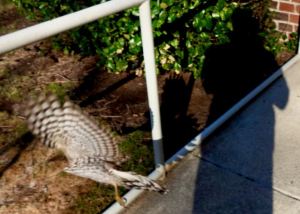
My photo of the Sharp-Shinned Hawk flying past me in pursuit of the Sparrow, who got away, February 28

Red-Shouldered Hawk in Tulip Tree, southeast woods, March 10

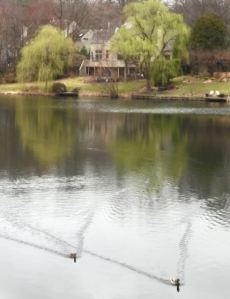
Mallard pair along west shore of our lake, in twilight, March 4

House Finch female in Mulberry tree along the southeast shore, warm March 11

Downy Woodpecker scans on Red Maple, southeast bank, damp, cold March 15

I’m part of a town association birding party at a nearby park and lake, cool, cloudy March 16

Double-Crested Cormorant–first sighting of the year–at nearby Lake Newport, March 16

Red-Bellied Woodpecker high up in Oak, nearby park, March 16

Rarely seen Eastern Towhee behind Honeysuckle, in woods of nearby park, March 16

At nearby Lake Newport, as part of the birding party, I see these 2 Ring-Neck Ducks, a first sighting for me, dive into the water, but then more of the ducks break the surface! March 16

Two pairs of the Ring-Neck Ducks in Lake Newport, March 16


Mallard pair in lakeside rushes, beside me, Lake Newport, March 16


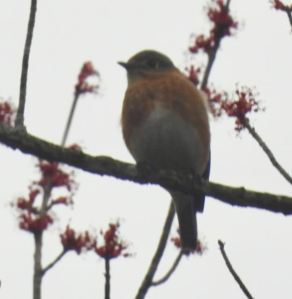
Eastern Bluebird in Red Maple at local park, March 16


Wakes of Mallard Pair in Lake Newport, March 16

Female Cardinal calls as Red-Winged Blackbird calls, in Red Maple, southeast woods by our lake, cold, windy, March 7

And on we go in the last week of March, toward April, and hopes for Spring…