November 2025: “Call to Earth Day” and Ways to Thank Wildlife

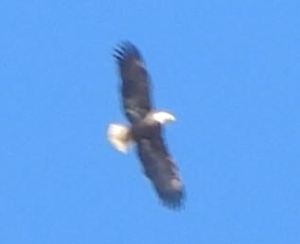
Bald Eagle–a rare sighting here!–scans our community from atop the power tower west of the lake, bright morning, November 3

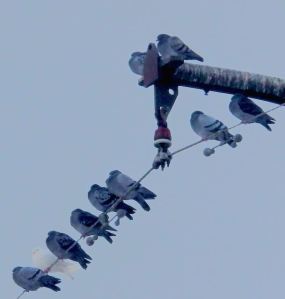
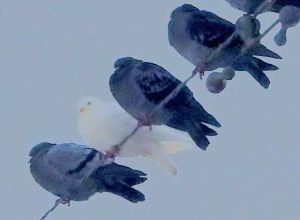
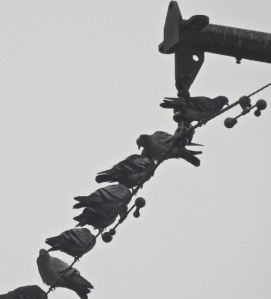
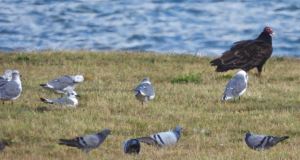
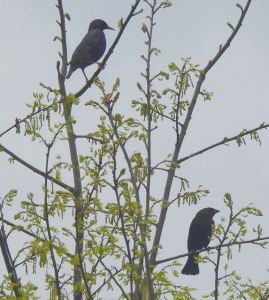
Two Rock Doves, the usual inhabitants of the top of the power tower, claim their space–and keep their distance–from the visiting Bald Eagle, crisp morning, November 3

In this month’s blog:

“Call to Earth Day”–Saying Thanks to Wildlife by “Guarding Our Green Space”

Climate Log: Just the Most Recent Outrages from Washington
Climate Log 2: California Act Saves Water, Wildlife, and the Eastern Sierra
Garden Update: Winter Is Coming, but Growth Continues
Our November Kitchen: Thanksgiving, with a Difference
The November 2025 Photo/Video Gallery: Surprises

****************************************************

Children in the Czech Republic turn trash into art (CNN Photo, Nov. 6)

Call to Earth Day 2026: Preserving and Increasing Our Precious Green Space

Chris: While more anti-environment outrages occur in the secret halls of US power, we focus this month on celebrating the fifth annual Call to Earth Day (http:// cnn.com/calltoearthday) sponsored by CNN, program donors, and life-affirming thinkers and doers from around the world. “Yes, we can!” say these  dedicated children and adults, whose ideas and hard work help inspire nations to protect and save all of us, our fellow creatures, and our land, air, and water.

From Kenya, to Nigeria, to Hong Kong, to England, to the Czech Republic, and, yes, to places around the US, CNN reported on life-building and nature-saving projects that give us hope for a greener, less poisonous world. In so many of these places, children–assisted by dedicated adults–are leading the way.

In California this fall, one such event, the 2nd annual Green New Leaders Summit, was held in San Bernardino: https://socalren.org/futuregreenleaders , with workshops for hundreds of middle school students on energy systems, wildlife, career pathways, and other topics in green technologies and environmental protection.
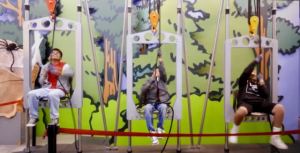
Three attendees at the Green New Leaders Summit in San Bernardino in November try out some of the energy apparatus.

Here in Virginia, the best recent news for “guarding our green space” is the election, by an emphatic margin, of Democrats Abigail Spanberger (Governor), Ghazala Hashmi (Lieutenant Governor), Jay Jones (Attorney General), and 13 new House of Delegates members on November 4. Although it remains to be seen what the new state administration can and will do to advance such green issues as energy efficiency and pollution reduction, part of Spanberger’s mandate is to reduce the cost of power for Virginia citizens, which certainly can be accomplished through more solar and wind. When we moved here from California 3 years ago, we were dismayed to see how few homes had solar panels, when we knew from our own experience how much we saved through our panels (for example, we paid 0 dollars for power every summer after installation in 2017 in comparison to $300 per month in the brutal summers before we went solar).

At the very least, Spanberger will be another thorn in the side against the Trump administration’s ongoing rollbacks of endangered species protections and its rollbacks of clean air and water protections (see the next section). Her promises to improve public education will no doubt include greater emphasis on science, including environmental science, which the Trump administration has deliberately weakened and defunded out of his deference to the fossil fuel cartel’s campaign for public ignorance.
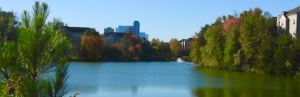
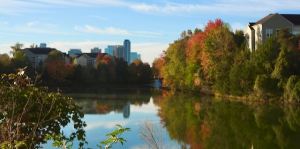
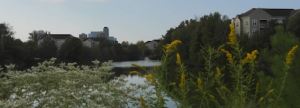
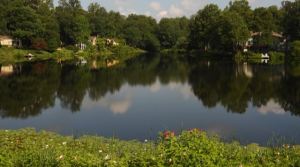
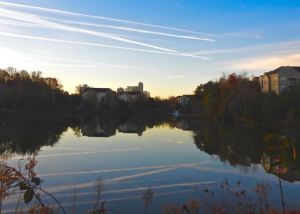
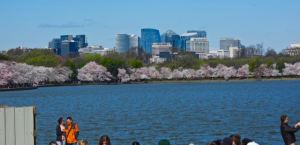
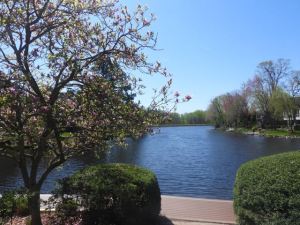
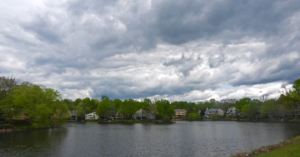
Looking toward downtown across our lake, October 17. Our tiny, precious refuge in a bustling city

Meanwhile, we anticipate that our pro-green political leaders here in our community in Northern Virginia will continue to fund our parks, trails, and public gardens for the benefit of our splendidly diverse population, and encourage both public transportation and our driving of EVs and hybrids. We also hope they’d join the state government in advocating for more rooftop solar.

The AI Monster. Still, by far the largest environmental issue facing our state and region is the explosion in the past 3 years of data centers for generative artificial intelligence. Indeed, our region of the state has the largest concentration of these data centers in the entire world! 
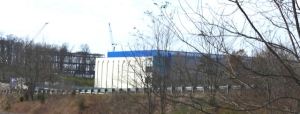
Two new data centers for AI processing, out of already over 200 such centers in Northern Virginia, November 6

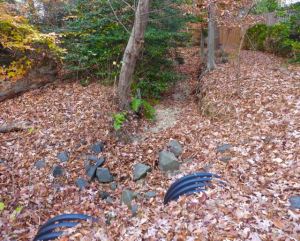
The number one question for our leaders in the coming years is how the state and region, already in drought conditions, will handle the prodigious use of water to cool the machinery, as well as the burden on the electrical grid and on land use. Just before we took this photo, we had to drive on a makeshift gravel road almost impassable because of new ditches for the thick cables leading from the centers.

******************************************************************

Climate Log: Just the Most Recent Climate Disasters Coming out of Washington

US map of how home insurance rates have skyrocketed in various states, November 20

  1. Home insurance skyrockets in tandem with climate-change denial

The map above (National Bureau of Economic Research, 2025)) shows that those states who have suffered the most from the extreme heat and intense storms as a result of human-caused climate change now also suffer from extreme rises in home insurance rates. Florida and Louisiana have the nation’s highest rates by far, but those Plains states hardest hit by record hail storms suffer almost as much. These are also states whose leaders most emphatically deny climate science.

       2. “This law helped save the bald eagle. Trump officials want to weaken it.”
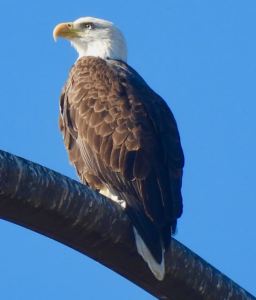
Our visiting Bald Eagle, threatened by new Trump order, scans our lake from perch on the power tower, November 3

“Trump Plan to Rollback Protections of Endangered Species, including the Bald Eagle” (Dino Grandoni, Washington Post, Nov. 20)

https://www.washingtonpost.com/climate-environment/2025/11/19/trump-endangered-species-act/?utm_campaign=wp_post_local&utm_medium=email&utm_source=newsletter&carta-url=https%3A%2F%2Fs2.washingtonpost.com%2Fcar-ln-tr%2F45d8021%2F691f030b1d64392bc2d69296%2F62cf3bc956064350197e865a%2F39%2F86%2F691f030b1d64392bc2d69296

As the article describes, rolling back protections of endangered species follows the Trump administration’s mission of opening millions more acres in the US to drilling, mining, and commercial “development” (AKA environmental destruction), a topic also covered in last month’s blog in relation to the Arctic National Refuge.

          3. Trump administration opens 85% of all US wetlands to “developers”
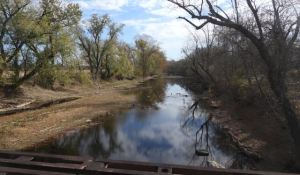
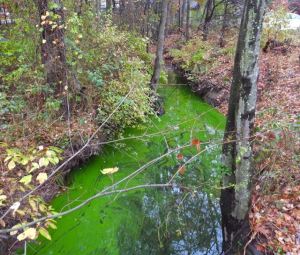
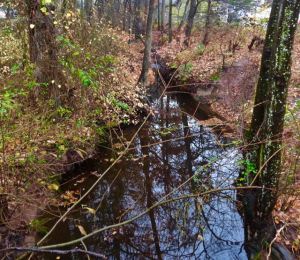
An intermittently-filled side channel of the Potomac River along the Potomac National Trail in Ashburn, Virginia, Nov. 17

Maxine Joselow of the New York Times (“E.P.A. Rule Would Drastically Curb Protections for Wetlands,” Nov. 17) describes the ruling this week that would put into jeopardy 85% of all US wetlands–prime sources of drinking water for millions of voters and their families, as well as habitat for countless species that depend on these waters. The new rule will allow “developers” and landowners to use as they wish 55 million acres of “intermittent” streams, ponds, and marshlands that had been protected– until a disastrous Supreme Court ruling in 2023 that was based on ignorance of how water and land interact on an annual basis. As this blog described in April, “To Save All Life, Don’t ‘Drain the Swamp,'” the wetlands, ponds, mires, bogs, swamps, and marshes of the world are responsible for creating much of the world’s fresh water and for nurturing all species. But ignorant, willful, greedy humans just see wetlands as “wasted,” “messy” land that they would damage by draining and disruption for other purposes.
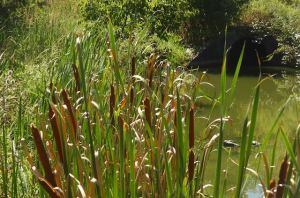
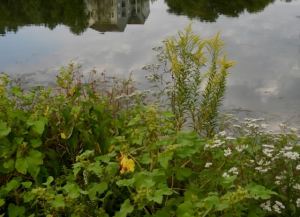
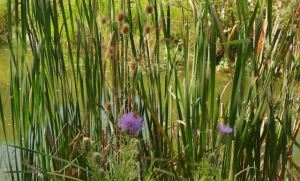
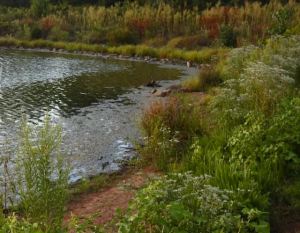
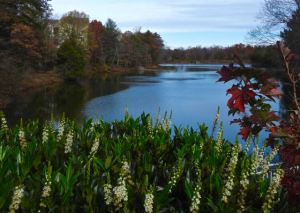
The marshy outlet pool of our lake, below the north end dam, with a Cattail festival, August 27

******************************************************************

Climate Log 2: California Act Saves Water, Wildlife, and the Eastern Sierra
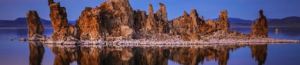
Mono Lake, east of the Sierra Nevada Mountains, long depleted by its use as a source of drinking water for Los Angeles (California Parks photo, Nov. 22)

In a massive victory for environmentalists and for the environment of California east of the Sierra, the city and county of Los Angeles is constructing a water recycling facility in Van Nuys that will meet the water needs of 500,000 residents. Even more important, using the recycled water for drinking will at long last enable Los Angeles to stop drawing water from Mono Lake and the Sierra streams feeding it–some 250 miles from LA. For well over a century, LA’s use of this imported water has sparked enmity, sometimes violent, with inland California residents. Even worse, it has made Mono Lake almost dry and destroyed habitat for many species.

Drinking water will come from this recycling facility being built in Van Nuys, CA (photo Eric Thayer, LA Times, Oct. 31

Ian James’s article in the LA Times (“Los Angeles Will Nearly Double Recycled Water for 500,000 Residents,” October 31) recounts the troubled history. But his main emphasis is on what this move means for the even larger possible use of recycled water for drinking. For 20 years, the safety of recycled water for drinking has been debated, and this move is the first in the West to follow through in a massive way on the water science that guarantees this safety. As the Western US becomes ever hotter and drier through climate change, successful recycling will help mitigate at least one of the fears that the ongoing drought and over-pumping of well water have intensified throughout the region. 

Still, unless governments can agree to shift to renewable forms of energy and away from the burning of fossil fuels, even recycling plans as large as this one will be just a drop in the bucket. 

**********************************************************************
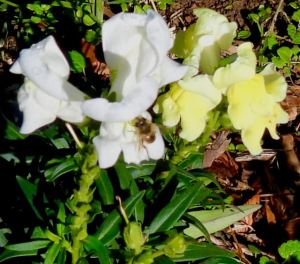
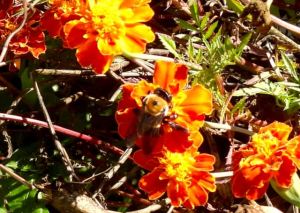
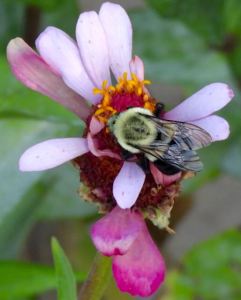
Honeybee on the White and Yellow Snapdragons in our garden plot, November 8

Garden Update: Winter Is Coming, But Growth Goes On
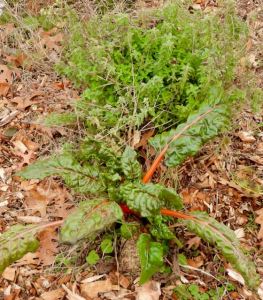
Swiss Chard and Oregano stay green and lush despite a few freezing nights, November 20

High temps now are mostly in the forties to low fifties, and we’ve had four freezing nights as low as 27. But the two veggies we’ve planted–6 Broccoli and 6 Cauliflower–plus the Snapgragons, Mums, and Asters we put in last month are hearty and green, with the Snappies still blooming. The surprises among the summer holdovers are 4 of our Swiss Chards and the Oregano, while we knew that the Rosemary would stay lush.  Our most beautiful October performer, the Wild Blue Aster, has now lost its blooms, but is still thriving.
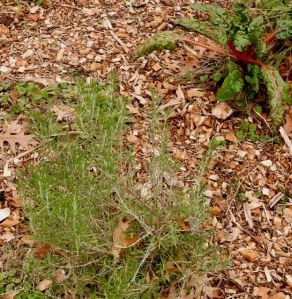
Rosemary and Swiss Chard, November 20
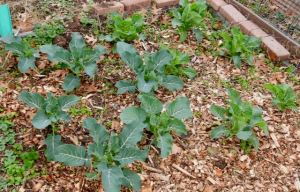
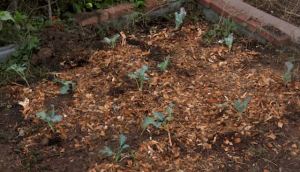
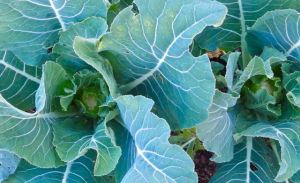
Our 6 Broccoli and 6 Cauliflower have handled the freezing nights well and continue swelling and developing toward producing heads, November 20
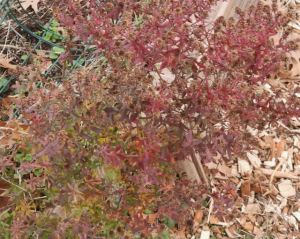
Our Wild Blue Aster may no longer be in spectacular blue bloom, but it has turned on its deep red leaves for winter, November 25
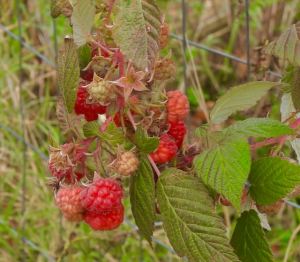
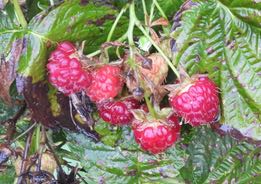
And here is a cluster of ripe red raspberries on the bush in our former neighbor’s now untended plot. We’ve been invited to pluck these and we can’t resist, November 25

What will come? Forecasters are predicting a freeze (25-29 degrees) for Thanksgiving weekend because of a strong polar vortex, but no snow in the forecast as yet. Will the plants keep thriving? We have had about an inch of rain in the past 2 weeks, so that’s a good sign. We’ll keep checking our garden plot in the community gardens every few days, because we just can’t stay away.

******************************************************************************

Our November Kitchen: Thanksgiving, of course, with a Difference

Jean’s Spicy Veggie Curry on the stove

Jean: This Thanksgiving season, we’re thankful to have a number of occasions to get together with family and friends. The traditional turkey, stuffing, and potatoes will be part of one of these meals, but our community of many cultures also gives us opportunities to indulge our varied palates and cooking styles.

Have I mentioned that curry is probably my favorite flavor and dish?  At least on the savory side.  Tiramisu is my favorite sweet, but that’s for another day. 

I think I first learned to make curry from my Japanese mother-in-law in the 1970s.  Japanese curry is based on Indian, and it is mellower than types I didn’t try until later, like Thai curry.  I love making curry because it can be a vegetarian dish for when you feel like or need that, or it can be a very good meat dish, particularly with chicken. For protein in your vegetarian version, tofu is great!
 
Furthermore, curry is the kind of dish I like best to make; you can throw in all sorts of things from your vegetable drawer, your pantry, your garden, or the “leftover” shelf in your refrigerator. 
 
My mother-in-law started with a simple base of chopped onions, potatoes, and carrots. For a little sweetness, she would also add some chopped apple. 
 
However, I like to add more Indian ingredients as well, like butternut squash, cauliflower, eggplant, spinach, chard, lentils, and/or chickpeasSweet or hot peppers add color and flavor as well.
 
Also for color, you might want to add in green peas or edamame as an alternative to spinach.
 
The order in which you add all of these, as well as the cooking time, depends on the ingredient, but half an hour in total should take care of most of these.
 
For spices, I love to play with all those warm “c” spices in my spice cabinet–cardamon, cinnamon, coriander, and cumin.  You can use a premixed curry spice, or try the Japanese curry paste I learned to use early on.  If you choose the paste, you just need to dissolve it first in hot water or broth so it does not clump onto the vegetables.  Add as much spicy broth as needed to cover all the veg.  
 
 
Optional add-ins include either coconut milk or diced tomatoes to dilute and cool the spicy sauce as desired.  (My Japanese version does not use either of those, so suit your own tastes.)

PS. Curry is obviously nutritious as well as delicious, given the number of vegetables and legumes you can include. Once you get your family hooked on the flavors, you may be able to slide in vegetables they wouldn’t eat otherwise. The “C” spices mentioned above have various health benefits. Turmeric, another of my favorites, adds yellow color and anti-inflammatory properties.

Eat more curry! 

A serving of Jean’s Spicy Veggie Curry

 
Here are two more of Jean’s November treats:
 

Jean’s Jumbo Pumpkin Oatmeal Cookies, with Pumpkin Butter Icing
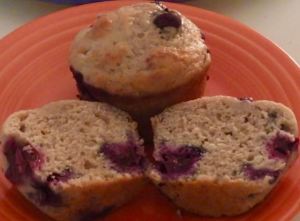
Jean’s Blueberry Muffins, with Jumbo Blueberries

***************************************************************************************

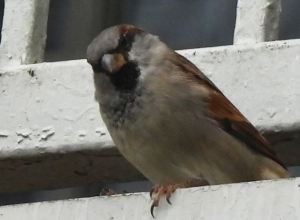
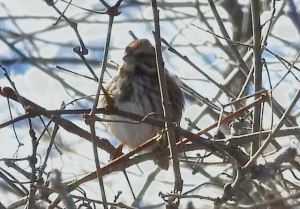
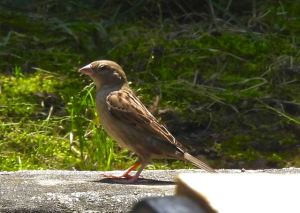
One of our ubiquitous House Sparrows chatters with us and friends along the north shore, November 21

The November 2025 Photo-Video Gallery: Communing with Our Neighbors in Our Green Space

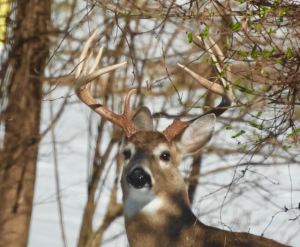
Chris: Surprises always happen as we walk around our little lake, but several were especially memorable this month. The Bald Eagle I saw on the power tower west of the lake on Nov. 6 was a first for me here, as was the Yellow-Bellied Sapsucker pictured just below. On the 20th, I got one of my biggest surprises in the 3 years we’ve lived here, when I turned from watching the lake’s northeast shore and was startled by a young White-Tail Deer watching me–from no more than 10 feet away! Remarkably patient and inquisitive, this new friend moved slowly away, but kept eyes on me while munching on leaves and “hiding” visibly in the saplings and reeds. Three videos captured the conversation, two of which I show here.  Though deer are always present in the nearby woods, I only see one every few months or so, and never before so close. How thankful I am for these moments when I can mutually treasure our green space with one or more of these neighbors.
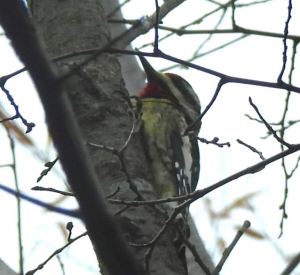
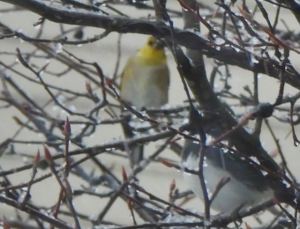
Yellow-Bellied Sapsucker–a rare visitor here on Nov. 21–perches on Willow Oak, southeast shore of the lake. A new study in Experimental Biology (Nov. 2025) shows how these woodpecking birds put full-body power into every strike, about 13 per second.
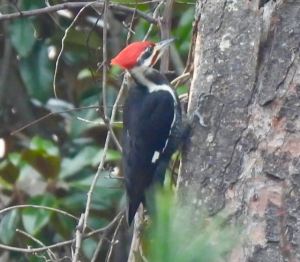
Talk about woodpeckers: here’s a large pileated one in the woods next to our garden plot, cloudy November 25

From ten feet away, White-Tail Deer watches me, then walks into cover, as a siren wails from the highway, cloudy morning, November 21

From 20 feet away, the deer continues to watch me, and feeds a bit, then watches some more, as I zoom in for a closer view. A siren blares from the highway, machinery grates in the community, and geese honk from the lake. Typical sounds. Cloudy November 21
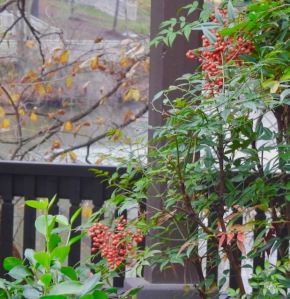
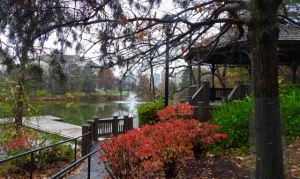
Heavenly Bamboo were prominent at our home in Northern California, and we’re happy to see them here, too, by the gazebo on the west shore of the lake, Nov. 20
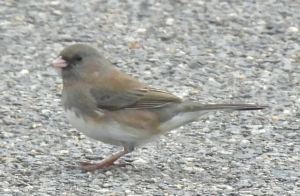
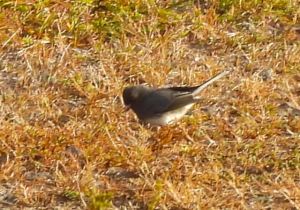
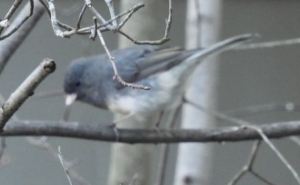
An uncommon Slate-Colored Junco stops for a moment on the path at the Northwest corner of the lake, November 21
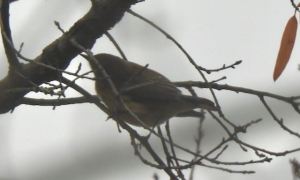
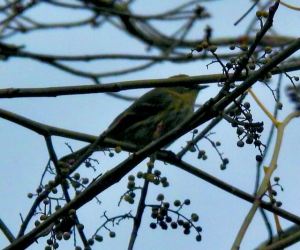
Tiny Ruby-Crowned Kinglet rests in shadows on the Willow Oak, Southeast shore, November 20
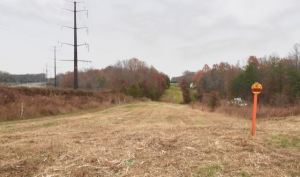
All summer the hillside down to the outlet stream below the dam was left unmowed, and the wildflowers and faunal inhabitants exulted. Now it has been mowed, revealing the signs for the petro line that runs below the surface, and the solar-powered gas substation near the outlet stream. Our Green Space shares its home. Note also the busy highway to the left, from which come the car and truck sounds and the sirens that are a steady chorus in our refuge. November 20
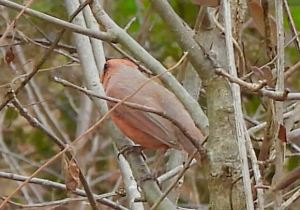
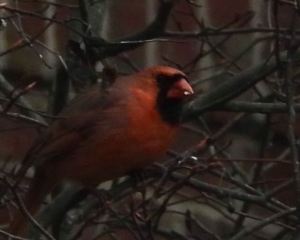
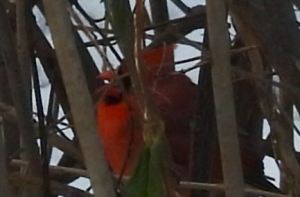
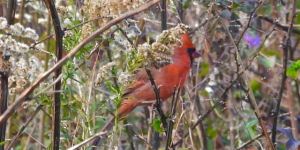
Cardinal male stops to rest in the North end woods, November 21
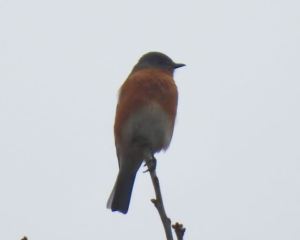
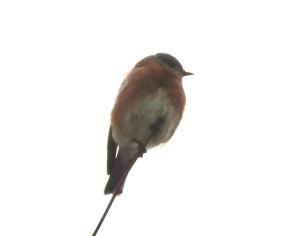
Eastern Bluebird scans atop Maple in the North end woods, cloudy November 21

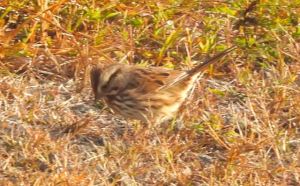
Song Sparrow feeds along the gravel path on the hillside below the dam, as cars sound from the highway, November 21
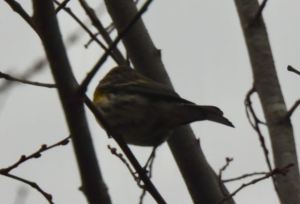
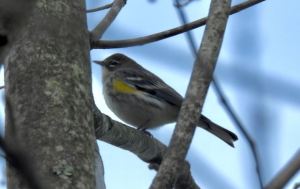
Yellow-Rumped Warbler in shadows amid branches along the Southeast bank, November 20
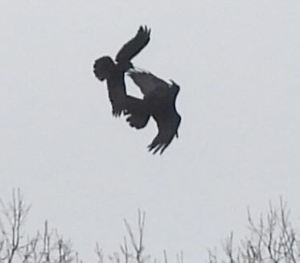
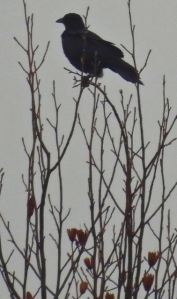
I capture a Common Raven in battle with American Crow above the treetops in the North woods, November 21
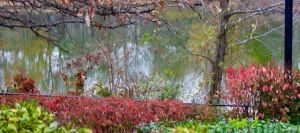
Burning Bush along the West shore, cloudy November 20
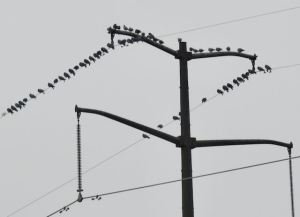
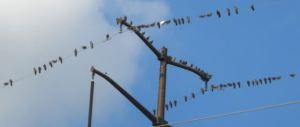
60 Rock Doves in their accustomed perch atop the power tower, November 21. No Bald Eagles around!
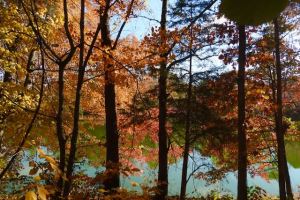
Sun through leaves on the West shore, sunny morning, November 3

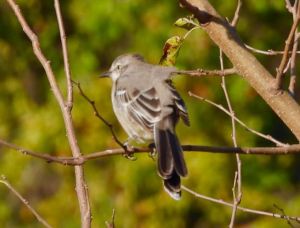
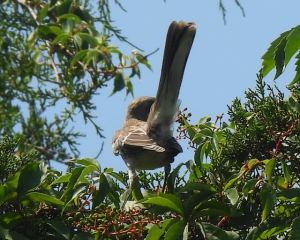
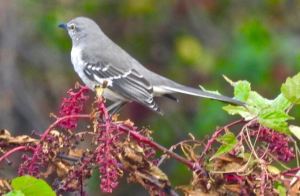
Mockingbird scans from Catalpa along the East shore, November 3
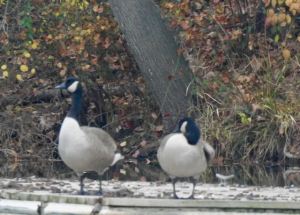
Canada Goose pair on the dock along the West shore, November 20
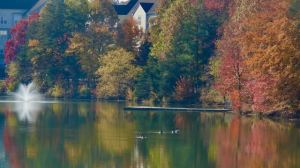
Late fall colors: Looking southwest on the lake with Geese and fountain, morning, November 3
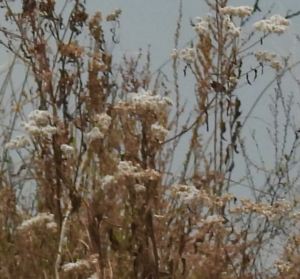
Salt Marsh Goldenrod, Northwest corner of the lake, cloudy November 21


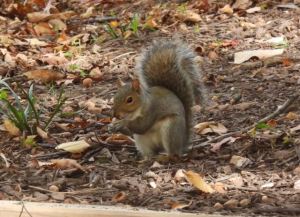
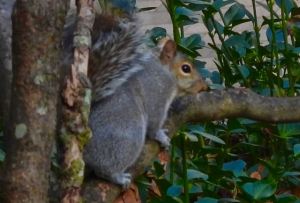
Grey Squirrel amid leaves, southeast path, sunny November 23
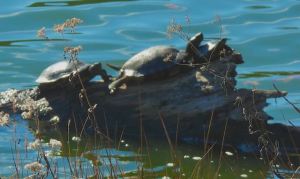
 

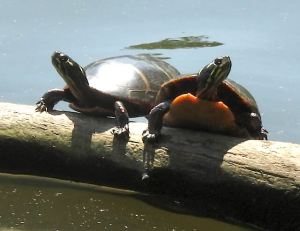
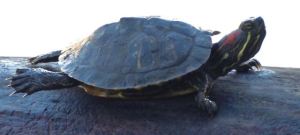
Too cold for turtles? Not for these 3 Red-Bellied Cooters on a log at the North shore, sunny November 23
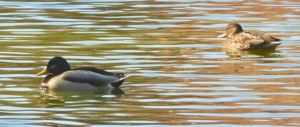
 

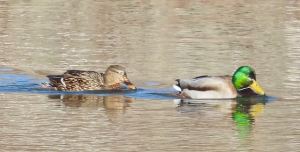
Here they are! The first Mallard pair of the new breeding season, Southeast cove, sunny November 23

Happy Thanksgiving! Hopes for the last week in November and a celebratory December…
October 2025: “Just So Darned Beautiful”

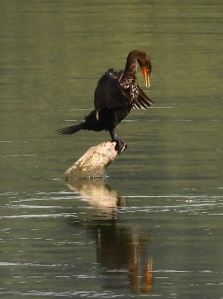
Statuesque pose of this Double-crested Cormorant where Sugarland Run enters the Potomac, September 23

In this month’s blog:

The Shenandoah During the Shutdown: Fall Colors as Heartfelt Respite
Climate Log: More Wilderness Taken for Fossil Fuel Extraction, But…
Our Garden: Summer Success Turns to Fall Hopes
The October 2025 Photo/Video Gallery: Birds, Wildflowers, and More Colorful Travelpics

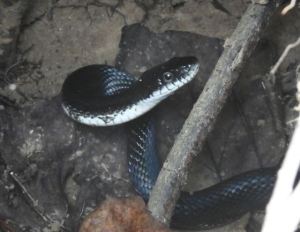
Surprise at Algonkian Park: Eastern Rat Snake emerges from den at mouth of Sugarland Run, September 23 (See more pics from this park in this month’s Gallery) 

*******************************************************

Skyline Drive morning mist: Ridges toward the south in the Shenandoah National Park, October 15

“So Darned Beautiful!” The Shenandoah in the Shutdown: Fall Colors as Health and Inspiration

As the news out of Washington became more and more alarmingly bizarre, quite a few of us, it seems, took to the road this month to immerse ourselves in the annual festival of the trees: the sun-painted  purples, reds, oranges, and golds of the autumn leaves. In the midst of the federal government shutdown–in which some of our relatives and neighbors were furloughed (and feared being fired)–we expected that the officially-closed Shenandoah National Park, just 70 miles west of us, might be off limits, or at least sparsely visited.  Imagine our surprise when, at 8:30 AM on October 15, we discovered that the 31 twisty miles of the northern final stretch of the Skyline Drive were liberally peppered with visitors as hungry as we were for the exquisite scenery and valley vistas. As one of the other visitors we met exclaimed, “It’s just so darned beautiful!”

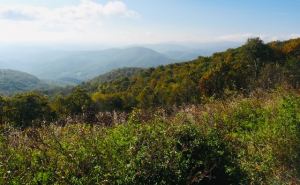
As Red Sumac waves in the foreground, we scan the western ridges toward the Shenandoah Valley and the Alleghenies beyond, early morning, October 15

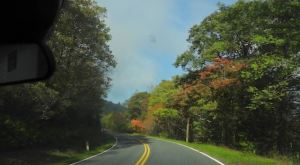
As we drive, we come upon tree after colorful tree in sunlight and mist, October 15

The wind sings in the rushes, as the sun washes the nearby ridges, the Shenandoah River valley below, and the far Alleghenies, October 15

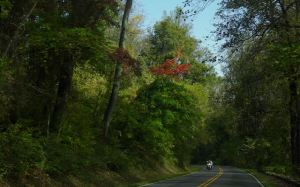
The Drive moves from deep shadows to sudden bursts of color as we go north, October 15

To our surprise, even the Dickey Ridge Visitor Center, near the northern end of the Drive in Front Royal, was open–staffed during the shutdown by unpaid volunteers from the regional Friends of the National Parks. The Center was packed by visitors asking for information and buying the books on history and nature science that we had been worried would no longer be available from this federal location, just as agency websites and federal climate records have been scrubbed since this Administration took office in January.

Bright colors in this nearby ridge as we look north along the Drive, October 15


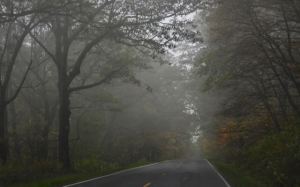
Early morning mist shrouds the canopy as we drive, October 15


Red Sumac and Maples in foreground; ridge upon misty ridge beyond as we look south in the Park, October 15

***************************************************************************

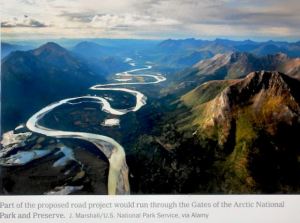
Proposed road would penetrate Gates of the Arctic (J Marshall, New York Times, Oct. 6)

Climate Log: As Most of the World Moves Toward a Greener Future, US Feds Double Down on Fossil Fuel Extraction

On October 23, as the New York Times reported, the Trump administration has now opened portions of the Arctic Wildlife Refuge to oil and gas drilling. An earlier Times article (Joselow and Friedman, Oct. 6) described a second approved project (pictured above) that would build 200 miles of roads through lands and across fragile rivers to more undeveloped sites.

 Those for and against. The plans for this latest incursion into protected lands, which environmental and Native-American organizations say would “significantly and irrevocably” damage land, air, water, and wildlife, as well as Native communities, were halted by the Biden administration for those reasons. But now these incursions have the full-throated  support of the Trump regime. Interior Secretary Doug Burgum in fact proclaimed that these approved projects embody both “drill, baby, drill,” and “mine, baby, mine,” as the White House wants companies who lease the lands to explore for a wide range of minerals that might be used in the competition with China for energy, military, and industrial dominance. 

But will anybody want the leases? One irony of the project is that it is not clear if any fossil fuel companies plan to buy the leases to drill for oil and gas in the region. Millions of acres of earlier-approved leases have gone unsold, because of the prohibitive costs of development and the intense, widespread opposition to the environmental destruction. Potential lenders to the companies have the same cold feet. 

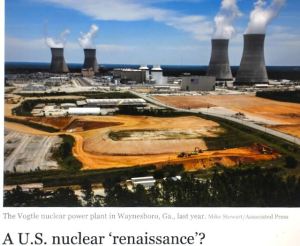
And what if the future is green (or at least non fossil)? It’s also not clear if oil-and-gas drilling have the same attraction across the rest of the world that they have to Trump, Burgum, and their disciples. Also on October 23, an article by Claire Brown in the Times asked if there might be “A U.S. Nuclear Renaissance?” While she noted the 2 nuclear power projects in development in the US (Including the one in Georgia pictured above), she described the 13 now under construction in China–and the 33 (!) already approved for future construction there. China, it seems, and the nations that share its goals for renewable energy are much further ahead of the US than we’d already suspected.

And all this nuclear activity is occurring in addition to the thousands of solar and wind projects in operation and development throughout the rest of the world. 

Bottom line? Here, where we’ve been prohibited by the President and the fossil fuel cartel from even mentioning “climate change,” and where scientists are de-funded, universities are punished, and agency personnel are fired and their records disappeared, it’s easy for us Statesers to believe that all cars are petroguzzlers, all the higher-and-higher-priced utilities run on gas, and EVs and heat pumps were a momentary California dream now gone for good.  But not so! There is hope, and it may just require us to stay strong–and learn as much as we can from our friends in the sane world.

****************************************************************************

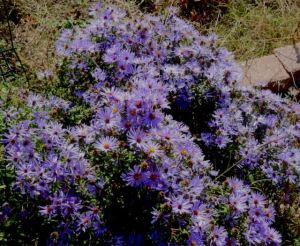
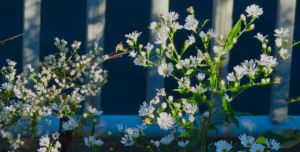
Prolific Wild Blue Aster is the star of our garden plot between the summer and our hopeful autumn, October 24

Our Garden: Summer Success Turns to Fall Hopes

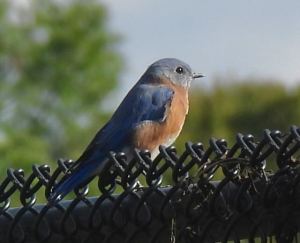
Eastern Bluebird scans the garden plots from the high fence, noon, sunny October 24

October is the month of transition for our little Northern Virginia garden plot.  On October 5, we harvested our last veggies:

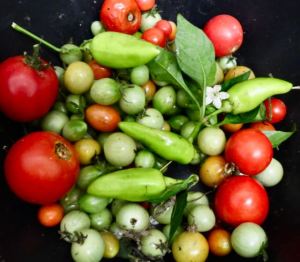
Final summer harvest of green and red tomatoes and spicy burrito peppers, October 5

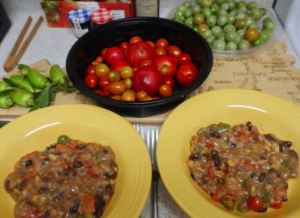
On October 6, we celebrated with a tomato-y, pepper-y Mexican “3 sisters” stew:

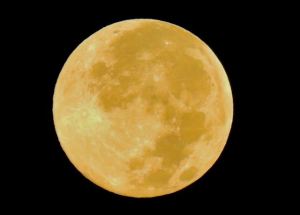
And that night saw, fittingly, the October harvest moon over the lake:

In the garden itself, we devoted the first week of October to digging and hoeing out, plant by plant, the exhausted tomato vines, pepper plants, chard, and herbs, plus the now-faded marigolds, zinnias, cosmos, and other flowers no longer in bloom. We also pulled up or hoed out a good portion of the “weeds,” like Blue Speedwell and Crabgrass, that had thrived all spring and summer. We did all this in prep for the fall season–including for whatever we decided to plant for that abbreviated time before winter.

Our garden association had chosen November 15 as the water shut-off date, but until then we could water our new plants as needed. There were also the piles of mulch and compost we could shovel on to our ground to help with prep for fall and for the overwintering yet to come.

The New Plants

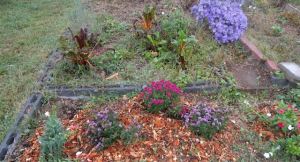
Fall plantings phase one, flowers in southwest corner: Magenta Mums, Purple Asters, Snapdragons, Vinca. We put these in October 13–with mulch


Fall plantings, phase 2, northwest corner: 6 Broccoli seedlings (left) and 6 Cauliflower (right), which we put in October 13, with mulch

At the local Home Depot, we’d decided on some fall favorites for our flower section and for our veggy section, the varieties listed with the photos above. We’d be planting only the west half of the garden and letting the east half lie fallow, perhaps with the mulch for enriching.  From the flowers photo, above, you might notice that a few plants are carryovers from the summer–3 Swiss Chard and one very healthy Rosemary, a perennial. We’ll see how they do as the cold comes.

As for the Broccoli and the Cauliflower, we tried them with some success last fall in our earlier small plot–so let’s see how they do this year. It all depends on how quickly the cold intensifies.

Oh, and the brilliant Wild Blue Aster plant in the center row? This magnificent Virginia Native did almost nothing all summer–but for the last month it has been its own fireworks display. We’ll keep track.

As you can see, we are having a ball experimenting and growing. You might say our garden plot is our own special Ball-room. And we didn’t have to destroy anything to build it.

Eastern Bluebird scans the garden as a Blue Jay calls, October 24

********************************************************************************

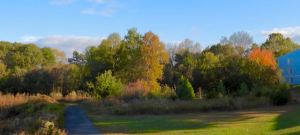
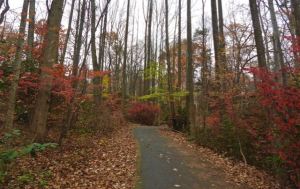
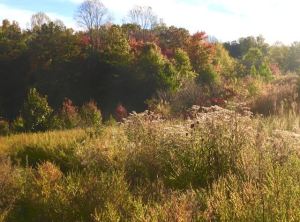
Fall colors in the woods northeast of our lake, morning, October 20

The October 2025 Photo/Video Gallery: More Birds, Wildflowers, and Autumn Travelpics

Besides our trip to the Shenandoah National Park, we also went to the local Algonkian Potomac River Park in late September and enjoyed more colorful sights in the Potomac watershed in rural Maryland and Virginia early in the final week of October.

And, of course, our own little lake offers us too many marvelous fall color and floral/faunal gems to ignore.  In fact, with the return of a substantial rain on October 30, more birds returned to the lake at the very end of the month–and we are able to show some of these species to you in this entry.

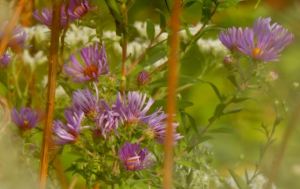
Michaelmas Daisies and Late Boneset, south end of our lake, October 20

Mockingbird on branch, north end path by our lake, October 20

Atop Maryland’s South Mountain, morning, October 23

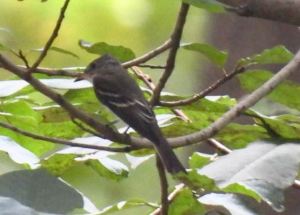
Eastern Wood Pewee, in Paw Paw tree, Algonkian Regional Park by Potomac, morning, September 23

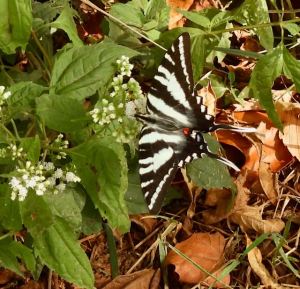
Magnificent Zebra Swallowtail on White Snakeroot, Algonkian Regional Park, September 23

In its den near the mouth of Sugarland Run in Algonkian Park, we spy the Eastern Rat Snake before it emerges, September 23

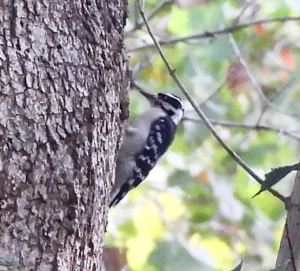
Downy Woodpecker on Black Cherry trunk, Algonkian Regional Park, September 23

Double-crested Cormorant preens on the boundary rock where Sugarland Run enters the Potomac, Algonkian Regional Park, morning, September 23

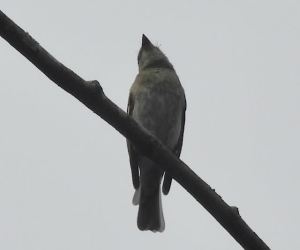
Acadian Flycatcher on branch, Algonkian Regional Park, September 23

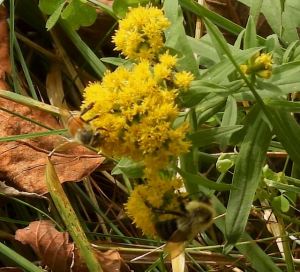
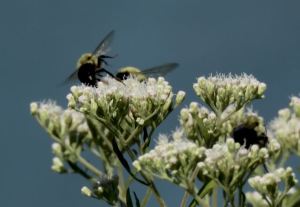
Bumblebee and Honeybee on tiny Grass-leaved Goldenrod on ground, Algonkian Regional Park, September 23

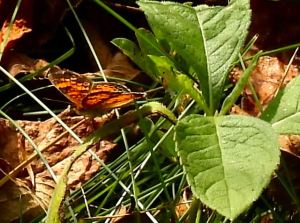
Aphrodite Fritillary on Wingstem leaf on ground, Algonkian Regional Park, September 23

Chipping Sparrow hunts seeds on ground at our feet, Algonkian Park, September 23

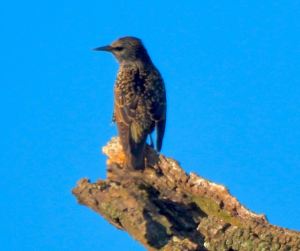
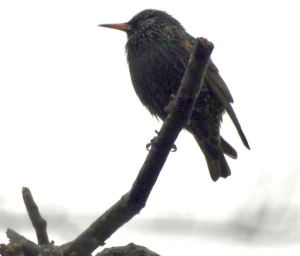
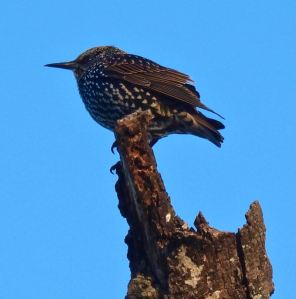
European Starling brightly lit by morning sun atop Dead Oak, east bank of lake, October 20

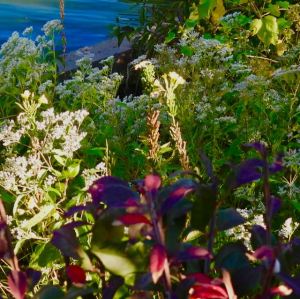
Evening Primrose, Late Boneset, and Burning Bush by south end of lake, October 20

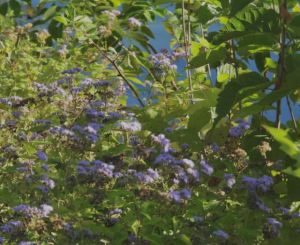
Blue Mistflower thicket along southwest shore of the lake, October 20

Grey Catbird moves through dry grass, north end path by our lake, October 20

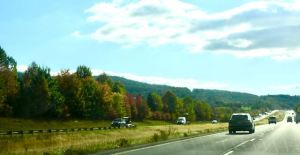
Maryland’s Catoctin Mountain, along I-70, October 23


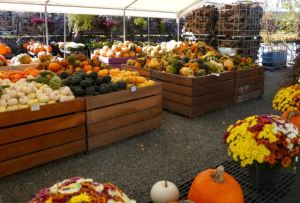
Pumpkins and Mums display, Luckett’s (VA) farm market, October 23


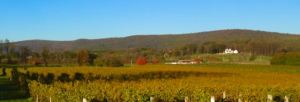
Fall colors, Breaux Vineyards, Hillsboro, VA, October 21


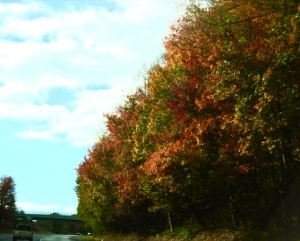
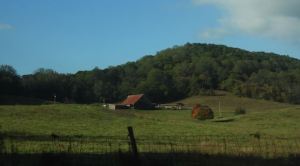
Farm along Rte. 211, Washington, VA, east of Skyline Drive, early morning, October 15


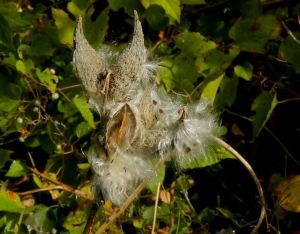
Swamp Milkweed, silken seeds ready to fly, south end of lake, October 11


House Sparrow closeup, edge of balcony east of lake, Oct. 11


Six Canada Geese in flight past fountain, south end of lake, October 11

Seven Canada Geese swim in the east lake, as Crickets sing, October 11

Rarely seen Savannah Sparrow feeds happily in the dry grass below the dam, early AM, October 25


Teazel and Boneset in field below dam with view of full color north woods, October 25

Song sparrow chirps within a Silken Dogwood on the southeast shore of the lake, as a Blue Jay calls, early AM, October 25

West path canopy of colors, in the early morning sun, October 25


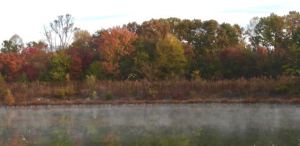
Mist rises and leaves glow: the outlet pool below the dam, early morning, October 25


Panorama toward downtown with full colors along the lake, morning, October 25


Mist rises in the lake, as full colors glow in the north woods, early morning, October 25


Dark-eyed Junco–first sighting of the fall–feeding in the field below the dam, early AM, October 25


Pine Warbler–our first sighting here!–amid Greenbriar on the southeast shore on a cloudy morning after rain, October 30


Three Rock Doves on the stanchion west of the lake, cloudy morning, October 30


Blue Jay above the inlet stream on a cloudy morning after rain, October 30


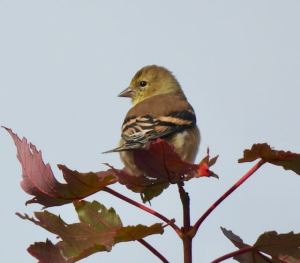
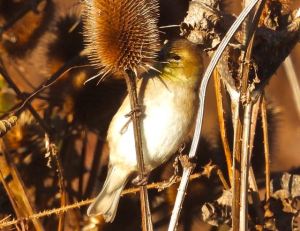
American Goldfinch, winter colors, in Red Maple, north end path, morning, October 26


Grey Squirrel munches amid acorn cluster, on the southeast path, morning, October 26


Yellow-Rumped Warbler in Red Maple, southeast bank, morning, October 26


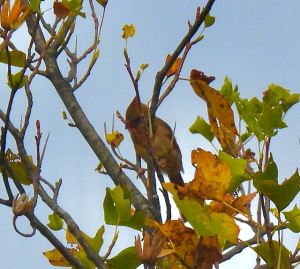
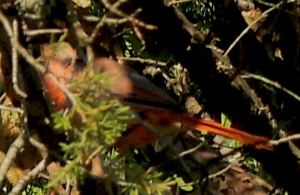
Cardinal female in Tulip Tree, north end woods, morning, October 26

Great Blue Heron stands atop dead Oak on the east bank and scans the domain, early AM, October 25

And so we move toward November, the month of Thanksgiving, with so much already to be thankful–and hopeful–for…
September 2025: The Rewards of Paying Attention

Late-season Monarch feeds amid Bearded Beggarticks west of our lake and near the highway, breezy morning, September 20. One of the great joys of walking around our lake are the surprises that I’m privileged to encounter, like this Monarch, the hidden Asters in the next photo, and the gorgeous new wildflowers that keep popping out month to month.

In this month’s blog:

Surprises of Paying Attention, Camera in Hand
Treasures of the Late-Season Garden
Climate Log: A Slow and Steady Worldwide Drying
The September 2025 Gallery: Wildflowers and Persistent Pollinators

**************************************************************

I spied these New England Asters deep within the field of wildflowers north of the dam, September 20

Surprises of Paying Attention, Camera in Hand

In “How to Count Butterflies” (New York Times, Sept. 15), the eloquent gardener Margaret Renkl writes:

God knows, our government doesn’t care about the health and safety of butterflies or any other species, including our own. For now, at least, it’s up to us to care. And the first step toward caring, as is so often the case in conservation, is getting to know our wild neighbors.

Paying attention is the first step in caring. Renkl observes closely the butterflies in her Tennessee garden, and her watching leads her to learn how to take the next step in caring: putting into her garden the plants that each species needs to feed its larvae–like the milkweeds the monarchs need:

Swamp Milkweed with Bumblebee, east bank of our lake, noon, July 4. Milkweeds are prominent on our lakeside

…or the showy, perfumy Japanese Honeysuckle that I’ve learned is a favorite food of the Zabulon Skippers, one of the tiny butterflies that grace our lakeside and our garden plot.

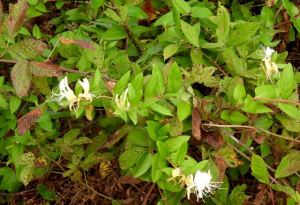
Late-season Japanese Honeysuckle entwining on the east bank of our lake, September 20

Mating pair of gold-brown Zabulon Skippers flutter on a fading Zinnia in our garden plot, September 19

Fortunately for me, so many of the resilient plants that populate our lakeside or that grow wild in our garden plot provide homes and food for the butterflies, birds, and bees. Even wild plants such as the tough, prolific Crabgrass that we pull as weeds, do necessary work for the pollinators, as I learn from the online sources curated by professional entomologists and citizen scientists. For example:

48 Common Brown Butterflies in The U.S. (with Pictures)

It takes a hard-working community of observers and professionals to help any of us really pay attention. I need to take the time to read as well as watch closely and often. Otherwise,  I’d persist in my ignorant destruction of essential plants. Fortunately, that persistent crabgrass finds plenty of room to grow among the colorful plants we cherish, like the marigolds and coneflowers.

Our “volunteer” Coneflower plant, in full bloom and with more buds coming, morning, July 23. “Weeds,” such as Crabgrass, grow amid flowers, and there’s plenty of room for all.

My trusted assistant–my camera.

If we don’t pay attention–the first step toward caring–it’s not likely that we’ll go on to the next steps. To help me pay attention, I take along my trusty camera, who allows me–actually forces me–to slow down my walk and try to do the careful work of

  • finding,
  • focusing, and
  • staying steady

My camera is an astounding tool, with its zoom lens, its automatic adjustments for light and color, and its versatility for still shots and videos. But it won’t choose its own shots–that’s my job, because I can’t grow and really pay attention if my mind is not intimately engaged in watching and choosing. Likewise, after my walks and picture-taking, I use the Apple editing tools to look even more closely at what my camera has captured, and to try to clarify even further what I’ve observed and to highlight details–particularly aspects I’d missed–to make my paying attention deeper. Even a single shot can offer ongoing opportunities to see more and more in a single scene, often well after the photo was taken. So paying attention is not a single act, but an ongoing adventure.

One of our Great Blue Herons, preening atop the dam structure at the north end of our lake, on a warm September 14. Their movements–and their stillness–are always fascinating to me, and the videos help me keep learning about them..

This photog among the other walkers.

The other walkers who go around the lake pay attention to different things which are important to them, which may not be the flora and fauna they pass. I’d say all our community humans use the path to exercise in the open air, but what we do on our walks varies greatly. Many use the path to walk their dogs, and so I meet many canine species that way. The dogs always pay attention to what they see, hear, and smell. Another group of walkers are exercising their babies, toddlers, or older young children.  I like to observe the interactions between the kids and their adults, and I’m happy to see how often the kids look around and even point at what they are passing.

Beggarticks, our most brilliant September flowers, and a Bumblebee wave in the breeze in the southeast cove, as a Fish Crow, Wren, and Crickets call, morning, September 13

Less satisfying for me are the 50% of strollers who are carrying on phone conversations, either with business colleagues, potential clients, or family and friends. Many of these folks look at the ground and often have pained expressions. Some of these conversations are sufficiently loud to scare away birds, and I must admit that these talker/walkers annoy me.

I almost never see another walker with a camera, nor a person who has actually stopped to look closely at a plant. This I can’t understand, because the lakeside is so fascinating, at least to me. But to each their own.

I’ll even get the occasional question about my picture taking, the most common question being “Taken any interesting pictures today?”  l always say yes, but if I say what I’ve seen, and if it’s not a big raptor or an exotic species, most  just frown and walk on. But every once in a while, someone wants to talk about the birds and the other animals we see. and that’s always a joy.

I’d love to talk about the Red-Bellied Cooters, who, like this one on September 13, take the sun on the rocks and logs in the lake whenever the temps get to 60 or so.

******************************************************************

Treasures of the Late-Season Garden

Pipevine Swallowtail Butterfly feeds on a Pink Zinnia in our garden, September 19

So September is moving inexorably into Autumn, and our garden plot moves into its next stage of fascinating life. We’ve had only one day of soaking rain in the past two months, but the frequent rains we had this summer set up the plot of veggies, herbs, and flowers for rich success. Our 4 tomato plants miraculously still keep producing, one pepper plant is still putting out new green beauties, and some of the flowers–like the vinca, marigolds, dahlias, and zinnias–either flourish or have kept some of their blooms.

Best of all, the steady warmth this month (highs into the 80s some days) has kept the Bumblebees and Butterflies still visiting, hovering, fluttering, and feeding.

Sweet Millions tomatoes, 2 plants, just keep on giving us ripe gems, September 16

Bumblebee on Marigold cluster, morning, September 19

Cluster of Red and Pink Zinnias, with a tiny visiting Crossline Skipper, September 19

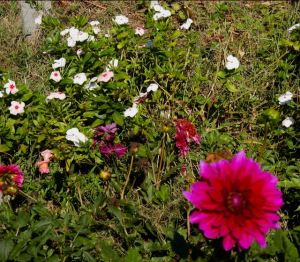
Magenta Dahlia with display of White Vinca, September 19

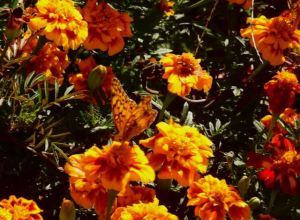
Aphrodite Fritillary Butterfly feeds on Yellow Orange Marigolds, September 19

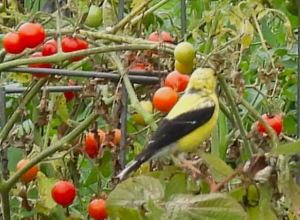
American Goldfinch perches among the Tomatoes in our community garden, September 16

Look for more photos/videos of our September garden in the Gallery (below). When all our plants will fade, and the pollinators move on into their next stages, is still in the future. Meanwhile, we enjoy.

********************************************************

Climate Log: A Slow and Steady Worldwide Drying

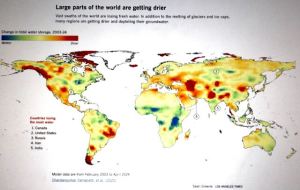
  • “Areas experiencing drying increased by twice the size of California annually, creating ‘mega-drying’ regions across the Northern Hemisphere.” Science Advances, September 2025

The title: “Humanity Is Rapidly Depleting Water, and Much of the World is Getting Drier,” almost says it all. The article in this month’s Los Angeles Times (September 3) by Ian James and Sean Greene summarizes a new study in Sciences Advances based on 22 years of satellite data.

https://www.latimes.com/environment/story/2025-09-03/global-drying-groundwater-depletion

The US and Canada are among the five countries (including Russia, Iran, and India) across the world losing fresh water fastest, as well as becoming rapidly drier. This is not news for this blog, which regularly shows data on the intensifying US drought from the US Drought Monitor (https://droughtmonitor.unl.edu ), but the data from 22 years shows the worldwide phenomenon.

The principal cause of the loss of fresh water is the over-pumping of groundwater (68% of the loss) from the world’s diminishing aquifers, mostly for agriculture, to make up for the overall loss of rainfall on the land.  As the world steadily warms through the burning of fossil fuels, the melting of the world’s glaciers and of the polar ice sheets sends water into the atmosphere and therefore increases rainfall over the oceans, which both decreases the amount of usable fresh water and contributes to the sea level rise that is endangering coasts and islands around the world. The world’s aquifers, which took millions of years to grow underground, have been depleted at an astonishing rate over the past few decades–as anyone who lives in farming areas around the US knows.

A second recent article, from the New York Times (Sept. 18), targets another devastating effect of global warming and intensifying drought: the great increase in wildfires and their intensity in the US. In our years in Northern California, we followed–and were affected by–the annual wildfires in the state. The closest we came to the fires themselves was in 2020, when the Lightning Complex fires came within eight miles of our home, the sky was orange, and ash from the smoke covered our plants (see the August 2020 blog entry). But even more distant blazes sent smoke our way, sometimes for days, and we had friends and relatives whose closeness to other fires affected us as well.

But while California always gets the lion’s share of attention about US fires, the map above shows that more than half of the continental US now suffers from wildfires and damage from their smoke. In the past year, states as far east as New York and Florida have seen wildfires–a trend that will no doubt continue. Just 2 years ago, the wildfires in the northern territories of Canada sent smoke into our area, and the Great Lakes states see and breathe smoke from the Canadian fires every year now.

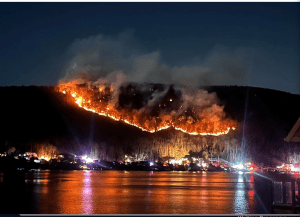
Wildfire on New York/New Jersey border, as this blog reported in November 2024

The article specifically concerns the increasing health affects, including increases in lung diseases and cancer, of these burgeoning fires. Unfortunately for all of us, the current federal Administration not only ignores but has steadily cut funding to help treat these worsening effects. The rollbacks

  • to environmental protections,
  • to emergency disaster funding,
  • to forest protection, and
  • to covered health care

will make the effects of this spreading menace more and more deadly–unless and until these damaging policies are turned around.

***************************************************************

The September 2025 Photo/Video Gallery: Wildflowers and Persistent Pollinators

More samples of the gifts we receive each day from the citizens of our local environment. We just have to pay a bit of attention, be thankful, and do what we can to help repair our endangered world.

Large Bumblebee on tiny Zinnia, lake community, September 14

Mockingbird moves in Red Cedar in breeze, north end path beside our lake, morning, September 20

Common Cocklebur, Porcelainberry, Late Boneset, and Goldenrod along the northeast shore, morning, September 20

70 Rock Doves on the stanchion west of the lake, morning, September 20

Tiny Sachem Butterfly in Purple Teazel below the lake, September 13

The outlet stream below the dam burbles through Goldenrod and Arrowvine, September 20

Cattails, Purple Teazel, and Cutleaf Teazel by the outlet pond below the dam, September 13

Double-crested Cormorant in mid lake near the west shore, morning, September 13

Since we moved back to Virginia in 2022, this is the first time that the field below the dam has been left unmowed all spring and summer, leaving it to the pollinators to thrive. Here, Goldenrod, Cutleaf Teazel, Silver Maple, and Late Boneset provide food and homes, evening, September 13

European Starling calls from atop a Red Cedar on the east shore of our lake, on a breezy morning, September 20

View down the lake toward downtown, with Goldenrod and Late Boneset in the foreground, September 20

Pipevine Swallowtail Butterfly dances on a Pink Zinnia, warm morning, September 19

Northeast corner of our lake, with Late Boneset, Horseweed, and Porcelainberry, Cocklebur, evening, September 8

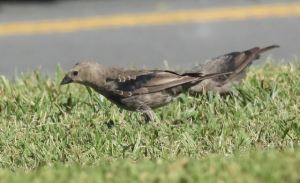
A flock of Brown-headed Cowbirds stopped by the community garden in mid migration, and I happily took this picture of a pair, September 3

Aphrodite Fritillary Butterfly amid Marigold display, morning, September 19

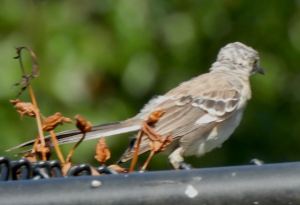
Mockingbird moulting on community garden fence, warm morning, September 3

Outlet pool of our lake, with a Cattail festival, August 27


Male Cardinal hides in shadows in Bradford Pear, beside the outlet pool of our lake, September 13

Two Zabulon Skippers dance on a faded Zinnia in our garden, September 19

Three Bumblebees on Boneset blooms along the northeast shore of the lake, September 13

Two Bumblebees feed on Orange Marigolds, sunny morning, September 19

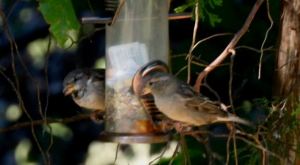
Two House Sparrows in shadows at bird feeder, east side of lake, September 13

Panorama of tiny Skipper Butterflies and Black Swallowtail feeding on Zinnias as a Bluejay calls, September 19

With a week of September still left, welcome to Fall, with hopes for an October of good surprises…
July 2025: Being One with the Land

Mexican Migrant Workers

Farm workers who create and nurture this beautiful, productive California field (Getty images)

One day’s harvest from our garden plot, July 19

In this month’s blog:

Being One with the Land: At Least Trying to Be
Climate Log: Flash Flood Horror in Texas and Iceland’s Dilemma
July Kitchen: Homemade Pies and Garden Produce Dishes
The July 2025 Photo/Video Gallery

Marigolds and Coneflowers, our garden plot, July 2

Being One with the Land: At Least Trying to Be

Farmworkers plant jalapeño pepper seedlings in Camarillo, CA (LA Times photo)

“A fresh peach still requires a pair of hands to pick that off a tree. Table grapes still require the sensitive hands of an employee to remove them from the vine.” Ryan Jacobsen, director, Fresno County Farm Bureau (From LA Times: “For State’s Farmers, Migrant Workers Are ‘Irreplaceable,'” July 10, Andrea Castillo, Sulauna Hussain, Jessica Garrison)

Chris:

It may be ridiculous to think that amateur gardeners like us have anything in common with the skilled farmworkers, like those pictured in two photos above, who spend their lives in the fruit and vegetable fields of California and other states. After all, they have the experience, perseverance, knowledge, patience, and toughness to grow the crops that feed the United States and much of the world, while we just experiment semi-blindly on our little plot with tiny seeds and cute seedlings we’ve picked up from Home Depot, and then marvel at how the sun, soil, and water turn those infants into delicious (we hope) tomatoes, cucumbers, squash, berries, herbs and gloriously beautiful flowers–with precious little work on our part. While those farmworkers bear the heavy responsibility to keep all of us alive through their skilled, talented work in the harshest of conditions.

Swiss Chard, Tomatoes, Strawberries, Thyme, Oregano, Squash in our garden plot, July 2

If we fail in our little garden playpen, so what? We can just go to the store and stock up on the fruits of the farmworkers’ incessant, highly skilled labor.

The Price of Being One with the Land. Now one would think that people who bear all that responsibility and who display every day all that skill and perseverance, would be honored by the rest of us and treated like the heroes they are. But, instead, their work and knowledge are, at best, taken for granted by us. And, even worse, the people who we voters have elected most recently to lead us treat those indispensable workers with fear and contempt. These leaders just take and enjoy the fruits of these essential workers’ labors–and then, if you can believe it–do nothing to grant these workers citizenship in our nation. In fact, by not granting them citizenship, these leaders pretend that the workers are criminals because we have not granted them citizenship!

And even worse, these leaders send in masked marauders to capture them, often in workplaces like the Home Depots we visit, and send them out of the country. Can anyone make sense of this? Where, pray tell, will our food come from if these workers are deported? Does anybody gain by this senseless cruelty?

****************

Sachem Butterfly on Zinnia bloom, our garden, July 11

Trying To Be One with the Land. Now, I may not be a skilled digger of holes, planter of seeds, plucker of weeds, spreader of mulch, waterer, watcher, and harvester, but I’ve become a pretty skilled admirer of the plants themselves and of the busy creatures who pollinate them. But getting to know our tiny, living plot of soil does help me respect the farmworkers who really know what they are doing, so that I never  take any of what they do for granted.

Yes, Jean and I know what it feels like to be soaked with sweat, bitten by ants and mosquitos, and wilt after just one hour in the garden in the July sun. But can we imagine doing this work hour upon hour, day in and day out? We try, but know we really can’t.

It’s easier every day for us to marvel at the miracles that are plants and the miracles that are these real gardeners. And everyone who gardens knows that those people and those seeds and the soil, the rain, and the sun, are miraculous. And I can each and every day give thanks for these miracles.

And I can call out the injustice and cruelty of those–really all of us–who take the real gardeners for granted and even seek to punish them, banish them, and deny them citizenship.

Dahlias, Vinca, Zinnias, and Cucumber vine, our garden, hot muggy July 2

******************************************************************************

Climate Log: Flash Flood Horror in Texas and “What Do You Call Iceland When All the Ice Is Gone?”

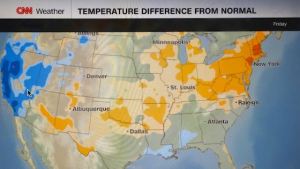
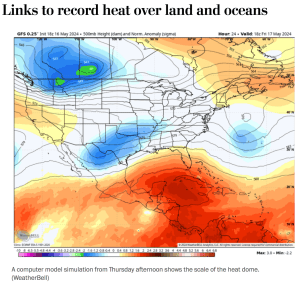
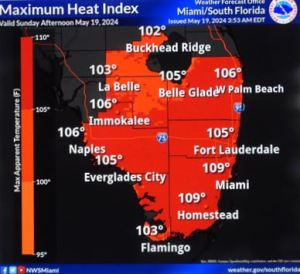
The next “heat dome” crossing the US and set to arrive in our region by July 25 (CNN Weather, July 22)

“Nature is changing faster than the language we use to describe it.” Andri Snaer Magnason, in the New York Times, July 19, 2025

Bed of the flood-ravaged Guadalupe River, Kerr County, Texas, July 6 (CNN video)

More and more continues to be written about the horrendous flash flooding in Texas Hill Country on July 4 that took 135 lives, with more persons still missing. Blame for the disaster has been spread among

  • local officials for tardy responses to warnings,
  • the gutted National Weather Service for staffing cuts,
  • localities for feeble, under-funded warning systems,
  • dangerous building locations by property owners and children’s summer camp owners (these camps were particularly hard hit), and of course,
  • just plain old complacency by people who’d rather ignore warnings than do anything different.

In the last few days, another target has been named by a few conspiracy theorists: a chemical cloud-seeding operation in the bone-dry West to try to encourage more rainfall (LA Times, “How Cloud Seeding Sparked Texas Flood Theory,” Hayley Smith, June 21). If there is anything like positive news in this flooding horror, it might be that at long last at least a few climate-change deniers are willing to admit that these so-called “natural disasters” are anything but natural–even if their cloud-seeding notion is easily-debunked nonsense. That said, it’s highly unlikely in Texas–ground zero for climate-change denial–that the true human culprits, the fossil-fuel cartel, will receive any blame. So the flooding horrors will just continue and get worse.

“What Do We Call Iceland When All the Ice is Gone?” (New York Times, July 19).

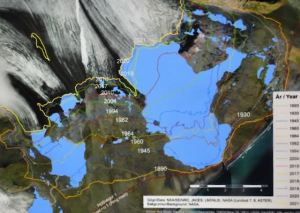
Some Icelandic glaciers have lost as much as 80% of their mass in the past century because of climate change, with projections that most of the country’s glaciers may be gone in the next 100 years (Horfandi Joklar photo, 2021)

I mention this article by Andri Snaer Magnason because it highlights how our language about climate change just can’t keep pace with the reality of what is happening. Iceland is a good case in point. There, so many place names feature glaciers–however, climate warming since 1900 has so depleted glaciers that the names no longer fit–yet people keep the names out of veneration for a happier past–and because the glaciers were for centuries so much of their national identify. Our continuing to use in the US the term “natural disasters” is another such example of how our use of language shows our failure to accept reality–and perhaps our longing for a past before Mother Nature was assaulted and violated day upon day by human forces.

***************************************************************

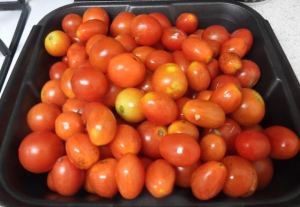
What to do with all these tomatoes? Four days of tomato harvest from our 4 Husky Cherry Red, Juliet, and Sweet Millions tomato plants, July 18

July Kitchen:  Homemade Pies and Garden Produce Dishes

Jean’s Black and White Chocolate Cream Pie, July 19

Jean:

During my days of cooking for our graduate student friends as a young wife in the 1970s, I took pride in “sophisticated” desserts containing liquor or liqueur like black-bottom rum pie and grasshopper pie.  This month, those cool, creamy tastes sounded enticing in the heat, so I went looking for recipes, old or new.  Of course I found some online, but I also decided to alter them somewhat.

My black-bottom rum pie became a black and white chocolate cream pie, decorated with dark chocolate and white chocolate chips.  Okay, it’s summer and I was hot and busy, so I used instant chocolate and white chocolate puddings rather than separating and cooking egg yolks in milk and all that, like I once did.  But you do you.  I did put rum into the puddings, but we couldn’t really taste it.  The cream and chocolate overpowered the alcohol taste.  Somebody in my house really enjoyed it despite all the disappointments!

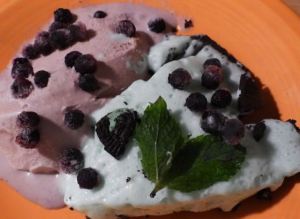
Slice of Jean’s Mint Oreo Pie with Black Raspberry ice cream and Wild Blueberries, July 25

Next I tackled grasshopper pie but did not want to buy an entire bottle of creme de cacao.  (I already had a bottle of creme de menthe I had purchased for something I no longer remember, but this helped inspire the pie.) You could also use a Torani mint syrup, if you have or find that.  See https://www.thepioneerwoman.com/food-cooking/recipes/a12009/grasshopper-pie/   You can change it up slightly to a mint chocolate chip pie, sprinkling mini chocolate chips on top in place of more Oreos. We added broken mint Oreos in the version you see here.

I must confess that the presence of these types of alcohol in my kitchen also inspired another treat for hot days–the boozy milkshake, like some of the upscale burger places serve.  Just take your favorite flavors of ice cream and blend them with milk and a bit of complementary liquor.  Everyone has mint chocolate chip ice cream on hand, right?  Throw in some of that excess, nearly unusable creme de menthe if you bought it.  The “grasshopper” actually used to be a drink, as shown here:  https://food52.com/recipes/creme-de-cacao.  And of course, another use for creme de cacao is a Brandy Alexander, which could be approximated as a milkshake using Irish creme ice cream and chocolate Irish creme liqueur, if you can find them. Just use your imagination to come up with combinations, and stay cool with a luscious cold liquid dessert.  Have the drink with your slice of pie if you can afford the calories.

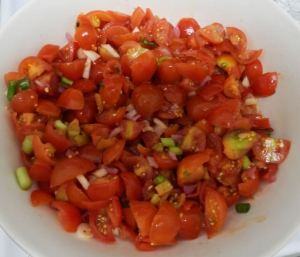
Chris’s Tomato, Onion, Hot Pepper Salsa

Chris:

What to do with all these tomatoes? We can use a lot, and friends will take some, too, but our local food banks are already resplendent in fresh donations from local supermarkets, so freezing for the fall and winter months is our best bet, as we used to do with our extra produce in California.

The fresh salsa shown above is super easy to make, as no cooking is required. And it disappears quickly, either as a dip/snack with chips, a side dish, or a topping for the veggie stir fry shown below.

Once you’ve done the tedious part–chopping all those little gems into 3-4 pieces each (I used 40 for my most recent batch), just sprinkle in salt and black pepper to your taste, plus some garlic powder, onion powder, and dried thyme or other herbs of your choice. The spice comes from the onion and from any hot pepper flakes or sauce you want to use (I used Cholula red, but I’ve also used sriracha). Fold it all up and taste. Stick it in the fridge until you want to use it. It keeps well for up to ten days.

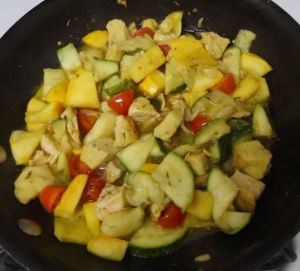
Chris’s spicy chicken, zucchini, yellow squash, tomato stir fry, July 19

For elementary cooks like me, the stir fry is perfect. With a light coating of oil in the skillet, and at medium temp and with a decent spatula, you can throw in any (well, almost any) chopped leftovers you have, add in salt, pepper, and spices of your choice, and just keep flipping and stirring until the mix softens to your desired firmness. (Just don’t leave it alone in the heat, because it will stick.) Except for the cooked chicken, which Jean provided, all the ingredients came from our garden patch. There are more of these veggies waiting in the fridge, so more stir frying will be coming up.

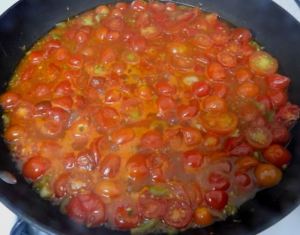
Chris’s Tomato Arrabbiata Sauce, cooking down, July 14

With as many Cherry and Grape Tomatoes as our patch has been producing since early July (50 or so ripe ones every two days), cooking sauce has been a great way to preserve those we can’t give away or eat as snacks or salsa. The large skillet of sauce just above has over 100 chopped in thirds or quarters.

Since there are a million tomato sauce recipes just a Google away, you can use the one you like. Just keep in mind that I’m using little tomatoes, so I can’t get the skins off. So as I cook the mixture of tomatoes, spices, red wine, olives, and herbs down on low heat, I’ll need extra time–say 90 minutes in all–to get the skins as soft as possible. I like to set up my laptop in the kitchen, so I can work and keep an eye on the stove during that slow cooking time. And the kitchen just smells so good!

The best part is that I can keep the finished sauce in jars in the fridge, where they’ll keep for a week or two, or I can freeze them. Right now, I have 2 jars in the fridge and just one in the freezer. We’ve already used 2 jars with pasta and stir fries! A load Like the one you see cooking will fill two 18 ounce jars.

*********************************************************

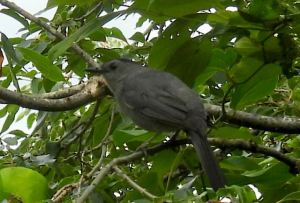
Grey Catbird in Persimmon tree right beside me on the west bank path, July 12

The July 2025 Photo/Video Gallery: Lake and Garden Highlights and One Local Outing

July’s gallery features shots of four gardens, the most intriguing of which may be the one that largely takes care of itself in the several acres within our semi-urban community. Or should I say that we humans care for this “garden” refuge by mostly leaving it and its citizens and visitors alone? Whatever hand we may or may not have in its care, it sure presents a marvelous array of species, shapes, and colors. And so do the other gardens pictured here! Enjoy.

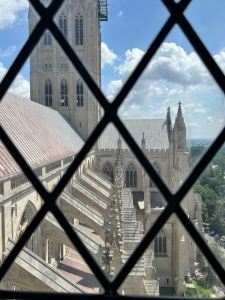
Washington National Cathedral–a favorite spot from our earlier lives in this region, but our first visit in 25 years, July 1. Here is a view of this magnificent Gothic style cathedral from the 7th floor observation deck. Notice the “flying buttresses” that support the windowed walls, a classic feature of the Gothic style

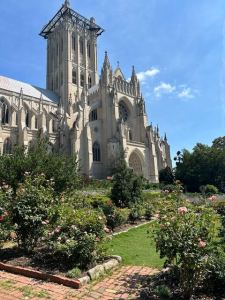
The West Side of the Cathedral and the Rose Garden, July 1

In our garden patch, Monarch feeds on a Garden Cosmos flower, hot morning, July 21

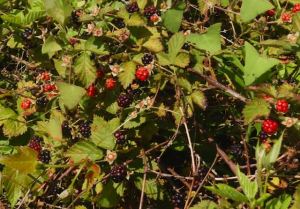
Ripe and ripening Allegheny Blackberries along the north end path of our lake, July 4. These berries grow wild in profusion around the lake. Plenty for us and for the birds

Beside our garden patch, this Male Cardinal calls from atop a neighbor’s stakes, July 21

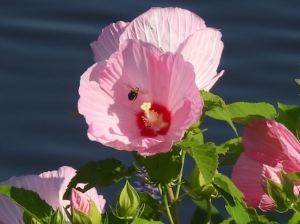
At nearby Lake Newport, Bumblebee feeds in Swamp Rose Mallow along southeast lake shore, July 11

This rarely seen Trumpet Vine flower adorns the southeast cove of our lake, July 12

Red-winged Blackbird chirps atop Red Cedar at the northwest corner of our lake, very hot noon, July 4

In our garden patch, Zinnias and Cosmos blooms and feathery stems, grown from seed, July 21

At Lake Newport, Cattails, Pickerel Weed, and Swamp Rose Mallow hug the shoreline, July 11

Bumblebee hugs blooming Purple Teazel on northwest shore of our lake, hot July 12

Snapping Turtle lurks at the surface, mid-lake, hot noon, July 4

Panorama of our lake toward downtown, with yellow Prickly Lettuce flowers in bloom foreground, cloudy morning, July 12

Panorama of Lake Newport with Lilypads and Swamp Rose Mallow, early morning, July 11

Swamp Milkweed with Bumblebee, east bank of our lake, noon, July 4

Mockingbird in Red Cedar, northwest corner by the path, with Porcelainberry, July 4

Two Red-bellied Cooters on log, west shore of our lake, hot noon, July 4

In our garden patch, Bumblebee feeds on pink Coneflower. So many pollinators! Hot morning, July 21

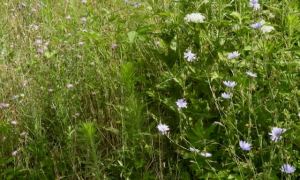
More lake summer wildflowers: Pink Spotted Knapweed and Blue Chicory, north end path by our lake, morning, July 12

Lake Newport: Red-winged Blackbird in flight, July 11

Orange Sulphur butterfly on Indian Hemp, north end path by our lake, noon, July 4

In our garden patch, Juliet and Sweet Millions ripe clusters, morning, July 21

Short clip: Mockingbird scans, then flies atop Red Cedar beside our lake, July 4

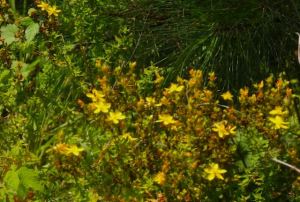
Another lake wildflower: St. John’s Wort along the north shore, July 4

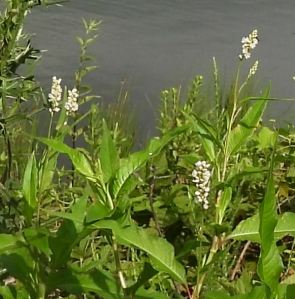
Yet one more lake wildflower–such bounty: Pennsylvania Smartweed along the north shore, hot July 12

And on to August! What do all our gardens have in store for us?

February 2025: Simple Acts of Love

In this month’s entry:

Celebrating Love in the Midst of Fear

Finding Birdsong: the Great Backyard Bird Count

Dishes to Warm the Heart

The February 2025 Photo/Video Gallery: Abundant Life in the Cold

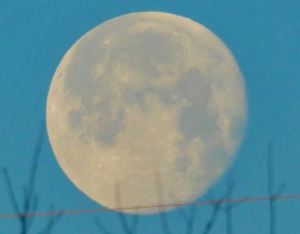
The February “Snow Moon” setting west of the lake, Valentine’s Day

Celebrating Love in the Midst of Fear

I always end each month’s entry with a “bon voyage” message for the next month. January’s message was “And on to the month of Valentines in hopes for our own resilience among challenges.” Well, there certainly have been challenges, as the new regime in the White House has torn through agency after agency with mass firings, and has left all three hundred million US citizens wondering what’s next:

  • Will any of our personal data be left un-pillaged for illegal use by Elon Musk and his uncontrolled band of data miners riffling through all Americans’ tax files, internet messages, and Social Security records?
  • Can we count on any payments and services from this new federal ruling class, which day after day punishes people if they have the courage to speak up?
  • Will US farmers survive the triple-whammy of extreme drought/floods, loss of foreign markets, and the bird flu epidemic that so far the administration ignores? https://www.youtube.com/watch?v=_3oXl_-viAg
  • Will the changed climate ever be addressed, as heat rises, storms become more deadly, and fires proliferate around the country and the world?

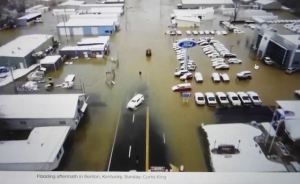
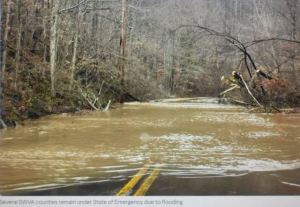
Flooding and loss of lives in Kentucky, February 16 and onward (Curtis King photo, CNN)

  • Finally, will the US keep any trust among the nations of the world, as the President cozies up to the Russian tyrant and threatens sovereign nations with land grabs and budget-busting tariffs? Will the US be left with any friends around the world in our own time of need?

Yes, the time for resilience is truly upon us.

But still we have so much to take joy in and celebrate–it’s Valentines Month! Let’s celebrate the love and care of those we are close to, and of the friends we’ve made through the years. Let’s comfort those in need and bring joy to as many others as we can.

One place to start is in our own back yard…
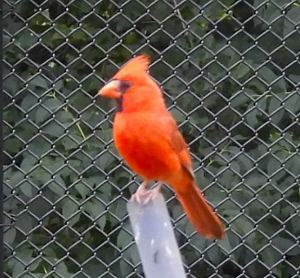
One of our Community’s resident Cardinals listens and calls to friends in a Red Maple along the east shore of the lake

*************************************************

Finding Birdsong: the Great Backyard Bird Count

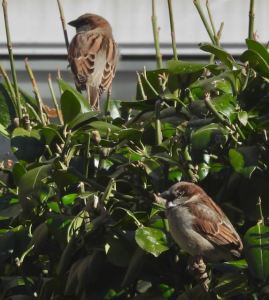
Pair of our abundant House Sparrows in a Japanese Spindle bush by a window in our community, on a cold, windy February 17

Yes, it’s that wonderful time of year again, when over 800,000 birders from around the world head out to their favorite places to record in picture and sound the inspiring lives of all the species they can discover. Just in the U.S., the Great Backyard Bird Count (GBBC), February 14 to 17, so far this year has found 655 species from almost 150,000 participants. Worldwide, so far almost 300,000 searchers have discovered almost 8000 species. Just in touring each day around the lake over the 4 days, I’ve found 25 species.

****************************

Update (March 14): Final Stats from Cornell Lab of Ornithology:

  • 8,078 species of birds identified
  • 217 countries or eBird subregions
  • 387,652 eBird checklists
  • 611,066 Merlin Bird IDs (step-by-step, sound, or photo)
  • 189,741 photos, videos, and sounds added to Macaulay Library
  • 838,113 estimated global participants
  • 409 reported community events

****************************************

In part because this winter has been distinctly colder and snowier than last year’s (as this blog explored last month), the roster of local birds in this year’s GBBC is somewhat different from last year’s. For example, this month I’ve heard a Carolina Wren and a Yellow-rumped Warbler, but not seen one. Last year, they were on my photo roster. Nor have I seen any Double-crested Cormorants for three months–a regular winter presence when the lake is not frozen–nor a White-Crowned Sparrow, also more used to warmer temps. In contrast, American Robins have been here in profusion since this December; Dark-eyed Juncos have been here continuously since the Fall; and–lo and behold–for the first time since we moved here in 2022, Bald Eagles–at least 3–have been soaring 500 feet or more above the lake, close enough for me to get a couple of blurry, but definite, pictures.

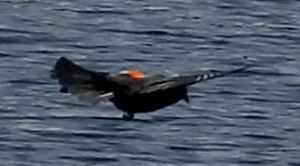
Bald Eagle soars about 500 feet above the north shore of the lake, close enough for me to get a hazy zoom shot, on a windy, cold February 17

Here are a few more from this year’s visible species list:

Not seen in the last GBBC, nor the year before, White-Throated Sparrow hunts seeds near a feeder on the Southeast side of the lake, February 15

New on this year’s GBBC roster, Savannah Sparrow feeds in the marshy waters in the Northwest corner of the lake, February 15

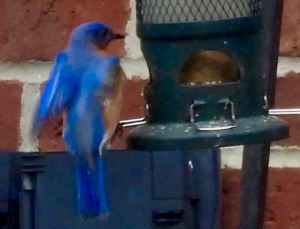
As last year, a few Eastern Bluebirds brighten the winter with their presence, like this one perched at a feeder on the Southeast side, February 15

As these 2 House Sparrows enjoy the blue feeder, listen for 3 other species: White-Throated Sparrow, Song Sparrow, and–surprise!–a male Red-Winged Blackbird, who is a warm-weather bird who doesn’t show up in these parts until June. Why he’s here now is just one of those birding surprises. February 19

The forecast for the coming week indicates more cold weather and perhaps snow coming our way, so we’ll see how the roster of birds in our community adapts. Every day offers surprises to birders. But as long as we have the lake, the woods, the diverse plants, animals, and insects along the lakeside–and the humans who care about their surviving and thriving–we’ll be fine.

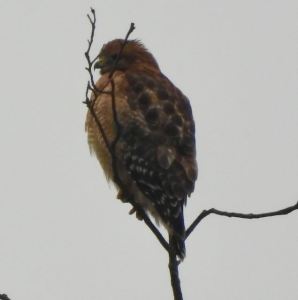
A Red-Tailed Hawk’s vigil atop a Tulip Tree across the lake on the west shore, February 15.


From across the lake I hear this Common Raven calling, atop a Tulip Tree in the East side woods, February 16

Of course, now that the Trump/Musk administration has suddenly fired 3000 local workers at National Parks and Forests (New York Times, February 18), including many trained to prevent or fight fires, the chances that birds and all other animals and plants can survive in an ever-more-extreme climate have become that much more fragile. Not to mention the weakening chances of employment of these former workers, all of them small-town residents across our country, and not to mention the even smaller chances that the now-unguarded towns near these forests will themselves survive the fires and other disasters sure to challenge their and our resilience. SEE Update, below, February 25.

Flooding brings state of emergency to counties in Southwest Virginia, February 17. (Kenzie Hagood photo, WJHL, TriCities)

UPDATE, February 25: “Plan to Cut Park Workers Reversed: After Public Outcry, Administration Gives OK for Hiring of Seasonal Employees” (LA Times, Jack Dolan)

According to the Times article, the sudden rescinding of the order might bring as many as 7000 seasonal workers to the National Parks and Forests this summer, though the firing of 1000 probationary and permanent workers still stands, as of this moment. The pushback on social media and in messages to Congressional offices to the Trump/Musk firing assault seems to be having an effect. Let’s see how this all plays out as we move into March.

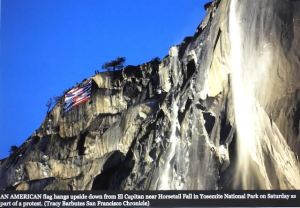
Sign of protest: US flag upside down on the face of El Capitan in Yosemite Park (Tracy Barbutes, SF Chronicle, Feb. 25)

****************************************************

Jean’s Borscht with Sour Cream “Butterfly,” February 14

Dishes to Warm the Heart: The Valentines Month Kitchen

Jean:

I decided to make borscht for Valentine’s Day because it’s very red, first of all, and I know Chris likes it.  (I also wanted a tribute to poor, long-suffering Ukraine.)  I love a beet salad, too, so I bought enough fresh beets, plus a can of sliced beets, to allow me to make plenty of either or both.  Frankly, I did not enjoy trying to roast the fresh beets; they seemed to stay tough in the oven for a long time and then they suddenly went dry and a different kind of tough.  But combining my questionable roast beets with some canned beets and pureeing them in the blender or food processor worked for this.

 
I checked recipes online for borscht and came up with so many possibilities.  Some include potatoes, some have cabbage; there are some with meat, some vegetarian, different levels of tomato inclusion or not.  I love that because it means I can do what I want and use what I have.  But having a special place in my heart for monochromatic dishes and meals, I made a point of using chopped red onion, quite a bit of red cabbage, small red potatoes, and the reddest carrots I could find, as well as a roasted red pepper and tomato sauce.  I couldn’t tell you what the proportions were.  I can’t reproduce it, and it doesn’t matter.  Even after blending, there’s a hearty texture to the soup from all the vegetables, whether or not you add some ground meat.  It was delicious and good for us, too.  Be sure to top it with some sour cream and dill fronds.
 
Here are some ideas to get you started.  Take a look and take your pick.  We probably have some more winter nights coming, even with Valentine’s Day behind us, so enjoy some nice hot soup.


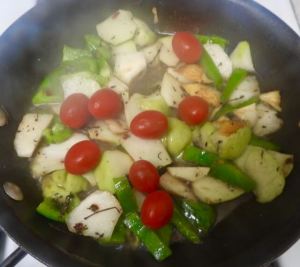
Chris’s Chayote, Green Pepper, Tomato, Garlic Stir Fry

Chris’s chayote stir fry sizzles on the stove, February 10

Chris:

Chayote, a Mexican squash, gets little publicity, but it’s inexpensive, tasty, colorful, crunchy, keeps well in the fridge, and is full of nutrition and easy to cook. Just chop it up, add any other veggies you like, season to your taste, and fry on medium heat in a tablespoon of oil until you like the texture. I sauteed chopped onions in the oil to begin, then added the chayote, mild green pepper, and grape tomatoes, plus a splash of green olive juice. I then added minced garlic, salt, black pepper, red pepper flakes, all to my taste.  I frequently flipped the mixture with the spatula, so it would cook evenly. That was it–done in twenty minutes. Perfect tummy warmer on a cold day!

Two More of Jean’s Cold Weather Hot Dishes this Valentine’s Month:
 
Jean’s Shrimp and Veggie Gumbo
 

Jean’s Shrimp and Veggie Gumbo, Rice, and Andouille Sausage, February 14

Jean’s Baked Potatoes Smothered in Chili and Cottage Cheese

Jean’s baked potatoes smothered in chili and cottage cheese, with broccoli and homemade corn muffins, February 12

*************************************************

The February 2025 Photo/Video Gallery: Abundant Life in the Cold

Along with more of the champions from our local Great Backyard Bird Count, this month’s gallery includes some provocative scenes from our deep winter of 2025. And the stars of course are the residents and the visitors.

Black-capped Chickadee calls and flits in Serviceberry tree, early AM, Valentine’s Day

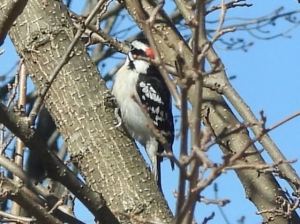
Downy Woodpecker in a Sweetgum tree, Southeast side of the lake, frigid February 17

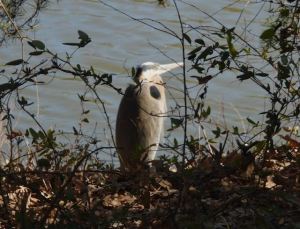
Great Blue Heron, in west bank shadows, braves the cold on February 17. No herons came while the lake was frozen in January.

On February 4, at noon, I capture a Canada goose skating (!) on the frozen lake near the fountain

Turkey Vulture soars over the lake on a sunny, but very cold Valentine’s Day


Male Cardinal holding seed in shadow in red maple on the Southeast side, February 15

Song Sparrow forages, as the House Sparrow chorus practices, Southeast side, during afternoon snowfall, February 11

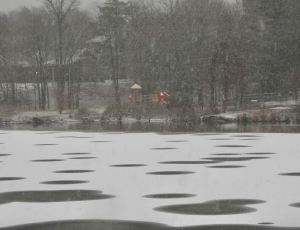
The community playground in mist across the snow dappled lake, as new snow falls, February 11


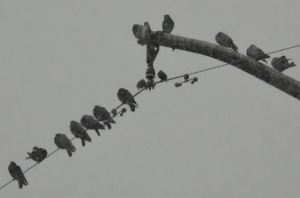
Our resident flock of Rock Doves stays warm amid company on the west side stanchion in thick afternoon snowfall, February 11


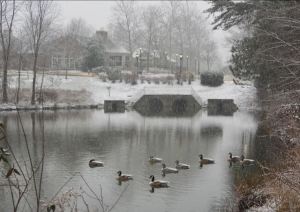
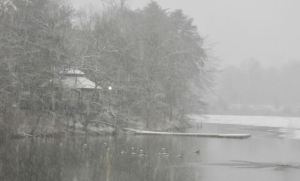
Your classic wintry scene (as if from Currier & Ives): Canada Geese pose in the calm lake before the community park, as the snow gently falls, February 11

Change of pace: Panorama toward downtown buildings as the lake sparkles in the bright sun of a windy, cold afternoon, February 17

Another change: Panorama toward the north end, with the Geese, the dock, and the gazebo, in the thick snowfall, February 11


Mockingbird walks beside me and searches for seeds on the path by the Southeast cove, February 16


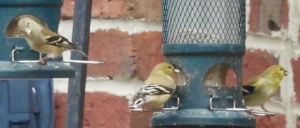
Three American Goldfinches at feeders, Southeast side, February 15

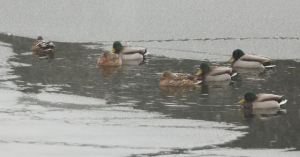
Mallard pair, having returned once the lake unfroze, swims along the north shore on a very cold morning, February 16

Back to the falling snow on February 11: I follow the burbling outlet stream below the north end dam. Calm and cold.

Just as cold, but less calm, is this mingling of Canada Geese, a Mallard pair, and 2 American Crows in the Northwest corner of the lake, February 15

House Sparrow pair won’t sit still in the Serviceberry tree in that February 11 snowfall


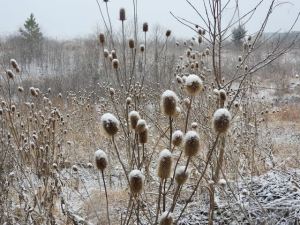
Dry Cutleaf Teazel like ice cream pops by the outlet pond below the north end dam in the snow, February 11


European Starling atop the dead White Oak on the east bank, February 16

Strolling with their Valentines: Mallard pairs swim 2 by 2 along the north shore, very cold morning, February 14

Brilliant Eastern Bluebird lands at a feeder, Southeast side, February 15


Dark-eyed Junco in Downy Serviceberry on the Southeast side, Valentine’s Day

Downy Woodpecker in Serviceberry tree scans the area as the Sparrow chorus sings and a jet roars overhead, and there’s snow, too! February 11, of course.

And the stolid Great Blue Heron scans the shore in the bitter wind of February 17 and thinks: “It’s all about resilience.”

And on we March to March: Let us hope that the loving spirit of Valentine’s can stay alive in all our hearts and be shared with all creatures.

January 2025: Fire and Ice

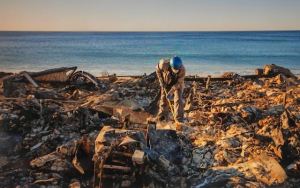
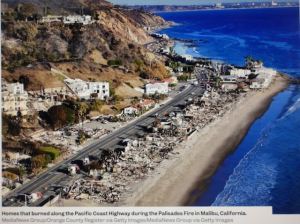
Fire to the Ocean: Homeowner sifts through wreckage after the Palisades Fire, Jan. 13 (Brandon Bell/Getty Images). The Palisades Fire is still not fully contained two weeks after the blaze began, and more high winds occurred this week, but with some rain expected for the weekend.

In this month’s entry:

Apocalyptic Fires, Surprising Ice
Staying Warm with International Dishes
The January 2025 Photo/Video Gallery: Bird and Deer Resilience

Palisades Fire and Los Angeles city lights, from airplane (Reuters photo, January 8)

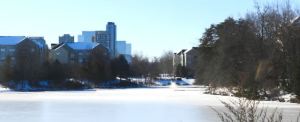
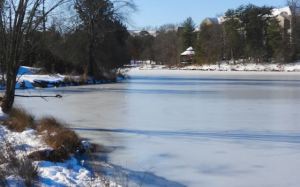
Our frozen lake, view toward downtown, windy morning, January 9

Apocalyptic Fires, Surprising Ice: Two Sides of the Same Oily Coin

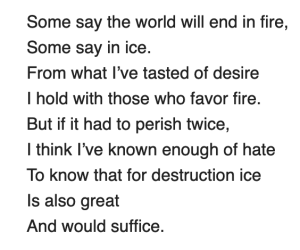
Robert Frost, “Fire and Ice,” first published 1920

Chris:

It’s certainly common in this blog to talk about very different places and experiences, but this January seems to offer–I say “seems”–a brutally stark divide between the fires in Los Angeles and the snow and ice here in Northern Virginia and now through the Deep South. Sure, there’s a difference between the heat and sudden destructiveness of a fire and the combination of sudden danger and long-term deadening action of ice. But, as Frost’s poem makes clear, the contrasting forces both have the power to destroy the world–when weaponized by human desire and hate. So fire and ice, in their destructive power, have a lot in common.

Altadena, CA “neighborhood” after the Eaton Fire, Jan. 16 (Orange County Register); Almost 40,000 acres burned in the two fires; 12,000 homes, schools, libraries, and other structures were lost, and 60,000 or more people were left homeless–one of the worst disasters in California history

Indeed, the LA fires and the extreme “cold snap” now surprising the US South–snow fell in Tallahassee, FL, on Jan. 20, for example–both demonstrate the climate change that the unrestrained greed of the oil and gas cartel continues to bring to the planet and its inhabitants. The unprecedented fires in LA are the result of the rare–but increasing–confluence of a record drought afflicting Southern California and unusually strong Santa Ana winds producing gusts as high as 100 miles an hour. Together, the drought and the winds make wildfires in the parched chaparral landscape much more likely. Climate change science predicts that such a confluence of forces will become more common.

And not only in Southern California. The drought that stoked the fires there is stoking them across many states. According to the US Drought Monitor, as this blog reported in October, as much as 80% of the US is rated as from abnormally dry to being in moderate to severe to extreme to exceptional drought, as this December 2024 map shows:

US Drought Monitor, Christmas Day 2024 (https://droughtmonitor.unl.edu/CurrentMap.aspx)

The Onslaught of Ice in the Deep South

Ice, snow, and states of emergency from Texas to Florida to the Carolinas, Winter Storm Enzo (Weather Channel, Jan. 21). David Goodman of the NY Times reports (Jan. 21): “For many Texans, the arrival of snow brought back memories of the devastating winter storm of 2021, which crippled the state’s independent power grid and killed more than 200 people. So far, the state’s electricity market operator has said it has plenty of power.”

Some are calling it a “once-in-a generation” winter storm along the Gulf Coast (CNN, January 22: https://www.cnn.com/2025/01/22/weather/winter-storm-south-wednesday-hnk/ ). So how is this icy, snowy Southern “Surprise” an effect of climate change? The steadily diminishing polar ice cap, perhaps the most dramatic effect of human-caused climate change over recent decades, is producing fluctuations in the “polar vortex” jet stream that are making seasonal weather forecasting more unpredictable across North America. So we shouldn’t be surprised that a sudden surge of very cold air is hitting the Deep South this January.  Again, what has been entirely predictable over the past 100 years or more is that the Earth is slowly heating. 

And so, the gradual heating produces

the polar ice cap melt that spawns

the fluctuations in the upper atmosphere that cause

the unexpected deep freeze and snows in the South.

In other words, it’s all part of a pattern brought about by our addiction to fossil fuels. That Northern Virginia is experiencing temps this week in the single digits (4 degrees Fahrenheit on the morning of 23rd) would not be surprising if Januaries in the past 20 years had been the typically cold winter months of years long past. But in January 2023 and January 2024, this blog described what amounted to early springs of budding trees–not a surprise, because gradual warming has been the trend, as the world and local temperature records demonstrate:

Hottest Year on Record in the DC region (National Weather Service) (Washington Post, Dec. 30): this map records “only” the last 145 years, but the trend is obvious

Heavy snowfall on our lake, view from south end park toward downtown buildings in distance, January 19, afternoon

Aftermath of one section of Palisades Fire in Malibu (photo Jan. 16, Orange County Register)

Is there anything we can do about this trend toward ever worsening destruction? Sure, but will U.S. society have the courage and even the awareness to really move steadily with determination away from oil and gas and toward clean energy? We have the technologies and the infrastructure–and the skilled workforce–to do so. But strong-arm politics is the stumbling block.

Just this Monday, January 20, the loudest mouthpiece for the oil and gas cartel was re-inaugurated as the President, and he has already nominated for his Cabinet men who are wedded to the cartel and dedicated to eliminating clean energy alternatives: solar power, wind power, and electric-powered vehicles. These people glory in the fact that the U.S. is already the world’s largest producer of fossil fuels, and they want that destructive leadership to intensify–to their benefit, but not to meet the needs of the people for a safe, productive environment.

According to the Energy Institute (Nov. 2024), the U.S. has been the world’s leading producer of oil and liquid gas since 2017, and further increased this lead under the Biden administration. Even oil companies see no need for this continued mining, as leases already approved go unpurchased. So why is further mining being pursued by the new President?

The result will be that in the next few years more and more events like the wildfires in California, the worsening hurricanes in Florida and the Gulf Coast, the extinction of fish species in the oceans, extreme drought in Texas, water shortages in more and more states, and many more climate-related disasters will occur. Costs already in the trillions have been racked up to repair and prepare for these events, with Americans paying for them in ever higher prices, in lost insurance, and in fear for their lives and homes. Politicians who don’t want to call these catastrophes what they are–“human caused”–will keep calling them “natural disasters,”  while nature and her creatures will suffer through our abuse.

A beautiful pair of Mallards push their way through the frozen lake, as snow falls, January 6

***************************************************************************

Jean’s green pepper enchiladas, January 18

Staying Warm with International Dishes

Jean:

As the temperatures have dipped down and stayed down over the past couple of weeks, I have been inspired to serve comfort foods, hot in both temperature and taste.  Furthermore, we’ve been staying inside more than any time since Covid, as ice has built up outside, so reusing and repurposing leftovers and pantry items has been a priority.

I started with chili, of course—a staple of cold weather comfort food.  I never make chili the same way twice, but this time I was inspired by a recipe by Molly Yeh on the Food Network, except I left out the cinnamon because Chris doesn’t like the taste of Cincinnati chili (but I do).  That chili had no beans, so on another day I added chunky tomatoes and pinto beans for a different look and taste.

Green Pepper Enchiladas

My next inspiration came from watching “Moira Rose” make enchiladas on Schitt’s Creek.  (Yes, there’s a lot of TV watching involved when holed up inside by the weather.)  I don’t know her recipe, so I just pulled something together with leftover bean and corn chili as the filling, spinach tortillas for color, sliced green peppers for crunch, and a canned cheese sauce. They turned out perfectly and were photogenic, too!

West African Peanut Stew

Because Black History month is upcoming in February and Martin Luther King, Jr.’s birthday is this week, I also made a West African peanut stew, which combined chard, tomatoes, sweet potatoes, and chicken with the peanuts in a savory sauce with peanut butter, cumin, garlic, ginger, and onion. The plentiful, colorful stew was good for several days of leftovers. Chris particularly liked the chopped chard and tomato flavors, and peanuts are favorites of ours in any form. (The peanut stew was also a tribute to my late older sister, whose birthday was the same as MLK’s.  She worked in Africa with the Peace Corps in her youth.)

Orange Chicken and Tempura Green Beans for Lunar New Year

For Lunar New Year, I also checked out Molly Yeh and came up with her orange chicken recipe.  I decided to opt for our favorite cut, whole chicken thighs, rather than go to the expense and trouble of using chunks of chicken breast.  The point of this recipe for me is the delicious orange sauce, although you can buy a similar preparation in the Asian food aisles at many grocery stores.  Here is her recipe:  https://www.foodnetwork.com/recipes/orange-chicken-12245113.  I substituted whole seared chicken thighs that I then baked for 45 minutes in the sauce.

The coating on her chicken nuggets, although I didn’t use it, inspired me to try tempura green beans as a side dish. I checked around on the Internet and looked at various recipes for the tempura batter and ended up using something that was half rice flour, half all-purpose flour, a little baking powder and salt, plus enough sparkling water to make a batter that was neither runny nor too thick but just the right consistency to adhere to green beans dipped in it.  Then about 4 minutes in piping hot oil and a sprinkle of salt when they come out to drain on paper towels.  Great when hot, but a fine snack when cooled or rewarmed briefly as well.

The key to tempura really is the batter, and there are lots of ways to make a good one. You just have to experiment. I remember eating tempura shrimp one time in the kitchen of a Japanese neighbor who said she used some pancake batter mix for a coating that was a little thicker, puffier and browner than the typical tempura batter.  That was so delicious I think we ate the family’s entire week’s supply of shrimp; I just kept asking for more.

And for dessert: Japanese Mochi Bars

I decided to turn part of the rice flour mixture into mochi bars for dessert as well, since this mixture is the starch that is used to create the dense texture of mochi. I chose bar form because it’s easier than making the batter into balls: https://cooking.nytimes.com/recipes/1022347-butter-mochi

I made these the afternoon after I made the tempura green beans, and they emerged from the oven just in time for an impromptu afternoon tea. Chris joined me after editing his new batch of bird photos. On a fifteen-degree January day, inside or outside activities can both be good choices. But tea and mochi bars back inside always work.

What can I say? If cold weather keeps me indoors, I turn to cooking. Let Chris go outside to commune with the birds. We both think I made the right choice.

**************************************************************************

The January 2025 Photo/Video Gallery: The Resilience of Birds and Our Other Citizens

Male Cardinal calls and listens in a Cherry tree in the Southeast cove, as a Tufted Titmouse and a Downy Woodpecker also call from the nearby woods, on a cold, windy morning, January 7

Chris: They are hanging in there, marvelous creatures that they are. This blog continues to celebrate avian courage, as we note that H5N1 “bird flu” is now making its presence felt in Virginia, at poultry farms (so far 7 of them) in the Delmarva (Delaware, Maryland, Virginia) region. And cranes have now died of the disease at the Richmond (VA) Zoo (Dana Hedgepeth, Washington Post, January 22). We are constantly inspired by these small bundles of energy as we hear them calling and watch them surviving and building lives amid the snow and ice this month.

150 yards away, a beautifully-antlered White-tailed Buck stares at me from the snowy field north of the Lake Cameron dam, January 17

Faithful flock of Rock Doves huddle in the cold of the power stanchion west of the frozen lake, January 16

Citizens leave distinctive tracks across the frozen lake from the west bank, January 16

The White-tailed Buck ambles toward the woods west of the field, eyes me, then moves on, January 17

Song Sparrow perches in Persimmon against a snow bank above the north shore, January 17

Panorama toward the west bank of the lake from the southeast side in snow and ice fall, January 19, afternoon

House Sparrow in winter plumage scans from Mulberry tree on the Northeast corner of the lake, January 17

Amid a chorus of other birds, House Sparrow flits in dry Blackberry canes by the frozen lake, along north shore, January 19

Eastern Bluebird atop Katsura tree, Southeast side of the lake, January 19

Mockingbird dances in the Greenbriar on the Southeast bank of the frozen lake, January 16

Dark-eyed Junco camouflaged in Serviceberry tree, East side, late PM, January 16

Male Cardinal hides in Japanese Honeysuckle along the Southeast cove by frozen lake, January 16

Female Cardinal calls, listens, flits in Cherry tree, Southeast side, January 19

American Robin in Serviceberry tree, East side, late afternoon, January 16

American Goldfinch in snowfall in Katsura tree, afternoon, January 19

Four Rock Doves on a wire watch the frozen lake from the West side, January 17

View of frozen lake to gazebo from the Northeast corner, January 9

Pair of Mourning Doves in a Tulip Tree, North end woods as snow falls, January 6

Our large flock of Canada Geese all along the North shore of the lake, January 7

Seven Mallards in our lake amid ice as snow falls, January 6

American Robin pair on roof, Southeast side of the lake, on a very cold and icy January 22

And on to the month of Valentines with hopes for our own resilience among challenges!

November 2024: In a Sad Month, So Much To Be Thankful For

Mockingbird on dry Pokeberry bush, north shore of lake, Nov. 17

In this month’s entry:

Thanksgiving Gifts from Our Family
Wildlife Around Our Lake Disappear in the Ongoing Drought
Election Gives Narrow, But Still Decisive Win to Climate Change Deniers
Keeping Up the Good Fight: Visiting the Virginia State Arboretum
The November 2024 Photo Gallery: Pretty Landscapes, Growing Silence

At nearby Lake Newport, we walk on crispy, fallen leaves amid skyscraping trees and brilliant autumn colors.

Thanksgiving Gifts from Our Family

How fortunate and thankful we are to be able to share our joys with family who have come to join us from New York, Virginia, and Georgia. Our Thanksgiving embraces a week of holiday outings, imaginative meals, and raucous, witty (of course!) conversations among three generations from age 4 to 80. Even those family members we can’t be with in person, we will be with via phone, text, and FaceTime.

What did we do to be so blessed? And, wouldn’t you know it, we’ve even gotten an inch of rain this week to begin, we hope, to make a dent in the drought.

************************************************************************

Green algae thick in the inlet stream into our lake, Nov. 18, as significant rain has not fallen since September

Ongoing Drought and the Fast Spread of Bird Flu: Birds Disappear Here, While Wildfires Plague the Northeast

Exactly one year ago (see November 2023 entry), this blog celebrated in story, video, and photos a profusion of wildlife around our small lake. The stars of the entry were several pairs of amorous mallards happily building their relationships, while the videos featured a varied soundtrack of the many songbirds and waterfowl calling to their fellows in an often rainy setting.

The only ducks we’ve seen in our lake since the spring are these four Buffleheads, who visited last week for one day, and then flew off. Even our frequent cormorants have not visited. Only our resident flock of Canada geese visit this water, and even their visits have declined.

Oh, what a difference a year makes! The drought brought on by record high average temperatures across the country (and much of the entire world) this year has been intensifying in our multi-state region since early in 2024. The drought has continued through this November (October was completely rainless), and this November is the hottest on record in our area (as reported in the Washington Post, Dec. 3). Last month’s entry focused on how quickly the lakeshore’s plants were drying out and leaves were beginning to fall. The music of the birds had almost ceased as birds migrated toward wherever they might find fresh water.

The Next Pandemic? Perhaps Bird Flu.  A secondary cause of the bird decline is the H5N1 bird flu, which has spread rapidly across the country, causing the decimation of many millions of chickens in commercial flocks, and now also infecting some 685 cattle herds in 15 states, as reported in the Los Angeles Times (“Business as Usual Despite H5N1,” Nov. 30) and in National Geographic (Fred Guteri, Dec. 18). Unfortunately, like the widespread drought, scant attention is being paid to the spread of this disease in our environmentally-oblivious U.S. of 2024.

Photo: NatGeo/Reuters

No one wants to hear this, because there is clearly no appetite in this country for even thinking about  precautions for a new health crisis. But, as Zeynep Tufekci writes in the Dec. 9 New York Times, more and more human cases of H5N1 are arising, and the time is now to take the threat seriously (“A Bird Flu Pandemic Would Be One of the Most Foreseeable Catastrophes in History”). In 2019, there were health experts in the first Trump administration who could push back strongly on the President’s fantasies about COVID-19 (remember the bleach cure and hydroxychloroquine?). But now he has surrounded himself with vaccine deniers like Robert F.Kennedy, Jr., and there will be no medical leaders like Anthony Fauci, Deborah Birx, and Francis Collins to mobilize an effective national/international response, so wishful thinking, studied ignorance, and quack remedies will abound, more like the Middle Ages than the 21st century.

At nearby Lake Newport, the bone-dry inlet stream from surrounding hills and neighborhoods, as the drought goes on, Nov. 20

Wildfires in New York, New Jersey, and Massachusetts

5000-acre Jennings Creek Fire on New York-New Jersey border (USA Today photo, Nov. 18)

Last month’s blog also displayed the map of the U.S. (created by Drought Monitor), which showed almost the entire nation (except for hurricane-pounded Florida and western North Carolina) in a moderate to severe drought. Wildfires were in lethal bloom in many Western states. Weather Service maps showed “red flag warnings” across much of the central and eastern states, including New York State and even New England.

Well, sure enough, in November as many as 500 fires of various sizes have transformed the usually wet and cooling Northeast states into a California-like wildfire season–experiencing such change for the first time in memory. The largest of these blazes so far has been the Jennings Creek fire (shown above): 5000 acres and growing along the New York-New Jersey border, with smoke from all these fires fouling the air in East Coast cities. Meanwhile, in many other states, such as Oklahoma and Texas, drought has caused the massive loss of crops, which this blog catalogued in August as having occurred here in Virginia’s usually lush Shenandoah Valley. Neighboring West Virginia’s governor–a staunch climate-change denier–declared a statewide drought emergency across its 55 counties:

***************************************************************************

Election Gives Narrow, But Still Decisive Win to Climate Change Deniers

To make matters even worse, this November’s closely-contested elections gave a thin, but nevertheless sufficient victory to former President Donald Trump and to just enough climate-change denying Republican candidates to give that party razor-thin majority control in the Senate and the House of Representatives. Trump, who is a strident spokesperson for the fossil-fuel cartel, made “Drill, baby drill!” for gas and oil one of the emphatic slogans of his campaign.

As if that weren’t destructive enough, the rival candidate, Democrat Kamala Harris, never during the campaign spoke out in favor of renewable energy sources, and indeed promised voters in the closely-contested state of Pennsylvania that she supported the destructive, water-wasting practice of hydraulic fracturing (“fracking”) for natural gas, which has become in recent years a favored process of gas extraction in that state and many others. Why she and her party turned their backs on climate is not clear, but surely indicates that they did not trust voters to understand the dangers and their importance. This is puzzling, because, as this blog detailed in July, polls show that a healthy majority of Americans see climate change as a solvable major problem. But at this point, possible solutions don’t even get on the ballot.

So, with no candidates in either party having the courage to speak the truth about climate destruction, the results were inevitable. As the world and our nation become steadily hotter, more polluted, drier, less fertile, and with more extreme storms, we humans are getting what none of us want, but what too many of us prefer to ignore, or deny, or feel powerless to prevent.  Too bad that our fellow creatures don’t have a say about our actions, but just suffer–and disappear–through our cowardice.

***********************************************************

Panorama of the Virginia State Arboretum: Cedar of Lebanon foreground, and Bald Cypress grove and famous yellow Ginkgo grove in distance, Nov. 8

Fighting the Good Fight: Visiting the Virginia State Arboretum

The magnificent Dawn Redwood, native to China, 80 feet tall, part of the international display at the Arboretum, Nov. 8

We had read about the Virginia State Arboretum, part of the Blandy Experimental Farm operated by the University of Virginia. We finally visited on November 8, a warm, sunny day just perfect for walking and viewing. Located 80 miles west of us, north of Shenandoah National Park, and just beyond the Shenandoah River near the village of Boyce, the Arboretum is an out-of-the-way miracle that is one of Virginia’s best kept secrets. With trees from around the world and across the U.S., as well as representative trees from throughout the state, the Arboretum’s several miles of trails offer stunning sights, good exercise, and a pleasant education in arboreal beauty.

Visitors to the Arboretum walk the Alley of Cedars of Lebanon toward the Ginkgo Grove, Nov. 8

Our visit came during the Arboretum’s Ginkgo Festival, so about a hundred visitors of all ages had come especially to see the famous grove of Asian Ginkgos (pictured above). Our leisurely two-hour visit also included a walk along the Cedars of Lebanon Alley,  a stroll among the many labelled and fragrant plants in the garden of herbs from around the world, and a talk with one of the helpful members of the staff–who answered our questions about the effects of the drought on the trees. She told us that often drought effects on trees are not seen until two years or so into the event, because of the trees’ resilience and stores of nutrients. However, she said, one evident effect already had been the drying up of the ponds and lakes on the property, as well as the decline in the bird population. Nevertheless, the broad lawns were still remarkably green and the trees glowed with fall colors, so the sights were lush and I even was able to get one bird photo, of the Brown Thrasher (below).

Brown Thrasher silhouetted in a berry-covered Buckthorn tree between the Cedars of Lebanon Alley and the Ginkgo Grove, Nov. 8

Greenhouse and outdoor international herb garden, State Arboretum of Virginia, Nov. 8. Ah, the fragrances!

 *************************************************************************

Sunrise panorama toward colorful north end woods, with west side dock in middle distance, Nov. 15

November 2024 Photo Gallery: Finding Beauty in the Drought

This month’s Gallery features scenic photos from around our little Lake Cameron, from nearby Lake Newport, and from other local sites. The birds are much fewer in number, so the music of their calls has all but disappeared, though the number of species is still considerable, as the photos here demonstrate.  Happily, some still make their presence known visually, and we highlight them here. We give them thanks for sharing their delicate beauty.

Eighteen Canada Geese adorn our lake before the north end, Nov, 23. They’re visiting frequently now, but no longer daily.


White-throated Sparrow, first sighting here of this species after two years of listening to the call, north end path, morning after rain, Nov. 28


Inlet stream to our lake, water clear after night of rain and colder temps, Nov. 28


Flock of Rock Doves on stanchion west of lake, morning after rain, Nov. 28


Burning Bush and gazebo, west shore of our lake, with view toward downtown, morning after rain, Nov. 28


American Crow atop Tulip Tree, north end woods, Nov. 28


Three Turkey Vultures glide above the east bank of our lake, the most we’ve seen here at one time, Nov. 18


Chipping Sparrow in dried Cutleaf Teazel, at the northeast corner of our lake, on a warm, dry morning, Nov. 8


Great Blue Heron, our regular visitor, beside the inlet culvert on the southwest shore, warm Nov. 18


At nearby Lake Newport, homes and fall colors are reflected as we look from the dam on a cold morning, Nov. 20


Meadowlark Botanical Gardens, holiday light show, trees and gazebo illuminated across lake, Nov. 25


Male Cardinal, amid Asters, Boneset, and Blackberry Canes, northeast corner of our lake, Nov. 7

This male House Finch lands atop a Tulip Tree in the north end woods by our lake, on a cool morning, Nov. 18


Bluejay near feeder, east side, Nov. 8


A newly arrived Yellow Warbler perches in the Willow Oak on the east bank of our lake, Nov. 8


Carolina Wren on branch, southeast shore of our lake, windy morning, Nov. 11


Just after sunrise on a cold Nov. 24, Cherry Laurel, red Oakleaf Hydrangea, and the northern panorama of our lake


Panorama toward the south end of our lake and downtown, with contrails, early morning,Nov. 17


One of our Red-bellied Cooter Turtles, on log at the southeast shore, warm morning, Nov. 15

European Starling scans from atop the dead Oak on the east bank of our lake, on a cold dry morning, Nov. 23


Yellow Warbler feeds on dry Cutleaf Teazel in field west of our lake, Nov. 23


Song Sparrow, amid dry blackberry canes, northeast shore of our lake; warm, windy morning, Nov. 17


In our new garden plot in the public gardens in our town, tiny heads emerge in two of our cauliflower plants, warm morning, Nov. 24

A Grey Squirrel pauses on a branch near the west side path along our lake, on a cold morning, Nov. 24

 Mist rising at sunrise, beside the north end outlet stream below dam, Nov. 17


Fall colors, including Scarlet Oak along the west side path, warm morning, Nov. 18

Here’s to a happy, fruitful December, which is bound to be interesting!

September 2024: We Return to the Eastern Shore and We Start a New Garden

If you’re new to this blog, start with the About page, then come to Home.

Double-crested Cormorants celebrate sunset on the Tred Avon River, Oxford, MD, September 15

In this month’s entry:

Return to the Eastern Shore: Heroes, Horses, Survivors
Our Newly-Started Garden!
Another Potomac Valley Exploration
The September 2024 Photo/Video Gallery

On the Long Wharf in Cambridge, MD, Herring Gulls, Rock Doves, and a Turkey Vulture commune, September 14

Return to the Eastern Shore: Heroes, Horses, and Survivors

Frederick Douglass statue at County Courthouse, Easton, MD, September 13

One year ago, we took our first trip to the Eastern Shore of Maryland since we’d left California in 2022. On that trip, we focused on the quiet village of St. Michael’s, the even tinier Tilghman’s Island just across the Chesapeake Bay from Virginia, and the Blackwater National Wildlife Refuge. On this year’s two-days-longer trip, we focused on the historic towns of Easton, Cambridge, Vienna, and Oxford–as well as windswept Assateague Island all the way east at the Atlantic Ocean.

Early morning scan along a small beach at the western edge of the town of Oxford, toward the Choptank River, September 16

Heroes

The town of Easton thrives today near where Frederick Douglass grew up enslaved and from which he escaped as a young man. His life and struggles are immortalized in his 1845 autobiography, Narrative Life of Frederick Douglass. Easton reveres its local hero through a powerfully-wrought statue in the town center and an annual Frederick Douglass Day celebration, to be held this year on September 28.

Douglass Day poster, Easton, Maryland (photo, September 13)

A second Eastern Shore hero, Harriet Tubman, the courageous, tireless leader of the Underground Railroad, is commemorated in nearby Cambridge, Maryland, through the Harriet Tubman Memorial Garden, and the Harriet Tubman Underground Railroad National Historical Center, which includes the Museum of the Underground Railroad. On this Veteran’s Day, November 11, Tubman was honored, 160 years after her military service to the U.S. during the Civil War, by being named a one-star general in the Maryland National Guard. Over her lifetime of service, she liberated many hundreds of enslaved persons in Maryland and other slave states.

Mural of Harriet Tubman in downtown Cambridge, MD

Harriet Tubman grew up enslaved on the Brodess Farm eight miles south of Cambridge, and from there not only escaped herself, but led others from the farm to freedom. The peaceful fields and forest of this land today, marked by two plaques, are a quiet tribute to the lifetime of heroic service by this American hero.

Historic marker to Harriet Tubman at the site of the Brodess Farm, south of Cambridge, Maryland (photo, September 15)

Horses

According to legend, a shipwreck late in the 17th century left a small herd of horses stranded on long, narrow, sandy Assateague Island just off the Maryland coast. These horses survived on the salt marsh grass, and their descendants became over time the darlings of the human community that grew up near them, and were instrumental to the humans’ own success. In the 20th century, Assateague Island became the Assateague Island National Seashore, the land and horses protected by the national and state Park Services.  On September 15, we visited the island for the first time in many years, and were enchanted once again by the natural setting and its equine inhabitants.

One of the Assateague horses welcomes us to the National Seashore. We stopped and let the horse pass by to join friends. (September 15)

Not only were we and the other human visitors greeted by several of the approximately 75 horses on the island, but we were able to visit the very quiet, early morning beach, surrounding marshes, and woods. As one would expect, the island is being constantly reshaped by wind, currents, and climate change; so a second large responsibility of the Park Services is to revitalize the beaches and protect the native plant species.

Panorama of the Assateague shoreline, morning, September 15 

View from the beach across the marsh to the intracoastal bay and the mainland beyond (September 15)

Assateague mare and her foal, along the roadside, September 15

Survivors

Life on the Eastern Shore is about survivors, not only the enslaved humans who managed to escape, or the horses on Assateague, or the native plants and animals challenged by modern agriculture and overfishing, but all those over centuries whose descendants have endured and often thrived in an environment with arable land and plentiful sea life. Perhaps among the most challenged have been the Native American humans of this unique region, who made a living from this land and its waters over many centuries through responsible use of the natural resources–and then were decimated by Anglo tobacco growers, farmers, and fishermen from the 17th through 19th centuries. Descendants of those who survived still call this region home.

We actually came on this visit because we wanted to take part in the 32nd Annual Festival of the Nause-Waiwash Band of Indians, celebrated in Vienna, Maryland, 25 miles east of Cambridge on the banks of the Nanticoke River.

Consisting of displays of foods and crafts, exhibits, demonstrations, ceremonies, and native dances, the annual festival draws members from several tribes and other visitors from the Eastern Shore and well beyond (like us).

Drew Shuptar-Rayvis, Cultural Ambassador of the Pocomoke Nation, exhibiter at the festival, September 14

Parks Docent describes habits of the Red Tail Hawk, at the Native American Festival, Vienna, MD, September 14

The Nanticoke River, looking toward south, Vienna, MD, September 14

**************************************************************

We Start a New Garden!

Our first plantings: Broccoli, Cauliflower, Red Cabbage, Mums, Daisies, 3 weeks old, in the rain, September 24

Shortly after we moved into our Northern Virginia community in 2022, I put our name on a waiting list for a 200-square-foot garden plot in one of our suburban city’s array of four areas open to residents for their gardens. Each of the four area clusters includes about 50 plots: the clusters are all fenced in and require a code to enter.  These four areas are closely supervised by the community, with each area governed by rules (organic gardening is required, for example), with the rules enforced by managers. Water is provided in each area, and mulch and compost are also available. Each plot holder pays a reasonable seasonal fee.

These plots are so popular that I waited almost two years for our name to come up. In that time, we learned as much as we could about growing vegetables and flowers in the rainier Northern Virginia climate–so different from the year-round, irrigated gardening I did in California for 17 years, and which is captured month to month in this blog from 2016 to June 2022. (Check out some of our entries!)

Here, we are starting very small, to get a feel for the climate and because winter is fast approaching. We planted 6 seedlings each of broccoli, cauliflower, and red cabbage, plus a few hardy fall flowers (chrysanthemums and gerbera daisies), just to see how they will do in the weather and how they are impacted by the squirrels, chipmunks, and cabbage leaf butterflies. We are learning so much from the other garden plots we look at–and we are mightily impressed by the variety and productivity of our new neighbors’ gardens. See the video below.

Keep watching this blog for monthly updates.

Pano-track of plots in the area in which we have our small new garden, in the rain, September 24

*************************************************************************

Another New Potomac Valley Exploration: Rock Creek

Marsh on Rock Creek tributary above Jones Mill, Rockville, Maryland, September 3

Rock Creek begins in Montgomery County, north of Washington, DC, and flows through the District and into the Potomac at Georgetown. On September 3, we visited the northern-most part of Rock Creek, where the Jones Mill stood in the 18th century. As with the Conococheague Creek region 60 miles to the northwest, some of Jean’s ancestors settled in this Jones Mill area at that time. So visiting this area  and observing the waterways and flora helps us begin to imagine what those ancestors might have experienced, though the land has been greatly changed since those times. Fortunately, small parts of this densely-developed area have been preserved as parkland and even as nature refuge, rather than adapted and re-adapted decade upon decade as commercial, residential, and roadway construction.

Indeed, even to preserve this few-acre streambed as a wetland has meant substantial redesign and replanting, plus the addition of paths and bridges for visitors, as seen in the above photo.

Black Swallowtail Butterflies on Blue Lobelia, Rock Creek marsh, Jones Mill area,  September 3

Oxeye Sunflowers, Rock Creek marsh, Jones Mill area, September 3

Magnificent Black Walnut Tree, Rock Creek park, Jones Mill area, September 3

***********************************************************

The September 2024 Photo/Video Gallery

More from around our community lake, from our new garden, and from our travels this month

Maybe twice a year, we’ll be privileged to witness a beaver swimming in our lake. On September 26, in the rain just before sunrise, I watched as this beaver explored the swollen shoreline. This is our most extended view of this resident in two years.

A pair of Blue Jays atop an oak east of our lake, misty morning, September 25

Spiderweb view of the lake, southeast cove, misty morning, September 25

Ripe raspberries from a bush left in our new garden by the previous plot holder, September 24

Red-bellied Woodpecker in a neighbor’s plot in the community garden in the rain, September 24

Cocks-comb (Celosia) on porch beside our lake, September 24

Cauliflower plants thrive in pot on porch beside our lake, September 24

Wildflower montage below the lake’s north end dam: Goldenrod, Late Boneset, Cutleaf Teazle, Purple Thistle, Porcelain Berry, drizzly morning, September 22

Rock Doves by dozens fly on to and perch on stanchion west of the lake, drizzly morning, September 22

Exceptionally rare in the Eastern U.S.: Clark’s Nutcracker feeds on dried Evening Primrose on the Northeast bank of the lake, September 22

Mockingbird on Pokeberry bush at the north end shore of the lake, misty morning, September 25

Ferry trip: from Oxford, MD, to Bellevue, MD, across the Tred Avon River, September 16

The Robert Morris Inn, built 1710, where we stayed in Oxford, MD, September 15-16

Eastern Shore trip: Passing by a typical Easton area farm with the ubiquitous soybeans that we saw growing in the region, Sept. 13

By the Dorchester County History Museum, Cambridge, MD: Tracking the flora and Mallards in the marsh, September 14

On the Choptank River bridge, September 13: a paddle wheeler heads toward the pier in Cambridge

Assateague Island: Herd crosses the road where traffic has stopped, September 15

Assateague Island: A Herrring Gull at the ocean’s edge, early morning, September 15

Surprise Zucchini blooms and vine on the north end path by our lake, September 10

Community garden: male Cardinal perches in a neighbor’s plot in the rain, September 24

Red Wasp feeds on Porcelain Berry west of our lake, late afternoon, September 9

Snapping Turtle swims across the middle of our lake, always on the lookout, afternoon, September 22

Another patient watcher: Blue Heron amid Late Boneset and Bushclover, northwest corner of the lake, misty morning, September 25

And my camera is always on the lookout, too, as I hope to see, hear, and hold on to more memories. Still a few days of September left, then on to October in our colorful, exciting, fragile world.

May 2024: The Bird We Heard, the Tree We See

Calls of Tufted Titmouse, Downy Woodpecker, American Robin, and Great Crested Flycatcher in panorama along the leafy greens of the west lakeshore in steady rain, May 18

Calls of Song and House Sparrows, European Starlings, Cardinals, and Fish Crows as we walk along the westside shore on a foggy morning, May 20

In this month’s entry:

Birdsongs in Deep Greens: Our Cool Early Summer
Chapter III: Glorious Central Virginia Trees
Climate Log: The Texas Storm-Bourne Plague, and Florida Bans “Climate Change” as Insurers Flee
The May 2024 Photo/Video Gallery: Cool Cookin’ This Month, in So Many Ways

A pair of Bumblebees feed in Blackberry Blossoms, southeast shore, on a sunny May 13

**********************************************

Birdsongs in Deep Greens: Our Cool Early Summer

Elderberry in full bloom along the southeast shore, foggy morning, May 20

May has become the first month of summer in our warmer Northern Virginia, with the springy blossoms of March and April having fallen and the marvelous leafy varieties of green now dominating the glorious landscape of our fragile, yet robust, lake community.  To be sure, new blooms keep appearing, as they will through summer, like the creamy elderberry (above) and the Arrowwood Viburnum near it on the southeast shoreline (below). But for those of us always on the look-out for birds, the luxurious green canopy means lots of hiding spots for the clever avians, whose melodious calls announce the sunrise each morning and tempt us to keep looking all day until the night.

Arrowwood Viburnum along the shore, May 9

Better off are we to immerse ourselves in the concert, and just be happy when a bird or two or three show themselves on a tree top or nearby branch, or swoop across the lake (below) so that we can try to grab a snap or video clip. The more I come to recognize their calls, the more I can visualize the birds in my imagination, without needing always to scrutinize the greenness for an actual sighting, not to mention suffering the exquisite torture of setting up a clear shot! I receive plenty of visual gifts as it is.

A favorite friend, Blue Heron, glides above the lake in the heavy rain of May 18.

We have yet to have a 90-degree day in this early summer, and most days have given us more clouds than sun. Rains, mostly gentle, have fed the trees, the wildflowers, and the animals. So much green energy, so many sparkling drops on the leaves, so much freshness in the cool air.

If you read the Climate Log below, you’ll understand why I feel that a month like our May here in Northern Virginia in 2024 is a moment to be celebrated, recorded, and cherished. We are very, very fortunate.

Three goldfinches flit within a young persimmon tree on a foggy May 6 at the north end of the lake

**********************************************

Chapter III: Remarkable Trees of Central Virginia

A majestic Willow Oak atop a hillside at the Boar’s Head Resort in Charlottesville, May 15

Chapter III of our tree-hunting adventure took us a hundred miles southwest to Charlottesville and environs, famous for Thomas Jefferson’s Monticello, the University of Virginia (which Jefferson designed in the 18-teens), excellent wineries, and breathtaking scenery in the foothills of the Blue Ridge Mountains. Three of the majestic trees from Remarkable Trees of Virginia were among our goals for the two-day trip. Not only did we find these long-lived, well-cared-for beauties, but we found once again that when we begin looking closely at tall, spreading trees, we stop taking their grandeur for granted, and really begin appreciating. In short, we found many more remarkable trees than we intended to.

Graceful Eastern White Pine dances beside the lake at the Boar’s Head Resort, May 15.

The Grounds of the University of Virginia are home to many imposing trees, perhaps none moreso than one of the trees on our list: the largest Ginkgo we have ever seen, which stands beside the iconic, domed Rotunda that epitomizes Jefferson’s architecture.

Over a hundred feet tall and spreading 120 feet, the remarkable Ginkgo, resplendent in May greens, stands beside Jefferson’s Rotunda on the UVA Grounds, May 15


Perhaps most unique about the Ginkgo is its many-columned trunk, 12 feet in diameter, a stunning natural model for the Parthenon-like columns for which the Grounds are famous.

Fifteen miles west of the University and approaching the Blue Ridge resides an amazing collection of 30 carefully-tended Oaks at the Emmanuel Episcopal Churchyard near the town of Crozet. These trees are so remarkable for their height and health that we could not pick out the one that had been chosen for the book–which actually grows down the hill from the church parsonage and near the highway. All the more impressive for the setting is that the gravestones of the old and well-cared for cemetery are among most of the trees themselves.

The White Oak honored by the book, on the grounds of Emmanuel Episcopal Church, near Crozet, May 16


Magnificent White Oaks among the old, well-tended gravestones at Emmanuel Episcopal Church, near Crozet, May 16

The final of our three destination trees on this trip to Central Virginia has perhaps the most unique setting of all. While the other trees we sought are within groves of other majestic colleagues, this White Oak stands alone and so dominates the vista. That this tree has survived and thrives is testament to the extraordinary efforts of workers who made sure to preserve it in the midst of a construction site at the Charlottesville Municipal Airport in Earlysville, a site where many other trees had been taken down, and where this tree would have been a casualty also, save for the perseverance of those who appreciated its value and fought for it. Today it stands alone in a broad green field and draws the eyes of all who pass by.

Consider for a moment, if you will, all the broad lawns, fields, so called “developments,” and wastelands we pass by that used to be stands of equally magnificent trees, but which were all clear cut, with no monuments left.

We viewed this remarkable White Oak through a high chain-link fence that surrounds it from along a 200- hundred-yard perimeter just outside the Charlottesville Municipal Airport in Earlysville, May 16.

*********************************************************

The Climate Log for May:

The Texas Storm-Bourne Plague, and Insurance Rates in Florida Through the Roof

Across Houston, high rise windows were blown out by 120 MPH winds, May 16

The Texas Gulf Coast seems now to be suffering storm upon storm, the latest coming just last week, as hurricane-like winds of up to 125 MPH rocked skyscrapers and neighborhoods, while torrential rain caused even more flooding in this flood-prone region. As Gulf temps are setting heat records, the air above the Gulf becomes what meteorologists call “heat domes,” which in turn create conditions for the massive storms.

The north edge of a heat dome (in orange), along the Gulf Coast, produced the intensely violent storms that rocked the Houston region, May 16-17 (as reported in the Washington Post)

These heat domes are becoming more common as the Earth warms through fossil-fuel pollution, so storms of this magnitude are likely to increase, as high temps in the dome collide with cooler air from the north. Meanwhile, the same heat dome, as the map shows, has caused record high temps across Florida. More violent weather to come? The 2024 hurricane season has not yet even begun.

Temp chart for South Florida, May 19 (Miami Herald, weather.gov)

Mosquito Plague in the Wake of Record Texas Gulf Coast Storms

Another gift of the violent, soaking weather has been a plague of Mosquitoes, who thrive in the warming climate and germinate in the hundreds of pools of standing water throughout the area. Residents are saying that they’ve never seen anything like it:

“Before Linda Adams begins her morning walk with her dog, Tater Tot, she makes sure to douse herself in bug spray. ‘It has to be at least 40 percent DEET,’ Adams said. ‘It’s the only way I can get through the day.’” (Matt Keyser and Dino Grandoni, Washington Post, May 18)

Home Insurance in Florida? Good Luck with That!

President Biden visiting a Florida town, Live Oak, devastated by Hurricane Idalia in September 2023.

The Florida legislature last week passed a bill, signed by Governor Ron DeSantis, to ban the term “climate change”  from official documents. But banning two words does not make the reality disappear. Some 30 home insurance companies have already fled the state. Those companies that remain charge Floridians rates that are by far the highest in the country. The average rate by state is less than $2400 per year. Florida’s is almost $12,000. (Louisiana’s, also on the Gulf Coast, is over $6000.)

Pretending that climate change does not exist just makes everyone more vulnerable to its effects–and to its costs.

Oh, and by the way, here’s the latest from the Washington Post about another term, sea level rise, that DeSantis and friends don’t want to hear in connection to threats to Floridians from (shh!) climate change (there, I said it). This time the article concerns contamination of water by overflows from flooded septic tanks, not only in Florida, but also in other Gulf Coast and Atlantic Coast states, as far north as Maryland.

Miami neighborhood flooding during high tide (Washington Post, May 22, 2024)

**********************************************************

The May 2024 Photo/Video Gallery: Cool Cookin’ This Month, in So Many Ways

Two families of Canada Geese, including eight month-old goslings, enjoy feeding and resting in the southeast side picnic area, May 23

Two yellow swallowtails fly along northeast shore as jet roars overhead, hot muggy morning, May 8

Blue Heron flies toward camera from east bank to north end, foggy May 6

Colorful tulip on tree waves in breeze on the west bank, May 11

Baltimore Oriole, first sighting, calls in willow oak, east bank, foggy morning, May 6

Blue Jay in Oak at Emmanual Episcopal Church, near Crozet, VA, May 16


Chipmunk near 18th century Michie Tavern, Charlottesville, May 16


View from Michie Tavern toward Charlottesville and Blue Ridge, May 16


Sweet William Dianthus at Michie Tavern, Charlottesville, May 16


Jean’s Huevos rancheros divorciados (both red and green chilis on separate eggs), May 9


Jean’s Greek lamb potpourri, May 8


Family brunch celebration: Mother’s Day pistachio cake, May 12


Carolina Wren in dense fog, northeast shore of Lake Cameron, May 20

Room for another? Sixteen red-bellied cooters share log at the southeast shore, sunny PM, May 11

Chinese privet on the east bank, sunny May 21


Blue Heron looks down from atop dead oak on the east bank, foggy May 19

Female Cardinal in pine tree shakes off rain in the southeast cove, May 18

In the field below the north end dam, Eastern Kingbird carries nest material, sunny May 21

Female Purple Finch lights on the picnic area east of the lake, May 21


Newly blooming Northern Catalpa tree in the north end woods, May 21


Grey Squirrel scampers near watchful Goose chick on the southeast path, May 20

Mulberry and birdsong in rain along the southeast shore, May 18

Red-winged Blackbird parks beside me on No Parking sign at the south end, May 20

Red-winged Blackbird, on dead willow oak 200 yards away, calls, foggy May 20

On to June…but watch for updates with a week left in this aMayzing month!

April 2024: Early Spring in Full Bloom–Catch It While It Lasts

Canada geese sing duet: an invitation that leads to acceptance, then courting in the rain, April 1

On Earth Day! First sighting of new Canada Goose chicks on the northeast side path! Congratulations! (April 22, 2024)

Day 3 sighting: Two Geese families and friends on the southwest side of the lake, 10 chicks in all! April 24

In this month’s blog:

Early Spring in Full Bloom in the Potomac Valley 
Climate Log: Serving Our Addiction vs. Saving Our Future
Climate Log 2: Floods in Dubai? What’s Next in Extreme Weather?
More Remarkable Virginia Trees: Survivors of Bondage and War
April 2024 Photo/Video Gallery: Birds, Bees, Blooms–and Even Cows?

White Azalea in full bloom with Heavenly Bamboo berries beside the west side gazebo, April 16

Early Spring in Full Bloom in our Potomac Valley Town

You know the old saying, “April showers bring May flowers.” Here’s the updated version: “Winter showers bring April flowers.” Or March flowers, as this blog showed last month after our visit to the Tidal Basin in Washington.

Potomac Tidal Basin, March 17: Japanese Cherry trees in bloom, Virginia skyline, and visitors to the Jefferson Memorial

This month’s Gallery will show lots of colorful views along the small lakes that provide suitable habitat in our otherwise mechanized suburban town. We are thankful for those lakes, the flowering trees, and the animals, plants, and people that care for the environment. April has become the month of fullest new blooms. Catch the blooms now before summer arrives in May, which will have its own verdant discoveries.

Amur Honeysuckle, new blooming, along the east side bank of Lake Cameron, April 20

Don’t delay: the Cherry blossoms came in March and have now given way to the leaves, as have the blooms from the Bradford Pears and the Red Maples. Even the Redbuds, who bloomed out early this month, have turned to leaf making. Now it’s Dogwood time–Virginia’s state flower!–and Azalea time in an array of colors!  Look also closer to the ground for wildflowers and flowering bushes that manage to show their colors where the ground isn’t mowed.

Multi-color Azaleas in Lake Newport garden, April 18

Panorama of Lake Cameron toward north, with Cherry Laurel in foreground, April 20

Dogwood in bloom in our community, south end, April 21

The last of the redbuds still blooming, southeast side of the lake, April 21


Yellow Woodsorrel and Purple Deadnettles in bloom at the north end, April 18

****************************************************

Climate Log: Serving Our Addiction vs. Doing the Hard Work of Saving the Future

While fully enjoying all the beauty and genius of the plants and animals (including humans) who make Earth so wonderful a place to live, I’m saddened by the slowness of U.S. governments, corporations, and individuals to give up our addiction to fossil fuels–even as each month sets a new record for high temperatures, and as extreme weather events occur more rapidly. (See the section below on the floods in Dubai).  We seem to be more willing to pay the ever-increasing billions upon billions for flood-and-fire damage repairs than to address the actual problem.

Politicians also deliberately ignore, to satisfy the fossil fuel cartel, the causal link between worldwide spreading drought and the alarming increase of human migrations, which are stressing national borders here and in other countries. These politicians would rather blame other governments and even the victims themselves, rather than placing the blame on the fossil fuel cartels.

But addictions, including ours to fossil fuels, are really hard to break, sometimes almost impossible, especially when they give us familiar pleasures, and especially when very powerful and relentless forces (such as oil companies, plastics industries, automakers, public utilities, and a whole political party) convince us that we have to build our entire lives around that addiction. In our community, the association directors frequently remind us that ours is a “smoke-free community,” which means that tobacco (or marijuana) smoking is not allowed either inside buildings or on the grounds, including the lake and its surrounding woods. Still, we frequently find cigarette butts on the paths and in the greenery, though most residents happily adhere to the policy and love the freedom from second-hand smoke. 

Song Sparrow near a cigarette butt on the north end path, Earth Day, April 22

But the “smoke-free community” idea, as laudable as it is, does not include the smoke that invisibly and relatively odorlessly pours from the exhaust pipes of most of the cars in the parking lots and from the exhaust chimneys on top of the buildings, all of which are gas heated and all of which feature gas stovetops and ovens. So acculturated are most of us to gas-fueled lives that we never think of emissions as smoke.  Yet, the latest annual research by the American Lung Association shows that 40% of Americans, the highest rate since the 70s, when the Clean Air Act was passed,  live in dangerously bad air, contaminated by gas-generated particulate matter, wildfire smoke, and vehicle emissions.

Despite these dangers, we really can’t imagine living differently. That’s especially true here in Virginia, where almost no houses have solar panels and renewable energy is rarely mentioned.

Oh sure, some of us, when we have money enough, peck at the edges of our addiction, like maybe buying a hybrid or even an EV, perhaps installing a heat pump and electric stove, or cutting back on plastics use and methane-belching beef. But with most elected officials dead set against incentivizing these pro-climate actions, the great majority of folks are caught in the web of the oil-gas cartels and are addicted even if they wish they weren’t.   

Chimneys on every building of our community emitting exhaust from gas appliances, Earth Day, April 22

We’re also completely acculturated to the noise of internal combustion engines, which you will hear on many of the videos of birds and scenery in this blog, as cars and trucks pass by on the surrounding highways, and as jets fly to and from Dulles Airport. As pretty as the lake looks, the birds, squirrels, and turtles have to adjust to the noise of all the surrounding engines, if they can.  The birds often have to work hard for their calls to reach above the steady din; if they can’t, they die trying.

And for the many species that hunt for their food by sound, the “white noise” of constant vehicle traffic makes their hunting harder, if not impossible. The habitat destruction that has caused the 30% decline of bird populations in North America since 1970 includes destruction by noise, not just the incessant killing of wilderness and wetlands being turned into farms, housing tracts, mines, and commerce.

Will we ever be willing to change our ways, or will our addiction win out? When will the costs of climate catastrophes grow so great that we will say “Enough!”? 

Red-shouldered Hawk atop Tulip Tree north of the dam hears and watches the traffic roar past on the neighboring highway, Feb. 1

Mallard pair swims toward south on snowy day as a jet roars overhead, Feb. 16

********************************************

Climate Log 2: Floods in the Dubai Desert? What’s Next in Extreme Weather? 

Abandoned cars in deep water on Dubai freeway after unprecedented storm, April 17 (Photo: Christopher Pike, Bloomberg, Getty Images)

Can you imagine the tallest building in the world, the Burj Khalifa (3000 feet high), being without power to run the elevators and cooling system? Can you imagine a home food supply system based mainly on app-ordered deliveries totally shut down? Can you imagine some of the most traffic-clogged highways in the world suddenly inundated with water rising waist high, and cars just abandoned for days?  Can you imagine all of this happening in a desert country that has no infrastructure to deal with rain? A country where there has not been a storm like this on record? 

Well, no need to have to just imagine such a place any more. It’s real in Dubai, in the United Arab Emirates (UAE), right now, because of a rainstorm of from 4 to 12 inches in 12-24 hours on April 16-17.

A year or 2 years of rain there is about 4 inches. Dubai’s infrastructure has been all about how to deal with relentless heat, drought, and the need to manufacture water via desalinization in order to support a robustly technological culture with U.S.-like skyscrapers, shopping malls more upscale than in almost any other place in the world, and an international workforce of low-wage immigrants, who perform the endless construction these ambitions demand. 

During the storm, those shopping malls became waist-deep in water, with rain pouring through roofs onto the high-end merch. These roofs were never meant for anything but sun screening and keeping the cool inside. Damage estimates are in the billions throughout the small emirate.

Dubai residents move from inundated dwellings after the storm, April 18 (Photo: Amr Alfiky, Reuters)

Will events like this happen again? Probably. But how soon? Who knows? Now we live in the chemical-emissions-caused world of very erratic, often extreme weather, where communities have to be prepared for drastic variations in temperature and precipitation. In this blog in February, I reported on ways that California is preparing for erratic variations in precipitation that that state had not seen before 2022, even though there had always been much slower variations from wet to very dry over longer periods of time. California is used to having to build infrastructure to handle different extremes, and Californians know that the costs are often prohibitive, causing ongoing conflicts between competing interest groups.

But how should a nation like the UAE proceed, when an event like this storm had not happened in memory? Given Dubai’s highly sophisticated, world-class economic goals, what would appropriate preparation look like? Intractable questions like these will become much more common everywhere as climate change intensifies.

********************************************

More of Virginia’s Remarkable Trees: Living through War

Ancient Catalpa lives on at Chatham Plantation, Falmouth, Virginia, April 9

Remarkable trees are not only those that are huge, stately, and symmetrically spreading. Some remarkable trees have just lived for many years, suffered damage, and yet survived through times of great disruption and tragedy. Often they have survived only with the concerned care of generous people.

One such tree is the Catalpa that grows just beside the historic main house of Chatham Plantation, across the Rappahannock River from the town of Fredericksburg, Virginia. Now maintained by the National Park Service, Chatham was built in 1771 as a multi-crop plantation by the Fitzhugh family, whose success came through the forced labor and dedicated industry of at least a hundred enslaved people.

By the time that the Civil War to free the slaves in the Southern states began in 1861, the then owners of Chatham abandoned the property, which was soon taken over by the Union Army of the Potomac. The Army turned it into a headquarters in late 1862 as they prepared for an attack against the Confederate Army, whose divisions were arrayed in the hills above Fredericksburg across the Rappahannock. This attack was one of the great tragic blunders of the war, as the Union troops were decimated. Chatham’s role changed once again, becoming an emergency hospital for thousands of the dying and wounded, whose cries still seem to echo there. 

Today, the gnarled and shriveled Catalpa seems a still living symbol of the horrors that occurred at Chatham, which has been restored by the Park Service as a museum of the events of over two and a half centuries. Besides the Catalpa, the Chatham grounds nurture a splendid array of magnificent old trees that honor the memory of those who were in bondage there or who gave their lives in war. 

For an excellent summary history of Chatham, I recommend this article and video from the National Park Service.

Chatham Manor and the venerable Deodar Cedar, Black Locust, and Catalpa trees. We visited there on April 9, the 159th anniversary of the surrender of the Confederate Army at Appomattox, Virginia, two years beyond the tragic events in Fredericksburg.

The Brompton Oak across the River in the Heights above the Town

Hundreds of years old, the Brompton Oak stands beside the manor of the same name, which witnessed the horrific fighting in 1862 in the Civil War.

Across the Rappahannock and far up the heights above the town of Fredericksburg lies Brompton Manor, built in 1838. When the Union troops tried their ill-fated, catastrophic attack up those heights in December 1862 against the firmly entrenched Confederate Army, Brompton Manor stood about 200 yards above the smoke and cries of battle. The headquarters of Confederate general James Longstreet during the battle, the manor house–and the massive, long-lived oak beside it, now known as the Brompton oak–were unscathed by the fighting.

But Brompton, too, became a hospital during this battle, and indeed through battles over the next two years of the War. So many of the battles from 1862 to 1865 occurred here in Northern and Central Virginia, the fighting and disease taking the lives of hundreds of thousands and disabling many thousands more. The manor house and the oak today, majestic and peaceful, with bright tulips and flowering trees all around in the April breezes, obscure the horrors of the conflict, as they do the bondage of the enslaved people who labored here.

Brompton oak and manor house, as seen from the Sunken Road, from which the entrenched Southern army mowed down the Northern troops advancing in December 1862 from the river far below.

As at Chatham Manor, perhaps only a mile from Brompton but playing a similar role during the battle, many long-lived trees have survived and still grace the grounds. Besides the historic Brompton Oak, another majestic tree that captured our attention was a 100-foot tall sycamore down the steep hill from the manor grounds and beside the Sunken Road, where some of the bitterest fighting took place. High up in the sycamore perched another combatant always ready for battle, a Red-shouldered Hawk, calmly waiting for the next action. 

Red-shouldered Hawk observes the one-time battlefield from the top of a huge sycamore beside the Sunken Road in front of Brompton Manor, April 9.

***************************************

The April 2024 Photo/Video Gallery: Birds, Bees, Blooms, and Even a Cow or Two (and a Snake!)

Cormorant pair on and beside the foot-powered boats that take residents silently over the waters, Earth Day, April 22

Huge old Red-bellied Cooter and baby, on log along the southeast shore, Lake Cameron, April 24

Four Canada geese and three Red-bellied Cooters enjoy the southeast cove on a cool afternoon, April 20

One of our first bumblebees feeds on the nectar of the newly-blooming White Azaleas beside the gazebo on the west shore, April 20

American Robin calls from atop a Walnut tree in the east woods, April 15

Japanese Pieris in bloom on east side of the community, April 14

This Clydesdale welcomes us to a visit to nearby Frying Pan Farm Park, one of the few farms still left in our suburban county, April 16

American Goldfinch in morning sun calls from atop a Willow Oak on the east bank of the lake, April 16, while Blue Jay also calls and walkers comment

Our first sighting of an Eastern Kingbird, in Red Maple in the north end woods, April 16


Another view from Frying Pan Farm Park: Rhode Island Red cock and colorfully varied hens, April 16

Under water and just after sunrise: 2 large Red-bellied Cooters swim to the northwest shore, April 16

European Starling and Brown-headed Cowbird in Pin Oak on the east side, April 17


At nearby Lake Newport, five Mallards, four of them males, on the dam outlet structure, April 18

At Lake Newport, Blue Heron and Canada Goose by the dock. Heron takes off and House Sparrows chatter in a nearby nest, April 18

Lake Newport: Magnolias in bloom and panoramic view across the lake toward east, April 14


Lake Cameron: Male Mallard guards the nest on the east shore after a storm, April 15

Lake Newport: as seen from lakeside path, Red-shouldered Hawk moves up and down chimney after having captured 6-foot snake, apr. 18

Lake Newport: fellow walker had alerted us to the hawk having captured the snake. This blurry photo is from her smartphone. Amazing. April 18


The pollen-filled Lake Cameron after the storm on April 15, southeast cove

Lake Newport: Red-winged Blackbird calls in Willow tree on sunny morning, April 14

Lake Newport panorama toward north, with angry clouds, April 18

Lake Cameron: Bumblebee flies and feeds among the pillowy White Azaleas, west side, April 20

Oh, yes, the Cows: a Hereford and a Guernsey at Frying Pan Farm Park, April 16

And on to May, with more adventures in store…