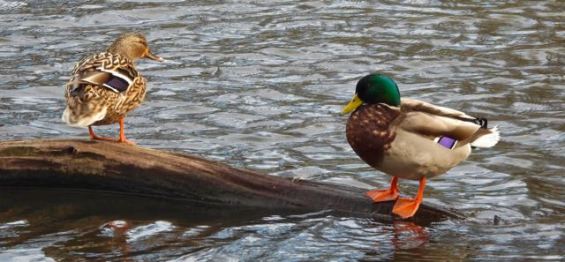
From the north end of the lake, I spied two large waterfowl on a submerged branch halfway toward the south end, about 250 yards away. Zooming in, I recognized a favorite mallard pair–then saw three smaller waterfowl swimming around them! Who were they? Ducklings? No, they were too large, and it would usually be too early in the year for newborns. To my surprise, they were three hooded mergansers, very rare visitors to our lake and no doubt just stopping on their way north. I had already passed this quintet on my walk, but the thick foliage had made them invisible to me until I’d gotten to the north end and had a clear view.
In the March blog:
Hearing More Than Seeing: Playing the Soundtrack of Spring
Visiting Remarkable Virginia Trees
Climate Log: We Return to the Tidal Basin Cherries
The March 2024 Photo/Video Gallery

When the high temp gets consistently above 60F, the Red-Bellied Cooters, including these 3 on the west shore, rise from their winter home in the lakebed, March 14
Hearing More Than Seeing: Playing the Soundtrack of an Early Spring
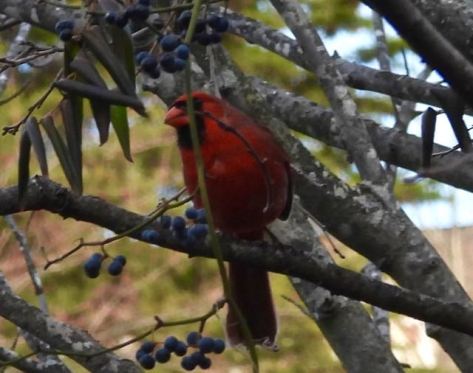
Amid a chorus of other birds and human traffic, this Male Cardinal calls other Cardinals from atop a tree in the north end woods, early morning, March 1
“Birdwatching” is a misnomer. Sure, bird students spend a lot of time trying to see birds, and even more time trying to take clear pictures of them. But most of the information we get from these friends is through listening. Birds always make their presence known by their calls, much less by letting us see them. For good reason. If we see them, so do their more-than human predators. It’s much safer to work inside a bush or thicket of vines or leaves and call out, than to perch on an exposed branch so a paparazzo like me can snap pics, or a hungry hawk can draw a bead.
“Birds may prattle and rant with feathers and body poses, but far and away the most common, the most extreme, and the most complicated kind of bird babble is vocal.” Jennifer Ackerman, The Bird Way (2021), p. 28
Fortunately for us bird students, artificial intelligence (AI)–in the form of the e-Bird/Merlin and BirdNet bird identifying apps–clues us in to who’s calling in our neighborhoods whenever we turn on the record feature. So on a warm morning in this new early spring, March 14, I could identify the various instrumentalists in this video of one of our favorite Mallard pairs, as they fed along the shore of the southeast cove:
During two one-minute recordings, as I paid visual attention to the ducks, I heard the following–
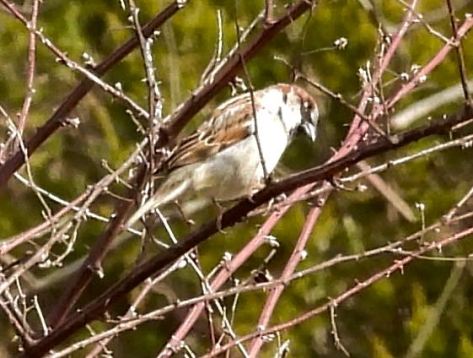
Song sparrow….Northern Cardinal….American Goldfinch….Carolina Wren…Red-bellied Woodpecker….House Sparrow….American Crow….Brown-headed Cowbird….Red-winged Blackbird….Yellow-rumped Warbler….Blue Jay….Tufted Titmouse….Canada goose
A few of these species, such as the woodpecker, the cowbird, and the titmouse, I see very infrequently, so the app is a needed tool. Another, the red-winged blackbird, is one I look for this time of year as a harbinger of warm weather, so when I heard its call on this recording, I knew to look–and listen–for it. In addition, the woods directly across from the lake cove are thick and tall, so seeing birds there is always a challenge for me. The oral cues let me know who is visiting or at home in a way that watching can’t.
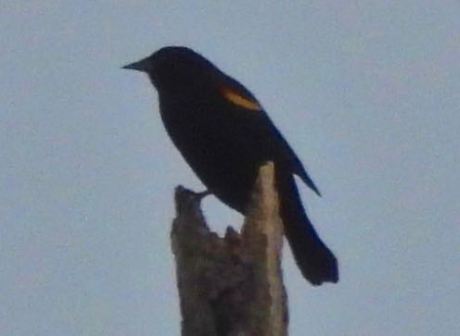
On the day following the recording, March 15, I saw this Red-winged Blackbird from about 200 yards away atop a dead oak on the east bank.
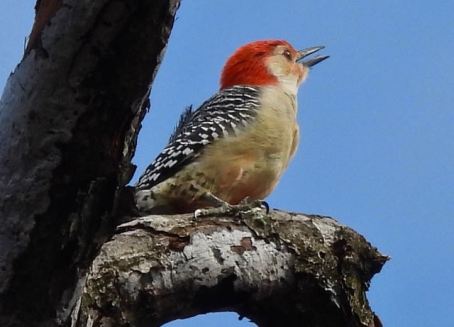
I heard this Red-bellied Woodpecker calling and tapping high on a hundred-foot tall white oak in the thick woods beside the southeast cove, and finally spotted it, on a sunny morning, March 3
***************************
Visiting Remarkable Virginia Trees (New Feature)

This 6-foot thick Chestnut Oak crowns a knoll in a townhouse subdivision in Centreville, VA. We visited on March 19.
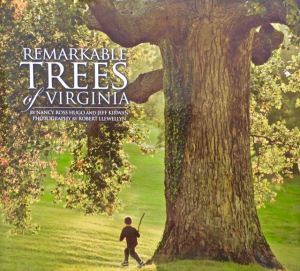
To help us re-acclimate to our new home in Northern Virginia, we have been visiting and re-visiting places in the region–and reading as much as we can about their history and natural features. Hence the many entries in this blog since 2022 about our regional travels, especially within the broad and long Potomac River watershed. One recent focus of our travels has been “remarkable trees,” the title term of the beautiful photo book Remarkable Trees of Virginia, by Nancy Ross Hugo, Jeff Kirwan, and Robert Llewellyn (Univ. of Virginia Press, 2008). The text of the book recounts the history of each of the more than 90 trees, plus exquisite photos. So far, our visits have been local only, but our plan is to traverse the state and seek out more of these venerable trees, then include our own photos in the blog.
Here are our photos of the first five trees we’ve visited. One of the most refreshing aspects of these visits is that the trees are not marked with signs or plaques, and thrive as living creatures within their neighborhoods. Most people pass them by without noticing, but, thanks to the authors of the book, we were able to find them and give them a bit more honor and attention.

This venerable American Holly is protected in Christ Church graveyard in Old Town Alexandria. We visited on February 20.
We especially thank the people in those neighborhoods who have cared for these very old trees and, in some cases, have gone to great lengths to keep them standing and healthy–while so many trees, more each month, disappear en masse in the ongoing rush to build more houses, shopping strips, roads, warehouses, and other testaments to suburban sprawl.
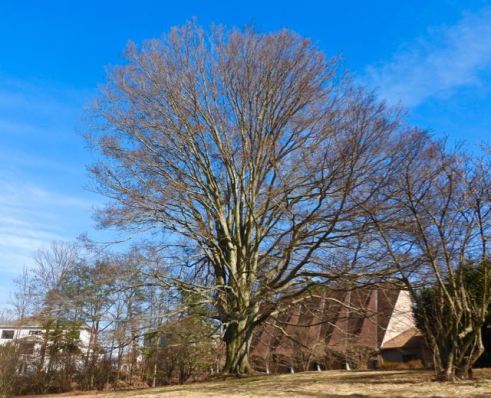
This massive American Beech is protected on the grounds of the United Methodist Church in Annandale. We visited on February 20.
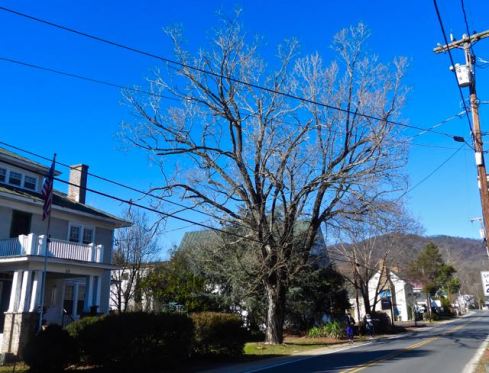
This 130-year-old Sugar Maple adorns the main intersection in the town of Sperryville. We visited on February 4, but we’ll be back in the fall to glory in its color display.

This is the Oakton Oak, for which the town was named. We visited on January 30. It has been carefully protected, and even nurtured back from serious damage, even as roads and shopping have been built all around it.
***********************************
Climate Log: We Return to the Endangered Tidal Basin Cherries
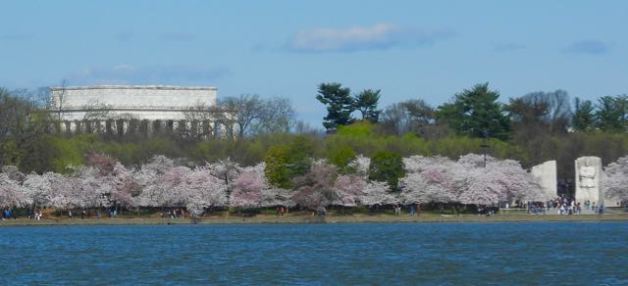
The Tidal Basin Yoshino Cherry Trees, planted 1912, with the Lincoln Memorial and the Martin Luther King, Jr., Memorial beyond the waterside, March 18
One year ago, we made our first visit in many years to the Tidal Basin in Washington, DC, to view the iconic cherry blossoms in their white-pink splendor. More visitors come to DC for this event than at any other time of the year. In 2024’s even earlier spring, we chose a warm, breezy day, March 18, with the trees in full bloom. The Festival used to be celebrated in April, but now it’s March, and the trees are spectacular–but threatened.
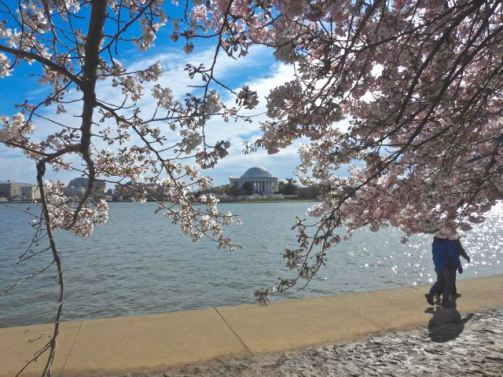
Blooming cherries surround the Jefferson Memorial across the Tidal Basin, March 18
In last year’s report of our visit, which told the history of the Tidal Basin, I noted that we’d seen a small sign announcing that the Basin shoreline walls would begin being renovated because of the increasing damage from tidal water level rise. Well, not only has that renovation now begun, but we could see increasing evidence of overflows beyond the sidewalks and, more disturbing, that many dying trees near the Jefferson Memorial had already been uprooted and removed. Permanent signs (see photo below) describing the 2-year renovation plan gave the figure as 150 trees to be removed. The Washington Post vividly described the plan with amazing photos, videos, and infographics.
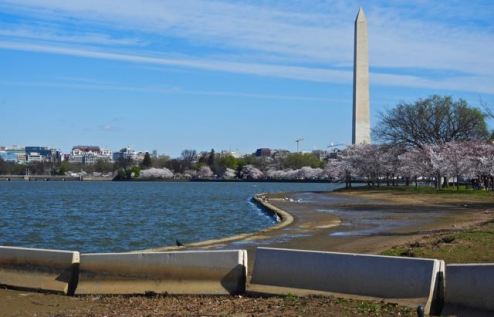
Jersey walls indicate closed off areas of the path just west of the Jefferson Memorial, with evidence of tree removal and tidal overflows. Shoreline walls used to be as much as ten feet above the water.

The goal is to have the renovation completed by 2026, in time for the 250th anniversary of the U.S. Declaration of Independence
One tree scheduled for removal is a particular focus for camera-wielding visitors: the oldest tree along the shore, nicknamed “Old Stumpy,” still blooming and already grieved.

“Old Stumpy’s” lonely vigil: still blooming, March 18
Meanwhile, the broad, deep Potomac River, whose tidal waters fill (and daily overfill) the Basin, rolls on, with the Virginia high-rise city of Roslyn on its west bank. Because much of Washington city, including the Tidal Basin, is built on land reclaimed in the 19th century from Potomac River mudflats, high-rise buildings like those in Roslyn are not allowed east of the river.
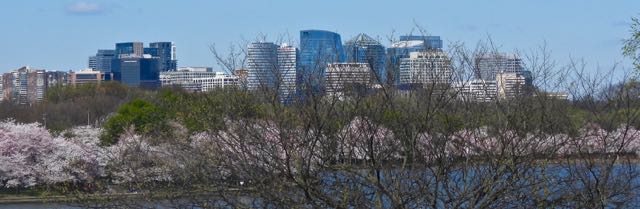
The city of Roslyn, Virginia, across the Potomac, where modern buildings rise much higher than is allowed in DC, March 18
*********************************
The March 2024 Photo/Video Gallery
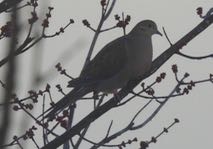
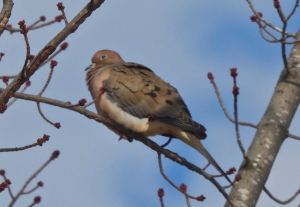
Mourning Dove plucks seeds along the southeast path on a brisk sunny morning, March 24
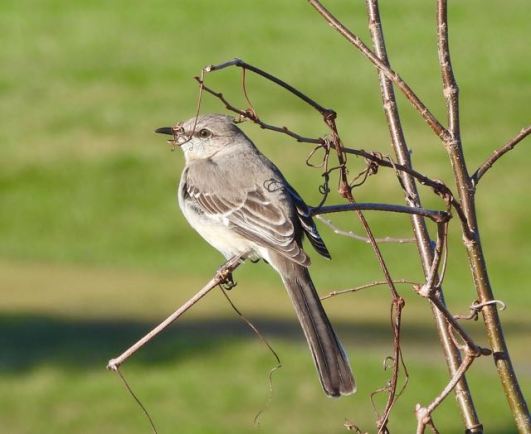
From a young branch at the north end, Mockingbird listens for calls, March 24

First sighting: Hermit Thrush on a branch along the southeast bank on a cool late afternoon, March 21
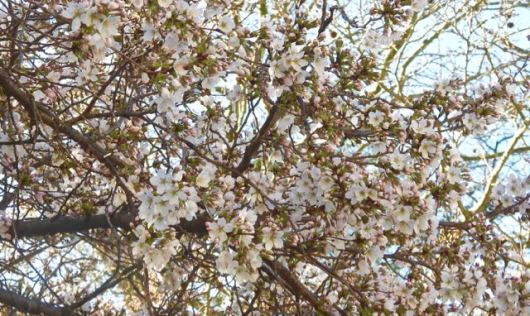
Japanese Cherry in full bloom in our community, east side of lake, March 16
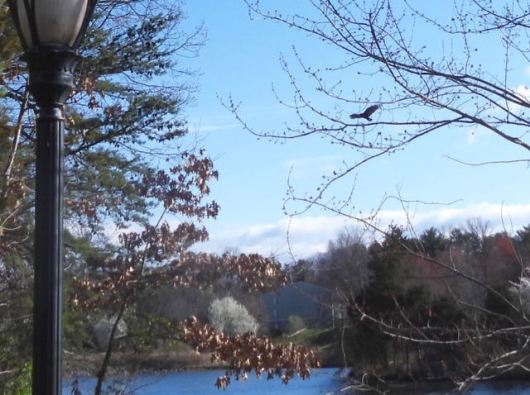
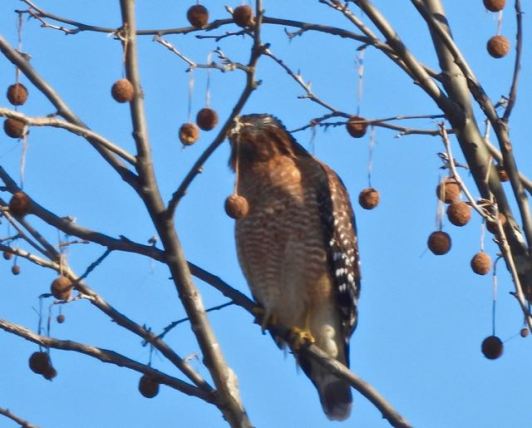
Red-shouldered Hawk soars above the west shore on a windy morning, March 19
The outlet stream below the north end dam burbles, accompanied by the call of a Red-winged Blackbird, March 16

Jean’s fresh-baked soda bread for St. Paddy’s Day, March 17
Song Sparrow’s short call as traffic whizzes past on nearby highway, March 16
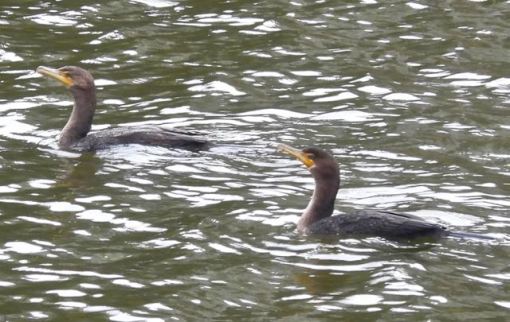
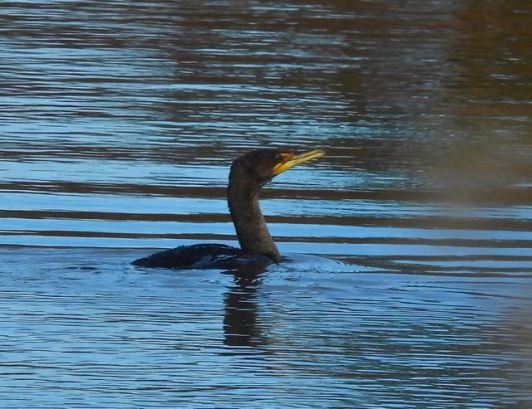
Two Double-crested Cormorants swim mid-lake in the rain, March 2
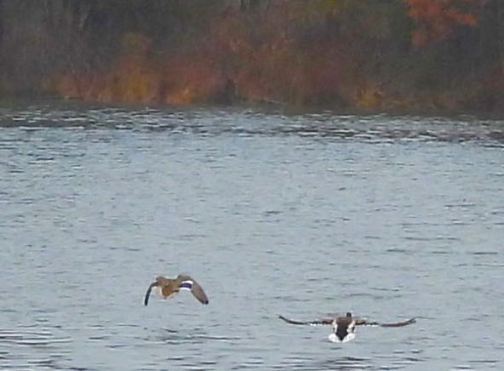
Mallard pair in flight toward the northeast shore in the rain, March 2

Red-bellied cooter balances on a rock while another peeks from the water, northwest shore, March 20
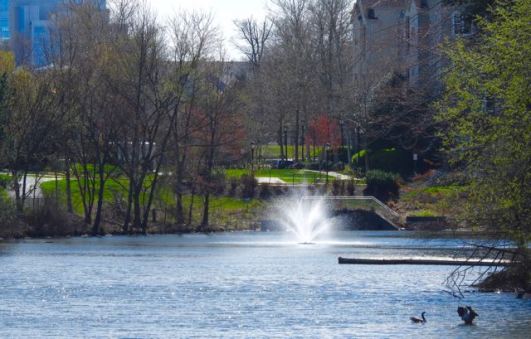
View toward the south end and downtown as 2 Canada geese swim near the west side dock, March 19

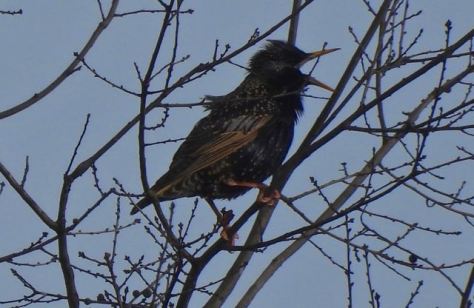
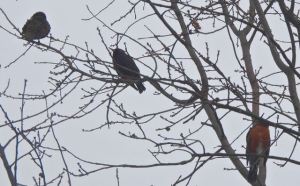
Four starlings converse atop a willow oak, east bank, early morning, March 1
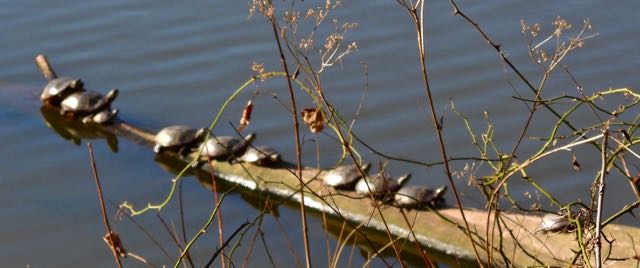
Ten Red-bellied Cooters lined up on a log on the southwest shore, warm day, March 12
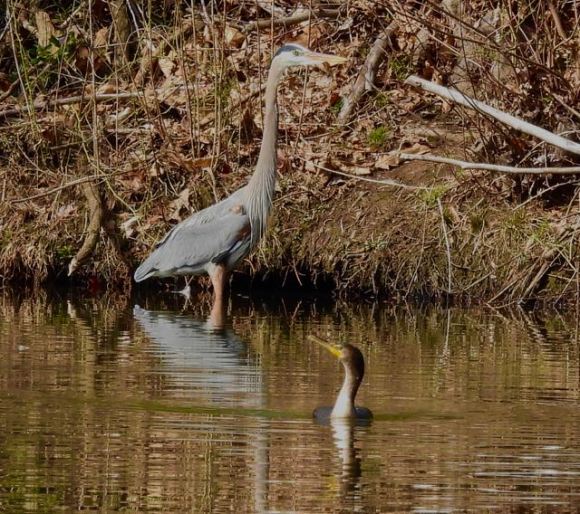
Great Blue Heron and swimming Cormorant at the west shore, March 3
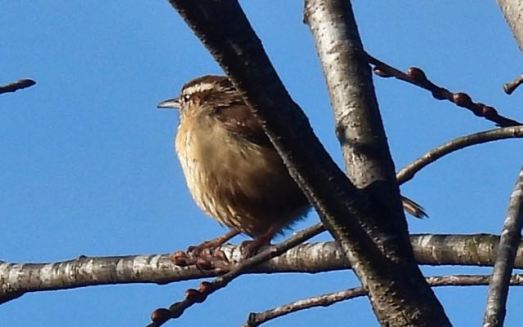
Carolina Wren’s songful calls in the south end community, brisk morning, March 24

Camera captures this Eastern Phoebe–a first sighting here for me–in a treetop 300 yards east of the lake, on a rainy March 27
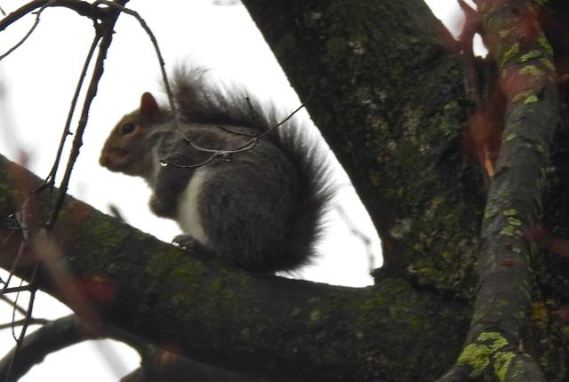
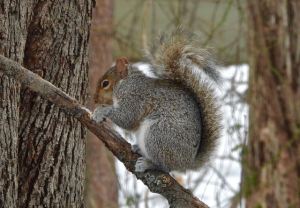
This Grey Squirrel ponders high up in an oak in the southeast woods, rainy March 27
This American Robin lands on the southeast path just in front of me, then skitters, while listening to the sparrows in the lakeshore thicket, on the rainy March 27
Now on to April, with more birdsongs, more blooms, and more daily surprises to inspire us all!














 From Sacramento to Potomac: Tales of Two Valleys