Late-season Monarch feeds amid Bearded Beggarticks west of our lake and near the highway, breezy morning, September 20. One of the great joys of walking around our lake are the surprises that I’m privileged to encounter, like this Monarch, the hidden Asters in the next photo, and the gorgeous new wildflowers that keep popping out month to month.
In this month’s blog:
Surprises of Paying Attention, Camera in Hand
Treasures of the Late-Season Garden
Climate Log: A Slow and Steady Worldwide Drying
The September 2025 Gallery: Wildflowers and Persistent Pollinators
**************************************************************
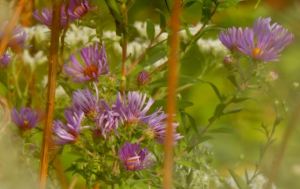
I spied these New England Asters deep within the field of wildflowers north of the dam, September 20
Surprises of Paying Attention, Camera in Hand
In “How to Count Butterflies” (New York Times, Sept. 15), the eloquent gardener Margaret Renkl writes:
God knows, our government doesn’t care about the health and safety of butterflies or any other species, including our own. For now, at least, it’s up to us to care. And the first step toward caring, as is so often the case in conservation, is getting to know our wild neighbors.
Paying attention is the first step in caring. Renkl observes closely the butterflies in her Tennessee garden, and her watching leads her to learn how to take the next step in caring: putting into her garden the plants that each species needs to feed its larvae–like the milkweeds the monarchs need:

Swamp Milkweed with Bumblebee, east bank of our lake, noon, July 4. Milkweeds are prominent on our lakeside
…or the showy, perfumy Japanese Honeysuckle that I’ve learned is a favorite food of the Zabulon Skippers, one of the tiny butterflies that grace our lakeside and our garden plot.
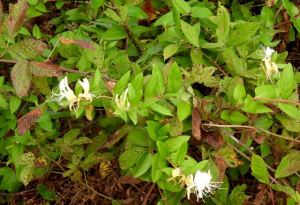
Late-season Japanese Honeysuckle entwining on the east bank of our lake, September 20
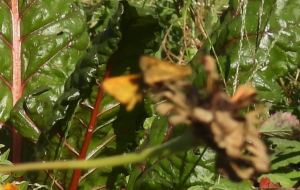
Mating pair of gold-brown Zabulon Skippers flutter on a fading Zinnia in our garden plot, September 19
Fortunately for me, so many of the resilient plants that populate our lakeside or that grow wild in our garden plot provide homes and food for the butterflies, birds, and bees. Even wild plants such as the tough, prolific Crabgrass that we pull as weeds, do necessary work for the pollinators, as I learn from the online sources curated by professional entomologists and citizen scientists. For example:
48 Common Brown Butterflies in The U.S. (with Pictures)
It takes a hard-working community of observers and professionals to help any of us really pay attention. I need to take the time to read as well as watch closely and often. Otherwise, I’d persist in my ignorant destruction of essential plants. Fortunately, that persistent crabgrass finds plenty of room to grow among the colorful plants we cherish, like the marigolds and coneflowers.
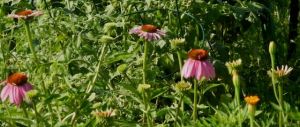
Our “volunteer” Coneflower plant, in full bloom and with more buds coming, morning, July 23. “Weeds,” such as Crabgrass, grow amid flowers, and there’s plenty of room for all.
My trusted assistant–my camera.
If we don’t pay attention–the first step toward caring–it’s not likely that we’ll go on to the next steps. To help me pay attention, I take along my trusty camera, who allows me–actually forces me–to slow down my walk and try to do the careful work of
- finding,
- focusing, and
- staying steady
My camera is an astounding tool, with its zoom lens, its automatic adjustments for light and color, and its versatility for still shots and videos. But it won’t choose its own shots–that’s my job, because I can’t grow and really pay attention if my mind is not intimately engaged in watching and choosing. Likewise, after my walks and picture-taking, I use the Apple editing tools to look even more closely at what my camera has captured, and to try to clarify even further what I’ve observed and to highlight details–particularly aspects I’d missed–to make my paying attention deeper. Even a single shot can offer ongoing opportunities to see more and more in a single scene, often well after the photo was taken. So paying attention is not a single act, but an ongoing adventure.
One of our Great Blue Herons, preening atop the dam structure at the north end of our lake, on a warm September 14. Their movements–and their stillness–are always fascinating to me, and the videos help me keep learning about them..
This photog among the other walkers.
The other walkers who go around the lake pay attention to different things which are important to them, which may not be the flora and fauna they pass. I’d say all our community humans use the path to exercise in the open air, but what we do on our walks varies greatly. Many use the path to walk their dogs, and so I meet many canine species that way. The dogs always pay attention to what they see, hear, and smell. Another group of walkers are exercising their babies, toddlers, or older young children. I like to observe the interactions between the kids and their adults, and I’m happy to see how often the kids look around and even point at what they are passing.
Beggarticks, our most brilliant September flowers, and a Bumblebee wave in the breeze in the southeast cove, as a Fish Crow, Wren, and Crickets call, morning, September 13
Less satisfying for me are the 50% of strollers who are carrying on phone conversations, either with business colleagues, potential clients, or family and friends. Many of these folks look at the ground and often have pained expressions. Some of these conversations are sufficiently loud to scare away birds, and I must admit that these talker/walkers annoy me.
I almost never see another walker with a camera, nor a person who has actually stopped to look closely at a plant. This I can’t understand, because the lakeside is so fascinating, at least to me. But to each their own.
I’ll even get the occasional question about my picture taking, the most common question being “Taken any interesting pictures today?” l always say yes, but if I say what I’ve seen, and if it’s not a big raptor or an exotic species, most just frown and walk on. But every once in a while, someone wants to talk about the birds and the other animals we see. and that’s always a joy.
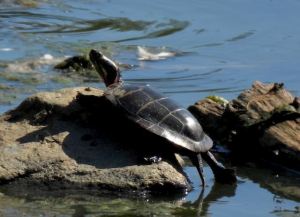
I’d love to talk about the Red-Bellied Cooters, who, like this one on September 13, take the sun on the rocks and logs in the lake whenever the temps get to 60 or so.
******************************************************************
Treasures of the Late-Season Garden
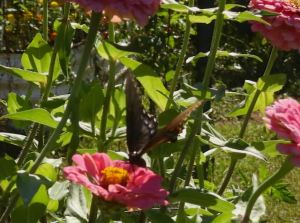
Pipevine Swallowtail Butterfly feeds on a Pink Zinnia in our garden, September 19
So September is moving inexorably into Autumn, and our garden plot moves into its next stage of fascinating life. We’ve had only one day of soaking rain in the past two months, but the frequent rains we had this summer set up the plot of veggies, herbs, and flowers for rich success. Our 4 tomato plants miraculously still keep producing, one pepper plant is still putting out new green beauties, and some of the flowers–like the vinca, marigolds, dahlias, and zinnias–either flourish or have kept some of their blooms.
Best of all, the steady warmth this month (highs into the 80s some days) has kept the Bumblebees and Butterflies still visiting, hovering, fluttering, and feeding.
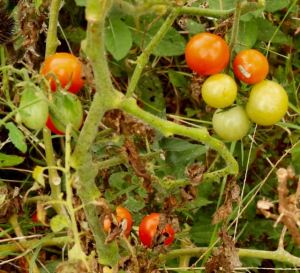
Sweet Millions tomatoes, 2 plants, just keep on giving us ripe gems, September 16
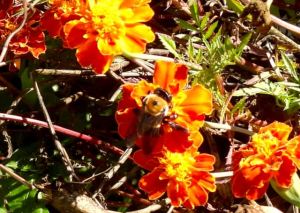
Bumblebee on Marigold cluster, morning, September 19

Cluster of Red and Pink Zinnias, with a tiny visiting Crossline Skipper, September 19
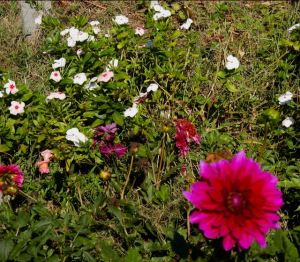
Magenta Dahlia with display of White Vinca, September 19
Aphrodite Fritillary Butterfly feeds on Yellow Orange Marigolds, September 19
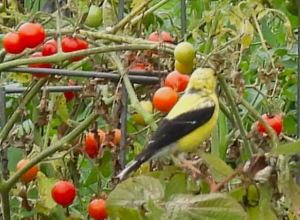
American Goldfinch perches among the Tomatoes in our community garden, September 16
Look for more photos/videos of our September garden in the Gallery (below). When all our plants will fade, and the pollinators move on into their next stages, is still in the future. Meanwhile, we enjoy.
********************************************************
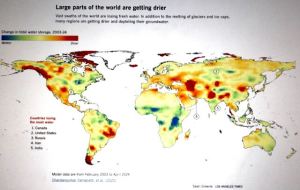
Climate Log: A Slow and Steady Worldwide Drying
- “Areas experiencing drying increased by twice the size of California annually, creating ‘mega-drying’ regions across the Northern Hemisphere.” Science Advances, September 2025
The title: “Humanity Is Rapidly Depleting Water, and Much of the World is Getting Drier,” almost says it all. The article in this month’s Los Angeles Times (September 3) by Ian James and Sean Greene summarizes a new study in Sciences Advances based on 22 years of satellite data.
https://www.latimes.com/environment/story/2025-09-03/global-drying-groundwater-depletion
The US and Canada are among the five countries (including Russia, Iran, and India) across the world losing fresh water fastest, as well as becoming rapidly drier. This is not news for this blog, which regularly shows data on the intensifying US drought from the US Drought Monitor (https://droughtmonitor.unl.edu ), but the data from 22 years shows the worldwide phenomenon.
The principal cause of the loss of fresh water is the over-pumping of groundwater (68% of the loss) from the world’s diminishing aquifers, mostly for agriculture, to make up for the overall loss of rainfall on the land. As the world steadily warms through the burning of fossil fuels, the melting of the world’s glaciers and of the polar ice sheets sends water into the atmosphere and therefore increases rainfall over the oceans, which both decreases the amount of usable fresh water and contributes to the sea level rise that is endangering coasts and islands around the world. The world’s aquifers, which took millions of years to grow underground, have been depleted at an astonishing rate over the past few decades–as anyone who lives in farming areas around the US knows.
A second recent article, from the New York Times (Sept. 18), targets another devastating effect of global warming and intensifying drought: the great increase in wildfires and their intensity in the US. In our years in Northern California, we followed–and were affected by–the annual wildfires in the state. The closest we came to the fires themselves was in 2020, when the Lightning Complex fires came within eight miles of our home, the sky was orange, and ash from the smoke covered our plants (see the August 2020 blog entry). But even more distant blazes sent smoke our way, sometimes for days, and we had friends and relatives whose closeness to other fires affected us as well.
But while California always gets the lion’s share of attention about US fires, the map above shows that more than half of the continental US now suffers from wildfires and damage from their smoke. In the past year, states as far east as New York and Florida have seen wildfires–a trend that will no doubt continue. Just 2 years ago, the wildfires in the northern territories of Canada sent smoke into our area, and the Great Lakes states see and breathe smoke from the Canadian fires every year now.
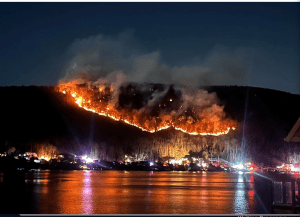
Wildfire on New York/New Jersey border, as this blog reported in November 2024
The article specifically concerns the increasing health affects, including increases in lung diseases and cancer, of these burgeoning fires. Unfortunately for all of us, the current federal Administration not only ignores but has steadily cut funding to help treat these worsening effects. The rollbacks
- to environmental protections,
- to emergency disaster funding,
- to forest protection, and
- to covered health care
will make the effects of this spreading menace more and more deadly–unless and until these damaging policies are turned around.
***************************************************************
The September 2025 Photo/Video Gallery: Wildflowers and Persistent Pollinators
More samples of the gifts we receive each day from the citizens of our local environment. We just have to pay a bit of attention, be thankful, and do what we can to help repair our endangered world.
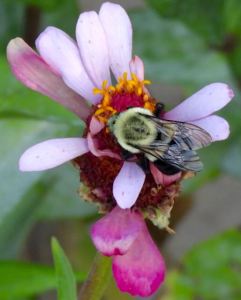
Large Bumblebee on tiny Zinnia, lake community, September 14
Mockingbird moves in Red Cedar in breeze, north end path beside our lake, morning, September 20
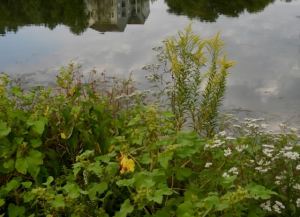
Common Cocklebur, Porcelainberry, Late Boneset, and Goldenrod along the northeast shore, morning, September 20
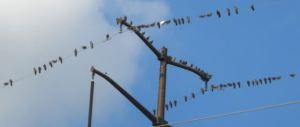
70 Rock Doves on the stanchion west of the lake, morning, September 20
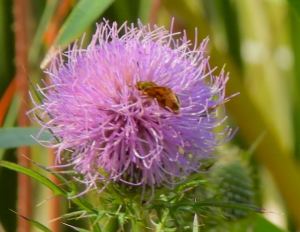
Tiny Sachem Butterfly in Purple Teazel below the lake, September 13
The outlet stream below the dam burbles through Goldenrod and Arrowvine, September 20
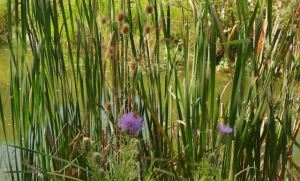
Cattails, Purple Teazel, and Cutleaf Teazel by the outlet pond below the dam, September 13

Double-crested Cormorant in mid lake near the west shore, morning, September 13
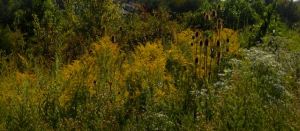
Since we moved back to Virginia in 2022, this is the first time that the field below the dam has been left unmowed all spring and summer, leaving it to the pollinators to thrive. Here, Goldenrod, Cutleaf Teazel, Silver Maple, and Late Boneset provide food and homes, evening, September 13
European Starling calls from atop a Red Cedar on the east shore of our lake, on a breezy morning, September 20
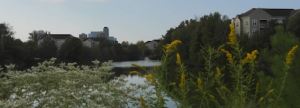
View down the lake toward downtown, with Goldenrod and Late Boneset in the foreground, September 20
Pipevine Swallowtail Butterfly dances on a Pink Zinnia, warm morning, September 19
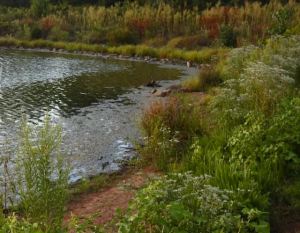
Northeast corner of our lake, with Late Boneset, Horseweed, and Porcelainberry, Cocklebur, evening, September 8
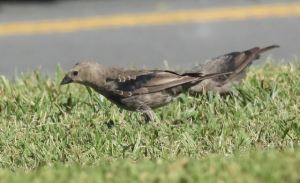
A flock of Brown-headed Cowbirds stopped by the community garden in mid migration, and I happily took this picture of a pair, September 3
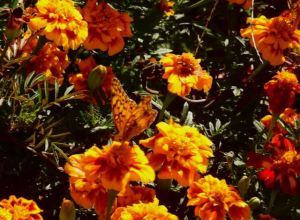
Aphrodite Fritillary Butterfly amid Marigold display, morning, September 19
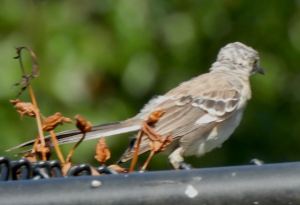
Mockingbird moulting on community garden fence, warm morning, September 3
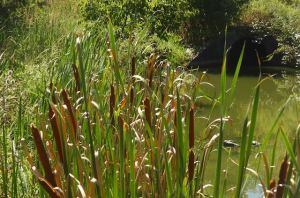
Outlet pool of our lake, with a Cattail festival, August 27
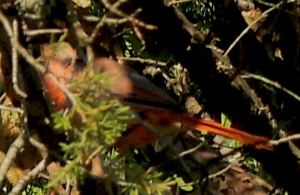
Male Cardinal hides in shadows in Bradford Pear, beside the outlet pool of our lake, September 13
Two Zabulon Skippers dance on a faded Zinnia in our garden, September 19
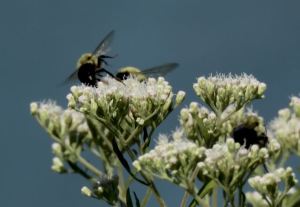
Three Bumblebees on Boneset blooms along the northeast shore of the lake, September 13
Two Bumblebees feed on Orange Marigolds, sunny morning, September 19
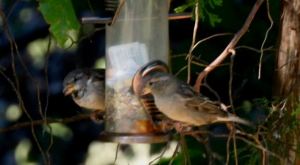
Two House Sparrows in shadows at bird feeder, east side of lake, September 13
Panorama of tiny Skipper Butterflies and Black Swallowtail feeding on Zinnias as a Bluejay calls, September 19
With a week of September still left, welcome to Fall, with hopes for an October of good surprises…
 From Sacramento to Potomac: Tales of Two Valleys