November 2025: “Call to Earth Day” and Ways to Thank Wildlife

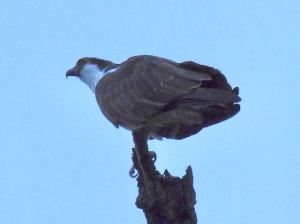
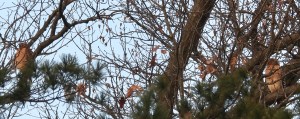
Bald Eagle–a rare sighting here!–scans our community from atop the power tower west of the lake, bright morning, November 3

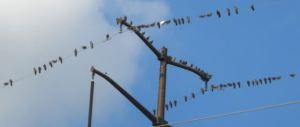
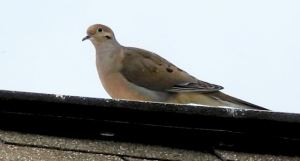
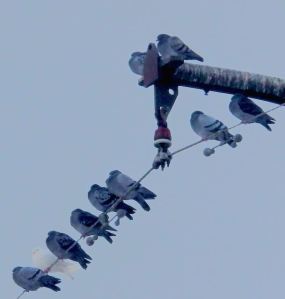
Two Rock Doves, the usual inhabitants of the top of the power tower, claim their space–and keep their distance–from the visiting Bald Eagle, crisp morning, November 3

In this month’s blog:

“Call to Earth Day”–Saying Thanks to Wildlife by “Guarding Our Green Space”

Climate Log: Just the Most Recent Outrages from Washington
Climate Log 2: California Act Saves Water, Wildlife, and the Eastern Sierra
Garden Update: Winter Is Coming, but Growth Continues
Our November Kitchen: Thanksgiving, with a Difference
The November 2025 Photo/Video Gallery: Surprises

****************************************************

Children in the Czech Republic turn trash into art (CNN Photo, Nov. 6)

Call to Earth Day 2026: Preserving and Increasing Our Precious Green Space

Chris: While more anti-environment outrages occur in the secret halls of US power, we focus this month on celebrating the fifth annual Call to Earth Day (http:// cnn.com/calltoearthday) sponsored by CNN, program donors, and life-affirming thinkers and doers from around the world. “Yes, we can!” say these  dedicated children and adults, whose ideas and hard work help inspire nations to protect and save all of us, our fellow creatures, and our land, air, and water.

From Kenya, to Nigeria, to Hong Kong, to England, to the Czech Republic, and, yes, to places around the US, CNN reported on life-building and nature-saving projects that give us hope for a greener, less poisonous world. In so many of these places, children–assisted by dedicated adults–are leading the way.

In California this fall, one such event, the 2nd annual Green New Leaders Summit, was held in San Bernardino: https://socalren.org/futuregreenleaders , with workshops for hundreds of middle school students on energy systems, wildlife, career pathways, and other topics in green technologies and environmental protection.
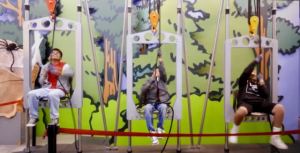
Three attendees at the Green New Leaders Summit in San Bernardino in November try out some of the energy apparatus.

Here in Virginia, the best recent news for “guarding our green space” is the election, by an emphatic margin, of Democrats Abigail Spanberger (Governor), Ghazala Hashmi (Lieutenant Governor), Jay Jones (Attorney General), and 13 new House of Delegates members on November 4. Although it remains to be seen what the new state administration can and will do to advance such green issues as energy efficiency and pollution reduction, part of Spanberger’s mandate is to reduce the cost of power for Virginia citizens, which certainly can be accomplished through more solar and wind. When we moved here from California 3 years ago, we were dismayed to see how few homes had solar panels, when we knew from our own experience how much we saved through our panels (for example, we paid 0 dollars for power every summer after installation in 2017 in comparison to $300 per month in the brutal summers before we went solar).

At the very least, Spanberger will be another thorn in the side against the Trump administration’s ongoing rollbacks of endangered species protections and its rollbacks of clean air and water protections (see the next section). Her promises to improve public education will no doubt include greater emphasis on science, including environmental science, which the Trump administration has deliberately weakened and defunded out of his deference to the fossil fuel cartel’s campaign for public ignorance.
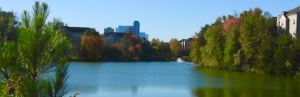
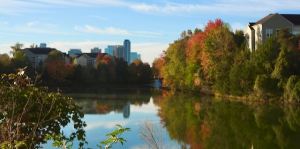
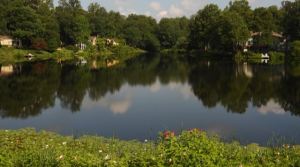
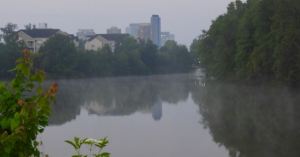
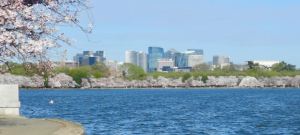
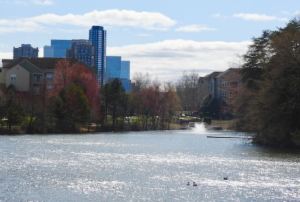
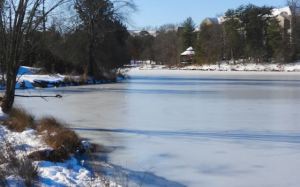
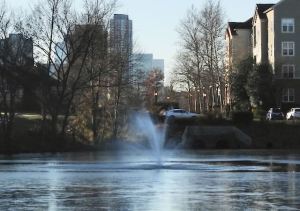
Looking toward downtown across our lake, October 17. Our tiny, precious refuge in a bustling city

Meanwhile, we anticipate that our pro-green political leaders here in our community in Northern Virginia will continue to fund our parks, trails, and public gardens for the benefit of our splendidly diverse population, and encourage both public transportation and our driving of EVs and hybrids. We also hope they’d join the state government in advocating for more rooftop solar.

The AI Monster. Still, by far the largest environmental issue facing our state and region is the explosion in the past 3 years of data centers for generative artificial intelligence. Indeed, our region of the state has the largest concentration of these data centers in the entire world! 
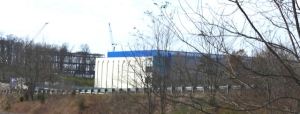
Two new data centers for AI processing, out of already over 200 such centers in Northern Virginia, November 6

The number one question for our leaders in the coming years is how the state and region, already in drought conditions, will handle the prodigious use of water to cool the machinery, as well as the burden on the electrical grid and on land use. Just before we took this photo, we had to drive on a makeshift gravel road almost impassable because of new ditches for the thick cables leading from the centers.

******************************************************************

Climate Log: Just the Most Recent Climate Disasters Coming out of Washington

US map of how home insurance rates have skyrocketed in various states, November 20

  1. Home insurance skyrockets in tandem with climate-change denial

The map above (National Bureau of Economic Research, 2025)) shows that those states who have suffered the most from the extreme heat and intense storms as a result of human-caused climate change now also suffer from extreme rises in home insurance rates. Florida and Louisiana have the nation’s highest rates by far, but those Plains states hardest hit by record hail storms suffer almost as much. These are also states whose leaders most emphatically deny climate science.

       2. “This law helped save the bald eagle. Trump officials want to weaken it.”
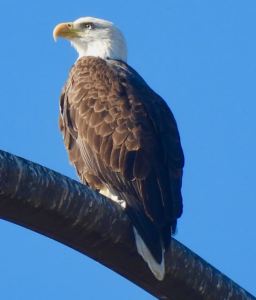
Our visiting Bald Eagle, threatened by new Trump order, scans our lake from perch on the power tower, November 3

“Trump Plan to Rollback Protections of Endangered Species, including the Bald Eagle” (Dino Grandoni, Washington Post, Nov. 20)

https://www.washingtonpost.com/climate-environment/2025/11/19/trump-endangered-species-act/?utm_campaign=wp_post_local&utm_medium=email&utm_source=newsletter&carta-url=https%3A%2F%2Fs2.washingtonpost.com%2Fcar-ln-tr%2F45d8021%2F691f030b1d64392bc2d69296%2F62cf3bc956064350197e865a%2F39%2F86%2F691f030b1d64392bc2d69296

As the article describes, rolling back protections of endangered species follows the Trump administration’s mission of opening millions more acres in the US to drilling, mining, and commercial “development” (AKA environmental destruction), a topic also covered in last month’s blog in relation to the Arctic National Refuge.

          3. Trump administration opens 85% of all US wetlands to “developers”
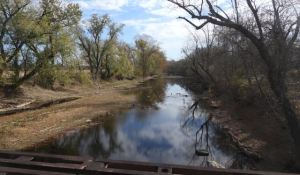
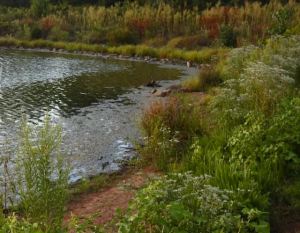
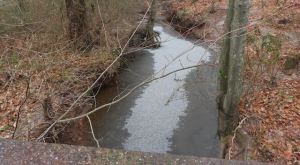
An intermittently-filled side channel of the Potomac River along the Potomac National Trail in Ashburn, Virginia, Nov. 17

Maxine Joselow of the New York Times (“E.P.A. Rule Would Drastically Curb Protections for Wetlands,” Nov. 17) describes the ruling this week that would put into jeopardy 85% of all US wetlands–prime sources of drinking water for millions of voters and their families, as well as habitat for countless species that depend on these waters. The new rule will allow “developers” and landowners to use as they wish 55 million acres of “intermittent” streams, ponds, and marshlands that had been protected– until a disastrous Supreme Court ruling in 2023 that was based on ignorance of how water and land interact on an annual basis. As this blog described in April, “To Save All Life, Don’t ‘Drain the Swamp,'” the wetlands, ponds, mires, bogs, swamps, and marshes of the world are responsible for creating much of the world’s fresh water and for nurturing all species. But ignorant, willful, greedy humans just see wetlands as “wasted,” “messy” land that they would damage by draining and disruption for other purposes.
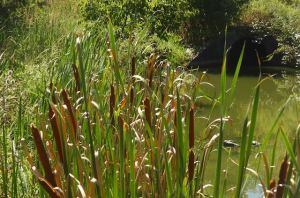
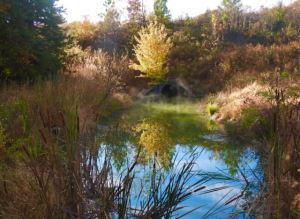
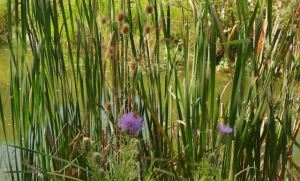
The marshy outlet pool of our lake, below the north end dam, with a Cattail festival, August 27

******************************************************************

Climate Log 2: California Act Saves Water, Wildlife, and the Eastern Sierra
Mono Lake, east of the Sierra Nevada Mountains, long depleted by its use as a source of drinking water for Los Angeles (California Parks photo, Nov. 22)

In a massive victory for environmentalists and for the environment of California east of the Sierra, the city and county of Los Angeles is constructing a water recycling facility in Van Nuys that will meet the water needs of 500,000 residents. Even more important, using the recycled water for drinking will at long last enable Los Angeles to stop drawing water from Mono Lake and the Sierra streams feeding it–some 250 miles from LA. For well over a century, LA’s use of this imported water has sparked enmity, sometimes violent, with inland California residents. Even worse, it has made Mono Lake almost dry and destroyed habitat for many species.

Drinking water will come from this recycling facility being built in Van Nuys, CA (photo Eric Thayer, LA Times, Oct. 31

Ian James’s article in the LA Times (“Los Angeles Will Nearly Double Recycled Water for 500,000 Residents,” October 31) recounts the troubled history. But his main emphasis is on what this move means for the even larger possible use of recycled water for drinking. For 20 years, the safety of recycled water for drinking has been debated, and this move is the first in the West to follow through in a massive way on the water science that guarantees this safety. As the Western US becomes ever hotter and drier through climate change, successful recycling will help mitigate at least one of the fears that the ongoing drought and over-pumping of well water have intensified throughout the region. 

Still, unless governments can agree to shift to renewable forms of energy and away from the burning of fossil fuels, even recycling plans as large as this one will be just a drop in the bucket. 

**********************************************************************
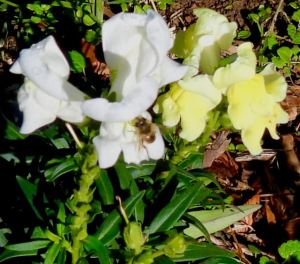
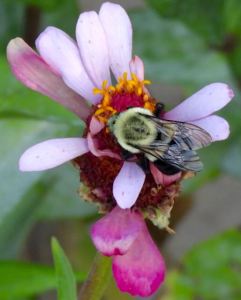
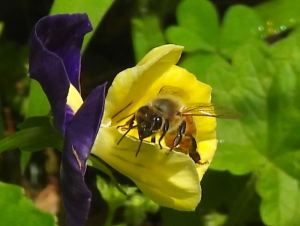
Honeybee on the White and Yellow Snapdragons in our garden plot, November 8

Garden Update: Winter Is Coming, But Growth Goes On
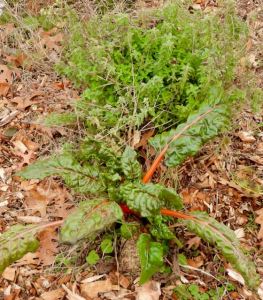
Swiss Chard and Oregano stay green and lush despite a few freezing nights, November 20

High temps now are mostly in the forties to low fifties, and we’ve had four freezing nights as low as 27. But the two veggies we’ve planted–6 Broccoli and 6 Cauliflower–plus the Snapgragons, Mums, and Asters we put in last month are hearty and green, with the Snappies still blooming. The surprises among the summer holdovers are 4 of our Swiss Chards and the Oregano, while we knew that the Rosemary would stay lush.  Our most beautiful October performer, the Wild Blue Aster, has now lost its blooms, but is still thriving.
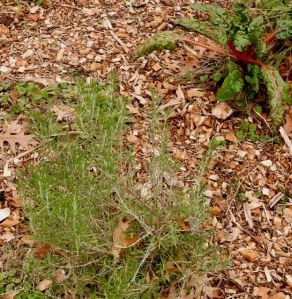
Rosemary and Swiss Chard, November 20
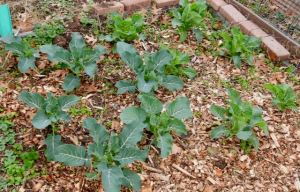
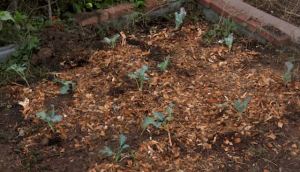
Our 6 Broccoli and 6 Cauliflower have handled the freezing nights well and continue swelling and developing toward producing heads, November 20
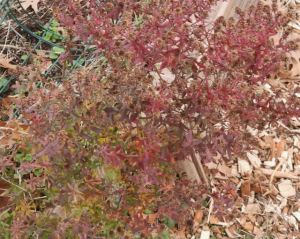
Our Wild Blue Aster may no longer be in spectacular blue bloom, but it has turned on its deep red leaves for winter, November 25
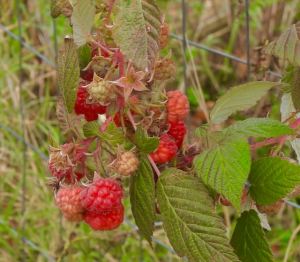
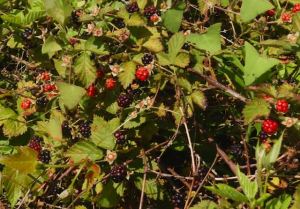
And here is a cluster of ripe red raspberries on the bush in our former neighbor’s now untended plot. We’ve been invited to pluck these and we can’t resist, November 25

What will come? Forecasters are predicting a freeze (25-29 degrees) for Thanksgiving weekend because of a strong polar vortex, but no snow in the forecast as yet. Will the plants keep thriving? We have had about an inch of rain in the past 2 weeks, so that’s a good sign. We’ll keep checking our garden plot in the community gardens every few days, because we just can’t stay away.

******************************************************************************

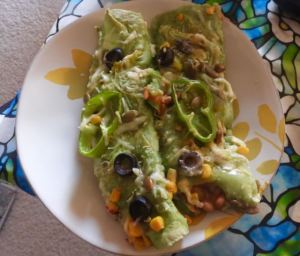
Our November Kitchen: Thanksgiving, of course, with a Difference

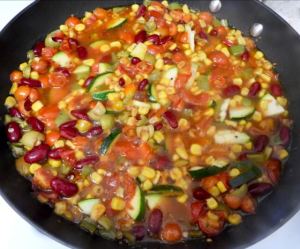
Jean’s Spicy Veggie Curry on the stove

Jean: This Thanksgiving season, we’re thankful to have a number of occasions to get together with family and friends. The traditional turkey, stuffing, and potatoes will be part of one of these meals, but our community of many cultures also gives us opportunities to indulge our varied palates and cooking styles.

Have I mentioned that curry is probably my favorite flavor and dish?  At least on the savory side.  Tiramisu is my favorite sweet, but that’s for another day. 

I think I first learned to make curry from my Japanese mother-in-law in the 1970s.  Japanese curry is based on Indian, and it is mellower than types I didn’t try until later, like Thai curry.  I love making curry because it can be a vegetarian dish for when you feel like or need that, or it can be a very good meat dish, particularly with chicken. For protein in your vegetarian version, tofu is great!
 
Furthermore, curry is the kind of dish I like best to make; you can throw in all sorts of things from your vegetable drawer, your pantry, your garden, or the “leftover” shelf in your refrigerator. 
 
My mother-in-law started with a simple base of chopped onions, potatoes, and carrots. For a little sweetness, she would also add some chopped apple. 
 
However, I like to add more Indian ingredients as well, like butternut squash, cauliflower, eggplant, spinach, chard, lentils, and/or chickpeasSweet or hot peppers add color and flavor as well.
 
Also for color, you might want to add in green peas or edamame as an alternative to spinach.
 
The order in which you add all of these, as well as the cooking time, depends on the ingredient, but half an hour in total should take care of most of these.
 
For spices, I love to play with all those warm “c” spices in my spice cabinet–cardamon, cinnamon, coriander, and cumin.  You can use a premixed curry spice, or try the Japanese curry paste I learned to use early on.  If you choose the paste, you just need to dissolve it first in hot water or broth so it does not clump onto the vegetables.  Add as much spicy broth as needed to cover all the veg.  
 
 
Optional add-ins include either coconut milk or diced tomatoes to dilute and cool the spicy sauce as desired.  (My Japanese version does not use either of those, so suit your own tastes.)

PS. Curry is obviously nutritious as well as delicious, given the number of vegetables and legumes you can include. Once you get your family hooked on the flavors, you may be able to slide in vegetables they wouldn’t eat otherwise. The “C” spices mentioned above have various health benefits. Turmeric, another of my favorites, adds yellow color and anti-inflammatory properties.

Eat more curry! 

A serving of Jean’s Spicy Veggie Curry

 
Here are two more of Jean’s November treats:
 

Jean’s Jumbo Pumpkin Oatmeal Cookies, with Pumpkin Butter Icing
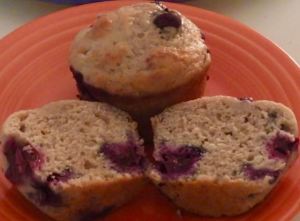
Jean’s Blueberry Muffins, with Jumbo Blueberries

***************************************************************************************

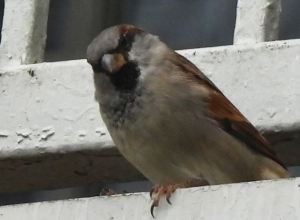
One of our ubiquitous House Sparrows chatters with us and friends along the north shore, November 21

The November 2025 Photo-Video Gallery: Communing with Our Neighbors in Our Green Space

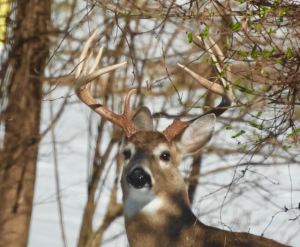
Chris: Surprises always happen as we walk around our little lake, but several were especially memorable this month. The Bald Eagle I saw on the power tower west of the lake on Nov. 6 was a first for me here, as was the Yellow-Bellied Sapsucker pictured just below. On the 20th, I got one of my biggest surprises in the 3 years we’ve lived here, when I turned from watching the lake’s northeast shore and was startled by a young White-Tail Deer watching me–from no more than 10 feet away! Remarkably patient and inquisitive, this new friend moved slowly away, but kept eyes on me while munching on leaves and “hiding” visibly in the saplings and reeds. Three videos captured the conversation, two of which I show here.  Though deer are always present in the nearby woods, I only see one every few months or so, and never before so close. How thankful I am for these moments when I can mutually treasure our green space with one or more of these neighbors.
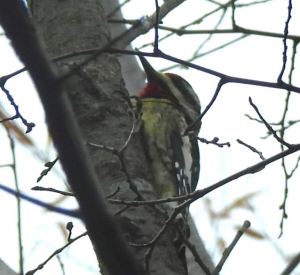
Yellow-Bellied Sapsucker–a rare visitor here on Nov. 21–perches on Willow Oak, southeast shore of the lake. A new study in Experimental Biology (Nov. 2025) shows how these woodpecking birds put full-body power into every strike, about 13 per second.
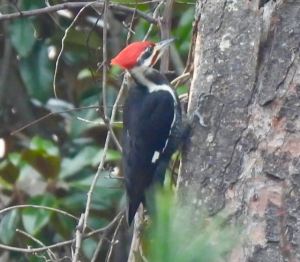
Talk about woodpeckers: here’s a large pileated one in the woods next to our garden plot, cloudy November 25

From ten feet away, White-Tail Deer watches me, then walks into cover, as a siren wails from the highway, cloudy morning, November 21

From 20 feet away, the deer continues to watch me, and feeds a bit, then watches some more, as I zoom in for a closer view. A siren blares from the highway, machinery grates in the community, and geese honk from the lake. Typical sounds. Cloudy November 21
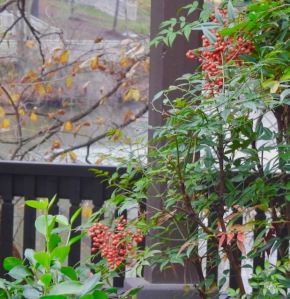
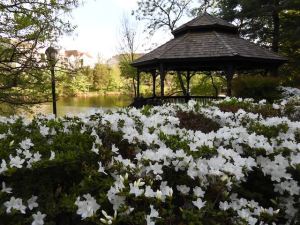
Heavenly Bamboo were prominent at our home in Northern California, and we’re happy to see them here, too, by the gazebo on the west shore of the lake, Nov. 20
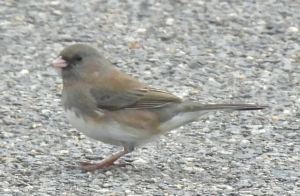
An uncommon Slate-Colored Junco stops for a moment on the path at the Northwest corner of the lake, November 21
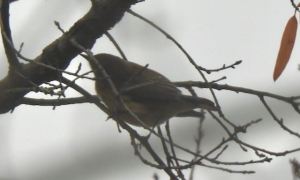
Tiny Ruby-Crowned Kinglet rests in shadows on the Willow Oak, Southeast shore, November 20
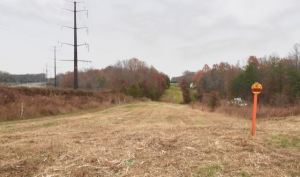
All summer the hillside down to the outlet stream below the dam was left unmowed, and the wildflowers and faunal inhabitants exulted. Now it has been mowed, revealing the signs for the petro line that runs below the surface, and the solar-powered gas substation near the outlet stream. Our Green Space shares its home. Note also the busy highway to the left, from which come the car and truck sounds and the sirens that are a steady chorus in our refuge. November 20
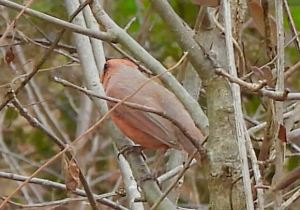
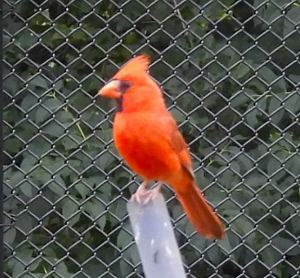
Cardinal male stops to rest in the North end woods, November 21
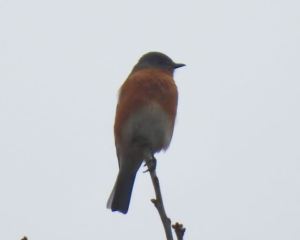
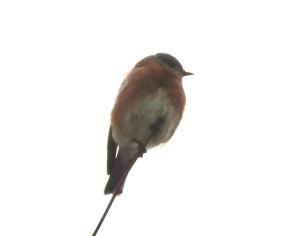
Eastern Bluebird scans atop Maple in the North end woods, cloudy November 21

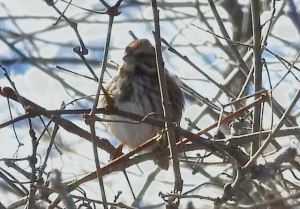
Song Sparrow feeds along the gravel path on the hillside below the dam, as cars sound from the highway, November 21
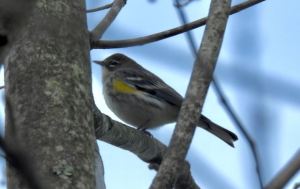
Yellow-Rumped Warbler in shadows amid branches along the Southeast bank, November 20
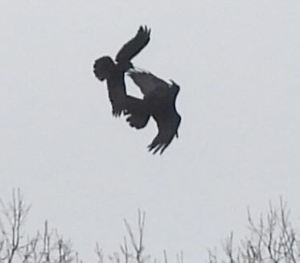
I capture a Common Raven in battle with American Crow above the treetops in the North woods, November 21

Burning Bush along the West shore, cloudy November 20
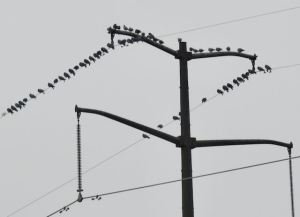
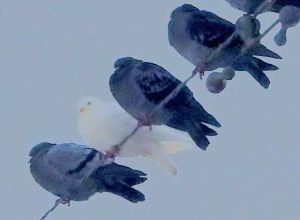
60 Rock Doves in their accustomed perch atop the power tower, November 21. No Bald Eagles around!
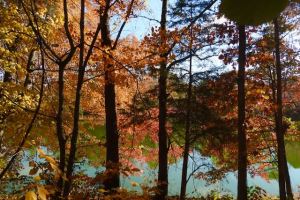
Sun through leaves on the West shore, sunny morning, November 3

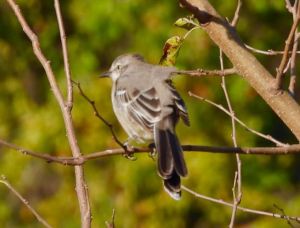
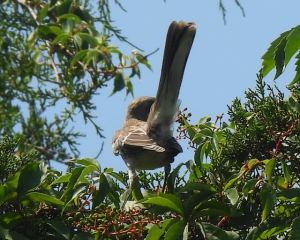
Mockingbird scans from Catalpa along the East shore, November 3
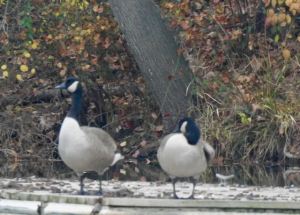
Canada Goose pair on the dock along the West shore, November 20
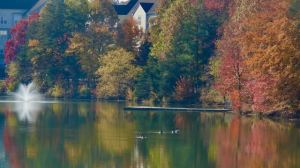
Late fall colors: Looking southwest on the lake with Geese and fountain, morning, November 3
Salt Marsh Goldenrod, Northwest corner of the lake, cloudy November 21


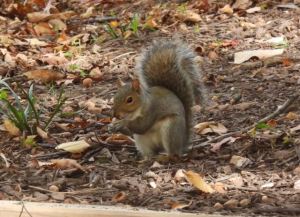
Grey Squirrel amid leaves, southeast path, sunny November 23
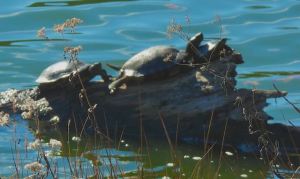
 

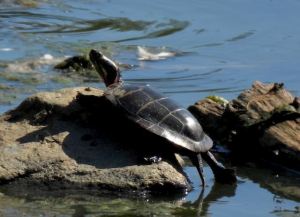
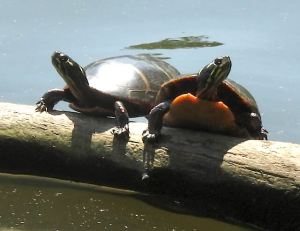
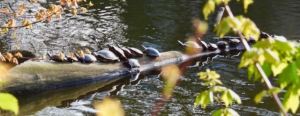
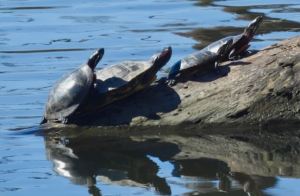
Too cold for turtles? Not for these 3 Red-Bellied Cooters on a log at the North shore, sunny November 23
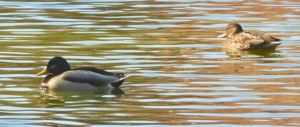
 

Here they are! The first Mallard pair of the new breeding season, Southeast cove, sunny November 23

Happy Thanksgiving! Hopes for the last week in November and a celebratory December…
October 2025: “Just So Darned Beautiful”

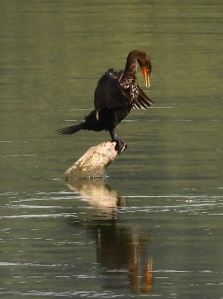
Statuesque pose of this Double-crested Cormorant where Sugarland Run enters the Potomac, September 23

In this month’s blog:

The Shenandoah During the Shutdown: Fall Colors as Heartfelt Respite
Climate Log: More Wilderness Taken for Fossil Fuel Extraction, But…
Our Garden: Summer Success Turns to Fall Hopes
The October 2025 Photo/Video Gallery: Birds, Wildflowers, and More Colorful Travelpics

Surprise at Algonkian Park: Eastern Rat Snake emerges from den at mouth of Sugarland Run, September 23 (See more pics from this park in this month’s Gallery) 

*******************************************************

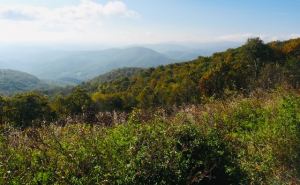
Skyline Drive morning mist: Ridges toward the south in the Shenandoah National Park, October 15

“So Darned Beautiful!” The Shenandoah in the Shutdown: Fall Colors as Health and Inspiration

As the news out of Washington became more and more alarmingly bizarre, quite a few of us, it seems, took to the road this month to immerse ourselves in the annual festival of the trees: the sun-painted  purples, reds, oranges, and golds of the autumn leaves. In the midst of the federal government shutdown–in which some of our relatives and neighbors were furloughed (and feared being fired)–we expected that the officially-closed Shenandoah National Park, just 70 miles west of us, might be off limits, or at least sparsely visited.  Imagine our surprise when, at 8:30 AM on October 15, we discovered that the 31 twisty miles of the northern final stretch of the Skyline Drive were liberally peppered with visitors as hungry as we were for the exquisite scenery and valley vistas. As one of the other visitors we met exclaimed, “It’s just so darned beautiful!”

As Red Sumac waves in the foreground, we scan the western ridges toward the Shenandoah Valley and the Alleghenies beyond, early morning, October 15

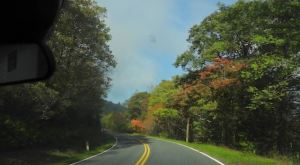
As we drive, we come upon tree after colorful tree in sunlight and mist, October 15

The wind sings in the rushes, as the sun washes the nearby ridges, the Shenandoah River valley below, and the far Alleghenies, October 15

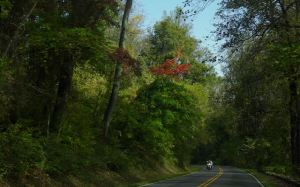
The Drive moves from deep shadows to sudden bursts of color as we go north, October 15

To our surprise, even the Dickey Ridge Visitor Center, near the northern end of the Drive in Front Royal, was open–staffed during the shutdown by unpaid volunteers from the regional Friends of the National Parks. The Center was packed by visitors asking for information and buying the books on history and nature science that we had been worried would no longer be available from this federal location, just as agency websites and federal climate records have been scrubbed since this Administration took office in January.

Bright colors in this nearby ridge as we look north along the Drive, October 15


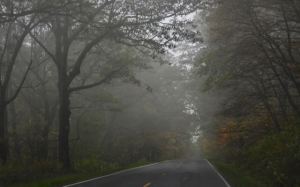
Early morning mist shrouds the canopy as we drive, October 15


Red Sumac and Maples in foreground; ridge upon misty ridge beyond as we look south in the Park, October 15

***************************************************************************

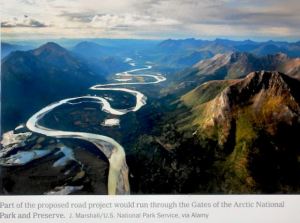
Proposed road would penetrate Gates of the Arctic (J Marshall, New York Times, Oct. 6)

Climate Log: As Most of the World Moves Toward a Greener Future, US Feds Double Down on Fossil Fuel Extraction

On October 23, as the New York Times reported, the Trump administration has now opened portions of the Arctic Wildlife Refuge to oil and gas drilling. An earlier Times article (Joselow and Friedman, Oct. 6) described a second approved project (pictured above) that would build 200 miles of roads through lands and across fragile rivers to more undeveloped sites.

 Those for and against. The plans for this latest incursion into protected lands, which environmental and Native-American organizations say would “significantly and irrevocably” damage land, air, water, and wildlife, as well as Native communities, were halted by the Biden administration for those reasons. But now these incursions have the full-throated  support of the Trump regime. Interior Secretary Doug Burgum in fact proclaimed that these approved projects embody both “drill, baby, drill,” and “mine, baby, mine,” as the White House wants companies who lease the lands to explore for a wide range of minerals that might be used in the competition with China for energy, military, and industrial dominance. 

But will anybody want the leases? One irony of the project is that it is not clear if any fossil fuel companies plan to buy the leases to drill for oil and gas in the region. Millions of acres of earlier-approved leases have gone unsold, because of the prohibitive costs of development and the intense, widespread opposition to the environmental destruction. Potential lenders to the companies have the same cold feet. 

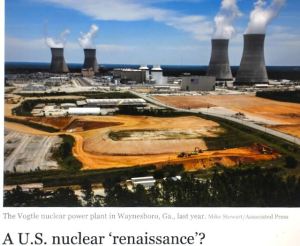
And what if the future is green (or at least non fossil)? It’s also not clear if oil-and-gas drilling have the same attraction across the rest of the world that they have to Trump, Burgum, and their disciples. Also on October 23, an article by Claire Brown in the Times asked if there might be “A U.S. Nuclear Renaissance?” While she noted the 2 nuclear power projects in development in the US (Including the one in Georgia pictured above), she described the 13 now under construction in China–and the 33 (!) already approved for future construction there. China, it seems, and the nations that share its goals for renewable energy are much further ahead of the US than we’d already suspected.

And all this nuclear activity is occurring in addition to the thousands of solar and wind projects in operation and development throughout the rest of the world. 

Bottom line? Here, where we’ve been prohibited by the President and the fossil fuel cartel from even mentioning “climate change,” and where scientists are de-funded, universities are punished, and agency personnel are fired and their records disappeared, it’s easy for us Statesers to believe that all cars are petroguzzlers, all the higher-and-higher-priced utilities run on gas, and EVs and heat pumps were a momentary California dream now gone for good.  But not so! There is hope, and it may just require us to stay strong–and learn as much as we can from our friends in the sane world.

****************************************************************************

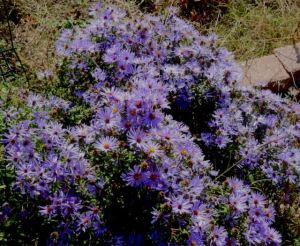
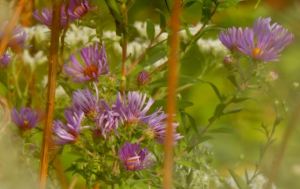
Prolific Wild Blue Aster is the star of our garden plot between the summer and our hopeful autumn, October 24

Our Garden: Summer Success Turns to Fall Hopes

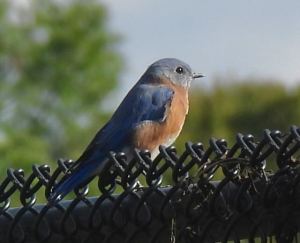
Eastern Bluebird scans the garden plots from the high fence, noon, sunny October 24

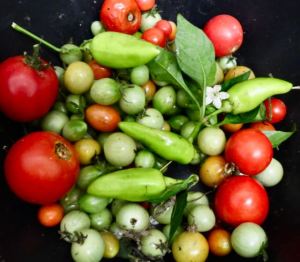
October is the month of transition for our little Northern Virginia garden plot.  On October 5, we harvested our last veggies:

Final summer harvest of green and red tomatoes and spicy burrito peppers, October 5

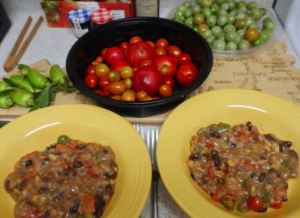
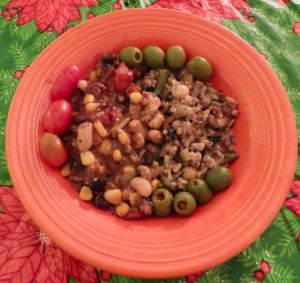
On October 6, we celebrated with a tomato-y, pepper-y Mexican “3 sisters” stew:

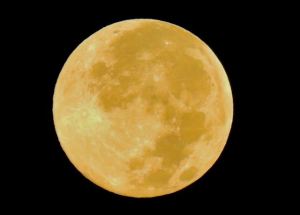
And that night saw, fittingly, the October harvest moon over the lake:

In the garden itself, we devoted the first week of October to digging and hoeing out, plant by plant, the exhausted tomato vines, pepper plants, chard, and herbs, plus the now-faded marigolds, zinnias, cosmos, and other flowers no longer in bloom. We also pulled up or hoed out a good portion of the “weeds,” like Blue Speedwell and Crabgrass, that had thrived all spring and summer. We did all this in prep for the fall season–including for whatever we decided to plant for that abbreviated time before winter.

Our garden association had chosen November 15 as the water shut-off date, but until then we could water our new plants as needed. There were also the piles of mulch and compost we could shovel on to our ground to help with prep for fall and for the overwintering yet to come.

The New Plants

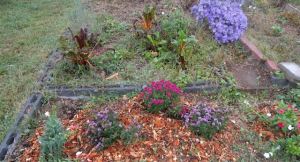
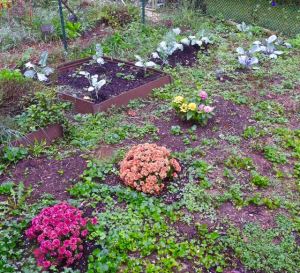
Fall plantings phase one, flowers in southwest corner: Magenta Mums, Purple Asters, Snapdragons, Vinca. We put these in October 13–with mulch


Fall plantings, phase 2, northwest corner: 6 Broccoli seedlings (left) and 6 Cauliflower (right), which we put in October 13, with mulch

At the local Home Depot, we’d decided on some fall favorites for our flower section and for our veggy section, the varieties listed with the photos above. We’d be planting only the west half of the garden and letting the east half lie fallow, perhaps with the mulch for enriching.  From the flowers photo, above, you might notice that a few plants are carryovers from the summer–3 Swiss Chard and one very healthy Rosemary, a perennial. We’ll see how they do as the cold comes.

As for the Broccoli and the Cauliflower, we tried them with some success last fall in our earlier small plot–so let’s see how they do this year. It all depends on how quickly the cold intensifies.

Oh, and the brilliant Wild Blue Aster plant in the center row? This magnificent Virginia Native did almost nothing all summer–but for the last month it has been its own fireworks display. We’ll keep track.

As you can see, we are having a ball experimenting and growing. You might say our garden plot is our own special Ball-room. And we didn’t have to destroy anything to build it.

Eastern Bluebird scans the garden as a Blue Jay calls, October 24

********************************************************************************

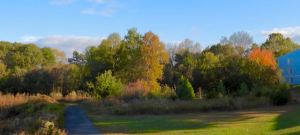
Fall colors in the woods northeast of our lake, morning, October 20

The October 2025 Photo/Video Gallery: More Birds, Wildflowers, and Autumn Travelpics

Besides our trip to the Shenandoah National Park, we also went to the local Algonkian Potomac River Park in late September and enjoyed more colorful sights in the Potomac watershed in rural Maryland and Virginia early in the final week of October.

And, of course, our own little lake offers us too many marvelous fall color and floral/faunal gems to ignore.  In fact, with the return of a substantial rain on October 30, more birds returned to the lake at the very end of the month–and we are able to show some of these species to you in this entry.

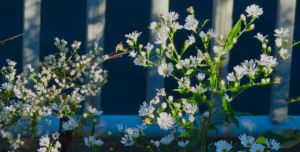
Michaelmas Daisies and Late Boneset, south end of our lake, October 20

Mockingbird on branch, north end path by our lake, October 20

Atop Maryland’s South Mountain, morning, October 23

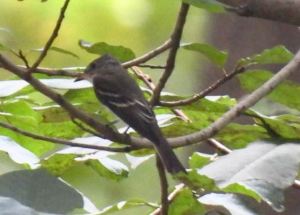
Eastern Wood Pewee, in Paw Paw tree, Algonkian Regional Park by Potomac, morning, September 23

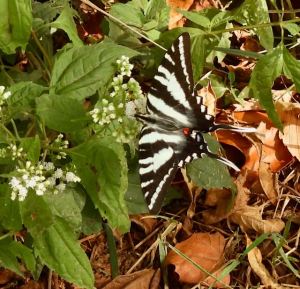
Magnificent Zebra Swallowtail on White Snakeroot, Algonkian Regional Park, September 23

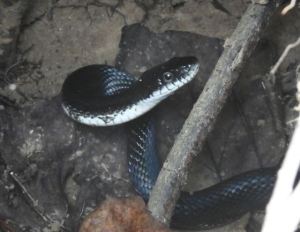
In its den near the mouth of Sugarland Run in Algonkian Park, we spy the Eastern Rat Snake before it emerges, September 23

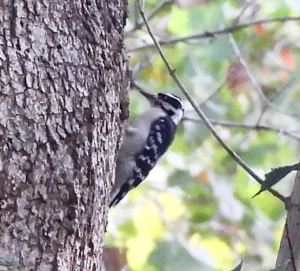
Downy Woodpecker on Black Cherry trunk, Algonkian Regional Park, September 23

Double-crested Cormorant preens on the boundary rock where Sugarland Run enters the Potomac, Algonkian Regional Park, morning, September 23

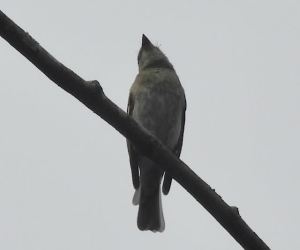
Acadian Flycatcher on branch, Algonkian Regional Park, September 23

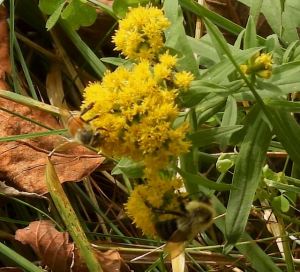
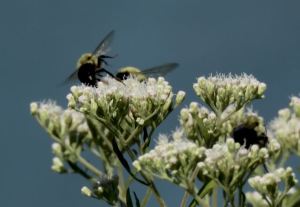
Bumblebee and Honeybee on tiny Grass-leaved Goldenrod on ground, Algonkian Regional Park, September 23

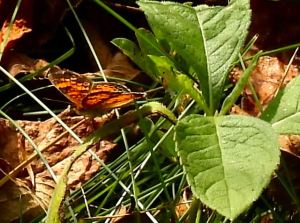
Aphrodite Fritillary on Wingstem leaf on ground, Algonkian Regional Park, September 23

Chipping Sparrow hunts seeds on ground at our feet, Algonkian Park, September 23

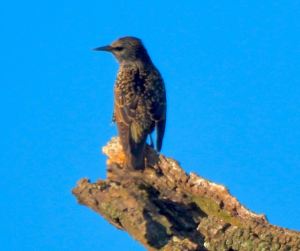
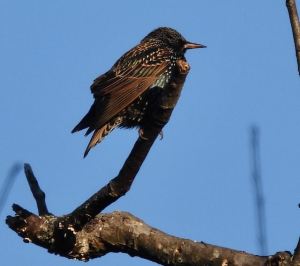
European Starling brightly lit by morning sun atop Dead Oak, east bank of lake, October 20

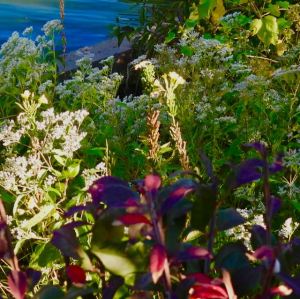
Evening Primrose, Late Boneset, and Burning Bush by south end of lake, October 20

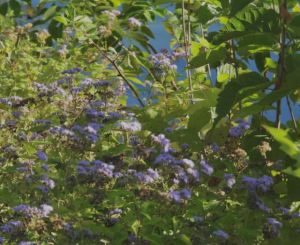
Blue Mistflower thicket along southwest shore of the lake, October 20

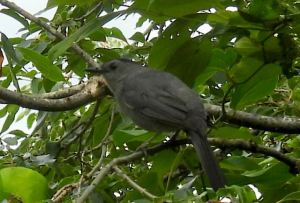
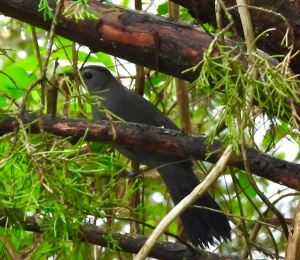
Grey Catbird moves through dry grass, north end path by our lake, October 20

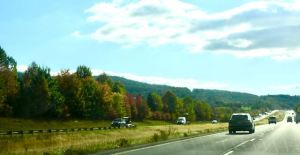
Maryland’s Catoctin Mountain, along I-70, October 23


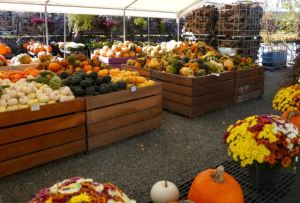
Pumpkins and Mums display, Luckett’s (VA) farm market, October 23


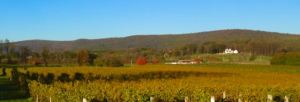
Fall colors, Breaux Vineyards, Hillsboro, VA, October 21


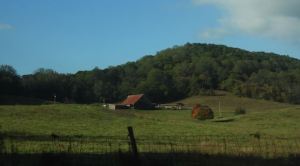
Farm along Rte. 211, Washington, VA, east of Skyline Drive, early morning, October 15


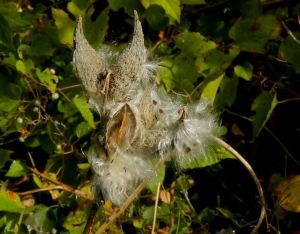
Swamp Milkweed, silken seeds ready to fly, south end of lake, October 11


House Sparrow closeup, edge of balcony east of lake, Oct. 11


Six Canada Geese in flight past fountain, south end of lake, October 11

Seven Canada Geese swim in the east lake, as Crickets sing, October 11

Rarely seen Savannah Sparrow feeds happily in the dry grass below the dam, early AM, October 25


Teazel and Boneset in field below dam with view of full color north woods, October 25

Song sparrow chirps within a Silken Dogwood on the southeast shore of the lake, as a Blue Jay calls, early AM, October 25

West path canopy of colors, in the early morning sun, October 25


Mist rises and leaves glow: the outlet pool below the dam, early morning, October 25


Panorama toward downtown with full colors along the lake, morning, October 25


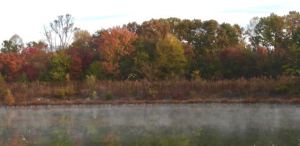
Mist rises in the lake, as full colors glow in the north woods, early morning, October 25


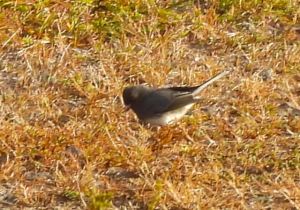
Dark-eyed Junco–first sighting of the fall–feeding in the field below the dam, early AM, October 25


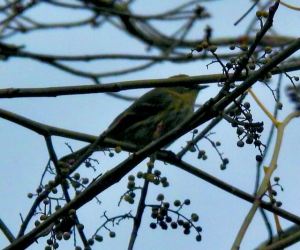
Pine Warbler–our first sighting here!–amid Greenbriar on the southeast shore on a cloudy morning after rain, October 30


Three Rock Doves on the stanchion west of the lake, cloudy morning, October 30


Blue Jay above the inlet stream on a cloudy morning after rain, October 30


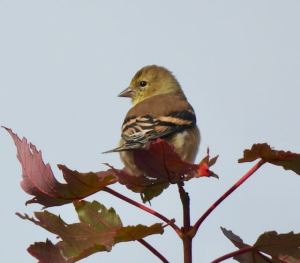
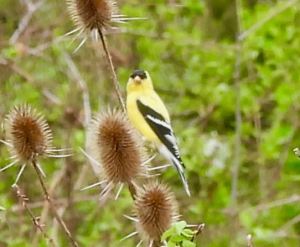
American Goldfinch, winter colors, in Red Maple, north end path, morning, October 26


Grey Squirrel munches amid acorn cluster, on the southeast path, morning, October 26


Yellow-Rumped Warbler in Red Maple, southeast bank, morning, October 26


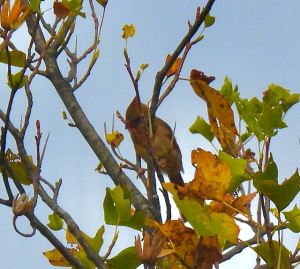
Cardinal female in Tulip Tree, north end woods, morning, October 26

Great Blue Heron stands atop dead Oak on the east bank and scans the domain, early AM, October 25

And so we move toward November, the month of Thanksgiving, with so much already to be thankful–and hopeful–for…
September 2025: The Rewards of Paying Attention

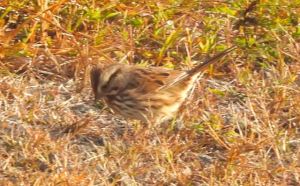
Late-season Monarch feeds amid Bearded Beggarticks west of our lake and near the highway, breezy morning, September 20. One of the great joys of walking around our lake are the surprises that I’m privileged to encounter, like this Monarch, the hidden Asters in the next photo, and the gorgeous new wildflowers that keep popping out month to month.

In this month’s blog:

Surprises of Paying Attention, Camera in Hand
Treasures of the Late-Season Garden
Climate Log: A Slow and Steady Worldwide Drying
The September 2025 Gallery: Wildflowers and Persistent Pollinators

**************************************************************

I spied these New England Asters deep within the field of wildflowers north of the dam, September 20

Surprises of Paying Attention, Camera in Hand

In “How to Count Butterflies” (New York Times, Sept. 15), the eloquent gardener Margaret Renkl writes:

God knows, our government doesn’t care about the health and safety of butterflies or any other species, including our own. For now, at least, it’s up to us to care. And the first step toward caring, as is so often the case in conservation, is getting to know our wild neighbors.

Paying attention is the first step in caring. Renkl observes closely the butterflies in her Tennessee garden, and her watching leads her to learn how to take the next step in caring: putting into her garden the plants that each species needs to feed its larvae–like the milkweeds the monarchs need:

Swamp Milkweed with Bumblebee, east bank of our lake, noon, July 4. Milkweeds are prominent on our lakeside

…or the showy, perfumy Japanese Honeysuckle that I’ve learned is a favorite food of the Zabulon Skippers, one of the tiny butterflies that grace our lakeside and our garden plot.

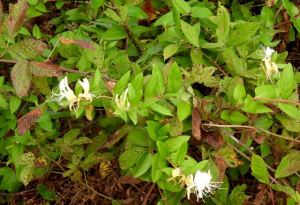
Late-season Japanese Honeysuckle entwining on the east bank of our lake, September 20

Mating pair of gold-brown Zabulon Skippers flutter on a fading Zinnia in our garden plot, September 19

Fortunately for me, so many of the resilient plants that populate our lakeside or that grow wild in our garden plot provide homes and food for the butterflies, birds, and bees. Even wild plants such as the tough, prolific Crabgrass that we pull as weeds, do necessary work for the pollinators, as I learn from the online sources curated by professional entomologists and citizen scientists. For example:

48 Common Brown Butterflies in The U.S. (with Pictures)

It takes a hard-working community of observers and professionals to help any of us really pay attention. I need to take the time to read as well as watch closely and often. Otherwise,  I’d persist in my ignorant destruction of essential plants. Fortunately, that persistent crabgrass finds plenty of room to grow among the colorful plants we cherish, like the marigolds and coneflowers.

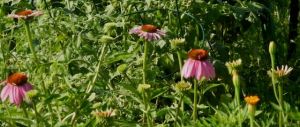
Our “volunteer” Coneflower plant, in full bloom and with more buds coming, morning, July 23. “Weeds,” such as Crabgrass, grow amid flowers, and there’s plenty of room for all.

My trusted assistant–my camera.

If we don’t pay attention–the first step toward caring–it’s not likely that we’ll go on to the next steps. To help me pay attention, I take along my trusty camera, who allows me–actually forces me–to slow down my walk and try to do the careful work of

  • finding,
  • focusing, and
  • staying steady

My camera is an astounding tool, with its zoom lens, its automatic adjustments for light and color, and its versatility for still shots and videos. But it won’t choose its own shots–that’s my job, because I can’t grow and really pay attention if my mind is not intimately engaged in watching and choosing. Likewise, after my walks and picture-taking, I use the Apple editing tools to look even more closely at what my camera has captured, and to try to clarify even further what I’ve observed and to highlight details–particularly aspects I’d missed–to make my paying attention deeper. Even a single shot can offer ongoing opportunities to see more and more in a single scene, often well after the photo was taken. So paying attention is not a single act, but an ongoing adventure.

One of our Great Blue Herons, preening atop the dam structure at the north end of our lake, on a warm September 14. Their movements–and their stillness–are always fascinating to me, and the videos help me keep learning about them..

This photog among the other walkers.

The other walkers who go around the lake pay attention to different things which are important to them, which may not be the flora and fauna they pass. I’d say all our community humans use the path to exercise in the open air, but what we do on our walks varies greatly. Many use the path to walk their dogs, and so I meet many canine species that way. The dogs always pay attention to what they see, hear, and smell. Another group of walkers are exercising their babies, toddlers, or older young children.  I like to observe the interactions between the kids and their adults, and I’m happy to see how often the kids look around and even point at what they are passing.

Beggarticks, our most brilliant September flowers, and a Bumblebee wave in the breeze in the southeast cove, as a Fish Crow, Wren, and Crickets call, morning, September 13

Less satisfying for me are the 50% of strollers who are carrying on phone conversations, either with business colleagues, potential clients, or family and friends. Many of these folks look at the ground and often have pained expressions. Some of these conversations are sufficiently loud to scare away birds, and I must admit that these talker/walkers annoy me.

I almost never see another walker with a camera, nor a person who has actually stopped to look closely at a plant. This I can’t understand, because the lakeside is so fascinating, at least to me. But to each their own.

I’ll even get the occasional question about my picture taking, the most common question being “Taken any interesting pictures today?”  l always say yes, but if I say what I’ve seen, and if it’s not a big raptor or an exotic species, most  just frown and walk on. But every once in a while, someone wants to talk about the birds and the other animals we see. and that’s always a joy.

I’d love to talk about the Red-Bellied Cooters, who, like this one on September 13, take the sun on the rocks and logs in the lake whenever the temps get to 60 or so.

******************************************************************

Treasures of the Late-Season Garden

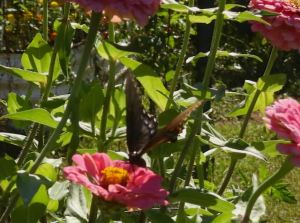
Pipevine Swallowtail Butterfly feeds on a Pink Zinnia in our garden, September 19

So September is moving inexorably into Autumn, and our garden plot moves into its next stage of fascinating life. We’ve had only one day of soaking rain in the past two months, but the frequent rains we had this summer set up the plot of veggies, herbs, and flowers for rich success. Our 4 tomato plants miraculously still keep producing, one pepper plant is still putting out new green beauties, and some of the flowers–like the vinca, marigolds, dahlias, and zinnias–either flourish or have kept some of their blooms.

Best of all, the steady warmth this month (highs into the 80s some days) has kept the Bumblebees and Butterflies still visiting, hovering, fluttering, and feeding.

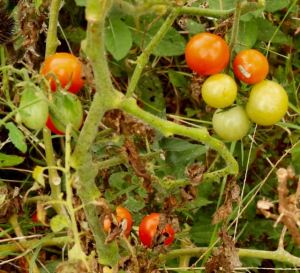
Sweet Millions tomatoes, 2 plants, just keep on giving us ripe gems, September 16

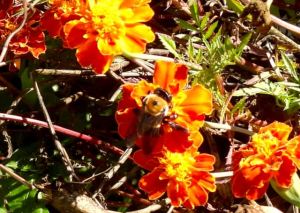
Bumblebee on Marigold cluster, morning, September 19

Cluster of Red and Pink Zinnias, with a tiny visiting Crossline Skipper, September 19

Magenta Dahlia with display of White Vinca, September 19

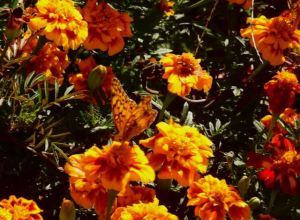
Aphrodite Fritillary Butterfly feeds on Yellow Orange Marigolds, September 19

American Goldfinch perches among the Tomatoes in our community garden, September 16

Look for more photos/videos of our September garden in the Gallery (below). When all our plants will fade, and the pollinators move on into their next stages, is still in the future. Meanwhile, we enjoy.

********************************************************

Climate Log: A Slow and Steady Worldwide Drying

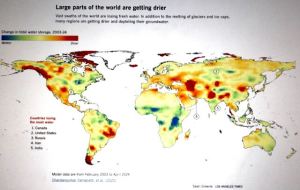
  • “Areas experiencing drying increased by twice the size of California annually, creating ‘mega-drying’ regions across the Northern Hemisphere.” Science Advances, September 2025

The title: “Humanity Is Rapidly Depleting Water, and Much of the World is Getting Drier,” almost says it all. The article in this month’s Los Angeles Times (September 3) by Ian James and Sean Greene summarizes a new study in Sciences Advances based on 22 years of satellite data.

https://www.latimes.com/environment/story/2025-09-03/global-drying-groundwater-depletion

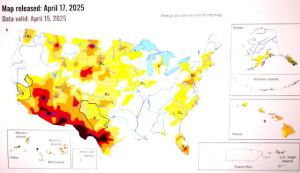
The US and Canada are among the five countries (including Russia, Iran, and India) across the world losing fresh water fastest, as well as becoming rapidly drier. This is not news for this blog, which regularly shows data on the intensifying US drought from the US Drought Monitor (https://droughtmonitor.unl.edu ), but the data from 22 years shows the worldwide phenomenon.

The principal cause of the loss of fresh water is the over-pumping of groundwater (68% of the loss) from the world’s diminishing aquifers, mostly for agriculture, to make up for the overall loss of rainfall on the land.  As the world steadily warms through the burning of fossil fuels, the melting of the world’s glaciers and of the polar ice sheets sends water into the atmosphere and therefore increases rainfall over the oceans, which both decreases the amount of usable fresh water and contributes to the sea level rise that is endangering coasts and islands around the world. The world’s aquifers, which took millions of years to grow underground, have been depleted at an astonishing rate over the past few decades–as anyone who lives in farming areas around the US knows.

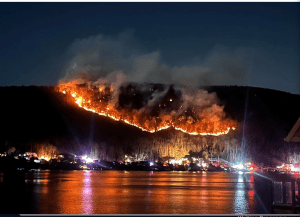
A second recent article, from the New York Times (Sept. 18), targets another devastating effect of global warming and intensifying drought: the great increase in wildfires and their intensity in the US. In our years in Northern California, we followed–and were affected by–the annual wildfires in the state. The closest we came to the fires themselves was in 2020, when the Lightning Complex fires came within eight miles of our home, the sky was orange, and ash from the smoke covered our plants (see the August 2020 blog entry). But even more distant blazes sent smoke our way, sometimes for days, and we had friends and relatives whose closeness to other fires affected us as well.

But while California always gets the lion’s share of attention about US fires, the map above shows that more than half of the continental US now suffers from wildfires and damage from their smoke. In the past year, states as far east as New York and Florida have seen wildfires–a trend that will no doubt continue. Just 2 years ago, the wildfires in the northern territories of Canada sent smoke into our area, and the Great Lakes states see and breathe smoke from the Canadian fires every year now.

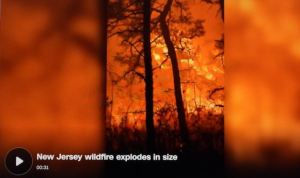
Wildfire on New York/New Jersey border, as this blog reported in November 2024

The article specifically concerns the increasing health affects, including increases in lung diseases and cancer, of these burgeoning fires. Unfortunately for all of us, the current federal Administration not only ignores but has steadily cut funding to help treat these worsening effects. The rollbacks

  • to environmental protections,
  • to emergency disaster funding,
  • to forest protection, and
  • to covered health care

will make the effects of this spreading menace more and more deadly–unless and until these damaging policies are turned around.

***************************************************************

The September 2025 Photo/Video Gallery: Wildflowers and Persistent Pollinators

More samples of the gifts we receive each day from the citizens of our local environment. We just have to pay a bit of attention, be thankful, and do what we can to help repair our endangered world.

Large Bumblebee on tiny Zinnia, lake community, September 14

Mockingbird moves in Red Cedar in breeze, north end path beside our lake, morning, September 20

Common Cocklebur, Porcelainberry, Late Boneset, and Goldenrod along the northeast shore, morning, September 20

70 Rock Doves on the stanchion west of the lake, morning, September 20

Tiny Sachem Butterfly in Purple Teazel below the lake, September 13

The outlet stream below the dam burbles through Goldenrod and Arrowvine, September 20

Cattails, Purple Teazel, and Cutleaf Teazel by the outlet pond below the dam, September 13

Double-crested Cormorant in mid lake near the west shore, morning, September 13

Since we moved back to Virginia in 2022, this is the first time that the field below the dam has been left unmowed all spring and summer, leaving it to the pollinators to thrive. Here, Goldenrod, Cutleaf Teazel, Silver Maple, and Late Boneset provide food and homes, evening, September 13

European Starling calls from atop a Red Cedar on the east shore of our lake, on a breezy morning, September 20

View down the lake toward downtown, with Goldenrod and Late Boneset in the foreground, September 20

Pipevine Swallowtail Butterfly dances on a Pink Zinnia, warm morning, September 19

Northeast corner of our lake, with Late Boneset, Horseweed, and Porcelainberry, Cocklebur, evening, September 8

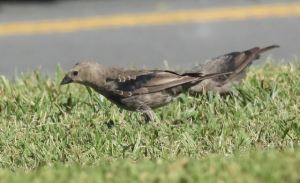
A flock of Brown-headed Cowbirds stopped by the community garden in mid migration, and I happily took this picture of a pair, September 3

Aphrodite Fritillary Butterfly amid Marigold display, morning, September 19

Mockingbird moulting on community garden fence, warm morning, September 3

Outlet pool of our lake, with a Cattail festival, August 27


Male Cardinal hides in shadows in Bradford Pear, beside the outlet pool of our lake, September 13

Two Zabulon Skippers dance on a faded Zinnia in our garden, September 19

Three Bumblebees on Boneset blooms along the northeast shore of the lake, September 13

Two Bumblebees feed on Orange Marigolds, sunny morning, September 19

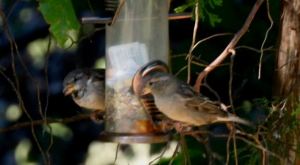
Two House Sparrows in shadows at bird feeder, east side of lake, September 13

Panorama of tiny Skipper Butterflies and Black Swallowtail feeding on Zinnias as a Bluejay calls, September 19

With a week of September still left, welcome to Fall, with hopes for an October of good surprises…
August 2025: Garden, Lake, Ponies, and Living Shorelines

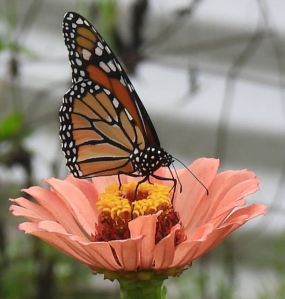
Monarch feeds on Peach Zinnia in our community garden, August 14

In this month’s blog:

Bounty and Beauty in the Late Summer Garden
Climate Log: Fighting the Good Fight–Ponies, Storms, and Living Shorelines
The August 2025 Photo/Video Gallery: Wildflowers around Our Lake and More from the Eastern Shore

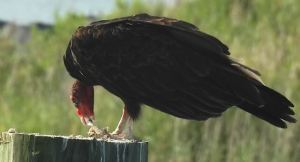
Turkey Vulture eats meal atop post along the shore on Tilghman Island, Eastern Shore, Maryland, August 17

*************************************************

Beauty and Bounty in the Late Summer Garden

Sachem Butterfly in Orange Marigolds, our garden, August 15

In August, our garden this year reached its apex in productivity, with some plants starting to decline, a few exhausted, and others still going strong–or even making a comeback. On August 22, the Community held its annual Garden Potluck, where gardeners from the five collections of plots across town came together to share stories about what worked and what didn’t, ask each other for advice, and bring dishes made from our produce and other goodies.

Chris’s Three Sisters (corn, squash, beans) stew, with zucchini, yellow squash, tomatoes, and green peppers from our garden, served at the Community Garden Potluck, August 22

So how have the diverse plants done this August?

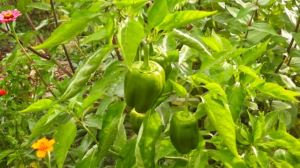
  1. Still going strong: Plants still producing with no let-up in our plot are the profuse marigolds (yellow and orange), white and pink vinca, the spreading zinnias, one amazing green pepper plant,  hot burrito pepper, herbs (rosemary and oregano), and the late blooming and very tall cosmos.

Marigold explosion, still vibrant, morning, August 28

Pink and white Vinca happy in our garden, August 8

Translucent magenta Cosmos blooms, early morning, August 8

Zinnias and cosmos, still brilliant, morning, August 28

The last of 3 mild pepper plants, still producing, morning, August 28

2. Starting to decline: our three varieties of tomatoes: Husky Cherry Red, Juliet, and Sweet Millions–the most productive tomatoes we’ve ever grown and still putting out 2 dozen or more per day.

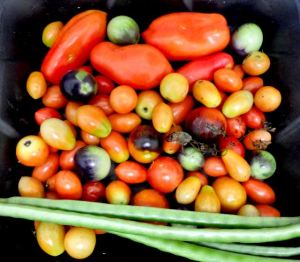
One day’s produce from our garden plot and that of a generous neighbor, August 8

3. Exhausted after production since April: Zucchini (May to mid July), Mint (May to mid August), Strawberries (April to end of July), Blueberries (April to June), Yellow Squash (May to mid July), Coneflowers (May to end of July), Swiss Chard (May to early August), Thyme (May to end of July)

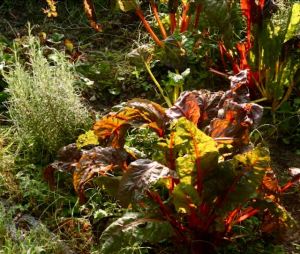
Early morning sunlight through Swiss Chard, with Rosemary, August 8

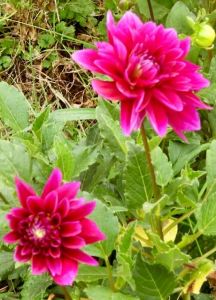
4. Making a comeback after early success: the royally-hued Dahlias

Our Dahlias were colorfully prolific in May and June, and now have returned in August!

As we look over the five months so far of this new garden venture for us, three features stand out. The first is the large amount of rain we’ve had this half year (about 12 inches) compared to the deep drought our fellow gardeners went through last year. The second is how this prolific small plot has surprised us each time we visit (about every other day) with the uniqueness of the growing and fruiting patterns of each plant. Each one indeed has its own personality.

And the third feature is the absolute splendor of the creativity and dedication of the many friendly gardeners we’ve encountered and gotten to know. This collection of garden plots is an entreprenurial place, where the living soil, air, water, seeds, pollinators, microbes, and loving humans cooperate to make many, many small miracles from day to day. With more miracles yet to come in the rest of the year!

An American Goldfinch calls from across the garden plots on the early morning of August 12

******************************************************************

Climate Log: Fighting the Good Fight–Ponies, Storms, and Living Shorelines

Female Osprey preens on her nest in the marshes of Tilghman Island on Maryland’s Eastern Shore, August 17

As the Trump administration keeps

  • denying a changed climate of ever more dangerous heat, drought, and floods
  • defunding protections for animals, plants, and human beings, and
  • intensifying the burning of poisonous fossil fuels,

groups and localities around the US are fighting back through local and regional actions that try to sustain healthy living for all creatures. What can we as Americans do to promote health and counteract these dangerous anti-life actions by the new regime? The New York Times series “Fifty States, Fifty Fixes” https://www.nytimes.com/interactive/2025/climate/50-states-fixes.html is one effort. It asks readers to contribute their own examples of life-saving actions in their own communities–and thousands of readers throughout the nation have answered the call.

“Living shoreline” built with natural materials near Lewes, Delaware, August 21 (New York Times photo)

One such coordinated action–now being replicated in other states–is the “living shorelines” project in Delaware. “Living shorelines” https://www.nytimes.com/2025/08/20/climate/delaware-living-shorelines.html uses natural materials, including the power of plants and soil, to recreate the marshy wetlands destroyed by sea level rise along US coasts. These living shorelines are far more effective than the concrete and rocky barriers often used to delay coastal erosion. Not only are the living shorelines of deep-rooted plants stronger and more lasting than artificial barriers–but they provide homes for water creatures and in fact grow steadily more diverse and broader as time goes on.

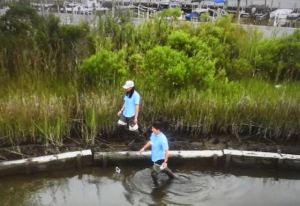
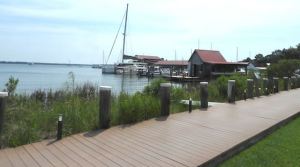
On our recent trip to Maryland’s Eastern Shore, we saw the living shoreline at the Maritime Museum in St. Michael’s, August 17

Protecting the Marshes, Coastline, and Precious Ponies of Chincoteague, Virginia.

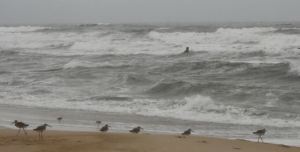
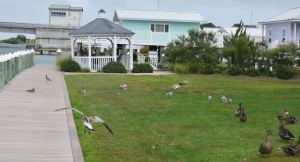
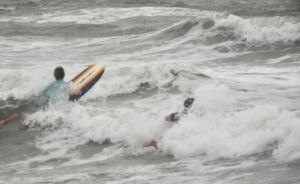
On our visit to the Eastern Shore, we joined a few surfers, several park personnel, and a beach full of Lesser Yellowlegs and Laughing Gulls riding out the effects of Hurricane Erin, August 18, on Assateague Island

Misty and Stormy. If you’ve been to the Atlantic Coast’s Chincoteague Island, Virginia, just across the Maryland state line, you probably know the story of Misty, the pony made famous by writer Marguerite Henry in the 1950s and 60s. Her 1963 sequel, Stormy, Misty’s Foal, describes in sad detail the tidal storm that took the lives of so many of the islands’ legendary ponies–which the states and the National Park Service have protected for over 100 years.

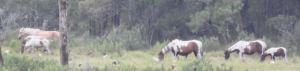
Six ponies in an Assateague Island saltgrass marsh, early morning, windy, rainy August 19. Care by national and state park personnel have extended life spans of the ponies, as well as their protecting the marshes and shorelines https://www.delmarvanow.com/story/news/local/maryland/2015/06/02/assateague-pony-population-aging/28347157/

We visited Chincoteague and Assateague islands on August 18-20, just as Hurricane Erin was moving up the Atlantic and beginning to build a storm surge on the coast. The whipping winds and intermittent rain made for a lively time for us and the birds, but the ponies and waterfowl were easily up to the task, as were the park personnel. The protection of shorelines and marshes in the Chincoteague National Wildlife Refuge is a model of what federal, state, and local cooperation can accomplish.

A Lauguing Gull fights the wind on Assateague Beach, early AM, August 19

The pony herds draw many thousands of tourists each year–and the grazing ponies were on magnificent display in the saltgrass marshes visible to drivers for hundreds of yards beyond the roads of the refuge. We were able to get beautiful views of one herd and of their symbiotic relationship with the egrets and gulls who flock among them. In this video, Jean reads from Stormy, Misty’s Foal as I scan the herd and the birds. This excerpt is Marguerite Henry’s recounting of the legendary history of how a Spanish shipwreck in the 16th century brought the ponies to Assateague:

As we scan about a dozen members of the pony herd and their accompanying birds in the Assateague marshes, Jean reads from Marguerite Henry’s Stormy, Misty’s Foal (August 19, early morning in the rain)

Here are a few more of the photos and videos from our visit to Chincoteague and to the Wildlife Refuge (see a few more pics and clips of our visit to the Eastern Shore in this month’s Gallery, too).

Laughing Gulls and male and female Mallards beside our hotel in Chincoteague, August 18

Two surfers in the high waves, Assateague Beach, August 19, early morning rain

Three Lesser Yellowlegs run in the wind and rain of Assateague Beach, early morning, August 19

Large flock of egrets and four ponies active in the early morning wind and rain, Assateague Island, August 19

***********************************************************

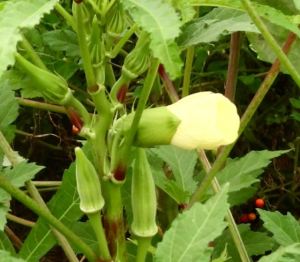
Okra plant and bloom from the Tilghman Island Inn kitchen garden, Maryland, August 17

The August 2025 Photo/Video Gallery: Wildflowers around Our Lake and More from the Eastern Shore

Whereas our garden plot features what we’ve planted, our little lake provides a changing feast of wildflowers. The display changes as the months do, and new leaves, stems, and flowers appear, while others fade back or disappear until next year.  As citizens of our local refuge (even if not so named), these new flowers highlight the good work we humans do when we don’t do too much–and we let the plants and animals do what they are experts at doing.

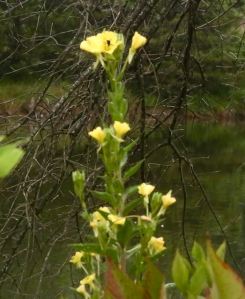
A Bee feeds atop this Evening Primrose on the east bank of our lake. These brilliant flowers appear along the lake in August, here on the morning of August 22

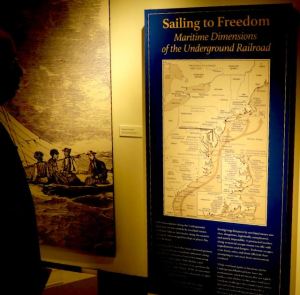
In much the same way, our visit to the Eastern Shore on August 16-20 let us witness ways, such as the St. Michael’s Maritime Museum and the Chincoteague National Wildlife Refuge, by which humans can assist nature by deliberately limiting commercial development and preserving native habitats. But beyond preservation, in exhibits like “Sailing to Freedom,” curating groups such as the Maritime  Museum go beyond preservation to call out past injustices, which are starting to reappear in the current political climate of censorship of diversity and the censors’ rewriting of history .

The multi-room exhibit “Sailing to Freedom” at the St. Michael’s Maritime Museum illustrates the rich but rarely mentioned history of enslaved people and their allies using boats and waterways to escape enslavement in the pre-Civil-War United States.

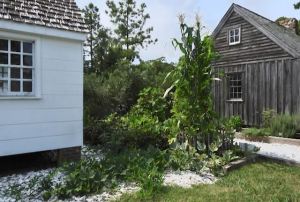
At the Maritime Museum is the re-located home of the sister of Frederick Douglass, where the garden includes a “three sisters” display of how Native Americans planted the 3 plants (beans, corn, and squash) together. Note how the bean vines encircle the corn stalk.

At the Maritime Museum in St. Michael’s, this skipjack is one of many vessels that have been restored to tell the history of the fisheries for over centuries on the Eastern Shore (Photo August 17)

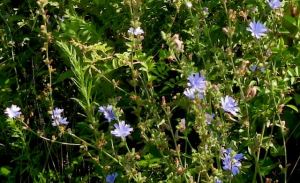
Wild Blue Chicory is one of the late summer wildflowers/herbs that grow around our lake, August 3

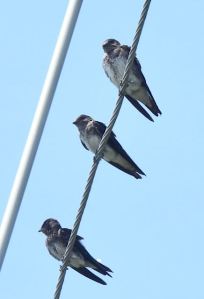
Purple Martins in the wildlife preserve at the tip of Tilghman Island, Maryland, August 17

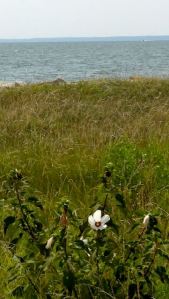
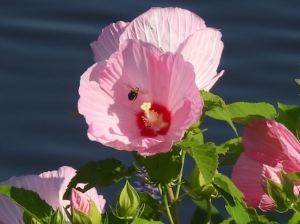
With the Virginia shore 12 miles across the Chesapeake Bay, a Swamp Rose Mallow blooms at the tip of Tilghman Island, August 17

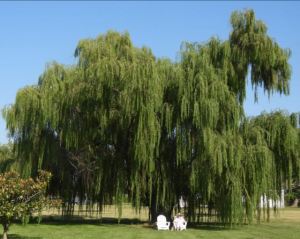
Magnificent Weeping Willow at the Tilghman Island Inn, August 16

In the Tilghman Island marsh beside the Inn, a male Osprey devours his catch, August 17

At the Tilghman Island Inn, a Black Swallowtail flits within Purple Top Vervain

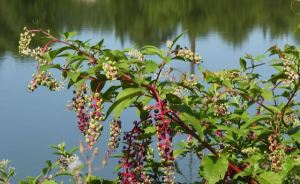
Pokeberry in bloom along the north shore of our lake, August 3

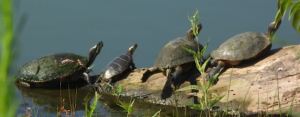
Four Red-bellied Cooters sun on a log at the north shore of our lake, just after sunrise, August 3

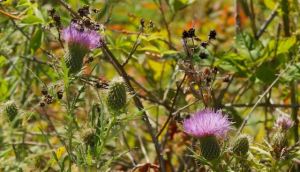
Bumblebee in Cutleaf Teazel on the north shore path of our lake, August 3

Two Bumblebees in 2 Purple Teazel, north shore, sunny noon, August 27

Grey Catbird flits amid Woodbine along the west bank of our lake, morning, August 3

The Chincoteague Fairgrounds, where for 100 years the people have celebrated the annual Pony Penning festival and carnival. Pony Penning https://en.wikipedia.org/wiki/Pony_Penning strengthens the herd and protects the land, while also giving new homes to young members of the herd among farmers and ranchers of the region. (Photo, August 20)

South Corral on Assateague Island, where ponies are rounded up for the swim across the channel on Pony Penning Day each year (photo August 19)

Four Herring Gulls on the roof of our hotel in Chincoteague, early morning, August 19

Daisy Fleabane display on the east bank of our lake, August 3

Five Canada Geese exercise in the southeast cove of our lake, sunny noon, August 27

Bumblebee in Swamp Milkweed on the east bank of our lake, on a breezy August 3

Panorama toward the south end of our lake on the morning of August 22, with Evening Primrose and prolific Horseweed in the foreground

Gallery Bonus: Raccoon crosses the trail at the Seneca Regional Park, visited on August 8

Bonus 2: At Seneca Park, a side channel of the Potomac River flows swiftly through the forest, August 8

And so on toward September, with continued courage to protect and celebrate the great diversity of life…
July 2025: Being One with the Land

Mexican Migrant Workers

Farm workers who create and nurture this beautiful, productive California field (Getty images)

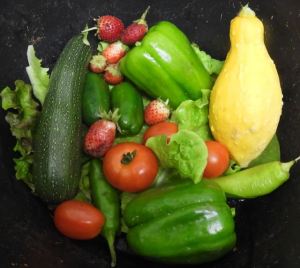
One day’s harvest from our garden plot, July 19

In this month’s blog:

Being One with the Land: At Least Trying to Be
Climate Log: Flash Flood Horror in Texas and Iceland’s Dilemma
July Kitchen: Homemade Pies and Garden Produce Dishes
The July 2025 Photo/Video Gallery

Marigolds and Coneflowers, our garden plot, July 2

Being One with the Land: At Least Trying to Be

Farmworkers plant jalapeño pepper seedlings in Camarillo, CA (LA Times photo)

“A fresh peach still requires a pair of hands to pick that off a tree. Table grapes still require the sensitive hands of an employee to remove them from the vine.” Ryan Jacobsen, director, Fresno County Farm Bureau (From LA Times: “For State’s Farmers, Migrant Workers Are ‘Irreplaceable,'” July 10, Andrea Castillo, Sulauna Hussain, Jessica Garrison)

Chris:

It may be ridiculous to think that amateur gardeners like us have anything in common with the skilled farmworkers, like those pictured in two photos above, who spend their lives in the fruit and vegetable fields of California and other states. After all, they have the experience, perseverance, knowledge, patience, and toughness to grow the crops that feed the United States and much of the world, while we just experiment semi-blindly on our little plot with tiny seeds and cute seedlings we’ve picked up from Home Depot, and then marvel at how the sun, soil, and water turn those infants into delicious (we hope) tomatoes, cucumbers, squash, berries, herbs and gloriously beautiful flowers–with precious little work on our part. While those farmworkers bear the heavy responsibility to keep all of us alive through their skilled, talented work in the harshest of conditions.

Swiss Chard, Tomatoes, Strawberries, Thyme, Oregano, Squash in our garden plot, July 2

If we fail in our little garden playpen, so what? We can just go to the store and stock up on the fruits of the farmworkers’ incessant, highly skilled labor.

The Price of Being One with the Land. Now one would think that people who bear all that responsibility and who display every day all that skill and perseverance, would be honored by the rest of us and treated like the heroes they are. But, instead, their work and knowledge are, at best, taken for granted by us. And, even worse, the people who we voters have elected most recently to lead us treat those indispensable workers with fear and contempt. These leaders just take and enjoy the fruits of these essential workers’ labors–and then, if you can believe it–do nothing to grant these workers citizenship in our nation. In fact, by not granting them citizenship, these leaders pretend that the workers are criminals because we have not granted them citizenship!

And even worse, these leaders send in masked marauders to capture them, often in workplaces like the Home Depots we visit, and send them out of the country. Can anyone make sense of this? Where, pray tell, will our food come from if these workers are deported? Does anybody gain by this senseless cruelty?

****************

Sachem Butterfly on Zinnia bloom, our garden, July 11

Trying To Be One with the Land. Now, I may not be a skilled digger of holes, planter of seeds, plucker of weeds, spreader of mulch, waterer, watcher, and harvester, but I’ve become a pretty skilled admirer of the plants themselves and of the busy creatures who pollinate them. But getting to know our tiny, living plot of soil does help me respect the farmworkers who really know what they are doing, so that I never  take any of what they do for granted.

Yes, Jean and I know what it feels like to be soaked with sweat, bitten by ants and mosquitos, and wilt after just one hour in the garden in the July sun. But can we imagine doing this work hour upon hour, day in and day out? We try, but know we really can’t.

It’s easier every day for us to marvel at the miracles that are plants and the miracles that are these real gardeners. And everyone who gardens knows that those people and those seeds and the soil, the rain, and the sun, are miraculous. And I can each and every day give thanks for these miracles.

And I can call out the injustice and cruelty of those–really all of us–who take the real gardeners for granted and even seek to punish them, banish them, and deny them citizenship.

Dahlias, Vinca, Zinnias, and Cucumber vine, our garden, hot muggy July 2

******************************************************************************

Climate Log: Flash Flood Horror in Texas and “What Do You Call Iceland When All the Ice Is Gone?”

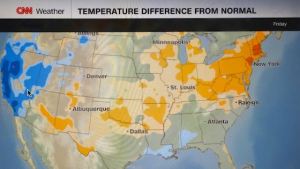
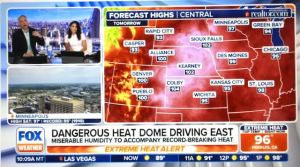
The next “heat dome” crossing the US and set to arrive in our region by July 25 (CNN Weather, July 22)

“Nature is changing faster than the language we use to describe it.” Andri Snaer Magnason, in the New York Times, July 19, 2025

Bed of the flood-ravaged Guadalupe River, Kerr County, Texas, July 6 (CNN video)

More and more continues to be written about the horrendous flash flooding in Texas Hill Country on July 4 that took 135 lives, with more persons still missing. Blame for the disaster has been spread among

  • local officials for tardy responses to warnings,
  • the gutted National Weather Service for staffing cuts,
  • localities for feeble, under-funded warning systems,
  • dangerous building locations by property owners and children’s summer camp owners (these camps were particularly hard hit), and of course,
  • just plain old complacency by people who’d rather ignore warnings than do anything different.

In the last few days, another target has been named by a few conspiracy theorists: a chemical cloud-seeding operation in the bone-dry West to try to encourage more rainfall (LA Times, “How Cloud Seeding Sparked Texas Flood Theory,” Hayley Smith, June 21). If there is anything like positive news in this flooding horror, it might be that at long last at least a few climate-change deniers are willing to admit that these so-called “natural disasters” are anything but natural–even if their cloud-seeding notion is easily-debunked nonsense. That said, it’s highly unlikely in Texas–ground zero for climate-change denial–that the true human culprits, the fossil-fuel cartel, will receive any blame. So the flooding horrors will just continue and get worse.

“What Do We Call Iceland When All the Ice is Gone?” (New York Times, July 19).

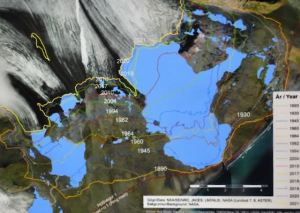
Some Icelandic glaciers have lost as much as 80% of their mass in the past century because of climate change, with projections that most of the country’s glaciers may be gone in the next 100 years (Horfandi Joklar photo, 2021)

I mention this article by Andri Snaer Magnason because it highlights how our language about climate change just can’t keep pace with the reality of what is happening. Iceland is a good case in point. There, so many place names feature glaciers–however, climate warming since 1900 has so depleted glaciers that the names no longer fit–yet people keep the names out of veneration for a happier past–and because the glaciers were for centuries so much of their national identify. Our continuing to use in the US the term “natural disasters” is another such example of how our use of language shows our failure to accept reality–and perhaps our longing for a past before Mother Nature was assaulted and violated day upon day by human forces.

***************************************************************

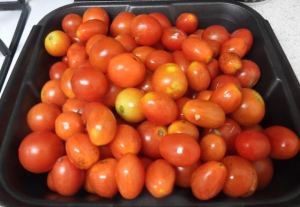
What to do with all these tomatoes? Four days of tomato harvest from our 4 Husky Cherry Red, Juliet, and Sweet Millions tomato plants, July 18

July Kitchen:  Homemade Pies and Garden Produce Dishes

Jean’s Black and White Chocolate Cream Pie, July 19

Jean:

During my days of cooking for our graduate student friends as a young wife in the 1970s, I took pride in “sophisticated” desserts containing liquor or liqueur like black-bottom rum pie and grasshopper pie.  This month, those cool, creamy tastes sounded enticing in the heat, so I went looking for recipes, old or new.  Of course I found some online, but I also decided to alter them somewhat.

My black-bottom rum pie became a black and white chocolate cream pie, decorated with dark chocolate and white chocolate chips.  Okay, it’s summer and I was hot and busy, so I used instant chocolate and white chocolate puddings rather than separating and cooking egg yolks in milk and all that, like I once did.  But you do you.  I did put rum into the puddings, but we couldn’t really taste it.  The cream and chocolate overpowered the alcohol taste.  Somebody in my house really enjoyed it despite all the disappointments!

Slice of Jean’s Mint Oreo Pie with Black Raspberry ice cream and Wild Blueberries, July 25

Next I tackled grasshopper pie but did not want to buy an entire bottle of creme de cacao.  (I already had a bottle of creme de menthe I had purchased for something I no longer remember, but this helped inspire the pie.) You could also use a Torani mint syrup, if you have or find that.  See https://www.thepioneerwoman.com/food-cooking/recipes/a12009/grasshopper-pie/   You can change it up slightly to a mint chocolate chip pie, sprinkling mini chocolate chips on top in place of more Oreos. We added broken mint Oreos in the version you see here.

I must confess that the presence of these types of alcohol in my kitchen also inspired another treat for hot days–the boozy milkshake, like some of the upscale burger places serve.  Just take your favorite flavors of ice cream and blend them with milk and a bit of complementary liquor.  Everyone has mint chocolate chip ice cream on hand, right?  Throw in some of that excess, nearly unusable creme de menthe if you bought it.  The “grasshopper” actually used to be a drink, as shown here:  https://food52.com/recipes/creme-de-cacao.  And of course, another use for creme de cacao is a Brandy Alexander, which could be approximated as a milkshake using Irish creme ice cream and chocolate Irish creme liqueur, if you can find them. Just use your imagination to come up with combinations, and stay cool with a luscious cold liquid dessert.  Have the drink with your slice of pie if you can afford the calories.

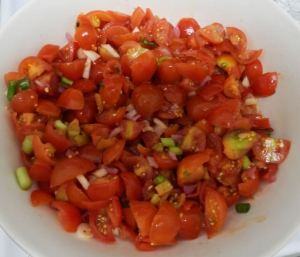
Chris’s Tomato, Onion, Hot Pepper Salsa

Chris:

What to do with all these tomatoes? We can use a lot, and friends will take some, too, but our local food banks are already resplendent in fresh donations from local supermarkets, so freezing for the fall and winter months is our best bet, as we used to do with our extra produce in California.

The fresh salsa shown above is super easy to make, as no cooking is required. And it disappears quickly, either as a dip/snack with chips, a side dish, or a topping for the veggie stir fry shown below.

Once you’ve done the tedious part–chopping all those little gems into 3-4 pieces each (I used 40 for my most recent batch), just sprinkle in salt and black pepper to your taste, plus some garlic powder, onion powder, and dried thyme or other herbs of your choice. The spice comes from the onion and from any hot pepper flakes or sauce you want to use (I used Cholula red, but I’ve also used sriracha). Fold it all up and taste. Stick it in the fridge until you want to use it. It keeps well for up to ten days.

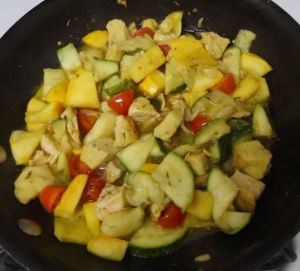
Chris’s spicy chicken, zucchini, yellow squash, tomato stir fry, July 19

For elementary cooks like me, the stir fry is perfect. With a light coating of oil in the skillet, and at medium temp and with a decent spatula, you can throw in any (well, almost any) chopped leftovers you have, add in salt, pepper, and spices of your choice, and just keep flipping and stirring until the mix softens to your desired firmness. (Just don’t leave it alone in the heat, because it will stick.) Except for the cooked chicken, which Jean provided, all the ingredients came from our garden patch. There are more of these veggies waiting in the fridge, so more stir frying will be coming up.

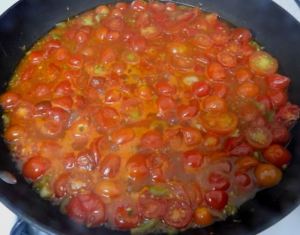
Chris’s Tomato Arrabbiata Sauce, cooking down, July 14

With as many Cherry and Grape Tomatoes as our patch has been producing since early July (50 or so ripe ones every two days), cooking sauce has been a great way to preserve those we can’t give away or eat as snacks or salsa. The large skillet of sauce just above has over 100 chopped in thirds or quarters.

Since there are a million tomato sauce recipes just a Google away, you can use the one you like. Just keep in mind that I’m using little tomatoes, so I can’t get the skins off. So as I cook the mixture of tomatoes, spices, red wine, olives, and herbs down on low heat, I’ll need extra time–say 90 minutes in all–to get the skins as soft as possible. I like to set up my laptop in the kitchen, so I can work and keep an eye on the stove during that slow cooking time. And the kitchen just smells so good!

The best part is that I can keep the finished sauce in jars in the fridge, where they’ll keep for a week or two, or I can freeze them. Right now, I have 2 jars in the fridge and just one in the freezer. We’ve already used 2 jars with pasta and stir fries! A load Like the one you see cooking will fill two 18 ounce jars.

*********************************************************

Grey Catbird in Persimmon tree right beside me on the west bank path, July 12

The July 2025 Photo/Video Gallery: Lake and Garden Highlights and One Local Outing

July’s gallery features shots of four gardens, the most intriguing of which may be the one that largely takes care of itself in the several acres within our semi-urban community. Or should I say that we humans care for this “garden” refuge by mostly leaving it and its citizens and visitors alone? Whatever hand we may or may not have in its care, it sure presents a marvelous array of species, shapes, and colors. And so do the other gardens pictured here! Enjoy.

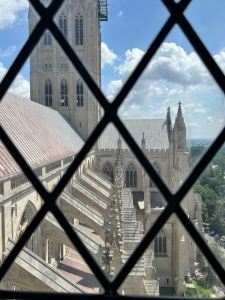
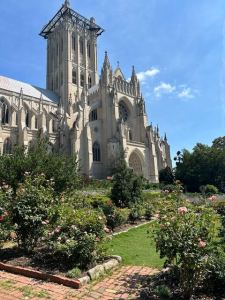
Washington National Cathedral–a favorite spot from our earlier lives in this region, but our first visit in 25 years, July 1. Here is a view of this magnificent Gothic style cathedral from the 7th floor observation deck. Notice the “flying buttresses” that support the windowed walls, a classic feature of the Gothic style

The West Side of the Cathedral and the Rose Garden, July 1

In our garden patch, Monarch feeds on a Garden Cosmos flower, hot morning, July 21

Ripe and ripening Allegheny Blackberries along the north end path of our lake, July 4. These berries grow wild in profusion around the lake. Plenty for us and for the birds

Beside our garden patch, this Male Cardinal calls from atop a neighbor’s stakes, July 21

At nearby Lake Newport, Bumblebee feeds in Swamp Rose Mallow along southeast lake shore, July 11

This rarely seen Trumpet Vine flower adorns the southeast cove of our lake, July 12

Red-winged Blackbird chirps atop Red Cedar at the northwest corner of our lake, very hot noon, July 4

In our garden patch, Zinnias and Cosmos blooms and feathery stems, grown from seed, July 21

At Lake Newport, Cattails, Pickerel Weed, and Swamp Rose Mallow hug the shoreline, July 11

Bumblebee hugs blooming Purple Teazel on northwest shore of our lake, hot July 12

Snapping Turtle lurks at the surface, mid-lake, hot noon, July 4

Panorama of our lake toward downtown, with yellow Prickly Lettuce flowers in bloom foreground, cloudy morning, July 12

Panorama of Lake Newport with Lilypads and Swamp Rose Mallow, early morning, July 11

Swamp Milkweed with Bumblebee, east bank of our lake, noon, July 4

Mockingbird in Red Cedar, northwest corner by the path, with Porcelainberry, July 4

Two Red-bellied Cooters on log, west shore of our lake, hot noon, July 4

In our garden patch, Bumblebee feeds on pink Coneflower. So many pollinators! Hot morning, July 21

More lake summer wildflowers: Pink Spotted Knapweed and Blue Chicory, north end path by our lake, morning, July 12

Lake Newport: Red-winged Blackbird in flight, July 11

Orange Sulphur butterfly on Indian Hemp, north end path by our lake, noon, July 4

In our garden patch, Juliet and Sweet Millions ripe clusters, morning, July 21

Short clip: Mockingbird scans, then flies atop Red Cedar beside our lake, July 4

Another lake wildflower: St. John’s Wort along the north shore, July 4

Yet one more lake wildflower–such bounty: Pennsylvania Smartweed along the north shore, hot July 12

And on to August! What do all our gardens have in store for us?

June 2025: ICE, No Ice, and Bounty in the Garden

Double-crested Cormorant preens and scans atop dead Oak, east bank of our lake, at sunset, June 8, while visiting Osprey looks on doubtfully

In this month’s blog:

ICE vs. Worker Shortages: More News from a Bizarro 2025
Climate Log: “No Ice” in Alaska; Here Comes the “Heat Dome”
Our Garden: Produce Galore in a Rainy Month
The June 2025 Photo/Video Gallery: Virginia Travel and Local Color

Honeybee sips from a yellow-purple Pansy in our garden plot, warm morning, June 18

*********************************************

ICE vs. Worker Shortages: More News from Bizarro 2025

ICE agents warn onlookers as agents handcuff one protester in Los Angeles (LA Times photo). From Jenny Jarvie and Grace Toohey, “Raids by ICE are stunning, but no surprise,” June 16

As I look at photos of Donald Trump’s Immigration and Customs Enforcement (ICE) agents surging unannounced into workplaces (Home Depot, clothing factories, etc.) then handcuffing people in Los Angeles last week and this, I have to remind myself that this is the strange, new US in 2025, not scenes of Darth Vader stormtroopers from Star Wars (see below). The likeness is uncanny, though: the masks, the armor, the heavy weapons, the lack of identification of any kind, the immediate violence. I’ve certainly not in my lifetime seen so-called “US law enforcement” acting as a federal government secret police force. Russian KGB and East German Stasi during the Cold War, yes, but not US law enforcement, which over recent years (and especially since 2021) has been trying to become more people-friendly and transparent in their tactics.

The five-month-old federal administration keeps trying to convince us that undocumented immigrants are an ongoing threat to US citizens and to our economy. But where’s the evidence? The claim is that these brown-skinned, admirably bi-lingual (English/Spanish) families are “taking our jobs,” as if there were a glut of workers in the US, and as if US citizens cannot find open jobs.

At last look, however (June 3), the US Bureau of Labor Statistics reported that there were “7.4 million job openings” in the US. That’s 7.4 million. Shortages of workers–not a glut–continue to be reported in many fields, including manufacturing positions, first responders, air traffic controllers, teachers, nurses, child-and-elder-care workers, hotel and restaurant staff, retail sales, construction workers, agriculture workers, etc., etc., as well as in the agencies that Elon Musk’s DOGE (Dept. of Government Efficiency) rampage of firings left understaffed.

To take just the first of those many categories, the New York Times (June24) analyzed data from the Business Roundtable (“Why Factories Are Having Trouble Filling Nearly 400,000 Open Jobs”) that pointed to severe lack of qualified applicants and the falling rate of community college enrollment.

Meanwhile, the workforce gets steadily older, as the percentage of over 65s keeps increasing and the US birthrate keeps declining.

Bottom line: this country needs more workers, not fewer.

So it’s extremely puzzling why the administration wants to deport all these workers–and why the President’s advisors want to terrify US communities into shunning places of business where ICE might attack next. What does this administration have against the people of the US and the businesses that fuel the economy? The ICE assaults in LA, for example, have left many prosperous economic hubs deserted (“LA Neighborhoods Clear Out, As Immigration Raids Send People Underground,” LA Times, June 21). Onlookers have seen adults and children grabbed off the street, no questions asked, and pulled into vans. People across these neighborhoods don’t want it happening to them or their loved ones. Would you?

Home Depot on Sunset Blvd. in Hollywood, where ICE arrested dozens on June 19 (LA Times photo)

To make matters worse, Trump chief advisor Steven Miller earlier this month ordered the Dept. of Homeland Security (which controls ICE) to increase the daily toll of captures and detainments to 3000 per day! What can possibly be the goal of this frenzy? Why would Trump and Miller want to weaken the US economy and hamstring businesses by creating much greater worker shortages than those that already exist? What do they have against small and large businesses, who need more workers, and against us consumers–who will have to pay even higher prices as supplies dwindle because of a shrinking workforce?

According to the Business Roundtable (New York Times, June 24), a path to citizenship and aid to education for the undocumented could help ease the shortages of qualified workers (NYT photo)

******************************************************************

Climate Log: No Ice in Alaska–Here Comes the “Heat Dome”

Heat Index in US, June 24 (Washington Post ) as the “heat dome” has arrived

As described in last month’s blog, Americans keep dying and being made homeless through record flooding in the US heartland, but with never a word of sympathy or even awareness from the current President. To add insult to injury, he’s gutted the Federal Emergency Management Agency (FEMA), which we had always depended on to offer emergency supplies and funds for rebuilding after such disasters. Instead, he wants the states (most often red states who voted for him in the 2024 election!) to foot their own bills for their stricken citizens. Because he and his appointees claim that climate change doesn’t exist–and all facts to the contrary don’t matter–obviously those record floods didn’t happen (or so their actions and inactions claim) and those stricken people and communities are on their own.

This month, the floods continued, and the administration again took no notice. The story (by Dana Hedgepeth, Washington Post, June 16) reported that 4 people died in flash floods in West Virginia on June 15. One state official said, “I’ve never seen anything like it,” but cries for attention like that fell on the deaf ears less than 200 miles east in DC.  Moreover, as one of the nation’s poorest states, West Virginia is in no position to deal with the destruction without federal help.

West Virginia flash flood damage, June 15 (photo by Wheeling, WVA, Fire Department/AP)

At the same time that the heartland floods were still occurring, the Post was also reporting (Ian Livingston, June 16) that “Part of Alaska is Under a Heat Advisory: That’s a First.” https://www.washingtonpost.com/weather/2025/06/13/alaska-first-heat-advisory/

Temps across Alaska for Sunday, June 22 (National Digital Forecast Database and Washington Post)

If you are among the great majority of US residents who acknowledge the climate change that our President says doesn’t exist, you will take note that these unprecedented June forecasts are part of the “heat dome” pattern that is becoming more frequent worldwide (“June is the New July: Why Intense Summer Heat Is Arriving Earlier,” Washington Post, June 25) https://www.washingtonpost.com/climate-environment/2025/06/25/global-heatwave-climate-change/

Worldwide heat map from NOAA, June 24, in Washington Post, “June Is the New July”

According to even Fox Weather (almost always a mouthpiece for the President), “heat domes” are especially powerful high-pressure systems that can be 1000 or more miles wide and long. The domes can

  • move steadily eastward in the US,
  • last for days until a stronger system erodes the dome, and
  • produce record-setting temps and humidity.

Now, this week,the “dome”–with temps close to and perhaps over 100 in the Northeast US–will have affected during its run three quarters of the US population.

And it’s only June. But please, if you accept the President’s Bizarro version of things, don’t believe what the weather people–who know what they’re talking about–are telling us. If you want to stay completely Bizarro, just nod your head at whatever the administration tells us.

Fox Weather infographic on the current “heat dome,” June 20

**************************************************************

Our Garden: Produce Galore in a Rainy Month

On a rainy morning, June 16, we collected this produce from our small patch in the community garden

The “heat dome” described above has just reached us in Virginia, but until this point in June we’ve had substantial rain (3-4 inches!) and moderate temps–so our 225-squ.-ft.garden has been producing magnificently.

Our 15′ by 15′ garden of diverse flowers and veggies has filled fruitfully over 2.5 months, as have the gardens of our hard-working neighbors (June 16)

Here, by contrast, was our garden just two months ago:

On April 25, here was our garden, with all plants in ground, newly mulched, and with veggies and flowers beginning to thrive in the steadily warming temps.

Three types of tomatoes, four types of peppers, two blueberry bushes, zucchini, crookneck squash, strawberries, Swiss chard, thyme, oregano, mint, rosemary, and sage have grown steadily since late April–and now daily produce delicious edibles. Meanwhile, ebullient flowers–dahlias, dianthus, coneflowers, buttercups, vinca, snapdragons, cosmos, pansies, petunias, zinnias, salvia, the flowering herbs, and three types of marigolds bring pollinators to the garden and a rainbow of colors.

Magenta Dahlias and red and white Snapdragons, morning, June 20

We have gradually been getting to know our neighbor gardeners, most of whom have been growing in Virginia much longer than we have, and not only do they answer our questions readily, but they offer us some of their produce, as we offer ours.

Mockingbird in a neighbor’s Berry patch, morning, June 18

Weeding, of course, is an ever-present chore in this humid climate–the productivity of our garden includes lots of productive weeds! Because we are all organic gardeners, we’d rather weed than subject our plants, the pollinators, and our bodies to herbicides. Crab grass is torturous, but blue speedwell (AKA “creeping charley”), while prolific, comes up easily–and then comes back for more fun!

Multi-color Marigold display, all grown from seed, brings pollinators and dominates the crab grass that we pull from the garden, June 11

Conversely, we’ve always looked upon “volunteers”–plants that just show up uninvited–as opportunities to learn about new species. In our garden, for example, one volunteer was the Buttercups that have brought pops of yellow that complement the reds, pinks, purples, whites, oranges, and blues of our plantings.

Our “volunteer” Coneflower plant, in full bloom and with more buds coming, morning, July 23

The majestic pink coneflower that emerged in late March as a “weed” is now a tall, multi-stemmed beauty that stands next to our “sweet millions” tomatoes. So what if it competes with two of our pepper plants? They all have enough room, even if crowded. And our two perennial strawberry plants? They also emerged in March to surprise us, and they produce better than any strawberries we ever planted in California.

Tiny Bee in one of our two Strawberry plants, with many blossoms, morning, June 18

But here comes the heat dome. Now we get to see how our plants do in the hottest heat of summer. Bring on the “heat dome”! We’ll meet the challenge as best we can. We have experienced neighbors to help advise us.

Sage, Thyme, Strawberries, Marigolds, Blue Aster in bloom, June 6

*******************************************************************

The June 2025 Photo/Video Gallery: Virginia Travel and Local Color

This month’s gallery includes, among a range of artifacts from our lake community and garden, photos from our trip early in the month to Tidewater Virginia and the historic towns of Williamsburg, Yorktown, Jamestown, and Gloucester along the York and James Rivers, where refugees from England encountered the indigenous Powhatan people for the first time in 1607, and where the English built their first settlements in North America. Professional historians, including four of our Virginia relatives, whom we visited on the trip, have done an amazing job of keeping alive this tumultuous 425-year history of immigration, conflict, rebellion, slavery, and warfare–but also the steady, progressive development of the democratic principles that have made the US great and that still, we hope, will continue to guide the future of the nation.

As we walk around our lake, Green Heron flies into the dead Willow Oak on the east bank of our lake, then preens and scans. Such serendipity!

Red-winged Blackbird in the same Willow Oak, but on a rainy morning, June 16

Bumblebee in Juliet Tomato flower in our garden, morning, June 18

On our Tidewater travels, we toured Jamestown Island, where the first English settlement was built. Here I snap a Red-bellied Cooter in the marsh at the island’s edge, June 1

This simple cross commemorates at Yorktown the French soldiers and sailors who died in this final battle, 1781, of the American Revolution. Without the French aid and sacrifice, the Revolution would not have succeeded.

Cottontail beside duck statue, east side of our community, morning, June 20

Bluejay in morning shadows along the southside path in our community, June 20

A pair of Cormorants scan along the lake from the west shore dock, rainy morning, June 16

Grey Catbird pair sips from puddles on north end path, rainy June 16

In our garden, Pink Dahlias with Honeybee and Red Dianthus, June 20

The majestic fallen trunk of one of 4 Yellow Poplar trees that still grow at historic Zion Poplars Baptist Church in Gloucester, VA, May 31. These poplars are honored as a Remarkable Tree of Virginia for their historical significance.

Zion Poplars Baptist Church, Gloucester, VA, May 31. This church was the first Black Church in Virginia established (1866) after the end of the Civil War. Early services at the church were held under the seven Poplars, of which four remain and which are pictured above.

Crookneck Squash blooming and fruiting in our garden, June 18

Husky Cherry Red Tomato plant in our garden, loaded down with fruit, early morning, June 23

Snapping Turtle, first sighting of the year in our lake, pokes head above water, lurks, then dives, June 20

Oxeye Daisies, St. John’s Wort, and Daisy Fleabane among June wildflowers beside the north shore of our lake, June 20

Common Moorhen male, my first sighting, in marshland at the Yorktown battle site, May 31

In our garden, Hot Burrito Peppers, Sage, and Mint plants, morning, June 18

Cardinal male atop dead tree in the Jamestown Island marsh, June 1

Foundation of the original meeting house of the Jamestown settlement, 1607, and statue of explorer, writer, and founder John Smith, by the James River, June 1

Song Sparrow calls singingly from atop a young Willow Oak on the north shore of the lake, June 12

Before sunrise, June 11, mist rises from the lake, with Red Maple and Elderberry in foreground and downtown buildings in the distance

Mourning Dove on wire west of the lake, morning, June 12

Five House Sparrows try out the new yellow feeder on our porch, morning, June 17

In two months, like our garden plants, the young ones of our Canada Geese families have matured from two throngs of fuzzy goslings to almost fully-grown adults. See the flotilla of 30 here in the Northeast corner of the lake, early morning, June 23

What adventures await us in the last week of June and into July?

April 2025: To Save All Life, Don’t “Drain the Swamp”

Osprey, an iconic Chesapeake wetlands shorebird, makes a rare appearance atop the dead oak on the east bank of our little inland lake, April 20. The visiting, fish-eating raptor stays for a while, then swoops over the lake…

…scans our lake at Easter sunrise, then flies off to find other wetlands

In this month’s entry:

Draining the Swamp: Recipe for Annihilation
Garden Update: Frost Is Past, Plants Take Hold
Cherry Blossoms and Honoring Real Heroes
The April 2025 Gallery: Remember Earth Day? Nature Keeps Fighting

White Azaleas in bloom by the gazebo, west bank of lake, warm twilight, April 24

******************************************

Draining the Swamp: Recipe for Annihilation

12,000 acres burned in Ocean County, New Jersey, as wildfires increase across the country, April 23 (CNN photo)

Whenever I hear the President’s rallying cry of “Drain the swamp!”–by which he refers to the ongoing mass firings in federal agencies since he took office on January 20–I wonder if he at all appreciates what “Drain the swamp” really means. Failing to value what swamps are and what they accomplish can doom all life.

Given his long history as a speculative builder of hotels and other urban properties, he perhaps thinks of swamps as messy, smelly, icky, treacherous places that get in the way of steel and concrete foundations, can thwart builders’ dreams, and often contain creatures like snakes, alligators, and disease-bearing mosquitoes. His hatred of swamps is part of his incessant campaign to destroy the environmental protections (see Newsweek, March 13, “What Comes Next?”) enacted since 1970 by a succession of Presidents, starting with Republican Richard Nixon, who founded the Environmental Protection Agency (EPA).  It’s likely that the current President resents the term “wetlands,” and especially the phrase “protect wetlands,” applied to those swampy places that impede two of his favorite ventures: turning public lands over to fossil fuel drillers and enabling so-called “developers” to turn natural environments into more and more commercial districts of concrete and steel.

The Cradle of Life

What he certainly does not sufficiently value when he thinks of swamps (like Virginia’s Great Dismal Swamp pictured above) is that they have been and continue to be the cradle of life on this planet, the purifier of all fresh water, and the essential meeting and mixing place between land and sea. Without swamps, bogs, mires, fens, marshlands, lakeshores, wetlands, coral reefs, vernal pools, or whatever you want to call them, all life will die out. https://en.wikipedia.org/wiki/Wetland

Planting Easter eggs: Mallard pair builds their nest along the north shore of our little lake at Easter sunrise. The drastic, ongoing decline (30% lost) of birds since 1970 has been caused in part by the erasure of these precious water/land interfaces across the globe.

Drought, Wildfires, and the Loss of “Swamps”

The photo of the New Jersey wildfire at the top of this section seems a strange juxtaposition with the pleasant video of the Mallard nesting pair, but they are closely related. Global warming (another term our President despises and refuses to acknowledge) is making the Earth steadily drier, including the U.S., as the regularly-updated U.S. Drought Monitor https://droughtmonitor.unl.edu shows:

You’ll note that the Mid-Atlantic and Northeast states–including both New Jersey and Northern Virginia–have been in a long-term (SL on the map) period of what the map labels severe drought, though local officials (at least in our region) rarely mention that there might be a problem, because we are not yet at a stage of having to restrict water usage. But those of us who garden (see the “garden update” section, below) are already very aware of the shortage of rain.

Not only does drought intensify the chances for wildfires, but lack of rain steadily erodes wetlands, as I see each day when I walk around the lake and notice the slow exposure of more dry shoreline. More dry shoreline means fewer nesting spots for Mallards and other waterfowl, as well as turtles, such as the Northern Red-bellied Cooters that adorn this blog most months of the year.

17! Red-bellied Cooters, babies and adults, throng this log near the south shore of the lake, April 17. Turtle eggs nest in the mud near the shore, emerge underwater in the fall, and winter in a dormant state underwater in winter. They come above the surface once the temp gets to 60, for at least part of the day.

Flood control. And just as wetlands reduce wildfire risk, so they also help control floods, by capturing excessive rain that would otherwise flow unimpeded through streets, over rock-hard drought lands, and into rapidly swelling streams during flash floods events. Soft wetlands allow excess floodwater to percolate into the aquifer underground, where it is saved for future use, rather than be propelled down rushing streams destroying anyone and anything in its path.

Kentucky River floods Frankfort, the Kentucky capital city, amid record rains in the Mississippi and Ohio River valleys, April 7 (Photo: Jon Cherry/AP)

******************************************************************

Garden Update: Frost is Past, Sun Abounds, Plants Take Hold

Swiss Chard plant takes hold, three weeks in ground, our community garden plot, April 22, Earth Day

We’re slowly learning the lessons of the Northern Virginia climate as we nurture our small plot in the community garden in our town. Twice in the past month we learned the hard way about planting too early here. Even though the average low temps from late March to mid April were in the 40s, all it took were two nights when the temp dipped to 32 or below (27!) for us to lose tomato, squash, and pepper seedlings. Note to self: Northern Virginia is definitely not Northern California, where we could safely grow year round.

Still, those two setbacks aside, we’ve now had two solid weeks of steadily warming temps for our assemblage of veggies, fruits, herbs, and flowers to thrive in our little patch (225 sq. feet) in the community collection of small gardens.

Our full garden plot, newly mulched, and with veggies and flowers thriving in the steadily warming temps, April 25

Some of our plants are varieties we had success with in California: cherry and grape tomatoes, hot and mild peppers, strawberries, zucchini, eggplant, Swiss chard, basil, mint, thyme, sage, lavender, and oregano.  One species, Blueberries (two bushes, in ground a month now), are thriving here in this cooler climate, and had no trouble with those 2 nights below freezing. They like the cold, as do the strawberries, but we’ll see how the blueberries hold up when it gets into the 90s in July.

Our two Strawberry plants, perennials, we inherited in this plot, and they are blooming prolifically.

Our two Blueberry bushes , which cross pollinate, loved the March cold and are blooming nicely, April 25

One third of the plot we devote to flowers. The hearty Pansies, purple and yellow, have been thriving since March planting as have the pink Dianthus (one of our California favorites), and just this week we’ve added purple Petunias. One discovery here is the plethora of fast-spreading ground cover such as bright Blue Speedwell and pink Henbit, which will take over everything if we let it.

Purple and Yellow Pansies and Purple Petunias vie with Blue Speedwell and Pink Henbit in the flowery third of our plot, April 25

In drier, hotter California, the challenge was to provide enough water to grow what we’d planted. We rarely had to pull so-called “weeds”: by which people mean any plant that you don’t want to grow in a space where you want to grow something else. Here, the relatively wetter climate encourages less-wanted plants to thrive, so “weeding” of plants like Dandelions and “Creeping Charlie” are daily chores. So the task for us is to  judge the balance between what we’ve planted and the volunteers that already love our ground.

Stay watching for updates. One challenge will be providing enough watering to keep the plants thriving in our severely drought-affected new normal. As a neighbor gardener put it this week, “We’re not used to worrying about rain.”

Also taking hold is this Husky Cherry Red Tomato, April 25. We loved these in California and hope they do as well here.

*************************************************************

Cherry Blossom Tradition and Honoring Real U.S. Heroes

Cherry Blossoms in full bloom, and the city of Rosslyn across the Tidal Basin and the Potomac, March 27

We made our annual visit to the D.C. Tidal Basin in late March, with the Yoshino Cherry Trees and Magnolias in full bloom and the entire Basin area teeming with students and adults visiting from many places. Not only were the trees magnificent, but we reveled in the joy of the crowds, particularly in the patriotic spirit of the thousands from diverse origins and backgrounds who took the opportunity to visit the three memorials that surround the Basin: the Jefferson Memorial, the Franklin Delano Roosevelt and Eleanor Roosevelt Memorial, and the Martin Luther King, Jr., Memorial. At each huge installation, the inspiring words of these authentic heroes of democracy and courage are emblazoned on the walls, and offer us who stand before them messages of hope and encouragement to persevere in our endeavors to respect one another, seek fellowship with the peoples of the world, and keep alive the idea of the U.S. as a friend in times of mutual need.

Pair of Grackles call out from brilliant Magnolia, Tidal Basin, March 27

Crowds throng the Martin Luther King, Jr., Memorial, March 27

Words of hope among many sayings of Franklin and Eleanor Roosevelt carved into the walls at the FDR Memorial, March 27

Jefferson Memorial across the Tidal Basin through the trees, March 27

Words of Martin Luther King, Jr., on wall of the memorial, March 27

Rebuilding the Basin. We also wanted to see how work had progressed over the year since we had last visited the Tidal Basin. Since 2023, the Basin has been undergoing a massive reconstruction, because sea level rise in Chesapeake Bay, caused by global warming, was every day forcing the waters of the tidal Potomac to overflow the Basin’s walls. More than 150 of the precious cherry trees have been removed because of the worsening flooding.

Not a true wetland, the Basin had been built in the 19th century as part of the massive draining of swampland in the nation’s Capital to enable construction of many of the now iconic buildings of the federal city. Lacking a wetland’s actual resilience in changing conditions, it was inevitable that a massive reconstruction of the Basin’s stone walls and dredging of the bottom like that going on now would be eventually needed.  Fossil-fuel-caused climate change accelerated the need. See the March 2024 blog for a history of the 19th century “draining of the swamp” and its ongoing repercussions.

The project is expected to be completed next year, in time for the 250th anniversary of the founding of the U.S.

The 3-year reconstruction of the Tidal Basin is moving the walls a hundred yards back from the originally-constructed shoreline near the Jefferson Memorial, with the loss of a few hundred trees.

****************************************************************

A Cottontail “Easter Bunny” hides in the northwest corner of the shoreline, April 20

The April 2025 Photo/Video Gallery: Nature Keeps On Keepin’ On

Welcome to the Babies! And to more wetland rites of spring here and elsewhere in our region. (Oh, plus three kitchen treats. Would not forget those!)

Surprise, surprise! Despite this winter’s cold, the Canada Goose babies are here by our lake at the same time as in last year’s earlier spring. Congrats to the parents!

Very rarely do Mallard females fly into trees and look to build nests above shoregrounds. This one on the west side of our lake was a real surprise, April 19

This Cardinal male in mid call atop a roof south of the lake, April 19

And here’s a very different view of a Cardinal male in closeup shadow in a Black Cherry tree, west bank, April 26

Watch this same Mallard female fly up to the broken branch in the Walnut tree while a Downy Woodpecker comments, April 19

At the National Aquarium in Baltimore, which we visited on April 10, an attempt is being made to re-create a marsh in the water outside. Here, a Mallard male rests on a bed of reeds. For almost 150 years, this harbor water had been a dump for industrial waste. With federal aid, the clean-up has been ongoing for 50 years, but will it continue?

This Mourning Dove shares the same roof with the Cardinal pictured above, April 19

On Easter Sunday, we visited relatives at their rural home. Here a beautiful tiny lizard enjoys the sun by their pond.

3-foot-long Yellow Largemouth Bass, the dominant fish in our little lake, swims near the north shore on a warm April 25

The annual magnificent woodland display of Bluebells covers acres at nearby Riverbend Park on the Potomac. We visited on April 6.

Grey Catbird perches in a Red Cedar along the west bank of our lake, April 26

Cardinal female and Yellow-rumped Warbler call from the Willow Oak beside the southeast cove, April 19

My first sighting this year of a Bumblebee, in the gazebo by the lake, April 19. These pollinators are essential to life here.

The Willow Oak by the cove also gave a perch to this acrobatic House Sparrow on April 19.

Carolina Wren makes music most days, but I don’t see them nearly enough. This one perched beside me in this Weeping Willow on the west bank on April 26.

Song Sparrow calls from the leafing Persimmon on the east bank of the lakeshore, April 26. I’d never want to imagine a month without a Sparrow song.

American Goldfinch in dry Cutleaf Teazel, north of dam, April 4

Jean’s one-of-a kind Coconut Custard Pie, with Filo Dough crust, April 26

Jean’s Easter Bunny Carrot Cake with cupcakes, April 20

Jean’s Easter Deviled Eggs with Crab, Olives, and Cucumber Pickles, April 20

First sighting of the year: Green Heron, usually a late summer bird, here now as another April surprise, in the Willow Oak on the east bank, rainy morning, April 26

The birds always seem their most ebullient on these warm, drizzly mornings after an overnight rain. The lakeshore, our local wetland, rejoices. And so we venture on to the marvelous month of May.

March 2025: New Spring, New Climate, New Garden

With warmer temps come the Turtles, who emerge above the surface once the temp reaches 60: four Red-Bellied Cooters on a log along the north shore of the lake, on a warm and windy March 18

In this month’s blog:

Wildfire USA: The New Normal
We Start a New Garden in a New Climate
Always Time for St. Paddy’s Day and Cherry Blossoms
The March 2025 Photo/Video Gallery: New Sightings in Nearby Places

A Tree Swallow–first sighting!–and a male Red-Winged Blackbird share the rail of the dam structure at nearby Lake Newport, on a cool, cloudy March 16

***************************************************

Climate Log: Wildfire USA: The New Normal?

Exceptional drought in Plains states leads to wildfires from Texas and Oklahoma north through Kansas and Missouri (USA Today and Fox Weather, March 14)

Though you’ll never hear a word about this from the new federal administration, for whom climate change, they say, “does not exist,” even the Fox Network can’t ignore the extreme drought conditions that have been ongoing for at least two years now in the Plains states–and the frequent wildfires that are now defining late winter in the middle of the country.

High winds and storms in the Plains states were accompanied by tornadoes, like this one that touched down in Missouri, March 14

Wildfires in the drought-plagued Plains states are dreadful enough, but now Florida joins the parade of drought-ridden states with fires up and down the peninsula.

This map from CBS News on March 20 shows “active fires” in most regions of the state, even toward the Keys and across the Panhandle.

While we’re used to hearing about hurricanes there in summer and now fall, plus high ocean temps and sea level rise along its coasts year-round, drought has become yet another climate concern in the Sunshine State.

National Weather Service warning for Miami and South Florida, March 20

Much farther north, the climate news this month (and this is no surprise at all) is that yet another record was set for the earliest melting of the Arctic Ocean ice cover, as reported in the Washington Post by Brady Dennis, March 6.

Greenland ice chunk in melting Arctic Ocean (Evgeniy Maloletka, AP photo , March 5)

It’s particularly noteworthy that the Trump/Musk administration is very interested in the U.S. acquiring Greenland as a territory. If they truly believed that there was no climate change, they’d assume that this melting was a temporary weather event. But their claim that climate change doesn’t exist is really just pretense, used by the fossil fuels cartel to justify the administration’s rollbacks of environmental protections and their attacks against renewable energy. The cartel and their political enablers know that the melting is part of the worldwide warming trend, and so the administration wants Greenland–just as they want to acquire Canada–as a military and trading launch pad for shipping across the now watery Arctic, as Forbes’ Garth Friesen, among others, reported in January 2025 in “Why Trump Wants Greenland.”

In this new normal of drought and higher temps, and while environmental rollbacks continue, we can look forward to more wildfires in more places. Indeed, just today (March 26) there are National Weather Service “red flag warnings” in the western edges of Northern Virginia.

Wildfire on New York/New Jersey border, as this blog reported in November 2024

***************************************************************************

We Start a New Garden in a New Climate

In our new garden plot, our first flower seedlings, March 22

For the first two years since our move from California in 2022, we had been on a waiting list for one of the highly-coveted garden plots in the four large clusters of plots maintained for residents by our urban/suburban town association. Finally in late August 2024, a 190-square-foot plot 2 miles from our home lakeside community came open and we leaped on the opportunity. Although this plot would be a far cry from the almost 2000 square feet of garden we had gloried in for 17 years around our home in the Sacramento Valley, and which had been the basis for this blog from 2015 to 2022, we promised to make the most of this new setting.

Cauliflower growing in our first small fall/winter garden plot in our town, November 24, 2024

On this small new plot, we planted three veggies suited to fall growth: broccoli, cauliflower, and red cabbage. In hopes that they would also thrive, we experimented with flowers, too: the perennial chrysanthemums we knew would be happy in October and November, celosia, and gerbera daisies–plus bright yellow and purple pansies, who, as we knew from prior experience in this climate, could go dormant over the winter, then come back in spring.

Our first plantings in our first small Virginia garden: broccoli, cauliflower, red cabbage, mums, daisies, 3 weeks old, in the rain, September 24

The broccoli and cauliflower plants did well enough before winter to give us some tasty heads, and the cabbage produced colorful purple leaves. The mums (as expected) were champs for a couple months before the current flowers wilted, as were the pansies. But the other flowers died with the first freeze, along with our wishful thinking (!) that Northern Virginia in winter would prove as hospitable as California.  Because this winter, as we reported in our January and February entries, proved far colder and snowier than our first two winters here, we got what we should have expected.

A New Garden Plot!

In early February, current plot holders were informed that there were several slightly larger plots that had become available, and we were invited to apply for those. One such plot, 225 square feet, seemed particularly attractive, as it was both closer to the road (for unloading purposes) and more sunny than our first spot, which was beside the woods of tall trees. So we applied and got lucky. We have now for the past month been clearing the new plot of plants that had taken over (mainly tough little blue speedwell and purple-flowering henbit), getting the soil ready, and stocking up on flowers and veggies, so that we could begin planting as soon as the weather warmed up enough to avoid any more freezing nights.

We have also met other nearby gardeners, who cheerfully answer our questions about their experiences in this climate and in these spaces. Routinely, gardeners also share equipment, such as buckets, wheelbarrows, and used wood for raised beds. Moreover, we’re assured, among the rules of use is the promise by each plot holder not to steal or damage others’ plants or produce. The better we get to know each other, the more we look out for each other.

Cleared third of our new garden plot with seedlings of chard, mint, basil, thyme, tomatoes, peppers, zucchini, and strawberry plants, March 22

Besides the veggy plants listed in the caption above, we’ve also planted two blueberry bushes–a plant unsuited to the hotter California climate–with more plant varieties being planned. The blueberries are already budding, just one week in. A third of the plot will be for flowers, with three “Ps”: pansies, petunias, and peonies already in ground, plus dianthus (see photo at the top of this section.)

Another advantage of these well-used garden plots, which have been cared for by a range of gardeners over the years, is that the soil is free of rocks (!) and is easily diggable as far down as needed.  Another great feature of these garden clusters is that, for the reasonable yearly fee we pay, the town association provides mulch, compost, and manure, as well as convenient faucets around the cluster for watering.

Our plot, early in our design process, with part of the rest of the plots cluster in the background, March 22. More photos to come, as the garden grows!

*******************************************************

In March, Always Time for St. Paddy’s Day and Cherry Blossoms

East of our lake, Cherry tree in full bloom, warm, sunny March 25

Last year at this time (see the March 2024 entry), we had a lovely, but also sobering, visit to the Tidal Basin in nearby Washington to see the Yoshino cherry blossoms in full bloom and visit the Jefferson Memorial, an annual pilgrimage for us in all our years here before 2006 and our move to California. This year again we are making this trek–and will describe it in detail in next month’s blog.

Two hints: we’ll be updating readers on the huge renovation project in the Tidal Basin in response to climate change and sea level rise, and we’ll be profiling three real American heroes who are honored amid the blossoms. (No, not Thomas Jefferson.)

Two St. Paddy’s Day Treats

Jean’s homemade Irish soda bread, March 17

Jean:

I’ve been streaming a lot of old British Baking Shows recently, and I especially enjoy Paul Hollywood’s master classes on bread. His strong arms and hands are made for the magic of kneading bread. But St. Patrick’s Day includes a bread that doesn’t get kneaded–Irish soda bread, of course. It’s rather an acquired taste, not the most exciting in its basic form, so in addition to studying Paul’s simple, classic technique, I checked out some recipes that called for a more enriched dough.

Hollywood makes soda bread either with all white flour or half white and half whole wheat, which I prefer, as a way to increase the fiber and protein. The most important ingredients are baking soda and buttermilk. I used a mix of flours (including one cup of oat flour and and one of white whole wheat out of the total four cups of flour), plus some sugar, butter, and egg, as recommended in this recipe.

The added sweetness is up to you; you could try a couple of tablespoons of sugar instead of 1/4 cup, if you want it less sweet. The egg also is optional, as it is in scones, but it does make the dough richer. https://natashaskitchen.com/irish-soda-bread/

In addition to golden raisins, I added caraway seeds because I like that flavor and a bit of crunch as well. As always, make this to your taste and have fun with it.

Here’s one more of my treats in honor of St. Patrick’s Day: making these a sandwich cookie was a spur of the moment inspiration!

Jean’s oatmeal sandwich cookies with cream cheese frosting inside and mini-M&Ms for an added pop of color and flavor, March 19

************************************************

Venus, high above the lake, and beneath the moon, 7 PM, a clear, calm March 3 (yes, that orb is 25 million miles away)

The March 2025 Photo/Video Gallery: New Sightings in Nearby Places

In last month’s entry, I gave the impressive statistics from the worldwide Great Backyard Bird Count. Check it out. So many species in so many countries, recorded by so many devoted birders. As impressive and heart-warming as those numbers are, this month’s news from Audubon and the Cornell Lab of Ornithology sobers us to the fact of the continuing sharp decline in the U.S. numbers of birds. https://www.audubon.org/press-room/us-bird-populations-continue-alarming-decline-new-report-finds

Habitat loss to development, air and water pollution, global warming, use of pesticides and herbicides, and other factors have not only killed birds, but have killed off the insects and plants needed by bird populations to thrive. And the same factors that are killing birds are making our own human hold on life more tenuous for billions around the world.

Decline year by year of many classes of birds in the US since 1970 (Cornell Lab of Ornithology), March 2025

 The Good News

 But still, day by day, our local and migrating birds call all around us, and their songs thrill us, and when we spot them and take pictures of their beautiful evanescence we feel the same joy that we always have in the presence of birds. Indeed, their fragility makes us appreciate them even more and perhaps even pushes us to try harder to help the rest of the human world pay attention.

And sometimes, as you’ll see below in a video and two related snaps, the unexpected and truly serendipitous happens on a bird walk.

So here are a selection of this month’s photos, taken not only along our local small lake, but also at another nearby lake and at a local woodland park.

Three Canada Geese in a panorama toward downtown buildings on a sunny, sparkly, windy March 17


Male Cardinal in a budding Cherry tree east of our lake, at sunrise, March 19


American Goldfinch in Serviceberry tree, southeast side of our lake, on a warm, windy noon, March 18


Young male Red-winged Blackbird atop an Oak east of the lake, warm morning, March 20

On a chilly afternoon, March 13, I pan the treetops southeast of the lake, and hear the calls of a Cardinal, a Tufted Titmouse, a House Sparrow, a White-Throated Sparrow, and a Carolina Wren–and, as always, local traffic

Song Sparrow and House Sparrows on Japanese Spindle Bush, southeast side of the lake, damp, chilly March 15

Song Sparrow sings in Red Cedar along the north shore, warm March 11

Sharp-Shinned Hawk perches in Red Maple very near our home, just after chasing, but losing, a Sparrow out of a nearby bush, February 28. See next video.

This Sharp-Shinned Hawk flew just past me after chasing a Sparrow through a Spindle Bush, and then perched in this Red Maple along our path, February 28. A totally unexpected and serendipitous shot!

My photo of the Sharp-Shinned Hawk flying past me in pursuit of the Sparrow, who got away, February 28

Red-Shouldered Hawk in Tulip Tree, southeast woods, March 10

Mallard pair along west shore of our lake, in twilight, March 4

House Finch female in Mulberry tree along the southeast shore, warm March 11

Downy Woodpecker scans on Red Maple, southeast bank, damp, cold March 15

I’m part of a town association birding party at a nearby park and lake, cool, cloudy March 16

Double-Crested Cormorant–first sighting of the year–at nearby Lake Newport, March 16

Red-Bellied Woodpecker high up in Oak, nearby park, March 16

Rarely seen Eastern Towhee behind Honeysuckle, in woods of nearby park, March 16

At nearby Lake Newport, as part of the birding party, I see these 2 Ring-Neck Ducks, a first sighting for me, dive into the water, but then more of the ducks break the surface! March 16

Two pairs of the Ring-Neck Ducks in Lake Newport, March 16


Mallard pair in lakeside rushes, beside me, Lake Newport, March 16


Eastern Bluebird in Red Maple at local park, March 16


Wakes of Mallard Pair in Lake Newport, March 16

Female Cardinal calls as Red-Winged Blackbird calls, in Red Maple, southeast woods by our lake, cold, windy, March 7

And on we go in the last week of March, toward April, and hopes for Spring…

January 2025: Fire and Ice

Fire to the Ocean: Homeowner sifts through wreckage after the Palisades Fire, Jan. 13 (Brandon Bell/Getty Images). The Palisades Fire is still not fully contained two weeks after the blaze began, and more high winds occurred this week, but with some rain expected for the weekend.

In this month’s entry:

Apocalyptic Fires, Surprising Ice
Staying Warm with International Dishes
The January 2025 Photo/Video Gallery: Bird and Deer Resilience

Palisades Fire and Los Angeles city lights, from airplane (Reuters photo, January 8)

Our frozen lake, view toward downtown, windy morning, January 9

Apocalyptic Fires, Surprising Ice: Two Sides of the Same Oily Coin

Robert Frost, “Fire and Ice,” first published 1920

Chris:

It’s certainly common in this blog to talk about very different places and experiences, but this January seems to offer–I say “seems”–a brutally stark divide between the fires in Los Angeles and the snow and ice here in Northern Virginia and now through the Deep South. Sure, there’s a difference between the heat and sudden destructiveness of a fire and the combination of sudden danger and long-term deadening action of ice. But, as Frost’s poem makes clear, the contrasting forces both have the power to destroy the world–when weaponized by human desire and hate. So fire and ice, in their destructive power, have a lot in common.

Altadena, CA “neighborhood” after the Eaton Fire, Jan. 16 (Orange County Register); Almost 40,000 acres burned in the two fires; 12,000 homes, schools, libraries, and other structures were lost, and 60,000 or more people were left homeless–one of the worst disasters in California history

Indeed, the LA fires and the extreme “cold snap” now surprising the US South–snow fell in Tallahassee, FL, on Jan. 20, for example–both demonstrate the climate change that the unrestrained greed of the oil and gas cartel continues to bring to the planet and its inhabitants. The unprecedented fires in LA are the result of the rare–but increasing–confluence of a record drought afflicting Southern California and unusually strong Santa Ana winds producing gusts as high as 100 miles an hour. Together, the drought and the winds make wildfires in the parched chaparral landscape much more likely. Climate change science predicts that such a confluence of forces will become more common.

And not only in Southern California. The drought that stoked the fires there is stoking them across many states. According to the US Drought Monitor, as this blog reported in October, as much as 80% of the US is rated as from abnormally dry to being in moderate to severe to extreme to exceptional drought, as this December 2024 map shows:

US Drought Monitor, Christmas Day 2024 (https://droughtmonitor.unl.edu/CurrentMap.aspx)

The Onslaught of Ice in the Deep South

Ice, snow, and states of emergency from Texas to Florida to the Carolinas, Winter Storm Enzo (Weather Channel, Jan. 21). David Goodman of the NY Times reports (Jan. 21): “For many Texans, the arrival of snow brought back memories of the devastating winter storm of 2021, which crippled the state’s independent power grid and killed more than 200 people. So far, the state’s electricity market operator has said it has plenty of power.”

Some are calling it a “once-in-a generation” winter storm along the Gulf Coast (CNN, January 22: https://www.cnn.com/2025/01/22/weather/winter-storm-south-wednesday-hnk/ ). So how is this icy, snowy Southern “Surprise” an effect of climate change? The steadily diminishing polar ice cap, perhaps the most dramatic effect of human-caused climate change over recent decades, is producing fluctuations in the “polar vortex” jet stream that are making seasonal weather forecasting more unpredictable across North America. So we shouldn’t be surprised that a sudden surge of very cold air is hitting the Deep South this January.  Again, what has been entirely predictable over the past 100 years or more is that the Earth is slowly heating. 

And so, the gradual heating produces

the polar ice cap melt that spawns

the fluctuations in the upper atmosphere that cause

the unexpected deep freeze and snows in the South.

In other words, it’s all part of a pattern brought about by our addiction to fossil fuels. That Northern Virginia is experiencing temps this week in the single digits (4 degrees Fahrenheit on the morning of 23rd) would not be surprising if Januaries in the past 20 years had been the typically cold winter months of years long past. But in January 2023 and January 2024, this blog described what amounted to early springs of budding trees–not a surprise, because gradual warming has been the trend, as the world and local temperature records demonstrate:

Hottest Year on Record in the DC region (National Weather Service) (Washington Post, Dec. 30): this map records “only” the last 145 years, but the trend is obvious

Heavy snowfall on our lake, view from south end park toward downtown buildings in distance, January 19, afternoon

Aftermath of one section of Palisades Fire in Malibu (photo Jan. 16, Orange County Register)

Is there anything we can do about this trend toward ever worsening destruction? Sure, but will U.S. society have the courage and even the awareness to really move steadily with determination away from oil and gas and toward clean energy? We have the technologies and the infrastructure–and the skilled workforce–to do so. But strong-arm politics is the stumbling block.

Just this Monday, January 20, the loudest mouthpiece for the oil and gas cartel was re-inaugurated as the President, and he has already nominated for his Cabinet men who are wedded to the cartel and dedicated to eliminating clean energy alternatives: solar power, wind power, and electric-powered vehicles. These people glory in the fact that the U.S. is already the world’s largest producer of fossil fuels, and they want that destructive leadership to intensify–to their benefit, but not to meet the needs of the people for a safe, productive environment.

According to the Energy Institute (Nov. 2024), the U.S. has been the world’s leading producer of oil and liquid gas since 2017, and further increased this lead under the Biden administration. Even oil companies see no need for this continued mining, as leases already approved go unpurchased. So why is further mining being pursued by the new President?

The result will be that in the next few years more and more events like the wildfires in California, the worsening hurricanes in Florida and the Gulf Coast, the extinction of fish species in the oceans, extreme drought in Texas, water shortages in more and more states, and many more climate-related disasters will occur. Costs already in the trillions have been racked up to repair and prepare for these events, with Americans paying for them in ever higher prices, in lost insurance, and in fear for their lives and homes. Politicians who don’t want to call these catastrophes what they are–“human caused”–will keep calling them “natural disasters,”  while nature and her creatures will suffer through our abuse.

A beautiful pair of Mallards push their way through the frozen lake, as snow falls, January 6

***************************************************************************

Jean’s green pepper enchiladas, January 18

Staying Warm with International Dishes

Jean:

As the temperatures have dipped down and stayed down over the past couple of weeks, I have been inspired to serve comfort foods, hot in both temperature and taste.  Furthermore, we’ve been staying inside more than any time since Covid, as ice has built up outside, so reusing and repurposing leftovers and pantry items has been a priority.

I started with chili, of course—a staple of cold weather comfort food.  I never make chili the same way twice, but this time I was inspired by a recipe by Molly Yeh on the Food Network, except I left out the cinnamon because Chris doesn’t like the taste of Cincinnati chili (but I do).  That chili had no beans, so on another day I added chunky tomatoes and pinto beans for a different look and taste.

Green Pepper Enchiladas

My next inspiration came from watching “Moira Rose” make enchiladas on Schitt’s Creek.  (Yes, there’s a lot of TV watching involved when holed up inside by the weather.)  I don’t know her recipe, so I just pulled something together with leftover bean and corn chili as the filling, spinach tortillas for color, sliced green peppers for crunch, and a canned cheese sauce. They turned out perfectly and were photogenic, too!

West African Peanut Stew

Because Black History month is upcoming in February and Martin Luther King, Jr.’s birthday is this week, I also made a West African peanut stew, which combined chard, tomatoes, sweet potatoes, and chicken with the peanuts in a savory sauce with peanut butter, cumin, garlic, ginger, and onion. The plentiful, colorful stew was good for several days of leftovers. Chris particularly liked the chopped chard and tomato flavors, and peanuts are favorites of ours in any form. (The peanut stew was also a tribute to my late older sister, whose birthday was the same as MLK’s.  She worked in Africa with the Peace Corps in her youth.)

Orange Chicken and Tempura Green Beans for Lunar New Year

For Lunar New Year, I also checked out Molly Yeh and came up with her orange chicken recipe.  I decided to opt for our favorite cut, whole chicken thighs, rather than go to the expense and trouble of using chunks of chicken breast.  The point of this recipe for me is the delicious orange sauce, although you can buy a similar preparation in the Asian food aisles at many grocery stores.  Here is her recipe:  https://www.foodnetwork.com/recipes/orange-chicken-12245113.  I substituted whole seared chicken thighs that I then baked for 45 minutes in the sauce.

The coating on her chicken nuggets, although I didn’t use it, inspired me to try tempura green beans as a side dish. I checked around on the Internet and looked at various recipes for the tempura batter and ended up using something that was half rice flour, half all-purpose flour, a little baking powder and salt, plus enough sparkling water to make a batter that was neither runny nor too thick but just the right consistency to adhere to green beans dipped in it.  Then about 4 minutes in piping hot oil and a sprinkle of salt when they come out to drain on paper towels.  Great when hot, but a fine snack when cooled or rewarmed briefly as well.

The key to tempura really is the batter, and there are lots of ways to make a good one. You just have to experiment. I remember eating tempura shrimp one time in the kitchen of a Japanese neighbor who said she used some pancake batter mix for a coating that was a little thicker, puffier and browner than the typical tempura batter.  That was so delicious I think we ate the family’s entire week’s supply of shrimp; I just kept asking for more.

And for dessert: Japanese Mochi Bars

I decided to turn part of the rice flour mixture into mochi bars for dessert as well, since this mixture is the starch that is used to create the dense texture of mochi. I chose bar form because it’s easier than making the batter into balls: https://cooking.nytimes.com/recipes/1022347-butter-mochi

I made these the afternoon after I made the tempura green beans, and they emerged from the oven just in time for an impromptu afternoon tea. Chris joined me after editing his new batch of bird photos. On a fifteen-degree January day, inside or outside activities can both be good choices. But tea and mochi bars back inside always work.

What can I say? If cold weather keeps me indoors, I turn to cooking. Let Chris go outside to commune with the birds. We both think I made the right choice.

**************************************************************************

The January 2025 Photo/Video Gallery: The Resilience of Birds and Our Other Citizens

Male Cardinal calls and listens in a Cherry tree in the Southeast cove, as a Tufted Titmouse and a Downy Woodpecker also call from the nearby woods, on a cold, windy morning, January 7

Chris: They are hanging in there, marvelous creatures that they are. This blog continues to celebrate avian courage, as we note that H5N1 “bird flu” is now making its presence felt in Virginia, at poultry farms (so far 7 of them) in the Delmarva (Delaware, Maryland, Virginia) region. And cranes have now died of the disease at the Richmond (VA) Zoo (Dana Hedgepeth, Washington Post, January 22). We are constantly inspired by these small bundles of energy as we hear them calling and watch them surviving and building lives amid the snow and ice this month.

150 yards away, a beautifully-antlered White-tailed Buck stares at me from the snowy field north of the Lake Cameron dam, January 17

Faithful flock of Rock Doves huddle in the cold of the power stanchion west of the frozen lake, January 16

Citizens leave distinctive tracks across the frozen lake from the west bank, January 16

The White-tailed Buck ambles toward the woods west of the field, eyes me, then moves on, January 17

Song Sparrow perches in Persimmon against a snow bank above the north shore, January 17

Panorama toward the west bank of the lake from the southeast side in snow and ice fall, January 19, afternoon

House Sparrow in winter plumage scans from Mulberry tree on the Northeast corner of the lake, January 17

Amid a chorus of other birds, House Sparrow flits in dry Blackberry canes by the frozen lake, along north shore, January 19

Eastern Bluebird atop Katsura tree, Southeast side of the lake, January 19

Mockingbird dances in the Greenbriar on the Southeast bank of the frozen lake, January 16

Dark-eyed Junco camouflaged in Serviceberry tree, East side, late PM, January 16

Male Cardinal hides in Japanese Honeysuckle along the Southeast cove by frozen lake, January 16

Female Cardinal calls, listens, flits in Cherry tree, Southeast side, January 19

American Robin in Serviceberry tree, East side, late afternoon, January 16

American Goldfinch in snowfall in Katsura tree, afternoon, January 19

Four Rock Doves on a wire watch the frozen lake from the West side, January 17

View of frozen lake to gazebo from the Northeast corner, January 9

Pair of Mourning Doves in a Tulip Tree, North end woods as snow falls, January 6

Our large flock of Canada Geese all along the North shore of the lake, January 7

Seven Mallards in our lake amid ice as snow falls, January 6

American Robin pair on roof, Southeast side of the lake, on a very cold and icy January 22

And on to the month of Valentines with hopes for our own resilience among challenges!

December 2024: Closing the Year in Celebration and Hope

A small flock of Canada Geese swim past the west bank gazebo on our lake in a gentle snowfall, December 20

In this month’s entry:

Rains Return and So Do the Birds
Our Holiday Season Kitchen
More Holiday Celebrating with Family
Climate Log: Good News and a Dilemma
The December 2024 Photo/Video Gallery

A driving rain begins to attack the drought: looking north across our lake, December 11

A “Sort of” Winter: Rain, Cold, Ice, Warm Temps, and Yes, More Birds!

In last month’s entry, we lamented the ongoing drought and the disappearance of most of our late autumn  birds. Just at the end of November, we began to get some rain, and we’ve now had about two inches this month–a hopeful start to impacting the drought. It’s even been cold enough in the past two weeks–high teens to low 30s–to bring us a bit of snow and ice, though nothing sticks for more than a few hours, and warming is in the forecasts.

Panorama of the fountain and the sleet-covered lake from the southeast bank, Christmas Eve, morning

The even better news is that our mallards have returned, along with some songbirds we’d not seen for a while. Here’s hoping that the moisture keeps coming and, with it, even more birds. A warming trend is predicted by the end of the month, plus more rain, so we’ll see how much winter is still in store. Fingers crossed.

Seven Mallards on the frozen lake in the early morning cold, December 23

Our first sighting here of a Golden-crowned Kinglet, in the Willow Oak on the southeast bank, December 12

Look for more of our December birds in this month’s Photo/Video Gallery, later in this entry.

Our faithful flock of Rock Doves stop at the north end shore in the early morning cold, December 23

**********************************************************************

More to Celebrate: Our Holiday Season Kitchen

Jean’s Pulled Pork Chili, with tomato, cheese, romaine salad garnish, December 9

Jean: Like many others, we have had patches of cold, rainy, snowy and icy weather already this winter, and more is probably yet to come. During these times, I like to make big pots of hot, hearty food that can be enjoyed for days without going out shopping or seeking food elsewhere from day to day. It also needs to be something we can change up to prevent monotony. To these ends, I got a 6-pound pork butt/shoulder to put in the Crockpot with broth, onions and garlic. I simmered it for most of a day to get it tender enough to cut down after it cooled. I didn’t weigh the big bone that I cut out, but I probably ended up with three pounds of meat.

Once I had the bone out and chunks cut, I made four dishes with the meat. Each required some more cooking with the vegetables and other additions appropriate for that dish.

  • First was a simple stew, softening the meat some further with potatoes and carrots.
  • Then my favorite, a Mexican posole, made by adding green peppers, jalapeños, green salsa, and hominy.
  • The next was a chili, simply adding chipotle and other spices, some different kinds of beans, canned tomatoes, and corn.
  • Fourth was barbecue, cooking sweet potatoes with the meat and topping with our favorite BBQ sauces: Kansas City BBQ for me (go Chiefs!) and a mustard-vinegar (Carolina) sauce for Chris. All yummy, stick-to-the-ribs food. I think I may go out and get another pork butt.

Chris’s Three Sisters Stew bubbles, as Christmas jazz plays, Dec. 21

Chris: For an alternative pre-Christmas celebration, we chose my vegan “Three Sisters Stew” (pictured above), based on the  traditional, Indigenous-named “three sisters”: beans, corn, and squash. These make complete protein, which I first wrote about in this blog in December 2022 in describing examples of “Blue Zones” cookery. Each time I make this hearty dish I vary somewhat the other ingredients I add, so I get new flavors, level of spice, color, etc. For example, this time I used 12 ounces of Beyond Meat (with avocado oil), which I sauteed with yellow onion, then added in cannellini and black beans (instead of kidney and pinto), then sliced fresh zucchini, canned sweet corn, and two cans of diced tomatoes with oregano and basil. A quarter cup of red wine and a dash of red pepper flakes completed the mixture. Once again, the dish was plentiful (enough for several days) and full of flavors.

In addition, Jean made a casserole of wild rice, mushrooms, celery, and white onions, to accompany the stew. The flavors of the two dishes were very different, but totally compatible, demonstrating once again the vitality and beautifully-varied characters of vegan recipes.

Split bowl of 3 Sisters Stew (L) and Mushroom/Wild Rice Casserole (R), with grape tomato and green olive garnish, December 23

And For Dessert…

Jean’s Tiramisu with Milano Cookies on top, Dec. 26

Jean: I love tiramisu.  We’ve seen it prepared in many ways, and I’ve tried different ways to prepare it myself, with varying degrees of success.  It should be pretty easy, right, layering cookies and cream?  What could go wrong?  See https://whatsgabycooking.com/classic-italian-tiramisu/.  The trick is to get the right amount of flavor and liquid from the coffee and any liqueur you want to use.  It’s easy to overdo it and get a soggy mess, or maybe taste nothing but whipped cream, although that’s not the worst that can happen, from my point of view!

This time, for our pre-New Year’s Eve party on the 28th, I was inspired by Chobani’s coffee flavored yogurt, and they even have a tiramisu flavor in their “Chobani Creations” line.  Not only do I love these, but I found a recipe for tiramisu that says you can substitute Greek yogurt for mascarpone (expensive!) and egg yolk in the traditional recipes.  https://pyskitchen.com/pyskitchen-recipe/tiramisu-without-mascarpone

I was having a little trouble getting my whipping cream to whip, so I did not whip or fold the whipped cream and yogurt (both flavors) together, but merely layered them over the lady fingers.  (Those were hard to find, but I finally scored some real Italian ones at Wegman’s.)   The result?  A soggy mess, and a little too sour for my taste with all the yogurt speaking louder than the whipped cream.  But Chris loves the “notes of sourness” (as he says) and so did our guests! You try it out, and adjust the recipe as you like. 

***************************************************************

Christmas: More Celebrating with Family

As described in last month’s entry, we had family from Georgia, from New York, and from across Virginia visiting for Thanksgiving. For Christmas, our get-togethers were of the local family members, but were no less festive, focusing on outstanding food (including the dishes described in the Holiday Kitchen section above), catching up on what everyone has been doing, and the exchange of presents.

Needless to say, many of the gifts were for the youngest members of the crew, who made the most of the occasion by spreading wrapping paper through the house and starting to get into the toys, books, and games. Again, three generations of revelers took part, including one precocious pup, who popped up in surprising places! For those who couldn’t be there in person, they were still with us through their cards, calls, and FaceTime.

********************************************************************************

Climate Log: Good News for FEMA, but a Dilemma for the Incoming Regime

ABC News : “Driest Fall on Record,” Oct. 24, 2024

Warmest Year on Record in the DC region (National Weather Service) (Washington Post, Dec. 30): but Republicans still won’t acknowledge climate change or global warming, though they will appropriate hundred of billions for disasters

Just before Christmas, the Republican-controlled House of Representatives passed a bill that I never thought we’d see: $110 billion (yes, billion) that “Provides much-needed relief to Americans struggling to recover from natural disasters” (https://appropriations.house.gov/news/press-releases/house-passes-critical-disaster-relief-americans). The terms “climate change” and “global warming” are never used in this massive relief bill, because Republicans are way too intimidated by their leaders and by the fossil-fuel cartel to admit these obvious truths. Nevertheless, the bill is the first of more and more that will be needed to address the effects (not the real causes, of course) of what the bill erroneously calls “natural disasters.”

Warming oceans, more intense storms, and coastal sea level rise combine to make unprecedented coastal damage more frequent, as this week in Santa Cruz, CA, as reported by Grace Toohey in the LA Times, December 28

Particularly noteworthy is that the two largest items in the bill are

  • $31 billion for “disaster and economic assistance to agriculture producers” and
  • $29 billion for “FEMA’s response, recovery, and mitigation activities related to Presidentially declared major disasters, including Hurricanes Milton and Helene.”

These open-ended statements leave ample room for further appropriations to address future disasters caused by extreme heat, drought, extreme storms, wildfires, sea level rise, etc. That the two main emphases here are “agricultural producers” and “major disasters” reveals Congress’s tacit, but unspoken, understanding that climate change will continue to devastate farmland, and will continue to produce hurricanes of unprecedented size, spread, and sudden emergence, like October’s Helene and Milton, which suddenly developed in the Gulf of Mexico very late in the hurricane season.

Burned out farm field we visited, New Market, VA, Aug. 2, in the midst of the 2-year drought in the Shenandoah Valley

Trump’s Response?

It is further noteworthy that the once-and-about-to-be President, Donald Trump, tried to force Congress to scuttle this bill, even at the cost of shutting down the government. Why would he do such a thing? Does he want to be known as a President who won’t provide disaster relief (as he failed to do in his first term in his callous lack of response in 2017 to Hurricane Maria in Puerto Rico)? Does he not want to meet the needs of the farmers in states like Texas, Oklahoma, and West Virginia, who are suffering massive crop losses because of extreme heat and drought? Farmers in these states and others overwhelmingly supported him in his run to the Presidency, because he promised to help long-suffering rural America, and they believed him. But, his promises aside, he might be more concerned that passing such a bill will draw attention to the vast scope of a problem that he’s always claiming doesn’t exist, but which will continue to dog him throughout his final term and just get more painful, tragic, and costly to Americans.

Close-captioned TV weather forecast from CBS-affiliate in Central Texas, summer 2023 (clip from YouTube video)

Fortunately, enough of the Republican House members, aided by the votes of almost all Democrats, defied Trump’s effort to kill the aid, and so the money will flow, because the Senate and still-president Biden moved it forward immediately.  As the majority of the House realized, something bold had to be done, and even the President-to-be, despite his fearful wishes, had to give in. Remember, House members will be up for re-election in just 2 years, so they know, unlike their leader, that they can’t afford to ignore the needs of their constituents now.

But passing such an open-ended bill leaves President-elect Trump and all his fellow climate-change deniers in a dangerous spot.  Hundreds of billions in relief can pretty quickly turn into trillions, as the climate sins of the fossil-fuelers exact more and more sacrifices and pain. As lack of farm production destroys farms and ranches, and causes prices to rise for all of us, and as more and more of the country becomes harder to live in, people will blame the party in power, as they always do. At some point the people will demand answers as to why those leaders failed to admit that the hurricanes, warming oceans, wildfires, and burned-out fields could have been–and future ones still could be–avoided.

US Drought Monitor, Christmas Day 2024 (https://droughtmonitor.unl.edu/CurrentMap.aspx)

***********************************************************************

The December 2024 Photo/Video Gallery

All photos and videos this month come from in and around our lake, all celebrating the increased precipitation and the return of some of our citizens, plus visits by a few welcome guests.

Our year-round residents: Song Sparrow munches grass in the field west of our lake, cold morning, December 23

Savannah Sparrow sips from the rainy north shore of our lake in the rain, Dec. 9

White-throated Sparrow poses for the camera, southeast cove, December 6

Male Cardinal munches seeds in an east bank tree, amid flurries, morning, December 20

Panorama toward downtown, partly frozen lake, early morning, December 23

Rare sighting of Red-shouldered Hawk not in a tree, but on the ground, eyeing bird in the brush, north end path, cold morning, December 19

Pair of Red-shouldered Hawks in Tulip Tree and Virginia Pine, southeast side woods, December 19

Sleet-covered inlet stream under bridge, early morning, Christmas Eve

Our fountain in the frozen lake, view toward downtown, December 23

Our resident flock of Rock Doves takes off from north shore, December 23

European Starling, brightly lit by the sunrise, scans from the dead Oak, east bank, December 23

Carolina Wren alights on a branch above me, calls friends, and feels the flurries on a snowy morning, December 20

Robins in late December! Wow! These cavort in a sugarberry tree in the north end woods, December 23

This Robin calls in the Sugarberry that same cold morning, December 23

American Crow, amid flurries, perches atop a Bradford Pear and Blackberry canes below the north end dam, December 20

Four Canada Geese swim mid-lake in the December 20 morning snowshower

Tufted Titmouse perches along the southeast path on a cloudy December 1

Red Fox, not often seen, watches me from the brush beside the north shore rocks, December 8

Mallard pair along the northeast shore in the rain, December 9

Rare visitor, male Hooded Merganser, swims in mid-lake, cold, windy December 6

Three Hooded Mergansers, 2 female and young male, along the east lake bank late afternoon, December 6

The Red Fox, ill with mange, explores the north shore rocks, then drinks from the lake, December 8

Blue Heron flies from north shore to west bank and through community, December 17

And so, weakened as we are, may we take wing and fly into 2025 in hope of a more just and thoughtful world.