May 2024: The Bird We Heard, the Tree We See

Calls of Tufted Titmouse, Downy Woodpecker, American Robin, and Great Crested Flycatcher in panorama along the leafy greens of the west lakeshore in steady rain, May 18

Calls of Song and House Sparrows, European Starlings, Cardinals, and Fish Crows as we walk along the westside shore on a foggy morning, May 20

In this month’s entry:

Birdsongs in Deep Greens: Our Cool Early Summer
Chapter III: Glorious Central Virginia Trees
Climate Log: The Texas Storm-Bourne Plague, and Florida Bans “Climate Change” as Insurers Flee
The May 2024 Photo/Video Gallery: Cool Cookin’ This Month, in So Many Ways
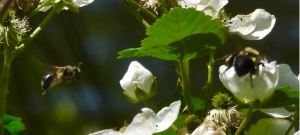
A pair of Bumblebees feed in Blackberry Blossoms, southeast shore, on a sunny May 13

**********************************************

Birdsongs in Deep Greens: Our Cool Early Summer
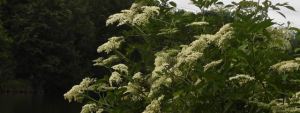
Elderberry in full bloom along the southeast shore, foggy morning, May 20

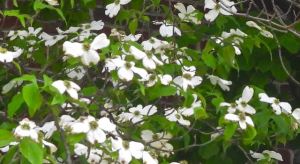
May has become the first month of summer in our warmer Northern Virginia, with the springy blossoms of March and April having fallen and the marvelous leafy varieties of green now dominating the glorious landscape of our fragile, yet robust, lake community.  To be sure, new blooms keep appearing, as they will through summer, like the creamy elderberry (above) and the Arrowwood Viburnum near it on the southeast shoreline (below). But for those of us always on the look-out for birds, the luxurious green canopy means lots of hiding spots for the clever avians, whose melodious calls announce the sunrise each morning and tempt us to keep looking all day until the night.
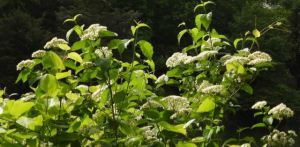
Arrowwood Viburnum along the shore, May 9

Better off are we to immerse ourselves in the concert, and just be happy when a bird or two or three show themselves on a tree top or nearby branch, or swoop across the lake (below) so that we can try to grab a snap or video clip. The more I come to recognize their calls, the more I can visualize the birds in my imagination, without needing always to scrutinize the greenness for an actual sighting, not to mention suffering the exquisite torture of setting up a clear shot! I receive plenty of visual gifts as it is.
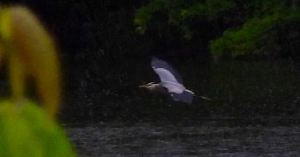
A favorite friend, Blue Heron, glides above the lake in the heavy rain of May 18.

We have yet to have a 90-degree day in this early summer, and most days have given us more clouds than sun. Rains, mostly gentle, have fed the trees, the wildflowers, and the animals. So much green energy, so many sparkling drops on the leaves, so much freshness in the cool air.

If you read the Climate Log below, you’ll understand why I feel that a month like our May here in Northern Virginia in 2024 is a moment to be celebrated, recorded, and cherished. We are very, very fortunate.

Three goldfinches flit within a young persimmon tree on a foggy May 6 at the north end of the lake

**********************************************

Chapter III: Remarkable Trees of Central Virginia
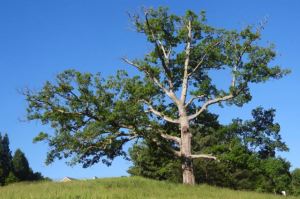
A majestic Willow Oak atop a hillside at the Boar’s Head Resort in Charlottesville, May 15

Chapter III of our tree-hunting adventure took us a hundred miles southwest to Charlottesville and environs, famous for Thomas Jefferson’s Monticello, the University of Virginia (which Jefferson designed in the 18-teens), excellent wineries, and breathtaking scenery in the foothills of the Blue Ridge Mountains. Three of the majestic trees from Remarkable Trees of Virginia were among our goals for the two-day trip. Not only did we find these long-lived, well-cared-for beauties, but we found once again that when we begin looking closely at tall, spreading trees, we stop taking their grandeur for granted, and really begin appreciating. In short, we found many more remarkable trees than we intended to.
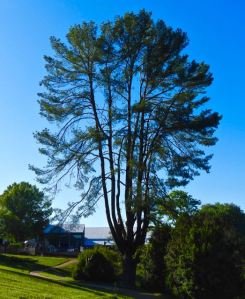
Graceful Eastern White Pine dances beside the lake at the Boar’s Head Resort, May 15.

The Grounds of the University of Virginia are home to many imposing trees, perhaps none moreso than one of the trees on our list: the largest Ginkgo we have ever seen, which stands beside the iconic, domed Rotunda that epitomizes Jefferson’s architecture.

Over a hundred feet tall and spreading 120 feet, the remarkable Ginkgo, resplendent in May greens, stands beside Jefferson’s Rotunda on the UVA Grounds, May 15


Perhaps most unique about the Ginkgo is its many-columned trunk, 12 feet in diameter, a stunning natural model for the Parthenon-like columns for which the Grounds are famous.

Fifteen miles west of the University and approaching the Blue Ridge resides an amazing collection of 30 carefully-tended Oaks at the Emmanuel Episcopal Churchyard near the town of Crozet. These trees are so remarkable for their height and health that we could not pick out the one that had been chosen for the book–which actually grows down the hill from the church parsonage and near the highway. All the more impressive for the setting is that the gravestones of the old and well-cared for cemetery are among most of the trees themselves.
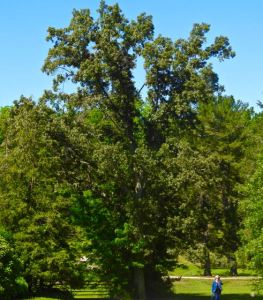
The White Oak honored by the book, on the grounds of Emmanuel Episcopal Church, near Crozet, May 16


Magnificent White Oaks among the old, well-tended gravestones at Emmanuel Episcopal Church, near Crozet, May 16

The final of our three destination trees on this trip to Central Virginia has perhaps the most unique setting of all. While the other trees we sought are within groves of other majestic colleagues, this White Oak stands alone and so dominates the vista. That this tree has survived and thrives is testament to the extraordinary efforts of workers who made sure to preserve it in the midst of a construction site at the Charlottesville Municipal Airport in Earlysville, a site where many other trees had been taken down, and where this tree would have been a casualty also, save for the perseverance of those who appreciated its value and fought for it. Today it stands alone in a broad green field and draws the eyes of all who pass by.

Consider for a moment, if you will, all the broad lawns, fields, so called “developments,” and wastelands we pass by that used to be stands of equally magnificent trees, but which were all clear cut, with no monuments left.
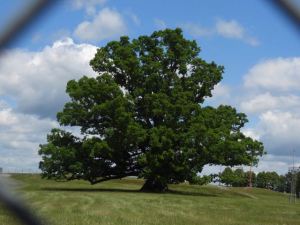
We viewed this remarkable White Oak through a high chain-link fence that surrounds it from along a 200- hundred-yard perimeter just outside the Charlottesville Municipal Airport in Earlysville, May 16.

*********************************************************

The Climate Log for May:

The Texas Storm-Bourne Plague, and Insurance Rates in Florida Through the Roof

Across Houston, high rise windows were blown out by 120 MPH winds, May 16

The Texas Gulf Coast seems now to be suffering storm upon storm, the latest coming just last week, as hurricane-like winds of up to 125 MPH rocked skyscrapers and neighborhoods, while torrential rain caused even more flooding in this flood-prone region. As Gulf temps are setting heat records, the air above the Gulf becomes what meteorologists call “heat domes,” which in turn create conditions for the massive storms.
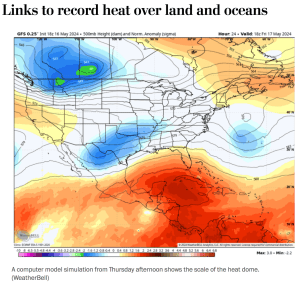
The north edge of a heat dome (in orange), along the Gulf Coast, produced the intensely violent storms that rocked the Houston region, May 16-17 (as reported in the Washington Post)

These heat domes are becoming more common as the Earth warms through fossil-fuel pollution, so storms of this magnitude are likely to increase, as high temps in the dome collide with cooler air from the north. Meanwhile, the same heat dome, as the map shows, has caused record high temps across Florida. More violent weather to come? The 2024 hurricane season has not yet even begun.
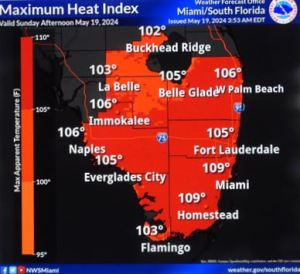
Temp chart for South Florida, May 19 (Miami Herald, weather.gov)

Mosquito Plague in the Wake of Record Texas Gulf Coast Storms

Another gift of the violent, soaking weather has been a plague of Mosquitoes, who thrive in the warming climate and germinate in the hundreds of pools of standing water throughout the area. Residents are saying that they’ve never seen anything like it:

“Before Linda Adams begins her morning walk with her dog, Tater Tot, she makes sure to douse herself in bug spray. ‘It has to be at least 40 percent DEET,’ Adams said. ‘It’s the only way I can get through the day.’” (Matt Keyser and Dino Grandoni, Washington Post, May 18)

Home Insurance in Florida? Good Luck with That!
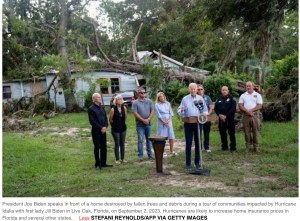
President Biden visiting a Florida town, Live Oak, devastated by Hurricane Idalia in September 2023.

The Florida legislature last week passed a bill, signed by Governor Ron DeSantis, to ban the term “climate change”  from official documents. But banning two words does not make the reality disappear. Some 30 home insurance companies have already fled the state. Those companies that remain charge Floridians rates that are by far the highest in the country. The average rate by state is less than $2400 per year. Florida’s is almost $12,000. (Louisiana’s, also on the Gulf Coast, is over $6000.)

Pretending that climate change does not exist just makes everyone more vulnerable to its effects–and to its costs.

Oh, and by the way, here’s the latest from the Washington Post about another term, sea level rise, that DeSantis and friends don’t want to hear in connection to threats to Floridians from (shh!) climate change (there, I said it). This time the article concerns contamination of water by overflows from flooded septic tanks, not only in Florida, but also in other Gulf Coast and Atlantic Coast states, as far north as Maryland.
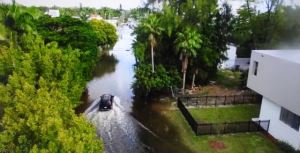
Miami neighborhood flooding during high tide (Washington Post, May 22, 2024)

**********************************************************

The May 2024 Photo/Video Gallery: Cool Cookin’ This Month, in So Many Ways
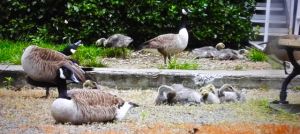
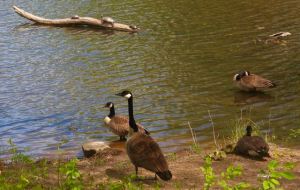
Two families of Canada Geese, including eight month-old goslings, enjoy feeding and resting in the southeast side picnic area, May 23

Two yellow swallowtails fly along northeast shore as jet roars overhead, hot muggy morning, May 8

Blue Heron flies toward camera from east bank to north end, foggy May 6

Colorful tulip on tree waves in breeze on the west bank, May 11

Baltimore Oriole, first sighting, calls in willow oak, east bank, foggy morning, May 6

Blue Jay in Oak at Emmanual Episcopal Church, near Crozet, VA, May 16
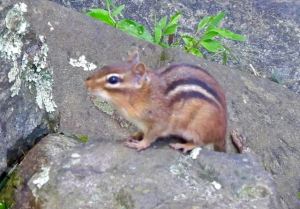
 

Chipmunk near 18th century Michie Tavern, Charlottesville, May 16
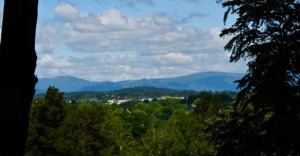
 

View from Michie Tavern toward Charlottesville and Blue Ridge, May 16

 

Sweet William Dianthus at Michie Tavern, Charlottesville, May 16

 

Jean’s Huevos rancheros divorciados (both red and green chilis on separate eggs), May 9

 

Jean’s Greek lamb potpourri, May 8


Family brunch celebration: Mother’s Day pistachio cake, May 12


Carolina Wren in dense fog, northeast shore of Lake Cameron, May 20

Room for another? Sixteen red-bellied cooters share log at the southeast shore, sunny PM, May 11
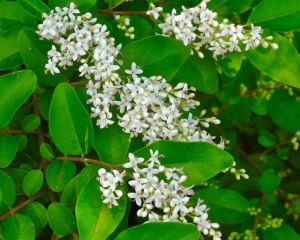
Chinese privet on the east bank, sunny May 21
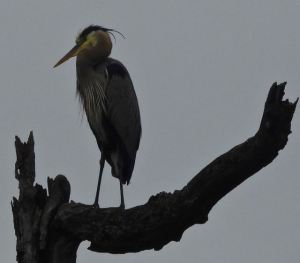
 

Blue Heron looks down from atop dead oak on the east bank, foggy May 19

Female Cardinal in pine tree shakes off rain in the southeast cove, May 18

In the field below the north end dam, Eastern Kingbird carries nest material, sunny May 21
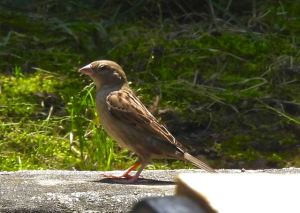
Female Purple Finch lights on the picnic area east of the lake, May 21
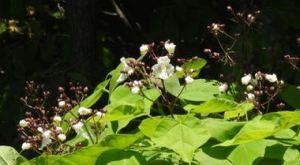
 

Newly blooming Northern Catalpa tree in the north end woods, May 21


Grey Squirrel scampers near watchful Goose chick on the southeast path, May 20

Mulberry and birdsong in rain along the southeast shore, May 18

Red-winged Blackbird parks beside me on No Parking sign at the south end, May 20

Red-winged Blackbird, on dead willow oak 200 yards away, calls, foggy May 20

On to June…but watch for updates with a week left in this aMayzing month!

April 2024: Early Spring in Full Bloom–Catch It While It Lasts

Canada geese sing duet: an invitation that leads to acceptance, then courting in the rain, April 1

On Earth Day! First sighting of new Canada Goose chicks on the northeast side path! Congratulations! (April 22, 2024)

Day 3 sighting: Two Geese families and friends on the southwest side of the lake, 10 chicks in all! April 24

In this month’s blog:

Early Spring in Full Bloom in the Potomac Valley 
Climate Log: Serving Our Addiction vs. Saving Our Future
Climate Log 2: Floods in Dubai? What’s Next in Extreme Weather?
More Remarkable Virginia Trees: Survivors of Bondage and War
April 2024 Photo/Video Gallery: Birds, Bees, Blooms–and Even Cows?

White Azalea in full bloom with Heavenly Bamboo berries beside the west side gazebo, April 16

Early Spring in Full Bloom in our Potomac Valley Town

You know the old saying, “April showers bring May flowers.” Here’s the updated version: “Winter showers bring April flowers.” Or March flowers, as this blog showed last month after our visit to the Tidal Basin in Washington.

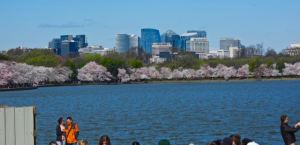
Potomac Tidal Basin, March 17: Japanese Cherry trees in bloom, Virginia skyline, and visitors to the Jefferson Memorial

This month’s Gallery will show lots of colorful views along the small lakes that provide suitable habitat in our otherwise mechanized suburban town. We are thankful for those lakes, the flowering trees, and the animals, plants, and people that care for the environment. April has become the month of fullest new blooms. Catch the blooms now before summer arrives in May, which will have its own verdant discoveries.

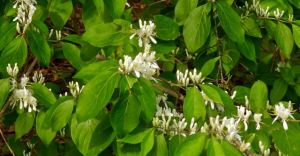
Amur Honeysuckle, new blooming, along the east side bank of Lake Cameron, April 20

Don’t delay: the Cherry blossoms came in March and have now given way to the leaves, as have the blooms from the Bradford Pears and the Red Maples. Even the Redbuds, who bloomed out early this month, have turned to leaf making. Now it’s Dogwood time–Virginia’s state flower!–and Azalea time in an array of colors!  Look also closer to the ground for wildflowers and flowering bushes that manage to show their colors where the ground isn’t mowed.

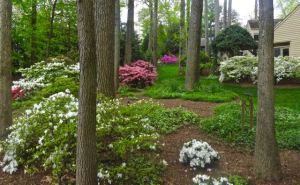
Multi-color Azaleas in Lake Newport garden, April 18

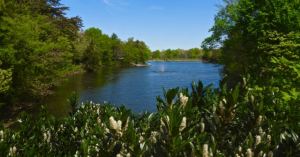
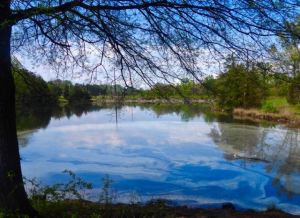
Panorama of Lake Cameron toward north, with Cherry Laurel in foreground, April 20

Dogwood in bloom in our community, south end, April 21

The last of the redbuds still blooming, southeast side of the lake, April 21


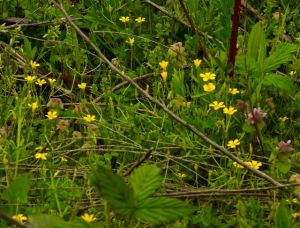
Yellow Woodsorrel and Purple Deadnettles in bloom at the north end, April 18

****************************************************

Climate Log: Serving Our Addiction vs. Doing the Hard Work of Saving the Future

While fully enjoying all the beauty and genius of the plants and animals (including humans) who make Earth so wonderful a place to live, I’m saddened by the slowness of U.S. governments, corporations, and individuals to give up our addiction to fossil fuels–even as each month sets a new record for high temperatures, and as extreme weather events occur more rapidly. (See the section below on the floods in Dubai).  We seem to be more willing to pay the ever-increasing billions upon billions for flood-and-fire damage repairs than to address the actual problem.

Politicians also deliberately ignore, to satisfy the fossil fuel cartel, the causal link between worldwide spreading drought and the alarming increase of human migrations, which are stressing national borders here and in other countries. These politicians would rather blame other governments and even the victims themselves, rather than placing the blame on the fossil fuel cartels.

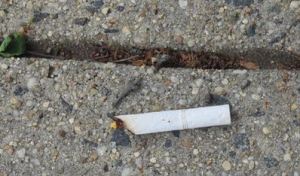
But addictions, including ours to fossil fuels, are really hard to break, sometimes almost impossible, especially when they give us familiar pleasures, and especially when very powerful and relentless forces (such as oil companies, plastics industries, automakers, public utilities, and a whole political party) convince us that we have to build our entire lives around that addiction. In our community, the association directors frequently remind us that ours is a “smoke-free community,” which means that tobacco (or marijuana) smoking is not allowed either inside buildings or on the grounds, including the lake and its surrounding woods. Still, we frequently find cigarette butts on the paths and in the greenery, though most residents happily adhere to the policy and love the freedom from second-hand smoke. 

Song Sparrow near a cigarette butt on the north end path, Earth Day, April 22

But the “smoke-free community” idea, as laudable as it is, does not include the smoke that invisibly and relatively odorlessly pours from the exhaust pipes of most of the cars in the parking lots and from the exhaust chimneys on top of the buildings, all of which are gas heated and all of which feature gas stovetops and ovens. So acculturated are most of us to gas-fueled lives that we never think of emissions as smoke.  Yet, the latest annual research by the American Lung Association shows that 40% of Americans, the highest rate since the 70s, when the Clean Air Act was passed,  live in dangerously bad air, contaminated by gas-generated particulate matter, wildfire smoke, and vehicle emissions.

Despite these dangers, we really can’t imagine living differently. That’s especially true here in Virginia, where almost no houses have solar panels and renewable energy is rarely mentioned.

Oh sure, some of us, when we have money enough, peck at the edges of our addiction, like maybe buying a hybrid or even an EV, perhaps installing a heat pump and electric stove, or cutting back on plastics use and methane-belching beef. But with most elected officials dead set against incentivizing these pro-climate actions, the great majority of folks are caught in the web of the oil-gas cartels and are addicted even if they wish they weren’t.   

Chimneys on every building of our community emitting exhaust from gas appliances, Earth Day, April 22

We’re also completely acculturated to the noise of internal combustion engines, which you will hear on many of the videos of birds and scenery in this blog, as cars and trucks pass by on the surrounding highways, and as jets fly to and from Dulles Airport. As pretty as the lake looks, the birds, squirrels, and turtles have to adjust to the noise of all the surrounding engines, if they can.  The birds often have to work hard for their calls to reach above the steady din; if they can’t, they die trying.

And for the many species that hunt for their food by sound, the “white noise” of constant vehicle traffic makes their hunting harder, if not impossible. The habitat destruction that has caused the 30% decline of bird populations in North America since 1970 includes destruction by noise, not just the incessant killing of wilderness and wetlands being turned into farms, housing tracts, mines, and commerce.

Will we ever be willing to change our ways, or will our addiction win out? When will the costs of climate catastrophes grow so great that we will say “Enough!”? 

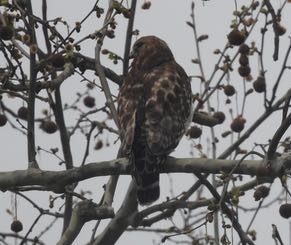
Red-shouldered Hawk atop Tulip Tree north of the dam hears and watches the traffic roar past on the neighboring highway, Feb. 1

Mallard pair swims toward south on snowy day as a jet roars overhead, Feb. 16

********************************************

Climate Log 2: Floods in the Dubai Desert? What’s Next in Extreme Weather? 

Abandoned cars in deep water on Dubai freeway after unprecedented storm, April 17 (Photo: Christopher Pike, Bloomberg, Getty Images)

Can you imagine the tallest building in the world, the Burj Khalifa (3000 feet high), being without power to run the elevators and cooling system? Can you imagine a home food supply system based mainly on app-ordered deliveries totally shut down? Can you imagine some of the most traffic-clogged highways in the world suddenly inundated with water rising waist high, and cars just abandoned for days?  Can you imagine all of this happening in a desert country that has no infrastructure to deal with rain? A country where there has not been a storm like this on record? 

Well, no need to have to just imagine such a place any more. It’s real in Dubai, in the United Arab Emirates (UAE), right now, because of a rainstorm of from 4 to 12 inches in 12-24 hours on April 16-17.

A year or 2 years of rain there is about 4 inches. Dubai’s infrastructure has been all about how to deal with relentless heat, drought, and the need to manufacture water via desalinization in order to support a robustly technological culture with U.S.-like skyscrapers, shopping malls more upscale than in almost any other place in the world, and an international workforce of low-wage immigrants, who perform the endless construction these ambitions demand. 

During the storm, those shopping malls became waist-deep in water, with rain pouring through roofs onto the high-end merch. These roofs were never meant for anything but sun screening and keeping the cool inside. Damage estimates are in the billions throughout the small emirate.

Dubai residents move from inundated dwellings after the storm, April 18 (Photo: Amr Alfiky, Reuters)

Will events like this happen again? Probably. But how soon? Who knows? Now we live in the chemical-emissions-caused world of very erratic, often extreme weather, where communities have to be prepared for drastic variations in temperature and precipitation. In this blog in February, I reported on ways that California is preparing for erratic variations in precipitation that that state had not seen before 2022, even though there had always been much slower variations from wet to very dry over longer periods of time. California is used to having to build infrastructure to handle different extremes, and Californians know that the costs are often prohibitive, causing ongoing conflicts between competing interest groups.

But how should a nation like the UAE proceed, when an event like this storm had not happened in memory? Given Dubai’s highly sophisticated, world-class economic goals, what would appropriate preparation look like? Intractable questions like these will become much more common everywhere as climate change intensifies.

********************************************

More of Virginia’s Remarkable Trees: Living through War

Ancient Catalpa lives on at Chatham Plantation, Falmouth, Virginia, April 9

Remarkable trees are not only those that are huge, stately, and symmetrically spreading. Some remarkable trees have just lived for many years, suffered damage, and yet survived through times of great disruption and tragedy. Often they have survived only with the concerned care of generous people.

One such tree is the Catalpa that grows just beside the historic main house of Chatham Plantation, across the Rappahannock River from the town of Fredericksburg, Virginia. Now maintained by the National Park Service, Chatham was built in 1771 as a multi-crop plantation by the Fitzhugh family, whose success came through the forced labor and dedicated industry of at least a hundred enslaved people.

By the time that the Civil War to free the slaves in the Southern states began in 1861, the then owners of Chatham abandoned the property, which was soon taken over by the Union Army of the Potomac. The Army turned it into a headquarters in late 1862 as they prepared for an attack against the Confederate Army, whose divisions were arrayed in the hills above Fredericksburg across the Rappahannock. This attack was one of the great tragic blunders of the war, as the Union troops were decimated. Chatham’s role changed once again, becoming an emergency hospital for thousands of the dying and wounded, whose cries still seem to echo there. 

Today, the gnarled and shriveled Catalpa seems a still living symbol of the horrors that occurred at Chatham, which has been restored by the Park Service as a museum of the events of over two and a half centuries. Besides the Catalpa, the Chatham grounds nurture a splendid array of magnificent old trees that honor the memory of those who were in bondage there or who gave their lives in war. 

For an excellent summary history of Chatham, I recommend this article and video from the National Park Service.

Chatham Manor and the venerable Deodar Cedar, Black Locust, and Catalpa trees. We visited there on April 9, the 159th anniversary of the surrender of the Confederate Army at Appomattox, Virginia, two years beyond the tragic events in Fredericksburg.

The Brompton Oak across the River in the Heights above the Town

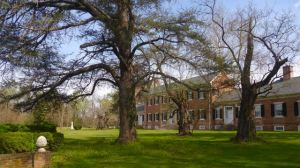
Hundreds of years old, the Brompton Oak stands beside the manor of the same name, which witnessed the horrific fighting in 1862 in the Civil War.

Across the Rappahannock and far up the heights above the town of Fredericksburg lies Brompton Manor, built in 1838. When the Union troops tried their ill-fated, catastrophic attack up those heights in December 1862 against the firmly entrenched Confederate Army, Brompton Manor stood about 200 yards above the smoke and cries of battle. The headquarters of Confederate general James Longstreet during the battle, the manor house–and the massive, long-lived oak beside it, now known as the Brompton oak–were unscathed by the fighting.

But Brompton, too, became a hospital during this battle, and indeed through battles over the next two years of the War. So many of the battles from 1862 to 1865 occurred here in Northern and Central Virginia, the fighting and disease taking the lives of hundreds of thousands and disabling many thousands more. The manor house and the oak today, majestic and peaceful, with bright tulips and flowering trees all around in the April breezes, obscure the horrors of the conflict, as they do the bondage of the enslaved people who labored here.

Brompton oak and manor house, as seen from the Sunken Road, from which the entrenched Southern army mowed down the Northern troops advancing in December 1862 from the river far below.

As at Chatham Manor, perhaps only a mile from Brompton but playing a similar role during the battle, many long-lived trees have survived and still grace the grounds. Besides the historic Brompton Oak, another majestic tree that captured our attention was a 100-foot tall sycamore down the steep hill from the manor grounds and beside the Sunken Road, where some of the bitterest fighting took place. High up in the sycamore perched another combatant always ready for battle, a Red-shouldered Hawk, calmly waiting for the next action. 

Red-shouldered Hawk observes the one-time battlefield from the top of a huge sycamore beside the Sunken Road in front of Brompton Manor, April 9.

***************************************

The April 2024 Photo/Video Gallery: Birds, Bees, Blooms, and Even a Cow or Two (and a Snake!)

Cormorant pair on and beside the foot-powered boats that take residents silently over the waters, Earth Day, April 22

Huge old Red-bellied Cooter and baby, on log along the southeast shore, Lake Cameron, April 24

Four Canada geese and three Red-bellied Cooters enjoy the southeast cove on a cool afternoon, April 20

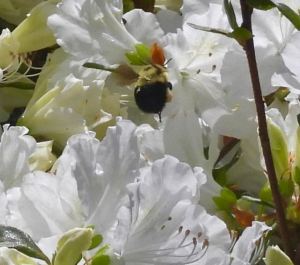
One of our first bumblebees feeds on the nectar of the newly-blooming White Azaleas beside the gazebo on the west shore, April 20

American Robin calls from atop a Walnut tree in the east woods, April 15

Japanese Pieris in bloom on east side of the community, April 14

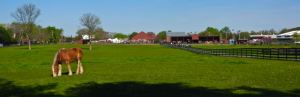
This Clydesdale welcomes us to a visit to nearby Frying Pan Farm Park, one of the few farms still left in our suburban county, April 16

American Goldfinch in morning sun calls from atop a Willow Oak on the east bank of the lake, April 16, while Blue Jay also calls and walkers comment

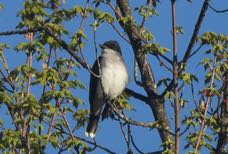
Our first sighting of an Eastern Kingbird, in Red Maple in the north end woods, April 16


Another view from Frying Pan Farm Park: Rhode Island Red cock and colorfully varied hens, April 16

Under water and just after sunrise: 2 large Red-bellied Cooters swim to the northwest shore, April 16

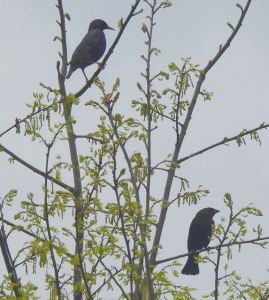
European Starling and Brown-headed Cowbird in Pin Oak on the east side, April 17


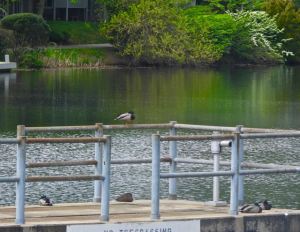
At nearby Lake Newport, five Mallards, four of them males, on the dam outlet structure, April 18

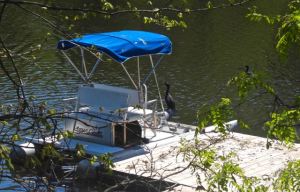
At Lake Newport, Blue Heron and Canada Goose by the dock. Heron takes off and House Sparrows chatter in a nearby nest, April 18

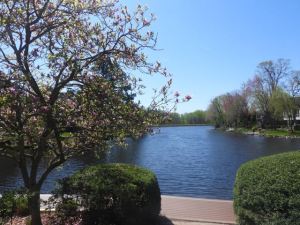
Lake Newport: Magnolias in bloom and panoramic view across the lake toward east, April 14


Lake Cameron: Male Mallard guards the nest on the east shore after a storm, April 15

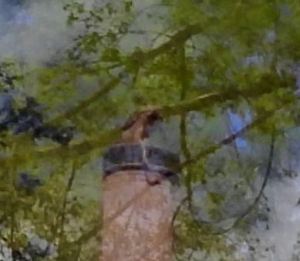
Lake Newport: as seen from lakeside path, Red-shouldered Hawk moves up and down chimney after having captured 6-foot snake, apr. 18

Lake Newport: fellow walker had alerted us to the hawk having captured the snake. This blurry photo is from her smartphone. Amazing. April 18


The pollen-filled Lake Cameron after the storm on April 15, southeast cove

Lake Newport: Red-winged Blackbird calls in Willow tree on sunny morning, April 14

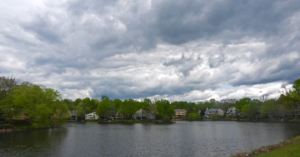
Lake Newport panorama toward north, with angry clouds, April 18

Lake Cameron: Bumblebee flies and feeds among the pillowy White Azaleas, west side, April 20

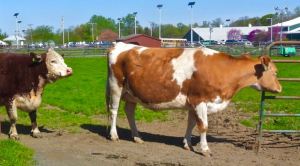
Oh, yes, the Cows: a Hereford and a Guernsey at Frying Pan Farm Park, April 16

And on to May, with more adventures in store…