November 2025: “Call to Earth Day” and Ways to Thank Wildlife

Bald Eagle–a rare sighting here!–scans our community from atop the power tower west of the lake, bright morning, November 3

Two Rock Doves, the usual inhabitants of the top of the power tower, claim their space–and keep their distance–from the visiting Bald Eagle, crisp morning, November 3

In this month’s blog:

“Call to Earth Day”–Saying Thanks to Wildlife by “Guarding Our Green Space”

Climate Log: Just the Most Recent Outrages from Washington
Climate Log 2: California Act Saves Water, Wildlife, and the Eastern Sierra
Garden Update: Winter Is Coming, but Growth Continues
Our November Kitchen: Thanksgiving, with a Difference
The November 2025 Photo/Video Gallery: Surprises

****************************************************

Children in the Czech Republic turn trash into art (CNN Photo, Nov. 6)

Call to Earth Day 2026: Preserving and Increasing Our Precious Green Space

Chris: While more anti-environment outrages occur in the secret halls of US power, we focus this month on celebrating the fifth annual Call to Earth Day (http:// cnn.com/calltoearthday) sponsored by CNN, program donors, and life-affirming thinkers and doers from around the world. “Yes, we can!” say these  dedicated children and adults, whose ideas and hard work help inspire nations to protect and save all of us, our fellow creatures, and our land, air, and water.

From Kenya, to Nigeria, to Hong Kong, to England, to the Czech Republic, and, yes, to places around the US, CNN reported on life-building and nature-saving projects that give us hope for a greener, less poisonous world. In so many of these places, children–assisted by dedicated adults–are leading the way.

In California this fall, one such event, the 2nd annual Green New Leaders Summit, was held in San Bernardino: https://socalren.org/futuregreenleaders , with workshops for hundreds of middle school students on energy systems, wildlife, career pathways, and other topics in green technologies and environmental protection.

Three attendees at the Green New Leaders Summit in San Bernardino in November try out some of the energy apparatus.

Here in Virginia, the best recent news for “guarding our green space” is the election, by an emphatic margin, of Democrats Abigail Spanberger (Governor), Ghazala Hashmi (Lieutenant Governor), Jay Jones (Attorney General), and 13 new House of Delegates members on November 4. Although it remains to be seen what the new state administration can and will do to advance such green issues as energy efficiency and pollution reduction, part of Spanberger’s mandate is to reduce the cost of power for Virginia citizens, which certainly can be accomplished through more solar and wind. When we moved here from California 3 years ago, we were dismayed to see how few homes had solar panels, when we knew from our own experience how much we saved through our panels (for example, we paid 0 dollars for power every summer after installation in 2017 in comparison to $300 per month in the brutal summers before we went solar).

At the very least, Spanberger will be another thorn in the side against the Trump administration’s ongoing rollbacks of endangered species protections and its rollbacks of clean air and water protections (see the next section). Her promises to improve public education will no doubt include greater emphasis on science, including environmental science, which the Trump administration has deliberately weakened and defunded out of his deference to the fossil fuel cartel’s campaign for public ignorance.
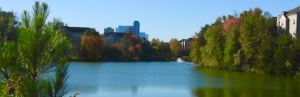
Looking toward downtown across our lake, October 17. Our tiny, precious refuge in a bustling city

Meanwhile, we anticipate that our pro-green political leaders here in our community in Northern Virginia will continue to fund our parks, trails, and public gardens for the benefit of our splendidly diverse population, and encourage both public transportation and our driving of EVs and hybrids. We also hope they’d join the state government in advocating for more rooftop solar.

The AI Monster. Still, by far the largest environmental issue facing our state and region is the explosion in the past 3 years of data centers for generative artificial intelligence. Indeed, our region of the state has the largest concentration of these data centers in the entire world! 

Two new data centers for AI processing, out of already over 200 such centers in Northern Virginia, November 6

The number one question for our leaders in the coming years is how the state and region, already in drought conditions, will handle the prodigious use of water to cool the machinery, as well as the burden on the electrical grid and on land use. Just before we took this photo, we had to drive on a makeshift gravel road almost impassable because of new ditches for the thick cables leading from the centers.

******************************************************************

Climate Log: Just the Most Recent Climate Disasters Coming out of Washington

US map of how home insurance rates have skyrocketed in various states, November 20

  1. Home insurance skyrockets in tandem with climate-change denial

The map above (National Bureau of Economic Research, 2025)) shows that those states who have suffered the most from the extreme heat and intense storms as a result of human-caused climate change now also suffer from extreme rises in home insurance rates. Florida and Louisiana have the nation’s highest rates by far, but those Plains states hardest hit by record hail storms suffer almost as much. These are also states whose leaders most emphatically deny climate science.

       2. “This law helped save the bald eagle. Trump officials want to weaken it.”
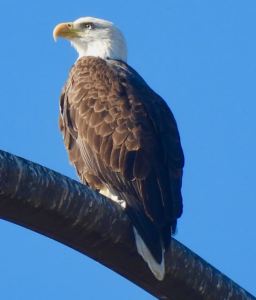
Our visiting Bald Eagle, threatened by new Trump order, scans our lake from perch on the power tower, November 3

“Trump Plan to Rollback Protections of Endangered Species, including the Bald Eagle” (Dino Grandoni, Washington Post, Nov. 20)

https://www.washingtonpost.com/climate-environment/2025/11/19/trump-endangered-species-act/?utm_campaign=wp_post_local&utm_medium=email&utm_source=newsletter&carta-url=https%3A%2F%2Fs2.washingtonpost.com%2Fcar-ln-tr%2F45d8021%2F691f030b1d64392bc2d69296%2F62cf3bc956064350197e865a%2F39%2F86%2F691f030b1d64392bc2d69296

As the article describes, rolling back protections of endangered species follows the Trump administration’s mission of opening millions more acres in the US to drilling, mining, and commercial “development” (AKA environmental destruction), a topic also covered in last month’s blog in relation to the Arctic National Refuge.

          3. Trump administration opens 85% of all US wetlands to “developers”
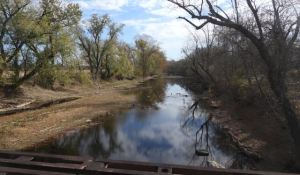
An intermittently-filled side channel of the Potomac River along the Potomac National Trail in Ashburn, Virginia, Nov. 17

Maxine Joselow of the New York Times (“E.P.A. Rule Would Drastically Curb Protections for Wetlands,” Nov. 17) describes the ruling this week that would put into jeopardy 85% of all US wetlands–prime sources of drinking water for millions of voters and their families, as well as habitat for countless species that depend on these waters. The new rule will allow “developers” and landowners to use as they wish 55 million acres of “intermittent” streams, ponds, and marshlands that had been protected– until a disastrous Supreme Court ruling in 2023 that was based on ignorance of how water and land interact on an annual basis. As this blog described in April, “To Save All Life, Don’t ‘Drain the Swamp,'” the wetlands, ponds, mires, bogs, swamps, and marshes of the world are responsible for creating much of the world’s fresh water and for nurturing all species. But ignorant, willful, greedy humans just see wetlands as “wasted,” “messy” land that they would damage by draining and disruption for other purposes.
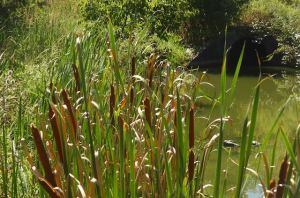
The marshy outlet pool of our lake, below the north end dam, with a Cattail festival, August 27

******************************************************************

Climate Log 2: California Act Saves Water, Wildlife, and the Eastern Sierra
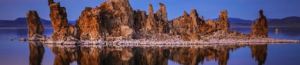
Mono Lake, east of the Sierra Nevada Mountains, long depleted by its use as a source of drinking water for Los Angeles (California Parks photo, Nov. 22)

In a massive victory for environmentalists and for the environment of California east of the Sierra, the city and county of Los Angeles is constructing a water recycling facility in Van Nuys that will meet the water needs of 500,000 residents. Even more important, using the recycled water for drinking will at long last enable Los Angeles to stop drawing water from Mono Lake and the Sierra streams feeding it–some 250 miles from LA. For well over a century, LA’s use of this imported water has sparked enmity, sometimes violent, with inland California residents. Even worse, it has made Mono Lake almost dry and destroyed habitat for many species.

Drinking water will come from this recycling facility being built in Van Nuys, CA (photo Eric Thayer, LA Times, Oct. 31

Ian James’s article in the LA Times (“Los Angeles Will Nearly Double Recycled Water for 500,000 Residents,” October 31) recounts the troubled history. But his main emphasis is on what this move means for the even larger possible use of recycled water for drinking. For 20 years, the safety of recycled water for drinking has been debated, and this move is the first in the West to follow through in a massive way on the water science that guarantees this safety. As the Western US becomes ever hotter and drier through climate change, successful recycling will help mitigate at least one of the fears that the ongoing drought and over-pumping of well water have intensified throughout the region. 

Still, unless governments can agree to shift to renewable forms of energy and away from the burning of fossil fuels, even recycling plans as large as this one will be just a drop in the bucket. 

**********************************************************************
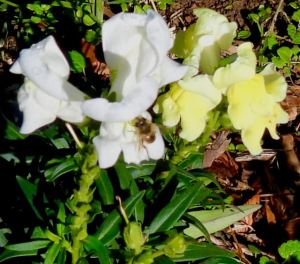
Honeybee on the White and Yellow Snapdragons in our garden plot, November 8

Garden Update: Winter Is Coming, But Growth Goes On
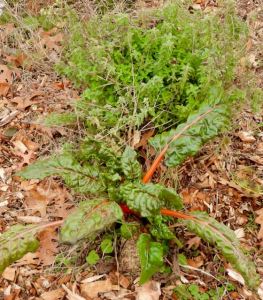
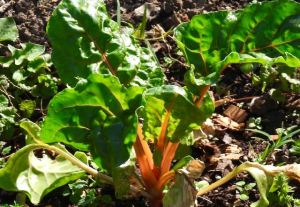
Swiss Chard and Oregano stay green and lush despite a few freezing nights, November 20

High temps now are mostly in the forties to low fifties, and we’ve had four freezing nights as low as 27. But the two veggies we’ve planted–6 Broccoli and 6 Cauliflower–plus the Snapgragons, Mums, and Asters we put in last month are hearty and green, with the Snappies still blooming. The surprises among the summer holdovers are 4 of our Swiss Chards and the Oregano, while we knew that the Rosemary would stay lush.  Our most beautiful October performer, the Wild Blue Aster, has now lost its blooms, but is still thriving.
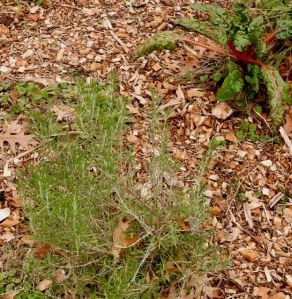
Rosemary and Swiss Chard, November 20
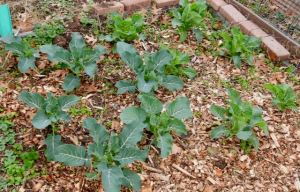
Our 6 Broccoli and 6 Cauliflower have handled the freezing nights well and continue swelling and developing toward producing heads, November 20
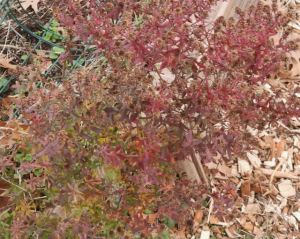
Our Wild Blue Aster may no longer be in spectacular blue bloom, but it has turned on its deep red leaves for winter, November 25
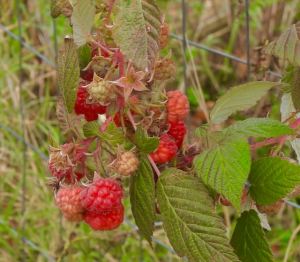
And here is a cluster of ripe red raspberries on the bush in our former neighbor’s now untended plot. We’ve been invited to pluck these and we can’t resist, November 25

What will come? Forecasters are predicting a freeze (25-29 degrees) for Thanksgiving weekend because of a strong polar vortex, but no snow in the forecast as yet. Will the plants keep thriving? We have had about an inch of rain in the past 2 weeks, so that’s a good sign. We’ll keep checking our garden plot in the community gardens every few days, because we just can’t stay away.

******************************************************************************

Our November Kitchen: Thanksgiving, of course, with a Difference

Jean’s Spicy Veggie Curry on the stove

Jean: This Thanksgiving season, we’re thankful to have a number of occasions to get together with family and friends. The traditional turkey, stuffing, and potatoes will be part of one of these meals, but our community of many cultures also gives us opportunities to indulge our varied palates and cooking styles.

Have I mentioned that curry is probably my favorite flavor and dish?  At least on the savory side.  Tiramisu is my favorite sweet, but that’s for another day. 

I think I first learned to make curry from my Japanese mother-in-law in the 1970s.  Japanese curry is based on Indian, and it is mellower than types I didn’t try until later, like Thai curry.  I love making curry because it can be a vegetarian dish for when you feel like or need that, or it can be a very good meat dish, particularly with chicken. For protein in your vegetarian version, tofu is great!
 
Furthermore, curry is the kind of dish I like best to make; you can throw in all sorts of things from your vegetable drawer, your pantry, your garden, or the “leftover” shelf in your refrigerator. 
 
My mother-in-law started with a simple base of chopped onions, potatoes, and carrots. For a little sweetness, she would also add some chopped apple. 
 
However, I like to add more Indian ingredients as well, like butternut squash, cauliflower, eggplant, spinach, chard, lentils, and/or chickpeasSweet or hot peppers add color and flavor as well.
 
Also for color, you might want to add in green peas or edamame as an alternative to spinach.
 
The order in which you add all of these, as well as the cooking time, depends on the ingredient, but half an hour in total should take care of most of these.
 
For spices, I love to play with all those warm “c” spices in my spice cabinet–cardamon, cinnamon, coriander, and cumin.  You can use a premixed curry spice, or try the Japanese curry paste I learned to use early on.  If you choose the paste, you just need to dissolve it first in hot water or broth so it does not clump onto the vegetables.  Add as much spicy broth as needed to cover all the veg.  
 
 
Optional add-ins include either coconut milk or diced tomatoes to dilute and cool the spicy sauce as desired.  (My Japanese version does not use either of those, so suit your own tastes.)

PS. Curry is obviously nutritious as well as delicious, given the number of vegetables and legumes you can include. Once you get your family hooked on the flavors, you may be able to slide in vegetables they wouldn’t eat otherwise. The “C” spices mentioned above have various health benefits. Turmeric, another of my favorites, adds yellow color and anti-inflammatory properties.

Eat more curry! 

A serving of Jean’s Spicy Veggie Curry

 
Here are two more of Jean’s November treats:
 

Jean’s Jumbo Pumpkin Oatmeal Cookies, with Pumpkin Butter Icing

Jean’s Blueberry Muffins, with Jumbo Blueberries

***************************************************************************************

One of our ubiquitous House Sparrows chatters with us and friends along the north shore, November 21

The November 2025 Photo-Video Gallery: Communing with Our Neighbors in Our Green Space

Chris: Surprises always happen as we walk around our little lake, but several were especially memorable this month. The Bald Eagle I saw on the power tower west of the lake on Nov. 6 was a first for me here, as was the Yellow-Bellied Sapsucker pictured just below. On the 20th, I got one of my biggest surprises in the 3 years we’ve lived here, when I turned from watching the lake’s northeast shore and was startled by a young White-Tail Deer watching me–from no more than 10 feet away! Remarkably patient and inquisitive, this new friend moved slowly away, but kept eyes on me while munching on leaves and “hiding” visibly in the saplings and reeds. Three videos captured the conversation, two of which I show here.  Though deer are always present in the nearby woods, I only see one every few months or so, and never before so close. How thankful I am for these moments when I can mutually treasure our green space with one or more of these neighbors.
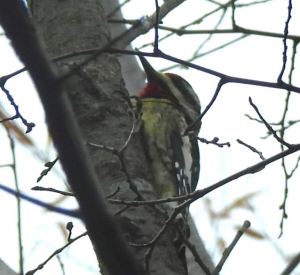
Yellow-Bellied Sapsucker–a rare visitor here on Nov. 21–perches on Willow Oak, southeast shore of the lake. A new study in Experimental Biology (Nov. 2025) shows how these woodpecking birds put full-body power into every strike, about 13 per second.
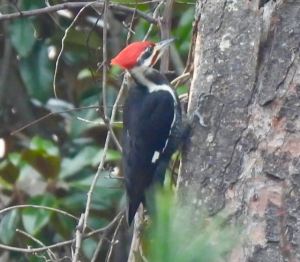
Talk about woodpeckers: here’s a large pileated one in the woods next to our garden plot, cloudy November 25

From ten feet away, White-Tail Deer watches me, then walks into cover, as a siren wails from the highway, cloudy morning, November 21

From 20 feet away, the deer continues to watch me, and feeds a bit, then watches some more, as I zoom in for a closer view. A siren blares from the highway, machinery grates in the community, and geese honk from the lake. Typical sounds. Cloudy November 21
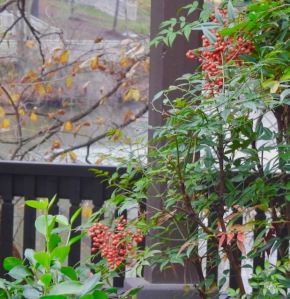
Heavenly Bamboo were prominent at our home in Northern California, and we’re happy to see them here, too, by the gazebo on the west shore of the lake, Nov. 20
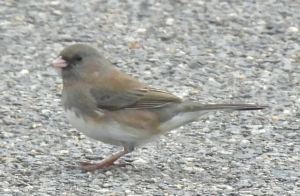
An uncommon Slate-Colored Junco stops for a moment on the path at the Northwest corner of the lake, November 21
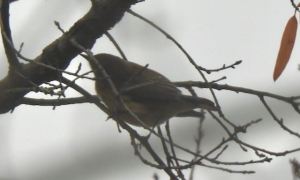
Tiny Ruby-Crowned Kinglet rests in shadows on the Willow Oak, Southeast shore, November 20
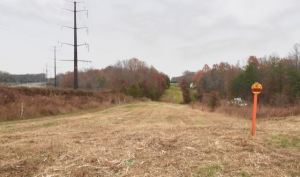
All summer the hillside down to the outlet stream below the dam was left unmowed, and the wildflowers and faunal inhabitants exulted. Now it has been mowed, revealing the signs for the petro line that runs below the surface, and the solar-powered gas substation near the outlet stream. Our Green Space shares its home. Note also the busy highway to the left, from which come the car and truck sounds and the sirens that are a steady chorus in our refuge. November 20
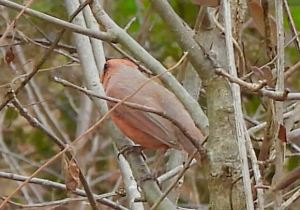
Cardinal male stops to rest in the North end woods, November 21
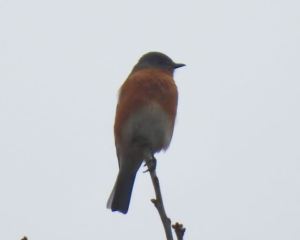
Eastern Bluebird scans atop Maple in the North end woods, cloudy November 21

Song Sparrow feeds along the gravel path on the hillside below the dam, as cars sound from the highway, November 21
Yellow-Rumped Warbler in shadows amid branches along the Southeast bank, November 20
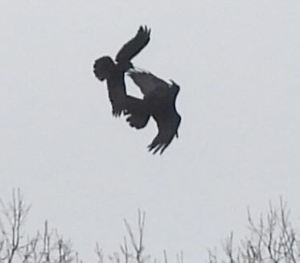
I capture a Common Raven in battle with American Crow above the treetops in the North woods, November 21

Burning Bush along the West shore, cloudy November 20
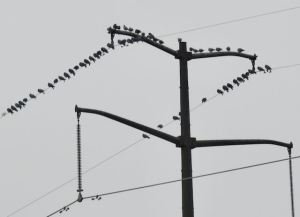
60 Rock Doves in their accustomed perch atop the power tower, November 21. No Bald Eagles around!
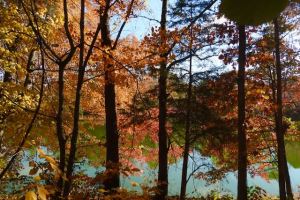
Sun through leaves on the West shore, sunny morning, November 3

Mockingbird scans from Catalpa along the East shore, November 3
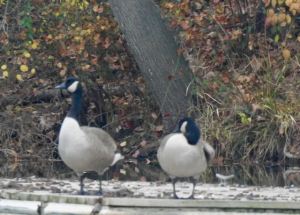
Canada Goose pair on the dock along the West shore, November 20
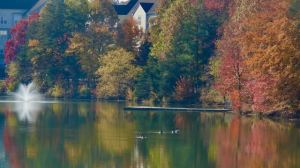
Late fall colors: Looking southwest on the lake with Geese and fountain, morning, November 3
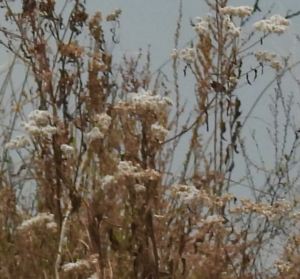
Salt Marsh Goldenrod, Northwest corner of the lake, cloudy November 21


Grey Squirrel amid leaves, southeast path, sunny November 23
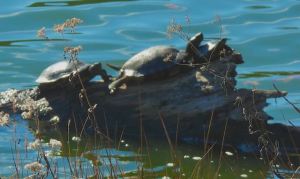
 

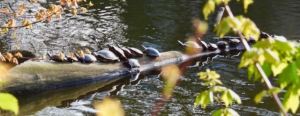
Too cold for turtles? Not for these 3 Red-Bellied Cooters on a log at the North shore, sunny November 23
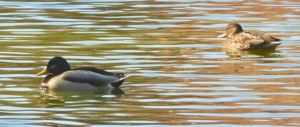
 

Here they are! The first Mallard pair of the new breeding season, Southeast cove, sunny November 23

Happy Thanksgiving! Hopes for the last week in November and a celebratory December…
August 2025: Garden, Lake, Ponies, and Living Shorelines

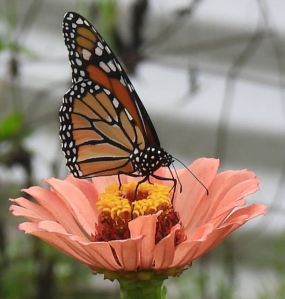
Monarch feeds on Peach Zinnia in our community garden, August 14

In this month’s blog:

Bounty and Beauty in the Late Summer Garden
Climate Log: Fighting the Good Fight–Ponies, Storms, and Living Shorelines
The August 2025 Photo/Video Gallery: Wildflowers around Our Lake and More from the Eastern Shore

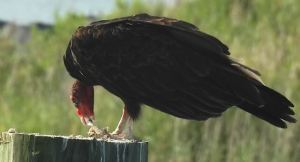
Turkey Vulture eats meal atop post along the shore on Tilghman Island, Eastern Shore, Maryland, August 17

*************************************************

Beauty and Bounty in the Late Summer Garden

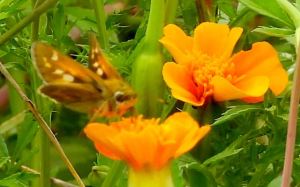
Sachem Butterfly in Orange Marigolds, our garden, August 15

In August, our garden this year reached its apex in productivity, with some plants starting to decline, a few exhausted, and others still going strong–or even making a comeback. On August 22, the Community held its annual Garden Potluck, where gardeners from the five collections of plots across town came together to share stories about what worked and what didn’t, ask each other for advice, and bring dishes made from our produce and other goodies.

Chris’s Three Sisters (corn, squash, beans) stew, with zucchini, yellow squash, tomatoes, and green peppers from our garden, served at the Community Garden Potluck, August 22

So how have the diverse plants done this August?

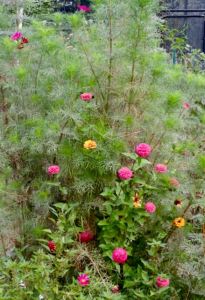
  1. Still going strong: Plants still producing with no let-up in our plot are the profuse marigolds (yellow and orange), white and pink vinca, the spreading zinnias, one amazing green pepper plant,  hot burrito pepper, herbs (rosemary and oregano), and the late blooming and very tall cosmos.

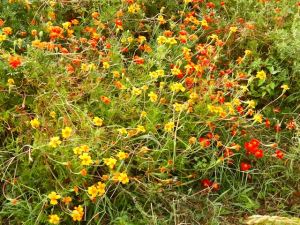
Marigold explosion, still vibrant, morning, August 28

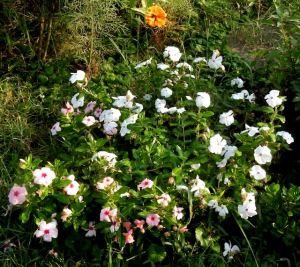
Pink and white Vinca happy in our garden, August 8

Translucent magenta Cosmos blooms, early morning, August 8

Zinnias and cosmos, still brilliant, morning, August 28

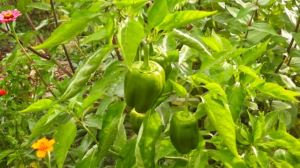
The last of 3 mild pepper plants, still producing, morning, August 28

2. Starting to decline: our three varieties of tomatoes: Husky Cherry Red, Juliet, and Sweet Millions–the most productive tomatoes we’ve ever grown and still putting out 2 dozen or more per day.

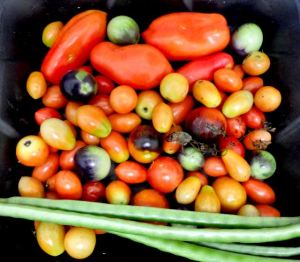
One day’s produce from our garden plot and that of a generous neighbor, August 8

3. Exhausted after production since April: Zucchini (May to mid July), Mint (May to mid August), Strawberries (April to end of July), Blueberries (April to June), Yellow Squash (May to mid July), Coneflowers (May to end of July), Swiss Chard (May to early August), Thyme (May to end of July)

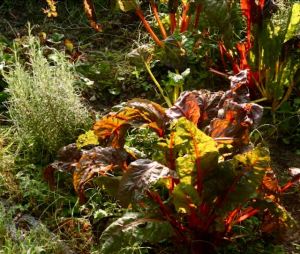
Early morning sunlight through Swiss Chard, with Rosemary, August 8

4. Making a comeback after early success: the royally-hued Dahlias

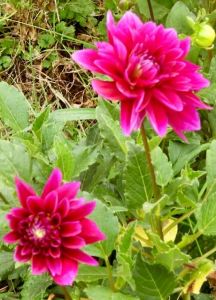
Our Dahlias were colorfully prolific in May and June, and now have returned in August!

As we look over the five months so far of this new garden venture for us, three features stand out. The first is the large amount of rain we’ve had this half year (about 12 inches) compared to the deep drought our fellow gardeners went through last year. The second is how this prolific small plot has surprised us each time we visit (about every other day) with the uniqueness of the growing and fruiting patterns of each plant. Each one indeed has its own personality.

And the third feature is the absolute splendor of the creativity and dedication of the many friendly gardeners we’ve encountered and gotten to know. This collection of garden plots is an entreprenurial place, where the living soil, air, water, seeds, pollinators, microbes, and loving humans cooperate to make many, many small miracles from day to day. With more miracles yet to come in the rest of the year!

An American Goldfinch calls from across the garden plots on the early morning of August 12

******************************************************************

Climate Log: Fighting the Good Fight–Ponies, Storms, and Living Shorelines

Female Osprey preens on her nest in the marshes of Tilghman Island on Maryland’s Eastern Shore, August 17

As the Trump administration keeps

  • denying a changed climate of ever more dangerous heat, drought, and floods
  • defunding protections for animals, plants, and human beings, and
  • intensifying the burning of poisonous fossil fuels,

groups and localities around the US are fighting back through local and regional actions that try to sustain healthy living for all creatures. What can we as Americans do to promote health and counteract these dangerous anti-life actions by the new regime? The New York Times series “Fifty States, Fifty Fixes” https://www.nytimes.com/interactive/2025/climate/50-states-fixes.html is one effort. It asks readers to contribute their own examples of life-saving actions in their own communities–and thousands of readers throughout the nation have answered the call.

“Living shoreline” built with natural materials near Lewes, Delaware, August 21 (New York Times photo)

One such coordinated action–now being replicated in other states–is the “living shorelines” project in Delaware. “Living shorelines” https://www.nytimes.com/2025/08/20/climate/delaware-living-shorelines.html uses natural materials, including the power of plants and soil, to recreate the marshy wetlands destroyed by sea level rise along US coasts. These living shorelines are far more effective than the concrete and rocky barriers often used to delay coastal erosion. Not only are the living shorelines of deep-rooted plants stronger and more lasting than artificial barriers–but they provide homes for water creatures and in fact grow steadily more diverse and broader as time goes on.

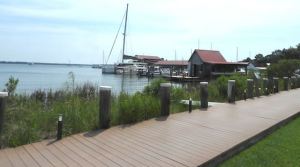
On our recent trip to Maryland’s Eastern Shore, we saw the living shoreline at the Maritime Museum in St. Michael’s, August 17

Protecting the Marshes, Coastline, and Precious Ponies of Chincoteague, Virginia.

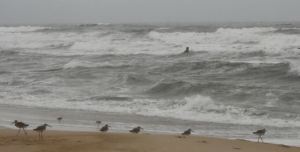
On our visit to the Eastern Shore, we joined a few surfers, several park personnel, and a beach full of Lesser Yellowlegs and Laughing Gulls riding out the effects of Hurricane Erin, August 18, on Assateague Island

Misty and Stormy. If you’ve been to the Atlantic Coast’s Chincoteague Island, Virginia, just across the Maryland state line, you probably know the story of Misty, the pony made famous by writer Marguerite Henry in the 1950s and 60s. Her 1963 sequel, Stormy, Misty’s Foal, describes in sad detail the tidal storm that took the lives of so many of the islands’ legendary ponies–which the states and the National Park Service have protected for over 100 years.

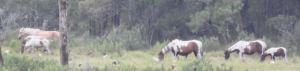
Six ponies in an Assateague Island saltgrass marsh, early morning, windy, rainy August 19. Care by national and state park personnel have extended life spans of the ponies, as well as their protecting the marshes and shorelines https://www.delmarvanow.com/story/news/local/maryland/2015/06/02/assateague-pony-population-aging/28347157/

We visited Chincoteague and Assateague islands on August 18-20, just as Hurricane Erin was moving up the Atlantic and beginning to build a storm surge on the coast. The whipping winds and intermittent rain made for a lively time for us and the birds, but the ponies and waterfowl were easily up to the task, as were the park personnel. The protection of shorelines and marshes in the Chincoteague National Wildlife Refuge is a model of what federal, state, and local cooperation can accomplish.

A Lauguing Gull fights the wind on Assateague Beach, early AM, August 19

The pony herds draw many thousands of tourists each year–and the grazing ponies were on magnificent display in the saltgrass marshes visible to drivers for hundreds of yards beyond the roads of the refuge. We were able to get beautiful views of one herd and of their symbiotic relationship with the egrets and gulls who flock among them. In this video, Jean reads from Stormy, Misty’s Foal as I scan the herd and the birds. This excerpt is Marguerite Henry’s recounting of the legendary history of how a Spanish shipwreck in the 16th century brought the ponies to Assateague:

As we scan about a dozen members of the pony herd and their accompanying birds in the Assateague marshes, Jean reads from Marguerite Henry’s Stormy, Misty’s Foal (August 19, early morning in the rain)

Here are a few more of the photos and videos from our visit to Chincoteague and to the Wildlife Refuge (see a few more pics and clips of our visit to the Eastern Shore in this month’s Gallery, too).

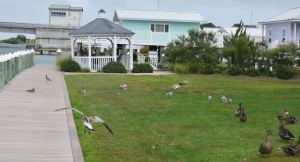
Laughing Gulls and male and female Mallards beside our hotel in Chincoteague, August 18

Two surfers in the high waves, Assateague Beach, August 19, early morning rain

Three Lesser Yellowlegs run in the wind and rain of Assateague Beach, early morning, August 19

Large flock of egrets and four ponies active in the early morning wind and rain, Assateague Island, August 19

***********************************************************

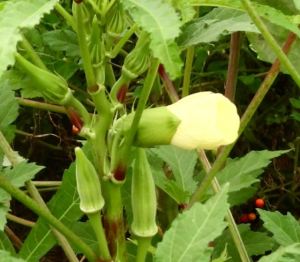
Okra plant and bloom from the Tilghman Island Inn kitchen garden, Maryland, August 17

The August 2025 Photo/Video Gallery: Wildflowers around Our Lake and More from the Eastern Shore

Whereas our garden plot features what we’ve planted, our little lake provides a changing feast of wildflowers. The display changes as the months do, and new leaves, stems, and flowers appear, while others fade back or disappear until next year.  As citizens of our local refuge (even if not so named), these new flowers highlight the good work we humans do when we don’t do too much–and we let the plants and animals do what they are experts at doing.

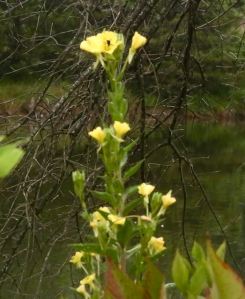
A Bee feeds atop this Evening Primrose on the east bank of our lake. These brilliant flowers appear along the lake in August, here on the morning of August 22

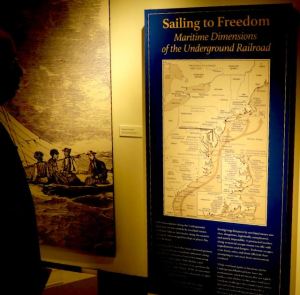
In much the same way, our visit to the Eastern Shore on August 16-20 let us witness ways, such as the St. Michael’s Maritime Museum and the Chincoteague National Wildlife Refuge, by which humans can assist nature by deliberately limiting commercial development and preserving native habitats. But beyond preservation, in exhibits like “Sailing to Freedom,” curating groups such as the Maritime  Museum go beyond preservation to call out past injustices, which are starting to reappear in the current political climate of censorship of diversity and the censors’ rewriting of history .

The multi-room exhibit “Sailing to Freedom” at the St. Michael’s Maritime Museum illustrates the rich but rarely mentioned history of enslaved people and their allies using boats and waterways to escape enslavement in the pre-Civil-War United States.

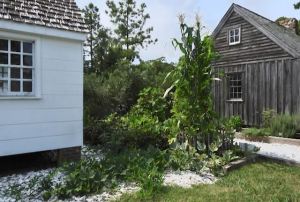
At the Maritime Museum is the re-located home of the sister of Frederick Douglass, where the garden includes a “three sisters” display of how Native Americans planted the 3 plants (beans, corn, and squash) together. Note how the bean vines encircle the corn stalk.

At the Maritime Museum in St. Michael’s, this skipjack is one of many vessels that have been restored to tell the history of the fisheries for over centuries on the Eastern Shore (Photo August 17)

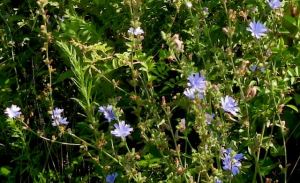
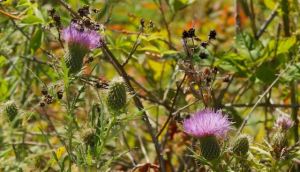
Wild Blue Chicory is one of the late summer wildflowers/herbs that grow around our lake, August 3

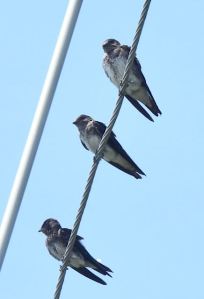
Purple Martins in the wildlife preserve at the tip of Tilghman Island, Maryland, August 17

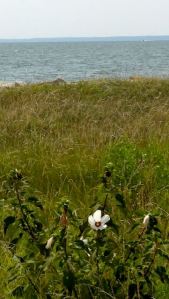
With the Virginia shore 12 miles across the Chesapeake Bay, a Swamp Rose Mallow blooms at the tip of Tilghman Island, August 17

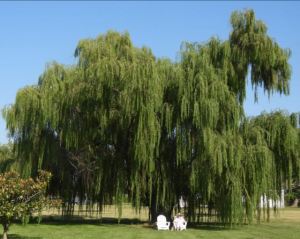
Magnificent Weeping Willow at the Tilghman Island Inn, August 16

In the Tilghman Island marsh beside the Inn, a male Osprey devours his catch, August 17

At the Tilghman Island Inn, a Black Swallowtail flits within Purple Top Vervain

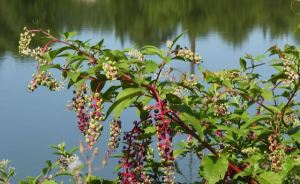
Pokeberry in bloom along the north shore of our lake, August 3

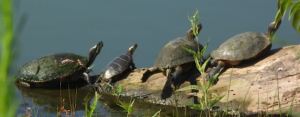
Four Red-bellied Cooters sun on a log at the north shore of our lake, just after sunrise, August 3

Bumblebee in Cutleaf Teazel on the north shore path of our lake, August 3

Two Bumblebees in 2 Purple Teazel, north shore, sunny noon, August 27

Grey Catbird flits amid Woodbine along the west bank of our lake, morning, August 3

The Chincoteague Fairgrounds, where for 100 years the people have celebrated the annual Pony Penning festival and carnival. Pony Penning https://en.wikipedia.org/wiki/Pony_Penning strengthens the herd and protects the land, while also giving new homes to young members of the herd among farmers and ranchers of the region. (Photo, August 20)

South Corral on Assateague Island, where ponies are rounded up for the swim across the channel on Pony Penning Day each year (photo August 19)

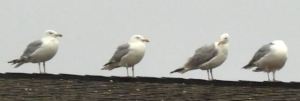
Four Herring Gulls on the roof of our hotel in Chincoteague, early morning, August 19

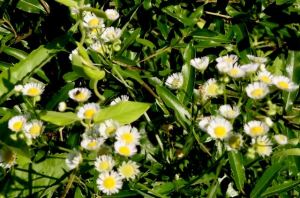
Daisy Fleabane display on the east bank of our lake, August 3

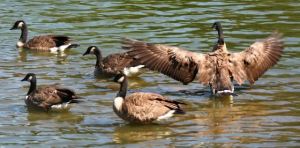
Five Canada Geese exercise in the southeast cove of our lake, sunny noon, August 27

Bumblebee in Swamp Milkweed on the east bank of our lake, on a breezy August 3

Panorama toward the south end of our lake on the morning of August 22, with Evening Primrose and prolific Horseweed in the foreground

Gallery Bonus: Raccoon crosses the trail at the Seneca Regional Park, visited on August 8

Bonus 2: At Seneca Park, a side channel of the Potomac River flows swiftly through the forest, August 8

And so on toward September, with continued courage to protect and celebrate the great diversity of life…
April 2025: To Save All Life, Don’t “Drain the Swamp”

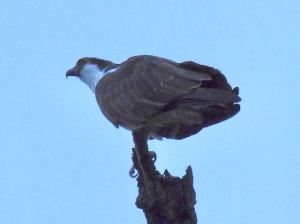
Osprey, an iconic Chesapeake wetlands shorebird, makes a rare appearance atop the dead oak on the east bank of our little inland lake, April 20. The visiting, fish-eating raptor stays for a while, then swoops over the lake…

…scans our lake at Easter sunrise, then flies off to find other wetlands

In this month’s entry:

Draining the Swamp: Recipe for Annihilation
Garden Update: Frost Is Past, Plants Take Hold
Cherry Blossoms and Honoring Real Heroes
The April 2025 Gallery: Remember Earth Day? Nature Keeps Fighting

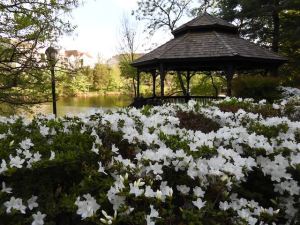
White Azaleas in bloom by the gazebo, west bank of lake, warm twilight, April 24

******************************************

Draining the Swamp: Recipe for Annihilation

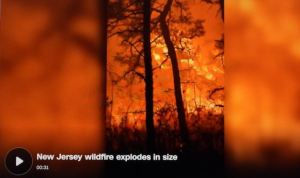
12,000 acres burned in Ocean County, New Jersey, as wildfires increase across the country, April 23 (CNN photo)

Whenever I hear the President’s rallying cry of “Drain the swamp!”–by which he refers to the ongoing mass firings in federal agencies since he took office on January 20–I wonder if he at all appreciates what “Drain the swamp” really means. Failing to value what swamps are and what they accomplish can doom all life.

Given his long history as a speculative builder of hotels and other urban properties, he perhaps thinks of swamps as messy, smelly, icky, treacherous places that get in the way of steel and concrete foundations, can thwart builders’ dreams, and often contain creatures like snakes, alligators, and disease-bearing mosquitoes. His hatred of swamps is part of his incessant campaign to destroy the environmental protections (see Newsweek, March 13, “What Comes Next?”) enacted since 1970 by a succession of Presidents, starting with Republican Richard Nixon, who founded the Environmental Protection Agency (EPA).  It’s likely that the current President resents the term “wetlands,” and especially the phrase “protect wetlands,” applied to those swampy places that impede two of his favorite ventures: turning public lands over to fossil fuel drillers and enabling so-called “developers” to turn natural environments into more and more commercial districts of concrete and steel.

The Cradle of Life

What he certainly does not sufficiently value when he thinks of swamps (like Virginia’s Great Dismal Swamp pictured above) is that they have been and continue to be the cradle of life on this planet, the purifier of all fresh water, and the essential meeting and mixing place between land and sea. Without swamps, bogs, mires, fens, marshlands, lakeshores, wetlands, coral reefs, vernal pools, or whatever you want to call them, all life will die out. https://en.wikipedia.org/wiki/Wetland

Planting Easter eggs: Mallard pair builds their nest along the north shore of our little lake at Easter sunrise. The drastic, ongoing decline (30% lost) of birds since 1970 has been caused in part by the erasure of these precious water/land interfaces across the globe.

Drought, Wildfires, and the Loss of “Swamps”

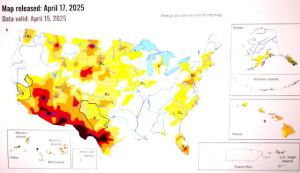
The photo of the New Jersey wildfire at the top of this section seems a strange juxtaposition with the pleasant video of the Mallard nesting pair, but they are closely related. Global warming (another term our President despises and refuses to acknowledge) is making the Earth steadily drier, including the U.S., as the regularly-updated U.S. Drought Monitor https://droughtmonitor.unl.edu shows:

You’ll note that the Mid-Atlantic and Northeast states–including both New Jersey and Northern Virginia–have been in a long-term (SL on the map) period of what the map labels severe drought, though local officials (at least in our region) rarely mention that there might be a problem, because we are not yet at a stage of having to restrict water usage. But those of us who garden (see the “garden update” section, below) are already very aware of the shortage of rain.

Not only does drought intensify the chances for wildfires, but lack of rain steadily erodes wetlands, as I see each day when I walk around the lake and notice the slow exposure of more dry shoreline. More dry shoreline means fewer nesting spots for Mallards and other waterfowl, as well as turtles, such as the Northern Red-bellied Cooters that adorn this blog most months of the year.

17! Red-bellied Cooters, babies and adults, throng this log near the south shore of the lake, April 17. Turtle eggs nest in the mud near the shore, emerge underwater in the fall, and winter in a dormant state underwater in winter. They come above the surface once the temp gets to 60, for at least part of the day.

Flood control. And just as wetlands reduce wildfire risk, so they also help control floods, by capturing excessive rain that would otherwise flow unimpeded through streets, over rock-hard drought lands, and into rapidly swelling streams during flash floods events. Soft wetlands allow excess floodwater to percolate into the aquifer underground, where it is saved for future use, rather than be propelled down rushing streams destroying anyone and anything in its path.

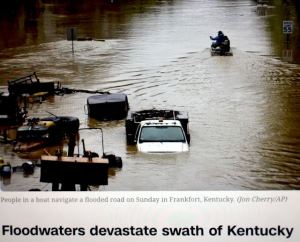
Kentucky River floods Frankfort, the Kentucky capital city, amid record rains in the Mississippi and Ohio River valleys, April 7 (Photo: Jon Cherry/AP)

******************************************************************

Garden Update: Frost is Past, Sun Abounds, Plants Take Hold

Swiss Chard plant takes hold, three weeks in ground, our community garden plot, April 22, Earth Day

We’re slowly learning the lessons of the Northern Virginia climate as we nurture our small plot in the community garden in our town. Twice in the past month we learned the hard way about planting too early here. Even though the average low temps from late March to mid April were in the 40s, all it took were two nights when the temp dipped to 32 or below (27!) for us to lose tomato, squash, and pepper seedlings. Note to self: Northern Virginia is definitely not Northern California, where we could safely grow year round.

Still, those two setbacks aside, we’ve now had two solid weeks of steadily warming temps for our assemblage of veggies, fruits, herbs, and flowers to thrive in our little patch (225 sq. feet) in the community collection of small gardens.

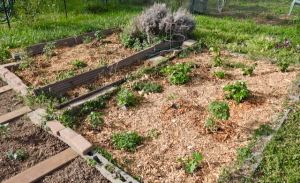
Our full garden plot, newly mulched, and with veggies and flowers thriving in the steadily warming temps, April 25

Some of our plants are varieties we had success with in California: cherry and grape tomatoes, hot and mild peppers, strawberries, zucchini, eggplant, Swiss chard, basil, mint, thyme, sage, lavender, and oregano.  One species, Blueberries (two bushes, in ground a month now), are thriving here in this cooler climate, and had no trouble with those 2 nights below freezing. They like the cold, as do the strawberries, but we’ll see how the blueberries hold up when it gets into the 90s in July.

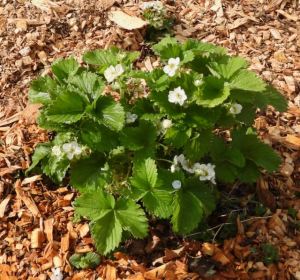
Our two Strawberry plants, perennials, we inherited in this plot, and they are blooming prolifically.

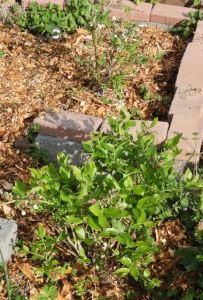
Our two Blueberry bushes , which cross pollinate, loved the March cold and are blooming nicely, April 25

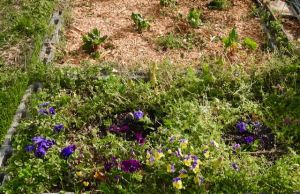
One third of the plot we devote to flowers. The hearty Pansies, purple and yellow, have been thriving since March planting as have the pink Dianthus (one of our California favorites), and just this week we’ve added purple Petunias. One discovery here is the plethora of fast-spreading ground cover such as bright Blue Speedwell and pink Henbit, which will take over everything if we let it.

Purple and Yellow Pansies and Purple Petunias vie with Blue Speedwell and Pink Henbit in the flowery third of our plot, April 25

In drier, hotter California, the challenge was to provide enough water to grow what we’d planted. We rarely had to pull so-called “weeds”: by which people mean any plant that you don’t want to grow in a space where you want to grow something else. Here, the relatively wetter climate encourages less-wanted plants to thrive, so “weeding” of plants like Dandelions and “Creeping Charlie” are daily chores. So the task for us is to  judge the balance between what we’ve planted and the volunteers that already love our ground.

Stay watching for updates. One challenge will be providing enough watering to keep the plants thriving in our severely drought-affected new normal. As a neighbor gardener put it this week, “We’re not used to worrying about rain.”

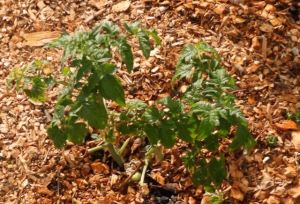
Also taking hold is this Husky Cherry Red Tomato, April 25. We loved these in California and hope they do as well here.

*************************************************************

Cherry Blossom Tradition and Honoring Real U.S. Heroes

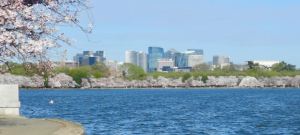
Cherry Blossoms in full bloom, and the city of Rosslyn across the Tidal Basin and the Potomac, March 27

We made our annual visit to the D.C. Tidal Basin in late March, with the Yoshino Cherry Trees and Magnolias in full bloom and the entire Basin area teeming with students and adults visiting from many places. Not only were the trees magnificent, but we reveled in the joy of the crowds, particularly in the patriotic spirit of the thousands from diverse origins and backgrounds who took the opportunity to visit the three memorials that surround the Basin: the Jefferson Memorial, the Franklin Delano Roosevelt and Eleanor Roosevelt Memorial, and the Martin Luther King, Jr., Memorial. At each huge installation, the inspiring words of these authentic heroes of democracy and courage are emblazoned on the walls, and offer us who stand before them messages of hope and encouragement to persevere in our endeavors to respect one another, seek fellowship with the peoples of the world, and keep alive the idea of the U.S. as a friend in times of mutual need.

Pair of Grackles call out from brilliant Magnolia, Tidal Basin, March 27

Crowds throng the Martin Luther King, Jr., Memorial, March 27

Words of hope among many sayings of Franklin and Eleanor Roosevelt carved into the walls at the FDR Memorial, March 27

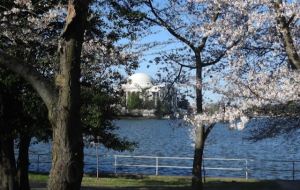
Jefferson Memorial across the Tidal Basin through the trees, March 27

Words of Martin Luther King, Jr., on wall of the memorial, March 27

Rebuilding the Basin. We also wanted to see how work had progressed over the year since we had last visited the Tidal Basin. Since 2023, the Basin has been undergoing a massive reconstruction, because sea level rise in Chesapeake Bay, caused by global warming, was every day forcing the waters of the tidal Potomac to overflow the Basin’s walls. More than 150 of the precious cherry trees have been removed because of the worsening flooding.

Not a true wetland, the Basin had been built in the 19th century as part of the massive draining of swampland in the nation’s Capital to enable construction of many of the now iconic buildings of the federal city. Lacking a wetland’s actual resilience in changing conditions, it was inevitable that a massive reconstruction of the Basin’s stone walls and dredging of the bottom like that going on now would be eventually needed.  Fossil-fuel-caused climate change accelerated the need. See the March 2024 blog for a history of the 19th century “draining of the swamp” and its ongoing repercussions.

The project is expected to be completed next year, in time for the 250th anniversary of the founding of the U.S.

The 3-year reconstruction of the Tidal Basin is moving the walls a hundred yards back from the originally-constructed shoreline near the Jefferson Memorial, with the loss of a few hundred trees.

****************************************************************

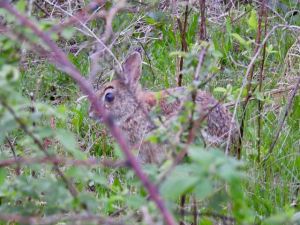
A Cottontail “Easter Bunny” hides in the northwest corner of the shoreline, April 20

The April 2025 Photo/Video Gallery: Nature Keeps On Keepin’ On

Welcome to the Babies! And to more wetland rites of spring here and elsewhere in our region. (Oh, plus three kitchen treats. Would not forget those!)

Surprise, surprise! Despite this winter’s cold, the Canada Goose babies are here by our lake at the same time as in last year’s earlier spring. Congrats to the parents!

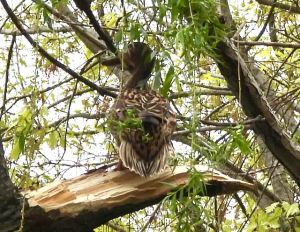
Very rarely do Mallard females fly into trees and look to build nests above shoregrounds. This one on the west side of our lake was a real surprise, April 19

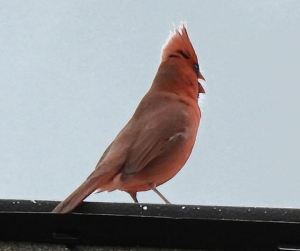
This Cardinal male in mid call atop a roof south of the lake, April 19

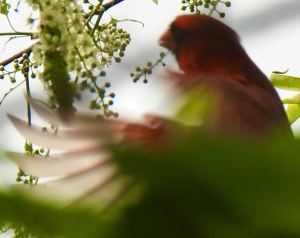
And here’s a very different view of a Cardinal male in closeup shadow in a Black Cherry tree, west bank, April 26

Watch this same Mallard female fly up to the broken branch in the Walnut tree while a Downy Woodpecker comments, April 19

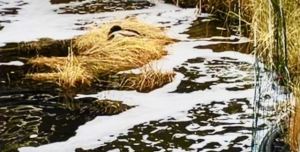
At the National Aquarium in Baltimore, which we visited on April 10, an attempt is being made to re-create a marsh in the water outside. Here, a Mallard male rests on a bed of reeds. For almost 150 years, this harbor water had been a dump for industrial waste. With federal aid, the clean-up has been ongoing for 50 years, but will it continue?

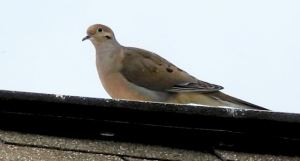
This Mourning Dove shares the same roof with the Cardinal pictured above, April 19

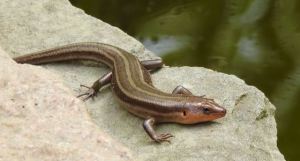
On Easter Sunday, we visited relatives at their rural home. Here a beautiful tiny lizard enjoys the sun by their pond.

3-foot-long Yellow Largemouth Bass, the dominant fish in our little lake, swims near the north shore on a warm April 25

The annual magnificent woodland display of Bluebells covers acres at nearby Riverbend Park on the Potomac. We visited on April 6.

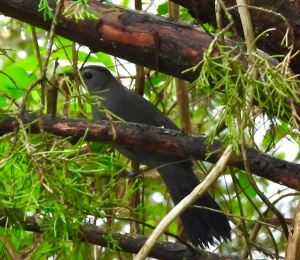
Grey Catbird perches in a Red Cedar along the west bank of our lake, April 26

Cardinal female and Yellow-rumped Warbler call from the Willow Oak beside the southeast cove, April 19

My first sighting this year of a Bumblebee, in the gazebo by the lake, April 19. These pollinators are essential to life here.

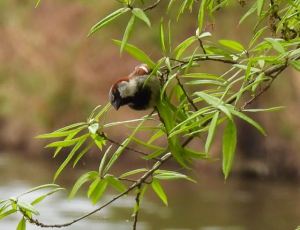
The Willow Oak by the cove also gave a perch to this acrobatic House Sparrow on April 19.

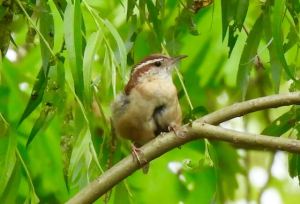
Carolina Wren makes music most days, but I don’t see them nearly enough. This one perched beside me in this Weeping Willow on the west bank on April 26.

Song Sparrow calls from the leafing Persimmon on the east bank of the lakeshore, April 26. I’d never want to imagine a month without a Sparrow song.

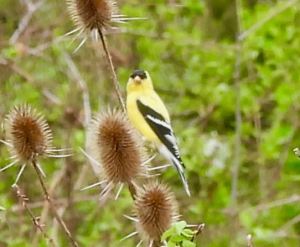
American Goldfinch in dry Cutleaf Teazel, north of dam, April 4

Jean’s one-of-a kind Coconut Custard Pie, with Filo Dough crust, April 26

Jean’s Easter Bunny Carrot Cake with cupcakes, April 20

Jean’s Easter Deviled Eggs with Crab, Olives, and Cucumber Pickles, April 20

First sighting of the year: Green Heron, usually a late summer bird, here now as another April surprise, in the Willow Oak on the east bank, rainy morning, April 26

The birds always seem their most ebullient on these warm, drizzly mornings after an overnight rain. The lakeshore, our local wetland, rejoices. And so we venture on to the marvelous month of May.