December 2025: Holiday Gifts for the Environment

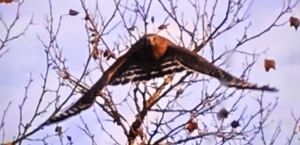
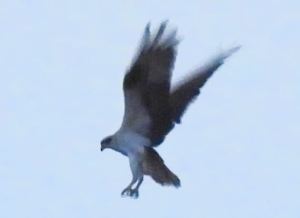
Jean’s amazing photo of a Red-Shouldered Hawk flying toward her from a Maple southeast of the lake, on a very cold morning, December 7. This visitor, who had been pestered by a few of our enraged resident crows, flew past her and landed in a nearby tree.

In this month’s blog:

Climate Log: Holiday Gifts to the Environment–and to Us Humans!
Climate Log 2: The “Unstoppable Worldwide Rise of Renewables”
Garden Update: Fresh in the Freezer
Presents through Presence: Visiting with Family
The December 2025 Photo/Video Gallery: Gifts from our Lakeside Community
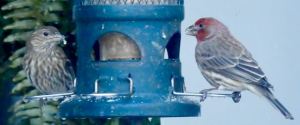
Pair of House Finches, Female and Male, at Southeast side feeder, December 14

***********************************************************************************
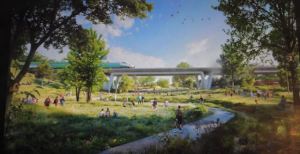
Parks, wetlands, and light rail: three features of the plans in Toronto for redevelopment of an outdated airport (see below)

Climate Log: Holiday Gifts to the Environment–and to Us Humans!

The current U.S. federal administration (now a year old) keeps doubling down on the fossil fuels that are steadily killing us. But Americans across the country are inventing ways to make or remake our fragile environment to be more resilient. Below, we link to 3 of these many gifts to us. We also note a 4th gift, from our friends in Canada, who have large plans to repurpose developed land to achieve life-friendly goals of health, beauty, and love for all creatures.

Gifts One and Two: “Fifty States, Fifty Fixes”–We’ve cited in past entries a few of the many climate-friendly projects from this ongoing NY Times series, and here are two more, both from so-called “red states” (which, as polls keep showing, are picking up more tints of blue).
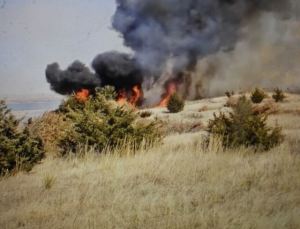
“South Dakota Ranchers Burning the Prairie to Save It” (New York Times photo) December 11 https://www.nytimes.com/2025/12/09/climate/prescribed-burns-wildfire-south-dakota.html

In South Dakota, an organization of cattle ranchers is teaching others how to use Native American methods of “controlled burns” to remove invasive species, such as the Eastern Red Cedar, so that native grasses and their pollinators can return.
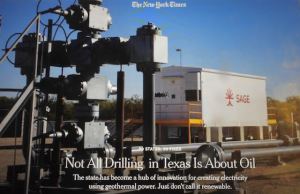
“Not All Drilling in Texas Is About Oil” (New York Times photo, December 11  http://www.nytimes.com/2025/12/09/climate/not-all-drilling-in-texas-is-about-oil.html

As new companies in Texas are demonstrating, the many skills needed to dig for oil and gas are being adapted to make the state a hub of innovation in the production of clean geothermal power.

Gift Three: Big Plans in Toronto to Make an Outdated Airport an Environmental Miracle
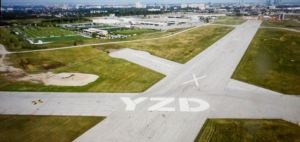
Toronto Downsville airport to be redeveloped as housing and parks, current view (CNN photo), Dec. 11  https://edition.cnn.com/travel/toronto-downsview-airport-yzd-c2e-spc

CNN’s “Inside the Abandoned Airport Being Transformed into a $30 Billion Sustainable City” (by Nell Lewis, December 11) describes in glowing detail the history of this early airport and Toronto’s ambitious plans to redevelop the land over 30 years into one of the largest and most innovative sustainable sites in North America.  
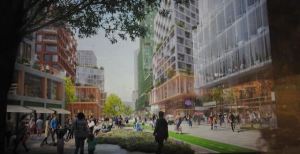
Toronto plan for former airport: sustainably-designed high rises and pedestrian mall as two of its features (CNN photo), added Dec. 11 

 Gift Four: The Data Rescue Project  https://www.datarescueproject.org/
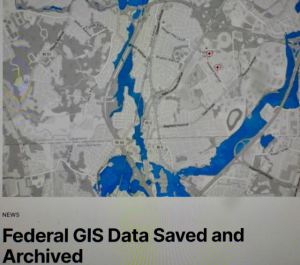
One recent successful data rescue project, Dec. 16

Even as the EPA and other branches of the current administration race to hide vital information from scientists, from the economic and financial communities, and from the entire voting population, the Data Rescue Project (among other similar organizations) is working tirelessly to save information and make it available to us. While this rescue effort began during the first Trump administration, when scientific research data, especially about climate change, began disappearing, the erasure has ramped up exponentially this year across all government departments. So the Data Rescue Project has also intensified.

The specific data saving initiative pictured above, regarding erasure of the GIS (Geographic Information System) in September and October, is reported on by Frank Donnelly, Head of the GIS and Data Services of the Brown University Library. The saved data are available at https://www.datalumos.org. Of course, even more rescuers are needed by the Data Rescue Project.

******************************************************************************
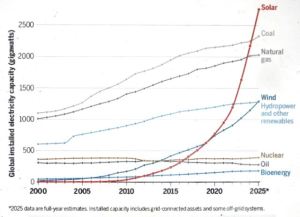
Comparative growth of solar and wind vs. other forms of energy worldwide since 2000 (Science, 12/19/25)

Climate Log 2: The Best Gift to Us and the Environment?  The “Unstoppable Rise of Renewables” Worldwide

Solar Farm in Wisconsin (Getty Images)

Once we in the U.S. look beyond the choking fog of fossil-fuel hype in the current administration, we can see that the best gift to the worldwide environment is the phenomenal growth of solar (and wind) power since 2000. In its lead article this week, “Good Morning, Sunshine,” the journal Science announced its “Breakthrough of the Year”: the “seemingly unstoppable growth of renewable energy.”

Led by China’s truly astonishing build-out, an example being steadily adopted by nations around the world, solar and wind energy are far out-stripping fossil fuels in installation since 2000. Why? Because of solar and wind’s cost effectiveness and clean simplicity. Indeed, says Science, “Wind and solar have become the cheapest energy in much of the world.”

Of China’s dominance in these new technologies, Science writes:

“China’s solar power generation grew more than 20-fold over the past decade, and its solar and wind farms now have enough capacity to power the entire United States.”

Perhaps it’s no wonder, then, that the current U.S. administration–given its marriage to 19th century forms of enegy–has done its utmost to prohibit new solar and wind projects in this nation. Just this week (Dec. 22) the President “paused” 5 wind projects off the East Coast, 3 of these already under construction. The five would have reduced power costs for millions of people, provided clean energy, and created 10,000 jobs:

“Trump Halts Five Wind Farms Off the East Coast”
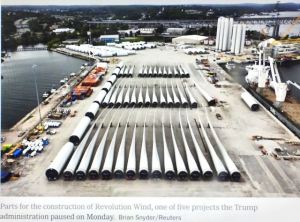
“The decision imperils billions of dollars of investments,” as Maxine Joselow and Lisa Friedman reported in the New York Times.

Too bad that we the people don’t have a say about such capricious, harmful decisions. Nevertheless, Americans will keep on trying to make the environment cleaner, greener, and more healthy in ways that this blog and the free press will celebrate.

******************************************************************************

First snowfall of the new winter: looking across the lake to the west side gazebo, December 5

Garden Update: Fresh in the Freezer
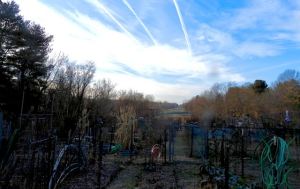
In the midst of many days of freezing temps, our garden community, except for some hearty plants, has quieted, too. Some birdsong persists, but even that is muted on a cold, cold morning, December 13 

Our November garden update gloried in the rapid growth of the six broccoli and six cauliflower we’d planted in October. Since the calendar turned to December, however, we’ve experienced an inch of snow on the 5th and almost two weeks of freezing temps, getting as low as 16 on a couple days.  Fed by a polar vortex which has kept much of North America in the deep freeze since late November, our weather is much colder now than at any time over the 3.5 years since we’ve been back from California. 
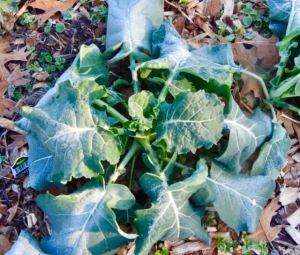
Broccoli plant still holding on to its green suppleness despite the cold, December 18

So it’s fun to visit the frosty garden every few days to see how the plants above ground are doing. We know, of course, that underground nature is taking its course, and, almost before we know it, it’ll be driving toward spring and shoots will poke through the soil: species that we will take joy in identifying, some of which people may call weeds, but which we will enjoy watching grow into their curious individuality.
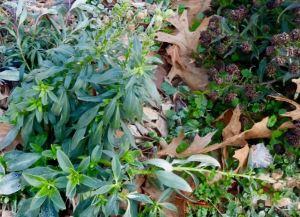
Snapdragons, planted in October, acting all green and sprightly, as if it weren’t winter around them, December 18.
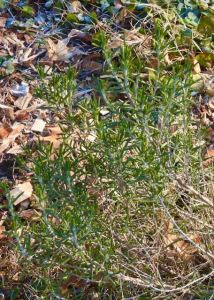
Rosemary, a perennial, green as ever, and just as pungently fragrant as in August, December 18
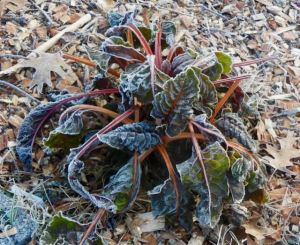
Swiss Chard, wilting in the frost but still with some of its orange vigor, December 7
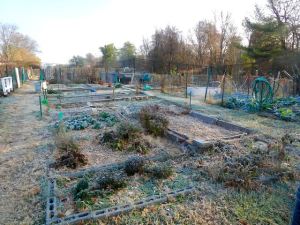
Garden panorama toward Northeast, with our plot in foreground, cold morning, December 7

Blue Jay in Green Ash in the woods beside our community garden, cold morning, December 7

************************************************************
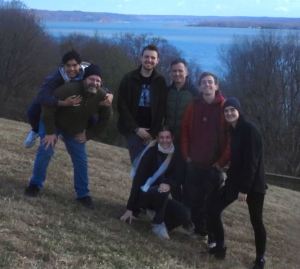
Visiting family members before Potomac River vista at Mt. Vernon, sunny, windy December 29

Presents Through Presence: The Gift of Family

In the season of giving, there is no greater gift for us than the opportunity to be with members of our far-flung family, who have traveled to Northern Virginia from Georgia and California to share meals, conversation, ideas, and lots of laughter. We are joyful, of course, to revel anew in how the younger ones have grown in learning and wisdom, and how their parents’ strengths have surpassed ours when we were their age.

And what is true of our visiting family is equally true of the family who live near us, and who welcome us into their homes. And it is also true of those family who live far away and whom we visit this holiday season via phone, text, email, or video. Is it not amazing how their wisdom, care, humor, and love come through to us regardless of the media? Truly blessed and fortunate are we.
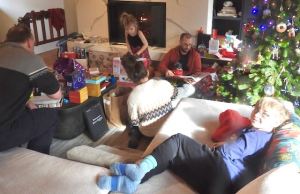
Family welcome us into their home on Christmas Day for food, games, and conversation.
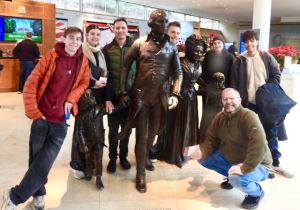
Our visiting family share the holiday spirit at Mt. Vernon with George, Martha, and their kids, December 29

Even Lulu, the family Yorkie, shares in the festivities on Christmas Day

************************************************************
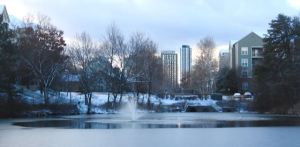
Across the ice-covered lake to the fountain, our community, and on to downtown, December 14

The December 2025 Photo/Video Gallery: Snow, Ice, and the Serendipity of Wild Life

Almost every trip around our lake presents surprises, like the Hawks, the Bluebird, the White-Throated Sparrow, and the Northern Flicker pictured this month, or the Bald Eagle and the friendly White-Tailed Deer I wrote about last month. Their allowing us to see them–they are so good at hiding!–is a real gift. I like to think that they feel somewhat safe in our presence, despite the risks they run by being visible. I hope that safety is not just our illusion.
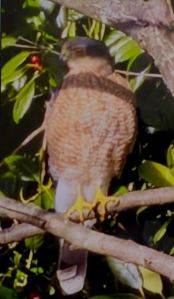
Cooper’s Hawk alights in Laurel, southeast side, sunny afternoon, December 20 (photo by Pat Welch)
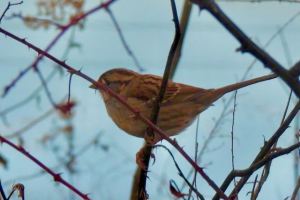
White-throated Sparrow among Blackberry canes, northeast corner of lake, at sunrise, December 21
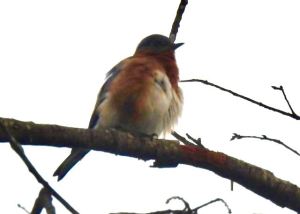
Eastern Bluebird on dead Willow Oak, east bank, at sunrise, December 21
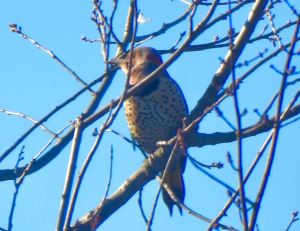
 

Northern Flicker–a rarely visiting type of woodpecker–perches in a Red Maple in the north end woods on a crisp morning, December 22

Male Cardinal perches, chirps, and munches in Sweet Cherry tree, southeast bank, crisp 

December 22
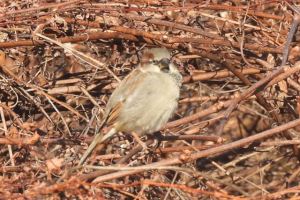
House Sparrow rests in Oriental Bittersweet vines along the north shore of the lake, December 22
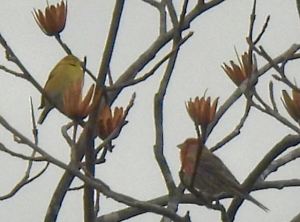
American Goldfinch and House Finch perch in a budding Tulip Tree, north of dam, cloudy December 23
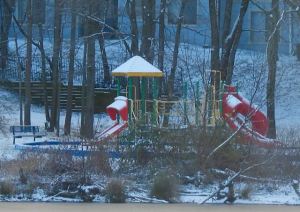
Playground on the Northeast bank, snowy December 14
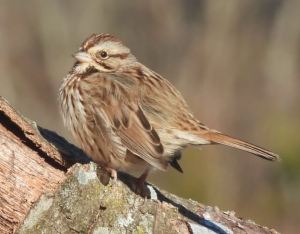
Song Sparrow on dead Willow Oak, east shore of lake, December 16
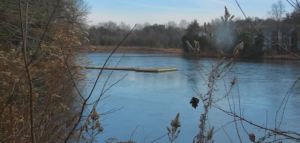
Panorama of the frozen lake toward the dock and the northeast corner, December 13
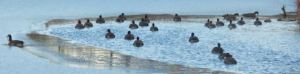
Large flock of Canada Geese in a corner of the east shore, looking to north, Dec. 14
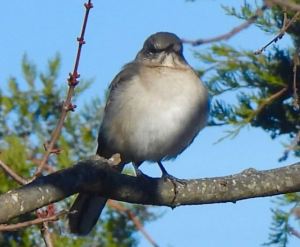
Mockingbird perches in Red Maple along the southeast path, sunny, cold December 16
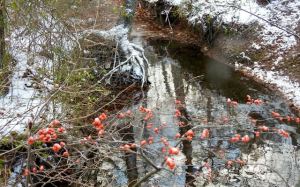
Winterberry bush glows above the inlet stream by the bridge, southeast corner, snowy December 14

Song Sparrow in Japanese Honeysuckle, southwest shore, calls to fellow across the lake on a sunny December 16
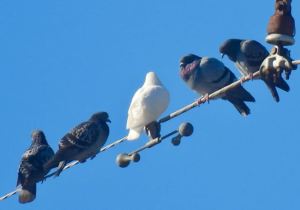
Five Rock Doves bask in the morning sun atop the power tower west of the lake, December 16
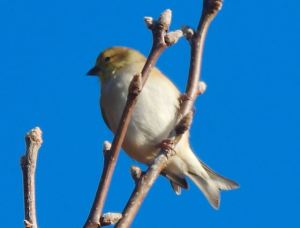
American Goldfinch in winter feathers perches in Bradford Pear along the northeast path, December 16

From the gazebo across the lake, I scan goose by goose the line spread out along the southeast cove, December 14
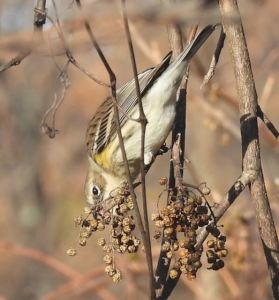
Acrobatic Yellow-Rumped Warbler feeds on Poison Ivy berries in the southeast cove, December 1
Turkey Vulture scans from high above the lake on a misty December 9
Tufted Titmouse hides in Maple on the west side just after sunrise, December 7
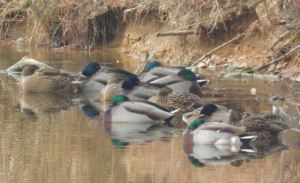
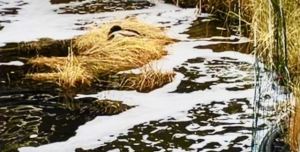
Mallard pairs stay warm along the southeast shore on a very cold morning, December 9

Mallard pair flies north toward woods from southeast cove, then west into trees, cold morning, December 9
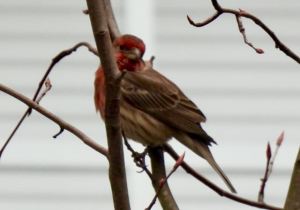
House Finch male in Downy Serviceberry, southeast side, December 9
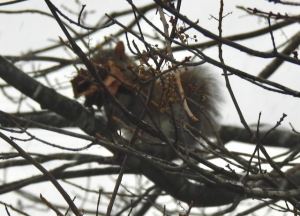
Grey Squirrel with mouthful of leaves walks along branch of Red Maple, southeast path, snowy December 5

First snowfall of the winter: five Mallards swim along the east shore as flakes fall, December 5

European Starling lit by sunrise along the southeast shore, December 7
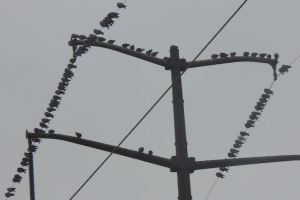
80 Rock Doves–a record?–atop the power tower west of the lake on the very cold December 9

And so we move into the last week of this challenging 2025, as always with hope for a Happy New Year…
April 2025: To Save All Life, Don’t “Drain the Swamp”

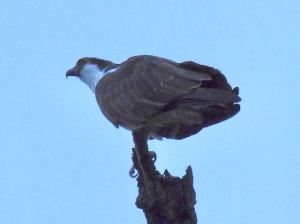
Osprey, an iconic Chesapeake wetlands shorebird, makes a rare appearance atop the dead oak on the east bank of our little inland lake, April 20. The visiting, fish-eating raptor stays for a while, then swoops over the lake…

…scans our lake at Easter sunrise, then flies off to find other wetlands

In this month’s entry:

Draining the Swamp: Recipe for Annihilation
Garden Update: Frost Is Past, Plants Take Hold
Cherry Blossoms and Honoring Real Heroes
The April 2025 Gallery: Remember Earth Day? Nature Keeps Fighting

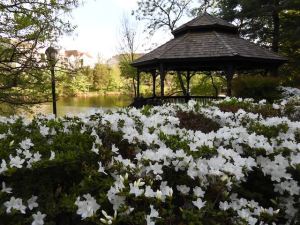
White Azaleas in bloom by the gazebo, west bank of lake, warm twilight, April 24

******************************************

Draining the Swamp: Recipe for Annihilation

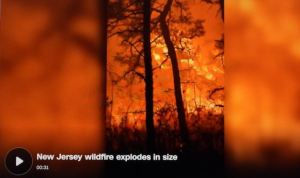
12,000 acres burned in Ocean County, New Jersey, as wildfires increase across the country, April 23 (CNN photo)

Whenever I hear the President’s rallying cry of “Drain the swamp!”–by which he refers to the ongoing mass firings in federal agencies since he took office on January 20–I wonder if he at all appreciates what “Drain the swamp” really means. Failing to value what swamps are and what they accomplish can doom all life.

Given his long history as a speculative builder of hotels and other urban properties, he perhaps thinks of swamps as messy, smelly, icky, treacherous places that get in the way of steel and concrete foundations, can thwart builders’ dreams, and often contain creatures like snakes, alligators, and disease-bearing mosquitoes. His hatred of swamps is part of his incessant campaign to destroy the environmental protections (see Newsweek, March 13, “What Comes Next?”) enacted since 1970 by a succession of Presidents, starting with Republican Richard Nixon, who founded the Environmental Protection Agency (EPA).  It’s likely that the current President resents the term “wetlands,” and especially the phrase “protect wetlands,” applied to those swampy places that impede two of his favorite ventures: turning public lands over to fossil fuel drillers and enabling so-called “developers” to turn natural environments into more and more commercial districts of concrete and steel.

The Cradle of Life

What he certainly does not sufficiently value when he thinks of swamps (like Virginia’s Great Dismal Swamp pictured above) is that they have been and continue to be the cradle of life on this planet, the purifier of all fresh water, and the essential meeting and mixing place between land and sea. Without swamps, bogs, mires, fens, marshlands, lakeshores, wetlands, coral reefs, vernal pools, or whatever you want to call them, all life will die out. https://en.wikipedia.org/wiki/Wetland

Planting Easter eggs: Mallard pair builds their nest along the north shore of our little lake at Easter sunrise. The drastic, ongoing decline (30% lost) of birds since 1970 has been caused in part by the erasure of these precious water/land interfaces across the globe.

Drought, Wildfires, and the Loss of “Swamps”

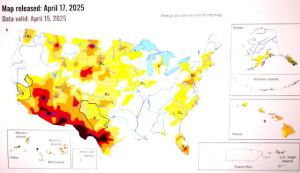
The photo of the New Jersey wildfire at the top of this section seems a strange juxtaposition with the pleasant video of the Mallard nesting pair, but they are closely related. Global warming (another term our President despises and refuses to acknowledge) is making the Earth steadily drier, including the U.S., as the regularly-updated U.S. Drought Monitor https://droughtmonitor.unl.edu shows:

You’ll note that the Mid-Atlantic and Northeast states–including both New Jersey and Northern Virginia–have been in a long-term (SL on the map) period of what the map labels severe drought, though local officials (at least in our region) rarely mention that there might be a problem, because we are not yet at a stage of having to restrict water usage. But those of us who garden (see the “garden update” section, below) are already very aware of the shortage of rain.

Not only does drought intensify the chances for wildfires, but lack of rain steadily erodes wetlands, as I see each day when I walk around the lake and notice the slow exposure of more dry shoreline. More dry shoreline means fewer nesting spots for Mallards and other waterfowl, as well as turtles, such as the Northern Red-bellied Cooters that adorn this blog most months of the year.

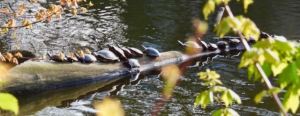
17! Red-bellied Cooters, babies and adults, throng this log near the south shore of the lake, April 17. Turtle eggs nest in the mud near the shore, emerge underwater in the fall, and winter in a dormant state underwater in winter. They come above the surface once the temp gets to 60, for at least part of the day.

Flood control. And just as wetlands reduce wildfire risk, so they also help control floods, by capturing excessive rain that would otherwise flow unimpeded through streets, over rock-hard drought lands, and into rapidly swelling streams during flash floods events. Soft wetlands allow excess floodwater to percolate into the aquifer underground, where it is saved for future use, rather than be propelled down rushing streams destroying anyone and anything in its path.

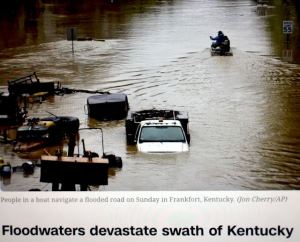
Kentucky River floods Frankfort, the Kentucky capital city, amid record rains in the Mississippi and Ohio River valleys, April 7 (Photo: Jon Cherry/AP)

******************************************************************

Garden Update: Frost is Past, Sun Abounds, Plants Take Hold

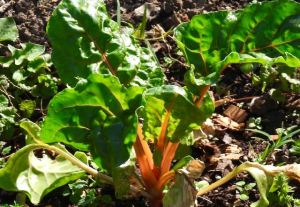
Swiss Chard plant takes hold, three weeks in ground, our community garden plot, April 22, Earth Day

We’re slowly learning the lessons of the Northern Virginia climate as we nurture our small plot in the community garden in our town. Twice in the past month we learned the hard way about planting too early here. Even though the average low temps from late March to mid April were in the 40s, all it took were two nights when the temp dipped to 32 or below (27!) for us to lose tomato, squash, and pepper seedlings. Note to self: Northern Virginia is definitely not Northern California, where we could safely grow year round.

Still, those two setbacks aside, we’ve now had two solid weeks of steadily warming temps for our assemblage of veggies, fruits, herbs, and flowers to thrive in our little patch (225 sq. feet) in the community collection of small gardens.

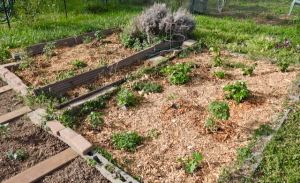
Our full garden plot, newly mulched, and with veggies and flowers thriving in the steadily warming temps, April 25

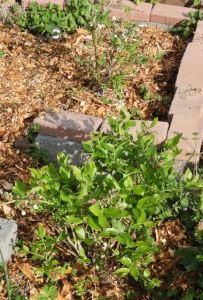
Some of our plants are varieties we had success with in California: cherry and grape tomatoes, hot and mild peppers, strawberries, zucchini, eggplant, Swiss chard, basil, mint, thyme, sage, lavender, and oregano.  One species, Blueberries (two bushes, in ground a month now), are thriving here in this cooler climate, and had no trouble with those 2 nights below freezing. They like the cold, as do the strawberries, but we’ll see how the blueberries hold up when it gets into the 90s in July.

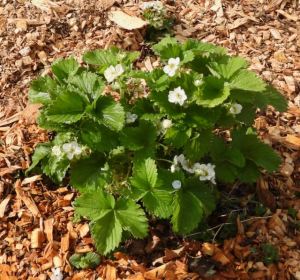
Our two Strawberry plants, perennials, we inherited in this plot, and they are blooming prolifically.

Our two Blueberry bushes , which cross pollinate, loved the March cold and are blooming nicely, April 25

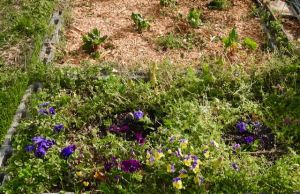
One third of the plot we devote to flowers. The hearty Pansies, purple and yellow, have been thriving since March planting as have the pink Dianthus (one of our California favorites), and just this week we’ve added purple Petunias. One discovery here is the plethora of fast-spreading ground cover such as bright Blue Speedwell and pink Henbit, which will take over everything if we let it.

Purple and Yellow Pansies and Purple Petunias vie with Blue Speedwell and Pink Henbit in the flowery third of our plot, April 25

In drier, hotter California, the challenge was to provide enough water to grow what we’d planted. We rarely had to pull so-called “weeds”: by which people mean any plant that you don’t want to grow in a space where you want to grow something else. Here, the relatively wetter climate encourages less-wanted plants to thrive, so “weeding” of plants like Dandelions and “Creeping Charlie” are daily chores. So the task for us is to  judge the balance between what we’ve planted and the volunteers that already love our ground.

Stay watching for updates. One challenge will be providing enough watering to keep the plants thriving in our severely drought-affected new normal. As a neighbor gardener put it this week, “We’re not used to worrying about rain.”

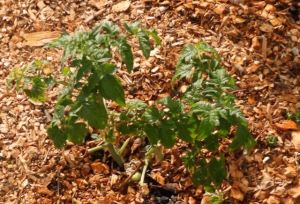
Also taking hold is this Husky Cherry Red Tomato, April 25. We loved these in California and hope they do as well here.

*************************************************************

Cherry Blossom Tradition and Honoring Real U.S. Heroes

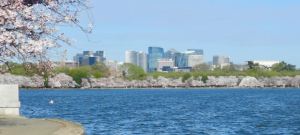
Cherry Blossoms in full bloom, and the city of Rosslyn across the Tidal Basin and the Potomac, March 27

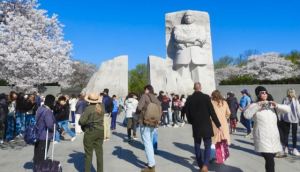
We made our annual visit to the D.C. Tidal Basin in late March, with the Yoshino Cherry Trees and Magnolias in full bloom and the entire Basin area teeming with students and adults visiting from many places. Not only were the trees magnificent, but we reveled in the joy of the crowds, particularly in the patriotic spirit of the thousands from diverse origins and backgrounds who took the opportunity to visit the three memorials that surround the Basin: the Jefferson Memorial, the Franklin Delano Roosevelt and Eleanor Roosevelt Memorial, and the Martin Luther King, Jr., Memorial. At each huge installation, the inspiring words of these authentic heroes of democracy and courage are emblazoned on the walls, and offer us who stand before them messages of hope and encouragement to persevere in our endeavors to respect one another, seek fellowship with the peoples of the world, and keep alive the idea of the U.S. as a friend in times of mutual need.

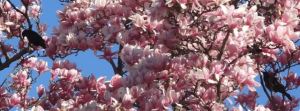
Pair of Grackles call out from brilliant Magnolia, Tidal Basin, March 27

Crowds throng the Martin Luther King, Jr., Memorial, March 27

Words of hope among many sayings of Franklin and Eleanor Roosevelt carved into the walls at the FDR Memorial, March 27

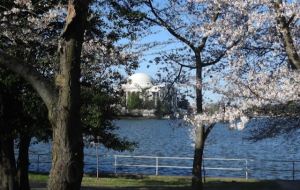
Jefferson Memorial across the Tidal Basin through the trees, March 27

Words of Martin Luther King, Jr., on wall of the memorial, March 27

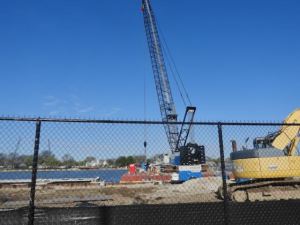
Rebuilding the Basin. We also wanted to see how work had progressed over the year since we had last visited the Tidal Basin. Since 2023, the Basin has been undergoing a massive reconstruction, because sea level rise in Chesapeake Bay, caused by global warming, was every day forcing the waters of the tidal Potomac to overflow the Basin’s walls. More than 150 of the precious cherry trees have been removed because of the worsening flooding.

Not a true wetland, the Basin had been built in the 19th century as part of the massive draining of swampland in the nation’s Capital to enable construction of many of the now iconic buildings of the federal city. Lacking a wetland’s actual resilience in changing conditions, it was inevitable that a massive reconstruction of the Basin’s stone walls and dredging of the bottom like that going on now would be eventually needed.  Fossil-fuel-caused climate change accelerated the need. See the March 2024 blog for a history of the 19th century “draining of the swamp” and its ongoing repercussions.

The project is expected to be completed next year, in time for the 250th anniversary of the founding of the U.S.

The 3-year reconstruction of the Tidal Basin is moving the walls a hundred yards back from the originally-constructed shoreline near the Jefferson Memorial, with the loss of a few hundred trees.

****************************************************************

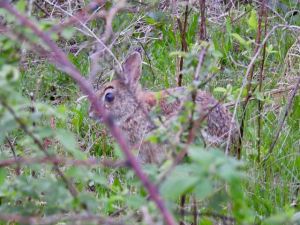
A Cottontail “Easter Bunny” hides in the northwest corner of the shoreline, April 20

The April 2025 Photo/Video Gallery: Nature Keeps On Keepin’ On

Welcome to the Babies! And to more wetland rites of spring here and elsewhere in our region. (Oh, plus three kitchen treats. Would not forget those!)

Surprise, surprise! Despite this winter’s cold, the Canada Goose babies are here by our lake at the same time as in last year’s earlier spring. Congrats to the parents!

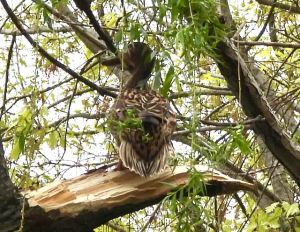
Very rarely do Mallard females fly into trees and look to build nests above shoregrounds. This one on the west side of our lake was a real surprise, April 19

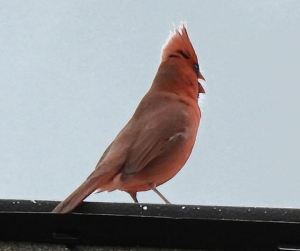
This Cardinal male in mid call atop a roof south of the lake, April 19

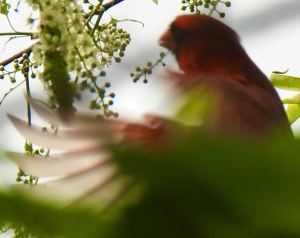
And here’s a very different view of a Cardinal male in closeup shadow in a Black Cherry tree, west bank, April 26

Watch this same Mallard female fly up to the broken branch in the Walnut tree while a Downy Woodpecker comments, April 19

At the National Aquarium in Baltimore, which we visited on April 10, an attempt is being made to re-create a marsh in the water outside. Here, a Mallard male rests on a bed of reeds. For almost 150 years, this harbor water had been a dump for industrial waste. With federal aid, the clean-up has been ongoing for 50 years, but will it continue?

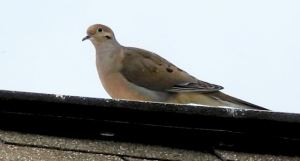
This Mourning Dove shares the same roof with the Cardinal pictured above, April 19

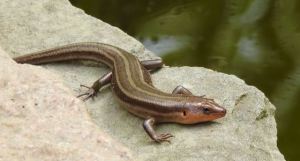
On Easter Sunday, we visited relatives at their rural home. Here a beautiful tiny lizard enjoys the sun by their pond.

3-foot-long Yellow Largemouth Bass, the dominant fish in our little lake, swims near the north shore on a warm April 25

The annual magnificent woodland display of Bluebells covers acres at nearby Riverbend Park on the Potomac. We visited on April 6.

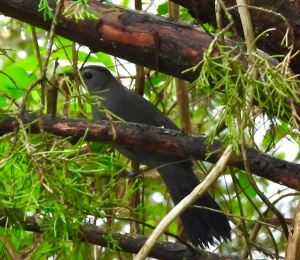
Grey Catbird perches in a Red Cedar along the west bank of our lake, April 26

Cardinal female and Yellow-rumped Warbler call from the Willow Oak beside the southeast cove, April 19

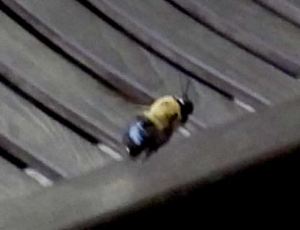
My first sighting this year of a Bumblebee, in the gazebo by the lake, April 19. These pollinators are essential to life here.

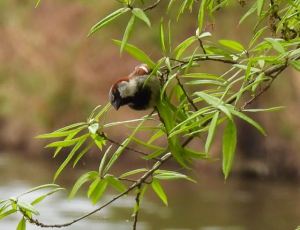
The Willow Oak by the cove also gave a perch to this acrobatic House Sparrow on April 19.

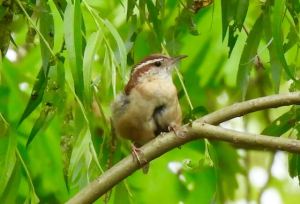
Carolina Wren makes music most days, but I don’t see them nearly enough. This one perched beside me in this Weeping Willow on the west bank on April 26.

Song Sparrow calls from the leafing Persimmon on the east bank of the lakeshore, April 26. I’d never want to imagine a month without a Sparrow song.

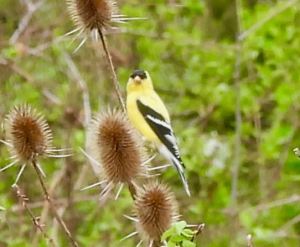
American Goldfinch in dry Cutleaf Teazel, north of dam, April 4

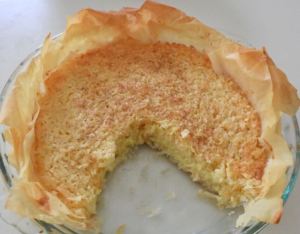
Jean’s one-of-a kind Coconut Custard Pie, with Filo Dough crust, April 26

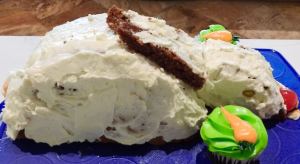
Jean’s Easter Bunny Carrot Cake with cupcakes, April 20

Jean’s Easter Deviled Eggs with Crab, Olives, and Cucumber Pickles, April 20

First sighting of the year: Green Heron, usually a late summer bird, here now as another April surprise, in the Willow Oak on the east bank, rainy morning, April 26

The birds always seem their most ebullient on these warm, drizzly mornings after an overnight rain. The lakeshore, our local wetland, rejoices. And so we venture on to the marvelous month of May.