
In this month’s blog:
1. Gardening While Black, and Other Endangered Stories
2. The Versatile Apricot and Other June Kitchen Inventions
3. Fruit and Veggie Garden Update
4. This Month’s Gallery: Endangered Friends
Chris:
In this June of reinvention, as nations struggle with the twin pandemics of COVID-19 and racial injustice, an article from the LA Times about Jimmy and Logan Williams really hit home to me as a gardener. My whiteness lets me assume a level of safety that many American plant-nurturers have not been allowed to feel–even those who are among the most brilliant and successful in their calling. I hope you’ll read the article.
I wrote in April about the garden as a place of solace in troubling times. Gardening keeps me busy and focused on other creatures besides myself. Studying life as intricate and exquisitely beautiful as this dragonfly (above) who likes to perch on a tomato cage in our garden helps me appreciate the creativity of nature, the ability of life to adapt and surprise, yet also to persevere through one change after another in the course of generations.
But if the garden teaches me about perseverance and strength, it also teaches me about fragility. This dragonfly on one of our iris stalks (below) is endangered, not only because the adult dragonfly lives only a few weeks, but because dragonfly species around the earth are declining through such human actions as pesticides and habitat destruction. All these two adults want is to find a mate and pass on their genes. But that seems less and less a possibility.

Still, despite the fragility of life, including my own as an old man in this COVID-19 world, I find so much hope in the intense lives of dragonflies, and so much hope in the tender art of fellow gardeners like the Williams family. I’ll try to use that hope for action that can nurture the hope of my fellow humans and increase the success of the creatures with whom we share this earth.

All My Loving rose, side garden
2. The Versatile Apricot and Other June Kitchen Inventions
Jean:
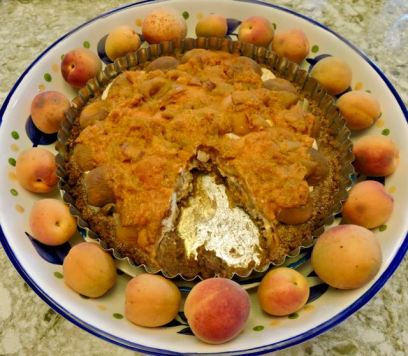
The picture above shows apricots three ways. I wanted to make a simple apricot tart using some of our avalanche of apricots this year. Instead of using my scarce flour to make a pie crust, I took out a box of ginger snaps I had bought when having a cookie craving a few weeks ago. I figured the spicy ginger snaps would complement and stand up well to the full-flavored fruit.
Well, the ginger snaps broke down easily in the food processor, allowing me to add just a few tablespoons of melted butter and brown sugar to make a crust that could be pressed into the bottom of my tart pan. I baked that for about ten minutes to try to reduce sogginess.
I also spread some white chocolate chips over it to allow them to melt and create a barrier. I threw together part of a package of cream cheese and some yogurt that I had, to make a little creamy layer, and then lay halved apricots on top.
I wanted a glaze on top, but the apricot jam Chris had made was a little thick and partially obscured the pattern of the fresh apricots.
Nevertheless, the tangy fruit paired well with the sweet creamy cheese and the crispy crust –and the tart disappeared quickly!
Lemon Blackberry Cake

Lemon blackberry upside down cake
This recipe is from Karen MacNeil’s book Wine, Food & Friends. I love upside down cakes because they are so easy — no worrying about frosting. Just some whipped cream or ice cream on top or alongside is perfection. Here’s all you do:
Preheat the oven to 350 degrees. While it’s heating up, melt 2 Tbsp. butter in a 9-inch cake pan. Sprinkle 1/3 cup packed brown sugar over the butter, return it to the oven and let it heat 1 or 2 minutes until the sugar melts. Pull it out, top with 1 cup blackberries and a teaspoon or two of grated lemon rind; set aside.
Now for the dry ingredients. Combine 1-1/4 c all-purpose flour, 1-1/2 tsp. baking powder and 1/4 tsp. salt in a small bowl.
Then the wet ingredients. Beat 2 Tbsp. softened butter with 2/3 c. granulated sugar in a large bowl until well blended and fluffy. Add one large egg and 1 tsp. fresh lemon juice (or 1 tsp. vanilla, or both, what the heck). Beat well.
Add the flour mixture to the egg mixture, alternating with 1/2 cup milk. MacNeil says “fat-free,” but I don’t think so. (Again, what the heck.) The mixing is easiest if you begin and end with the flour mixture.
Bake at 350 degrees for 35-40 minutes. Cool in the pan on a wire rack for 5 minutes, then invert onto a cake plate. (Put the cake plate upside down over the hot pan first, make sure you get a good grip with trusted hot pads, and flip it fast, then ease the cake pan straight off.) With any luck, the cake comes out easily, and you’ll have a beautiful cake. And you didn’t have to struggle to prepare the pan with lining and all that!
West African Stew
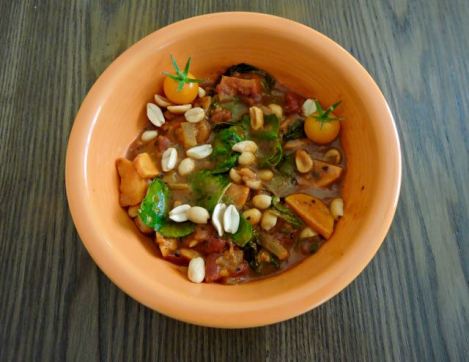
This meatless stew is fun to make–very hearty and nutritious. I’m going to give you the quick, non-recipe version.
Put a couple of tablespoons of oil in a pan and start to soften a handful of finely chopped onions or shallots. Salt them, add a couple of tablespoons of tomato paste (or catsup), and let that cook down a few minutes.
Add spices: These can include ginger (powdered or fresh), turmeric or curry powder, cayenne pepper, black pepper, garlic (fresh or other forms) — whatever you like. The stew should be a little spicy, to your taste.
Sorry if I’m not being precise or particularly authentic in my ingredients and timing, but stay-at-home cooking during the pandemic gives you permission to be spontaneous and creative–and to use what you have on hand or can fetch from your garden.
The point is just to cook a little of the rawness out of these ingredients. The mixture is pretty thick at this point and you don’t want it to burn, so next you have to get the liquid in. Throw in a can of tomatoes in any form you have and some water or vegetable broth, enough to cook the chopped yams or sweet potatoes you will add in next.
Let all that simmer until the potatoes are substantially softened. Then add a can of coconut milk and some greens, like chard or kale, plus some fresh basil. Simmer the stew another ten minutes or so.
The final ingredient is peanuts. I don’t care for cooked peanuts, so I throw roasted peanuts on top for some crunch rather than mixing them into the stew. You can do without the peanuts, and the dish will still be tasty and healthful, but the peanuts will enhance the overall texture and flavor. You might also garnish with a few grape tomatoes, as shown in the photo above.
Sally Lunn Bread
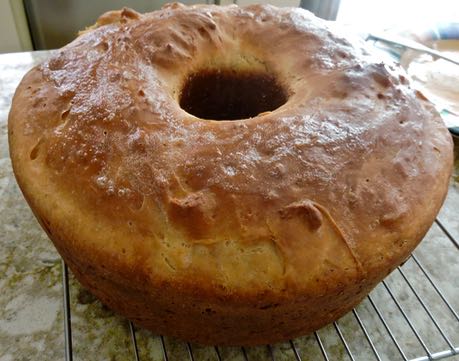
This bread is fun and easy to bake. (Do I sound repetitious?) It has rich flavor and texture, with a crunchy crust. My mother liked to make it when I was a kid, so I was excited to find recipes for it in both my Bobby Flay cookbook and my bread machine cookbook. I had made it once in the bread machine, and it turned out well, so I decided to use Bobby Flay’s recipe to make this one.
Sally Lunn is actually a type of brioche bread. Instead of the austere flour, salt, and water of a basic yeast bread recipe, Sally Lunn is a rich dough made with milk, egg, sugar, and butter. You can see and taste the difference. Sally Lunn, like brioche, makes great French bread, which is the direction Bobby takes it.
Just as great as the taste is how easy it is to make. Bobby’s recipe has you mix the dough in the KitchenAid with a bread hook. Then you pour it into the tube pan without kneading and let it rise in there. I realized why this is a great idea. The dough is so sticky that transferring it or handling it more would be difficult, but once it is in the tube pan, you’re almost home. Just let it rise, bake it, and dig into that lovely crust after cooling and popping it out of the pan. Make French toast with the last few pieces. Yum.
Three Other June Treats:

Chicken breasts grilled with Apricot halves and Zucchini wedges
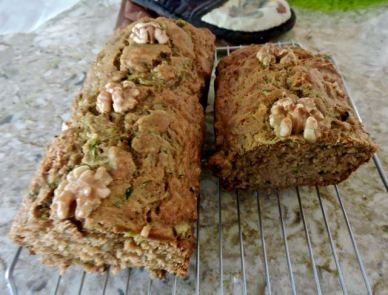
Zucchini bread topped with walnuts
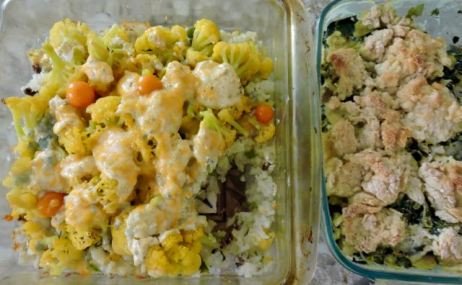
Twin casseroles: Cauliflower Cheddar and Chicken Biscuits
3. Fruit and Veggie Garden Update
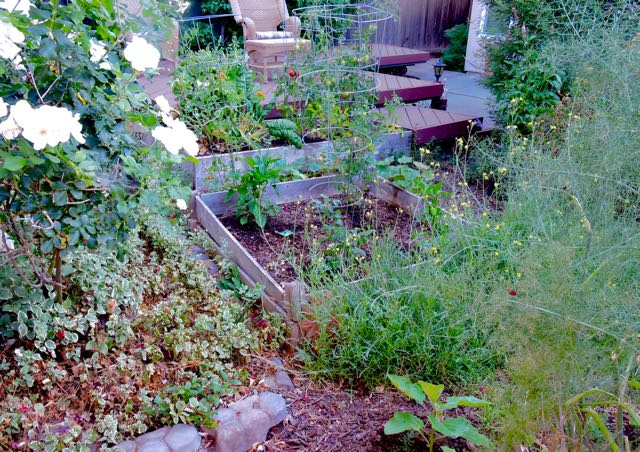
Back garden toward northeast: eggplant, arugula, fennel (foreground); 2 pepper plants and 2 tomato plants in square raised bed; chard and 2 Carmello tomatoes in farther raised bed; ancho chilis and mild yellow pepper in right background; lemon cucumbers between the raised beds.
Chris:
Apricots
Read Jean’s cooking section above. This is the month of the apricot–more than 1000, our record for a year!
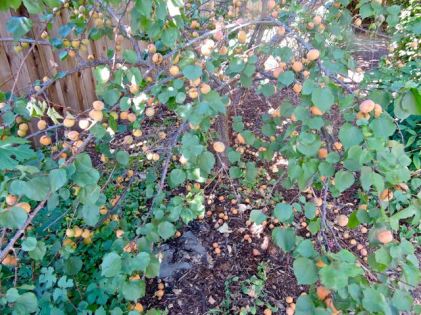
Ripe apricots still cover the tree mid June, even as many have already fallen to the ground. We’ve used hundreds for drying, jam, baking, freezing, and just plain snacking.
Chard
The massive Swiss chard plant in the raised bed (see the early morning panorama photo, just below) has now been in the ground going on 7 months, all through winter and spring and now into summer. I keep trimming back the flower stalks at the top of the plant, and so this winner keeps churning out huge green and tasty leaves for soups, stews, and side dishes. How long will this marvel keep going?
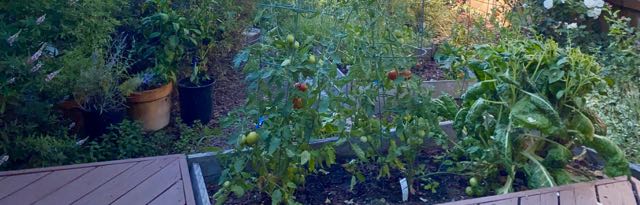
L-R: lupine with white blooms ; mild pepper and ancho chili (in pots); 2 Carmello tomato plants; massive Swiss chard
Cherry Plums
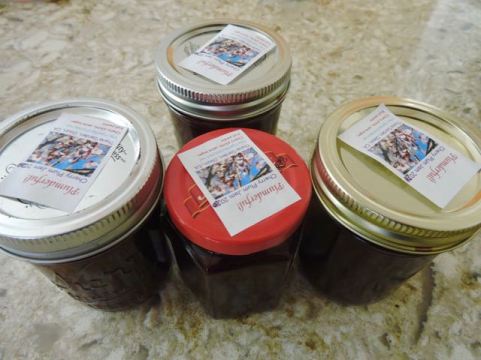
Now, in late June, the cherry plums are at their peak of juicy, tangy ripeness. Normally, I’d be pitting and cooking hundreds for our Plumderful jam. But we still have several large jars remaining from last year’s bountiful harvest, plus new jars of apricot jam, so this year maybe I’ll take a break from making more of that deep burgundy delight.
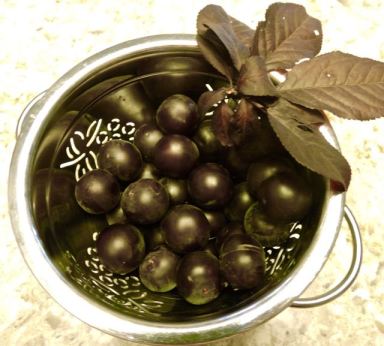
Cherry plums on display, 2020
Then again, Jean said this morning that she didn’t want us to run out, which was music to my ears! So here’s (below) the small batch I made with 160 of the little beauties.
Eggplant
These 2 late bloomers have been in ground 8 weeks, and are growing steadily toward late July-early August harvest. Both Rosa Bianca varietals, they have just begun putting out lavender flowers.
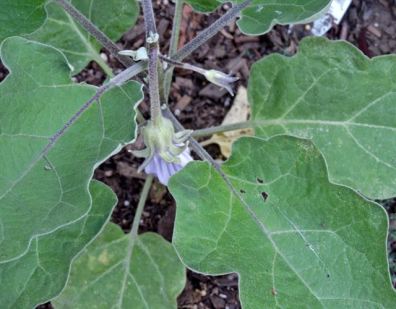
One of our 2 Rosa Bianca eggplants
Lemon Cucumbers
The two plants have been in the ground 9 weeks, began flowering in week 6, and have a bunch of lemon-shaped fruit growing. This is our first year of this variety, and we have high hopes.
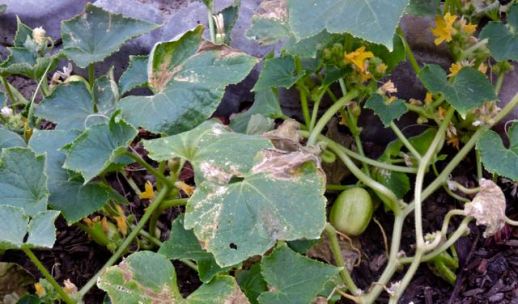
One of our 2 lemon cucumber plants, with several fruit just starting and many yellow blossoms
Peppers and Chilis
3 mild varieties (green, yellow, and red) have been in ground 10 weeks, and all are fruiting, but not yet ready for harvest. The pepper in a large pot (see below) is doing particularly well. The potted ancho chili (below, right), a first-timer in our garden, is very precocious, with a bunch of full-sized fruit. Two harvested so far.


Tomatoes
4 of our 6 tomato plants this season are new to the garden. The 2 repeats, both of whom were outstanding producers in 2019, are a husky cherry red and a SunGold grape tomato. The SunGold is our champ so far, with well over 100 fruit, and already about a half dozen new ripe ones per day. The husky cherry red got a late start, but is catching up.


The 4 newbies have been excellent surprises so far. 2 of them are Carmello mid-size tomatoes, and both are lush and sturdy producers, with our having harvested 4 of more than 50 (!) growing and ripening on the 2 plants.


The final 2 newby tomatoes are blueberry minis, which have been in ground for 9 weeks and are fruiting in profusion. So far only a few fruit have fully ripened, but these stand out for their dark blue to black coloring. We should have a bunch of ripe ones to show in the blog in July.
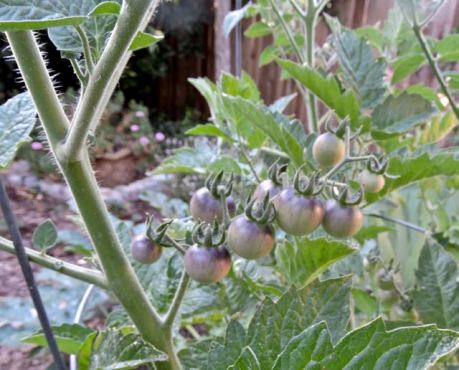
Not yet ripe Blueberry mini tomato cluster
Zucchini
We’ve picked 3 foot-long+ zooks so far from our one luxurious plant, with more on the way. Delicious eating in sauces, in casseroles, grilled with chicken, and in Jean’s zucchini bread (see cooking section above).
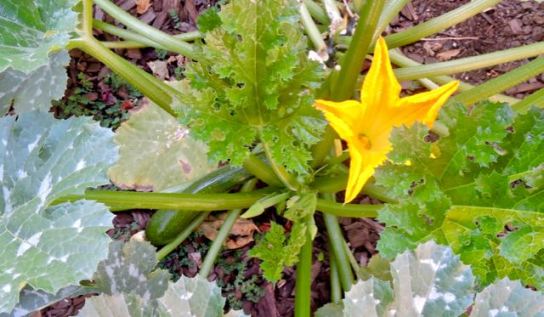
Zucchini blossom and new fruit (center left)
4. This Month’s Gallery: Endangered Friends

Pair of cabbage leaf butterflies in periwinkle, back garden
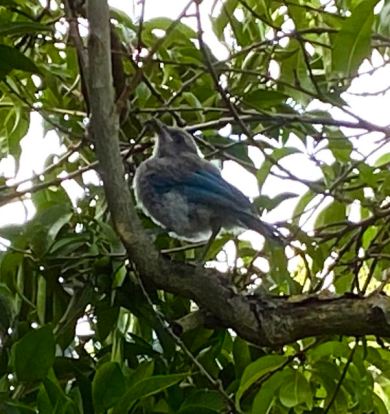
Scrub jay fledgling in peach tree
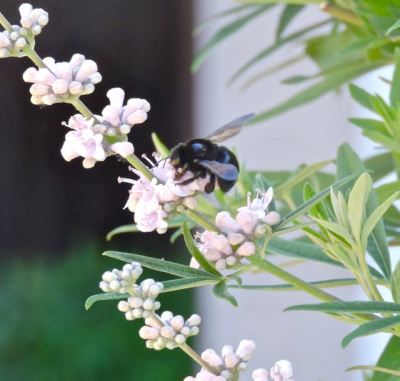
Bumble bee in lupine, back garden
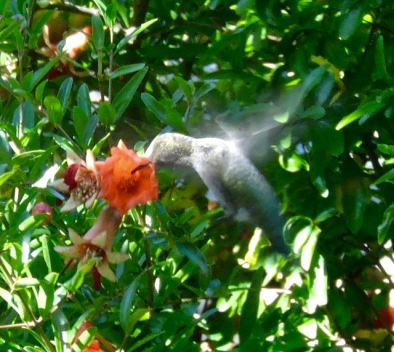
Anna’s hummingbird on pomegranate blossom, back garden
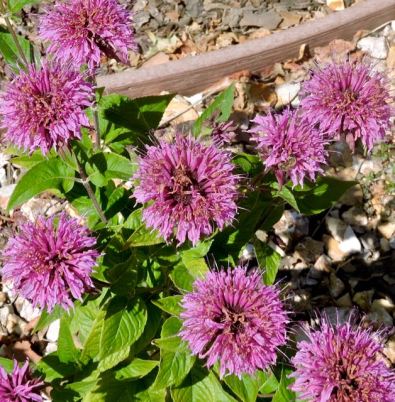
Find the bee on one of these bee balm flowers, front garden.
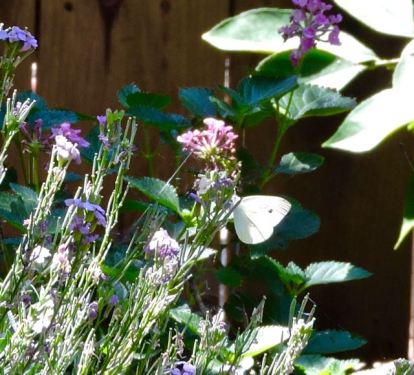
Cabbage leaf butterfly on wallflower (erisymum)
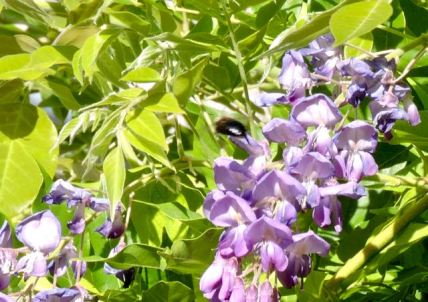
Bumble bee on late-blooming wisteria
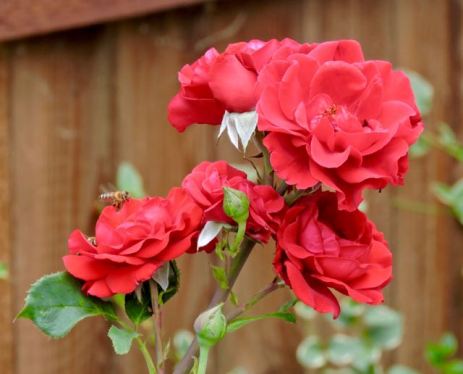
Bee on red rose cluster
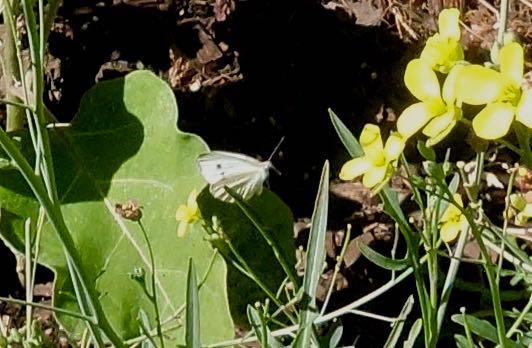
Cabbage leaf butterfly on eggplant beside arugula flowers
On to July in hope!
 From Sacramento to Potomac: Tales of Two Valleys
Lovely post. Thank you for the photos, recipes (haven’t thought about Sally Lund in ages!) and musings!
LikeLike
Pingback: August 2020: Heat, Lightning, Fire, and the Garden Goes On | A Sacramento Valley Kitchen Garden