Our second snowfall of the week, a total of about 7 inches, Jan. 19. Our first real snow since our move from California in 2022.
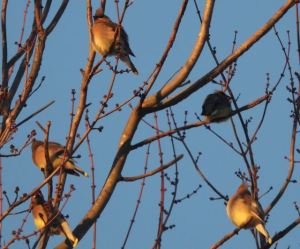
Five Cedar Waxwings lit by sunrise in a red maple along the east side path, Jan. 17
In this month’s blog:
Beautiful Surprise: Snow to Start the New Year
Climate Log: As Bird Populations Plummet, How Can we Change Minds?
Potomac Valley Exploring: Great Falls Adventure
The January 2024 Photo/Video Gallery
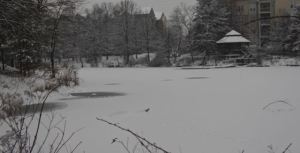
Across the lake from the southeast cove to the dock and gazebo, during the latest snowfall, Jan. 19
“It’s so beautiful”–Snow comes to us in mid January
I didn’t realize how much I had missed snow until it arrived last week. In the almost 2 years since we returned from our 17-year sojourn in California, I thought I’d come to terms with the year-on-year lack of snow in Northern Virginia, a far cry from the sometimes deep snows of my youth and middle age in this Potomac region. But when the first wave of tiny crystals began sticking to the grass and pavement here on the 14th, I realized the old exhilaration of the icy wind and the soft prickle of ice on my face and hands. It was with glee that I donned my snug coat and hood, pulled the wooly hat over my ears and the gloves over my hands. I couldn’t wait to walk around the lake and witness the changes in light and color, the crackle of branches, the loud languages of intensity–“it has come!”–in the songbirds and waterfowl.
A male Cardinal amid greenbriar on the southeast bank of the lake confronts the blowing snow, Jan. 14
There of course had been the many years of my life when a forecast of snowfall had brought the fear of pipes bursting, power outages, traffic snarls during my incessant commutes to work, careening on black ice, hours of digging out from snowdrifts, my old car battery dying in the cold, and all the other hazards of carrying on what most Americans thought of as “normal” existence while Mother Nature was just being her cantankerous, always creative self.
But now, in my semi-retired old age, when driving is not a daily demand, I can glory in sharing a child’s joy in the white blanketing of gossamer fluff that makes the whole outside world different and new. Many of our neighbors shared this joy with me. When I met them this week on their own lake walks, most of these folks being walked by their dogs (!), they greeted me with “It’s so beautiful!” or at least with smiling eyes as they scanned the scenery.
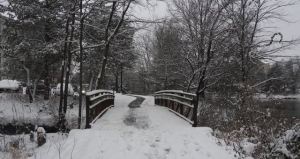
First snowfall: bridge over the inlet stream, Jan. 16, 7 AM
I was even looking forward to the remembered exertion of cleaning the snow off my car, digging the stubborn ice-crust off the windshield, and taking tiny steps to avoid falling on the ice. The task was now a welcome challenge and a tasty bite of nostalgia, no longer a resented imposition on the carefully-timed daily work schedule that had governed most of my life.
Waterfowl Retreat and Songbird “Mega-Bird” Day. But most of all, as I looked out on how the white blanket changed the world of every day, I wondered how the snow and intense cold would change life for the animals I had come to know as my friends along the lake. Who and what would I see? Would what I was used to seeing now be hidden from me?
In new snow, a single waterfowl, a Cormorant, negotiates the lonely lake, Jan. 16
The Cormorant I videoed (above) on Jan. 16, after the first snowfall, was the last waterfowl I saw on the lake before it froze on the 17th, when temps fell to 11 degrees. The water was frozen solid in many places, but elsewhere it became a kind of hard slush that makes swimming impossible, while still allowing some animals, like squirrels, to walk or leap in the shallowest areas. The Mallards, who I saw most recently on the 15th, after the first snowfall, and who starred in this blog in December, are now off somewhere else. I await their return.
My favorite Mallard pair swim in a strong wind in the southeast cove on Jan. 13, just before the first snowfall.
Other waterfowl citizens, such as the usually exhibitionist Canada Geese and the usually steadfast Great Blue Herons, lasted until the hard freeze and second snowfall occurred, but they have now left (though I hear the Geese flock overhead most days late in the afternoon, and I spotted a Heron swooping overhead just at sunset on the 22nd).
The Blue Heron withstands the sharp wind of Jan. 13, the day before the first snowfall, but has not landed here since, as the lake has frozen.
In contrast, an array of songbirds–including an amazing flock of Cedar Waxwings and some very early American Robins–arrived here just before the first snowfall, and some have stayed around. In fact, Jan. 18, the day before the second snowfall, saw so many songbirds out flying, eating seeds, and singing that I called it in my notes “mega-bird day.” More sightings from that day are part of this month’s Photo/Video Gallery.
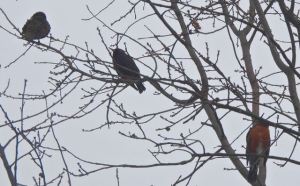
On a bitterly cold day, 2 European Starlings and an early visitor, an American Robin, atop a tree on the east bank, Jan. 18–“mega-bird day”
***********************************************************
Climate Log: As Birds Decline, How Can Changing Climate Change Minds?
Of course, not everyone enjoyed the snowfalls last week. Another neighbor cheerfully told me on the morning of the 22nd, “I’m glad the snow will be gone soon. Time for a change of scene.” For some outside our area, the cold snap and heavy snow were tragic. The blizzards across much of the country and temps as low as -40F, were a shocking surprise that became terrible because of the dozens of deaths across the continental U.S. caused by the sudden, extreme shift in the weather from an almost snowless December and early January. The sudden cold anomaly is also tragic because it reinforces the delusion of people who still remain unconvinced that the climate is dangerously warming through human causes.
Yes, as the science predicts, our snow holiday was fleeting. For the 25th, the temperature forecast is 60F and we’ll have rain, not snow, from the 24th onward for 5 days–both signs of the “new normal” that is way warmer than the normal that used to be January. A dangerous “new normal” that is much more typical now for the entire world, including the U.S.
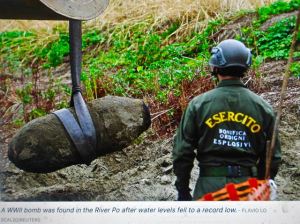
Italy’s River Po is at a historic low amid drought (Photo by Flavio Lo)
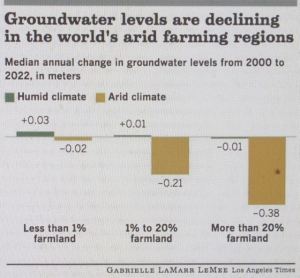
Dramatic worldwide depletion of groundwater since 2000 (LA Times, Jan. 26)
Indeed, it would surprise no one if 2024 were at least as warm month-to-month as the record-setting 2023. But it remains difficult for many folks who live in the remaining parts of the U.S. still relatively unaffected by drought, groundwater depletion, chronic flooding, sea level rise, extreme heat and humidity, sudden extreme cold snaps, etc., to credit the overwhelming amount of scientific data that sounds the alarm for the need to move away from the fossil fuels that have steadily, even if gradually, endangered many forms of life on Earth, including humans. Climate change skepticism, and even outright denial, continue to plague the effort to save species, this denial fueled relentlessly by the fossil fuel industry’s evermore frantic efforts to maintain its obscenely vast revenues by deluding the public into believing that all is right with the status quo. That this industry bankrolls politicians and media outlets to keep spreading the soothing lie that everything is OK just makes the tragedy worse.
“New normal” quickly asserts itself. Steam rises from the thawing lake on Jan. 25, as all snow has already vanished
Bird Populations in Alarming Decline. Since most U.S. people are not enthusiasts, close observers, or feeders of birds, and so don’t pay close attention to our feathered friends except when they see bird poop on their cars, they don’t know that most bird species are in serious decline, and, like the proverbial “canary in the coal mine,” this is bad news for humans’ own survival. The Washington Post published last week a beautifully graphic map of how this decline is affecting all parts of the U.S.
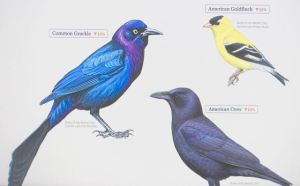
3-bird drawings from the Washington Post infographic/video on bird decline, January 17; text by Harry Stevens
Will colorful graphics such as the birds map have any positive effect on the skeptics? Will the heart-rending stories from “Postcards from a World on Fire” ever reach viewers who have been so indoctrinated to hate/fear refugees from other countries that it is impossible for them to empathize with their suffering fellow humans? No doubt some positive effect can occur, if people actually see these sites. But it’s so easy nowadays to stay within your own partisan media bubble, so that crossover among viewpoints is minimal.
Sadly, the best chance to sway opinions may come from climate-caused damage itself. The many U.S. communities and states now experiencing chronic flooding or the effects from drought and wildfires are realizing that the trend must be stopped. The Republican-voting fisherman who has seen his catch get smaller every year in a warming ocean may have a better chance to sway other Republicans than any graphic from the Washington Post. The same goes for residents of flood-prone and now wildfire-prone states like Louisiana (below). But will any climate-denying outlet like Fox News ever allow such a person to have a voice? Maybe yes, but only if enough people want their voices heard.
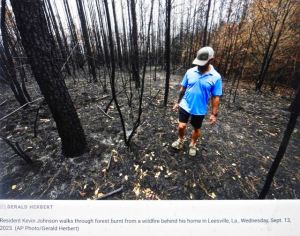
Wildfires covered much of usually flood-prone Louisiana this summer and fall, Sept. 2023. (AP photo by Gerald Herbert)
Fortunately, there are more and more politicians, local leaders, journalists, bloggers, and creative, determined companies that are fighting the good fight and showing people how we can still save a future for all creatures, including us humans.
Logo from the New York Times infographic/video Postcards from a World on Fire, December 2023
***********************************
Potomac Valley Exploring: A Great Falls Park Adventure
On January 3, we visited Great Falls National Park, just 10 miles from our community, and on our list for visiting since we moved here. We were with one of our visiting daughters from California, and it was a beautiful afternoon, crisp and sunny. The park features stunning views of the roaring, tumbling rapids over a series of drops and between massive boulders through a narrow gorge. It also features the ruins of an early attempt, begun in 1784 by a consortium headed by George Washington, to build a canal around the falls on the Virginia side of the Potomac.
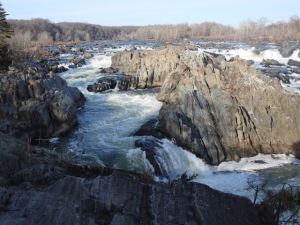
The Great Falls of the Potomac, as seen from the Virginia side of the river, Jan. 3
This bypass of the river was successful in transporting agricultural goods until 1802, when plans for a new canal on the Maryland side of the Potomac were created. A second part of the Park is on the Maryland side, where the much more successful canal was built early in the 1800s and flourished until the early 20th century. Earlier blog entries have captured our visits to more upstream parts of the Chesapeake and Ohio Canal, in Williamsport, Maryland; Shepherdstown, West Virginia; and beside Fort Frederick near Clear Spring, Maryland.
Great Falls provides thrilling views for visitors of all ages. A brisk, sunny day for our visit, Jan. 3
The Sheer Drama of Great Falls. No place on the Potomac provides more excitement for visitors. The overlooks high above the gorge give viewers a panoramic vantage point on the many torturous, dangerous passes amid the rocks, while the constant roar of the rushing waters warns onlookers of the danger threatening anyone who might want to attempt the passage. Nevertheless, on the day we visited, two intrepid kayakers took the plunge, and we had clifftop viewing, along with the many people of all ages also watching and cheering them on:
A pair of kayakers attempt the Falls, Jan. 3
As the kayakers bravely made their way down the drops, we enjoyed the added thrill of seeing Park Rangers monitor the adventurers’ progress.
Needless to say, Great Falls will stay on our list of Potomac sites to visit. Maybe next time, we’ll add the Visitors Center. We’ll probably not be planning our own plunge over the Falls.
*******************************************
The January 2024 Photo/Video Gallery
This month’s Gallery highlights snow, hawks, mega-bird day, and more.
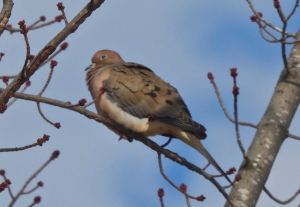
A Mourning Dove rests high in a red maple above the south end of the lake, Jan. 22
A Blue Jay struggles in a windy, sunny, snowy day, Jan. 21

Mega-bird Day! 27 Rock Doves crowd their favorite perch, the power stanchion high above the west side of the lake, Jan. 18
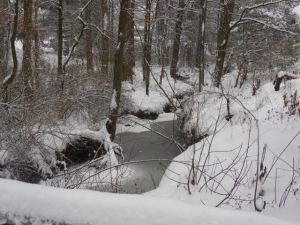
After the second snowfall, the inlet stream by the bridge, southeast cove, Jan. 19
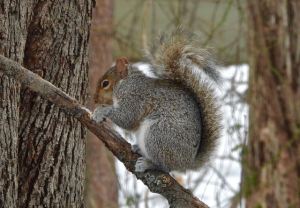
On Mega-Bird Day, grey squirrels like this one in a pignut hickory, southeast side, join the party on this very cold afternoon, Jan. 18
This young Cooper’s Hawk flew past me as I began my lake walk in the deep snow of Jan. 20 and landed in a tree outside our building. This young friend was remarkably patient as I took this video.
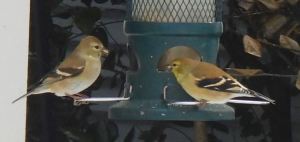
These brilliant American Goldfinches safely shared this feeder not long after the Cooper’s Hawk had flown off from this spot into the woods, Jan. 20.
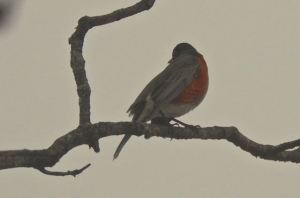
This early arriving American Robin chose this very cold Mega-Bird Day for a first appearance, east bank dead tree, Jan. 18

Change of pace: This Mediterranean super-veggy omelet (with a bit of prosciutto) warmed us at breakfast on a very cold and snowy Jan. 19.
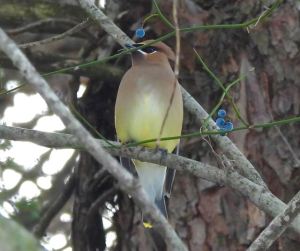
This wonderfully-colored Cedar Waxwing shone brightly in the greenbrier thicket at the northwest corner of the lake, Jan. 23
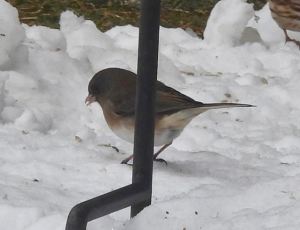
A Dark-Eyed Junco looks for seeds beneath the feeder on the east side, Mega-Bird Day, Jan. 18
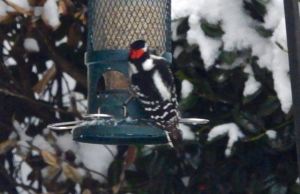
A Downy Woodpecker at an east side feeder, 7 AM, Jan. 16. A hungry time.
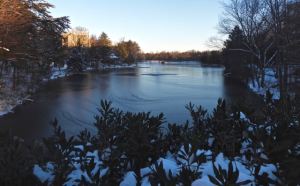
Looking north across the lake at sunrise, 7 AM, 11 degrees F, Jan. 17
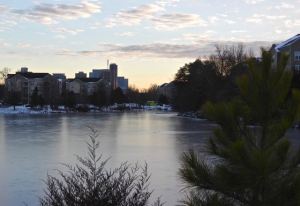
View across the frozen lake toward downtown at sunset, Jan. 22
In mid-walk, we spied this Red-Shouldered Hawk watching us from a small elm on the north end path, no more than twenty feet from us. This friend was patient for 10 seconds of my video before hopping down…
…stood magnificently in profile on the ground by the path, then launched past us and gone, Jan. 23. What an unforgettable gift to us!
Such a remarkable first month of 2024. On to Valentine’s Month!
 From Sacramento to Potomac: Tales of Two Valleys