
In this month’s entry:
Celebrating Love in the Midst of Fear
Finding Birdsong: the Great Backyard Bird Count
Dishes to Warm the Heart
The February 2025 Photo/Video Gallery: Abundant Life in the Cold
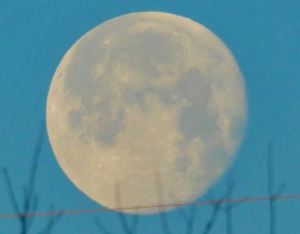
The February “Snow Moon” setting west of the lake, Valentine’s Day
Celebrating Love in the Midst of Fear
I always end each month’s entry with a “bon voyage” message for the next month. January’s message was “And on to the month of Valentines in hopes for our own resilience among challenges.” Well, there certainly have been challenges, as the new regime in the White House has torn through agency after agency with mass firings, and has left all three hundred million US citizens wondering what’s next:
- Will any of our personal data be left un-pillaged for illegal use by Elon Musk and his uncontrolled band of data miners riffling through all Americans’ tax files, internet messages, and Social Security records?
- Can we count on any payments and services from this new federal ruling class, which day after day punishes people if they have the courage to speak up?
- Will US farmers survive the triple-whammy of extreme drought/floods, loss of foreign markets, and the bird flu epidemic that so far the administration ignores? https://www.youtube.com/watch?v=_3oXl_-viAg
- Will the changed climate ever be addressed, as heat rises, storms become more deadly, and fires proliferate around the country and the world?

Flooding and loss of lives in Kentucky, February 16 and onward (Curtis King photo, CNN)
- Finally, will the US keep any trust among the nations of the world, as the President cozies up to the Russian tyrant and threatens sovereign nations with land grabs and budget-busting tariffs? Will the US be left with any friends around the world in our own time of need?
Yes, the time for resilience is truly upon us.
But still we have so much to take joy in and celebrate–it’s Valentines Month! Let’s celebrate the love and care of those we are close to, and of the friends we’ve made through the years. Let’s comfort those in need and bring joy to as many others as we can.
One place to start is in our own back yard…
One of our Community’s resident Cardinals listens and calls to friends in a Red Maple along the east shore of the lake
*************************************************
Finding Birdsong: the Great Backyard Bird Count
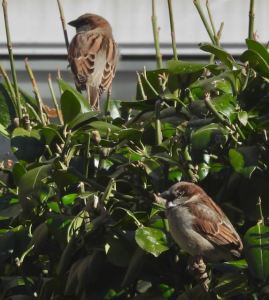
Pair of our abundant House Sparrows in a Japanese Spindle bush by a window in our community, on a cold, windy February 17
Yes, it’s that wonderful time of year again, when over 800,000 birders from around the world head out to their favorite places to record in picture and sound the inspiring lives of all the species they can discover. Just in the U.S., the Great Backyard Bird Count (GBBC), February 14 to 17, so far this year has found 655 species from almost 150,000 participants. Worldwide, so far almost 300,000 searchers have discovered almost 8000 species. Just in touring each day around the lake over the 4 days, I’ve found 25 species.
****************************
Update (March 14): Final Stats from Cornell Lab of Ornithology:
- 8,078 species of birds identified
- 217 countries or eBird subregions
- 387,652 eBird checklists
- 611,066 Merlin Bird IDs (step-by-step, sound, or photo)
- 189,741 photos, videos, and sounds added to Macaulay Library
- 838,113 estimated global participants
- 409 reported community events
****************************************
In part because this winter has been distinctly colder and snowier than last year’s (as this blog explored last month), the roster of local birds in this year’s GBBC is somewhat different from last year’s. For example, this month I’ve heard a Carolina Wren and a Yellow-rumped Warbler, but not seen one. Last year, they were on my photo roster. Nor have I seen any Double-crested Cormorants for three months–a regular winter presence when the lake is not frozen–nor a White-Crowned Sparrow, also more used to warmer temps. In contrast, American Robins have been here in profusion since this December; Dark-eyed Juncos have been here continuously since the Fall; and–lo and behold–for the first time since we moved here in 2022, Bald Eagles–at least 3–have been soaring 500 feet or more above the lake, close enough for me to get a couple of blurry, but definite, pictures.
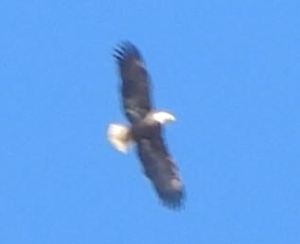
Bald Eagle soars about 500 feet above the north shore of the lake, close enough for me to get a hazy zoom shot, on a windy, cold February 17
Here are a few more from this year’s visible species list:
Not seen in the last GBBC, nor the year before, White-Throated Sparrow hunts seeds near a feeder on the Southeast side of the lake, February 15

New on this year’s GBBC roster, Savannah Sparrow feeds in the marshy waters in the Northwest corner of the lake, February 15

As last year, a few Eastern Bluebirds brighten the winter with their presence, like this one perched at a feeder on the Southeast side, February 15
As these 2 House Sparrows enjoy the blue feeder, listen for 3 other species: White-Throated Sparrow, Song Sparrow, and–surprise!–a male Red-Winged Blackbird, who is a warm-weather bird who doesn’t show up in these parts until June. Why he’s here now is just one of those birding surprises. February 19
The forecast for the coming week indicates more cold weather and perhaps snow coming our way, so we’ll see how the roster of birds in our community adapts. Every day offers surprises to birders. But as long as we have the lake, the woods, the diverse plants, animals, and insects along the lakeside–and the humans who care about their surviving and thriving–we’ll be fine.
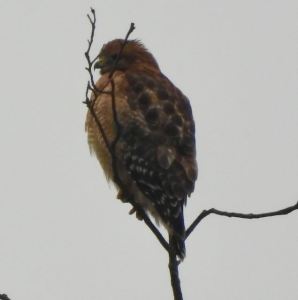
A Red-Tailed Hawk’s vigil atop a Tulip Tree across the lake on the west shore, February 15.
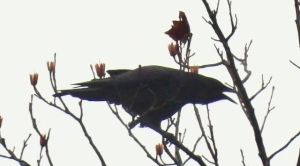
From across the lake I hear this Common Raven calling, atop a Tulip Tree in the East side woods, February 16
Of course, now that the Trump/Musk administration has suddenly fired 3000 local workers at National Parks and Forests (New York Times, February 18), including many trained to prevent or fight fires, the chances that birds and all other animals and plants can survive in an ever-more-extreme climate have become that much more fragile. Not to mention the weakening chances of employment of these former workers, all of them small-town residents across our country, and not to mention the even smaller chances that the now-unguarded towns near these forests will themselves survive the fires and other disasters sure to challenge their and our resilience. SEE Update, below, February 25.
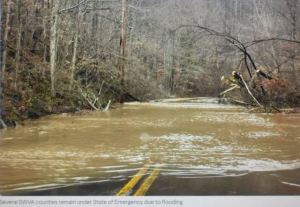
Flooding brings state of emergency to counties in Southwest Virginia, February 17. (Kenzie Hagood photo, WJHL, TriCities)
UPDATE, February 25: “Plan to Cut Park Workers Reversed: After Public Outcry, Administration Gives OK for Hiring of Seasonal Employees” (LA Times, Jack Dolan)
According to the Times article, the sudden rescinding of the order might bring as many as 7000 seasonal workers to the National Parks and Forests this summer, though the firing of 1000 probationary and permanent workers still stands, as of this moment. The pushback on social media and in messages to Congressional offices to the Trump/Musk firing assault seems to be having an effect. Let’s see how this all plays out as we move into March.
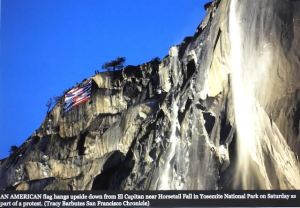
Sign of protest: US flag upside down on the face of El Capitan in Yosemite Park (Tracy Barbutes, SF Chronicle, Feb. 25)
****************************************************

Jean’s Borscht with Sour Cream “Butterfly,” February 14
Dishes to Warm the Heart: The Valentines Month Kitchen
Jean:
I decided to make borscht for Valentine’s Day because it’s very red, first of all, and I know Chris likes it. (I also wanted a tribute to poor, long-suffering Ukraine.) I love a beet salad, too, so I bought enough fresh beets, plus a can of sliced beets, to allow me to make plenty of either or both. Frankly, I did not enjoy trying to roast the fresh beets; they seemed to stay tough in the oven for a long time and then they suddenly went dry and a different kind of tough. But combining my questionable roast beets with some canned beets and pureeing them in the blender or food processor worked for this.
Chris’s Chayote, Green Pepper, Tomato, Garlic Stir Fry

Chris’s chayote stir fry sizzles on the stove, February 10
Chris:
Chayote, a Mexican squash, gets little publicity, but it’s inexpensive, tasty, colorful, crunchy, keeps well in the fridge, and is full of nutrition and easy to cook. Just chop it up, add any other veggies you like, season to your taste, and fry on medium heat in a tablespoon of oil until you like the texture. I sauteed chopped onions in the oil to begin, then added the chayote, mild green pepper, and grape tomatoes, plus a splash of green olive juice. I then added minced garlic, salt, black pepper, red pepper flakes, all to my taste. I frequently flipped the mixture with the spatula, so it would cook evenly. That was it–done in twenty minutes. Perfect tummy warmer on a cold day!

Jean’s Shrimp and Veggie Gumbo, Rice, and Andouille Sausage, February 14
Jean’s Baked Potatoes Smothered in Chili and Cottage Cheese

Jean’s baked potatoes smothered in chili and cottage cheese, with broccoli and homemade corn muffins, February 12
*************************************************
The February 2025 Photo/Video Gallery: Abundant Life in the Cold
Along with more of the champions from our local Great Backyard Bird Count, this month’s gallery includes some provocative scenes from our deep winter of 2025. And the stars of course are the residents and the visitors.
Black-capped Chickadee calls and flits in Serviceberry tree, early AM, Valentine’s Day
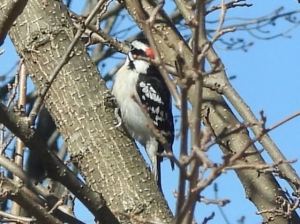
Downy Woodpecker in a Sweetgum tree, Southeast side of the lake, frigid February 17
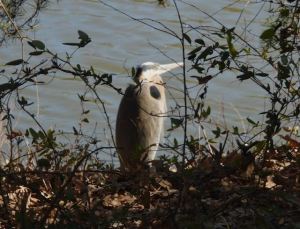
Great Blue Heron, in west bank shadows, braves the cold on February 17. No herons came while the lake was frozen in January.
On February 4, at noon, I capture a Canada goose skating (!) on the frozen lake near the fountain

Turkey Vulture soars over the lake on a sunny, but very cold Valentine’s Day
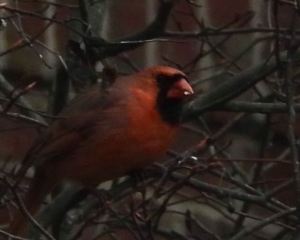
Male Cardinal holding seed in shadow in red maple on the Southeast side, February 15
Song Sparrow forages, as the House Sparrow chorus practices, Southeast side, during afternoon snowfall, February 11
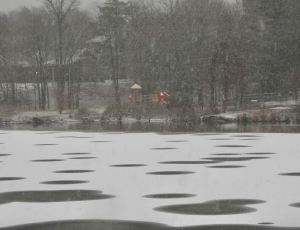
The community playground in mist across the snow dappled lake, as new snow falls, February 11
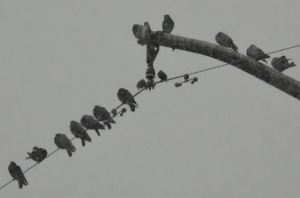
Our resident flock of Rock Doves stays warm amid company on the west side stanchion in thick afternoon snowfall, February 11
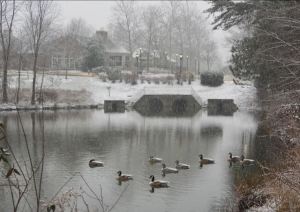
Your classic wintry scene (as if from Currier & Ives): Canada Geese pose in the calm lake before the community park, as the snow gently falls, February 11
Change of pace: Panorama toward downtown buildings as the lake sparkles in the bright sun of a windy, cold afternoon, February 17
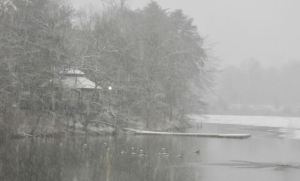
Another change: Panorama toward the north end, with the Geese, the dock, and the gazebo, in the thick snowfall, February 11

Mockingbird walks beside me and searches for seeds on the path by the Southeast cove, February 16
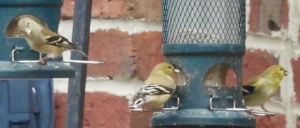
Three American Goldfinches at feeders, Southeast side, February 15
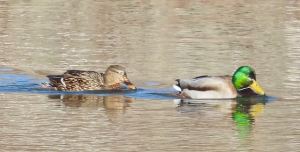
Mallard pair, having returned once the lake unfroze, swims along the north shore on a very cold morning, February 16
Back to the falling snow on February 11: I follow the burbling outlet stream below the north end dam. Calm and cold.
Just as cold, but less calm, is this mingling of Canada Geese, a Mallard pair, and 2 American Crows in the Northwest corner of the lake, February 15

House Sparrow pair won’t sit still in the Serviceberry tree in that February 11 snowfall
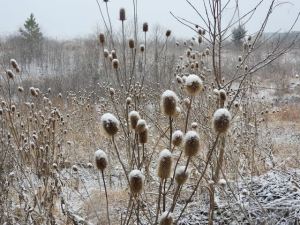
Dry Cutleaf Teazel like ice cream pops by the outlet pond below the north end dam in the snow, February 11
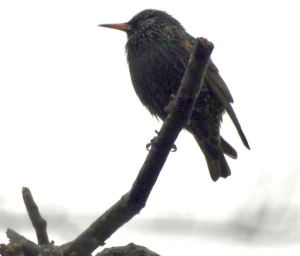
European Starling atop the dead White Oak on the east bank, February 16
Strolling with their Valentines: Mallard pairs swim 2 by 2 along the north shore, very cold morning, February 14
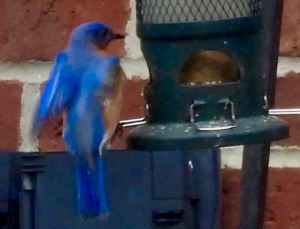
Brilliant Eastern Bluebird lands at a feeder, Southeast side, February 15
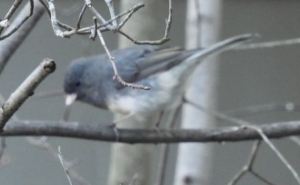
Dark-eyed Junco in Downy Serviceberry on the Southeast side, Valentine’s Day
Downy Woodpecker in Serviceberry tree scans the area as the Sparrow chorus sings and a jet roars overhead, and there’s snow, too! February 11, of course.
And the stolid Great Blue Heron scans the shore in the bitter wind of February 17 and thinks: “It’s all about resilience.”
And on we March to March: Let us hope that the loving spirit of Valentine’s can stay alive in all our hearts and be shared with all creatures.
 From Sacramento to Potomac: Tales of Two Valleys