December 2018: Rains Come, after the Fires

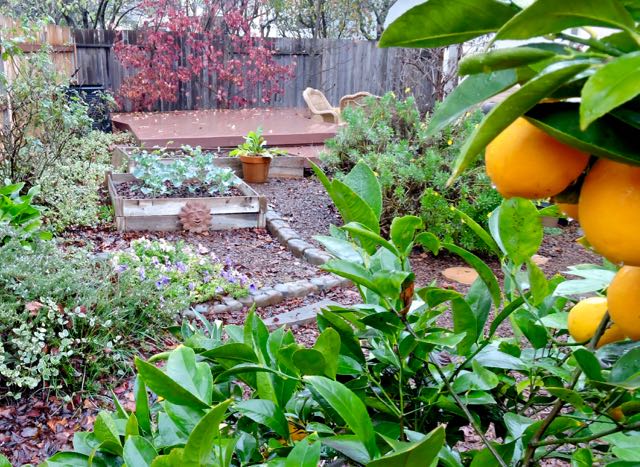
garden kitchen oranges lemons roses coreopsis dec 18 - 1

Chris:

Bitter ironies sometimes take time to appear.

In late October, I wrote this about our garden: “Along with the bees are the birds in our bit of paradise.”

Paradise.

We once visited the town of Paradise, California, up north amid the dark green forested hills of Butte County, miles from even the small city of Chico and in a different world, it seemed, from Sacramento. We spent a nice afternoon in Paradise. What I remember from that visit was that feeling of getting away into the cool, dark forest.

Our late October post this year celebrated the beauty and bounty of a still sunny and rainless fall–but in the writing I feared a repeat of the devastating fires of October 2017, if rain did not come soon. Then, on November 8, the inevitable erupted in the wooded foothills–not far from Paradise–and within a few hours the wind-carried flames had engulfed the town and trapped hundreds of residents.

For three weeks, the fires on the remote hillsides and through the canyons remained virulent and elusive. The Camp Fire (named for its origin near Camp Creek) eventually destroyed over 150,000 acres and became the worst fire in California history in lives lost (86) and in the thousands of buildings devoured. Even hundreds of miles south and east, California cities and towns felt the effects of the inferno, as a seemingly endless cloud of smoke and ash darkened the sky and damaged lungs. A hundred miles south in Sacramento, schools and universities were closed for more than a week because of the treacherous air.

When finally rains came toward the end of November, the thousands who had been evacuated from Paradise and nearby towns still could not return to what was left of their homesteads, as crews from throughout California worked day and night to clear hazards and debris, search for the hundreds of the missing, and make the firetorn hills safe once again.

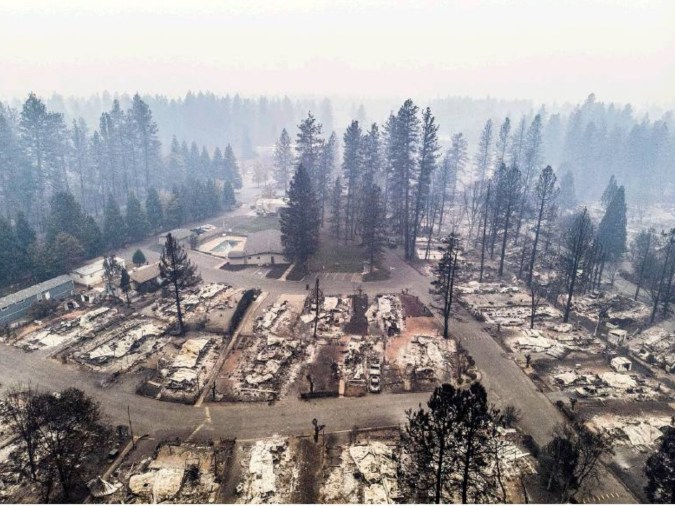
Screenshot_2018-12-21 Sacramento Bee

A neighborhood in Paradise, early December (Photo: Sacramento Bee)

Paradise no more.

Still…in the photo above see how many of the trees, particularly the most mature, were not destroyed by the inferno. As we saw last year in Sonoma and Napa, nature will lead the comeback and provide humans the inspiration to use their knowledge, humility, and compassion, so that the forested hills can once again grow toward the beauty and peace that the inhabitants once enjoyed.

December in the Garden

garden nopales orange tree golden leaf carpet dec 18 - 1

Nopales and navel oranges, bed of yellow leaves, in the late December garden

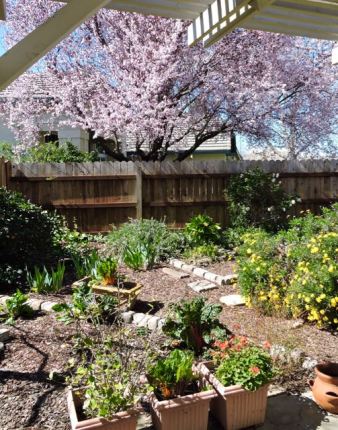
Blessed we are to have this small garden, still a paradise to us, all the more precious now. The gentle rains have soaked the soil and kept our many plants green–and the animals who rely on them housed and fed.

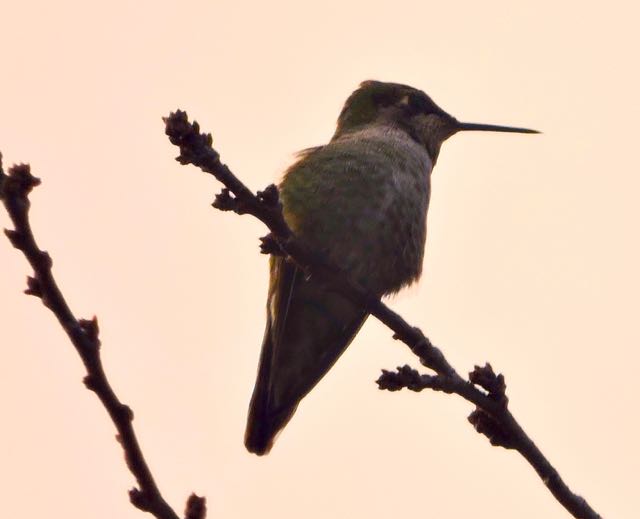
garden hummingbird in peach tree dec 18 - 1

Our neighborly Anna’s hummingbird stands vigil atop our peach tree, December 2018.

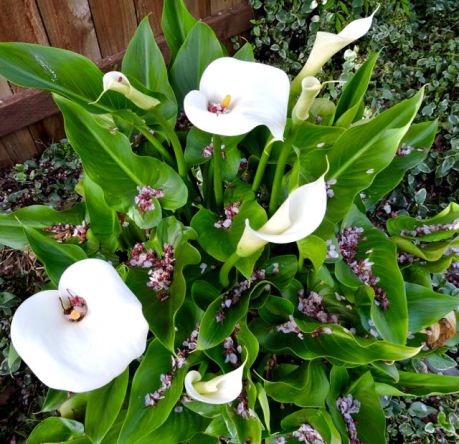
With low temps flirting with freezing, but still above the magic line, the late December garden retains a few vestiges of summer–vincas still flower in their pots and petunias glow bright in their back garden bed. Calla lilies act as if it’s spring, even as the flame trees proclaim NorCal December.

garden lemons rosemary petunias veggies etc in rain dec 18 - 1

To the left, calla lilies, petunias, and flowering rosemary sing summer, even as the ripe meyer lemons in the foreground and the sweetgum (liquidambar)trees in the background say December.

Fruits and Veggies

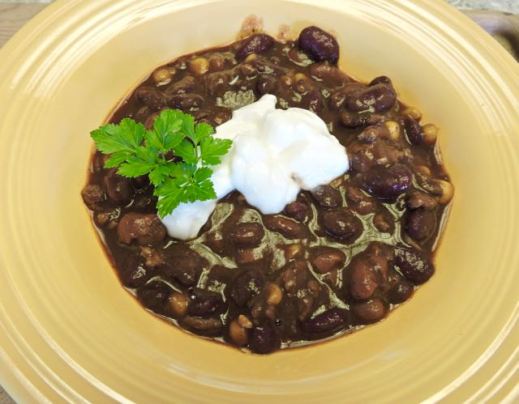
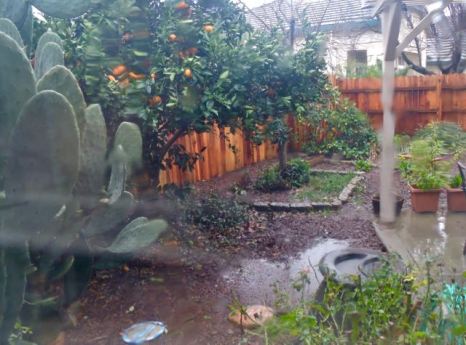
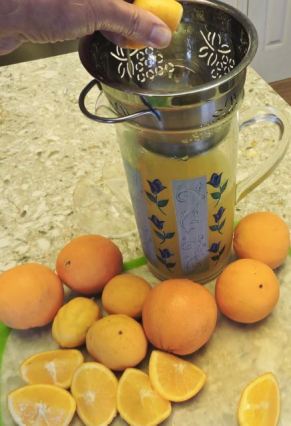
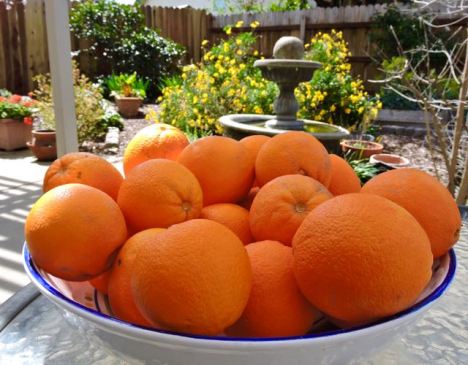
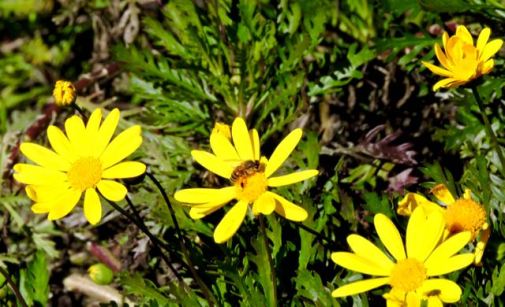
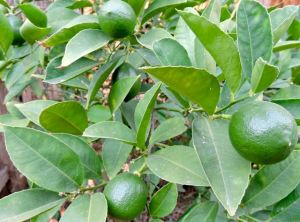
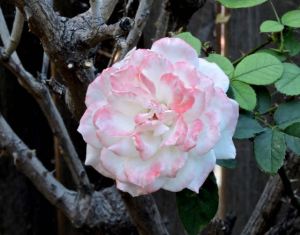
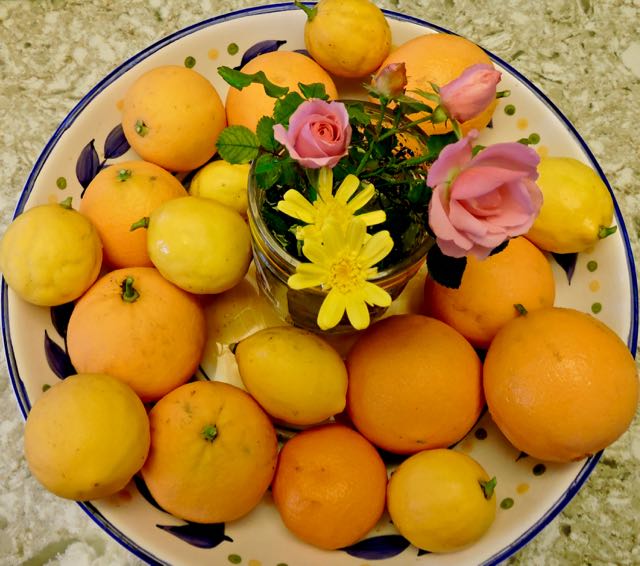
With all our years in the East, I doubt we’ll ever take for granted the sunshine brilliance, even in the rain, of the oranges and lemons that highlight December in the Northern California garden. The photo that graces the top of this entry may be technically a “still life,” but the oranges and meyer lemons, plus the golden coreopsis and pink tea roses that also dress our December garden, pulsate with warmth.

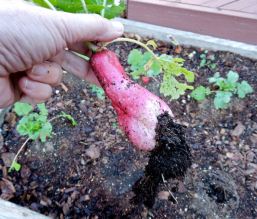
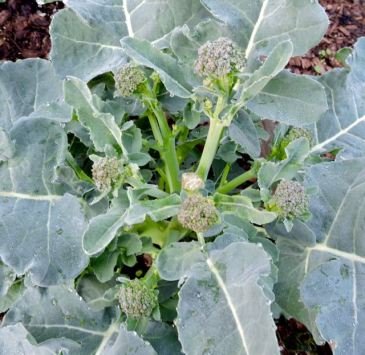
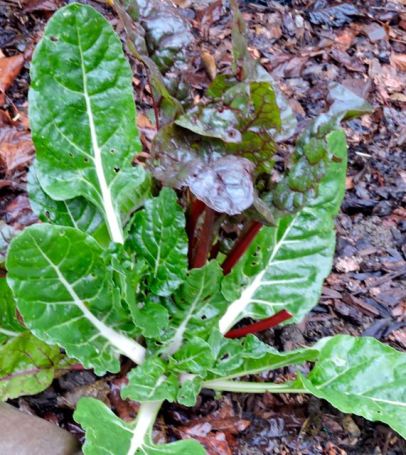
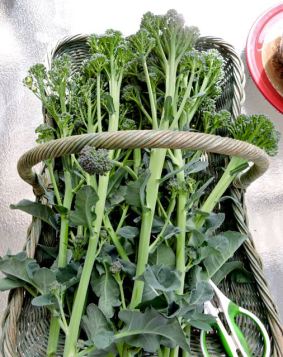
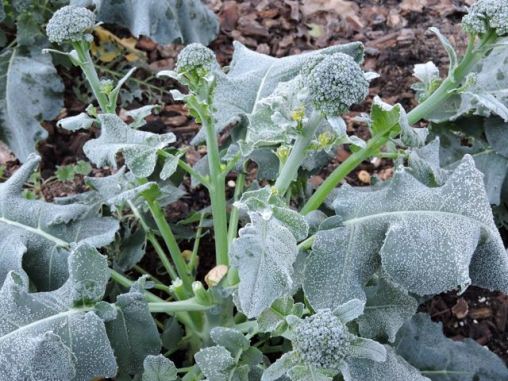
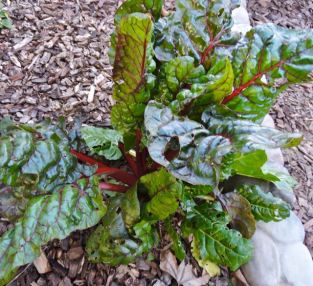
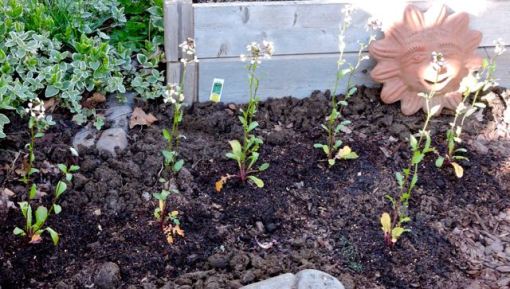
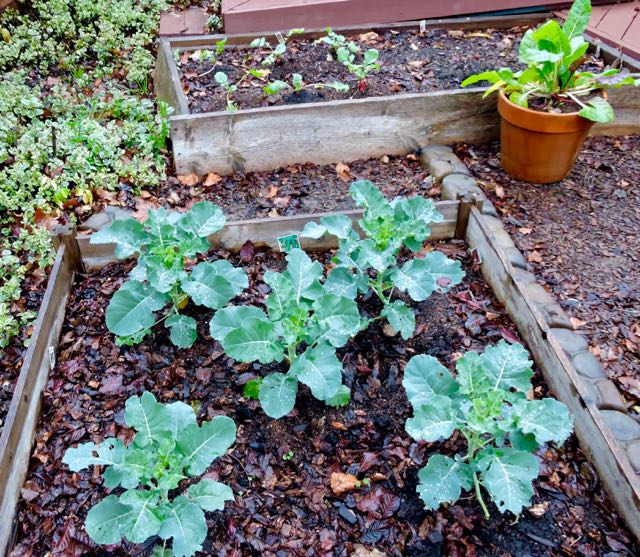
Meanwhile, the three veggies I planted between late October and late November have thrived in the cool temps and occasional rains. Chard, stir-fry broccoli, and “French breakfast” radishes steadily mature toward harvest in late winter and early spring. This variety of radish is a first for me; the chard is a returning favorite after a few years; and the five broccoli plants renew my appreciation for this hearty, flavorful, symmetrical veggie.

  • The chard plant shown in the photo below is one of three I have for the first time in pots, while three others are in the ground (not shown). All are coming along well.
  • The six radish plants (background) have been in the ground only three weeks as I write, so they have a good month or more to go before harvest.

garden broccoli radishes chard in pot in rain dec 18 - 1

Paradise at Christmas

Most of the former residents of Paradise and nearby towns have no homes to return to. They are spending this Christmas season and many coming months as refugees. Their homes for the foreseeable future are those of relatives, friends, or genuine good Samaritans, as well as the refugees’ own RVs or trailers provided by FEMA and other social service agencies.  Some of them will never return to their pre-cataclysm homes, as predictable by what happens to refugees of other similar disasters.

Whether they return or not, their future prospects–like ours and everyone else’s–will depend on the largesse and good will of government agencies and on the donations and support of the entire society. Would that all refugees, regardless of the cataclysm they are escaping and where it occurs–were so lovingly regarded by our governments and by us. Is such a thing imaginable in the U.S. of 2018?

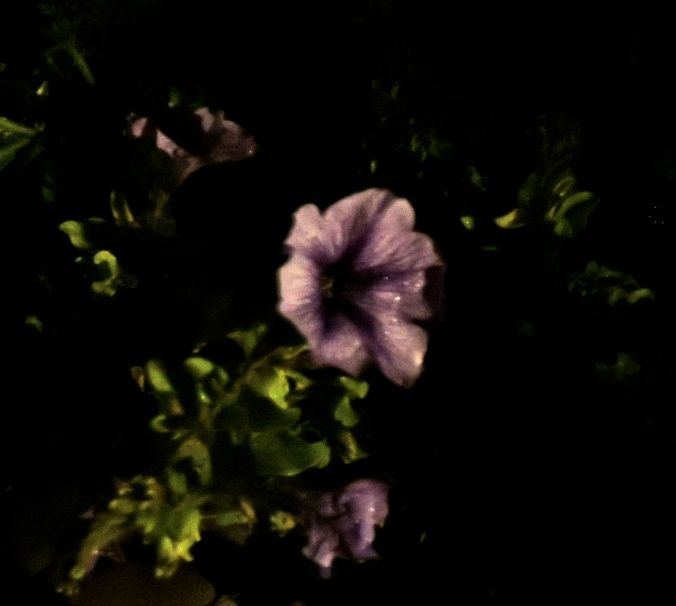
If so, then that would be as close as we can all get to Paradise at Christmas. A bit like a petunia in the late December rain.

garden petunia at night in late december 18


Between the Seasons (September 20, 2018)

garden last harvest of summer display - 1

Chris:

The last few poblanos and red peppers still grow slowly as the days grow shorter. Oh, the thermometer still occasionally touches 90, but the nights go down to the 50s. The sun’s heart doesn’t seem to be into roasting the soil and the plants any more. The tomatoes told me almost a month ago that they wouldn’t be turning any more yellow flowers into green fruit, so I began pulling them out, reluctantly, one by one. The last one, my magnificent, spreading red grape tomato, came out struggling last week–its long green tendrils clung to the ground and around each steel fiber of the cage, which had tried unsuccessfully to contain the plant’s eager arms and legs. Over the eggplants, the marigold pot, several strawberry plants, and even the dormant irises, this prodigy had grown since mid-April, as it produced many hundreds of luscious ruby gems. As I hacked away, a big handful of red and some green tomatoes appeared fruit by tiny fruit, having been hidden among the still-green leaves.

garden september tomato still blooming 18 - 1

The magnificent red grape tomato, still in yellow bloom and hiding red gems

Also reluctantly, I pulled out the two eggplants–the black beauty and the little fingers. They had been steady producers through the summer, the source of Jean’s succulent ratatouilles and eggplant parmesans. Both plants were still in full green leaf, and one or two lavender flowers still clung to the little fingers variety. But, peering under the canopies of leaves, I saw no more robust black beauties, so out that stalwart came.

But when I ventured a timid hand beneath the prickly stems of the little fingers, I was surprised to find one, no, two, no, three–no, four– ripe slender eggplants. And I thought it had stopped producing in early July! But out that genius also came–after all, it was September–and I figured that even if I had missed a few, no more new ones would be coming. Well, maybe so, but as I brought the uprooted plant up to eye level, I felt and saw among the green leaves no less than four more small perfect fruit. These eight had done their silent, patient, hidden growing over July and August.

garden september of the eggplants and tomatoes - 1

Can you see the eight purple eggplants growing beneath the leaves of the plant in front? Not me.

To my ravaging hands, out also came the spent cucumbers, one of the pepper plants, and some of the summer annual flowers (impatiens, chamomile, some of the marigolds). But some will hang on a while more before I pluck them for the compost bin. Living in a land where it rarely gets cold enough for a string of hard freezes, annual plants hang on for a long time (sometimes for two years or more), so gardeners always hold out hope that their favorites will live on and on.

Once I’ve picked the last peppers and taken out the last of the marigolds (and maybe even the vinca and the petunias), it will be the official end of summer in the garden.

But it just means that fall-winter planting is coming. What will it be this year? Definitely the hearty, spicy arugula and the sweet, buttery bibb lettuce. Jean wants the bold, richly-colored chard again, and she’ll have it. Onions? Of course. Beets? I love the look of the leaves and the mystery of what lurks beneath the soil. Ah, yes: broccoli–the promise of those plump, delicious heads and crunchy stems.

All of this bounty depends on the rains. What will happen this year? Always the mystery. Always the hope.

But for now, we are between seasons. The soil rests, getting ready.

garden end of summer season - 1


Late October 2018: A Bee-utiful Fall, as We Wait for Rain (and Halloween)

((Dear Reader,

This is a garden and kitchen entry. Scroll down for Jean’s “non-recipe” for her “chicken two-potato hash”–perfect for Halloween!))

Chris:

The Mexican bush sage grows to its fullest and most exquisite this time of year. The deep pinky-purple flower clusters draw honeybees and the mammoth black carpenter bees as if it were spring. And this year, as the rainy season has yet to appear and as the daily temps move delightfully from the high 40s before dawn to 80 in mid afternoon, it’s as if we are living in a comfortable, blue-sky, perfect spring.  Enjoy the video above and the one below.

A rain-lover like me tends to see oncoming drought where others will just revel in the sunny, cool comfort. So the day after day of bees happy in the soft, fragrant petals reminds me to count my blessings. Last year at this time, I was writing about the Napa-Sonoma wildfires devastating Santa Rosa. I was reassuring our friends from across the country that the fires would not reach us, even while I smelled the sour smoke borne on the tricky winds and peered through the hazy air.

I count my blessings especially this fall, when I’m writing back to our friends and relatives in the Southeast to wish them deliverance from the hurricanes destroying coastal towns and flooding once again lands still recovering from the storms that have come with increasing power and frequency the past few years.

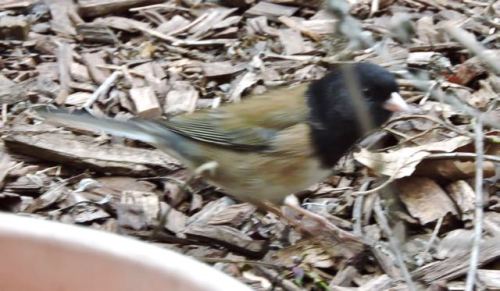
Along with the bees are the birds in our bit of paradise. Once in a while, I will spot a trifecta in a bit of bush sage, when the honeybees, a carpenter bee, and one of our Anna’s hummingbirds will share the flowers. So far, I’ve been camera-less at these rare moments. Not so rare is how our several pairs of Eurasian collared doves, an annual presence in our neighborhood, have come to be more and more at home in our garden. Earlier this week, I snapped one pecking on the veranda, then spotted one drinking from the birdbath. Then today, Jean whispered that one was looking toward her from the peach tree. Our friend kindly waited while I retrieved the camera–and then posed  while I gathered a closeup.

garden collared dove on peach branch oct 18 - 1

But what about new planting in an as-yet rainless fall? In my previous entry, “Between the Seasons,” I speculated about what I would be putting into the ground this fall:

“What will it be this year? Definitely the hearty, spicy arugula and the sweet, buttery bibb lettuce. Jean wants the bold, richly-colored chard again, and she’ll have it. Onions? Of course. Beets? I love the colors of the leaves and the mystery of what lurks beneath the soil. Ah, yes: broccoli–the promise of those plump, delicious heads and crunchy stems.”

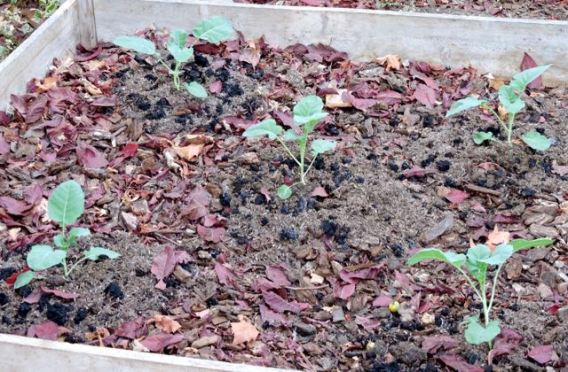
So far, only two of these have gone in: the six chard plants (two weeks ago) and five stir-fry variety broccoli plants (one week). Only half of the chard plants are in the ground–the other half are in pots, experimentally. So far, they are doing great. I’ll transplant them into the soil once we’ve had some moisture from the sky.  Meanwhile, the broccolis are in one of the raised beds and doing nicely.

As long as the weather stays warm and we have no rain, I’ll resist planting more of the winter crops. Most do better here when the weather cools.

garden new broccoli plants in raised bed oct 18 - 1

New Stir-Fry Broccoli in Raised Bed

garden new chard in pots oct 18 - 1

New Chard in Pots

Oranges, Lemons, and…Peppers!

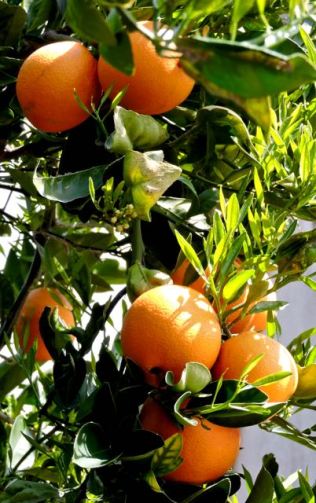
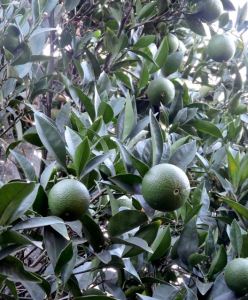
As every year, the navel orange tree (below, left) and the meyer lemon are wealthy in fruit, which is ripening for the harvest that will begin in December. In fact, the persistent warm daytime temps have moved them along faster than usual, and some of the lemons are ready to pick (we’ve actually tried one already–sour and juicy!).

Our one veggie from the summer that is still in the ground is this year’s longevity champ producer, the mild green pepper, which in its big pot keeps putting out white flowers that turn into fruit. As I write, there are six peppers at various stages of growth–with several more tiny green marbles emerging from beneath the white flowers. Attribute this ongoing production to the daytime temps that keep our fall more like spring.

garden red peppers in july 18 - 1

Peppers in the Kitchen (AKA Making Halloween Hash)

Jean:

This is really about green peppers and potatoes in the kitchen.   As a half-Irish girl, I’m likely to put potatoes somewhere in the meal.  My all-Irish mother ate potatoes in some form nearly every day of her life, and she taught me to cook them in many different forms.  Nothing I make tastes like hers, including her mashed potatoes and potato salads, and that’s okay.  I love them in almost any form, and so does Chris, even though he doesn’t grow them in the garden.

My mother’s grandfather did, though.  He fled Ireland when he was about age 18, reportedly after participating in a small rebellion against British rule around 1848.  All the details of his life are somewhat foggy because he died when my grandfather was just a child, but I do know he eventually settled in Kansas after the Civil War and grew potatoes on a small patch of land.  He married an Irish woman who had barely escaped the potato famine of the 1840s.   Somehow their six sons did fine, however, with my grandfather attending Georgetown Law School at the beginning of the 20th century.  Potatoes were only for eating at a nice dining table after that.

Anyway, when I see potatoes and peppers, like we had in the kitchen this week, I think hash.  I love the freshness, crunch, and color that peppers add to a hash.  Besides our peppers from the garden, we also had some young Idaho potatoes with thin skins and very creamy flesh.  I had seen a recipe for sweet potato hash that used a lot of smoked paprika and cayenne pepper, which I already had in my pantry. So I texted Chris, who was out at the market, to buy a large sweet potato. I started cubing the two kinds of potatoes and also chopped onions and green peppers for the hash I was now imagining.  I threw them all carelessly into a large skillet with a small amount of  water and some salt and pepper, and started frying them.

Meanwhile, I remembered another recipe I had seen recently that involved carmelizing ketchup.  I’m sorry, but I love ketchup.  I may have said previously that my daughter and I “argue” about this because she puts it down, but I maintain it has a complex and interesting flavor or combination thereof.  The recipe I wanted to try (seen in my New York Times recipe feed, which includes a lot of “non-recipe” recipes that can be thrown together with a minimum of fuss) involved cutting small chunks of chicken and cooking them in a cup or two of ketchup until the ketchup thickened and browned and the chicken pieces were cooked through.   I worked on this in a separate small skillet while turning the hash, and finally threw the ketchup chicken (I love the sound of that, the two ch- sounds) into the hash when the vegetables were sufficiently soft.

kitchen jeans chicken two-potato hash oct 18 - 1

Jean’s Chicken Two-Potato Hash

Chris threw some fresh grape tomatoes and pepper chunks on top for color when I was finished, and we dug in.  It was surprisingly yummy.  He claimed the predominant taste was ketchup, but when I claimed it was the smoked paprika, he admitted he could taste the smoke.  He had thought perhaps it was chipotle, which you could totally add to this because chipotle tastes great with sweet potatoes.  I think there was enough spice with the ones I used, but if you like more heat, you could add any type of hot red sauce you prefer. By the way, seasoned chefs insist that paprika goes stale quickly and you should buy more practically every time you use it.  I don’t subscribe to that theory, but if you do, this “recipe” (or “non-“) is a good way to use a lot of it quickly.

We warmed up some of the leftovers a day or two later, and they still warmed our mouths, stomachs, and hearts. In fact, we have a bit left for Halloween, which is now upon us! The orange color and spicy tang are perfect for the celebration.

garden knucklehead pumpkin face 2 oct 18 - 1

Hi! Welcome to our Halloween Garden.


A Month in the Life

garden tomatocopia jul18 - 1

Chris:

July 2018

Most of our entries have focused on specific plants, and I’ve tried to give a sense of their life cycles over a year or, in the case of perennials, over several years. In only one of our entries, “J Is for January,” did we look at one particular month, January 2017, which was noteworthy because of the prodigious amount of rain that fell, and its consequences for our garden.

Here I want to feature the month just completed, July 2018. This has not been a record month, but has been typically hot–usually our hottest and among the several totally dry months of summer and early fall. I want to describe it because of its typicality for this time of year. I want to describe a range of plants during this typically hottest month, in order to give the reader a sense of what goes on around the garden, how I care for its citizens, what the garden produces in this highly stimulating environment, and how Jean and I use that produce.

Peaches

garden cluster of peaches on the tree jul18 - 1

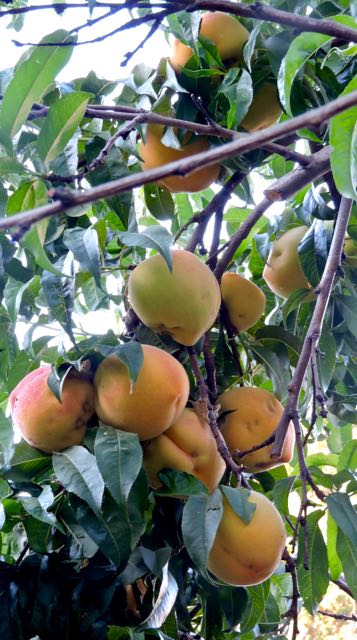
Peaches, July 2018

July is peach harvest month. In “Lazy Fair Peach Tree,” I described the changes in our peach tree over the years. When I wrote that entry, July 2016, the photo showed a heavy branch laden with many peaches, too many for the branch to bear. In total, there were more than 200 on the tree, plenty for a range of goodies from Jean’s kitchen. But six months later, the rains of early 2017 came, and I awaited what was sure to be a bumper crop of peaches that summer.

But the rain poured and the winds howled into April and May. The sodden peach tree put forth few blossoms, and those that did appear blew away in the storms. So even though the branches grew, no peaches appeared. None. Well, I did discover one peach hidden away among the branches in July. But I figured the birds needed it more than we did, so it stayed on the tree until devoured.

After a winter of just-below-normal rainfall in 2017-18, plus a cool spring, I was not sure what to expect of this year’s crop.  Would the peaches return? Blossoms did appear in March, though not in the profusion of most prior years. In April and May, some tiny fruit appeared. By June 1, I counted about 30 small green fruit hidden among the green leaves. But I’ve learned that counting green fruit is usually inaccurate because of the camouflage. Sure enough, as the fruit began changing color in late June, more and more peaches appeared.

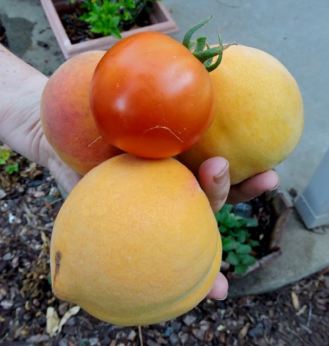
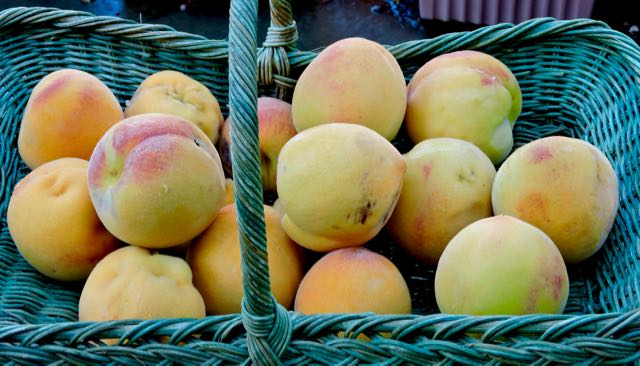
By early July, some of the peaches were almost ready for harvest. Temperatures consistently in the 90s and sometimes touching 100 made the entire crop ready by mid month. All told, the crop was just over 60–and they were of robust size, larger than baseballs and some approaching softball size:

garden handful of peaches and tomato jul18 - 1

Three peaches and Shady Lady tomato. July 2018

Even better, they were as meaty, juicy, and sweet as we had come to expect our peaches to be. All in all, the 2018 crop exceeded my admittedly low expectations, and it gives us hope for next year.

A note on pruning: in the past, I have pruned branches of the peach tree after the harvest. This year, because the peach tree had grown so that the highest branches were over-topping the adjacent orange tree, we pruned extensively on June 1. Yes, the pruning eliminated some of the green fruit that would have ripened in July, but it did not affect the rest of the tree. Indeed, the pruning may have helped increase the size of the remaining 60 or so peaches. It surely made harvesting easy. The height of the pruned tree was about eleven feet, so that a step ladder could be used to reach the highest fruit.

garden peach harvest first week jul18 - 1

Cukes, Peppers, and Eggplant

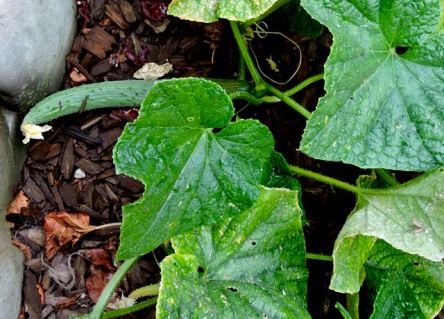
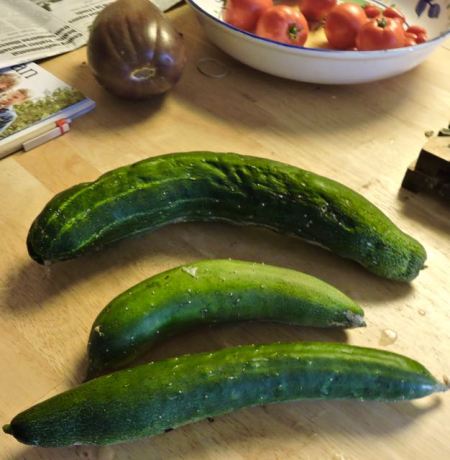
I had not grown cucumbers before 2017. In that year, I replaced the annual onslaught of zucchini (see “Z Is for Zucchini”) with small cucumbers (4-5 inches) good for pickling. Their 2017 success led to my trying larger cukes this year, specifically 8″-9″ Burpless , which I planted in two hills about 5 feet apart for cross pollination. They started slowly in April, and by early June they were close to having their first fruits ready to pick. They are great sliced in salads (with our tomatoes) and sliced for pickling in a spicy, vinegary mix (as shown below).

Here is one of the cuke plants in late July, with another fruit about a week away from harvest.

garden cucumber on vine jul 18 - 1

And three big cukes harvested in late August! Definitely in my plans again for 2019.

kitchen 3 cukes eggplant tomatoes aug 18 - 1

The peppers are always a fun challenge, and this year had its own new wrinkles. In mid April I planted three peppers: a poblano (first time), a yellow mild, and a red mild. No hot chilis this year, because we have hundreds in the freezer ready to burst with heat when we thaw them.

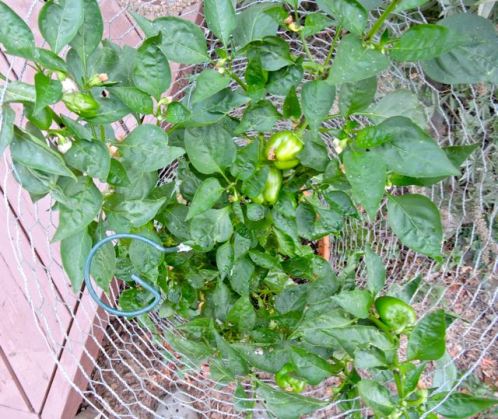
Two of the plants were in the largest raised bed, and the third was in a large pot. All of them started out vigorously, and by mid May all had produced growing green fruit. Then the new wrinkle happened. Over two days in late May, all the growing fruit disappeared from the poblano and the red pepper, nipped off cleanly at the top of the fruit. Probably rabbits were responsible, though I’ve never had this problem before and I’d never seen them in the garden.

So I purchased chicken wire and surrounded each plant with a cylinder, as shown below. The plants have thrived since.

garden red yellow and poblano peppers in cages july 18 - 1

Eggplant has been a hero of the garden in the three years I have been growing them, as I explained in “E Is for Eggplant.” For the first time this year, I planted two plants, each a different variety. One is the narrow Japanese variety (Little Fingers) that I had first planted in 2016. The other is the more familiar large, rotund variety (Black Beauty). Neither fruits early, though the Little Fingers this year produced flowers in May, then fruit in June. The Black Beauty was a late producer, with the first fruits appearing in mid July and only now ready for harvesting. It was a star of the July garden, and its fruit will be marvelous in eggplant parmesan and in Asian-inspired dishes.

garden large eggplants july 18 - 1

Black Beauty eggplant ready for harvesting, end of July 2018

Tomatoes! (Of course)

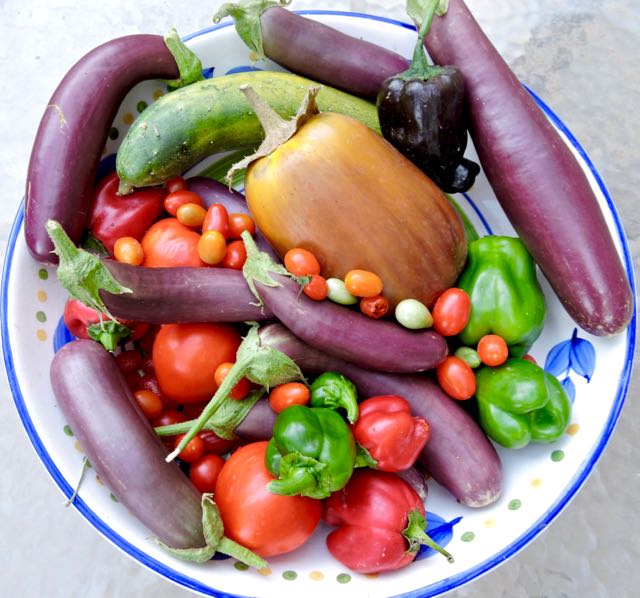
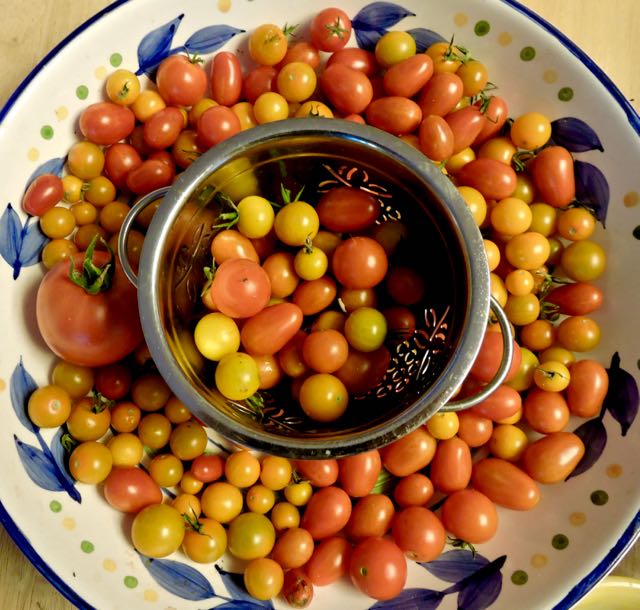
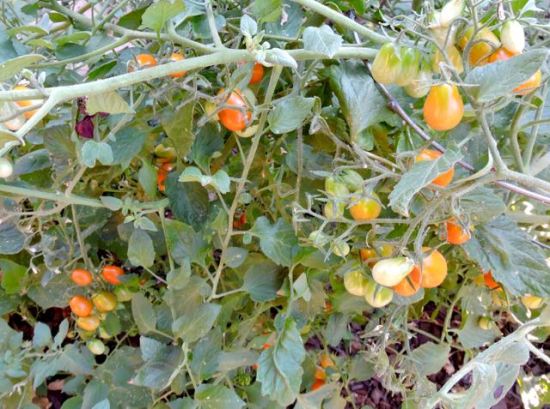
Last year, in “T Is for Tomatoes,” I reported on my record-breaking harvest from one grape tomato variety, which persisted into September producing fruit. This year I have no plant that will match that one’s 2017 longevity. But I do have one, a Red Grape, that surpasses it by far in its daily production through July–some days more than three dozen bright red beauties, and an average of twenty (20).  The photo at the head of this essay shows a July week’s worth of cherry and grape tomatoes from five plants:

  • the Red Grape just described
  • two Sun Gold Grapes
  • and two Husky Cherry Reds

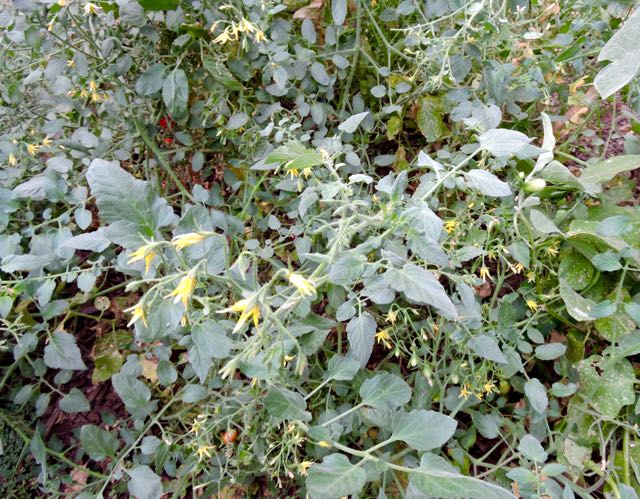
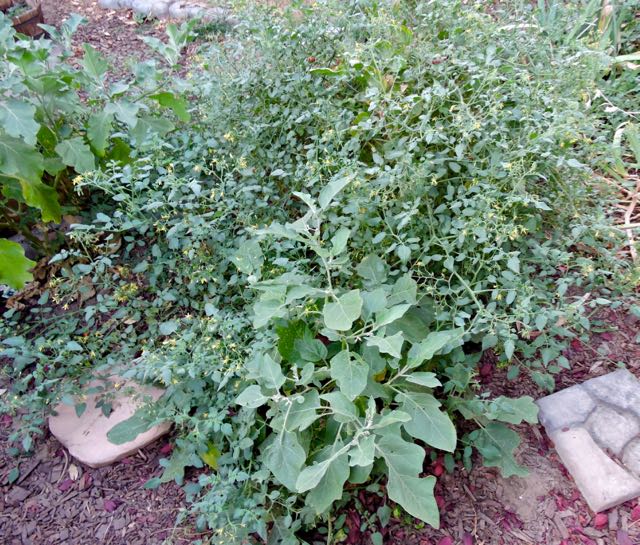
Now, in early August, the two Sun Golds have ceased bearing and I’ve removed them for compost, and one of the Husky Reds has been removed, but the other Husky Red goes on, and the magnificent Red Grape keeps producing, even as it still sends out new shoots across the garden and blooms yellow flowers.

Here are two views of this plant. One shows it among surrounding plants–the broad-leafed eggplant in front of it and the red-fruited Shady Lady behind it and to the left:

garden tomatoes eggplant strawberries marigolds jul18 - 1

The second photo is a closeup from mid July of its typical clusters of ripe and ripening fruit:

garden tomato clusters on the vine jul 26 18 - 1

The Shady Lady. Only one of my tomato plants this year was a large-fruit variety: a Shady Lady that I got as a tiny seedling from the Plant Sciences display at UC Davis Picnic Day in late April. Among its thousands of visitors, this annual festival brings out hundreds of gardeners and agriculture enthusiasts from across the Sacramento Valley region for events, exhibits, and expert demonstrations.

I planted a Shady Lady last year and it did well, producing moderate sized-fruit into later August. This year’s version has been even better. It seems to like the spot where I planted it–full sun for no more than 5 hours per day and plenty of moderate shade in morning and after mid afternoon. It grew slowly, as did last year’s, not beginning to fruit until late June and no fruit ready for harvest until mid July. But the fruit are perfect, and now, in early August, there are more than fifteen well on their way from green to red. Here are two photos: one of the plant in mid to late July, and a second of the first tomato we harvested this year.

Cooking with July Produce

Jean and I have made a range of dishes with the fruits of our garden this July. From the pickles and salads described above, to sliced peaches with all sorts of uses, to tomatoes and herbs in sauces and main dishes, every day offers July produce simmered, fried, or baked–or just eaten raw out of the produce bowl that is always on our kitchen table.

cropped-roses-and-veggies-tomatoes-on-display-oct-17-1.jpg

I’ve particularly enjoyed making the tomato sauce  that combines our several varieties along with a bunch of our herbs:

  • sweet basil
  • Italian basil
  • purple basil
  • Greek oregano
  • lemon verbena
  • marjoram
  • thyme
  • culinary sage

with, of course, a clove of garlic, sauteed onions, salt and pepper, and just one of our tiny super hot Thai chilis that lurk in a big bag in our freezer. One thing that makes this so much fun is that, as the mixture cooks down on low heat over 2-3 hours, I get to taste every 15 minutes or so, and can add a bit of this and a bit of that as the flavors intensify with time and heat. Oh, yes, and how the fragrance fills the house! Here are two pics of the process, early and later, as the mixture thickens:

Jean, of course, turns my sauce into a masterpiece in her eggplant parmesan, which she makes by frying the Black Beauty slices after coating them in a breadcrumbs-and-egg mixture. As you can see here, she stacks the fried slices two deep, with a generous coating of the sauce, and she tops the slices with grated parmesan and with small slices of prosciutto. She bakes the entire arrangement in a baking dish at 350 degrees F. until the cheese has melted and the eggplant is the desired tenderness.
For more of Jean’s ideas for eggplant, see her descriptions and recipes in “E Is for Eggplant.”

kitchen jeans eggplant parmesan aug 18 - 1

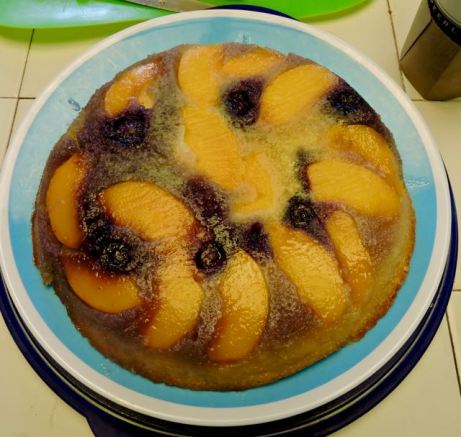
And what about the peaches? Well, what could be a better dessert than her peaches and blueberries upside down cake?–just one of many uses of those beautiful peaches from the garden

kitchen jeans peach upside down cake aug 18 - 1

And what else is growing in the garden in July?

While this essay features the fruits and veggies of our small garden, many other plants are growing in this hottest month of the year. Here follows a small collage of other flowers and trees that give life and color and variety to our small Sacramento Valley garden, and that thrive through the 95 to 100-plus degree heat with light watering 2-4 times a week.

X Is for ?

garden vinca herbs peppers etc fountain aug 17 - 1

What terrors lurk within this placid scene?

Chris:

In science, X is the unknown. It’s what the explorer tries to find. X is mysterious, maybe dangerous. The X factor–its mystery draws us to it–perhaps to our doom.

Sometimes we are warned away from X.  Think X-rated. Sometimes X is meant to be secret. Think X-files. Those prohibitions draw our curiosity even more.

The X is everywhere in the garden. If people only look at gardens in bloom, they will not know this. The pretty perfection seems so safe, so colorfully picturesque. So easy. As if its beauty is effortless, meant-to-be in a comfortable universe. People become gardeners because they want to create their own comfortable universes, at least in one little slice of life.

A rude awakening awaits. Some would-be gardeners give up when their first seeds fail to sprout, or when they can’t face the eternal question:

“Am I watering too much or too little?”

The crazy truth is that people who love to garden love the X. Well, they come to love the X, usually after their dreams of the perfect easy garden inevitably fall through. Something about the challenge of nurturing plants to realize their potential intrigues gardeners enough to keep going, and intrigues them more and more as they see the surprising results. When they see the scrawny meyer lemon bush that suddenly explodes in growth and fruit in its fourth year, or the sage and lemon verbena and Greek oregano that just keep coming back in spring year upon year in the same pots and soil, or the Thai pepper that keeps putting out little red hots even when the temp falls into the 40s.

But there is another tantalizing X factor as well. Gardeners who keep going learn that no two plants behave in exactly the same way. Especially in a small garden like mine, where

  • trees and house architecture overhang parts of the garden, and
  • where soil composition and water amounts can vary from plant to plant, and
  • where multiple species become neighbors in a highly diverse village.

These gardeners love the X so much that whenever they get comfortable with a certain plant in a certain spot at a certain time of the year, they try a different plant or a different spot, or try to, let’s say, grow tomatoes outdoors in Canada, in December. Or they take silly risks, such as

DSCN1917

Just grab on with your bare hands… well, at least inadvertently.

garden thai chilis aug 17 - 1

Take a big bite, I dare ya…(yes, well, at least little bites)

For dabblers like me, the Xs way outnumber the sure things. That’s the fun of gardening for me.

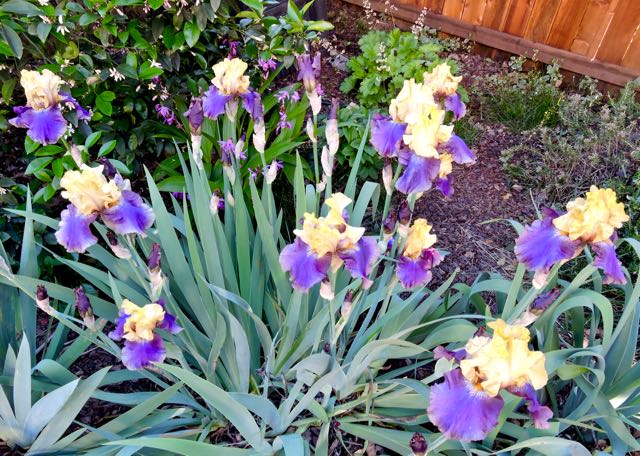
Oh, sure, I also love the predictable beauties of our garden: the year upon year explosions of yellow roses and purple-gold irises in April, the bounty of the apricots in May, the gifts of cherry plums, strawberries, tomatoes, peppers, eggplant, cukes, basil, oregano, lettuce, onions, arugula, and on and on at their appointed times of the year.

garden purple yellow iris display apr 18 - 1

Ah, the irises!

The songs and dances of the birds, butterflies, and bees.

Something is always blooming, leafing, fruiting, singing, or darting past–and all it takes from the gardener is a bit of steady attention from week to week.

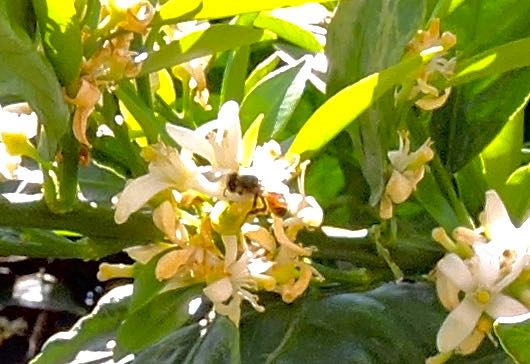
And have I mentioned the aromas? The orange blossoms throughout April.  Then, three weeks ago, when I planted the spring and summer veggies, the orange blossom perfume was mixed with the pungency of compost and upturned soil, organic plant foods, redwood mulch. Every season has its smells, which attract me as they do the birds and bees. I just can’t get enough

garden orange blossoms honeybee in sun apr 18 - 1

A honeybee dances in orange blossoms, April 2018

But the X is always there

The glories I have grown to expect in our garden are only made exquisite by the knowledge that none of them is inevitable. For every plant that outperforms my expectations, there are others that don’t thrive. Last summer I had my best-producing tomato ever. Another gave no fruit at all. The unpredictability is both the risk and the charm of gardening.
But some threats are greater and way more devastating than others. Just three years ago, the five-year drought (See “W Is for Water”) threatened every garden and farm in California. Without statewide voluntary rationing, many more acres would have been lost.  Just last fall, wildfires devastated parts of Napa and Sonoma counties; winter wildfires devastated parts of Ventura and Santa Barbara counties. Wildfires happen every year, and though the state does all it can to prepare, we never really can predict where the devastation will be greatest.

Some threats we can see coming, but the X is how soon. As agricultural water use grows in all parts of the world, farmers everywhere draw down aquifers–and one of our most profound Xs, the depth of aquifers, remains a mystery. We just don’t know how much–or how little–water is down there. All we know is that the wells keep getting deeper.

The Disappearing Pollinators

In “B Is for Bees, Birds, and Butterflies,” I noted one of our most fearsome Xs: the steady decline of pollinators. What is known is that the decline is happening. It is not a mystery. For honeybees, the dramatic fall-off has been called Colony Collapse Disorder. Science keeps looking for “the cause,” as if finding one cause would suggest a cure. But what science knows is that the causes are multiple:

  • neonicotinoid pesticides and herbicides,
  • the Verroa mite,
  • habitat loss for native bees.

Butterflies and bird species are in even steeper decline. Non-organic farming, the constant depletion of wildspaces for urban/suburban development, the steadily-rising temps caused by greenhouse gases–all have their part to play. These causes we know–they are not Xs.

What is an X is when and even whether we humans will do the obvious things to turn the pattern around. Will we have the courage to halt business as usual? Can we ween ourselves off chemical pesticides and herbicides? Can we grow up to reject fossil fuels and the industries that pull them from deep below ground and then turn them into poison gases?

Those who persistently benefit from the status quo try to convince us that climate change is an X: “Well, the science is inconclusive,” they say. But the science is fully conclusive–and the rest of the world agrees that it is. Only the U.S., with by far the largest and richest vested interests in polluting the planet, will not admit these truths. By withdrawing the U.S. from the Paris Climate Accords in 2017, the current President confirmed to the rest of the planet that the U.S. will be the problem, not the solution.

So the X question is this: Will these vested interests continue to intimidate (and pay off) our elected officials and so doom the world, and will we voters continue to let them? Can the U.S., which used to be the world leader in championing new ideas, strive again to lead the world in supporting the technologies–such as solar power–and attitudes that can defeat the polluters? We know what needs to be done. The only unknown is if we will have the will and the courage to join the rest of the world in doing it.

In 2017, the monarch butterfly below was the only one of its kind to visit our garden. It fed on the native lupine tree. Monarchs, which used to spend the winter in the millions in California, have declined by 90% as their habitats and food sources have disappeared. Will the monarch return to our garden?


Y Is for Yellow

DSCN1965

Chris:

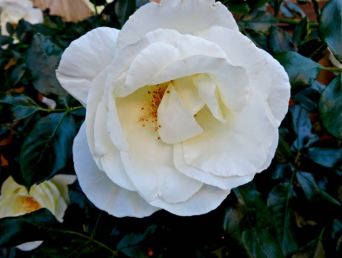
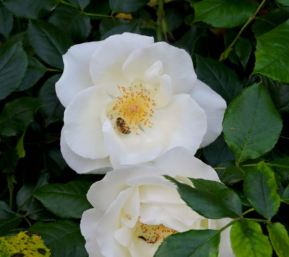
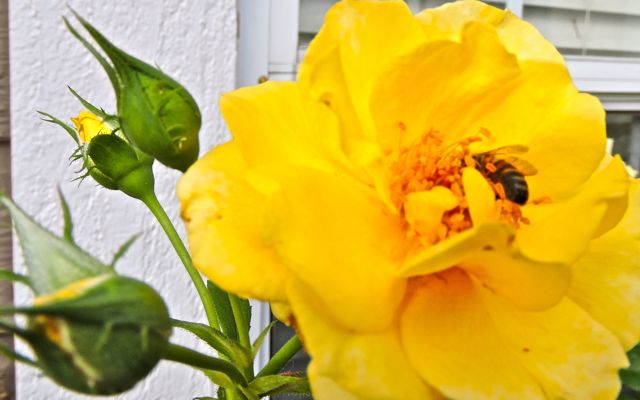
Why yellow? Well. if you are looking for a word to go with Y for your garden blog, why not choose the brightest color in the garden? Yellow, the color of pollen, is a magnet for pollinators, so yellow merits the honor of “Y.” Why, even flowers of other colors have yellow in the center.

garden back white rose yellow center apr 18 - 1garden bee in white rose back late Apr - 1

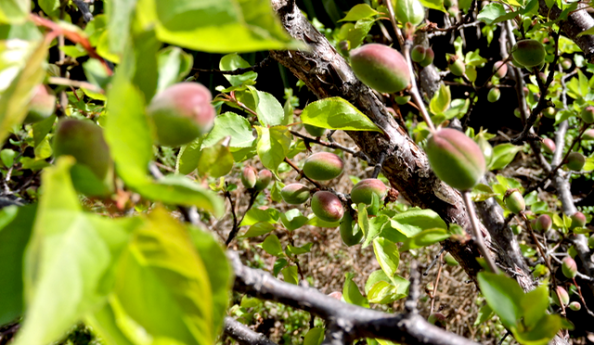
I was thinking of choosing “Y is for Yucca,” but my yucca is a kind of spindly plant–though now eight years old–sort of hidden away in the side garden between a big photinia bush and the fence. It’s also overshadowed by the massive cherry plum tree and its glorious fruit and by the equally prolific apricot tree, that even now is teeming with red-green fruit that in a few weeks will become over a hundred orange beauties that will become pies, cakes, and dried morsels to satisfy us and our friends for the rest of the spring.

garden apricots tiny fruit march 18 - 1

Apricots moving toward ripeness, April 2018

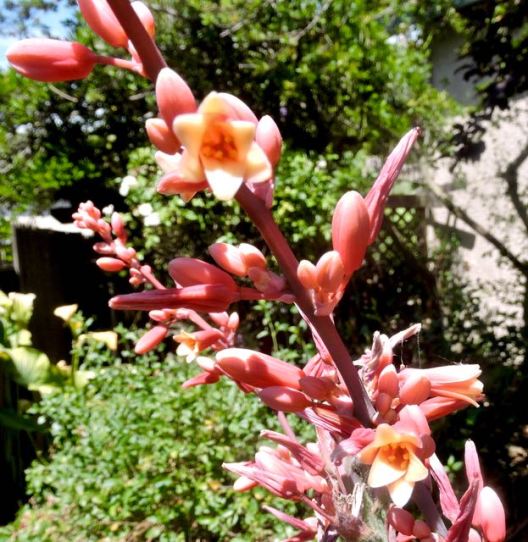
So, dear yucca, although you are not the focus of this entry, I will not ignore you, and I look forward to your stunning stalk of red-pink flowers that will appear in mid-summer.

garden yucca in bloom may closeup - 1

The stunning red-pink stalk of the yucca in mid summer

But back to yellow! Right now, in early May, the garden is singing “Yellow, yellow, yellow!” The newly-planted marigolds and celosia, the sturdy perennial coreopsis and lantana, and more…

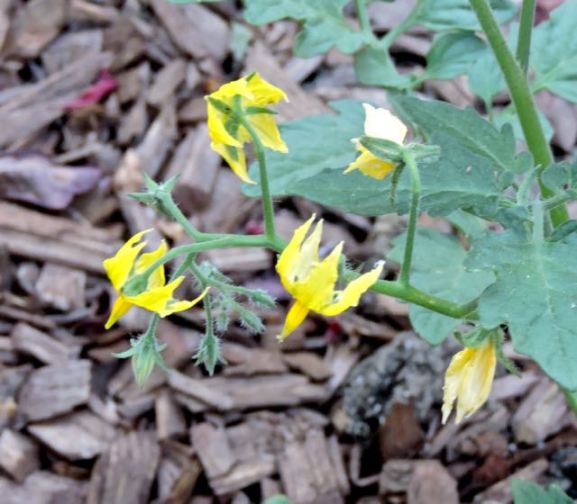
The new tomato plants, just ten days in the ground, announce to the bees that they are open for business with their yellow flowers in clusters.  As the spring and summer go on, the tomatoes will keep putting forth more yellow flowers, in the many hundreds, hopeful that they will become fruit. Even as the fruit turn from green to red, more flowers will come…

garden tomato flowers apr 18 - 1

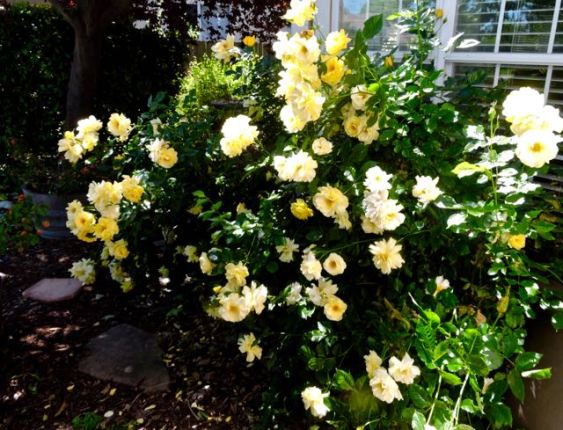
Meanwhile, the yellow rose bushes in front bloom from late March to late fall, cycle after cycle of buds and many-petalled flowers…

garden yellow rose in bloom and three buds apr 18 - 1

garden yellow roses in profusion may 17 - 1

Oh yes, and the meyer lemons, who grow green in summer and switch on the yellow lights in December…

…and the nopales’ fruit, the tuna, that appear with yellow flowers in September…

garden three tuna September - 1

…And forget not the day lilies, the peaches, the gerbera daisies, the zucchini blossoms, and even the tarragon, all yellow bloomers in spring or summer.

Oh my, yellow, how magnificent you are!

S Is for Sue–G Is for Grafton

garden grafton novels and meyer lemons dec 17 - 1

Chris:

If you are among the millions who have read the novels of Sue Grafton, you may have wondered if our alphabetical scheme for this humble blog owes a debt to Sue Grafton’s alphabetical scheme for her Kinsey Millhone series. Yes, of course. How could one know and love her writing and not be enchanted by the simple elegance of her overall design?

Sue Grafton passed away Thursday, Dec. 28, in her beloved Santa Barbara after a two-year struggle with cancer. I did not know until the next day that she and her husband, Steve Humphrey, had a kitchen garden on their estate in Louisville, Kentucky. (Sue was born in Kentucky in 1940 and had returned there for part of each year in the past two decades.)

Steve, I learned, is the gardener in the family, but his love for plants and dirt had sparked garden enthusiasm in Sue, and she helped him in the restoration of the formal gardens on the estate, which they bought in 2000. In an article in Kentucky Garden and Gun in 2014, she spoke of the kitchen garden:

“We have an asparagus bed, potatoes, strawberries, blueberries, raspberries….It’s all organic….We’re like little farmers.”   http://gardenandgun.com/articles/sue-graftons-kentucky-garden/

Now, if you read the Kinsey Millhone books, you won’t find much about gardens or gardening.  Kinsey, as you know, is all detective all the time. Even when she spends the rare minute or two on such domestic pursuits as cleaning her tiny apartment or making a peanut butter and pickle sandwich, she’s worrying about clients and clues. She always gets down and dirty with cases, but the only time she really messes with the actual dirt is when she’s looking for bodies or hiding in the underbrush on a stakeout.

Still, for me, there is much of the gardener in Kinsey, and that’s why I love her–and why I love her creator. Kinsey is everlastingly curious, in the gardener’s simple and dogged kind of way. She never tires of wondering what might turn up next, and she pays attention to the smallest details. She cares very little about how she looks, but she cares very much about recording the progress of cases bit by bit. Like the gardener out for the daily exploration of the premises, she’s always optimistic about the next encounter with someone or something she hasn’t seen before or the next conversation with a “person of interest.” It’s not much of a stretch to say that she likes to add a bit of “water” to a conversation in the form of an intriguing question, just to see what might pop up. She might even get to the root of the matter by enough careful digging.

So, in her own way, Sue and Kinsey were fellow gardeners with all of us who like to get our hands dirty. Alas that she will not be gracing us with the final “Z Is for…” of the series, but A through Y are all perennials, firmly planted in our memories. As long as we return to them, they will continue nourishing us in years to come.

As for that yet-to-be-born “Z,” I think many of the seeds that she planted are already sprouting in the minds of all of us who loved Sue Grafton, and they will appear like the first blooms of the California spring, each in its own surprising way. Live on, dear Sue.

W Is for Water

rain-in-birdbath-december-1

Raindrops in the birdbath early December

Chris:

Wildfires rage in Southern California, with the Thomas fire in Ventura and Santa Barbara counties having consumed 270,000 acres, threatening Santa Barbara city, and having already reached the coast. Higher than average temperatures, the annual Santa Ana winds, extremely dry conditions, and the buildup of fuels from last season’s heavy rains have combined for a record fire season. These SoCal fires come just two months after the record fires in NorCal that devastated wine country counties and parts of Santa Rosa city.

This horrific destruction has prompted Governor Jerry Brown to call what California is facing “the new normal,” making necessary new strategies for anticipating heightened fire risks, as the climate continues to warm and as the rains always expected this time of year become more unpredictable.

Returning to the drought?

The picture above is from last December, 2016, not now. If you’ve read these posts, especially “J Is for January,” you know that last Fall to Spring (’16-’17) we were in a historic rain season, the greatest in more than 35 years: 45 inches of rain, more than twice the average. This December? .03 inches–yes, point zero three. This is one of the driest Decembers on record. The Sacramento Bee knows what’s on everyone’s mind when they wrote this week, “Are we headed for a return to the drought?”

Yes, the 5-year drought that brought historic lows to the Sierra snowpack in 2015 (a mere 5% of normal) and that dropped reservoir totals by more than 60% of normal over five years. The drought led Governor Brown and the legislature to declare severe water restrictions across the state–restrictions that occasioned almost full compliance, such was Californians’ understanding of the seriousness of the crisis.

Ever since Jean and I came to California, I’ve obsessed about water. Jean is sick of listening to me complain and fret. But she was enthusiastic to honor the restrictions and to look for ways to lessen water usage. Our response has included

  • installing super low-flow toilets
  • taking showers for no more than five minutes
  • watering with rain collected in three large rain barrels
  • taking out all the thirsty grass on our property and replacing it with drought-tolerant plants on a drip system
  • consciously using less water for all household and garden purposes (more on that later).
garden sun dappled rain barrel dec 17 - 1

Sun-dappled rain barrel, back garden

She was sicker than I was to see pre-restriction practices in our neighborhood–and even on our own lawn–like sprinklers broadcasting precious water so that much of it fell on sidewalks and driveways, then ran into the storm sewer. Even with restrictions, too much of our lessened water flow would miss the grass and then join our neighbors’ sprinkler spray running in streams by the curb and into the sewer.

So taking out the grass was truly sensible. Happily, the state and the local authorities made it attractive, by offering a $1000 (later $2000) rebate on home conversions from grass to drought-tolerant plants on drip. Our front “lawn” is now a base of part small rocks, part larger rocks in a stream formation, part bark mulch, and part shredded mulch. The drip lines run underneath and nourish each of the more than seventy plants. In three years, our overall water usage is down about 70%–with a concordant drop in our water bills.

garden front dry creek and flowers bushes trees may - 1

Portion of our front “yard”–2 years post transformation

The rest of the neighborhood?

What is even more gratifying is how our neighborhood is steadily adapting to more California-appropriate landscaping. Each time we take an evening walk along nearby streets, we see more properties with the grass replaced in ways similar to ours, but with each family following their own design–different materials, plants, colors. More often, the grass has not been completely replaced; but the portion has been reduced, with the margins near the house and near sidewalks and driveways de-grassed and now covered with gravel or mulch, often with bushes and flowering plants varying the landscape.

California history–Water obsessed

My obsession is common among Californians–and embedded deeply in state history and policy. How many dams are there on California rivers? Answer: over 1400. How many California rivers are not dammed? Answer: one–the tiny Smith River in the far Northwest corner of the state. A popular joke (of which there are many) about Californians is this one:

“How does a Californian define ‘water conservation’?”

“Making sure that no drop ever reaches the ocean.”

water yolo bypass ship channel sac river - 1

California water management at work, Dec. 2017: L. to R.: Yolo Bypass, irrigation channel, ship channel, and Sacramento River separating irrigated farmland from housing (C. Thaiss, photo)

Indeed, an evergreen topic in the state news is the fighting that goes on between environmentalists and anglers on the one side, and big farmers and municipalities on the other side, over the rights to use the water (for ag, industry, and other human needs) or to leave it alone (to keep natural flows to sustain wildlife and habitats in rivers, swamps, and estuaries).   Roughly 80%–yes, 80%–of California river water is cycled through irrigation of the massive farms and ranches that have made California the world’s largest producer of many fruits and vegetables. So environmentalists have a steep, steep hill to climb to have their message heard.

California history has no more dramatic a struggle than that over the diverting of water from the Northern and Eastern parts of the state to satisfy the many thirsts of urbanites in San Francisco and Los Angeles. Just mention “Hetch Hetchy” or “Owens Valley” to any California student of water, and you will get a long, tense lecture on wars that lasted for years, and to many still go on. Just mention “the twin tunnels” to any of us in the Sacramento area, and you’ll get a similar lecture about a battle going on as you read this.

Google any of these terms, and you’ll find much to occupy your time as you contemplate the preciousness of the ever-more-endangered fresh water around the world.

Water and one small garden


Most of the posts in this blog mention water and watering. Without some water, none of the plants would survive. Without the plants, the animals (including us) that depend on them would not survive either. So, in a water-challenged ecosystem the question is always “How much should I water?”

There are no simple answers to this question. Choices and compromises are everywhere. When we first moved to California, we rented for most of a year a newly-built house with no water system in the large back yard. Used to living on the East Coast, where plentiful rain meant that plants would just grow and grow, whether you wanted them to grow or not, the basic question was how often you wanted to mow grass and chop the plants back. Once we moved here, I couldn’t get used to the idea that the unplanted California back yard would just stay sandy dirt–with a scattering of thorny thistles and dandelions when it did occasionally rain–if I (or our landlord) didn’t come up with a coherent plan to turn desert into a green Eden.

Like most Easterners who transplant to the dry West, I was not ready for desert (I must admit that my thinking is still in transition). In that first year, I was awed by the fact that every home in our rural/suburban environs had valves, timers, hoses, and various other gadgets hooked up mysteriously to civic water pipes to deliver water to topsoil, so plants could grow and look as if they belonged there in that spot. Not only that, but, as I quickly learned, in our region this life-giving water didn’t come from the clouds above us. No, where we now lived, the water came from two equally mysterious places.

One of these places we could see in the distance on clear days: the Sierra Nevada mountains to the east, in the form of the snow that built up over the winter into a deep snowpack, which would gradually provide us water all year long–like a gargantuan refrigerator with a mammoth water-and-ice dispenser. So it wasn’t just the skiers who craved the cold white powder, but everyone, even those teeming masses who lived along the Pacific shores–where there’s lots and lots of water, but you can’t drink it.

sierra snowpack donner pass dec 2017 - 1

Sierra at Donner Pass–see, that’s our water up there. (C. Thaiss, photo)

The other place was equally strange to me–deep underground, in the aquifer, that buildup of water over many years as rain and river water soak into the soil and trickle down and down into vast lakes. Now, among things I’ve learned in the intervening years is that no one, even the best water scientists, knows exactly how much water is down there. What they do know, painfully, is that if the aquifer is not replenished at the same rate that humans are using the water, the top of the aquifer keeps getting deeper and deeper–and so resourceful humans have to keep digging deeper and deeper wells to reach it. Guess what–during the drought, farmers kept having to drill the wells deeper, so what does that tell you about the future?

Knowing where the water comes from–and knowing that we humans are using it faster than it’s being replenished–helps to focus the mind on the individual choices I make about how much water to use in my small garden. Sure, I could conclude that my use is so minuscule in the grand scheme of water use that I shouldn’t concern myself. But I can’t think that way. Fortunately, neither did the millions of Californians who complied with the water restrictions. That collective action makes a  huge difference.

Now that I’ve lived for the past decade in a home that has a water supply system, I have the tools to make those choices.

Most choices are obvious:

  • I didn’t need as part of the system the sprinkler heads that waste water. Too many transplanted Easterners, like me, try to maintain the fantasy that a “nice green lawn makes a place look respectable.” In Virginia, maybe, but not in California. I dug up the grass both front and back, and turned off the sprinklers.
  • Instead, my watering apparatus includes drip irrigation, with hoses through much of the garden spaces, front, side, and back, and drip nozzles at each plant. These plants include the fruit trees, the rose bushes, and all the new drought-tolerant bushes and plants in the front garden that used to be lawn.
  • .All the other plants, including vegetables and herbs in pots and potted flowers, are hand-watered, on an every-other day schedule in spring, summer, and fall. Winter veggies get water from me as needed. Most winters are rainy enough that these plants thrive with no additional water.
  • I emphasize native plants and other drought-tolerant varieties, which hold the soil and attract pollinators. Plants like lupine, coreopsis, and ceonothus (Western lilac) are beautiful in bloom and draw honeybees, bumblebees, butterflies, and hummingbirds. The lupine and coreopsis in the back garden thrived this summer with no  water.
garden monarch on lupine full spread oct 17 - 1

lupine with monarch

garden new pepper and tomato plantings apr 17 - 1

coreopsis at top of frame, center

garden lilac tree and calla lillies April 2017 - 1

ceonothus above calla lily

  • I’ve found over the last six years that I can cut back on water usage without harm to the plants. I used to handwater every day in the blistering summers, but now I do so every other day, around 10-15 seconds for each plant. The water cutback has been huge in terms of overall water use.
  • I’ve learned to be guided by the plants. If a tomato looks wilty at 2 PM in July, when the temp is over 100, I don’t immediately add water (which will just evaporate in the heat). I wait to see how it looks in the early morning, which is when I water so that the water will be used by the plant and not evaporate.. If the plant still looks wilty then, I may up the dosage temporarily. I also use the finger-in-the-soil test. It’s amazing how cool and moist soil can remain a couple inches below the surface even in summer. If I feel that coolness near the roots, I don’t worry.

Still, a question remains: “Should I garden?”

The really basic choice for me is to garden or not to garden. If I didn’t try to manipulate my environment at all, I wouldn’t use any water on the ground. I could, if I chose, let my property become like that desert-like yard we had in our first year in California. All over California there are huge swaths of land–the Sierra, the Mojave, Death Valley, and on an on–that barely feel the hand of homo sapiens. Right next to irrigated farmlands lie unwatered flatlands, hills, and mountains. It’s always a choice.

water irrigation vs desert east of san diego - 1

Irrigated farmland next to waterless desert, Imperial County, Dec. 2017–always a choice wherever humans live. (C. Thaiss, photo)

Oh, who am I kidding? That kind of basic choice is long gone in this neck of the woods. The handiwork of humankind is everywhere and there is no turning back as long as humans are around. Where the wildfires rage in this state is mostly in those unwatered mountains and valleys–with most of those fires sparked by humans’ electric power lines downed in heavy winds. And when the fires come close to human estates and roads, all our resources of men, machines, and water go into action to stop the fire and smoke from reaching us. And even when there is not fire, there is the polluted air from the gas and oil burned in cities and on highways changing the chemistry of the mountains, valleys, and oceans. And each day more and more acres of forest around the globe are stripped so that plants can be grown and cattle fed to satisfy human desires.

So the only real choices are of “how” to use the land and water, and “how much” to use and “why” and “when.” We’re human–it’s in who we are to change our environment. If I didn’t build a garden, I’d use the land and water some other way.

So I’ve chosen to build a garden, and I use water, which I try to use sparingly, because I know it is increasingly rare for each of us. And I’ve chosen to want my small garden to be varied and beautiful. And I grow certain plants because I want the garden to attract some of the animals, like bees and butterflies and birds, that are becoming rarer as more and more pristine land is being turned into houses, shopping malls, mines, and concrete. And I’ve chosen to want this garden to produce fruit, leaves, and stems that Jean and I can cook into delicious and healthful food. These are choices I make, even as more and more such choices are taken out of individual hands by corporations and the governments they control. And a necessary tool of those choices is water.

DSCN7178

Water-rich cherry plums from our tree become tasty jam every June.

V Is for

garden tomatoes peppers just picked mid november 17 - 1

Jean:

Vegetables, of course.

I’m sure they were not my favorite food, growing up.  My mother had learned to cook during the Depression and would cook anything available.  I loved her meat dishes, even organ meats like tongue and liver.  She was Irish, only two generations removed from the Famine, and she loved potatoes.  Such a luxury to live where they were plentiful.  And cheap.  We had steaming hot potato dishes of all kinds, as well as delightful potato salads.

The potato fascinated me as a teenager because I was learning about nutrition in 4-H.  I learned that many vegetables are high in a limited number of nutrients but that the potato has low amounts of a much wider range of nutrients.  This is how the Irish could live on just the potato, if they could get enough of them.  No matter how comforting potato dishes may be, depending on just one food is not a good dietary strategy. But if you are truly starving…

My least favorite of her dishes was her vegetable soup.  There were too many questionable ingredients for a skeptical kid.  Sometimes it had rutabagas in it, and sometimes she served steamed rutabagas separately.  The smell would drive me out to the driveway and as far down the street as any friend’s house I could get into, maybe just to hang out in my friend’s bedroom while they had dinner.  My friends’ families were like ours, too many kids for the amount of income, and extra kids were not needed around the table.

I generally liked to eat, though, so I couldn’t avoid my mother’s overcooked vegetable dishes for long.  And my parents had strict rules at the table.  We had to eat everything on the plate.  They were not playing.  We ate them, even though we made gagging noises sometimes.

This struggle to acclimate kids to new foods, particularly vegetables, fascinates me today.  I have known kids who were picky eaters and got cancer.  We know one kid today in particular who may pick at something on his plate at the dinner table but almost never a vegetable.  Then he just disappears.  No requirement that he eat a certain amount, or that he ask permission to leave the table.  He’s a smart kid who likes to show off his knowledge in front of adults.  I’ve asked him to research the connection between diet, especially the consumption of vegetables, and three main killers–cancer, heart disease, and diabetes. I hope one of these days, he’ll be tempted to take a peek at some of these websites:

https://www.cancer.org/healthy/eat-healthy-get-active/acs-guidelines-nutrition-physical-activity-cancer-prevention/common-questions.html

http://www.heart.org/HEARTORG/HealthyLiving/HealthyKids/HowtoMakeaHealthyHome/Fruit-and-Veggie-Toolkit-for-Kids_UCM_479992_Article.jsp#.WiRJCIXTY7A

https://healthyforgood.heart.org/add-color

In the meantime, we all need to do what we can to try to educate kids, support them in their efforts to broaden their diets, and even trick them into eating healthy foods if we have to (pureed fruits and vegetables can be snuck into many dishes).

On the other hand, I’m not particularly enamored of vegetarians or vegans.  My apologies to actual vegetarians and vegans, of course, but I’ve known too many people who call themselves one of these “veggie” names, but who actually do not eat vegetables.  This label is often their excuse not to eat what other people are eating.  Instead, they may order what their ten-year-old, veggie-phobic self would have ordered, some kind of pasta with a creamy white sauce.

Learning to eat vegetables is an important part of growing up.  As Chris and I get older, we find that vegetables continually taste better to us, like we can feel the health benefits almost immediately.  The heavier, greasier foods are no longer so appealing as they once were.  Older and wiser? At any rate, veggies are staples of our garden–and of our kitchen. (See “E Is for Eggplant,” “G Is for Greens,” “H Is for Herbs,” “P Is for Peppers,” and “T Is for Tomatoes”–just some of our posts featuring veggies.)

DSCN1930

Winter veggies in October, back garden

kitchen thanksgiving 2017 veggies et al - 1

Thanksgiving 2017, fruit salad, veggie casseroles, pork and sweet potatoes

But can I change the subject now?

I would like to segue from vegetables to vocabulary. The letter “V” is my favorite letter of the alphabet.  It is interesting and complex even beyond the subject of vegetables.  “V” words are some of the most fun, like “vacation.”

They include important, solid concepts, like:  vaccinate, valedictorian, valence, valid, value, valve, van, vanguard, vanilla, vantage, variety, vast, virtue…

They can also represent ambivalence or emptiness, like:  vacillate, vacuous, vacuum, vagabond, vagrant, vague, vain, vanish, vapor, variant…

V words are also frightening, like:  Valkyrie, vampire, vandal, varmint…

And V words are sexy:  vagina, valentine, vamp.

Those are just some of the ones that start with “va.”  I could go on and on through the alphabet for the second letters, like “venal,” “vermin,” “verdant”” or “venerable” for “ve,” “vigorous” or “vicious and vituperative” for “vi,” “vociferous” and “voluptuous” for “vo,”  “vulgar, vulture, and vulnerable” for “vu.”

These are some of the most colorful words in the English language.  So strengthen your body with color from beautiful vegetables, and strengthen your vocabulary with some colorful “v” words you might not use often enough, in place of bland substitutes.  Live a little!

kitchen grape tomatoes peppers herbs goat cheese pasta sauce - 1cropped-garden-red-thai-peppers-full-on-bush-sept-17-1.jpgDSCN1374garden back eggplant aug17 - 1


U Is for Untended

garden hebe mid november 17 - 1

Chris:

Sometimes I overestimate how necessary I am to the garden.

For two weeks in the early fall, much of our garden was not watered, while we were away visiting relatives. The weather was still hot during the days, with high temps in the upper 70s to mid 80s, and little rain was in the forecast. Indeed, there was only just over a tenth of an inch during the entire period, all of which fell on one day. This is not unusual in our region in early fall, but it was rare for me not to be around to water..

I didn’t worry about the roughly 50% of our plants on the timed drip system; I knew they’d get regular water. But half of our plants are hand-watered, including all of the veggies and all of the herbs in pots, plus some of our roses and all of the potted flowers. Here’s what I imagined would happen during those two–untended–weeks.

The hardest hit would be :

  • the grape tomatoes, already near the end of their productivity for the season, would brown out and shrivel
  • the same sad result with the pepper plants in the raised beds
  • the same with the potted pepper plants
  • the vinca and marigolds, both summer annuals, would at best become dull and drooping, with no more blooms
  • the hebe bush, always water-needy, would brown out and lose leaves
  • the more delicate herbs–parsley, thyme, marjoram, basil–would be droopy dull, if not browned out.

More able to withstand the conditions would be :

  • all the perennial potted herbs, hearty year upon year–the sages, the Greek oregano, the chives, the lemon verbena, the lavender, the rosemary–would hang in there, maybe just a little the worse for the lack of water
  • the rugged roses not on the drip would still be healthy, but not in bloom
  • the sturdy perennial coreopsis, lupine, and mint, almost without a drop all summer–no problem!
  • the strawberries, perennial, would be hanging in there, but not fruiting
  • the potted perennials such as the geranium, the dwarf pomegranate, the dianthus, and the hibiscus, would be OK, going into their winter dormancy a bit early.

So when we returned, here’s what I saw…

garden back, mid november 17 - 1

and…

garden still more purples mid november 17 - 1

and…

garden grape tomatoes in bloom mid november17 - 1

and…

garden pink roses mid november 17 - 1

Oh yes, and even…

garden strawberry mid november 17 - 1

What a pleasant surprise! None of the plants suffered the extremes that I had envisioned–and most of them had not skipped a beat, thank you. I can’t say what shocked me the most. Was it the vinca and marigolds still popping brilliant color and plump greenness? Was it the pepper plants–purples, shishitos, greens, and Thai hots–still putting forth new fruit in some profusion and looking not at all stressed?

Was it the grape tomatoes, still with red, ripe little gems and a cascade of new yellow flowers? It surely was not the pink and salmon roses, which always defy heat, or cold, or low water–how could I have doubted you? But it might have been the hebe (shown at the top of this entry), which rarely blooms, and here you were in your fuzzy pink splendor. Well, sure, it might have been the strawberries, which were putting forth fruit to provide treats for us and for the birds.

So how to explain the resilience?

I have three possible explanations:

  • The one day of a tenth-of-an-inch of rain was just enough to give the hand-watered plants the boost they needed in the hot weather.
  • Because of regular watering during the summer, the soil had enough residual moisture to keep the plants healthy.
  • The plants are just more resilient than I gave them credit for being.

Whatever the reason or combination of reasons, I’ll feel comfortable next year not worrying if we need to be gone for an extended period in the early fall. I guess my garden overall does a pretty good job of taking care of itself this time of year. But I do like to help out, OK guys?

November Postscript

Now that we are in the middle of fall and almost to Thanksgiving, the spring and summer plants continue to hold their own. The series of photos above were NOT taken when we returned at the end of October–they were taken just a few days ago, in mid November. In prior years, the tomatoes, peppers, and other veggies had given out in early October. So had the annual flowers. But as you can see, this year they continue to bloom and produce.

Most amazing is the one grape tomato pictured above with its yellow blossoms. This one plant has spread over more than seven months to wind its way through three tomato cages. It has produced hundreds of red oval fruit (as shown in T Is for Tomatoes). I have never had so glorious a tomato plant as this one.

garden grape tomatoes and blooms mid november 17 - 1

Moreover, the five pepper plants have stayed green and fruitful until today, when I pulled them out to make way–finally–for the winter veggies. But, guess what, two of the plants are still going, and I want to see how long they’ll keep producing new fruit.

The shishito (pictured above) and the Thai hot pepper (pictured beside it) still have new fruit growing. I’m speechless. Here is my little pre-Thanksgiving display of the pepper-tomato bounty, just picked today. What a year! Thanksgiving indeed.

garden tomatoes peppers just picked mid november 17 - 1