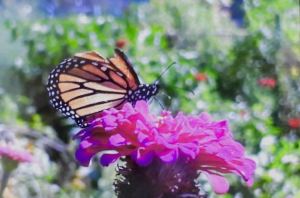
Monarch on pink Zinnia, our garden, September 9
In this month’s blog:
Lake Pollution: Where Have All Our Turtles Gone?
Climate Collapse: EPA Removes Curbs on Power Plant Emissions
Climate Hope: California Leads–Again
Garden Update: Transition to Autumn
The September 2026 Photo/Video Gallery
********************************************************************
Lake Pollution? Where Have All Our Turtles Gone?
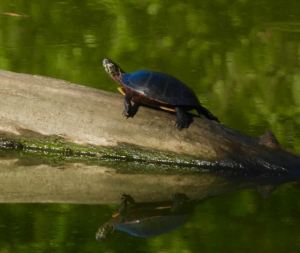
Lone Black-shelled Red-Bellied Cooter on log in the southeast cove of our little lake, warm September 15
In recent months, since our humidity climbed to record levels in this most-likely warmest year on record across the world, and as the lake water has been choked with blue-green algae and, in July, covered with smoke residue from wildfires to the distant north and west, what we haven’t seen is more obvious than what we have seen. There are noticeably fewer songbirds in the mornings and far fewer birds to be seen in the trees. Perhaps even more noticeable is the absence of the Turtles, particularly the Northern Red-Bellied Cooters, that we used to marvel at every day in our congenial community in Northern Virginia. Up until a few months ago, a walker around the lake would see clusters of Red Bellies on logs and rocks at the shores, but no longer.
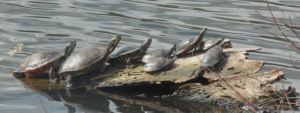
These eight Red-bellied Cooters crowded on to the log on the north shore of the lake all the way back on March 23 of this year.
This phenomenon is not just noticed here.
The Virginia Herpetological Society reports the precipitous decline of the box turtle population across the state. The decline has been most noted in the urbanized areas, like ours, but is happening everywhere. Habitat loss is the most obvious cause, through rampant development, but pollution of lakes and ponds through runoff from farms, vehicle emissions, and businesses is also a leading cause.
Typically, these Turtles emerge from their winter homes in the mud below the surface once the temperature gets to 60 degrees F, and they will be out and about daily until the temps get into the 90s. But this year we haven’t seen them since late spring. Even now, when temps have fallen into the 70s and even the 60s, the Turtles have failed to appear.
Except on one day, a warm September 15 , when a cluster of 10 Red Bellies appeared on their accustomed perch on a log at the north end of the lake.
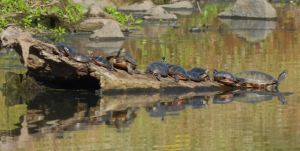
10 Red-bellied Cooters on log at north end, afternoon, September 15. This is the only day we’ve seen a cluster since the spring.
Will there be another appearance? We, along with other nature observers in Virginia, will keep looking.
***************************************************************
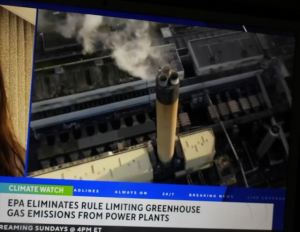
EPA ends rules monitoring emissions from power plants, CBS News, September20 (CBS photo )
Climate Collapse: EPA Removes Curbs on Power Plant Emissions
This latest outrage by the Trump Administration against environmental protection follows on the elimination earlier this month of the law protecting endangered species from all unintended killings. The LA Times (Hayley Smith and Blanca Begert, Sept. 15) . the New York Times, and CBS News were among the many sources reporting these further erosions of any environmental protection. Under this current federal regime, the US is steadily moving back to the times before the establishment of the EPA and of the Clean Air and Water Acts by the Nixon Administration in 1970. What the President and his disciples gain by these actions is not clear, but what all of us are losing by an ever warmer,dryer, and more extremely fire-and-storm-prone environment is absolutely clear.
Climate Hope: California Leads By Example
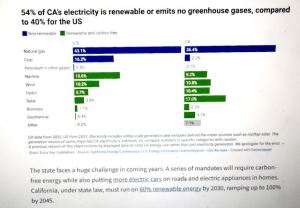
California use of renewable energy (solar, wind, battery} has surpassed 50% toward its goal of 100% by 2045), CA Energy Commission
California, by far the mot populous state in the nation, has for years been the most ambitious in terms of its use of renewable energy. Despite the efforts of the Trump Administration to undermine the state’s efforts to reduce carbon emissions and to limit the state’s ability to set its own targets for fossil fuel efficiency, Californians continue to move closer to their goals for percentage use of renewables and for use of electric vehicles. Although still well short of their goals, California gets year by year closer to its targets for 2030 and 2045. Moreover, as battery storage technology keeps dramatically improving, no longer can opponents of solar power use the old argument that solar doesn’t work at night or on cloudy days. In addition, the public benefits from not only clearer air, but also from the lower prices that people pay for solar electricity than for gas, especially as gas prices keep rising.
******************************************************************************************
Garden Update: Transition to Autumn
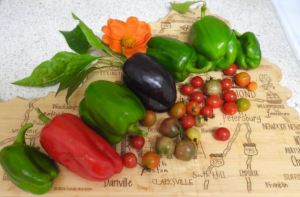
Final green Pepper harvest and final display of Cherry Tomatoes on Virginia cutting board in kitchen, September 20
After the four months of growth from planting in late April through the bountiful harvesting from late June and into early September, it’s time for the Northern Virginia garden to rest. September is a strange month for an East Coast garden. When the month begins, it’s still lush , hot summer, teeming with butterflies. By the time September ends, it’s definitely fall, with all that implies.
We picked the last ripe Cherry tomatoes from the five plants and have now pulled them up. The same with the 2 prolific mild Peppers and the productive (and very hot)Jalapeño. We still have two aromatic herbs, the Rosemary and the Basil, looking lush and smelling even better.
Of our flowers, several are still looking gorgeous, including the Dahlias, the Hibiscus, and the remaining Zinnias. Still to bloom this fall are the Mums, which are close to popping, and the Wild Blue Aster, which put on a great show last October and is the largest plant in the garden. Stay tuned!
All in all, this was a successful spring/summer second year for our garden plot. We harvested about 1000 Cherry Tomatoes, most of which are now in the freezer in jars for use over the fall and winter, plus lots of Zucchini, Peppers and Herbs.
In October, we’ll try the winter veggies again–the Broccoli and Cauliflower–and hope we don’t have to deal again with snow-crete in early 2027. Remember that? We’ll keep you posted.
Panorama of Tiger Swallowtail and Sachem butterflies on Zinnias in our garden, September 3
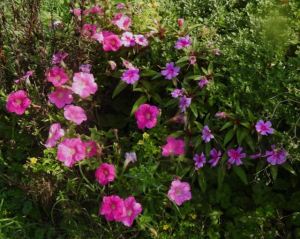
In our garden, Petunias and Impatiens, September 3
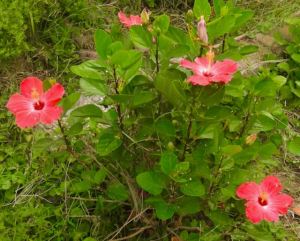
Multiple blooms on our gorgeous Hibiscus, September 10
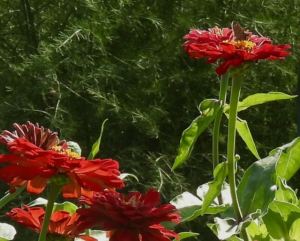
Mocha Skipper in Zinnia cluster, hot September 3
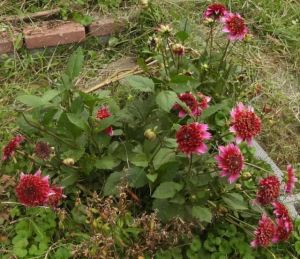
In the garden, Dahlia blooms put on a show, September 10
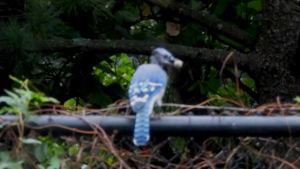
Blue jay, with prize in mouth, atop the east fence of the community garden, September 13
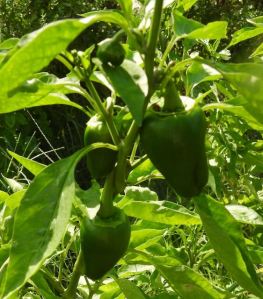
Four Mild Peppers growing in our garden, hot September 3
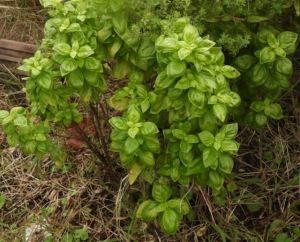
The still-lush Basil plant in our transitioning fall garden, September 27
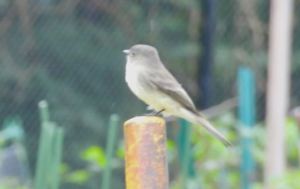
The pale yellow of this Goldfinch in late September in the garden on the 27th
***************************************************************************
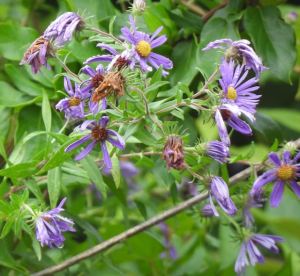
Brilliant New England Asters north of dam, cool September 23
The September 2026 Photo/Video Gallery: As the Birds and Turtles have Declined, the Wildflowers Thrive
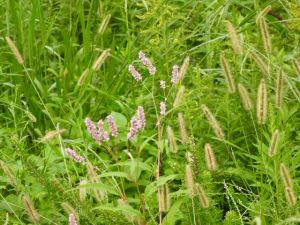
Pennsylvania Smartweed and Yellow Foxtail north of dam, September 23
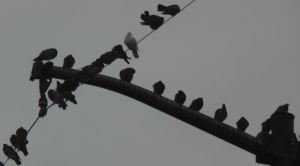
Flock of Rock Doves on their favorite perch, atop the power tower west of the lake, September 23
Another late September avian surprise: this Downy Woodpecker on a neighbor’s feeder southeast of the lake, September 27
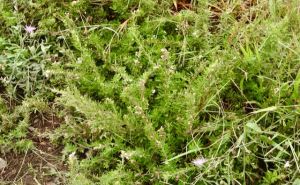
Chinese Bushclover in bloom, north of dam, cool.cloudy September 23
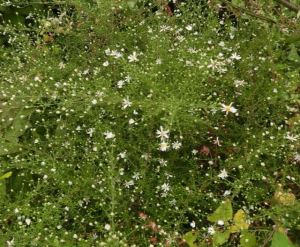
Hairy Asters in bloom at the south end of the lake, September 23
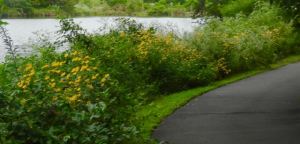
Yellow Beggarticks and Late Boneset profusion,southeast cove of the lake, September 5
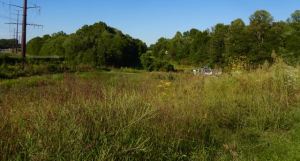
View of wildflower profusion from north end path toward north with power lines and gas substation, sunny PM, September 15
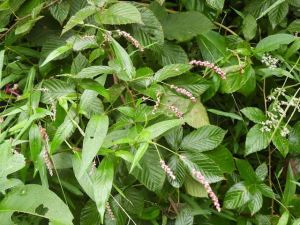
Asiatic Smartweed along outlet stream, September 23
Praying Mantis feeds on Yellow Beggarticks, southeast cove, cloudy September 1
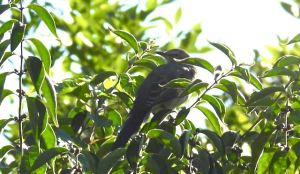
Mockingbird in Amur Honeysuckle, east shore, sunny September 15
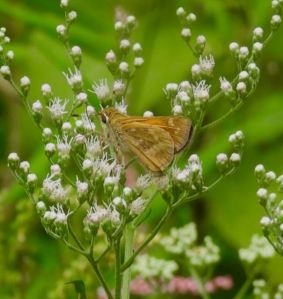
Sachem butterfly on Late Boneset, southeast cove, September 5
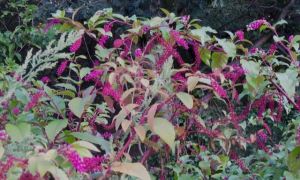
Pokeberry in full bloom, south end, September 14
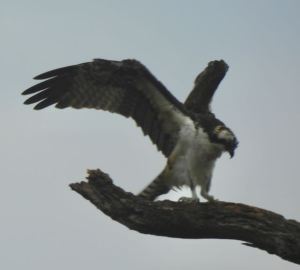
Visiting Chesapeake Bay Osprey atop dead Oak, east bank, September 1
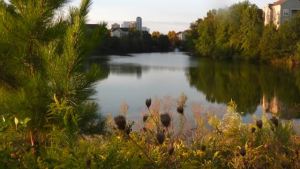
View toward downtown, with Cutleaf Teazel and Virginia Pine, September 14
Many Bumblebees visit Boneset, as Crickets call, southeast shore, September 15
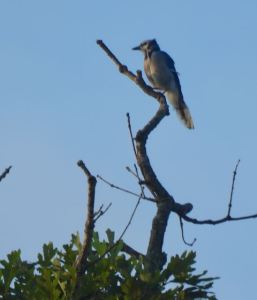
Blue jay atop tall White Oak, south of lake, September 14
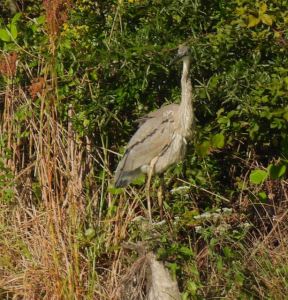
Blue Heron among Reeds, northeast shore, sunny PM, September 15
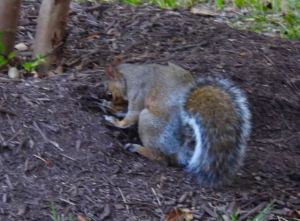
Grey Squirrel digs in mulch, east side, September 15

Tomatoes, Peppers, and Jalapenos from our garden in omelet in skillet, September 10
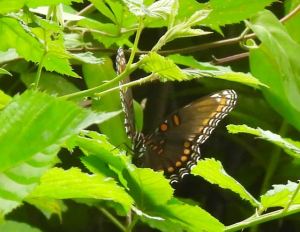
Black Swallowtail amid Blackberry vines, southeast cove, September 1
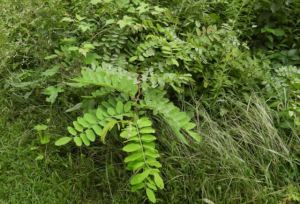
Black Locust, north of dam, cool September 23
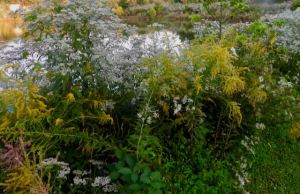
Goldenrod, Hirsute Raspberry, and Boneset, northeast shore, September 14
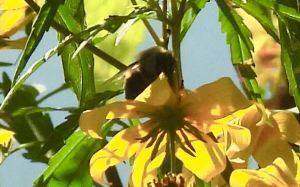
Bumblebee closeup on Beggarticks, east shore, sunny AM,September 15
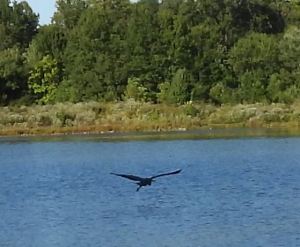
Blue Heron in flight toward northeast shore, September 15
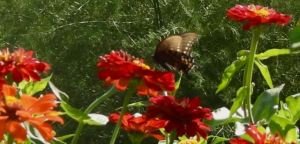
Black Swallowtail amid Zinnia cluster, garden, September 3

Homemade Shakshuka with our garden Tomatoes and Peppers, September 13
And on to October, with hopes for more Bird and Turtle sightings , and even more Wildflowers

